

小鲨鱼shark
962 Posts

小鲨鱼shark
 Square Verified+
Report
Block User
我用的量化指标需要的和我订阅|X:@Chelseaaskkla|悉尼大学金融专业| web3交易员|币安返佣20% sharkkla|前中信建投证券|CFA一级|九三学社社员
361 Following
30.5K+ Followers
14.2K+ Liked
Posts
All
Videos
PINNED
·
--
They say female traders are rare—I’ll post a selfie.
They say female traders are rare—I’ll post a selfie.


31
29
2.9k
PINNED
·
--
In the same frame, Binance dual CEOs: @Yi He He Yi Jie & Richard
Super lucky 😆
The sky has no limits, money never sleeps
People should thank themselves for always being unwilling to settle for mediocrity
In the same frame, Binance dual CEOs: @Yi He He Yi Jie & Richard
Super lucky 😆
The sky has no limits, money never sleeps
People should thank themselves for always being unwilling to settle for mediocrity
Super lucky 😆
The sky has no limits, money never sleeps
People should thank themselves for always being unwilling to settle for mediocrity



4.3k
68
398
4.3k
·
--
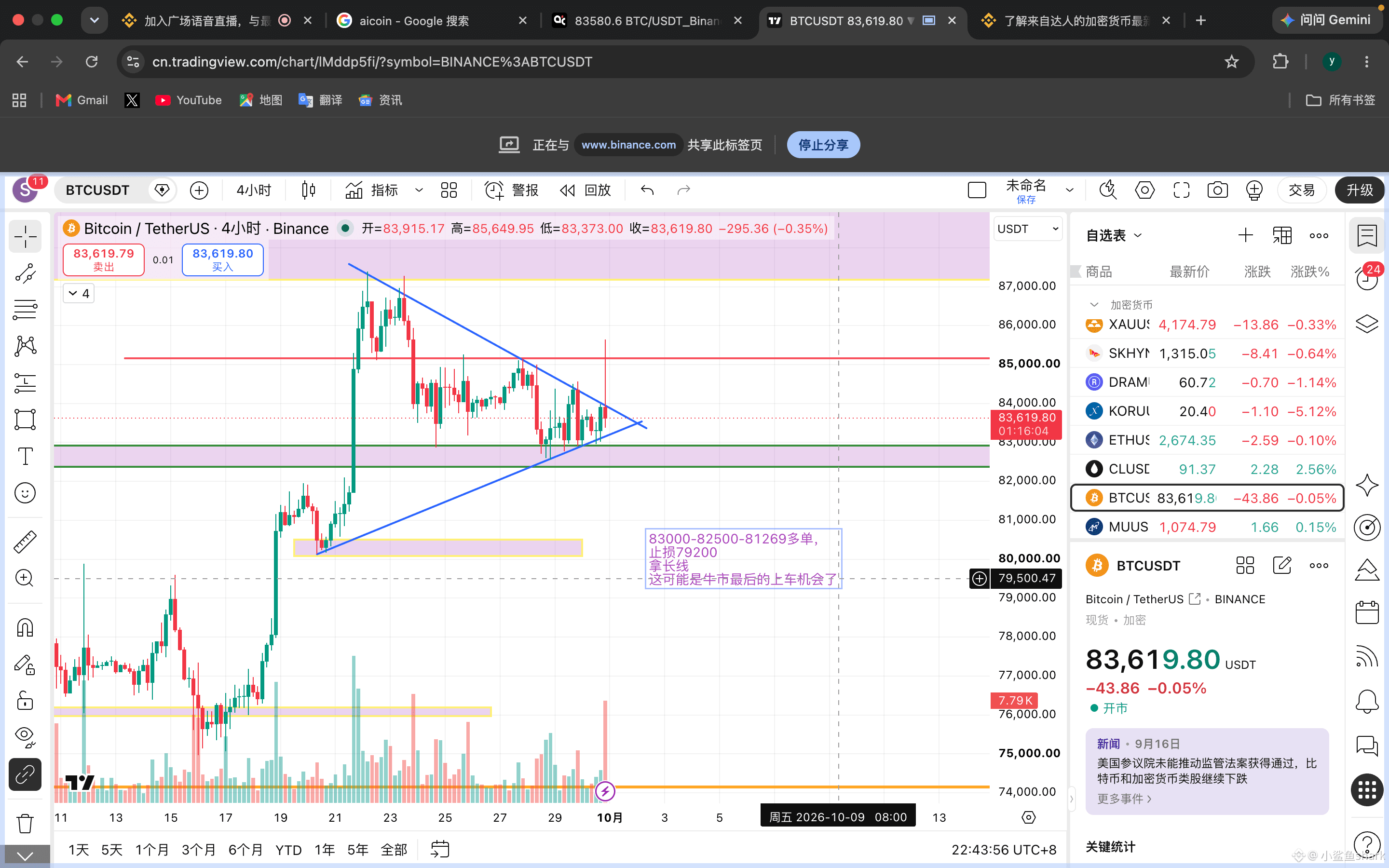
Bull run, quickly return—this may be the last chance to get on board. Split orders by position points and place pending orders, set your stop-loss, and don’t set take-profit—hold for long-term trades.
Bull run, quickly return—this may be the last chance to get on board. Split orders by position points and place pending orders, set your stop-loss, and don’t set take-profit—hold for long-term trades.
1
1.1k
·
--
6 websites to recommend for new stock traders
1. ARTi | An AI Agent product for market analysis scenarios
The biggest difference from ordinary AI Q&A tools is that it doesn’t just give you a conclusion like “buy or sell.” Instead, it breaks down a stock so you can form a well-founded, reviewable judgment.
2. MarketBeat | I like how you can finish the daily Upgrades/Downgrades page in one go
Upgrades, Downgrades, Initiations, and Price Target Changes can all be filtered individually.
Scanning it once before the market opens basically lets you know which stocks on Wall Street suddenly changed their views today.
3. Benzinga Analyst Ratings | The fastest to spot target-price changes
It lists brokerages, analysts, old target price, new target price, and rating changes—almost all directly. For example, if it was originally Buy with a target price of $100 and then suddenly raised to $150, that usually deserves more attention than simply continuing to maintain a Buy.
4. Nasdaq Analyst Research | Great for researching individual stocks
If I’ve already locked onto a specific company, I usually go to Nasdaq to check analysts’ Consensus, target price, and earnings expectations. It’s especially good for seeing whether Wall Street expectations noticeably change around earnings reports.
5. TradingView | See analyst expectations alongside the candlestick chart
I won’t buy just because analysts raised their ratings. What’s convenient with TradingView is that you can view the analyst Forecast while also directly checking whether the stock price has already risen ahead of time. Sometimes when good news comes out and the stock doesn’t move up, that can be even more important than the Upgrade itself.
6. StockAnalysis | Clear view of Consensus and EPS expectations
The interface is very clean and simple. Analyst Forecast, Revenue Estimate, EPS Estimate, and Price Target are all straightforward. For a newcomer researching a company, I actually recommend starting with this kind of simple site first.
6 websites to recommend for new stock traders
1. ARTi | An AI Agent product for market analysis scenarios
The biggest difference from ordinary AI Q&A tools is that it doesn’t just give you a conclusion like “buy or sell.” Instead, it breaks down a stock so you can form a well-founded, reviewable judgment.
2. MarketBeat | I like how you can finish the daily Upgrades/Downgrades page in one go
Upgrades, Downgrades, Initiations, and Price Target Changes can all be filtered individually.
Scanning it once before the market opens basically lets you know which stocks on Wall Street suddenly changed their views today.
3. Benzinga Analyst Ratings | The fastest to spot target-price changes
It lists brokerages, analysts, old target price, new target price, and rating changes—almost all directly. For example, if it was originally Buy with a target price of $100 and then suddenly raised to $150, that usually deserves more attention than simply continuing to maintain a Buy.
4. Nasdaq Analyst Research | Great for researching individual stocks
If I’ve already locked onto a specific company, I usually go to Nasdaq to check analysts’ Consensus, target price, and earnings expectations. It’s especially good for seeing whether Wall Street expectations noticeably change around earnings reports.
5. TradingView | See analyst expectations alongside the candlestick chart
I won’t buy just because analysts raised their ratings. What’s convenient with TradingView is that you can view the analyst Forecast while also directly checking whether the stock price has already risen ahead of time. Sometimes when good news comes out and the stock doesn’t move up, that can be even more important than the Upgrade itself.
6. StockAnalysis | Clear view of Consensus and EPS expectations
The interface is very clean and simple. Analyst Forecast, Revenue Estimate, EPS Estimate, and Price Target are all straightforward. For a newcomer researching a company, I actually recommend starting with this kind of simple site first.
1. ARTi | An AI Agent product for market analysis scenarios
The biggest difference from ordinary AI Q&A tools is that it doesn’t just give you a conclusion like “buy or sell.” Instead, it breaks down a stock so you can form a well-founded, reviewable judgment.
2. MarketBeat | I like how you can finish the daily Upgrades/Downgrades page in one go
Upgrades, Downgrades, Initiations, and Price Target Changes can all be filtered individually.
Scanning it once before the market opens basically lets you know which stocks on Wall Street suddenly changed their views today.
3. Benzinga Analyst Ratings | The fastest to spot target-price changes
It lists brokerages, analysts, old target price, new target price, and rating changes—almost all directly. For example, if it was originally Buy with a target price of $100 and then suddenly raised to $150, that usually deserves more attention than simply continuing to maintain a Buy.
4. Nasdaq Analyst Research | Great for researching individual stocks
If I’ve already locked onto a specific company, I usually go to Nasdaq to check analysts’ Consensus, target price, and earnings expectations. It’s especially good for seeing whether Wall Street expectations noticeably change around earnings reports.
5. TradingView | See analyst expectations alongside the candlestick chart
I won’t buy just because analysts raised their ratings. What’s convenient with TradingView is that you can view the analyst Forecast while also directly checking whether the stock price has already risen ahead of time. Sometimes when good news comes out and the stock doesn’t move up, that can be even more important than the Upgrade itself.
6. StockAnalysis | Clear view of Consensus and EPS expectations
The interface is very clean and simple. Analyst Forecast, Revenue Estimate, EPS Estimate, and Price Target are all straightforward. For a newcomer researching a company, I actually recommend starting with this kind of simple site first.
1
2
499
·
--
$MU There are no bad companies. Even the worst company is still a good one if it delivers the expected target levels. But even the best company is a bad one if it exceeds expectations by the target levels.
$MU There are no bad companies. Even the worst company is still a good one if it delivers the expected target levels. But even the best company is a bad one if it exceeds expectations by the target levels.
906
·
--
Something’s off 🤨 Does this BTC really have a hedging characteristic like I analyzed earlier? The more they raise rates, the higher it goes… I don’t understand it, so I’m not going to act for now.
Something’s off 🤨 Does this BTC really have a hedging characteristic like I analyzed earlier? The more they raise rates, the higher it goes… I don’t understand it, so I’m not going to act for now.
10
3
1.7k
·
--
When your portfolio is empty, you feel itchy; when it’s fully invested, you feel panicked. Trading is a mirror that shows you all the parts of yourself you normally don’t want to admit: greed, luck-by-chance, and unwillingness to accept defeat.
When your portfolio is empty, you feel itchy; when it’s fully invested, you feel panicked. Trading is a mirror that shows you all the parts of yourself you normally don’t want to admit: greed, luck-by-chance, and unwillingness to accept defeat.
2
766
·
--
If a woman is knowledgeable about astronomy above and geography below, studying human nature and philosophy
She is proficient in history, studies esoteric knowledge, fate (Eight Characters), and the Five Elements and their mutual overcoming, as well as Yin-Yang and the Eight Trigrams
Then, bro, she is highly likely trading stocks
If a woman is knowledgeable about astronomy above and geography below, studying human nature and philosophy
She is proficient in history, studies esoteric knowledge, fate (Eight Characters), and the Five Elements and their mutual overcoming, as well as Yin-Yang and the Eight Trigrams
Then, bro, she is highly likely trading stocks
She is proficient in history, studies esoteric knowledge, fate (Eight Characters), and the Five Elements and their mutual overcoming, as well as Yin-Yang and the Eight Trigrams
Then, bro, she is highly likely trading stocks




11
9
1.4k
·
--
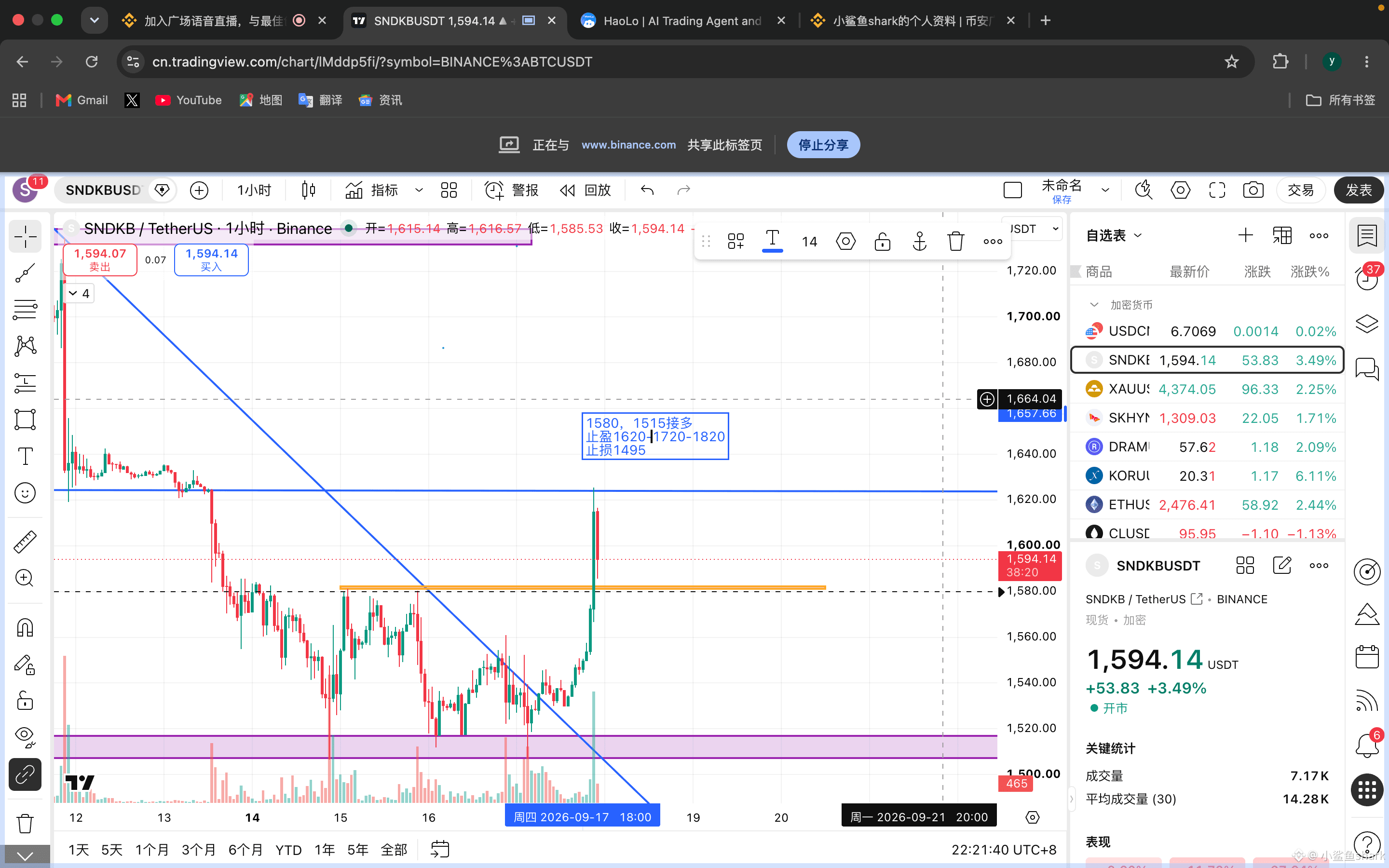
sndk1580, 1515 buy/long more, stop loss 1495, take profit 1620-1720-1820
sndk1580, 1515 buy/long more, stop loss 1495, take profit 1620-1720-1820
5
580
·
--
Just like my opinion, I went first, hehehee
I'm more sensitive to the market and faster to react!
Just like my opinion, I went first, hehehee
I'm more sensitive to the market and faster to react!
I'm more sensitive to the market and faster to react!


7
1.3k
·
--
The rules of the trading game are survival
not profit
When he is good at surviving
profits will come
The rules of the trading game are survival
not profit
When he is good at surviving
profits will come
not profit
When he is good at surviving
profits will come
1
5
512
·
--
Yesterday's non-farm payroll data was very good, and expectations for rate hikes rose to 60%. Tech stocks surprisingly surged all the way up. Bitcoin and gold have risen and fallen together many times. U.S. bond yields and the stock market have risen together, and this same phenomenon also appeared before the outbreak of the previous financial crises.
The U.S. stock market has this financial crisis warning signal; it was also present before Japan's crisis and the subprime mortgage crisis. The two giants on the AI track are both telling stories by relying on financing, pushing cloud service providers to build computing centers ahead of schedule. They are also mutually guaranteeing each other's debt, and market liquidity has been drained away.
Smart money has already flowed into Bitcoin the last time U.S. Treasury yields hit a new high. As digital gold, has Bitcoin really shifted from a risk asset to a safe-haven asset? The previous rise was also verified by the market with real money.
I'm not just judging it from Bitcoin and gold moving up and down together. I'm reasoning from the underlying liquidity logic. If AI giants' IPOs (Anthropic and OpenAI) keep absorbing market liquidity, will the prosperity of the entire U.S. stock market come to an end? Smart money already flowed into Bitcoin when U.S. Treasury yields last hit a new high, so I inferred that its nature has changed from a risk asset to a safe-haven asset.
I know it sounds a bit far-fetched, but it seems like this really is the consensus... Using AI to calculate it, if Bitcoin really matches gold's safe-haven asset characteristics, gold can be mined indefinitely, while BTC's supply is basically fixed. If the consensus that it is digital gold really takes shape, then in the future it could be 1.5 million dollars per coin; CZ has also mentioned this price.
We can start with this view and then observe step by step whether the market recognizes it.
Yesterday's non-farm payroll data was very good, and expectations for rate hikes rose to 60%. Tech stocks surprisingly surged all the way up. Bitcoin and gold have risen and fallen together many times. U.S. bond yields and the stock market have risen together, and this same phenomenon also appeared before the outbreak of the previous financial crises.
The U.S. stock market has this financial crisis warning signal; it was also present before Japan's crisis and the subprime mortgage crisis. The two giants on the AI track are both telling stories by relying on financing, pushing cloud service providers to build computing centers ahead of schedule. They are also mutually guaranteeing each other's debt, and market liquidity has been drained away.
Smart money has already flowed into Bitcoin the last time U.S. Treasury yields hit a new high. As digital gold, has Bitcoin really shifted from a risk asset to a safe-haven asset? The previous rise was also verified by the market with real money.
I'm not just judging it from Bitcoin and gold moving up and down together. I'm reasoning from the underlying liquidity logic. If AI giants' IPOs (Anthropic and OpenAI) keep absorbing market liquidity, will the prosperity of the entire U.S. stock market come to an end? Smart money already flowed into Bitcoin when U.S. Treasury yields last hit a new high, so I inferred that its nature has changed from a risk asset to a safe-haven asset.
I know it sounds a bit far-fetched, but it seems like this really is the consensus... Using AI to calculate it, if Bitcoin really matches gold's safe-haven asset characteristics, gold can be mined indefinitely, while BTC's supply is basically fixed. If the consensus that it is digital gold really takes shape, then in the future it could be 1.5 million dollars per coin; CZ has also mentioned this price.
We can start with this view and then observe step by step whether the market recognizes it.
The U.S. stock market has this financial crisis warning signal; it was also present before Japan's crisis and the subprime mortgage crisis. The two giants on the AI track are both telling stories by relying on financing, pushing cloud service providers to build computing centers ahead of schedule. They are also mutually guaranteeing each other's debt, and market liquidity has been drained away.
Smart money has already flowed into Bitcoin the last time U.S. Treasury yields hit a new high. As digital gold, has Bitcoin really shifted from a risk asset to a safe-haven asset? The previous rise was also verified by the market with real money.
I'm not just judging it from Bitcoin and gold moving up and down together. I'm reasoning from the underlying liquidity logic. If AI giants' IPOs (Anthropic and OpenAI) keep absorbing market liquidity, will the prosperity of the entire U.S. stock market come to an end? Smart money already flowed into Bitcoin when U.S. Treasury yields last hit a new high, so I inferred that its nature has changed from a risk asset to a safe-haven asset.
I know it sounds a bit far-fetched, but it seems like this really is the consensus... Using AI to calculate it, if Bitcoin really matches gold's safe-haven asset characteristics, gold can be mined indefinitely, while BTC's supply is basically fixed. If the consensus that it is digital gold really takes shape, then in the future it could be 1.5 million dollars per coin; CZ has also mentioned this price.
We can start with this view and then observe step by step whether the market recognizes it.
3
527
·
--
In the previous post, I analyzed his intentions and was right again
In the previous post, I analyzed his intentions and was right again

2
1.1k
·
--
Most likely neutral, maintaining the status quo and waiting for CPI data
Most likely neutral, maintaining the status quo and waiting for CPI data


4
2
873

·
--
The three great “immortals” in the United States each have their own operating standards.
Trump is about doing T between oil prices of $70–$90: when oil hits $70, he strikes Iran once; when it reaches $90, he does the “taco” again.
Bessent is about watching the 30-year U.S. Treasury yield: once it reaches 5.2%, he launches verbal warfare.
Vorsh is about looking at the probability of a September rate hike: if the probability drops to 30%, he hardens up; if it rises to 70%, he starts “blah blah blah.”
The three great “immortals” in the United States each have their own operating standards.
Trump is about doing T between oil prices of $70–$90: when oil hits $70, he strikes Iran once; when it reaches $90, he does the “taco” again.
Bessent is about watching the 30-year U.S. Treasury yield: once it reaches 5.2%, he launches verbal warfare.
Vorsh is about looking at the probability of a September rate hike: if the probability drops to 30%, he hardens up; if it rises to 70%, he starts “blah blah blah.”
Trump is about doing T between oil prices of $70–$90: when oil hits $70, he strikes Iran once; when it reaches $90, he does the “taco” again.
Bessent is about watching the 30-year U.S. Treasury yield: once it reaches 5.2%, he launches verbal warfare.
Vorsh is about looking at the probability of a September rate hike: if the probability drops to 30%, he hardens up; if it rises to 70%, he starts “blah blah blah.”
868
·
--
Verified
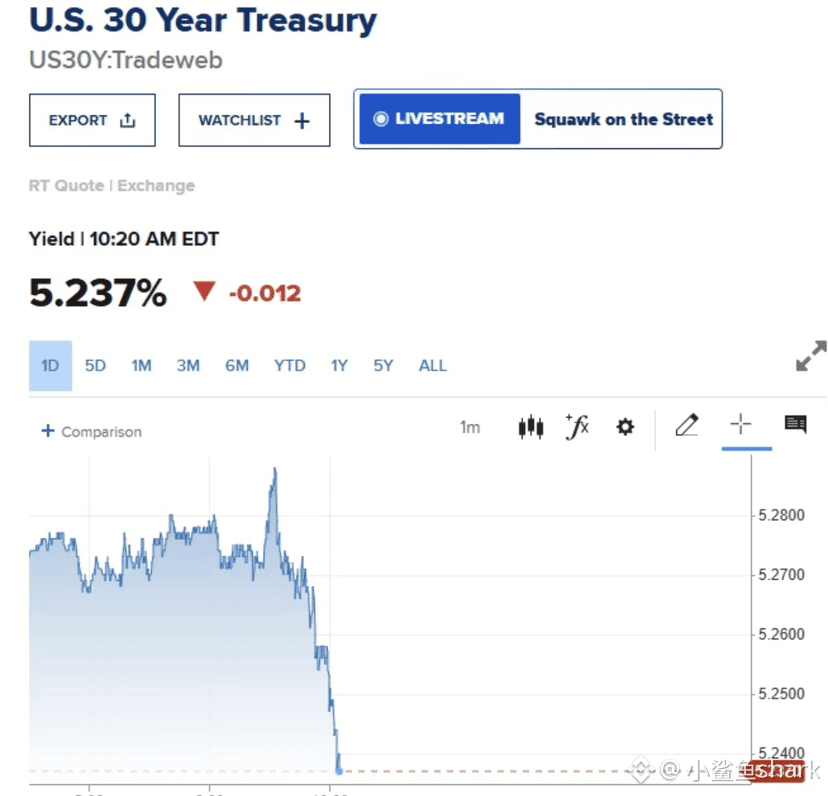
PMI below expectations; U.S. Treasury yields remain elevated
The next financial markets are likely to see high-range volatility, and it’s hard for anyone to break out of a single-direction trend
PMI below expectations; U.S. Treasury yields remain elevated
The next financial markets are likely to see high-range volatility, and it’s hard for anyone to break out of a single-direction trend
The next financial markets are likely to see high-range volatility, and it’s hard for anyone to break out of a single-direction trend
2
2
761
·
--
If the Bank of Japan raises interest rates, then previously global investors who borrowed yen from Japan would exchange it into dollars to invest in US stocks. For example, suppose the exchange rate was 150 yen to 1 US dollar. Then I borrowed 150 yen at a zero interest rate. Based on the then-current exchange rate, I exchanged it in the market for 1 US dollar and bought US stocks or US Treasury bonds with a yield of 3.25 percentage points, or other high-yield instruments. That way, I could conduct an interest-rate arbitrage. Now when my assets mature, I hold 1.0325 US dollars. Using the current exchange rate of 1 US dollar to 160 yen, I can exchange it for 162.5 yen. Then my actual return rate is (162.5 − 150) / 150 = 8.33%. In other words, I not only get the benefit of the US high-yield returns, but I also capture the benefit of exchange-rate fluctuations. At this point, I use the 162.5 yen to buy Japanese stocks again. Then when the Bank of Japan raises rates, the amount of yen in the foreign exchange market decreases, and yen-denominated assets begin to appreciate. Japanese people or other capital then step in to buy up those yen assets, and I can again capture another round of benefits from the Japanese stock market. Finally, I repay the initial 150 yen; everything left is all my profit.
If the Bank of Japan raises interest rates, then previously global investors who borrowed yen from Japan would exchange it into dollars to invest in US stocks. For example, suppose the exchange rate was 150 yen to 1 US dollar. Then I borrowed 150 yen at a zero interest rate. Based on the then-current exchange rate, I exchanged it in the market for 1 US dollar and bought US stocks or US Treasury bonds with a yield of 3.25 percentage points, or other high-yield instruments. That way, I could conduct an interest-rate arbitrage. Now when my assets mature, I hold 1.0325 US dollars. Using the current exchange rate of 1 US dollar to 160 yen, I can exchange it for 162.5 yen. Then my actual return rate is (162.5 − 150) / 150 = 8.33%. In other words, I not only get the benefit of the US high-yield returns, but I also capture the benefit of exchange-rate fluctuations. At this point, I use the 162.5 yen to buy Japanese stocks again. Then when the Bank of Japan raises rates, the amount of yen in the foreign exchange market decreases, and yen-denominated assets begin to appreciate. Japanese people or other capital then step in to buy up those yen assets, and I can again capture another round of benefits from the Japanese stock market. Finally, I repay the initial 150 yen; everything left is all my profit.

1
1
1.8k
·
--
Wuzhen is a typical “talk-strong” king—on his tongue he projects a hardline hawkish stance to the max, but with his hands he keeps waiting and refuses to act. He only talks, saying that staying still and maintaining the status quo is what will happen.
Wuzhen is a typical “talk-strong” king—on his tongue he projects a hardline hawkish stance to the max, but with his hands he keeps waiting and refuses to act. He only talks, saying that staying still and maintaining the status quo is what will happen.
1
2
838
Log in to explore more content
Join global crypto users on Binance Square
⚡️ Get latest and useful information about crypto.
💬 Trusted by the world’s largest crypto exchange.
👍 Discover real insights from verified creators.
Email / Phone number
Trending Topics
EtherGains70.9%InQ3
20,395 views
322 Discussing
One of the best third quarters in history 💰
September closed out last night, and with it, the quarter. For the quarter, BTC is up 42%—the second-best Q3 on record. ETH had a record-breaking Q3 overall, up 70%.
Looking at the chart, things are still looking good: we’re holding support, but we’re testing it more and more often. Plus, ETF momentum is weakening — inflows are gradually declining, and yesterday saw outflows for the first time in a long while.
Yes, historically, October has been a good month for crypto — it’s not called “Uptober” for nothing. But it’s also one of the most volatile months. Last year, for example, we managed to hit a new all-time high (ATH) and experience a flash crash.
🚀 High Accuracy Trades.
$BTC
$ETH
$SOL
#EtherGains70.9%InQ3 #DollarIndexHitsHighestSinceMay2025 #CFTCSubmitsTwoEventContractRulesToWhiteHouse #MicronBeatsEarningsLiftsGuidance
Knowledge is Power
·0 Likes
·63 views
TreasuryLetsStatesFileStablecoinCertificationsEarly
22 views
11 Discussing
US10YearYieldNears5.3%
56,298 views
540 Discussing