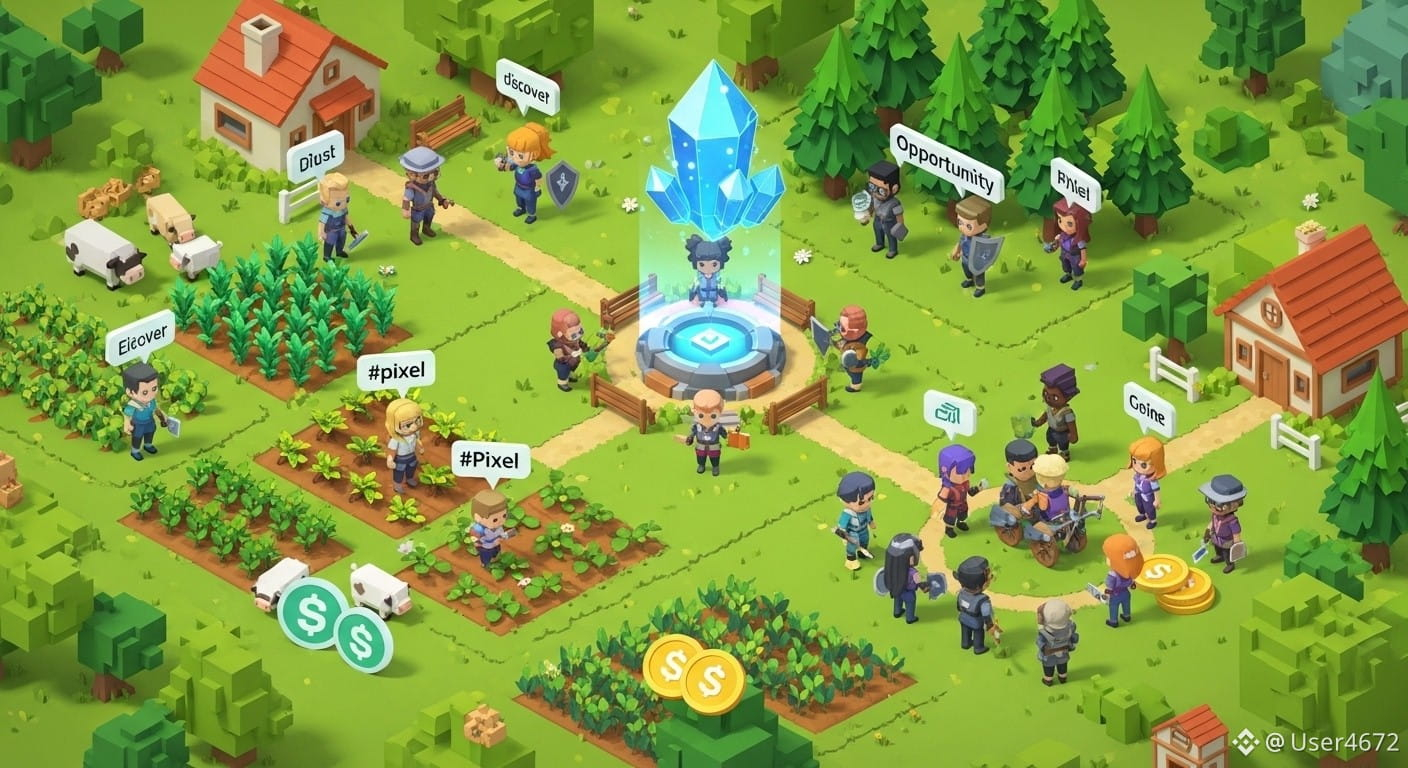
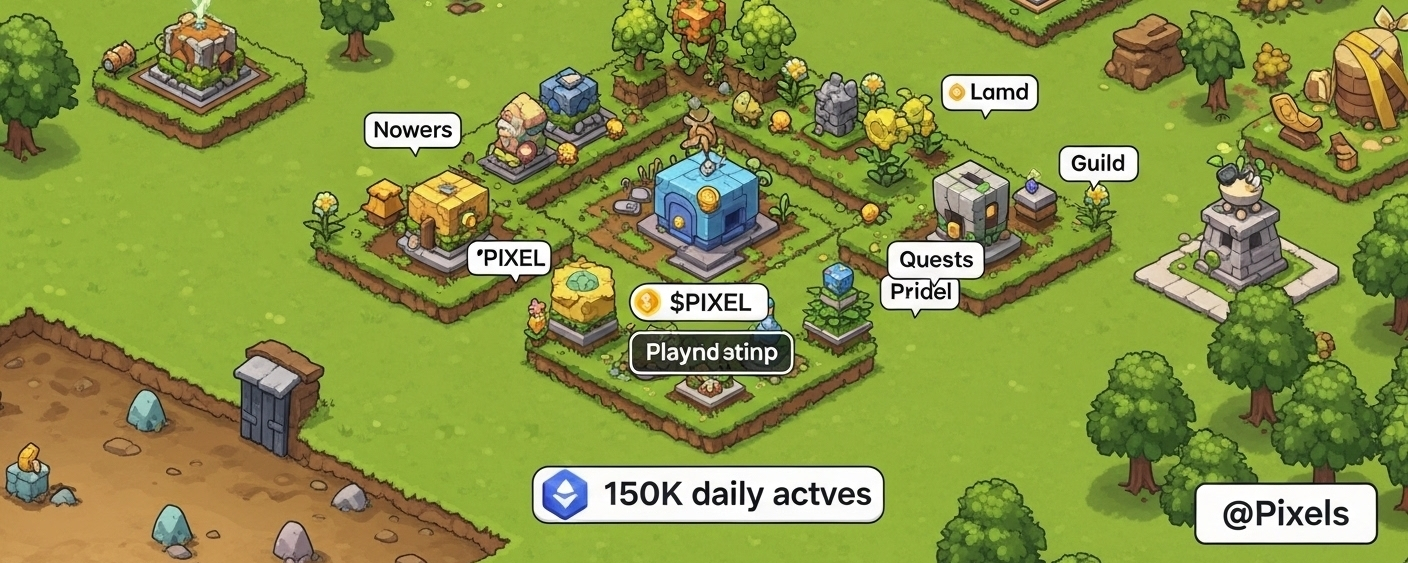
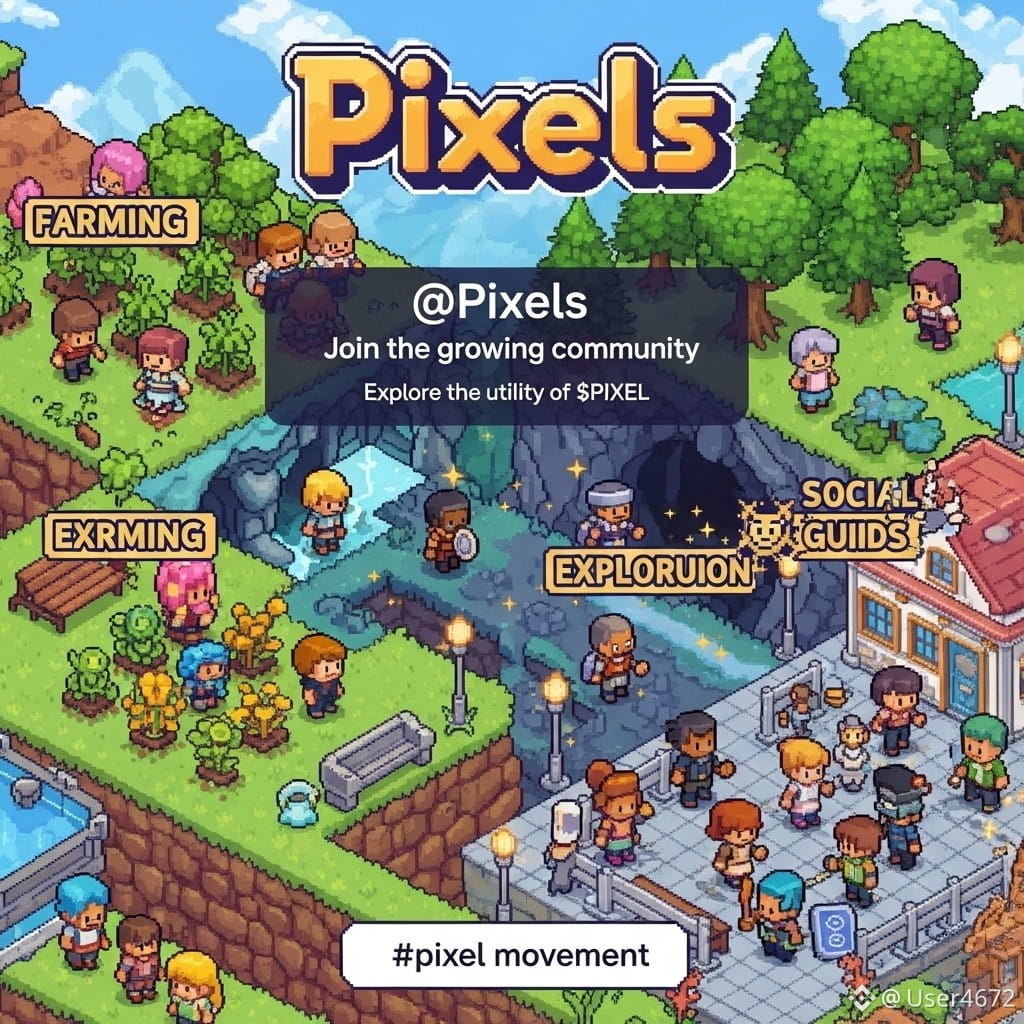
Pixels represents a bold step forward in the evolution of Web3 gaming. By combining casual farming mechanics with immersive exploration and social guild systems, it creates a dynamic environment where players can truly own their progress. The $PIXEL token fuels this ecosystem, enabling NFT minting, governance, VIP memberships, and guild participation. With over 150K daily active players and integrations across 90+ projects, @Pixels is proving that sustainable play-to-earn models can thrive when gameplay and community engagement are prioritized. As adoption grows, $PIXEL is positioned not only as a utility token but also as a cornerstone of decentralized gaming economies. The #pixel movement is more than a trend—it’s a vision of how blockchain can empower creativity, collaboration, and ownership in digital worlds.
Pixels is building a vibrant Web3 world where farming, guilds, and exploration meet blockchain innovation. Discover the power of @Pixels , unlock opportunities with $PIXEL , and join the #pixel community shaping the next era of gaming.
The rise of Pixels marks a new era in Web3 gaming, blending casual farming mechanics with deep social collaboration. Built on the Ronin Network, Pixels empowers players to own land NFTs, join guilds, and progress through quests while contributing to a vibrant ecosystem. The $PIXEL token is more than just currency—it drives governance, NFT minting, VIP memberships, and guild participation. With over 150K daily active players and integrations across 90+ Web3 projects, Pixels is proving that sustainable play-to-earn models can thrive when gameplay and community engagement come first. As adoption grows, @Pixels is positioning $PIXEL as a cornerstone of decentralized gaming, making #pixel a tag to watch closely in 2026.
Pixels continues to redefine Web3 gaming with farming, exploration, and social guilds. Join the growing community @Pixels , explore the utility of $PIXEL , and be part of the #pixel movement shaping the future of play-to-earn.
Tip to Unlock Exclusive Chats with Creators on Binance Square
What is Tip to Chat? Tip to Chat is a new feature that lets users unlock private 1-on-1 messaging with their favorite creators by tipping above a creator-set threshold — a new revenue stream for creators and direct access for fans. Why It Matters? For Creators Monetize beyond contentEarn directly from your profile, not just from individual posts. A standalone income stream independent of content performance.Price it your way Set a custom threshold in your chat settings. Market commentary, trade ideas, 1-on-1 Q&A — you decide what to offer and what it's worth.Less noise, more signal Only users who meet your threshold can message you. No spam — every message comes from someone who values your time. For Readers Support creators, not just a post Tip directly on any creator's profile to show support — no specific content required.Tip first. Chat next One tip unlocks a direct conversation. Market calls, strategy breakdowns, real-time takes — the shortest path from question to answer. How It Works Creators: Set up in 3 Steps Step 1: Go to [Settings] on Square profile page → Chat Setting → Allow users to find and add me - People who tipped me. Step 2: Set your tipping threshold amount. Step 3: [Tip] and [Chat] entrances added to your Square profile.
Readers: Access in 3 Steps Step 1: find the Tip to Chat button on Creator’s Square profile page. Step 2: Two ways in - Tap [Tip] to support the creator. Once the threshold is met, tap [Chat]. - Tap [Chat], the system shows the required amount. Tip as prompted. Step 3: Unlock exclusive messaging with the creator.
Message Entry: Access Chat Instantly from User Center After initiating a chat, find your messages quickly via the shortcuts below. App Step 1: Tap your avatar in the top-left corner of the homepage to enter [the User Center]. Step 2: Tap [Chat] in the bottom navigation bar to open your chat list, where you can view or start direct messages. Web Tap [Chat] in the top-right navigation to view your chat list.
FAQ 1.Is Tip to Chat on by default? No. Creators must enable it manually in Chat Settings and set a threshold. Without it, no [Tip] or [Chat] entrance will appear on their profile. *This service may not be available in your region. 2.What's the minimum threshold? 1 USD. Creators set their own price. 3.What token can I use for tipping? Tips on Binance Square supports various cryptocurrencies available in your Funding, Spot, and Earn wallets. You can manually select the preferred wallet and token after entering the amount. 4.If I send a Tip, what percentage will the creator receive? Creators will receive 100% of the tip. Binance Square will not receive any portion of these payments. 5.Can I get a refund on a Tip? Tips are considered final transactions; refunds are not available. Please ensure you want to proceed before completing the transaction. 6.If a creator raises their threshold, do I lose access? No. The private message permissions of users who have already met the criteria will not be affected by any subsequent changes to the creator's threshold amount. 7.Will the creator definitely reply? Tip to Chat gives you a direct channel to message creators, but creators have full discretion to respond or block at any time. All interactions are subject to Binance Square's existing Chatroom Management Guidelines. 8.Is my privacy protected? Yes. Tip to Chat follows Binance Square's existing Chatroom Management Guidelines, including blocking and reporting. Both creators and users can manage their messaging permissions and privacy settings as needed. 9.Where can I check my tipping record? Both payers and payees can find their full tip records via [Wallet] - [Funding Wallet] - [History] - [Pay] - [Paid/received]. Creators can also find the total tips received, tip per content, and per reader in the Tips section of the Creator Center. 10.What should I do if the tip payment fails? The token will be refunded to your wallet if the payment fails during the tipping process. You can check the record in your pay wallet history. Please also refer to the notification to try again later.

The "Glass Room" Problem: Why Middle East Economic Growth Needs Verifiable Privacy
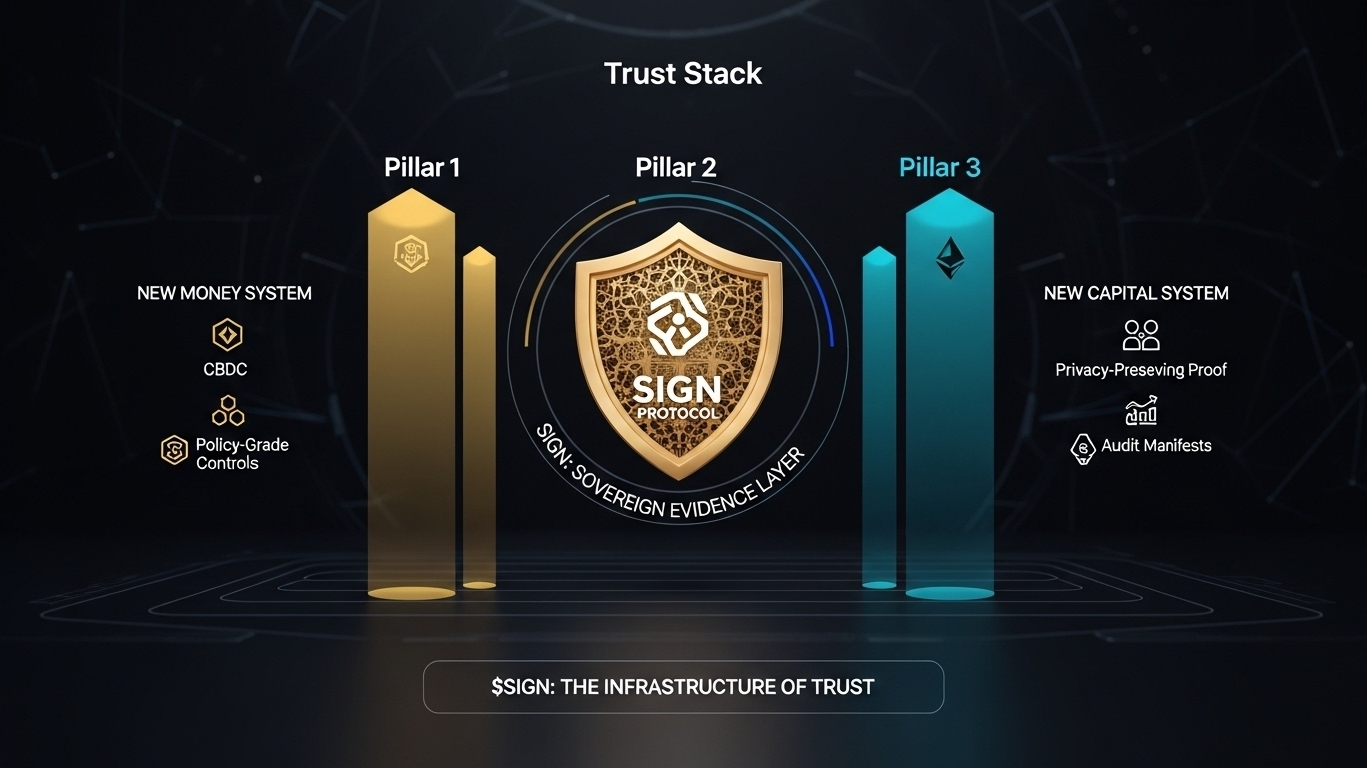
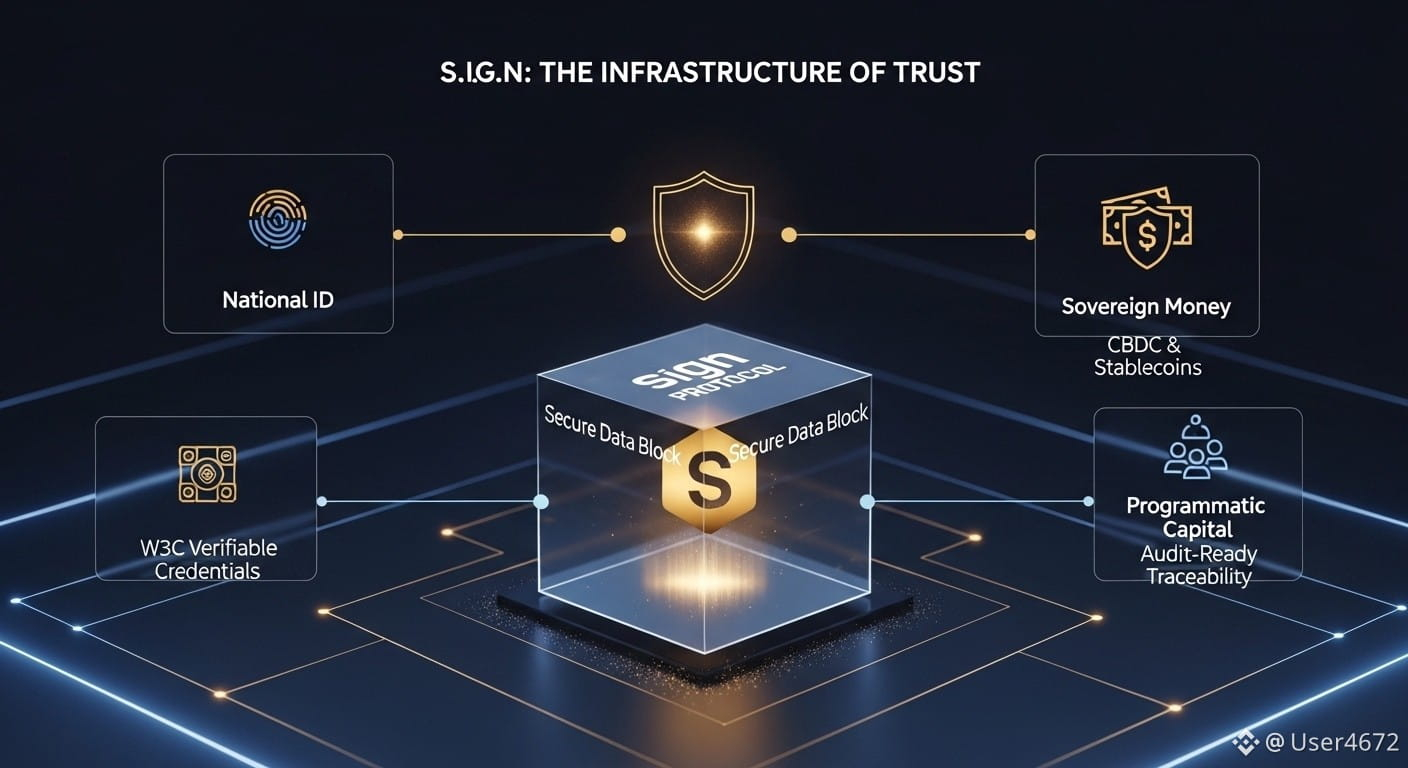
The current crypto landscape feels like an endless loop of déjà vu. We see the same cycles, the same overblown promises, and new branding slapped onto old, tired ideas. Influencers shout about the "next big thing," ignoring the fact that we heard the exact same pitch last month. It’s tiring, not in a dramatic way, but in a dull, persistent way. And then there’s the reality of massive economic ambition in the Middle East. From Riyadh to Dubai, the region isn't just embracing digital transformation; it's defining it. Yet, a fundamental flaw persists in the current blockchain narrative: the "Glass Room" paradox. We keep pretending that blockchains are transparent by design, as if that's always a good thing. In real life, not everything should be public. You don't run a business, share personal data, or negotiate national-security deals in a transparent glass room, yet that’s basically what most chains ask you to do. Total public exposure is a non-starter for sovereign nations and major institutions. This is where the noise stops and the infrastructure begins. I’ve been watching Sign and the development of the S.I.G.N. (Sovereign Infrastructure for Global Nations) framework. The core idea is brilliantly simple, at least on the surface: Prove something is true... without revealing the actual data. It’s like settling an argument without showing your entire message history—just enough proof to move forward. In the Middle East, where economic growth is now inseparable from national security and control, this distinction is everything. @SignOfficial isn’t offering just another speculative product; it’s delivering an "evidence layer"—a way to provide immutable, audit-ready proof of a claim (like an identity, compliance, or a payment) without stripping away the privacy that a sovereign nation needs to operate. The $SIGN token isn’t trying to be the loudest asset in the room; it’s trying to be the technical substrate for this "verifiable trust." When a country moves billion-dollar grants or manages its national identity on a blockchain, it requires infrastructure that is privacy-by-default, performant under national concurrency, and lawful for audit. The "quiet infrastructure" often sticks around while everything flashy burns out. 🌍 #SignDigitalSovereignInfra
It feels like the entire crypto space is trapped in a simulation. The same hype cycles, the same promises of mass adoption, and the same realization that most "solutions" are just adding complexity to a stack that’s already unstable. But if you look closely at the massive economic engines in the Middle East, a different kind of shift is happening. They don’t want toys; they want tools for sovereignty. This is where @SignOfficial is quietly making a difference. While others are shouting about the next meme coin, $SIGN is building the foundational trust layer for national systems of money and ID. In a region that values security above all, you can't build a digital future in a glass room where every transaction is readable by everyone. You need verifiable trust—the ability to prove who you are and what you own without stripping away your privacy. The real growth of 2026 isn't coming from the loudest marketing; it's coming from the infrastructure that lets a nation digitize its economy without losing control. #SignDigitalSovereignInfra
The "Digital Lifeboat": Why the Middle East is Betting on $SIGN for Sovereign Resilience
It’s March 2026, and the global narrative has shifted. We aren’t just talking about "bull markets" anymore; we’re talking about survival. With Brent crude hitting $119 and regional infrastructure under increasing physical and cyber pressure, the Middle East is no longer treating digital transformation as a luxury. It has become a matter of national security. In this high-stakes environment, the "Glass Room" paradox—where transparency creates vulnerability—is finally being solved. Sovereign nations like Saudi Arabia and the UAE are looking for a "digital lifeboat": infrastructure that is resilient, tamper-proof, and, most importantly, under their control. This is where Sign and the S.I.G.N. (Sovereign Infrastructure for Global Nations) blueprint have moved from whitepaper to reality. The Shift from Speculation to Sovereignty While much of the crypto world spent years chasing retail hype, @SignOfficial was building the floor. The recent surge in $SIGN isn't just a chart move; it’s a reflection of the protocol’s role in real-world deployments. From modernizing digital ID systems in partnership with national ministries to providing the evidence layer for new financial rails, Sign is becoming the "trust substrate" for the region’s economic growth. The Middle East's Vision 2030 and D33 agendas require more than just "fast" blockchains. They require: Inspection-Ready Evidence: Auditable records that don't leak sensitive national data. Resilient Identity: Verifiable credentials that function even when centralized databases are compromised. Programmatic Capital: The ability to distribute grants and incentives with 100% traceability. Why the "Evidence Layer" is the New Oil In 2026, data is the new oil, but verified data is the refined fuel. Sign’s omni-chain attestation framework allows these growing economies to turn isolated data points into permanent, queryable truths. Whether it’s proving compliance for a cross-border trade or verifying a citizen’s credentials without a central "identity query" API, Sign provides the tools for a truly decentralized—yet governable—national infrastructure. As we navigate a geopolitically tense year, the projects that survive won't be the ones with the loudest marketing. They will be the ones like $SIGN —the quiet, structural "lifeboats" that keep the digital economy running when the storms hit. Digital sovereignty isn't a buzzword anymore; it's the only way forward. #SignDigitalSovereignInfra
It’s quiet in the markets today, but the real noise is in the infrastructure. I’m looking at the massive digital push in the Middle East and realizing that everyone is still trying to build skyscrapers on quicksand. You can’t build a national digital economy if your foundational trust layer is just a public spreadsheet. This is where the distinction between a 'product' and an 'infrastructure' becomes critical. While some are selling apps, @SignOfficial is quietly delivering the blueprint for S.I.G.N. (Sovereign Infrastructure for Global Nations). It’s an 'evidence layer'—a way to prove a claim (like an identity or a payment) is true without stripping away the privacy that a sovereign nation needs to operate. $SIGN isn’t trying to be the loudest token in the room; it’s trying to be the floor we walk on. In a region that values security and control, the future isn't about transparency at all costs—it's about verifiable sovereignty. 🌍 #SignDigitalSovereignInfra
The "Trust Layer" That Crypto Still Needs: Lessons from the Middle East
Lately, I’ve been thinking about what actually constitutes "mass adoption." For years, we’ve used the term as a synonym for "more liquidity" or "higher token prices." But if you want to understand what true adoption looks like—the kind that moves trillions, not millions—you have to look past the influencers and toward the foundation. The real story of 2026 isn't about which dApp got the most users; it's about which infrastructure the institutions actually trust. This is why the strategic shift in the Middle East is so fascinating. You have nations with incredibly ambitious economic targets—Vision 2030, Dubai’s D33—where the requirement for "sovereignty" isn't optional. In that landscape, the "transparency at all costs" mantra of the early crypto days is a weakness. You don't build a national identity system or a digital money rail on a public blackboard where every transaction is readable by anyone with a block explorer. This is what I call the "Glass Room" paradox: You need blockchain for the efficiency and immutability, but you can’t use it if it reveals the very data that requires security. This is where the distinction between a product and an infrastructure becomes critical. While much of the ecosystem is still selling apps, @SignOfficial is quietly delivering the blueprint for the S.I.G.N. (Sovereign Infrastructure for Global Nations) framework. Sign Protocol and the $SIGN token aren't offering a new way to trade; they are offering a new way to verify. They provide an "evidence layer"—omni-chain attestations that allow a government or corporation to prove a claim is true (like a credential being valid or a payment being settled) without forcing the raw, sensitive data onto a public ledger. This isn't a speculative narrative; it's the missing link. When the Middle East invests billions into programmatic grants for its tech ecosystem, or when it issues a sovereign-grade CBDC, it needs a verifiable foundation that integrates into its existing legal and audit frameworks. It needs infrastructure that handles privacy by default and performance at national scale. The "Trust Layer" isn't a nice-to-have; it’s the floor. The quiet infrastructure projects are often the ones that stick around when the flashy ones burn out. While the rest of the world is distracted by the loud marketing, the Middle East is building the structure of its digital sovereignty. The true "bull market" of the future won't be about hype; it will be about verifiable history, and $SIGN is positioned to provide the code for that history. #SignDigitalSovereignInfra
The crypto market is finally growing up. For years, we’ve treated tokens like tickets to a digital theme park—fun to trade, but disconnected from the "real world." But look at the shift happening in the Middle East right now. Nations aren’t just looking for "apps"; they’re looking for sovereignty. I’ve been tracking @SignOfficial and their approach to digital infrastructure. While everyone else is building the 10th version of a decentralized exchange, they are quietly laying the floor for national systems. In a region that values control and security, the $SIGN protocol offers an "evidence layer" that actually makes sense for governments. It’s the difference between a glass room where everyone sees your data and a secure vault where you only prove what’s necessary. Real growth in 2026 isn't coming from the loudest marketing; it’s coming from the infrastructure that lets a nation digitize its money and identity without losing its soul. 🌍 #SignDigitalSovereignInfra
The "Sovereign Shift": Why Middle East Growth Needs More Than Just Liquidity
If you look at the headlines coming out of the Middle East right now—from Abu Dhabi’s push for "AI-native" government to the massive digital transformation in Saudi Arabia—it’s clear we’re past the era of just "trading crypto." The region is no longer interested in being a playground for speculative assets; it’s building a fortress. But there’s a missing piece in the conversation: Verification. We’ve spent 2024 and 2025 obsessed with "transparency," but transparency without control is a risk, not an asset. For a nation-state or a major financial institution, showing every transaction on a public board isn't innovation—it's a security flaw. This is the "Glass Room" problem we’ve been ignoring. How do you move billions in capital, verify identities for 15 million citizens, or issue a CBDC while maintaining actual sovereignty? This is where the narrative around Sign and @SignOfficial gets interesting. They aren’t just pitching another blockchain; they’re delivering the S.I.G.N. (Sovereign Infrastructure for Global Nations) blueprint. It’s an "evidence layer"—a way to provide immutable, audit-ready proof of a claim (like identity or a payment) without forcing the data into the public eye. In the Middle East, where economic growth is now inseparable from national security, $SIGN acts as the technical substrate for this "verifiable trust." It’s the infrastructure that allows a grant to be distributed programmatically or a credential to be verified across borders without a centralized middleman. While the rest of the market is chasing the next viral trend, the real "sovereign bull" is being built in the background. Digital sovereignty isn't about borders anymore; it's about the code that proves who we are and what we own. If you’re looking for where the actual value will sit in 2026, look at the infrastructure that stays standing when the hype fades. #SignDigitalSovereignInfra
Lately, the crypto timeline feels like one long, repetitive dream—or maybe a fever dream. Between the "Operation Epic Fury" headlines and the $SIGN surge we saw earlier this month, the gap between "internet money" and "real-world infrastructure" is finally closing. But not in the way we expected. We talk about the Middle East as the new digital frontier, but look at the actual stakes: data center strikes, capital flight, and the fragile nature of centralized trust. When the lights go out or the servers get hit, "transparency" isn't enough. You need sovereignty. This is why I’ve been watching @SignOfficial . They aren't building just another dApp; they are building a "digital lifeboat" for national systems of money and ID. In a region where economic growth is now tied to surviving geopolitical shocks, having a verifiable evidence layer that isn't tethered to a single point of failure isn't just a "good idea"—it’s a necessity. The $SIGN narrative is shifting from speculation to actual national resilience. Maybe it’s time to stop looking for the next "moon" and start looking for the infrastructure that actually keeps the world running when things get heavy. #SignDigitalSovereignInfra
Beyond the Hype: Why Digital Sovereignty is the Quiet Revolution We Need
If you’ve been in crypto for more than a week, you know the cycle. A new project launches, the charts go vertical, influencers scream about "mass adoption," and then... nothing. We’ve spent years building toys, but we’re still struggling to build tools that actual governments and institutions can trust. The problem isn't the technology; it’s the transparency paradox. We’ve been told that "public by default" is the only way to do blockchain. But in the real world—especially when you look at the massive economic shifts happening across the Middle East—total public exposure is a non-starter. You can't run a national identity system or a sovereign wealth fund in a "glass room" where every competitor and bad actor can see the raw data. This is where Sign and the concept of S.I.G.N. (Sovereign Infrastructure for Global Nations) finally hit different. Instead of just adding more noise to the space, @SignOfficial is focusing on the "evidence layer." It’s a blueprint for how a nation can actually digitize its most critical assets—money, ID, and capital—without sacrificing control or privacy. Think about the economic growth targets in places like Dubai or Riyadh. They need infrastructure that is audit-ready but privacy-preserving. They need a way to prove a transaction is compliant without leaking the trade secrets behind it. $SIGN isn’t just another token to trade; it’s the technical substrate for this "verifiable trust." By using omni-chain attestations, it allows systems to communicate across different networks while keeping the core data secure. It’s the difference between a flashy app and the actual plumbing that makes a modern digital economy work. Maybe the markets are too distracted by the loud projects to notice the quiet ones building the foundation. But as the Middle East leads the charge into digital sovereignty, the infrastructure that stays will be the one that solved the "glass room" problem. #SignDigitalSovereignInfra
The "Glass Room" Problem Lately, it feels like every new project is just a louder version of the last one. More hype, more complexity, more noise. But while everyone is chasing the next 100x, we’re ignoring the most basic hurdle for real-world adoption: privacy. Most blockchains expect you to run your life and business in a glass room. Every deal, every credential, every movement is pinned to a public board for anyone to see. In the real world, that’s not "transparency"—it’s a liability. This is where S.I.G.N. starts to make sense to me. It isn’t trying to be the loudest project in the room; it’s trying to be the floor we walk on. By providing a sovereign infrastructure for national systems, @SignOfficial allows for "verifiable trust"—proving a claim is true without stripping away the privacy of the person behind it. Whether it's national identity or a new money system, the Middle East is looking for stability, not just speculation. Maybe the quiet infrastructure is exactly what sticks when the flashy stuff burns out. $SIGN #SignDigitalSovereignInfra
Midnight Network – Driving the Evolution of Decentralized Privacy
The blockchain industry is rapidly shifting toward solutions that prioritize both privacy and scalability. @MidnightNetwork is leading this transformation with its innovative ecosystem powered by $NIGHT . → Midnight Network integrates zero-knowledge technology to secure transactions while maintaining verifiability. → The system is designed for global scalability, ensuring smooth performance as adoption grows. → $NIGHT embodies the project’s mission to deliver trust, confidentiality, and sustainable innovation in Web3. As demand for privacy-focused blockchain solutions intensifies, Midnight Network positions itself as a pioneer in shaping the next generation of decentralized applications. With $NIGHT , users gain access to a network that values both security and progress, setting new standards for the digital economy. #night