
The Nameless One
2.2k Posts

The Nameless One
Report
Block User
Just a wanderer in crypto communities, jotting down what I see and whatever I think.
Open Trade
High-Frequency Trader
5.8 Years
644 Following
1.0K+ Followers
3.4K+ Liked
Posts
Portfolio
All
Quotes
Videos
Live
PINNED
When u realise why it's called "Crypto" and not "Laughto"
#crypto #MarketPullback #BTC #ETH #solana
$BTC $ETH $SOL
When u realise why it's called "Crypto" and not "Laughto"
#crypto #MarketPullback #BTC #ETH #solana
$BTC $ETH $SOL
#crypto #MarketPullback #BTC #ETH #solana
$BTC $ETH $SOL
2
1
2
95
APRO – A Multi-layer Oracle for Real-time Blockchain DataAPRO is a decentralized oracle designed to deliver reliable and secure data to blockchain applications. As DeFi, gaming, and RWA use cases increasingly depend on external data, oracles have become a core piece of infrastructure rather than a supporting component.
APRO differentiates itself through a hybrid off-chain and on-chain architecture, enabling real-time data delivery via two mechanisms: push-based and pull-based data feeds. This dual approach allows applications to choose the most suitable method depending on latency, cost, and update requirements.
On the technology side, APRO incorporates multiple security and quality layers. AI-based verification helps detect anomalies, verifiable randomness supports fairness-sensitive use cases, and a two-layer network architecture separates data collection from validation, reducing manipulation risks.
APRO supports a wide range of data types, including crypto assets, equities, real estate, and gaming data, and is integrated across more than 40 blockchain networks. By working closely with blockchain infrastructure, the protocol aims to reduce costs and improve performance while keeping integration developer-friendly.
From an investment perspective, APRO falls into the category of “quiet but essential” infrastructure. Its long-term value depends on real adoption by dApps and its ability to compete in a crowded oracle landscape. This is less about short-term hype and more about gradual, utility-driven growth.
@APRO-Oracle #APRO $AT
{future}(ATUSDT)
APRO – A Multi-layer Oracle for Real-time Blockchain Data
APRO is a decentralized oracle designed to deliver reliable and secure data to blockchain applications. As DeFi, gaming, and RWA use cases increasingly depend on external data, oracles have become a core piece of infrastructure rather than a supporting component.
APRO differentiates itself through a hybrid off-chain and on-chain architecture, enabling real-time data delivery via two mechanisms: push-based and pull-based data feeds. This dual approach allows applications to choose the most suitable method depending on latency, cost, and update requirements.
On the technology side, APRO incorporates multiple security and quality layers. AI-based verification helps detect anomalies, verifiable randomness supports fairness-sensitive use cases, and a two-layer network architecture separates data collection from validation, reducing manipulation risks.
APRO supports a wide range of data types, including crypto assets, equities, real estate, and gaming data, and is integrated across more than 40 blockchain networks. By working closely with blockchain infrastructure, the protocol aims to reduce costs and improve performance while keeping integration developer-friendly.
From an investment perspective, APRO falls into the category of “quiet but essential” infrastructure. Its long-term value depends on real adoption by dApps and its ability to compete in a crowded oracle landscape. This is less about short-term hype and more about gradual, utility-driven growth.
@APRO Oracle #APRO $AT
73
Falcon Finance – Building Global Collateral Infrastructure for On-chain LiquidityFalcon Finance is developing a global collateral infrastructure designed to reshape how liquidity and yield are created on-chain. Rather than relying solely on native crypto assets, the protocol accepts a wide range of liquid assets, including digital tokens and tokenized real-world assets, as collateral.
Based on this collateral, Falcon issues USDf, an overcollateralized synthetic dollar. USDf provides users with stable and accessible on-chain liquidity without requiring them to sell or liquidate their existing positions. This brings DeFi closer to a familiar TradFi concept: unlocking liquidity while maintaining asset exposure.
Falcon’s core value lies in its approach to risk management. Overcollateralization reduces systemic risk and creates room for more sophisticated yield and financial structures built around USDf. In theory, this positions Falcon as foundational infrastructure rather than a single-purpose DeFi product.
The main challenge, however, lies in execution. Managing diverse collateral types, especially tokenized RWAs, requires robust pricing, oracle systems, and legal clarity. The long-term credibility of USDf will depend heavily on collateral quality and risk control mechanisms.
Falcon Finance is better suited for investors focused on stable assets, sustainable liquidity, and long-term DeFi infrastructure rather than short-term speculative narratives.
@falcon_finance #FalconFinance $FF
{future}(FFUSDT)
Falcon Finance – Building Global Collateral Infrastructure for On-chain Liquidity
Falcon Finance is developing a global collateral infrastructure designed to reshape how liquidity and yield are created on-chain. Rather than relying solely on native crypto assets, the protocol accepts a wide range of liquid assets, including digital tokens and tokenized real-world assets, as collateral.
Based on this collateral, Falcon issues USDf, an overcollateralized synthetic dollar. USDf provides users with stable and accessible on-chain liquidity without requiring them to sell or liquidate their existing positions. This brings DeFi closer to a familiar TradFi concept: unlocking liquidity while maintaining asset exposure.
Falcon’s core value lies in its approach to risk management. Overcollateralization reduces systemic risk and creates room for more sophisticated yield and financial structures built around USDf. In theory, this positions Falcon as foundational infrastructure rather than a single-purpose DeFi product.
The main challenge, however, lies in execution. Managing diverse collateral types, especially tokenized RWAs, requires robust pricing, oracle systems, and legal clarity. The long-term credibility of USDf will depend heavily on collateral quality and risk control mechanisms.
Falcon Finance is better suited for investors focused on stable assets, sustainable liquidity, and long-term DeFi infrastructure rather than short-term speculative narratives.
@Falcon Finance #FalconFinance $FF
45
Kite – A Blockchain Built for Autonomous AI AgentsKite is developing a blockchain platform focused on automated payments and transactions, enabling autonomous AI agents to interact using verifiable identities and programmable governance. Rather than targeting end users directly, Kite is designed around a new class of participants: AI agents.
At the infrastructure level, Kite is an EVM-compatible Layer 1 blockchain built to support real-time trading and coordination between AI agents. This allows AI systems not only to execute payments, but also to make decisions, coordinate strategies, and interact continuously on-chain without direct human intervention.
A key feature of Kite is its three-layer identity system. Users, AI agents, and sessions are clearly separated, enhancing security, permission control, and risk management when autonomous agents operate on-chain. This structure highlights Kite’s controlled approach to AI-native blockchain design, rather than fully open permissionless models.
The KITE token is the native token of the network. Its utility is being rolled out in two phases. The first phase focuses on ecosystem participation and incentives, while the second phase introduces staking, governance, and network fee functions, tying the token to long-term network activity.
From a broader perspective, Kite is not positioning itself as a general-purpose blockchain. Instead, it is a focused bet on a future where AI agents become active participants in the on-chain economy. Its strength lies in a clear AI-first vision and specialized architecture, while the main risk is that AI on-chain adoption is still at an early stage and highly uncertain.
Kite is better suited for investors interested in the long-term AI x blockchain narrative rather than short-term market momentum.
@GoKiteAI #KITE $KITE
{future}(KITEUSDT)
Kite – A Blockchain Built for Autonomous AI Agents
Kite is developing a blockchain platform focused on automated payments and transactions, enabling autonomous AI agents to interact using verifiable identities and programmable governance. Rather than targeting end users directly, Kite is designed around a new class of participants: AI agents.
At the infrastructure level, Kite is an EVM-compatible Layer 1 blockchain built to support real-time trading and coordination between AI agents. This allows AI systems not only to execute payments, but also to make decisions, coordinate strategies, and interact continuously on-chain without direct human intervention.
A key feature of Kite is its three-layer identity system. Users, AI agents, and sessions are clearly separated, enhancing security, permission control, and risk management when autonomous agents operate on-chain. This structure highlights Kite’s controlled approach to AI-native blockchain design, rather than fully open permissionless models.
The KITE token is the native token of the network. Its utility is being rolled out in two phases. The first phase focuses on ecosystem participation and incentives, while the second phase introduces staking, governance, and network fee functions, tying the token to long-term network activity.
From a broader perspective, Kite is not positioning itself as a general-purpose blockchain. Instead, it is a focused bet on a future where AI agents become active participants in the on-chain economy. Its strength lies in a clear AI-first vision and specialized architecture, while the main risk is that AI on-chain adoption is still at an early stage and highly uncertain.
Kite is better suited for investors interested in the long-term AI x blockchain narrative rather than short-term market momentum.
@KITE AI 中文 #KITE $KITE
1
70
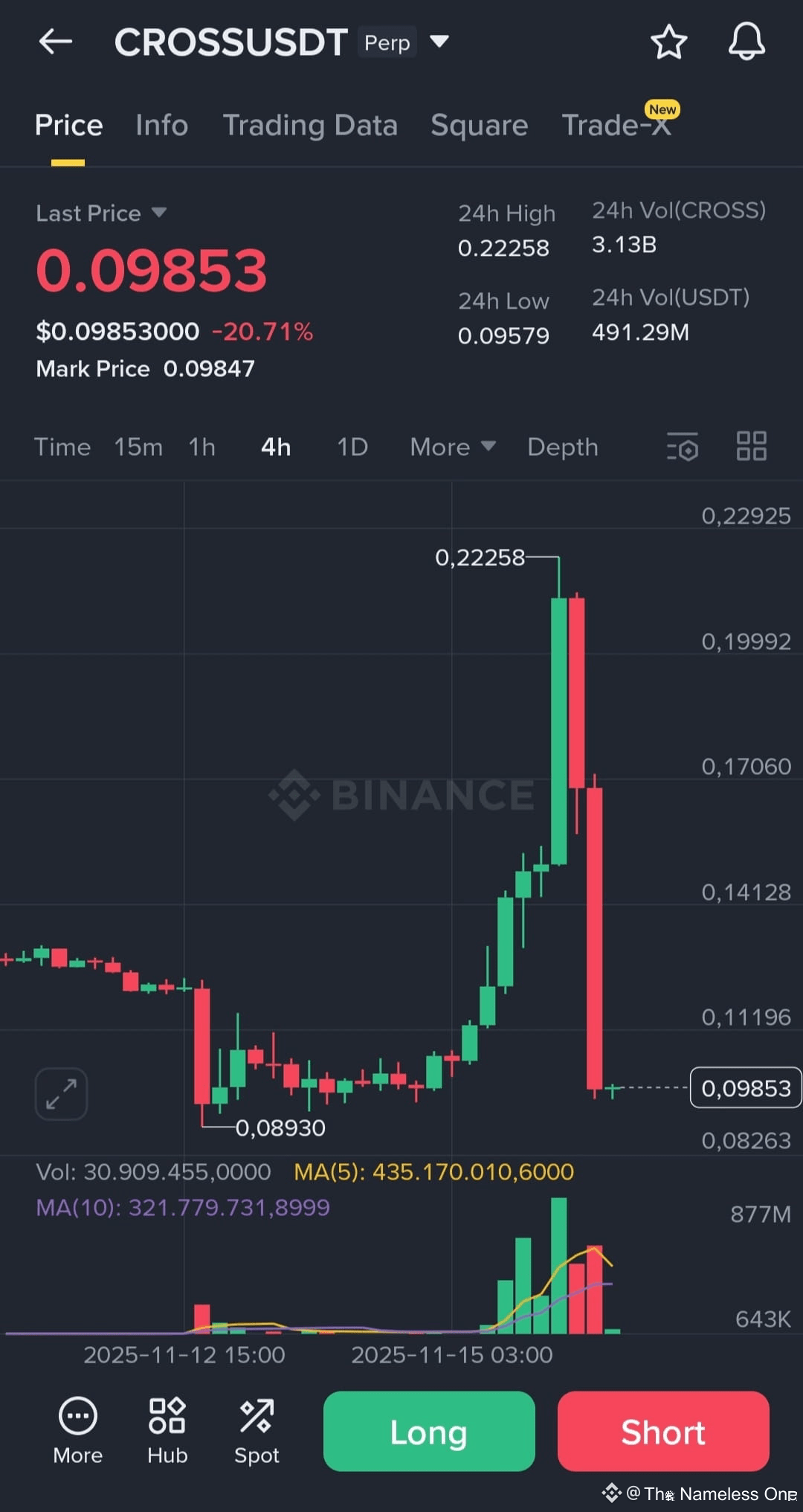
$CROSS Buy on Dip
Entry zone: 0.081 – 0.088 $CROSS
SL: 0.075
TP1: 0.112 | TP2: 0.155 | TP3: 0.188
$CROSS
{future}(CROSSUSDT)
$CROSS Buy on Dip
Entry zone: 0.081 – 0.088 $CROSS
SL: 0.075
TP1: 0.112 | TP2: 0.155 | TP3: 0.188
$CROSS
Entry zone: 0.081 – 0.088 $CROSS
SL: 0.075
TP1: 0.112 | TP2: 0.155 | TP3: 0.188
$CROSS
1
116
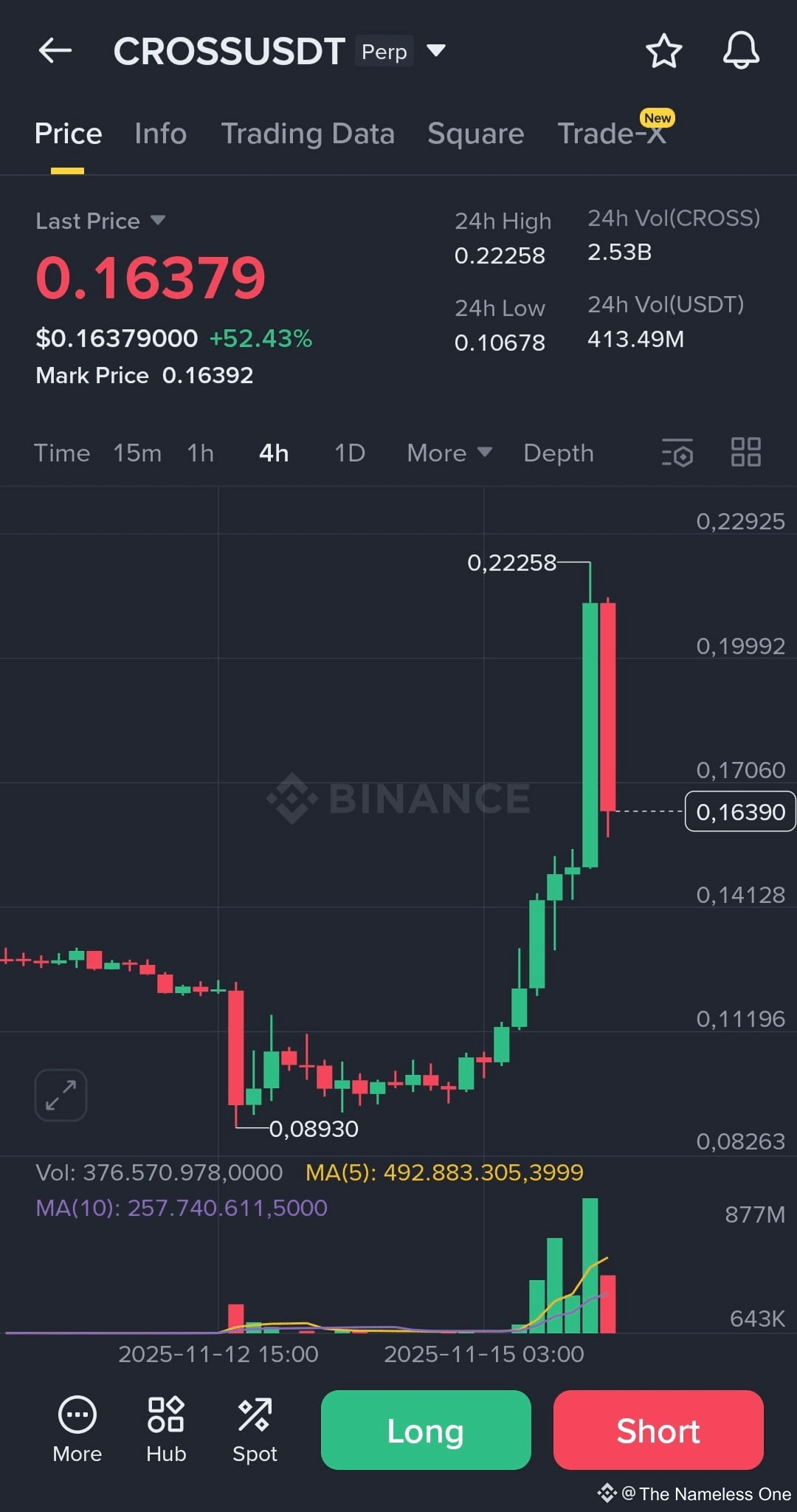
$CROSS Buy on Dip (High risk)
Entry zone: 0.120 – 0.135 $CROSS
SL: 0.110
TP1: 0.150 | TP2: 0.185 | TP3: 0.23
$CROSS
{future}(CROSSUSDT)
$CROSS Buy on Dip (High risk)
Entry zone: 0.120 – 0.135 $CROSS
SL: 0.110
TP1: 0.150 | TP2: 0.185 | TP3: 0.23
$CROSS
Entry zone: 0.120 – 0.135 $CROSS
SL: 0.110
TP1: 0.150 | TP2: 0.185 | TP3: 0.23
$CROSS
1
397
Log in to explore more content
Join global crypto users on Binance Square
⚡️ Get latest and useful information about crypto.
💬 Trusted by the world’s largest crypto exchange.
👍 Discover real insights from verified creators.
Email / Phone number
Trending Topics
A Packed Week of Earnings and Data Tests Markets
25,775 views
196 Discussing
🚨🇺🇸 BIG WEEK AHEAD FOR THE MARKETS!
Markets are pricing in a Fed rate hike in December and $BTC could see some big moves next week.
Here's what's coming:
• Monday: Fed Chair Warsh speaks
• Tuesday: US Retail Sales + $NVDA earnings
• Wednesday: FOMC Minutes
• Thursday: Jobless Claims + Philly Fed Index
• Friday: Consumer Sentiment + Fed speeches
All eyes on $BTC as another important week begins.
#bitcoin
Mookie
·8 Likes
·4.5k views
AnthropicIPOTestsInvestorAppetiteForAI
25,359 views
493 Discussing
HuangReportedlyConsidersReturnToNvidia
51,767 views
641 Discussing