
thesolidoke
69 Posts

thesolidoke
Report
Block User
Real tests of crypto trading bots. Real money, real fees, wins AND losses. No hype, no signals. #TradingBots #AlgoTrading #BTC | NFA
51 Following
16 Followers
15 Liked
Posts
·
--
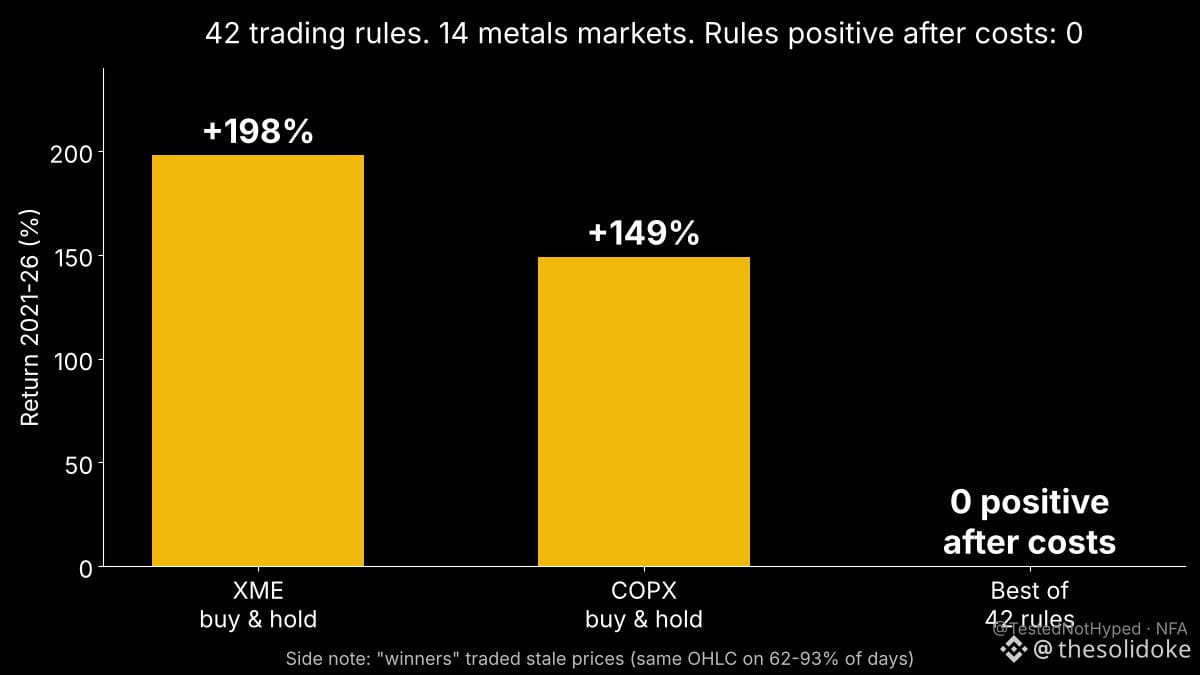
I tested 42 trading rules on 14 metals markets. Not one made money.
Copper, aluminium, steel, iron ore, platinum, palladium, plus the miners' ETFs. Trend rules, breakout rules, long-only rules. All with real costs.
Result: no rule was positive after costs. Copper lost even before costs.
The plot twist: a few "winners" looked amazing at first. Then I checked the data. Those markets had stale prices, the same open/high/low/close on 62-93% of days. The bot was "trading" a price that wasn't moving.
And the kicker: simply buying and holding the miners beat every single rule (XME +198%, COPX +149% over 2021-26).
Lessons:
1. Check your data before you trust your results.
2. Sometimes the boring option wins.
Have you ever had a backtest that was too good to be true?
Not financial advice.
#TradingBots #algoTrading #tradingfees #bitcoin $BTC
1
76
·
--
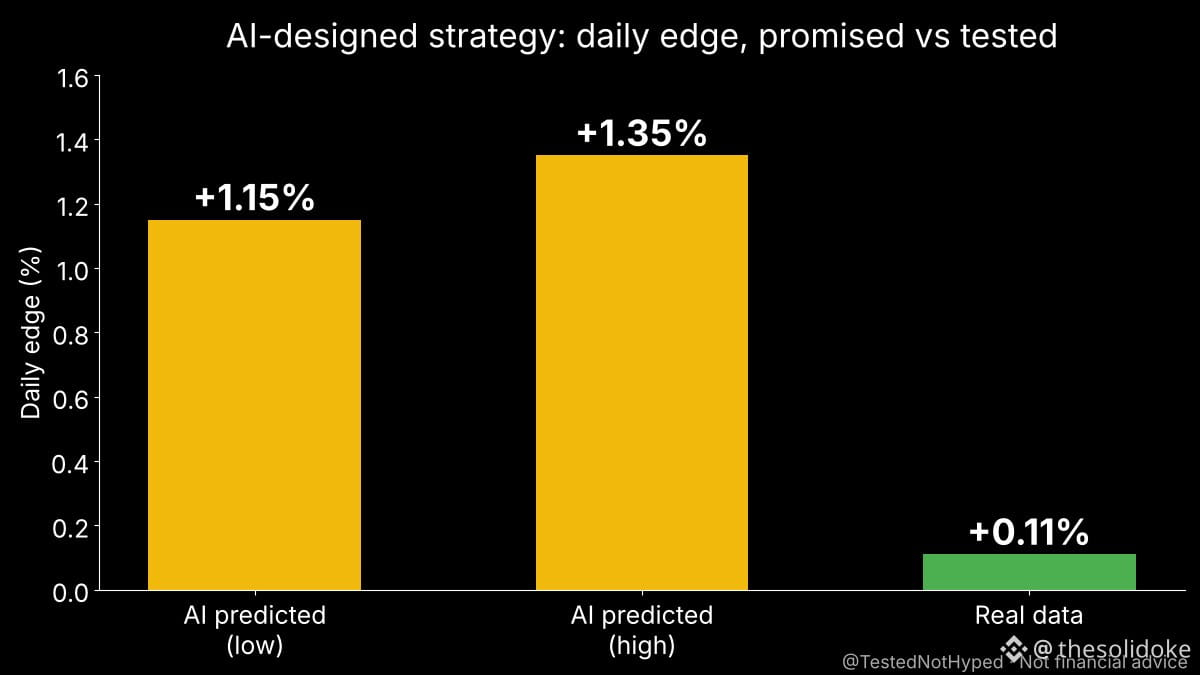
Gemini said my new strategy would make +1.15% to +1.35% a day. On real data it made +0.11%: statistically nothing.
I send every backtest to two AIs (Gemini and GPT) for a second opinion. They're useful: they catch mistakes, suggest tests and argue with each other.
But:
• That "+1.35% a day" strategy was Gemini's own design.
• It once called my 2026 test dates "impossible" because its knowledge stopped earlier.
• Both sometimes state numbers with total confidence that aren't in my data.
My rule now: AI suggests, the data decides.
Sold an "AI trading bot"? Ask: who checked the AI?
Do you let AI touch your trading, or not?
Not financial advice.
#AI #TradingBots #algoTrading #BitcoinFiveWeeklyLosses $BTC
3
81
·
--
Would I let an AI see my bank account? It already sees my trading bots.
For a month an AI assistant has run my bot research: backtests, GPU runs, post-mortems. Here's where I drew the lines:
✅ It reads results, logs and backtests
✅ It drafts, I approve
❌ It can't move money
❌ Nothing goes live without my yes
Read-only access is the easy part. The hard part: AI is sometimes confidently wrong. Every claim gets checked against the raw numbers.
So would I try Claude's Personal Finance beta with read-only bank access? Same rules: read, never move.
The valuation? I test bots, not IPOs. Ask me in a year.
#AnthropicIPO #AnthropicRejectsIPODelayValuationinQuestion #AI #TradingBots $BTC
1
45
Log in to explore more content
Join global crypto users on Binance Square
⚡️ Get latest and useful information about crypto.
💬 Trusted by the world’s largest crypto exchange.
👍 Discover real insights from verified creators.
Email / Phone number
Trending Topics
HuangExitNvidiaStrategyInFocus
326 views
32 Discussing
STOCKS | Nvidia’s Jensen Huang Resigns, Colette Kress Named as Interim CEO
Binance News
·0 Likes
·1.8k views
ChipStocksExtendLossesAfterNvidiaCEOChange
0 views
5 Discussing
AnthropicRejectsIPODelayValuationinQuestion
549,271 views
4,517 Discussing