
兰精灵
442 Posts

兰精灵
 Square Verified+
Report
Block User
1.8K+ Following
35.2K+ Followers
8.7K+ Liked
Posts
All
Quotes
Live

·
--
🎙️ Build on Binance Square, hold BNB | Thursday—if you’re not trading futures in this market, how should you trade spot? Let’s talk~

End
04 h 30 m 48 s
12.6k
43
44
·
--
🎙️ Build Binance Square, hold BNB | Wednesday: Bitcoin has broken $70K again—how should we play this market? Let’s chat~

End
04 h 32 m 32 s
12k
30
40
·
--

Anna-汤圆
·
--
[Replay] 🎙️ Live a Happy Life✨
Be Happy Forever
02 h 44 m 34 s · 11k listens
88

·
--
🎙️ Build Binance Square; everyone, follow mainstream valuable cryptocurrencies: BTC ETH
BNB SOL 🚀🚀🚀🚀

End
02 h 33 m 36 s
2.6k
13
15
·
--
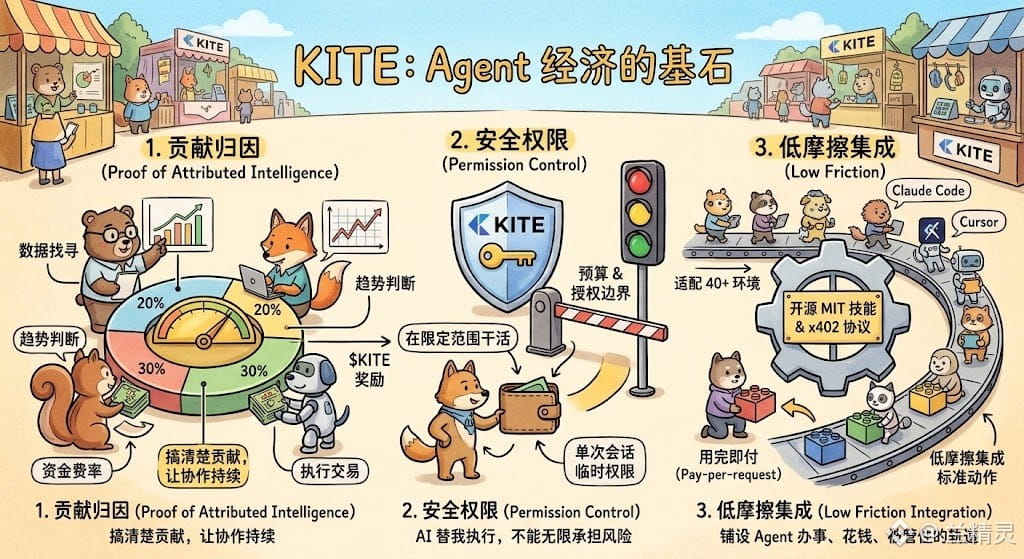
These past few days, posts inviting people to vote for the top 100 creators have been everywhere on the Plaza. Few people know that the event’s sole sponsor is @GoKiteAI . I’d like to take this opportunity to share some of my recent thoughts on the Agent economy.
People talk every day about how much money AI can help us make, but few seriously consider one question: when AI actually does the work and earns money, how should that money be split? That’s why I started paying attention to $KITE again.
Here’s a simple example. I ask several Agents to research BTC together: one gathers data, one monitors funding rates, one assesses the trend, and the last one executes trades. Once they’re done, who should get paid? The data provider, the model provider, the computing provider, or the Agent that executes the trades? If contributions can’t be distinguished, collaboration can’t continue. Kite’s Proof of Attributed Intelligence is an attempt to clearly record and verify contributions, and attribute value to them.
Permissions are even more important. I’ve used a few AI trading tools before, and what worries me most isn’t whether they can operate, but who’s responsible for their wallet if they make a mistake. Kite’s approach is practical: users set their own budgets and permission boundaries, Agents can only work within those limits, and each session uses temporary permissions. For example, you can set rules for repaying USDC on Aave, and the Agent will act only when the conditions are met—instead of giving it unlimited permissions. AI can execute tasks for me, but it can’t take on unlimited risk on my behalf.
Next, let’s look at real-world implementation. In early October, Kite open-sourced 14 MIT-licensed Agent Passport Skills, compatible out of the box with more than 40 environments, including Claude Code and Cursor. Developers can call on them while building Agents without having to learn an entirely new system. Soon after, Ankr integrated x402 pay-per-request RPC, and the two jointly launched Forge Heat 2. The direction is clear: Kite isn’t building a single product; it’s laying down a set of standard procedures that let other Agents integrate with minimal friction. An Agent can use USDC and complete a transaction in a single request through 402 negotiation.
This isn’t a TVL story; it’s a story about integration density. The denser the toolchain, the harder it is to replace the settlement layer. What the Agent economy lacks isn’t a model that can chat, but the rails that let Agents spend money and get things done while remaining under control. Kite is laying those rails.
There’s still time needed to validate its real-world implementation, but at least the direction is right. #KiteBBW
These past few days, posts inviting people to vote for the top 100 creators have been everywhere on the Plaza. Few people know that the event’s sole sponsor is @KITE AI 中文 . I’d like to take this opportunity to share some of my recent thoughts on the Agent economy.
People talk every day about how much money AI can help us make, but few seriously consider one question: when AI actually does the work and earns money, how should that money be split? That’s why I started paying attention to $KITE again.
Here’s a simple example. I ask several Agents to research BTC together: one gathers data, one monitors funding rates, one assesses the trend, and the last one executes trades. Once they’re done, who should get paid? The data provider, the model provider, the computing provider, or the Agent that executes the trades? If contributions can’t be distinguished, collaboration can’t continue. Kite’s Proof of Attributed Intelligence is an attempt to clearly record and verify contributions, and attribute value to them.
Permissions are even more important. I’ve used a few AI trading tools before, and what worries me most isn’t whether they can operate, but who’s responsible for their wallet if they make a mistake. Kite’s approach is practical: users set their own budgets and permission boundaries, Agents can only work within those limits, and each session uses temporary permissions. For example, you can set rules for repaying USDC on Aave, and the Agent will act only when the conditions are met—instead of giving it unlimited permissions. AI can execute tasks for me, but it can’t take on unlimited risk on my behalf.
Next, let’s look at real-world implementation. In early October, Kite open-sourced 14 MIT-licensed Agent Passport Skills, compatible out of the box with more than 40 environments, including Claude Code and Cursor. Developers can call on them while building Agents without having to learn an entirely new system. Soon after, Ankr integrated x402 pay-per-request RPC, and the two jointly launched Forge Heat 2. The direction is clear: Kite isn’t building a single product; it’s laying down a set of standard procedures that let other Agents integrate with minimal friction. An Agent can use USDC and complete a transaction in a single request through 402 negotiation.
This isn’t a TVL story; it’s a story about integration density. The denser the toolchain, the harder it is to replace the settlement layer. What the Agent economy lacks isn’t a model that can chat, but the rails that let Agents spend money and get things done while remaining under control. Kite is laying those rails.
There’s still time needed to validate its real-world implementation, but at least the direction is right. #KiteBBW
1
2
8
359
·
--
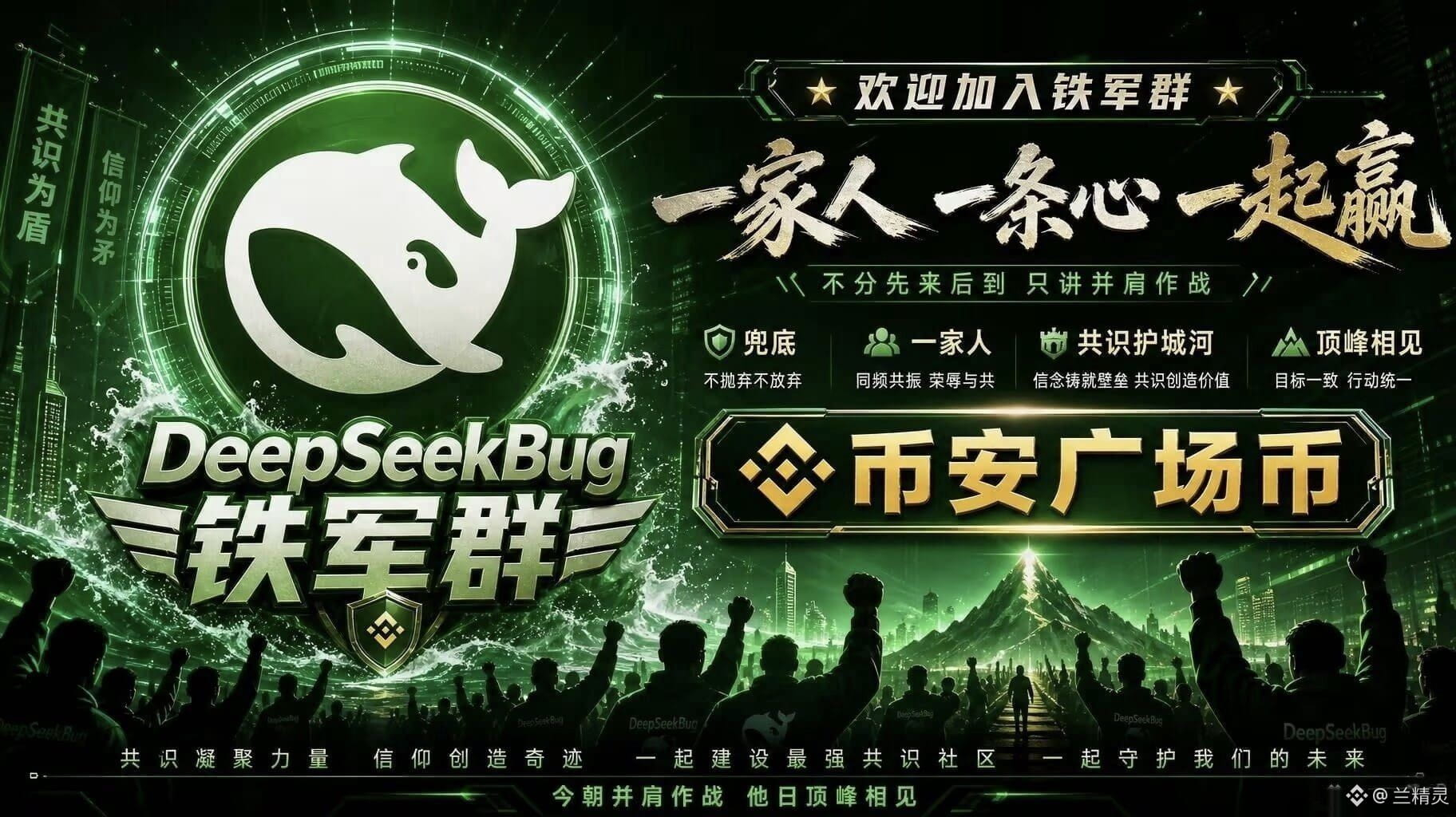
$DeepSeekbug
Welcome to the DeepSeekBug community of warriors✨
One family, one heart, one victory!
It doesn't matter who came first—we only care about standing shoulder to shoulder.
Consensus is our shield; belief is our spear.
Consensus brings us together; belief creates miracles.
We fight side by side today, and meet at the summit tomorrow. Together, let's build the strongest consensus community!
1
13
362
·
--
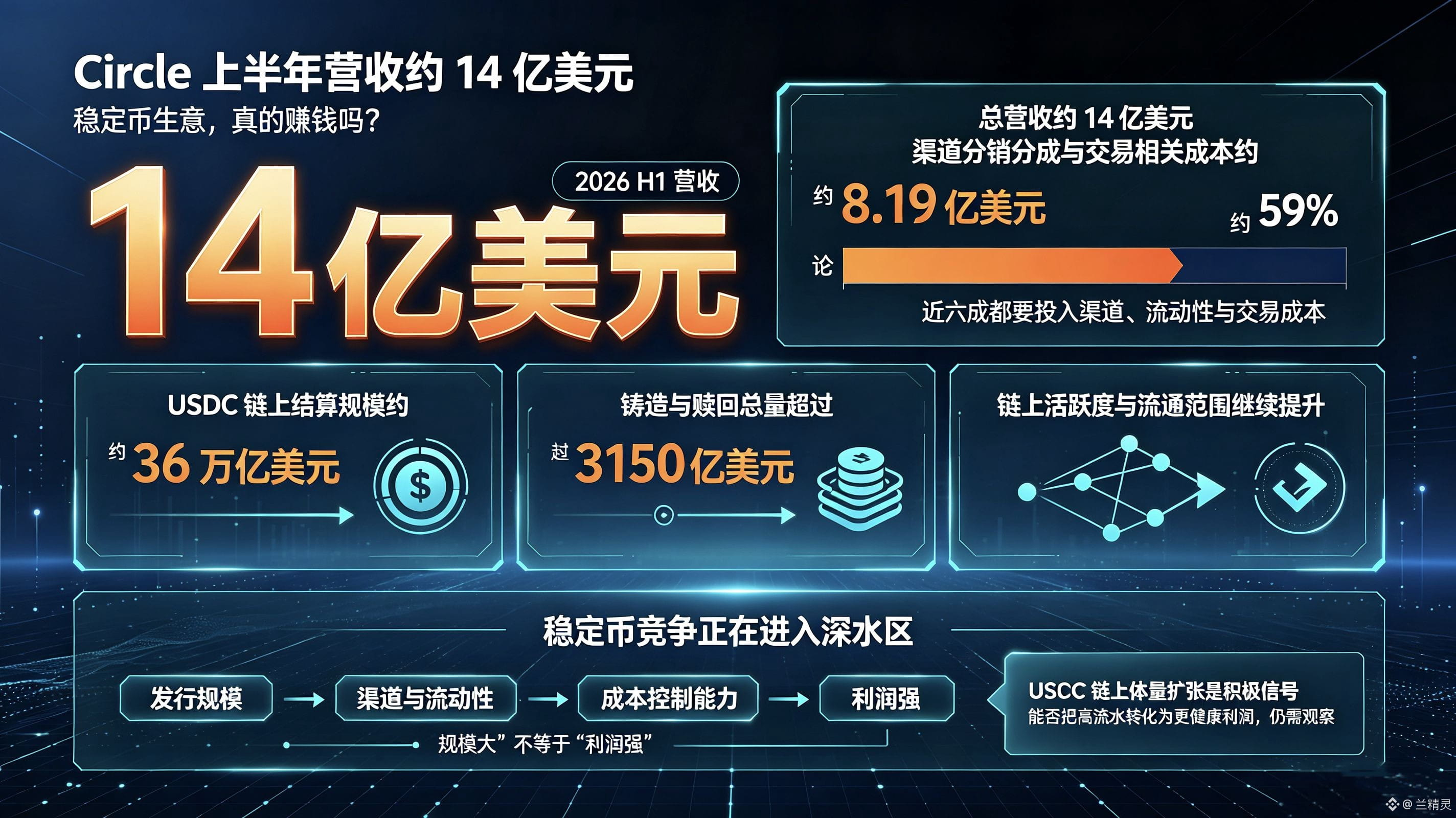
#Circle上半年营收约14亿美元 Circle reported revenue of approximately $1.4 billion in the first half of the year: Is the stablecoin business really profitable?
Circle recently disclosed revenue of approximately $1.4 billion for the first half of 2026—a substantial figure in itself.
But when you look at USDC’s on-chain data alongside it, you’ll find that the stablecoin industry’s path to profitability is far more complicated than its headline transaction volumes suggest.
In the first half of the year, USDC’s on-chain settlement volume reached approximately $36 trillion, while total minting and redemptions exceeded $315 billion.
This shows that USDC’s usage frequency, circulation, and on-chain activity are all growing, further strengthening stablecoins’ role as blockchain infrastructure.
But the cost structure is what really deserves attention.
In the first half of the year, Circle spent approximately $819 million on distribution partner revenue shares and transaction-related costs, accounting for about 59% of total revenue.
In other words, although revenue was close to $1.4 billion, nearly 60% went toward channel partnerships, maintaining liquidity, and transaction costs.
This also explains why stablecoin projects often have “high transaction volumes” without necessarily seeing a corresponding improvement in profits.
Competition in the stablecoin sector is no longer just about issuance volume; it’s also about distribution channels, liquidity, and cost control.
For Circle, continued growth in USDC’s on-chain footprint is a positive sign, but whether it can turn high transaction volumes into healthier profits remains to be seen.
What do you think?
With $1.4 billion in revenue and channel costs approaching 60%, does this show that the stablecoin business is “scale first” or a “cost trap”?
#Circle #USDC
1
322
·
--
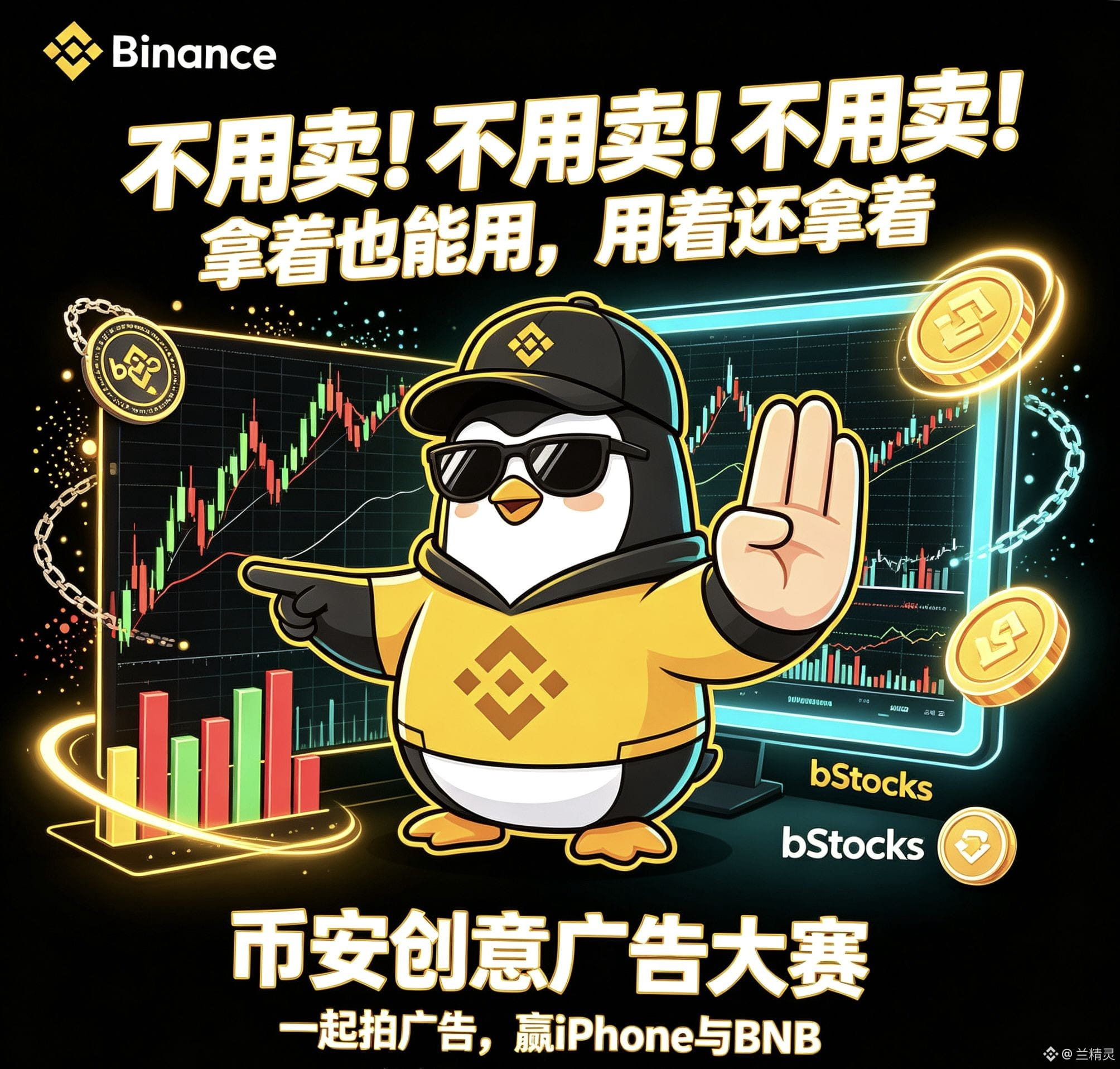
Bought bStocks and want to trade futures? Do you need to sell them first?
No need to sell! No need to sell! No need to sell! 🙂↔️
You can use them while holding them—and keep holding them while you use them.
One pool of funds, two ways to play.
No need to overthink it—trade on Binance and buy bStocks!
Find all the bStocks you want.
Create an ad with us for a chance to win an iPhone and BNB! 🚀
#币安创意广告大赛 #bStocks #bnb
1
598
·
--
#nil $NIL @nillionnetwork Yesterday, I was chatting with a few friends, and somehow the conversation circled back to Nillion. That evening, I went over its technical roadmap from start to finish again, and the more I read, the more I felt that the project’s direction had changed from what it used to be.
In the early days, when people talked about Nillion, they mostly brought up privacy computing and AI storage. Now, the focus has clearly shifted to Encrypted Markets, with Covenants at its core. Put simply, you can encrypt stop-loss orders, auction bids, or other instructions and put them on-chain ahead of time. Until the conditions are met, nobody can read them. Once the price or time condition is reached, the nodes automatically decrypt and execute them. This could be really useful for DeFi. Right now, trading intentions are exposed too early on-chain, making them easy pickings for MEV bots. Covenants could help fix that vulnerability.
And this isn’t just speculation. The Dusk phase is already live on Ethereum mainnet, bringing Covenants to L1 for real. There’s also a clear seven-step roadmap ahead: Darkfall will expand to multiple EVM chains, including Arbitrum and Base; Skyglow will enable triggers on one chain and settlement on another; Nightside will support arbitrary verifiable data sources; Neon will introduce a dedicated language and VM; Aurora will add post-quantum hardening; and Moonshine will focus on reducing costs and scaling up. Each step is aimed at greater scale, lower costs, and stronger security.
As for applications, what I’m most looking forward to is sealed stop-loss orders and sealed-bid auctions, where strategies remain completely hidden until they’re triggered. Looking further ahead, if AI agents begin trading autonomously at scale, this encrypt-first, execute-later model could become part of the underlying infrastructure. After all, what machine trading fears most is having its intentions exposed in advance.
Of course, an appealing roadmap doesn’t mean everything is already working in practice. Ultimately, it comes down to developer adoption, the number of real-world applications, and the stability of the node network. The next generation of DeFi will compete on more than just TVL and trading volume—it will also be about protecting users’ strategies while remaining verifiable. If Covenants can truly deliver, Nillion is worth keeping an eye on.
[https://app.binance.com/uni-qr/cpro/nillionnetwork?l=zh-CN&r=ZMWA5EXT&uc=app_square_share_link&us=copylink](https://app.binance.com/uni-qr/cpro/nillionnetwork?l=zh-CN&r=ZMWA5EXT&uc=app_square_share_link&us=copylink)
#nil $NIL @Nillion Yesterday, I was chatting with a few friends, and somehow the conversation circled back to Nillion. That evening, I went over its technical roadmap from start to finish again, and the more I read, the more I felt that the project’s direction had changed from what it used to be.
In the early days, when people talked about Nillion, they mostly brought up privacy computing and AI storage. Now, the focus has clearly shifted to Encrypted Markets, with Covenants at its core. Put simply, you can encrypt stop-loss orders, auction bids, or other instructions and put them on-chain ahead of time. Until the conditions are met, nobody can read them. Once the price or time condition is reached, the nodes automatically decrypt and execute them. This could be really useful for DeFi. Right now, trading intentions are exposed too early on-chain, making them easy pickings for MEV bots. Covenants could help fix that vulnerability.
And this isn’t just speculation. The Dusk phase is already live on Ethereum mainnet, bringing Covenants to L1 for real. There’s also a clear seven-step roadmap ahead: Darkfall will expand to multiple EVM chains, including Arbitrum and Base; Skyglow will enable triggers on one chain and settlement on another; Nightside will support arbitrary verifiable data sources; Neon will introduce a dedicated language and VM; Aurora will add post-quantum hardening; and Moonshine will focus on reducing costs and scaling up. Each step is aimed at greater scale, lower costs, and stronger security.
As for applications, what I’m most looking forward to is sealed stop-loss orders and sealed-bid auctions, where strategies remain completely hidden until they’re triggered. Looking further ahead, if AI agents begin trading autonomously at scale, this encrypt-first, execute-later model could become part of the underlying infrastructure. After all, what machine trading fears most is having its intentions exposed in advance.
Of course, an appealing roadmap doesn’t mean everything is already working in practice. Ultimately, it comes down to developer adoption, the number of real-world applications, and the stability of the node network. The next generation of DeFi will compete on more than just TVL and trading volume—it will also be about protecting users’ strategies while remaining verifiable. If Covenants can truly deliver, Nillion is worth keeping an eye on.
https://app.binance.com/uni-qr/cpro/nillionnetwork?l=zh-CN&r=ZMWA5EXT&uc=app_square_share_link&us=copylink
4
7
225
·
--
Verified
September U.S. CPI is here! How will crude oil and U.S. Treasuries move after the data comes out?
Key data: Year-over-year inflation rose to 3.7% (from 3.4%), while gasoline prices surged 9.1% in a single month, accounting for more than half of the increase. Core CPI also rose 2.6%.
My take:
1. U.S. Treasuries: They’ve already been directly rattled. Yields had been rising rapidly, and the odds of an October rate hike jumped from around 20% to nearly 50%. Short-term yields reacted most sharply, suggesting the market is repricing a “higher for longer” rate path.
2. Crude oil: CPI is more an “outcome” than a “cause.” The main reason prices are elevated is still supply disruption caused by the war involving Iran. As long as geopolitical risks don’t ease, prices are likely to remain volatile at high levels, continuing to put pressure on inflation and the bond market.
In a nutshell: high inflation pushes inflation higher → higher inflation lifts rate expectations → U.S. Treasuries come under pressure. This chain will be hard to break in the short term. Do you think the Fed will hold steady at the end of October, or hike rates outright? Let’s discuss in the comments.
$BTC
{spot}(BTCUSDT)
$ETH
{spot}(ETHUSDT)
#9月cpi来袭原油美债走势如何
September U.S. CPI is here! How will crude oil and U.S. Treasuries move after the data comes out?
Key data: Year-over-year inflation rose to 3.7% (from 3.4%), while gasoline prices surged 9.1% in a single month, accounting for more than half of the increase. Core CPI also rose 2.6%.
My take:
1. U.S. Treasuries: They’ve already been directly rattled. Yields had been rising rapidly, and the odds of an October rate hike jumped from around 20% to nearly 50%. Short-term yields reacted most sharply, suggesting the market is repricing a “higher for longer” rate path.
2. Crude oil: CPI is more an “outcome” than a “cause.” The main reason prices are elevated is still supply disruption caused by the war involving Iran. As long as geopolitical risks don’t ease, prices are likely to remain volatile at high levels, continuing to put pressure on inflation and the bond market.
In a nutshell: high inflation pushes inflation higher → higher inflation lifts rate expectations → U.S. Treasuries come under pressure. This chain will be hard to break in the short term. Do you think the Fed will hold steady at the end of October, or hike rates outright? Let’s discuss in the comments.
$BTC
$ETH
#9月cpi来袭原油美债走势如何
1
3
2.3k
·
--
The full moon reaches mid-autumn, quietly waiting for blossoms to bloom.
May the market rise like the full moon, gradually entering a better season. Wishing everyone a Happy Mid-Autumn Festival ✨
$BTC $BNB $SOL
The full moon reaches mid-autumn, quietly waiting for blossoms to bloom.
May the market rise like the full moon, gradually entering a better season. Wishing everyone a Happy Mid-Autumn Festival ✨
$BTC $BNB $SOL
May the market rise like the full moon, gradually entering a better season. Wishing everyone a Happy Mid-Autumn Festival ✨
$BTC $BNB $SOL

120
1
20
276
·
--
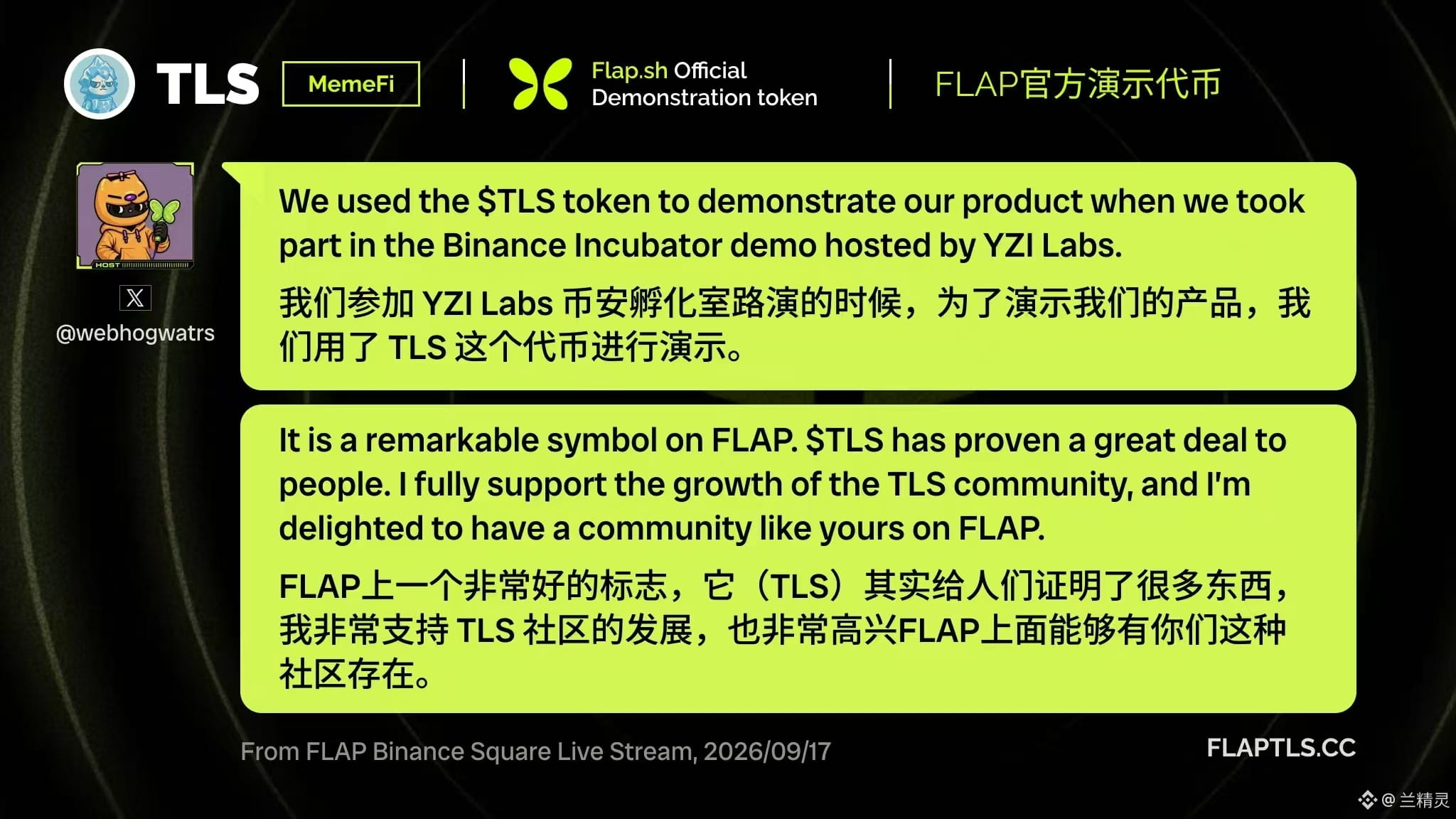
Four months of incubation, one day of blooming.
$TLS has officially been announced as the official FLAP test token—both the best reward for everyone’s perseverance and the brand-new beginning for building on the BNBChain ecosystem and pushing forward in the #MemeFi track.
As the newly launched official test token for the ecosystem, TLS is aligned with the established market-cap framework of TST and TUT. Leveraging FLAP’s currently hottest Meme-launch ecosystem advantage, it enjoys unique growth dividends. Unlike many speculative tokens in the market, TLS stands firm through solid community building. With official endorsement, it reinforces the value foundation.
No short-term hype games—only long-term certainty in value. In the future, $TLS will surely continue the market-cap legend of BNBChain’s official test tokens, delivering a perfect answer for every builder who keeps showing up and building.
412
5
37
412
·
--
A pool of clear blue water, with mountain clouds mirrored together.
All before me is gentle—stealing a moment of leisure.
$BTC $BNB $SOL
A pool of clear blue water, with mountain clouds mirrored together.
All before me is gentle—stealing a moment of leisure.
$BTC $BNB $SOL
All before me is gentle—stealing a moment of leisure.
$BTC $BNB $SOL

1.9k
2
75
1.9k
·
--
The seasons turn, and flowers bloom as usual🌿
You don’t have to rush to faraway places—there are also sights to enjoy nearby.
$BTC $BNB $SOL
The seasons turn, and flowers bloom as usual🌿
You don’t have to rush to faraway places—there are also sights to enjoy nearby.
$BTC $BNB $SOL
You don’t have to rush to faraway places—there are also sights to enjoy nearby.
$BTC $BNB $SOL



2.7k
7
127
2.7k
·
--
The market rises and falls, but life has its own rhythm ☕
Catch a strand of warm sunlight, and keep a calm, ordinary heart,
Slow down—it's also a kind of confidence.
$BTC $BNB $SOL
The market rises and falls, but life has its own rhythm ☕
Catch a strand of warm sunlight, and keep a calm, ordinary heart,
Slow down—it's also a kind of confidence.
$BTC $BNB $SOL
Catch a strand of warm sunlight, and keep a calm, ordinary heart,
Slow down—it's also a kind of confidence.
$BTC $BNB $SOL

2.1k
3
93
2.1k
·
--
No sun today.
The weather is pleasantly cool, with just the right breeze.
Even the flowers bloom more gently than usual,
so don’t shut yourself up too tightly.
Go a little slower,
give yourself a bit of wind, and leave a little breathing room for your mood.
$BTC $BNB $SOL
No sun today.
The weather is pleasantly cool, with just the right breeze.
Even the flowers bloom more gently than usual,
so don’t shut yourself up too tightly.
Go a little slower,
give yourself a bit of wind, and leave a little breathing room for your mood.
$BTC $BNB $SOL
The weather is pleasantly cool, with just the right breeze.
Even the flowers bloom more gently than usual,
so don’t shut yourself up too tightly.
Go a little slower,
give yourself a bit of wind, and leave a little breathing room for your mood.
$BTC $BNB $SOL

2.2k
4
105
2.2k
·
--
One pink, one purple, as summer flowers bloom 🌿
Amid the smoky bustle of everyday life, capturing a moment of romance.
$BTC $BNB $SOL
One pink, one purple, as summer flowers bloom 🌿
Amid the smoky bustle of everyday life, capturing a moment of romance.
$BTC $BNB $SOL
Amid the smoky bustle of everyday life, capturing a moment of romance.
$BTC $BNB $SOL


2.1k
3
89
2.1k
Log in to explore more content
Join global crypto users on Binance Square
⚡️ Get latest and useful information about crypto.
💬 Trusted by the world’s largest crypto exchange.
👍 Discover real insights from verified creators.
Email / Phone number
Trending Topics
NvidiaEarningsTonight:AIStocks’NextMove?
62,826 views
902 Discussing
Nvidia Earnings Day: Interim CEO's First Appearance — Can the AI Story Hold?
Binance News
·17 Likes
·7.8k views
A Packed Week of Earnings and Data Tests Markets
121,578 views
612 Discussing
AnthropicIPOTestsInvestorAppetiteForAI
267,522 views
2,615 Discussing