
khuram Rehan
30 Posts

khuram Rehan
0 Following
0 Followers
1 Liked
Posts
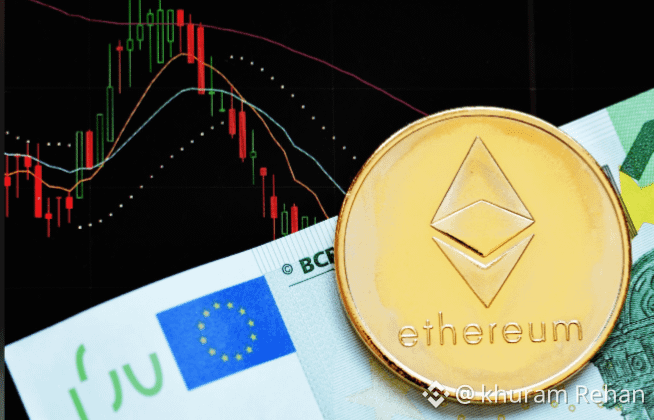
$ETH Ethereum (ETH) is the leading open-source, decentralized blockchain featuring smart contract functionality. Unlike Bitcoin, which acts primarily as a digital store of value, Ethereum serves as a global, programmable platform for decentralized applications (dApps), Decentralized Finance (DeFi), non-fungible tokens (NFTs), and enterprise blockchain solutions.
Key Strengths & Fundamentals
Smart Contracts & Programmability: Developers can build self-executing agreements without third-party intermediaries using Solidity, Ethereum's native programming language.
Proof-of-Stake (PoS): Following "The Merge," Ethereum transitioned from energy-intensive Proof-of-Work to Proof-of-Stake, reducing network energy consumption by over 99% and enabling native yield via staking.
Ecosystem Dominance: Ethereum hosts the vast majority of total value locked (TVL) across DeFi and remains the primary liquidity hub for digital assets.
Layer-2 Scaling: Networks like Arbitrum, Optimism, and Base process transactions off-chain, drastically lowering gas fees while relying on Ethereum's underlying security.#OilRisesToHighestSinceJuly #OilRisesToHighestSinceJuly #BankOfAmericaGroupPilotsUSBDCStablecoin
Key Strengths & Fundamentals
Smart Contracts & Programmability: Developers can build self-executing agreements without third-party intermediaries using Solidity, Ethereum's native programming language.
Proof-of-Stake (PoS): Following "The Merge," Ethereum transitioned from energy-intensive Proof-of-Work to Proof-of-Stake, reducing network energy consumption by over 99% and enabling native yield via staking.
Ecosystem Dominance: Ethereum hosts the vast majority of total value locked (TVL) across DeFi and remains the primary liquidity hub for digital assets.
Layer-2 Scaling: Networks like Arbitrum, Optimism, and Base process transactions off-chain, drastically lowering gas fees while relying on Ethereum's underlying security.#OilRisesToHighestSinceJuly #OilRisesToHighestSinceJuly #BankOfAmericaGroupPilotsUSBDCStablecoin
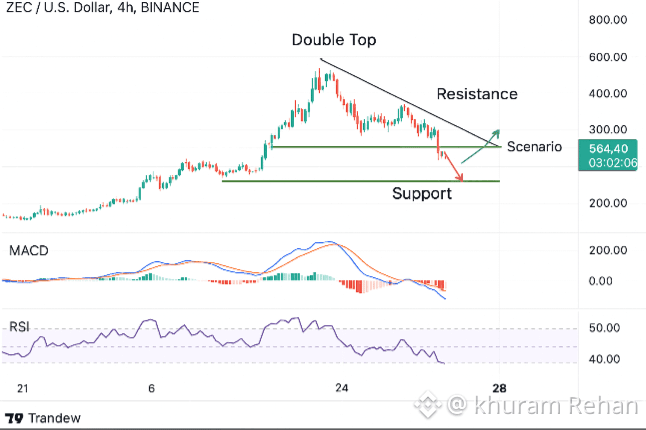
$ZEC Zcash (ZEC) is currently reflecting a combination of technological momentum and macro consolidation on Binance.Technical Overview
Market Structure: Following extended parabolic moves, ZEC has entered a consolidation phase testing primary horizontal support zones.
Moving Averages: On higher timeframes (1D), the 200-day Moving Average continues an upward slope, signaling that long-term structural demand remains intact above lower support bounds.
Momentum Indicators: Momentum indicators like RSI are fluctuating near neutral-to-overbought boundaries depending on the candle interval, with short-term cooling off after rapid upward expansions.
Fundamental & Sentiment Drivers
Privacy Adoption: Growing usage of zero-knowledge cryptography (zk-SNARKs) and increased shielding ratios continue to drive narrative support for ZEC as a leading privacy asset.
Scarcity & Tokenomics: A capped max supply of 21 million ZEC (mirroring Bitcoin's hard cap) remains a structural bullish anchor.
Exchange & Regulatory Landscape: While privacy coins occasionally face exchange surveillance debates, Binance continues to host active trading pairs (such as ZEC/USDT).
#USStrikesTargetsNearHormuzAndJask #USDestroysFiveIranianOilTankers #USStocksCloseLowerIntelRises9%
Market Structure: Following extended parabolic moves, ZEC has entered a consolidation phase testing primary horizontal support zones.
Moving Averages: On higher timeframes (1D), the 200-day Moving Average continues an upward slope, signaling that long-term structural demand remains intact above lower support bounds.
Momentum Indicators: Momentum indicators like RSI are fluctuating near neutral-to-overbought boundaries depending on the candle interval, with short-term cooling off after rapid upward expansions.
Fundamental & Sentiment Drivers
Privacy Adoption: Growing usage of zero-knowledge cryptography (zk-SNARKs) and increased shielding ratios continue to drive narrative support for ZEC as a leading privacy asset.
Scarcity & Tokenomics: A capped max supply of 21 million ZEC (mirroring Bitcoin's hard cap) remains a structural bullish anchor.
Exchange & Regulatory Landscape: While privacy coins occasionally face exchange surveillance debates, Binance continues to host active trading pairs (such as ZEC/USDT).
#USStrikesTargetsNearHormuzAndJask #USDestroysFiveIranianOilTankers #USStocksCloseLowerIntelRises9%
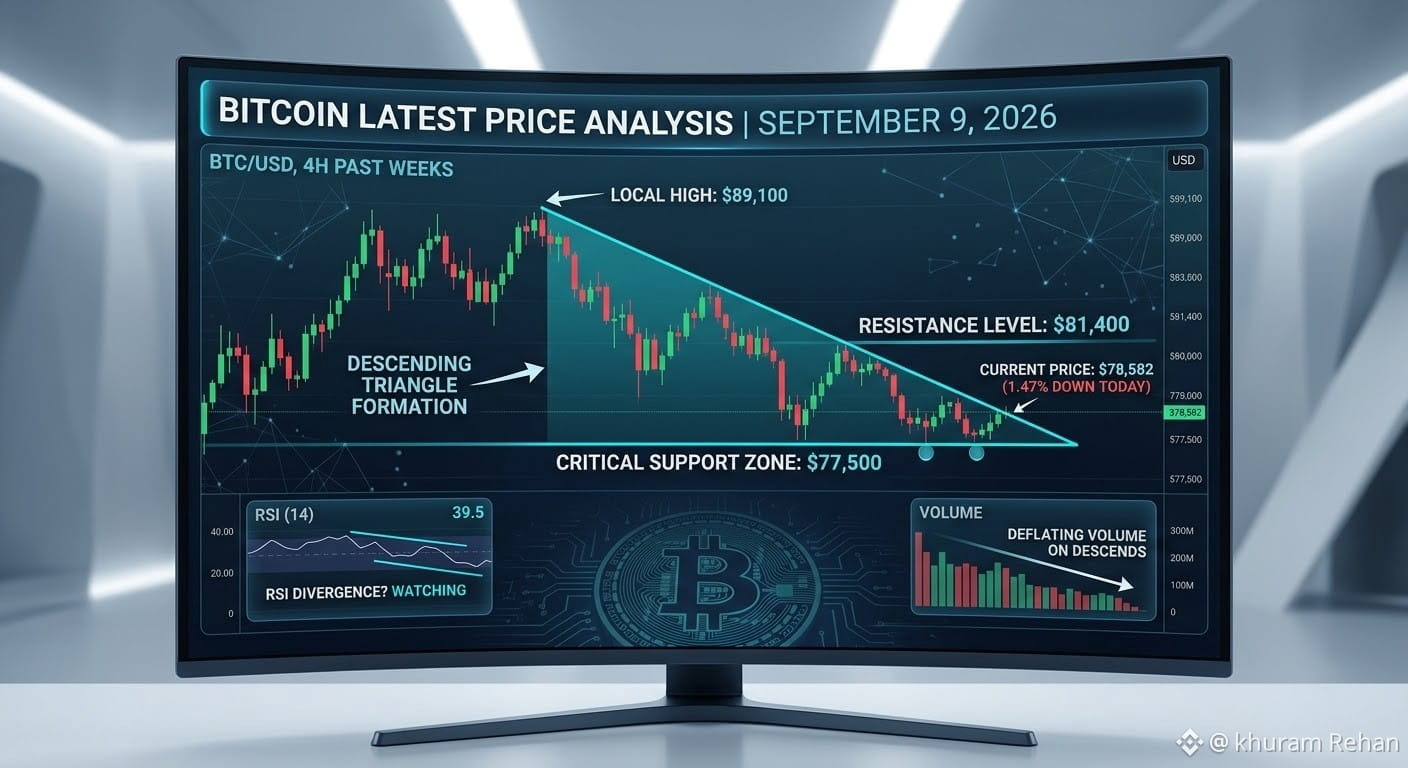
$BTC Bitcoin is compressing within a descending triangle formation, hovering around $78,582. Market momentum remains cautious as trading volumes taper off ahead of macroeconomic catalysts.
Key Technical Levels
Critical Support ($77,500): The base of the current structure. A sustained 4-hour close below this zone risks a breakdown toward lower liquidity pockets ($74,000–$75,000).
Immediate Resistance ($81,400): The falling trendline resistance. A high-volume breakout above this level is required to invalidate the bearish continuation setup and open a path back toward local highs ($89,100).
RSI (14): Sitting at 39.5, reflecting slight bearish momentum with room before reaching oversold territory. Watch for potential bullish RSI divergence near support.
Market Drivers
Volume Profile: Deflating volume on lower timeframes indicates market indecision and a lack of aggressive selling pressure, setting up a sharp volatility expansion once the triangle resolves.
Macro Environment: Interest rate expectations and Federal Reserve policy updates are driving broader risk-off sentiment across markets.
Trade Outlook: Range traders should watch the $77,500 support for defensive bounce setups, while trend traders should wait for a confirmed breakout above $81,400 before opening momentum positions. Always manage risk with strict stop-losses.
#AEROSurges17%In24Hours #USDestroysFiveIranianOilTankers #OilRisesToHighestSinceJuly
Key Technical Levels
Critical Support ($77,500): The base of the current structure. A sustained 4-hour close below this zone risks a breakdown toward lower liquidity pockets ($74,000–$75,000).
Immediate Resistance ($81,400): The falling trendline resistance. A high-volume breakout above this level is required to invalidate the bearish continuation setup and open a path back toward local highs ($89,100).
RSI (14): Sitting at 39.5, reflecting slight bearish momentum with room before reaching oversold territory. Watch for potential bullish RSI divergence near support.
Market Drivers
Volume Profile: Deflating volume on lower timeframes indicates market indecision and a lack of aggressive selling pressure, setting up a sharp volatility expansion once the triangle resolves.
Macro Environment: Interest rate expectations and Federal Reserve policy updates are driving broader risk-off sentiment across markets.
Trade Outlook: Range traders should watch the $77,500 support for defensive bounce setups, while trend traders should wait for a confirmed breakout above $81,400 before opening momentum positions. Always manage risk with strict stop-losses.
#AEROSurges17%In24Hours #USDestroysFiveIranianOilTankers #OilRisesToHighestSinceJuly
Beginner Strategy (Dollar-Cost Averaging)
Title: Stop trying to time the market—do this instead.
Content: Trying to catch the absolute bottom usually leads to buying the top out of FOMO. Use Binance Auto-Invest to set up a Dollar-Cost Averaging (DCA) plan. By automatically investing a fixed amount weekly or monthly, you smooth out volatility over time without checking charts 24/7.
Key Takeaway: Consistency beats market timing every single time.
Title: Stop trying to time the market—do this instead.
Content: Trying to catch the absolute bottom usually leads to buying the top out of FOMO. Use Binance Auto-Invest to set up a Dollar-Cost Averaging (DCA) plan. By automatically investing a fixed amount weekly or monthly, you smooth out volatility over time without checking charts 24/7.
Key Takeaway: Consistency beats market timing every single time.
Macro Drivers & Network Mechanics
What Is Really Moving the Price of ETH?
Crypto asset prices don't move in a vacuum. Ethereum's price dynamics are currently shaped by three major forces:
Macro Liquidity & Rates: Central bank rate policies and global liquidity trends directly impact risk assets. Positive broader market sentiment—often spearheaded by major Bitcoin movements—frequently overflows into ETH.
Institutional Inflows: Spot ETF flows and large-scale balance-sheet accumulation (such as corporate treasuries buying ETH) create sustained spot market demand.
The Layer-2 Paradox: As ecosystem activity shifts heavily to Layer-2 networks (handling over 90% of transactions), mainnet base gas fees stay low. While this keeps transaction costs cheap for users, lower burned ETH gas fees can temporarily slow down ETH's deflationary mechanism.
What Is Really Moving the Price of ETH?
Crypto asset prices don't move in a vacuum. Ethereum's price dynamics are currently shaped by three major forces:
Macro Liquidity & Rates: Central bank rate policies and global liquidity trends directly impact risk assets. Positive broader market sentiment—often spearheaded by major Bitcoin movements—frequently overflows into ETH.
Institutional Inflows: Spot ETF flows and large-scale balance-sheet accumulation (such as corporate treasuries buying ETH) create sustained spot market demand.
The Layer-2 Paradox: As ecosystem activity shifts heavily to Layer-2 networks (handling over 90% of transactions), mainnet base gas fees stay low. While this keeps transaction costs cheap for users, lower burned ETH gas fees can temporarily slow down ETH's deflationary mechanism.
Technical Evolution
From Proof-of-Work to Layer-2 Rollups
Ethereum’s infrastructure has undergone major structural shifts to solve the crypto trilemma: security, decentralization, and scalability.
The Merge: In 2022, Ethereum transitioned its consensus mechanism from energy-intensive Proof-of-Work (mining) to Proof-of-Stake (staking), dropping network energy consumption by over 99%.
EIP-1559: Introduced a fee-burning mechanism that destroys a portion of ETH gas fees on every transaction, turning ETH into a potentially deflationary asset during high activity.
Layer-2 Scaling: To fix high mainnet gas fees, Ethereum adopted a "rollup-centric" roadmap. Layer-2 networks (like Arbitrum, Optimism, and Base) bundle hundreds of transactions off-chain and settle them back to Ethereum mainnet, providing cheap, fast transactions with mainnet-level security.
From Proof-of-Work to Layer-2 Rollups
Ethereum’s infrastructure has undergone major structural shifts to solve the crypto trilemma: security, decentralization, and scalability.
The Merge: In 2022, Ethereum transitioned its consensus mechanism from energy-intensive Proof-of-Work (mining) to Proof-of-Stake (staking), dropping network energy consumption by over 99%.
EIP-1559: Introduced a fee-burning mechanism that destroys a portion of ETH gas fees on every transaction, turning ETH into a potentially deflationary asset during high activity.
Layer-2 Scaling: To fix high mainnet gas fees, Ethereum adopted a "rollup-centric" roadmap. Layer-2 networks (like Arbitrum, Optimism, and Base) bundle hundreds of transactions off-chain and settle them back to Ethereum mainnet, providing cheap, fast transactions with mainnet-level security.
Common Beginner Mistakes
Headline: Stop Making These 3 Crypto Wallet Mistakes ❌
Sending to the Wrong Network: Sending ERC-20 tokens via an incompatible network (e.g., Solana or Polygon without a bridge) can permanently lose your funds. Always double-check chain selection.
Skipping Test Transactions: Transferring large sums at once? Always send a tiny test transaction first to confirm the address is correct.
Connecting to Blind dApps: Granting unlimited smart contract approvals on unknown websites opens your wallet to drainers. Revoke active permissions regularly
Headline: Stop Making These 3 Crypto Wallet Mistakes ❌
Sending to the Wrong Network: Sending ERC-20 tokens via an incompatible network (e.g., Solana or Polygon without a bridge) can permanently lose your funds. Always double-check chain selection.
Skipping Test Transactions: Transferring large sums at once? Always send a tiny test transaction first to confirm the address is correct.
Connecting to Blind dApps: Granting unlimited smart contract approvals on unknown websites opens your wallet to drainers. Revoke active permissions regularly
Actionable Security Tips
Headline: 3 Golden Rules to Safeguard Your Seed Phrase 🛡️
Your 12-to-24-word recovery phrase is the master key to your entire wallet. Loose security here can cost you everything.
Keep it offline: Never take a screenshot, save it in cloud storage, or paste it into an email.
Go physical: Write it down on paper stored in a fireproof safe, or stamp it into metal plates.
Ignore DMs: No legitimate support team will EVER ask for your seed phrase. Anyone asking is a scammer.
Headline: 3 Golden Rules to Safeguard Your Seed Phrase 🛡️
Your 12-to-24-word recovery phrase is the master key to your entire wallet. Loose security here can cost you everything.
Keep it offline: Never take a screenshot, save it in cloud storage, or paste it into an email.
Go physical: Write it down on paper stored in a fireproof safe, or stamp it into metal plates.
Ignore DMs: No legitimate support team will EVER ask for your seed phrase. Anyone asking is a scammer.
Educational / Hook
Headline: Not Your Keys, Not Your Coins 🗝️
Most beginners think their crypto lives inside their app exchange. Truth is: if you don’t hold the private keys, you’re just holding an IOU.
Custodial Wallet: Easy to use, but the platform controls your funds (like a traditional bank).
Non-Custodial Wallet: You control the keys, you control the assets. True financial sovereignty.
If you're keeping assets on an exchange long-term, it’s time to move them to self-custody.
Headline: Not Your Keys, Not Your Coins 🗝️
Most beginners think their crypto lives inside their app exchange. Truth is: if you don’t hold the private keys, you’re just holding an IOU.
Custodial Wallet: Easy to use, but the platform controls your funds (like a traditional bank).
Non-Custodial Wallet: You control the keys, you control the assets. True financial sovereignty.
If you're keeping assets on an exchange long-term, it’s time to move them to self-custody.
Security Practices for Your Crypto Account
Protecting digital assets on Binance requires robust security habits. Standard security recommendations include enabling Two-Factor Authentication (2FA) via app authenticators, setting an anti-phishing code for official emails, and utilizing withdrawal address whitelisting
Protecting digital assets on Binance requires robust security habits. Standard security recommendations include enabling Two-Factor Authentication (2FA) via app authenticators, setting an anti-phishing code for official emails, and utilizing withdrawal address whitelisting
Binance is the world's largest cryptocurrency exchange by trading volume. If you are new to the platform, key features to understand include identity verification (KYC), holding Binance Coin (BNB) for fee discounts, and navigating between standard and advanced trading interfaces.
MLRO (Money Laundering Reporting Officer) – Pakistan
Location: Islamabad
Role Overview: Responsible for building, implementing, and maintaining the local Anti-Money Laundering (AML), Counter-Financing of Terrorism (CFT), Know Your Customer (KYC), sanctions, and overall regulatory compliance frameworks. The position focuses heavily on managing local financial crime regulatory requirements.
Location: Islamabad
Role Overview: Responsible for building, implementing, and maintaining the local Anti-Money Laundering (AML), Counter-Financing of Terrorism (CFT), Know Your Customer (KYC), sanctions, and overall regulatory compliance frameworks. The position focuses heavily on managing local financial crime regulatory requirements.
FeatureTraditional Bank WireBinance Pay
Settlement Time1 to 3 Business DaysInstant
Transaction Fees$15 – $50+ cross-borderZero gas or transaction fees
AvailabilityBank business hours24/7 / 365
Use CasesTraditional banking onlyWeb3
Settlement Time1 to 3 Business DaysInstant
Transaction Fees$15 – $50+ cross-borderZero gas or transaction fees
AvailabilityBank business hours24/7 / 365
Use CasesTraditional banking onlyWeb3
Passkeys: Upgrade from standard SMS 2FA to biometrics or hardware keys (like YubiKey) to neutralize SIM-swapping risks.
Anti-Phishing Code: Add a custom code in your safety settings so every legitimate Binance email carries your secret signature.
Withdrawal Whitelisting: Restrict outgoing transfers to pre-approved addresses. Even if an attacker gains access, they can't drain funds to a new wallet.
Anti-Phishing Code: Add a custom code in your safety settings so every legitimate Binance email carries your secret signature.
Withdrawal Whitelisting: Restrict outgoing transfers to pre-approved addresses. Even if an attacker gains access, they can't drain funds to a new wallet.
Securing your assets should be every trader’s top priority. To protect your Binance account, always enable Two-Factor Authentication (2FA) using an authenticator app, set up an Anti-Phishing Code for official emails, and whitelist your withdrawal addresses. Never share your passwords or API keys with anyone claiming to be customer support.
Details: Binance Alpha announced the debut of Canopy (CNPY), allowing eligible users to claim a 180-token airdrop based on point thresholds.
Key Takeaway: Rewards are distributed on a first-come, first-served basis, with point requirements scaling down every 5 minutes until the pool is exhausted.
Key Takeaway: Rewards are distributed on a first-come, first-served basis, with point requirements scaling down every 5 minutes until the pool is exhausted.
Bitcoin isn’t just digital money—it’s a shift toward a decentralized financial future. No central banks, no intermediaries, just peer-to-peer value transfer available to anyone with an internet connection. 🌐⚡
#Bitcoin #Crypto #Web3 #FinancialFreedom
#Bitcoin #Crypto #Web3 #FinancialFreedom
Log in to explore more content