
交易员王总
1.6k Posts

交易员王总
Report
Block User
公众号:《交易员王总》 12年老交易员,穿越两轮牛熊,用实战经验分享,手握顶级资源,不讲神话,用结果说话。
1 Following
8.2K+ Followers
4.8K+ Liked
Posts
All
Quotes
Videos
·
--
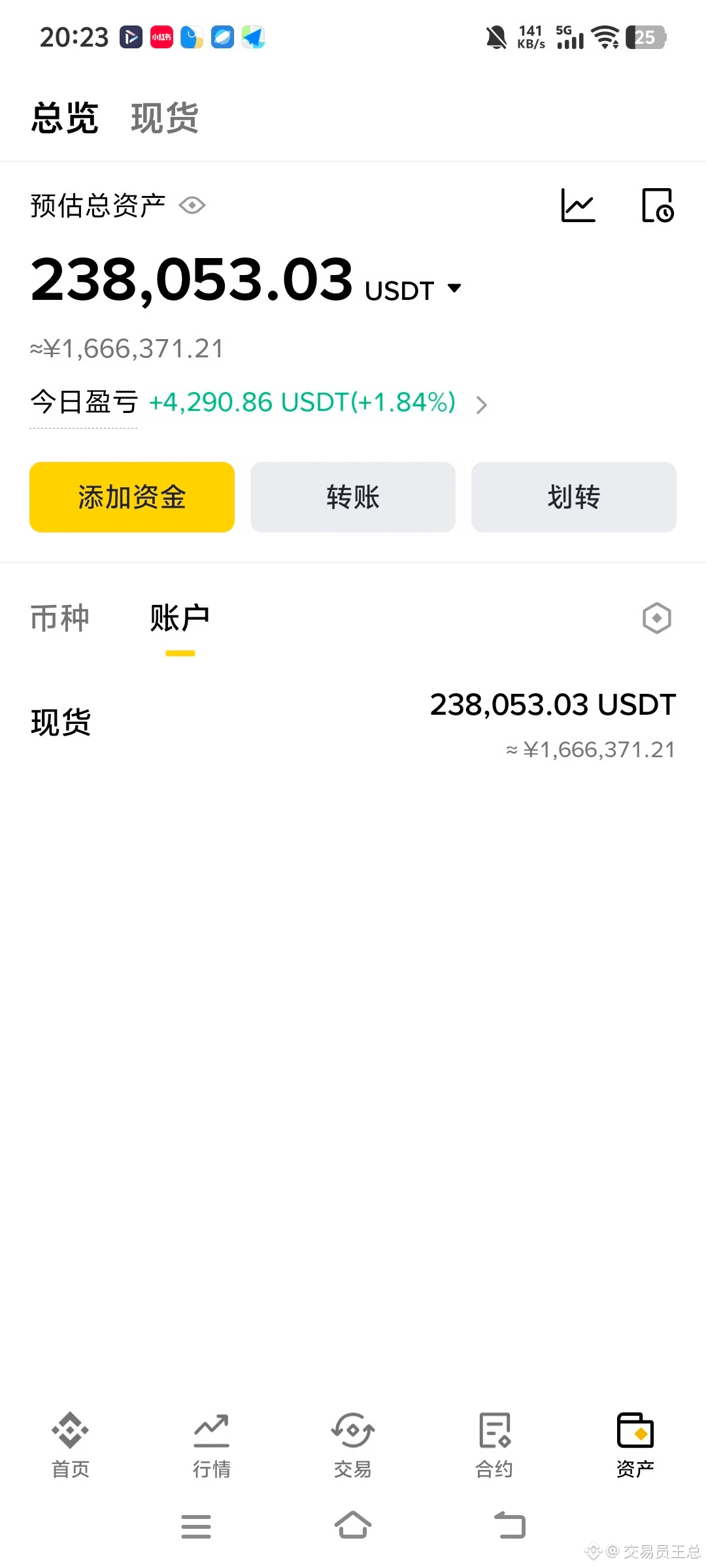
Last year, a fan was left with only 2,100 USDT. They lost so much that their mindset completely shattered, and they said, “If I lose any more, I’m done for good and will quit trading.”
I didn’t teach him how to make huge profits and double them. I taught him the top-tier trading mindset: first keep yourself alive, then make money. In just a few months, he went from 2,100 USDT to 30,000 USDT!
A small retail trader losing everything—at the core, it comes down to one word: panic. The more you desperately want to quickly get back your money, the more you open trades randomly and load too much position size. Your mindset collapses completely.
I set three customized “divine-law” rules for him—fully rewriting his trading fate!
1. Risk control with one-third allocations—no single trade can wipe you out
Split 2,100 USDT into three equal parts, each with its own job. For the short-term position, limit yourself to only two trades per day. If you’re wrong, cut the loss immediately—don’t hold through it, don’t add to it.
For the trend position, only wait for standard structure-based market setups. When the market is choppy and messy, stay completely in cash.
The final portion is an off-exchange safety net, keeping the confidence to turn things around.
2. Only trade what’s certain—never take pointless trades
No structure, no volume-price confirmation—no entry. Don’t bottom-fish, don’t chase rallies!
Only wait for a breakout of a key level and make a move with a small position size. Take profits in batches as they come, and let the remaining position ride the trend to capture the full swing.
Being in cash isn’t missing out—it’s a top prerequisite for consistently strong profits.
3. Ruthless stop-losses to lock in gains—break the losing cycle
Set your stop-loss level in advance. If price hits it, leave unconditionally. After you’re in profit, promptly raise your defensive level to lock in the gains firmly.
Avoid the fundamental problem of profitable trades turning into losing trades—by cutting big losses at the source.
His biggest transformation wasn’t learning technical indicators—it was quitting the obsession with “getting rich overnight,” and quitting the gambler mindset of rushing to get back to even.
No luck, no gambling on the market. It all comes from discipline compounded over time. With 2,100 USDT, he steadily rolled it to 30,000 USDT—an absolutely perfect comeback from the brink of disaster!
Truth in the crypto world: grow small capital into big capital—not by relying on one single blowout profit, but by making fewer mistakes, keeping a steady rhythm, and staying in the game longer.
If your principal is wiped out, you’ve been losing consistently, and you’re desperate to get back to even, then look for Wang Zong. Learn position sizing and discipline—once the right window comes, you’ll steadily catch the chance to turn it around.
346
·
--
Hello, the police are verifying your virtual currency transactions.#新手必看
No matter whether you’re a new or old retail investor, once you get a call like this, most people will panic! Many end up turning a small matter into a big one—because they don’t understand the rules, say the wrong things, and stubbornly argue instead of cooperating. The result can be: bank accounts frozen, funds restricted, and multiple daily-use cards pulled into the issue—trouble after trouble.
Remember the core: don’t panic, don’t confront forcefully, and don’t speak乱!(don’t say things recklessly or off-script). The police usually conduct routine source-tracing of funds. As long as your wording is standard, the evidence is complete, and you cooperate properly, you can resolve it smoothly with no lasting record. These three top self-protection techniques are a must-learn for everyone in the crypto space!
First, lock down the legal boundary—one precise sentence to protect yourself
If asked whether the transaction is compliant, directly use this universal script:
“Personal transfers of virtual currency are only personal investment/financial management activities and are not in violation of any rules. I traded through official platforms throughout the entire process, with no ‘money laundering via runners,’ no acting as a pay-for intermediary, and no illegal operations. If any funds involved are found problematic, I will fully cooperate with the source-tracing and verification.”
Stand firmly as an ordinary investor, with complete transaction records and compliant procedures—this helps you avoid most risks of accountability!
Second, cooperate rationally with the verification—your attitude determines the outcome
Most people get into trouble because, during the verification, they feel resistant and argue on purpose! The more you resist, the more likely you are to be singled out, which can lead to escalation.
Correct wording: “I will fully cooperate with the investigation, and I will actively clarify the flow of funds and handle matters according to law. I will submit order screenshots, chat records, and income/expense receipts at the earliest opportunity, as well as on-chain transaction records. By proactively providing evidence and cooperating, we can close the case quickly and get out of trouble—preventing account freezes and protecting your day-to-day financial access.”
Third, distinguish punishment levels—don’t blindly panic
Only by actively participating in money laundering, running numbers/‘carding’ (runner services), or transferring funds on behalf of others will you end up with account-wide freezing and strict handling.
Ordinary players are usually only passively involved with problematic funds and are innocent associations. Typically, only the specific account(s) involved in the case will be frozen. If you cooperate actively, with no prior wrongdoing, and no bad records, the impact is usually limited. Refusing to cooperate or having a bad attitude will make the punishment heavier.
Crypto trading carries extremely high risks. You must stick to the “three verification” iron rules: verify the counterparty’s real identity, check the funding history, and identify wallet risks!
Always remember: risk control always outweighs returns! Market conditions fluctuate, and principal is hard to come by. Don’t trade privately for a small price difference or leave platform traces behind—otherwise you may be pulled into a funding vortex and end up losing more than you gain.
Understanding risk control, knowing how to respond, and following the rules—that’s the top core to achieve long-term stable profitability in crypto!

1
1
178
Log in to explore more content
Join global crypto users on Binance Square
⚡️ Get latest and useful information about crypto.
💬 Trusted by the world’s largest crypto exchange.
👍 Discover real insights from verified creators.
Email / Phone number
Trending Topics
USMidterms-WhatAreMarketsExpecting?
11,772 views
237 Discussing
UBS: Rising Democratic 'Blue Wave' Expectations Deepen Market Risk Aversion
Binance News
·1 Likes
·673 views
USOctoberNFP-AreRateCutsStillPossible
203,629 views
1,570 Discussing
AMDBeatsExpectations-AINarrativeContinues
1,792 views
97 Discussing