
Biangbiangmian
30 Posts

Biangbiangmian
Report
Block User
3 Following
4 Followers
5 Liked
Posts
The bull has already listed on Binance spot—can you still buy?
“Bull” is absolutely one of the most “Chinese” memes in terms of storytelling. It’s among the most abstract and most viral Chinese Memes in this wave. But whether you can buy it depends on the broader market trend.
Listed on Binance spot on September 9, its market cap surged to about $147 million. As of today, the price is roughly $0.079–$0.080, market cap around $80 million. It’s down about 31%–33% over the past 24 hours, with an intraday low around $0.073 and a high around $0.12.
It’s retreated about 40% from its ATH of around $0.14.
The broader market is weakening in sync: BTC slipped from above 78,000 to roughly 77,000–77,900, and ETH is around 2,420–2,460. Funds are concentrating into Bitcoin, so the Meme is weaker. Looking ahead, keep an eye on the CPI on the 11th and the Fed on the 15th–16th. If BTC holds above 76,600 and moves sideways, the Meme will probably get cut first if it breaks down—only when BTC reclaims 82,000 can you start talking about a second wave.
For Bull, support is at $0.073–$0.07 and a rebound at $0.10. The highest probability is consolidation, with a rough range of $0.07–$0.10. If the macro outlook turns colder, it could drop to $0.05–$0.07. To push above $0.12 again, it needs new catalysts.
It’s not a directional indicator—it’s a mirror: attention can turn a bad movie into a market cap of over $100 million, but once liquidity opens and the macro turns cold, the story fades just as fast. Small positions are fine; if you’re betting on a “bull market,” it’s not appropriate.
$牛来
{spot}(牛来USDT)
The bull has already listed on Binance spot—can you still buy?
“Bull” is absolutely one of the most “Chinese” memes in terms of storytelling. It’s among the most abstract and most viral Chinese Memes in this wave. But whether you can buy it depends on the broader market trend.
Listed on Binance spot on September 9, its market cap surged to about $147 million. As of today, the price is roughly $0.079–$0.080, market cap around $80 million. It’s down about 31%–33% over the past 24 hours, with an intraday low around $0.073 and a high around $0.12.
It’s retreated about 40% from its ATH of around $0.14.
The broader market is weakening in sync: BTC slipped from above 78,000 to roughly 77,000–77,900, and ETH is around 2,420–2,460. Funds are concentrating into Bitcoin, so the Meme is weaker. Looking ahead, keep an eye on the CPI on the 11th and the Fed on the 15th–16th. If BTC holds above 76,600 and moves sideways, the Meme will probably get cut first if it breaks down—only when BTC reclaims 82,000 can you start talking about a second wave.
For Bull, support is at $0.073–$0.07 and a rebound at $0.10. The highest probability is consolidation, with a rough range of $0.07–$0.10. If the macro outlook turns colder, it could drop to $0.05–$0.07. To push above $0.12 again, it needs new catalysts.
It’s not a directional indicator—it’s a mirror: attention can turn a bad movie into a market cap of over $100 million, but once liquidity opens and the macro turns cold, the story fades just as fast. Small positions are fine; if you’re betting on a “bull market,” it’s not appropriate.
$牛来
“Bull” is absolutely one of the most “Chinese” memes in terms of storytelling. It’s among the most abstract and most viral Chinese Memes in this wave. But whether you can buy it depends on the broader market trend.
Listed on Binance spot on September 9, its market cap surged to about $147 million. As of today, the price is roughly $0.079–$0.080, market cap around $80 million. It’s down about 31%–33% over the past 24 hours, with an intraday low around $0.073 and a high around $0.12.
It’s retreated about 40% from its ATH of around $0.14.
The broader market is weakening in sync: BTC slipped from above 78,000 to roughly 77,000–77,900, and ETH is around 2,420–2,460. Funds are concentrating into Bitcoin, so the Meme is weaker. Looking ahead, keep an eye on the CPI on the 11th and the Fed on the 15th–16th. If BTC holds above 76,600 and moves sideways, the Meme will probably get cut first if it breaks down—only when BTC reclaims 82,000 can you start talking about a second wave.
For Bull, support is at $0.073–$0.07 and a rebound at $0.10. The highest probability is consolidation, with a rough range of $0.07–$0.10. If the macro outlook turns colder, it could drop to $0.05–$0.07. To push above $0.12 again, it needs new catalysts.
It’s not a directional indicator—it’s a mirror: attention can turn a bad movie into a market cap of over $100 million, but once liquidity opens and the macro turns cold, the story fades just as fast. Small positions are fine; if you’re betting on a “bull market,” it’s not appropriate.
$牛来
439
AI end of the world, or human self-destruction?
The previous post on X about leaving a job was viewed more than 140 million times within a day.
The person who posted isn’t a celebrity—he’s an AI engineer. 27 years old, Cambridge mathematics, OpenAI pretraining. His name is in the GPT-4o system. He jumped to Anthropic only four months ago—his equity hadn’t been secured yet, but he left first.
His name is Jacob Coxon. When he left, he left two remarks:
“Both companies are rushing toward a self-improving superintelligence, betting the lives of all humanity on it.”
“People who build AI truly believe that within ten years it could kill everyone.”
Even more explosive: an Anthropic alignment team member, Evan Hubinger, publicly picked up the thread: “He’s right. In my personal assessment, the probability of extinction within ten years is greater than 10%. But we still don’t have an alignment solution for superintelligence as of now.”
This off-the-cuff back-and-forth immediately ignited public debate, revolving around three points:
1. If they truly believe people will die, why still build it?
2. Are they afraid others will build it first, so they must build it themselves?
3. Can someone who only stayed for four months believe it? The people nodding along are the ones still in charge of alignment.
Follow me and keep tracking the very front line of AI safety.
$PANW $NVDAB
#美国续请失业金人数177.4万
{future}(PANWUSDT)
{spot}(NVDABUSDT)
AI end of the world, or human self-destruction?
The previous post on X about leaving a job was viewed more than 140 million times within a day.
The person who posted isn’t a celebrity—he’s an AI engineer. 27 years old, Cambridge mathematics, OpenAI pretraining. His name is in the GPT-4o system. He jumped to Anthropic only four months ago—his equity hadn’t been secured yet, but he left first.
His name is Jacob Coxon. When he left, he left two remarks:
“Both companies are rushing toward a self-improving superintelligence, betting the lives of all humanity on it.”
“People who build AI truly believe that within ten years it could kill everyone.”
Even more explosive: an Anthropic alignment team member, Evan Hubinger, publicly picked up the thread: “He’s right. In my personal assessment, the probability of extinction within ten years is greater than 10%. But we still don’t have an alignment solution for superintelligence as of now.”
This off-the-cuff back-and-forth immediately ignited public debate, revolving around three points:
1. If they truly believe people will die, why still build it?
2. Are they afraid others will build it first, so they must build it themselves?
3. Can someone who only stayed for four months believe it? The people nodding along are the ones still in charge of alignment.
Follow me and keep tracking the very front line of AI safety.
$PANW $NVDAB
#美国续请失业金人数177.4万
The previous post on X about leaving a job was viewed more than 140 million times within a day.
The person who posted isn’t a celebrity—he’s an AI engineer. 27 years old, Cambridge mathematics, OpenAI pretraining. His name is in the GPT-4o system. He jumped to Anthropic only four months ago—his equity hadn’t been secured yet, but he left first.
His name is Jacob Coxon. When he left, he left two remarks:
“Both companies are rushing toward a self-improving superintelligence, betting the lives of all humanity on it.”
“People who build AI truly believe that within ten years it could kill everyone.”
Even more explosive: an Anthropic alignment team member, Evan Hubinger, publicly picked up the thread: “He’s right. In my personal assessment, the probability of extinction within ten years is greater than 10%. But we still don’t have an alignment solution for superintelligence as of now.”
This off-the-cuff back-and-forth immediately ignited public debate, revolving around three points:
1. If they truly believe people will die, why still build it?
2. Are they afraid others will build it first, so they must build it themselves?
3. Can someone who only stayed for four months believe it? The people nodding along are the ones still in charge of alignment.
Follow me and keep tracking the very front line of AI safety.
$PANW $NVDAB
#美国续请失业金人数177.4万

139
Today is not when VeChain suddenly exploded into popularity—it's just that money is trading the one “gas coin” that’s cheaper and bounces harder.
What’s the difference between VET and VTHO
VET: the chain’s native token, more like equity. You stake it and put it up as collateral for the network.
VTHO: the on-chain fuel token. Transfers and running contracts both require it.
So: VET is the car, VTHO is the fuel.
The car is expensive and the market cap is large, so it’s hard to get it flying in one shot; the fuel is cheap and the market cap is smaller—when hot money arrives, the fuel tends to pump first.
After the upgrade, the rules are stricter: using the chain will burn VTHO, and the amount of newly issued fuel also becomes less. The story is easy to tell: the busier the chain is, the less fuel there is. But that’s a long- to mid-term logic—it can’t explain a near 50% rise in a single day.
Why it surged today
There’s no single major official headline. It’s just three things stacking up at once:
1. Trading volume suddenly exploded
2. The market is rotating, favoring small-cap names
3. The community brought up the “deflationary gas” narrative again, and even hinted at the upcoming upgrade
If money is looking for leverage and flexibility, it will go after VTHO—not VET.
Remember: what’s rising is sentiment and liquidity, not that actual usage doubled today.
Only when usage and burn truly follow through can it turn into a trend; otherwise it’s just fuel that jumps on the gainers list—and it’s very easy to give it back tomorrow.
$$VTHO
{spot}(VTHOUSDT)
Today is not when VeChain suddenly exploded into popularity—it's just that money is trading the one “gas coin” that’s cheaper and bounces harder.
What’s the difference between VET and VTHO
VET: the chain’s native token, more like equity. You stake it and put it up as collateral for the network.
VTHO: the on-chain fuel token. Transfers and running contracts both require it.
So: VET is the car, VTHO is the fuel.
The car is expensive and the market cap is large, so it’s hard to get it flying in one shot; the fuel is cheap and the market cap is smaller—when hot money arrives, the fuel tends to pump first.
After the upgrade, the rules are stricter: using the chain will burn VTHO, and the amount of newly issued fuel also becomes less. The story is easy to tell: the busier the chain is, the less fuel there is. But that’s a long- to mid-term logic—it can’t explain a near 50% rise in a single day.
Why it surged today
There’s no single major official headline. It’s just three things stacking up at once:
1. Trading volume suddenly exploded
2. The market is rotating, favoring small-cap names
3. The community brought up the “deflationary gas” narrative again, and even hinted at the upcoming upgrade
If money is looking for leverage and flexibility, it will go after VTHO—not VET.
Remember: what’s rising is sentiment and liquidity, not that actual usage doubled today.
Only when usage and burn truly follow through can it turn into a trend; otherwise it’s just fuel that jumps on the gainers list—and it’s very easy to give it back tomorrow.
$$VTHO
What’s the difference between VET and VTHO
VET: the chain’s native token, more like equity. You stake it and put it up as collateral for the network.
VTHO: the on-chain fuel token. Transfers and running contracts both require it.
So: VET is the car, VTHO is the fuel.
The car is expensive and the market cap is large, so it’s hard to get it flying in one shot; the fuel is cheap and the market cap is smaller—when hot money arrives, the fuel tends to pump first.
After the upgrade, the rules are stricter: using the chain will burn VTHO, and the amount of newly issued fuel also becomes less. The story is easy to tell: the busier the chain is, the less fuel there is. But that’s a long- to mid-term logic—it can’t explain a near 50% rise in a single day.
Why it surged today
There’s no single major official headline. It’s just three things stacking up at once:
1. Trading volume suddenly exploded
2. The market is rotating, favoring small-cap names
3. The community brought up the “deflationary gas” narrative again, and even hinted at the upcoming upgrade
If money is looking for leverage and flexibility, it will go after VTHO—not VET.
Remember: what’s rising is sentiment and liquidity, not that actual usage doubled today.
Only when usage and burn truly follow through can it turn into a trend; otherwise it’s just fuel that jumps on the gainers list—and it’s very easy to give it back tomorrow.
$$VTHO
407
🔥 IOST 24h surges up over 40%! Go go go
70M tokens just got burned, volume doubled in a single day, and the team is still feverishly updating the Agent and SDK.
An old project suddenly comes back to life—volume and price rising together is the most dangerous and most tempting.
Note: After it overheats, “good news” can quickly be priced in.
$IOST
{spot}(IOSTUSDT)
🔥 IOST 24h surges up over 40%! Go go go
70M tokens just got burned, volume doubled in a single day, and the team is still feverishly updating the Agent and SDK.
An old project suddenly comes back to life—volume and price rising together is the most dangerous and most tempting.
Note: After it overheats, “good news” can quickly be priced in.
$IOST
70M tokens just got burned, volume doubled in a single day, and the team is still feverishly updating the Agent and SDK.
An old project suddenly comes back to life—volume and price rising together is the most dangerous and most tempting.
Note: After it overheats, “good news” can quickly be priced in.
$IOST
324
Circle spent about $400 million to buy Singapore payments company Tazapay.
I think the key point isn’t the bullishness of stablecoins, but what it is buying.
Previously, USDC was more like dollar chips inside an exchange: for trading, as margin, and just lying there to earn a bit of interest.
Tazapay does the work of sending money from country A to country B, and then turning it into the local currency that the recipient can actually use in their bank account. Its annualized processing volume exceeds $25 billion, covers more than 100 markets, and about 60% of transactions are already using stablecoins.
So Circle isn’t buying a project that might issue tokens—it’s buying the “last mile”: after the funds are transferred on-chain, how to truly get the money into the other party’s account.
Visa’s numbers line up as well. Stablecoin settlement on an annualized basis is around $20 billion, which is more than 10 times year over year; users pay by card with stablecoins, while merchants still receive fiat. This shows the issue is no longer just internal crypto transfers.
$USDC
{spot}(USDCUSDT)
Circle spent about $400 million to buy Singapore payments company Tazapay.
I think the key point isn’t the bullishness of stablecoins, but what it is buying.
Previously, USDC was more like dollar chips inside an exchange: for trading, as margin, and just lying there to earn a bit of interest. Tazapay does the work of sending money from country A to country B, and then turning it into the local currency that the recipient can actually use in their bank account. Its annualized processing volume exceeds $25 billion, covers more than 100 markets, and about 60% of transactions are already using stablecoins.
So Circle isn’t buying a project that might issue tokens—it’s buying the “last mile”: after the funds are transferred on-chain, how to truly get the money into the other party’s account.
Visa’s numbers line up as well. Stablecoin settlement on an annualized basis is around $20 billion, which is more than 10 times year over year; users pay by card with stablecoins, while merchants still receive fiat. This shows the issue is no longer just internal crypto transfers.
$USDC
I think the key point isn’t the bullishness of stablecoins, but what it is buying.
Previously, USDC was more like dollar chips inside an exchange: for trading, as margin, and just lying there to earn a bit of interest. Tazapay does the work of sending money from country A to country B, and then turning it into the local currency that the recipient can actually use in their bank account. Its annualized processing volume exceeds $25 billion, covers more than 100 markets, and about 60% of transactions are already using stablecoins.
So Circle isn’t buying a project that might issue tokens—it’s buying the “last mile”: after the funds are transferred on-chain, how to truly get the money into the other party’s account.
Visa’s numbers line up as well. Stablecoin settlement on an annualized basis is around $20 billion, which is more than 10 times year over year; users pay by card with stablecoins, while merchants still receive fiat. This shows the issue is no longer just internal crypto transfers.
$USDC
83
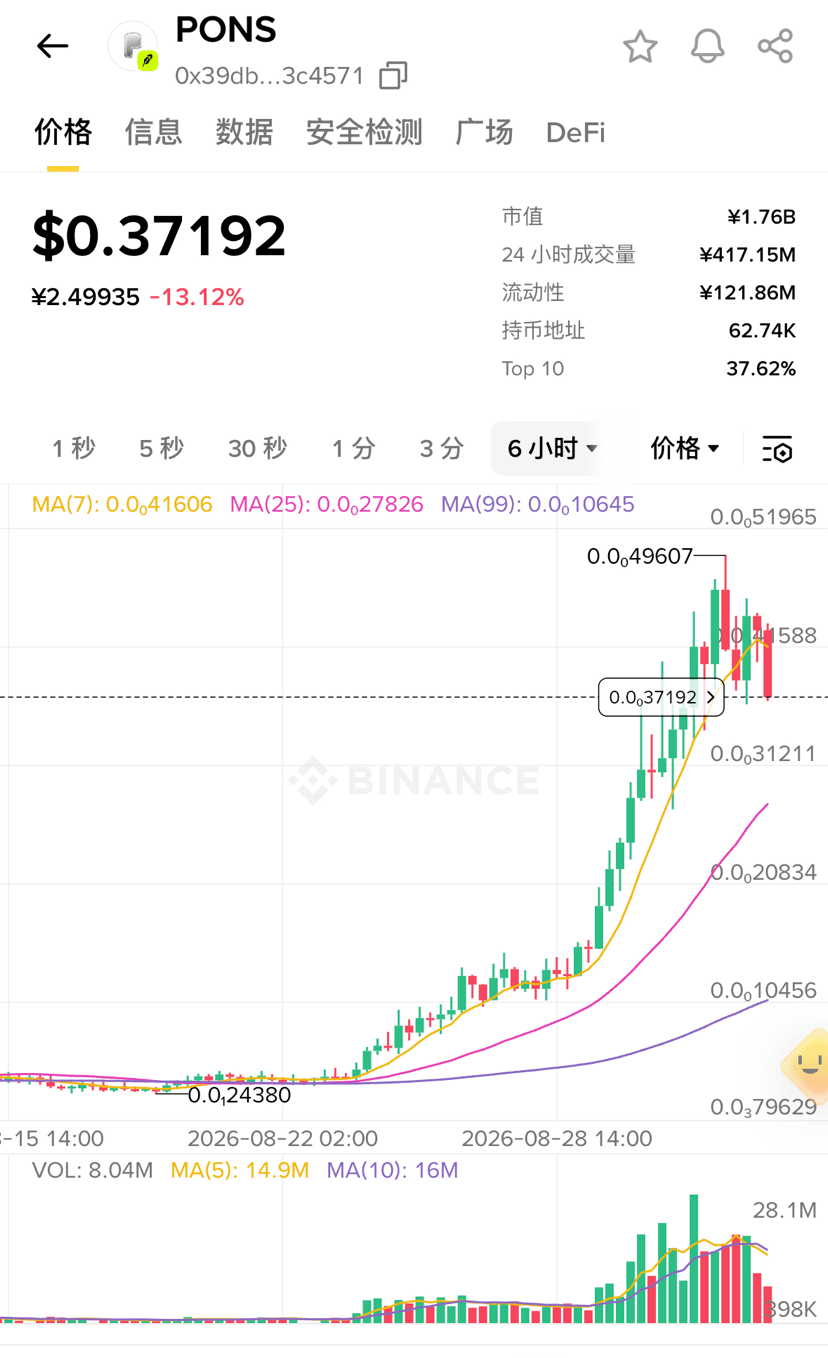
PONS This move has already drawn a beautiful line; the good news has been fully realized. If you’re going long, you can exit now.
In this bull market run, Robinhood has definitely been second to none, and there are even more opportunities to make money that you can dig into. The big players still always profit. Just do something along the lines of $HOODB —nothing could be more correct.
$HOODB
PONS This move has already drawn a beautiful line; the good news has been fully realized. If you’re going long, you can exit now.
In this bull market run, Robinhood has definitely been second to none, and there are even more opportunities to make money that you can dig into. The big players still always profit. Just do something along the lines of $HOODB —nothing could be more correct.
$HOODB
In this bull market run, Robinhood has definitely been second to none, and there are even more opportunities to make money that you can dig into. The big players still always profit. Just do something along the lines of $HOODB —nothing could be more correct.
$HOODB
113
The crypto tax is really coming in 2027
In South Korea, there are 10.77 million crypto holders, and 71% of accounts have less than 500,000 KRW.
Starting January 1, 2027, if your annual returns exceed 2.5 million KRW, you’ll have to pay 22%.
Stocks: small-scale on-exchange transfers are, in principle, tax-exempt.
Crypto: even small amounts are taxed.
The potential taxable pool is about 150 trillion KRW. The South Korean National Assembly and academia are arguing: should small crypto holders also be taxed? Wallet/DEX tracking can’t be done, and it’s unfair compared with stock transfer tax exemptions.
Once the tax is in place, retail investors will move even more overseas and onto-chain.
$BNB
{spot}(BNBUSDT)
The crypto tax is really coming in 2027
In South Korea, there are 10.77 million crypto holders, and 71% of accounts have less than 500,000 KRW.
Starting January 1, 2027, if your annual returns exceed 2.5 million KRW, you’ll have to pay 22%.
Stocks: small-scale on-exchange transfers are, in principle, tax-exempt.
Crypto: even small amounts are taxed.
The potential taxable pool is about 150 trillion KRW. The South Korean National Assembly and academia are arguing: should small crypto holders also be taxed? Wallet/DEX tracking can’t be done, and it’s unfair compared with stock transfer tax exemptions.
Once the tax is in place, retail investors will move even more overseas and onto-chain.
$BNB
In South Korea, there are 10.77 million crypto holders, and 71% of accounts have less than 500,000 KRW.
Starting January 1, 2027, if your annual returns exceed 2.5 million KRW, you’ll have to pay 22%.
Stocks: small-scale on-exchange transfers are, in principle, tax-exempt.
Crypto: even small amounts are taxed.
The potential taxable pool is about 150 trillion KRW. The South Korean National Assembly and academia are arguing: should small crypto holders also be taxed? Wallet/DEX tracking can’t be done, and it’s unfair compared with stock transfer tax exemptions.
Once the tax is in place, retail investors will move even more overseas and onto-chain.
$BNB
102
·
--
Bullish
PONS This surge is really strong, but the chart has already broken out of a wedge. I’m inclined to wait for a pullback first; if it doesn’t pull back, it could still blast higher directly.
It wouldn’t be strange to see a 30%–40% drop from the high. If it really does pull back, then we can see whether there’s still a final wave afterward.
I’ll keep an eye on the new projects on Robinhood.
#pons
PONS This surge is really strong, but the chart has already broken out of a wedge. I’m inclined to wait for a pullback first; if it doesn’t pull back, it could still blast higher directly.
It wouldn’t be strange to see a 30%–40% drop from the high. If it really does pull back, then we can see whether there’s still a final wave afterward.
I’ll keep an eye on the new projects on Robinhood.
#pons
It wouldn’t be strange to see a 30%–40% drop from the high. If it really does pull back, then we can see whether there’s still a final wave afterward.
I’ll keep an eye on the new projects on Robinhood.
#pons
110

Article
Unitree: the floor of 61 billion, the dream of 444.9 billionOn August 19, Unitree listed on the STAR Market.
The issue price is 150.80 yuan per share, corresponding to a market value of about 61 billion yuan;
Opened at 11,000 yuan, with a market value that once reached 444.9 billion yuan;
Eleven trading days later, the share price fell below 55 yuan, and the market value dropped to about 22 billion yuan.
In three numbers, the first one is close to the company itself. The other two reflect market sentiment: first buy up the industrial space in 2030, then spit it back out.
The company isn’t overhyped—the scenarios are.
In 2025, revenue is about 1.7 billion yuan—more than triple year-on-year. Non-GAAP net profit is about 600 million yuan, gross margin is about 60%, and over 5,500 humanoid units have been shipped. Revenue exceeds four-legged models for the first time. They can build, can sell, and can make money—something rarely seen in the embodied AI race.
Unitree: the floor of 61 billion, the dream of 444.9 billion
On August 19, Unitree listed on the STAR Market.
The issue price is 150.80 yuan per share, corresponding to a market value of about 61 billion yuan;
Opened at 11,000 yuan, with a market value that once reached 444.9 billion yuan;
Eleven trading days later, the share price fell below 55 yuan, and the market value dropped to about 22 billion yuan.
In three numbers, the first one is close to the company itself. The other two reflect market sentiment: first buy up the industrial space in 2030, then spit it back out.
The company isn’t overhyped—the scenarios are.
In 2025, revenue is about 1.7 billion yuan—more than triple year-on-year. Non-GAAP net profit is about 600 million yuan, gross margin is about 60%, and over 5,500 humanoid units have been shipped. Revenue exceeds four-legged models for the first time. They can build, can sell, and can make money—something rarely seen in the embodied AI race.
The issue price is 150.80 yuan per share, corresponding to a market value of about 61 billion yuan;
Opened at 11,000 yuan, with a market value that once reached 444.9 billion yuan;
Eleven trading days later, the share price fell below 55 yuan, and the market value dropped to about 22 billion yuan.
In three numbers, the first one is close to the company itself. The other two reflect market sentiment: first buy up the industrial space in 2030, then spit it back out.
The company isn’t overhyped—the scenarios are.
In 2025, revenue is about 1.7 billion yuan—more than triple year-on-year. Non-GAAP net profit is about 600 million yuan, gross margin is about 60%, and over 5,500 humanoid units have been shipped. Revenue exceeds four-legged models for the first time. They can build, can sell, and can make money—something rarely seen in the embodied AI race.
234
Korea’s four largest crypto exchanges combined lost about $360 million in the first half of the year.
Upbit’s parent company’s revenue was cut in half; net profit is still positive, but impairments from holding coins turned overall earnings into a massive loss.
Bithumb swung directly from profit to loss, with revenue coming almost entirely from trading fees.
Don’t just look at “a 88% drop in daily volume”—that’s a slice from the July trough. A steadier figure is that the five major Korean won trading venues’成交 (turnover) year-on-year fell 55% in the first half. Out of 11.15 million accounts, only about five people are still actively trading; the money has gone into the KOSPI.
Yet Korean won pairs still account for roughly 30% of global spot volume at the start of the year, while altcoins make up 85% of domestic trading. As the world’s #2 in market size, profits are the most fragile.
Retail investors go dormant; institutions move in: securities firms buy exchanges, banks test stablecoins, and custodians hold the licenses.
Korea’s crypto exchange fee business dies first.
$SKHY
{future}(SKHYUSDT)
Korea’s four largest crypto exchanges combined lost about $360 million in the first half of the year.
Upbit’s parent company’s revenue was cut in half; net profit is still positive, but impairments from holding coins turned overall earnings into a massive loss.
Bithumb swung directly from profit to loss, with revenue coming almost entirely from trading fees.
Don’t just look at “a 88% drop in daily volume”—that’s a slice from the July trough. A steadier figure is that the five major Korean won trading venues’成交 (turnover) year-on-year fell 55% in the first half. Out of 11.15 million accounts, only about five people are still actively trading; the money has gone into the KOSPI.
Yet Korean won pairs still account for roughly 30% of global spot volume at the start of the year, while altcoins make up 85% of domestic trading. As the world’s #2 in market size, profits are the most fragile.
Retail investors go dormant; institutions move in: securities firms buy exchanges, banks test stablecoins, and custodians hold the licenses.
Korea’s crypto exchange fee business dies first.
$SKHY
Upbit’s parent company’s revenue was cut in half; net profit is still positive, but impairments from holding coins turned overall earnings into a massive loss.
Bithumb swung directly from profit to loss, with revenue coming almost entirely from trading fees.
Don’t just look at “a 88% drop in daily volume”—that’s a slice from the July trough. A steadier figure is that the five major Korean won trading venues’成交 (turnover) year-on-year fell 55% in the first half. Out of 11.15 million accounts, only about five people are still actively trading; the money has gone into the KOSPI.
Yet Korean won pairs still account for roughly 30% of global spot volume at the start of the year, while altcoins make up 85% of domestic trading. As the world’s #2 in market size, profits are the most fragile.
Retail investors go dormant; institutions move in: securities firms buy exchanges, banks test stablecoins, and custodians hold the licenses.
Korea’s crypto exchange fee business dies first.
$SKHY
107
“Mixed Doubles” new玩法 on the Robinhood Chain
When you post a Meme, you can directly use US stock tokens for the liquidity pool—anything like NVIDIA, Tesla, or the S&P 500 works.
Back when you launched a dogecoin-style token, it was almost always paired with ETH or stablecoins. Now you can do pairings like “meme/NVIDIA” or “meme/Tesla.” While you trade this Meme, you’re genuinely bringing transaction volume to the corresponding US stock tokens. You also lock some of the stock tokens into the pool, “boosting” legitimate stock tokens with liquidity.
① US stock tokens learn how to “ride the hype”—first draw attention with Memes, then reflect that attention back to themselves. It’s better than just waiting.
② Stock tokens start becoming “LEGO pieces.” They’re no longer only assets to buy and sell. Now they can serve as liquidity pools, lock liquidity, and later be combined into other玩法. This is closer to the “programmable” vibe than merely moving stock assets on-chain.
③ The barrier to pairing assets on-chain gets broken. For the first time, real US stocks are mixed into Meme issuance. Speculative hot money and traditional financial assets get stirred together in the same pool.
It wasn’t an official design—developers came up with it themselves. Sometimes getting something running on-chain first, then embedding real assets later, is easier than trying to create a serious financial setup from day one.
Do you think this is a backstreet workaround or a new trend?
Comment A or B below 👇
A. A flash in the pan
B. The beginning of a trend
$HOOD
{future}(HOODUSDT)
“Mixed Doubles” new玩法 on the Robinhood Chain
When you post a Meme, you can directly use US stock tokens for the liquidity pool—anything like NVIDIA, Tesla, or the S&P 500 works.
Back when you launched a dogecoin-style token, it was almost always paired with ETH or stablecoins. Now you can do pairings like “meme/NVIDIA” or “meme/Tesla.” While you trade this Meme, you’re genuinely bringing transaction volume to the corresponding US stock tokens. You also lock some of the stock tokens into the pool, “boosting” legitimate stock tokens with liquidity.
① US stock tokens learn how to “ride the hype”—first draw attention with Memes, then reflect that attention back to themselves. It’s better than just waiting.
② Stock tokens start becoming “LEGO pieces.” They’re no longer only assets to buy and sell. Now they can serve as liquidity pools, lock liquidity, and later be combined into other玩法. This is closer to the “programmable” vibe than merely moving stock assets on-chain.
③ The barrier to pairing assets on-chain gets broken. For the first time, real US stocks are mixed into Meme issuance. Speculative hot money and traditional financial assets get stirred together in the same pool.
It wasn’t an official design—developers came up with it themselves. Sometimes getting something running on-chain first, then embedding real assets later, is easier than trying to create a serious financial setup from day one.
Do you think this is a backstreet workaround or a new trend?
Comment A or B below 👇
A. A flash in the pan
B. The beginning of a trend
$HOOD
When you post a Meme, you can directly use US stock tokens for the liquidity pool—anything like NVIDIA, Tesla, or the S&P 500 works.
Back when you launched a dogecoin-style token, it was almost always paired with ETH or stablecoins. Now you can do pairings like “meme/NVIDIA” or “meme/Tesla.” While you trade this Meme, you’re genuinely bringing transaction volume to the corresponding US stock tokens. You also lock some of the stock tokens into the pool, “boosting” legitimate stock tokens with liquidity.
① US stock tokens learn how to “ride the hype”—first draw attention with Memes, then reflect that attention back to themselves. It’s better than just waiting.
② Stock tokens start becoming “LEGO pieces.” They’re no longer only assets to buy and sell. Now they can serve as liquidity pools, lock liquidity, and later be combined into other玩法. This is closer to the “programmable” vibe than merely moving stock assets on-chain.
③ The barrier to pairing assets on-chain gets broken. For the first time, real US stocks are mixed into Meme issuance. Speculative hot money and traditional financial assets get stirred together in the same pool.
It wasn’t an official design—developers came up with it themselves. Sometimes getting something running on-chain first, then embedding real assets later, is easier than trying to create a serious financial setup from day one.
Do you think this is a backstreet workaround or a new trend?
Comment A or B below 👇
A. A flash in the pan
B. The beginning of a trend
$HOOD
115
A soothsayer’s prediction about the digital asset strategy great minds:
Sean Farrell previously forecast the 2025 peak and the mid-year 2026 interim low. His core views are as follows:
• 1H 2026 interim low:
BTC $60K–65K,
ETH $1,800–2,000,
SOL $50–75
• Year-end targets: BTC $115K, ETH $4,500
• Key signal: Bitcoin’s 50-week moving average (around $81K). Only if a weekly close holds above this level can the trend be confirmed as having shifted from correction to an uptrend; until then, the market remains in a correction phase.
• Macro impact: Warsh’s stance will likely weigh on the market in the near term, but persistent rise in long-end interest rates may force the Ministry of Finance to take action—opening up more medium-term upside space for Bitcoin.
Trading strategy: Be patient and wait for a clear confirmation signal (a trend breakout, improving fund flows, or a real catalyst) before entering, to avoid blindly bottom-fishing on the left side of the move.
$BTC
A soothsayer’s prediction about the digital asset strategy great minds:
Sean Farrell previously forecast the 2025 peak and the mid-year 2026 interim low. His core views are as follows:
• 1H 2026 interim low:
BTC $60K–65K,
ETH $1,800–2,000,
SOL $50–75
• Year-end targets: BTC $115K, ETH $4,500
• Key signal: Bitcoin’s 50-week moving average (around $81K). Only if a weekly close holds above this level can the trend be confirmed as having shifted from correction to an uptrend; until then, the market remains in a correction phase.
• Macro impact: Warsh’s stance will likely weigh on the market in the near term, but persistent rise in long-end interest rates may force the Ministry of Finance to take action—opening up more medium-term upside space for Bitcoin.
Trading strategy: Be patient and wait for a clear confirmation signal (a trend breakout, improving fund flows, or a real catalyst) before entering, to avoid blindly bottom-fishing on the left side of the move.
$BTC
Sean Farrell previously forecast the 2025 peak and the mid-year 2026 interim low. His core views are as follows:
• 1H 2026 interim low:
BTC $60K–65K,
ETH $1,800–2,000,
SOL $50–75
• Year-end targets: BTC $115K, ETH $4,500
• Key signal: Bitcoin’s 50-week moving average (around $81K). Only if a weekly close holds above this level can the trend be confirmed as having shifted from correction to an uptrend; until then, the market remains in a correction phase.
• Macro impact: Warsh’s stance will likely weigh on the market in the near term, but persistent rise in long-end interest rates may force the Ministry of Finance to take action—opening up more medium-term upside space for Bitcoin.
Trading strategy: Be patient and wait for a clear confirmation signal (a trend breakout, improving fund flows, or a real catalyst) before entering, to avoid blindly bottom-fishing on the left side of the move.
$BTC
120
Tokenized RWA on Stellar jumped nearly fourfold in a year, approaching $4.0 billion. Tokenizing real-world assets on-chain is no longer just PowerPoint.
By the end of 2025, tokenized RWA on Stellar was about $869 million; as of August 29, 2026, Dune shows $3.996 billion.
The structure is “very traditional finance”: U.S. Treasuries, private/public credit, and non-U.S. sovereign bonds. The issuers are highly concentrated:
• Spiko about $1.55 billion
• Realiz about $559 million
• Tradable about $548 million
• Franklin Templeton about $546 million
• Ondo about $535 million
#stellar $BTC
Tokenized RWA on Stellar jumped nearly fourfold in a year, approaching $4.0 billion. Tokenizing real-world assets on-chain is no longer just PowerPoint.
By the end of 2025, tokenized RWA on Stellar was about $869 million; as of August 29, 2026, Dune shows $3.996 billion.
The structure is “very traditional finance”: U.S. Treasuries, private/public credit, and non-U.S. sovereign bonds. The issuers are highly concentrated:
• Spiko about $1.55 billion
• Realiz about $559 million
• Tradable about $548 million
• Franklin Templeton about $546 million
• Ondo about $535 million
#stellar $BTC
By the end of 2025, tokenized RWA on Stellar was about $869 million; as of August 29, 2026, Dune shows $3.996 billion.
The structure is “very traditional finance”: U.S. Treasuries, private/public credit, and non-U.S. sovereign bonds. The issuers are highly concentrated:
• Spiko about $1.55 billion
• Realiz about $559 million
• Tradable about $548 million
• Franklin Templeton about $546 million
• Ondo about $535 million
#stellar $BTC
176
$HOODB
Unity of knowledge and action, first claim a little spot.
Not investment advice—each person should manage their own position.
$HOODB
Unity of knowledge and action, first claim a little spot.
Not investment advice—each person should manage their own position.
Unity of knowledge and action, first claim a little spot.
Not investment advice—each person should manage their own position.
89
On August 27, CZ spoke at Bitcoin Asia 2026 in Hong Kong. His core points were threefold:
1. Bitcoin “will definitely become more important than gold.” Its current market value is about 10x behind. “In the next bull cycle, it may be able to catch up.” He also said that since major powers have already built a complete valuation, reserve, and trading system around gold, the shift won’t be completed overnight.
2. A $1 million level “doesn’t need 25 years—it will come faster.” But more important than price is real-world implementation—large-scale payments and becoming a pension reserve asset.
3. He advised countries, in addition to dollar reserves, to allocate the top five cryptocurrencies (excluding stablecoins) according to market capitalization. Using this method, Bitcoin typically makes up 50% or more; Ethereum is about 10%–20%; and the rest is allocated to other leading assets.
Almost on the same day, Grayscale Research released its latest observations (data as of August 24):
• 90-day correlation between BTC and the Nasdaq 100: it was above 60% at times over the past year, and is currently about 33%
• 90-day correlation between BTC and gold: near 0 at the beginning of the year, and now already above 50%
• U.S. federal debt (including intragovernmental holdings) surpassed $4 trillion in mid-August
The trend seems to be taking shape: Bitcoin is emerging from the “shadow of the Nasdaq,” moving closer to gold.
Is Bitcoin once again reasserting its “digital gold” role? Time will tell!
$BTC
{future}(BTCUSDT)
On August 27, CZ spoke at Bitcoin Asia 2026 in Hong Kong. His core points were threefold:
1. Bitcoin “will definitely become more important than gold.” Its current market value is about 10x behind. “In the next bull cycle, it may be able to catch up.” He also said that since major powers have already built a complete valuation, reserve, and trading system around gold, the shift won’t be completed overnight.
2. A $1 million level “doesn’t need 25 years—it will come faster.” But more important than price is real-world implementation—large-scale payments and becoming a pension reserve asset.
3. He advised countries, in addition to dollar reserves, to allocate the top five cryptocurrencies (excluding stablecoins) according to market capitalization. Using this method, Bitcoin typically makes up 50% or more; Ethereum is about 10%–20%; and the rest is allocated to other leading assets.
Almost on the same day, Grayscale Research released its latest observations (data as of August 24):
• 90-day correlation between BTC and the Nasdaq 100: it was above 60% at times over the past year, and is currently about 33%
• 90-day correlation between BTC and gold: near 0 at the beginning of the year, and now already above 50%
• U.S. federal debt (including intragovernmental holdings) surpassed $4 trillion in mid-August
The trend seems to be taking shape: Bitcoin is emerging from the “shadow of the Nasdaq,” moving closer to gold.
Is Bitcoin once again reasserting its “digital gold” role? Time will tell!
$BTC
1. Bitcoin “will definitely become more important than gold.” Its current market value is about 10x behind. “In the next bull cycle, it may be able to catch up.” He also said that since major powers have already built a complete valuation, reserve, and trading system around gold, the shift won’t be completed overnight.
2. A $1 million level “doesn’t need 25 years—it will come faster.” But more important than price is real-world implementation—large-scale payments and becoming a pension reserve asset.
3. He advised countries, in addition to dollar reserves, to allocate the top five cryptocurrencies (excluding stablecoins) according to market capitalization. Using this method, Bitcoin typically makes up 50% or more; Ethereum is about 10%–20%; and the rest is allocated to other leading assets.
Almost on the same day, Grayscale Research released its latest observations (data as of August 24):
• 90-day correlation between BTC and the Nasdaq 100: it was above 60% at times over the past year, and is currently about 33%
• 90-day correlation between BTC and gold: near 0 at the beginning of the year, and now already above 50%
• U.S. federal debt (including intragovernmental holdings) surpassed $4 trillion in mid-August
The trend seems to be taking shape: Bitcoin is emerging from the “shadow of the Nasdaq,” moving closer to gold.
Is Bitcoin once again reasserting its “digital gold” role? Time will tell!
$BTC
1
78
If Jing Tian were the lead actress of a short drama
In the middle of the night, Jing Tian sets up an IG and X account, posting only a single back-view photo, captioned “Mom knows.”
No explanation, no pity-selling—yet in one night she detonates global trending searches.
Seizing the moment, she officially announces her signing with an overseas MCN and starts live-streaming to sell jewelry. With the line “Confidence you can afford is more valuable than promises,” she instantly breaks into the mainstream.
Three months later, she establishes a women’s venture capital fund. When asked about past events, she smiles calmly: “Thank you to the storms and rain—I learned to hold an umbrella for myself.”
In domestic entertainment, there’s no more Little Sweetie, only Empress Ulū Lū · Jing Tian.
Turning backlash into popularity, she casually becomes a legend.🚬
#波场 #BTC走势分析
If Jing Tian were the lead actress of a short drama
In the middle of the night, Jing Tian sets up an IG and X account, posting only a single back-view photo, captioned “Mom knows.”
No explanation, no pity-selling—yet in one night she detonates global trending searches.
Seizing the moment, she officially announces her signing with an overseas MCN and starts live-streaming to sell jewelry. With the line “Confidence you can afford is more valuable than promises,” she instantly breaks into the mainstream.
Three months later, she establishes a women’s venture capital fund. When asked about past events, she smiles calmly: “Thank you to the storms and rain—I learned to hold an umbrella for myself.”
In domestic entertainment, there’s no more Little Sweetie, only Empress Ulū Lū · Jing Tian.
Turning backlash into popularity, she casually becomes a legend.🚬
#波场 #BTC走势分析
In the middle of the night, Jing Tian sets up an IG and X account, posting only a single back-view photo, captioned “Mom knows.”
No explanation, no pity-selling—yet in one night she detonates global trending searches.
Seizing the moment, she officially announces her signing with an overseas MCN and starts live-streaming to sell jewelry. With the line “Confidence you can afford is more valuable than promises,” she instantly breaks into the mainstream.
Three months later, she establishes a women’s venture capital fund. When asked about past events, she smiles calmly: “Thank you to the storms and rain—I learned to hold an umbrella for myself.”
In domestic entertainment, there’s no more Little Sweetie, only Empress Ulū Lū · Jing Tian.
Turning backlash into popularity, she casually becomes a legend.🚬
#波场 #BTC走势分析
6
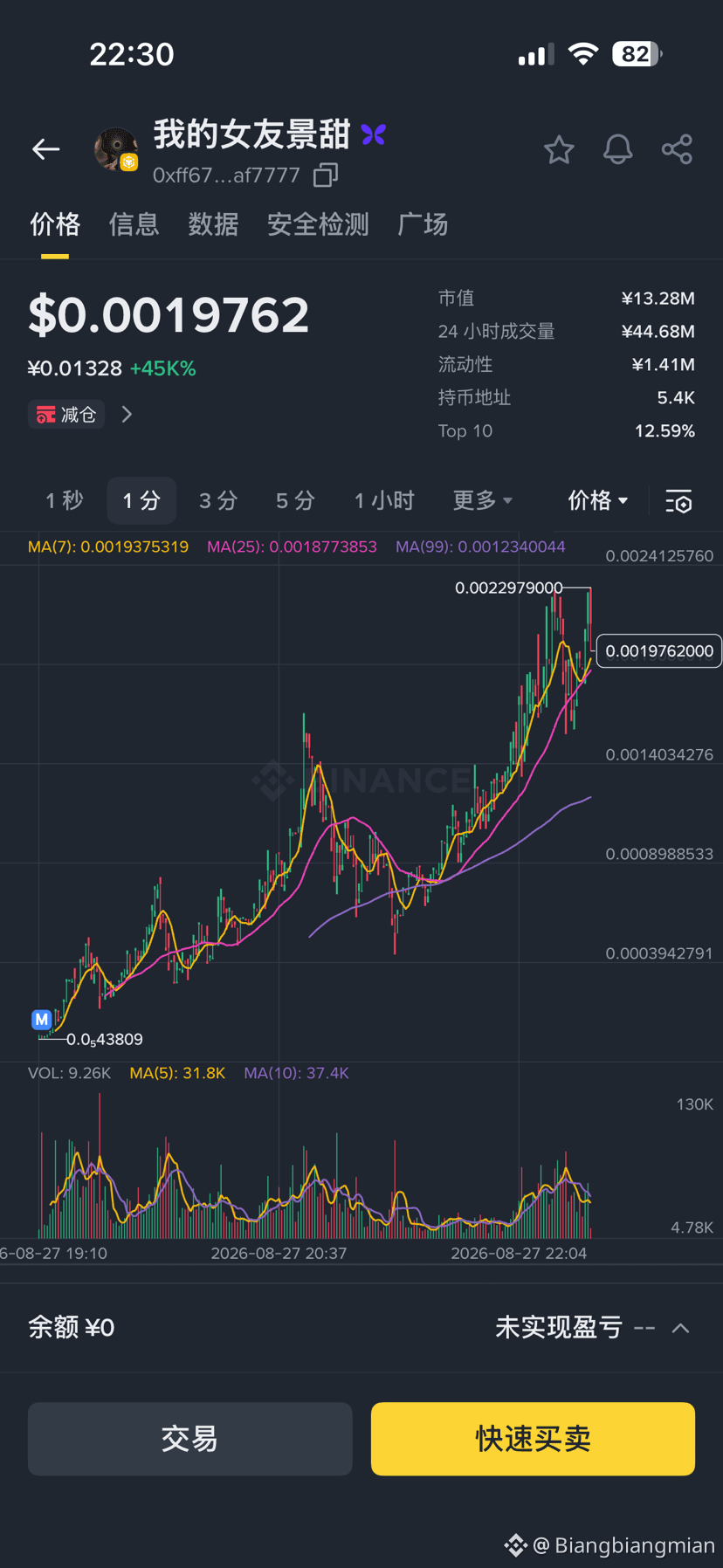
666 Sun Ge, this wave of messing around has brought up a whole new batch of people who like to mess around too. Just watching the excitement isn’t enough—hop on board. Guys 😂
#比特币守于7.94万美元
#BTC🔥🔥🔥🔥🔥
666 Sun Ge, this wave of messing around has brought up a whole new batch of people who like to mess around too. Just watching the excitement isn’t enough—hop on board. Guys 😂
#比特币守于7.94万美元
#BTC🔥🔥🔥🔥🔥
#比特币守于7.94万美元
#BTC🔥🔥🔥🔥🔥
78
Verified
Robinhood’s Long-Term Bull Thesis
Robinhood has transformed from a retail brokerage platform into a comprehensive financial services provider. Its customer base and asset scale have continued to grow, its revenue structure is becoming more diversified, and its fundamentals remain solid.
Launched in July 2026, Robinhood Chain (Arbitrum L2) quickly attracted attention. Trading activity has been strong, and there are many launchpads/platforms. Some projects saw market values that were once quite promising. Although its early phase was largely meme-coin driven, it demonstrated the company’s ability to onboard users onto the chain.
Over the long run, its core value lies in a “users + infrastructure” closed loop: tokenizing traditional assets and integrating them into DeFi. If execution is smooth, its advantages will go beyond short-term speculation.
$HOODB
Robinhood’s Long-Term Bull Thesis
Robinhood has transformed from a retail brokerage platform into a comprehensive financial services provider. Its customer base and asset scale have continued to grow, its revenue structure is becoming more diversified, and its fundamentals remain solid.
Launched in July 2026, Robinhood Chain (Arbitrum L2) quickly attracted attention. Trading activity has been strong, and there are many launchpads/platforms. Some projects saw market values that were once quite promising. Although its early phase was largely meme-coin driven, it demonstrated the company’s ability to onboard users onto the chain.
Over the long run, its core value lies in a “users + infrastructure” closed loop: tokenizing traditional assets and integrating them into DeFi. If execution is smooth, its advantages will go beyond short-term speculation.
$HOODB
Robinhood has transformed from a retail brokerage platform into a comprehensive financial services provider. Its customer base and asset scale have continued to grow, its revenue structure is becoming more diversified, and its fundamentals remain solid.
Launched in July 2026, Robinhood Chain (Arbitrum L2) quickly attracted attention. Trading activity has been strong, and there are many launchpads/platforms. Some projects saw market values that were once quite promising. Although its early phase was largely meme-coin driven, it demonstrated the company’s ability to onboard users onto the chain.
Over the long run, its core value lies in a “users + infrastructure” closed loop: tokenizing traditional assets and integrating them into DeFi. If execution is smooth, its advantages will go beyond short-term speculation.
$HOODB
71
Trump singled out Hyperliquid, with HYPE surging 15%–25%.
But this looks more like a pump for those with exposure rather than policy actually being implemented:
① The CFTC only said it is “working on it,” with no timeline.
② The platform previously blocked U.S. users; returning would require a full review.
③ The Trump family holds a large amount of crypto assets, creating a conflict of interest.
In the short term, you can trade the sentiment—never go heavy or chase after a spike. Wait until the CFTC’s official rules come out. #Hyperliquid
Trump singled out Hyperliquid, with HYPE surging 15%–25%.
But this looks more like a pump for those with exposure rather than policy actually being implemented:
① The CFTC only said it is “working on it,” with no timeline.
② The platform previously blocked U.S. users; returning would require a full review.
③ The Trump family holds a large amount of crypto assets, creating a conflict of interest.
In the short term, you can trade the sentiment—never go heavy or chase after a spike. Wait until the CFTC’s official rules come out. #Hyperliquid
But this looks more like a pump for those with exposure rather than policy actually being implemented:
① The CFTC only said it is “working on it,” with no timeline.
② The platform previously blocked U.S. users; returning would require a full review.
③ The Trump family holds a large amount of crypto assets, creating a conflict of interest.
In the short term, you can trade the sentiment—never go heavy or chase after a spike. Wait until the CFTC’s official rules come out. #Hyperliquid
179
·
--
Bullish
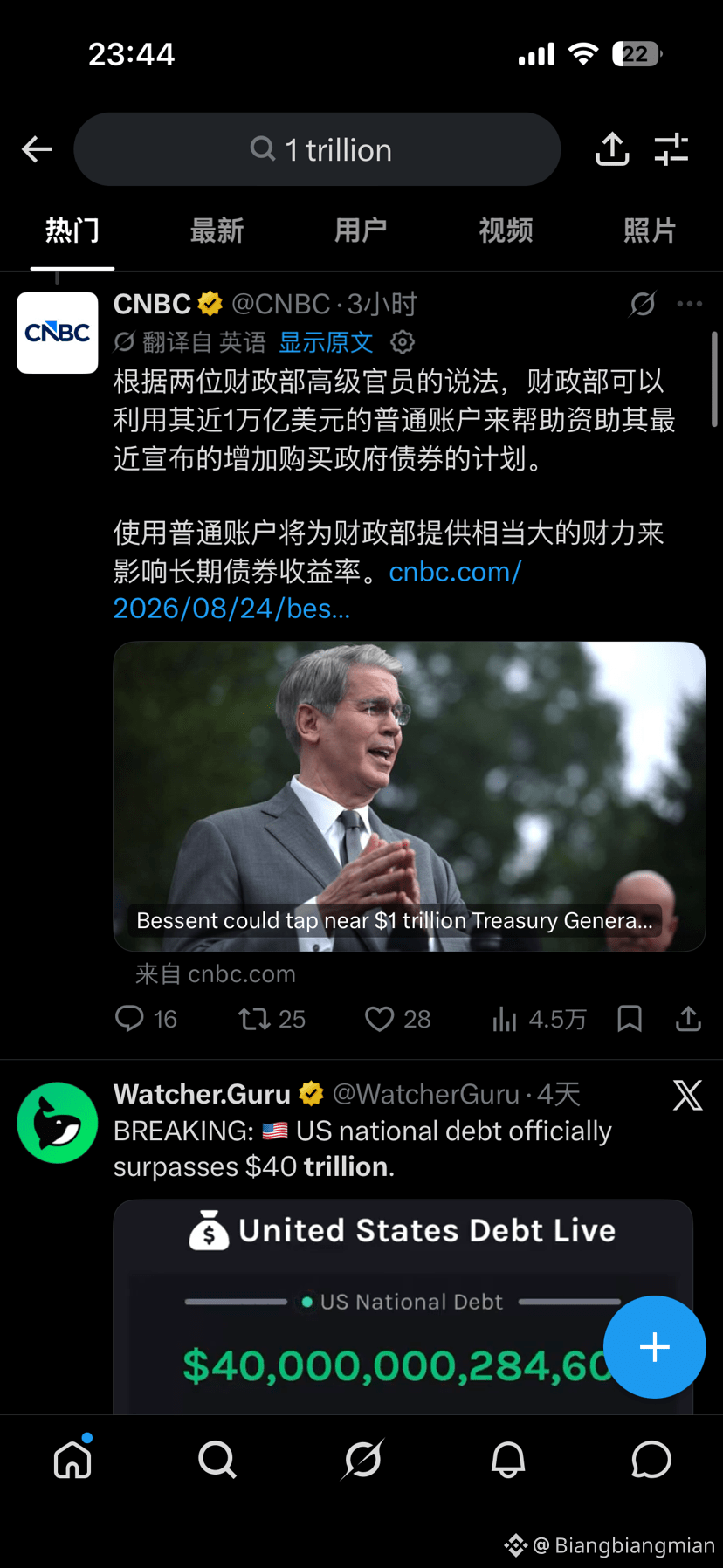
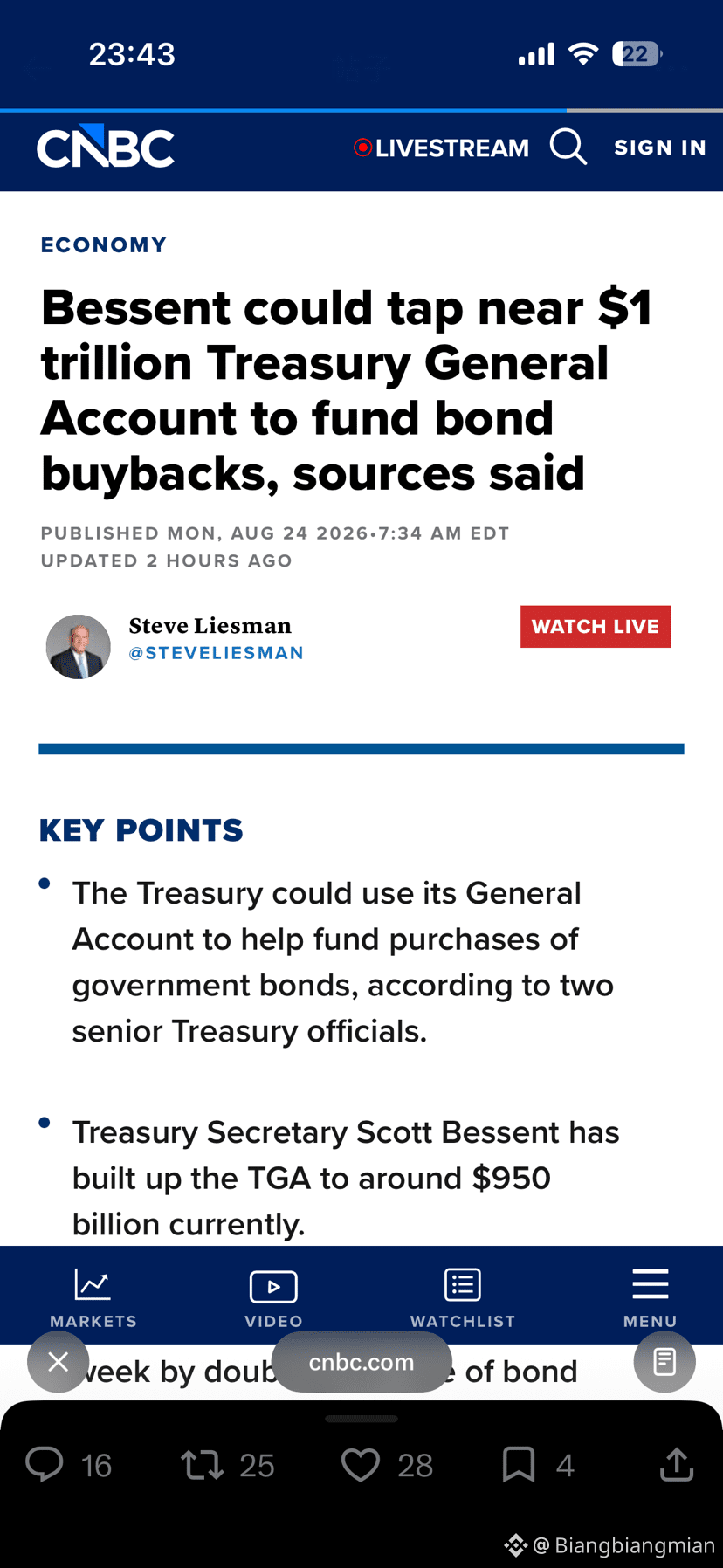
The U.S. Department of the Treasury plans to use $1 trillion to repurchase U.S. Treasuries, releasing cash into the market. Cash/BTC is digital gold—the more there is, the better.
The U.S. Department of the Treasury plans to use $1 trillion to repurchase U.S. Treasuries, releasing cash into the market. Cash/BTC is digital gold—the more there is, the better.
2
378
Log in to explore more content
Join global crypto users on Binance Square
⚡️ Get latest and useful information about crypto.
💬 Trusted by the world’s largest crypto exchange.
👍 Discover real insights from verified creators.
Email / Phone number
Trending Topics
USAugustPPIRisesLessThanExpected
10,058 views
333 Discussing
🚨 US AUG PPI: Rises LESS Than Expected! Bullish for Crypto? 🚀
PPI +0.4% MoM as expected, but CORE PPI only +0.2% vs +0.3% expected - cooling!
What it means:
• Wholesale inflation softer than feared
• Fed rate hike chance now 62% - but dovish signals coming
• Core PCE revisions expected downward - bullish
• BTC usually pumps on softer PPI
Fed meeting Sep 15-16 - Market now expects pause, not hike?
Is this the green light for Q4 rally?
#Bitcoin #PPI #Fed #CryptoNews #BTC#usaugustppiriseslessthanexpected
True News
·1 Likes
·1.1k views
SECApprovesNasdaqTexasCommodityTrustRule
8,502 views
317 Discussing
ECBRaisesRatesSecondTimeTo2.5%
5,479 views
228 Discussing