

Zentra JB
14 Posts

Zentra JB
Report
Block User
11 Following
1 Followers
4 Liked
Posts
All
Videos
·
--

Article
The First and Most Iconic Cryptocurrency$BTC
Bitcoin (BTC): The Original Cryptocurrency
Bitcoin is the first and most widely recognized cryptocurrency—a decentralized digital asset that lets people send value directly to one another without relying on a bank, payment processor, or government. Launched in 2009, it introduced blockchain technology to the world and remains the largest and most established crypto asset.
What Is Bitcoin?
Bitcoin (BTC) is a purely digital currency recorded on a public, distributed ledger called the blockchain. Instead of a central authority verifying payments, a global network of computers validates transactions and maintains the same shared record.
Its key features are:
• Peer-to-peer transfers: Users can send BTC directly to another person anywhere in the world.
• Decentralisation: No single company or government controls the Bitcoin network.
• Digital scarcity: The protocol caps total issuance at 21 million BTC.
• Transparency: Every transaction is publicly recorded on the blockchain, while users hold cryptographic keys rather than personal account details.
How the Bitcoin Network Works
When someone sends Bitcoin, the transaction is broadcast to the network and grouped with others into a block. Miners validate the block through Proof-of-Work, a competitive process that requires computational work; once validated, the block is added to the chain and becomes part of the permanent transaction history.
Miners are rewarded with newly issued bitcoin and transaction fees. The issuance rate decreases over time through “halvings,” which occur roughly every four years and cut the new supply entering the market by 50%.
Why Bitcoin Has Value
Bitcoin’s value comes primarily from scarcity, network adoption, and demand—not from backing by a government or central bank. Its fixed 21-million-coin supply has led many investors to compare it with gold as a potential store of value.
As of early 2026, roughly 20 million BTC—about 95% of the eventual supply—had already been created, with the remainder scheduled to be issued gradually over decades.
Bitcoin as an Investment
Bitcoin is often treated as a digital commodity or speculative investment rather than everyday legal tender. Investors are drawn to its limited supply, global liquidity, and potential for long-term appreciation, but it has historically experienced sharp price swings.
How to Buy BTC Safely
1. Choose a reputable exchange or broker with strong security practices and clear fees.
2. Verify your identity if required by local regulations.
3. Fund your account using a supported payment method.
4. Buy BTC with a limit or market order.
5. Consider self-custody by moving holdings to a hardware wallet if you plan to hold long term.
6. Use strong security: enable two-factor authentication, keep recovery phrases offline, and never share private keys.
Risks to Understand
Bitcoin can be highly volatile, and its price may react sharply to macroeconomic conditions, regulation, investor sentiment, and market liquidity. Crypto holdings on an exchange may be lost if the platform suffers a breach, fraud, or operational failure.
There are also technology risks: undiscovered protocol flaws, network-level attacks, and the long-term possibility that advances such as quantum computing could challenge existing cryptographic assumptions.[fidelity]
The Bottom Line
Bitcoin is best understood as a scarce, decentralized digital asset built on blockchain technology. It offers a novel alternative to traditional financial rails, but it remains a high-risk asset that should be researched carefully and sized according to your risk tolerance.
This article is educational information, not financial advice.
$BTC
$BTTC
#CanMicrosoftDeliverOnAI #CanGoogleDefindItsCore #EarningsSeason #$10.9BBitcoinOptionsExpireFriday #BitcoinSurpasses$81K
The First and Most Iconic Cryptocurrency
$BTC
Bitcoin (BTC): The Original Cryptocurrency
Bitcoin is the first and most widely recognized cryptocurrency—a decentralized digital asset that lets people send value directly to one another without relying on a bank, payment processor, or government. Launched in 2009, it introduced blockchain technology to the world and remains the largest and most established crypto asset.
What Is Bitcoin?
Bitcoin (BTC) is a purely digital currency recorded on a public, distributed ledger called the blockchain. Instead of a central authority verifying payments, a global network of computers validates transactions and maintains the same shared record.
Its key features are:
• Peer-to-peer transfers: Users can send BTC directly to another person anywhere in the world.
• Decentralisation: No single company or government controls the Bitcoin network.
• Digital scarcity: The protocol caps total issuance at 21 million BTC.
• Transparency: Every transaction is publicly recorded on the blockchain, while users hold cryptographic keys rather than personal account details.
How the Bitcoin Network Works
When someone sends Bitcoin, the transaction is broadcast to the network and grouped with others into a block. Miners validate the block through Proof-of-Work, a competitive process that requires computational work; once validated, the block is added to the chain and becomes part of the permanent transaction history.
Miners are rewarded with newly issued bitcoin and transaction fees. The issuance rate decreases over time through “halvings,” which occur roughly every four years and cut the new supply entering the market by 50%.
Why Bitcoin Has Value
Bitcoin’s value comes primarily from scarcity, network adoption, and demand—not from backing by a government or central bank. Its fixed 21-million-coin supply has led many investors to compare it with gold as a potential store of value.
As of early 2026, roughly 20 million BTC—about 95% of the eventual supply—had already been created, with the remainder scheduled to be issued gradually over decades.
Bitcoin as an Investment
Bitcoin is often treated as a digital commodity or speculative investment rather than everyday legal tender. Investors are drawn to its limited supply, global liquidity, and potential for long-term appreciation, but it has historically experienced sharp price swings.
How to Buy BTC Safely
1. Choose a reputable exchange or broker with strong security practices and clear fees.
2. Verify your identity if required by local regulations.
3. Fund your account using a supported payment method.
4. Buy BTC with a limit or market order.
5. Consider self-custody by moving holdings to a hardware wallet if you plan to hold long term.
6. Use strong security: enable two-factor authentication, keep recovery phrases offline, and never share private keys.
Risks to Understand
Bitcoin can be highly volatile, and its price may react sharply to macroeconomic conditions, regulation, investor sentiment, and market liquidity. Crypto holdings on an exchange may be lost if the platform suffers a breach, fraud, or operational failure.
There are also technology risks: undiscovered protocol flaws, network-level attacks, and the long-term possibility that advances such as quantum computing could challenge existing cryptographic assumptions.[fidelity]
The Bottom Line
Bitcoin is best understood as a scarce, decentralized digital asset built on blockchain technology. It offers a novel alternative to traditional financial rails, but it remains a high-risk asset that should be researched carefully and sized according to your risk tolerance.
This article is educational information, not financial advice.
$BTC
$BTTC
#CanMicrosoftDeliverOnAI #CanGoogleDefindItsCore #EarningsSeason #$10.9BBitcoinOptionsExpireFriday #BitcoinSurpasses$81K
13
·
--
Article
The World’s First Cryptocurrency$BTC
Introduction
In October 2008, a person or group writing under the pseudonym Satoshi Nakamoto published a nine-page paper titled “Bitcoin: A Peer-to-Peer Electronic Cash System” (bitcoin.org). The Bitcoin network went live in January 2009 (Blockstream), and Bitcoin today remains the most widely recognized cryptocurrency (Morgan Stanley).
This article explains what Bitcoin is, how it works, why people use it, and what risks and limitations come with it.
What Is Bitcoin?
Bitcoin is a digital currency that enables peer-to-peer transfers of value without reliance on centralized intermediaries such as banks or governments; it was the first application of blockchain technology and remains the most widely recognized cryptocurrency today (Morgan Stanley).
One of Bitcoin’s most distinctive features is its fixed supply. Under Bitcoin’s current consensus rules, total issuance is capped at approximately 21 million coins — a limit built into the protocol’s code — and new bitcoin issuance is expected to end around the year 2140 (Blockstream).
How Bitcoin Works
The Blockchain
Bitcoin’s blockchain is a shared public ledger: transactions are grouped into blocks, validated by the network, and added to the chain at regular intervals (Morgan Stanley). Proof-of-work makes rewriting confirmed transaction history computationally costly; additional confirmations reduce, but do not eliminate, the risk of reversal (Bitcoin whitepaper).
Transactions and Wallets
Spending bitcoin requires a cryptographic private key: Bitcoin wallets keep a secret piece of data called a private key, which is used to sign transactions, providing mathematical proof that they came from the owner of the wallet (bitcoin.org). All transactions are broadcast to the network and usually receive their first confirmation within about 10 to 60 minutes (bitcoin.org).
Mining and the Halving
New bitcoins enter circulation through mining: miners compete to solve a computationally difficult puzzle, and miners whose valid blocks are accepted receive newly created bitcoin — the block subsidy — plus transaction fees (Böhme et al., Journal of Economic Perspectives).
Every 210,000 blocks — roughly every four years — the block subsidy (not the transaction fees) is cut in half, an event called the halving (Blockstream). The most recent halving occurred in April 2024, lowering the subsidy from 6.25 to 3.125 bitcoin per block, and the next halving is projected for around 2028, when the subsidy would fall to about 1.5625 bitcoin per block (Blockstream).
Why People Use Bitcoin
Different people are drawn to Bitcoin for different reasons:
• No central intermediary. Bitcoin enables peer-to-peer transfers of value without reliance on banks or governments (Morgan Stanley).
• Predictable scarcity. The fixed issuance schedule means new bitcoin is created on a predetermined, gradually declining path toward the 21 million cap, rather than at the discretion of any authority (Blockstream).
• Borderless transfers. Bitcoin can be sent to anyone with an internet connection, without intermediaries (Morgan Stanley).
• A possible store of value. A 2021 study by Dirk Baur and Thomas Dimpfl concluded that Bitcoin’s excess volatility makes it costly to use as a medium of exchange, but that over very long horizons Bitcoin can be considered a store of value despite its volatility (Baur & Dimpfl, Empirical Economics).
Risks and Limitations
Bitcoin is not without serious drawbacks, and anyone considering it should understand them.
Volatility. A 2021 study by Baur and Dimpfl found that Bitcoin’s price volatility was, over the period studied, almost ten times that of major fiat currencies (Baur & Dimpfl, Empirical Economics).
Energy consumption. Securing the network through mining requires substantial electricity. As of 2025, the Cambridge Centre for Alternative Finance estimated the network’s annual electricity consumption at roughly 138 terawatt-hours — about 0.5% of global electricity use, comparable to the annual consumption of a mid-sized country (Wikipedia). Cambridge’s 2025 industry report found that about half of Bitcoin’s electricity comes from renewable or low-carbon sources, though fossil fuels still supply a substantial share (Britannica).
Irreversibility. Bitcoin’s design allows for irreversible transactions, with no built-in chargeback mechanism: users cannot simply cancel a confirmed payment through a central operator (Böhme et al., Journal of Economic Perspectives).
Conclusion
Bitcoin is a remarkable technical achievement: a system that allows digital value to change hands directly between strangers, with no trusted intermediary, no central issuing authority, and a fixed issuance schedule (Böhme et al., Journal of Economic Perspectives). Whether it ultimately becomes a mainstream global asset, a niche store of value, or something in between remains an open question.
For anyone interested in the technology, the best starting point is still Nakamoto’s original whitepaper — it is only nine pages long, remarkably readable, and freely available (bitcoin.org). For those considering buying bitcoin, the same caution applies as with any volatile asset: never risk more than you can afford to lose, and understand the risks before you begin
This article is for informational purposes only and does not constitute financial advice.
{spot}(BTCUSDT)
#CanMicrosoftDeliverOnAI #CanGoogleDefindItsCore #EarningsSeason #$10.9BBitcoinOptionsExpireFriday #BitcoinSurpasses$81K
The World’s First Cryptocurrency
$BTC
Introduction
In October 2008, a person or group writing under the pseudonym Satoshi Nakamoto published a nine-page paper titled “Bitcoin: A Peer-to-Peer Electronic Cash System” (bitcoin.org). The Bitcoin network went live in January 2009 (Blockstream), and Bitcoin today remains the most widely recognized cryptocurrency (Morgan Stanley).
This article explains what Bitcoin is, how it works, why people use it, and what risks and limitations come with it.
What Is Bitcoin?
Bitcoin is a digital currency that enables peer-to-peer transfers of value without reliance on centralized intermediaries such as banks or governments; it was the first application of blockchain technology and remains the most widely recognized cryptocurrency today (Morgan Stanley).
One of Bitcoin’s most distinctive features is its fixed supply. Under Bitcoin’s current consensus rules, total issuance is capped at approximately 21 million coins — a limit built into the protocol’s code — and new bitcoin issuance is expected to end around the year 2140 (Blockstream).
How Bitcoin Works
The Blockchain
Bitcoin’s blockchain is a shared public ledger: transactions are grouped into blocks, validated by the network, and added to the chain at regular intervals (Morgan Stanley). Proof-of-work makes rewriting confirmed transaction history computationally costly; additional confirmations reduce, but do not eliminate, the risk of reversal (Bitcoin whitepaper).
Transactions and Wallets
Spending bitcoin requires a cryptographic private key: Bitcoin wallets keep a secret piece of data called a private key, which is used to sign transactions, providing mathematical proof that they came from the owner of the wallet (bitcoin.org). All transactions are broadcast to the network and usually receive their first confirmation within about 10 to 60 minutes (bitcoin.org).
Mining and the Halving
New bitcoins enter circulation through mining: miners compete to solve a computationally difficult puzzle, and miners whose valid blocks are accepted receive newly created bitcoin — the block subsidy — plus transaction fees (Böhme et al., Journal of Economic Perspectives).
Every 210,000 blocks — roughly every four years — the block subsidy (not the transaction fees) is cut in half, an event called the halving (Blockstream). The most recent halving occurred in April 2024, lowering the subsidy from 6.25 to 3.125 bitcoin per block, and the next halving is projected for around 2028, when the subsidy would fall to about 1.5625 bitcoin per block (Blockstream).
Why People Use Bitcoin
Different people are drawn to Bitcoin for different reasons:
• No central intermediary. Bitcoin enables peer-to-peer transfers of value without reliance on banks or governments (Morgan Stanley).
• Predictable scarcity. The fixed issuance schedule means new bitcoin is created on a predetermined, gradually declining path toward the 21 million cap, rather than at the discretion of any authority (Blockstream).
• Borderless transfers. Bitcoin can be sent to anyone with an internet connection, without intermediaries (Morgan Stanley).
• A possible store of value. A 2021 study by Dirk Baur and Thomas Dimpfl concluded that Bitcoin’s excess volatility makes it costly to use as a medium of exchange, but that over very long horizons Bitcoin can be considered a store of value despite its volatility (Baur & Dimpfl, Empirical Economics).
Risks and Limitations
Bitcoin is not without serious drawbacks, and anyone considering it should understand them.
Volatility. A 2021 study by Baur and Dimpfl found that Bitcoin’s price volatility was, over the period studied, almost ten times that of major fiat currencies (Baur & Dimpfl, Empirical Economics).
Energy consumption. Securing the network through mining requires substantial electricity. As of 2025, the Cambridge Centre for Alternative Finance estimated the network’s annual electricity consumption at roughly 138 terawatt-hours — about 0.5% of global electricity use, comparable to the annual consumption of a mid-sized country (Wikipedia). Cambridge’s 2025 industry report found that about half of Bitcoin’s electricity comes from renewable or low-carbon sources, though fossil fuels still supply a substantial share (Britannica).
Irreversibility. Bitcoin’s design allows for irreversible transactions, with no built-in chargeback mechanism: users cannot simply cancel a confirmed payment through a central operator (Böhme et al., Journal of Economic Perspectives).
Conclusion
Bitcoin is a remarkable technical achievement: a system that allows digital value to change hands directly between strangers, with no trusted intermediary, no central issuing authority, and a fixed issuance schedule (Böhme et al., Journal of Economic Perspectives). Whether it ultimately becomes a mainstream global asset, a niche store of value, or something in between remains an open question.
For anyone interested in the technology, the best starting point is still Nakamoto’s original whitepaper — it is only nine pages long, remarkably readable, and freely available (bitcoin.org). For those considering buying bitcoin, the same caution applies as with any volatile asset: never risk more than you can afford to lose, and understand the risks before you begin
This article is for informational purposes only and does not constitute financial advice.
#CanMicrosoftDeliverOnAI #CanGoogleDefindItsCore #EarningsSeason #$10.9BBitcoinOptionsExpireFriday #BitcoinSurpasses$81K
1
51
·
--
Article
“The Bitcoin Whitepaper” and “Crypto’s Black Hole.”Binance
The single best article-length piece on Binance is the Reuters investigative series led by Angus Berwick and Tom Wilson, which won journalism honors for “opening up one of the biggest black boxes of the cryptocurrency industry”. Start with its centerpiece, How crypto giant Binance became a hub for hackers, fraudsters and drug traffickers, which traced at least $2.35 billion in illicit funds through the exchange. The full package is collected in Binance: Crypto’s Black Hole.
Other standouts
• A Fortune long form profile of founder CZ Zhao, from founding the exchange in 2017 to a $74 billion fortune.
• The ICIJ’s cross-border “Coin Laundry” investigation with 37 media partners, which found dirty money kept flowing through Binance accounts even after its 2023 guilty plea.
Bitcoin : $BTC
The consensus starting point is the original document itself — Satoshi Nakamoto’s whitepaper, still recommended reading and only nine pages long. For the best curated list of longform Bitcoin essays, including the widely praised “Bullish Case for Bitcoin” by Vijay Boyapati, see The Bitcoin Reading List and Nat Eliason’s reading list.
If you want one article that combines both — an approachable explanation of Bitcoin and how exchanges like Binance fit in — the best single pick is Marc Andreessen’s “Why Bitcoin Matters”, often cited as the best introduction to why the technology matters.
{spot}(BTCUSDT)
#CanMicrosoftDeliverOnAI #CanGoogleDefindItsCore #EarningsSeason #$10.9BBitcoinOptionsExpireFriday #BitcoinSurpasses$81K $BTC
“The Bitcoin Whitepaper” and “Crypto’s Black Hole.”
Binance
The single best article-length piece on Binance is the Reuters investigative series led by Angus Berwick and Tom Wilson, which won journalism honors for “opening up one of the biggest black boxes of the cryptocurrency industry”. Start with its centerpiece, How crypto giant Binance became a hub for hackers, fraudsters and drug traffickers, which traced at least $2.35 billion in illicit funds through the exchange. The full package is collected in Binance: Crypto’s Black Hole.
Other standouts
• A Fortune long form profile of founder CZ Zhao, from founding the exchange in 2017 to a $74 billion fortune.
• The ICIJ’s cross-border “Coin Laundry” investigation with 37 media partners, which found dirty money kept flowing through Binance accounts even after its 2023 guilty plea.
Bitcoin : $BTC
The consensus starting point is the original document itself — Satoshi Nakamoto’s whitepaper, still recommended reading and only nine pages long. For the best curated list of longform Bitcoin essays, including the widely praised “Bullish Case for Bitcoin” by Vijay Boyapati, see The Bitcoin Reading List and Nat Eliason’s reading list.
If you want one article that combines both — an approachable explanation of Bitcoin and how exchanges like Binance fit in — the best single pick is Marc Andreessen’s “Why Bitcoin Matters”, often cited as the best introduction to why the technology matters.
#CanMicrosoftDeliverOnAI #CanGoogleDefindItsCore #EarningsSeason #$10.9BBitcoinOptionsExpireFriday #BitcoinSurpasses$81K $BTC
41
·
--
$BTC
#CanMicrosoftDeliverOnAI #CanMicrosoftDeliverOnAI #EarningsSeason #$10.9BBitcoinOptionsExpireFriday #ThailandSupremeCourtRulesBitcoinIsProperty
There you go !!! With experts
$BTC
#CanMicrosoftDeliverOnAI #CanMicrosoftDeliverOnAI #EarningsSeason #$10.9BBitcoinOptionsExpireFriday #ThailandSupremeCourtRulesBitcoinIsProperty
There you go !!! With experts
#CanMicrosoftDeliverOnAI #CanMicrosoftDeliverOnAI #EarningsSeason #$10.9BBitcoinOptionsExpireFriday #ThailandSupremeCourtRulesBitcoinIsProperty
There you go !!! With experts
1
64
·
--
#CanMicrosoftDeliverOnAI #CanGoogleDefindItsCore #EarningsSeason #EarningsSeason #$10.9BBitcoinOptionsExpireFriday
There you go !!! Lets make it huge 😁😁
#CanMicrosoftDeliverOnAI #CanGoogleDefindItsCore #EarningsSeason #EarningsSeason #$10.9BBitcoinOptionsExpireFriday
There you go !!! Lets make it huge 😁😁
There you go !!! Lets make it huge 😁😁
1
149
·
--
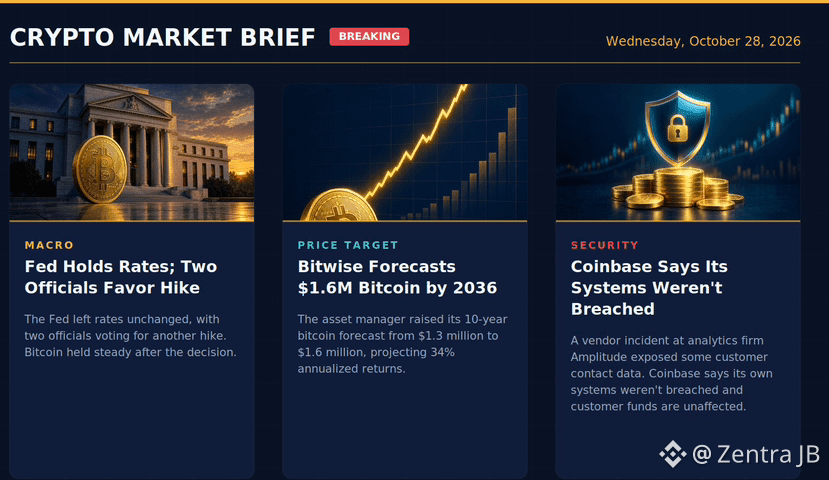
Breaking Crypto News — Oct 28, 2026
• Fed holds rates at 3.75%–4.00%, two officials push for a hike; Bitcoin trades near $80,800 after bouncing back above $81K
• $BTC Bitwise raises its Bitcoin target to $1.6 million by 2036, projecting 34% annualized returns
• SEC approves new standards to streamline crypto ETF listings; Canary Staked INJ ETF (INJC) set to launch soon
• $DTCX.US DTCC launches tokenization service for 34 stocks with 1:1 backing, partners include BitGo, Fireblocks and Blockdaemon
• $XRP XRP up 3% as Ripple wins US trust-bank approval; Coinbase lists RLUSD stablecoin across XRPL, Ethereum and Base
• Security: Hacker minted 1B UXLINK tokens in unauthorized issuance; Coinbase says a vendor (Amplitude) incident exposed some contact data but no funds at risk
{spot}(BTCUSDT)
{stock_us}(DTCX.US)
{spot}(XRPUSDT)
Breaking Crypto News — Oct 28, 2026
• Fed holds rates at 3.75%–4.00%, two officials push for a hike; Bitcoin trades near $80,800 after bouncing back above $81K
• $BTC Bitwise raises its Bitcoin target to $1.6 million by 2036, projecting 34% annualized returns
• SEC approves new standards to streamline crypto ETF listings; Canary Staked INJ ETF (INJC) set to launch soon
• $DTCX.US DTCC launches tokenization service for 34 stocks with 1:1 backing, partners include BitGo, Fireblocks and Blockdaemon
• $XRP XRP up 3% as Ripple wins US trust-bank approval; Coinbase lists RLUSD stablecoin across XRPL, Ethereum and Base
• Security: Hacker minted 1B UXLINK tokens in unauthorized issuance; Coinbase says a vendor (Amplitude) incident exposed some contact data but no funds at risk
68
·
--
$PEPE Today’s crypto trend is being led by memecoins and major altcoins, with Pepe (PEPE) the standout trending coin. Bitcoin is back above $81,000, while PEPE, XRP, HYPE, and several smaller DeFi/AI-related tokens are drawing the most attention.
{spot}(PEPEUSDT)
#CanMicrosoftDeliverOnAI #CanGoogleDefindItsCore #EarningsSeason #$10.9BBitcoinOptionsExpireFriday #DatavaultAICantWithdrawBitcoinFromBiconomy
$PEPE Today’s crypto trend is being led by memecoins and major altcoins, with Pepe (PEPE) the standout trending coin. Bitcoin is back above $81,000, while PEPE, XRP, HYPE, and several smaller DeFi/AI-related tokens are drawing the most attention.
#CanMicrosoftDeliverOnAI #CanGoogleDefindItsCore #EarningsSeason #$10.9BBitcoinOptionsExpireFriday #DatavaultAICantWithdrawBitcoinFromBiconomy
#CanMicrosoftDeliverOnAI #CanGoogleDefindItsCore #EarningsSeason #$10.9BBitcoinOptionsExpireFriday #DatavaultAICantWithdrawBitcoinFromBiconomy
41
·
--
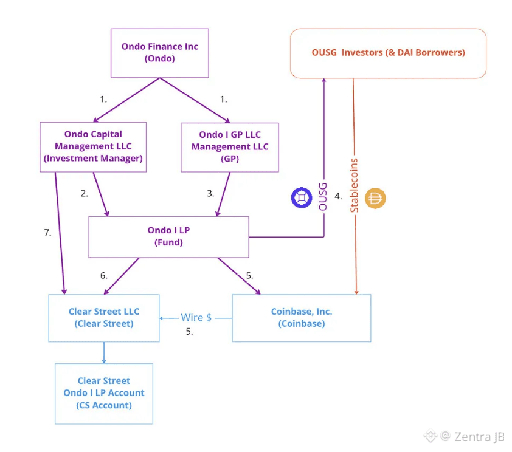
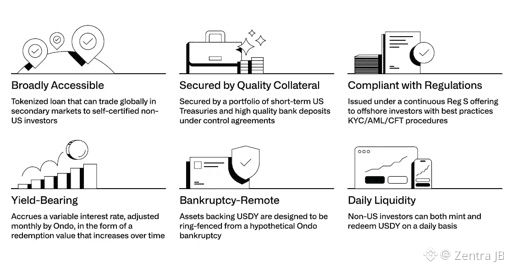
$ONDO Ondo Finance brings conventional financial products onto blockchains through tokens designed to track assets held by custodians or fund structures. Examples include tokenized Treasury and money-market products such as USDY and OUSG, as well as tokenized stocks and ETFs.
ONDO is primarily a governance token: holders can vote on protocol proposals, including upgrades, treasury allocations, and economic parameters. It is not a claim on Ondo’s underlying Treasuries or stocks, nor is it used to secure Ondo Chain.
{spot}(ONDOUSDT)
#CanMicrosoftDeliverOnAI #CanGoogleDefindItsCore #EarningsSeason #$10.9BBitcoinOptionsExpireFriday #ThailandSupremeCourtRulesBitcoinIsProperty
$ONDO Ondo Finance brings conventional financial products onto blockchains through tokens designed to track assets held by custodians or fund structures. Examples include tokenized Treasury and money-market products such as USDY and OUSG, as well as tokenized stocks and ETFs.
ONDO is primarily a governance token: holders can vote on protocol proposals, including upgrades, treasury allocations, and economic parameters. It is not a claim on Ondo’s underlying Treasuries or stocks, nor is it used to secure Ondo Chain.
#CanMicrosoftDeliverOnAI #CanGoogleDefindItsCore #EarningsSeason #$10.9BBitcoinOptionsExpireFriday #ThailandSupremeCourtRulesBitcoinIsProperty

88
·
--
$CHIP USD.AI’s CHIP is a governance token for a DeFi protocol that finances AI compute hardware—especially GPUs—by turning them into on-chain collateral for dollar-denominated loans. Its investment case is strong on AI-infrastructure demand but materially constrained by token-supply dilution and credit risk.
USD.AI lets GPU operators tokenize enterprise hardware such as NVIDIA H200/B200 systems and borrow against it, while lenders deposit stablecoins to earn loan interest. CHIP holders govern collateral standards, interest-rate models, fees, and curator approvals; staked CHIP may also serve as a first-loss backstop.
The protocol’s liquidity asset is USDai, a synthetic dollar backed by PayPal’s PYUSD, and its yield-bearing version is sUSDai. In short, CHIP is not itself the loan asset or stablecoin—it is the coordination and risk-governance layer.
AI companies need capital quickly, while GPUs depreciate rapidly; USD.AI aims to close that gap with GPU-backed loans that can settle faster than traditional bank financing. Grayscale recently highlighted USD.AI among cryptocurrencies positioned to benefit from AI infrastructure demand, and Bullish announced a $100 million financing facility supporting its GPU loans.
CHIP is best viewed as a high-risk AI-infrastructure credit protocol token, not a straightforward proxy for GPU demand. The protocol has a credible real-world use case and growing institutional attention, but CHIP’s value depends on whether USD.AI can scale its loan book, avoid defaults, introduce durable value accrual, and manage the large unlock schedule beginning in 2027.
{spot}(CHIPUSDT)
#CanMicrosoftDeliverOnAI #CanGoogleDefindItsCore #EarningsSeason #$10.9BBitcoinOptionsExpireFriday #ThailandSupremeCourtRulesBitcoinIsProperty
$CHIP USD.AI’s CHIP is a governance token for a DeFi protocol that finances AI compute hardware—especially GPUs—by turning them into on-chain collateral for dollar-denominated loans. Its investment case is strong on AI-infrastructure demand but materially constrained by token-supply dilution and credit risk.
USD.AI lets GPU operators tokenize enterprise hardware such as NVIDIA H200/B200 systems and borrow against it, while lenders deposit stablecoins to earn loan interest. CHIP holders govern collateral standards, interest-rate models, fees, and curator approvals; staked CHIP may also serve as a first-loss backstop.
The protocol’s liquidity asset is USDai, a synthetic dollar backed by PayPal’s PYUSD, and its yield-bearing version is sUSDai. In short, CHIP is not itself the loan asset or stablecoin—it is the coordination and risk-governance layer.
AI companies need capital quickly, while GPUs depreciate rapidly; USD.AI aims to close that gap with GPU-backed loans that can settle faster than traditional bank financing. Grayscale recently highlighted USD.AI among cryptocurrencies positioned to benefit from AI infrastructure demand, and Bullish announced a $100 million financing facility supporting its GPU loans.
CHIP is best viewed as a high-risk AI-infrastructure credit protocol token, not a straightforward proxy for GPU demand. The protocol has a credible real-world use case and growing institutional attention, but CHIP’s value depends on whether USD.AI can scale its loan book, avoid defaults, introduce durable value accrual, and manage the large unlock schedule beginning in 2027.
#CanMicrosoftDeliverOnAI #CanGoogleDefindItsCore #EarningsSeason #$10.9BBitcoinOptionsExpireFriday #ThailandSupremeCourtRulesBitcoinIsProperty

167
·
--
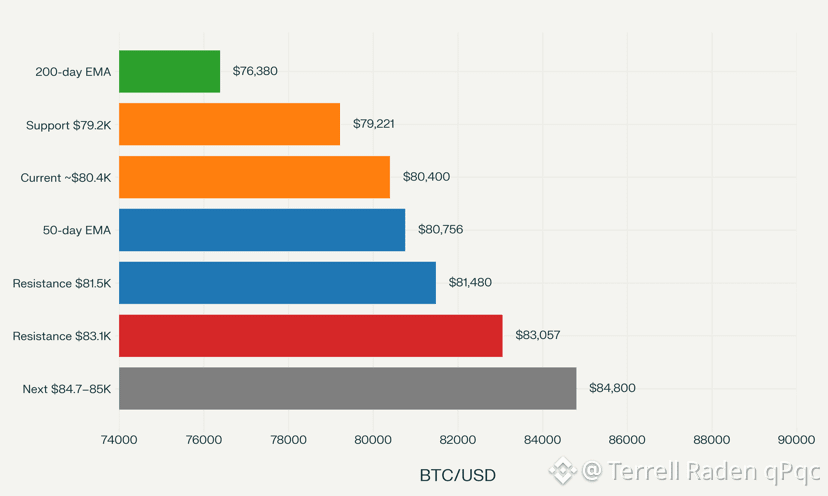
$BTC BTC was near $81,412 in the latest October 28 readings, with the market focused on the Federal Reserve policy announcement.
• The daily technical summary is broadly mixed: 9 sell, 9 neutral, and 8 buy signals; RSI is about 48, indicating neither overbought nor oversold conditions.
• BTC remains above its longer-term 100-day and 200-day EMAs, near $77,766 and $76,396, which supports the broader uptrend case.
• Recent ETF demand has helped the rebound: BlackRock’s IBIT recorded $110.34 million in net inflows on October 26, ending two days of outflows.
{spot}(BTCUSDT)
#CanMicrosoftDeliverOnAI #CanGoogleDefindItsCore #EarningsSeason #$10.9BBitcoinOptionsExpireFriday #ThailandSupremeCourtRulesBitcoinIsProperty
$BTC BTC was near $81,412 in the latest October 28 readings, with the market focused on the Federal Reserve policy announcement.
• The daily technical summary is broadly mixed: 9 sell, 9 neutral, and 8 buy signals; RSI is about 48, indicating neither overbought nor oversold conditions.
• BTC remains above its longer-term 100-day and 200-day EMAs, near $77,766 and $76,396, which supports the broader uptrend case.
• Recent ETF demand has helped the rebound: BlackRock’s IBIT recorded $110.34 million in net inflows on October 26, ending two days of outflows.
#CanMicrosoftDeliverOnAI #CanGoogleDefindItsCore #EarningsSeason #$10.9BBitcoinOptionsExpireFriday #ThailandSupremeCourtRulesBitcoinIsProperty
87
Log in to explore more content
Join global crypto users on Binance Square
⚡️ Get latest and useful information about crypto.
💬 Trusted by the world’s largest crypto exchange.
👍 Discover real insights from verified creators.
Email / Phone number