
Smart Crypto Media
1.4k Posts

Smart Crypto Media
Report
Block User
Smart Crypto Media:Your go-to source for the latest in crypto news, market analysis, trends, blockchain insights, and Web3 education.Stay informed, trade smart
Open Trade
Frequent Trader
2.5 Years
346 Following
3.5K+ Followers
6.8K+ Liked
Posts
Portfolio
All
Quotes
Videos
Live
$ANT Falling Below Its IPO Price Says Something About the AI Market
An AI company can have a strong long-term story and still disappoint the market in the short term.
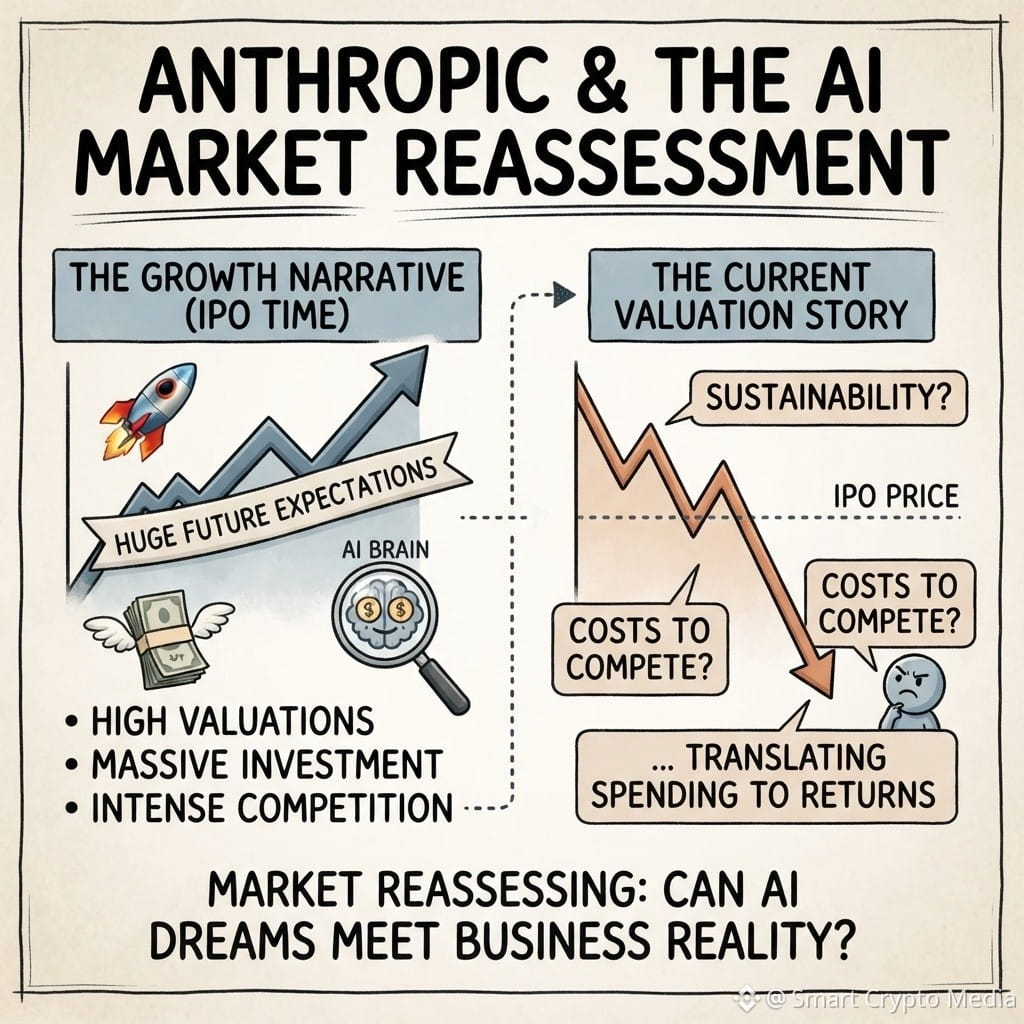
Anthropic trading below its IPO price is a reminder that investors don't just buy growth. They buy expectations about future growth, and sometimes those expectations become difficult to meet.
The AI narrative has been one of the strongest themes in markets. New models, enterprise adoption, infrastructure spending, and competition have pushed valuations higher across the sector. But the market is starting to pay closer attention to the other side of the equation.
How much does it cost to compete? How sustainable is the spending? And how long will it take for massive AI investment to translate into consistent returns?
That is where sentiment can change.
A price falling below IPO levels doesn't automatically mean the business is weakening. It may simply mean the market is reassessing what it was willing to pay before.
The bigger story isn't one IPO price. It's whether AI companies can turn enormous expectations into durable business results.
The AI story may still be growing. But the valuation story is getting harder.
#Anthropic #SmartCryptoMedia
426
Article
NVIDIA Brings Huang Back. I Don't Know If That's Good News.I read the headline twice.
Not because it was complicated. Because I was sure I had it backwards. NVIDIA reinstates Jensen Huang. Puts him back. After all of it.
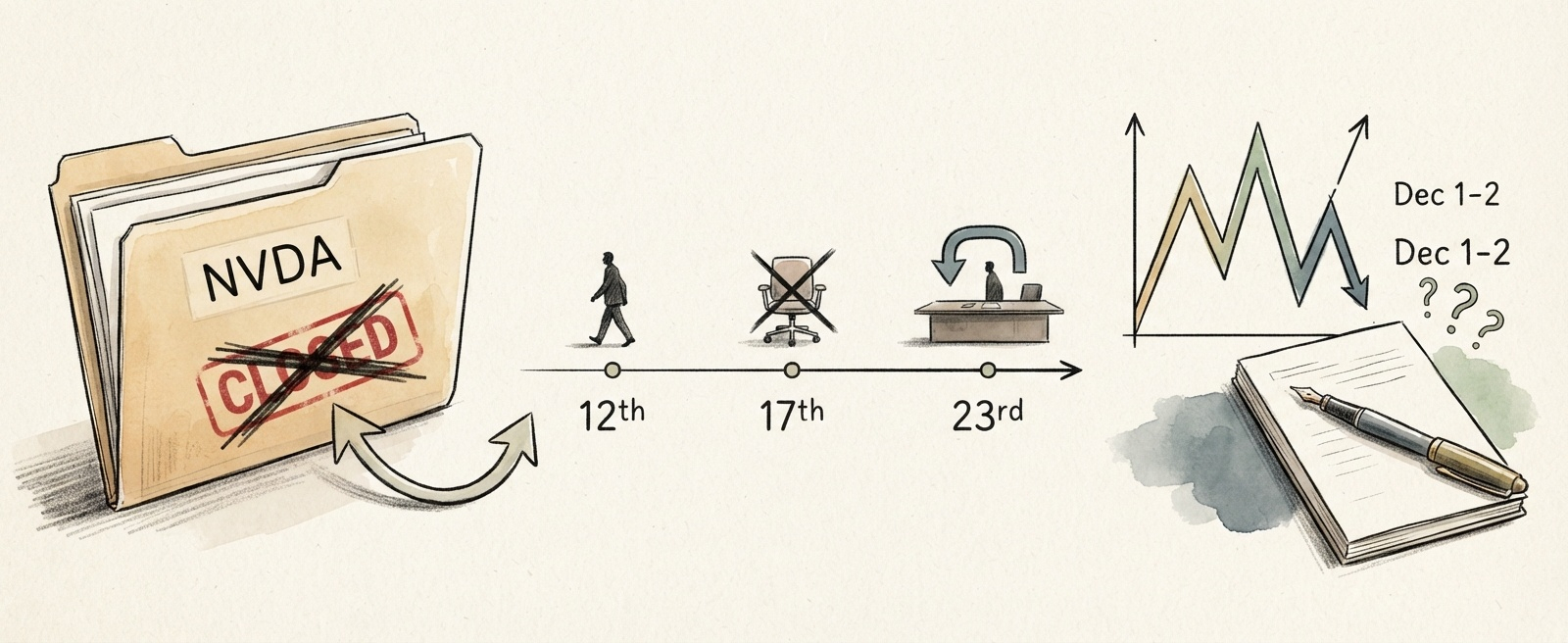
I had filed this one away, and that's the part I keep turning over. Resigned on the 12th. Board says no on the 17th. Somewhere in my head the folder was closed. Next chapter: who replaces him, what the search firm comes up with.
Then the 23rd.
Let me separate what I know from what I'm just feeling, because I don't trust my first reaction.
What I know: the board voted unanimously to bring him back. The CFO goes back to being just the CFO. The release says the board talked to him, got comfortable on candor, and took input from senior levels of the US government before deciding it wasn't a national security issue.
What I don't know: what changed in six days. The release doesn't say. Nobody I've read says. And there's an investigation that isn't finished.
And honestly, what I feel is whiplash. Which is not analysis.
But something about it is bugging me, and I think it's this.
A big part of how I explain the AI trade to people runs through one company. Not just me. Think about how the AI narrative in this market gets built. A headline about the flagship moves sentiment. Sentiment moves attention. Attention moves flows into anything tagged "AI", including tokens that have no direct link to the company at all. And then the flows make the next headline louder.
That's my working theory of the loop. I haven't verified any link in that chain. I haven't looked at how AI tokens behaved over these eleven days, and I'd rather say that than pretend. My guess is the reaction was noisy and mostly about the headline, not the substance. But that's a guess.
Here's the constraint I can't stop seeing, though.
That loop only works while the anchor stays credible. The whole narrative is borrowed from one company. So its stability depends on the anchor's story staying put for longer than the trade you're making on it lasts. If the anchor's story can flip in six days, the borrowed narrative has a shorter shelf life than most people are sizing for.
I keep wondering if that's the real risk. Not a bad headline. A good headline that arrives too late to be useful.
And it makes me think about rotation. When one corner of AI gets noisy, does attention drift to infrastructure plays that feel steadier? Does it drift toward consumer apps? Or does it just go back to BTC and wait? I genuinely don't know. I have a feeling the answer depends on who's looking, and that's not an answer.
I also caught myself doing something strange. For about two weeks I had started writing sentences about him in the past tense. That's the kind of thing you only notice after the story turns over.
Part of me says this is just a public company cleaning up a messy situation fast, because stakes this large force fast decisions. That's a fine reading. I might even believe it.
Another part snags on the pace. It moved faster than the story had any right to. I can't tell if that means a board that decided quickly, or one that had decided long before it said so. I can't tell the difference from here.
The lesson I keep landing on is smaller than "the board was wrong" or "the market was wrong." If you'd asked me on the 18th whether he'd be back as CEO within a week, I'd have said no, and I'd have said it confidently. The confident version of a story has a short half-life. Mine ran out.
The investigation continues. House committees are set to question him behind closed doors on December 1 and 2. Whatever I think I understand today may not survive that.
So I'm stuck between two readings that don't fit together. If the story can reverse this quickly, then a narrative built on it is fragile. But if it reversed because the company is that central, then the narrative is exactly as strong as it looked.
Which one are you actually trading on, and how would you know before the next headline tells you?
$NVDA #AI
NVIDIA Brings Huang Back. I Don't Know If That's Good News.
I read the headline twice.
Not because it was complicated. Because I was sure I had it backwards. NVIDIA reinstates Jensen Huang. Puts him back. After all of it.
I had filed this one away, and that's the part I keep turning over. Resigned on the 12th. Board says no on the 17th. Somewhere in my head the folder was closed. Next chapter: who replaces him, what the search firm comes up with.
Then the 23rd.
Let me separate what I know from what I'm just feeling, because I don't trust my first reaction.
What I know: the board voted unanimously to bring him back. The CFO goes back to being just the CFO. The release says the board talked to him, got comfortable on candor, and took input from senior levels of the US government before deciding it wasn't a national security issue.
What I don't know: what changed in six days. The release doesn't say. Nobody I've read says. And there's an investigation that isn't finished.
And honestly, what I feel is whiplash. Which is not analysis.
But something about it is bugging me, and I think it's this.
A big part of how I explain the AI trade to people runs through one company. Not just me. Think about how the AI narrative in this market gets built. A headline about the flagship moves sentiment. Sentiment moves attention. Attention moves flows into anything tagged "AI", including tokens that have no direct link to the company at all. And then the flows make the next headline louder.
That's my working theory of the loop. I haven't verified any link in that chain. I haven't looked at how AI tokens behaved over these eleven days, and I'd rather say that than pretend. My guess is the reaction was noisy and mostly about the headline, not the substance. But that's a guess.
Here's the constraint I can't stop seeing, though.
That loop only works while the anchor stays credible. The whole narrative is borrowed from one company. So its stability depends on the anchor's story staying put for longer than the trade you're making on it lasts. If the anchor's story can flip in six days, the borrowed narrative has a shorter shelf life than most people are sizing for.
I keep wondering if that's the real risk. Not a bad headline. A good headline that arrives too late to be useful.
And it makes me think about rotation. When one corner of AI gets noisy, does attention drift to infrastructure plays that feel steadier? Does it drift toward consumer apps? Or does it just go back to BTC and wait? I genuinely don't know. I have a feeling the answer depends on who's looking, and that's not an answer.
I also caught myself doing something strange. For about two weeks I had started writing sentences about him in the past tense. That's the kind of thing you only notice after the story turns over.
Part of me says this is just a public company cleaning up a messy situation fast, because stakes this large force fast decisions. That's a fine reading. I might even believe it.
Another part snags on the pace. It moved faster than the story had any right to. I can't tell if that means a board that decided quickly, or one that had decided long before it said so. I can't tell the difference from here.
The lesson I keep landing on is smaller than "the board was wrong" or "the market was wrong." If you'd asked me on the 18th whether he'd be back as CEO within a week, I'd have said no, and I'd have said it confidently. The confident version of a story has a short half-life. Mine ran out.
The investigation continues. House committees are set to question him behind closed doors on December 1 and 2. Whatever I think I understand today may not survive that.
So I'm stuck between two readings that don't fit together. If the story can reverse this quickly, then a narrative built on it is fragile. But if it reversed because the company is that central, then the narrative is exactly as strong as it looked.
Which one are you actually trading on, and how would you know before the next headline tells you?
$NVDA #AI
556
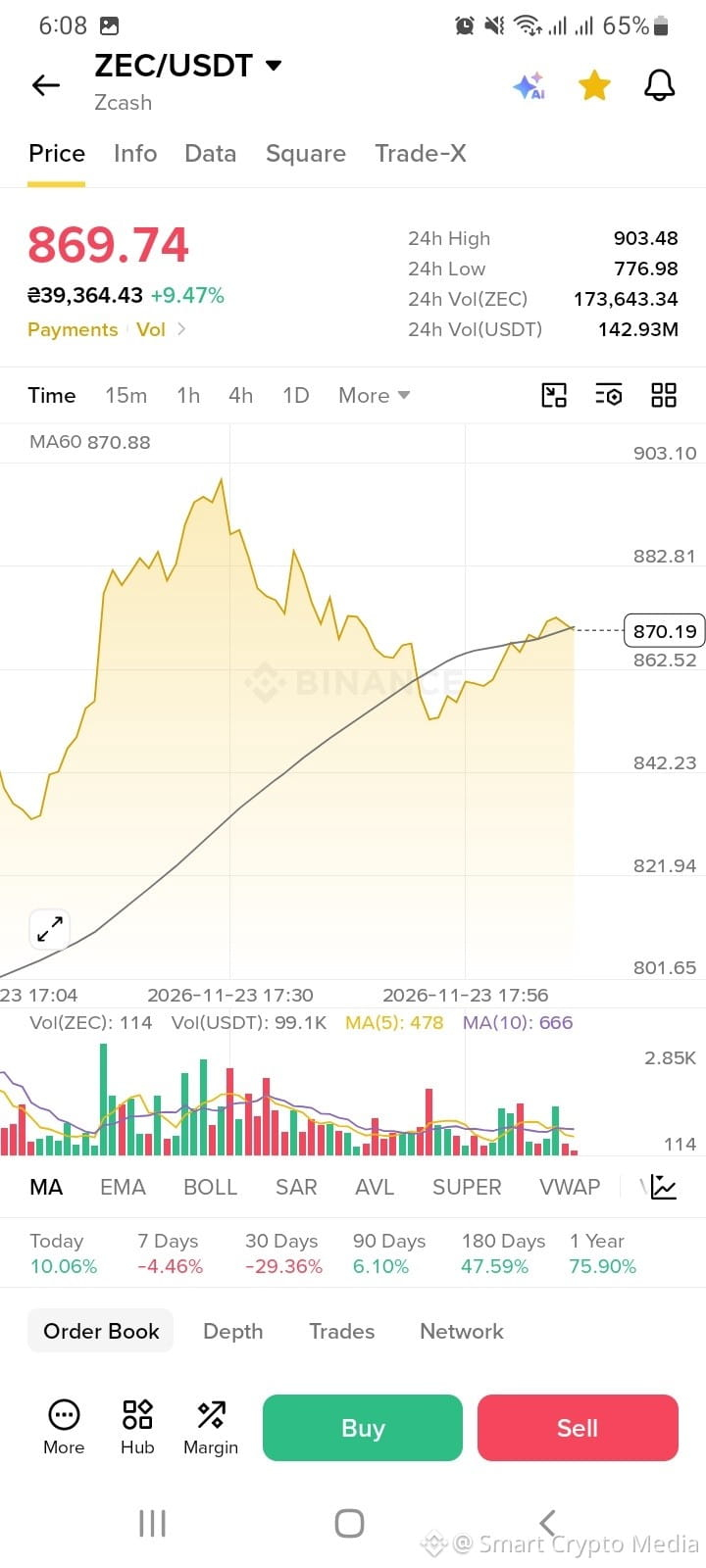
$ZEC is up 9.47% today, but the bigger picture still tells a different story.
Zcash is trading around 869.74 USDT in the screenshot, recovering from a 24-hour low of 776.98 and moving closer to its 903.48 high.
That looks impressive on a daily chart. But zoom out.
ZEC is still down 29.36% over the past 30 days and 4.46% over seven days. Meanwhile, the 90-day performance is positive, and the longer six-month and one-year windows remain considerably stronger.
That contrast matters. One green day can change the mood, but it doesn't automatically repair a broader trend.
The interesting question with ZEC right now isn't just how much it bounced. It's whether this recovery can maintain momentum after the initial move, or whether it becomes another short-lived rebound within a larger correction.
Short-term strength and long-term strength aren't always the same thing.
Which matters more to you here: the current momentum or the 30-day trend?
#ZEC #CryptoMarket #SmartCryptoMedia
663
if NVIDIA is growing. The market is getting less convinced. That's the part I can't ignore.
Honestly, this is what makes the recent NVIDIA sell-off interesting to me.
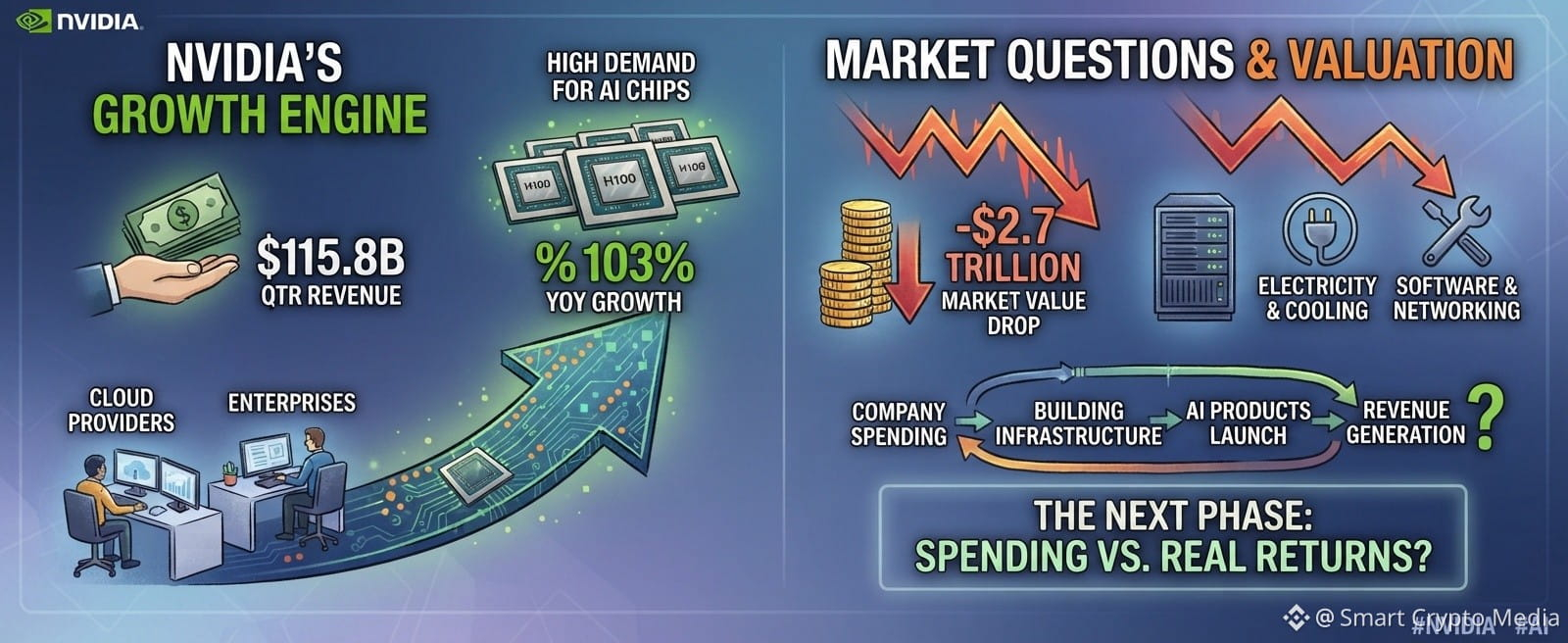
We're talking about a company reporting $115.8 billion in quarterly revenue, with 103% year-over-year growth, while the market is questioning its valuation and wiping roughly $2.7 trillion off its market value from the recent peak.
Those two things can happen at the same time.
And I think that's where the AI conversation is starting to change.
For a while, the story was simple: AI demand is growing, companies need more computing power, and NVIDIA is right in the middle of it.
But building AI infrastructure is expensive.
Chips are only one part of the bill. Companies also need data centers, electricity, networking, cooling, and software. Then comes the harder part: turning all that spending into revenue and eventually into real returns.
That's the loop investors are watching.
Companies spend on AI → build infrastructure → launch AI products → try to generate revenue → justify even more spending.
If that loop works, the investment cycle can keep expanding.
But if spending grows faster than the returns, eventually the market may start asking uncomfortable questions. Not because AI is useless, but because even a promising technology has to make economic sense.
That's why I don't think a falling NVIDIA share price automatically means the AI story is finished.
At the same time, record revenue doesn't automatically mean every valuation is justified.
The technology and the stock market are not the same thing. One can keep advancing while the other reassesses expectations.
Maybe this is the next phase of the AI narrative: less focus on how much companies can spend, and more focus on what that spending actually produces.
So what's the bigger test now: continued AI demand, or proof that the billions being invested can generate real returns?
#NVIDIA #AI #SmartCryptoMedia
414
Article
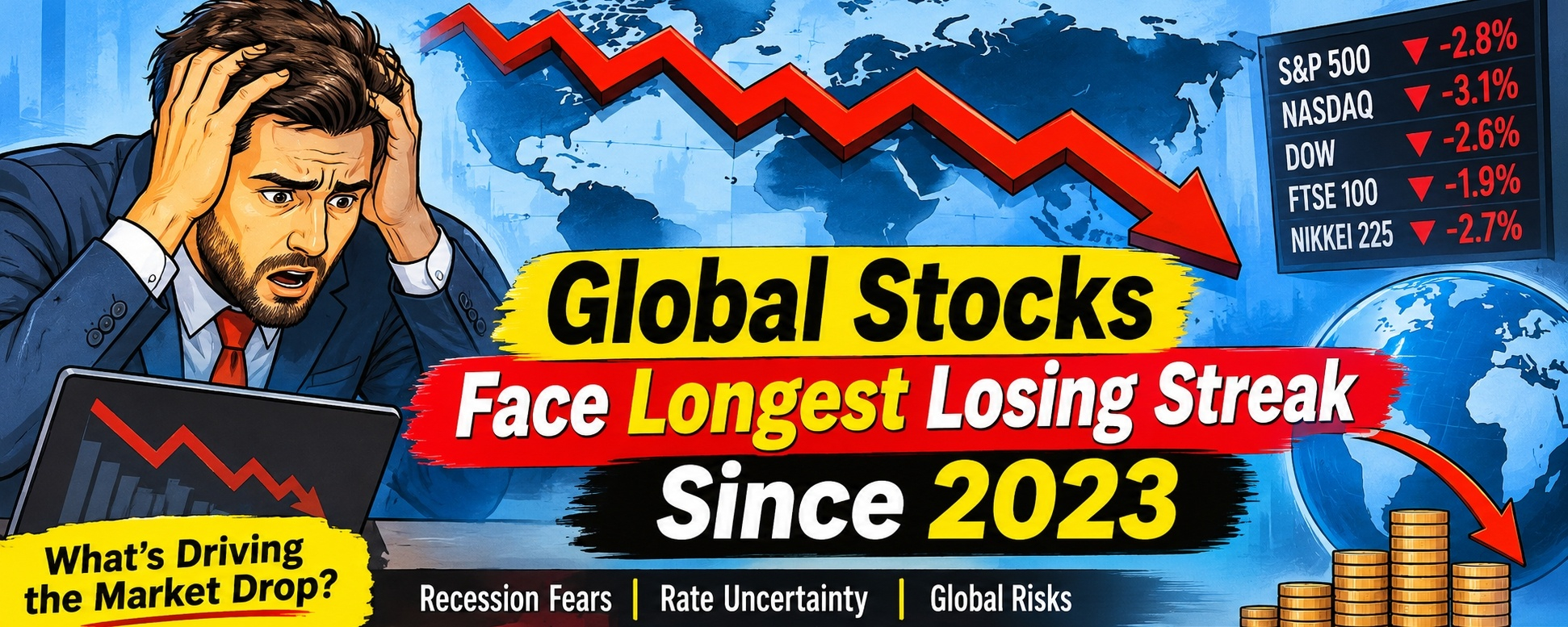
Global Stocks Just Recorded Their Longest Losing Streak Since 2023. Something Is Changing. Global Stocks Just Recorded Their Longest Losing Streak Since 2023. Something Is Changing.
Seven consecutive losing sessions.
That's where the MSCI All Country World Index stands, marking its longest losing streak since September 2023.
But honestly, the number itself isn't what interests me most.
It's what might be happening behind it.
For months, investors were willing to pay a premium for almost anything connected to artificial intelligence. Chips, data centers, computing infrastructure and AI software all benefited from expectations of enormous future growth.
And the excitement wasn't entirely unreasonable. AI is changing how businesses operate.
But there's a difference between believing in a technology and believing every investment connected to it is worth its current price.
I think that's where the market is starting to get uncomfortable.
The question is no longer just how big AI can become. It's how much money companies can actually make from it.
1. AI is growing, but the economics still have to work
Here's the part I think deserves more attention.
Building AI infrastructure requires enormous investment. Companies need computing capacity, energy, data centers, specialized hardware and ongoing development.
All of that costs money before the expected returns fully arrive.
The economic equation is relatively simple:
More investment → higher capital requirements → pressure to generate revenue → the need for sustainable profits.
If spending keeps increasing faster than the cash flows it eventually produces, investors have a reason to reconsider valuations.
And that's an important distinction.
AI adoption could continue accelerating while some AI-related stocks lose value.
Both things can happen at the same time.
The technology doesn't have to fail for investors to question whether they paid too much for the companies building it.
2. Anthropic's debut tells an interesting story
Anthropic's stock-market debut attracted considerable attention, but its strong opening performance didn't reverse the broader market weakness.
That contrast is worth looking at.
On November 19, the S&P 500 dropped 2%, extending its losing streak to six sessions. More than 90% of its constituent stocks finished lower.
Meanwhile, an individual AI-related listing could still attract buyers.
So what does that tell us?
Investors can remain interested in individual opportunities while becoming increasingly cautious about the broader market.
A successful company debut doesn't automatically mean confidence in the entire AI sector is returning.
I'd be careful about confusing enthusiasm for one company with strength across an entire investment narrative.
3. Why I'm paying attention from a crypto perspective
This is where traditional markets become relevant to cryptocurrency.
Bitcoin isn't a technology stock. Its market structure, supply dynamics and investment drivers are different.
Still, it doesn't exist in isolation from the global financial system.
When investors become less comfortable taking risks, that change in sentiment can reach multiple asset classes.
Liquidity, interest-rate expectations and institutional positioning can all influence how much exposure investors are willing to maintain.
But there's an important distinction here: Bitcoin doesn't have to follow the S&P 500.
A stock-market correction doesn't automatically invalidate a Bitcoin rally.
What matters is whether digital-asset demand remains strong enough to support its own market.
For me, that's a much more useful question than simply asking whether stocks and crypto will move in the same direction.
4. Is this just a correction, or are expectations changing?
I'm not convinced that seven consecutive losing sessions are enough to declare a structural bear market.
That would be jumping too far ahead.
There are different explanations for what we're seeing:
- Investors may simply be correcting valuations that became too optimistic.
- Companies may be struggling to convert heavy investment into sustainable earnings.
- Broader financial conditions may be making investors less willing to hold risky assets.
These possibilities can look similar on a price chart.
But they mean very different things for the months ahead.
A temporary valuation reset could create a different opportunity from a prolonged deterioration in business fundamentals.
That's why I would rather understand the reason behind the decline than rush to label the market.
5. Three things I'm watching now
There are three signals I think deserve attention.
First, market participation.
Does selling continue spreading beyond AI-related companies, or does weakness begin to narrow?
Second, AI profitability.
Are investors starting to demand actual financial returns instead of rewarding every new investment announcement?
Third, global liquidity.
Are financial conditions becoming more supportive or less supportive of risk-taking across equities and cryptocurrency?
None of these signals can tell us exactly where prices go next.
But together, they can help us understand whether the current weakness is mainly about valuation or something deeper.
My final thought
Here's what I find most interesting about this market.
AI could become one of the most important technologies of our generation, and investors could still lose confidence in the prices they're paying for AI companies today.
Those two ideas aren't contradictory.
The same principle applies to cryptocurrency: a promising long-term narrative doesn't automatically guarantee attractive valuations or uninterrupted market growth.
Perhaps the next phase won't be decided by who tells the most convincing story.
It may be decided by who can actually deliver the economic results behind it.
So I'm curious about your perspective:
If global markets are entering a more selective investment environment, what will drive the next major recovery?
A return of confidence in AI profitability, or stronger global liquidity that brings risk appetite back across financial markets?
#GlobalMarkets #Bitcoin #AI #CryptoMarket #MarketAnalysis
Global Stocks Just Recorded Their Longest Losing Streak Since 2023. Something Is Changing.
Global Stocks Just Recorded Their Longest Losing Streak Since 2023. Something Is Changing.
Seven consecutive losing sessions.
That's where the MSCI All Country World Index stands, marking its longest losing streak since September 2023.
But honestly, the number itself isn't what interests me most.
It's what might be happening behind it.
For months, investors were willing to pay a premium for almost anything connected to artificial intelligence. Chips, data centers, computing infrastructure and AI software all benefited from expectations of enormous future growth.
And the excitement wasn't entirely unreasonable. AI is changing how businesses operate.
But there's a difference between believing in a technology and believing every investment connected to it is worth its current price.
I think that's where the market is starting to get uncomfortable.
The question is no longer just how big AI can become. It's how much money companies can actually make from it.
1. AI is growing, but the economics still have to work
Here's the part I think deserves more attention.
Building AI infrastructure requires enormous investment. Companies need computing capacity, energy, data centers, specialized hardware and ongoing development.
All of that costs money before the expected returns fully arrive.
The economic equation is relatively simple:
More investment → higher capital requirements → pressure to generate revenue → the need for sustainable profits.
If spending keeps increasing faster than the cash flows it eventually produces, investors have a reason to reconsider valuations.
And that's an important distinction.
AI adoption could continue accelerating while some AI-related stocks lose value.
Both things can happen at the same time.
The technology doesn't have to fail for investors to question whether they paid too much for the companies building it.
2. Anthropic's debut tells an interesting story
Anthropic's stock-market debut attracted considerable attention, but its strong opening performance didn't reverse the broader market weakness.
That contrast is worth looking at.
On November 19, the S&P 500 dropped 2%, extending its losing streak to six sessions. More than 90% of its constituent stocks finished lower.
Meanwhile, an individual AI-related listing could still attract buyers.
So what does that tell us?
Investors can remain interested in individual opportunities while becoming increasingly cautious about the broader market.
A successful company debut doesn't automatically mean confidence in the entire AI sector is returning.
I'd be careful about confusing enthusiasm for one company with strength across an entire investment narrative.
3. Why I'm paying attention from a crypto perspective
This is where traditional markets become relevant to cryptocurrency.
Bitcoin isn't a technology stock. Its market structure, supply dynamics and investment drivers are different.
Still, it doesn't exist in isolation from the global financial system.
When investors become less comfortable taking risks, that change in sentiment can reach multiple asset classes.
Liquidity, interest-rate expectations and institutional positioning can all influence how much exposure investors are willing to maintain.
But there's an important distinction here: Bitcoin doesn't have to follow the S&P 500.
A stock-market correction doesn't automatically invalidate a Bitcoin rally.
What matters is whether digital-asset demand remains strong enough to support its own market.
For me, that's a much more useful question than simply asking whether stocks and crypto will move in the same direction.
4. Is this just a correction, or are expectations changing?
I'm not convinced that seven consecutive losing sessions are enough to declare a structural bear market.
That would be jumping too far ahead.
There are different explanations for what we're seeing:
- Investors may simply be correcting valuations that became too optimistic.
- Companies may be struggling to convert heavy investment into sustainable earnings.
- Broader financial conditions may be making investors less willing to hold risky assets.
These possibilities can look similar on a price chart.
But they mean very different things for the months ahead.
A temporary valuation reset could create a different opportunity from a prolonged deterioration in business fundamentals.
That's why I would rather understand the reason behind the decline than rush to label the market.
5. Three things I'm watching now
There are three signals I think deserve attention.
First, market participation.
Does selling continue spreading beyond AI-related companies, or does weakness begin to narrow?
Second, AI profitability.
Are investors starting to demand actual financial returns instead of rewarding every new investment announcement?
Third, global liquidity.
Are financial conditions becoming more supportive or less supportive of risk-taking across equities and cryptocurrency?
None of these signals can tell us exactly where prices go next.
But together, they can help us understand whether the current weakness is mainly about valuation or something deeper.
My final thought
Here's what I find most interesting about this market.
AI could become one of the most important technologies of our generation, and investors could still lose confidence in the prices they're paying for AI companies today.
Those two ideas aren't contradictory.
The same principle applies to cryptocurrency: a promising long-term narrative doesn't automatically guarantee attractive valuations or uninterrupted market growth.
Perhaps the next phase won't be decided by who tells the most convincing story.
It may be decided by who can actually deliver the economic results behind it.
So I'm curious about your perspective:
If global markets are entering a more selective investment environment, what will drive the next major recovery?
A return of confidence in AI profitability, or stronger global liquidity that brings risk appetite back across financial markets?
#GlobalMarkets #Bitcoin #AI #CryptoMarket #MarketAnalysis
1
174
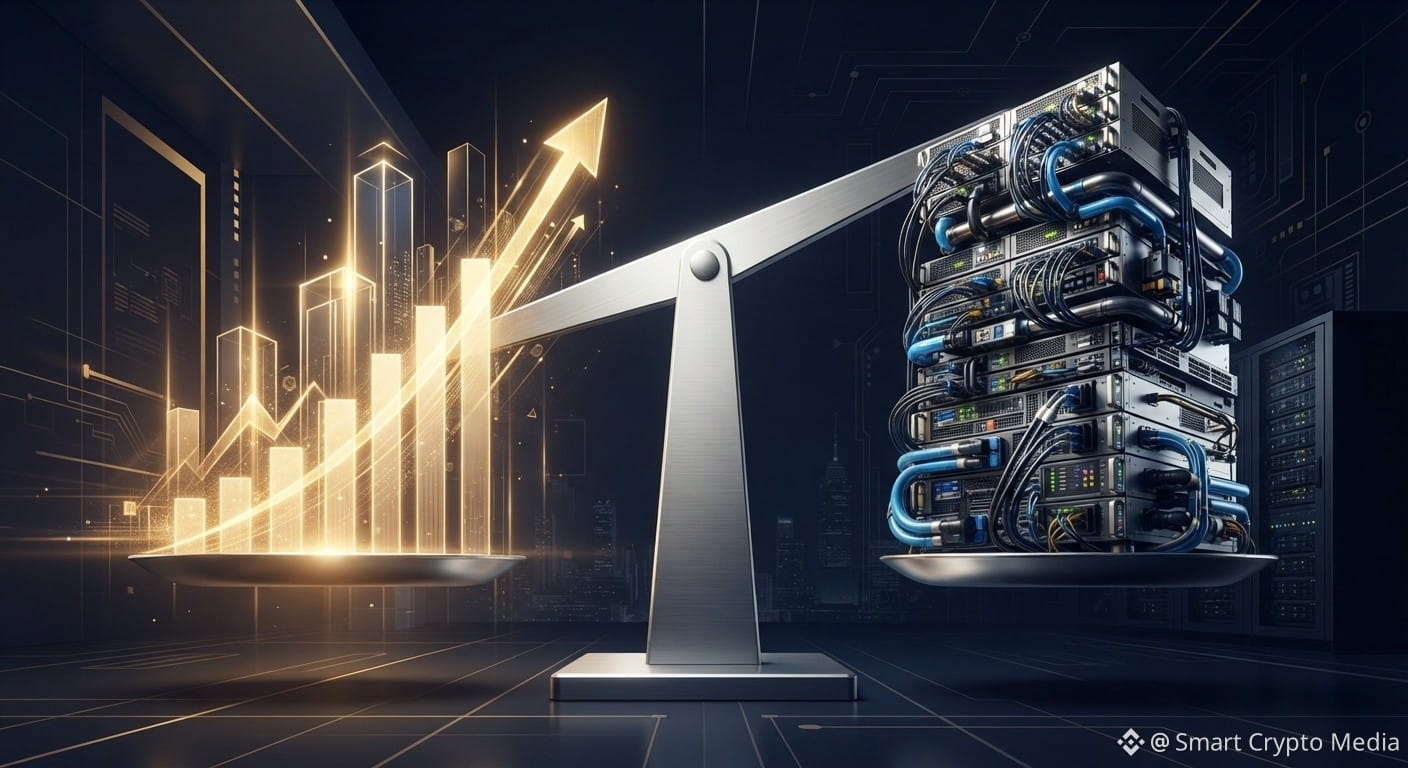
$ANTHROPIC I keep coming back to one question: what exactly are investors paying $1.75 trillion for?
Anthropic's first trading day was impressive. Its shares closed at $97.17 after an $83 IPO, putting its fully diluted valuation at roughly $1.75 trillion.
But the number that interests me more is its $81 billion annualized revenue run rate in October.
That's serious commercial demand. Claude is no longer just an interesting AI product. Businesses are paying to use it at scale.
Still, there's another side to this story.
AI growth isn't free. Anthropic spent nearly $9 billion on computing infrastructure in the first half of 2026, followed by another $5 billion in Q3.
Interestingly, its compute efficiency has improved more than fourfold since Q1 2025. But Q3 also showed how expensive additional computing capacity can become.
And this is where I think the real valuation debate begins.
Anthropic has nearly $900 billion in computing commitments with infrastructure partners. It must turn that capacity into revenue while managing costs, competition and execution risks.
So, I'm not convinced that revenue growth alone justifies a trillion-dollar valuation.
The real test is whether improving AI efficiency can keep pace with the enormous cost of scaling.
Would you value Anthropic primarily on its future AI dominance, or wait until its profitability proves the business model can support that valuation?
#Anthropic #AI #SmartCryptoMedia
133
Verified
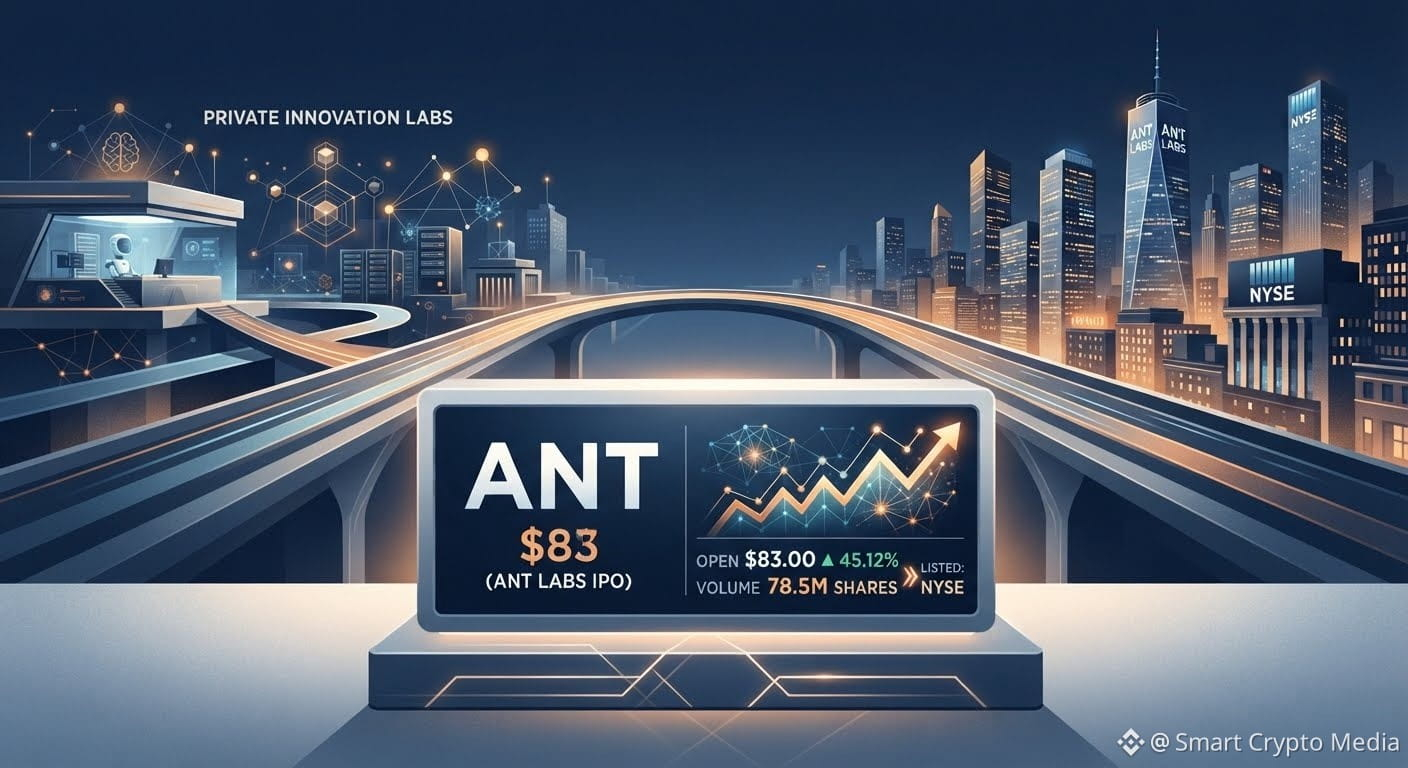
$ANT I keep coming back to one thing about Anthropic's IPO: the timing.
An $83 opening price.
Approximately $81.3 billion raised.
A major AI company preparing to enter public markets under the ticker ANT.
It's a remarkable moment for the AI industry.
But there's something interesting about the bigger picture.
We're watching AI move beyond private-company fundraising and into an environment where ordinary public-market investors can follow its financial performance.
That changes the conversation.
Until now, much of the discussion has centered on model capabilities, AI adoption, partnerships and future potential.
Now, revenue growth, infrastructure expenses, competition and profitability will receive even more attention.
And honestly, I think that transition is worth watching more closely than the IPO headline itself.
The next chapter will tell us whether public-market expectations match the realities of building frontier AI technology.
I'm curious about how people approach moments like this.
What did you do when a major technology company you followed finally moved from private markets to a public listing: study its financials first, or wait to see how the market responds?
#AI #SmartCryptoMedia
806
$ZEC Is Green Today. But the Market Story Is Not That Simple.
There is something interesting about watching Zcash right now.
One day, the market looks weak. Then suddenly, a strong recovery appears, and everyone starts paying attention again.
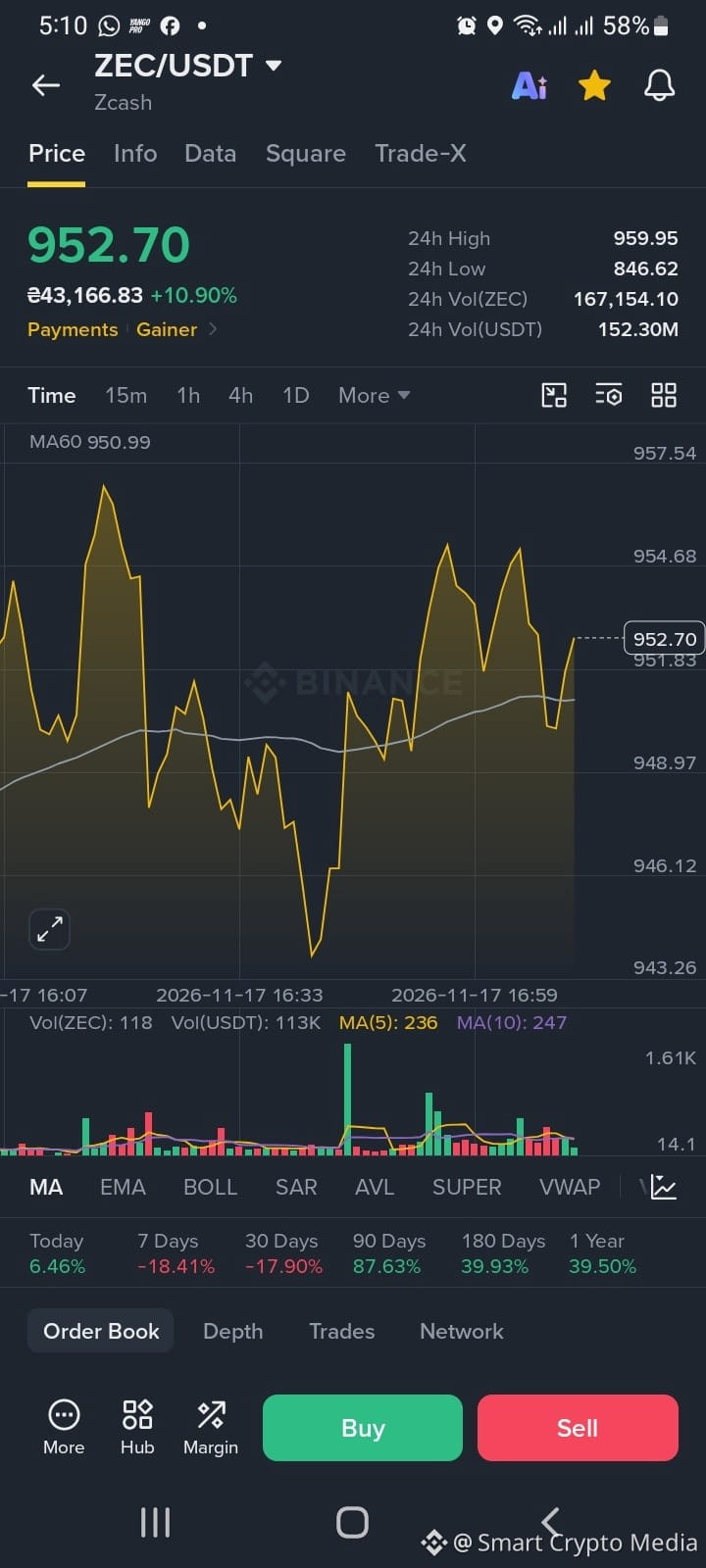
ZEC is currently around $952.70, showing a 10.90% daily increase.
That is a significant move.
But when I look beyond today's chart, the picture becomes less straightforward.
Seven-day performance: -18.41%.
Thirty-day performance: -17.90%.
Ninety-day performance: +87.63%.
Three different timeframes. Three different stories.
And that is probably what makes this market interesting.
Short-term price movements can completely change how people feel about an asset. A green chart creates excitement. A red chart creates doubt. Sometimes both reactions happen within the same week.
The current price is also slightly above the displayed MA60, which adds another interesting detail to the short-term picture.
Still, I wouldn't rush to label this a confirmed trend reversal.
Markets need more than one strong session to establish a sustainable direction.
For now, ZEC is worth watching from a market-structure perspective.
I am curious about how other people interpret this move.
Are you focusing on today's recovery, or are the negative weekly and monthly numbers more important to your analysis?
#ZEC #SmartCryptoMedia
Not financial advice.
2
303
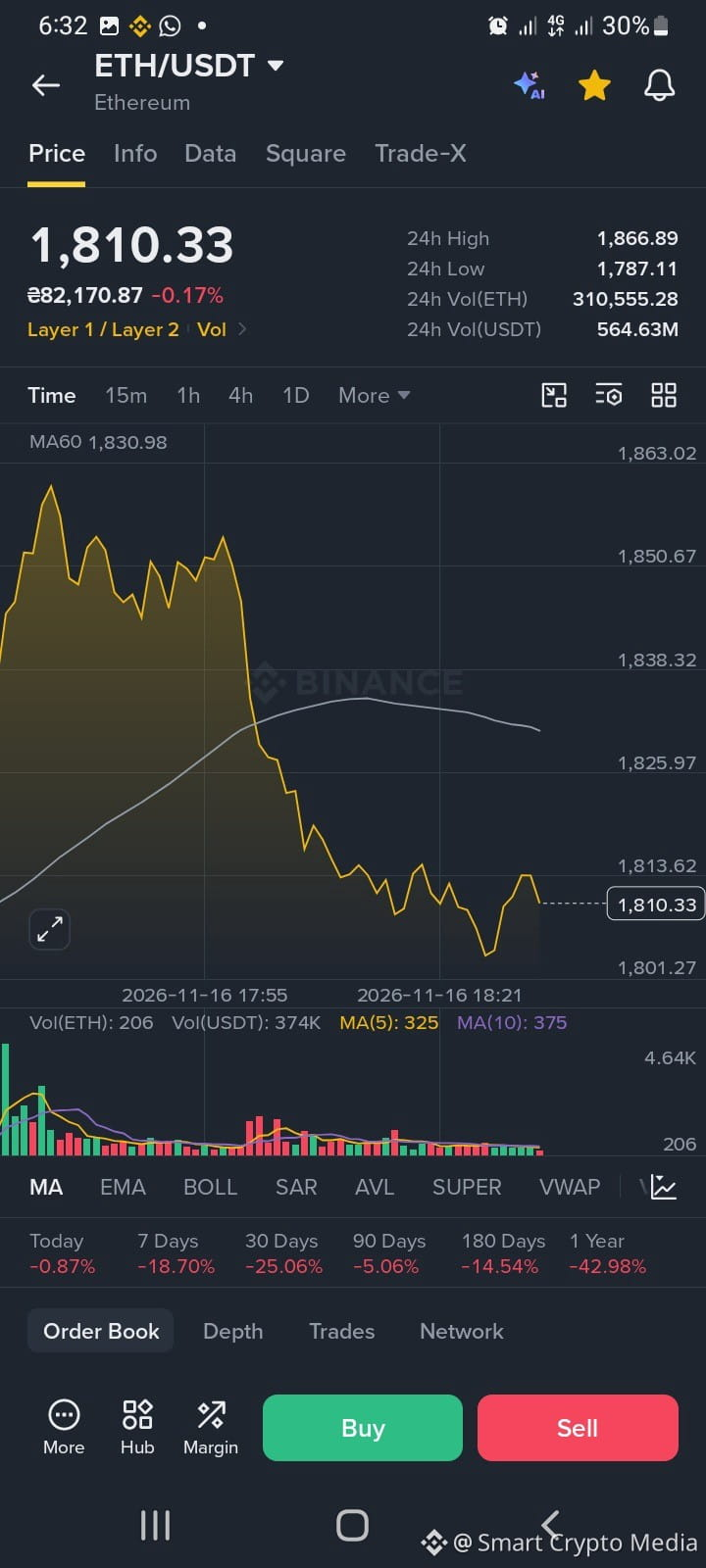
Everyone Is Watching Ethereum's Price. But Is That Really the Most Important Signal?
$ETH is sitting around $1,810 in the latest chart, and the overall picture looks uncomfortable.
The seven-day performance shows a decline of 18.70%. The 30-day figure is even more concerning at -25.06%.
But here's something worth questioning.
Are people paying too much attention to individual price levels while ignoring the bigger problem: momentum?
ETH is trading below its MA60, currently displayed around $1,831. The recent bounce from approximately $1,802 looks relatively weak compared with the preceding downward move.
That doesn't establish that another decline is coming. It simply means a recovery has not been confirmed by this chart.
And this is where market commentary often becomes misleading.
A bounce is not automatically a trend reversal. A support level is not a guarantee. Even a strong green candle can fail to change the broader structure.
I would rather see Ethereum establish a stronger recovery and challenge the moving average before calling this a meaningful change in direction.
The market doesn't owe anyone a quick recovery.
Sometimes the most useful analysis is admitting that the evidence is still incomplete.
My question: Are ETH observers looking for genuine momentum confirmation, or are they simply hoping for a bounce?
#ETH #EthereumAnalysis #TradingPsychology
#SmartCryptoMedia
1
563
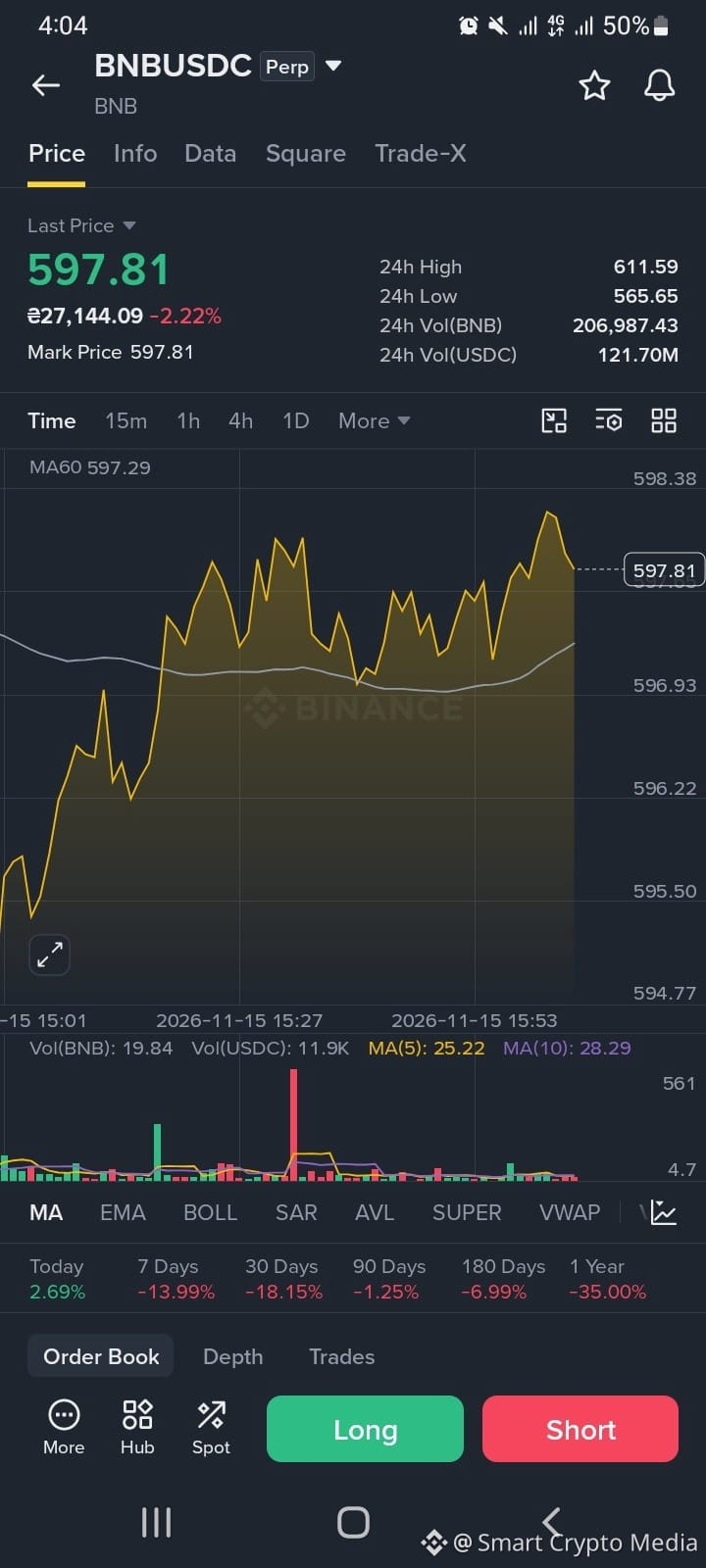
$BNB is showing an interesting market structure, but the bigger picture deserves attention.
At the time of this snapshot, BNB is trading around $597.81, down 2.22% over 24 hours. However, today's performance tells a slightly different story, showing a 2.69% gain.
There are two different signals here.
First, the short-term chart shows BNB recovering from lower levels around $594 and moving toward $598. The price is currently sitting slightly above its MA60 at $597.29. That's a small positive observation, although it doesn't confirm a sustained bullish trend.
Second, the broader performance remains challenging.
BNB is down:
- 13.99% over seven days.
- 18.15% over 30 days.
- 35% over one year.
This creates an important distinction between a short-term recovery and a genuine trend reversal.
The $600 area is worth watching psychologically, while the 24-hour high of $611.59 provides another reference point. On the downside, $565.65 is the recorded 24-hour low.
My interpretation: BNB is attempting to stabilize, but the larger market structure still needs confirmation.
A few green candles don't automatically change the bigger picture.
What matters now is whether price stability can develop into sustained strength.
#BNB #SmartCryptoMedia
Not financial advice.
1
474
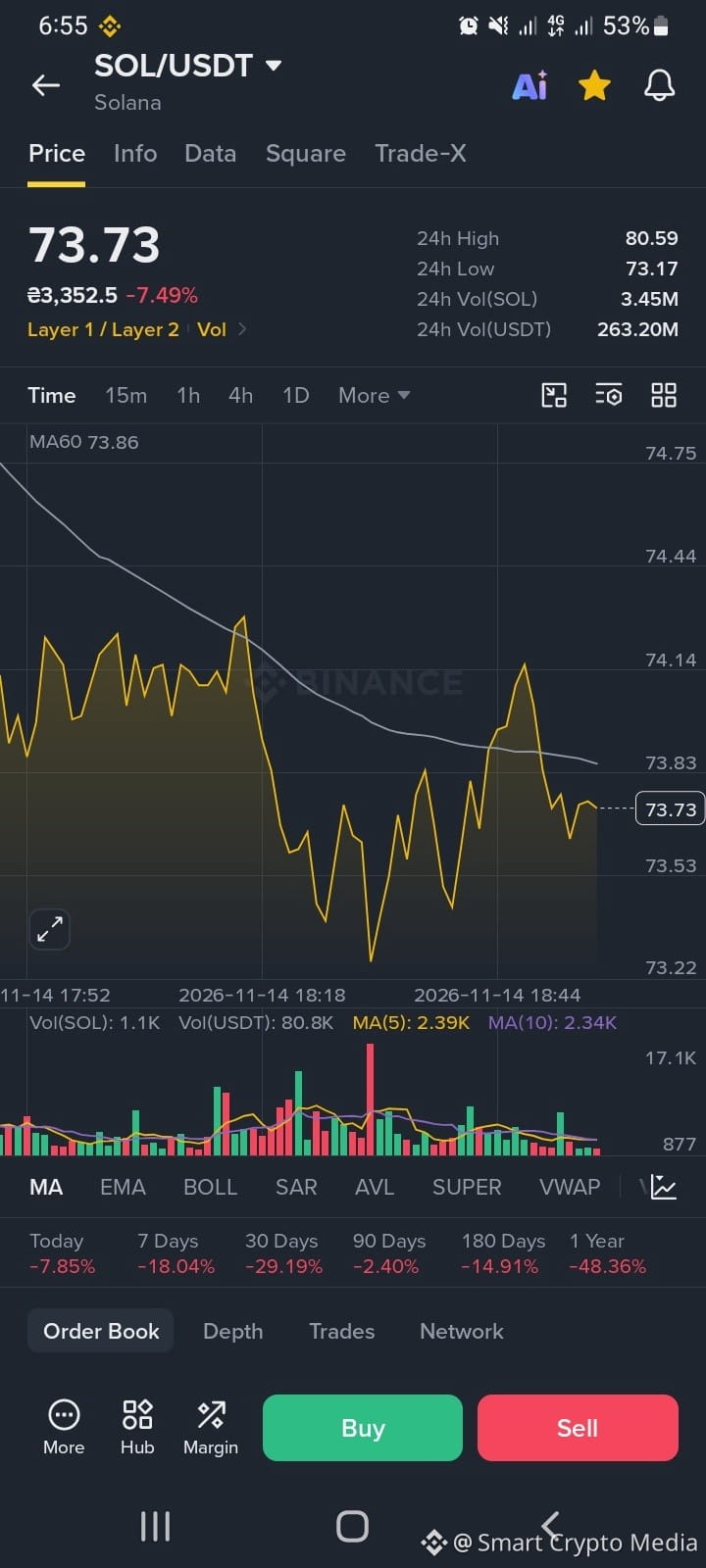
$SOL at $73.73. Sometimes the Market Doesn't Give Clear Answers.
There is something interesting about watching SOL during a difficult market session.
A few hours ago, the market was trading much higher. Now, the Binance snapshot shows SOL around $73.73, with a 24-hour decline of approximately 7.49%.
And honestly, this is where market psychology becomes interesting.
Some traders see a falling price and immediately become bearish.
Others see a lower price and start looking for a recovery.
But neither reaction tells us what happens next.
Looking at the chart, SOL has moved between approximately $73.17 and $74.14 during the displayed period, with several attempts to recover.
The MA60 is still sitting slightly above the current price.
That detail matters.
Buyers have something to prove before we can confidently describe this as a recovery.
And sellers? They also need to show that they can maintain control.
One thing I keep coming back to is the difference between a temporary bounce and a genuine change in momentum.
They can look similar at first.
The market needs confirmation.
For now, Solana remains an interesting asset to watch, especially around the recent low and moving-average level.
Sometimes the smartest market observation is simply admitting that the next move is not confirmed yet.
What is your reading of SOL right now: temporary weakness or a deeper correction?
#Solana #SOLUSDT #SmartCryptoMedia
1
606
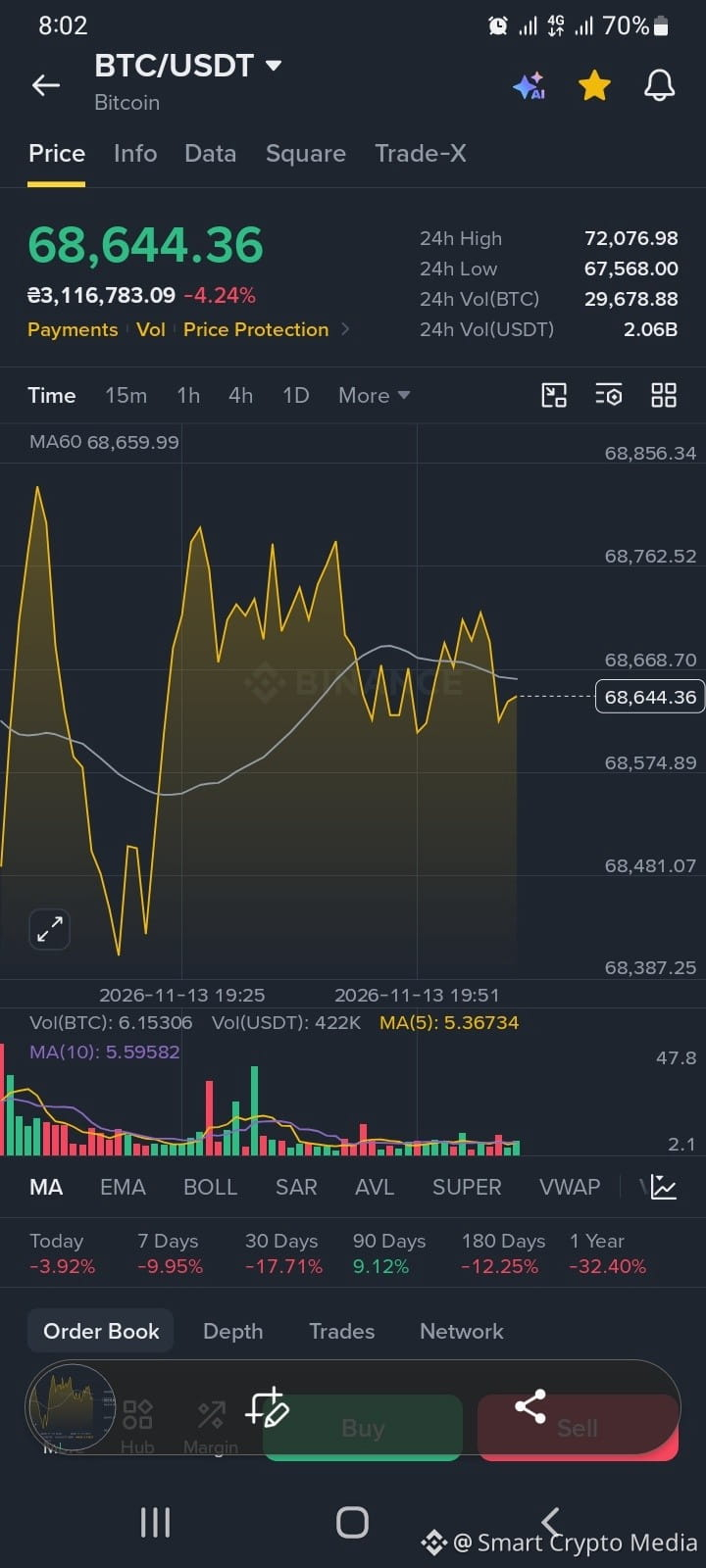
$BTC Around $68K... Something About This Market Feels Uncertain.
There are moments in crypto when the market moves so quickly that everyone suddenly becomes an expert.
Then comes a different phase.
Bitcoin drops. The chart becomes messy. Buyers attempt to recover, sellers push back, and nobody seems completely confident about what comes next.
That's what this BTC/USDT snapshot makes me think about.
Price is around $68,644, down 4.24% over 24 hours.
The market has already tested $67,568, but the recovery hasn't produced a convincing breakout.
And there's another small detail.
Bitcoin is trading just below its MA60, around $68,660.
It's not a massive difference, but it tells us that short-term momentum still needs to prove itself.
Personally, I think the most interesting part of this situation is the uncertainty.
Will buyers defend the recent low?
Will sellers use every recovery attempt as another opportunity to apply pressure?
Or will Bitcoin simply continue moving sideways while the market waits for a clearer signal?
Honestly, the chart doesn't give us a definitive answer yet.
Sometimes the most valuable observation isn't predicting the next candle. It's recognizing when the market hasn't made up its mind.
What do you think BTC needs first: stronger buying volume or a clean move above the MA60?
#BTCUSDT #SmartCryptoMedia
Not financial advice.
338
Before sending your next crypto withdrawal, remember one thing: scammers don't always hack wallets. Sometimes, they manipulate the person controlling them.
Binance has introduced withdrawal protection measures to help identify suspicious transactions and potentially dangerous wallet addresses.
Three things stand out:
Fake Binance support agents may contact users and convince them to transfer funds to a supposedly safe wallet.
Suspicious withdrawal addresses can trigger security warnings.
Binance's withdrawal risk checks can temporarily delay transactions while users review potential risks.
Bullish scenario: Better security awareness helps users protect their assets.
Bearish scenario: Users who ignore warnings or trust fake support agents risk losing funds.
My takeaway: Never share verification codes, trust unsolicited support calls, or transfer crypto to an address provided by a stranger.
Have you ever received a suspicious withdrawal warning?
This is educational content, not financial advice. Always verify information through official Binance channels.
#Binance #Binancesecuritycenter

17
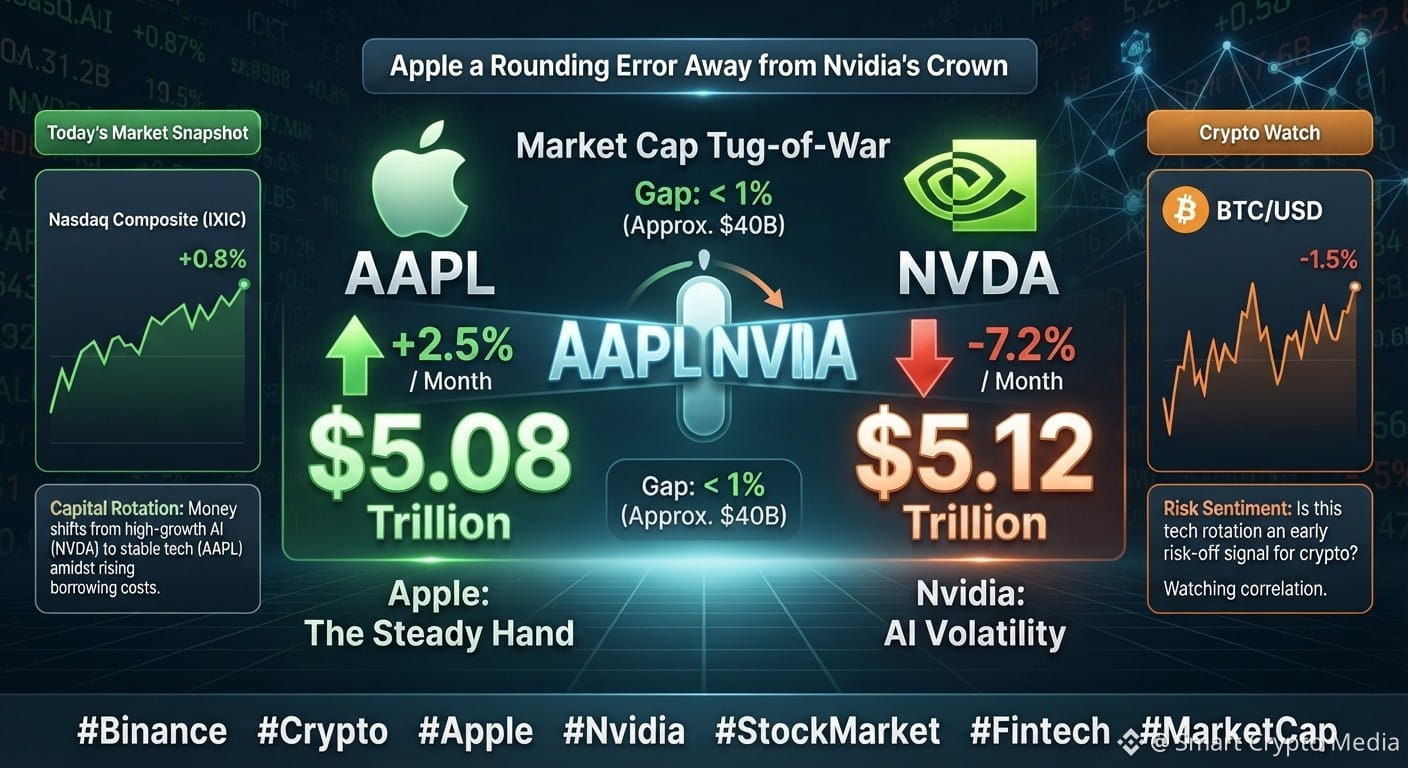
Apple is a rounding error away from Nvidia's crown
Apple and Nvidia are both sitting around $5.1 trillion right now, and Nvidia's lead is down to roughly $40 billion. That's under 1%. One ordinary green day for Apple could flip the whole ranking.
Over the past month Apple is up about 2.5%, while Nvidia has slid more than 7%. People are getting jumpy about how much money is going into AI, and Apple, which has mostly stayed out of that spending race, suddenly looks like the grown-up in the room.
Bloomberg called Apple a relative safe haven this week, as borrowing costs climb and companies funding AI buildouts feel the squeeze. That tracks with what I'd expect. When the hottest trade gets nervous, money rarely leaves the market. It just walks over to the names that feel sturdier.
Honestly, I wouldn't read much into the "world's most valuable company" headline. A gap that small can flip on a Tuesday. What I'd watch is whether the rotation out of AI keeps going, and what BTC does if it does. Does it hold its ground, or follow tech down like it has before?
Which way are you leaning: tech musical chairs, or an early risk-off signal for crypto?
#Crypto #Apple
116
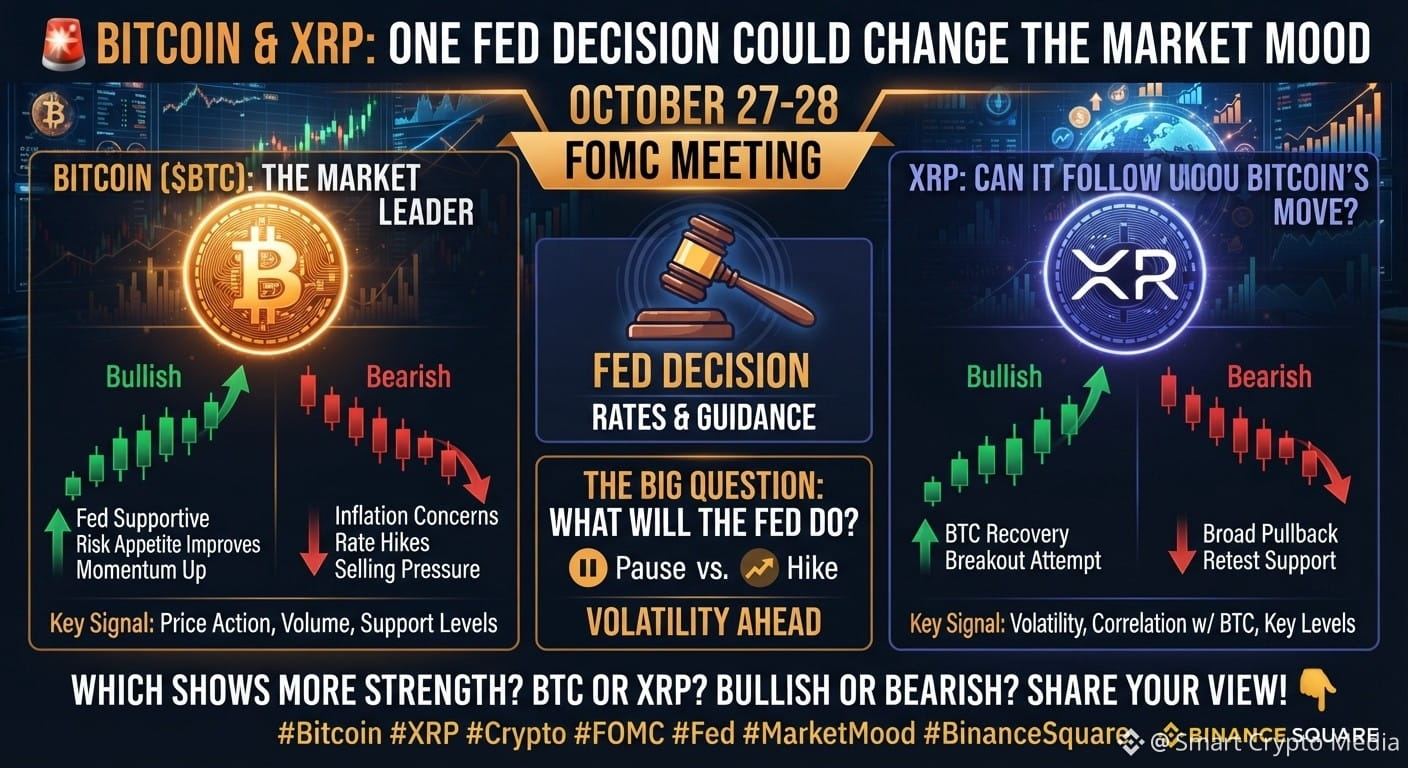
🚨 Bitcoin & XRP: One Fed Decision Could Change the Market Mood
The crypto market is approaching a major macro event. 👀
On October 27–28, the Federal Reserve’s FOMC meeting could influence the next move for Bitcoin ($BTC) and XRP. Traders are watching interest-rate expectations, inflation, and the Fed’s message about future monetary policy.
📊 ₿ BITCOIN ($BTC): The Market Leader
Bitcoin remains the asset to watch for broader crypto sentiment.
• Bullish scenario: If the Fed signals a more supportive policy outlook, risk appetite could improve and BTC may gain upward momentum.
• Bearish scenario: If policymakers sound more concerned about persistent inflation or future rate hikes, selling pressure could return.
• Key signal: Watch price reaction, trading volume, and whether BTC can maintain its important support levels.
💧 XRP: Can It Follow Bitcoin’s Move?
XRP could react to the same macroeconomic forces, but its price action may differ from Bitcoin’s.
• Bullish scenario: Strong buying pressure and a sustained BTC recovery could help XRP attempt a breakout.
• Bearish scenario: A broad crypto pullback could put XRP under pressure, especially if it fails to hold nearby support.
• Key signal: Watch XRP’s support and resistance levels, volume, and relative strength against BTC.
🧠 THE BIG QUESTION: WHAT WILL THE FED DO?
The market is weighing a possible pause against the risk of further tightening. Recent inflation concerns mean that even if rates remain unchanged, the Fed’s guidance could still trigger volatility.
📌 My approach: Avoid treating the meeting as a guaranteed bullish or bearish catalyst. Watch the announcement, market reaction, and confirmation from price action before drawing conclusions.
🔥 Let’s discuss:
Which asset do you think will show greater strength after the FOMC meeting — Bitcoin ($BTC) or XRP? And are you expecting a bullish breakout or a bearish correction?
Share your view in the comments! 👇
#BTC #XRP #SmartCryptoMedia
400
Sometimes the crypto market makes you question your own analysis.
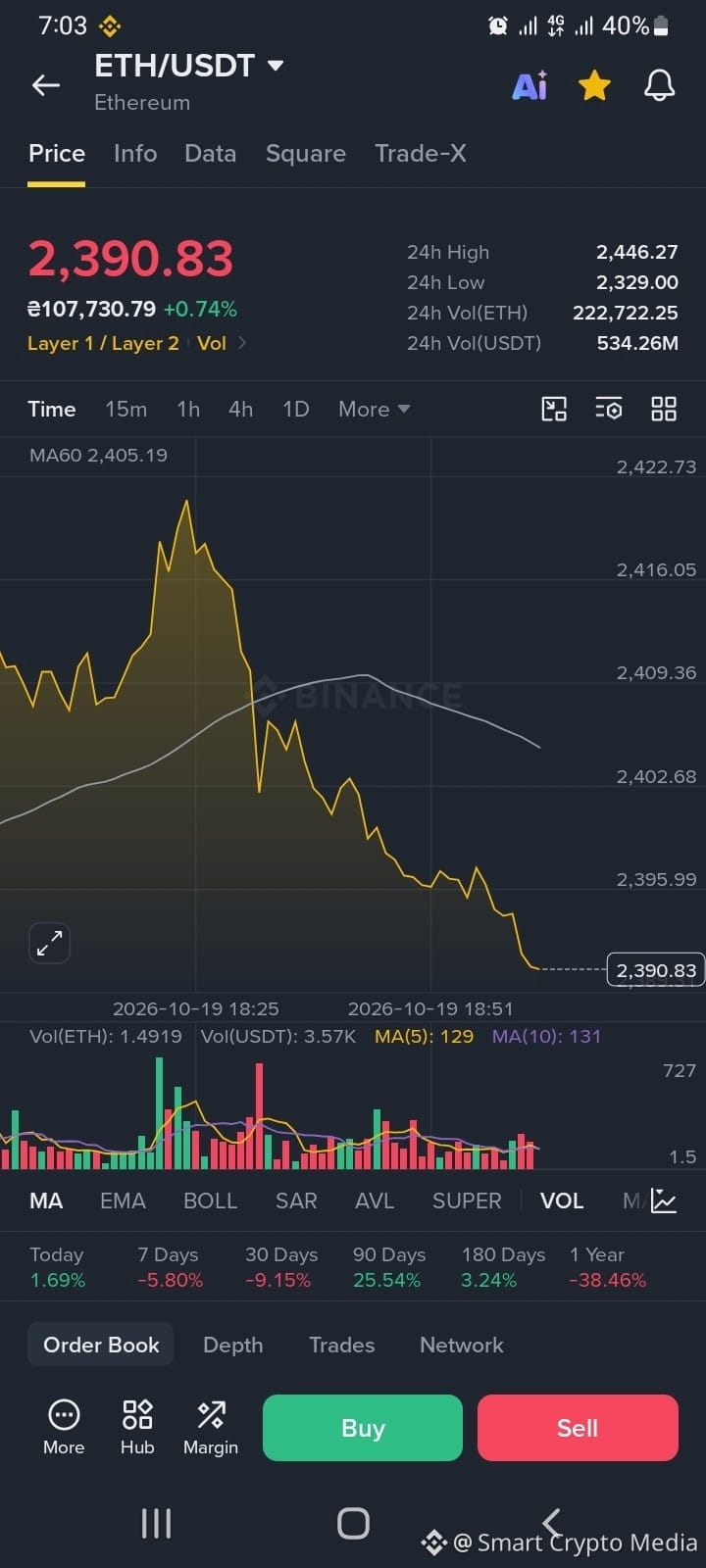
You open the app. $ETH is green on the day. That looks encouraging.
Then you look closer.
Price climbed, reversed, and continued sliding. The moving average sits above the current price. Every small bounce seems to struggle.
Suddenly, the same market doesn't look so bullish anymore.
That's what stands out to me in this ETH chart.
At around $2,390, Ethereum is sitting in an interesting area. The price is below the displayed MA60, but that doesn't automatically mean a bigger downtrend is confirmed. It simply means the short-term picture deserves attention.
I'd want to see whether ETH can recover the $2,400–$2,405 zone. If it can't, I'd be watching the lower support areas instead of assuming a bounce is coming.
But honestly, one chart never tells the whole story.
The time frame matters. Volume matters. And sometimes the best decision is to wait until the market gives a clearer signal rather than forcing an opinion because the price is moving.
Crypto rewards patience sometimes. Other times, it punishes overconfidence.
The difficult part is knowing which situation you're in before the move becomes obvious.
What do you see here: a temporary ETH pullback before recovery, or the beginning of another leg down?
#Ethereum #ETHUSDT
130
go
go


OroCryptoTrends
·
--
👇 CAST YOUR VOTE NOW!
🏆 Help Me Make It to The Blockchain 100 Awards 2026! 💛💛
Hey Binance Square family! 👋🚀
I’m excited to share that @OroCryptoTrends is nominated for the 2026 Blockchain 100 Awards — Longform Creator category!
Over the past 3.3 years, I’ve been sharing crypto insights, real-time market updates, Web3 developments, DeFi trends, and blockchain analysis to help our community stay informed in this fast-moving industry.
Every post, every discussion, and every connection has been part of this journey. Now, I’m asking for your support to take it to the next level! 🙌
💛 Your vote can make a real difference.
If my content has helped you understand the market, discover new trends, or stay ahead in crypto, I’d be truly grateful if you could take a moment to vote for OroCryptoTrends.
✅ Vote for OroCryptoTrends
✅ Support independent crypto content creators
✅ Share this post with your Binance Square community
Let's show the strength of our community and make this nomination count! 🔥
Every vote matters. Every share helps. Let's make 2026 unforgettable! 🚀
👇 CAST YOUR VOTE NOW!
#Blockchain100 #Binance #BinanceSquare #CryptoCommunity #OroCryptoTrends

15
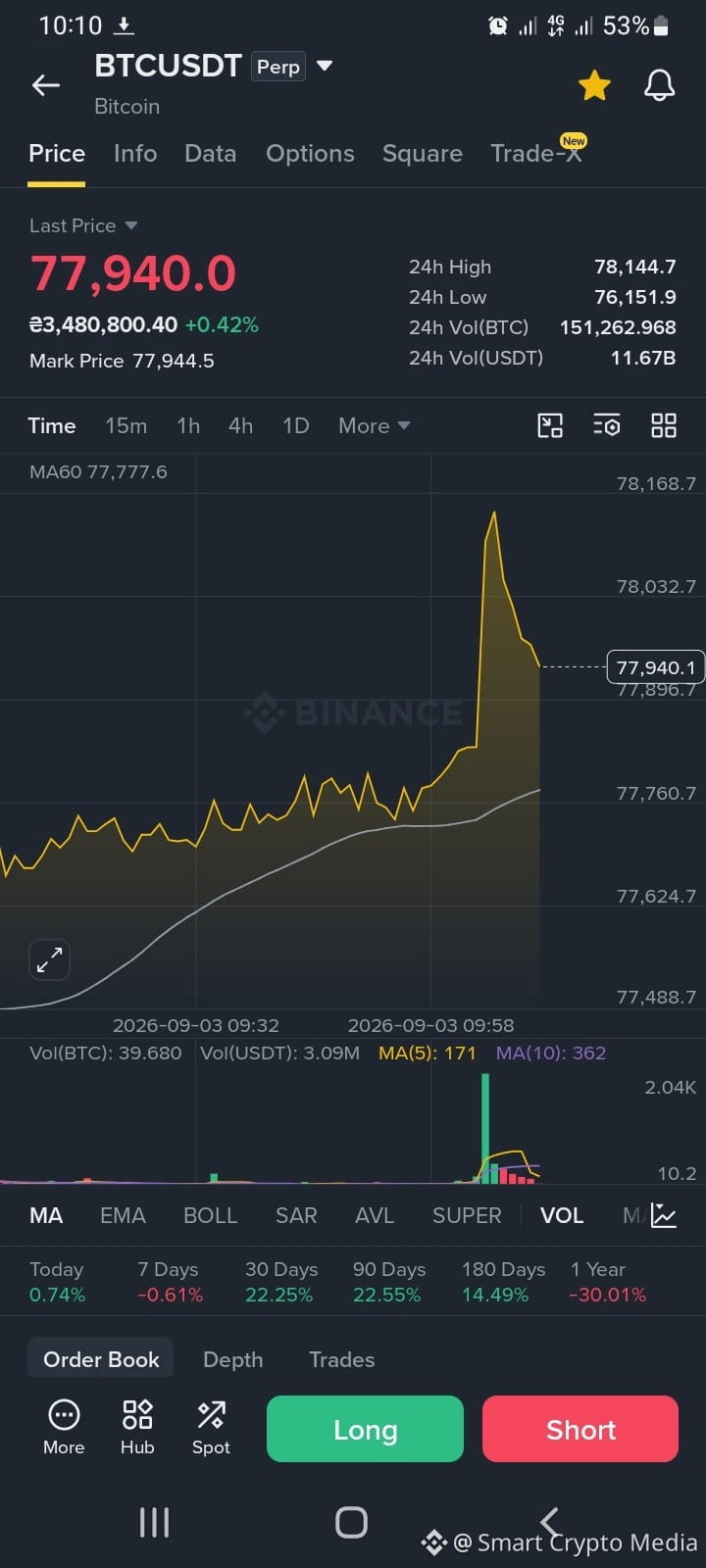
$BTC Been staring at this chart for the last twenty minutes and I still don't know what to make of it. Price ripped up to 78,168, my alerts went off, and by the time I actually looked at the screen it had already come back down to 77,940. So — nothing happened? Something happened? Hard to say.
The number that actually got my attention wasn't the spike, it was the one-year column. Minus thirty percent. I keep forgetting that's sitting there underneath all the day-to-day noise. We talk about 22% monthly gains like it's a comeback story, and technically it is, but the longer frame is still red. Both things are true at once and I don't think crypto Twitter is built for holding two contradictory facts in your head at the same time.
I don't have a clean take here. The MA60 is right underneath price, which normally I'd read as mildly constructive, but after watching that spike evaporate in real time I'm less confident than I was an hour ago. Maybe that's the honest post today — not a call, just an admission that the chart looked more decisive from a distance than it does up close. Curious if anyone else watched that same candle and felt the same "wait, that's it?" moment.
#BTC #SmartCryptoMedia #writetoearn
173
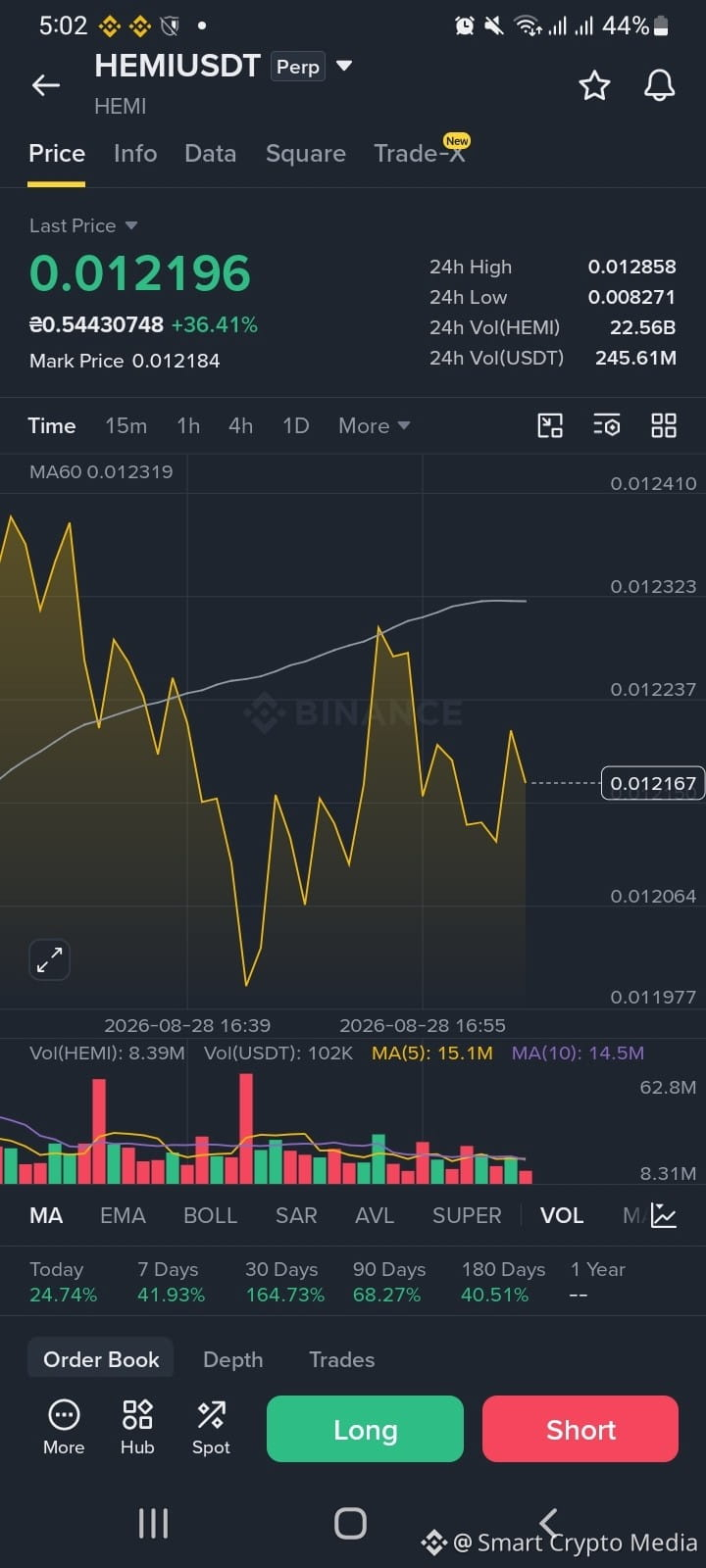
$HEMI Opened the chart and just stared for a bit.
HEMI sitting at 0.012 something after printing a low near 0.008 earlier. Green candles, then red, then green again. Volume bars all over the place. Feels familiar and also slightly off at the same time.
I keep thinking about what the project is actually trying to do. Bitcoin security plus Ethereum tools. Sounds clean when you say it fast. Then you look at the number of times similar ideas have come and gone and the confidence gets thinner.
Maybe this one sticks. Maybe the hVM actually changes how people build. Or maybe we are just watching another ticker get passed around while the real infrastructure work happens quietly somewhere else. Hard to tell from a 15-minute chart.
The percentage gain looks impressive until you remember how fast these numbers reverse. I don’t know if I’m more curious or more tired of the pattern. Probably both.
#HEMI #SmartCryptoMedia #writetoearn
144
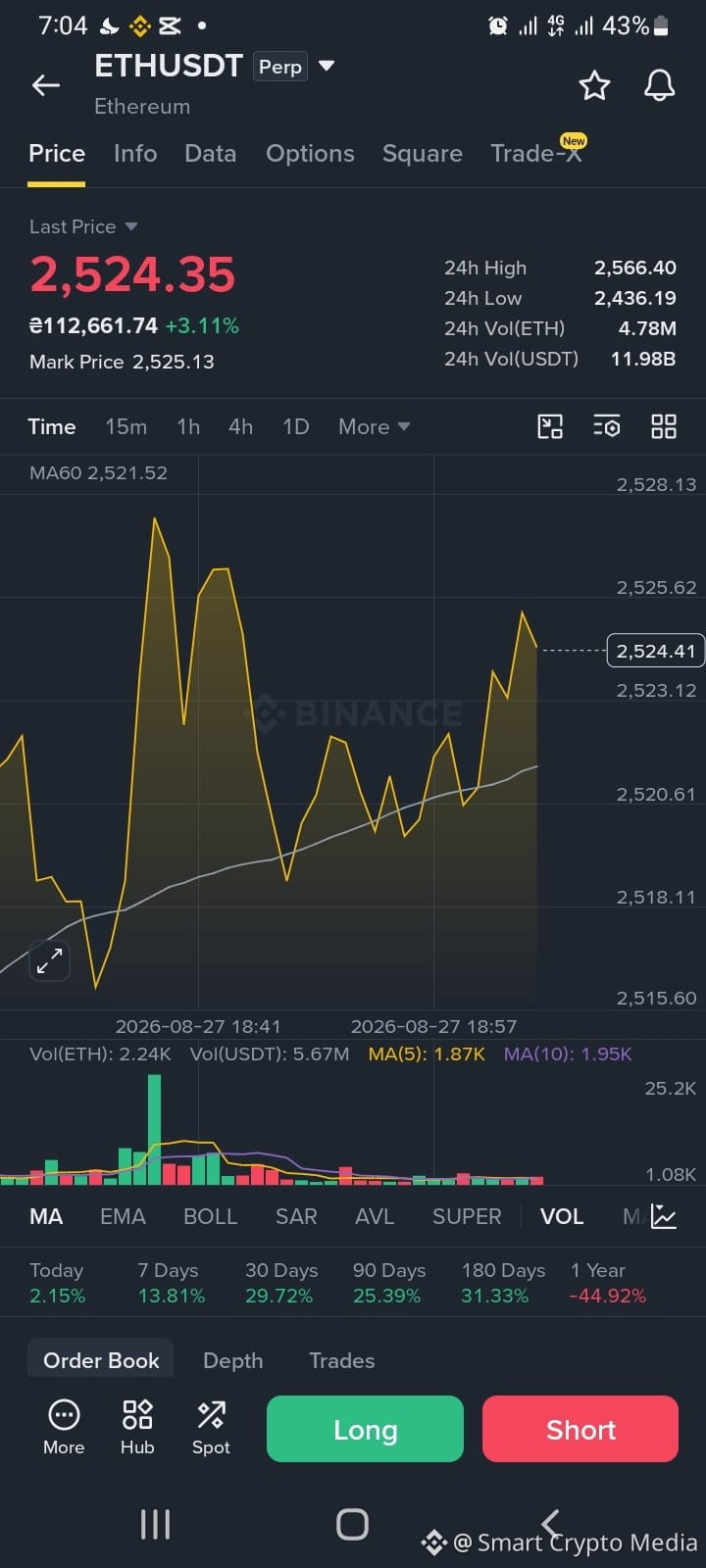
$ETH is back above its short-term trend — but the next move matters
Ethereum is trading around $2,524 in the screenshot, up roughly 3.1% on the day.
What catches my attention isn't simply the green candle.
On the 15-minute chart, ETH has reclaimed the MA60 around $2,521.5, putting price slightly above its short-term average. That gives the chart a better structure than it had during the earlier dip toward the $2,515 area.
But there is another detail worth watching.
ETH already pushed as high as $2,566.40 today before pulling back. So the market has shown that sellers are still active above the current price.
The volume profile also tells an interesting story. There was a clear volume expansion earlier, while recent candles are trading with much lighter activity.
That creates a simple question:
Is this consolidation before another attempt higher, or is momentum starting to cool after the rebound?
The broader numbers are interesting too. ETH is up about 13.8% over 7 days and nearly 29.7% over 30 days according to the screenshot.
So the short-term chart is improving, but price is approaching an area where reactions matter more than headlines.
Would you rather see ETH break $2,566 first, or lose $2,520?
#ETH #SmartCryptoMedia #writetoearn
477
Log in to explore more content
Join global crypto users on Binance Square
⚡️ Get latest and useful information about crypto.
💬 Trusted by the world’s largest crypto exchange.
👍 Discover real insights from verified creators.
Email / Phone number
Trending Topics
CanMarketsReboundAfterThanksgiving?
167,191 views
1,835 Discussing
Rate-Hike Bets Linger as US Markets Head Into Thanksgiving Closure
Binance News
·7 Likes
·5k views
CouldSpaceX’sOrbitalDataCentersBoostAIChipDemand?
80,585 views
1,108 Discussing
SouthKoreaProposesMandatoryDigitalAssetTransactionDisclosure
3,020 views
76 Discussing