Why don't we use Take Profit (TP) and Stop Loss (SL) in our signals?
This is one of the most common questions we receive. The answer is simple.
Because our strategy is trend-following, not target-following. Most signal groups say:
🎯 TP1 Hit 🎯 TP2 Hit 🎯 TP3 Hit
But the market doesn't move according to fixed targets.
Sometimes a trend ends after 0.8%. Sometimes it continues for 5% or more.
If you exit at a fixed TP every time, you'll often leave the biggest part of the move on the table.
So how does ETH TRENDS BOT work?
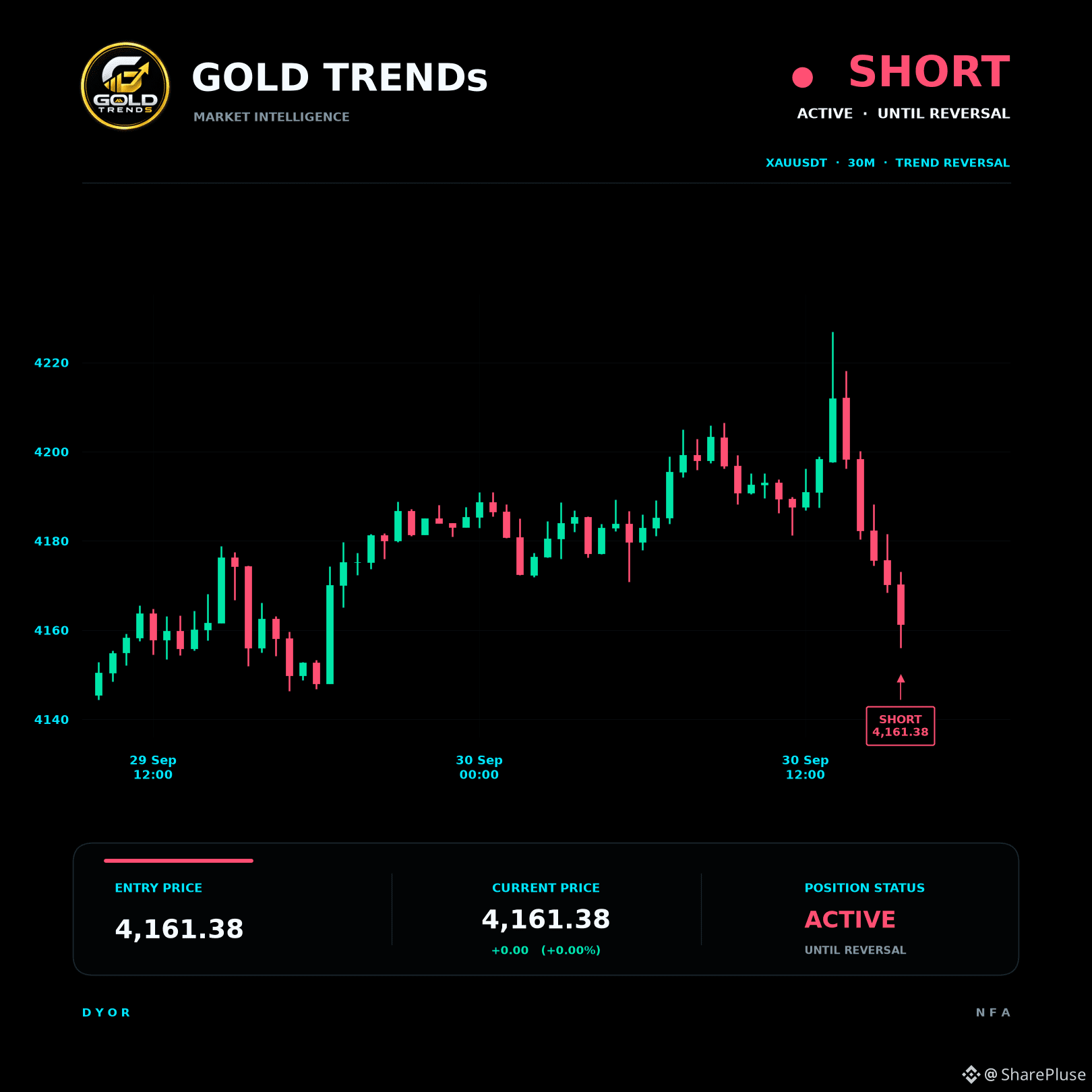
🟢 A LONG or SHORT is generated only after the trend is confirmed. 🟢 The signal remains active as long as the trend stays valid. 🟢 The position is closed only when the system detects a confirmed trend reversal. In other words,
The market decides when the trade ends, not a random percentage.
Why is this approach useful?
✅ Lets profitable trades run longer. ✅ Avoids exiting strong trends too early. ✅ Removes the guesswork of choosing TP levels. ✅ Keeps the trading process rule-based instead of emotional.
Is there risk?
Of course. No strategy wins every trade. A trend-following system will sometimes give back part of its profit before the exit signal appears.
That's the trade-off.
You sacrifice catching the exact top or bottom in exchange for staying with the larger trend.
The philosophy behind our bot We don't aim to predict every price swing.
We aim to capture the core of the trend with consistency.
Because in trading, the biggest profits usually come from holding the right trend, not from perfectly timing every exit.
marvellous explanation, detailed guide about AutonomysAcademy
Paulvictor7
·
--
Autonomys Academy: Hands-On Learning for the Future of Web3
The next generation of Web3 builders needs more than theory—they need tools, frameworks, and real-world practice. That’s exactly what Autonomys Academy delivers.
By combining AI + blockchain fundamentals with hands-on modules, the Academy equips developers with the skills to design scalable, verifiable, and intelligent applications. Here are three key areas every builder should explore:
1. Auto EVM & Modular SDKs The Auto EVM extends Ethereum’s familiar environment with Autonomys’ modular SDKs, making it easy for developers to build decentralized applications. With this, a developer could launch a DeFi protocol or NFT marketplace that benefits from enhanced scalability and security.
2. Agent Frameworks & Agent OS Autonomous agents are shaping the future of automation. Through the Academy, you’ll learn how to design AI-powered agents that can remember, evolve, and act on-chain. Imagine creating an AI trading assistant or a decentralized supply-chain manager—both verifiable and autonomous.
3. Distributed Compute & Storage Resilient infrastructure is the backbone of Web3. Autonomys’ distributed storage and compute solutions allow developers to build apps where user data is owned, verifiable, and censorship-resistant. This could power projects like decentralized social platforms or privacy-first collaboration tools.
💡 The takeaway: Autonomys Academy doesn’t just teach concepts—it gives you the skills to build real-world Web3 apps and AI agents. Whether you’re a beginner or seasoned dev, this is your gateway to the future of decentralized innovation. @AutonomysNet @AutonomysAcademy #Web3Learning #DevTools
many congratulations for this millstone $AITECH a long way passed and many more comes. great future ahead #SocialMining $AI3
Mercy Kasiemobi Paul
·
--
$AI3 Listings: A New Era for @AutonomysNet and #SocialMining
The wait is finally over — $AI3, the native token of @AutonomysNet, is preparing for its first exchange listings on August 27, 14:00 UTC. For many in the Autonomys Hub, this milestone is more than just a listing; it’s the fulfillment of a vision first ignited during the ILO, when early contributors committed to building a future where AI and Web3 infrastructure converge.
Listings matter because they transform a project from being community-driven to becoming globally accessible. With $AI3 stepping into the markets, liquidity increases, accessibility widens, and visibility expands beyond the core contributors who have carried the torch since the public launch of the Autonomys Hub on October 1, 2024. This isn’t just about charts and price action — it’s about credibility. Every listing validates the years of dedication and belief that early builders have invested.
But beyond accessibility, exchange listings also serve as bridges. They connect early supporters — those who fueled the ecosystem from day one — with global participants now entering the space. It marks a turning point where the project’s value, vision, and community passion are shared with the broader market.
The story of $AI3 isn’t simply about a token going live on exchanges. It’s about proof of trust — that when vision meets persistence, the world takes notice. For the #SocialMining community, this is a moment to celebrate and amplify. The Autonomys Hub has always been about building with conviction, and now, $AI3 listings mark the transition from a community vision to a global reality.
🔥 Listings aren’t just access, they’re proof of trust. 🔥 @AutonomysNet
Log in to explore more content
Join global crypto users on Binance Square
⚡️ Get latest and useful information about crypto.