

rtsky777
1.2k Posts
rtsky777
Report
Block User
平台币收集爱好者|长期持有主义者
Open Trade
Occasional Trader
1.7 Years
17 Following
393 Followers
1.2K+ Liked
Posts
Portfolio
All
Quotes
Videos
PINNED
·
--
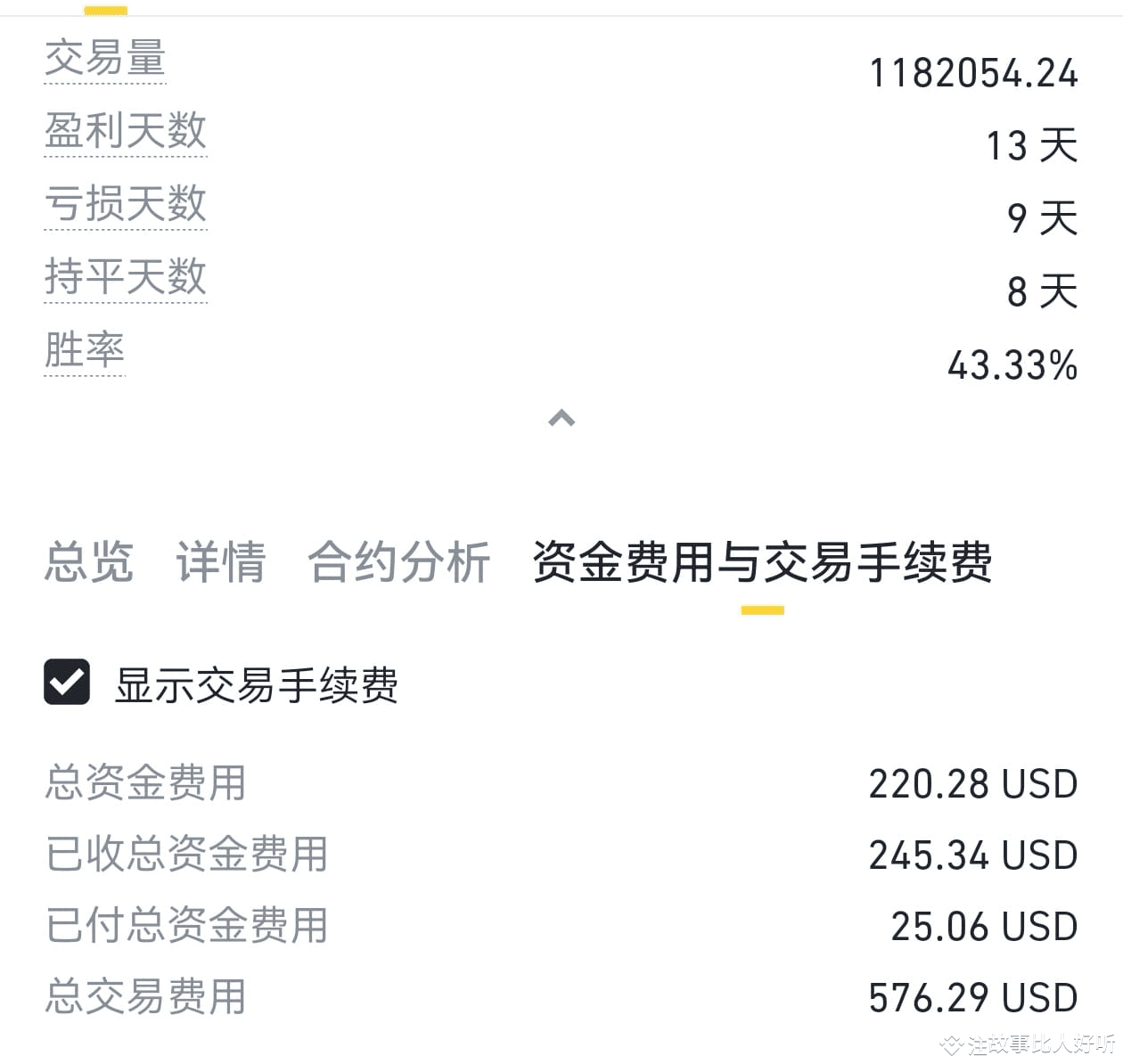
📱Open Assets--Contracts--Today’s Realized Profit and Loss--Funding Fees and Trading Fees-Total Trading Fees📲$BNB .
Like I just played for a month and had nearly 600U in fees, if activated, there’s a 150 oil rebate.
If you filled in the invitation code when registering, then you’re good, that means you have a fee rebate, just find your contact person. If there’s no fee rebate, then this fee is charged by the exchange.
If you wrote my invitation code while playing on Binance, the 100 oil fee can legally refund up to 25 oil to yourself.
Registration invitation code is 1053575781
Contract activation invitation code is 1053951016
If you have to spend, save what you can 👍👍👍
📱Open Assets--Contracts--Today’s Realized Profit and Loss--Funding Fees and Trading Fees-Total Trading Fees📲$BNB .
Like I just played for a month and had nearly 600U in fees, if activated, there’s a 150 oil rebate.
If you filled in the invitation code when registering, then you’re good, that means you have a fee rebate, just find your contact person. If there’s no fee rebate, then this fee is charged by the exchange.
If you wrote my invitation code while playing on Binance, the 100 oil fee can legally refund up to 25 oil to yourself.
Registration invitation code is 1053575781
Contract activation invitation code is 1053951016
If you have to spend, save what you can 👍👍👍
Like I just played for a month and had nearly 600U in fees, if activated, there’s a 150 oil rebate.
If you filled in the invitation code when registering, then you’re good, that means you have a fee rebate, just find your contact person. If there’s no fee rebate, then this fee is charged by the exchange.
If you wrote my invitation code while playing on Binance, the 100 oil fee can legally refund up to 25 oil to yourself.
Registration invitation code is 1053575781
Contract activation invitation code is 1053951016
If you have to spend, save what you can 👍👍👍
5
358
·
--
Ji Gong
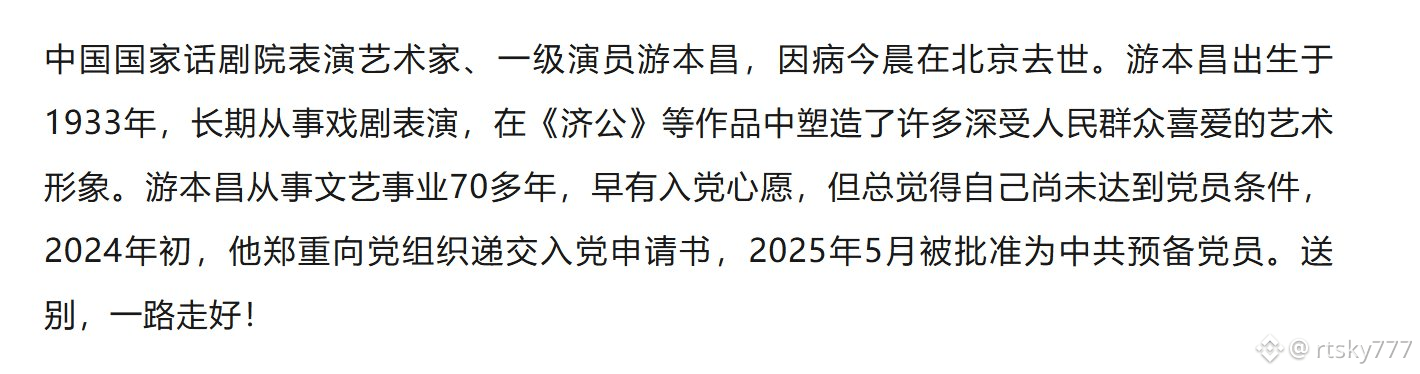
Chinese National Theatre Company performing artist and first-class actor You Bencha died this morning in Beijing due to illness.
Ji Gong
Chinese National Theatre Company performing artist and first-class actor You Bencha died this morning in Beijing due to illness.
Chinese National Theatre Company performing artist and first-class actor You Bencha died this morning in Beijing due to illness.
205
·
--
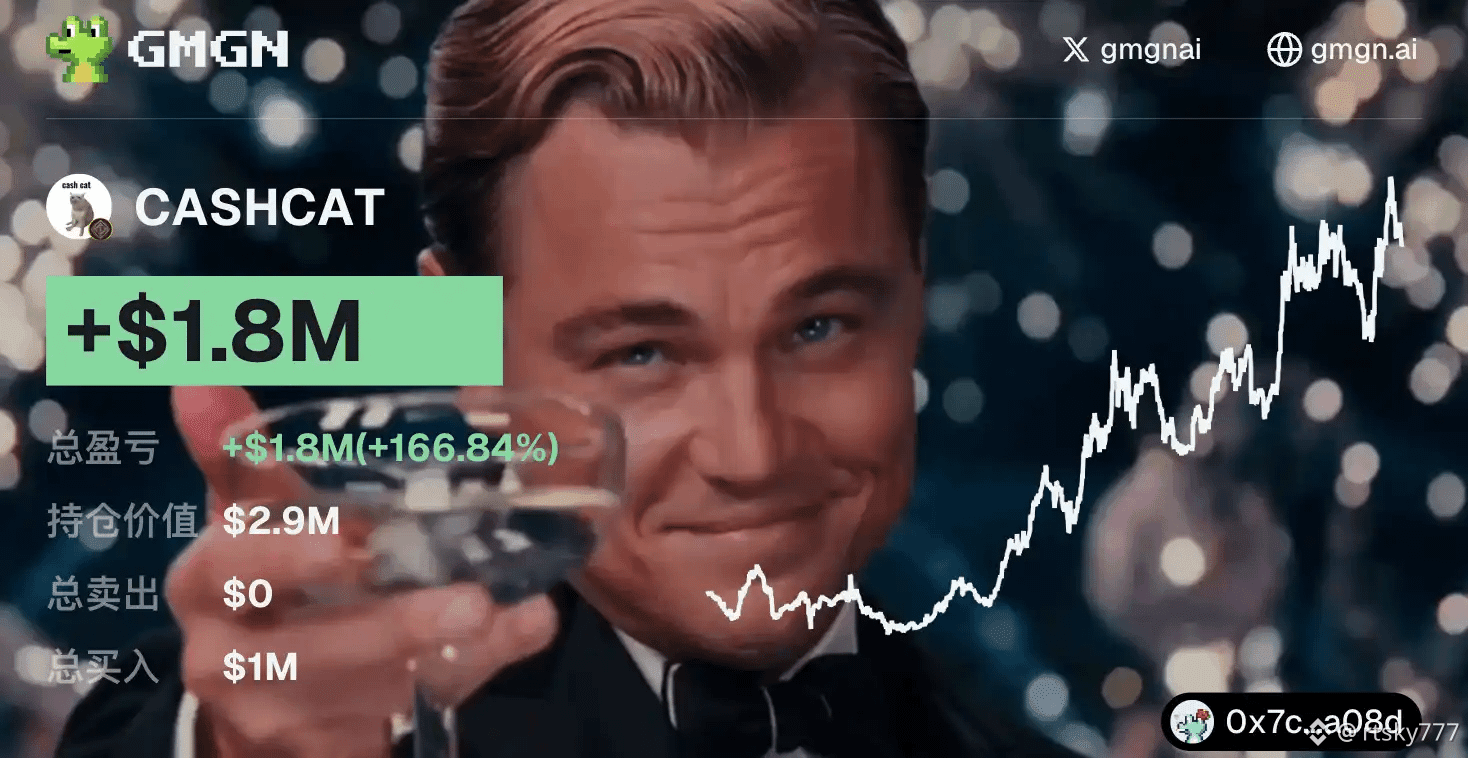
23 days ago, 96 small trades, $1 million. Now the position is up by $1.8 million, and it still hasn’t been sold.
Today, CASHCAT’s market cap reached 211 million, up 42% in 24 hours, setting a new all-time high.
But what’s most frightening isn’t the surge—it’s the trading actions of the top address on the profit leaderboard. 23 days ago, around the Aug 2 low point, it built its position with 96 fragmented small orders. Each order wasn’t large; it deliberately split them up to buy, avoiding slippage from market impact. This isn’t FOMO chasing highs—this is a planned allocation.
In early August, at that time CASHCAT had just gone through a round of brutal selloff, dropping from 200 million to half. The market was in panic; retail investors were cutting losses. It was quietly accumulating. Its cost basis was about $0.07—right in the panic-sell zone.
So what did it do over these 23 days? Nothing. Market cap climbed from 45 million to 200 million, then fell back down, and climbed again—without even batting an eye.
With a floating profit of $1.8 million, most people would’ve taken profits long ago. Why not buy a house or a car? But it didn’t move. Is this true “diamond hands,” or does it know there’s even more room ahead?
The ecosystem structure of the Robinhood Chain. CASHCAT is the flagship, with a market cap of 200 million.
Meanwhile, the second-tier players like JUGGERNAUT are still in the tens of millions. The gap is enormous. There’s no capital spillover—everything is concentrated in this one asset, CASHCAT. So what does that mean? It means the Meme narrative on this chain currently relies entirely on CASHCAT as a lone “seedling.” If it falls, the Meme rally for the whole chain breaks apart.
Once CASHCAT starts to retrace, without a second tier stepping in as a relay, there’s nowhere for the money to go—so it can only exit. Then whether this $1.8 million floating profit can be preserved depends on how fast this diamond-hand trader can run.
23 days ago, 96 small trades, $1 million. Now the position is up by $1.8 million, and it still hasn’t been sold.
Today, CASHCAT’s market cap reached 211 million, up 42% in 24 hours, setting a new all-time high.
But what’s most frightening isn’t the surge—it’s the trading actions of the top address on the profit leaderboard. 23 days ago, around the Aug 2 low point, it built its position with 96 fragmented small orders. Each order wasn’t large; it deliberately split them up to buy, avoiding slippage from market impact. This isn’t FOMO chasing highs—this is a planned allocation.
In early August, at that time CASHCAT had just gone through a round of brutal selloff, dropping from 200 million to half. The market was in panic; retail investors were cutting losses. It was quietly accumulating. Its cost basis was about $0.07—right in the panic-sell zone.
So what did it do over these 23 days? Nothing. Market cap climbed from 45 million to 200 million, then fell back down, and climbed again—without even batting an eye.
With a floating profit of $1.8 million, most people would’ve taken profits long ago. Why not buy a house or a car? But it didn’t move. Is this true “diamond hands,” or does it know there’s even more room ahead?
The ecosystem structure of the Robinhood Chain. CASHCAT is the flagship, with a market cap of 200 million.
Meanwhile, the second-tier players like JUGGERNAUT are still in the tens of millions. The gap is enormous. There’s no capital spillover—everything is concentrated in this one asset, CASHCAT. So what does that mean? It means the Meme narrative on this chain currently relies entirely on CASHCAT as a lone “seedling.” If it falls, the Meme rally for the whole chain breaks apart.
Once CASHCAT starts to retrace, without a second tier stepping in as a relay, there’s nowhere for the money to go—so it can only exit. Then whether this $1.8 million floating profit can be preserved depends on how fast this diamond-hand trader can run.
Today, CASHCAT’s market cap reached 211 million, up 42% in 24 hours, setting a new all-time high.
But what’s most frightening isn’t the surge—it’s the trading actions of the top address on the profit leaderboard. 23 days ago, around the Aug 2 low point, it built its position with 96 fragmented small orders. Each order wasn’t large; it deliberately split them up to buy, avoiding slippage from market impact. This isn’t FOMO chasing highs—this is a planned allocation.
In early August, at that time CASHCAT had just gone through a round of brutal selloff, dropping from 200 million to half. The market was in panic; retail investors were cutting losses. It was quietly accumulating. Its cost basis was about $0.07—right in the panic-sell zone.
So what did it do over these 23 days? Nothing. Market cap climbed from 45 million to 200 million, then fell back down, and climbed again—without even batting an eye.
With a floating profit of $1.8 million, most people would’ve taken profits long ago. Why not buy a house or a car? But it didn’t move. Is this true “diamond hands,” or does it know there’s even more room ahead?
The ecosystem structure of the Robinhood Chain. CASHCAT is the flagship, with a market cap of 200 million.
Meanwhile, the second-tier players like JUGGERNAUT are still in the tens of millions. The gap is enormous. There’s no capital spillover—everything is concentrated in this one asset, CASHCAT. So what does that mean? It means the Meme narrative on this chain currently relies entirely on CASHCAT as a lone “seedling.” If it falls, the Meme rally for the whole chain breaks apart.
Once CASHCAT starts to retrace, without a second tier stepping in as a relay, there’s nowhere for the money to go—so it can only exit. Then whether this $1.8 million floating profit can be preserved depends on how fast this diamond-hand trader can run.
1
221
·
--
Verified
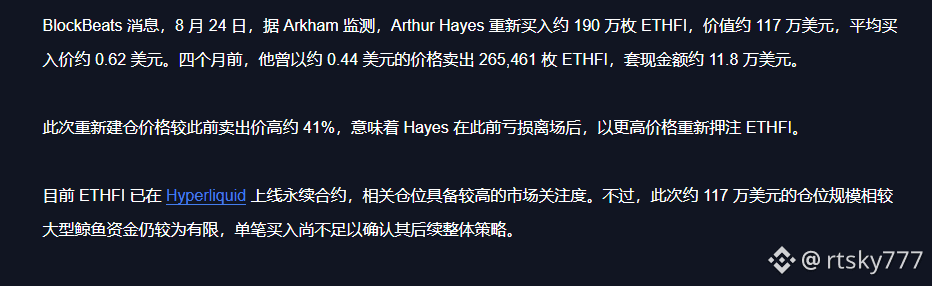
Hayes bought $1.17 million worth of ETHFI—but this money wasn’t used to buy tokens; it was used to buy ads.
Four months ago, he cut his loss at $0.44, and now he’s buying back at $0.62—41% more. On the surface, it looks like a money-losing move. In reality, it’s advertising for Hyperliquid. ETHFI was just listed on Hyperliquid for perpetual contracts. As Hyperliquid’s biggest KOL, Hayes also listed a new asset in his own ecosystem. If he doesn’t do anything, he can’t save face.
With a scale of $1.17 million, for Hayes it doesn’t even count as pocket change.
But market attention is extremely high, because everyone is watching his wallet.
When he buys, people think, “Hayes is bullish on ETHFI.” When he trades on Hyperliquid, people think, “Hyperliquid’s liquidity is good.”
A small amount of money buys a wave of public opinion—and that ROI is far higher than “properly” running ad campaigns.
Lately, Hayes has been accumulating ETH.
Since July, he’s been buying continuously through FalconX. And now, with the ETHFI buyback, it suggests that his overall stance toward the Ethereum ecosystem is shifting.
From shouting signals and then dumping, to now quietly building a left-side position—this guy’s strategy may be adjusting.
Now Hayes is re-entering: does he think the track is set to revive, or is it simply because it’s on Hyperliquid?
I’m more inclined to think it’s the latter. Hayes’s position logic has never been, “The fundamentals of this coin are so good.” It’s been, “Does this coin have a place in the ecosystem I promote?” Since ETHFI is on Hyperliquid perpetuals, it has a place—so he needs to allocate.
But retail investors should take note: players at Hayes’s level operate in layers. Publicly shouted trades are one layer, on-chain activity is another, and the truly large positions may be elsewhere. The $1.17 million is what he’s showing you; the part you don’t see is the real judgment.
Hayes bought $1.17 million worth of ETHFI—but this money wasn’t used to buy tokens; it was used to buy ads.
Four months ago, he cut his loss at $0.44, and now he’s buying back at $0.62—41% more. On the surface, it looks like a money-losing move. In reality, it’s advertising for Hyperliquid. ETHFI was just listed on Hyperliquid for perpetual contracts. As Hyperliquid’s biggest KOL, Hayes also listed a new asset in his own ecosystem. If he doesn’t do anything, he can’t save face.
With a scale of $1.17 million, for Hayes it doesn’t even count as pocket change.
But market attention is extremely high, because everyone is watching his wallet.
When he buys, people think, “Hayes is bullish on ETHFI.” When he trades on Hyperliquid, people think, “Hyperliquid’s liquidity is good.”
A small amount of money buys a wave of public opinion—and that ROI is far higher than “properly” running ad campaigns.
Lately, Hayes has been accumulating ETH.
Since July, he’s been buying continuously through FalconX. And now, with the ETHFI buyback, it suggests that his overall stance toward the Ethereum ecosystem is shifting.
From shouting signals and then dumping, to now quietly building a left-side position—this guy’s strategy may be adjusting.
Now Hayes is re-entering: does he think the track is set to revive, or is it simply because it’s on Hyperliquid?
I’m more inclined to think it’s the latter. Hayes’s position logic has never been, “The fundamentals of this coin are so good.” It’s been, “Does this coin have a place in the ecosystem I promote?” Since ETHFI is on Hyperliquid perpetuals, it has a place—so he needs to allocate.
But retail investors should take note: players at Hayes’s level operate in layers. Publicly shouted trades are one layer, on-chain activity is another, and the truly large positions may be elsewhere. The $1.17 million is what he’s showing you; the part you don’t see is the real judgment.
Four months ago, he cut his loss at $0.44, and now he’s buying back at $0.62—41% more. On the surface, it looks like a money-losing move. In reality, it’s advertising for Hyperliquid. ETHFI was just listed on Hyperliquid for perpetual contracts. As Hyperliquid’s biggest KOL, Hayes also listed a new asset in his own ecosystem. If he doesn’t do anything, he can’t save face.
With a scale of $1.17 million, for Hayes it doesn’t even count as pocket change.
But market attention is extremely high, because everyone is watching his wallet.
When he buys, people think, “Hayes is bullish on ETHFI.” When he trades on Hyperliquid, people think, “Hyperliquid’s liquidity is good.”
A small amount of money buys a wave of public opinion—and that ROI is far higher than “properly” running ad campaigns.
Lately, Hayes has been accumulating ETH.
Since July, he’s been buying continuously through FalconX. And now, with the ETHFI buyback, it suggests that his overall stance toward the Ethereum ecosystem is shifting.
From shouting signals and then dumping, to now quietly building a left-side position—this guy’s strategy may be adjusting.
Now Hayes is re-entering: does he think the track is set to revive, or is it simply because it’s on Hyperliquid?
I’m more inclined to think it’s the latter. Hayes’s position logic has never been, “The fundamentals of this coin are so good.” It’s been, “Does this coin have a place in the ecosystem I promote?” Since ETHFI is on Hyperliquid perpetuals, it has a place—so he needs to allocate.
But retail investors should take note: players at Hayes’s level operate in layers. Publicly shouted trades are one layer, on-chain activity is another, and the truly large positions may be elsewhere. The $1.17 million is what he’s showing you; the part you don’t see is the real judgment.
3
404
·
--
The author of this original work really has a wild imagination
Every time I read his content, I can laugh all day
Now the things AI is making are getting better and better
The author of this original work really has a wild imagination
Every time I read his content, I can laugh all day
Now the things AI is making are getting better and better
Every time I read his content, I can laugh all day
Now the things AI is making are getting better and better
157
·
--
Motorcycles are just flesh wrapped in metal
They crash over and, lying on the ground, are still concerned about the ants
Motorcycles are just flesh wrapped in metal
They crash over and, lying on the ground, are still concerned about the ants
They crash over and, lying on the ground, are still concerned about the ants
1
132
·
--
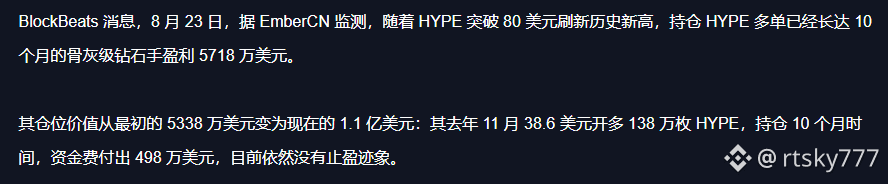
10 months, 1.38 million HYPE, entry at 38.6 and going long—now at 80 dollars. Unrealized profit: 57 million.
I’ve read these numbers three times just to make sure I didn’t misread. What shocked me isn’t how much he made—it’s that in the middle, he went through a maximum unrealized loss of nearly 20 million, and he still didn’t sell.
20 million dollars—that’s over 100 million RMB. He didn’t sell. Funding fees still kept getting paid—4.98 million, almost 5 million—over the course of 10 months without blinking.
The market is like a roller coaster, but this guy just keeps his eyes on HYPE, unmoving. What do you call that? Diamond hands? No—titanium alloy hands.
Then look at his moves. After June 16th, each round of price increases he withdrew unrealized profit to replenish margin. The liquidation price moved up to 53.39. That’s smart. Not “stupid and holding,” but using profits to build a safety cushion. Over 10 months, he only withdrew margin, never changed his position, kept paying funding fees—such composure. Not something ordinary people can have.
Those first 5 hours before Robinhood went live—people say it was insider information. I think… maybe it was. But even if it was, holding it for 10 months is still a skill. You know how many people made money off insider info, only to get greedy and then give it all back? Too many. This guy not only held on—it also shows dynamic management. It means he doesn’t just have information; he has discipline.
Now HYPE is hitting new highs. His position value is 110 million on-chain. The largest short on the chain has probably already been liquidated. In May, the short’s unrealized loss was 35.6 million. Now it’s probably even worse. In this battle, the longs won—and they won decisively.
But you ask why he still hasn’t taken profits. 57 million dollars—over 400 million RMB. If I were him, I would’ve run long ago. Buying a house and a car—aren’t they nicer? Maybe that’s the gap between me and the big shots.
They look far ahead. Or… maybe they simply don’t lack these 400 million.
10 months, 1.38 million HYPE, entry at 38.6 and going long—now at 80 dollars. Unrealized profit: 57 million.
I’ve read these numbers three times just to make sure I didn’t misread. What shocked me isn’t how much he made—it’s that in the middle, he went through a maximum unrealized loss of nearly 20 million, and he still didn’t sell.
20 million dollars—that’s over 100 million RMB. He didn’t sell. Funding fees still kept getting paid—4.98 million, almost 5 million—over the course of 10 months without blinking.
The market is like a roller coaster, but this guy just keeps his eyes on HYPE, unmoving. What do you call that? Diamond hands? No—titanium alloy hands.
Then look at his moves. After June 16th, each round of price increases he withdrew unrealized profit to replenish margin. The liquidation price moved up to 53.39. That’s smart. Not “stupid and holding,” but using profits to build a safety cushion. Over 10 months, he only withdrew margin, never changed his position, kept paying funding fees—such composure. Not something ordinary people can have.
Those first 5 hours before Robinhood went live—people say it was insider information. I think… maybe it was. But even if it was, holding it for 10 months is still a skill. You know how many people made money off insider info, only to get greedy and then give it all back? Too many. This guy not only held on—it also shows dynamic management. It means he doesn’t just have information; he has discipline.
Now HYPE is hitting new highs. His position value is 110 million on-chain. The largest short on the chain has probably already been liquidated. In May, the short’s unrealized loss was 35.6 million. Now it’s probably even worse. In this battle, the longs won—and they won decisively.
But you ask why he still hasn’t taken profits. 57 million dollars—over 400 million RMB. If I were him, I would’ve run long ago. Buying a house and a car—aren’t they nicer? Maybe that’s the gap between me and the big shots.
They look far ahead. Or… maybe they simply don’t lack these 400 million.
I’ve read these numbers three times just to make sure I didn’t misread. What shocked me isn’t how much he made—it’s that in the middle, he went through a maximum unrealized loss of nearly 20 million, and he still didn’t sell.
20 million dollars—that’s over 100 million RMB. He didn’t sell. Funding fees still kept getting paid—4.98 million, almost 5 million—over the course of 10 months without blinking.
The market is like a roller coaster, but this guy just keeps his eyes on HYPE, unmoving. What do you call that? Diamond hands? No—titanium alloy hands.
Then look at his moves. After June 16th, each round of price increases he withdrew unrealized profit to replenish margin. The liquidation price moved up to 53.39. That’s smart. Not “stupid and holding,” but using profits to build a safety cushion. Over 10 months, he only withdrew margin, never changed his position, kept paying funding fees—such composure. Not something ordinary people can have.
Those first 5 hours before Robinhood went live—people say it was insider information. I think… maybe it was. But even if it was, holding it for 10 months is still a skill. You know how many people made money off insider info, only to get greedy and then give it all back? Too many. This guy not only held on—it also shows dynamic management. It means he doesn’t just have information; he has discipline.
Now HYPE is hitting new highs. His position value is 110 million on-chain. The largest short on the chain has probably already been liquidated. In May, the short’s unrealized loss was 35.6 million. Now it’s probably even worse. In this battle, the longs won—and they won decisively.
But you ask why he still hasn’t taken profits. 57 million dollars—over 400 million RMB. If I were him, I would’ve run long ago. Buying a house and a car—aren’t they nicer? Maybe that’s the gap between me and the big shots.
They look far ahead. Or… maybe they simply don’t lack these 400 million.
3k
·
--
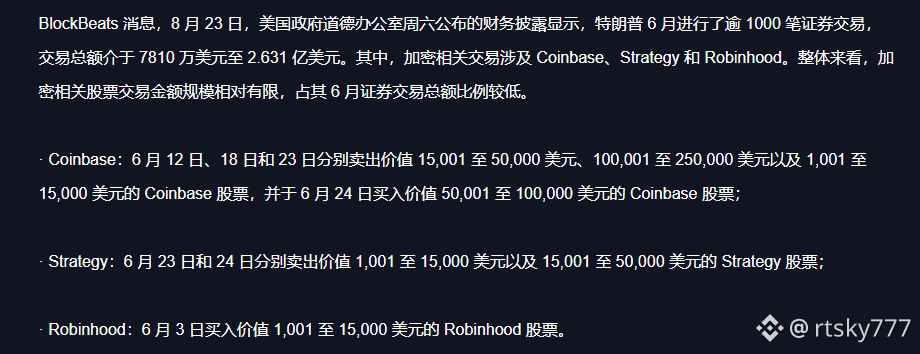
Trump sold Coinbase and Strategy in June.
Yet in public, he shouted, “The U.S. should become a bitcoin superpower.”
Trump’s mouth: Bitcoin is strategic reserves; crypto is the future.
Trump’s wallet: He sold Coinbase in three rounds and Strategy in two rounds—together reducing holdings by nearly $500,000. Then he took the leftover and bought a bit of Robinhood, just over $10,000—like buying groceries.
With more than 1,000 transactions, the total maximum was up to $260 million, and crypto made up a pathetic share. So what does that show? In Trump’s actual asset allocation, crypto stocks are a fringe item. He shouts it loud, but he didn’t really bet much.
So why sell? The timing was way too perfect. June was right around the signing of the GENIUS Act. The SEC was pushing stock tokenization—crypto circles were buzzing, thinking compliance spring was here.
Then he trimmed at the peak. This isn’t bearishness about the long-term value of crypto. It’s short-term arbitrage—policy tailwinds run out, stocks rise, and it’s time to sell.
Retail investors hear that Trump supports bitcoin and rush in to buy Coinbase, buy Strategy, and buy crypto-mining stocks.
But in June, the president was already unloading. By the time retail investors have finished taking the bait, once the earnings season hits, macro data changes, and regulators shift, the stock prices pull back—trapping the crowd that entered based on the slogans.
The small Robinhood purchase is interesting, though. The amount is tiny enough to ignore, but the direction is adding.
Robinhood and Coinbase are sworn enemies; they’re both competing for the retail investor entry point. And in the tokenization narrative, Robinhood is positioned further ahead. Trump sold Coinbase and bought Robinhood—he may be betting on the “next compliant wave,” shifting from exchanges to broker-dealers plus on-chain infrastructure.
These crypto trades amount to nowhere near even a drop in the bucket of his total $260 million in transactions.
A president’s true stance isn’t what he posts on X—it’s how he operates his account. You can shout support every day, but in real-money allocation, crypto is just a side dish.
Trump sold Coinbase and Strategy in June.
Yet in public, he shouted, “The U.S. should become a bitcoin superpower.”
Trump’s mouth: Bitcoin is strategic reserves; crypto is the future.
Trump’s wallet: He sold Coinbase in three rounds and Strategy in two rounds—together reducing holdings by nearly $500,000. Then he took the leftover and bought a bit of Robinhood, just over $10,000—like buying groceries.
With more than 1,000 transactions, the total maximum was up to $260 million, and crypto made up a pathetic share. So what does that show? In Trump’s actual asset allocation, crypto stocks are a fringe item. He shouts it loud, but he didn’t really bet much.
So why sell? The timing was way too perfect. June was right around the signing of the GENIUS Act. The SEC was pushing stock tokenization—crypto circles were buzzing, thinking compliance spring was here.
Then he trimmed at the peak. This isn’t bearishness about the long-term value of crypto. It’s short-term arbitrage—policy tailwinds run out, stocks rise, and it’s time to sell.
Retail investors hear that Trump supports bitcoin and rush in to buy Coinbase, buy Strategy, and buy crypto-mining stocks.
But in June, the president was already unloading. By the time retail investors have finished taking the bait, once the earnings season hits, macro data changes, and regulators shift, the stock prices pull back—trapping the crowd that entered based on the slogans.
The small Robinhood purchase is interesting, though. The amount is tiny enough to ignore, but the direction is adding.
Robinhood and Coinbase are sworn enemies; they’re both competing for the retail investor entry point. And in the tokenization narrative, Robinhood is positioned further ahead. Trump sold Coinbase and bought Robinhood—he may be betting on the “next compliant wave,” shifting from exchanges to broker-dealers plus on-chain infrastructure.
These crypto trades amount to nowhere near even a drop in the bucket of his total $260 million in transactions.
A president’s true stance isn’t what he posts on X—it’s how he operates his account. You can shout support every day, but in real-money allocation, crypto is just a side dish.
Yet in public, he shouted, “The U.S. should become a bitcoin superpower.”
Trump’s mouth: Bitcoin is strategic reserves; crypto is the future.
Trump’s wallet: He sold Coinbase in three rounds and Strategy in two rounds—together reducing holdings by nearly $500,000. Then he took the leftover and bought a bit of Robinhood, just over $10,000—like buying groceries.
With more than 1,000 transactions, the total maximum was up to $260 million, and crypto made up a pathetic share. So what does that show? In Trump’s actual asset allocation, crypto stocks are a fringe item. He shouts it loud, but he didn’t really bet much.
So why sell? The timing was way too perfect. June was right around the signing of the GENIUS Act. The SEC was pushing stock tokenization—crypto circles were buzzing, thinking compliance spring was here.
Then he trimmed at the peak. This isn’t bearishness about the long-term value of crypto. It’s short-term arbitrage—policy tailwinds run out, stocks rise, and it’s time to sell.
Retail investors hear that Trump supports bitcoin and rush in to buy Coinbase, buy Strategy, and buy crypto-mining stocks.
But in June, the president was already unloading. By the time retail investors have finished taking the bait, once the earnings season hits, macro data changes, and regulators shift, the stock prices pull back—trapping the crowd that entered based on the slogans.
The small Robinhood purchase is interesting, though. The amount is tiny enough to ignore, but the direction is adding.
Robinhood and Coinbase are sworn enemies; they’re both competing for the retail investor entry point. And in the tokenization narrative, Robinhood is positioned further ahead. Trump sold Coinbase and bought Robinhood—he may be betting on the “next compliant wave,” shifting from exchanges to broker-dealers plus on-chain infrastructure.
These crypto trades amount to nowhere near even a drop in the bucket of his total $260 million in transactions.
A president’s true stance isn’t what he posts on X—it’s how he operates his account. You can shout support every day, but in real-money allocation, crypto is just a side dish.
3
4
6.1k
·
--
19.178 billion. I’ve looked at the net inflow numbers for this week’s Bitcoin spot ETFs three times over.
This is the highest weekly figure since the “1011 flash crash.”
What does that mean?
After the flash crash in October last year, institutional money behaved like it had seen a ghost—month after month for nearly ten months, either staying on the sidelines or running away. Two weeks ago, the weekly net inflow was only 75.50 million. Compared with now, it’s not even a fraction. This isn’t just momentum—this is fresh liquidity returning.
Even more thought-provoking is ETH. Ethereum spot ETFs saw net inflows of 692.6 million at the same time, accounting for more than one-third of Bitcoin’s figure.
What kind of treatment did ETH ETFs get before? They were drained by Bitcoin—disliked by institutions. By mid-July, they only reached the million-level range, like being fed crumbs. Now the volumes suddenly expand. What does that imply? It suggests institutions are not just buying BTC for “safe haven,” but are reopening their exposure to the broader digital-asset allocation.
If you only buy BTC, that’s the “buy gold in chaotic times” logic—crypto is merely a substitute for gold.
But buying BTC and ETH together is treating crypto as an asset class, like allocating to stocks, bonds, or commodities.
The signal behind this is a hundred times more important than price up or down.
But don’t rush to call the bull market back.
In BlockBeats’ AI interpretation, there’s a warning buried in it—after that single-day inflow of 1.1901 billion in October 2025, it was immediately followed by a streak of continuous net outflows. ETF capital is extremely “pulsed”: it comes fast and goes just as fast. Whether this week’s data really marks a trend reversal will still need to be seen over the coming weeks. But at the very least, it means the post-flash-crash, near-ten-month wait-and-see period has ended.
Where is the institutional money coming back—but what about retail?
Still getting liquidated in the derivatives market
This week, Bitcoin is up 22%, and the shorts have been wiped out—27 billion
Before every major market move kicks off, it’s always this same script.
19.178 billion. I’ve looked at the net inflow numbers for this week’s Bitcoin spot ETFs three times over.
This is the highest weekly figure since the “1011 flash crash.”
What does that mean?
After the flash crash in October last year, institutional money behaved like it had seen a ghost—month after month for nearly ten months, either staying on the sidelines or running away. Two weeks ago, the weekly net inflow was only 75.50 million. Compared with now, it’s not even a fraction. This isn’t just momentum—this is fresh liquidity returning.
Even more thought-provoking is ETH. Ethereum spot ETFs saw net inflows of 692.6 million at the same time, accounting for more than one-third of Bitcoin’s figure.
What kind of treatment did ETH ETFs get before? They were drained by Bitcoin—disliked by institutions. By mid-July, they only reached the million-level range, like being fed crumbs. Now the volumes suddenly expand. What does that imply? It suggests institutions are not just buying BTC for “safe haven,” but are reopening their exposure to the broader digital-asset allocation.
If you only buy BTC, that’s the “buy gold in chaotic times” logic—crypto is merely a substitute for gold.
But buying BTC and ETH together is treating crypto as an asset class, like allocating to stocks, bonds, or commodities.
The signal behind this is a hundred times more important than price up or down.
But don’t rush to call the bull market back.
In BlockBeats’ AI interpretation, there’s a warning buried in it—after that single-day inflow of 1.1901 billion in October 2025, it was immediately followed by a streak of continuous net outflows. ETF capital is extremely “pulsed”: it comes fast and goes just as fast. Whether this week’s data really marks a trend reversal will still need to be seen over the coming weeks. But at the very least, it means the post-flash-crash, near-ten-month wait-and-see period has ended.
Where is the institutional money coming back—but what about retail?
Still getting liquidated in the derivatives market
This week, Bitcoin is up 22%, and the shorts have been wiped out—27 billion
Before every major market move kicks off, it’s always this same script.
This is the highest weekly figure since the “1011 flash crash.”
What does that mean?
After the flash crash in October last year, institutional money behaved like it had seen a ghost—month after month for nearly ten months, either staying on the sidelines or running away. Two weeks ago, the weekly net inflow was only 75.50 million. Compared with now, it’s not even a fraction. This isn’t just momentum—this is fresh liquidity returning.
Even more thought-provoking is ETH. Ethereum spot ETFs saw net inflows of 692.6 million at the same time, accounting for more than one-third of Bitcoin’s figure.
What kind of treatment did ETH ETFs get before? They were drained by Bitcoin—disliked by institutions. By mid-July, they only reached the million-level range, like being fed crumbs. Now the volumes suddenly expand. What does that imply? It suggests institutions are not just buying BTC for “safe haven,” but are reopening their exposure to the broader digital-asset allocation.
If you only buy BTC, that’s the “buy gold in chaotic times” logic—crypto is merely a substitute for gold.
But buying BTC and ETH together is treating crypto as an asset class, like allocating to stocks, bonds, or commodities.
The signal behind this is a hundred times more important than price up or down.
But don’t rush to call the bull market back.
In BlockBeats’ AI interpretation, there’s a warning buried in it—after that single-day inflow of 1.1901 billion in October 2025, it was immediately followed by a streak of continuous net outflows. ETF capital is extremely “pulsed”: it comes fast and goes just as fast. Whether this week’s data really marks a trend reversal will still need to be seen over the coming weeks. But at the very least, it means the post-flash-crash, near-ten-month wait-and-see period has ended.
Where is the institutional money coming back—but what about retail?
Still getting liquidated in the derivatives market
This week, Bitcoin is up 22%, and the shorts have been wiped out—27 billion
Before every major market move kicks off, it’s always this same script.
1
1
1
6.6k
·
--
So cute Tiger tanks
Go go go
Charge the bull market
So cute Tiger tanks
Go go go
Charge the bull market
Go go go
Charge the bull market
134
·
--
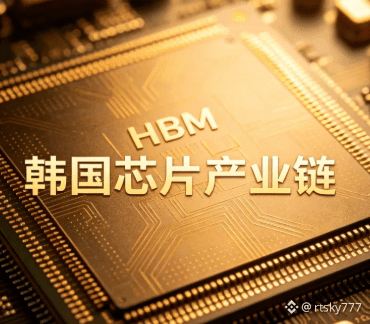
Korea’s August exports surged by 56%, with chips accounting for half.
Up nearly twofold, to $26 billion.
I don’t understand these numbers, but I’m deeply shocked.
Just how intense is global AI compute demand? South Korea’s chip exports tell you the answer.
Exports to China also doubled—who’s talking about decoupling?
Do you have semiconductor positions in your hands?#美光拟投100亿美元建研究实验室 $MU
{future}(MUUSDT)
Korea’s August exports surged by 56%, with chips accounting for half.
Up nearly twofold, to $26 billion.
I don’t understand these numbers, but I’m deeply shocked.
Just how intense is global AI compute demand? South Korea’s chip exports tell you the answer.
Exports to China also doubled—who’s talking about decoupling?
Do you have semiconductor positions in your hands?#美光拟投100亿美元建研究实验室 $MU
Up nearly twofold, to $26 billion.
I don’t understand these numbers, but I’m deeply shocked.
Just how intense is global AI compute demand? South Korea’s chip exports tell you the answer.
Exports to China also doubled—who’s talking about decoupling?
Do you have semiconductor positions in your hands?#美光拟投100亿美元建研究实验室 $MU
394
·
--
Time flies so fast
Before you know it, 13 years have passed
I still remember this interview.
Time flies so fast
Before you know it, 13 years have passed
I still remember this interview.
Before you know it, 13 years have passed
I still remember this interview.
126
·
--
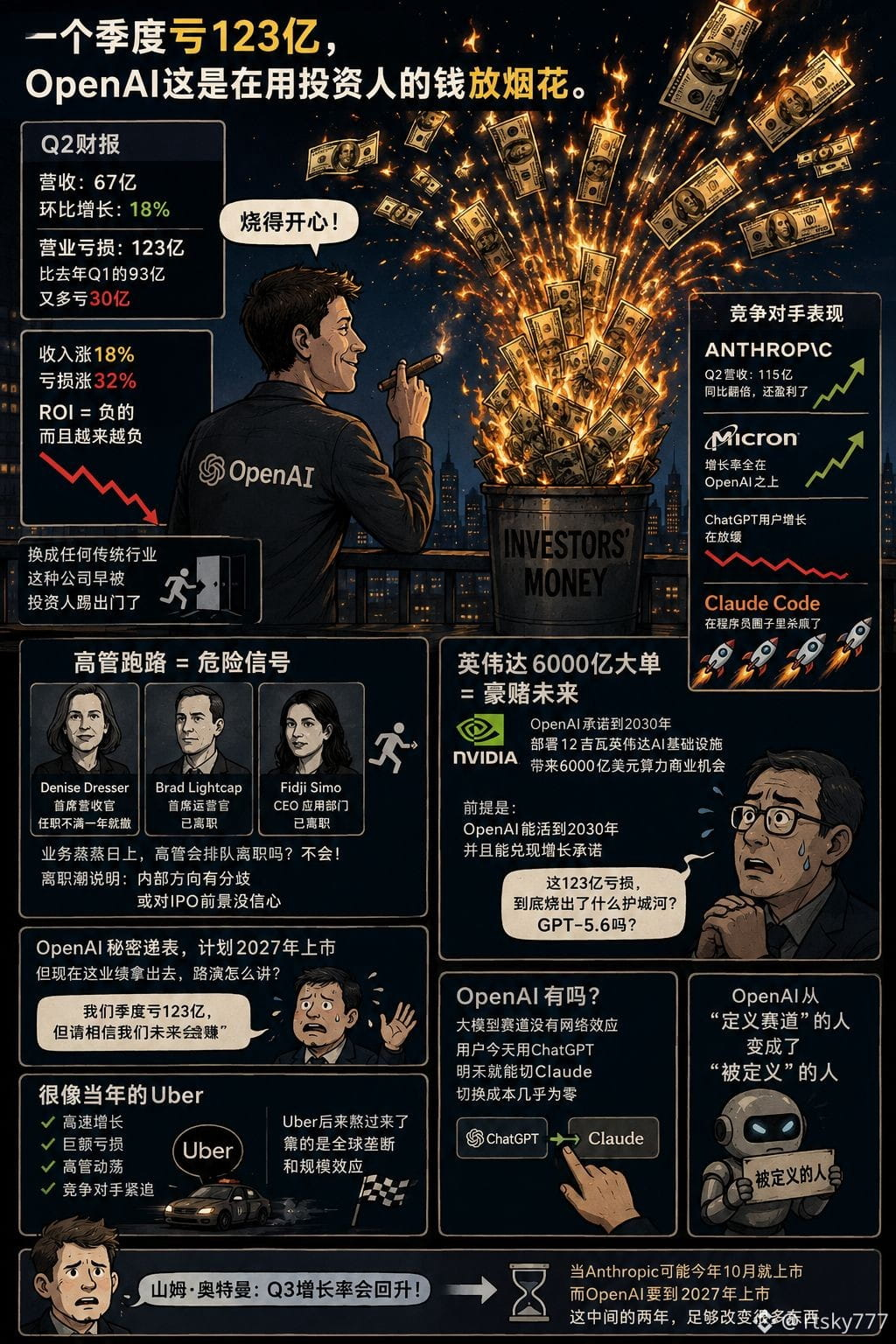
A single quarter lost 12.3 billion—OpenAI is basically using investors’ money to set it on fire.
Q2 revenue was 6.7 billion, up 18% quarter over quarter; that sounds good. But operating losses were 12.3 billion, which is 3 billion more than Q1 last year’s 9.3 billion. Revenue is up 18%, losses are up 32%—so the ROI comes out negative, and it’s getting more negative. In any traditional industry, investors would have kicked a company like this out long ago. But OpenAI is different—it’s AI, it’s OpenAI, it’s Sam Altman—so it can keep raising funds, keep burning cash, and keep selling the dream.
But the more the cake is “promised,” the thinner the filling gets. Anthropic’s Q2 revenue was 11.5 billion, doubled, and it was profitable. Micron’s growth rates are outperforming OpenAI across the board. ChatGPT user growth is slowing, but Claude Code is going berserk in the developer community. OpenAI has gone from being the one who “defines the category” to the one that gets “defined.”
Executive departures make it even clearer. Denise Dresser, Chief Revenue Officer, left less than a year after taking the job. Brad Lightcap and Fidji Simo also exited. If a company’s business were booming, would executives line up to resign? No. A wave of departures signals internal disagreement about future direction—or a lack of confidence in the outlook for an IPO. After all, OpenAI filed a secret registration in June, planning to list in 2027—but with these performance numbers, how do they even pitch it on a roadshow? “We lost 12.3 billion this quarter, but please trust that we’ll make money in the future”?
Even more surreal is the 600 billion from Nvidia. OpenAI has promised to deploy 12 gigawatts of Nvidia AI infrastructure by 2030, creating a 600 billion-dollar opportunity for compute commercialization. The figure is so enormous it’s almost unbelievable—but the premise is that OpenAI can still be alive in 2030 and can deliver on its growth promises. If it keeps burning cash at this pace, investors will eventually ask: what moat has this 12.3 billion in losses actually built? GPT-5.6? But Anthropic’s Claude is iterating too, and it doesn’t lose nearly this much.
Right now, OpenAI’s situation looks a lot like Uber back in the day—rapid growth, massive losses, executive instability, and competitors closely chasing. Uber eventually made it through, but it relied on global monopolies and scale effects. Does OpenAI have that? In the large-model race, there’s no network effect. People use ChatGPT today and can switch to Claude tomorrow, with switching costs close to zero.
Sam Altman says the Q3 growth rate will rebound. When Anthropic could potentially IPO as early as October this year, while OpenAI won’t be until 2027—those two years are more than enough to change a lot. $NVDAB
{spot}(NVDABUSDT)
A single quarter lost 12.3 billion—OpenAI is basically using investors’ money to set it on fire.
Q2 revenue was 6.7 billion, up 18% quarter over quarter; that sounds good. But operating losses were 12.3 billion, which is 3 billion more than Q1 last year’s 9.3 billion. Revenue is up 18%, losses are up 32%—so the ROI comes out negative, and it’s getting more negative. In any traditional industry, investors would have kicked a company like this out long ago. But OpenAI is different—it’s AI, it’s OpenAI, it’s Sam Altman—so it can keep raising funds, keep burning cash, and keep selling the dream.
But the more the cake is “promised,” the thinner the filling gets. Anthropic’s Q2 revenue was 11.5 billion, doubled, and it was profitable. Micron’s growth rates are outperforming OpenAI across the board. ChatGPT user growth is slowing, but Claude Code is going berserk in the developer community. OpenAI has gone from being the one who “defines the category” to the one that gets “defined.”
Executive departures make it even clearer. Denise Dresser, Chief Revenue Officer, left less than a year after taking the job. Brad Lightcap and Fidji Simo also exited. If a company’s business were booming, would executives line up to resign? No. A wave of departures signals internal disagreement about future direction—or a lack of confidence in the outlook for an IPO. After all, OpenAI filed a secret registration in June, planning to list in 2027—but with these performance numbers, how do they even pitch it on a roadshow? “We lost 12.3 billion this quarter, but please trust that we’ll make money in the future”?
Even more surreal is the 600 billion from Nvidia. OpenAI has promised to deploy 12 gigawatts of Nvidia AI infrastructure by 2030, creating a 600 billion-dollar opportunity for compute commercialization. The figure is so enormous it’s almost unbelievable—but the premise is that OpenAI can still be alive in 2030 and can deliver on its growth promises. If it keeps burning cash at this pace, investors will eventually ask: what moat has this 12.3 billion in losses actually built? GPT-5.6? But Anthropic’s Claude is iterating too, and it doesn’t lose nearly this much.
Right now, OpenAI’s situation looks a lot like Uber back in the day—rapid growth, massive losses, executive instability, and competitors closely chasing. Uber eventually made it through, but it relied on global monopolies and scale effects. Does OpenAI have that? In the large-model race, there’s no network effect. People use ChatGPT today and can switch to Claude tomorrow, with switching costs close to zero.
Sam Altman says the Q3 growth rate will rebound. When Anthropic could potentially IPO as early as October this year, while OpenAI won’t be until 2027—those two years are more than enough to change a lot. $NVDAB
Q2 revenue was 6.7 billion, up 18% quarter over quarter; that sounds good. But operating losses were 12.3 billion, which is 3 billion more than Q1 last year’s 9.3 billion. Revenue is up 18%, losses are up 32%—so the ROI comes out negative, and it’s getting more negative. In any traditional industry, investors would have kicked a company like this out long ago. But OpenAI is different—it’s AI, it’s OpenAI, it’s Sam Altman—so it can keep raising funds, keep burning cash, and keep selling the dream.
But the more the cake is “promised,” the thinner the filling gets. Anthropic’s Q2 revenue was 11.5 billion, doubled, and it was profitable. Micron’s growth rates are outperforming OpenAI across the board. ChatGPT user growth is slowing, but Claude Code is going berserk in the developer community. OpenAI has gone from being the one who “defines the category” to the one that gets “defined.”
Executive departures make it even clearer. Denise Dresser, Chief Revenue Officer, left less than a year after taking the job. Brad Lightcap and Fidji Simo also exited. If a company’s business were booming, would executives line up to resign? No. A wave of departures signals internal disagreement about future direction—or a lack of confidence in the outlook for an IPO. After all, OpenAI filed a secret registration in June, planning to list in 2027—but with these performance numbers, how do they even pitch it on a roadshow? “We lost 12.3 billion this quarter, but please trust that we’ll make money in the future”?
Even more surreal is the 600 billion from Nvidia. OpenAI has promised to deploy 12 gigawatts of Nvidia AI infrastructure by 2030, creating a 600 billion-dollar opportunity for compute commercialization. The figure is so enormous it’s almost unbelievable—but the premise is that OpenAI can still be alive in 2030 and can deliver on its growth promises. If it keeps burning cash at this pace, investors will eventually ask: what moat has this 12.3 billion in losses actually built? GPT-5.6? But Anthropic’s Claude is iterating too, and it doesn’t lose nearly this much.
Right now, OpenAI’s situation looks a lot like Uber back in the day—rapid growth, massive losses, executive instability, and competitors closely chasing. Uber eventually made it through, but it relied on global monopolies and scale effects. Does OpenAI have that? In the large-model race, there’s no network effect. People use ChatGPT today and can switch to Claude tomorrow, with switching costs close to zero.
Sam Altman says the Q3 growth rate will rebound. When Anthropic could potentially IPO as early as October this year, while OpenAI won’t be until 2027—those two years are more than enough to change a lot. $NVDAB
103
·
--
Life imprisonment, but what about your unfinished real estate project?
Today, Xu Jiayin was sentenced to life imprisonment. His entire personal assets were confiscated. Evergrande Group was fined 8.82 billion, while the real estate sector was fined 7 billion.
Fifty-six people went in with him—maximum sentence of 18 years, minimum of 1 year and 10 months.
It looks like a great relief, but don’t rush to clap yet—take a look at the details in the judgment.
The court said that compensation for losses should take priority over fines and the confiscation of assets. That sounds like reassurance for investors, but the problem is... Evergrande has been insolvent for a long time. Priority compensation—compensation for what? On the books, it’s all unfinished projects and shell assets. The valuable parts were already mortgaged hundreds of rounds—some even repeatedly. Even if you get priority, you probably won’t get more than a few cents.
Life imprisonment, but what about your unfinished real estate project?
Today, Xu Jiayin was sentenced to life imprisonment. His entire personal assets were confiscated. Evergrande Group was fined 8.82 billion, while the real estate sector was fined 7 billion.
Fifty-six people went in with him—maximum sentence of 18 years, minimum of 1 year and 10 months.
It looks like a great relief, but don’t rush to clap yet—take a look at the details in the judgment.
The court said that compensation for losses should take priority over fines and the confiscation of assets. That sounds like reassurance for investors, but the problem is... Evergrande has been insolvent for a long time. Priority compensation—compensation for what? On the books, it’s all unfinished projects and shell assets. The valuable parts were already mortgaged hundreds of rounds—some even repeatedly. Even if you get priority, you probably won’t get more than a few cents.
Today, Xu Jiayin was sentenced to life imprisonment. His entire personal assets were confiscated. Evergrande Group was fined 8.82 billion, while the real estate sector was fined 7 billion.
Fifty-six people went in with him—maximum sentence of 18 years, minimum of 1 year and 10 months.
It looks like a great relief, but don’t rush to clap yet—take a look at the details in the judgment.
The court said that compensation for losses should take priority over fines and the confiscation of assets. That sounds like reassurance for investors, but the problem is... Evergrande has been insolvent for a long time. Priority compensation—compensation for what? On the books, it’s all unfinished projects and shell assets. The valuable parts were already mortgaged hundreds of rounds—some even repeatedly. Even if you get priority, you probably won’t get more than a few cents.

2.4k
·
--
The CFTC chairman is going to pull a big move tomorrow.
Michael Selig made remarks at a White House cryptocurrency meeting, saying that at tomorrow’s Innovation Advisory Committee meeting, he would share “more details on the future regulatory path.” It sounds like routine talk, but take a closer look at the timing—on the same day, the CFTC just handed down harsh penalties to two key figures from FTX and Alameda: Caroline Ellison and Gary Wang. In addition to a consent order, they received a five-year trading ban and a registration ban lasting eight to ten years, and they were also required to continue cooperating with the investigation.
While settling old accounts in liquidation, they’re also drawing up new rules.
This isn’t a coincidence—it’s all about the rhythm.
How long has it been since the whole FTX saga?
SBF is already behind bars, yet the CFTC is still going after Ellison and Wang for “continued cooperation with the investigation.” What does that mean? It suggests the mess around FTX’s books hasn’t been fully unearthed—there may be even bigger fish behind it. A five-year trading ban and a ten-year registration ban basically amount to permanently kicking these two out of crypto.
Before, people thought once you paid the fine and pleaded guilty, it was over. Now it looks like U.S. regulators plan to pin everyone connected to FTX to the wall, one by one.
But what’s even more worth watching is tomorrow’s “regulatory path details.”
The CFTC has been moving very quickly lately. On the same day, it also issued a solicitation for public comments on power-derivative contracts. Power spot markets, manipulation risks, perpetual power futures—these are terms many people in crypto had never even heard before. Now the CFTC is putting them on the official trading agenda. What does that mean? Mining computing power is about to become a tradable financial product, just like crude oil and gold.
The subtext here is very clear:
In the past, crypto operated in a lawless zone; now the CFTC wants to bring everything into a regulatory framework. If mining computing power can be traded, then mining machines, electricity, and even the entire PoW ecosystem will be financialized. The upside is that institutional capital can move in. The downside is that arbitrage opportunities for retail investors will be squeezed smaller and smaller.
Anthropic is also making big moves—its revolving credit facility exceeds $10 billion, which clearly looks like it’s paving the way for an IPO. Claude’s parent company is set to go public, and the boundary between AI and crypto is getting blurrier by the day. In the future, what you buy won’t be coins—it’ll be computing power; what you invest in won’t be just projects, but AI infrastructure.
The CFTC chairman is going to pull a big move tomorrow.
Michael Selig made remarks at a White House cryptocurrency meeting, saying that at tomorrow’s Innovation Advisory Committee meeting, he would share “more details on the future regulatory path.” It sounds like routine talk, but take a closer look at the timing—on the same day, the CFTC just handed down harsh penalties to two key figures from FTX and Alameda: Caroline Ellison and Gary Wang. In addition to a consent order, they received a five-year trading ban and a registration ban lasting eight to ten years, and they were also required to continue cooperating with the investigation.
While settling old accounts in liquidation, they’re also drawing up new rules.
This isn’t a coincidence—it’s all about the rhythm.
How long has it been since the whole FTX saga?
SBF is already behind bars, yet the CFTC is still going after Ellison and Wang for “continued cooperation with the investigation.” What does that mean? It suggests the mess around FTX’s books hasn’t been fully unearthed—there may be even bigger fish behind it. A five-year trading ban and a ten-year registration ban basically amount to permanently kicking these two out of crypto.
Before, people thought once you paid the fine and pleaded guilty, it was over. Now it looks like U.S. regulators plan to pin everyone connected to FTX to the wall, one by one.
But what’s even more worth watching is tomorrow’s “regulatory path details.”
The CFTC has been moving very quickly lately. On the same day, it also issued a solicitation for public comments on power-derivative contracts. Power spot markets, manipulation risks, perpetual power futures—these are terms many people in crypto had never even heard before. Now the CFTC is putting them on the official trading agenda. What does that mean? Mining computing power is about to become a tradable financial product, just like crude oil and gold.
The subtext here is very clear:
In the past, crypto operated in a lawless zone; now the CFTC wants to bring everything into a regulatory framework. If mining computing power can be traded, then mining machines, electricity, and even the entire PoW ecosystem will be financialized. The upside is that institutional capital can move in. The downside is that arbitrage opportunities for retail investors will be squeezed smaller and smaller.
Anthropic is also making big moves—its revolving credit facility exceeds $10 billion, which clearly looks like it’s paving the way for an IPO. Claude’s parent company is set to go public, and the boundary between AI and crypto is getting blurrier by the day. In the future, what you buy won’t be coins—it’ll be computing power; what you invest in won’t be just projects, but AI infrastructure.
Michael Selig made remarks at a White House cryptocurrency meeting, saying that at tomorrow’s Innovation Advisory Committee meeting, he would share “more details on the future regulatory path.” It sounds like routine talk, but take a closer look at the timing—on the same day, the CFTC just handed down harsh penalties to two key figures from FTX and Alameda: Caroline Ellison and Gary Wang. In addition to a consent order, they received a five-year trading ban and a registration ban lasting eight to ten years, and they were also required to continue cooperating with the investigation.
While settling old accounts in liquidation, they’re also drawing up new rules.
This isn’t a coincidence—it’s all about the rhythm.
How long has it been since the whole FTX saga?
SBF is already behind bars, yet the CFTC is still going after Ellison and Wang for “continued cooperation with the investigation.” What does that mean? It suggests the mess around FTX’s books hasn’t been fully unearthed—there may be even bigger fish behind it. A five-year trading ban and a ten-year registration ban basically amount to permanently kicking these two out of crypto.
Before, people thought once you paid the fine and pleaded guilty, it was over. Now it looks like U.S. regulators plan to pin everyone connected to FTX to the wall, one by one.
But what’s even more worth watching is tomorrow’s “regulatory path details.”
The CFTC has been moving very quickly lately. On the same day, it also issued a solicitation for public comments on power-derivative contracts. Power spot markets, manipulation risks, perpetual power futures—these are terms many people in crypto had never even heard before. Now the CFTC is putting them on the official trading agenda. What does that mean? Mining computing power is about to become a tradable financial product, just like crude oil and gold.
The subtext here is very clear:
In the past, crypto operated in a lawless zone; now the CFTC wants to bring everything into a regulatory framework. If mining computing power can be traded, then mining machines, electricity, and even the entire PoW ecosystem will be financialized. The upside is that institutional capital can move in. The downside is that arbitrage opportunities for retail investors will be squeezed smaller and smaller.
Anthropic is also making big moves—its revolving credit facility exceeds $10 billion, which clearly looks like it’s paving the way for an IPO. Claude’s parent company is set to go public, and the boundary between AI and crypto is getting blurrier by the day. In the future, what you buy won’t be coins—it’ll be computing power; what you invest in won’t be just projects, but AI infrastructure.

1
635
·
--
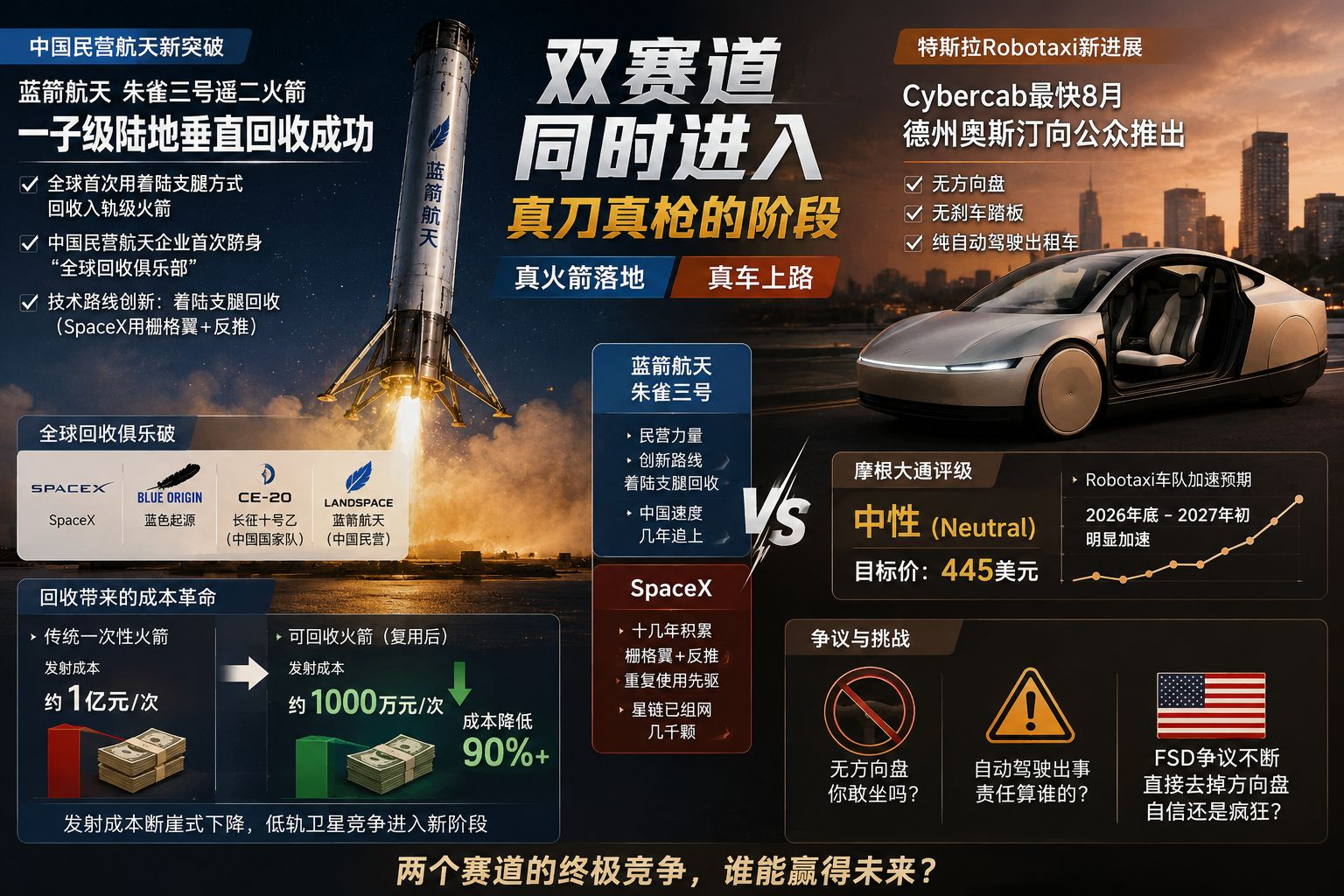
SpaceX shares fell 2.5% today, but the real news in space isn’t about it.
Zhuque-3, a Level-1 landing vertical recovery rocket from China’s LandSpace Aerospace, successfully completed a one-stage land-based vertical recovery yesterday. It is the world’s first time to recover an orbital-class rocket using landing legs. It’s also the first time a Chinese private space company has entered the “global recovery club.” Previously, only SpaceX, Blue Origin, and China’s state-run Long March 5 Yaozai could do it. Now the private teams have entered too.
In plain terms, it took Musk more than a decade to achieve this, but China’s private space industry caught up at the same table in just a few years. This isn’t “catching up”—it’s “sitting down to eat.” And this time, the recovery method uses landing legs. SpaceX uses grid fins plus retropropulsion, while LandSpace took a new approach—there are distinct elements in its technical route.
But SpaceX’s drop today has little to do with LandSpace. The real reason is likely Tesla’s side: Cybercab is scheduled to be introduced to the public in Austin, Texas as early as August. No steering wheel, no brake pedal—an all-autonomous ride-hailing taxi. JPMorgan gave it a neutral rating and a target price of 445, saying Robotaxi fleet acceleration will become clearly faster by the end of 2026 or the beginning of 2027.
Now, picture this:
On one side, a Chinese private rocket successfully recovered—matching SpaceX. On the other, Tesla is rolling out a steer-free taxi that redefines mobility. Two tracks are entering the “real-life, real-deal” phase at the same time. In the past it was all PPTs and concepts; now one genuine rocket has landed, and one real car is about to hit the road.
But the question is: a steer-free car—would you dare to ride it? If something goes wrong with autonomous driving, who’s responsible? Tesla’s FSD in the U.S. has been controversial for a while. Removing the steering wheel entirely—does that show confidence, or madness?
Back to LandSpace, though. Zhuque-3’s successful recovery means the launch costs for China’s private space industry could drop dramatically. Previously, one launch meant burning up about 100 million yuan. Now, with recovery and reuse, costs could be pushed down to one-tenth of before. SpaceX’s Starlink has already formed a network of thousands of satellites. If costs also drop for China’s private space industry, the race for low-earth-orbit satellite dominance will truly begin.
SpaceX shares fell 2.5% today, but the real news in space isn’t about it.
Zhuque-3, a Level-1 landing vertical recovery rocket from China’s LandSpace Aerospace, successfully completed a one-stage land-based vertical recovery yesterday. It is the world’s first time to recover an orbital-class rocket using landing legs. It’s also the first time a Chinese private space company has entered the “global recovery club.” Previously, only SpaceX, Blue Origin, and China’s state-run Long March 5 Yaozai could do it. Now the private teams have entered too.
In plain terms, it took Musk more than a decade to achieve this, but China’s private space industry caught up at the same table in just a few years. This isn’t “catching up”—it’s “sitting down to eat.” And this time, the recovery method uses landing legs. SpaceX uses grid fins plus retropropulsion, while LandSpace took a new approach—there are distinct elements in its technical route.
But SpaceX’s drop today has little to do with LandSpace. The real reason is likely Tesla’s side: Cybercab is scheduled to be introduced to the public in Austin, Texas as early as August. No steering wheel, no brake pedal—an all-autonomous ride-hailing taxi. JPMorgan gave it a neutral rating and a target price of 445, saying Robotaxi fleet acceleration will become clearly faster by the end of 2026 or the beginning of 2027.
Now, picture this:
On one side, a Chinese private rocket successfully recovered—matching SpaceX. On the other, Tesla is rolling out a steer-free taxi that redefines mobility. Two tracks are entering the “real-life, real-deal” phase at the same time. In the past it was all PPTs and concepts; now one genuine rocket has landed, and one real car is about to hit the road.
But the question is: a steer-free car—would you dare to ride it? If something goes wrong with autonomous driving, who’s responsible? Tesla’s FSD in the U.S. has been controversial for a while. Removing the steering wheel entirely—does that show confidence, or madness?
Back to LandSpace, though. Zhuque-3’s successful recovery means the launch costs for China’s private space industry could drop dramatically. Previously, one launch meant burning up about 100 million yuan. Now, with recovery and reuse, costs could be pushed down to one-tenth of before. SpaceX’s Starlink has already formed a network of thousands of satellites. If costs also drop for China’s private space industry, the race for low-earth-orbit satellite dominance will truly begin.
Zhuque-3, a Level-1 landing vertical recovery rocket from China’s LandSpace Aerospace, successfully completed a one-stage land-based vertical recovery yesterday. It is the world’s first time to recover an orbital-class rocket using landing legs. It’s also the first time a Chinese private space company has entered the “global recovery club.” Previously, only SpaceX, Blue Origin, and China’s state-run Long March 5 Yaozai could do it. Now the private teams have entered too.
In plain terms, it took Musk more than a decade to achieve this, but China’s private space industry caught up at the same table in just a few years. This isn’t “catching up”—it’s “sitting down to eat.” And this time, the recovery method uses landing legs. SpaceX uses grid fins plus retropropulsion, while LandSpace took a new approach—there are distinct elements in its technical route.
But SpaceX’s drop today has little to do with LandSpace. The real reason is likely Tesla’s side: Cybercab is scheduled to be introduced to the public in Austin, Texas as early as August. No steering wheel, no brake pedal—an all-autonomous ride-hailing taxi. JPMorgan gave it a neutral rating and a target price of 445, saying Robotaxi fleet acceleration will become clearly faster by the end of 2026 or the beginning of 2027.
Now, picture this:
On one side, a Chinese private rocket successfully recovered—matching SpaceX. On the other, Tesla is rolling out a steer-free taxi that redefines mobility. Two tracks are entering the “real-life, real-deal” phase at the same time. In the past it was all PPTs and concepts; now one genuine rocket has landed, and one real car is about to hit the road.
But the question is: a steer-free car—would you dare to ride it? If something goes wrong with autonomous driving, who’s responsible? Tesla’s FSD in the U.S. has been controversial for a while. Removing the steering wheel entirely—does that show confidence, or madness?
Back to LandSpace, though. Zhuque-3’s successful recovery means the launch costs for China’s private space industry could drop dramatically. Previously, one launch meant burning up about 100 million yuan. Now, with recovery and reuse, costs could be pushed down to one-tenth of before. SpaceX’s Starlink has already formed a network of thousands of satellites. If costs also drop for China’s private space industry, the race for low-earth-orbit satellite dominance will truly begin.
1
1k
·
--
Whose subordinate is this?
So brave
Dares to openly challenge the hat man
$BNB
Whose subordinate is this?
So brave
Dares to openly challenge the hat man
$BNB
So brave
Dares to openly challenge the hat man
$BNB
102
·
--
Yesterday the SEC was still suing exchanges, and today it’s issuing financing licenses to the crypto industry.
$5 million exemptions from registration, $75 million yearly review channel—token safe harbor—this isn’t relaxation; it’s recruitment.
But the market doesn’t care about any of that. If there’s money to be made, that’s all that matters.
Expectations for the altcoin season are already maxed out, and Bitcoin is charging ahead first.
Yesterday the SEC was still suing exchanges, and today it’s issuing financing licenses to the crypto industry.
$5 million exemptions from registration, $75 million yearly review channel—token safe harbor—this isn’t relaxation; it’s recruitment.
But the market doesn’t care about any of that. If there’s money to be made, that’s all that matters.
Expectations for the altcoin season are already maxed out, and Bitcoin is charging ahead first.
$5 million exemptions from registration, $75 million yearly review channel—token safe harbor—this isn’t relaxation; it’s recruitment.
But the market doesn’t care about any of that. If there’s money to be made, that’s all that matters.
Expectations for the altcoin season are already maxed out, and Bitcoin is charging ahead first.

2
2.3k
·
--
$BNB
{spot}(BNBUSDT)
Reason why the cow came this time
Speed
$BNB
Reason why the cow came this time
Speed
Reason why the cow came this time
Speed

3
3
14
55.6k
·
--
Niu Gui su lai
Niu Gui su lai
Niu Gui su lai
Important matters said three times $BNB
{spot}(BNBUSDT)
Niu Gui su lai
Niu Gui su lai
Niu Gui su lai
Important matters said three times $BNB
Niu Gui su lai
Niu Gui su lai
Important matters said three times $BNB
36
Log in to explore more content
Join global crypto users on Binance Square
⚡️ Get latest and useful information about crypto.
💬 Trusted by the world’s largest crypto exchange.
👍 Discover real insights from verified creators.
Email / Phone number