

Robert Kieu
330 Posts

Robert Kieu
Report
Block User
Researcher | Airdrop farmer 🌾 | X: x.com/robertkieu_ZR
Open Trade
Occasional Trader
5.8 Years
13 Following
66 Followers
651 Liked
Posts
Portfolio
All
Quotes
Videos
·
--
Bullish
Verified
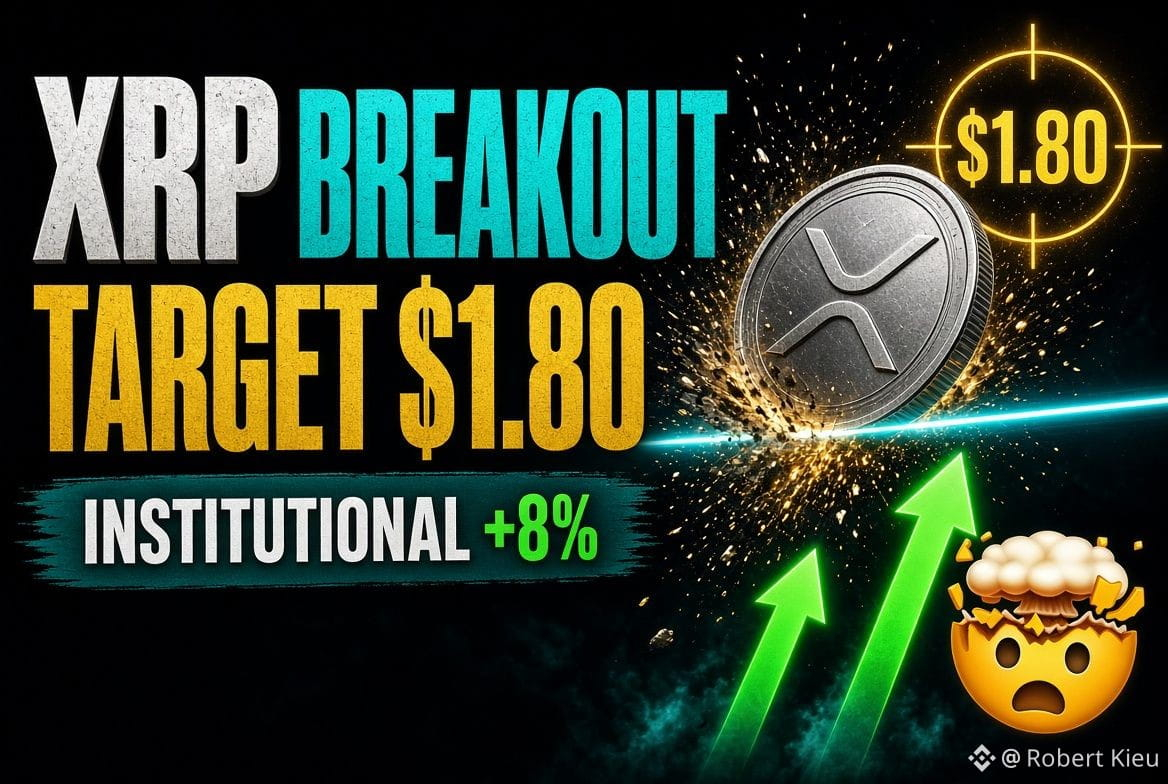
$XRP Breaks Out 🤯 Key Metrics Point to $1.80 as Institutional Buying Spikes 8%
XRP has surged 8% within 24 hours, breaking consolidation to trade at $1.51. Fueled by a 55% spike in 24-hour volume to $4.7 billion, the asset is heavily outperforming major altcoins as institutional capital rotates in.
🔎 Key Metrics & Data Catalysts
- Whale Inflows: Large holders accumulated 1.54 billion $XRP (~$2.2B) in just 96 hours, signaling massive confidence.
- The Catalyst: Ripple's Batch V1.1 ledger upgrade has support from 30 of 35 validators. Activating September 29, it allows up to 8 institutional transactions to settle together.
- Short Squeeze: As Bitcoin breached $84,000, over $260 million in short positions were wiped out, accelerating XRP's velocity.
📊 Technical Outlook & Targets
$XRP staged a clean breakout from its descending flag. With $1.42-$1.43 resistance flipped to support, the route toward $1.80 is wide open. The 14-day RSI at 54 shows the rally is well-backed by real spot buyers.
Institutional products are capturing this momentum, pushing XRP ETF AUM to $1.57 billion. With multiple fundamental upgrades locking in before October, those waiting on the sidelines risk watching the next leg of this bull run from afar.
{future}(XRPUSDT)
#xrprises8%
$XRP Breaks Out 🤯 Key Metrics Point to $1.80 as Institutional Buying Spikes 8%
XRP has surged 8% within 24 hours, breaking consolidation to trade at $1.51. Fueled by a 55% spike in 24-hour volume to $4.7 billion, the asset is heavily outperforming major altcoins as institutional capital rotates in.
🔎 Key Metrics & Data Catalysts
- Whale Inflows: Large holders accumulated 1.54 billion $XRP (~$2.2B) in just 96 hours, signaling massive confidence.
- The Catalyst: Ripple's Batch V1.1 ledger upgrade has support from 30 of 35 validators. Activating September 29, it allows up to 8 institutional transactions to settle together.
- Short Squeeze: As Bitcoin breached $84,000, over $260 million in short positions were wiped out, accelerating XRP's velocity.
📊 Technical Outlook & Targets
$XRP staged a clean breakout from its descending flag. With $1.42-$1.43 resistance flipped to support, the route toward $1.80 is wide open. The 14-day RSI at 54 shows the rally is well-backed by real spot buyers.
Institutional products are capturing this momentum, pushing XRP ETF AUM to $1.57 billion. With multiple fundamental upgrades locking in before October, those waiting on the sidelines risk watching the next leg of this bull run from afar.
#xrprises8%
XRP has surged 8% within 24 hours, breaking consolidation to trade at $1.51. Fueled by a 55% spike in 24-hour volume to $4.7 billion, the asset is heavily outperforming major altcoins as institutional capital rotates in.
🔎 Key Metrics & Data Catalysts
- Whale Inflows: Large holders accumulated 1.54 billion $XRP (~$2.2B) in just 96 hours, signaling massive confidence.
- The Catalyst: Ripple's Batch V1.1 ledger upgrade has support from 30 of 35 validators. Activating September 29, it allows up to 8 institutional transactions to settle together.
- Short Squeeze: As Bitcoin breached $84,000, over $260 million in short positions were wiped out, accelerating XRP's velocity.
📊 Technical Outlook & Targets
$XRP staged a clean breakout from its descending flag. With $1.42-$1.43 resistance flipped to support, the route toward $1.80 is wide open. The 14-day RSI at 54 shows the rally is well-backed by real spot buyers.
Institutional products are capturing this momentum, pushing XRP ETF AUM to $1.57 billion. With multiple fundamental upgrades locking in before October, those waiting on the sidelines risk watching the next leg of this bull run from afar.
#xrprises8%
1
15
13.9k
·
--
Bullish
Verified
$XRP Breakthrough 🤯 New MPP Integration Could Spark a Massive Supply Squeeze Now
XRP jumped over 3%, outperforming the broader crypto market following RippleX’s release of the XRPL AI Starter Kit 1.1. This major upgrade integrates the Machine Payments Protocol (MPP), a game-changing open payment standard co-authored by global fintech giants Stripe and Tempo.
This integration transforms the XRP Ledger (XRPL) into the primary settlement layer for autonomous AI agents. AI software can now instantly request, quote, and settle high-frequency micro-payments using $XRP and the upcoming RLUSD stablecoin.
This utility shift triggered an immediate wave of on-chain activity:
- Transaction Volume: Spiked 23.9%, surging past 2.1 million transactions.
- Payment Actions: Climbed 31.5% to roughly 708,100 transactions.
- Token Burn Rate: Accelerating rapidly due to high-frequency machine micro-transactions.
$XRP has sharply rebounded from its post-Fed low of $1.27 to test the critical $1.36 liquidity zone. When XRP consolidates tightly near these key structural baselines, it historically builds explosive upward energy, much like the accumulation phase that sent it flying to $1.62.
With on-chain transaction volume drying up available spot supply, the window to capture these foundational entry points is closing fast before machine-to-machine utility fully scales.
{future}(XRPUSDT)
#xrpgains3%asrippleaddsmppsupport
$XRP Breakthrough 🤯 New MPP Integration Could Spark a Massive Supply Squeeze Now
XRP jumped over 3%, outperforming the broader crypto market following RippleX’s release of the XRPL AI Starter Kit 1.1. This major upgrade integrates the Machine Payments Protocol (MPP), a game-changing open payment standard co-authored by global fintech giants Stripe and Tempo.
This integration transforms the XRP Ledger (XRPL) into the primary settlement layer for autonomous AI agents. AI software can now instantly request, quote, and settle high-frequency micro-payments using $XRP and the upcoming RLUSD stablecoin.
This utility shift triggered an immediate wave of on-chain activity:
- Transaction Volume: Spiked 23.9%, surging past 2.1 million transactions.
- Payment Actions: Climbed 31.5% to roughly 708,100 transactions.
- Token Burn Rate: Accelerating rapidly due to high-frequency machine micro-transactions.
$XRP has sharply rebounded from its post-Fed low of $1.27 to test the critical $1.36 liquidity zone. When XRP consolidates tightly near these key structural baselines, it historically builds explosive upward energy, much like the accumulation phase that sent it flying to $1.62.
With on-chain transaction volume drying up available spot supply, the window to capture these foundational entry points is closing fast before machine-to-machine utility fully scales.
#xrpgains3%asrippleaddsmppsupport
XRP jumped over 3%, outperforming the broader crypto market following RippleX’s release of the XRPL AI Starter Kit 1.1. This major upgrade integrates the Machine Payments Protocol (MPP), a game-changing open payment standard co-authored by global fintech giants Stripe and Tempo.
This integration transforms the XRP Ledger (XRPL) into the primary settlement layer for autonomous AI agents. AI software can now instantly request, quote, and settle high-frequency micro-payments using $XRP and the upcoming RLUSD stablecoin.
This utility shift triggered an immediate wave of on-chain activity:
- Transaction Volume: Spiked 23.9%, surging past 2.1 million transactions.
- Payment Actions: Climbed 31.5% to roughly 708,100 transactions.
- Token Burn Rate: Accelerating rapidly due to high-frequency machine micro-transactions.
$XRP has sharply rebounded from its post-Fed low of $1.27 to test the critical $1.36 liquidity zone. When XRP consolidates tightly near these key structural baselines, it historically builds explosive upward energy, much like the accumulation phase that sent it flying to $1.62.
With on-chain transaction volume drying up available spot supply, the window to capture these foundational entry points is closing fast before machine-to-machine utility fully scales.
#xrpgains3%asrippleaddsmppsupport

4
1
15
10.7k
·
--
Bullish
Fed Rules the 4.1% Rate Path 🤯 Smart Money Is Quietly Cornering BTC, ETH, SOL, and BNB Already!
The Federal Reserve delivered a unanimous 25-basis-point interest rate hike to a 3.75%-4.00% target range. Crucially, the September 2026 Summary of Economic Projections (SEP) raised the year-end median interest rate projection to 4.1%, signaling one more rate hike in 2026.
Traditional stock markets pulled back following Chairman Kevin Warsh's hawkish remarks, but crypto markets are looking at a clear macro roadmap. Institutional liquidity has adjusted to this "higher-for-longer" baseline, meaning the macro uncertainty that suppressed prices is priced in. When macro clarity returns, a liquidity rotation into risk assets historically follows.
Capital is subtly positioning across major assets:
- Bitcoin ( BTC ): Remains the ultimate hedge against a sticky 3.7% PCE inflation projection.
- Ethereum ( ETH ): Deflationary mechanics are prime for a squeeze as network activity stabilizes.
- Solana ( SOL ): High-beta market dominance places it at the forefront of the retail volume rebound.
- BNB ( BNB ): Consistent ecosystem burns provide strong tokenomics under any macro environment.
With 16 of 18 policymakers projecting 2026 rates to cluster between 4.00% and 4.25%, the tightening cycle peak is finally visible. Digital asset allocators know that waiting for actual rate cuts means missing the explosive early accumulation phase. The window to capture these cyclical baselines is narrowing before the broader market reacts to the 2027 outlook.
{future}(BNBUSDT)
{future}(ETHUSDT)
{future}(SOLUSDT)
#fedsepprojects2026rateat4.1%
Fed Rules the 4.1% Rate Path 🤯 Smart Money Is Quietly Cornering BTC, ETH, SOL, and BNB Already!
The Federal Reserve delivered a unanimous 25-basis-point interest rate hike to a 3.75%-4.00% target range. Crucially, the September 2026 Summary of Economic Projections (SEP) raised the year-end median interest rate projection to 4.1%, signaling one more rate hike in 2026.
Traditional stock markets pulled back following Chairman Kevin Warsh's hawkish remarks, but crypto markets are looking at a clear macro roadmap. Institutional liquidity has adjusted to this "higher-for-longer" baseline, meaning the macro uncertainty that suppressed prices is priced in. When macro clarity returns, a liquidity rotation into risk assets historically follows.
Capital is subtly positioning across major assets:
- Bitcoin ( BTC ): Remains the ultimate hedge against a sticky 3.7% PCE inflation projection.
- Ethereum ( ETH ): Deflationary mechanics are prime for a squeeze as network activity stabilizes.
- Solana ( SOL ): High-beta market dominance places it at the forefront of the retail volume rebound.
- BNB ( BNB ): Consistent ecosystem burns provide strong tokenomics under any macro environment.
With 16 of 18 policymakers projecting 2026 rates to cluster between 4.00% and 4.25%, the tightening cycle peak is finally visible. Digital asset allocators know that waiting for actual rate cuts means missing the explosive early accumulation phase. The window to capture these cyclical baselines is narrowing before the broader market reacts to the 2027 outlook.
#fedsepprojects2026rateat4.1%
The Federal Reserve delivered a unanimous 25-basis-point interest rate hike to a 3.75%-4.00% target range. Crucially, the September 2026 Summary of Economic Projections (SEP) raised the year-end median interest rate projection to 4.1%, signaling one more rate hike in 2026.
Traditional stock markets pulled back following Chairman Kevin Warsh's hawkish remarks, but crypto markets are looking at a clear macro roadmap. Institutional liquidity has adjusted to this "higher-for-longer" baseline, meaning the macro uncertainty that suppressed prices is priced in. When macro clarity returns, a liquidity rotation into risk assets historically follows.
Capital is subtly positioning across major assets:
- Bitcoin ( BTC ): Remains the ultimate hedge against a sticky 3.7% PCE inflation projection.
- Ethereum ( ETH ): Deflationary mechanics are prime for a squeeze as network activity stabilizes.
- Solana ( SOL ): High-beta market dominance places it at the forefront of the retail volume rebound.
- BNB ( BNB ): Consistent ecosystem burns provide strong tokenomics under any macro environment.
With 16 of 18 policymakers projecting 2026 rates to cluster between 4.00% and 4.25%, the tightening cycle peak is finally visible. Digital asset allocators know that waiting for actual rate cuts means missing the explosive early accumulation phase. The window to capture these cyclical baselines is narrowing before the broader market reacts to the 2027 outlook.
#fedsepprojects2026rateat4.1%

1
2
357
·
--
Bullish
Verified
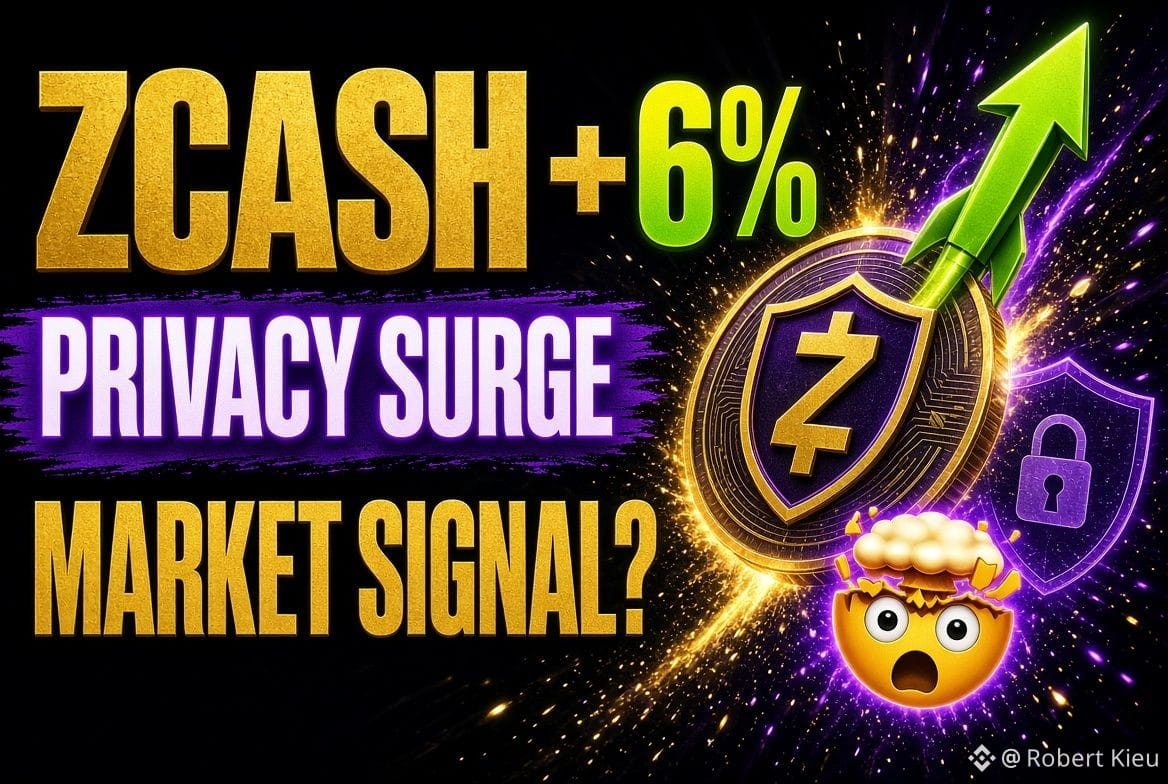
Zcash Rises 6% 🤯 What This Privacy Token Surge Signals for the Market 🚀
$ZEC recently climbed nearly 6% (and over 10% in active sessions), trading around $1,248 USD with a 24-hour volume hitting $1.67 billion. But what does this momentum actually indicate?
Market Signals & On-Chain Metrics:
- Governance Landslide: Over 2.4 million ZEC participated in a recent network vote approving Network Upgrade 7 (NU7), targeting 25-second block times.
- Shielded Supply Lockup: Nearly 4.9 million $ZEC (~28.9% of supply) remain locked in shielded pools, tightening circulating exchange liquidity.
- Decoupling from Broader Slumps: While major assets face macro headwinds, $ZEC shows strong relative strength and active price discovery.
What It Means for Traders:
Supply compression combined with institutional interest suggests smart money is positioning early. When a privacy asset bucks the wider trend with surging volume, historical patterns hint that consolidation phases rarely last long. Missing the structural shift now might mean chasing higher breakout levels later.
{spot}(ZECUSDT)
{future}(ZECUSDT)
#zcashrises6%
Zcash Rises 6% 🤯 What This Privacy Token Surge Signals for the Market 🚀
$ZEC recently climbed nearly 6% (and over 10% in active sessions), trading around $1,248 USD with a 24-hour volume hitting $1.67 billion. But what does this momentum actually indicate?
Market Signals & On-Chain Metrics:
- Governance Landslide: Over 2.4 million ZEC participated in a recent network vote approving Network Upgrade 7 (NU7), targeting 25-second block times.
- Shielded Supply Lockup: Nearly 4.9 million $ZEC (~28.9% of supply) remain locked in shielded pools, tightening circulating exchange liquidity.
- Decoupling from Broader Slumps: While major assets face macro headwinds, $ZEC shows strong relative strength and active price discovery.
What It Means for Traders:
Supply compression combined with institutional interest suggests smart money is positioning early. When a privacy asset bucks the wider trend with surging volume, historical patterns hint that consolidation phases rarely last long. Missing the structural shift now might mean chasing higher breakout levels later.
#zcashrises6%
$ZEC recently climbed nearly 6% (and over 10% in active sessions), trading around $1,248 USD with a 24-hour volume hitting $1.67 billion. But what does this momentum actually indicate?
Market Signals & On-Chain Metrics:
- Governance Landslide: Over 2.4 million ZEC participated in a recent network vote approving Network Upgrade 7 (NU7), targeting 25-second block times.
- Shielded Supply Lockup: Nearly 4.9 million $ZEC (~28.9% of supply) remain locked in shielded pools, tightening circulating exchange liquidity.
- Decoupling from Broader Slumps: While major assets face macro headwinds, $ZEC shows strong relative strength and active price discovery.
What It Means for Traders:
Supply compression combined with institutional interest suggests smart money is positioning early. When a privacy asset bucks the wider trend with surging volume, historical patterns hint that consolidation phases rarely last long. Missing the structural shift now might mean chasing higher breakout levels later.
#zcashrises6%
1
1.2k
·
--
Bullish
Verified
September 2026 FOMC 🤯 Crypto Strategy for BTC, ETH, and Altcoins
The Federal Reserve concludes its September 15-16 policy meeting today, with CPI inflation lingering around 3.4% and markets bracing for a pivotal rate decision. Extreme volatility is loading across global markets.
Asset Game Plan Before the Bell:
$BTC (Bitcoin): Holding firm near major defense lines. Pre-decision accumulation here often rewards patient bulls before a sharp directional squeeze.
$ETH (Ethereum): Demonstrating solid relative strength and range stability, primed to capture incoming secondary liquidity.
Altcoins (SOL, BNB, XRP, HYPE,...): High-beta coiled springs. Once the macro fog clears, suppressed altcoins risk an aggressive, sudden repricing upward.
The Play: Review your risk limits and lock in your target entries before the official statement hits. The biggest market turns favor those positioned ahead of the crowd!
{future}(BNBUSDT)
{future}(ETHUSDT)
{future}(BTCUSDT)
#fedratewatch
September 2026 FOMC 🤯 Crypto Strategy for BTC, ETH, and Altcoins
The Federal Reserve concludes its September 15-16 policy meeting today, with CPI inflation lingering around 3.4% and markets bracing for a pivotal rate decision. Extreme volatility is loading across global markets.
Asset Game Plan Before the Bell:
$BTC (Bitcoin): Holding firm near major defense lines. Pre-decision accumulation here often rewards patient bulls before a sharp directional squeeze.
$ETH (Ethereum): Demonstrating solid relative strength and range stability, primed to capture incoming secondary liquidity.
Altcoins (SOL, BNB, XRP, HYPE,...): High-beta coiled springs. Once the macro fog clears, suppressed altcoins risk an aggressive, sudden repricing upward.
The Play: Review your risk limits and lock in your target entries before the official statement hits. The biggest market turns favor those positioned ahead of the crowd!
#fedratewatch
The Federal Reserve concludes its September 15-16 policy meeting today, with CPI inflation lingering around 3.4% and markets bracing for a pivotal rate decision. Extreme volatility is loading across global markets.
Asset Game Plan Before the Bell:
$BTC (Bitcoin): Holding firm near major defense lines. Pre-decision accumulation here often rewards patient bulls before a sharp directional squeeze.
$ETH (Ethereum): Demonstrating solid relative strength and range stability, primed to capture incoming secondary liquidity.
Altcoins (SOL, BNB, XRP, HYPE,...): High-beta coiled springs. Once the macro fog clears, suppressed altcoins risk an aggressive, sudden repricing upward.
The Play: Review your risk limits and lock in your target entries before the official statement hits. The biggest market turns favor those positioned ahead of the crowd!
#fedratewatch
1
699
·
--
Bullish
The AI Slowdown Shockwave 🚀 Why Big Tech’s Pause is Crypto’s Parabolic Ignition
A massive structural shift just rocked the tech sector. Anthropic CEO Dario Amodei recently called for a coordinated global slowdown in frontier AI development, warning of imminent cyber and autonomous system risks within 6 to 12 months. OpenAI CEO Sam Altman and xAI's Elon Musk immediately backed this sentiment, signaling a historic regulatory pivot across Silicon Valley.
While mainstream tech braces for friction, the crypto market sees a colossal capital rotation. While centralized giants throttle their engines, decentralized, open-source Web3 protocols remain completely unstoppable. This friction in traditional AI is the exact catalyst accelerating a massive migration into trustless AI infrastructure.
➡️ The Strategic Impact Breakdown:
- Ethereum ($ETH ): Reclaimed the critical $2,500 zone with a $296 billion market cap and sustained spot ETF inflows. As corporate cloud networks slow down to build internal guardrails, Ethereum stands as the ultimate, un-censorable settlement layer for the global agentic economy.
- Decentralized AI Tokens: Centralized halts cannot touch decentralized compute. Bittensor ($TAO ) holds a strong $2.21 billion market cap after proving its subnet infrastructure can train massive open-source LLMs. Meanwhile, the Artificial Superintelligence Alliance ($FET ) commands a $2.1 billion valuation as its unified ASI Chain migration accelerates.
The institutional smart money is quietly front-running this bottleneck. When centralized AI pauses, decentralized infrastructure scales. The window to capture this fundamental value rotation before the market fully prices it in is narrowing fast.
{spot}(FETUSDT)
{spot}(TAOUSDT)
{spot}(ETHUSDT)
#anthropicceocallsforaislowdown
The AI Slowdown Shockwave 🚀 Why Big Tech’s Pause is Crypto’s Parabolic Ignition
A massive structural shift just rocked the tech sector. Anthropic CEO Dario Amodei recently called for a coordinated global slowdown in frontier AI development, warning of imminent cyber and autonomous system risks within 6 to 12 months. OpenAI CEO Sam Altman and xAI's Elon Musk immediately backed this sentiment, signaling a historic regulatory pivot across Silicon Valley.
While mainstream tech braces for friction, the crypto market sees a colossal capital rotation. While centralized giants throttle their engines, decentralized, open-source Web3 protocols remain completely unstoppable. This friction in traditional AI is the exact catalyst accelerating a massive migration into trustless AI infrastructure.
➡️ The Strategic Impact Breakdown:
- Ethereum ($ETH ): Reclaimed the critical $2,500 zone with a $296 billion market cap and sustained spot ETF inflows. As corporate cloud networks slow down to build internal guardrails, Ethereum stands as the ultimate, un-censorable settlement layer for the global agentic economy.
- Decentralized AI Tokens: Centralized halts cannot touch decentralized compute. Bittensor ($TAO ) holds a strong $2.21 billion market cap after proving its subnet infrastructure can train massive open-source LLMs. Meanwhile, the Artificial Superintelligence Alliance ($FET ) commands a $2.1 billion valuation as its unified ASI Chain migration accelerates.
The institutional smart money is quietly front-running this bottleneck. When centralized AI pauses, decentralized infrastructure scales. The window to capture this fundamental value rotation before the market fully prices it in is narrowing fast.
#anthropicceocallsforaislowdown
A massive structural shift just rocked the tech sector. Anthropic CEO Dario Amodei recently called for a coordinated global slowdown in frontier AI development, warning of imminent cyber and autonomous system risks within 6 to 12 months. OpenAI CEO Sam Altman and xAI's Elon Musk immediately backed this sentiment, signaling a historic regulatory pivot across Silicon Valley.
While mainstream tech braces for friction, the crypto market sees a colossal capital rotation. While centralized giants throttle their engines, decentralized, open-source Web3 protocols remain completely unstoppable. This friction in traditional AI is the exact catalyst accelerating a massive migration into trustless AI infrastructure.
➡️ The Strategic Impact Breakdown:
- Ethereum ($ETH ): Reclaimed the critical $2,500 zone with a $296 billion market cap and sustained spot ETF inflows. As corporate cloud networks slow down to build internal guardrails, Ethereum stands as the ultimate, un-censorable settlement layer for the global agentic economy.
- Decentralized AI Tokens: Centralized halts cannot touch decentralized compute. Bittensor ($TAO ) holds a strong $2.21 billion market cap after proving its subnet infrastructure can train massive open-source LLMs. Meanwhile, the Artificial Superintelligence Alliance ($FET ) commands a $2.1 billion valuation as its unified ASI Chain migration accelerates.
The institutional smart money is quietly front-running this bottleneck. When centralized AI pauses, decentralized infrastructure scales. The window to capture this fundamental value rotation before the market fully prices it in is narrowing fast.
#anthropicceocallsforaislowdown

3
2.4k
·
--
Bullish
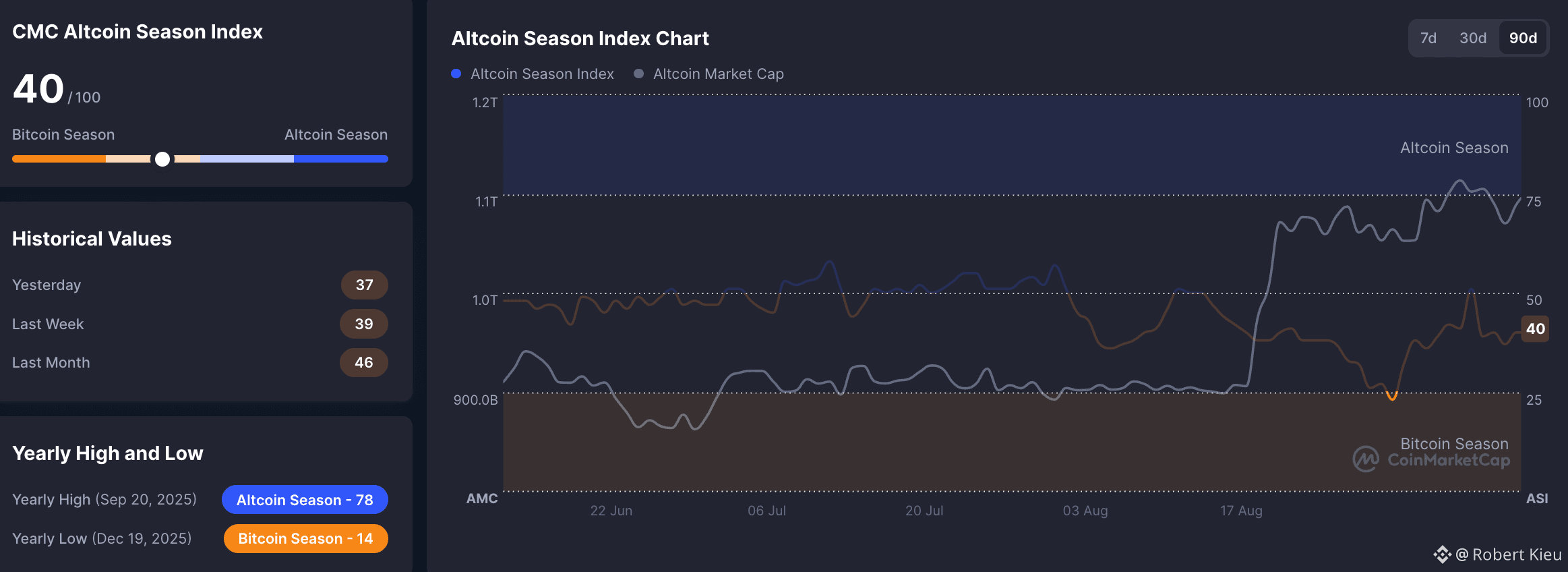
Ethereum Rallies on Short Liquidations 🤯 Is Altcoin Season Next?
Ethereum recently sparked an Ether Rally as over $300 million in short positions were wiped out. But does this mean a full Altcoin Season is finally here?
Market Data Snapshot (September 2026):
- $ETH Short Liquidations: >$300M in 24 hours.
- Bitcoin Dominance: ~60.15% (holding firm).
- Altcoin Season Index: 34–39 (below the 75 threshold).
While $ETH benefits from liquidations and institutional inflows, broad altseason data via the Altcoin Season Index shows capital remains selective. Only top assets capture major liquidity.
Is a quiet accumulation phase setting up for a wider surge?
Catching early sector rotations can position portfolios ahead of the crowd before momentum accelerates. Keep watching those key resistance levels!
#etherralliesasbearishbetsliquidate
Ethereum Rallies on Short Liquidations 🤯 Is Altcoin Season Next?
Ethereum recently sparked an Ether Rally as over $300 million in short positions were wiped out. But does this mean a full Altcoin Season is finally here?
Market Data Snapshot (September 2026):
- $ETH Short Liquidations: >$300M in 24 hours.
- Bitcoin Dominance: ~60.15% (holding firm).
- Altcoin Season Index: 34–39 (below the 75 threshold).
While $ETH benefits from liquidations and institutional inflows, broad altseason data via the Altcoin Season Index shows capital remains selective. Only top assets capture major liquidity.
Is a quiet accumulation phase setting up for a wider surge?
Catching early sector rotations can position portfolios ahead of the crowd before momentum accelerates. Keep watching those key resistance levels!
#etherralliesasbearishbetsliquidate
Ethereum recently sparked an Ether Rally as over $300 million in short positions were wiped out. But does this mean a full Altcoin Season is finally here?
Market Data Snapshot (September 2026):
- $ETH Short Liquidations: >$300M in 24 hours.
- Bitcoin Dominance: ~60.15% (holding firm).
- Altcoin Season Index: 34–39 (below the 75 threshold).
While $ETH benefits from liquidations and institutional inflows, broad altseason data via the Altcoin Season Index shows capital remains selective. Only top assets capture major liquidity.
Is a quiet accumulation phase setting up for a wider surge?
Catching early sector rotations can position portfolios ahead of the crowd before momentum accelerates. Keep watching those key resistance levels!
#etherralliesasbearishbetsliquidate
3
7
11.1k
·
--
Bullish
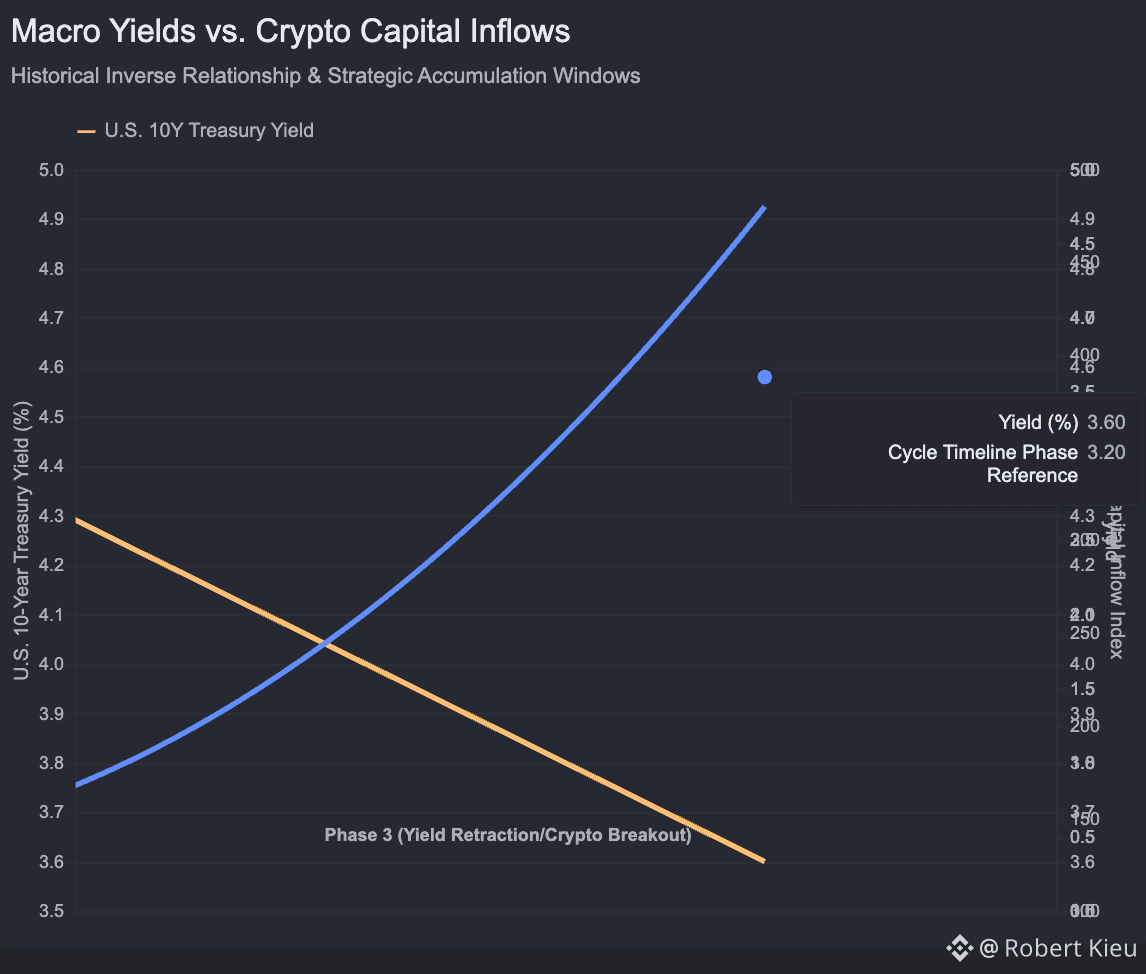
US 10Y Treasury Yield Hits 4.85%: The Hidden Catalyst for $ETH and Altcoins 😍
The U.S. 10-year Treasury Yield recently surged to 4.85%, touching its highest level since November 2023. This spike driven by inflation concerns and fiscal pressures creates a crucial crossroads for digital assets.
Macroeconomic Impact on Crypto:
- Risk-Off Sentiment: A risk-free 4.85% return pulls institutional capital toward traditional bonds, squeezing liquidity in risk-on sectors.
- $ETH Under Pressure: Ethereum faces short-term headwinds as higher yields elevate opportunity costs, subduing aggressive capital inflows.
- Altcoin Volatility: High beta altcoins experience deeper liquidity contractions, separating weak projects from resilient networks.
Historically, the highest risk-off sentiment marks the absolute lowest point of financial risk for structural builders. Patient capital does not buy the green candles of tomorrow; it accumulates inside the red pressure cooker of today.
#us10ytreasuryyieldhitshighestsincenov2023
{future}(BNBUSDT)
{future}(SOLUSDT)
{future}(ETHUSDT)
US 10Y Treasury Yield Hits 4.85%: The Hidden Catalyst for $ETH and Altcoins 😍
The U.S. 10-year Treasury Yield recently surged to 4.85%, touching its highest level since November 2023. This spike driven by inflation concerns and fiscal pressures creates a crucial crossroads for digital assets.
Macroeconomic Impact on Crypto:
- Risk-Off Sentiment: A risk-free 4.85% return pulls institutional capital toward traditional bonds, squeezing liquidity in risk-on sectors.
- $ETH Under Pressure: Ethereum faces short-term headwinds as higher yields elevate opportunity costs, subduing aggressive capital inflows.
- Altcoin Volatility: High beta altcoins experience deeper liquidity contractions, separating weak projects from resilient networks.
Historically, the highest risk-off sentiment marks the absolute lowest point of financial risk for structural builders. Patient capital does not buy the green candles of tomorrow; it accumulates inside the red pressure cooker of today.
#us10ytreasuryyieldhitshighestsincenov2023
The U.S. 10-year Treasury Yield recently surged to 4.85%, touching its highest level since November 2023. This spike driven by inflation concerns and fiscal pressures creates a crucial crossroads for digital assets.
Macroeconomic Impact on Crypto:
- Risk-Off Sentiment: A risk-free 4.85% return pulls institutional capital toward traditional bonds, squeezing liquidity in risk-on sectors.
- $ETH Under Pressure: Ethereum faces short-term headwinds as higher yields elevate opportunity costs, subduing aggressive capital inflows.
- Altcoin Volatility: High beta altcoins experience deeper liquidity contractions, separating weak projects from resilient networks.
Historically, the highest risk-off sentiment marks the absolute lowest point of financial risk for structural builders. Patient capital does not buy the green candles of tomorrow; it accumulates inside the red pressure cooker of today.
#us10ytreasuryyieldhitshighestsincenov2023
4
889
·
--
Bullish
AERO Token Explodes 17% in 24 Hours: Is a DeFi Breakout Imminent?
Aerodrome Finance $AERO has emerged as a top daily gainer, surging 17.05% to a local high of $0.635. Driven by a massive 303% spike in 24-hour trading volume reaching $161 million, market liquidity is rapidly shifting toward the primary decentralized exchange (DEX) hub of the Base ecosystem.
Key Metrics Driving the Surge:
- Price Growth: +17.05% to $0.635 within the last day.
- Volume Explosion: Skyrocketed over 300% to $161M.
- Technical Breakout: Cleared a multi-week resistance ceiling at $0.60.
Why Aerodrome Finance is Rallying:
The network effect on Coinbase's Layer-2 Base network is accelerating. $AERO is absorbing immense capital inflows as it facilitates liquidity routing for newly tokenized real-world assets (RWAs) and highly anticipated ecosystem token launches.
Technically, $AERO ’s exponential moving averages (EMAs) have stacked into a strong bullish structure on the daily chart. If buyers successfully defend the fresh $0.60 support flip, a clean macro pathway opens toward the next psychological target at $0.70.
Macro Momentum is Shifting:
Moments where utility assets break out against a flat broader market often serve as early signals for where smart money is positioning next. With liquidity concentrating heavily on Base protocols, sitting on the sidelines risks missing the foundational accumulation phase of this ecosystem cycle.
{future}(AEROUSDT)
#aerosurges17%in24hours
AERO Token Explodes 17% in 24 Hours: Is a DeFi Breakout Imminent?
Aerodrome Finance $AERO has emerged as a top daily gainer, surging 17.05% to a local high of $0.635. Driven by a massive 303% spike in 24-hour trading volume reaching $161 million, market liquidity is rapidly shifting toward the primary decentralized exchange (DEX) hub of the Base ecosystem.
Key Metrics Driving the Surge:
- Price Growth: +17.05% to $0.635 within the last day.
- Volume Explosion: Skyrocketed over 300% to $161M.
- Technical Breakout: Cleared a multi-week resistance ceiling at $0.60.
Why Aerodrome Finance is Rallying:
The network effect on Coinbase's Layer-2 Base network is accelerating. $AERO is absorbing immense capital inflows as it facilitates liquidity routing for newly tokenized real-world assets (RWAs) and highly anticipated ecosystem token launches.
Technically, $AERO ’s exponential moving averages (EMAs) have stacked into a strong bullish structure on the daily chart. If buyers successfully defend the fresh $0.60 support flip, a clean macro pathway opens toward the next psychological target at $0.70.
Macro Momentum is Shifting:
Moments where utility assets break out against a flat broader market often serve as early signals for where smart money is positioning next. With liquidity concentrating heavily on Base protocols, sitting on the sidelines risks missing the foundational accumulation phase of this ecosystem cycle.
#aerosurges17%in24hours
Aerodrome Finance $AERO has emerged as a top daily gainer, surging 17.05% to a local high of $0.635. Driven by a massive 303% spike in 24-hour trading volume reaching $161 million, market liquidity is rapidly shifting toward the primary decentralized exchange (DEX) hub of the Base ecosystem.
Key Metrics Driving the Surge:
- Price Growth: +17.05% to $0.635 within the last day.
- Volume Explosion: Skyrocketed over 300% to $161M.
- Technical Breakout: Cleared a multi-week resistance ceiling at $0.60.
Why Aerodrome Finance is Rallying:
The network effect on Coinbase's Layer-2 Base network is accelerating. $AERO is absorbing immense capital inflows as it facilitates liquidity routing for newly tokenized real-world assets (RWAs) and highly anticipated ecosystem token launches.
Technically, $AERO ’s exponential moving averages (EMAs) have stacked into a strong bullish structure on the daily chart. If buyers successfully defend the fresh $0.60 support flip, a clean macro pathway opens toward the next psychological target at $0.70.
Macro Momentum is Shifting:
Moments where utility assets break out against a flat broader market often serve as early signals for where smart money is positioning next. With liquidity concentrating heavily on Base protocols, sitting on the sidelines risks missing the foundational accumulation phase of this ecosystem cycle.
#aerosurges17%in24hours
1
350
·
--
Bullish
El Salvador’s Bitcoin Strategy: Zero Public Funds, Massive Sovereign Upside 🚀🤯
Recent verifications from the International Monetary Fund confirm that El Salvador’s ongoing $BTC accumulation utilizes zero public funds, with all recent growth driven entirely by private donations.
This landmark clarity unlocks a $140 million disbursement under the $1.4 billion Extended Fund Facility, proving that sovereign crypto integration can coexist with global macro compliance without draining national treasuries.
Market Implications & Outlook:
$BTC
With the state stepping back from direct public purchases and shifting Chivo wallet operations to private hands, El Salvador has effectively institutionalized a risk-free balance sheet model.
As sovereign adoption turns into a zero-cost accumulation game while national GDP scales toward a projected 4.5%, early non-dilutive positioning looks increasingly like a masterclass in modern asset strategy. Missing out on how nation-states quietly secure digital scarcity might just be the biggest oversight of this cycle.
#imfsayselsalvadorbtcnopublicfunds
{future}(BTCUSDT)
El Salvador’s Bitcoin Strategy: Zero Public Funds, Massive Sovereign Upside 🚀🤯
Recent verifications from the International Monetary Fund confirm that El Salvador’s ongoing $BTC accumulation utilizes zero public funds, with all recent growth driven entirely by private donations.
This landmark clarity unlocks a $140 million disbursement under the $1.4 billion Extended Fund Facility, proving that sovereign crypto integration can coexist with global macro compliance without draining national treasuries.
Market Implications & Outlook:
$BTC
With the state stepping back from direct public purchases and shifting Chivo wallet operations to private hands, El Salvador has effectively institutionalized a risk-free balance sheet model.
As sovereign adoption turns into a zero-cost accumulation game while national GDP scales toward a projected 4.5%, early non-dilutive positioning looks increasingly like a masterclass in modern asset strategy. Missing out on how nation-states quietly secure digital scarcity might just be the biggest oversight of this cycle.
#imfsayselsalvadorbtcnopublicfunds
Recent verifications from the International Monetary Fund confirm that El Salvador’s ongoing $BTC accumulation utilizes zero public funds, with all recent growth driven entirely by private donations.
This landmark clarity unlocks a $140 million disbursement under the $1.4 billion Extended Fund Facility, proving that sovereign crypto integration can coexist with global macro compliance without draining national treasuries.
Market Implications & Outlook:
$BTC
With the state stepping back from direct public purchases and shifting Chivo wallet operations to private hands, El Salvador has effectively institutionalized a risk-free balance sheet model.
As sovereign adoption turns into a zero-cost accumulation game while national GDP scales toward a projected 4.5%, early non-dilutive positioning looks increasingly like a masterclass in modern asset strategy. Missing out on how nation-states quietly secure digital scarcity might just be the biggest oversight of this cycle.
#imfsayselsalvadorbtcnopublicfunds

1
123
·
--
Bullish
$BTC and $ETH have established strong multi-month highs. Driven by corporate treasury changes and macro interest rate policy shifts, both assets break local resistances.
🔎 Key Catalyst Analysis:
- Fed Pivot Sentiment: Fed Governor Christopher Waller signaled potential interest rate pauses. This dropped the 10-year Treasury yield toward 4.76%, sparking capital rotation into risk-on crypto assets.
- Institutional Demand Overhaul: Over $400 million in short liquidations forced explosive local market corrections. Concurrently, spot BTC ETFs registered strong net daily inflows of $101 million.
- Corporate Strategies: Strategic realignments (like Remixpoint liquidating altcoins exclusively into BTC) have reinforced Bitcoin's dominance at 59.3%.
💻 Technical Outlook & Room for Growth:
📈 BTC Target Range: $82,000 - $83,000 (Immediate Resistance)
📉 BTC Support Level: $80,000 (Psychological Floor)
- Bitcoin ($79,846): $BTC holds firmly above its 20, 50, and 200 daily EMAs. Transitioning the psychological $80,000 level from prior resistance into definitive support is vital. A clean breakout past $82,000 targets mid-term objectives toward $85,000.
- Ethereum ($2,506): Reclaiming $2,500 represents solid short-term stabilization. Despite minor local ETF outflows, resolving the $2,528-$2,555 pocket will clear pathing toward heavy $2,800 cluster resistance.
#bitcoinethereumhitmultimonthhighs
{future}(ETHUSDT)
{future}(BTCUSDT)
$BTC and $ETH have established strong multi-month highs. Driven by corporate treasury changes and macro interest rate policy shifts, both assets break local resistances.
🔎 Key Catalyst Analysis:
- Fed Pivot Sentiment: Fed Governor Christopher Waller signaled potential interest rate pauses. This dropped the 10-year Treasury yield toward 4.76%, sparking capital rotation into risk-on crypto assets.
- Institutional Demand Overhaul: Over $400 million in short liquidations forced explosive local market corrections. Concurrently, spot BTC ETFs registered strong net daily inflows of $101 million.
- Corporate Strategies: Strategic realignments (like Remixpoint liquidating altcoins exclusively into BTC) have reinforced Bitcoin's dominance at 59.3%.
💻 Technical Outlook & Room for Growth:
📈 BTC Target Range: $82,000 - $83,000 (Immediate Resistance)
📉 BTC Support Level: $80,000 (Psychological Floor)
- Bitcoin ($79,846): $BTC holds firmly above its 20, 50, and 200 daily EMAs. Transitioning the psychological $80,000 level from prior resistance into definitive support is vital. A clean breakout past $82,000 targets mid-term objectives toward $85,000.
- Ethereum ($2,506): Reclaiming $2,500 represents solid short-term stabilization. Despite minor local ETF outflows, resolving the $2,528-$2,555 pocket will clear pathing toward heavy $2,800 cluster resistance.
#bitcoinethereumhitmultimonthhighs
🔎 Key Catalyst Analysis:
- Fed Pivot Sentiment: Fed Governor Christopher Waller signaled potential interest rate pauses. This dropped the 10-year Treasury yield toward 4.76%, sparking capital rotation into risk-on crypto assets.
- Institutional Demand Overhaul: Over $400 million in short liquidations forced explosive local market corrections. Concurrently, spot BTC ETFs registered strong net daily inflows of $101 million.
- Corporate Strategies: Strategic realignments (like Remixpoint liquidating altcoins exclusively into BTC) have reinforced Bitcoin's dominance at 59.3%.
💻 Technical Outlook & Room for Growth:
📈 BTC Target Range: $82,000 - $83,000 (Immediate Resistance)
📉 BTC Support Level: $80,000 (Psychological Floor)
- Bitcoin ($79,846): $BTC holds firmly above its 20, 50, and 200 daily EMAs. Transitioning the psychological $80,000 level from prior resistance into definitive support is vital. A clean breakout past $82,000 targets mid-term objectives toward $85,000.
- Ethereum ($2,506): Reclaiming $2,500 represents solid short-term stabilization. Despite minor local ETF outflows, resolving the $2,528-$2,555 pocket will clear pathing toward heavy $2,800 cluster resistance.
#bitcoinethereumhitmultimonthhighs

2
837
·
--
Bullish
Bitcoin Defies Slump, Tops $82,000 as Macro Fears Reignite 🤯
$BTC blasted through the critical $82,000 resistance on September 4, 2026, hitting an intraday peak of $82,108. This explosive 5.3% single-day breakout completely erased late August's sluggish consolidation. The rapid surge was catalyzed by intense safe-haven demand amidst growing fears of a U.S. dollar "death spiral," alongside a massive wave of forced short liquidations.
📊 Latest Market Performance & Data:
- Intraday Peak Close: $82,108.00
- 24 -Hour Gain: +5.32% (Trading near $81,222)
- Monthly Momentum: +26.15% over the past 30 days
- Short Position Liquidations: Over $164 Million wiped out in 4 hours.
- Global Crypto Market Cap: Reclaimed $2.72 Trillion.
🔎 Core Triggers Behind the $82K Breakout ($BTC ):
- The "Debasement Trade" Acceleration: Investors are flocking back to hard assets following warnings from prominent macro analysts like Arthur Hayes. Anticipated structural market interventions by Treasury Secretary Scott Bessent are stoking long-term fiat inflation anxieties.
- Shifting Rate Hike Probabilities: According to the CME FedWatch Tool, the market-implied probability of a September interest rate hike dropped to a 50/50 toss-up. This easing of hawkish monetary policy fears immediately drove institutional capital back into volatile risk assets.
- Regulatory Catalysts Looming: Broad political backing for the upcoming CLARITY Act cloture vote on September 15 continues to provide a deeply constructive long-term structural floor for institutional accumulation.
While technical indicators point to short-term overbought conditions near $82,100 ($BTC ), a clean weekly close above this boundary shifts institutional targets outward to the $84,000 to $86,000 zone heading deeper into Q3.
{future}(BTCUSDT)
#BTCTops$80K
Bitcoin Defies Slump, Tops $82,000 as Macro Fears Reignite 🤯
$BTC blasted through the critical $82,000 resistance on September 4, 2026, hitting an intraday peak of $82,108. This explosive 5.3% single-day breakout completely erased late August's sluggish consolidation. The rapid surge was catalyzed by intense safe-haven demand amidst growing fears of a U.S. dollar "death spiral," alongside a massive wave of forced short liquidations.
📊 Latest Market Performance & Data:
- Intraday Peak Close: $82,108.00
- 24 -Hour Gain: +5.32% (Trading near $81,222)
- Monthly Momentum: +26.15% over the past 30 days
- Short Position Liquidations: Over $164 Million wiped out in 4 hours.
- Global Crypto Market Cap: Reclaimed $2.72 Trillion.
🔎 Core Triggers Behind the $82K Breakout ($BTC ):
- The "Debasement Trade" Acceleration: Investors are flocking back to hard assets following warnings from prominent macro analysts like Arthur Hayes. Anticipated structural market interventions by Treasury Secretary Scott Bessent are stoking long-term fiat inflation anxieties.
- Shifting Rate Hike Probabilities: According to the CME FedWatch Tool, the market-implied probability of a September interest rate hike dropped to a 50/50 toss-up. This easing of hawkish monetary policy fears immediately drove institutional capital back into volatile risk assets.
- Regulatory Catalysts Looming: Broad political backing for the upcoming CLARITY Act cloture vote on September 15 continues to provide a deeply constructive long-term structural floor for institutional accumulation.
While technical indicators point to short-term overbought conditions near $82,100 ($BTC ), a clean weekly close above this boundary shifts institutional targets outward to the $84,000 to $86,000 zone heading deeper into Q3.
#BTCTops$80K
$BTC blasted through the critical $82,000 resistance on September 4, 2026, hitting an intraday peak of $82,108. This explosive 5.3% single-day breakout completely erased late August's sluggish consolidation. The rapid surge was catalyzed by intense safe-haven demand amidst growing fears of a U.S. dollar "death spiral," alongside a massive wave of forced short liquidations.
📊 Latest Market Performance & Data:
- Intraday Peak Close: $82,108.00
- 24 -Hour Gain: +5.32% (Trading near $81,222)
- Monthly Momentum: +26.15% over the past 30 days
- Short Position Liquidations: Over $164 Million wiped out in 4 hours.
- Global Crypto Market Cap: Reclaimed $2.72 Trillion.
🔎 Core Triggers Behind the $82K Breakout ($BTC ):
- The "Debasement Trade" Acceleration: Investors are flocking back to hard assets following warnings from prominent macro analysts like Arthur Hayes. Anticipated structural market interventions by Treasury Secretary Scott Bessent are stoking long-term fiat inflation anxieties.
- Shifting Rate Hike Probabilities: According to the CME FedWatch Tool, the market-implied probability of a September interest rate hike dropped to a 50/50 toss-up. This easing of hawkish monetary policy fears immediately drove institutional capital back into volatile risk assets.
- Regulatory Catalysts Looming: Broad political backing for the upcoming CLARITY Act cloture vote on September 15 continues to provide a deeply constructive long-term structural floor for institutional accumulation.
While technical indicators point to short-term overbought conditions near $82,100 ($BTC ), a clean weekly close above this boundary shifts institutional targets outward to the $84,000 to $86,000 zone heading deeper into Q3.
#BTCTops$80K
1
110
·
--
Bullish
Verified
Ethereum and XRP ETF Inflow Streaks Snap 🤯
U.S. spot $ETH and $XRP ETFs abruptly ended their historic multi-day winning streaks, booking a combined $55.2 million in net outflows. This minor institutional retreat concluded 12 consecutive green days for Ether and an 11-session buying streak for XRP. The cool-off was largely triggered by macro jitters surrounding the upcoming September Federal Reserve meeting.
📊 Hard The Outflow Breakdown:
- Spot Ethereum ETFs: -$48.0 Million (Ended a 12-day streak). Major Driver: BlackRock’s iShares Ethereum Trust (ETHA) bled -$53.4 million.
- Spot XRP ETFs: -$7.2 Million (Ended an 11-day streak). Major Driver: Outflows concentrated almost entirely in Bitwise’s XRP ETF.
- Market Divergence: In contrast, Bitcoin ETFs attracted +$101.2 million on the same day, absorbing institutional capital.
🔎 What Triggered the Capital Halt?
- The Hawkish Fed Threat: Fresh comments hinting at a potential September interest rate hike pushed the federal funds rate outlook higher. This hawkish narrative pressured high-risk altcoin liquidity.
- Pre-Vote Profit Taking: Institutional investors are temporarily reducing exposure to $XRP ahead of the crucial September 15 Senate cloture vote on the CLARITY Act.
- Healthy Consolidation: Despite the red day, the broader structural trend remains heavily bullish. XRP ETFs collected over $150 million in August, their strongest monthly performance of 2026.
While these remarkable inflow streaks have stalled, the multi-week accumulation phase has built a sturdy structural demand floor for both major altcoins heading deeper into Q3.
#etherxrpetfinflowstreaksend
Ethereum and XRP ETF Inflow Streaks Snap 🤯
U.S. spot $ETH and $XRP ETFs abruptly ended their historic multi-day winning streaks, booking a combined $55.2 million in net outflows. This minor institutional retreat concluded 12 consecutive green days for Ether and an 11-session buying streak for XRP. The cool-off was largely triggered by macro jitters surrounding the upcoming September Federal Reserve meeting.
📊 Hard The Outflow Breakdown:
- Spot Ethereum ETFs: -$48.0 Million (Ended a 12-day streak). Major Driver: BlackRock’s iShares Ethereum Trust (ETHA) bled -$53.4 million.
- Spot XRP ETFs: -$7.2 Million (Ended an 11-day streak). Major Driver: Outflows concentrated almost entirely in Bitwise’s XRP ETF.
- Market Divergence: In contrast, Bitcoin ETFs attracted +$101.2 million on the same day, absorbing institutional capital.
🔎 What Triggered the Capital Halt?
- The Hawkish Fed Threat: Fresh comments hinting at a potential September interest rate hike pushed the federal funds rate outlook higher. This hawkish narrative pressured high-risk altcoin liquidity.
- Pre-Vote Profit Taking: Institutional investors are temporarily reducing exposure to $XRP ahead of the crucial September 15 Senate cloture vote on the CLARITY Act.
- Healthy Consolidation: Despite the red day, the broader structural trend remains heavily bullish. XRP ETFs collected over $150 million in August, their strongest monthly performance of 2026.
While these remarkable inflow streaks have stalled, the multi-week accumulation phase has built a sturdy structural demand floor for both major altcoins heading deeper into Q3.
#etherxrpetfinflowstreaksend
U.S. spot $ETH and $XRP ETFs abruptly ended their historic multi-day winning streaks, booking a combined $55.2 million in net outflows. This minor institutional retreat concluded 12 consecutive green days for Ether and an 11-session buying streak for XRP. The cool-off was largely triggered by macro jitters surrounding the upcoming September Federal Reserve meeting.
📊 Hard The Outflow Breakdown:
- Spot Ethereum ETFs: -$48.0 Million (Ended a 12-day streak). Major Driver: BlackRock’s iShares Ethereum Trust (ETHA) bled -$53.4 million.
- Spot XRP ETFs: -$7.2 Million (Ended an 11-day streak). Major Driver: Outflows concentrated almost entirely in Bitwise’s XRP ETF.
- Market Divergence: In contrast, Bitcoin ETFs attracted +$101.2 million on the same day, absorbing institutional capital.
🔎 What Triggered the Capital Halt?
- The Hawkish Fed Threat: Fresh comments hinting at a potential September interest rate hike pushed the federal funds rate outlook higher. This hawkish narrative pressured high-risk altcoin liquidity.
- Pre-Vote Profit Taking: Institutional investors are temporarily reducing exposure to $XRP ahead of the crucial September 15 Senate cloture vote on the CLARITY Act.
- Healthy Consolidation: Despite the red day, the broader structural trend remains heavily bullish. XRP ETFs collected over $150 million in August, their strongest monthly performance of 2026.
While these remarkable inflow streaks have stalled, the multi-week accumulation phase has built a sturdy structural demand floor for both major altcoins heading deeper into Q3.
#etherxrpetfinflowstreaksend
1
2
157
·
--
Bullish
Institutional Renaissance: Bitcoin ETF Buyers Return in Force 🚀
U.S. spot $BTC ETFs staged a massive comeback, attracting a record-breaking $3.52 billion in net inflows. This aggressive institutional buying wave completely reversed several months of net outflows, driving Bitcoin up by nearly 25% to briefly reclaim the $80,000 threshold. The dramatic resurgence marks the strongest monthly capital transfusion since October 2025, proving that Wall Street’s appetite for the asset is fully reignited.
📊 Hard The August Inflow Triumph:
$BTC
- Total Net Monthly Inflow: +$3.52 Billion (A 10-month high)
- BlackRock (IBIT) Dominance: Captured $928 Million in a single week.
- Monthly Price Appreciation: +24.95% (Best August performance since 2017).
- The Reversal: Completely absorbed the prior $2.6 Billion structural outflow.
💡 Primary Drivers Behind the Institutional Surge:
- Liquidity Injections: The U.S. Treasury’s aggressive bond buyback programs successfully injected massive liquidity back into traditional markets. This sparked institutional interest in "currency devaluation trades," pushing capital heavily into scarce assets like $BTC .
- The Regulatory Countdown: Heavy accumulation accelerated ahead of Washington's highly anticipated September 15 Senate procedural vote on the CLARITY Act.
- Firm Price Floor: Even with a minor end-of-month profit-taking dip down to $77,250, the steady return of ETF inflows effectively creates an unshakeable structural price floor against macro headwinds.
While technical resistance looms tightly between $81,000 and $86,000, Wall Street’s definitive return firmly positions Bitcoin for a powerful, institutionally backed macro breakout heading into Q4.
{future}(BTCUSDT)
#bitcoinetfbuyersreturn
Institutional Renaissance: Bitcoin ETF Buyers Return in Force 🚀
U.S. spot $BTC ETFs staged a massive comeback, attracting a record-breaking $3.52 billion in net inflows. This aggressive institutional buying wave completely reversed several months of net outflows, driving Bitcoin up by nearly 25% to briefly reclaim the $80,000 threshold. The dramatic resurgence marks the strongest monthly capital transfusion since October 2025, proving that Wall Street’s appetite for the asset is fully reignited.
📊 Hard The August Inflow Triumph:
$BTC
- Total Net Monthly Inflow: +$3.52 Billion (A 10-month high)
- BlackRock (IBIT) Dominance: Captured $928 Million in a single week.
- Monthly Price Appreciation: +24.95% (Best August performance since 2017).
- The Reversal: Completely absorbed the prior $2.6 Billion structural outflow.
💡 Primary Drivers Behind the Institutional Surge:
- Liquidity Injections: The U.S. Treasury’s aggressive bond buyback programs successfully injected massive liquidity back into traditional markets. This sparked institutional interest in "currency devaluation trades," pushing capital heavily into scarce assets like $BTC .
- The Regulatory Countdown: Heavy accumulation accelerated ahead of Washington's highly anticipated September 15 Senate procedural vote on the CLARITY Act.
- Firm Price Floor: Even with a minor end-of-month profit-taking dip down to $77,250, the steady return of ETF inflows effectively creates an unshakeable structural price floor against macro headwinds.
While technical resistance looms tightly between $81,000 and $86,000, Wall Street’s definitive return firmly positions Bitcoin for a powerful, institutionally backed macro breakout heading into Q4.
#bitcoinetfbuyersreturn
U.S. spot $BTC ETFs staged a massive comeback, attracting a record-breaking $3.52 billion in net inflows. This aggressive institutional buying wave completely reversed several months of net outflows, driving Bitcoin up by nearly 25% to briefly reclaim the $80,000 threshold. The dramatic resurgence marks the strongest monthly capital transfusion since October 2025, proving that Wall Street’s appetite for the asset is fully reignited.
📊 Hard The August Inflow Triumph:
$BTC
- Total Net Monthly Inflow: +$3.52 Billion (A 10-month high)
- BlackRock (IBIT) Dominance: Captured $928 Million in a single week.
- Monthly Price Appreciation: +24.95% (Best August performance since 2017).
- The Reversal: Completely absorbed the prior $2.6 Billion structural outflow.
💡 Primary Drivers Behind the Institutional Surge:
- Liquidity Injections: The U.S. Treasury’s aggressive bond buyback programs successfully injected massive liquidity back into traditional markets. This sparked institutional interest in "currency devaluation trades," pushing capital heavily into scarce assets like $BTC .
- The Regulatory Countdown: Heavy accumulation accelerated ahead of Washington's highly anticipated September 15 Senate procedural vote on the CLARITY Act.
- Firm Price Floor: Even with a minor end-of-month profit-taking dip down to $77,250, the steady return of ETF inflows effectively creates an unshakeable structural price floor against macro headwinds.
While technical resistance looms tightly between $81,000 and $86,000, Wall Street’s definitive return firmly positions Bitcoin for a powerful, institutionally backed macro breakout heading into Q4.
#bitcoinetfbuyersreturn

2
473
·
--
Bullish
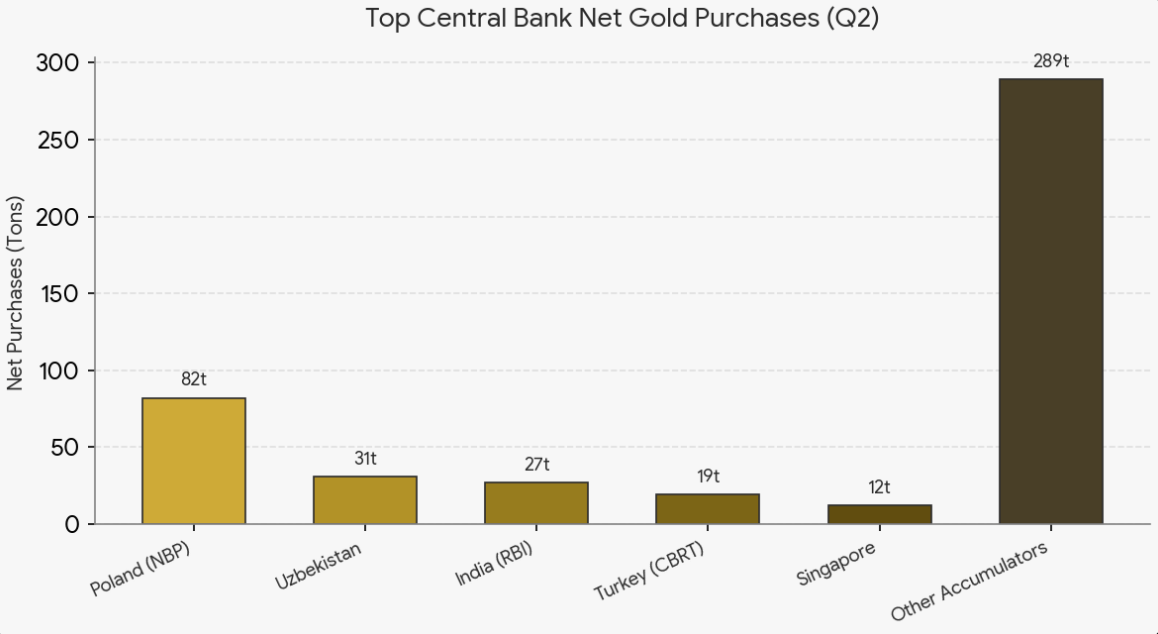
Central Banks Absorb 289 Tons of Gold in Q2 - HUGE AMOUNT 🤯
Global central banks purchased a massive 289 metric tons of gold $XAU in Q2, reinforcing a powerful multi-year structural trend toward de-dollarization. According to data tracked by the World Gold Council, this aggressive accumulation marks a 25% year-over-year surge compared to the same period last year. It establishes one of the strongest second-quarter net buying volumes on record.
📊 Q2 Central Bank Purchase Breakdown:
- Total Global Net Purchases: 289 Metric Tons (+25% YoY)
- National Bank of Poland (NBP): 37.0 Tons (Largest single sovereign buyer)
- Central Bank of Uzbekistan: 19.0 Tons
- Reserve Bank of India (RBI): 18.7 Tons
- Central Bank of Jordan: 15.0 Tons
🔎 Strategic Drivers: Why Are Banks Stockpiling?
- Sanction-Proof Hedging: Ongoing geopolitical frictions in Eastern Europe and the Middle East have forced central banks to prioritize weapon-proof, non-custodial hard assets.
- Reserve Diversification: Persistent inflationary pressures and expanding sovereign balance sheets have diminished the long-term appeal of traditional fiat debt, driving capital into physical bullion.
- Unshakeable Structural Floor: This institutional buying wave effectively absorbs market sell-offs, creating a massive macroeconomic launchpad that pushed gold spot prices over $4,650 per ounce later this year.
This unrelenting institutional appetite proves that gold remains the ultimate premium global monetary anchor, as nations aggressively swap paper assets for tangible sovereign security.
#centralbanksbuy289tonsgoldinq2 $XAUT
{future}(XAUUSDT)
{future}(XAUTUSDT)
Central Banks Absorb 289 Tons of Gold in Q2 - HUGE AMOUNT 🤯
Global central banks purchased a massive 289 metric tons of gold $XAU in Q2, reinforcing a powerful multi-year structural trend toward de-dollarization. According to data tracked by the World Gold Council, this aggressive accumulation marks a 25% year-over-year surge compared to the same period last year. It establishes one of the strongest second-quarter net buying volumes on record.
📊 Q2 Central Bank Purchase Breakdown:
- Total Global Net Purchases: 289 Metric Tons (+25% YoY)
- National Bank of Poland (NBP): 37.0 Tons (Largest single sovereign buyer)
- Central Bank of Uzbekistan: 19.0 Tons
- Reserve Bank of India (RBI): 18.7 Tons
- Central Bank of Jordan: 15.0 Tons
🔎 Strategic Drivers: Why Are Banks Stockpiling?
- Sanction-Proof Hedging: Ongoing geopolitical frictions in Eastern Europe and the Middle East have forced central banks to prioritize weapon-proof, non-custodial hard assets.
- Reserve Diversification: Persistent inflationary pressures and expanding sovereign balance sheets have diminished the long-term appeal of traditional fiat debt, driving capital into physical bullion.
- Unshakeable Structural Floor: This institutional buying wave effectively absorbs market sell-offs, creating a massive macroeconomic launchpad that pushed gold spot prices over $4,650 per ounce later this year.
This unrelenting institutional appetite proves that gold remains the ultimate premium global monetary anchor, as nations aggressively swap paper assets for tangible sovereign security.
#centralbanksbuy289tonsgoldinq2 $XAUT
Global central banks purchased a massive 289 metric tons of gold $XAU in Q2, reinforcing a powerful multi-year structural trend toward de-dollarization. According to data tracked by the World Gold Council, this aggressive accumulation marks a 25% year-over-year surge compared to the same period last year. It establishes one of the strongest second-quarter net buying volumes on record.
📊 Q2 Central Bank Purchase Breakdown:
- Total Global Net Purchases: 289 Metric Tons (+25% YoY)
- National Bank of Poland (NBP): 37.0 Tons (Largest single sovereign buyer)
- Central Bank of Uzbekistan: 19.0 Tons
- Reserve Bank of India (RBI): 18.7 Tons
- Central Bank of Jordan: 15.0 Tons
🔎 Strategic Drivers: Why Are Banks Stockpiling?
- Sanction-Proof Hedging: Ongoing geopolitical frictions in Eastern Europe and the Middle East have forced central banks to prioritize weapon-proof, non-custodial hard assets.
- Reserve Diversification: Persistent inflationary pressures and expanding sovereign balance sheets have diminished the long-term appeal of traditional fiat debt, driving capital into physical bullion.
- Unshakeable Structural Floor: This institutional buying wave effectively absorbs market sell-offs, creating a massive macroeconomic launchpad that pushed gold spot prices over $4,650 per ounce later this year.
This unrelenting institutional appetite proves that gold remains the ultimate premium global monetary anchor, as nations aggressively swap paper assets for tangible sovereign security.
#centralbanksbuy289tonsgoldinq2 $XAUT
1
12
·
--
Bullish
Bitcoin Spot ETFs Snap Historic 9-Day Inflow Streak, here is what happen 🤯
U.S. spot $BTC ETFs snapped a phenomenal nine-day buying streak on August 28, 2026, recording $201.8 million in net outflows. This sudden reversal concluded an intense multi-day institutional accumulation phase that successfully funneled over $3.04 billion into Bitcoin funds. The cooling sentiment directly coincided with Bitcoin’s brief price dip below the critical $78,000 psychological threshold.
📊 Key ETF Statistics & Fund Breakdown:
- Pre-Reversal Momentum: 9 consecutive days of inflows (+$3.04 Billion)
- August 28 Net Outflow: -$201.8 Million
- ARK 21Shares (ARKB): Led the exit with -$114.9 Million
- Bitwise (BITB): Posted an outflow of -$49.7 Million
- BlackRock (IBIT): Experienced minor profit-taking of -$33.4 Million
🔎 What Happened? Inside the Reversal:
- Spot Price Correction: Bitcoin's swift 3.2% decline to $77,696 triggered immediate algorithmic cooling among traditional market participants.
- The "Ether" Capital Divergence: Interestingly, institutional weakness was completely isolated to Bitcoin. On the exact same day, Spot Ethereum ETFs bucked the trend, pulling in a massive +$102.2 million in net inflows alongside steady gains for XRP and Solana products.
- Macro Headwinds: Sticky inflation indicators (PCE at 3.7%) and hawkish central bank commentary catalyzed a defensive pivot toward liquid cash.
Despite the abrupt end to the streak, August 2026 remains the strongest capital-transfusion month for crypto ETFs this year, securely rebuilding institutional foundations heading into Q4.
#bitcoinspotetfends9dayinflowstreak
{future}(BTCUSDT)
Bitcoin Spot ETFs Snap Historic 9-Day Inflow Streak, here is what happen 🤯
U.S. spot $BTC ETFs snapped a phenomenal nine-day buying streak on August 28, 2026, recording $201.8 million in net outflows. This sudden reversal concluded an intense multi-day institutional accumulation phase that successfully funneled over $3.04 billion into Bitcoin funds. The cooling sentiment directly coincided with Bitcoin’s brief price dip below the critical $78,000 psychological threshold.
📊 Key ETF Statistics & Fund Breakdown:
- Pre-Reversal Momentum: 9 consecutive days of inflows (+$3.04 Billion)
- August 28 Net Outflow: -$201.8 Million
- ARK 21Shares (ARKB): Led the exit with -$114.9 Million
- Bitwise (BITB): Posted an outflow of -$49.7 Million
- BlackRock (IBIT): Experienced minor profit-taking of -$33.4 Million
🔎 What Happened? Inside the Reversal:
- Spot Price Correction: Bitcoin's swift 3.2% decline to $77,696 triggered immediate algorithmic cooling among traditional market participants.
- The "Ether" Capital Divergence: Interestingly, institutional weakness was completely isolated to Bitcoin. On the exact same day, Spot Ethereum ETFs bucked the trend, pulling in a massive +$102.2 million in net inflows alongside steady gains for XRP and Solana products.
- Macro Headwinds: Sticky inflation indicators (PCE at 3.7%) and hawkish central bank commentary catalyzed a defensive pivot toward liquid cash.
Despite the abrupt end to the streak, August 2026 remains the strongest capital-transfusion month for crypto ETFs this year, securely rebuilding institutional foundations heading into Q4.
#bitcoinspotetfends9dayinflowstreak
U.S. spot $BTC ETFs snapped a phenomenal nine-day buying streak on August 28, 2026, recording $201.8 million in net outflows. This sudden reversal concluded an intense multi-day institutional accumulation phase that successfully funneled over $3.04 billion into Bitcoin funds. The cooling sentiment directly coincided with Bitcoin’s brief price dip below the critical $78,000 psychological threshold.
📊 Key ETF Statistics & Fund Breakdown:
- Pre-Reversal Momentum: 9 consecutive days of inflows (+$3.04 Billion)
- August 28 Net Outflow: -$201.8 Million
- ARK 21Shares (ARKB): Led the exit with -$114.9 Million
- Bitwise (BITB): Posted an outflow of -$49.7 Million
- BlackRock (IBIT): Experienced minor profit-taking of -$33.4 Million
🔎 What Happened? Inside the Reversal:
- Spot Price Correction: Bitcoin's swift 3.2% decline to $77,696 triggered immediate algorithmic cooling among traditional market participants.
- The "Ether" Capital Divergence: Interestingly, institutional weakness was completely isolated to Bitcoin. On the exact same day, Spot Ethereum ETFs bucked the trend, pulling in a massive +$102.2 million in net inflows alongside steady gains for XRP and Solana products.
- Macro Headwinds: Sticky inflation indicators (PCE at 3.7%) and hawkish central bank commentary catalyzed a defensive pivot toward liquid cash.
Despite the abrupt end to the streak, August 2026 remains the strongest capital-transfusion month for crypto ETFs this year, securely rebuilding institutional foundations heading into Q4.
#bitcoinspotetfends9dayinflowstreak

1
475
·
--
Bullish
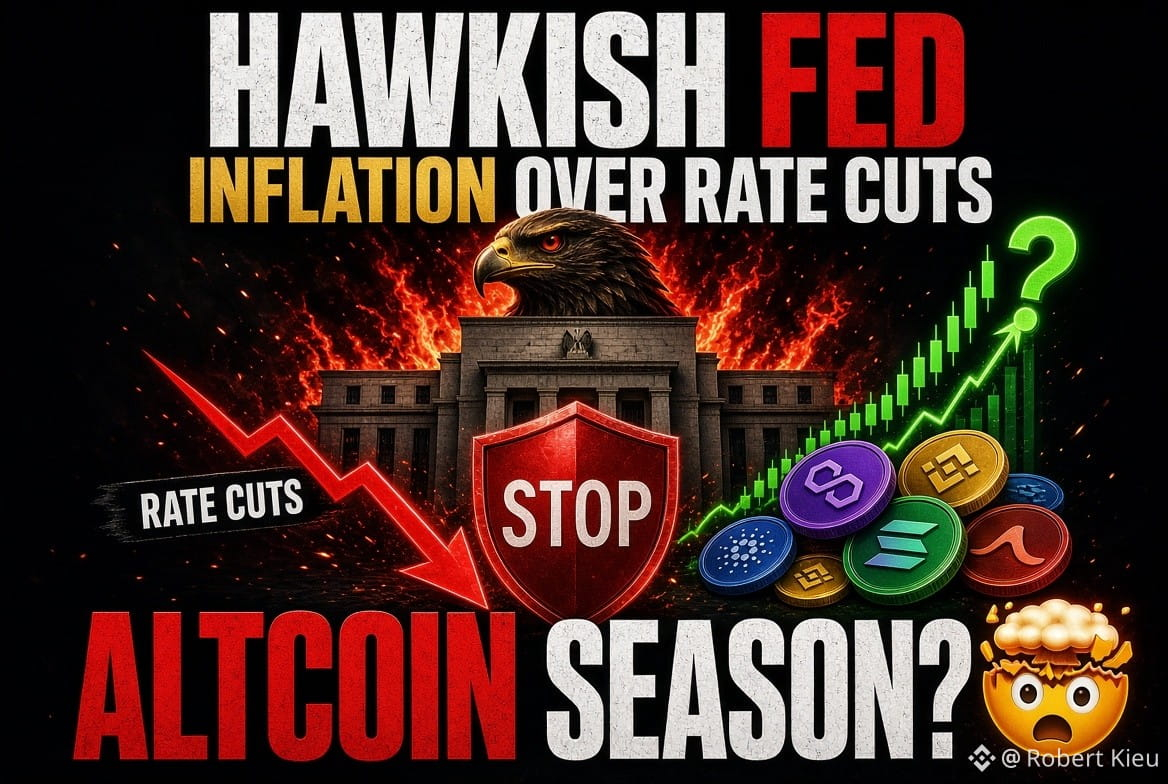
Hawkish Fed: Warsh Prioritizes Inflation Over Rate Cuts - But How About $ETH and Altcoin Season 🤯
Federal Reserve Chair Kevin Warsh explicitly stated at the Jackson Hole Economic Symposium that inflation remains the Fed's "predominant focus," signaling a starkly hawkish shift.
In his August 28, 2026 address, Warsh emphasized that with the PCE price index sitting at 3.7% and CPI at 3.4% both strictly above the central bank’s 2% target, policymakers still "have work to do." Consequently, the probability of a September interest rate hike shot up drastically from 35.4% to 55.5%.
📊 Hard Economic Data:
- Fed Preferred Gauge (PCE): 3.7% (Target: 2.0%)
- Consumer Price Index (CPI): 3.4%
- Core PCE (YoY): 3.3%
- Market Implied Hike Odds: Jumped to 55.5%
📉 Impact on Ethereum (ETH) & Altcoin Season:
- Ethereum (ETH) Liquidity Squeeze: Higher-for-longer interest rates trap capital in low-risk yields (like U.S. Treasuries). ETH faces immediate downward pressure as institutional inflows flatten and decentralized finance (DeFi) yields lose their competitive edge against risk-free macroeconomic alternatives.
- Altcoin Season Delayed: A true Altcoin Season relies on an abundance of cheap market liquidity and a weakening U.S. Dollar. With the CME FedWatch Tool now pricing in a likely rate hike, speculative capital will retreat to stable assets. Investors should expect high-beta altcoins to suffer deep corrections as the narrative shifts away from loose monetary expansion.
#warshsaysinflationisfedtopfocus $BNB $SOL
{future}(SOLUSDT)
{future}(BNBUSDT)
{future}(ETHUSDT)
Hawkish Fed: Warsh Prioritizes Inflation Over Rate Cuts - But How About $ETH and Altcoin Season 🤯
Federal Reserve Chair Kevin Warsh explicitly stated at the Jackson Hole Economic Symposium that inflation remains the Fed's "predominant focus," signaling a starkly hawkish shift.
In his August 28, 2026 address, Warsh emphasized that with the PCE price index sitting at 3.7% and CPI at 3.4% both strictly above the central bank’s 2% target, policymakers still "have work to do." Consequently, the probability of a September interest rate hike shot up drastically from 35.4% to 55.5%.
📊 Hard Economic Data:
- Fed Preferred Gauge (PCE): 3.7% (Target: 2.0%)
- Consumer Price Index (CPI): 3.4%
- Core PCE (YoY): 3.3%
- Market Implied Hike Odds: Jumped to 55.5%
📉 Impact on Ethereum (ETH) & Altcoin Season:
- Ethereum (ETH) Liquidity Squeeze: Higher-for-longer interest rates trap capital in low-risk yields (like U.S. Treasuries). ETH faces immediate downward pressure as institutional inflows flatten and decentralized finance (DeFi) yields lose their competitive edge against risk-free macroeconomic alternatives.
- Altcoin Season Delayed: A true Altcoin Season relies on an abundance of cheap market liquidity and a weakening U.S. Dollar. With the CME FedWatch Tool now pricing in a likely rate hike, speculative capital will retreat to stable assets. Investors should expect high-beta altcoins to suffer deep corrections as the narrative shifts away from loose monetary expansion.
#warshsaysinflationisfedtopfocus $BNB $SOL
Federal Reserve Chair Kevin Warsh explicitly stated at the Jackson Hole Economic Symposium that inflation remains the Fed's "predominant focus," signaling a starkly hawkish shift.
In his August 28, 2026 address, Warsh emphasized that with the PCE price index sitting at 3.7% and CPI at 3.4% both strictly above the central bank’s 2% target, policymakers still "have work to do." Consequently, the probability of a September interest rate hike shot up drastically from 35.4% to 55.5%.
📊 Hard Economic Data:
- Fed Preferred Gauge (PCE): 3.7% (Target: 2.0%)
- Consumer Price Index (CPI): 3.4%
- Core PCE (YoY): 3.3%
- Market Implied Hike Odds: Jumped to 55.5%
📉 Impact on Ethereum (ETH) & Altcoin Season:
- Ethereum (ETH) Liquidity Squeeze: Higher-for-longer interest rates trap capital in low-risk yields (like U.S. Treasuries). ETH faces immediate downward pressure as institutional inflows flatten and decentralized finance (DeFi) yields lose their competitive edge against risk-free macroeconomic alternatives.
- Altcoin Season Delayed: A true Altcoin Season relies on an abundance of cheap market liquidity and a weakening U.S. Dollar. With the CME FedWatch Tool now pricing in a likely rate hike, speculative capital will retreat to stable assets. Investors should expect high-beta altcoins to suffer deep corrections as the narrative shifts away from loose monetary expansion.
#warshsaysinflationisfedtopfocus $BNB $SOL
1
102
Log in to explore more content
Join global crypto users on Binance Square
⚡️ Get latest and useful information about crypto.
💬 Trusted by the world’s largest crypto exchange.
👍 Discover real insights from verified creators.
Email / Phone number