
Rin77
5.3k Posts

Rin77
Report
Block User
BNB Holder|币安广场建设者|爱币安|币安忠诚拥护者|
2.6K+ Following
21.9K+ Followers
8.3K Liked
Posts
All
Quotes
PINNED
·
--
Article
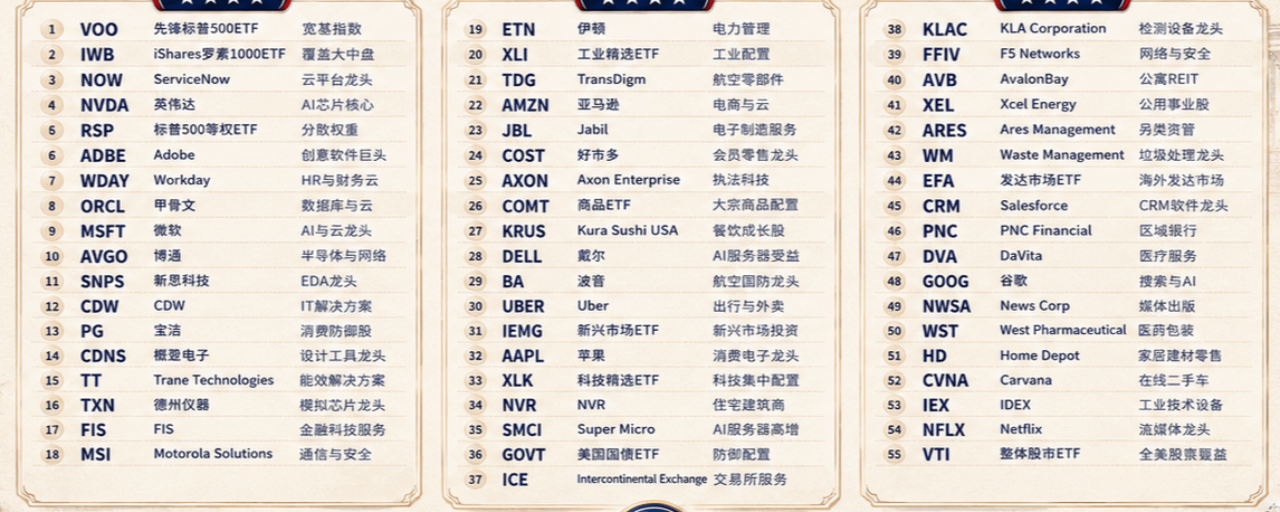
Trump's latest stock disclosure exposes: AI, semiconductors, and cloud computing as core threads.Trump's latest financial disclosure reveals a hefty portfolio packed with US stocks and ETFs, spanning sectors like tech, semiconductors, industrials, consumer goods, defense, real estate, bonds, and global markets.
If you just look at the list, there's a glaring signal:
AI computing power, enterprise software, semiconductor equipment, and core US assets are still the main threads in this portfolio.
First category: broad-based ETFs, laying down the foundation.
VOO: Vanguard S&P 500 ETF, covering core large-cap US stocks.
IWB: iShares Russell 1000 ETF, covering mid and large-cap US stocks.
RSP: S&P 500 Equal Weight ETF, reducing the risk of excessive weight on a few tech giants.
Trump's latest stock disclosure exposes: AI, semiconductors, and cloud computing as core threads.
Trump's latest financial disclosure reveals a hefty portfolio packed with US stocks and ETFs, spanning sectors like tech, semiconductors, industrials, consumer goods, defense, real estate, bonds, and global markets.
If you just look at the list, there's a glaring signal:
AI computing power, enterprise software, semiconductor equipment, and core US assets are still the main threads in this portfolio.
First category: broad-based ETFs, laying down the foundation.
VOO: Vanguard S&P 500 ETF, covering core large-cap US stocks.
IWB: iShares Russell 1000 ETF, covering mid and large-cap US stocks.
RSP: S&P 500 Equal Weight ETF, reducing the risk of excessive weight on a few tech giants.
If you just look at the list, there's a glaring signal:
AI computing power, enterprise software, semiconductor equipment, and core US assets are still the main threads in this portfolio.
First category: broad-based ETFs, laying down the foundation.
VOO: Vanguard S&P 500 ETF, covering core large-cap US stocks.
IWB: iShares Russell 1000 ETF, covering mid and large-cap US stocks.
RSP: S&P 500 Equal Weight ETF, reducing the risk of excessive weight on a few tech giants.
3
351
PINNED
·
--
Article
Nvidia has surged, Micron has surged, who’s next in line?In this bull run for US stocks in AI, many folks are only eyeing Nvidia.
But those who really understand have long realized:
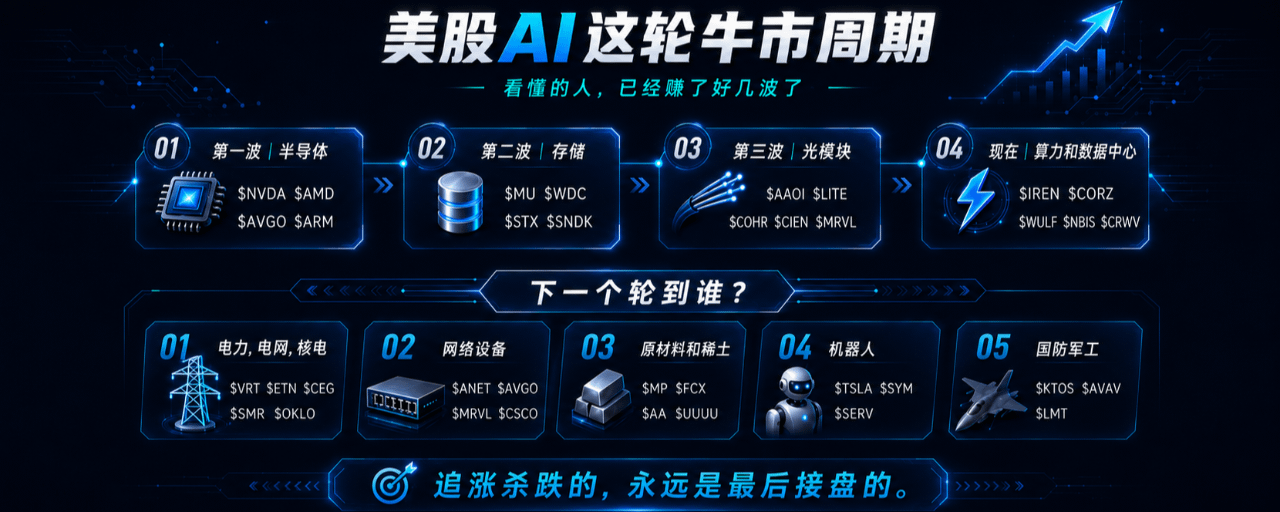
This isn’t just a stock trend; it’s a rotation across an entire industry chain.
Funds aren’t just moving chaotically.
They’re digging deeper layer by layer along the AI infrastructure.
The first wave was in semiconductors.
$AVGO
$ARM
This is the starting point of the AI revolution.
The demand for computing power is exploding, and GPUs are the hottest assets of this new era.
Nvidia has skyrocketed from its lows by several multiples; most people just watched it climb but never dared to jump in.
Not many retail traders are truly cashing in on this wave of profits.
Nvidia has surged, Micron has surged, who’s next in line?
In this bull run for US stocks in AI, many folks are only eyeing Nvidia.
But those who really understand have long realized:
This isn’t just a stock trend; it’s a rotation across an entire industry chain.
Funds aren’t just moving chaotically.
They’re digging deeper layer by layer along the AI infrastructure.
The first wave was in semiconductors.
$AVGO
$ARM
This is the starting point of the AI revolution.
The demand for computing power is exploding, and GPUs are the hottest assets of this new era.
Nvidia has skyrocketed from its lows by several multiples; most people just watched it climb but never dared to jump in.
Not many retail traders are truly cashing in on this wave of profits.
But those who really understand have long realized:
This isn’t just a stock trend; it’s a rotation across an entire industry chain.
Funds aren’t just moving chaotically.
They’re digging deeper layer by layer along the AI infrastructure.
The first wave was in semiconductors.
$AVGO
$ARM
This is the starting point of the AI revolution.
The demand for computing power is exploding, and GPUs are the hottest assets of this new era.
Nvidia has skyrocketed from its lows by several multiples; most people just watched it climb but never dared to jump in.
Not many retail traders are truly cashing in on this wave of profits.
2
2
923
·
--
Article
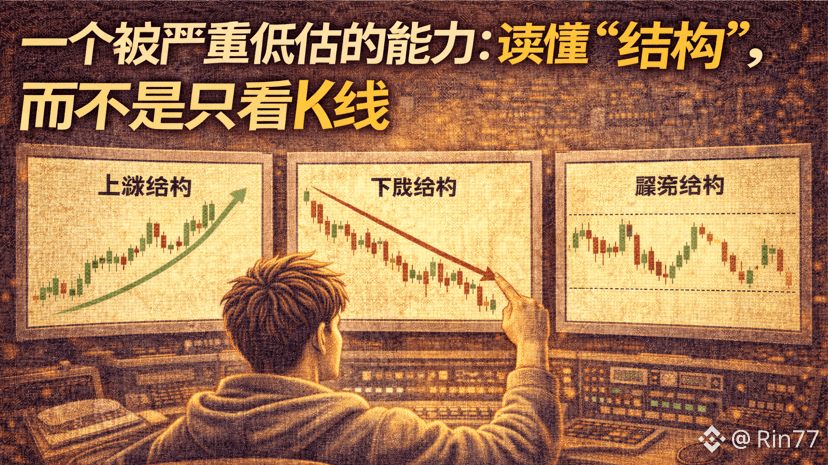
【Newbie Classroom Lecture 34: A Seriously Underestimated Ability: Understanding 'Structure', Instead of Just Looking at Candlesticks】The trading logic of most retail investors is:
Look at a candlestick → guess the rise and fall
Look at an indicator → directly open a position
But real experts do not just look at a 'single candlestick', but—
Market structure.
People who cannot read structure:
• Always chasing the last bullish candlestick
• Always scared out at the lowest point
• Even if they see the right direction, they can't hold the position
People who can read structure:
• At a glance, you can tell where the 'trap points' are
• Understand which positions can only be observed
• Know whether a breakout is real or not
1. What is structure?
Structure fundamentally has only three types:
1. Bullish structure: higher highs, higher lows
【Newbie Classroom Lecture 34: A Seriously Underestimated Ability: Understanding 'Structure', Instead of Just Looking at Candlesticks】
The trading logic of most retail investors is:
Look at a candlestick → guess the rise and fall
Look at an indicator → directly open a position
But real experts do not just look at a 'single candlestick', but—
Market structure.
People who cannot read structure:
• Always chasing the last bullish candlestick
• Always scared out at the lowest point
• Even if they see the right direction, they can't hold the position
People who can read structure:
• At a glance, you can tell where the 'trap points' are
• Understand which positions can only be observed
• Know whether a breakout is real or not
1. What is structure?
Structure fundamentally has only three types:
1. Bullish structure: higher highs, higher lows
Look at a candlestick → guess the rise and fall
Look at an indicator → directly open a position
But real experts do not just look at a 'single candlestick', but—
Market structure.
People who cannot read structure:
• Always chasing the last bullish candlestick
• Always scared out at the lowest point
• Even if they see the right direction, they can't hold the position
People who can read structure:
• At a glance, you can tell where the 'trap points' are
• Understand which positions can only be observed
• Know whether a breakout is real or not
1. What is structure?
Structure fundamentally has only three types:
1. Bullish structure: higher highs, higher lows
337
129
50
460
·
--

Article
【Newbie Classroom Lecture 31: Why Is It Difficult for the Poor to Turn Their Lives Around Through Trading】I have seen too many people who want to change their fate through trading.
But in the end, those who truly change their fate are pitifully few.
It's not because they are not smart,
But rather because—
Trading is inherently more suitable for those who 'are no longer short of money.'
This statement is very painful, but very true.
1
For the rich, entering the market is to do business.
For the poor, entering the market is to 'save their lives.'
One is:
'This money can grow slowly.'
One is:
'Please, this time it must double.'
When the purposes are different,
Action will definitely change form.
The former can wait for a three-month opportunity,
The latter can't wait even three hours.
【Newbie Classroom Lecture 31: Why Is It Difficult for the Poor to Turn Their Lives Around Through Trading】
I have seen too many people who want to change their fate through trading.
But in the end, those who truly change their fate are pitifully few.
It's not because they are not smart,
But rather because—
Trading is inherently more suitable for those who 'are no longer short of money.'
This statement is very painful, but very true.
1
For the rich, entering the market is to do business.
For the poor, entering the market is to 'save their lives.'
One is:
'This money can grow slowly.'
One is:
'Please, this time it must double.'
When the purposes are different,
Action will definitely change form.
The former can wait for a three-month opportunity,
The latter can't wait even three hours.
But in the end, those who truly change their fate are pitifully few.
It's not because they are not smart,
But rather because—
Trading is inherently more suitable for those who 'are no longer short of money.'
This statement is very painful, but very true.
1
For the rich, entering the market is to do business.
For the poor, entering the market is to 'save their lives.'
One is:
'This money can grow slowly.'
One is:
'Please, this time it must double.'
When the purposes are different,
Action will definitely change form.
The former can wait for a three-month opportunity,
The latter can't wait even three hours.
484
234
34
484
·
--

Article
[Classic Re-reading | Key to Understanding the Evolution of Wealth]Re-reading Paul Graham's classic article (How People Get Rich Now) today still feels highly insightful. The article opens with a very intuitive data comparison: in 1982, 60 out of the 100 wealthiest people in the U.S. primarily relied on inheritance; by 2020, this number had dropped to 27. This shift wasn't due to higher inheritance taxes—on the contrary, taxes have actually decreased—but rather because an increasing proportion of wealth now comes from 'creation' rather than 'inheritance'.
A deeper analysis of the differences in the sources of wealth can reveal the essence more clearly. Today's new rich mainly come from entrepreneurship, followed by investment fund management, whereas in the 1980s, newly emerging large fortunes were almost entirely concentrated in oil, real estate, and family businesses. Particularly noteworthy is that an increasing share of top-tier wealth now comes from technology-driven companies— their success is not due to better negotiation skills or more aggressive tactics, but because they genuinely developed better technologies and products.
[Classic Re-reading | Key to Understanding the Evolution of Wealth]
Re-reading Paul Graham's classic article (How People Get Rich Now) today still feels highly insightful. The article opens with a very intuitive data comparison: in 1982, 60 out of the 100 wealthiest people in the U.S. primarily relied on inheritance; by 2020, this number had dropped to 27. This shift wasn't due to higher inheritance taxes—on the contrary, taxes have actually decreased—but rather because an increasing proportion of wealth now comes from 'creation' rather than 'inheritance'.
A deeper analysis of the differences in the sources of wealth can reveal the essence more clearly. Today's new rich mainly come from entrepreneurship, followed by investment fund management, whereas in the 1980s, newly emerging large fortunes were almost entirely concentrated in oil, real estate, and family businesses. Particularly noteworthy is that an increasing share of top-tier wealth now comes from technology-driven companies— their success is not due to better negotiation skills or more aggressive tactics, but because they genuinely developed better technologies and products.
A deeper analysis of the differences in the sources of wealth can reveal the essence more clearly. Today's new rich mainly come from entrepreneurship, followed by investment fund management, whereas in the 1980s, newly emerging large fortunes were almost entirely concentrated in oil, real estate, and family businesses. Particularly noteworthy is that an increasing share of top-tier wealth now comes from technology-driven companies— their success is not due to better negotiation skills or more aggressive tactics, but because they genuinely developed better technologies and products.
490
251
37
557
·
--
Article
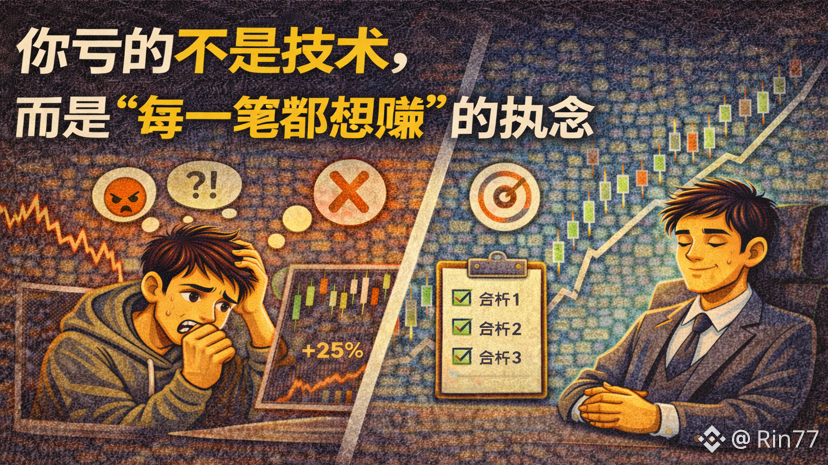
[Newbie Academy Lecture 23: What You're Losing Isn't Skill, But the Obsession with 'Every Trade Must Profit']Many people enter the trading market,
The only goal is making money.
But what truly drags people into the abyss is,
It's precisely this thing.
I. The biggest misconception among ordinary people: wanting every single trade to be right
Have you ever been in this state:
• Double-checking before opening a position
• Staying glued to the screen after opening a position, afraid to exit
• Afraid of drawdowns on floating profits, afraid of stop-losses on floating losses
• Once the market moves against you, you start doubting yourself
Because in your subconscious mind, there's a thought:
'If this trade is wrong, it means I'm not good enough.'
Thus,
You're not trading,
but instead placing orders to 'prove you're right'.
[Newbie Academy Lecture 23: What You're Losing Isn't Skill, But the Obsession with 'Every Trade Must Profit']
Many people enter the trading market,
The only goal is making money.
But what truly drags people into the abyss is,
It's precisely this thing.
I. The biggest misconception among ordinary people: wanting every single trade to be right
Have you ever been in this state:
• Double-checking before opening a position
• Staying glued to the screen after opening a position, afraid to exit
• Afraid of drawdowns on floating profits, afraid of stop-losses on floating losses
• Once the market moves against you, you start doubting yourself
Because in your subconscious mind, there's a thought:
'If this trade is wrong, it means I'm not good enough.'
Thus,
You're not trading,
but instead placing orders to 'prove you're right'.
The only goal is making money.
But what truly drags people into the abyss is,
It's precisely this thing.
I. The biggest misconception among ordinary people: wanting every single trade to be right
Have you ever been in this state:
• Double-checking before opening a position
• Staying glued to the screen after opening a position, afraid to exit
• Afraid of drawdowns on floating profits, afraid of stop-losses on floating losses
• Once the market moves against you, you start doubting yourself
Because in your subconscious mind, there's a thought:
'If this trade is wrong, it means I'm not good enough.'
Thus,
You're not trading,
but instead placing orders to 'prove you're right'.
713
329
57
713
·
--
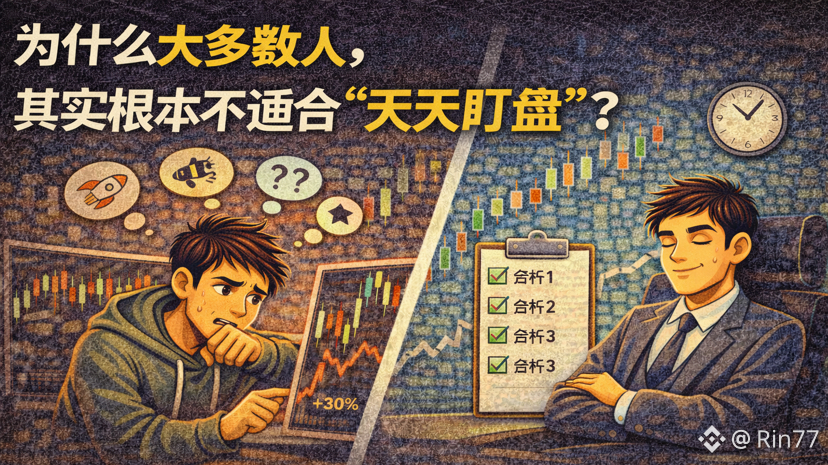
Article
[Newbie Academy Lecture 22: Why Most People Actually Aren't Suited for "Daily Market Watching"?]Many people think:
The longer you watch, the more you see, the more you earn.
But the real trading world is exactly the opposite.
I. Watching the market ≠ increasing win rate; it only amplifies emotions
Every price movement triggers an emotional reaction:
• When it rises, you start fantasizing "should I add more?"
• When it drops, you start doubting "should I get out?"
• When it moves sideways, you still can't help but act impulsively
Watching the market constantly consumes your rationality.
The market won't be any gentler just because you watch longer.
II. Experts focus on "conditions", not "price fluctuations"
[Newbie Academy Lecture 22: Why Most People Actually Aren't Suited for "Daily Market Watching"?]
Many people think:
The longer you watch, the more you see, the more you earn.
But the real trading world is exactly the opposite.
I. Watching the market ≠ increasing win rate; it only amplifies emotions
Every price movement triggers an emotional reaction:
• When it rises, you start fantasizing "should I add more?"
• When it drops, you start doubting "should I get out?"
• When it moves sideways, you still can't help but act impulsively
Watching the market constantly consumes your rationality.
The market won't be any gentler just because you watch longer.
II. Experts focus on "conditions", not "price fluctuations"
The longer you watch, the more you see, the more you earn.
But the real trading world is exactly the opposite.
I. Watching the market ≠ increasing win rate; it only amplifies emotions
Every price movement triggers an emotional reaction:
• When it rises, you start fantasizing "should I add more?"
• When it drops, you start doubting "should I get out?"
• When it moves sideways, you still can't help but act impulsively
Watching the market constantly consumes your rationality.
The market won't be any gentler just because you watch longer.
II. Experts focus on "conditions", not "price fluctuations"
167
83
15
322
Log in to explore more content
Join global crypto users on Binance Square
⚡️ Get latest and useful information about crypto.
💬 Trusted by the world’s largest crypto exchange.
👍 Discover real insights from verified creators.
Email / Phone number
Trending Topics
BitcoinReboundsTo$79K
19,608 views
166 Discussing
🚨 $BTC is pushing higher.
Bitcoin is trading around $78,804, up roughly 1.9%, after reclaiming the $78K area. The next level to watch is the intraday high near $78,905.
A clean break above that level could open the way toward $79K–$80K. If BTC gets rejected, support sits around $78,300, then $77,975.
Bulls have momentum, but BTC needs to hold above $78K.
#Bitcoin #BTC #CryptoTrading #CryptoMarket #CryptoAnalysis
PulseON
·18 Likes
·16.9k views
BitcoinSpotETFsNetInflow$160M
40 views
21 Discussing
SouthKoreaCryptoTaxDelayPetitionTops50000
7,338 views
210 Discussing