

逆转投资
1.8k Posts

逆转投资
Report
Block User
指标不会骗人,在币圈消息舆论鱼龙混杂的环境下,只有k线和指标不会骗人,相信指标、驾驭指标才是财务自由的根本保障

30日間取引量上位トレーダー
43 Following
506 Followers
567 Liked
1 Badges
Posts
·
--
Article
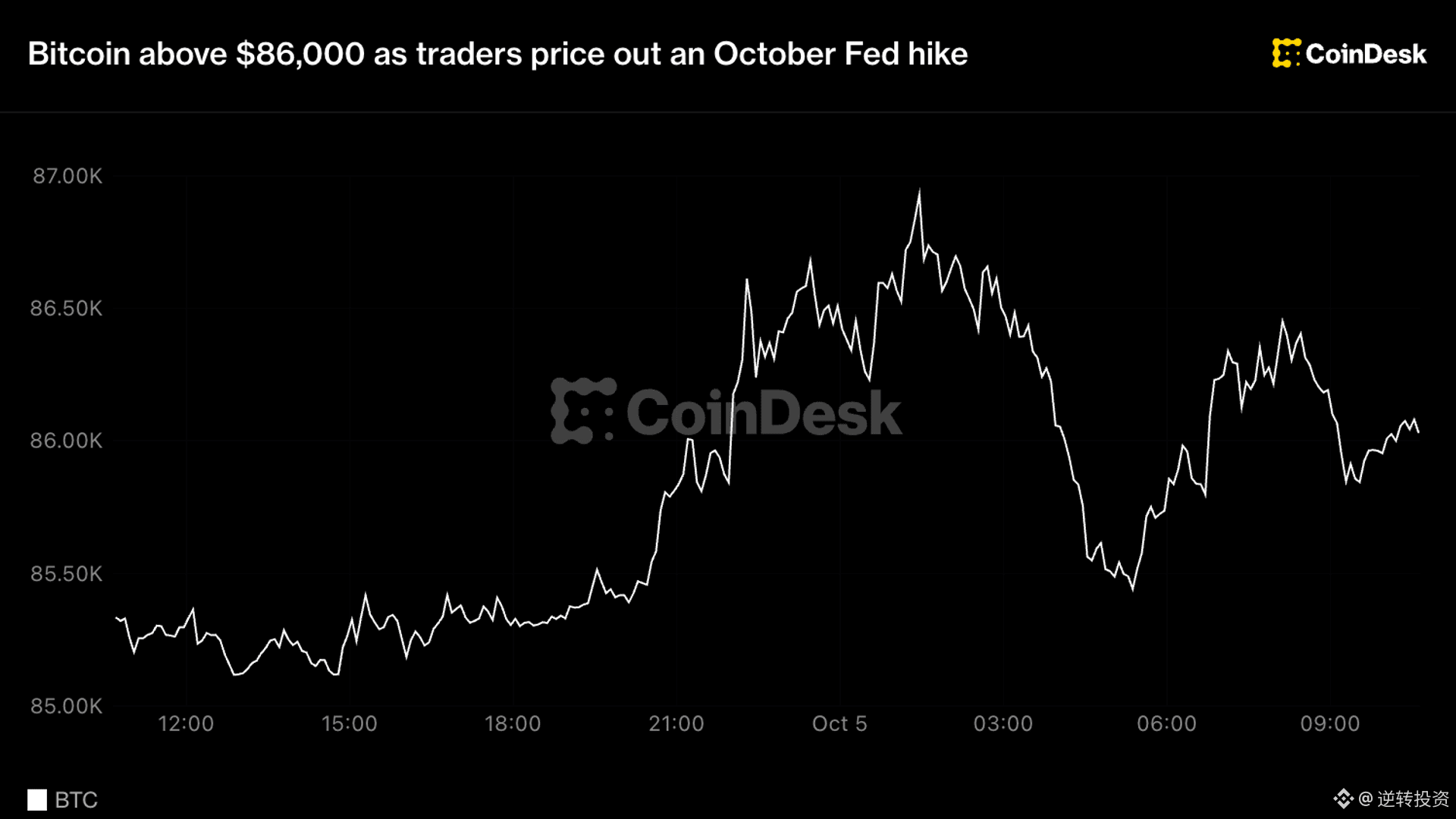
Rate hike expectations fade, but BTC is still stuck below 87,000Don’t rush to translate “no rate hike in October” into “BTC is going up”—there’s still a step in between. The news says traders have priced out the possibility of an October rate hike, citing weak September jobs data. But BTC is currently at 85,888, up just 0.89% in 24 hours, and it hasn’t even reached 87,000. At the same time, the dollar index has surged to an 18-month high, while Treasury yields remain near multi-year highs. Neither of these is a tailwind for BTC. So the picture right now is this: pressure from rate hikes has eased a little, but pressure from the dollar and interest rates hasn’t. BTC holding around 86,000 suggests there’s buying support, but holding steady doesn’t mean it’s about to move higher. Before the FOMC minutes come out on Wednesday, I’m inclined to view this as sideways consolidation, not the start of a new trend. After that, I’ll be watching just one variable: whether the dollar index keeps strengthening or turns lower after the minutes are released.
Rate hike expectations fade, but BTC is still stuck below 87,000
Don’t rush to translate “no rate hike in October” into “BTC is going up”—there’s still a step in between. The news says traders have priced out the possibility of an October rate hike, citing weak September jobs data. But BTC is currently at 85,888, up just 0.89% in 24 hours, and it hasn’t even reached 87,000. At the same time, the dollar index has surged to an 18-month high, while Treasury yields remain near multi-year highs. Neither of these is a tailwind for BTC. So the picture right now is this: pressure from rate hikes has eased a little, but pressure from the dollar and interest rates hasn’t. BTC holding around 86,000 suggests there’s buying support, but holding steady doesn’t mean it’s about to move higher. Before the FOMC minutes come out on Wednesday, I’m inclined to view this as sideways consolidation, not the start of a new trend. After that, I’ll be watching just one variable: whether the dollar index keeps strengthening or turns lower after the minutes are released.
119
·
--

Article
BTC and ETH ETF flows headed in opposite directions this weekLook at the figures separately: inflows into BTC ETFs and outflows from ETH ETFs are not the same thing. BTC saw net inflows of $241 million last week, marking a third consecutive positive week, but the previous two weeks brought in $2.4 billion and $6.2 million, respectively, so last week’s total was actually much smaller. ETH, meanwhile, saw net outflows of $138 million last week, after net inflows of $690 million the week before—a complete reversal in just one week.
At the same time, BTC was around $86,000, up 3.7% over seven days, while ETH was around $2,715, up 3%. Both prices are rising, but ETF money is still flowing in for one and has already started flowing out of the other. That suggests the two types of buying are moving at different paces in this rally. The quarterly run in which ETH outperformed BTC now looks to be losing liquidity: money may flow in easily, but it can leave just as quickly.
BTC and ETH ETF flows headed in opposite directions this week
Look at the figures separately: inflows into BTC ETFs and outflows from ETH ETFs are not the same thing. BTC saw net inflows of $241 million last week, marking a third consecutive positive week, but the previous two weeks brought in $2.4 billion and $6.2 million, respectively, so last week’s total was actually much smaller. ETH, meanwhile, saw net outflows of $138 million last week, after net inflows of $690 million the week before—a complete reversal in just one week.
At the same time, BTC was around $86,000, up 3.7% over seven days, while ETH was around $2,715, up 3%. Both prices are rising, but ETF money is still flowing in for one and has already started flowing out of the other. That suggests the two types of buying are moving at different paces in this rally. The quarterly run in which ETH outperformed BTC now looks to be losing liquidity: money may flow in easily, but it can leave just as quickly.
At the same time, BTC was around $86,000, up 3.7% over seven days, while ETH was around $2,715, up 3%. Both prices are rising, but ETF money is still flowing in for one and has already started flowing out of the other. That suggests the two types of buying are moving at different paces in this rally. The quarterly run in which ETH outperformed BTC now looks to be losing liquidity: money may flow in easily, but it can leave just as quickly.
40
·
--
Article
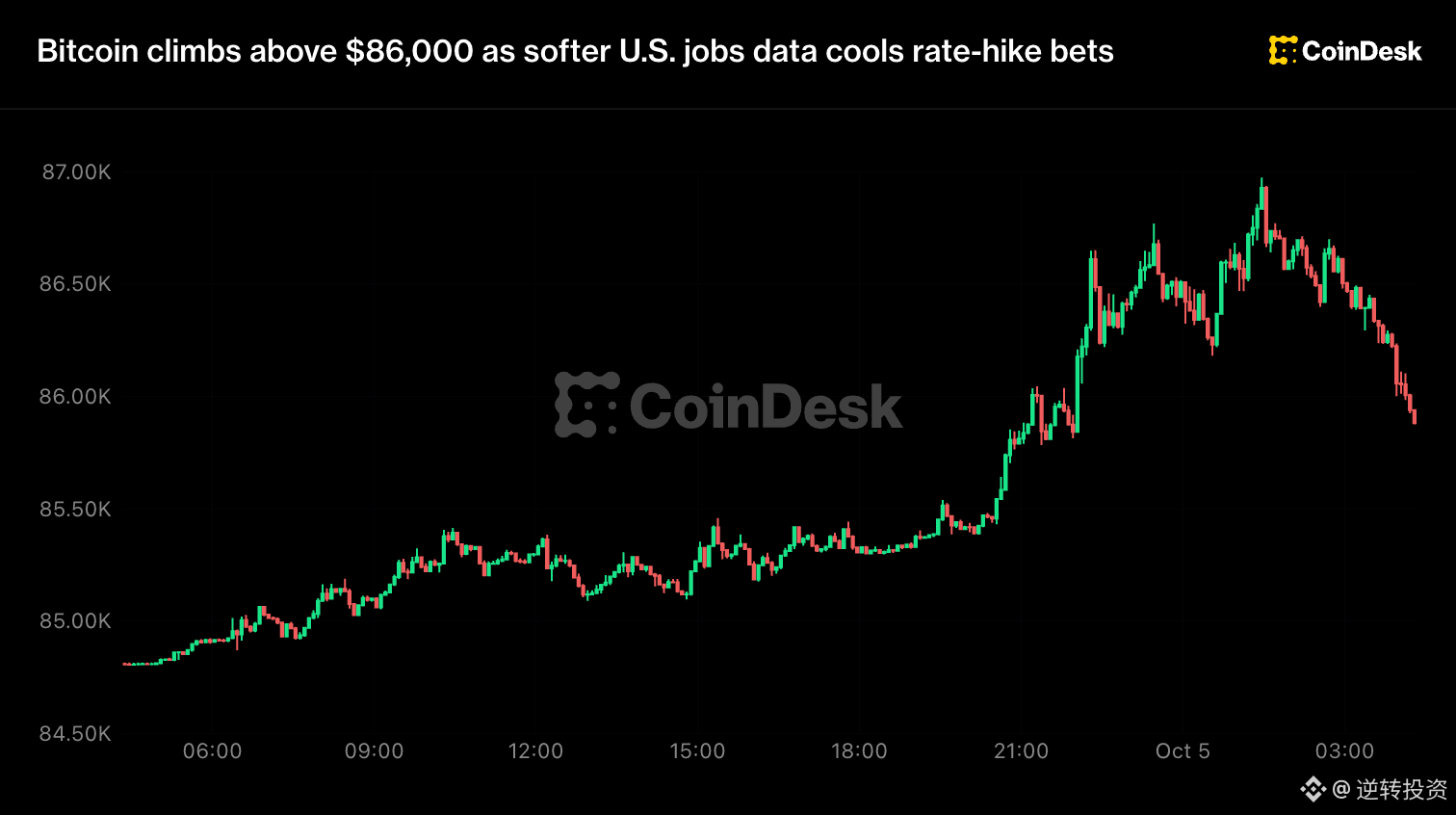
BTC Fails to Break Higher Twice in a Week—So Where Was It Capped?I’ll put this news into my watchlist, but I won’t change direction just because of it. BTC surged to around 87,000—only about 500 dollars below the previous high—then got sold back below 86,000. This is the second failed attempt to break higher within a week.
What’s worth noting isn’t how much it rose, but that both times it stalled at roughly the same level. This suggests there’s real sell pressure overhead, not just random noise. Also, the 24-hour trading volume is up more than 50% versus the prior day, yet the price didn’t hold—more than a “volume spike that led to stagnation,” it’s more worth keeping an eye on than a “sell-off on lower volume.”
On the macro side, U.S. employment data is a bit soft, and the market is guessing that rates will be cut. This clue can explain why dip-buyers are willing to push prices up, but it doesn’t explain why they get knocked back after trying. Both things can be true at the same time—there’s no need to force a causal link.
BTC Fails to Break Higher Twice in a Week—So Where Was It Capped?
I’ll put this news into my watchlist, but I won’t change direction just because of it. BTC surged to around 87,000—only about 500 dollars below the previous high—then got sold back below 86,000. This is the second failed attempt to break higher within a week.
What’s worth noting isn’t how much it rose, but that both times it stalled at roughly the same level. This suggests there’s real sell pressure overhead, not just random noise. Also, the 24-hour trading volume is up more than 50% versus the prior day, yet the price didn’t hold—more than a “volume spike that led to stagnation,” it’s more worth keeping an eye on than a “sell-off on lower volume.”
On the macro side, U.S. employment data is a bit soft, and the market is guessing that rates will be cut. This clue can explain why dip-buyers are willing to push prices up, but it doesn’t explain why they get knocked back after trying. Both things can be true at the same time—there’s no need to force a causal link.
What’s worth noting isn’t how much it rose, but that both times it stalled at roughly the same level. This suggests there’s real sell pressure overhead, not just random noise. Also, the 24-hour trading volume is up more than 50% versus the prior day, yet the price didn’t hold—more than a “volume spike that led to stagnation,” it’s more worth keeping an eye on than a “sell-off on lower volume.”
On the macro side, U.S. employment data is a bit soft, and the market is guessing that rates will be cut. This clue can explain why dip-buyers are willing to push prices up, but it doesn’t explain why they get knocked back after trying. Both things can be true at the same time—there’s no need to force a causal link.
227
·
--
Article
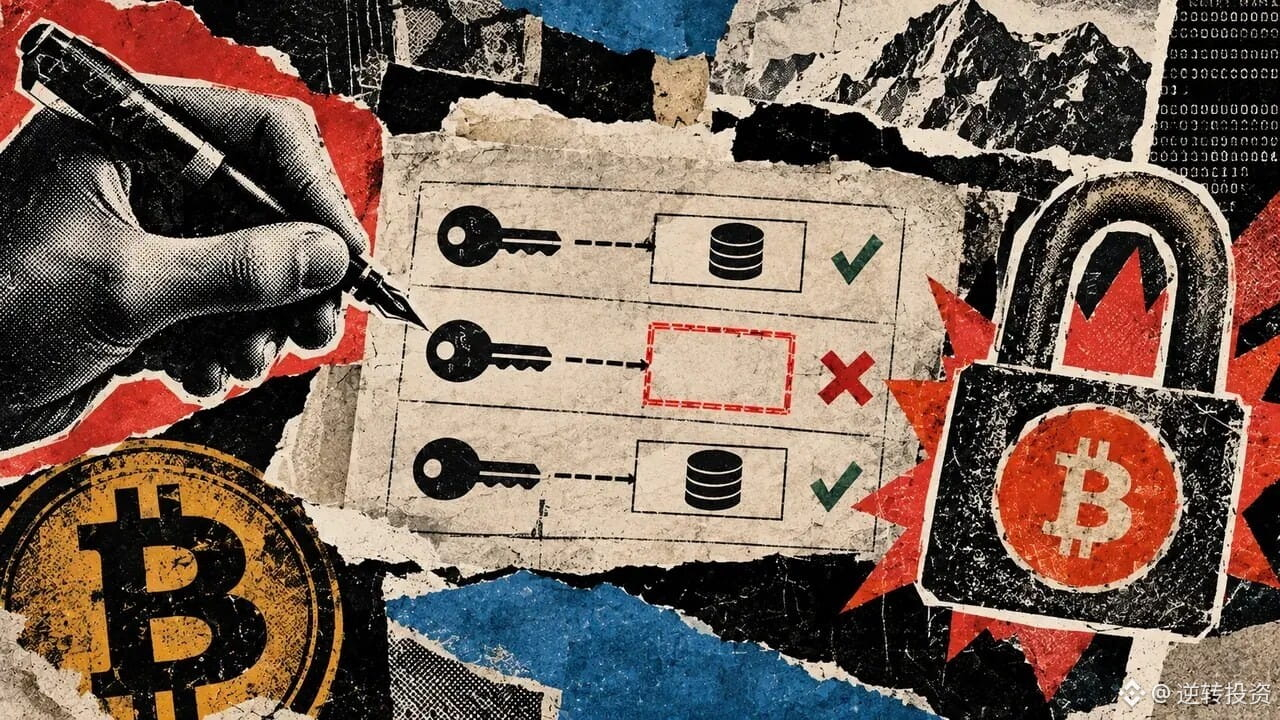
You can change the recipient without stealing private keys—this signature vulnerability has just been fixedFirst, look at an easy-to-overlook point: a signature being valid does not necessarily mean the money was sent to the person you chose.
On September 25, Bitcoin Core merged a change into the development branch aimed at a very narrow case in PSBT. When using an SIGHASH_SINGLE signature, it should bind a particular input to the corresponding output position. But if there is no output in that position at all, this binding layer is broken.
There are two kinds of consequences. Under the legacy input model, a signature may become a fixed hash value; other unspent outputs controlled by the same key could be reused when the structural conditions are the same. SegWit v0 is better: the signature still locks to the specific coin and amount, but the recipient address is still not bound.
You can change the recipient without stealing private keys—this signature vulnerability has just been fixed
First, look at an easy-to-overlook point: a signature being valid does not necessarily mean the money was sent to the person you chose.
On September 25, Bitcoin Core merged a change into the development branch aimed at a very narrow case in PSBT. When using an SIGHASH_SINGLE signature, it should bind a particular input to the corresponding output position. But if there is no output in that position at all, this binding layer is broken.
There are two kinds of consequences. Under the legacy input model, a signature may become a fixed hash value; other unspent outputs controlled by the same key could be reused when the structural conditions are the same. SegWit v0 is better: the signature still locks to the specific coin and amount, but the recipient address is still not bound.
On September 25, Bitcoin Core merged a change into the development branch aimed at a very narrow case in PSBT. When using an SIGHASH_SINGLE signature, it should bind a particular input to the corresponding output position. But if there is no output in that position at all, this binding layer is broken.
There are two kinds of consequences. Under the legacy input model, a signature may become a fixed hash value; other unspent outputs controlled by the same key could be reused when the structural conditions are the same. SegWit v0 is better: the signature still locks to the specific coin and amount, but the recipient address is still not bound.
1
319
·
--

Article
A stablecoin payments company wants to go public, but first it has to clear four hurdlesDon’t jump to conclusions yet—I want to figure out the path to listing first. OpenPayd isn’t going through a traditional IPO; instead, it’s merging with Titan Acquisition Corp., then getting listed on Nasdaq via a backdoor listing, with the ticker OP. According to the company, the merger is planned to be completed by the end of the year, with operations in the U.S. to begin by before April 2027. It already has remittance licenses in 43 states. Financially, for fiscal year 2026 it projects revenue of $73 million and EBITDA of $13 million. After the merger, the valuation could be as high as about $1.145 billion. It sounds like stablecoin payments are finally being accepted by the mainstream market, but structurally it’s still a SPAC—new capital isn’t simply flowing in directly. The real hurdles are ahead: Titan shareholders need to approve the vote, the SEC registration filings must become effective, Nasdaq must grant approval, and they also need to raise at least $130 million in transaction proceeds. If any of these conditions are missing, the timeline will be pushed back. So what I’ll be watching is whether the $130 million can be secured—not the valuation figure itself.
A stablecoin payments company wants to go public, but first it has to clear four hurdles
Don’t jump to conclusions yet—I want to figure out the path to listing first. OpenPayd isn’t going through a traditional IPO; instead, it’s merging with Titan Acquisition Corp., then getting listed on Nasdaq via a backdoor listing, with the ticker OP. According to the company, the merger is planned to be completed by the end of the year, with operations in the U.S. to begin by before April 2027. It already has remittance licenses in 43 states. Financially, for fiscal year 2026 it projects revenue of $73 million and EBITDA of $13 million. After the merger, the valuation could be as high as about $1.145 billion. It sounds like stablecoin payments are finally being accepted by the mainstream market, but structurally it’s still a SPAC—new capital isn’t simply flowing in directly. The real hurdles are ahead: Titan shareholders need to approve the vote, the SEC registration filings must become effective, Nasdaq must grant approval, and they also need to raise at least $130 million in transaction proceeds. If any of these conditions are missing, the timeline will be pushed back. So what I’ll be watching is whether the $130 million can be secured—not the valuation figure itself.
203
·
--

Article
AI tracks stolen funds—it sounds cool, but the stolen money basically can’t be recoveredWhat made me pause is that Chainalysis used its own AI to track that money across four chains. It says that on September 24, during the Bitget theft of $387 million, the trail points to North Korea—and it also pushed North Korea’s acquired crypto assets this year past $1 billion.
Tracking and getting it back are two different things. AI can quickly piece together a fund flow and flag which addresses and which platforms should freeze them. But once the money goes into a mixer, a cross-chain bridge, and then gets swapped into other assets, it’s visible on-chain—but you can’t recover it.
So the real value of this news isn’t in solving the case—it’s in response time. The route that used to take weeks to map out can now be produced in a matter of days, and the window for exchanges to freeze funds is wider.
AI tracks stolen funds—it sounds cool, but the stolen money basically can’t be recovered
What made me pause is that Chainalysis used its own AI to track that money across four chains. It says that on September 24, during the Bitget theft of $387 million, the trail points to North Korea—and it also pushed North Korea’s acquired crypto assets this year past $1 billion.
Tracking and getting it back are two different things. AI can quickly piece together a fund flow and flag which addresses and which platforms should freeze them. But once the money goes into a mixer, a cross-chain bridge, and then gets swapped into other assets, it’s visible on-chain—but you can’t recover it.
So the real value of this news isn’t in solving the case—it’s in response time. The route that used to take weeks to map out can now be produced in a matter of days, and the window for exchanges to freeze funds is wider.
Tracking and getting it back are two different things. AI can quickly piece together a fund flow and flag which addresses and which platforms should freeze them. But once the money goes into a mixer, a cross-chain bridge, and then gets swapped into other assets, it’s visible on-chain—but you can’t recover it.
So the real value of this news isn’t in solving the case—it’s in response time. The route that used to take weeks to map out can now be produced in a matter of days, and the window for exchanges to freeze funds is wider.
3
·
--

Article
The EU wants to clear non-compliant stablecoins out of custody as well, but the exit rules haven’t been written yetTo put it plainly, what changes here is this: in the EU, non-compliant stablecoins may not even be allowed to sit “in custody.” In an opinion submitted to the European Commission on September 30, ESMA asked that the restrictions be expanded from trading to all stablecoin services that require a license—custody and transfers are included as well. This is different from what it said in January 2025, when it indicated that simple custody and transfers could be left in place. The problem now is that the proposal doesn’t specify an effective date, nor does it spell out how existing holders can get their coins out. Trading has been delisted, but the coins are still in custody accounts—what happens to these people? They’ll have to wait for later legislation to fill in the gaps. So I don’t think this means global stablecoin demand will be turned upside down; it’s more like the EU is tightening the service “gateways” within its own jurisdiction. Just a couple of days ago, Circle was still complaining to the European Commission that MiCA’s bank deposit requirements are too strict. Seen together, these two issues suggest that Europe’s rule set is pushing issuers and service providers alike toward the wall. Next, I’ll be watching how the European Commission responds to this opinion—especially whether exit provisions will be added.
The EU wants to clear non-compliant stablecoins out of custody as well, but the exit rules haven’t been written yet
To put it plainly, what changes here is this: in the EU, non-compliant stablecoins may not even be allowed to sit “in custody.” In an opinion submitted to the European Commission on September 30, ESMA asked that the restrictions be expanded from trading to all stablecoin services that require a license—custody and transfers are included as well. This is different from what it said in January 2025, when it indicated that simple custody and transfers could be left in place. The problem now is that the proposal doesn’t specify an effective date, nor does it spell out how existing holders can get their coins out. Trading has been delisted, but the coins are still in custody accounts—what happens to these people? They’ll have to wait for later legislation to fill in the gaps. So I don’t think this means global stablecoin demand will be turned upside down; it’s more like the EU is tightening the service “gateways” within its own jurisdiction. Just a couple of days ago, Circle was still complaining to the European Commission that MiCA’s bank deposit requirements are too strict. Seen together, these two issues suggest that Europe’s rule set is pushing issuers and service providers alike toward the wall. Next, I’ll be watching how the European Commission responds to this opinion—especially whether exit provisions will be added.
120
·
--

Article
Arbitrum pauses newly activated Stylus—what’s truly frozen is the upgrade path, not fundsArbitrum pauses the newly activated Stylus: it’s not the users’ funds that are frozen, but the availability of the new program. What I care about most is the governance trade-off exposed by this move: the Security Committee chose to tighten an executable path before the attack occurred, at the cost of preventing developers from getting the new version of the code to truly run. The official line is that the known Stylus flaw mainly threatens the activity of certain attack chains—such as denial of service—and that no attack has been found that would steal users’ funds. The trigger was a hand-written WebAssembly program constructed with AI assistance that bypassed the standard compiler toolchain. The activated program can still be called before it expires; keepalive renewal is unaffected. The deployment and execution of ordinary Solidity contracts proceed as usual, so this is not a full shutdown. Another easy-to-overlook detail is the accompanying proof conflict protection: once a conflicting proof is accepted, Ethereum settlement on Arbitrum One may be paused. Unconfirmed withdrawals would be delayed, while the chain itself continues to produce blocks. In other words, the risk shifts from fund safety to the time cost of exiting and upgrading. Meanwhile, ETH was down about -0.63% over the same 24 hours and trading volume clearly contracted, but this volatility is not enough to show causality with the event, so I won’t draw that conclusion. What to watch next is how long the pause lasts, and whether existing programs that need to be reactivated are forced to be interrupted.
Arbitrum pauses newly activated Stylus—what’s truly frozen is the upgrade path, not funds
Arbitrum pauses the newly activated Stylus: it’s not the users’ funds that are frozen, but the availability of the new program. What I care about most is the governance trade-off exposed by this move: the Security Committee chose to tighten an executable path before the attack occurred, at the cost of preventing developers from getting the new version of the code to truly run. The official line is that the known Stylus flaw mainly threatens the activity of certain attack chains—such as denial of service—and that no attack has been found that would steal users’ funds. The trigger was a hand-written WebAssembly program constructed with AI assistance that bypassed the standard compiler toolchain. The activated program can still be called before it expires; keepalive renewal is unaffected. The deployment and execution of ordinary Solidity contracts proceed as usual, so this is not a full shutdown. Another easy-to-overlook detail is the accompanying proof conflict protection: once a conflicting proof is accepted, Ethereum settlement on Arbitrum One may be paused. Unconfirmed withdrawals would be delayed, while the chain itself continues to produce blocks. In other words, the risk shifts from fund safety to the time cost of exiting and upgrading. Meanwhile, ETH was down about -0.63% over the same 24 hours and trading volume clearly contracted, but this volatility is not enough to show causality with the event, so I won’t draw that conclusion. What to watch next is how long the pause lasts, and whether existing programs that need to be reactivated are forced to be interrupted.
1
310
·
--

Article
Bitcoin retraces to $84k; ETF buying returns, but $86.5k is the key testAfter Bitcoin touched $87,220 on October 2 and then fell back to around $84,000, Binance’s spot latest quote is $84,648, down 1.56% over the past 24 hours. The intraday range is close to 4%. This pullback comes amid renewed ETF fund inflows. Bitfinex analyst sees $86.5k as the level that needs continuous spot buying to hold, and noted that as of September 30, 1.39 million BTC were concentrated in the $84.0k–$86.5k buy zone. In other words, this range is both where earlier positions are densely clustered and the watershed for short-term battles between bulls and bears.
On the funding front, U.S. spot Bitcoin ETFs saw net inflows of $170.2 million on October 1, after net outflows of about $149 million on the previous trading day. The day-to-day reversal suggests institutional demand has not disappeared, though its durability still needs to be monitored. Bitfinex also cautioned that if the price remains below $81.3k and ETFs continue to see net outflows, the market structure could weaken. This assessment is not far from current levels, implying a relatively high risk of amplified short-term volatility.
Bitcoin retraces to $84k; ETF buying returns, but $86.5k is the key test
After Bitcoin touched $87,220 on October 2 and then fell back to around $84,000, Binance’s spot latest quote is $84,648, down 1.56% over the past 24 hours. The intraday range is close to 4%. This pullback comes amid renewed ETF fund inflows. Bitfinex analyst sees $86.5k as the level that needs continuous spot buying to hold, and noted that as of September 30, 1.39 million BTC were concentrated in the $84.0k–$86.5k buy zone. In other words, this range is both where earlier positions are densely clustered and the watershed for short-term battles between bulls and bears.
On the funding front, U.S. spot Bitcoin ETFs saw net inflows of $170.2 million on October 1, after net outflows of about $149 million on the previous trading day. The day-to-day reversal suggests institutional demand has not disappeared, though its durability still needs to be monitored. Bitfinex also cautioned that if the price remains below $81.3k and ETFs continue to see net outflows, the market structure could weaken. This assessment is not far from current levels, implying a relatively high risk of amplified short-term volatility.
On the funding front, U.S. spot Bitcoin ETFs saw net inflows of $170.2 million on October 1, after net outflows of about $149 million on the previous trading day. The day-to-day reversal suggests institutional demand has not disappeared, though its durability still needs to be monitored. Bitfinex also cautioned that if the price remains below $81.3k and ETFs continue to see net outflows, the market structure could weaken. This assessment is not far from current levels, implying a relatively high risk of amplified short-term volatility.
132
·
--

Article
Federal Reserve Bank of San Francisco: Stablecoin Issuers Increased Their Holdings of U.S. Treasuries by About $200 Billion in Five Years, More Than 40% of China’s Scale of ReductionsA study by the Federal Reserve Bank of San Francisco has found a slightly different role for stablecoins: they are not only a dollar conduit for the crypto market, but are also becoming buyers of U.S. Treasury securities. By the terms of this study, Tether and Circle increased their combined holdings of U.S. Treasuries and repurchase agreements by about $200 billion over the past five years. This incremental amount is more than 40% of the scale of China’s reduction of its holdings of U.S. Treasuries over the same period.
If you look over a longer time horizon, the holder structure for U.S. Treasuries has indeed been changing. Foreign investors held more than half of outstanding U.S. Treasuries around 2008, but by early 2026 that share has fallen to about 30%. The decline is even more pronounced among foreign official institutions: from nearly 100% in the 1970s to just slightly above 40% by early 2026. China’s holdings peaked at the end of 2013 and had more than halved by mid-2026. Meanwhile, stablecoin issuers’ holdings are approaching $200 billion.
Federal Reserve Bank of San Francisco: Stablecoin Issuers Increased Their Holdings of U.S. Treasuries by About $200 Billion in Five Years, More Than 40% of China’s Scale of Reductions
A study by the Federal Reserve Bank of San Francisco has found a slightly different role for stablecoins: they are not only a dollar conduit for the crypto market, but are also becoming buyers of U.S. Treasury securities. By the terms of this study, Tether and Circle increased their combined holdings of U.S. Treasuries and repurchase agreements by about $200 billion over the past five years. This incremental amount is more than 40% of the scale of China’s reduction of its holdings of U.S. Treasuries over the same period.
If you look over a longer time horizon, the holder structure for U.S. Treasuries has indeed been changing. Foreign investors held more than half of outstanding U.S. Treasuries around 2008, but by early 2026 that share has fallen to about 30%. The decline is even more pronounced among foreign official institutions: from nearly 100% in the 1970s to just slightly above 40% by early 2026. China’s holdings peaked at the end of 2013 and had more than halved by mid-2026. Meanwhile, stablecoin issuers’ holdings are approaching $200 billion.
If you look over a longer time horizon, the holder structure for U.S. Treasuries has indeed been changing. Foreign investors held more than half of outstanding U.S. Treasuries around 2008, but by early 2026 that share has fallen to about 30%. The decline is even more pronounced among foreign official institutions: from nearly 100% in the 1970s to just slightly above 40% by early 2026. China’s holdings peaked at the end of 2013 and had more than halved by mid-2026. Meanwhile, stablecoin issuers’ holdings are approaching $200 billion.
77
·
--

Article
Fiserv digital asset platform goes live, with Solana handling the first bank stablecoin settlementFiserv announced on October 1 that its digital asset platform is officially live. The first use case is Roughrider Coin, issued by the Bank of North Dakota. More than 90 banks and credit unions in the state can connect to the platform through the Commercial Center system they already use. The platform currently covers the issuance, reserve management, custody, and settlement processes. The project was first made public in October 2025; at the time, it was planned to launch in 2026. Now, it’s considered to have entered the production environment on schedule.
In terms of responsibilities, VersaBank USA serves as the issuer and directly handles minting, burning, custody, and USD reserve services; Fireblocks provides institutional wallets and tokenization infrastructure; and Solana is responsible for processing on-chain transactions. It’s worth noting that the Bank of North Dakota has clearly stated that Roughrider Coin is not intended for the general public or individual investors. It is positioned as an interbank settlement tool, not a stablecoin for retail users.
Fiserv digital asset platform goes live, with Solana handling the first bank stablecoin settlement
Fiserv announced on October 1 that its digital asset platform is officially live. The first use case is Roughrider Coin, issued by the Bank of North Dakota. More than 90 banks and credit unions in the state can connect to the platform through the Commercial Center system they already use. The platform currently covers the issuance, reserve management, custody, and settlement processes. The project was first made public in October 2025; at the time, it was planned to launch in 2026. Now, it’s considered to have entered the production environment on schedule.
In terms of responsibilities, VersaBank USA serves as the issuer and directly handles minting, burning, custody, and USD reserve services; Fireblocks provides institutional wallets and tokenization infrastructure; and Solana is responsible for processing on-chain transactions. It’s worth noting that the Bank of North Dakota has clearly stated that Roughrider Coin is not intended for the general public or individual investors. It is positioned as an interbank settlement tool, not a stablecoin for retail users.
In terms of responsibilities, VersaBank USA serves as the issuer and directly handles minting, burning, custody, and USD reserve services; Fireblocks provides institutional wallets and tokenization infrastructure; and Solana is responsible for processing on-chain transactions. It’s worth noting that the Bank of North Dakota has clearly stated that Roughrider Coin is not intended for the general public or individual investors. It is positioned as an interbank settlement tool, not a stablecoin for retail users.
64
·
--

Article
$6.3 billion in net inflows into Bitcoin ETFs in Q3; BTC up about 43% in the same periodIn Q3, total net inflows into U.S. spot Bitcoin ETFs were approximately $6.34 billion. This is the strongest single-quarter performance for this type of product in 2026 and has essentially offset the estimated $5 billion net outflows from Q2. In the same period, Bitcoin rose 42.71%, marking the strongest quarterly increase since Q4 2024 and the best Q3 performance since 2017.
The flow of funds is not consistent. In July, inflows were only about $172 million; in August they expanded to $3.52 billion; and in September they fell back to $2.65 billion, a quarter-over-quarter decline of about 25%. On the last day of September, there was also an approximately $149 million net outflow, ending the previous streak of continuous net inflows totaling about $3.1 billion over the prior nine days. This suggests that the momentum of capital at quarter-end had weakened significantly compared with August.
$6.3 billion in net inflows into Bitcoin ETFs in Q3; BTC up about 43% in the same period
In Q3, total net inflows into U.S. spot Bitcoin ETFs were approximately $6.34 billion. This is the strongest single-quarter performance for this type of product in 2026 and has essentially offset the estimated $5 billion net outflows from Q2. In the same period, Bitcoin rose 42.71%, marking the strongest quarterly increase since Q4 2024 and the best Q3 performance since 2017.
The flow of funds is not consistent. In July, inflows were only about $172 million; in August they expanded to $3.52 billion; and in September they fell back to $2.65 billion, a quarter-over-quarter decline of about 25%. On the last day of September, there was also an approximately $149 million net outflow, ending the previous streak of continuous net inflows totaling about $3.1 billion over the prior nine days. This suggests that the momentum of capital at quarter-end had weakened significantly compared with August.
The flow of funds is not consistent. In July, inflows were only about $172 million; in August they expanded to $3.52 billion; and in September they fell back to $2.65 billion, a quarter-over-quarter decline of about 25%. On the last day of September, there was also an approximately $149 million net outflow, ending the previous streak of continuous net inflows totaling about $3.1 billion over the prior nine days. This suggests that the momentum of capital at quarter-end had weakened significantly compared with August.
58
·
--

Article
Bitcoin ETFs record a nine-day inflow streak totaling $3.1 billion, while Ethereum funds turn to net outflowsU.S. spot Bitcoin ETFs extended net inflows to nine consecutive trading days. Meanwhile, Ethereum and Zcash funds turned to net outflows, and there was clear divergence of flows within crypto ETFs.
According to SoSoValue data, on Tuesday Bitcoin ETFs attracted $66.2 million, bringing this streak of consecutive inflows to about $3.1 billion. Net inflows for the year rose to roughly $1.0 billion. After seven straight days of attracting capital, Ethereum spot ETFs recorded about a $3.0 million net outflow on Tuesday. In the prior seven days, cumulative inflows exceeded $851 million, bringing cumulative net inflows to about $14.0 billion. The Zcash ETF ended a six-day inflow streak with a net outflow of $8.0 million on Monday.
Bitcoin ETFs record a nine-day inflow streak totaling $3.1 billion, while Ethereum funds turn to net outflows
U.S. spot Bitcoin ETFs extended net inflows to nine consecutive trading days. Meanwhile, Ethereum and Zcash funds turned to net outflows, and there was clear divergence of flows within crypto ETFs.
According to SoSoValue data, on Tuesday Bitcoin ETFs attracted $66.2 million, bringing this streak of consecutive inflows to about $3.1 billion. Net inflows for the year rose to roughly $1.0 billion. After seven straight days of attracting capital, Ethereum spot ETFs recorded about a $3.0 million net outflow on Tuesday. In the prior seven days, cumulative inflows exceeded $851 million, bringing cumulative net inflows to about $14.0 billion. The Zcash ETF ended a six-day inflow streak with a net outflow of $8.0 million on Monday.
According to SoSoValue data, on Tuesday Bitcoin ETFs attracted $66.2 million, bringing this streak of consecutive inflows to about $3.1 billion. Net inflows for the year rose to roughly $1.0 billion. After seven straight days of attracting capital, Ethereum spot ETFs recorded about a $3.0 million net outflow on Tuesday. In the prior seven days, cumulative inflows exceeded $851 million, bringing cumulative net inflows to about $14.0 billion. The Zcash ETF ended a six-day inflow streak with a net outflow of $8.0 million on Monday.
60
·
--

Article
Bitcoin holds the $82.5K support as the 30-year US Treasury yield hits a 24-year highBitcoin held onto key support amid a surge in long-term US Treasury yields. During Tuesday’s session, BTC/USD traded in a tight range below $84.3K without breaking below $82.5K; this level, according to trader Rekt Capital, is seen as crucial for protecting the upside trend. In the same period, the yield on US 30-year Treasuries topped 5.58%, the highest since June 2002, before easing back to 5.55%. The 10-year yield reached 5.26%, the highest since June 2007.
This round of rising yields came against the backdrop of the US-Iran conflict and uncertainty around global oil supply, weighing on risk assets overall on Monday. QCP Capital cited geopolitical developments and this week’s US macro data as the main drivers of near-term volatility, including Wednesday’s August PCE and Friday’s September nonfarm payrolls.
Bitcoin holds the $82.5K support as the 30-year US Treasury yield hits a 24-year high
Bitcoin held onto key support amid a surge in long-term US Treasury yields. During Tuesday’s session, BTC/USD traded in a tight range below $84.3K without breaking below $82.5K; this level, according to trader Rekt Capital, is seen as crucial for protecting the upside trend. In the same period, the yield on US 30-year Treasuries topped 5.58%, the highest since June 2002, before easing back to 5.55%. The 10-year yield reached 5.26%, the highest since June 2007.
This round of rising yields came against the backdrop of the US-Iran conflict and uncertainty around global oil supply, weighing on risk assets overall on Monday. QCP Capital cited geopolitical developments and this week’s US macro data as the main drivers of near-term volatility, including Wednesday’s August PCE and Friday’s September nonfarm payrolls.
This round of rising yields came against the backdrop of the US-Iran conflict and uncertainty around global oil supply, weighing on risk assets overall on Monday. QCP Capital cited geopolitical developments and this week’s US macro data as the main drivers of near-term volatility, including Wednesday’s August PCE and Friday’s September nonfarm payrolls.
70
·
--

Article
Bitcoin gives back gains: long-term holder selling pressure keeps the $85,000 level from being breachedAccording to a report by Cointelegraph on September 29, 2026, Bitcoin failed to break through $85,000 again. Sellers have continued to place sell orders above the current price to keep it suppressed, while rising U.S. Treasury yields dragged down both the stock market and precious metals.
For crypto readers, the key point of this news is not the price itself, but that “long-term holder supply” has been identified as one of the reasons why the $85,000 level is difficult to break. This implies there is ongoing sell pressure from older coins above, rather than simply a lack of buying demand; however, the exact size and distribution of this supply data still needs to be confirmed. The original text also mentions the linkage between Treasury yields and the stock market and precious metals, which is a cross-market backdrop and cannot be directly inferred as an independent negative factor for Bitcoin.
Bitcoin gives back gains: long-term holder selling pressure keeps the $85,000 level from being breached
According to a report by Cointelegraph on September 29, 2026, Bitcoin failed to break through $85,000 again. Sellers have continued to place sell orders above the current price to keep it suppressed, while rising U.S. Treasury yields dragged down both the stock market and precious metals.
For crypto readers, the key point of this news is not the price itself, but that “long-term holder supply” has been identified as one of the reasons why the $85,000 level is difficult to break. This implies there is ongoing sell pressure from older coins above, rather than simply a lack of buying demand; however, the exact size and distribution of this supply data still needs to be confirmed. The original text also mentions the linkage between Treasury yields and the stock market and precious metals, which is a cross-market backdrop and cannot be directly inferred as an independent negative factor for Bitcoin.
For crypto readers, the key point of this news is not the price itself, but that “long-term holder supply” has been identified as one of the reasons why the $85,000 level is difficult to break. This implies there is ongoing sell pressure from older coins above, rather than simply a lack of buying demand; however, the exact size and distribution of this supply data still needs to be confirmed. The original text also mentions the linkage between Treasury yields and the stock market and precious metals, which is a cross-market backdrop and cannot be directly inferred as an independent negative factor for Bitcoin.
123
·
--

Article
Bitcoin ETFs See Eight Straight Days of Net Inflows, Pulling in $295 Million Over 30 DaysAccording to a report by decrypt.co on September 29, 2026, Bitcoin ETFs extended net capital inflows to eight consecutive days on Monday, increasing by $2.95 billion over the past 30 days, rebounding clearly from the selloff triggered by the Clarity Act.
For crypto readers, the key point in this set of data is whether ETF fund flows have recovered from the shock of policy news. Eight consecutive days of net inflows indicate that allocation-driven capital is still moving in, but the report does not disclose the distribution of inflows by day, each fund’s specific contribution, or the outflow size during the Clarity Act selloff—so the rebound’s strength and durability still need to be confirmed.
Bitcoin ETFs See Eight Straight Days of Net Inflows, Pulling in $295 Million Over 30 Days
According to a report by decrypt.co on September 29, 2026, Bitcoin ETFs extended net capital inflows to eight consecutive days on Monday, increasing by $2.95 billion over the past 30 days, rebounding clearly from the selloff triggered by the Clarity Act.
For crypto readers, the key point in this set of data is whether ETF fund flows have recovered from the shock of policy news. Eight consecutive days of net inflows indicate that allocation-driven capital is still moving in, but the report does not disclose the distribution of inflows by day, each fund’s specific contribution, or the outflow size during the Clarity Act selloff—so the rebound’s strength and durability still need to be confirmed.
For crypto readers, the key point in this set of data is whether ETF fund flows have recovered from the shock of policy news. Eight consecutive days of net inflows indicate that allocation-driven capital is still moving in, but the report does not disclose the distribution of inflows by day, each fund’s specific contribution, or the outflow size during the Clarity Act selloff—so the rebound’s strength and durability still need to be confirmed.
4
·
--
Coinbase Ventures and CMCC Global Strategically Invest in Prediction-Market Market Maker RavenAccording to CNBC’s report on September 29, 2026, Coinbase Ventures and CMCC Global have completed a strategic investment in Raven, though the amount was not disclosed. Raven is an institutional market maker for prediction markets, providing liquidity to contracts by continuously placing buy and sell orders.
For crypto readers, what is worth paying attention to is that prediction markets are attracting institutional-grade market-making infrastructure players, and Coinbase Ventures’ involvement signals that leading exchange ecosystems are focusing on this space. However, the valuation, terms, and the current contract scale covered by Raven from this round of financing have not been disclosed, and whether it can truly improve the depth and bid-ask spreads of prediction markets remains to be confirmed.
Coinbase Ventures and CMCC Global Strategically Invest in Prediction-Market Market Maker Raven
According to CNBC’s report on September 29, 2026, Coinbase Ventures and CMCC Global have completed a strategic investment in Raven, though the amount was not disclosed. Raven is an institutional market maker for prediction markets, providing liquidity to contracts by continuously placing buy and sell orders.
For crypto readers, what is worth paying attention to is that prediction markets are attracting institutional-grade market-making infrastructure players, and Coinbase Ventures’ involvement signals that leading exchange ecosystems are focusing on this space. However, the valuation, terms, and the current contract scale covered by Raven from this round of financing have not been disclosed, and whether it can truly improve the depth and bid-ask spreads of prediction markets remains to be confirmed.
For crypto readers, what is worth paying attention to is that prediction markets are attracting institutional-grade market-making infrastructure players, and Coinbase Ventures’ involvement signals that leading exchange ecosystems are focusing on this space. However, the valuation, terms, and the current contract scale covered by Raven from this round of financing have not been disclosed, and whether it can truly improve the depth and bid-ask spreads of prediction markets remains to be confirmed.
7
·
--
Federal Reserve Chair Waller’s speech at Jackson Hole delivered a clear hawkish signal, and market expectations for a September rate hike accordingly intensified. This stance may imply that the Fed will adopt a more tightening monetary policy than previously, to address inflationary pressures.
This hawkish position directly affected the FX market: after the news was released, the euro fell 0.53% against the U.S. dollar to 1.1594, reflecting heightened expectations for a stronger dollar. If the Fed raises rates, the appeal of dollar-denominated assets would increase, and capital could move from the euro area to the United States, further weighing on the euro.
However, Waller’s hawkish stance could also create friction between the Fed and the Treasury. The Treasury may be more focused on economic growth and debt costs, while the Fed prioritizes controlling inflation. This policy divergence could increase market volatility, and investors should watch for signals of subsequent policy coordination.
Next, it is advisable to pay attention to economic data ahead of the September FOMC meeting—especially inflation and employment figures—as well as any further remarks by Fed officials. If inflation data comes in above expectations, the probability of a rate hike may rise further; if the data is weak, hawkish expectations could cool. In addition, investors should monitor interactions between the Treasury and the Fed, as any signs of policy coordination could shift market expectations.
Federal Reserve Chair Waller’s speech at Jackson Hole delivered a clear hawkish signal, and market expectations for a September rate hike accordingly intensified. This stance may imply that the Fed will adopt a more tightening monetary policy than previously, to address inflationary pressures.
This hawkish position directly affected the FX market: after the news was released, the euro fell 0.53% against the U.S. dollar to 1.1594, reflecting heightened expectations for a stronger dollar. If the Fed raises rates, the appeal of dollar-denominated assets would increase, and capital could move from the euro area to the United States, further weighing on the euro.
However, Waller’s hawkish stance could also create friction between the Fed and the Treasury. The Treasury may be more focused on economic growth and debt costs, while the Fed prioritizes controlling inflation. This policy divergence could increase market volatility, and investors should watch for signals of subsequent policy coordination.
Next, it is advisable to pay attention to economic data ahead of the September FOMC meeting—especially inflation and employment figures—as well as any further remarks by Fed officials. If inflation data comes in above expectations, the probability of a rate hike may rise further; if the data is weak, hawkish expectations could cool. In addition, investors should monitor interactions between the Treasury and the Fed, as any signs of policy coordination could shift market expectations.
This hawkish position directly affected the FX market: after the news was released, the euro fell 0.53% against the U.S. dollar to 1.1594, reflecting heightened expectations for a stronger dollar. If the Fed raises rates, the appeal of dollar-denominated assets would increase, and capital could move from the euro area to the United States, further weighing on the euro.
However, Waller’s hawkish stance could also create friction between the Fed and the Treasury. The Treasury may be more focused on economic growth and debt costs, while the Fed prioritizes controlling inflation. This policy divergence could increase market volatility, and investors should watch for signals of subsequent policy coordination.
Next, it is advisable to pay attention to economic data ahead of the September FOMC meeting—especially inflation and employment figures—as well as any further remarks by Fed officials. If inflation data comes in above expectations, the probability of a rate hike may rise further; if the data is weak, hawkish expectations could cool. In addition, investors should monitor interactions between the Treasury and the Fed, as any signs of policy coordination could shift market expectations.
9
·
--
Trump Threatens to Strike Iran’s Halek Island: New Variables for Oil Prices and Safe-Haven AssetsTrump once again threatened to strike Iran’s Halek Island oil hub, marking the latest escalation in tensions between the U.S. and Iran. Previously, the U.S. carried out a large-scale strike against Iran at the end of July, but this latest threat directly targets a key node in Iran’s oil exports, which could have a more immediate impact on global energy supplies.
Halek Island handles the majority of Iran’s crude oil exports. If it is attacked, the risk of a short-term supply disruption would rise sharply. The market may first react in oil prices—Brent crude could jump—while safe-haven assets such as gold and the U.S. dollar could strengthen. However, market data is still to be confirmed at present, though historical experience shows that such geopolitical events often increase volatility.
Trump Threatens to Strike Iran’s Halek Island: New Variables for Oil Prices and Safe-Haven Assets
Trump once again threatened to strike Iran’s Halek Island oil hub, marking the latest escalation in tensions between the U.S. and Iran. Previously, the U.S. carried out a large-scale strike against Iran at the end of July, but this latest threat directly targets a key node in Iran’s oil exports, which could have a more immediate impact on global energy supplies.
Halek Island handles the majority of Iran’s crude oil exports. If it is attacked, the risk of a short-term supply disruption would rise sharply. The market may first react in oil prices—Brent crude could jump—while safe-haven assets such as gold and the U.S. dollar could strengthen. However, market data is still to be confirmed at present, though historical experience shows that such geopolitical events often increase volatility.
Halek Island handles the majority of Iran’s crude oil exports. If it is attacked, the risk of a short-term supply disruption would rise sharply. The market may first react in oil prices—Brent crude could jump—while safe-haven assets such as gold and the U.S. dollar could strengthen. However, market data is still to be confirmed at present, though historical experience shows that such geopolitical events often increase volatility.
329
·
--
Dimon urges a “big deal” between the U.S. and Europe, but the market hasn’t priced it in yetJPMorgan CEO Jamie Dimon this week publicly called on the United States and Europe to reach a “grand and beautiful” trade and investment agreement. He believes that most disputes between the two sides are, compared with the scope and potential gains of such a deal, just small matters. The remarks have been confirmed, but the agreement itself has yet to produce any official negotiating text or timeline; details still need to be confirmed.
The transmission path for this kind of call is not complicated: if the U.S. and Europe can truly lower tariffs and non-tariff barriers, expectations for cross-border investment, manufacturing, and financial services would improve, and Europe’s asset risk premium could narrow. At the same time, U.S. multinational companies’ revenue expectations in Europe would be reassessed. But Dimon is a banker rather than a negotiator; his proposal is more like a barometer of sentiment than a policy that is being implemented.
Dimon urges a “big deal” between the U.S. and Europe, but the market hasn’t priced it in yet
JPMorgan CEO Jamie Dimon this week publicly called on the United States and Europe to reach a “grand and beautiful” trade and investment agreement. He believes that most disputes between the two sides are, compared with the scope and potential gains of such a deal, just small matters. The remarks have been confirmed, but the agreement itself has yet to produce any official negotiating text or timeline; details still need to be confirmed.
The transmission path for this kind of call is not complicated: if the U.S. and Europe can truly lower tariffs and non-tariff barriers, expectations for cross-border investment, manufacturing, and financial services would improve, and Europe’s asset risk premium could narrow. At the same time, U.S. multinational companies’ revenue expectations in Europe would be reassessed. But Dimon is a banker rather than a negotiator; his proposal is more like a barometer of sentiment than a policy that is being implemented.
The transmission path for this kind of call is not complicated: if the U.S. and Europe can truly lower tariffs and non-tariff barriers, expectations for cross-border investment, manufacturing, and financial services would improve, and Europe’s asset risk premium could narrow. At the same time, U.S. multinational companies’ revenue expectations in Europe would be reassessed. But Dimon is a banker rather than a negotiator; his proposal is more like a barometer of sentiment than a policy that is being implemented.
2
Log in to explore more content
Join global crypto users on Binance Square
⚡️ Get latest and useful information about crypto.
💬 Trusted by the world’s largest crypto exchange.
👍 Discover real insights from verified creators.
Email / Phone number
Trending Topics
ETHUp70%InQ3ButLiquidityFalls
268 views
63 Discussing
#ethup70%inq3butliquidityfalls
🚨 ETH JUST HAD A MASSIVE Q3 — BUT THERE’S A WARNING! ⚠️
Ethereum gained roughly 70% in Q3, delivering one of its strongest quarterly performances in recent periods. 📈
But here’s the part traders shouldn’t ignore:
💧 Liquidity has fallen even as $ETH surged.
That creates an unusual setup — price is moving aggressively higher while market liquidity is becoming thinner.
🔥 ETH +70% in Q3
💧 Liquidity declining
📈 Price momentum still strong
If liquidity returns, the next move could become even more volatile.
Is $ETH preparing for another breakout, or is falling liquidity a hidden warning? 👀
#Ethereum #ETH #crypto
Faizan Crypto Learner
·3 Likes
·7.1k views
EthStakingExitQueueHits2026High
1,106 views
141 Discussing
FedOctoberHoldOdds82.3%
1,312 views
130 Discussing