
Quantastic3
302 Posts

Quantastic3
I am a quant lover who run Quantastic, an easy-to customized quantitative platform, that generate stable win
Open Trade

BNB Holder
High-Frequency Trader
8.6 Years
0 Following
103 Followers
376 Liked
Posts
Portfolio
All
Quotes
Videos
In top 10 ROI for the first time!
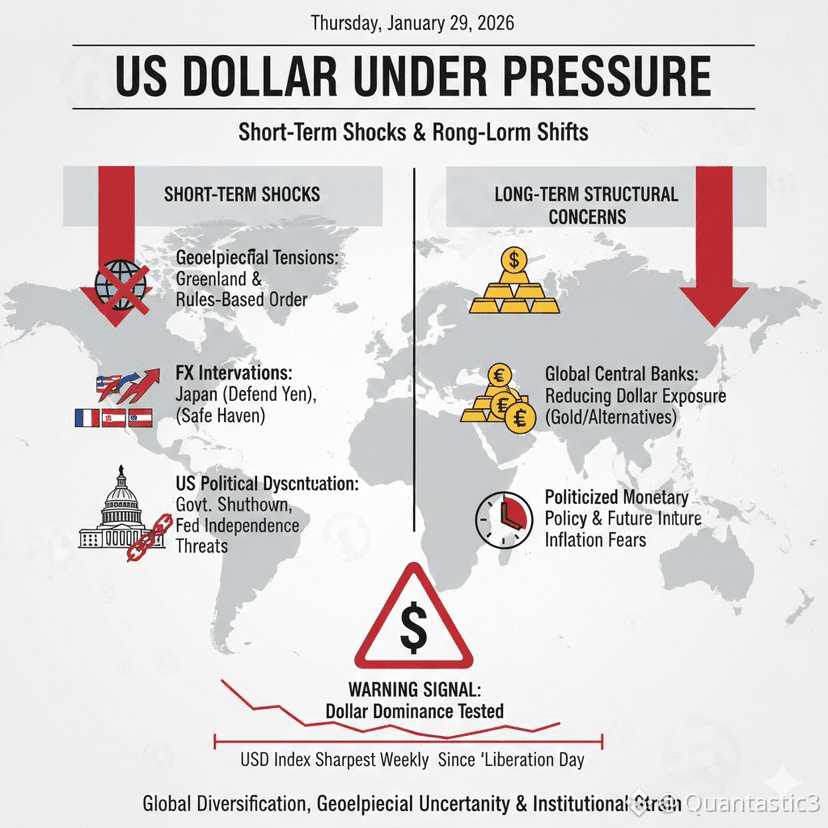
Why the US Dollar Is Suddenly Under Pressure
After months of stability, the US dollar index just saw its sharpest weekly drop since “Liberation Day,” potentially falling to levels last seen in early 2022. The recent slide isn’t random — it’s the result of overlapping short-term shocks and long-term structural concerns.
Geopolitical tensions, including controversial signals around Greenland, rattled global confidence in the US commitment to the rules-based order. Even after de-escalation, markets remained uneasy. At the same time, foreign exchange interventions played a major role: Japan stepped in to defend the yen, the Swiss franc surged as a safe haven, and both moves weakened the dollar’s relative strength.
Domestically, political dysfunction is adding fuel. A looming government shutdown and renewed threats to Federal Reserve independence are reviving fears of politicized monetary policy and future inflation. Long term, the trend is even clearer — global central banks are steadily reducing dollar exposure, shifting toward gold and alternative reserve assets.
The takeaway: this isn’t just a short-term dip. It’s a warning signal that dollar dominance is being tested at a time of geopolitical uncertainty, institutional strain, and global diversification.
#USDOLLAR
#GlobalMarkets
#MacroEconomics
#ReserveCurrency
#Geopolitics
Copy Quantastic3, a top Binance lead trader with NO risk: We would cover any lost for register copiers who copy Quantastic account at https://www.binance.com/copy-trading/lead-details/4734580934665797633?inviteCode=Rddgkwwf . Chat with me for more detail!
After months of stability, the US dollar index just saw its sharpest weekly drop since “Liberation Day,” potentially falling to levels last seen in early 2022. The recent slide isn’t random — it’s the result of overlapping short-term shocks and long-term structural concerns.
Geopolitical tensions, including controversial signals around Greenland, rattled global confidence in the US commitment to the rules-based order. Even after de-escalation, markets remained uneasy. At the same time, foreign exchange interventions played a major role: Japan stepped in to defend the yen, the Swiss franc surged as a safe haven, and both moves weakened the dollar’s relative strength.
Domestically, political dysfunction is adding fuel. A looming government shutdown and renewed threats to Federal Reserve independence are reviving fears of politicized monetary policy and future inflation. Long term, the trend is even clearer — global central banks are steadily reducing dollar exposure, shifting toward gold and alternative reserve assets.
The takeaway: this isn’t just a short-term dip. It’s a warning signal that dollar dominance is being tested at a time of geopolitical uncertainty, institutional strain, and global diversification.
#USDOLLAR
#GlobalMarkets
#MacroEconomics
#ReserveCurrency
#Geopolitics
Copy Quantastic3, a top Binance lead trader with NO risk: We would cover any lost for register copiers who copy Quantastic account at https://www.binance.com/copy-trading/lead-details/4734580934665797633?inviteCode=Rddgkwwf . Chat with me for more detail!
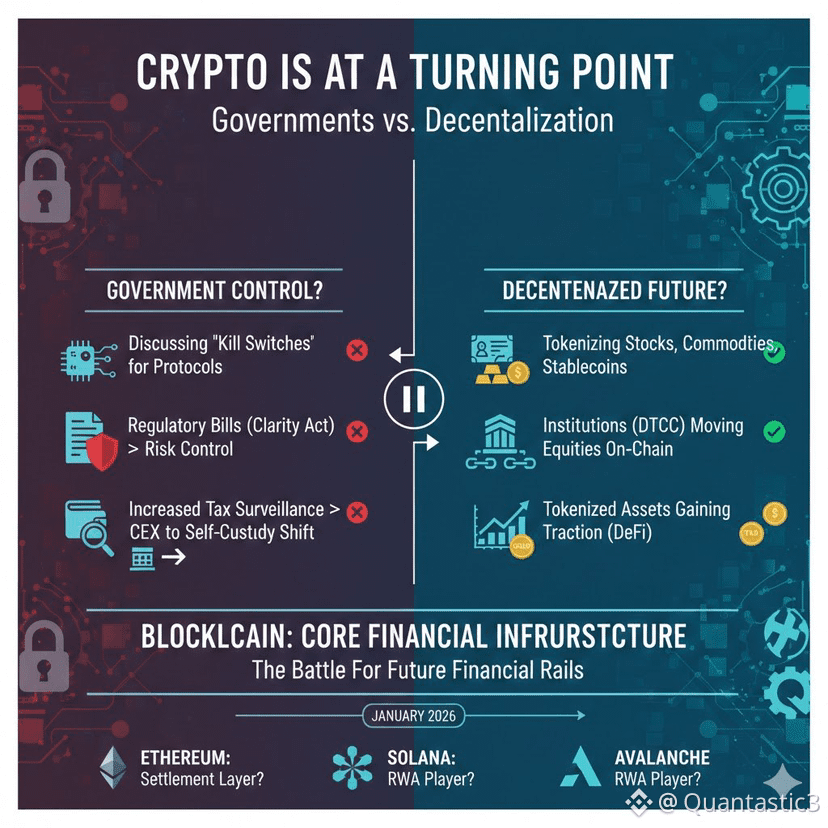
Crypto Is at a Turning Point
Governments are discussing “kill switches” for crypto protocols while, at the same time, preparing to tokenize stocks, commodities, and stablecoins. That contradiction says everything.
Regulatory bills like the Clarity Act aim to control risk, but institutions such as the DTCC are already moving equities on-chain. Tokenized stocks and gold are gaining traction in DeFi, quietly confirming that blockchain is becoming core financial infrastructure.
If clarity arrives, Ethereum could dominate as the settlement layer, with Solana and Avalanche emerging as strong RWA players. Meanwhile, increased tax surveillance is pushing users away from centralized exchanges toward self-custody.
This isn’t crypto ending — it’s the battle over who controls the future financial rails.
#crypto #defi #Tokenization #RWA #blockchain
Copy Quantastic3, a top Binance lead trader with NO risk: We would cover any lost for register copiers who copy Quantastic account at https://www.binance.com/copy-trading/lead-details/4734580934665797633?inviteCode=Rddgkwwf Chat with me for more detail!
Governments are discussing “kill switches” for crypto protocols while, at the same time, preparing to tokenize stocks, commodities, and stablecoins. That contradiction says everything.
Regulatory bills like the Clarity Act aim to control risk, but institutions such as the DTCC are already moving equities on-chain. Tokenized stocks and gold are gaining traction in DeFi, quietly confirming that blockchain is becoming core financial infrastructure.
If clarity arrives, Ethereum could dominate as the settlement layer, with Solana and Avalanche emerging as strong RWA players. Meanwhile, increased tax surveillance is pushing users away from centralized exchanges toward self-custody.
This isn’t crypto ending — it’s the battle over who controls the future financial rails.
#crypto #defi #Tokenization #RWA #blockchain
Copy Quantastic3, a top Binance lead trader with NO risk: We would cover any lost for register copiers who copy Quantastic account at https://www.binance.com/copy-trading/lead-details/4734580934665797633?inviteCode=Rddgkwwf Chat with me for more detail!
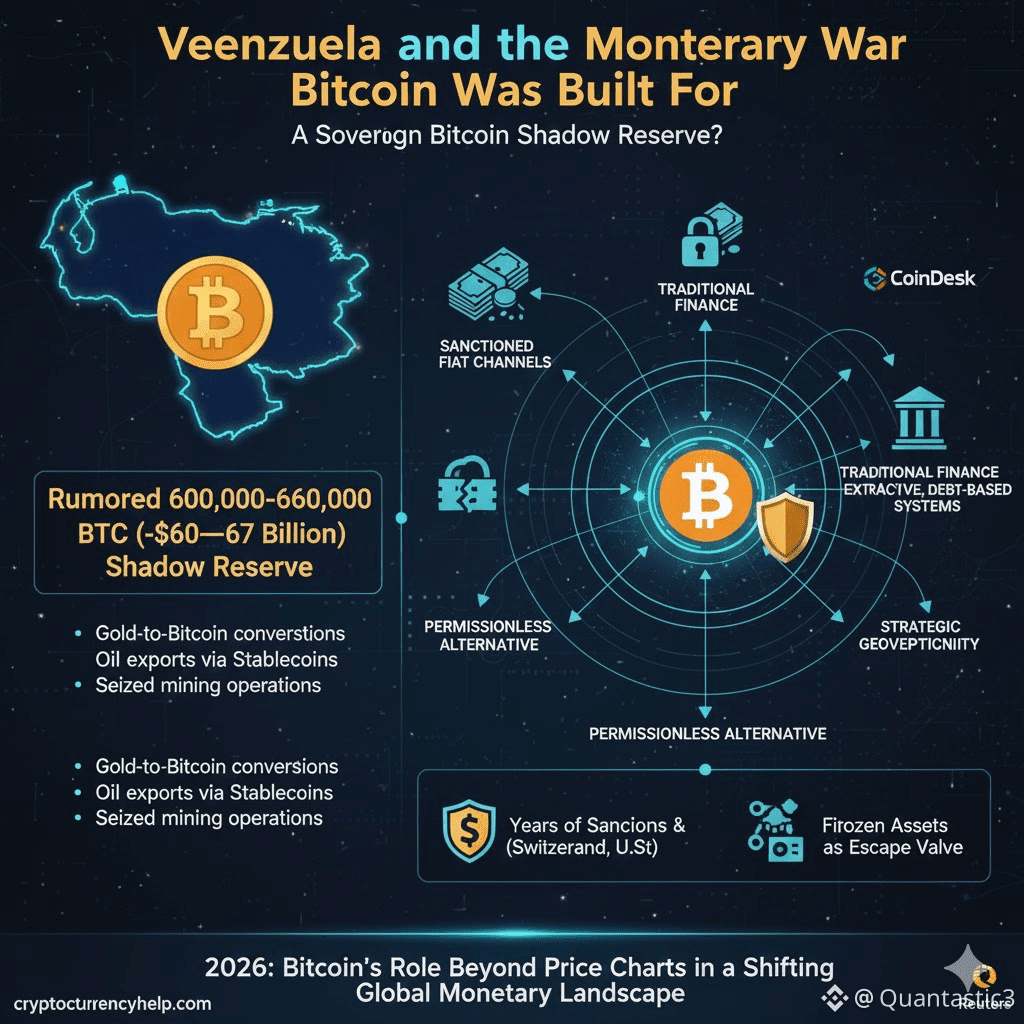
📌 Venezuela and the Monetary War Bitcoin Was Built For
Recent geopolitical events involving Venezuela — including the capture of President Nicolás Maduro — have sparked intense discussion in the crypto world about a potential sovereign Bitcoin reserve. After years of sanctions, economic turmoil, and alternative payment strategies, intelligence-linked reports suggest Venezuela may have quietly accumulated a massive Bitcoin “shadow reserve” — possibly around 600,000–660,000 BTC (~$60–67 billion at current prices). This would place it among the largest Bitcoin holders globally, rivaling major institutional treasuries. cryptocurrencyhelp.com+1
Analysts believe Venezuela built this reserve through a mix of gold-to-Bitcoin conversions, oil exports settled in stablecoins then swapped to BTC, and seized mining operations over several years. MEXC While the rumored scale remains unverified on-chain, the narrative highlights how Bitcoin is increasingly seen as a geopolitical asset, not just a speculative token. CoinDesk
Now, with Venezuelan assets frozen by jurisdictions like Switzerland and U.S. authorities weighing how to legally handle these crypto holdings, the situation illustrates a broader monetary struggle: Bitcoin may offer a permissionless alternative to extractive, debt-based systems and sanctioned fiat channels — especially where traditional finance fails sovereign or individual financial needs. Reuters
Whether as an escape valve for sanctioned economies or a strategic reserve in geopolitical conflicts, 2026 is reinforcing the idea that Bitcoin’s role extends far beyond price charts — it’s part of a shifting global monetary landscape.
#Bitcoin2026 #CryptoSovereignty #VenezuelaBitcoin #Geopolitics #ShadowReserve
Recent geopolitical events involving Venezuela — including the capture of President Nicolás Maduro — have sparked intense discussion in the crypto world about a potential sovereign Bitcoin reserve. After years of sanctions, economic turmoil, and alternative payment strategies, intelligence-linked reports suggest Venezuela may have quietly accumulated a massive Bitcoin “shadow reserve” — possibly around 600,000–660,000 BTC (~$60–67 billion at current prices). This would place it among the largest Bitcoin holders globally, rivaling major institutional treasuries. cryptocurrencyhelp.com+1
Analysts believe Venezuela built this reserve through a mix of gold-to-Bitcoin conversions, oil exports settled in stablecoins then swapped to BTC, and seized mining operations over several years. MEXC While the rumored scale remains unverified on-chain, the narrative highlights how Bitcoin is increasingly seen as a geopolitical asset, not just a speculative token. CoinDesk
Now, with Venezuelan assets frozen by jurisdictions like Switzerland and U.S. authorities weighing how to legally handle these crypto holdings, the situation illustrates a broader monetary struggle: Bitcoin may offer a permissionless alternative to extractive, debt-based systems and sanctioned fiat channels — especially where traditional finance fails sovereign or individual financial needs. Reuters
Whether as an escape valve for sanctioned economies or a strategic reserve in geopolitical conflicts, 2026 is reinforcing the idea that Bitcoin’s role extends far beyond price charts — it’s part of a shifting global monetary landscape.
#Bitcoin2026 #CryptoSovereignty #VenezuelaBitcoin #Geopolitics #ShadowReserve
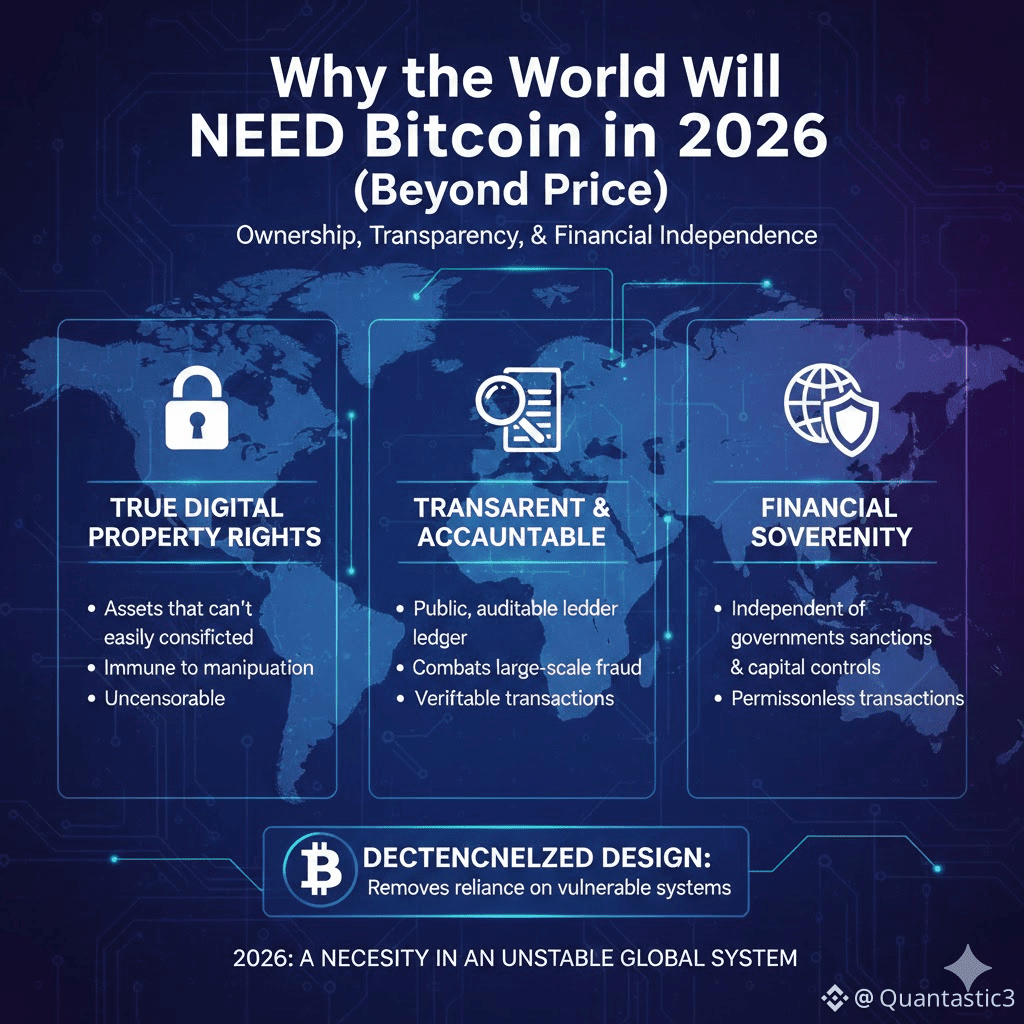
Why the World Will NEED Bitcoin in 2026 (Not About Price)
Bitcoin’s importance in 2026 goes far beyond price charts. While markets remain bullish, the real value of Bitcoin lies in why it’s becoming necessary.
As governments expand control and traditional systems show cracks, Bitcoin offers true digital property rights — assets that can’t be easily confiscated or manipulated. Its transparent public ledger provides accountability in a world where large-scale fraud continues to surface, and its decentralized design removes reliance on vulnerable banks and physical storage.
Geopolitically, Bitcoin enables financial sovereignty. From sanctions to capital controls, independent money is becoming a critical tool for individuals and nations alike.
In 2026, Bitcoin isn’t just about “number go up.” It’s about ownership, transparency, and financial independence in an increasingly unstable global system.
#Bitcoin2026 #FinancialSovereignty #DecentralizedMoney #DigitalProperty #cryptofuture
Bitcoin’s importance in 2026 goes far beyond price charts. While markets remain bullish, the real value of Bitcoin lies in why it’s becoming necessary.
As governments expand control and traditional systems show cracks, Bitcoin offers true digital property rights — assets that can’t be easily confiscated or manipulated. Its transparent public ledger provides accountability in a world where large-scale fraud continues to surface, and its decentralized design removes reliance on vulnerable banks and physical storage.
Geopolitically, Bitcoin enables financial sovereignty. From sanctions to capital controls, independent money is becoming a critical tool for individuals and nations alike.
In 2026, Bitcoin isn’t just about “number go up.” It’s about ownership, transparency, and financial independence in an increasingly unstable global system.
#Bitcoin2026 #FinancialSovereignty #DecentralizedMoney #DigitalProperty #cryptofuture
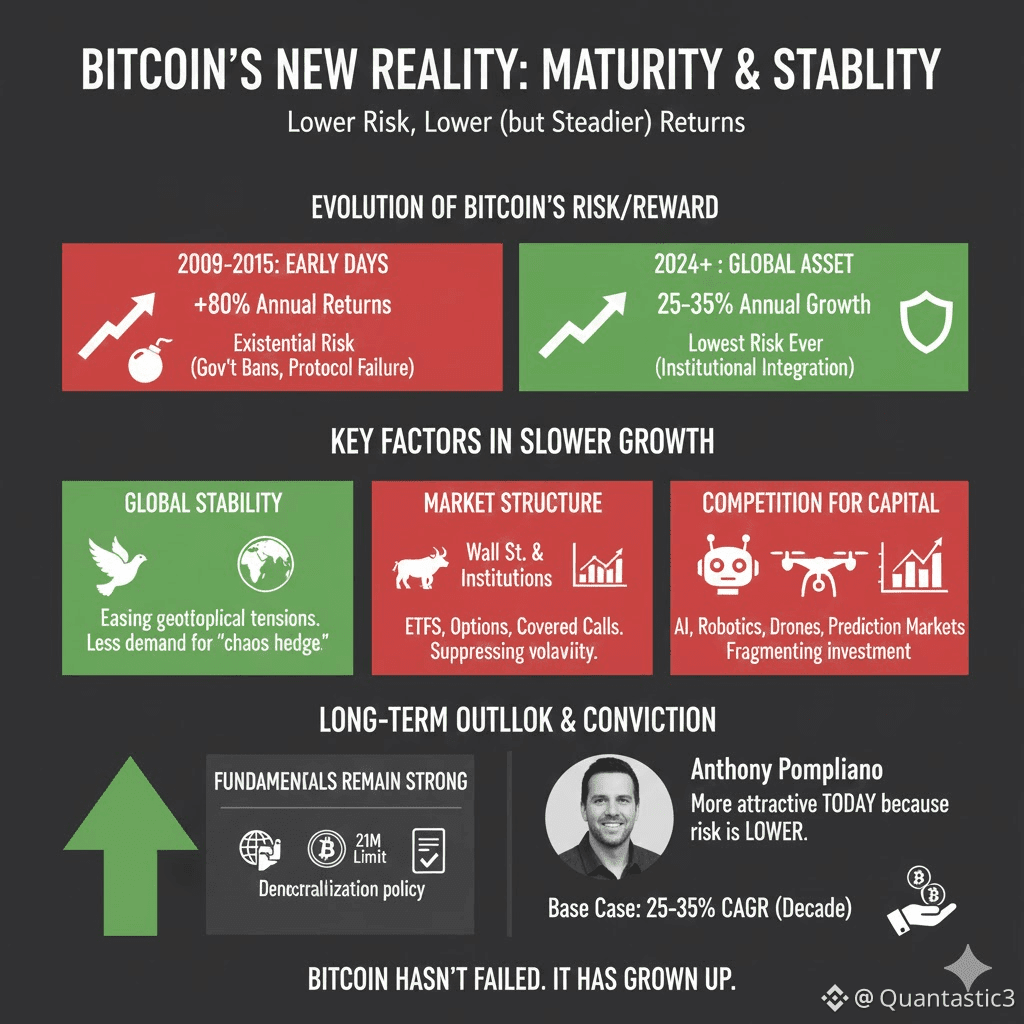
Why Isn’t Bitcoin Going Up? A Clear Market Reality Check
Bitcoin’s slower price movement isn’t a sign of weakness—it’s a sign of maturity. According to Anthony Pompliano, Bitcoin is now at its lowest risk level ever. In the early days, investors faced existential threats like government bans or protocol failure, which justified extreme upside—sometimes 80%+ annual returns. Today, Bitcoin is integrated into the global financial system, so the trade-off is clear: lower risk, lower (but more stable) returns. The new expectation is closer to a 25–35% annual growth range, not explosive asymmetry.
Another key factor is global stability. Bitcoin has historically acted as a hedge against chaos—war, monetary breakdowns, and political uncertainty. With a shift toward “peace through strength” narratives and easing geopolitical tensions, the urgency to buy Bitcoin as insurance has cooled. When fear declines, demand for hedge assets often slows.
Market structure has also changed. Wall Street is now deeply involved through ETFs, options, and institutional strategies. Large holders increasingly sell covered calls to generate yield, which naturally suppresses volatility and caps short-term upside. Unlike early crypto investors chasing life-changing gains, institutions are often satisfied with steady 10–15% returns, reshaping Bitcoin’s price behavior.
Bitcoin also faces more competition for capital. It’s no longer the only asymmetric opportunity available. Investors now have access to fast-growing sectors like AI, robotics, drones, and prediction markets.
Looking ahead, the fundamentals remain intact. Bitcoin is still decentralized, scarce, and governed by a transparent monetary policy. Pompliano argues that Bitcoin is actually more attractive today precisely because the risk is lower. While there may be slower years or drawdowns, his long-term base case remains a 25–35% compound annual growth rate over the next decade.
#bitcoin
#CryptoMarket
#LongTermInvesting
#DigitalAssets
#MarketCycles
Bitcoin’s slower price movement isn’t a sign of weakness—it’s a sign of maturity. According to Anthony Pompliano, Bitcoin is now at its lowest risk level ever. In the early days, investors faced existential threats like government bans or protocol failure, which justified extreme upside—sometimes 80%+ annual returns. Today, Bitcoin is integrated into the global financial system, so the trade-off is clear: lower risk, lower (but more stable) returns. The new expectation is closer to a 25–35% annual growth range, not explosive asymmetry.
Another key factor is global stability. Bitcoin has historically acted as a hedge against chaos—war, monetary breakdowns, and political uncertainty. With a shift toward “peace through strength” narratives and easing geopolitical tensions, the urgency to buy Bitcoin as insurance has cooled. When fear declines, demand for hedge assets often slows.
Market structure has also changed. Wall Street is now deeply involved through ETFs, options, and institutional strategies. Large holders increasingly sell covered calls to generate yield, which naturally suppresses volatility and caps short-term upside. Unlike early crypto investors chasing life-changing gains, institutions are often satisfied with steady 10–15% returns, reshaping Bitcoin’s price behavior.
Bitcoin also faces more competition for capital. It’s no longer the only asymmetric opportunity available. Investors now have access to fast-growing sectors like AI, robotics, drones, and prediction markets.
Looking ahead, the fundamentals remain intact. Bitcoin is still decentralized, scarce, and governed by a transparent monetary policy. Pompliano argues that Bitcoin is actually more attractive today precisely because the risk is lower. While there may be slower years or drawdowns, his long-term base case remains a 25–35% compound annual growth rate over the next decade.
#bitcoin
#CryptoMarket
#LongTermInvesting
#DigitalAssets
#MarketCycles
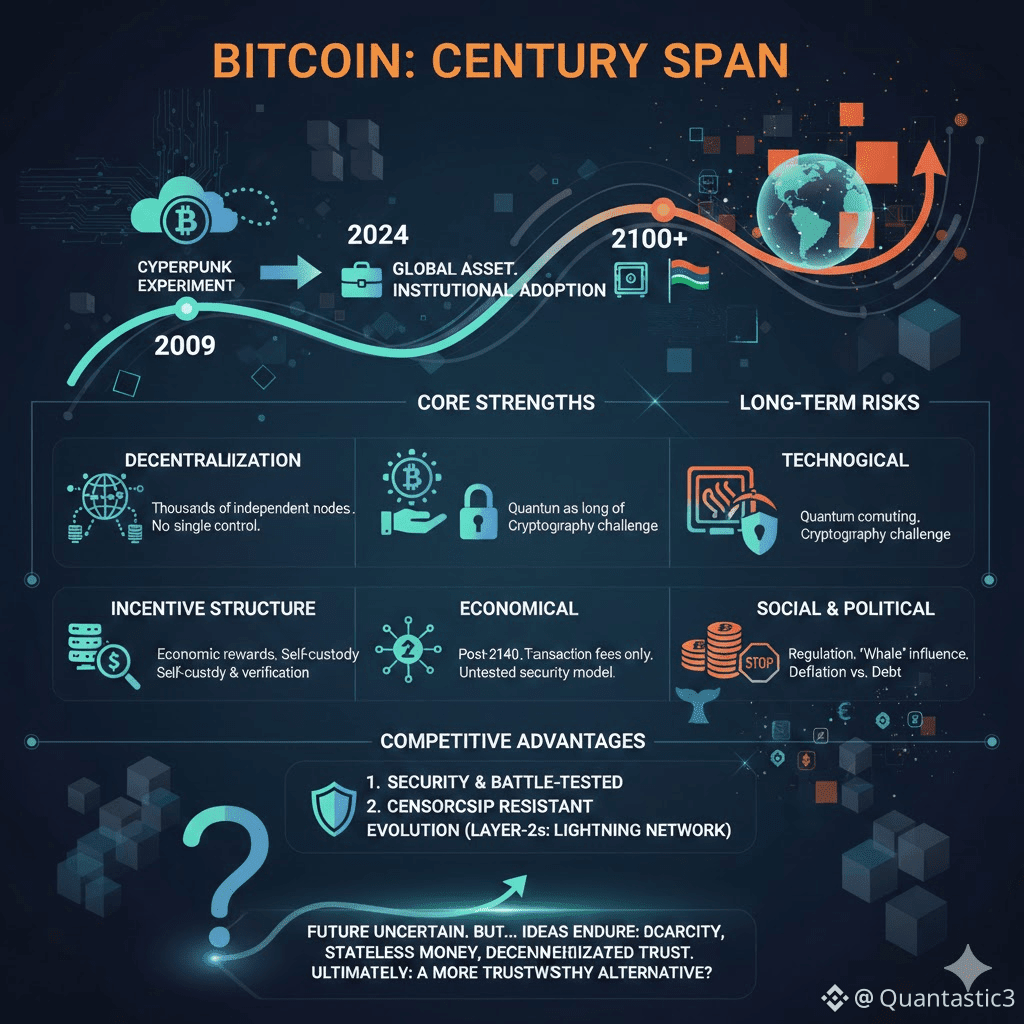
Will Bitcoin Still Exist in 100 Years? A Long-Term Perspective
Bitcoin didn’t appear out of nowhere. It represents the next stage in the evolution of money—from physical commodities like salt and gold to purely digital value secured by mathematics. Since its launch in 2009, Bitcoin has moved from a niche cypherpunk experiment to a recognized global asset, now held by institutional investors and even national reserves.
What gives Bitcoin a chance to survive for a century lies in its core design. First is decentralization. Thousands of independent nodes and miners maintain the network across the world, meaning no single authority controls it. Second is its incentive structure. Participants are rewarded economically while also gaining the ability to verify their own financial data without relying on banks or governments. Third is protocol resilience. In theory, Bitcoin can continue operating as long as even one node remains online.
However, long-term survival is not without serious risks. Technologically, quantum computing could one day challenge Bitcoin’s cryptography, forcing major upgrades. Economically, once the final Bitcoin is mined around 2140, the network must rely entirely on transaction fees—an untested security model at that scale. Socially and politically, Bitcoin faces pressure from government regulation, large holders (“whales”), and a fundamental clash between a deflationary currency and debt-driven economic systems.
Despite these threats, Bitcoin has strong competitive advantages. It remains the most secure and battle-tested blockchain in existence. Its censorship resistance makes it extremely difficult for nation-states to shut down. And its ability to evolve—seen through Layer-2 solutions like the Lightning Network—shows that Bitcoin is not as static as critics often claim.
#bitcoin
#DigitalMoney
#decentralization
#FutureOfFinance
#blockchain
Bitcoin didn’t appear out of nowhere. It represents the next stage in the evolution of money—from physical commodities like salt and gold to purely digital value secured by mathematics. Since its launch in 2009, Bitcoin has moved from a niche cypherpunk experiment to a recognized global asset, now held by institutional investors and even national reserves.
What gives Bitcoin a chance to survive for a century lies in its core design. First is decentralization. Thousands of independent nodes and miners maintain the network across the world, meaning no single authority controls it. Second is its incentive structure. Participants are rewarded economically while also gaining the ability to verify their own financial data without relying on banks or governments. Third is protocol resilience. In theory, Bitcoin can continue operating as long as even one node remains online.
However, long-term survival is not without serious risks. Technologically, quantum computing could one day challenge Bitcoin’s cryptography, forcing major upgrades. Economically, once the final Bitcoin is mined around 2140, the network must rely entirely on transaction fees—an untested security model at that scale. Socially and politically, Bitcoin faces pressure from government regulation, large holders (“whales”), and a fundamental clash between a deflationary currency and debt-driven economic systems.
Despite these threats, Bitcoin has strong competitive advantages. It remains the most secure and battle-tested blockchain in existence. Its censorship resistance makes it extremely difficult for nation-states to shut down. And its ability to evolve—seen through Layer-2 solutions like the Lightning Network—shows that Bitcoin is not as static as critics often claim.
#bitcoin
#DigitalMoney
#decentralization
#FutureOfFinance
#blockchain
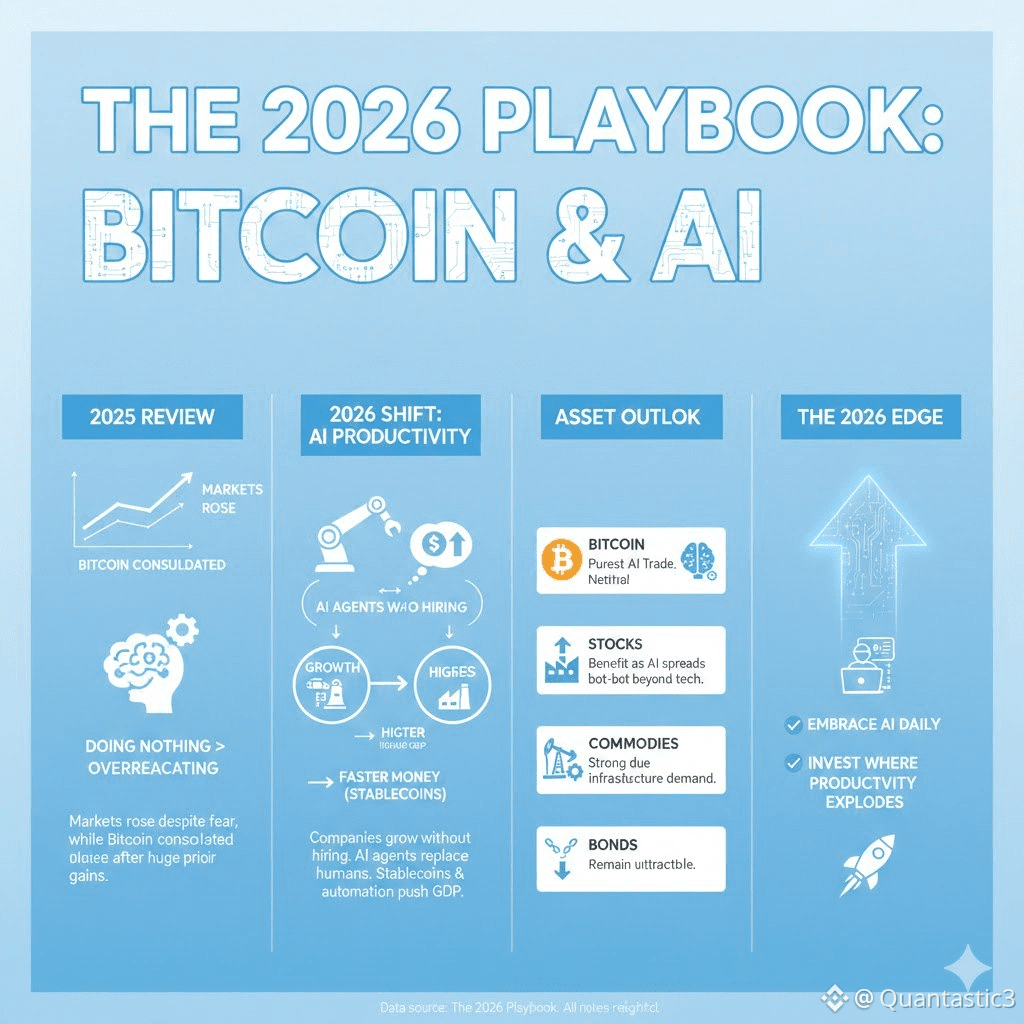
The 2026 Playbook: Bitcoin & AI
2025 proved that doing nothing often beats overreacting. Markets rose despite fear, while Bitcoin consolidated after huge prior gains.
In 2026, the real shift is AI-driven productivity. Companies are growing without hiring, using AI agents instead of humans. Faster money movement via stablecoins and automation could push GDP higher than historical norms.
Bitcoin stands out as the purest AI trade—a neutral system for an AI-driven economy where bots transact with bots. Stocks should benefit as AI spreads beyond tech, commodities stay strong due to infrastructure demand, and bonds remain unattractive.
The edge in 2026 goes to those who embrace AI daily and invest where productivity explodes.
#bitcoin #AI #SmartInvesting #FutureEconomy #crypto
2025 proved that doing nothing often beats overreacting. Markets rose despite fear, while Bitcoin consolidated after huge prior gains.
In 2026, the real shift is AI-driven productivity. Companies are growing without hiring, using AI agents instead of humans. Faster money movement via stablecoins and automation could push GDP higher than historical norms.
Bitcoin stands out as the purest AI trade—a neutral system for an AI-driven economy where bots transact with bots. Stocks should benefit as AI spreads beyond tech, commodities stay strong due to infrastructure demand, and bonds remain unattractive.
The edge in 2026 goes to those who embrace AI daily and invest where productivity explodes.
#bitcoin #AI #SmartInvesting #FutureEconomy #crypto
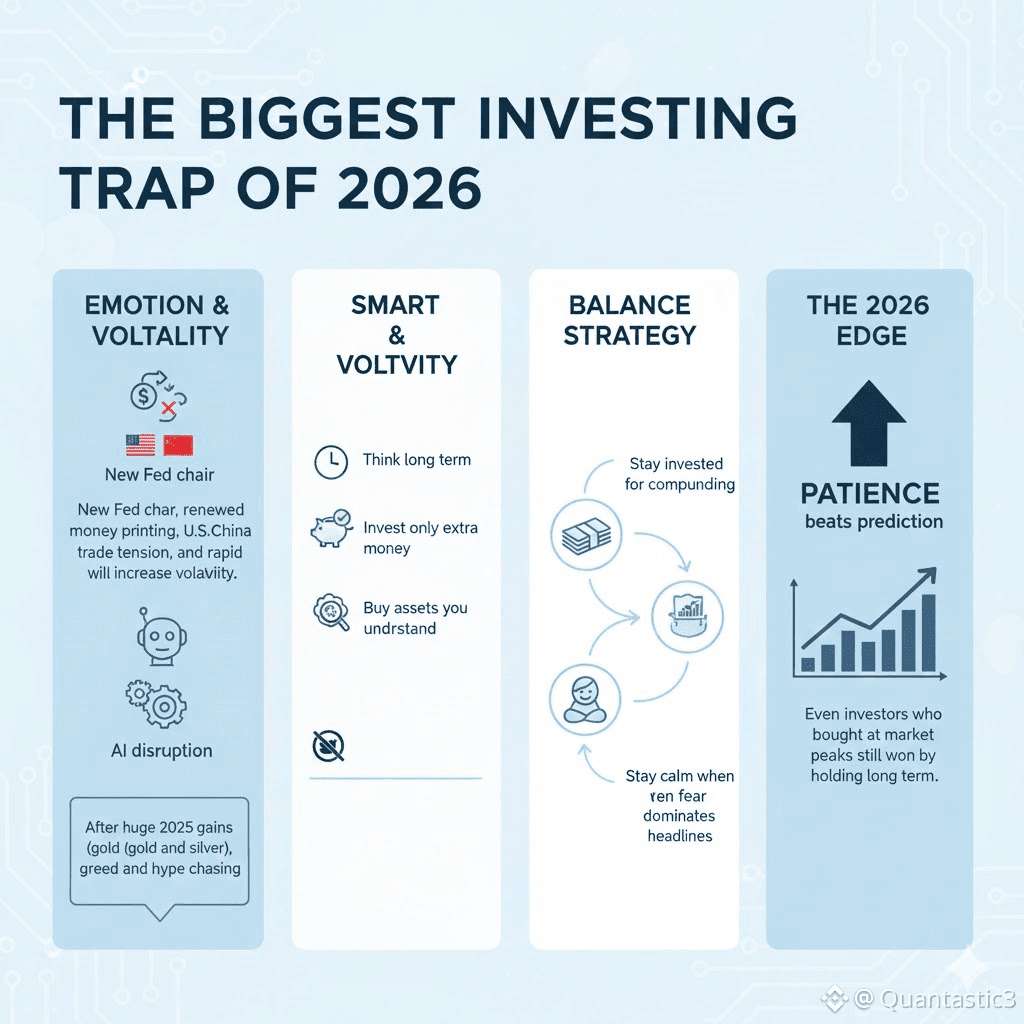
The Biggest Investing Trap of 2026
2026 will be driven by emotion, not logic. A new Fed chair, renewed money printing, U.S.–China trade tension, and rapid AI disruption will increase volatility. After huge 2025 gains (gold and silver), many investors will fall into the same trap: greed and hype chasing.
Smart investors follow simple rules:
Think long term, not short-term price moves
Invest only extra money, not bill money
Buy assets you understand, not social-media trends
The best strategy is balance: stay invested for compounding, keep cash to buy during crashes, and stay calm when fear dominates headlines. Even investors who bought at market peaks still won by holding long term.
#Investing #LongTermWealth #MarketPsychology #SmartMoney #FinancialFreedom
2026 will be driven by emotion, not logic. A new Fed chair, renewed money printing, U.S.–China trade tension, and rapid AI disruption will increase volatility. After huge 2025 gains (gold and silver), many investors will fall into the same trap: greed and hype chasing.
Smart investors follow simple rules:
Think long term, not short-term price moves
Invest only extra money, not bill money
Buy assets you understand, not social-media trends
The best strategy is balance: stay invested for compounding, keep cash to buy during crashes, and stay calm when fear dominates headlines. Even investors who bought at market peaks still won by holding long term.
#Investing #LongTermWealth #MarketPsychology #SmartMoney #FinancialFreedom
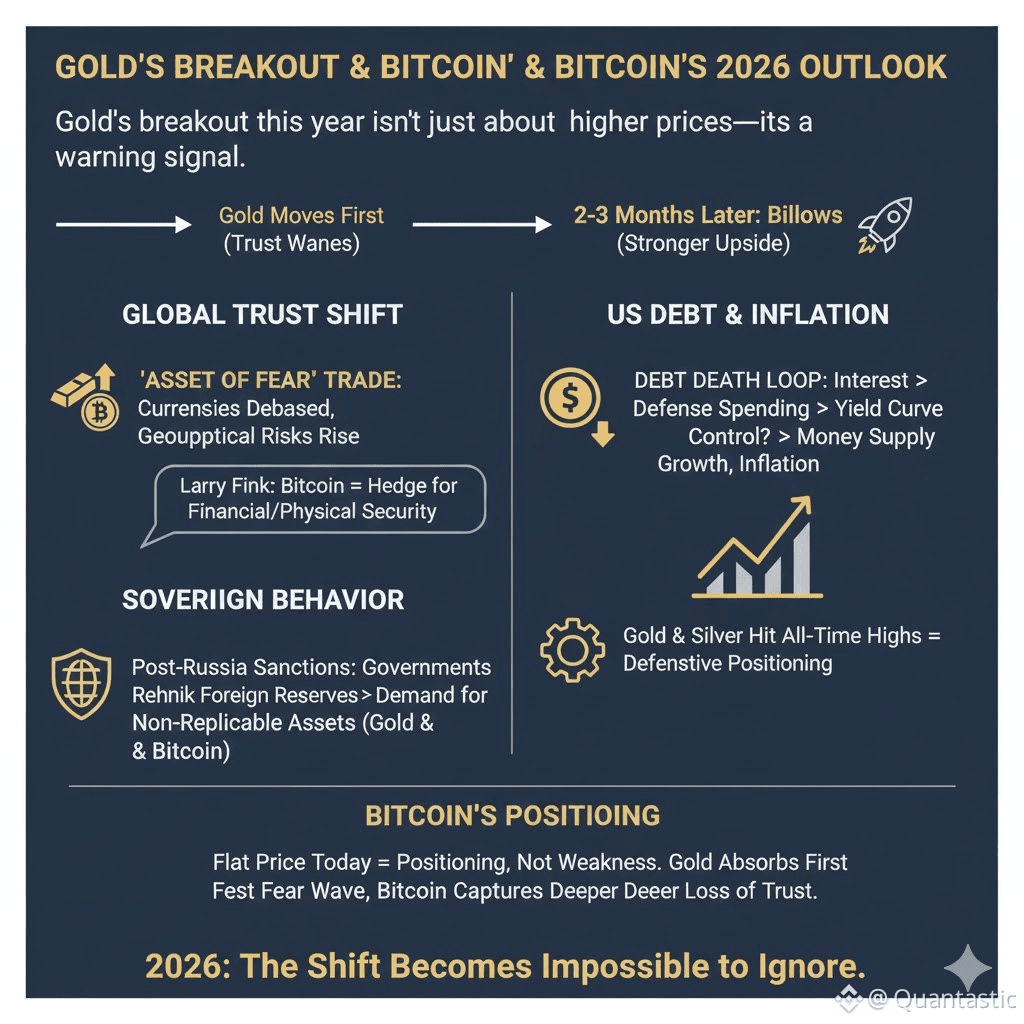
Why Gold’s Breakout Is Bullish for Bitcoin in 2026..AND RISK-FREE COPY TRADE AT THE BOTTOM!"
Gold’s breakout this year isn’t just about higher prices—it’s a warning signal. Historically, when global trust in the financial system weakens, gold moves first. Bitcoin usually follows 2–3 months later, often with stronger and faster upside due to its smaller market cap and higher volatility.
This shift reflects what many call the “asset of fear” trade. As currencies are debased and geopolitical risks rise, both investors and nation-states are moving toward survival assets with no counterparty risk. Even BlackRock’s Larry Fink has described Bitcoin as a hedge for those worried about financial and physical security.
Sovereign behavior matters here. After the confiscation of Russian reserves, governments are rethinking the safety of holding foreign currencies or debt. That’s driving demand for non-replicable assets like gold—and increasingly, Bitcoin.
At the same time, the U.S. is entering a debt death loop. With interest expenses surpassing defense spending, Yield Curve Control becomes a real possibility—printing money to cap bond yields. History shows this leads to rapid money supply growth and inflation.
Silver hitting all-time highs alongside gold strengthens this message. It suggests defensive positioning, not speculation.
Bitcoin’s flat price today looks less like weakness and more like positioning. Gold absorbs the first wave of fear. Bitcoin captures the deeper loss of trust in the system. If history repeats, 2026 may be when that shift becomes impossible to ignore.
#bitcoin #GoldVsBitcoin #MacroTrends #StoreOfValue #cryptoeducation
Gold’s breakout this year isn’t just about higher prices—it’s a warning signal. Historically, when global trust in the financial system weakens, gold moves first. Bitcoin usually follows 2–3 months later, often with stronger and faster upside due to its smaller market cap and higher volatility.
This shift reflects what many call the “asset of fear” trade. As currencies are debased and geopolitical risks rise, both investors and nation-states are moving toward survival assets with no counterparty risk. Even BlackRock’s Larry Fink has described Bitcoin as a hedge for those worried about financial and physical security.
Sovereign behavior matters here. After the confiscation of Russian reserves, governments are rethinking the safety of holding foreign currencies or debt. That’s driving demand for non-replicable assets like gold—and increasingly, Bitcoin.
At the same time, the U.S. is entering a debt death loop. With interest expenses surpassing defense spending, Yield Curve Control becomes a real possibility—printing money to cap bond yields. History shows this leads to rapid money supply growth and inflation.
Silver hitting all-time highs alongside gold strengthens this message. It suggests defensive positioning, not speculation.
Bitcoin’s flat price today looks less like weakness and more like positioning. Gold absorbs the first wave of fear. Bitcoin captures the deeper loss of trust in the system. If history repeats, 2026 may be when that shift becomes impossible to ignore.
#bitcoin #GoldVsBitcoin #MacroTrends #StoreOfValue #cryptoeducation
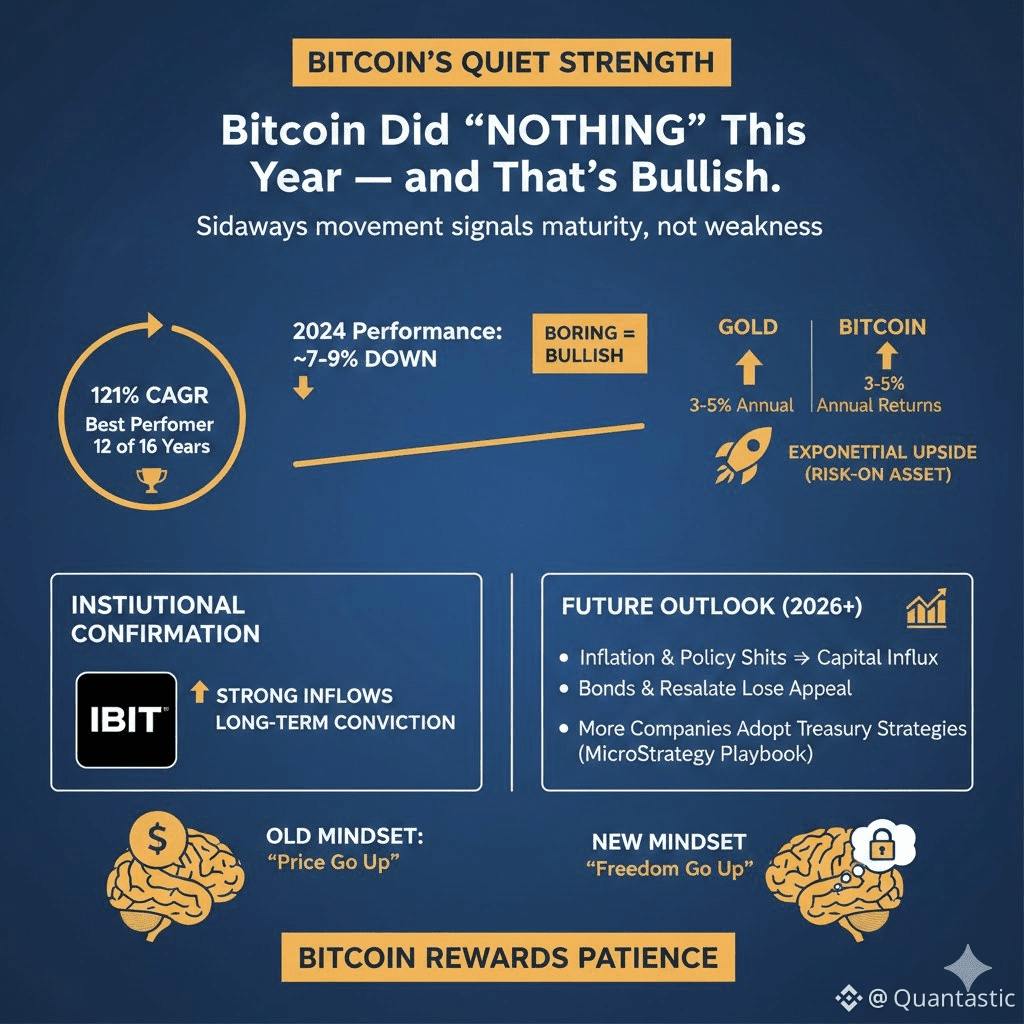
Bitcoin Did “Nothing” This Year — and That’s Bullish
Bitcoin being down ~7–9% this year looks boring, but that’s exactly the point. Sideways movement signals maturity, not weakness. Zoom out and Bitcoin is still the best-performing asset in 12 of the last 16 years, with a 121% CAGR.
While gold hits new highs with only 3–5% annual returns, Bitcoin is meant to trade as a risk-on asset with exponential upside. Quiet periods like this often set the stage for the next major move.
Institutional behavior confirms it. Despite flat prices, BlackRock’s Bitcoin ETF (IBIT) saw strong inflows, showing long-term conviction—not short-term speculation.
Looking ahead, inflation and policy shifts in 2026 could drive major capital into Bitcoin, especially as traditional assets like bonds and real estate lose appeal. More companies may also adopt Bitcoin treasury strategies, following the MicroStrategy playbook.
The mindset is changing from “price go up” to freedom go up. Traders watch charts. Investors build conviction. Bitcoin rewards patience.
#BTC☀️ #CryptoInsights #LongTermView #macroeconomic #FinancialFreedom
Bitcoin being down ~7–9% this year looks boring, but that’s exactly the point. Sideways movement signals maturity, not weakness. Zoom out and Bitcoin is still the best-performing asset in 12 of the last 16 years, with a 121% CAGR.
While gold hits new highs with only 3–5% annual returns, Bitcoin is meant to trade as a risk-on asset with exponential upside. Quiet periods like this often set the stage for the next major move.
Institutional behavior confirms it. Despite flat prices, BlackRock’s Bitcoin ETF (IBIT) saw strong inflows, showing long-term conviction—not short-term speculation.
Looking ahead, inflation and policy shifts in 2026 could drive major capital into Bitcoin, especially as traditional assets like bonds and real estate lose appeal. More companies may also adopt Bitcoin treasury strategies, following the MicroStrategy playbook.
The mindset is changing from “price go up” to freedom go up. Traders watch charts. Investors build conviction. Bitcoin rewards patience.
#BTC☀️ #CryptoInsights #LongTermView #macroeconomic #FinancialFreedom
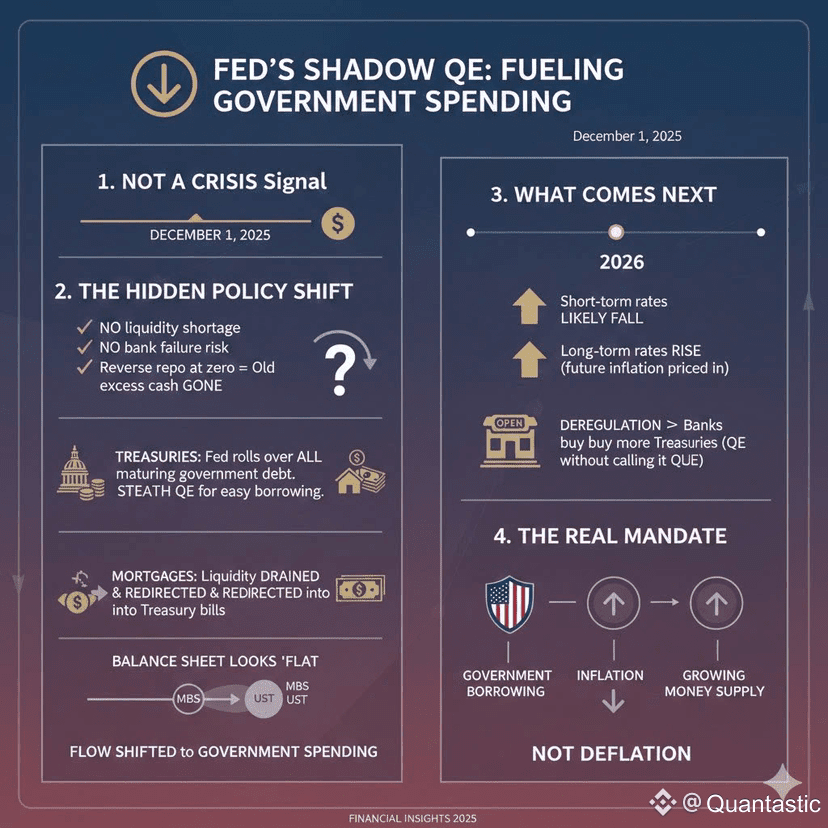
📉 Why the Fed Really Ended QT
AND RISK-FREE COPY TRADE AT THE BOTTOM!
The Fed stopped Quantitative Tightening on December 1, 2025 — not because a crisis is coming, but because the U.S. government needs more money to borrow and spend. Instead of restarting QE openly, the Fed is quietly redirecting liquidity behind the scenes.
1. Not a Crisis Signal
No liquidity shortage, no bank failure risk. The reverse repo hitting zero simply means old excess cash is gone.
2. The Hidden Policy Shift
Treasuries: The Fed is rolling over all maturing government debt — a stealth form of QE that keeps government borrowing easy.
Mortgages: Mortgage liquidity is being drained and redirected into Treasury bills.
The balance sheet looks “flat,” but the flow of money is being shifted toward government spending.
3. What Comes Next
Short-term rates likely fall in 2026.
Long-term rates rise as markets price in future inflation.
Deregulation may let banks buy more Treasuries, acting like QE without calling it QE.
4. The Real Mandate
The Fed’s actions ultimately support government borrowing, inflation, and a growing money supply — not deflation.
#FedPolicy #EconomicInsights #financialeducation #USEconomy IndiaExport #MarketUpdate
CHRISTMAS PROMOTION!!! Copy Quantastic, a top Binance lead trader with NO risk: We would cover any lost for register copiers who copy Quantastic account at
https://www.binance.com/copy-trading/lead-details/4734580934665797633?inviteCode=Rddgkwwf
Chat with me for more detail!
AND RISK-FREE COPY TRADE AT THE BOTTOM!
The Fed stopped Quantitative Tightening on December 1, 2025 — not because a crisis is coming, but because the U.S. government needs more money to borrow and spend. Instead of restarting QE openly, the Fed is quietly redirecting liquidity behind the scenes.
1. Not a Crisis Signal
No liquidity shortage, no bank failure risk. The reverse repo hitting zero simply means old excess cash is gone.
2. The Hidden Policy Shift
Treasuries: The Fed is rolling over all maturing government debt — a stealth form of QE that keeps government borrowing easy.
Mortgages: Mortgage liquidity is being drained and redirected into Treasury bills.
The balance sheet looks “flat,” but the flow of money is being shifted toward government spending.
3. What Comes Next
Short-term rates likely fall in 2026.
Long-term rates rise as markets price in future inflation.
Deregulation may let banks buy more Treasuries, acting like QE without calling it QE.
4. The Real Mandate
The Fed’s actions ultimately support government borrowing, inflation, and a growing money supply — not deflation.
#FedPolicy #EconomicInsights #financialeducation #USEconomy IndiaExport #MarketUpdate
CHRISTMAS PROMOTION!!! Copy Quantastic, a top Binance lead trader with NO risk: We would cover any lost for register copiers who copy Quantastic account at
https://www.binance.com/copy-trading/lead-details/4734580934665797633?inviteCode=Rddgkwwf
Chat with me for more detail!
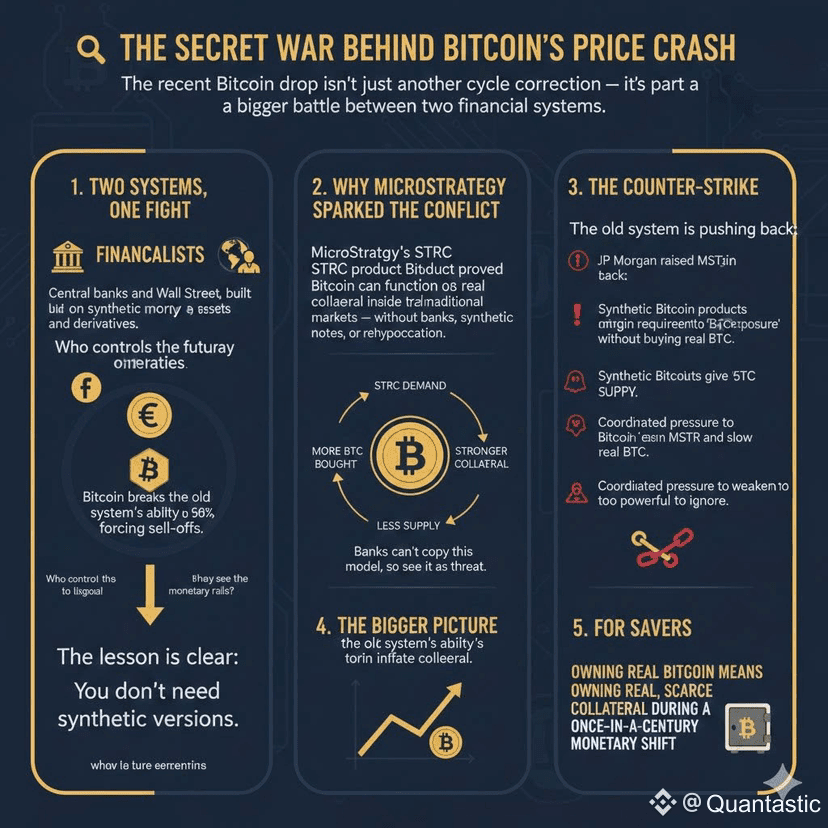
🔍 The Secret War Behind Bitcoin’s Price Crash
AND RISK-FREE COPY TRADE AT THE BOTTOM!
The recent Bitcoin drop isn’t just another cycle correction — it’s part of a bigger battle between two financial systems.
1. Two Systems, One Fight
Financialists: Central banks and Wall Street, built on synthetic money and derivatives.
Sovereignists: Nations, companies, and individuals choosing real, permissionless assets like Bitcoin.
This fight is about who controls the future monetary rails.
2. Why MicroStrategy Sparked the Conflict
MicroStrategy’s STRC product proved Bitcoin can function as real collateral inside traditional markets — without banks, synthetic notes, or rehypothecation.
This creates a scarcity flywheel:
More STRC demand → More BTC bought → Less supply → Stronger collateral.
Banks can’t copy this model, so they see it as a threat.
3. The Counter-Strike
The old system is pushing back:
JP Morgan raised MSTR margin requirements from 50% to 95%, forcing sell-offs.
Synthetic Bitcoin products give “BTC exposure” without buying real BTC.
Coordinated pressure to weaken MSTR and slow the scarcity loop.
4. The Bigger Picture
Bitcoin breaks the old system’s ability to inflate collateral.
That’s why the attacks are growing — Bitcoin is becoming too powerful to ignore.
5. For Savers
The lesson is clear:
You don’t need synthetic versions. Owning real Bitcoin means owning real, scarce collateral during a once-in-a-century monetary shift.
#BitcoinRevolution #CryptoInsights #FinancialGrowth #DigitalEconomy #MonetaryShift
CHRISTMAS PROMOTION!!! Copy Quantastic, a top Binance lead trader with NO risk: We would cover any lost for register copiers who copy Quantastic account at
https://www.binance.com/copy-trading/lead-details/4734580934665797633?inviteCode=Rddgkwwf
Chat with me for more detail!
AND RISK-FREE COPY TRADE AT THE BOTTOM!
The recent Bitcoin drop isn’t just another cycle correction — it’s part of a bigger battle between two financial systems.
1. Two Systems, One Fight
Financialists: Central banks and Wall Street, built on synthetic money and derivatives.
Sovereignists: Nations, companies, and individuals choosing real, permissionless assets like Bitcoin.
This fight is about who controls the future monetary rails.
2. Why MicroStrategy Sparked the Conflict
MicroStrategy’s STRC product proved Bitcoin can function as real collateral inside traditional markets — without banks, synthetic notes, or rehypothecation.
This creates a scarcity flywheel:
More STRC demand → More BTC bought → Less supply → Stronger collateral.
Banks can’t copy this model, so they see it as a threat.
3. The Counter-Strike
The old system is pushing back:
JP Morgan raised MSTR margin requirements from 50% to 95%, forcing sell-offs.
Synthetic Bitcoin products give “BTC exposure” without buying real BTC.
Coordinated pressure to weaken MSTR and slow the scarcity loop.
4. The Bigger Picture
Bitcoin breaks the old system’s ability to inflate collateral.
That’s why the attacks are growing — Bitcoin is becoming too powerful to ignore.
5. For Savers
The lesson is clear:
You don’t need synthetic versions. Owning real Bitcoin means owning real, scarce collateral during a once-in-a-century monetary shift.
#BitcoinRevolution #CryptoInsights #FinancialGrowth #DigitalEconomy #MonetaryShift
CHRISTMAS PROMOTION!!! Copy Quantastic, a top Binance lead trader with NO risk: We would cover any lost for register copiers who copy Quantastic account at
https://www.binance.com/copy-trading/lead-details/4734580934665797633?inviteCode=Rddgkwwf
Chat with me for more detail!
Did Jack Mallers Just Build Bitcoin’s First $1 Trillion Company?
"... AND RISK-FREE COPY TRADE AT THE BOTTOM!"
A Quick Knowledge Breakdown
21 Capital just went public, and many believe Jack Mallers may be building Bitcoin’s first $1T company. The reason is the powerful lineup behind it:
Cantor Fitzgerald – major Wall Street dealer with the Fed
Tether – biggest stablecoin issuer and huge U.S. Treasury holder
SoftBank – manages $46T in assets
Jack Mallers – Strike founder with deep finance roots
This launch signals a new Bitcoin-focused banking era.
1️⃣ 21 Capital’s Big Plan
Mallers aims to make 21 Capital the largest corporate Bitcoin holder, even bigger than MicroStrategy.
Target: 500,000+ BTC
Already moved 43,000 BTC on-chain for just $1.60
Goal: Build real cash-generating businesses, not just hold Bitcoin
Think MicroStrategy’s strategy + Coinbase’s industry leadership combined.
2️⃣ Pushing Back Against Wall Street
Mallers dismisses critics like Jamie Dimon calling Bitcoin a “pet rock.”
He argues the real risk today is not owning Bitcoin.
Institutional partners also say they will buy every dip, showing long-term conviction.
3️⃣ Why It Matters Globally
Bitcoin is becoming essential:
Millennials need an alternative to overpriced real estate and stocks
Developing countries use Bitcoin for savings, financial access, and cross-border income
It’s turning into a global financial lifeline.
4️⃣ The Big Picture
Tether, SoftBank, and 21 Capital are playing the Bitcoin Standard — meaning they will keep accumulating BTC no matter what.
That’s how trillion-dollar companies are built.
#BitcoinNews #JackMallers #21Capital #BTCInsights #CryptoRevolution
CHRISTMAS PROMOTION!!! Copy Quantastic, a top Binance lead trader with NO risk: We would cover any lost for register copiers who copy Quantastic account at
https://www.binance.com/copy-trading/lead-details/4734580934665797633?inviteCode=Rddgkwwf
Chat with me !!
"... AND RISK-FREE COPY TRADE AT THE BOTTOM!"
A Quick Knowledge Breakdown
21 Capital just went public, and many believe Jack Mallers may be building Bitcoin’s first $1T company. The reason is the powerful lineup behind it:
Cantor Fitzgerald – major Wall Street dealer with the Fed
Tether – biggest stablecoin issuer and huge U.S. Treasury holder
SoftBank – manages $46T in assets
Jack Mallers – Strike founder with deep finance roots
This launch signals a new Bitcoin-focused banking era.
1️⃣ 21 Capital’s Big Plan
Mallers aims to make 21 Capital the largest corporate Bitcoin holder, even bigger than MicroStrategy.
Target: 500,000+ BTC
Already moved 43,000 BTC on-chain for just $1.60
Goal: Build real cash-generating businesses, not just hold Bitcoin
Think MicroStrategy’s strategy + Coinbase’s industry leadership combined.
2️⃣ Pushing Back Against Wall Street
Mallers dismisses critics like Jamie Dimon calling Bitcoin a “pet rock.”
He argues the real risk today is not owning Bitcoin.
Institutional partners also say they will buy every dip, showing long-term conviction.
3️⃣ Why It Matters Globally
Bitcoin is becoming essential:
Millennials need an alternative to overpriced real estate and stocks
Developing countries use Bitcoin for savings, financial access, and cross-border income
It’s turning into a global financial lifeline.
4️⃣ The Big Picture
Tether, SoftBank, and 21 Capital are playing the Bitcoin Standard — meaning they will keep accumulating BTC no matter what.
That’s how trillion-dollar companies are built.
#BitcoinNews #JackMallers #21Capital #BTCInsights #CryptoRevolution
CHRISTMAS PROMOTION!!! Copy Quantastic, a top Binance lead trader with NO risk: We would cover any lost for register copiers who copy Quantastic account at
https://www.binance.com/copy-trading/lead-details/4734580934665797633?inviteCode=Rddgkwwf
Chat with me !!

CZ Is Signaling Something Big
"... AND RISK-FREE COPY TRADE AT THE BOTTOM!"
Bitcoin has surged past $94,000, and as we enter December, CZ has hinted that “we might be entering a Supercycle.”
BTC’s price jump follows a wave of renewed confidence from global crypto events like Bitcoin MENA, pushing the market into another strong rally.
The surprising part?
The sudden reappearance of CZ (Changpeng Zhao), the founder of Binance.
He said December could be a turning point, noting that market dynamics “can shift permanently.”
📌 Is the 4-year cycle no longer relevant?
On stage, CZ said the current market momentum is unlike past cycles.
According to him, the strength of this rally is powerful enough to challenge long-held investor theories:
“Momentum is very strong… strong enough to break the traditional 4-year cycle.”
When the host asked if he meant next year’s market, CZ replied:
“We may be seeing a Super Cycle.”
Still, he kept his usual cautious tone:
“We’ll have to wait and see. I’m not sure yet.”
📌 Technical charts: Bitcoin cleanly breaks $94,000
As of December 10, 2025, 00:15, BTC’s chart shows a clean breakout above major resistance, forming strong green candles.
Bitcoin touched $94,228, gaining +3.95% in one day.
Other metrics also confirm strong momentum:
24-hour trading volume: $55.9B+
Total Bitcoin market cap: $1.88T
This breakout strengthens the bullish trend and could be the early signal of the “Supercycle” CZ mentioned.
#CryptoMarketAnalysis #CZUpdate #BTC94K #CryptoBullRun #MarketBreakout
CHRISTMAS PROMOTION!!! Copy Quantastic, a top Binance lead trader with NO risk: We would cover any lost for register copiers who copy Quantastic account at
https://www.binance.com/copy-trading/lead-details/4734580934665797633?inviteCode=Rddgkwwf
Chat with me for more detail!
"... AND RISK-FREE COPY TRADE AT THE BOTTOM!"
Bitcoin has surged past $94,000, and as we enter December, CZ has hinted that “we might be entering a Supercycle.”
BTC’s price jump follows a wave of renewed confidence from global crypto events like Bitcoin MENA, pushing the market into another strong rally.
The surprising part?
The sudden reappearance of CZ (Changpeng Zhao), the founder of Binance.
He said December could be a turning point, noting that market dynamics “can shift permanently.”
📌 Is the 4-year cycle no longer relevant?
On stage, CZ said the current market momentum is unlike past cycles.
According to him, the strength of this rally is powerful enough to challenge long-held investor theories:
“Momentum is very strong… strong enough to break the traditional 4-year cycle.”
When the host asked if he meant next year’s market, CZ replied:
“We may be seeing a Super Cycle.”
Still, he kept his usual cautious tone:
“We’ll have to wait and see. I’m not sure yet.”
📌 Technical charts: Bitcoin cleanly breaks $94,000
As of December 10, 2025, 00:15, BTC’s chart shows a clean breakout above major resistance, forming strong green candles.
Bitcoin touched $94,228, gaining +3.95% in one day.
Other metrics also confirm strong momentum:
24-hour trading volume: $55.9B+
Total Bitcoin market cap: $1.88T
This breakout strengthens the bullish trend and could be the early signal of the “Supercycle” CZ mentioned.
#CryptoMarketAnalysis #CZUpdate #BTC94K #CryptoBullRun #MarketBreakout
CHRISTMAS PROMOTION!!! Copy Quantastic, a top Binance lead trader with NO risk: We would cover any lost for register copiers who copy Quantastic account at
https://www.binance.com/copy-trading/lead-details/4734580934665797633?inviteCode=Rddgkwwf
Chat with me for more detail!

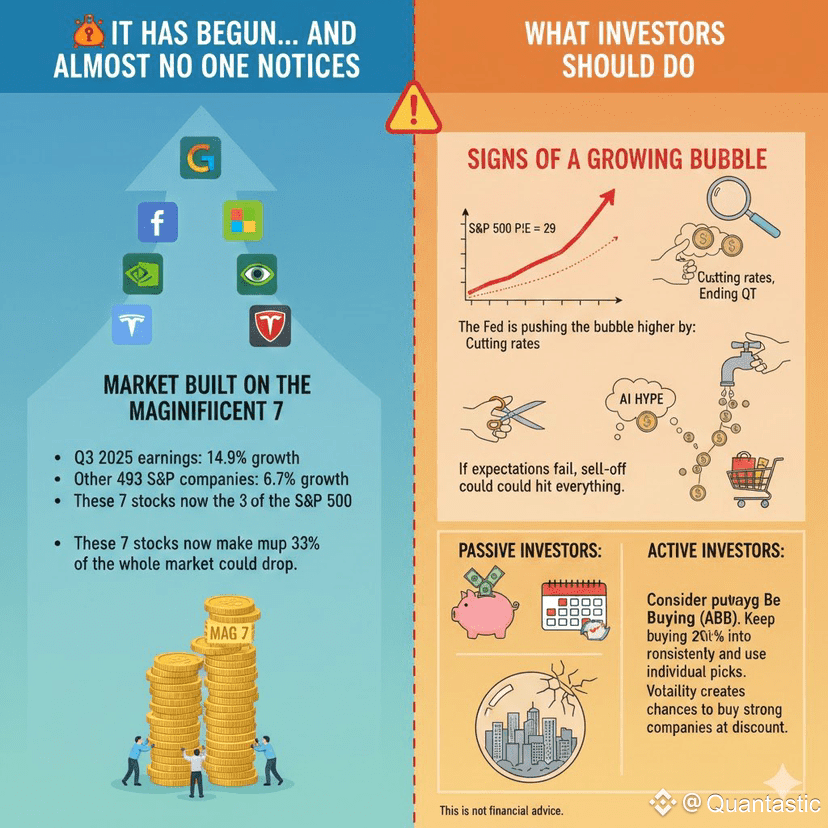
🚨 It Has Begun… And Almost No One Notices
The stock market looks strong, but that strength is coming from only seven companies. This creates a major risk most investors aren’t talking about.
1️⃣ Market Built on the Magnificent 7
Meta, Alphabet, Amazon, Apple, Microsoft, Nvidia, and Tesla are carrying the entire market.
Q3 2025 earnings: 14.9% growth
The other 493 S&P companies: 6.7% growth
These 7 stocks now make up 33% of the S&P 500
If even one slips, the whole market could drop.
2️⃣ Signs of a Growing Bubble
S&P 500 P/E is 29, far above the historical 20
Investors are paying high premiums because of AI hype
The Fed is pushing the bubble higher by:
Cutting rates
Ending QT (making money more available)
If expectations fail, a sell-off could hit everything.
3️⃣ What Investors Should Do
Passive investors:
Follow Always Be Buying (ABB). Keep buying consistently and use market dips as opportunities.
Active investors:
Consider putting around 20% into researched individual picks. Volatility creates chances to buy strong companies at a discount.
#StockMarketInsights #Magnificent7 #InvestmentTips #MarketTrends #FinanceEducation
CHRISTMAS PROMOTION!!! Copy Quantastic, a top Binance lead trader with NO risk: We would cover any lost for register copiers who copy Quantastic account at
https://www.binance.com/copy-trading/lead-details/4734580934665797633?inviteCode=Rddgkwwf
Chat with me for more detail!
The stock market looks strong, but that strength is coming from only seven companies. This creates a major risk most investors aren’t talking about.
1️⃣ Market Built on the Magnificent 7
Meta, Alphabet, Amazon, Apple, Microsoft, Nvidia, and Tesla are carrying the entire market.
Q3 2025 earnings: 14.9% growth
The other 493 S&P companies: 6.7% growth
These 7 stocks now make up 33% of the S&P 500
If even one slips, the whole market could drop.
2️⃣ Signs of a Growing Bubble
S&P 500 P/E is 29, far above the historical 20
Investors are paying high premiums because of AI hype
The Fed is pushing the bubble higher by:
Cutting rates
Ending QT (making money more available)
If expectations fail, a sell-off could hit everything.
3️⃣ What Investors Should Do
Passive investors:
Follow Always Be Buying (ABB). Keep buying consistently and use market dips as opportunities.
Active investors:
Consider putting around 20% into researched individual picks. Volatility creates chances to buy strong companies at a discount.
#StockMarketInsights #Magnificent7 #InvestmentTips #MarketTrends #FinanceEducation
CHRISTMAS PROMOTION!!! Copy Quantastic, a top Binance lead trader with NO risk: We would cover any lost for register copiers who copy Quantastic account at
https://www.binance.com/copy-trading/lead-details/4734580934665797633?inviteCode=Rddgkwwf
Chat with me for more detail!
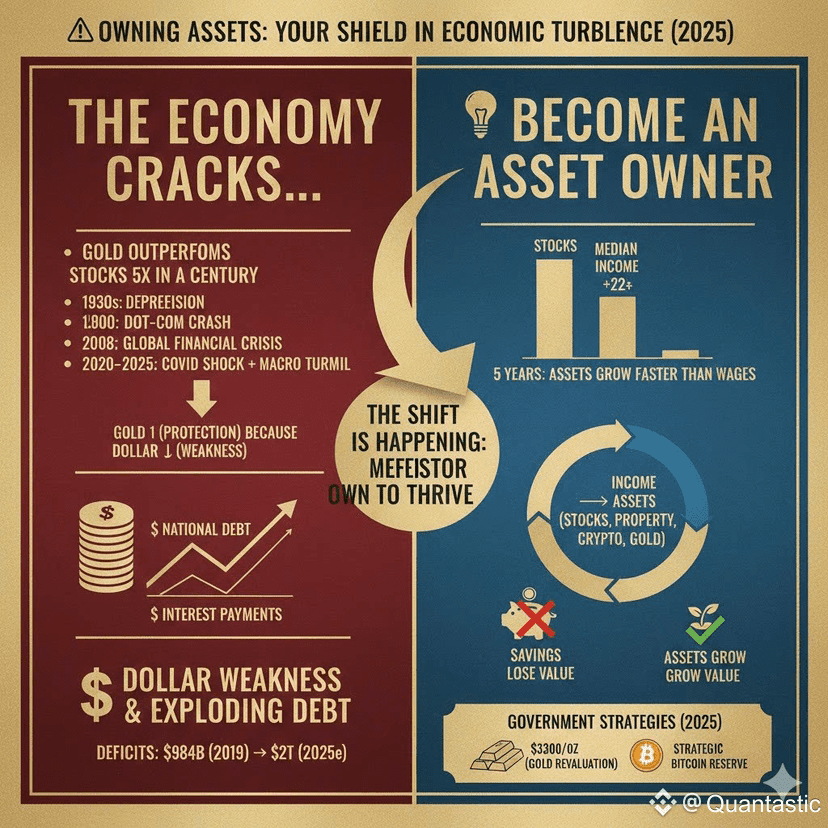
⚠️ Every Time This Happens, the Economy Cracks… And It’s Happening Again
For the past century, gold has only outperformed the stock market five times — and every time, it signaled a major economic crisis:
1930s – Great Depression
1970s – Stagflation & recession
2000 – Dot-com crash
2008 – Global Financial Crisis
2020–2025 – COVID shock + current macro turmoil
When gold beats stocks, it’s not because gold is getting stronger — it’s because the dollar is getting weaker. Investors buy gold as protection against currency debasement.
💵 Why People Are Worried: Dollar Weakness & Exploding Debt
The U.S. national debt is growing faster than the country’s wealth.
Deficits have ballooned from $984B (2019) to an expected $2T in 2025.
As debt rises, so do interest payments — now the fastest-growing federal expense.
To ease concerns, the government has begun revaluing its assets:
Gold Revaluation Idea (2025):
Repricing U.S. gold reserves from $42 → $3,300/oz could instantly boost the government’s balance sheet from $11B → $860B.
Strategic Bitcoin Reserve (2025):
Instead of selling seized BTC, the U.S. now holds it. Rising Bitcoin price makes national assets look stronger, offsetting debt optics.
💡 The Real Lesson: Become an Asset Owner
The system rewards investors, not workers.
Over five years, stocks grew ~90%, while median income rose only ~22%.
Salaries alone can’t keep up with inflation and money printing.
New money flows into assets, not wages.
To build wealth, you must convert part of your income into assets — stocks, property, crypto, or gold.
Savings lose value; assets grow value.
This is the economic shift happening now — and the people who benefit are those who own, not those who only earn
#EconomicInsights #wealthbuilding #MacroTrends #InvestSmart #financialeducation
For the past century, gold has only outperformed the stock market five times — and every time, it signaled a major economic crisis:
1930s – Great Depression
1970s – Stagflation & recession
2000 – Dot-com crash
2008 – Global Financial Crisis
2020–2025 – COVID shock + current macro turmoil
When gold beats stocks, it’s not because gold is getting stronger — it’s because the dollar is getting weaker. Investors buy gold as protection against currency debasement.
💵 Why People Are Worried: Dollar Weakness & Exploding Debt
The U.S. national debt is growing faster than the country’s wealth.
Deficits have ballooned from $984B (2019) to an expected $2T in 2025.
As debt rises, so do interest payments — now the fastest-growing federal expense.
To ease concerns, the government has begun revaluing its assets:
Gold Revaluation Idea (2025):
Repricing U.S. gold reserves from $42 → $3,300/oz could instantly boost the government’s balance sheet from $11B → $860B.
Strategic Bitcoin Reserve (2025):
Instead of selling seized BTC, the U.S. now holds it. Rising Bitcoin price makes national assets look stronger, offsetting debt optics.
💡 The Real Lesson: Become an Asset Owner
The system rewards investors, not workers.
Over five years, stocks grew ~90%, while median income rose only ~22%.
Salaries alone can’t keep up with inflation and money printing.
New money flows into assets, not wages.
To build wealth, you must convert part of your income into assets — stocks, property, crypto, or gold.
Savings lose value; assets grow value.
This is the economic shift happening now — and the people who benefit are those who own, not those who only earn
#EconomicInsights #wealthbuilding #MacroTrends #InvestSmart #financialeducation
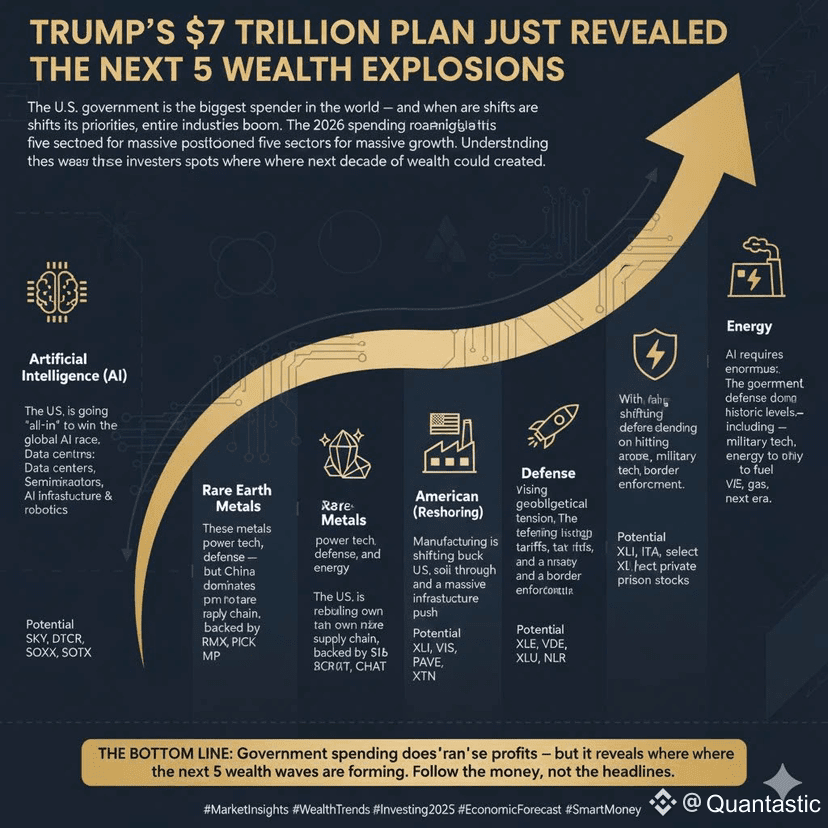
Trump’s $7 Trillion Plan Just Revealed the Next 5 Wealth Explosions
The U.S. government is the biggest spender in the world — and when it shifts its priorities, entire industries boom. The 2026 spending roadmap highlights five sectors positioned for massive growth. Understanding these waves helps investors spot where the next decade of wealth could be created.
🔹 1. Artificial Intelligence (AI)
The U.S. is going “all-in” to win the global AI race.
Billions are flowing into:
Data centers
Semiconductors
AI infrastructure & robotics
Potential Exposure: SKY, DTCR, SOXX, BOTZ, CHAT
🔹 2. Rare Earth Metals
These metals power tech, defense, and energy — but China dominates production.
The U.S. is rebuilding its own rare earth supply chain, backed by a $1B commitment.
Potential Exposure: RMX, PICK, MP
🔹 3. American Industry (Reshoring)
Manufacturing is shifting back to U.S. soil through tariffs, tax breaks, and a massive infrastructure push.
Potential Exposure: XLI, VIS, PAVE, XTN
🔹 4. Defense
With rising geopolitical tension, defense spending is hitting historic levels — including aerospace, military tech, and border enforcement.
Potential Exposure: XLI, ITA, select private prison stocks
🔹 5. Energy
AI requires enormous power. The government is doubling down on oil, gas, utilities, and nuclear energy to fuel the next era.
Potential Exposure: XLE, VDE, XLU, NLR
The Bottom Line
Government spending doesn’t guarantee profits — but it reveals where the next 5 wealth waves are forming.
Follow the money, not the headlines.
#MarketInsights #WealthJourney #Investing2025 #Investing2025 #smartmoney
The U.S. government is the biggest spender in the world — and when it shifts its priorities, entire industries boom. The 2026 spending roadmap highlights five sectors positioned for massive growth. Understanding these waves helps investors spot where the next decade of wealth could be created.
🔹 1. Artificial Intelligence (AI)
The U.S. is going “all-in” to win the global AI race.
Billions are flowing into:
Data centers
Semiconductors
AI infrastructure & robotics
Potential Exposure: SKY, DTCR, SOXX, BOTZ, CHAT
🔹 2. Rare Earth Metals
These metals power tech, defense, and energy — but China dominates production.
The U.S. is rebuilding its own rare earth supply chain, backed by a $1B commitment.
Potential Exposure: RMX, PICK, MP
🔹 3. American Industry (Reshoring)
Manufacturing is shifting back to U.S. soil through tariffs, tax breaks, and a massive infrastructure push.
Potential Exposure: XLI, VIS, PAVE, XTN
🔹 4. Defense
With rising geopolitical tension, defense spending is hitting historic levels — including aerospace, military tech, and border enforcement.
Potential Exposure: XLI, ITA, select private prison stocks
🔹 5. Energy
AI requires enormous power. The government is doubling down on oil, gas, utilities, and nuclear energy to fuel the next era.
Potential Exposure: XLE, VDE, XLU, NLR
The Bottom Line
Government spending doesn’t guarantee profits — but it reveals where the next 5 wealth waves are forming.
Follow the money, not the headlines.
#MarketInsights #WealthJourney #Investing2025 #Investing2025 #smartmoney
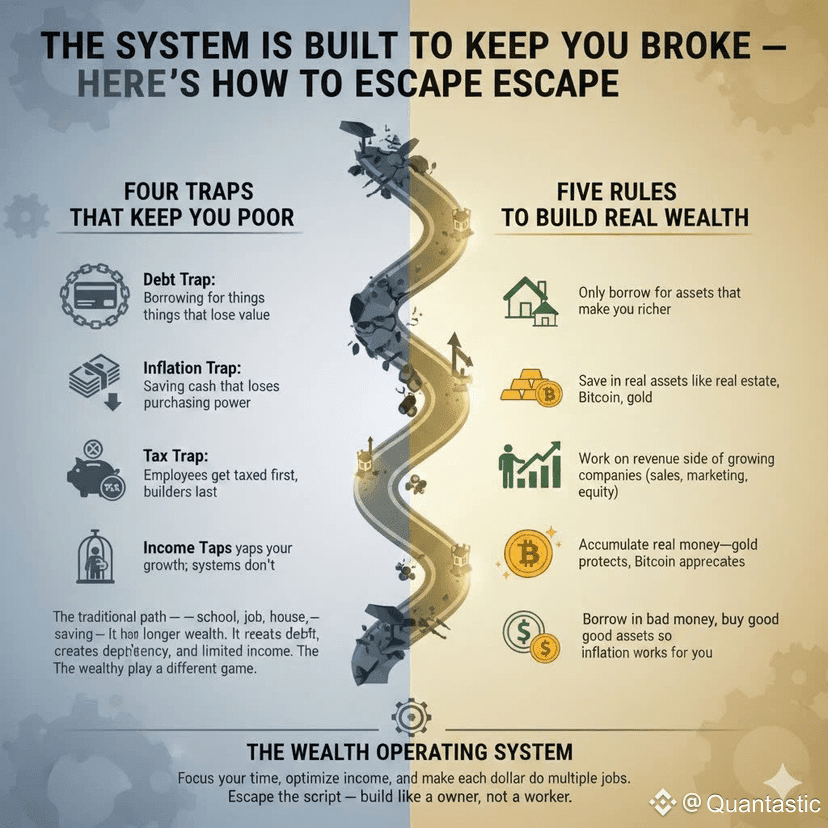
The System Is Built to Keep You Broke — Here’s How to Escape
The traditional path — school, job, house, saving — no longer builds wealth.
It creates debt, dependency, and limited income. The wealthy play a different game.
🔹 Four Traps That Keep You Poor
Debt Trap: Borrowing for things that lose value.
Inflation Trap: Saving cash that loses purchasing power.
Tax Trap: Employees get taxed first, builders last.
Income Trap: Salary caps your growth; systems don’t.
🔹 Five Rules to Build Real Wealth
Only borrow for assets that make you richer.
Save in real assets like real estate, Bitcoin, gold.
Work on the revenue side of growing companies (sales, marketing, equity).
Accumulate real money—gold protects, Bitcoin appreciates.
Borrow in bad money, buy good assets so inflation works for you.
🔹 The Wealth Operating System
Focus your time, optimize income, and make each dollar do multiple jobs.
Escape the script — build like an owner, not a worker.
#WealthMindset #FinancialEducation #MoneyGame #FinancialFreedom #BuildWealth
The traditional path — school, job, house, saving — no longer builds wealth.
It creates debt, dependency, and limited income. The wealthy play a different game.
🔹 Four Traps That Keep You Poor
Debt Trap: Borrowing for things that lose value.
Inflation Trap: Saving cash that loses purchasing power.
Tax Trap: Employees get taxed first, builders last.
Income Trap: Salary caps your growth; systems don’t.
🔹 Five Rules to Build Real Wealth
Only borrow for assets that make you richer.
Save in real assets like real estate, Bitcoin, gold.
Work on the revenue side of growing companies (sales, marketing, equity).
Accumulate real money—gold protects, Bitcoin appreciates.
Borrow in bad money, buy good assets so inflation works for you.
🔹 The Wealth Operating System
Focus your time, optimize income, and make each dollar do multiple jobs.
Escape the script — build like an owner, not a worker.
#WealthMindset #FinancialEducation #MoneyGame #FinancialFreedom #BuildWealth
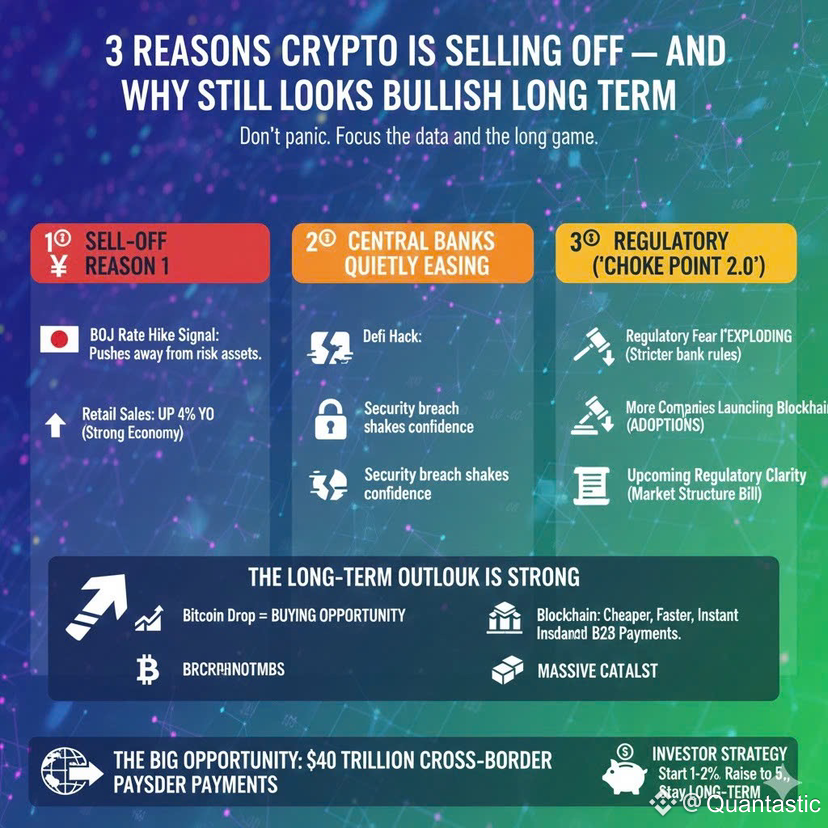
3 Reasons Crypto Is Selling Off — And Why It
Still Looks Bullish Long Term
Crypto’s latest drop comes from three key factors:
1️⃣ BOJ Rate Hike Signal – Japan hinted at raising rates, pushing investors away from risk assets like crypto.
2️⃣ DeFi Hack – A security breach earlier in the day shook confidence.
3️⃣ Regulatory Fear (“Choke Point 2.0”) – Renewed concerns about stricter rules on banks working with crypto firms.
But the Long-Term Outlook Is Strong
Bitcoin’s drop is seen as a buying opportunity.
More companies are launching blockchain products, boosting adoption.
Upcoming regulatory clarity (Market Structure Bill) could unlock major growth.
The Big Opportunity: $40T Cross-Border Payments
Blockchain can disrupt global B2B payments by making them cheaper, faster, and instant — a massive long-term catalyst.
Investor Strategy
Start with 1–2% allocation, raise to 5% if comfortable, and stay focused on the long game.
#CryptoMarket #InvestingTips #BlockchainTech #MarketUpdate #CryptoInsights
Still Looks Bullish Long Term
Crypto’s latest drop comes from three key factors:
1️⃣ BOJ Rate Hike Signal – Japan hinted at raising rates, pushing investors away from risk assets like crypto.
2️⃣ DeFi Hack – A security breach earlier in the day shook confidence.
3️⃣ Regulatory Fear (“Choke Point 2.0”) – Renewed concerns about stricter rules on banks working with crypto firms.
But the Long-Term Outlook Is Strong
Bitcoin’s drop is seen as a buying opportunity.
More companies are launching blockchain products, boosting adoption.
Upcoming regulatory clarity (Market Structure Bill) could unlock major growth.
The Big Opportunity: $40T Cross-Border Payments
Blockchain can disrupt global B2B payments by making them cheaper, faster, and instant — a massive long-term catalyst.
Investor Strategy
Start with 1–2% allocation, raise to 5% if comfortable, and stay focused on the long game.
#CryptoMarket #InvestingTips #BlockchainTech #MarketUpdate #CryptoInsights
Log in to explore more content