
Labrin_quant_sheep
137 Posts

Labrin_quant_sheep
推特:@quant_sheep 所有内容均不构成金融建议NFA

原创之星
Occasional Trader
3.5 Years
85 Following
1.4K+ Followers
407 Liked
1 Badges
Posts
All
Quotes
PINNED
Why is the structure of this article so messy? Are you really writing the article seriously?


動區 BlockTempo
·
--
Tom Lee: Now is not the time to use leverage! This wave of sharp declines is just market makers in crypto "chewing money"
Tom Lee pointed out that the gap in market makers and the operations of large traders triggered a sharp short-term drop in Bitcoin and Ethereum, but he stated that this is just a healthy adjustment in the supercycle, and now is not the time to use leverage. (Background: 1011 The first body after the big collapse: Stream 'Fake Neutral Strategy' exposed) (Background supplement: Michael Saylor comments on Bitcoin's decline: If you want to ride a rocket, you have to endure pressure! Buying BTC plans will be announced next week) Bitcoin fell below $100,000, and Ethereum dropped by 10% in a week, with the crypto market once again staging a 'explosion drama' in mid-November. BitMine chairman and Wall Street analyst Tom Lee believes that the real pressure comes from the liquidity shrinkage of market makers and the arbitrage selling by large traders, and this 'pain' will not change Wall Street's long-term layout for Ethereum. He also warned traders that now is not the time to use leverage; it is important not to be liquidated! To me, the weakness in crypto has all the signs – of a market maker (or two) with a major “hole” in their balance sheet. Sharks are circling to trigger a liquidation/dumping of prices. $BTC Is this pain short-term? Yes. Does this change the $ETH supercycle of Wall Street… pic.twitter.com/0jfkXYnfv9 — Thomas (Tom) Lee (not drummer) FSInsight.com (@fundstrat) November 15, 2025. Two major mainstream coins lead the decline. Since the 11th, Bitcoin (BTC) prices have fallen from the October high of $126,000, slipping below the $100,000 mark in just three days, and once dropped to $97,000, with a weekly decline of over 5%. After $524 million flowed into Bitcoin spot ETFs on the 11th, $278 million and $866.7 million flowed out on the 12th and 13th respectively, accelerating the selling pressure. Ethereum (ETH) is even more fragile, with prices dropping from the $3,600 level to the $3,060 – $3,200 range, a weekly decline of over 10%. The US spot Ethereum ETF has seen a cumulative outflow of about $1.4 billion since late October; on-chain data shows that long-term holders are exiting at the fastest pace since 2021. This round of fluctuations has triggered over $1.1 billion in high-leverage positions to be liquidated, with hundreds of thousands of traders exiting, leading market sentiment to quickly shift to 'extreme fear.' The gap in market makers and 'shark' arbitrage. Tom Lee pointed to the core of the problem: the balance sheets of one to two key market makers show a 'major gap.' In the context of continued balance sheet reduction by the Federal Reserve and global liquidity contraction, market makers' available funds have decreased, and the depth of quotes has thinned. Large traders take advantage of this weakness to trigger chain liquidations through concentrated selling, lowering prices before buying again or engaging in contract arbitrage, forming what he calls the 'shark game.' Lee emphasizes that this is not a systemic crisis but a necessary stage in the deleveraging process. He stated: The weakness in cryptocurrency has all the signs: one to two market maker gaps, plus shark selling attempting to trigger liquidations. This pain is short-term and will not shake the Ethereum supercycle. BitMine has currently accumulated about 3.3 million ETH, accounting for 2.8% of the circulation, becoming direct proof of betting on the supercycle. Tom Lee also proposed a mid to long-term price target range for Ethereum of $12,000 to $15,000. Tom Lee's price outlook for this year has drawn ridicule from many in the community, but he has not changed direction. Related reports: White House Chief Economic Advisor Hassett: Expected Q4 GDP to drop sharply by 1.5%, government shutdown for 43 days has severely impacted the US economy. The US government shutdown for 35 days ties the 'longest record,' liquidity has been drained, Bitcoin and US stocks have plummeted. 'Tom Lee: Now is not the time to use leverage! This wave of sharp declines is just market makers in crypto "chewing money"' This article was first published in BlockTempo (the most influential blockchain news media).
The reason Binance is the industry leader is for a reason.


Binance Announcement
·
--
Binance launches the 'Together Plan', investing $400 million to help the industry recover and rebuild confidence.
This is a general announcement, and the products and services mentioned here may not be applicable to your region.
Dear users:
Recently, the global cryptocurrency market has experienced extreme volatility, and users, institutions, and the entire industry are facing unprecedented shocks. The aftershocks of the macro economy are like an earthquake for our emerging industry, affecting not only price fluctuations but also the confidence of every practitioner.
Binance has also faced severe tests. In addition to compensating users affected by Binance's losses, it must confront various doubts from both inside and outside the industry, directly facing the slander from competitors, and even dealing with public opinion caused by internal work mistakes after the incident. For the past 8 years, we have been moving forward together with everyone through ups and downs, always focusing on our users. The pain of our users is the pain of Binance; Binance always stands with every user. As long as the industry exists, Binance exists.
Dear users:
Recently, the global cryptocurrency market has experienced extreme volatility, and users, institutions, and the entire industry are facing unprecedented shocks. The aftershocks of the macro economy are like an earthquake for our emerging industry, affecting not only price fluctuations but also the confidence of every practitioner.
Binance has also faced severe tests. In addition to compensating users affected by Binance's losses, it must confront various doubts from both inside and outside the industry, directly facing the slander from competitors, and even dealing with public opinion caused by internal work mistakes after the incident. For the past 8 years, we have been moving forward together with everyone through ups and downs, always focusing on our users. The pain of our users is the pain of Binance; Binance always stands with every user. As long as the industry exists, Binance exists.
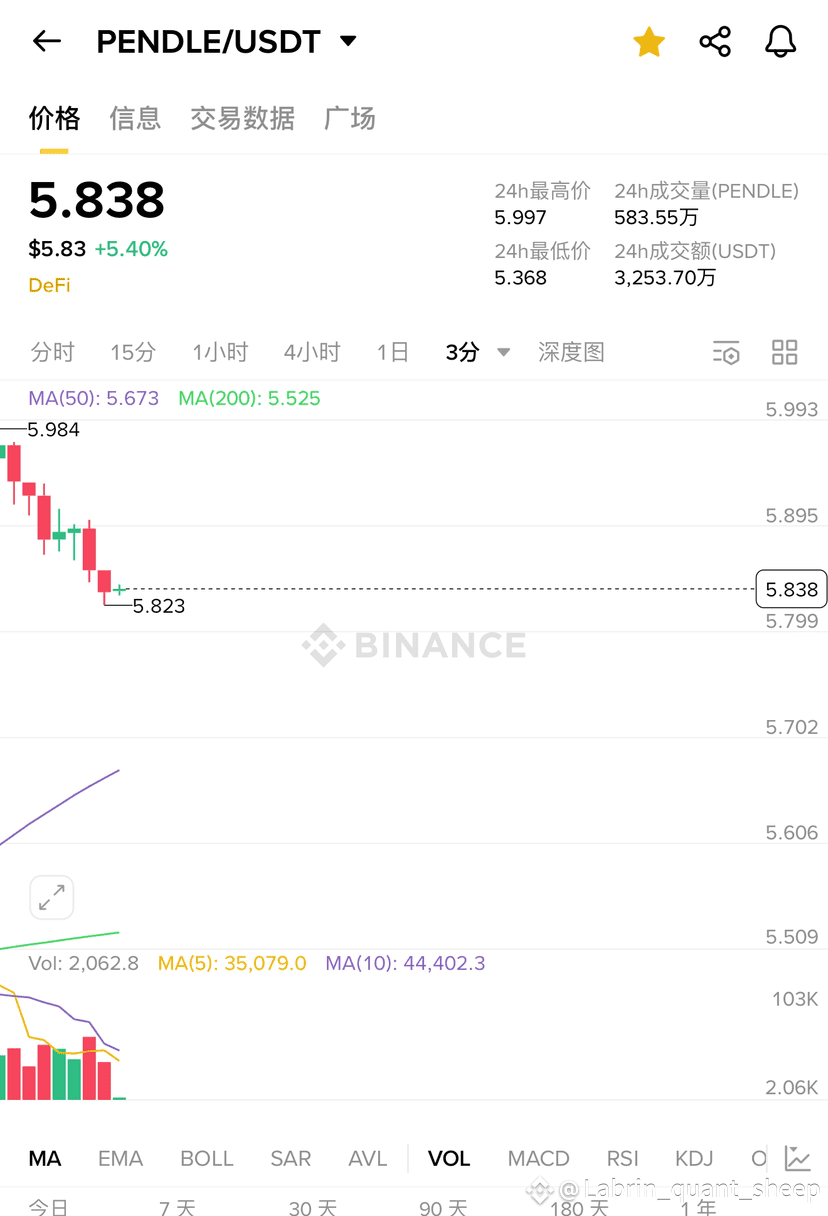
Thank you, brother. I have already made money.

左手超越
·
--
Bearish$PENDLE 5.45 empty, 5.6 loss, take profit 4.2
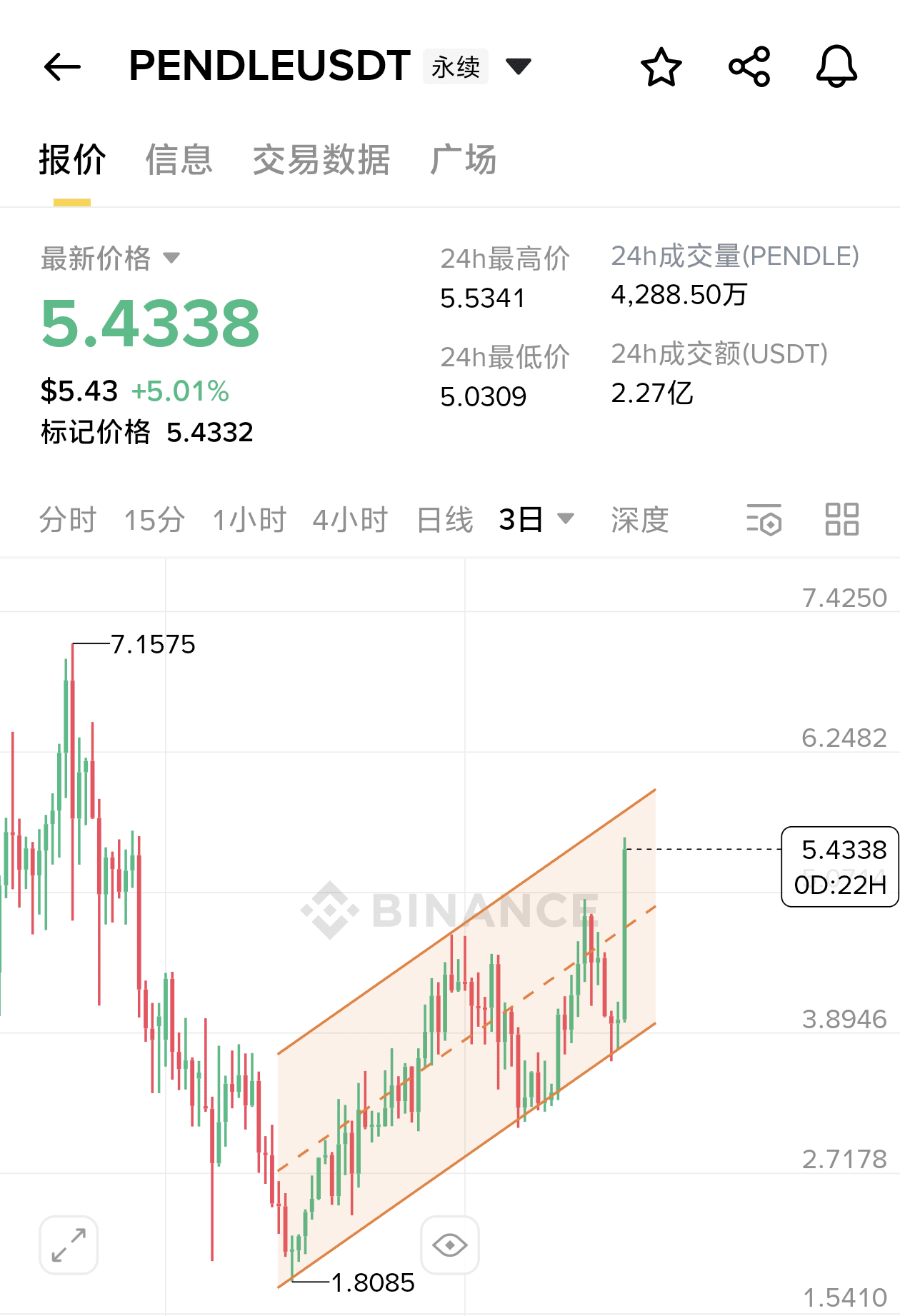
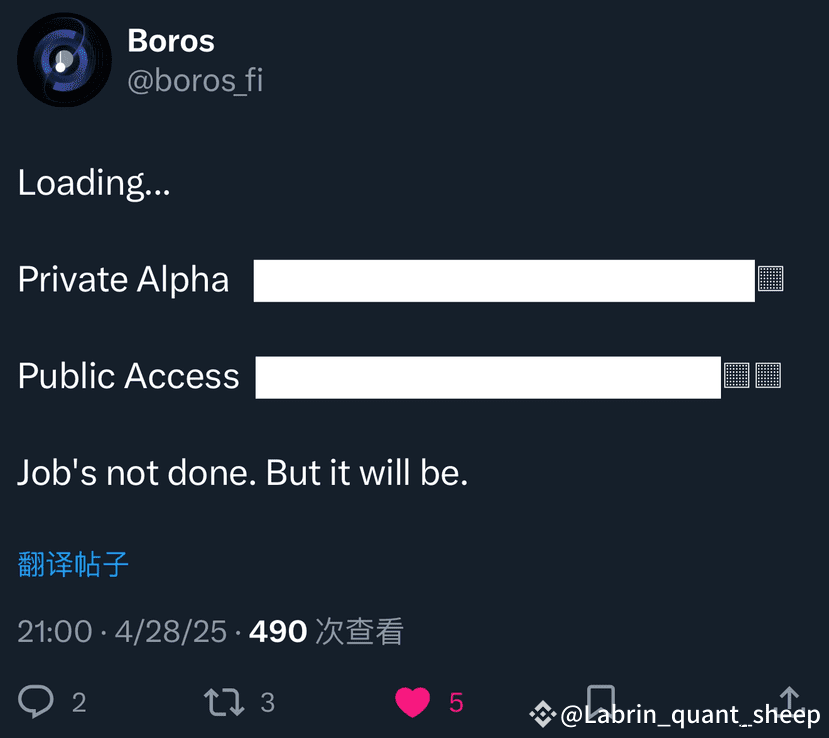
The interest rate swap platform Boros for $PENDLE is on the way
The token is still $PENDLE
The token is still $PENDLE
Rational Investment
Labrin_quant_sheep
·
--
Usual Staking Step-by-Step Tutorial (Invest Rationally)
Things you need to know about staking USUAL
1. Staking has no lock-up period. This means you can unlock (unstake) at any time.
2. However, unlocking staking will deduct 10% of USUALx. Of the deducted 10%, one-third goes to USUAL*, one-third goes to the remaining staked USUALx, and one-third is burned.
3. USUALx can be sent to other wallets. Be careful not to accidentally send USUALx to bad actors.
4. USUALx automatic compound interest. Your earnings growth is reflected in: the number of USUAL that each USUALx can be exchanged for increases. However, it needs to be emphasized again that unlocking staking will deduct 10% of USUALx. This means if you do not want to incur a loss in the asset principal, you need to at least store enough USUALx earnings to cover the amount returned upon unstaking.
1. Staking has no lock-up period. This means you can unlock (unstake) at any time.
2. However, unlocking staking will deduct 10% of USUALx. Of the deducted 10%, one-third goes to USUAL*, one-third goes to the remaining staked USUALx, and one-third is burned.
3. USUALx can be sent to other wallets. Be careful not to accidentally send USUALx to bad actors.
4. USUALx automatic compound interest. Your earnings growth is reflected in: the number of USUAL that each USUALx can be exchanged for increases. However, it needs to be emphasized again that unlocking staking will deduct 10% of USUALx. This means if you do not want to incur a loss in the asset principal, you need to at least store enough USUALx earnings to cover the amount returned upon unstaking.

Invest rationally, invest with low leverage, and stay safe.
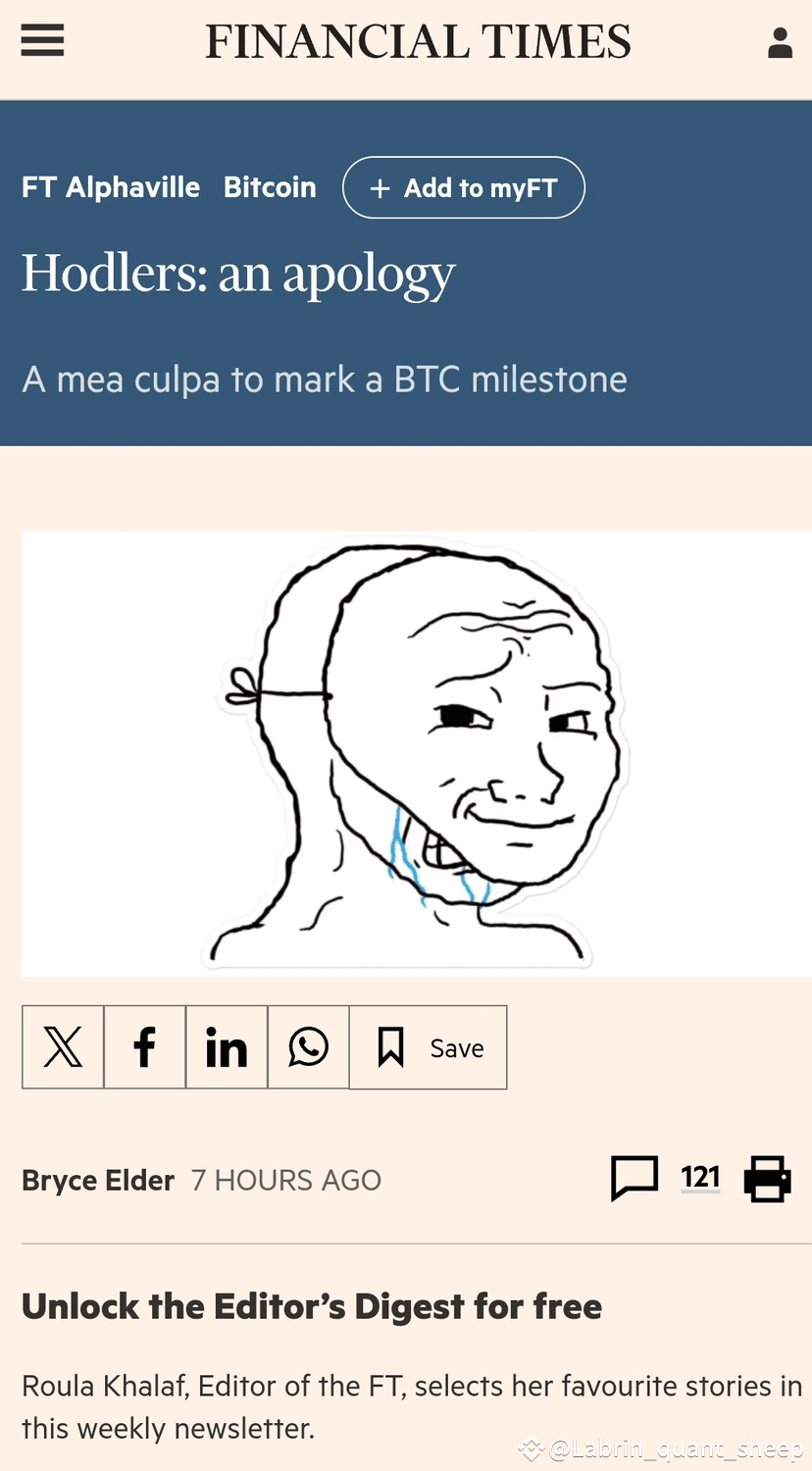
Published on the homepage 👍
Quoted content has been removed
Click the avatar to view the homepage that has been published.

师兄弟
·
--
Tutorial. Friend
$USUAL
Things You Need to Know About Staking USUAL
1. There is no lock-up period for staking. This means you can unlock (unstake) at any time.
2. However, unlocking your stake will incur a 10% deduction of USUALx. The deducted 10% will be split into three parts: one-third goes to USUAL*, one-third goes to those still staking USUALx, and one-third is burned.
3. USUALx can be sent to other wallets. You need to be careful not to accidentally send USUALx to bad actors.
4. USUALx automatically compounds, and your earnings are reflected in: the increase in the amount of USUAL that each USUALx can be exchanged for. However, it should be emphasized again that unlocking your stake will incur a 10% deduction of USUALx. This means that if you do not want to incur a loss in terms of the currency's value, you need to ensure that your earnings from USUALx cover the amount returned upon unstaking.
5. Investment carries risks; please make sure you understand what you are doing. NFA
Things You Need to Know About Staking USUAL
1. There is no lock-up period for staking. This means you can unlock (unstake) at any time.
2. However, unlocking your stake will incur a 10% deduction of USUALx. The deducted 10% will be split into three parts: one-third goes to USUAL*, one-third goes to those still staking USUALx, and one-third is burned.
3. USUALx can be sent to other wallets. You need to be careful not to accidentally send USUALx to bad actors.
4. USUALx automatically compounds, and your earnings are reflected in: the increase in the amount of USUAL that each USUALx can be exchanged for. However, it should be emphasized again that unlocking your stake will incur a 10% deduction of USUALx. This means that if you do not want to incur a loss in terms of the currency's value, you need to ensure that your earnings from USUALx cover the amount returned upon unstaking.
5. Investment carries risks; please make sure you understand what you are doing. NFA
It’s true alpha my bros
I posted it 25 days ago
I posted it 25 days ago
Labrin_quant_sheep
·
--
alpha
Assalamu Alaikum
The functionality of the Usual token can be viewed as a tool for community governance and participation in project development, rather than merely a speculative asset.
The token’s value growth is derived from the protocol’s actual revenue, asset management, and long-term development, rather than being directly tied to interest or speculative behavior. I think this design may align with Sharia principles of fairness and intrinsic value.
The functionality of the Usual token can be viewed as a tool for community governance and participation in project development, rather than merely a speculative asset.
The token’s value growth is derived from the protocol’s actual revenue, asset management, and long-term development, rather than being directly tied to interest or speculative behavior. I think this design may align with Sharia principles of fairness and intrinsic value.

Prince_H7
·
--
$USUAL does anyone know if this coin halal or not ?
This is how it is

kkkyan
·
--
Just confirmed: the total amount of $USUAL tokens has not changed. There are problems with the display in CoinMarketCap and Binance.
The total supply is still 4B;
Currently 300M is circulating in Binance,
and 0.38 billion are minted but not issued rewards.
$USUAL
The total supply is still 4B;
Currently 300M is circulating in Binance,
and 0.38 billion are minted but not issued rewards.
$USUAL
$USUAL : Binance RWA is the leading stablecoin spot project, with a rapid growth in TVL.
This guy said it very thoroughly, with a lot of alpha😎🤓
This guy said it very thoroughly, with a lot of alpha😎🤓

军师九天
·
--
Usual——The number one coin in a bear market!
🔥🔥 Usual target: 50 USD!
Brothers, I am the person who bought over 20,000 BNB at 1.5 USD in January 2017 and did not hold on. Who could have imagined that in just a few years, it could rise to 700 USD? Every time I think about this regretful transaction, I tell myself that for good projects, we might as well imagine boldly; their growth often far exceeds expectations!
Next, let's get to the point and talk about why I believe usual may have a hundredfold upside potential. I am extremely optimistic about it for three main reasons:
1. Usual is a community project with 13 investors collectively obtaining 5% of the tokens, locked for 12 months. This extremely low ratio can be seen as the project having no VC, so there is no need to worry about institutional sell-offs. The project was launched at the beginning of a bull market, coinciding with investors' deep aversion to VCs, making it a timely opportunity.
Brothers, I am the person who bought over 20,000 BNB at 1.5 USD in January 2017 and did not hold on. Who could have imagined that in just a few years, it could rise to 700 USD? Every time I think about this regretful transaction, I tell myself that for good projects, we might as well imagine boldly; their growth often far exceeds expectations!
Next, let's get to the point and talk about why I believe usual may have a hundredfold upside potential. I am extremely optimistic about it for three main reasons:
1. Usual is a community project with 13 investors collectively obtaining 5% of the tokens, locked for 12 months. This extremely low ratio can be seen as the project having no VC, so there is no need to worry about institutional sell-offs. The project was launched at the beginning of a bull market, coinciding with investors' deep aversion to VCs, making it a timely opportunity.
$USUAL not selling not flying 🤣 those who are not firm must sell it, this is better for everyone. lol
$USUAL
Here comes Aloha again, go learn about this protocol quickly
Protocol for 10 days, TVL increased by 200M
nfa dyor
Here comes Aloha again, go learn about this protocol quickly
Protocol for 10 days, TVL increased by 200M
nfa dyor
Log in to explore more content