
0xSignal BNB
383 Posts

0xSignal BNB
Report
Block User
Signal over noise. 📡Making Money 1st.
RWA x Memecoins | On-Chain Intel Before Hype.
Micro-cap scout | Data doesn't lie. | Web3 Research Analyst 🔬
Open Trade
Frequent Trader
7.6 Months
51 Following
116 Followers
648 Liked
Posts
Portfolio
All
Quotes
PINNED
·
--
Bullish
Partly True
Guys, nobody's talking about this one. 👀
While everyone's glued to ETH's price action, something quieter has been happening with LINK for a month straight.
Four weeks in a row. Positive net inflows into Chainlink's spot ETF products. Every single week, without a break.
Meanwhile LINK's price? Basically just... sitting there. Consolidating.
That's the part that caught my attention.
Usually when the price is flat, it means nobody cares. But here, real institutional money has been quietly accumulating in the background the entire time — around $145M+ cumulative, and still building into September.
That's not retail hype. ETF flows are slow, deliberate, institutional money — the kind that doesn't chase green candles, it builds positions while nobody's watching.
Add to that: Chainlink's oracle infrastructure is now part of the Coinbase/Base tokenized-stocks push — real-world equities settling on-chain need reliable price feeds, and that's literally Chainlink's job.
So you've got steady inflows + a genuine utility expansion, happening at the same time the chart looks "boring."
That combination — quiet accumulation + flat price + expanding real use case — is usually the phase nobody writes about. By the time it's obvious, it's not early anymore.
I'm not calling a breakout. I'm just pointing at what the flow data actually shows versus what the price chart shows — and right now, those two things disagree.
What would change my mind: if those inflows start reversing, or if the tokenized-stocks integration stalls without real usage behind it.
What I'm watching: whether the ETF inflow streak holds into a 5th, 6th week — and whether price eventually starts reflecting it.
Not financial advice, just numbers I found interesting. DYOR.
Anyone else tracking LINK's flow data, or is this genuinely flying under the radar? 👇
#LINK #Chainlink #CryptoETF
Guys, nobody's talking about this one. 👀
While everyone's glued to ETH's price action, something quieter has been happening with LINK for a month straight.
Four weeks in a row. Positive net inflows into Chainlink's spot ETF products. Every single week, without a break.
Meanwhile LINK's price? Basically just... sitting there. Consolidating.
That's the part that caught my attention.
Usually when the price is flat, it means nobody cares. But here, real institutional money has been quietly accumulating in the background the entire time — around $145M+ cumulative, and still building into September.
That's not retail hype. ETF flows are slow, deliberate, institutional money — the kind that doesn't chase green candles, it builds positions while nobody's watching.
Add to that: Chainlink's oracle infrastructure is now part of the Coinbase/Base tokenized-stocks push — real-world equities settling on-chain need reliable price feeds, and that's literally Chainlink's job.
So you've got steady inflows + a genuine utility expansion, happening at the same time the chart looks "boring."
That combination — quiet accumulation + flat price + expanding real use case — is usually the phase nobody writes about. By the time it's obvious, it's not early anymore.
I'm not calling a breakout. I'm just pointing at what the flow data actually shows versus what the price chart shows — and right now, those two things disagree.
What would change my mind: if those inflows start reversing, or if the tokenized-stocks integration stalls without real usage behind it.
What I'm watching: whether the ETF inflow streak holds into a 5th, 6th week — and whether price eventually starts reflecting it.
Not financial advice, just numbers I found interesting. DYOR.
Anyone else tracking LINK's flow data, or is this genuinely flying under the radar? 👇
#LINK #Chainlink #CryptoETF
While everyone's glued to ETH's price action, something quieter has been happening with LINK for a month straight.
Four weeks in a row. Positive net inflows into Chainlink's spot ETF products. Every single week, without a break.
Meanwhile LINK's price? Basically just... sitting there. Consolidating.
That's the part that caught my attention.
Usually when the price is flat, it means nobody cares. But here, real institutional money has been quietly accumulating in the background the entire time — around $145M+ cumulative, and still building into September.
That's not retail hype. ETF flows are slow, deliberate, institutional money — the kind that doesn't chase green candles, it builds positions while nobody's watching.
Add to that: Chainlink's oracle infrastructure is now part of the Coinbase/Base tokenized-stocks push — real-world equities settling on-chain need reliable price feeds, and that's literally Chainlink's job.
So you've got steady inflows + a genuine utility expansion, happening at the same time the chart looks "boring."
That combination — quiet accumulation + flat price + expanding real use case — is usually the phase nobody writes about. By the time it's obvious, it's not early anymore.
I'm not calling a breakout. I'm just pointing at what the flow data actually shows versus what the price chart shows — and right now, those two things disagree.
What would change my mind: if those inflows start reversing, or if the tokenized-stocks integration stalls without real usage behind it.
What I'm watching: whether the ETF inflow streak holds into a 5th, 6th week — and whether price eventually starts reflecting it.
Not financial advice, just numbers I found interesting. DYOR.
Anyone else tracking LINK's flow data, or is this genuinely flying under the radar? 👇
#LINK #Chainlink #CryptoETF

2
208
PINNED
·
--
Article
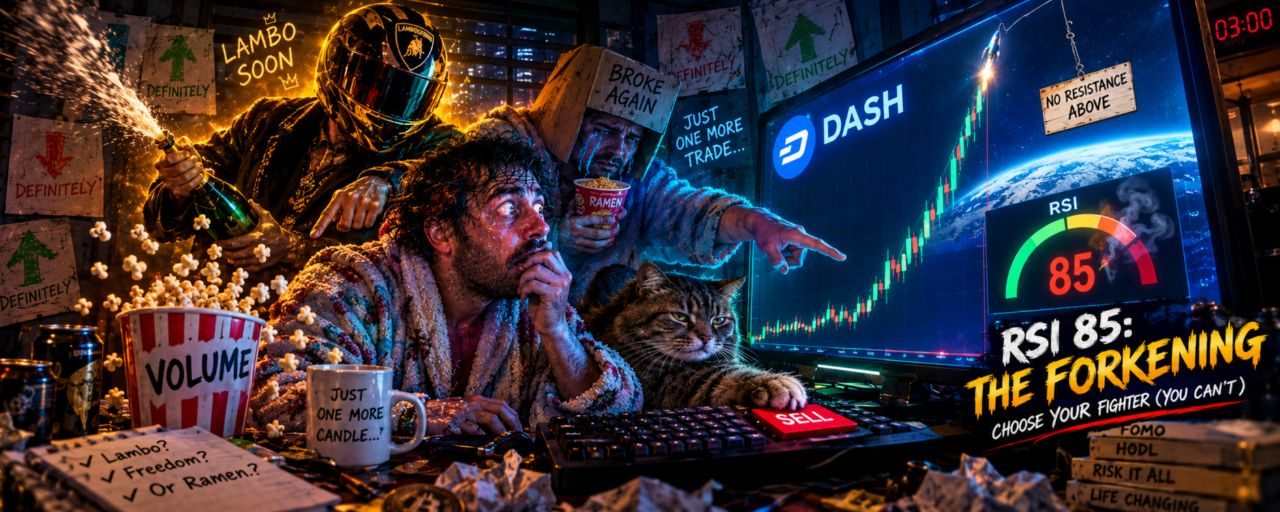
DASH Is At 85 RSI With Nothing Above It. That's Not a Green Light — It's a Fork.Everyone chasing $DASH right now is reading the breakout as confirmation. I'm reading the RSI print as a question the chart hasn't answered yet.
An RSI near 85 with no immediate resistance overhead is one of the more binary setups in crypto. It doesn't tell you the direction of the next move. It tells you the current move is stretched further than usual, and stretched moves resolve one of two ways — they extend violently because there's nothing structurally in the way, or they snap because there's nothing structurally holding them up either. Same fact, two opposite outcomes, and the fact alone doesn't pick one.
The setup
FACT: DASH's RSI is printing near 85, per coverage — a level well into overbought territory by standard technical thresholds.
FACT: No immediate resistance level is currently identified above the current price.
INTERPRETATION: The absence of resistance means there's no obvious price ceiling forcing a pullback on technical grounds alone. That's the bull case for extension. But it also means there's no established support structure recently tested on the way up — the move has outrun the levels that would normally validate it. That's the bear case for a fast reversion.
There is no confirmed HYPOTHESIS on which way this resolves. Anyone telling you RSI at 85 is definitionally about to reverse, or definitionally about to keep running, is stating a rule of thumb as if it were a law. It isn't. Overbought conditions can persist for extended periods in strong trends, and they can also be the exact moment before a sharp mean reversion. The RSI level is a fact about stretch, not a forecast about direction.
Why the obvious read is incomplete
The standard reflex to a high RSI is "overbought, due for a pullback." That reflex exists because it's often right — most extreme RSI prints do eventually mean-revert. But "eventually" is doing a lot of work in that sentence. Extended RSI in an asset with genuinely fresh catalyst-driven demand can keep climbing well past what looks unsustainable, especially with no resistance forcing sellers to defend a level.
The market's possible blind spot isn't "DASH is overbought" — everyone can see that. The blind spot is treating overbought as a timing signal on its own, when it's really a volatility-and-magnitude signal. It tells you the next move is likely to be large. It doesn't tell you which way.
BEFORE → CHANGE → NOW → NEXT
BEFORE: DASH trading within a more typical range, RSI not flagged as extreme.
CHANGE: Price extension pushes RSI to ~85 with no resistance level identified above current price.
CURRENT STATE: Stretched technical condition, unresolved directionally, elevated volatility risk in either direction.
POSSIBLE NEXT: Continuation — RSI stays elevated or climbs further as the move extends with no ceiling to stop it, common when a fresh catalyst or momentum wave is still building. Or reversion — a sharp pullback as the extended move runs out of new buyers and profit-taking hits without any support level established to catch it.
The thesis, stated carefully
The evidence suggests DASH is at a genuine inflection point where the next move — in either direction — is likely to be sharp rather than gradual, given the combination of extreme RSI and the absence of overhead resistance. This is not a call that DASH will pump or dump. It's a statement that the current setup has low odds of just drifting sideways.
The bullish continuation case weakens if volume starts declining while price keeps grinding higher — a sign the move is running on thinner and thinner participation. The bearish reversion case weakens if price holds current levels for several sessions without a pullback, which would suggest the extension is being absorbed rather than chased.
What confirms which side wins
Not the RSI number itself — watch what happens to volume alongside it. Rising volume with rising price into further overbought territory favors continuation. Flat or declining volume at these levels, especially alongside any signs of stalling candles, favors a snap-back.
What I'm watching next
Not whether DASH goes up or down from here. I'm watching whether volume expands or contracts as RSI stays pinned near this level over the next few sessions — that's what separates an overbought market that's about to run further from one that's about to give it all back.
#DASH #RSIAlert #Overbought #CryptoVolatility #TechnicalAnalysis
DASH Is At 85 RSI With Nothing Above It. That's Not a Green Light — It's a Fork.
Everyone chasing $DASH right now is reading the breakout as confirmation. I'm reading the RSI print as a question the chart hasn't answered yet.
An RSI near 85 with no immediate resistance overhead is one of the more binary setups in crypto. It doesn't tell you the direction of the next move. It tells you the current move is stretched further than usual, and stretched moves resolve one of two ways — they extend violently because there's nothing structurally in the way, or they snap because there's nothing structurally holding them up either. Same fact, two opposite outcomes, and the fact alone doesn't pick one.
The setup
FACT: DASH's RSI is printing near 85, per coverage — a level well into overbought territory by standard technical thresholds.
FACT: No immediate resistance level is currently identified above the current price.
INTERPRETATION: The absence of resistance means there's no obvious price ceiling forcing a pullback on technical grounds alone. That's the bull case for extension. But it also means there's no established support structure recently tested on the way up — the move has outrun the levels that would normally validate it. That's the bear case for a fast reversion.
There is no confirmed HYPOTHESIS on which way this resolves. Anyone telling you RSI at 85 is definitionally about to reverse, or definitionally about to keep running, is stating a rule of thumb as if it were a law. It isn't. Overbought conditions can persist for extended periods in strong trends, and they can also be the exact moment before a sharp mean reversion. The RSI level is a fact about stretch, not a forecast about direction.
Why the obvious read is incomplete
The standard reflex to a high RSI is "overbought, due for a pullback." That reflex exists because it's often right — most extreme RSI prints do eventually mean-revert. But "eventually" is doing a lot of work in that sentence. Extended RSI in an asset with genuinely fresh catalyst-driven demand can keep climbing well past what looks unsustainable, especially with no resistance forcing sellers to defend a level.
The market's possible blind spot isn't "DASH is overbought" — everyone can see that. The blind spot is treating overbought as a timing signal on its own, when it's really a volatility-and-magnitude signal. It tells you the next move is likely to be large. It doesn't tell you which way.
BEFORE → CHANGE → NOW → NEXT
BEFORE: DASH trading within a more typical range, RSI not flagged as extreme.
CHANGE: Price extension pushes RSI to ~85 with no resistance level identified above current price.
CURRENT STATE: Stretched technical condition, unresolved directionally, elevated volatility risk in either direction.
POSSIBLE NEXT: Continuation — RSI stays elevated or climbs further as the move extends with no ceiling to stop it, common when a fresh catalyst or momentum wave is still building. Or reversion — a sharp pullback as the extended move runs out of new buyers and profit-taking hits without any support level established to catch it.
The thesis, stated carefully
The evidence suggests DASH is at a genuine inflection point where the next move — in either direction — is likely to be sharp rather than gradual, given the combination of extreme RSI and the absence of overhead resistance. This is not a call that DASH will pump or dump. It's a statement that the current setup has low odds of just drifting sideways.
The bullish continuation case weakens if volume starts declining while price keeps grinding higher — a sign the move is running on thinner and thinner participation. The bearish reversion case weakens if price holds current levels for several sessions without a pullback, which would suggest the extension is being absorbed rather than chased.
What confirms which side wins
Not the RSI number itself — watch what happens to volume alongside it. Rising volume with rising price into further overbought territory favors continuation. Flat or declining volume at these levels, especially alongside any signs of stalling candles, favors a snap-back.
What I'm watching next
Not whether DASH goes up or down from here. I'm watching whether volume expands or contracts as RSI stays pinned near this level over the next few sessions — that's what separates an overbought market that's about to run further from one that's about to give it all back.
#DASH #RSIAlert #Overbought #CryptoVolatility #TechnicalAnalysis
An RSI near 85 with no immediate resistance overhead is one of the more binary setups in crypto. It doesn't tell you the direction of the next move. It tells you the current move is stretched further than usual, and stretched moves resolve one of two ways — they extend violently because there's nothing structurally in the way, or they snap because there's nothing structurally holding them up either. Same fact, two opposite outcomes, and the fact alone doesn't pick one.
The setup
FACT: DASH's RSI is printing near 85, per coverage — a level well into overbought territory by standard technical thresholds.
FACT: No immediate resistance level is currently identified above the current price.
INTERPRETATION: The absence of resistance means there's no obvious price ceiling forcing a pullback on technical grounds alone. That's the bull case for extension. But it also means there's no established support structure recently tested on the way up — the move has outrun the levels that would normally validate it. That's the bear case for a fast reversion.
There is no confirmed HYPOTHESIS on which way this resolves. Anyone telling you RSI at 85 is definitionally about to reverse, or definitionally about to keep running, is stating a rule of thumb as if it were a law. It isn't. Overbought conditions can persist for extended periods in strong trends, and they can also be the exact moment before a sharp mean reversion. The RSI level is a fact about stretch, not a forecast about direction.
Why the obvious read is incomplete
The standard reflex to a high RSI is "overbought, due for a pullback." That reflex exists because it's often right — most extreme RSI prints do eventually mean-revert. But "eventually" is doing a lot of work in that sentence. Extended RSI in an asset with genuinely fresh catalyst-driven demand can keep climbing well past what looks unsustainable, especially with no resistance forcing sellers to defend a level.
The market's possible blind spot isn't "DASH is overbought" — everyone can see that. The blind spot is treating overbought as a timing signal on its own, when it's really a volatility-and-magnitude signal. It tells you the next move is likely to be large. It doesn't tell you which way.
BEFORE → CHANGE → NOW → NEXT
BEFORE: DASH trading within a more typical range, RSI not flagged as extreme.
CHANGE: Price extension pushes RSI to ~85 with no resistance level identified above current price.
CURRENT STATE: Stretched technical condition, unresolved directionally, elevated volatility risk in either direction.
POSSIBLE NEXT: Continuation — RSI stays elevated or climbs further as the move extends with no ceiling to stop it, common when a fresh catalyst or momentum wave is still building. Or reversion — a sharp pullback as the extended move runs out of new buyers and profit-taking hits without any support level established to catch it.
The thesis, stated carefully
The evidence suggests DASH is at a genuine inflection point where the next move — in either direction — is likely to be sharp rather than gradual, given the combination of extreme RSI and the absence of overhead resistance. This is not a call that DASH will pump or dump. It's a statement that the current setup has low odds of just drifting sideways.
The bullish continuation case weakens if volume starts declining while price keeps grinding higher — a sign the move is running on thinner and thinner participation. The bearish reversion case weakens if price holds current levels for several sessions without a pullback, which would suggest the extension is being absorbed rather than chased.
What confirms which side wins
Not the RSI number itself — watch what happens to volume alongside it. Rising volume with rising price into further overbought territory favors continuation. Flat or declining volume at these levels, especially alongside any signs of stalling candles, favors a snap-back.
What I'm watching next
Not whether DASH goes up or down from here. I'm watching whether volume expands or contracts as RSI stays pinned near this level over the next few sessions — that's what separates an overbought market that's about to run further from one that's about to give it all back.
#DASH #RSIAlert #Overbought #CryptoVolatility #TechnicalAnalysis
2
4
1.9k
·
--
$MTL
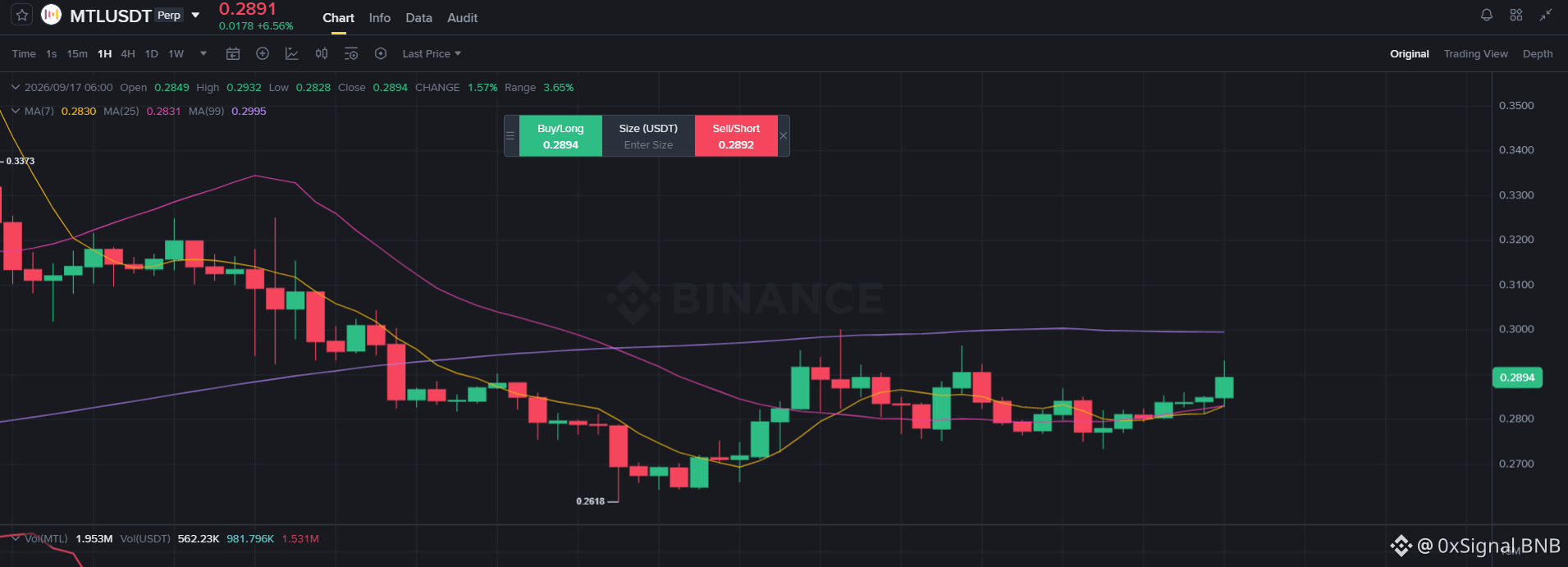
$MTL is -0.70% on the 1H screen. The current snapshot alone doesn't provide enough verified chart structure to responsibly manufacture support, resistance, or a precise ladder.
Neutral — wait for confirmation
Entry: Chart confirmation required
TP1: Nearest confirmed resistance
TP2: Next resistance
TP3: Optional
SL: Above/below confirmed swing level
Invalidation: No trade until a clear structure forms.
$MTL
{future}(MTLUSDT)
$MTL
$MTL is -0.70% on the 1H screen. The current snapshot alone doesn't provide enough verified chart structure to responsibly manufacture support, resistance, or a precise ladder.
Neutral — wait for confirmation
Entry: Chart confirmation required
TP1: Nearest confirmed resistance
TP2: Next resistance
TP3: Optional
SL: Above/below confirmed swing level
Invalidation: No trade until a clear structure forms.
$MTL
$MTL is -0.70% on the 1H screen. The current snapshot alone doesn't provide enough verified chart structure to responsibly manufacture support, resistance, or a precise ladder.
Neutral — wait for confirmation
Entry: Chart confirmation required
TP1: Nearest confirmed resistance
TP2: Next resistance
TP3: Optional
SL: Above/below confirmed swing level
Invalidation: No trade until a clear structure forms.
$MTL
1
178
·
--

Sulaiman 零号猎人
·
--
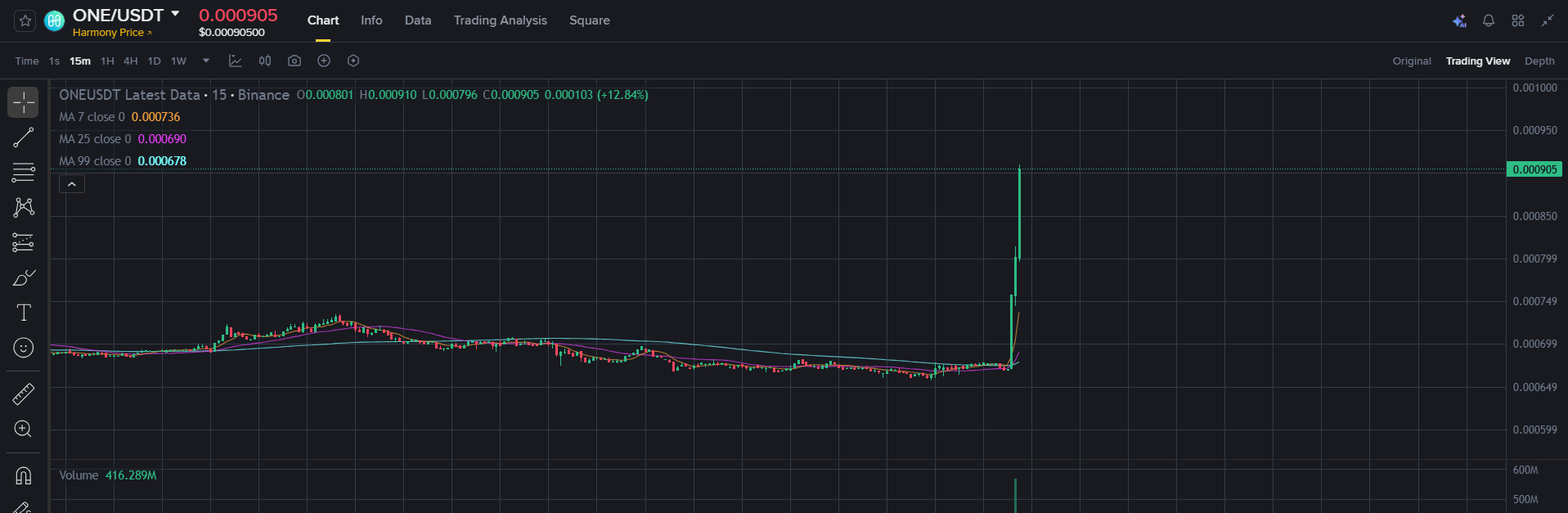
$ONE is showing strong 1H momentum at $0.000858, but the move needs to prove it can reclaim and hold the recent breakdown area. Recent analysis identified $0.000662 as important support and $0.000630 as the next downside level.
Bullish setup — only after confirmation
Entry: $0.00084 - $0.00087
TP1: $0.00090
TP2: $0.00095
TP3: $0.00100
SL: $0.00080
Invalidation: A sustained move back below $0.00080 weakens the momentum setup.
$ONE #One #HarmonyOne
Bullish setup — only after confirmation
Entry: $0.00084 - $0.00087
TP1: $0.00090
TP2: $0.00095
TP3: $0.00100
SL: $0.00080
Invalidation: A sustained move back below $0.00080 weakens the momentum setup.
$ONE #One #HarmonyOne
2
218
·
--
$ORDI
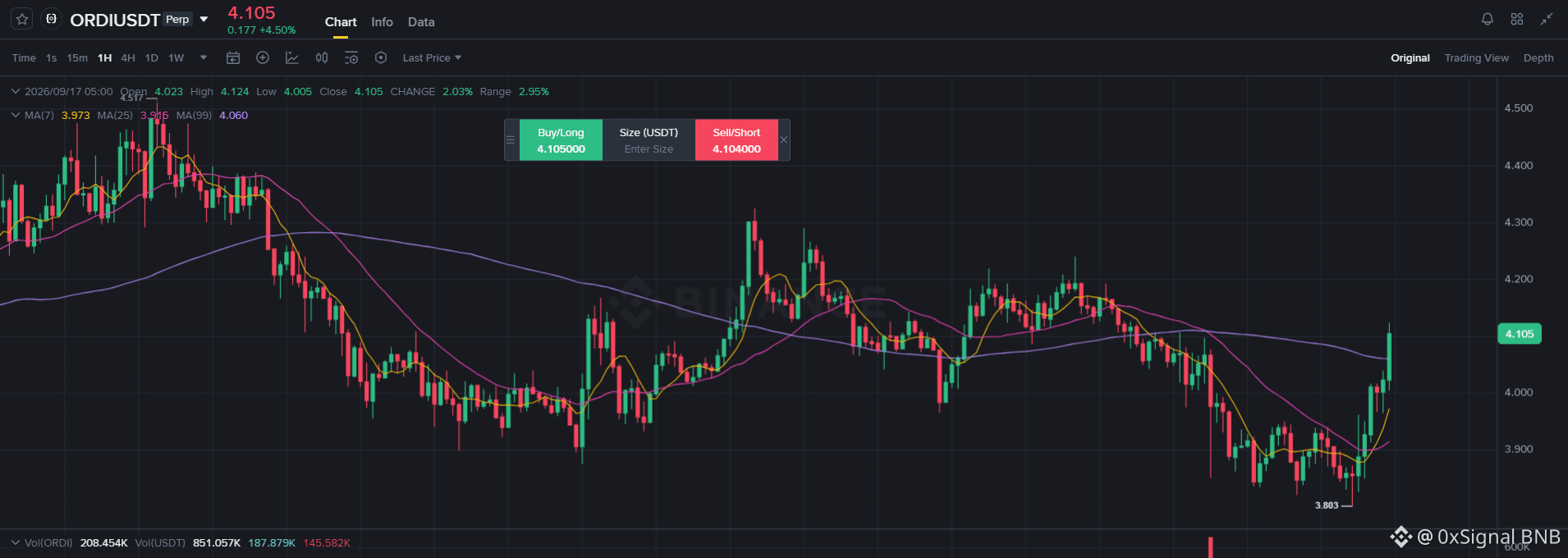
$ORDI is +2.78% on the 1H screen at $4.10. Recent data shows the token has been trading in a volatile range around the $4 area, so reclaiming nearby resistance matters more than chasing the current candle.
Neutral — wait for confirmation
Entry: $4.05 - $4.15
TP1: $4.30
TP2: $4.50
TP3: $4.70
SL: $3.90
Invalidation: A break below $3.90 would weaken the continuation thesis.
$ORDI
{future}(ORDIUSDT)
$ORDI
$ORDI is +2.78% on the 1H screen at $4.10. Recent data shows the token has been trading in a volatile range around the $4 area, so reclaiming nearby resistance matters more than chasing the current candle.
Neutral — wait for confirmation
Entry: $4.05 - $4.15
TP1: $4.30
TP2: $4.50
TP3: $4.70
SL: $3.90
Invalidation: A break below $3.90 would weaken the continuation thesis.
$ORDI
$ORDI is +2.78% on the 1H screen at $4.10. Recent data shows the token has been trading in a volatile range around the $4 area, so reclaiming nearby resistance matters more than chasing the current candle.
Neutral — wait for confirmation
Entry: $4.05 - $4.15
TP1: $4.30
TP2: $4.50
TP3: $4.70
SL: $3.90
Invalidation: A break below $3.90 would weaken the continuation thesis.
$ORDI
2
212
·
--
$ENA
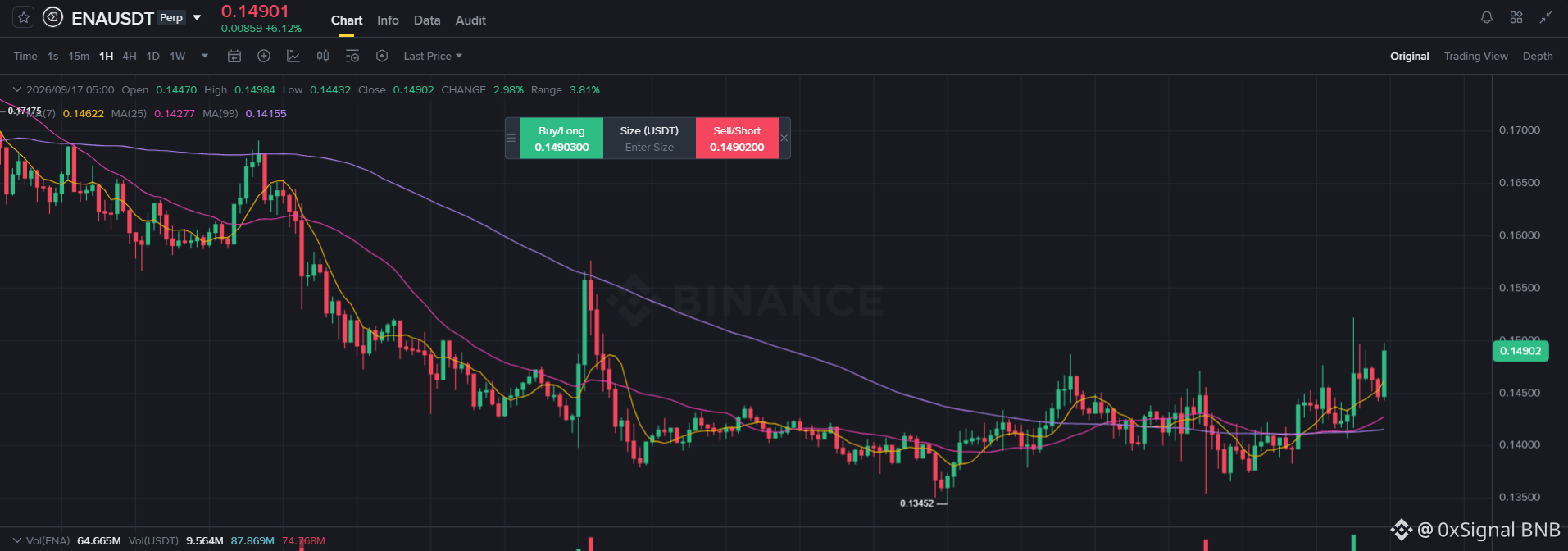
$ENA is +3.11% on the 1H screen and is holding relatively well compared with the broader altcoin market. Recent analysis identifies $0.138-$0.137 as demand and $0.144-$0.145 as nearby resistance.
Bullish setup — only above confirmation
Entry: $0.141 - $0.143
TP1: $0.145
TP2: $0.149
TP3: $0.153
SL: $0.137
Invalidation: A decisive loss of $0.137 breaks the setup.
$ENA
{future}(ENAUSDT)
$ENA
$ENA is +3.11% on the 1H screen and is holding relatively well compared with the broader altcoin market. Recent analysis identifies $0.138-$0.137 as demand and $0.144-$0.145 as nearby resistance.
Bullish setup — only above confirmation
Entry: $0.141 - $0.143
TP1: $0.145
TP2: $0.149
TP3: $0.153
SL: $0.137
Invalidation: A decisive loss of $0.137 breaks the setup.
$ENA
$ENA is +3.11% on the 1H screen and is holding relatively well compared with the broader altcoin market. Recent analysis identifies $0.138-$0.137 as demand and $0.144-$0.145 as nearby resistance.
Bullish setup — only above confirmation
Entry: $0.141 - $0.143
TP1: $0.145
TP2: $0.149
TP3: $0.153
SL: $0.137
Invalidation: A decisive loss of $0.137 breaks the setup.
$ENA
1
190
·
--
$OP
{future}(OPUSDT)
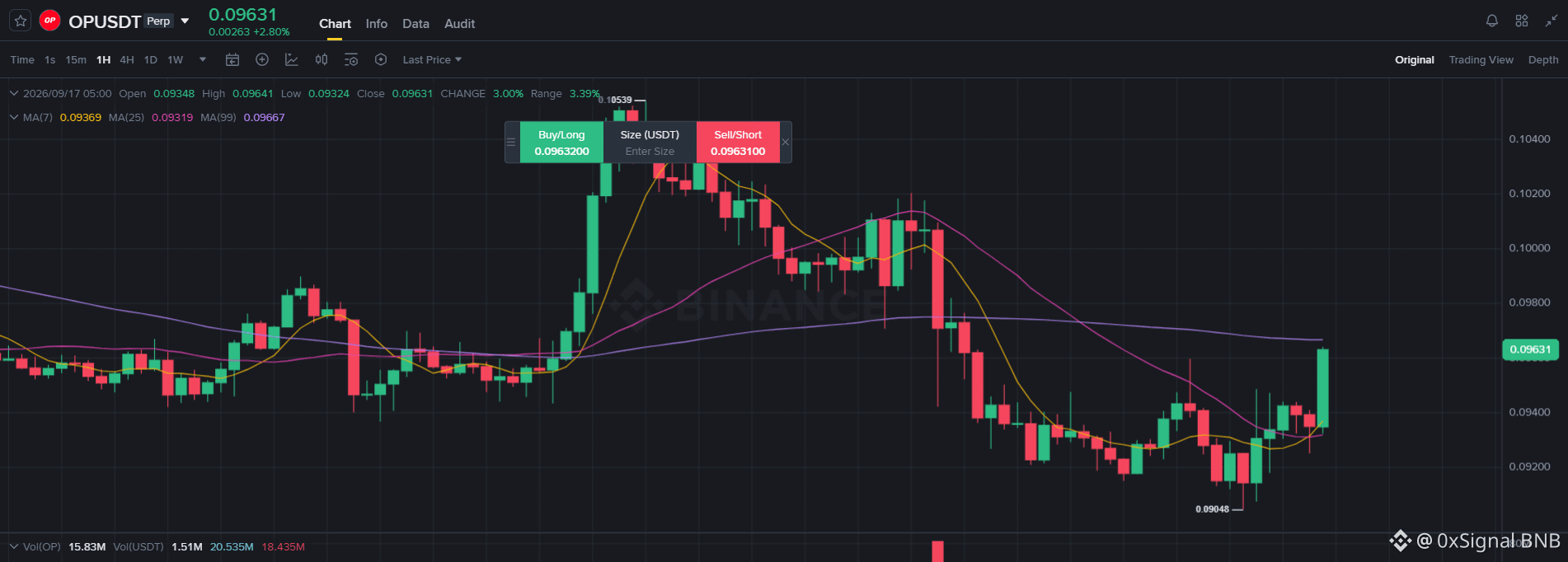
$OP is green on the 1H screen, but the recent 24H structure remains weak. Recent technical analysis places important support around $0.0898, with $0.0808 as the next downside level.
Neutral — wait for confirmation
Entry: $0.094 - $0.097
TP1: $0.100
TP2: $0.104
TP3: $0.108
SL: $0.089
Invalidation: A break below $0.089 would cancel the recovery setup.
$OP
$OP
$OP is green on the 1H screen, but the recent 24H structure remains weak. Recent technical analysis places important support around $0.0898, with $0.0808 as the next downside level.
Neutral — wait for confirmation
Entry: $0.094 - $0.097
TP1: $0.100
TP2: $0.104
TP3: $0.108
SL: $0.089
Invalidation: A break below $0.089 would cancel the recovery setup.
$OP
$OP is green on the 1H screen, but the recent 24H structure remains weak. Recent technical analysis places important support around $0.0898, with $0.0808 as the next downside level.
Neutral — wait for confirmation
Entry: $0.094 - $0.097
TP1: $0.100
TP2: $0.104
TP3: $0.108
SL: $0.089
Invalidation: A break below $0.089 would cancel the recovery setup.
$OP
1
289
·
--
A big green candle can make you feel like you’re already late.
That feeling is exactly what makes people chase moves.
The problem is that price movement alone doesn’t explain *why* the move is happening. Without understanding the context, entering simply because something is moving can turn excitement into regret.
Try asking three questions first:
What caused the move?
Is the reason still active?
What would confirm it?
A moving asset deserves attention. It doesn’t automatically deserve an entry.
Do you usually chase the candle or wait for confirmation?
A big green candle can make you feel like you’re already late.
That feeling is exactly what makes people chase moves.
The problem is that price movement alone doesn’t explain *why* the move is happening. Without understanding the context, entering simply because something is moving can turn excitement into regret.
Try asking three questions first:
What caused the move?
Is the reason still active?
What would confirm it?
A moving asset deserves attention. It doesn’t automatically deserve an entry.
Do you usually chase the candle or wait for confirmation?
That feeling is exactly what makes people chase moves.
The problem is that price movement alone doesn’t explain *why* the move is happening. Without understanding the context, entering simply because something is moving can turn excitement into regret.
Try asking three questions first:
What caused the move?
Is the reason still active?
What would confirm it?
A moving asset deserves attention. It doesn’t automatically deserve an entry.
Do you usually chase the candle or wait for confirmation?
4
·
--
BNB — THE ASSET SEC "FORGOT"
Congress just killed America's biggest crypto bill. Bitcoin fell 4%, XRP fell 8%. Everyone's writing the same headline. Nobody's asking: if regulators already decided which coins are "safe," why isn't BNB on that list?
Back in March 2026, the SEC and CFTC jointly named 16 assets as digital commodities — legally outside SEC jurisdiction: BTC, ETH, SOL, XRP, DOGE, ADA, AVAX, LINK, DOT, HBAR, LTC, BCH, SHIB, XLM, XTZ, APT. BNB isn't there.
The CLARITY Act would've made that list permanent law. It failed 49–50 in the Senate on September 15. But the SEC's version never needed Congress — it's still standing, still moving (a new rule proposal is open for comment until October 20), and it still excludes BNB.
The market sold everything together on the vote, as if regulation is one flat story. It isn't. 16 assets already have quiet federal cover. BNB doesn't — and that gap was set in March, not this week.
Not a buy/sell call. Just a fact almost nobody connected.
BNB — THE ASSET SEC "FORGOT"
Congress just killed America's biggest crypto bill. Bitcoin fell 4%, XRP fell 8%. Everyone's writing the same headline. Nobody's asking: if regulators already decided which coins are "safe," why isn't BNB on that list?
Back in March 2026, the SEC and CFTC jointly named 16 assets as digital commodities — legally outside SEC jurisdiction: BTC, ETH, SOL, XRP, DOGE, ADA, AVAX, LINK, DOT, HBAR, LTC, BCH, SHIB, XLM, XTZ, APT. BNB isn't there.
The CLARITY Act would've made that list permanent law. It failed 49–50 in the Senate on September 15. But the SEC's version never needed Congress — it's still standing, still moving (a new rule proposal is open for comment until October 20), and it still excludes BNB.
The market sold everything together on the vote, as if regulation is one flat story. It isn't. 16 assets already have quiet federal cover. BNB doesn't — and that gap was set in March, not this week.
Not a buy/sell call. Just a fact almost nobody connected.
Congress just killed America's biggest crypto bill. Bitcoin fell 4%, XRP fell 8%. Everyone's writing the same headline. Nobody's asking: if regulators already decided which coins are "safe," why isn't BNB on that list?
Back in March 2026, the SEC and CFTC jointly named 16 assets as digital commodities — legally outside SEC jurisdiction: BTC, ETH, SOL, XRP, DOGE, ADA, AVAX, LINK, DOT, HBAR, LTC, BCH, SHIB, XLM, XTZ, APT. BNB isn't there.
The CLARITY Act would've made that list permanent law. It failed 49–50 in the Senate on September 15. But the SEC's version never needed Congress — it's still standing, still moving (a new rule proposal is open for comment until October 20), and it still excludes BNB.
The market sold everything together on the vote, as if regulation is one flat story. It isn't. 16 assets already have quiet federal cover. BNB doesn't — and that gap was set in March, not this week.
Not a buy/sell call. Just a fact almost nobody connected.
1
377
·
--
$GUN
$GUN is trading at $0.0025, down 6.02% over the last 24H.
34.91% of the supply is unlocked, while 10,555,398 GUN is scheduled for release.
Next Unlock: Sep 16, 2026 — 13:00 UTC
Unlock Value: $26,388.50
With negative 24H momentum and a relatively low unlocked percentage, the price reaction around this scheduled event will be worth watching.
$GUN
$GUN
$GUN is trading at $0.0025, down 6.02% over the last 24H.
34.91% of the supply is unlocked, while 10,555,398 GUN is scheduled for release.
Next Unlock: Sep 16, 2026 — 13:00 UTC
Unlock Value: $26,388.50
With negative 24H momentum and a relatively low unlocked percentage, the price reaction around this scheduled event will be worth watching.
$GUN
$GUN is trading at $0.0025, down 6.02% over the last 24H.
34.91% of the supply is unlocked, while 10,555,398 GUN is scheduled for release.
Next Unlock: Sep 16, 2026 — 13:00 UTC
Unlock Value: $26,388.50
With negative 24H momentum and a relatively low unlocked percentage, the price reaction around this scheduled event will be worth watching.
$GUN
1
242
·
--
$RED
$RED is trading at $0.1342, down 4.69% over the last 24H.
51.43% of the supply is unlocked, with 1,037,826 RED scheduled for the next release.
Next Unlock: Sep 16, 2026 — 11:30 UTC
Unlock Value: $139,276.35
The scheduled release has a larger value than several others on this list, so the market reaction around the event deserves attention.
$RED
{future}(REDUSDT)
$RED
$RED is trading at $0.1342, down 4.69% over the last 24H.
51.43% of the supply is unlocked, with 1,037,826 RED scheduled for the next release.
Next Unlock: Sep 16, 2026 — 11:30 UTC
Unlock Value: $139,276.35
The scheduled release has a larger value than several others on this list, so the market reaction around the event deserves attention.
$RED
$RED is trading at $0.1342, down 4.69% over the last 24H.
51.43% of the supply is unlocked, with 1,037,826 RED scheduled for the next release.
Next Unlock: Sep 16, 2026 — 11:30 UTC
Unlock Value: $139,276.35
The scheduled release has a larger value than several others on this list, so the market reaction around the event deserves attention.
$RED
1
56
·
--
$SENT
$SENT is trading at $0.01534, up 2.06% over the last 24H.
Only 26.03% is unlocked, while the next release contains 7,253,460 SENT.
Next Unlock: Sep 16, 2026 — 11:30 UTC
Unlock Value: $111,268.09
The combination of positive 24H momentum and a low unlocked percentage makes the supply event an important watch point.
$SENT
{future}(SENTUSDT)
$SENT
$SENT is trading at $0.01534, up 2.06% over the last 24H.
Only 26.03% is unlocked, while the next release contains 7,253,460 SENT.
Next Unlock: Sep 16, 2026 — 11:30 UTC
Unlock Value: $111,268.09
The combination of positive 24H momentum and a low unlocked percentage makes the supply event an important watch point.
$SENT
$SENT is trading at $0.01534, up 2.06% over the last 24H.
Only 26.03% is unlocked, while the next release contains 7,253,460 SENT.
Next Unlock: Sep 16, 2026 — 11:30 UTC
Unlock Value: $111,268.09
The combination of positive 24H momentum and a low unlocked percentage makes the supply event an important watch point.
$SENT
76
·
--
$BMT
$BMT is trading at $0.01783, up 0.56% over the last 24H.
74.23% of the supply is unlocked, with 693,187 BMT coming in the next release.
Next Unlock: Sep 16, 2026 — 11:00 UTC
Unlock Value: $12,359.54
Price is holding slightly positive while the upcoming release remains relatively contained, keeping this event worth monitoring.
$BMT
$BMT
$BMT is trading at $0.01783, up 0.56% over the last 24H.
74.23% of the supply is unlocked, with 693,187 BMT coming in the next release.
Next Unlock: Sep 16, 2026 — 11:00 UTC
Unlock Value: $12,359.54
Price is holding slightly positive while the upcoming release remains relatively contained, keeping this event worth monitoring.
$BMT
$BMT is trading at $0.01783, up 0.56% over the last 24H.
74.23% of the supply is unlocked, with 693,187 BMT coming in the next release.
Next Unlock: Sep 16, 2026 — 11:00 UTC
Unlock Value: $12,359.54
Price is holding slightly positive while the upcoming release remains relatively contained, keeping this event worth monitoring.
$BMT
1
138
·
--
$COOKIE
$COOKIE is trading at $0.0098, down 4.85% over the last 24H.
87.32% of the supply is already unlocked, while 469,792 COOKIE is scheduled for release.
Next Unlock: Sep 16, 2026 — 10:00 UTC
Unlock Value: $4,603.97
With most of the supply already unlocked, the key question is whether selling pressure continues after the scheduled release.
$COOKIE
$COOKIE
$COOKIE is trading at $0.0098, down 4.85% over the last 24H.
87.32% of the supply is already unlocked, while 469,792 COOKIE is scheduled for release.
Next Unlock: Sep 16, 2026 — 10:00 UTC
Unlock Value: $4,603.97
With most of the supply already unlocked, the key question is whether selling pressure continues after the scheduled release.
$COOKIE
$COOKIE is trading at $0.0098, down 4.85% over the last 24H.
87.32% of the supply is already unlocked, while 469,792 COOKIE is scheduled for release.
Next Unlock: Sep 16, 2026 — 10:00 UTC
Unlock Value: $4,603.97
With most of the supply already unlocked, the key question is whether selling pressure continues after the scheduled release.
$COOKIE
1
89
·
--
$BABY
$BABY is trading at $0.01079, down 3.14% over the last 24H.
36.32% is already unlocked, with 23,649,500 BABY scheduled for the next release.
Next Unlock: Sep 16, 2026 — 10:00 UTC
Unlock Value: $25,517.81
The release is relatively small, but the current negative momentum makes the reaction around the unlock worth watching.
$BABY
$BABY
$BABY is trading at $0.01079, down 3.14% over the last 24H.
36.32% is already unlocked, with 23,649,500 BABY scheduled for the next release.
Next Unlock: Sep 16, 2026 — 10:00 UTC
Unlock Value: $25,517.81
The release is relatively small, but the current negative momentum makes the reaction around the unlock worth watching.
$BABY
$BABY is trading at $0.01079, down 3.14% over the last 24H.
36.32% is already unlocked, with 23,649,500 BABY scheduled for the next release.
Next Unlock: Sep 16, 2026 — 10:00 UTC
Unlock Value: $25,517.81
The release is relatively small, but the current negative momentum makes the reaction around the unlock worth watching.
$BABY
117
·
--
$INIT
$INIT is trading at $0.06768, down 1.25% over the last 24H.
Only 30.98% of the supply is unlocked, while the next release contains 34,003 INIT.
Next Unlock: Sep 16, 2026 — 09:00 UTC
Unlock Value: $2,301.38
The immediate unlock is small, but the relatively low unlocked percentage keeps future supply releases on the radar.
$INIT
$INIT
$INIT is trading at $0.06768, down 1.25% over the last 24H.
Only 30.98% of the supply is unlocked, while the next release contains 34,003 INIT.
Next Unlock: Sep 16, 2026 — 09:00 UTC
Unlock Value: $2,301.38
The immediate unlock is small, but the relatively low unlocked percentage keeps future supply releases on the radar.
$INIT
$INIT is trading at $0.06768, down 1.25% over the last 24H.
Only 30.98% of the supply is unlocked, while the next release contains 34,003 INIT.
Next Unlock: Sep 16, 2026 — 09:00 UTC
Unlock Value: $2,301.38
The immediate unlock is small, but the relatively low unlocked percentage keeps future supply releases on the radar.
$INIT
106
·
--
$MEME
$MEME is trading at $0.00051, down 3.41% over the last 24H.
With 93.81% already unlocked, the next release contains 10,861,111 MEME.
Next Unlock: Sep 16, 2026 — 07:30 UTC
Unlock Value: $5,539.17
The upcoming release is only 0.02% of the total locked supply, so the post-unlock reaction may be more important than the unlock size itself.
$MEME
$MEME
$MEME is trading at $0.00051, down 3.41% over the last 24H.
With 93.81% already unlocked, the next release contains 10,861,111 MEME.
Next Unlock: Sep 16, 2026 — 07:30 UTC
Unlock Value: $5,539.17
The upcoming release is only 0.02% of the total locked supply, so the post-unlock reaction may be more important than the unlock size itself.
$MEME
$MEME is trading at $0.00051, down 3.41% over the last 24H.
With 93.81% already unlocked, the next release contains 10,861,111 MEME.
Next Unlock: Sep 16, 2026 — 07:30 UTC
Unlock Value: $5,539.17
The upcoming release is only 0.02% of the total locked supply, so the post-unlock reaction may be more important than the unlock size itself.
$MEME
225
·
--
$GPS
$GPS is trading at $0.01078, up 0.75% over the last 24H.
65.75% of the supply is already unlocked, while the next release contains 166,444,444 GPS.
Next Unlock: Sep 16, 2026 — 07:00 UTC
Unlock Value: $1,794,271.11
Only 1.66% of the total locked supply is being released in this event, making the market reaction worth watching.
$GPS
{future}(GPSUSDT)
$GPS
$GPS is trading at $0.01078, up 0.75% over the last 24H.
65.75% of the supply is already unlocked, while the next release contains 166,444,444 GPS.
Next Unlock: Sep 16, 2026 — 07:00 UTC
Unlock Value: $1,794,271.11
Only 1.66% of the total locked supply is being released in this event, making the market reaction worth watching.
$GPS
$GPS is trading at $0.01078, up 0.75% over the last 24H.
65.75% of the supply is already unlocked, while the next release contains 166,444,444 GPS.
Next Unlock: Sep 16, 2026 — 07:00 UTC
Unlock Value: $1,794,271.11
Only 1.66% of the total locked supply is being released in this event, making the market reaction worth watching.
$GPS
260
·
--

Article
Bank Deposits in a Costume: The OSFI Ruling That Crypto’s RWA Supercycle Is MissingTokenized deposits are not stablecoins, not yield products, and not a ticker—yet. The real story is a regulator giving banks a balance-sheet reason to move dollars on-chain.
Here's my timeline this week, and it's the same as yours: $ONDO up, tokenized Treasuries up, someone in your replies calling it "the RWA supercycle." Cool. None of you are talking about the thing that actually matters.
It didn't happen on a chart. It happened inside a document from a Canadian banking regulator that maybe four hundred people on earth have read.
September 10, 2026. Canada's OSFI puts out a statement that reads like the most boring sentence in finance: a deposit doesn't become a different legal thing just because you put it on a blockchain. Tokenized deposits aren't a new asset class. They're a bank deposit. Wearing a costume.
I need you to sit with that for a second, because it's doing more work than it looks like.
It means a bank doesn't need to become a stablecoin issuer to put dollars on-chain. They can just... use the charter they already have. And it means regulators just told the market, in writing, that "bank money on a blockchain" and "stablecoin" are two different animals — even though to you and me, on our screens, they look exactly the same. Same day, OSFI also dropped its 2027 capital guideline, and gave qualifying tokenized deposits bank-like treatment instead of the usual crypto risk-weight punishment. That's the part I actually care about. That's not a regulator being nice. That's a regulator giving a bank a balance-sheet reason to go do this.
Here's what makes it timing and not just talk. The pipes were already laid before the rule showed up. Back in July, LayerZero and Keeta announced they'd built the infrastructure to move tokenized bank deposits natively across Ethereum, Solana, Base, and Keeta's own chain — nine currencies on the roadmap. Seven weeks before the regulator caught up to the tech. HSBC's had a live version running in Hong Kong since May. BNY's running one against a custody book north of $57 trillion. A UK bank is prepping to tokenize a quarter billion pounds of actual retail deposits.
Let me be straight with you about what I actually know versus what I'm guessing.
I know banks now have cleaner legal ground and better capital treatment to issue deposit tokens on-chain. I know the rails to move that money exist. What I don't know — what's still just my read of the incentives — is whether banks actually go hard enough with this to pull real settlement volume off USDC and USDT. That's a story I find convincing. It is not a fact yet. Don't let me or anyone else sell it to you as one.
And this is where the whole "RWA" umbrella just falls apart if you poke it. Tokenized deposits aren't a yield play. They're not fighting Treasuries for your capital the way OUSG is. They're fighting stablecoins for settlement flow — different game, different winners. Ondo has zero exposure to this. Zero. Most of what your timeline is calling "the RWA trade" isn't anywhere near the thing I'm describing.
Now let me argue with myself for a second, because I'm not going to hand you a clean story and pretend it has no cracks.
This isn't actually secret information. HSBC's rollout, BNY's product, the Bank of England openly saying it prefers tokenization to stablecoins — TradFi press has been writing this since earlier in the year. So what's the edge? It's not the facts. It's that nobody in crypto is drawing the line between "bank deposit token" and "stablecoin" and "RWA yield product" as three separate things. You're all lumping it into one bucket and watching the wrong number.
And here's the part that should actually bother you if you're looking for a trade: there isn't one. Not a clean one. LayerZero and Keeta carry a sliver of exposure, but it's thin, and it's buried under a dozen other things those protocols do. You can fully understand this shift and still have nowhere to put money on it. Either that means it's early. Or it means this stays a story that never gets a ticker attached to it. I don't know which yet, and I'm not going to pretend I do.
So don't watch price on this one. Watch for a second regulator — US, UK, EU, anyone G7-adjacent — putting their own version of OSFI's language on paper in the next couple quarters. Watch for Keeta or LayerZero actually publishing a real number, because right now there's not one single public figure for volume on this product. That's the hole in the whole thesis, and I'm not going to hide it from you. Watch for a bank saying "tokenized deposits" and "stablecoin competition" in the same sentence in an actual earnings call, not a press release with a stock photo of a handshake.
If none of that shows up in the next two quarters — if OSFI's the only one who ever says this out loud, and nobody puts out a single number — then I was wrong to flag it. It was a footnote from one regulator in one country, and it was never going anywhere.
Right now it's just a fact pattern with no trade attached. I'm watching to see if that changes. You should be too.
$ZRO
Bank Deposits in a Costume: The OSFI Ruling That Crypto’s RWA Supercycle Is Missing
Tokenized deposits are not stablecoins, not yield products, and not a ticker—yet. The real story is a regulator giving banks a balance-sheet reason to move dollars on-chain.
Here's my timeline this week, and it's the same as yours: $ONDO up, tokenized Treasuries up, someone in your replies calling it "the RWA supercycle." Cool. None of you are talking about the thing that actually matters.
It didn't happen on a chart. It happened inside a document from a Canadian banking regulator that maybe four hundred people on earth have read.
September 10, 2026. Canada's OSFI puts out a statement that reads like the most boring sentence in finance: a deposit doesn't become a different legal thing just because you put it on a blockchain. Tokenized deposits aren't a new asset class. They're a bank deposit. Wearing a costume.
I need you to sit with that for a second, because it's doing more work than it looks like.
It means a bank doesn't need to become a stablecoin issuer to put dollars on-chain. They can just... use the charter they already have. And it means regulators just told the market, in writing, that "bank money on a blockchain" and "stablecoin" are two different animals — even though to you and me, on our screens, they look exactly the same. Same day, OSFI also dropped its 2027 capital guideline, and gave qualifying tokenized deposits bank-like treatment instead of the usual crypto risk-weight punishment. That's the part I actually care about. That's not a regulator being nice. That's a regulator giving a bank a balance-sheet reason to go do this.
Here's what makes it timing and not just talk. The pipes were already laid before the rule showed up. Back in July, LayerZero and Keeta announced they'd built the infrastructure to move tokenized bank deposits natively across Ethereum, Solana, Base, and Keeta's own chain — nine currencies on the roadmap. Seven weeks before the regulator caught up to the tech. HSBC's had a live version running in Hong Kong since May. BNY's running one against a custody book north of $57 trillion. A UK bank is prepping to tokenize a quarter billion pounds of actual retail deposits.
Let me be straight with you about what I actually know versus what I'm guessing.
I know banks now have cleaner legal ground and better capital treatment to issue deposit tokens on-chain. I know the rails to move that money exist. What I don't know — what's still just my read of the incentives — is whether banks actually go hard enough with this to pull real settlement volume off USDC and USDT. That's a story I find convincing. It is not a fact yet. Don't let me or anyone else sell it to you as one.
And this is where the whole "RWA" umbrella just falls apart if you poke it. Tokenized deposits aren't a yield play. They're not fighting Treasuries for your capital the way OUSG is. They're fighting stablecoins for settlement flow — different game, different winners. Ondo has zero exposure to this. Zero. Most of what your timeline is calling "the RWA trade" isn't anywhere near the thing I'm describing.
Now let me argue with myself for a second, because I'm not going to hand you a clean story and pretend it has no cracks.
This isn't actually secret information. HSBC's rollout, BNY's product, the Bank of England openly saying it prefers tokenization to stablecoins — TradFi press has been writing this since earlier in the year. So what's the edge? It's not the facts. It's that nobody in crypto is drawing the line between "bank deposit token" and "stablecoin" and "RWA yield product" as three separate things. You're all lumping it into one bucket and watching the wrong number.
And here's the part that should actually bother you if you're looking for a trade: there isn't one. Not a clean one. LayerZero and Keeta carry a sliver of exposure, but it's thin, and it's buried under a dozen other things those protocols do. You can fully understand this shift and still have nowhere to put money on it. Either that means it's early. Or it means this stays a story that never gets a ticker attached to it. I don't know which yet, and I'm not going to pretend I do.
So don't watch price on this one. Watch for a second regulator — US, UK, EU, anyone G7-adjacent — putting their own version of OSFI's language on paper in the next couple quarters. Watch for Keeta or LayerZero actually publishing a real number, because right now there's not one single public figure for volume on this product. That's the hole in the whole thesis, and I'm not going to hide it from you. Watch for a bank saying "tokenized deposits" and "stablecoin competition" in the same sentence in an actual earnings call, not a press release with a stock photo of a handshake.
If none of that shows up in the next two quarters — if OSFI's the only one who ever says this out loud, and nobody puts out a single number — then I was wrong to flag it. It was a footnote from one regulator in one country, and it was never going anywhere.
Right now it's just a fact pattern with no trade attached. I'm watching to see if that changes. You should be too.
$ZRO
Here's my timeline this week, and it's the same as yours: $ONDO up, tokenized Treasuries up, someone in your replies calling it "the RWA supercycle." Cool. None of you are talking about the thing that actually matters.
It didn't happen on a chart. It happened inside a document from a Canadian banking regulator that maybe four hundred people on earth have read.
September 10, 2026. Canada's OSFI puts out a statement that reads like the most boring sentence in finance: a deposit doesn't become a different legal thing just because you put it on a blockchain. Tokenized deposits aren't a new asset class. They're a bank deposit. Wearing a costume.
I need you to sit with that for a second, because it's doing more work than it looks like.
It means a bank doesn't need to become a stablecoin issuer to put dollars on-chain. They can just... use the charter they already have. And it means regulators just told the market, in writing, that "bank money on a blockchain" and "stablecoin" are two different animals — even though to you and me, on our screens, they look exactly the same. Same day, OSFI also dropped its 2027 capital guideline, and gave qualifying tokenized deposits bank-like treatment instead of the usual crypto risk-weight punishment. That's the part I actually care about. That's not a regulator being nice. That's a regulator giving a bank a balance-sheet reason to go do this.
Here's what makes it timing and not just talk. The pipes were already laid before the rule showed up. Back in July, LayerZero and Keeta announced they'd built the infrastructure to move tokenized bank deposits natively across Ethereum, Solana, Base, and Keeta's own chain — nine currencies on the roadmap. Seven weeks before the regulator caught up to the tech. HSBC's had a live version running in Hong Kong since May. BNY's running one against a custody book north of $57 trillion. A UK bank is prepping to tokenize a quarter billion pounds of actual retail deposits.
Let me be straight with you about what I actually know versus what I'm guessing.
I know banks now have cleaner legal ground and better capital treatment to issue deposit tokens on-chain. I know the rails to move that money exist. What I don't know — what's still just my read of the incentives — is whether banks actually go hard enough with this to pull real settlement volume off USDC and USDT. That's a story I find convincing. It is not a fact yet. Don't let me or anyone else sell it to you as one.
And this is where the whole "RWA" umbrella just falls apart if you poke it. Tokenized deposits aren't a yield play. They're not fighting Treasuries for your capital the way OUSG is. They're fighting stablecoins for settlement flow — different game, different winners. Ondo has zero exposure to this. Zero. Most of what your timeline is calling "the RWA trade" isn't anywhere near the thing I'm describing.
Now let me argue with myself for a second, because I'm not going to hand you a clean story and pretend it has no cracks.
This isn't actually secret information. HSBC's rollout, BNY's product, the Bank of England openly saying it prefers tokenization to stablecoins — TradFi press has been writing this since earlier in the year. So what's the edge? It's not the facts. It's that nobody in crypto is drawing the line between "bank deposit token" and "stablecoin" and "RWA yield product" as three separate things. You're all lumping it into one bucket and watching the wrong number.
And here's the part that should actually bother you if you're looking for a trade: there isn't one. Not a clean one. LayerZero and Keeta carry a sliver of exposure, but it's thin, and it's buried under a dozen other things those protocols do. You can fully understand this shift and still have nowhere to put money on it. Either that means it's early. Or it means this stays a story that never gets a ticker attached to it. I don't know which yet, and I'm not going to pretend I do.
So don't watch price on this one. Watch for a second regulator — US, UK, EU, anyone G7-adjacent — putting their own version of OSFI's language on paper in the next couple quarters. Watch for Keeta or LayerZero actually publishing a real number, because right now there's not one single public figure for volume on this product. That's the hole in the whole thesis, and I'm not going to hide it from you. Watch for a bank saying "tokenized deposits" and "stablecoin competition" in the same sentence in an actual earnings call, not a press release with a stock photo of a handshake.
If none of that shows up in the next two quarters — if OSFI's the only one who ever says this out loud, and nobody puts out a single number — then I was wrong to flag it. It was a footnote from one regulator in one country, and it was never going anywhere.
Right now it's just a fact pattern with no trade attached. I'm watching to see if that changes. You should be too.
$ZRO
1
214
·
--
Article
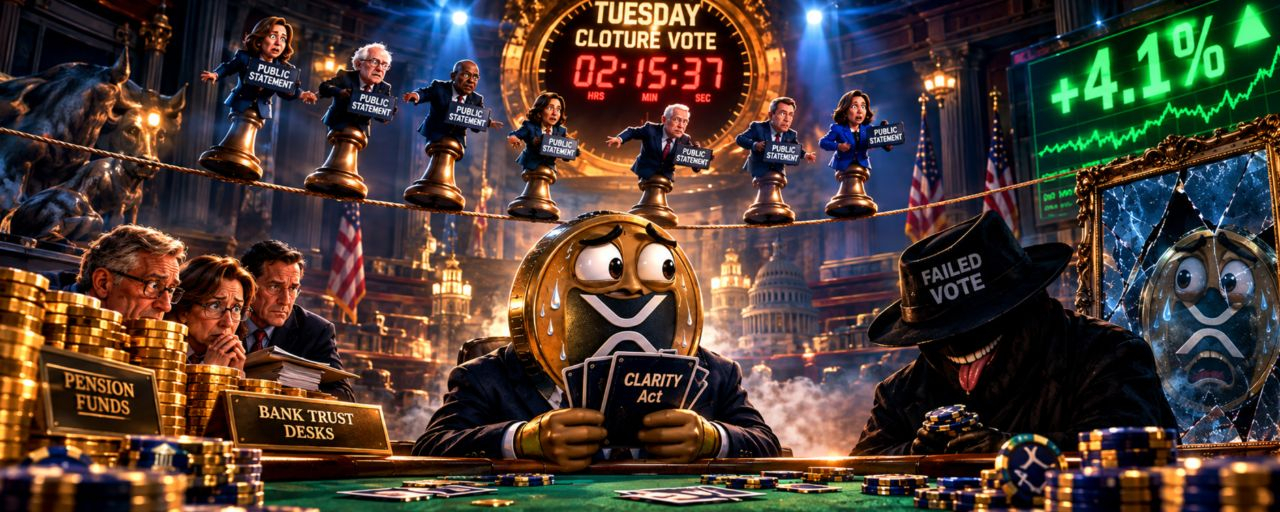
XRP's Rally Is Riding a Binary Event — And That Cuts Both Ways$XRP is having a good day. It's sitting around $1.40, up roughly 4% over the past 24 hours, and it's outpacing most of the large-cap field going into Tuesday's CLARITY Act cloture vote. But here's the thing worth sitting with for a second: XRP isn't just catching the same generic "regulation is coming" wave every other token is. It's got its own specific story baked into this bill, which is exactly why it's worth looking closer instead of just scrolling past the green candle.
Why XRP Reacts Differently
Most large-caps get a vague bump whenever a "regulatory clarity" headline drops. XRP's situation is more concrete than that. Back in March, the SEC and CFTC put out a joint interpretation classifying XRP as a digital commodity — good news, but it's an agency interpretation, not law. The next administration could quietly walk it back. Same goes for the 2023 Torres ruling that shielded programmatic XRP sales from securities claims — it's a district court decision that's never actually been tested on appeal. The CLARITY Act would lock both of those into permanent federal statute, which happens to be exactly the kind of certainty banks and pension funds have said they're waiting on before they commit real money.
What The Move Actually Looks Like
* XRP: roughly +4% over the past 24 hours (Sept 14), outperforming most large-cap peers
* What's driving it: positioning ahead of Tuesday's vote, not a reaction to a result that's already happened
* The setup: XRP arguably has the clearest asset-specific regulatory story tied to this bill of any large-cap — a successful cloture vote shortens that overhang in a way it just doesn't for most other tokens
The Honest Caveat
Here's the part that matters more than the green candle. Because XRP has more regulatory uncertainty priced out of it if the bill moves forward, it also has more to "un-price" if Tuesday goes badly. And it's worth saying plainly — different trackers aren't even agreeing on today's exact numbers right now, with intraday reads for XRP bouncing anywhere from roughly $1.34 to $1.40 depending on the source and the minute you check. Treat any single number as directional, not gospel. Zoom out further and you'll see prediction markets on this bill have been on a wild ride for months, swinging from over 80% passage odds back in February down into the 10–20% range by mid-August, before this weekend's last-minute concessions pulled things back up. That kind of whiplash in expectations tells you how genuinely unsettled this still is. If cloture fails Tuesday, XRP likely won't just dip along with everything else — it could take it harder than tokens that never had this specific story attached in the first place.
XRP's outperformance makes sense given what's actually at stake for it in this bill — this isn't a random pump. But it's still a binary event wearing a trend's clothing. Nothing is decided until senators actually vote. Whether any of the 7 Democrats Republicans need for cloture say something publicly before Tuesday afternoon will tell you more than today's candle does. Worth watching closely. Not something to act on blindly. DYOR. Not financial advice.
#XRPClarity #CloturVote #RippleXRP #CryptoRegulation #BinanceSquareXRP
XRP's Rally Is Riding a Binary Event — And That Cuts Both Ways
$XRP is having a good day. It's sitting around $1.40, up roughly 4% over the past 24 hours, and it's outpacing most of the large-cap field going into Tuesday's CLARITY Act cloture vote. But here's the thing worth sitting with for a second: XRP isn't just catching the same generic "regulation is coming" wave every other token is. It's got its own specific story baked into this bill, which is exactly why it's worth looking closer instead of just scrolling past the green candle.
Why XRP Reacts Differently
Most large-caps get a vague bump whenever a "regulatory clarity" headline drops. XRP's situation is more concrete than that. Back in March, the SEC and CFTC put out a joint interpretation classifying XRP as a digital commodity — good news, but it's an agency interpretation, not law. The next administration could quietly walk it back. Same goes for the 2023 Torres ruling that shielded programmatic XRP sales from securities claims — it's a district court decision that's never actually been tested on appeal. The CLARITY Act would lock both of those into permanent federal statute, which happens to be exactly the kind of certainty banks and pension funds have said they're waiting on before they commit real money.
What The Move Actually Looks Like
* XRP: roughly +4% over the past 24 hours (Sept 14), outperforming most large-cap peers
* What's driving it: positioning ahead of Tuesday's vote, not a reaction to a result that's already happened
* The setup: XRP arguably has the clearest asset-specific regulatory story tied to this bill of any large-cap — a successful cloture vote shortens that overhang in a way it just doesn't for most other tokens
The Honest Caveat
Here's the part that matters more than the green candle. Because XRP has more regulatory uncertainty priced out of it if the bill moves forward, it also has more to "un-price" if Tuesday goes badly. And it's worth saying plainly — different trackers aren't even agreeing on today's exact numbers right now, with intraday reads for XRP bouncing anywhere from roughly $1.34 to $1.40 depending on the source and the minute you check. Treat any single number as directional, not gospel. Zoom out further and you'll see prediction markets on this bill have been on a wild ride for months, swinging from over 80% passage odds back in February down into the 10–20% range by mid-August, before this weekend's last-minute concessions pulled things back up. That kind of whiplash in expectations tells you how genuinely unsettled this still is. If cloture fails Tuesday, XRP likely won't just dip along with everything else — it could take it harder than tokens that never had this specific story attached in the first place.
XRP's outperformance makes sense given what's actually at stake for it in this bill — this isn't a random pump. But it's still a binary event wearing a trend's clothing. Nothing is decided until senators actually vote. Whether any of the 7 Democrats Republicans need for cloture say something publicly before Tuesday afternoon will tell you more than today's candle does. Worth watching closely. Not something to act on blindly. DYOR. Not financial advice.
#XRPClarity #CloturVote #RippleXRP #CryptoRegulation #BinanceSquareXRP
Why XRP Reacts Differently
Most large-caps get a vague bump whenever a "regulatory clarity" headline drops. XRP's situation is more concrete than that. Back in March, the SEC and CFTC put out a joint interpretation classifying XRP as a digital commodity — good news, but it's an agency interpretation, not law. The next administration could quietly walk it back. Same goes for the 2023 Torres ruling that shielded programmatic XRP sales from securities claims — it's a district court decision that's never actually been tested on appeal. The CLARITY Act would lock both of those into permanent federal statute, which happens to be exactly the kind of certainty banks and pension funds have said they're waiting on before they commit real money.
What The Move Actually Looks Like
* XRP: roughly +4% over the past 24 hours (Sept 14), outperforming most large-cap peers
* What's driving it: positioning ahead of Tuesday's vote, not a reaction to a result that's already happened
* The setup: XRP arguably has the clearest asset-specific regulatory story tied to this bill of any large-cap — a successful cloture vote shortens that overhang in a way it just doesn't for most other tokens
The Honest Caveat
Here's the part that matters more than the green candle. Because XRP has more regulatory uncertainty priced out of it if the bill moves forward, it also has more to "un-price" if Tuesday goes badly. And it's worth saying plainly — different trackers aren't even agreeing on today's exact numbers right now, with intraday reads for XRP bouncing anywhere from roughly $1.34 to $1.40 depending on the source and the minute you check. Treat any single number as directional, not gospel. Zoom out further and you'll see prediction markets on this bill have been on a wild ride for months, swinging from over 80% passage odds back in February down into the 10–20% range by mid-August, before this weekend's last-minute concessions pulled things back up. That kind of whiplash in expectations tells you how genuinely unsettled this still is. If cloture fails Tuesday, XRP likely won't just dip along with everything else — it could take it harder than tokens that never had this specific story attached in the first place.
XRP's outperformance makes sense given what's actually at stake for it in this bill — this isn't a random pump. But it's still a binary event wearing a trend's clothing. Nothing is decided until senators actually vote. Whether any of the 7 Democrats Republicans need for cloture say something publicly before Tuesday afternoon will tell you more than today's candle does. Worth watching closely. Not something to act on blindly. DYOR. Not financial advice.
#XRPClarity #CloturVote #RippleXRP #CryptoRegulation #BinanceSquareXRP
2
1
2
1.1k
Log in to explore more content
Join global crypto users on Binance Square
⚡️ Get latest and useful information about crypto.
💬 Trusted by the world’s largest crypto exchange.
👍 Discover real insights from verified creators.
Email / Phone number
Trending Topics
BitcoinSurpasses$77000
14,912 views
213 Discussing
$BTC is ripping higher despite it all. 🚀
Today marked the first rate hike in over 3 years, while the CLARITY Act stalled again yesterday.
Setup big long again - thank me later
Entry : $75500 - $76500
Stoploss : $74900
Take profit : $77000 - $78000
Get ready for a crazy growth cycle. 🔥
TF_bnb
·16 Likes
·6.9k views
ParadigmDisclosesZECHolding
59,307 views
964 Discussing
BitcoinETFsShed$450M
24,246 views
214 Discussing