

nullstate
58 Posts

nullstate
 Square Verified
Report
Block User

マクロ経済KOL

AAVE Holder
High-Frequency Trader
5.7 Years
6 Following
1.0K+ Followers
693 Liked
1 Badges
Posts
All
Quotes
Videos
·
--
Bullish
Here is a pro-tip: the market is trading sideways on the majors. If you have not tried bots yet this is a good time to experiment.
Find a market that is swinging 1-3% daily and set the range to be slightly lower and slightly higher than the range.
Do spot grid and not futures grid if you are worried about losing money.
You can make money over time if you have the patience and cannot find a runner.
[My spot grid for AAVE](https://app.binance.com/uni-qr/spotgrid?at=spotGrid&symbol=AAVEUSDC&ref=NULLS&opt=cz1BQVZFVVNEQyZndD1hcml0aCZnYz0xNSZscD0xNzQuNDgmdXA9MTg3LjUmY3BzPXRydWUmY3NpPTEwMTM5OTYw)
Enjoy the red packet and spread the wealth. Plenty more 🎁 to come soon to follow for more.
Here is a pro-tip: the market is trading sideways on the majors. If you have not tried bots yet this is a good time to experiment.
Find a market that is swinging 1-3% daily and set the range to be slightly lower and slightly higher than the range.
Do spot grid and not futures grid if you are worried about losing money.
You can make money over time if you have the patience and cannot find a runner.
My spot grid for AAVE
Enjoy the red packet and spread the wealth. Plenty more 🎁 to come soon to follow for more.
Find a market that is swinging 1-3% daily and set the range to be slightly lower and slightly higher than the range.
Do spot grid and not futures grid if you are worried about losing money.
You can make money over time if you have the patience and cannot find a runner.
My spot grid for AAVE
Enjoy the red packet and spread the wealth. Plenty more 🎁 to come soon to follow for more.

Best Wishes!
From nullstate
Fully Claimed
39
2
68
220
·
--
Bullish
Still holding. Will buy back in some more if it goes down, but i took profit twice. $AAVE
Still holding. Will buy back in some more if it goes down, but i took profit twice. $AAVE
1
1
257
·
--

Article
Aave does something surprisingly normal: it lends money$AAVE is around $185, with a market cap of about $2.7 billion. Its all-time high was $662 in May 2021. The token is still roughly three quarters below that price, even though the market it serves is larger and the product is much better.
{future}(AAVEUSDT)
Explaining why a cryptocurrency might be worth buying usually requires a diagram, several invented words and a request that you stop asking where the money comes from.
Aave is easier to explain. People use it to borrow money. They pay interest. Aave keeps some of that interest.
I think there's a good business here, and that people are overlooking it because it lives in a part of finance where overlooking things is often a sensible precaution.
What does it actually do?
Say you own some crypto. You want cash, but you don't want to sell what you own. You can put it up as security for a loan through Aave.
It's roughly the idea behind a loan secured against a house, except the thing securing this loan is crypto, which can have a very eventful Tuesday.
Other people supply the money you borrow. They earn interest, and Aave takes a share for running the system. Most of this happens through software. If the value of your collateral falls too far, the system can sell it to help repay the loan.
That's the basic arrangement. You get access to money. Someone else gets paid to lend it. Aave earns a fee. You can understand the business without understanding how a blockchain works, much as you can understand a mortgage without knowing why your bank's website still looks like that.
And people already use it. Aave has billions of dollars in outstanding loans. This is an operating lending business, with customers paying to use it.
Why could it get bigger?
Until recently, the story was mostly about people borrowing against crypto. Aave is now expanding into loans backed by digital versions of assets such as stocks and investment funds.
The useful part is what that lets someone do: borrow against something they own without selling it.
People already do this in ordinary finance. Aave is trying to bring more of that activity onto its system. It doesn't need everyone to abandon their bank. It needs enough borrowers to find it useful and enough lenders to supply the money.
That's why it interests me. There is an existing business here that could serve more people and more kinds of assets. The demand doesn't depend entirely on persuading the public to become emotionally attached to another coin.
Fine. But why buy the token?
Aave has a token called $AAVE . This is where the argument needs a little care.
Buying it is not the same as buying shares in a bank. You don't automatically receive a slice of the interest borrowers pay. Aave can do well as a lending business without the token going up in price.
There is, however, a possible connection. The organization that governs Aave has used money to buy AAVE tokens on the open market. There has also been discussion about permanently removing purchased tokens from circulation. Buybacks.
Think of a company buying back its shares. It isn't the same legal arrangement, but the basic appeal is similar: money from the business can support demand for the thing investors hold, and retiring it can reduce the amount available.
If buybacks keep running and the bought tokens are retired for good, every remaining token becomes a slightly larger claim on a growing business. That is the bull case, and it compounds if the business keeps growing.
So what's the bet?
I think Aave could become a much bigger lending business, and that its token could benefit if more of the money it earns is used to support token holders.
There are plenty of ways that can disappoint. Borrowers can leave. Things can break. The people running the system can make bad decisions. And the token can fall even while people keep using the service.
But I like being able to explain where the money comes from. Someone needs a loan, someone provides it, and Aave gets paid for bringing them together. In crypto, getting that far without needing a second diagram is enough to keep me interested.
Aave does something surprisingly normal: it lends money
$AAVE is around $185, with a market cap of about $2.7 billion. Its all-time high was $662 in May 2021. The token is still roughly three quarters below that price, even though the market it serves is larger and the product is much better.
Explaining why a cryptocurrency might be worth buying usually requires a diagram, several invented words and a request that you stop asking where the money comes from.
Aave is easier to explain. People use it to borrow money. They pay interest. Aave keeps some of that interest.
I think there's a good business here, and that people are overlooking it because it lives in a part of finance where overlooking things is often a sensible precaution.
What does it actually do?
Say you own some crypto. You want cash, but you don't want to sell what you own. You can put it up as security for a loan through Aave.
It's roughly the idea behind a loan secured against a house, except the thing securing this loan is crypto, which can have a very eventful Tuesday.
Other people supply the money you borrow. They earn interest, and Aave takes a share for running the system. Most of this happens through software. If the value of your collateral falls too far, the system can sell it to help repay the loan.
That's the basic arrangement. You get access to money. Someone else gets paid to lend it. Aave earns a fee. You can understand the business without understanding how a blockchain works, much as you can understand a mortgage without knowing why your bank's website still looks like that.
And people already use it. Aave has billions of dollars in outstanding loans. This is an operating lending business, with customers paying to use it.
Why could it get bigger?
Until recently, the story was mostly about people borrowing against crypto. Aave is now expanding into loans backed by digital versions of assets such as stocks and investment funds.
The useful part is what that lets someone do: borrow against something they own without selling it.
People already do this in ordinary finance. Aave is trying to bring more of that activity onto its system. It doesn't need everyone to abandon their bank. It needs enough borrowers to find it useful and enough lenders to supply the money.
That's why it interests me. There is an existing business here that could serve more people and more kinds of assets. The demand doesn't depend entirely on persuading the public to become emotionally attached to another coin.
Fine. But why buy the token?
Aave has a token called $AAVE . This is where the argument needs a little care.
Buying it is not the same as buying shares in a bank. You don't automatically receive a slice of the interest borrowers pay. Aave can do well as a lending business without the token going up in price.
There is, however, a possible connection. The organization that governs Aave has used money to buy AAVE tokens on the open market. There has also been discussion about permanently removing purchased tokens from circulation. Buybacks.
Think of a company buying back its shares. It isn't the same legal arrangement, but the basic appeal is similar: money from the business can support demand for the thing investors hold, and retiring it can reduce the amount available.
If buybacks keep running and the bought tokens are retired for good, every remaining token becomes a slightly larger claim on a growing business. That is the bull case, and it compounds if the business keeps growing.
So what's the bet?
I think Aave could become a much bigger lending business, and that its token could benefit if more of the money it earns is used to support token holders.
There are plenty of ways that can disappoint. Borrowers can leave. Things can break. The people running the system can make bad decisions. And the token can fall even while people keep using the service.
But I like being able to explain where the money comes from. Someone needs a loan, someone provides it, and Aave gets paid for bringing them together. In crypto, getting that far without needing a second diagram is enough to keep me interested.
Explaining why a cryptocurrency might be worth buying usually requires a diagram, several invented words and a request that you stop asking where the money comes from.
Aave is easier to explain. People use it to borrow money. They pay interest. Aave keeps some of that interest.
I think there's a good business here, and that people are overlooking it because it lives in a part of finance where overlooking things is often a sensible precaution.
What does it actually do?
Say you own some crypto. You want cash, but you don't want to sell what you own. You can put it up as security for a loan through Aave.
It's roughly the idea behind a loan secured against a house, except the thing securing this loan is crypto, which can have a very eventful Tuesday.
Other people supply the money you borrow. They earn interest, and Aave takes a share for running the system. Most of this happens through software. If the value of your collateral falls too far, the system can sell it to help repay the loan.
That's the basic arrangement. You get access to money. Someone else gets paid to lend it. Aave earns a fee. You can understand the business without understanding how a blockchain works, much as you can understand a mortgage without knowing why your bank's website still looks like that.
And people already use it. Aave has billions of dollars in outstanding loans. This is an operating lending business, with customers paying to use it.
Why could it get bigger?
Until recently, the story was mostly about people borrowing against crypto. Aave is now expanding into loans backed by digital versions of assets such as stocks and investment funds.
The useful part is what that lets someone do: borrow against something they own without selling it.
People already do this in ordinary finance. Aave is trying to bring more of that activity onto its system. It doesn't need everyone to abandon their bank. It needs enough borrowers to find it useful and enough lenders to supply the money.
That's why it interests me. There is an existing business here that could serve more people and more kinds of assets. The demand doesn't depend entirely on persuading the public to become emotionally attached to another coin.
Fine. But why buy the token?
Aave has a token called $AAVE . This is where the argument needs a little care.
Buying it is not the same as buying shares in a bank. You don't automatically receive a slice of the interest borrowers pay. Aave can do well as a lending business without the token going up in price.
There is, however, a possible connection. The organization that governs Aave has used money to buy AAVE tokens on the open market. There has also been discussion about permanently removing purchased tokens from circulation. Buybacks.
Think of a company buying back its shares. It isn't the same legal arrangement, but the basic appeal is similar: money from the business can support demand for the thing investors hold, and retiring it can reduce the amount available.
If buybacks keep running and the bought tokens are retired for good, every remaining token becomes a slightly larger claim on a growing business. That is the bull case, and it compounds if the business keeps growing.
So what's the bet?
I think Aave could become a much bigger lending business, and that its token could benefit if more of the money it earns is used to support token holders.
There are plenty of ways that can disappoint. Borrowers can leave. Things can break. The people running the system can make bad decisions. And the token can fall even while people keep using the service.
But I like being able to explain where the money comes from. Someone needs a loan, someone provides it, and Aave gets paid for bringing them together. In crypto, getting that far without needing a second diagram is enough to keep me interested.
1
122
·
--
Bullish
Told you.$AAVE
Told you.$AAVE
nullstate
·
--
BullishI am riding $AAVE all the way to the top. Join me.
14
·
--
Bullish
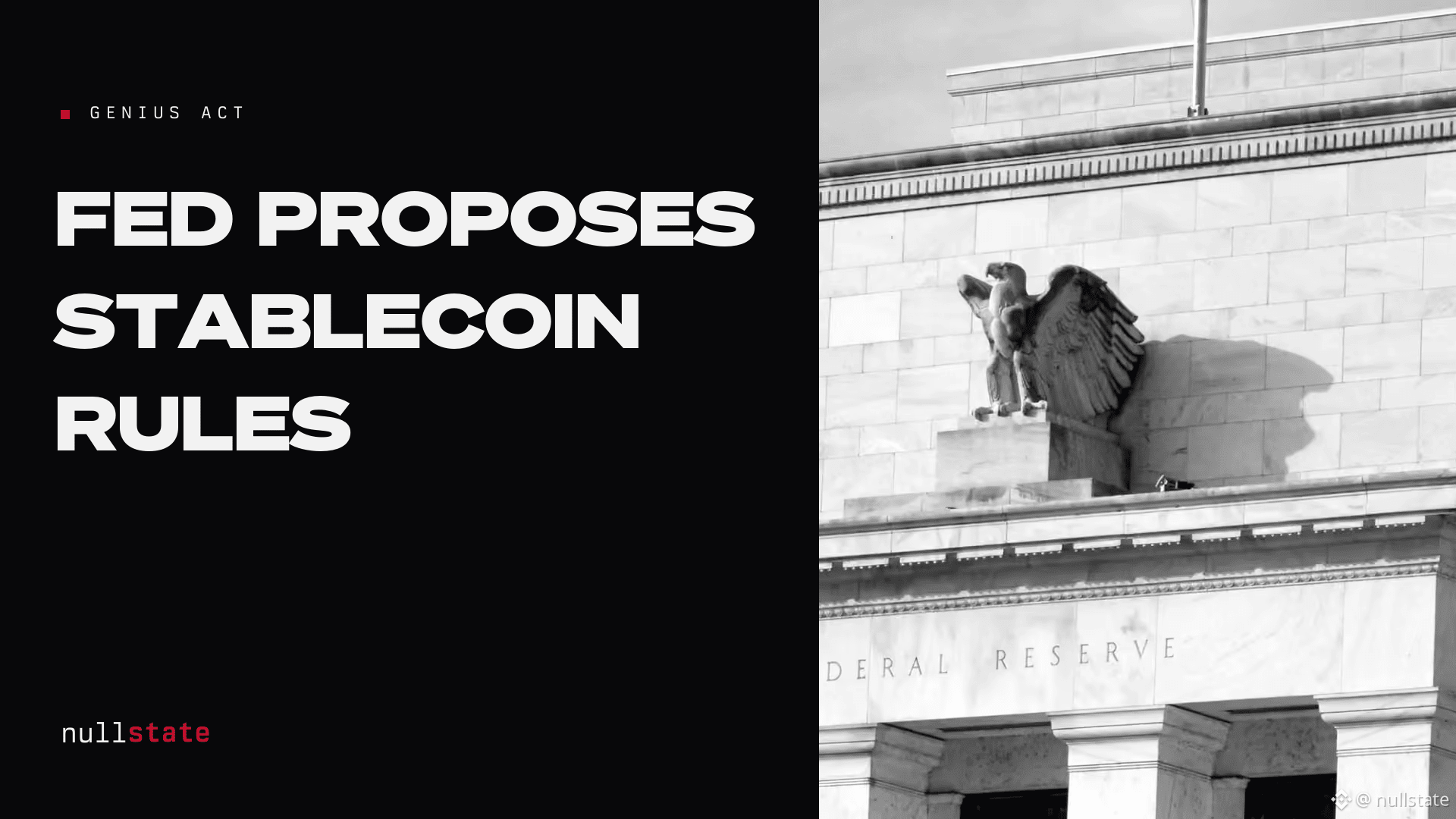
The Federal Reserve is moving forward with rules for stablecoins under the GENIUS Act, including oversight of yield programs.
The Fed proposed two stablecoin rules on Thursday under the GENIUS Act. One covers capital, reserves and permitted activities. The other sets out how Fed-regulated banks can apply to issue their own stablecoins.
Both proposals are open for 60 days of public comment. Regulators have already missed the law's July 2026 deadline, and final rules could still take months or longer.
Rewards remain a sticking point. GENIUS bans issuers from paying interest or yield just for holding stablecoins. The Fed's proposal would presume certain third-party arrangements also breach that ban, although there appears to be a narrow opening for rewards resembling credit-card incentives. With the Clarity Act's proposed changes unsuccessful, GENIUS remains the primary law governing those rewards.
My take: I'm bullish. Banks getting a defined process for issuing stablecoins is a meaningful step toward wider adoption. It gives institutions something concrete to plan around, even if we're still waiting for the final rules.
I'd like to see more freedom on rewards. Platforms should have room to compete for users, and that part of the proposal deserves scrutiny. But reserve requirements and reliable redemption make sense to me. If we're expecting people to use stablecoins at scale, they need to trust that they can get their money out when markets get ugly.
The delays are frustrating. Still, a clearer route for banks to issue and use stablecoins makes me more confident about where this is going.
The Federal Reserve is moving forward with rules for stablecoins under the GENIUS Act, including oversight of yield programs.
The Fed proposed two stablecoin rules on Thursday under the GENIUS Act. One covers capital, reserves and permitted activities. The other sets out how Fed-regulated banks can apply to issue their own stablecoins.
Both proposals are open for 60 days of public comment. Regulators have already missed the law's July 2026 deadline, and final rules could still take months or longer.
Rewards remain a sticking point. GENIUS bans issuers from paying interest or yield just for holding stablecoins. The Fed's proposal would presume certain third-party arrangements also breach that ban, although there appears to be a narrow opening for rewards resembling credit-card incentives. With the Clarity Act's proposed changes unsuccessful, GENIUS remains the primary law governing those rewards.
My take: I'm bullish. Banks getting a defined process for issuing stablecoins is a meaningful step toward wider adoption. It gives institutions something concrete to plan around, even if we're still waiting for the final rules.
I'd like to see more freedom on rewards. Platforms should have room to compete for users, and that part of the proposal deserves scrutiny. But reserve requirements and reliable redemption make sense to me. If we're expecting people to use stablecoins at scale, they need to trust that they can get their money out when markets get ugly.
The delays are frustrating. Still, a clearer route for banks to issue and use stablecoins makes me more confident about where this is going.
The Fed proposed two stablecoin rules on Thursday under the GENIUS Act. One covers capital, reserves and permitted activities. The other sets out how Fed-regulated banks can apply to issue their own stablecoins.
Both proposals are open for 60 days of public comment. Regulators have already missed the law's July 2026 deadline, and final rules could still take months or longer.
Rewards remain a sticking point. GENIUS bans issuers from paying interest or yield just for holding stablecoins. The Fed's proposal would presume certain third-party arrangements also breach that ban, although there appears to be a narrow opening for rewards resembling credit-card incentives. With the Clarity Act's proposed changes unsuccessful, GENIUS remains the primary law governing those rewards.
My take: I'm bullish. Banks getting a defined process for issuing stablecoins is a meaningful step toward wider adoption. It gives institutions something concrete to plan around, even if we're still waiting for the final rules.
I'd like to see more freedom on rewards. Platforms should have room to compete for users, and that part of the proposal deserves scrutiny. But reserve requirements and reliable redemption make sense to me. If we're expecting people to use stablecoins at scale, they need to trust that they can get their money out when markets get ugly.
The delays are frustrating. Still, a clearer route for banks to issue and use stablecoins makes me more confident about where this is going.
1
69
·
--
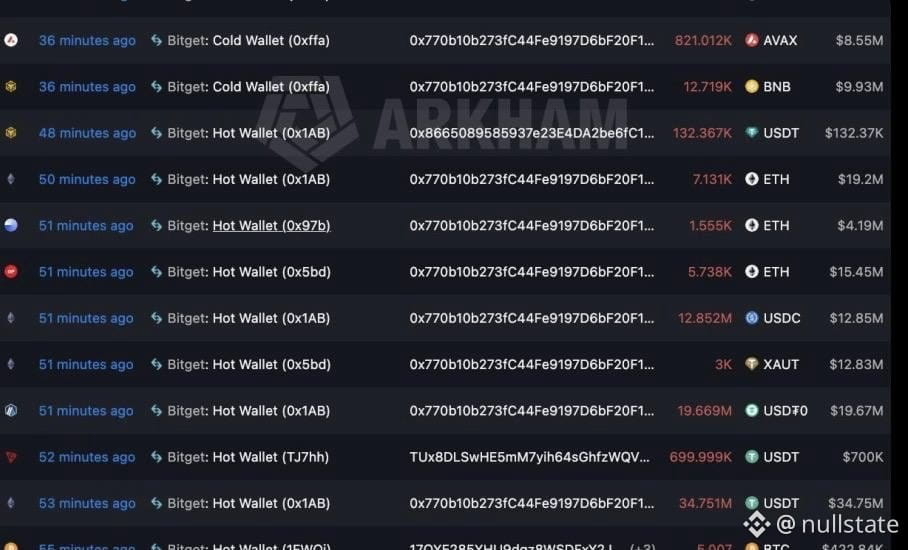
Bitget just got hacked. Over $170 million stolen, and counting.
Bitget just got hacked. Over $170 million stolen, and counting.
130
·
--
I'm long on $AAPL
I'm long on $AAPL
nullstate
·
--
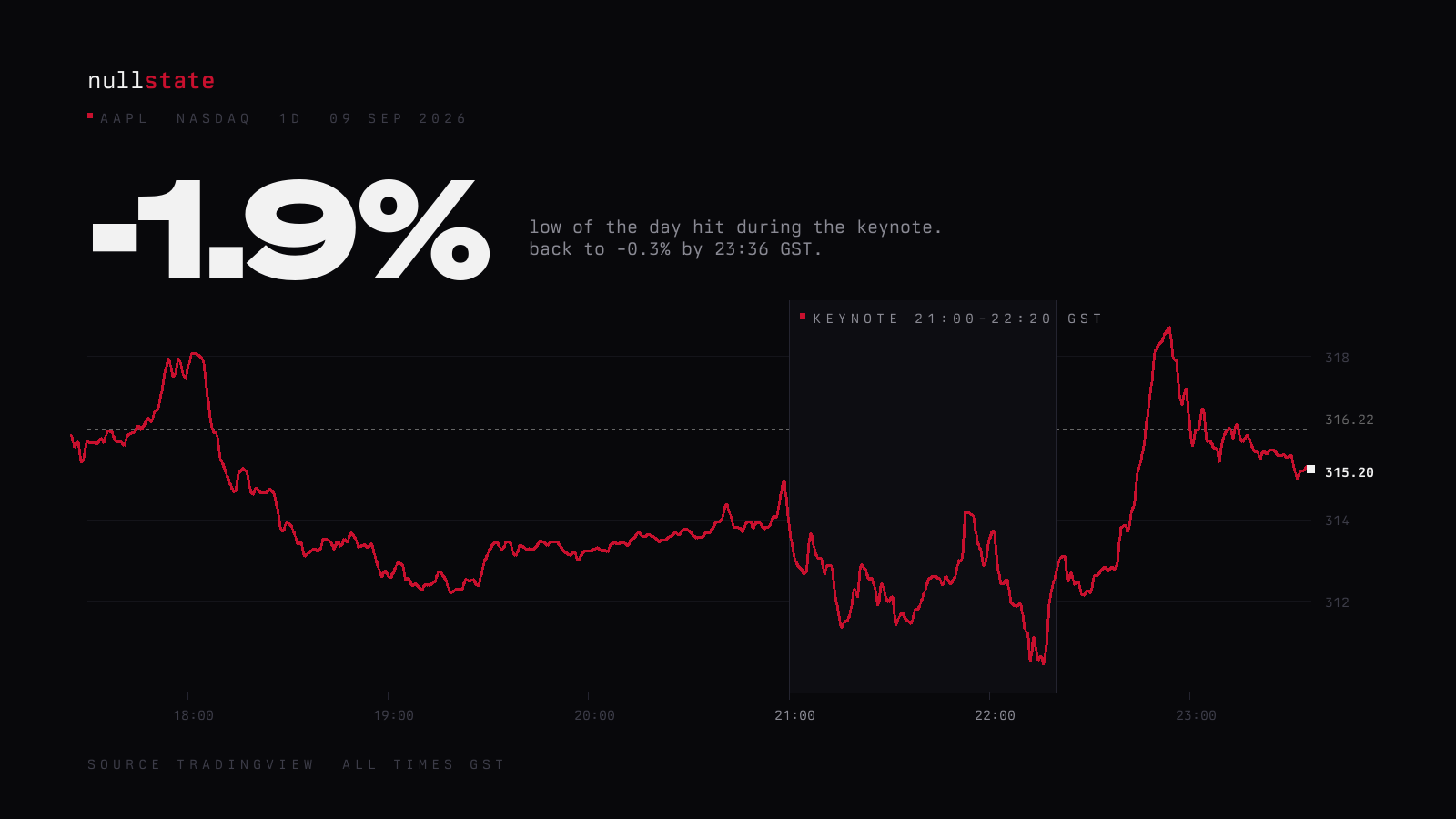
$AAPL fell almost 2% during the Apple event today and spent nearly the whole 80 minute keynote in the red. It started recovering as soon as Ternus walked off stage.
The drop is the usual sell-the-news reaction. The iPhone Duo came in at $1,999, which is lower than a lot of Wall Street expected, and the 18 Pro and Pro Max only went up $100. Options traders were already making bullish bets on Apple this afternoon, and Bank of America's Wamsi Mohan pointed out ahead of the event that the stock has rebounded and made new gains in the 60 days after an iPhone reveal most of the time. Preorders open Oct 16.
The drop is the usual sell-the-news reaction. The iPhone Duo came in at $1,999, which is lower than a lot of Wall Street expected, and the 18 Pro and Pro Max only went up $100. Options traders were already making bullish bets on Apple this afternoon, and Bank of America's Wamsi Mohan pointed out ahead of the event that the stock has rebounded and made new gains in the 60 days after an iPhone reveal most of the time. Preorders open Oct 16.
129
·
--
Verified
$AAPL fell almost 2% during the Apple event today and spent nearly the whole 80 minute keynote in the red. It started recovering as soon as Ternus walked off stage.
The drop is the usual sell-the-news reaction. The iPhone Duo came in at $1,999, which is lower than a lot of Wall Street expected, and the 18 Pro and Pro Max only went up $100. Options traders were already making bullish bets on Apple this afternoon, and Bank of America's Wamsi Mohan pointed out ahead of the event that the stock has rebounded and made new gains in the 60 days after an iPhone reveal most of the time. Preorders open Oct 16.
$AAPL fell almost 2% during the Apple event today and spent nearly the whole 80 minute keynote in the red. It started recovering as soon as Ternus walked off stage.
The drop is the usual sell-the-news reaction. The iPhone Duo came in at $1,999, which is lower than a lot of Wall Street expected, and the 18 Pro and Pro Max only went up $100. Options traders were already making bullish bets on Apple this afternoon, and Bank of America's Wamsi Mohan pointed out ahead of the event that the stock has rebounded and made new gains in the 60 days after an iPhone reveal most of the time. Preorders open Oct 16.
The drop is the usual sell-the-news reaction. The iPhone Duo came in at $1,999, which is lower than a lot of Wall Street expected, and the 18 Pro and Pro Max only went up $100. Options traders were already making bullish bets on Apple this afternoon, and Bank of America's Wamsi Mohan pointed out ahead of the event that the stock has rebounded and made new gains in the 60 days after an iPhone reveal most of the time. Preorders open Oct 16.
1
2
588
·
--
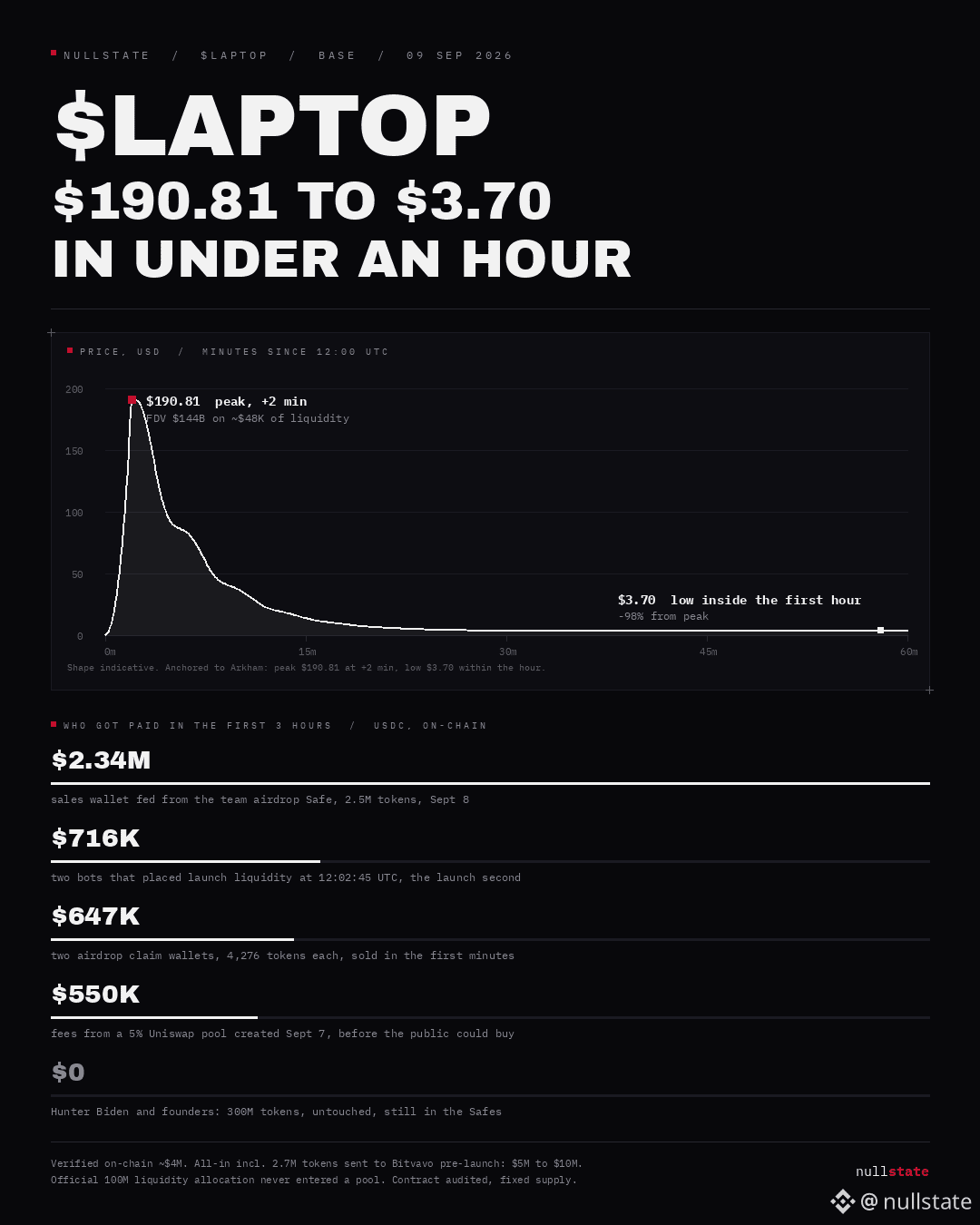
Hunter Biden's $LAPTOP went from $190.81 to $3.70 in under an hour this morning. Peak FDV $144B on about $48K of liquidity.
The founders' 300M tokens never moved. The roughly $4M that came out in the first three hours went to wallets that got their tokens from the team Safes before the public could buy, plus a 5% fee pool that was live two days early. The official 100M liquidity allocation never went into a pool.
The contract is clean. The question is who controls the wallets that sold. The chain does not answer that yet, and until it does, "locked and vesting" is a claim, not a fact.
Hunter Biden's $LAPTOP went from $190.81 to $3.70 in under an hour this morning. Peak FDV $144B on about $48K of liquidity.
The founders' 300M tokens never moved. The roughly $4M that came out in the first three hours went to wallets that got their tokens from the team Safes before the public could buy, plus a 5% fee pool that was live two days early. The official 100M liquidity allocation never went into a pool.
The contract is clean. The question is who controls the wallets that sold. The chain does not answer that yet, and until it does, "locked and vesting" is a claim, not a fact.
The founders' 300M tokens never moved. The roughly $4M that came out in the first three hours went to wallets that got their tokens from the team Safes before the public could buy, plus a 5% fee pool that was live two days early. The official 100M liquidity allocation never went into a pool.
The contract is clean. The question is who controls the wallets that sold. The chain does not answer that yet, and until it does, "locked and vesting" is a claim, not a fact.
1
103
·
--
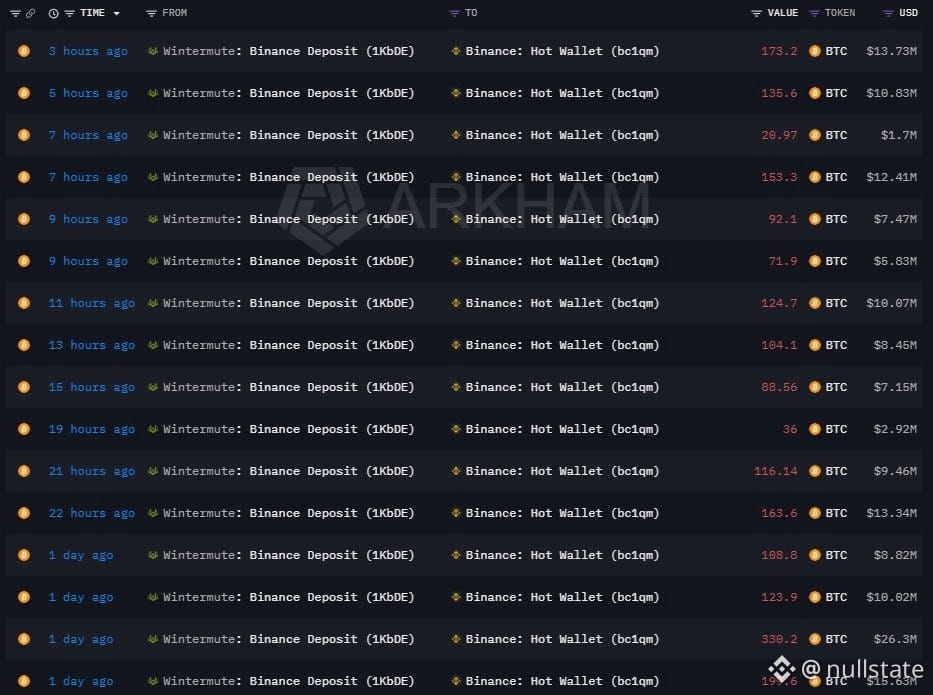
Wintermute just deposited $164.13 million in $BTC on Binance. Oh boy. Get ready.
Wintermute just deposited $164.13 million in $BTC on Binance. Oh boy. Get ready.
1
152
·
--
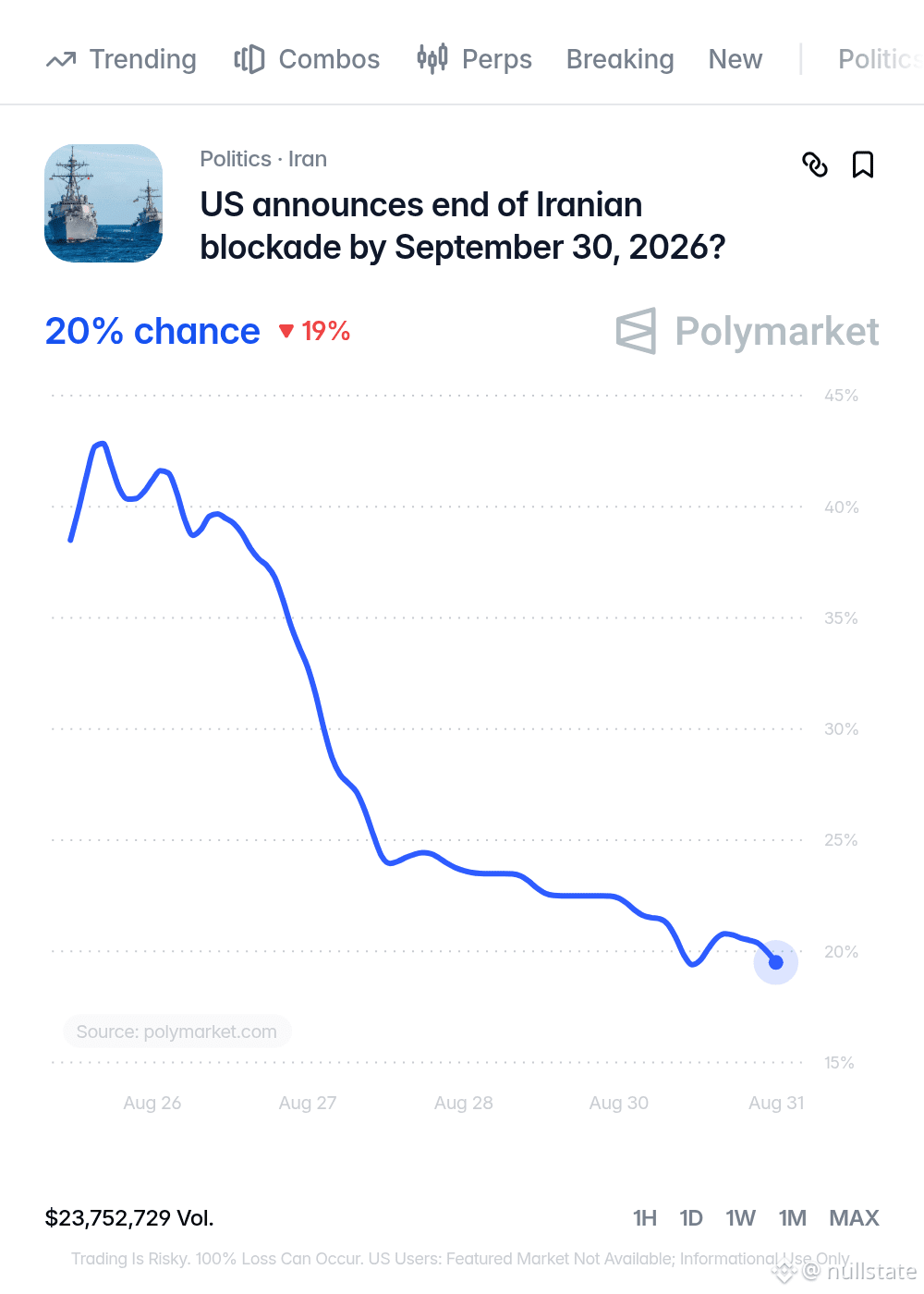
There's a great chance that the blockade of the Strait of Hormuz will last at least another month with no moves from either side. Iran is going to keep choking Trump from now until the midterms, and he's going to have to beg China to keep the price of oil down until then.
Don't expect crude to pump or make any moves until there's an end to the blockade one way or the other.
There's a great chance that the blockade of the Strait of Hormuz will last at least another month with no moves from either side. Iran is going to keep choking Trump from now until the midterms, and he's going to have to beg China to keep the price of oil down until then.
Don't expect crude to pump or make any moves until there's an end to the blockade one way or the other.
Don't expect crude to pump or make any moves until there's an end to the blockade one way or the other.
2
231
·
--
BREAKING: Missiles are flying above the Strait of Hormuz. Expect crude (and crypto) to be affected by this. Long your longs but keep a tight stop loss.
BREAKING: Missiles are flying above the Strait of Hormuz. Expect crude (and crypto) to be affected by this. Long your longs but keep a tight stop loss.

2
167
·
--
$PUMP is going absolutely parabolic at the moment. Got in early, caught some scalps, but I'm waiting for a good entry to load up a healthy long.
$PUMP is going absolutely parabolic at the moment. Got in early, caught some scalps, but I'm waiting for a good entry to load up a healthy long.
1
3
229
·
--
Trump is like a broken record at this point, and he's obviously playing with crude oil prices $CL .
Trump says the US now has total control over the Strait of Hormuz, land areas included, and that Iran isn't ready to make the right deal. Worth remembering how much oil moves through that chokepoint, something like 15-20 million barrels some nights, so any talk of US control there is a big claim.
Trump is like a broken record at this point, and he's obviously playing with crude oil prices $CL .
Trump says the US now has total control over the Strait of Hormuz, land areas included, and that Iran isn't ready to make the right deal. Worth remembering how much oil moves through that chokepoint, something like 15-20 million barrels some nights, so any talk of US control there is a big claim.
Trump says the US now has total control over the Strait of Hormuz, land areas included, and that Iran isn't ready to make the right deal. Worth remembering how much oil moves through that chokepoint, something like 15-20 million barrels some nights, so any talk of US control there is a big claim.
2
19
22.2k
·
--
Bullish
The bull market is back. Meanwhile, the UK is issuing guidance to migrants to tell them not to do bad things to children.
The bull market is back. Meanwhile, the UK is issuing guidance to migrants to tell them not to do bad things to children.

2
4
196
·
--
Bearish
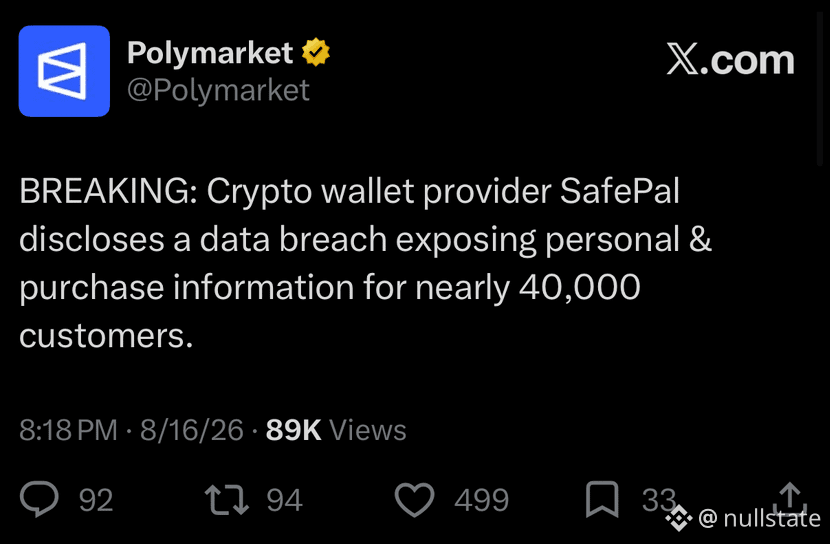
💥SafePal just had a MASSIVE data breach. Expect to see the news that a number of holders had their $BTC and $ETH wallets emptied. I can see some dumps incoming.
💥SafePal just had a MASSIVE data breach. Expect to see the news that a number of holders had their $BTC and $ETH wallets emptied. I can see some dumps incoming.
1
1
124
Log in to explore more content
Join global crypto users on Binance Square
⚡️ Get latest and useful information about crypto.
💬 Trusted by the world’s largest crypto exchange.
👍 Discover real insights from verified creators.
Email / Phone number
Trending Topics
BinanceLaunchesBinanceIntelligence
334,753 views
2,777 Discussing
#BinanceLaunchesBinanceIntelligence
The AI Revolution Reaches the World of Digital Trading
Binance has officially announced the launch of its new intelligent ecosystem, Binance Intelligence, marking a major step toward integrating AI tools into users’ everyday trading experience. This initiative aims to bridge the knowledge gap in financial markets and empower traders—from beginners to professionals—to analyze data and design trading strategies using natural language, without needing programming experience.
The Three Pillars of the Binance Intelligence Ecosystem
The new ecosystem consists of three core products designed to meet the needs of users and developers:
Binance AI (free for everyone):
Brings scattered market signals—charts, news, on-chain data, and economic indicators—together in a single, unified interface.
Provides an automated Market Brief, updated every four hours in audio and text, covering cryptocurrencies and global markets.
Binance AI Pro (for building strategies):
Lets users describe a trading idea in simple language, which AI then turns into a visual workflow diagram.
Offers Paper Trading to test strategies before executing them with real money.
#BinanceLaunchesBinanceIntelligence
#BinanceSquareFamily #AI
Redouanecrypto
·8 Likes
·7.9k views
BitcoinTargets2026OpenAt$87570
1,258 views
56 Discussing
BitcoinRejectedAt$87KThirdTime
1,551 views
49 Discussing