

Mr Beasts
64 Posts

Mr Beasts
Report
Block User
Passionate crypto researcher & writer working remotely. I decode crypto markets, trends & blockchain tech into easy, profitable stories. Open 2 Work.
Frequent Trader
3.2 Years
239 Following
55 Followers
84 Liked
Posts
All
Quotes
·
--
Article
Why Bitcoin Goes Up, Why Bitcoin Goes Down + The CLARITY ActWhy Bitcoin can go up
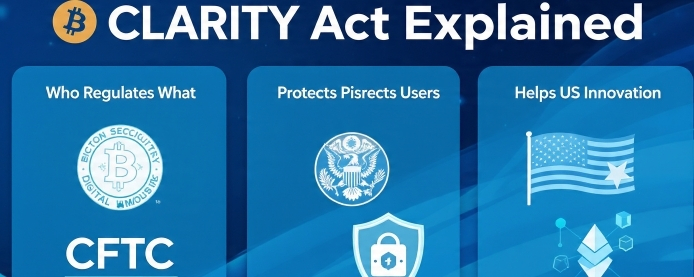
$BTC goes up when people trust it more than cash. There are only 21 million Bitcoin, so no government can print more. When inflation is high and governments print lots of money, people buy Bitcoin to protect wealth. Big news also helps — like ETF approvals, companies buying Bitcoin, or clear laws. That’s where the CLARITY Act comes in. If the U.S. passes it, Bitcoin would be clearly called a "commodity" and regulated by the CFTC. Clear rules make big companies and investors feel safe to buy, and that demand can push the price up.
Why Bitcoin goes down
Bitcoin goes down when people get scared. If the government cracks down, if exchanges collapse, or if interest rates go up, people sell. Right now the biggest problem is confusion. The SEC and CFTC both claim control, and companies don’t know the rules. That legal risk makes investors pull money out. Bad news, hacks, or a crypto bear market also cause big drops because Bitcoin is still very volatile.
How the CLARITY Act connects
The CLARITY Act tries to remove that confusion. It would give one rulebook: Bitcoin = commodity, other tokens = securities. With clear rules, exchanges would be safer and companies could build in the U.S. again. Less fear means fewer big crashes. More trust means more buyers.
#BitcoinReboundsTo$79K
#ClarityActOddsHalveOnPolymarket
#StrategyMarketCapPassesFord
Why Bitcoin Goes Up, Why Bitcoin Goes Down + The CLARITY Act
Why Bitcoin can go up
$BTC goes up when people trust it more than cash. There are only 21 million Bitcoin, so no government can print more. When inflation is high and governments print lots of money, people buy Bitcoin to protect wealth. Big news also helps — like ETF approvals, companies buying Bitcoin, or clear laws. That’s where the CLARITY Act comes in. If the U.S. passes it, Bitcoin would be clearly called a "commodity" and regulated by the CFTC. Clear rules make big companies and investors feel safe to buy, and that demand can push the price up.
Why Bitcoin goes down
Bitcoin goes down when people get scared. If the government cracks down, if exchanges collapse, or if interest rates go up, people sell. Right now the biggest problem is confusion. The SEC and CFTC both claim control, and companies don’t know the rules. That legal risk makes investors pull money out. Bad news, hacks, or a crypto bear market also cause big drops because Bitcoin is still very volatile.
How the CLARITY Act connects
The CLARITY Act tries to remove that confusion. It would give one rulebook: Bitcoin = commodity, other tokens = securities. With clear rules, exchanges would be safer and companies could build in the U.S. again. Less fear means fewer big crashes. More trust means more buyers.
#BitcoinReboundsTo$79K
#ClarityActOddsHalveOnPolymarket
#StrategyMarketCapPassesFord
$BTC goes up when people trust it more than cash. There are only 21 million Bitcoin, so no government can print more. When inflation is high and governments print lots of money, people buy Bitcoin to protect wealth. Big news also helps — like ETF approvals, companies buying Bitcoin, or clear laws. That’s where the CLARITY Act comes in. If the U.S. passes it, Bitcoin would be clearly called a "commodity" and regulated by the CFTC. Clear rules make big companies and investors feel safe to buy, and that demand can push the price up.
Why Bitcoin goes down
Bitcoin goes down when people get scared. If the government cracks down, if exchanges collapse, or if interest rates go up, people sell. Right now the biggest problem is confusion. The SEC and CFTC both claim control, and companies don’t know the rules. That legal risk makes investors pull money out. Bad news, hacks, or a crypto bear market also cause big drops because Bitcoin is still very volatile.
How the CLARITY Act connects
The CLARITY Act tries to remove that confusion. It would give one rulebook: Bitcoin = commodity, other tokens = securities. With clear rules, exchanges would be safer and companies could build in the U.S. again. Less fear means fewer big crashes. More trust means more buyers.
#BitcoinReboundsTo$79K
#ClarityActOddsHalveOnPolymarket
#StrategyMarketCapPassesFord
1
99
·
--
Partly True
As per News $mrbeast coin soon will be launched. officially mr beast did not announced.
#mrbeast
#mrbeastfollowers
As per News $mrbeast coin soon will be launched. officially mr beast did not announced.
#mrbeast
#mrbeastfollowers
#mrbeast
#mrbeastfollowers
1
102
·
--

Article
DOT is $1.06 NOW - But When It Hits $10, You Will Panic Buy - Bookmark ThisPolkadot DOT is now only *$1.06*. Right now market is quiet. People are not interested. They think DOT is dead.
But when DOT hits $10, everything will change.
Double digits flip the switch in people's mind. $10 means 10x from today. That is when sidelines turn into panic-buying.
Everyone waiting at $1 will suddenly want to buy at $10. They will think it will go to $20, $30, $55 again.
We saw this before. DOT went from $4 to $55 last bull run. Same FOMO will come.
Smart money buys at $1.06 when no one is looking. Crowd buys at $10 when everyone is shouting.
DOT is 98% down from its high. This is the chance.
Don't say you weren't warned.
#dot
$DOT
#ZcashRises45%WeeklyToHighestSince2016
DOT is $1.06 NOW - But When It Hits $10, You Will Panic Buy - Bookmark This
Polkadot DOT is now only *$1.06*. Right now market is quiet. People are not interested. They think DOT is dead.
But when DOT hits $10, everything will change.
Double digits flip the switch in people's mind. $10 means 10x from today. That is when sidelines turn into panic-buying.
Everyone waiting at $1 will suddenly want to buy at $10. They will think it will go to $20, $30, $55 again.
We saw this before. DOT went from $4 to $55 last bull run. Same FOMO will come.
Smart money buys at $1.06 when no one is looking. Crowd buys at $10 when everyone is shouting.
DOT is 98% down from its high. This is the chance.
Don't say you weren't warned.
#dot
$DOT
#ZcashRises45%WeeklyToHighestSince2016
But when DOT hits $10, everything will change.
Double digits flip the switch in people's mind. $10 means 10x from today. That is when sidelines turn into panic-buying.
Everyone waiting at $1 will suddenly want to buy at $10. They will think it will go to $20, $30, $55 again.
We saw this before. DOT went from $4 to $55 last bull run. Same FOMO will come.
Smart money buys at $1.06 when no one is looking. Crowd buys at $10 when everyone is shouting.
DOT is 98% down from its high. This is the chance.
Don't say you weren't warned.
#dot
$DOT
#ZcashRises45%WeeklyToHighestSince2016
2
306
·
--

Article
AI Pump Is Over, Crypto Pump Is NextSome hot money is flowing back from AI to crypto.
For the last two years, all the hot money went into AI. Every investor wanted to buy AI stocks like Nvidia. AI was the new gold rush. Trillions of dollars moved into AI companies. Crypto became quiet. Many people thought AI will kill crypto and AI is the only future.
But now the story is changing. AI stocks are very expensive. The hype is too high. Smart money is looking for the next big move. And they are seeing crypto again. Some hot money is now flowing back from AI to crypto. Why? Because the money industry is not going away.
Think about it simply. AI is very powerful, but AI cannot replace money. You will still need money. AI will still need money. AI agents will need to pay each other. People will need to pay for AI services. Companies will need to pay for data and computing. The whole world still runs on money. And crypto is the new form of money for the internet and for AI.
AI and crypto are not enemies, they are friends. AI needs crypto to move money fast, 24/7, without banks. Crypto needs AI to become smarter and more useful. In the future, millions of AI agents will use stablecoins and Bitcoin to make payments automatically.
So do not think crypto is dead because of AI. The money industry will never die. Hot money knows this. It pumped AI first, and now it will pump crypto again, even bigger.
#BitcoinETFsBiggestDailyInflowSinceJanuary #square
AI Pump Is Over, Crypto Pump Is Next
Some hot money is flowing back from AI to crypto.
For the last two years, all the hot money went into AI. Every investor wanted to buy AI stocks like Nvidia. AI was the new gold rush. Trillions of dollars moved into AI companies. Crypto became quiet. Many people thought AI will kill crypto and AI is the only future.
But now the story is changing. AI stocks are very expensive. The hype is too high. Smart money is looking for the next big move. And they are seeing crypto again. Some hot money is now flowing back from AI to crypto. Why? Because the money industry is not going away.
Think about it simply. AI is very powerful, but AI cannot replace money. You will still need money. AI will still need money. AI agents will need to pay each other. People will need to pay for AI services. Companies will need to pay for data and computing. The whole world still runs on money. And crypto is the new form of money for the internet and for AI.
AI and crypto are not enemies, they are friends. AI needs crypto to move money fast, 24/7, without banks. Crypto needs AI to become smarter and more useful. In the future, millions of AI agents will use stablecoins and Bitcoin to make payments automatically.
So do not think crypto is dead because of AI. The money industry will never die. Hot money knows this. It pumped AI first, and now it will pump crypto again, even bigger.
#BitcoinETFsBiggestDailyInflowSinceJanuary #square
For the last two years, all the hot money went into AI. Every investor wanted to buy AI stocks like Nvidia. AI was the new gold rush. Trillions of dollars moved into AI companies. Crypto became quiet. Many people thought AI will kill crypto and AI is the only future.
But now the story is changing. AI stocks are very expensive. The hype is too high. Smart money is looking for the next big move. And they are seeing crypto again. Some hot money is now flowing back from AI to crypto. Why? Because the money industry is not going away.
Think about it simply. AI is very powerful, but AI cannot replace money. You will still need money. AI will still need money. AI agents will need to pay each other. People will need to pay for AI services. Companies will need to pay for data and computing. The whole world still runs on money. And crypto is the new form of money for the internet and for AI.
AI and crypto are not enemies, they are friends. AI needs crypto to move money fast, 24/7, without banks. Crypto needs AI to become smarter and more useful. In the future, millions of AI agents will use stablecoins and Bitcoin to make payments automatically.
So do not think crypto is dead because of AI. The money industry will never die. Hot money knows this. It pumped AI first, and now it will pump crypto again, even bigger.
#BitcoinETFsBiggestDailyInflowSinceJanuary #square
1
112
·
--

Article
Is BTC breaking through 80,000 just the beginning? 81,520 is within reach, big volatility may come before the non-farm payrolls!
$BTC short-term bulls suddenly accelerated, price surged from around 76,708, successfully breaking above 80,000. The 4-hour MACD also showed a golden cross, indicating a clearly strong short-term trend. However, with the rapid rise, short cycles show signs of overheating. Whether the 80,000 level can turn into effective support will be a key observation point in the next phase.
If the price can hold above 80,500, the area between 81,000 and 81,520 can be watched for further upside; if it falls back below 79,500, caution is needed as the breakout strength may be insufficient. During the pullback, support near 79,000 and 78,500 can be monitored. Existing positions can consider partial profit-taking, while those not yet involved are better off waiting for a stabilization signal after a pullback to avoid chasing at high levels.
Is BTC breaking through 80,000 just the beginning?
81,520 is within reach, big volatility may come before the non-farm payrolls!
$BTC short-term bulls suddenly accelerated, price surged from around 76,708, successfully breaking above 80,000. The 4-hour MACD also showed a golden cross, indicating a clearly strong short-term trend. However, with the rapid rise, short cycles show signs of overheating. Whether the 80,000 level can turn into effective support will be a key observation point in the next phase.
If the price can hold above 80,500, the area between 81,000 and 81,520 can be watched for further upside; if it falls back below 79,500, caution is needed as the breakout strength may be insufficient. During the pullback, support near 79,000 and 78,500 can be monitored. Existing positions can consider partial profit-taking, while those not yet involved are better off waiting for a stabilization signal after a pullback to avoid chasing at high levels.
$BTC short-term bulls suddenly accelerated, price surged from around 76,708, successfully breaking above 80,000. The 4-hour MACD also showed a golden cross, indicating a clearly strong short-term trend. However, with the rapid rise, short cycles show signs of overheating. Whether the 80,000 level can turn into effective support will be a key observation point in the next phase.
If the price can hold above 80,500, the area between 81,000 and 81,520 can be watched for further upside; if it falls back below 79,500, caution is needed as the breakout strength may be insufficient. During the pullback, support near 79,000 and 78,500 can be monitored. Existing positions can consider partial profit-taking, while those not yet involved are better off waiting for a stabilization signal after a pullback to avoid chasing at high levels.
1
2
226
·
--
Interest rate hike expectations are fully priced in, is the September curse for Bitcoin coming?
Currently, the market shows clear signs of funds moving to hedge in advance.
Federal Reserve officials have continuously sent hawkish signals, with the market estimating a 66-70% chance of a rate hike in September. After the Jackson Hole symposium, Bullard also stated: if inflation does not decrease, he supports continuing rate hikes.
The market is closely watching the September 11 CPI; this data will basically set the tone for the market going forward, prompting many funds to adjust their positions and hedge in advance.
External negative factors are piling up: the US dollar index is strengthening, oil prices have stabilized above 90, and tensions in the Middle East continue.
Historically, BTC falls an average of 3% in September, so seasonal weakness should be taken seriously.
Last night, Bitcoin fell below 77,000, hitting a low of 76,500.
Key levels:
Support at 76,000-76,500; if broken, look towards 73,700-75,100.
Resistance at 79,400-80,100; without volume breakout, any rebound is just a correction.
My strategy: hold the base position, no additional buying.
With rate hike expectations combined with monthly weakness, heavy bets on one-sided positions have poor risk-reward.
Waiting for signals: volume contraction and stabilization near 76,000, or wait until after the CPI release to act.
No need to trade every day in this market; controlling your actions in chaotic conditions is enough.
$BTC
$SOL
#Pre-nonfarm data divergence, September rate hike expectations heating up #Robinhood on-chain volume surge, crypto and stock Meme controversy #21 financial institutions plan to launch USD stablecoins
⚠ Personal review only, not investment advice, crypto market volatility is high.
$ETH
{spot}(ETHUSDT)
Interest rate hike expectations are fully priced in, is the September curse for Bitcoin coming?
Currently, the market shows clear signs of funds moving to hedge in advance.
Federal Reserve officials have continuously sent hawkish signals, with the market estimating a 66-70% chance of a rate hike in September. After the Jackson Hole symposium, Bullard also stated: if inflation does not decrease, he supports continuing rate hikes.
The market is closely watching the September 11 CPI; this data will basically set the tone for the market going forward, prompting many funds to adjust their positions and hedge in advance.
External negative factors are piling up: the US dollar index is strengthening, oil prices have stabilized above 90, and tensions in the Middle East continue.
Historically, BTC falls an average of 3% in September, so seasonal weakness should be taken seriously.
Last night, Bitcoin fell below 77,000, hitting a low of 76,500.
Key levels:
Support at 76,000-76,500; if broken, look towards 73,700-75,100.
Resistance at 79,400-80,100; without volume breakout, any rebound is just a correction.
My strategy: hold the base position, no additional buying.
With rate hike expectations combined with monthly weakness, heavy bets on one-sided positions have poor risk-reward.
Waiting for signals: volume contraction and stabilization near 76,000, or wait until after the CPI release to act.
No need to trade every day in this market; controlling your actions in chaotic conditions is enough.
$BTC
$SOL
#Pre-nonfarm data divergence, September rate hike expectations heating up #Robinhood on-chain volume surge, crypto and stock Meme controversy #21 financial institutions plan to launch USD stablecoins
⚠ Personal review only, not investment advice, crypto market volatility is high.
$ETH
Currently, the market shows clear signs of funds moving to hedge in advance.
Federal Reserve officials have continuously sent hawkish signals, with the market estimating a 66-70% chance of a rate hike in September. After the Jackson Hole symposium, Bullard also stated: if inflation does not decrease, he supports continuing rate hikes.
The market is closely watching the September 11 CPI; this data will basically set the tone for the market going forward, prompting many funds to adjust their positions and hedge in advance.
External negative factors are piling up: the US dollar index is strengthening, oil prices have stabilized above 90, and tensions in the Middle East continue.
Historically, BTC falls an average of 3% in September, so seasonal weakness should be taken seriously.
Last night, Bitcoin fell below 77,000, hitting a low of 76,500.
Key levels:
Support at 76,000-76,500; if broken, look towards 73,700-75,100.
Resistance at 79,400-80,100; without volume breakout, any rebound is just a correction.
My strategy: hold the base position, no additional buying.
With rate hike expectations combined with monthly weakness, heavy bets on one-sided positions have poor risk-reward.
Waiting for signals: volume contraction and stabilization near 76,000, or wait until after the CPI release to act.
No need to trade every day in this market; controlling your actions in chaotic conditions is enough.
$BTC
$SOL
#Pre-nonfarm data divergence, September rate hike expectations heating up #Robinhood on-chain volume surge, crypto and stock Meme controversy #21 financial institutions plan to launch USD stablecoins
⚠ Personal review only, not investment advice, crypto market volatility is high.
$ETH
1
114
·
--
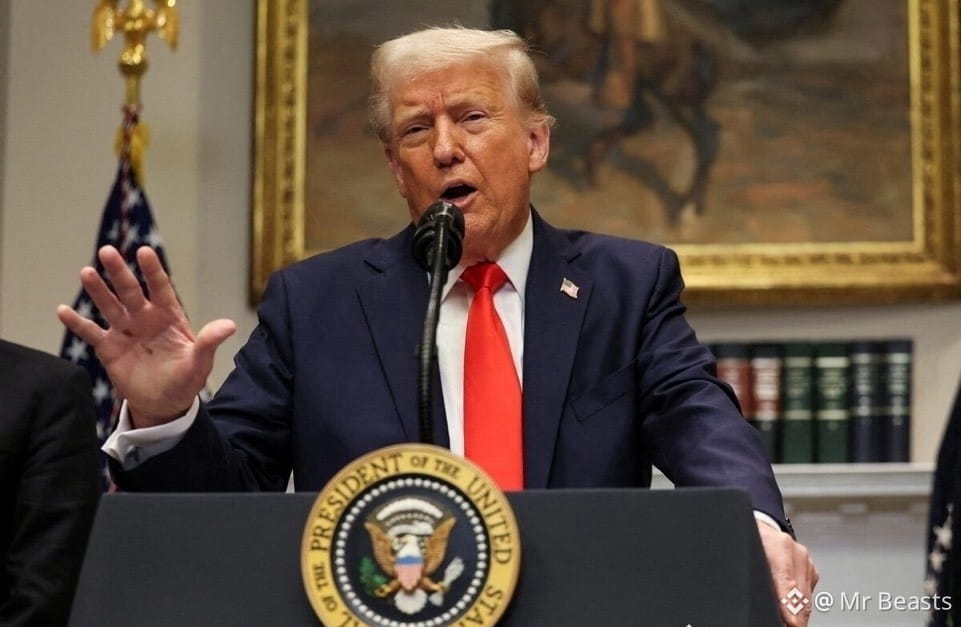
I had been firmly convinced that $TRUMP could establish a clear upward trend at its current position, patiently holding on, but no one expected the market to suddenly reverse and keep sliding down nonstop, ultimately crashing with nearly a 99% drop, leaving no room for maneuver even in the contracts.
Now, the capital structure of several targets in the market has completely diverged: on the $CAP side, shorts are densely clustered; $LAB's previously fully packed long positions have long been severely crowded; $BEAT and $H are dominated by bottom-fishing funds; $APR and $BICO have a clear advantage in long positions; $ALLO and $ROBO are locked in a fierce battle between bulls and bears; $GPS has yet to show a clear capital direction.
These are just my scattered personal reflections after reviewing the market and should absolutely not be taken as direct trading advice. The entire market currently lacks a highly unified consensus, making it easy to be caught off guard by sudden spikes that wipe out positions on both sides. Only those who have truly traded $TRUMP throughout understand that in the contract market, even if you watch the market for countless hours and make thorough predictions, extreme market moves can instantly shatter all plans. The harshness of contracts is always hidden in these unexpected one-sided crashes.
#Trump2024
#TrumpCrypto #trumpcoin
I had been firmly convinced that $TRUMP could establish a clear upward trend at its current position, patiently holding on, but no one expected the market to suddenly reverse and keep sliding down nonstop, ultimately crashing with nearly a 99% drop, leaving no room for maneuver even in the contracts.
Now, the capital structure of several targets in the market has completely diverged: on the $CAP side, shorts are densely clustered; $LAB's previously fully packed long positions have long been severely crowded; $BEAT and $H are dominated by bottom-fishing funds; $APR and $BICO have a clear advantage in long positions; $ALLO and $ROBO are locked in a fierce battle between bulls and bears; $GPS has yet to show a clear capital direction.
These are just my scattered personal reflections after reviewing the market and should absolutely not be taken as direct trading advice. The entire market currently lacks a highly unified consensus, making it easy to be caught off guard by sudden spikes that wipe out positions on both sides. Only those who have truly traded $TRUMP throughout understand that in the contract market, even if you watch the market for countless hours and make thorough predictions, extreme market moves can instantly shatter all plans. The harshness of contracts is always hidden in these unexpected one-sided crashes.
#Trump2024
#TrumpCrypto #trumpcoin
Now, the capital structure of several targets in the market has completely diverged: on the $CAP side, shorts are densely clustered; $LAB's previously fully packed long positions have long been severely crowded; $BEAT and $H are dominated by bottom-fishing funds; $APR and $BICO have a clear advantage in long positions; $ALLO and $ROBO are locked in a fierce battle between bulls and bears; $GPS has yet to show a clear capital direction.
These are just my scattered personal reflections after reviewing the market and should absolutely not be taken as direct trading advice. The entire market currently lacks a highly unified consensus, making it easy to be caught off guard by sudden spikes that wipe out positions on both sides. Only those who have truly traded $TRUMP throughout understand that in the contract market, even if you watch the market for countless hours and make thorough predictions, extreme market moves can instantly shatter all plans. The harshness of contracts is always hidden in these unexpected one-sided crashes.
#Trump2024
#TrumpCrypto #trumpcoin
1
588
·
--
The most common regret in a bull market is often not missing a certain rally, but watching the paper profits slip away from your fingertips. Even though the account has considerable unrealized gains, you keep thinking "it can still go up a bit more" and hesitate to take profits in batches; when the correction comes, more than half of the gains are lost, and you start to struggle with whether to exit. Even trickier is being unusually decisive when facing losses—buying more as prices fall, getting trapped deeper with each purchase, and by the time prices return to highs, the position is so heavy that you can hardly move.📉
It can actually be simplified into four rules: trend is king, add on dips, take profits in batches, and keep position sizes manageable. The current market structure is also quite clear—BTC sets the direction, ETH drives sentiment, SOL and SUI provide elasticity, and OKB follows platform popularity. Opportunities always exist, but not every coin must be seized; focusing deeply on the strongest one or two main trends is often more composed than striking everywhere.
Those who truly go far in a bull market are not necessarily the ones who bottom-timed the best, but those who can hold on when the trend is favorable and exit decisively when signals change. Profits are given by the market, but drawdowns are your own responsibility. The goal for September can be simple: don’t aim to catch ten-baggers, just wish for the account net value to keep hitting new highs. Stable compounding is far more worth pursuing than getting rich overnight. $BTC $ETH $SOL
Risk warning: The market is highly volatile, past performance does not represent future returns, please control your position sizes rationally.
#btc70k
#ETH🔥🔥🔥🔥🔥🔥
#SolanaStrong
The most common regret in a bull market is often not missing a certain rally, but watching the paper profits slip away from your fingertips. Even though the account has considerable unrealized gains, you keep thinking "it can still go up a bit more" and hesitate to take profits in batches; when the correction comes, more than half of the gains are lost, and you start to struggle with whether to exit. Even trickier is being unusually decisive when facing losses—buying more as prices fall, getting trapped deeper with each purchase, and by the time prices return to highs, the position is so heavy that you can hardly move.📉
It can actually be simplified into four rules: trend is king, add on dips, take profits in batches, and keep position sizes manageable. The current market structure is also quite clear—BTC sets the direction, ETH drives sentiment, SOL and SUI provide elasticity, and OKB follows platform popularity. Opportunities always exist, but not every coin must be seized; focusing deeply on the strongest one or two main trends is often more composed than striking everywhere.
Those who truly go far in a bull market are not necessarily the ones who bottom-timed the best, but those who can hold on when the trend is favorable and exit decisively when signals change. Profits are given by the market, but drawdowns are your own responsibility. The goal for September can be simple: don’t aim to catch ten-baggers, just wish for the account net value to keep hitting new highs. Stable compounding is far more worth pursuing than getting rich overnight. $BTC $ETH $SOL
Risk warning: The market is highly volatile, past performance does not represent future returns, please control your position sizes rationally.
#btc70k
#ETH🔥🔥🔥🔥🔥🔥
#SolanaStrong
It can actually be simplified into four rules: trend is king, add on dips, take profits in batches, and keep position sizes manageable. The current market structure is also quite clear—BTC sets the direction, ETH drives sentiment, SOL and SUI provide elasticity, and OKB follows platform popularity. Opportunities always exist, but not every coin must be seized; focusing deeply on the strongest one or two main trends is often more composed than striking everywhere.
Those who truly go far in a bull market are not necessarily the ones who bottom-timed the best, but those who can hold on when the trend is favorable and exit decisively when signals change. Profits are given by the market, but drawdowns are your own responsibility. The goal for September can be simple: don’t aim to catch ten-baggers, just wish for the account net value to keep hitting new highs. Stable compounding is far more worth pursuing than getting rich overnight. $BTC $ETH $SOL
Risk warning: The market is highly volatile, past performance does not represent future returns, please control your position sizes rationally.
#btc70k
#ETH🔥🔥🔥🔥🔥🔥
#SolanaStrong
1
173
·
--
$DOT is a sleeping giant .
24 hrs before. something is loading.
comments below your opinions
{spot}(DOTUSDT)
$DOT is a sleeping giant .
24 hrs before. something is loading.
comments below your opinions
24 hrs before. something is loading.
comments below your opinions
41
·
--
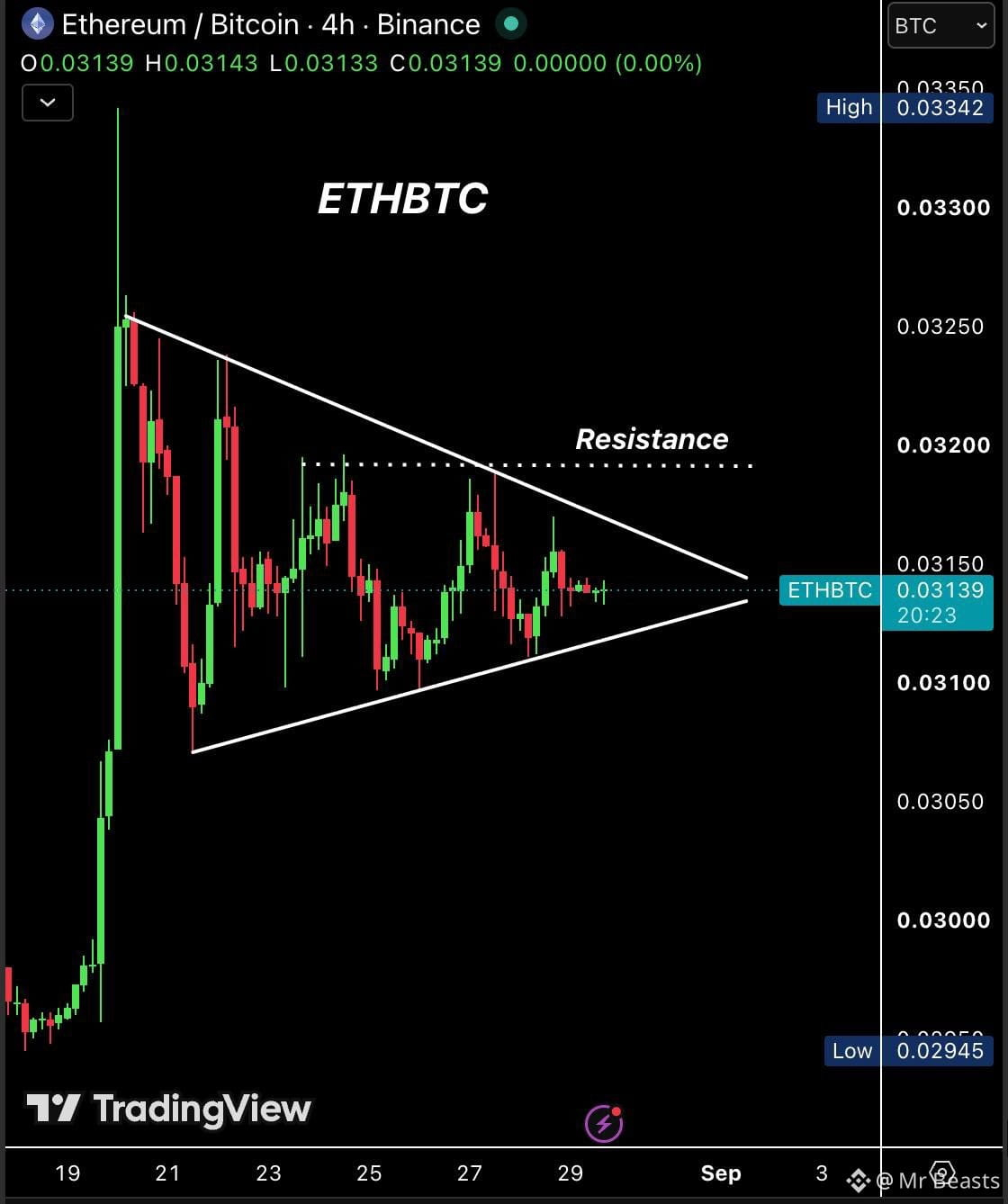
ETH/BTC is sitting at a key breakout level.
Price is forming a triangle with lower highs and higher lows. The range keeps getting tighter, which means a big move is getting closer.
A breakout above the trendline could send $ETH toward $2,800.
A rejection could push it back toward $2,000 to $2,200.
Either way, ETH is getting ready for a major move.
ETH/BTC is sitting at a key breakout level.
Price is forming a triangle with lower highs and higher lows. The range keeps getting tighter, which means a big move is getting closer.
A breakout above the trendline could send $ETH toward $2,800.
A rejection could push it back toward $2,000 to $2,200.
Either way, ETH is getting ready for a major move.
Price is forming a triangle with lower highs and higher lows. The range keeps getting tighter, which means a big move is getting closer.
A breakout above the trendline could send $ETH toward $2,800.
A rejection could push it back toward $2,000 to $2,200.
Either way, ETH is getting ready for a major move.
1
99
·
--
#dusk $DUSK Public blockchain architectures historically forced a difficult compromise on financial institutions: public transparency or total privacy. Transparent ledgers expose trade strategies, account balances, and market positions, which conflicts with institutional obligations and non-disclosure requirements. Conversely, completely shielded privacy chains run afoul of anti-money laundering (AML), know-your-customer (KYC), and regulatory audit standards.
@Dusk_Foundation Network addresses this trade-off directly. Positioned as a dedicated Layer-1 protocol engineered specifically for institutional finance and real-world asset (RWA) tokenization, Dusk integrates zero-knowledge cryptography with compliance logic directly at the base layer.
The Core Infrastructure: Purpose-Built Zero-Knowledge
Instead of building an EVM-compatible layer and attempting to patch privacy onto it, Dusk engineered its entire execution environment to process zero-knowledge proofs natively.
Piecrust VM: Dusk relies on Piecrust, a purpose-built zero-knowledge virtual machine (zkVM). Optimized to handle zero-knowledge proof (ZKP) generation and verification, Piecrust routes heavy cryptographic routines (such as hashing and signature validation) through host functions. This reduces computational overhead and avoids performance penalties found when executing ZK logic inside traditional generalized environments like standard WASM or EVM.
Succinct Attestation Consensus: Dusk reaches consensus using Succinct Attestation (SA), a committee-based Proof-of-Stake algorithm. SA uses deterministic, stake-weighted selection to form small committees that validate blocks rapidly. This provides deterministic, instant settlement finality—a strict requirement for institutional trading where probabilistic settlement creates operational risk.
By combining native zero-knowledge smart contracts with strict regulatory compliance frameworks, Dusk Network offers a tailored foundation for bringing traditional financial instruments on-chain.
#dusk $DUSK Public blockchain architectures historically forced a difficult compromise on financial institutions: public transparency or total privacy. Transparent ledgers expose trade strategies, account balances, and market positions, which conflicts with institutional obligations and non-disclosure requirements. Conversely, completely shielded privacy chains run afoul of anti-money laundering (AML), know-your-customer (KYC), and regulatory audit standards.
@Dusk Network addresses this trade-off directly. Positioned as a dedicated Layer-1 protocol engineered specifically for institutional finance and real-world asset (RWA) tokenization, Dusk integrates zero-knowledge cryptography with compliance logic directly at the base layer.
The Core Infrastructure: Purpose-Built Zero-Knowledge
Instead of building an EVM-compatible layer and attempting to patch privacy onto it, Dusk engineered its entire execution environment to process zero-knowledge proofs natively.
Piecrust VM: Dusk relies on Piecrust, a purpose-built zero-knowledge virtual machine (zkVM). Optimized to handle zero-knowledge proof (ZKP) generation and verification, Piecrust routes heavy cryptographic routines (such as hashing and signature validation) through host functions. This reduces computational overhead and avoids performance penalties found when executing ZK logic inside traditional generalized environments like standard WASM or EVM.
Succinct Attestation Consensus: Dusk reaches consensus using Succinct Attestation (SA), a committee-based Proof-of-Stake algorithm. SA uses deterministic, stake-weighted selection to form small committees that validate blocks rapidly. This provides deterministic, instant settlement finality—a strict requirement for institutional trading where probabilistic settlement creates operational risk.
By combining native zero-knowledge smart contracts with strict regulatory compliance frameworks, Dusk Network offers a tailored foundation for bringing traditional financial instruments on-chain.
@Dusk Network addresses this trade-off directly. Positioned as a dedicated Layer-1 protocol engineered specifically for institutional finance and real-world asset (RWA) tokenization, Dusk integrates zero-knowledge cryptography with compliance logic directly at the base layer.
The Core Infrastructure: Purpose-Built Zero-Knowledge
Instead of building an EVM-compatible layer and attempting to patch privacy onto it, Dusk engineered its entire execution environment to process zero-knowledge proofs natively.
Piecrust VM: Dusk relies on Piecrust, a purpose-built zero-knowledge virtual machine (zkVM). Optimized to handle zero-knowledge proof (ZKP) generation and verification, Piecrust routes heavy cryptographic routines (such as hashing and signature validation) through host functions. This reduces computational overhead and avoids performance penalties found when executing ZK logic inside traditional generalized environments like standard WASM or EVM.
Succinct Attestation Consensus: Dusk reaches consensus using Succinct Attestation (SA), a committee-based Proof-of-Stake algorithm. SA uses deterministic, stake-weighted selection to form small committees that validate blocks rapidly. This provides deterministic, instant settlement finality—a strict requirement for institutional trading where probabilistic settlement creates operational risk.
By combining native zero-knowledge smart contracts with strict regulatory compliance frameworks, Dusk Network offers a tailored foundation for bringing traditional financial instruments on-chain.
2
87
·
--
#dusk $DUSK @Dusk_Foundation
The blockchain industry has been debating privacy versus regulation for years, with many projects either veering toward absolute anonymity and dark web routes, only to get wiped out by regulators in one fell swoop; or fully embracing KYC, reducing on-chain transactions to nothing more than ordinary centralized databases.
Deep down, everyone knows that for traditional financial assets to truly achieve large-scale on-chain adoption, it's impossible to rely on full-frontal transparency, just as it's impossible to rely on a completely unauditable black box.
@Dusk_Foundation current entry point is essentially building a set of on-chain compliant privacy infrastructure tailored for licensed institutions and high-net-worth capital. Why have traditional institutions always hesitated to move real money onto public chains?
Because in the business logic of traditional finance, position data, trading strategies, and client identities are core trade secrets. If you're operating on a fully public chain like Ethereum, every one of your moves is broadcasting for free to the entire network—front-running and targeted attacks become inevitable; but if it's completely hidden, it can't pass anti-money laundering and compliance audits.
Dusk's underlying move to resolve this contradiction is to separate "verification" from "the data itself" using zero-knowledge proof mechanisms.
When the market shifts from pure retail Memecoin gambling to compliant asset tokenization, what truly determines a public chain's throughput and capital stock is precisely this kind of underlying protocol that can simultaneously satisfy institutional audits and business privacy.
#dusk $DUSK @Dusk
The blockchain industry has been debating privacy versus regulation for years, with many projects either veering toward absolute anonymity and dark web routes, only to get wiped out by regulators in one fell swoop; or fully embracing KYC, reducing on-chain transactions to nothing more than ordinary centralized databases.
Deep down, everyone knows that for traditional financial assets to truly achieve large-scale on-chain adoption, it's impossible to rely on full-frontal transparency, just as it's impossible to rely on a completely unauditable black box.
@Dusk current entry point is essentially building a set of on-chain compliant privacy infrastructure tailored for licensed institutions and high-net-worth capital. Why have traditional institutions always hesitated to move real money onto public chains?
Because in the business logic of traditional finance, position data, trading strategies, and client identities are core trade secrets. If you're operating on a fully public chain like Ethereum, every one of your moves is broadcasting for free to the entire network—front-running and targeted attacks become inevitable; but if it's completely hidden, it can't pass anti-money laundering and compliance audits.
Dusk's underlying move to resolve this contradiction is to separate "verification" from "the data itself" using zero-knowledge proof mechanisms.
When the market shifts from pure retail Memecoin gambling to compliant asset tokenization, what truly determines a public chain's throughput and capital stock is precisely this kind of underlying protocol that can simultaneously satisfy institutional audits and business privacy.
The blockchain industry has been debating privacy versus regulation for years, with many projects either veering toward absolute anonymity and dark web routes, only to get wiped out by regulators in one fell swoop; or fully embracing KYC, reducing on-chain transactions to nothing more than ordinary centralized databases.
Deep down, everyone knows that for traditional financial assets to truly achieve large-scale on-chain adoption, it's impossible to rely on full-frontal transparency, just as it's impossible to rely on a completely unauditable black box.
@Dusk current entry point is essentially building a set of on-chain compliant privacy infrastructure tailored for licensed institutions and high-net-worth capital. Why have traditional institutions always hesitated to move real money onto public chains?
Because in the business logic of traditional finance, position data, trading strategies, and client identities are core trade secrets. If you're operating on a fully public chain like Ethereum, every one of your moves is broadcasting for free to the entire network—front-running and targeted attacks become inevitable; but if it's completely hidden, it can't pass anti-money laundering and compliance audits.
Dusk's underlying move to resolve this contradiction is to separate "verification" from "the data itself" using zero-knowledge proof mechanisms.
When the market shifts from pure retail Memecoin gambling to compliant asset tokenization, what truly determines a public chain's throughput and capital stock is precisely this kind of underlying protocol that can simultaneously satisfy institutional audits and business privacy.
5
1
58
·
--
#termmax @termmax
Slightly Professional but still bullish
Finally TGE on 8.25
After 11 days, they delivered. No rug, no endless delays.
Personal targets:
Entry floor: $60 | Satisfied: $200 | Ideally: uncapped
Farming results:
XP: 1.65M | MP: 22.28K | 11 Badges collected
Arguably the hottest project of early 2026. KOL mindshare is insane right now.
Expecting some dilution on points, so staying realistic.
Would love to see a Binance Wallet integration and an early alpha listing.
#termmax @TermMax
Slightly Professional but still bullish
Finally TGE on 8.25
After 11 days, they delivered. No rug, no endless delays.
Personal targets:
Entry floor: $60 | Satisfied: $200 | Ideally: uncapped
Farming results:
XP: 1.65M | MP: 22.28K | 11 Badges collected
Arguably the hottest project of early 2026. KOL mindshare is insane right now.
Expecting some dilution on points, so staying realistic.
Would love to see a Binance Wallet integration and an early alpha listing.
Slightly Professional but still bullish
Finally TGE on 8.25
After 11 days, they delivered. No rug, no endless delays.
Personal targets:
Entry floor: $60 | Satisfied: $200 | Ideally: uncapped
Farming results:
XP: 1.65M | MP: 22.28K | 11 Badges collected
Arguably the hottest project of early 2026. KOL mindshare is insane right now.
Expecting some dilution on points, so staying realistic.
Would love to see a Binance Wallet integration and an early alpha listing.
1
74
Log in to explore more content
Join global crypto users on Binance Square
⚡️ Get latest and useful information about crypto.
💬 Trusted by the world’s largest crypto exchange.
👍 Discover real insights from verified creators.
Email / Phone number