
LC药师
867 Posts

LC药师
Report
Block User
2012 年挖 BTC,现在每天在家里翻硬盘
当年鸡冠头配铁链,现在POLO衫配百达
实盘在打,爆仓了我也发
Open Trade

BTC Holder
Frequent Trader
4.4 Years
888 Following
18.6K+ Followers
6.1K+ Liked
Posts
Portfolio
All
Quotes
Videos
Live
·
--
2012: a rooster-hawk haircut, an iron chain around the neck, digging for BTC.
2026: a POLO shirt, a Patek, rummaging through hard drives at home.
Those fourteen years in between—less hair, the chain’s been changed. What hasn’t changed is that I’m still flipping through that hard drive.
When I was young, I thought: once I have money, I’m going to buy a bunch of super loud things so everyone can hear.
Later, when that day really comes, you’ll find that you just want to wear an unremarkable POLO shirt, quietly, and rummage through the hard drive.
The loud stuff—when I was young, I wore it around my neck. Now—
Forget it, I won’t say more.
$BTC
2012: a rooster-hawk haircut, an iron chain around the neck, digging for BTC.
2026: a POLO shirt, a Patek, rummaging through hard drives at home.
Those fourteen years in between—less hair, the chain’s been changed. What hasn’t changed is that I’m still flipping through that hard drive.
When I was young, I thought: once I have money, I’m going to buy a bunch of super loud things so everyone can hear.
Later, when that day really comes, you’ll find that you just want to wear an unremarkable POLO shirt, quietly, and rummage through the hard drive.
The loud stuff—when I was young, I wore it around my neck. Now—
Forget it, I won’t say more.
$BTC
2026: a POLO shirt, a Patek, rummaging through hard drives at home.
Those fourteen years in between—less hair, the chain’s been changed. What hasn’t changed is that I’m still flipping through that hard drive.
When I was young, I thought: once I have money, I’m going to buy a bunch of super loud things so everyone can hear.
Later, when that day really comes, you’ll find that you just want to wear an unremarkable POLO shirt, quietly, and rummage through the hard drive.
The loud stuff—when I was young, I wore it around my neck. Now—
Forget it, I won’t say more.
$BTC
1
152
·
--
I’ve been on Binance for more than four years. The other day I wanted to sign up for [现货交易赛](https://www.binance.com/activity/trading-competition/spot-trading-festival-wave-r1). I spent ages in the app looking for the entry point but couldn’t find it.
What about the web version? The mobile site wouldn’t open.
In the end, this is how I got in: I posted something, put the event link in my post, and then clicked the link I’d put in the post—I got in and registered.
I made my own post as the entry point.
What kind of operation is this.
Later I figured it out: even my old account that I come to every day has to do it this roundabout way. How many events would normal people miss.
Alright. In the future, when I see a new event, I’ll post it and put the link up—then you can just click it directly.
I’ve been on Binance for more than four years. The other day I wanted to sign up for 现货交易赛. I spent ages in the app looking for the entry point but couldn’t find it.
What about the web version? The mobile site wouldn’t open.
In the end, this is how I got in: I posted something, put the event link in my post, and then clicked the link I’d put in the post—I got in and registered.
I made my own post as the entry point.
What kind of operation is this.
Later I figured it out: even my old account that I come to every day has to do it this roundabout way. How many events would normal people miss.
Alright. In the future, when I see a new event, I’ll post it and put the link up—then you can just click it directly.
What about the web version? The mobile site wouldn’t open.
In the end, this is how I got in: I posted something, put the event link in my post, and then clicked the link I’d put in the post—I got in and registered.
I made my own post as the entry point.
What kind of operation is this.
Later I figured it out: even my old account that I come to every day has to do it this roundabout way. How many events would normal people miss.
Alright. In the future, when I see a new event, I’ll post it and put the link up—then you can just click it directly.
1
110
·
--
Why can’t you find this event on your phone anymore?
[bStocks 嘉年华](https://www.binance.com/zh-CN/activity/chance/bStocksAIFiesta) Also [币安现货交易赛](https://www.binance.com/activity/trading-competition/spot-trading-festival-wave-r1) is really strange
Why can’t you find this event on your phone anymore?
bStocks 嘉年华 Also 币安现货交易赛 is really strange
bStocks 嘉年华 Also 币安现货交易赛 is really strange
4
2
25
·
--
Bullish
Ready to get down to business in the trading competition. Practice with my rusty hands $BTC
{spot}(BTCUSDT)
Ready to get down to business in the trading competition. Practice with my rusty hands $BTC
1
203
·
--
Laughing to death, this video mocks me frame by frame 😂
Especially that line "Is your hand being a bit too cheap again?"... Has it been changed too much?
I just directly died on the spot.
$BLESS This operation is too perverse, a triple attack of deflation + emotion + execution, specifically treating all kinds of discontent.
Can you still laugh? Or have you stopped laughing already? @laoduxiansheng2023 @Square-KeyJoy
Laughing to death, this video mocks me frame by frame 😂
Especially that line "Is your hand being a bit too cheap again?"... Has it been changed too much?
I just directly died on the spot.
$BLESS This operation is too perverse, a triple attack of deflation + emotion + execution, specifically treating all kinds of discontent.
Can you still laugh? Or have you stopped laughing already? @LD老毒先生_万币侯 @KJ笨笨老虎1688
Especially that line "Is your hand being a bit too cheap again?"... Has it been changed too much?
I just directly died on the spot.
$BLESS This operation is too perverse, a triple attack of deflation + emotion + execution, specifically treating all kinds of discontent.
Can you still laugh? Or have you stopped laughing already? @LD老毒先生_万币侯 @KJ笨笨老虎1688
7
3
1.1k
·
--
Is it two o'clock in the morning again and you secretly wiped your tears?
Others are buying "nightclub partying coins" $RAVE and have multiplied many times in just a few days, while you are still drawing trend lines, looking at those lifeless "value coins" in your hands, unable to even pay for a delivery fee? 🤷♂️
What’s worse are those stubborn ones who insist on shorting at the top, take this advice: in front of these crypto species with "social anxiety" tendencies, don’t talk about logic.
Open the video, watch the last ten seconds, check your account, did you press that red button again?👇
#RAVE暴涨百分之四百 #币圈日常 #合约爆仓
Is it two o'clock in the morning again and you secretly wiped your tears?
Others are buying "nightclub partying coins" $RAVE and have multiplied many times in just a few days, while you are still drawing trend lines, looking at those lifeless "value coins" in your hands, unable to even pay for a delivery fee? 🤷♂️
What’s worse are those stubborn ones who insist on shorting at the top, take this advice: in front of these crypto species with "social anxiety" tendencies, don’t talk about logic.
Open the video, watch the last ten seconds, check your account, did you press that red button again?👇
#RAVE暴涨百分之四百 #币圈日常 #合约爆仓
Others are buying "nightclub partying coins" $RAVE and have multiplied many times in just a few days, while you are still drawing trend lines, looking at those lifeless "value coins" in your hands, unable to even pay for a delivery fee? 🤷♂️
What’s worse are those stubborn ones who insist on shorting at the top, take this advice: in front of these crypto species with "social anxiety" tendencies, don’t talk about logic.
Open the video, watch the last ten seconds, check your account, did you press that red button again?👇
#RAVE暴涨百分之四百 #币圈日常 #合约爆仓
4
1
6
1.2k
·
--
Article
Confused by the fake qualifications from a 'fly-by-night institution' in multinational bidding? Understanding the trust registration table of $SIGN is the key to knowing how Web3 cleans up cyber garbage.Last year, we competed for an infrastructure bid in North Africa and encountered a very aggressive competitor. They presented a complete set of impeccable 'environmental compliance certificates' and 'multinational credit reports.'
To verify these PDFs stamped with various foreign official seals, we spent two weeks and invested tens of thousands of dollars hiring local due diligence lawyers to dig deep. The result was both laughable and absurd: the institutions issuing those high-end certificates were entirely a fly-by-night shell company operating out of a basement.
In the real multinational business war, the loss of trust is remarkably astonishing. Every day, we are spending enormous costs to verify whether 'the issuing institution is really a legitimate organization.'
Confused by the fake qualifications from a 'fly-by-night institution' in multinational bidding? Understanding the trust registration table of $SIGN is the key to knowing how Web3 cleans up cyber garbage.
Last year, we competed for an infrastructure bid in North Africa and encountered a very aggressive competitor. They presented a complete set of impeccable 'environmental compliance certificates' and 'multinational credit reports.'
To verify these PDFs stamped with various foreign official seals, we spent two weeks and invested tens of thousands of dollars hiring local due diligence lawyers to dig deep. The result was both laughable and absurd: the institutions issuing those high-end certificates were entirely a fly-by-night shell company operating out of a basement.
In the real multinational business war, the loss of trust is remarkably astonishing. Every day, we are spending enormous costs to verify whether 'the issuing institution is really a legitimate organization.'
To verify these PDFs stamped with various foreign official seals, we spent two weeks and invested tens of thousands of dollars hiring local due diligence lawyers to dig deep. The result was both laughable and absurd: the institutions issuing those high-end certificates were entirely a fly-by-night shell company operating out of a basement.
In the real multinational business war, the loss of trust is remarkably astonishing. Every day, we are spending enormous costs to verify whether 'the issuing institution is really a legitimate organization.'
1
108
·
--
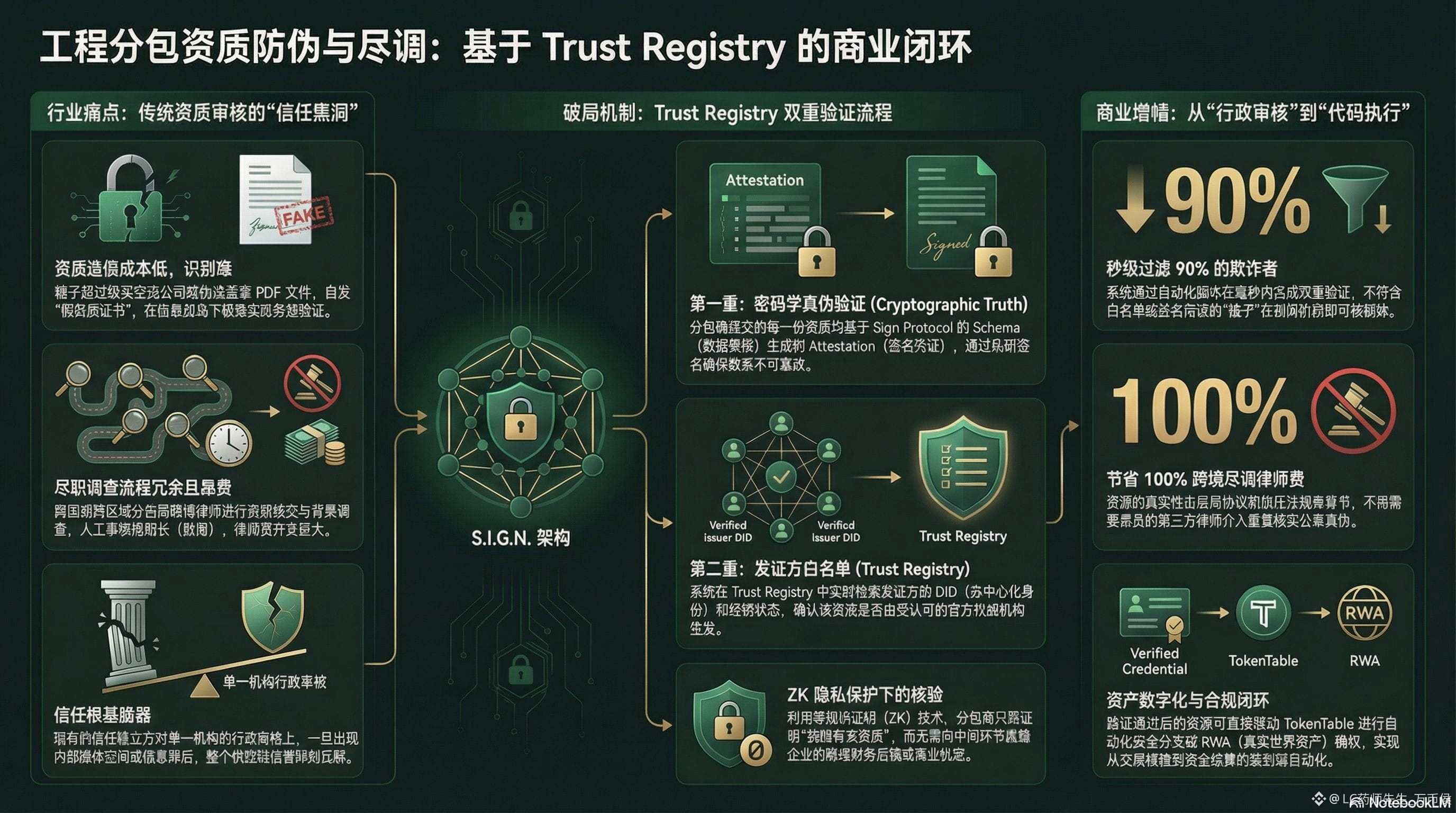
Recently, I have been looking for engineering subcontractors in the Middle East and received quotes from more than ten companies. The other party sent a bunch of PDFs covered with big red official seals of "local government construction qualifications" and "ISO safety certification".
It looks quite formal, but I really don’t dare to sign. Those who work on international projects understand that you can now register a shell company overseas for a few hundred dollars and issue yourself a so-called "official certification". In international cooperation, the biggest fear is not that the other party lacks qualifications, but that the institution sending you the qualifications is itself a "fly-by-night operation". If the source is false, even if you store these PDFs on Ethereum, they will still be a bunch of immutable cyber garbage.
This is why I have been fixated on @SignOfficial these past two days. Its underlying identity system (New ID System) has finally stopped talking about absolute decentralization. It has created an extremely cold Trust Registry.
This thing is essentially a compromise to reality regulation. The system not only needs to verify whether the credentials are real, but also needs to verify if the "issuing party" is registered on the whitelist of sovereign countries. If the institution that stamps your documents is a fly-by-night operation, the trust registry will directly block you at the door. $SIGN
{future}(SIGNUSDT)
However, this mechanism also has a practical flaw. Revoking licenses takes time, and the thing in the system called W3C Bitstring Status List (revocation status list) needs to be updated in sync with reality; otherwise, there will be a fatal time lag. This morning, this subcontractor was just revoked of their license; by evening, they can still use the on-chain credential that hasn't been revoked to deceive others.
But this is already the most reliable digital customs I have seen so far. In the future, when looking for overseas suppliers, there’s no need to spend a lot of money hiring local lawyers for qualification penetration; just scan the registry to filter out 90% of the fraudsters. In this era where trust is more valuable than gold, this is called a true business moat.
#Sign地缘政治基建
Recently, I have been looking for engineering subcontractors in the Middle East and received quotes from more than ten companies. The other party sent a bunch of PDFs covered with big red official seals of "local government construction qualifications" and "ISO safety certification".
It looks quite formal, but I really don’t dare to sign. Those who work on international projects understand that you can now register a shell company overseas for a few hundred dollars and issue yourself a so-called "official certification". In international cooperation, the biggest fear is not that the other party lacks qualifications, but that the institution sending you the qualifications is itself a "fly-by-night operation". If the source is false, even if you store these PDFs on Ethereum, they will still be a bunch of immutable cyber garbage.
This is why I have been fixated on @SignOfficial these past two days. Its underlying identity system (New ID System) has finally stopped talking about absolute decentralization. It has created an extremely cold Trust Registry.
This thing is essentially a compromise to reality regulation. The system not only needs to verify whether the credentials are real, but also needs to verify if the "issuing party" is registered on the whitelist of sovereign countries. If the institution that stamps your documents is a fly-by-night operation, the trust registry will directly block you at the door. $SIGN
However, this mechanism also has a practical flaw. Revoking licenses takes time, and the thing in the system called W3C Bitstring Status List (revocation status list) needs to be updated in sync with reality; otherwise, there will be a fatal time lag. This morning, this subcontractor was just revoked of their license; by evening, they can still use the on-chain credential that hasn't been revoked to deceive others.
But this is already the most reliable digital customs I have seen so far. In the future, when looking for overseas suppliers, there’s no need to spend a lot of money hiring local lawyers for qualification penetration; just scan the registry to filter out 90% of the fraudsters. In this era where trust is more valuable than gold, this is called a true business moat.
#Sign地缘政治基建
It looks quite formal, but I really don’t dare to sign. Those who work on international projects understand that you can now register a shell company overseas for a few hundred dollars and issue yourself a so-called "official certification". In international cooperation, the biggest fear is not that the other party lacks qualifications, but that the institution sending you the qualifications is itself a "fly-by-night operation". If the source is false, even if you store these PDFs on Ethereum, they will still be a bunch of immutable cyber garbage.
This is why I have been fixated on @SignOfficial these past two days. Its underlying identity system (New ID System) has finally stopped talking about absolute decentralization. It has created an extremely cold Trust Registry.
This thing is essentially a compromise to reality regulation. The system not only needs to verify whether the credentials are real, but also needs to verify if the "issuing party" is registered on the whitelist of sovereign countries. If the institution that stamps your documents is a fly-by-night operation, the trust registry will directly block you at the door. $SIGN
However, this mechanism also has a practical flaw. Revoking licenses takes time, and the thing in the system called W3C Bitstring Status List (revocation status list) needs to be updated in sync with reality; otherwise, there will be a fatal time lag. This morning, this subcontractor was just revoked of their license; by evening, they can still use the on-chain credential that hasn't been revoked to deceive others.
But this is already the most reliable digital customs I have seen so far. In the future, when looking for overseas suppliers, there’s no need to spend a lot of money hiring local lawyers for qualification penetration; just scan the registry to filter out 90% of the fraudsters. In this era where trust is more valuable than gold, this is called a true business moat.
#Sign地缘政治基建
1
222
·
--
Article
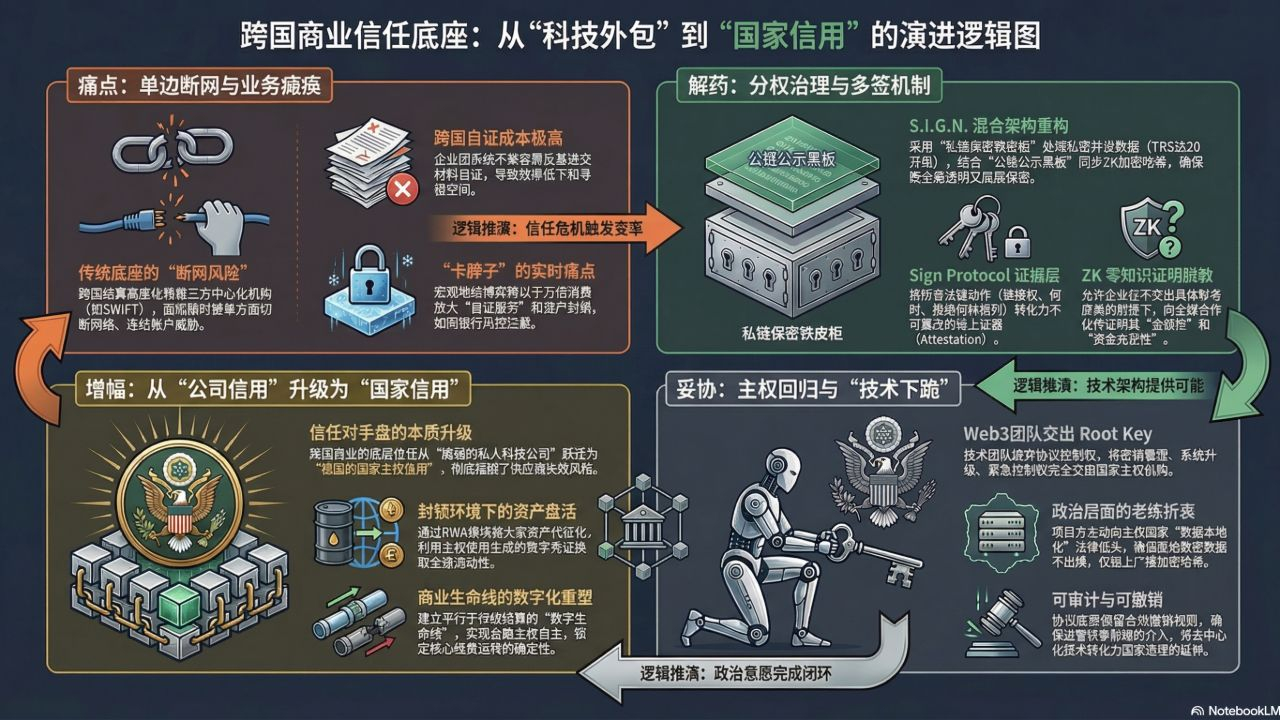
Is the core system's network cable pulled by the outsourced team? Understanding the decentralized governance of $SIGN reveals how national infrastructure prevents backdoors.A few years ago, I followed a childhood friend to a well service team in the Middle East for business and learned that they used an ERP system from a European SaaS company for financial and supply chain collaboration. As a result, one day the company encountered a legal dispute, and to protect their assets, they directly cut off the overseas server's physical network.
That entire week my buddy was going crazy. His company's corporate accounts and inventory lists were all locked in the cloud, watching helplessly as the project came to a halt with no way to resolve it. That time I learned a lesson: in digital systems, whoever holds the underlying control is your true authority.
Is the core system's network cable pulled by the outsourced team? Understanding the decentralized governance of $SIGN reveals how national infrastructure prevents backdoors.
A few years ago, I followed a childhood friend to a well service team in the Middle East for business and learned that they used an ERP system from a European SaaS company for financial and supply chain collaboration. As a result, one day the company encountered a legal dispute, and to protect their assets, they directly cut off the overseas server's physical network.
That entire week my buddy was going crazy. His company's corporate accounts and inventory lists were all locked in the cloud, watching helplessly as the project came to a halt with no way to resolve it. That time I learned a lesson: in digital systems, whoever holds the underlying control is your true authority.
That entire week my buddy was going crazy. His company's corporate accounts and inventory lists were all locked in the cloud, watching helplessly as the project came to a halt with no way to resolve it. That time I learned a lesson: in digital systems, whoever holds the underlying control is your true authority.
1
105
·
--
Yesterday I had drinks with a colleague in cross-border logistics, and those in e-commerce should know, it's the boss of Jiyun. He was so angry he kept banging the table. Their company uses a freight collaboration system, and due to internal conflicts with the technology supplier, they unilaterally suspended their admin privileges. Hundreds of containers can't be tracked at the port, and the demurrage fees alone burn through tens of thousands of dollars every day.
In the real business world, no matter how advanced your system claims to be, whoever holds the 'Root Key' can choke you off at any time.
Many people shout every day for Middle Eastern tycoons to use Web3, but think about it carefully: would a sovereign country like Abu Dhabi dare to entrust hundreds of billions of digital currency to a technical team's server? Unless they are crazy.
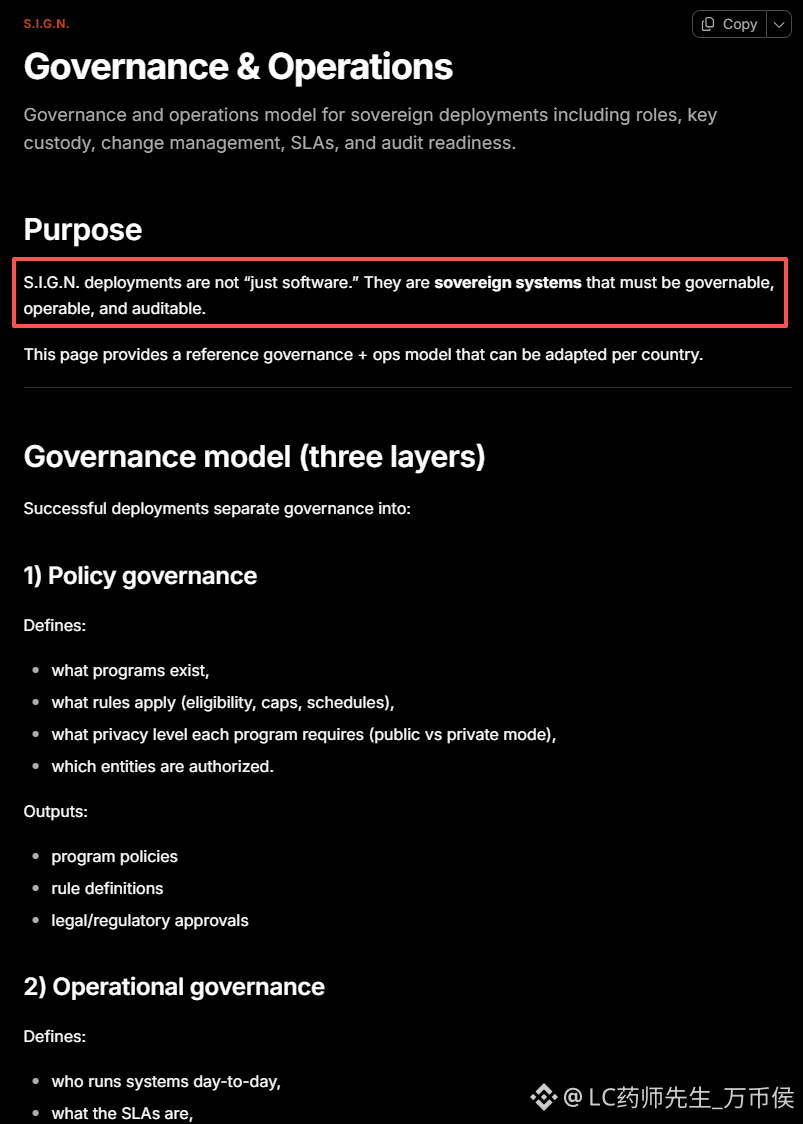
So recently, when I looked at the architecture of @SignOfficial , what impressed me the most was actually their 'Governance & Operations' document. They are extremely clear-headed in bowing to reality.
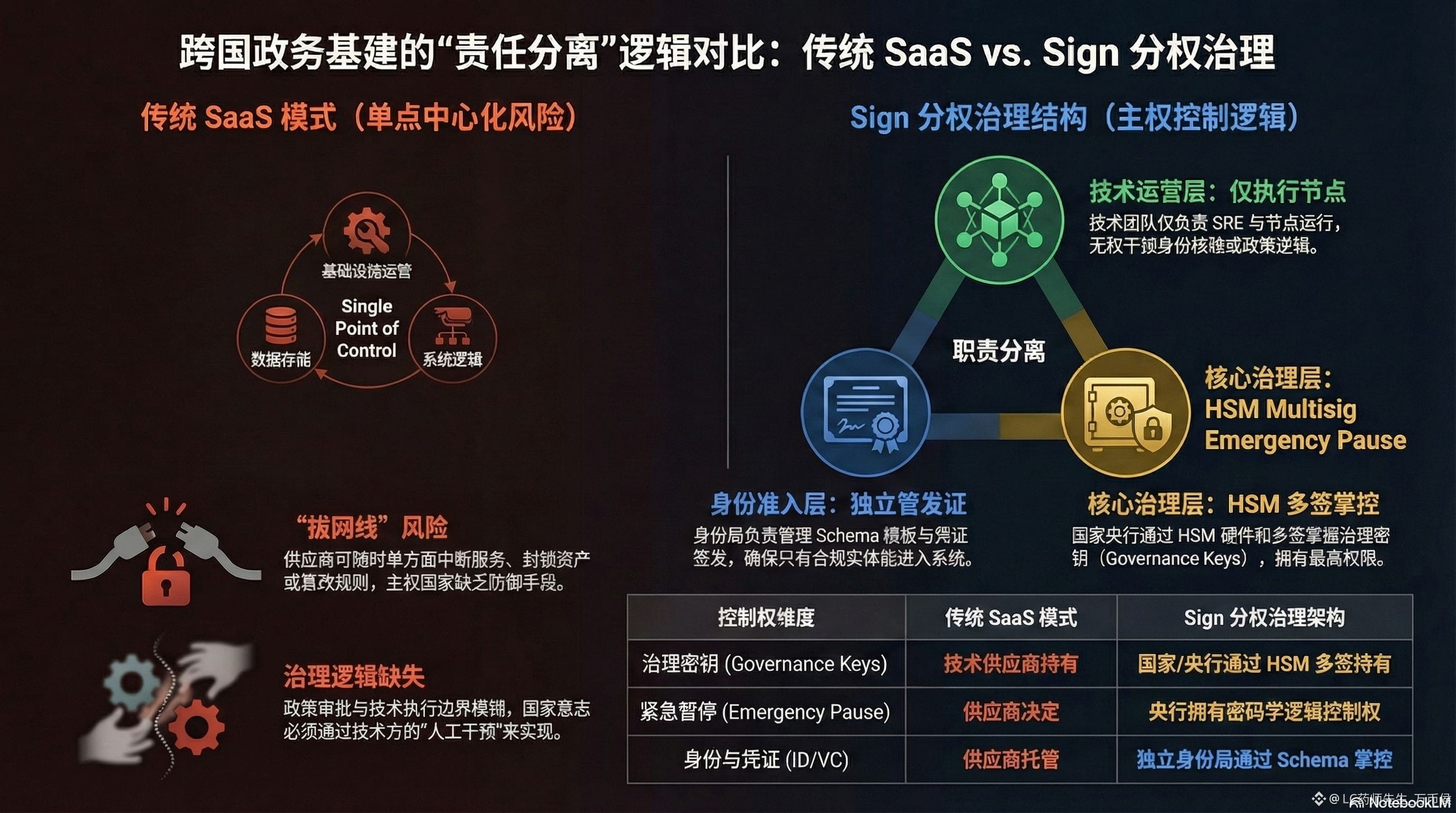
In their design, they emphasize a cold Separation of Duties. Sign provides the technical foundation, but they handed back the critical Governance keys and Emergency Pause permissions entirely through hardware security modules (HSM) and a multi-signature mechanism to the central bank of the sovereign nation.
The technical team only runs the nodes, the issuance of certificates belongs to the identity bureau, and the power to cut the network cable is firmly in the hands of the country.
However, this compromise has a fatal flaw. The 'Emergency Pause' button left to reassure the nation becomes a disaster in the face of geopolitical turmoil. Once an internal coup occurs, rebels don't need to understand hacking technology; they just need to rush into the server room with guns and control the few high-ranking officials holding the multi-signature keys, instantly freezing the country's digital economy.
However, for those of us in the real economy, upgrading the trust counterpart from 'technology outsourcing that could run away at any time' to 'the national credit of a sovereign country' is itself a huge moat. Choosing countries with stable political situations for cross-border transactions, the rest can be left to this frictionless digital infrastructure. #Sign地缘政治基建 $SIGN
Yesterday I had drinks with a colleague in cross-border logistics, and those in e-commerce should know, it's the boss of Jiyun. He was so angry he kept banging the table. Their company uses a freight collaboration system, and due to internal conflicts with the technology supplier, they unilaterally suspended their admin privileges. Hundreds of containers can't be tracked at the port, and the demurrage fees alone burn through tens of thousands of dollars every day.
In the real business world, no matter how advanced your system claims to be, whoever holds the 'Root Key' can choke you off at any time.
Many people shout every day for Middle Eastern tycoons to use Web3, but think about it carefully: would a sovereign country like Abu Dhabi dare to entrust hundreds of billions of digital currency to a technical team's server? Unless they are crazy.
So recently, when I looked at the architecture of @SignOfficial , what impressed me the most was actually their 'Governance & Operations' document. They are extremely clear-headed in bowing to reality.
In their design, they emphasize a cold Separation of Duties. Sign provides the technical foundation, but they handed back the critical Governance keys and Emergency Pause permissions entirely through hardware security modules (HSM) and a multi-signature mechanism to the central bank of the sovereign nation.
The technical team only runs the nodes, the issuance of certificates belongs to the identity bureau, and the power to cut the network cable is firmly in the hands of the country.
However, this compromise has a fatal flaw. The 'Emergency Pause' button left to reassure the nation becomes a disaster in the face of geopolitical turmoil. Once an internal coup occurs, rebels don't need to understand hacking technology; they just need to rush into the server room with guns and control the few high-ranking officials holding the multi-signature keys, instantly freezing the country's digital economy.
However, for those of us in the real economy, upgrading the trust counterpart from 'technology outsourcing that could run away at any time' to 'the national credit of a sovereign country' is itself a huge moat. Choosing countries with stable political situations for cross-border transactions, the rest can be left to this frictionless digital infrastructure. #Sign地缘政治基建 $SIGN
In the real business world, no matter how advanced your system claims to be, whoever holds the 'Root Key' can choke you off at any time.
Many people shout every day for Middle Eastern tycoons to use Web3, but think about it carefully: would a sovereign country like Abu Dhabi dare to entrust hundreds of billions of digital currency to a technical team's server? Unless they are crazy.
So recently, when I looked at the architecture of @SignOfficial , what impressed me the most was actually their 'Governance & Operations' document. They are extremely clear-headed in bowing to reality.
In their design, they emphasize a cold Separation of Duties. Sign provides the technical foundation, but they handed back the critical Governance keys and Emergency Pause permissions entirely through hardware security modules (HSM) and a multi-signature mechanism to the central bank of the sovereign nation.
The technical team only runs the nodes, the issuance of certificates belongs to the identity bureau, and the power to cut the network cable is firmly in the hands of the country.
However, this compromise has a fatal flaw. The 'Emergency Pause' button left to reassure the nation becomes a disaster in the face of geopolitical turmoil. Once an internal coup occurs, rebels don't need to understand hacking technology; they just need to rush into the server room with guns and control the few high-ranking officials holding the multi-signature keys, instantly freezing the country's digital economy.
However, for those of us in the real economy, upgrading the trust counterpart from 'technology outsourcing that could run away at any time' to 'the national credit of a sovereign country' is itself a huge moat. Choosing countries with stable political situations for cross-border transactions, the rest can be left to this frictionless digital infrastructure. #Sign地缘政治基建 $SIGN
1
235
·
--
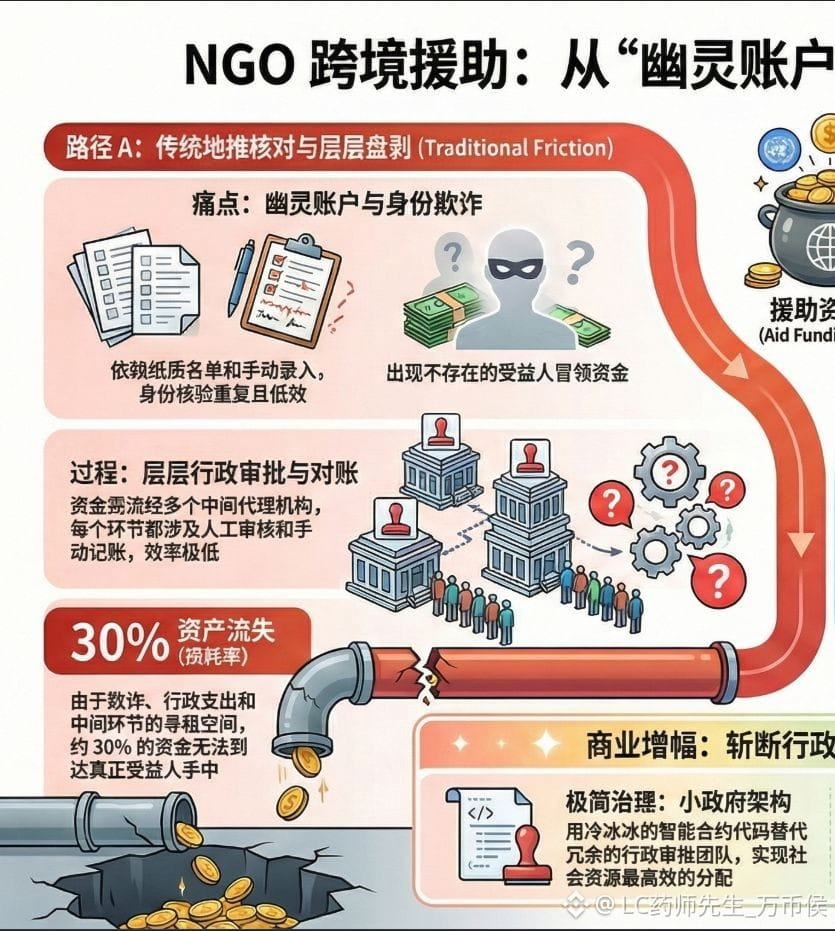
A few months ago, a friend of mine who works for a multinational NGO almost had a breakdown. Their organization was sending targeted aid funds to certain areas in Africa and the Middle East, and the accounts were a complete mess.
To prevent being repeatedly exploited by local 'ghost accounts,' they hired a large ground team to verify the lists. What was the result? Administrative losses in the middle and the various handling fees from local agencies directly consumed nearly 30% of the budget. Anyone involved in multinational aid and fund distribution knows that money is not lacking; what is lacking is how to ensure that money cleanly bypasses those greedy middlemen.
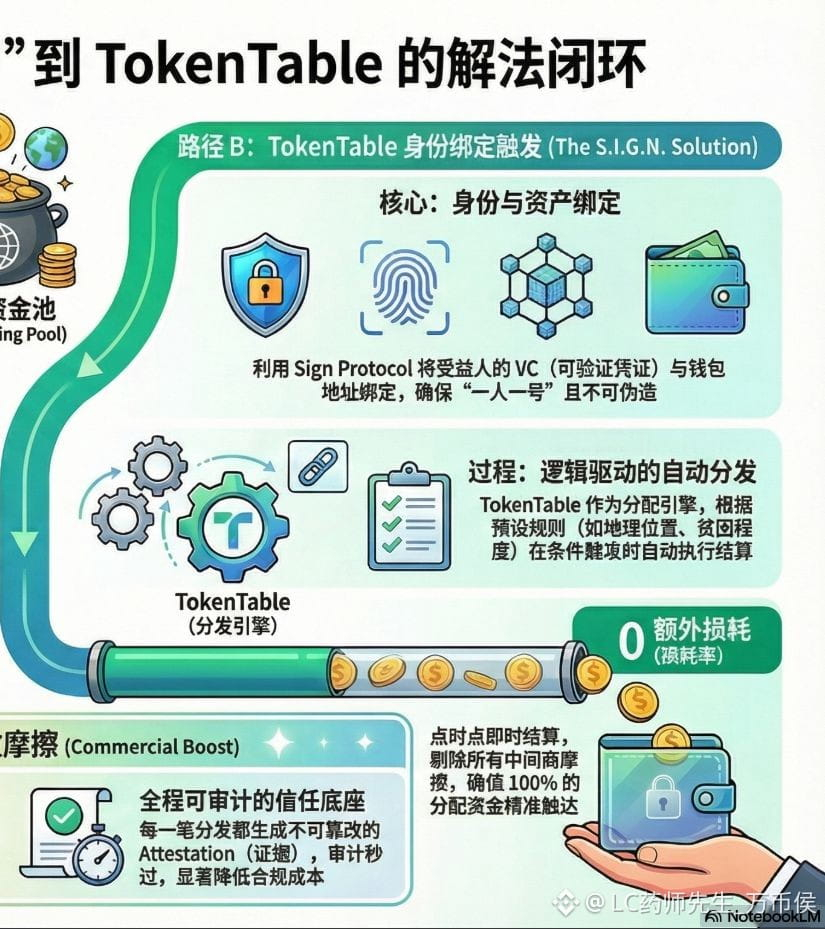
This is also the reason I've recently been paying attention to @SignOfficial. I saw a lot of people on Twitter using it to grab airdrops, which is simply a waste. Looking at its underlying system, the 'New Capital System,' it is actually a sovereign-level fund distribution engine.
The most cunning aspect of this thing lies in its TokenTable component. It locks the fund pool into a smart contract and binds the whitelist of the underlying identity system. Once the conditions are triggered, the money is directly sent to the real users' self-managed wallets through stablecoins in a peer-to-peer manner. No intermediary can intervene, and the redundant administrative nodes are directly shattered by a single line of code.
However, reality is still harsh. If the village chief responsible for entering the whitelist accepts bribes and directly forges a batch of false identities on the chain, the TokenTable will only efficiently and accurately distribute the money to the fraudsters. The code can manage distribution on the chain but cannot control corruption offline.
But even with this physical flaw, this system is still a dimension-reducing strike. Whoever can successfully navigate this fund distribution gateway can cut off the most expensive administrative losses in multinational disbursement.
#Sign地缘政治基建 $SIGN
{future}(SIGNUSDT)
A few months ago, a friend of mine who works for a multinational NGO almost had a breakdown. Their organization was sending targeted aid funds to certain areas in Africa and the Middle East, and the accounts were a complete mess.
To prevent being repeatedly exploited by local 'ghost accounts,' they hired a large ground team to verify the lists. What was the result? Administrative losses in the middle and the various handling fees from local agencies directly consumed nearly 30% of the budget. Anyone involved in multinational aid and fund distribution knows that money is not lacking; what is lacking is how to ensure that money cleanly bypasses those greedy middlemen.
This is also the reason I've recently been paying attention to @SignOfficial. I saw a lot of people on Twitter using it to grab airdrops, which is simply a waste. Looking at its underlying system, the 'New Capital System,' it is actually a sovereign-level fund distribution engine.
The most cunning aspect of this thing lies in its TokenTable component. It locks the fund pool into a smart contract and binds the whitelist of the underlying identity system. Once the conditions are triggered, the money is directly sent to the real users' self-managed wallets through stablecoins in a peer-to-peer manner. No intermediary can intervene, and the redundant administrative nodes are directly shattered by a single line of code.
However, reality is still harsh. If the village chief responsible for entering the whitelist accepts bribes and directly forges a batch of false identities on the chain, the TokenTable will only efficiently and accurately distribute the money to the fraudsters. The code can manage distribution on the chain but cannot control corruption offline.
But even with this physical flaw, this system is still a dimension-reducing strike. Whoever can successfully navigate this fund distribution gateway can cut off the most expensive administrative losses in multinational disbursement.
#Sign地缘政治基建 $SIGN
To prevent being repeatedly exploited by local 'ghost accounts,' they hired a large ground team to verify the lists. What was the result? Administrative losses in the middle and the various handling fees from local agencies directly consumed nearly 30% of the budget. Anyone involved in multinational aid and fund distribution knows that money is not lacking; what is lacking is how to ensure that money cleanly bypasses those greedy middlemen.
This is also the reason I've recently been paying attention to @SignOfficial. I saw a lot of people on Twitter using it to grab airdrops, which is simply a waste. Looking at its underlying system, the 'New Capital System,' it is actually a sovereign-level fund distribution engine.
The most cunning aspect of this thing lies in its TokenTable component. It locks the fund pool into a smart contract and binds the whitelist of the underlying identity system. Once the conditions are triggered, the money is directly sent to the real users' self-managed wallets through stablecoins in a peer-to-peer manner. No intermediary can intervene, and the redundant administrative nodes are directly shattered by a single line of code.
However, reality is still harsh. If the village chief responsible for entering the whitelist accepts bribes and directly forges a batch of false identities on the chain, the TokenTable will only efficiently and accurately distribute the money to the fraudsters. The code can manage distribution on the chain but cannot control corruption offline.
But even with this physical flaw, this system is still a dimension-reducing strike. Whoever can successfully navigate this fund distribution gateway can cut off the most expensive administrative losses in multinational disbursement.
#Sign地缘政治基建 $SIGN
2
171
·
--
Article
Are multinational subsidies being drained by 'phantom accounts' and intermediaries? Dissecting $SIGN to cut off administrative friction's TokenTable trump cardLast year, my oil service team applied for a special subsidy for foreign-funded enterprises in a Middle Eastern country. The approval had long been granted, but the funds were delayed for half a year before they arrived.
I am in the oil service team in TEXAS
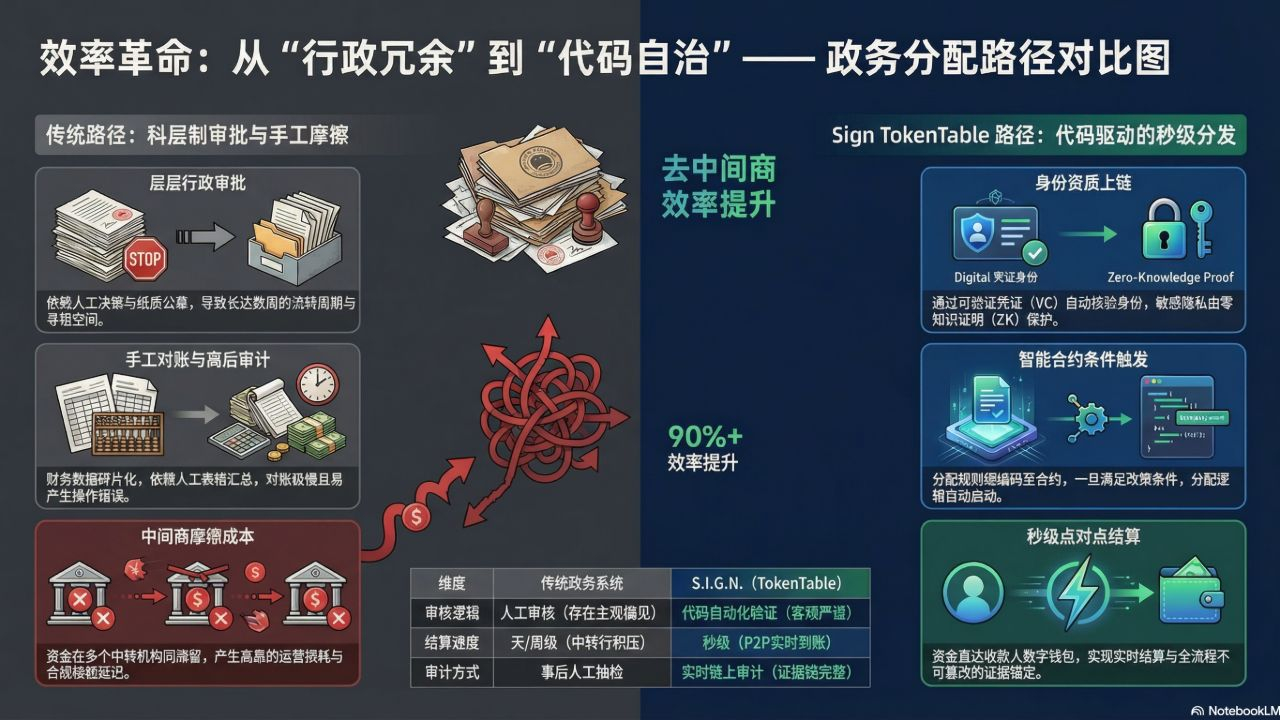
What happened during these six months? It was simply a disaster. The local different departments are not connected at all; to obtain this money, we had to submit cumbersome paper financial statements and qualification certificates every month to cooperate with them in manual reconciliation. Moreover, I also heard that a considerable part of the budget in this total fund has been siphoned off by the local falsely reported 'phantom companies'.
Are multinational subsidies being drained by 'phantom accounts' and intermediaries? Dissecting $SIGN to cut off administrative friction's TokenTable trump card
Last year, my oil service team applied for a special subsidy for foreign-funded enterprises in a Middle Eastern country. The approval had long been granted, but the funds were delayed for half a year before they arrived.
I am in the oil service team in TEXAS
What happened during these six months? It was simply a disaster. The local different departments are not connected at all; to obtain this money, we had to submit cumbersome paper financial statements and qualification certificates every month to cooperate with them in manual reconciliation. Moreover, I also heard that a considerable part of the budget in this total fund has been siphoned off by the local falsely reported 'phantom companies'.
I am in the oil service team in TEXAS
What happened during these six months? It was simply a disaster. The local different departments are not connected at all; to obtain this money, we had to submit cumbersome paper financial statements and qualification certificates every month to cooperate with them in manual reconciliation. Moreover, I also heard that a considerable part of the budget in this total fund has been siphoned off by the local falsely reported 'phantom companies'.
2
1
99
·
--
A couple of days ago, an old friend who works in import and export asked me to lend him money for turnover. Upon inquiry, I learned that he received a payment in USDT from downstream to save on some international transaction fees, but accidentally touched the "black U" (contaminated funds). When he went to the bank for currency exchange, his account was directly frozen by the anti-money laundering center.
The old friend took an Ethereum hash link to explain to the bank, but the compliance officer simply did not recognize it.
This incident actually revealed a harsh truth: in the eyes of sovereign nations and traditional finance, a completely transparent public blockchain is just a "dark forest" filled with dirty money. National capital simply does not dare to step in.
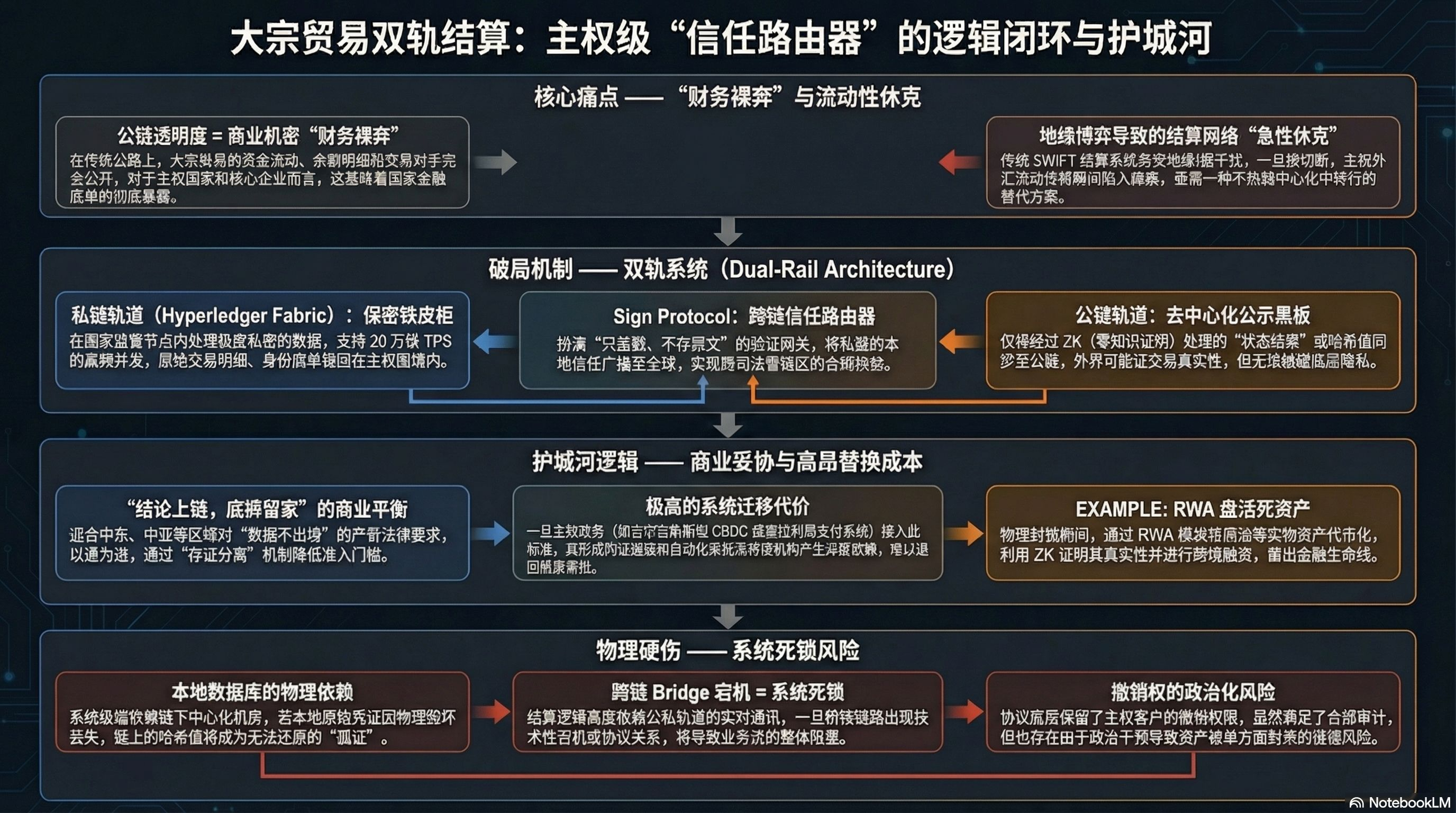
Looking back at the @SignOfficial project, "New Money System", one can understand its political wisdom. Why did it adopt a "dual-track" system?
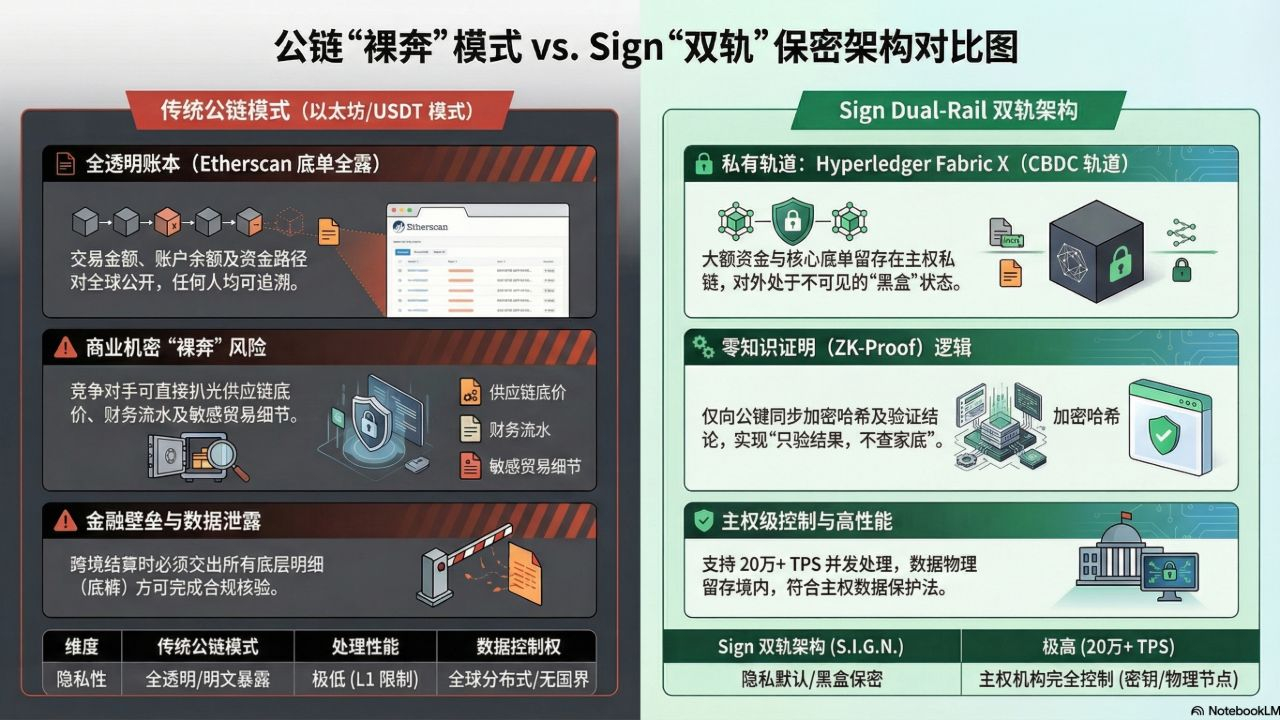
The CBDC (digital som) that it provided for Kyrgyzstan's central bank runs on a bottom-layer private chain (Hyperledger Fabric X). This is equivalent to building an absolutely clean "sterile room" that only whitelisted entities can enter. Funds circulate inside, ensuring absolute control by the state while isolating dirty money from the public chain. Only after passing extremely rigorous gateway scrutiny can funds be bridged out.
This compromise of the "sterile room" that bows to regulation is the ticket for Web3 to obtain national-level orders. Stop staring at the pathetic fluctuations of the market every day; take a look at how sovereign nations are using a dual-track structure to build protective moats.
#Sign地缘政治基建 $SIGN
{spot}(SIGNUSDT)
A couple of days ago, an old friend who works in import and export asked me to lend him money for turnover. Upon inquiry, I learned that he received a payment in USDT from downstream to save on some international transaction fees, but accidentally touched the "black U" (contaminated funds). When he went to the bank for currency exchange, his account was directly frozen by the anti-money laundering center.
The old friend took an Ethereum hash link to explain to the bank, but the compliance officer simply did not recognize it.
This incident actually revealed a harsh truth: in the eyes of sovereign nations and traditional finance, a completely transparent public blockchain is just a "dark forest" filled with dirty money. National capital simply does not dare to step in.
Looking back at the @SignOfficial project, "New Money System", one can understand its political wisdom. Why did it adopt a "dual-track" system?
The CBDC (digital som) that it provided for Kyrgyzstan's central bank runs on a bottom-layer private chain (Hyperledger Fabric X). This is equivalent to building an absolutely clean "sterile room" that only whitelisted entities can enter. Funds circulate inside, ensuring absolute control by the state while isolating dirty money from the public chain. Only after passing extremely rigorous gateway scrutiny can funds be bridged out.
This compromise of the "sterile room" that bows to regulation is the ticket for Web3 to obtain national-level orders. Stop staring at the pathetic fluctuations of the market every day; take a look at how sovereign nations are using a dual-track structure to build protective moats.
#Sign地缘政治基建 $SIGN
The old friend took an Ethereum hash link to explain to the bank, but the compliance officer simply did not recognize it.
This incident actually revealed a harsh truth: in the eyes of sovereign nations and traditional finance, a completely transparent public blockchain is just a "dark forest" filled with dirty money. National capital simply does not dare to step in.
Looking back at the @SignOfficial project, "New Money System", one can understand its political wisdom. Why did it adopt a "dual-track" system?
The CBDC (digital som) that it provided for Kyrgyzstan's central bank runs on a bottom-layer private chain (Hyperledger Fabric X). This is equivalent to building an absolutely clean "sterile room" that only whitelisted entities can enter. Funds circulate inside, ensuring absolute control by the state while isolating dirty money from the public chain. Only after passing extremely rigorous gateway scrutiny can funds be bridged out.
This compromise of the "sterile room" that bows to regulation is the ticket for Web3 to obtain national-level orders. Stop staring at the pathetic fluctuations of the market every day; take a look at how sovereign nations are using a dual-track structure to build protective moats.
#Sign地缘政治基建 $SIGN
1
214
·
--
Article
After paying the goods in USDT, did the bottom price get stripped bare by competitors? Understanding the true dual-track parallel of SIGN from the digital som of KyrgyzstanLast month, I helped a domestic cross-border trader ship a batch of equipment to the Middle East. To avoid the endless anti-money laundering due diligence during European transshipment, both parties hit it off and directly settled the final payment in USDT on Ethereum.
At that time, I thought the efficiency was simply invincible. The result was a magical thing: the next day, a competitor quoted a price that was extremely targeted at our bottom line during the bidding.
Later, after reviewing, I realized that the blockchain 'dark forest' simply cannot hide secrets. Competitors somehow locked onto our payment wallets and directly pulled the flow of funds clean on Etherscan (the blockchain explorer). How much we paid upstream suppliers, and the specific profit margins, were all laid bare on the public chain. For those in bulk physical industries, this kind of 'absolute transparency' is like hanging their underwear on display at the village entrance; it's a fatal business disaster.
After paying the goods in USDT, did the bottom price get stripped bare by competitors? Understanding the true dual-track parallel of SIGN from the digital som of Kyrgyzstan
Last month, I helped a domestic cross-border trader ship a batch of equipment to the Middle East. To avoid the endless anti-money laundering due diligence during European transshipment, both parties hit it off and directly settled the final payment in USDT on Ethereum.
At that time, I thought the efficiency was simply invincible. The result was a magical thing: the next day, a competitor quoted a price that was extremely targeted at our bottom line during the bidding.
Later, after reviewing, I realized that the blockchain 'dark forest' simply cannot hide secrets. Competitors somehow locked onto our payment wallets and directly pulled the flow of funds clean on Etherscan (the blockchain explorer). How much we paid upstream suppliers, and the specific profit margins, were all laid bare on the public chain. For those in bulk physical industries, this kind of 'absolute transparency' is like hanging their underwear on display at the village entrance; it's a fatal business disaster.
At that time, I thought the efficiency was simply invincible. The result was a magical thing: the next day, a competitor quoted a price that was extremely targeted at our bottom line during the bidding.
Later, after reviewing, I realized that the blockchain 'dark forest' simply cannot hide secrets. Competitors somehow locked onto our payment wallets and directly pulled the flow of funds clean on Etherscan (the blockchain explorer). How much we paid upstream suppliers, and the specific profit margins, were all laid bare on the public chain. For those in bulk physical industries, this kind of 'absolute transparency' is like hanging their underwear on display at the village entrance; it's a fatal business disaster.
2
290
·
--
Recently, I talked with a major client, and they mentioned that Mobil is preparing to enter Venezuela. Recently, to open a local corporate account for overseas oil service teams, they have been struggling with compliance reviews. The U.S. has completed its review, and now they are being reviewed there as well.
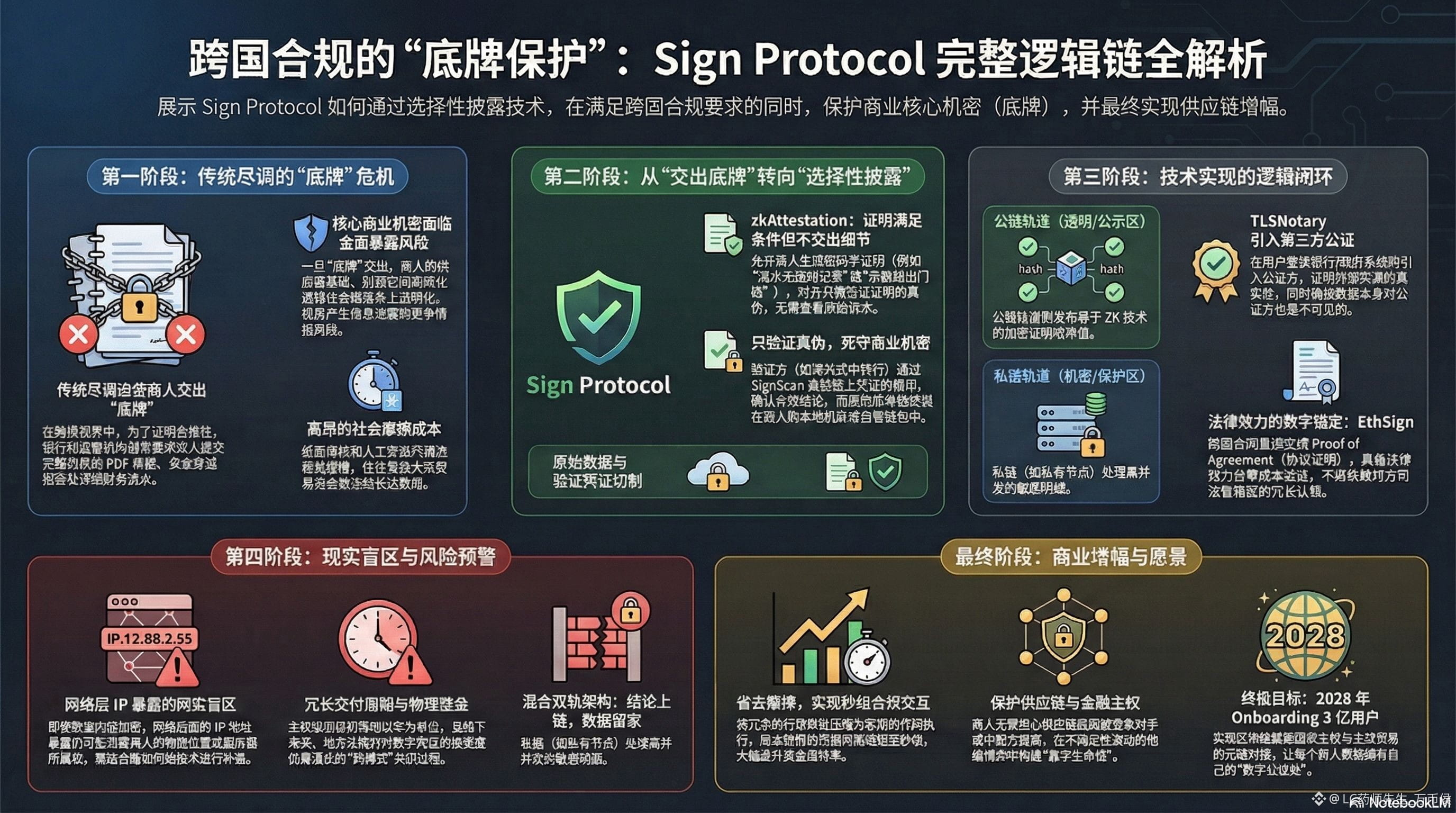
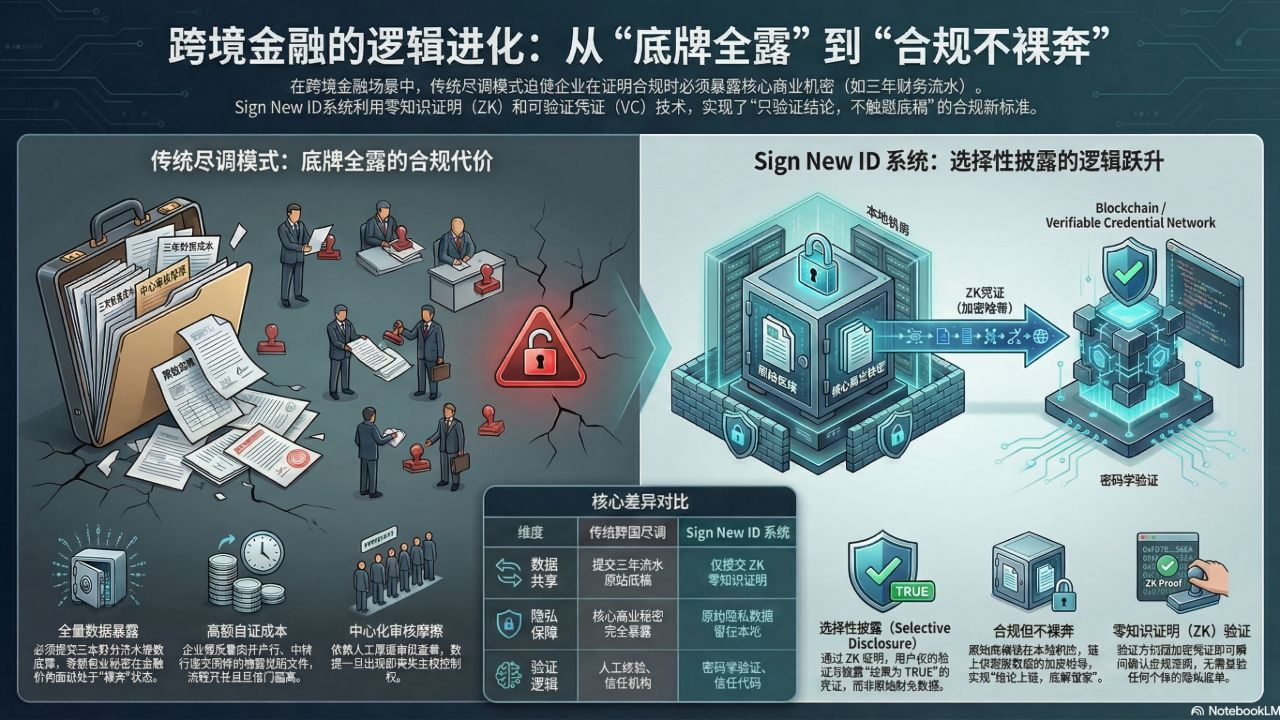
The most inhumane part of multinational due diligence is that to prove you are 'qualified', you have to hand over your company's financial statements and shareholder information for the past three years to a third party you don't know. To prove compliance, businessmen can only be forced to 'run naked'.
This is also the reason why I've been focusing on @SignOfficial recently. Don't pay attention to those ethereal grand narratives; look at the Selective Disclosure in the underlying New ID System.
This logic understands the pain points of real-world business too well. Local banks want to verify assets? You don’t need to provide specific bank statements; just generate a ZK (Zero-Knowledge Proof) certificate. When the other party scans it, they can only see the conclusion 'Funds meet the standard: Yes,' and they can't see your specific balance and sources of funds at all. It perfectly achieves 'only provide results, tightly guard your underwear'.
However, there are also real flaws. No matter how strong the privacy in the code is, when you log into the other party's bank website to submit proof, your IP and device fingerprint have long been recorded. The 'absolutely untraceable' touted in the white paper is still a fallacy in the face of physical networks.
But taking a step back, as long as this trust infrastructure can be made to work, it will be a huge benefit for us entrepreneurs in the real economy. In the future, when doing business overseas, just presenting proof can self-verify strength, and there will be no need to worry about core business secrets being leaked in layers of approval. In the dark forest of multinational business wars, this is the real dimensionality reduction strike.
#Sign地缘政治基建 $SIGN
Recently, I talked with a major client, and they mentioned that Mobil is preparing to enter Venezuela. Recently, to open a local corporate account for overseas oil service teams, they have been struggling with compliance reviews. The U.S. has completed its review, and now they are being reviewed there as well.
The most inhumane part of multinational due diligence is that to prove you are 'qualified', you have to hand over your company's financial statements and shareholder information for the past three years to a third party you don't know. To prove compliance, businessmen can only be forced to 'run naked'.
This is also the reason why I've been focusing on @SignOfficial recently. Don't pay attention to those ethereal grand narratives; look at the Selective Disclosure in the underlying New ID System.
This logic understands the pain points of real-world business too well. Local banks want to verify assets? You don’t need to provide specific bank statements; just generate a ZK (Zero-Knowledge Proof) certificate. When the other party scans it, they can only see the conclusion 'Funds meet the standard: Yes,' and they can't see your specific balance and sources of funds at all. It perfectly achieves 'only provide results, tightly guard your underwear'.
However, there are also real flaws. No matter how strong the privacy in the code is, when you log into the other party's bank website to submit proof, your IP and device fingerprint have long been recorded. The 'absolutely untraceable' touted in the white paper is still a fallacy in the face of physical networks.
But taking a step back, as long as this trust infrastructure can be made to work, it will be a huge benefit for us entrepreneurs in the real economy. In the future, when doing business overseas, just presenting proof can self-verify strength, and there will be no need to worry about core business secrets being leaked in layers of approval. In the dark forest of multinational business wars, this is the real dimensionality reduction strike.
#Sign地缘政治基建 $SIGN
The most inhumane part of multinational due diligence is that to prove you are 'qualified', you have to hand over your company's financial statements and shareholder information for the past three years to a third party you don't know. To prove compliance, businessmen can only be forced to 'run naked'.
This is also the reason why I've been focusing on @SignOfficial recently. Don't pay attention to those ethereal grand narratives; look at the Selective Disclosure in the underlying New ID System.
This logic understands the pain points of real-world business too well. Local banks want to verify assets? You don’t need to provide specific bank statements; just generate a ZK (Zero-Knowledge Proof) certificate. When the other party scans it, they can only see the conclusion 'Funds meet the standard: Yes,' and they can't see your specific balance and sources of funds at all. It perfectly achieves 'only provide results, tightly guard your underwear'.
However, there are also real flaws. No matter how strong the privacy in the code is, when you log into the other party's bank website to submit proof, your IP and device fingerprint have long been recorded. The 'absolutely untraceable' touted in the white paper is still a fallacy in the face of physical networks.
But taking a step back, as long as this trust infrastructure can be made to work, it will be a huge benefit for us entrepreneurs in the real economy. In the future, when doing business overseas, just presenting proof can self-verify strength, and there will be no need to worry about core business secrets being leaked in layers of approval. In the dark forest of multinational business wars, this is the real dimensionality reduction strike.
#Sign地缘政治基建 $SIGN
8
318
·
--
Article
Is your dignity stripped away just to open a corporate account overseas? Understanding the 'selective disclosure' of $SIGN is the key to knowing what a businessman’s moat is.Recently, I have been helping an oil service team stationed in the Middle East with local compliance procedures. In order to open a local corporate account and secure labor visas for several key engineers, I have truly been worn out by those compliance officials from foreign banks.
Brothers who have done international business understand this sense of humiliation. Foreigners want to check your qualifications; not only do they require your passport and business license, but they also want detailed financial statements from your domestic company for the past three years, and they even want to conduct a thorough review of the personal asset proof of the shareholders. To prove that you are 'qualified' to take this business order, you have no choice but to hand over a pile of extremely sensitive business documents to a local intermediary you are not familiar with at all.
Is your dignity stripped away just to open a corporate account overseas? Understanding the 'selective disclosure' of $SIGN is the key to knowing what a businessman’s moat is.
Recently, I have been helping an oil service team stationed in the Middle East with local compliance procedures. In order to open a local corporate account and secure labor visas for several key engineers, I have truly been worn out by those compliance officials from foreign banks.
Brothers who have done international business understand this sense of humiliation. Foreigners want to check your qualifications; not only do they require your passport and business license, but they also want detailed financial statements from your domestic company for the past three years, and they even want to conduct a thorough review of the personal asset proof of the shareholders. To prove that you are 'qualified' to take this business order, you have no choice but to hand over a pile of extremely sensitive business documents to a local intermediary you are not familiar with at all.
Brothers who have done international business understand this sense of humiliation. Foreigners want to check your qualifications; not only do they require your passport and business license, but they also want detailed financial statements from your domestic company for the past three years, and they even want to conduct a thorough review of the personal asset proof of the shareholders. To prove that you are 'qualified' to take this business order, you have no choice but to hand over a pile of extremely sensitive business documents to a local intermediary you are not familiar with at all.
5
5
238
·
--
Is the COLONY planet so competitive too... I only ranked 2100 after taking the optimal route. Have all kinds of scientists moved in? 😂 I invested 0.11 SOL, what can I do with this ranking to earn 0.13 SOL in these 7 days? The SKR STARDUST earnings are even worse than my MATTLE.
Is the COLONY planet so competitive too... I only ranked 2100 after taking the optimal route. Have all kinds of scientists moved in? 😂 I invested 0.11 SOL, what can I do with this ranking to earn 0.13 SOL in these 7 days? The SKR STARDUST earnings are even worse than my MATTLE.

5
569
·
--
Bullish
The aunties at the information station at the village entrance all know that I am the most stylish guy in the village. In the past two years, to seek some peace, I have uniformly claimed to be 'doing cross-border e-commerce.' After all, I can't just tell the aunties that I spend all day in my study staring at the Binance interface, right?
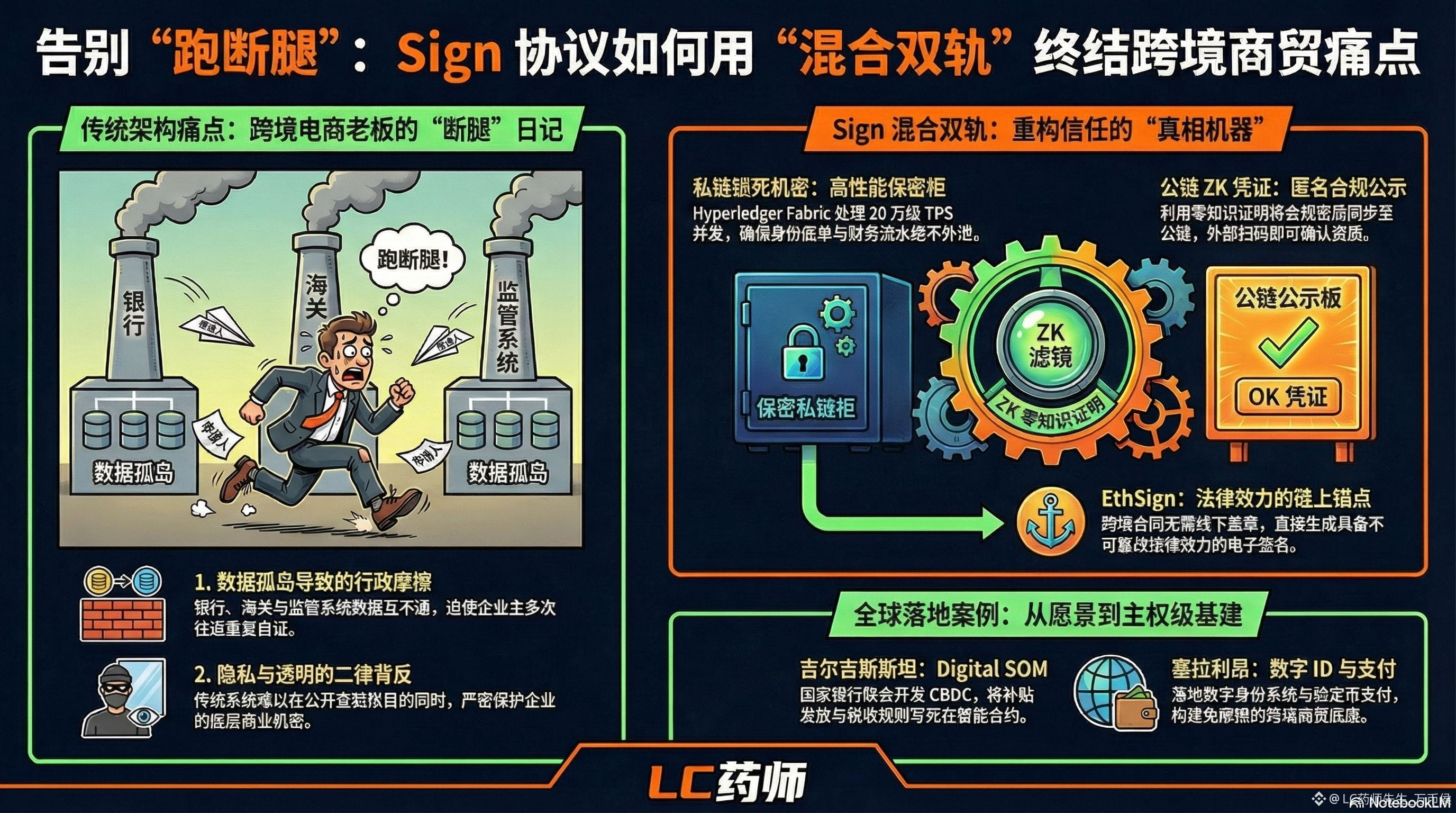
But this 'e-commerce boss' persona almost made me run out of legs a couple of days ago. To process a large cross-border payment, I went to the bank and regulatory authorities. As a result, the underlying systems of these two places were completely disconnected, forcing me to run back and forth three times in the strong wind. I truly experienced the pain points of the traditional centralized architecture: public-private data isolation, low efficiency, and mutual finger-pointing.
When I returned home at night, rubbing my legs and looking at the Sign protocol I had been tracking on the screen, I suddenly had an extremely clear practical feeling. I used to think the 'hybrid dual-track architecture' was grand, but now from the perspective of doing business, isn't this specifically designed to end the kind of 'leg-breaking' social friction I experienced today?
If I use the whole chicken of @SignOfficial , how should this order proceed?
International contracts don't need to be mailed all over the world for stamps; they can go directly through EthSign for on-chain electronic signatures, which have immutable legal effect. Then it can be packaged and resolved directly using Sign Protocol.
My underlying business secrets and tax records are securely locked in the private chain track of the national regulatory nodes; while the 'compliance qualifications' that need to be self-certified externally are transformed into an encrypted certificate through ZK zero-knowledge proof, synchronized onto the public chain track.
When foreign customs and partners scan this certificate, they can instantly confirm my compliance qualifications without ever touching my specific financial documents.
What took me four trips to the government to get done today is just a matter of a line of code in this architecture, with interactions at the second level.
I even had an impulse: the central bank digital currency (CBDC) of Kyrgyzstan and the payment system of Sierra Leone are already running on this dual-track infrastructure. Since there is such a frictionless trust base, it would be great to expand some cross-border e-commerce business to these countries in the future! Let's really use the praised web3 and let Sign serve me in a real way. Hahaha
#Sign地缘政治基建 $SIGN
{future}(SIGNUSDT)
The aunties at the information station at the village entrance all know that I am the most stylish guy in the village. In the past two years, to seek some peace, I have uniformly claimed to be 'doing cross-border e-commerce.' After all, I can't just tell the aunties that I spend all day in my study staring at the Binance interface, right?
But this 'e-commerce boss' persona almost made me run out of legs a couple of days ago. To process a large cross-border payment, I went to the bank and regulatory authorities. As a result, the underlying systems of these two places were completely disconnected, forcing me to run back and forth three times in the strong wind. I truly experienced the pain points of the traditional centralized architecture: public-private data isolation, low efficiency, and mutual finger-pointing.
When I returned home at night, rubbing my legs and looking at the Sign protocol I had been tracking on the screen, I suddenly had an extremely clear practical feeling. I used to think the 'hybrid dual-track architecture' was grand, but now from the perspective of doing business, isn't this specifically designed to end the kind of 'leg-breaking' social friction I experienced today?
If I use the whole chicken of @SignOfficial , how should this order proceed?
International contracts don't need to be mailed all over the world for stamps; they can go directly through EthSign for on-chain electronic signatures, which have immutable legal effect. Then it can be packaged and resolved directly using Sign Protocol.
My underlying business secrets and tax records are securely locked in the private chain track of the national regulatory nodes; while the 'compliance qualifications' that need to be self-certified externally are transformed into an encrypted certificate through ZK zero-knowledge proof, synchronized onto the public chain track.
When foreign customs and partners scan this certificate, they can instantly confirm my compliance qualifications without ever touching my specific financial documents.
What took me four trips to the government to get done today is just a matter of a line of code in this architecture, with interactions at the second level.
I even had an impulse: the central bank digital currency (CBDC) of Kyrgyzstan and the payment system of Sierra Leone are already running on this dual-track infrastructure. Since there is such a frictionless trust base, it would be great to expand some cross-border e-commerce business to these countries in the future! Let's really use the praised web3 and let Sign serve me in a real way. Hahaha
#Sign地缘政治基建 $SIGN
But this 'e-commerce boss' persona almost made me run out of legs a couple of days ago. To process a large cross-border payment, I went to the bank and regulatory authorities. As a result, the underlying systems of these two places were completely disconnected, forcing me to run back and forth three times in the strong wind. I truly experienced the pain points of the traditional centralized architecture: public-private data isolation, low efficiency, and mutual finger-pointing.
When I returned home at night, rubbing my legs and looking at the Sign protocol I had been tracking on the screen, I suddenly had an extremely clear practical feeling. I used to think the 'hybrid dual-track architecture' was grand, but now from the perspective of doing business, isn't this specifically designed to end the kind of 'leg-breaking' social friction I experienced today?
If I use the whole chicken of @SignOfficial , how should this order proceed?
International contracts don't need to be mailed all over the world for stamps; they can go directly through EthSign for on-chain electronic signatures, which have immutable legal effect. Then it can be packaged and resolved directly using Sign Protocol.
My underlying business secrets and tax records are securely locked in the private chain track of the national regulatory nodes; while the 'compliance qualifications' that need to be self-certified externally are transformed into an encrypted certificate through ZK zero-knowledge proof, synchronized onto the public chain track.
When foreign customs and partners scan this certificate, they can instantly confirm my compliance qualifications without ever touching my specific financial documents.
What took me four trips to the government to get done today is just a matter of a line of code in this architecture, with interactions at the second level.
I even had an impulse: the central bank digital currency (CBDC) of Kyrgyzstan and the payment system of Sierra Leone are already running on this dual-track infrastructure. Since there is such a frictionless trust base, it would be great to expand some cross-border e-commerce business to these countries in the future! Let's really use the praised web3 and let Sign serve me in a real way. Hahaha
#Sign地缘政治基建 $SIGN
5
7
250
·
--
Article
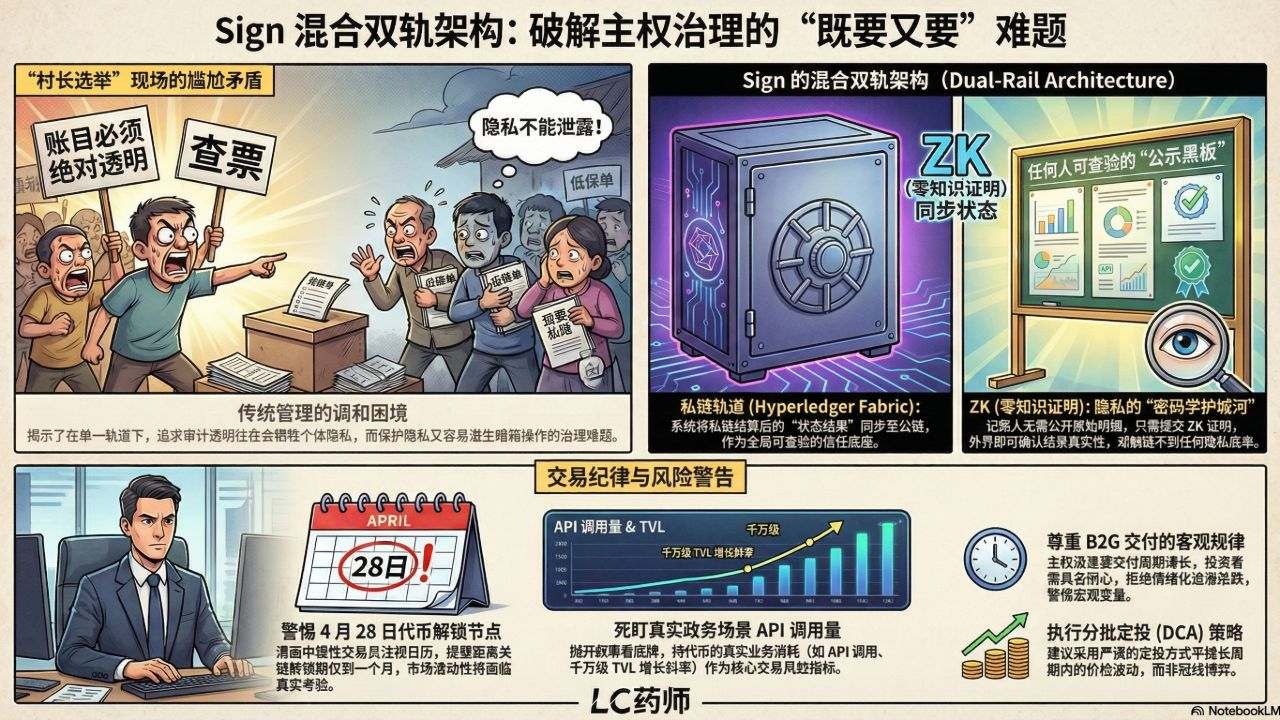
A few days ago, the village held an election for the village chief, and it completely helped me understand the technical underpinnings of the Sign 'dual track of public and private'A few days ago, I returned to my hometown and happened to catch the village's periodic public disclosure of village affairs and finances. Everyone was discussing it enthusiastically; to say it was 'enthusiastic' is also to say that the scene at the time was quite amusing:
On one hand, everyone demands that the accounts be 'absolutely transparent'—where has the village's money gone? Who voted for whom? It must be open for inspection to prevent any behind-the-scenes manipulation; but on the other hand, everyone also needs 'absolute privacy'—how much low-income support each family receives, and who exactly Zhang San voted for, this kind of sensitive personal data, no one wants it posted on the village's big blackboard for everyone in town to see.
A few days ago, the village held an election for the village chief, and it completely helped me understand the technical underpinnings of the Sign 'dual track of public and private'
A few days ago, I returned to my hometown and happened to catch the village's periodic public disclosure of village affairs and finances. Everyone was discussing it enthusiastically; to say it was 'enthusiastic' is also to say that the scene at the time was quite amusing:
On one hand, everyone demands that the accounts be 'absolutely transparent'—where has the village's money gone? Who voted for whom? It must be open for inspection to prevent any behind-the-scenes manipulation; but on the other hand, everyone also needs 'absolute privacy'—how much low-income support each family receives, and who exactly Zhang San voted for, this kind of sensitive personal data, no one wants it posted on the village's big blackboard for everyone in town to see.
On one hand, everyone demands that the accounts be 'absolutely transparent'—where has the village's money gone? Who voted for whom? It must be open for inspection to prevent any behind-the-scenes manipulation; but on the other hand, everyone also needs 'absolute privacy'—how much low-income support each family receives, and who exactly Zhang San voted for, this kind of sensitive personal data, no one wants it posted on the village's big blackboard for everyone in town to see.
3
3
145
Log in to explore more content
Join global crypto users on Binance Square
⚡️ Get latest and useful information about crypto.
💬 Trusted by the world’s largest crypto exchange.
👍 Discover real insights from verified creators.
Email / Phone number
Trending Topics
FedRateWatch
286,374 views
1,805 Discussing
Share & Win Traffic Reward in our Trending Hashtag Campaign
✨Topic: FOMC September, What's The Fed's Next Move?
👉How to Join:
Publish a short post or article with hashtag #FedRateWatch
Create content based on the below angles:
- August core CPI rose 0.3% month-over-month, and the odds of a 25bp hike this week are now close to 90%. Do you anticipate a rate hike this week? Is it a one-off, or the start of a longer hiking cycle?
- If the hike lands, how does it play out for BTC, tech stocks, and gold? Bullish or bearish?
- How are you planning to trade next? Share your BTC, stocks or gold trade/holdings with our trade sharing widget.
⏰Campaign Period:
- 2026-09-15 11:00 - 2026-09-17 3:00 UTC
🎁Reward:
- Qualified posts that comply with the above guidelines and contain more than 100 words will be reviewed and may receive a random traffic boost of 500 to 3,000 views. You will receive a notification from your feed secretary if your post is selected.
- Get a chance to have your article featured on Binance Square Official
Need ideas for your post? Visit the topic page #FedRateWatch or the Square Guide on How to Post for Better Reach.
Binance Square Official
·312 Likes
·558.5k views
BitcoinSlidesTo$76000
4,884 views
64 Discussing
BitcoinReboundsTo$79K
51,928 views
366 Discussing