
mkeshari
665 Posts

mkeshari
Blockchain | AI | Web3 - Software Developer @mkeshari on X. I’m not giving financial advice. Always DYOR and consider your risk tolerance.
Open Trade

XRP Holder
High-Frequency Trader
5.3 Years
16 Following
3.3K+ Followers
3.3K+ Liked
Posts
Portfolio
All
Quotes
Videos




mkeshari
·
--
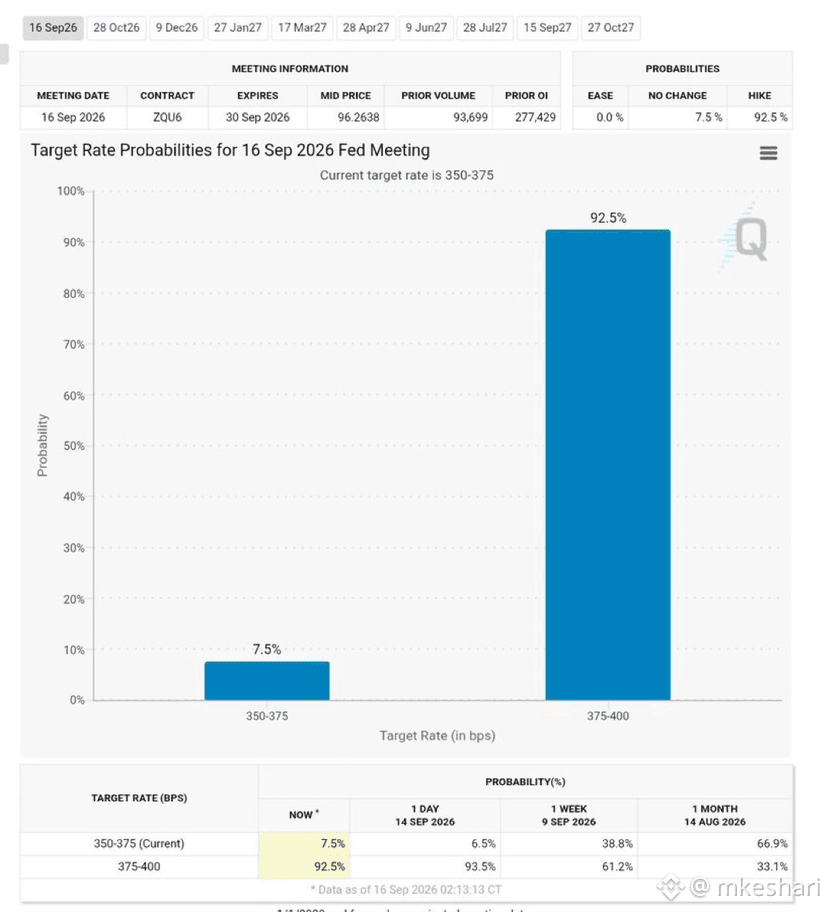
BearishFed could deliver its first rate hike where the crypto market will go ?
Market Generally go down or at least under short-term pressure.
A hawkish signal of further hikes would likely push the market downwards.
Crypto now has more institutional involvement like Bitcoin ETFs, which can alter the magnitude of moves compared with earlier cycles, but the directional bias from tighter policy remains negative in the short term.
Keep Trading and Todays My Favorite are
$ZEC $NEAR
Market Generally go down or at least under short-term pressure.
A hawkish signal of further hikes would likely push the market downwards.
Crypto now has more institutional involvement like Bitcoin ETFs, which can alter the magnitude of moves compared with earlier cycles, but the directional bias from tighter policy remains negative in the short term.
Keep Trading and Todays My Favorite are
$ZEC $NEAR
Verified
mkeshari
·
--
BullishIf the Clarity Act passes, these coins stand to benefit most 🚀
Regulatory clarity would reduce uncertainty, open the door for more institutional capital, and give clearer CFTC/SEC boundaries.
Top beneficiaries:
• Ethereum (ETH) – Strongest relative winner. As the main settlement layer for stablecoins, DeFi & tokenization, clearer rules could unlock big institutional flows.
• Solana (SOL) – Gains from better institutional access and product issuance once the SEC/CFTC lines are drawn.
• XRP – Directly helped by removing long-standing legal overhang and confirming its place under a clearer framework.
• Bitcoin (BTC) – Still benefits from the overall pro-crypto signal and legitimacy boost, though the upside is more secondary compared to the alts above.
• DeFi tokens (UNI, AAVE etc.) – Extra upside if the bill protects non-custodial developers and decentralized protocols.
Clearer rules = less fear, more capital, higher velocity.
Passage wouldn’t fix everything overnight, but it would be one of the biggest positive catalysts the market has seen in years.
What do you think - which one has the most asymmetric upside?
Regulatory clarity would reduce uncertainty, open the door for more institutional capital, and give clearer CFTC/SEC boundaries.
Top beneficiaries:
• Ethereum (ETH) – Strongest relative winner. As the main settlement layer for stablecoins, DeFi & tokenization, clearer rules could unlock big institutional flows.
• Solana (SOL) – Gains from better institutional access and product issuance once the SEC/CFTC lines are drawn.
• XRP – Directly helped by removing long-standing legal overhang and confirming its place under a clearer framework.
• Bitcoin (BTC) – Still benefits from the overall pro-crypto signal and legitimacy boost, though the upside is more secondary compared to the alts above.
• DeFi tokens (UNI, AAVE etc.) – Extra upside if the bill protects non-custodial developers and decentralized protocols.
Clearer rules = less fear, more capital, higher velocity.
Passage wouldn’t fix everything overnight, but it would be one of the biggest positive catalysts the market has seen in years.
What do you think - which one has the most asymmetric upside?




mkeshari
·
--
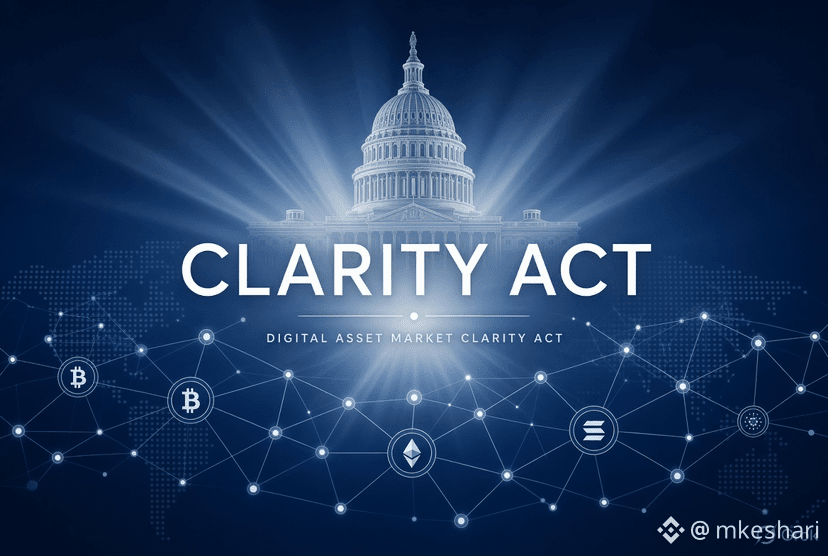
What Changes You May See If the CLARITY Act Passes
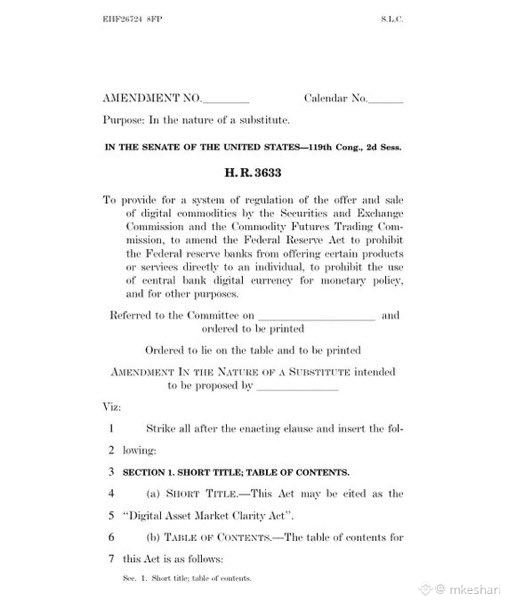
If the CLARITY Act (Digital Asset Market Clarity Act, H.R. 3633) passes and is signed into law, it would create the first comprehensive U.S. federal framework for digital asset (crypto) markets.
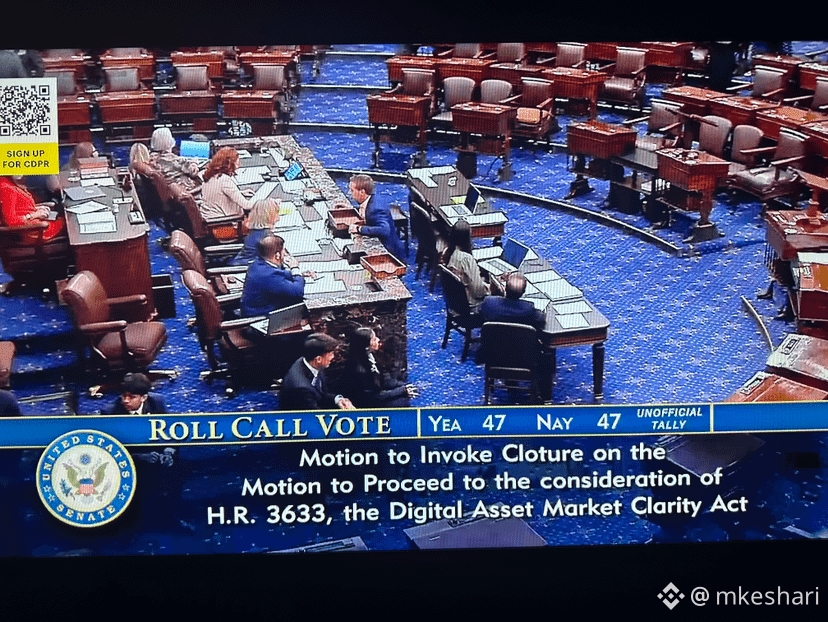
It has already passed the House (294–134 in July 2025) and advanced through Senate committees; a key Senate cloture vote on the motion to proceed is scheduled around September 15, 2026.
Main Effects
Clear classification of digital assets: Tokens would generally fall into categories such as digital commodities (most major ones like Bitcoin, and potentially Ethereum, Solana, XRP under certain conditions), securities/investment-contract assets (SEC oversight), or permitted payment stablecoins. This ends much of the long-running ambiguity between the SEC and CFTC.
Jurisdictional split: The CFTC gains primary authority over spot markets for digital commodities (exchanges, brokers, dealers). The SEC keeps authority over securities and certain related activities. Stable-coins largely fall under banking regulators (building on prior law), with anti-fraud powers retained by the SEC/CFTC.
New registration and rules for platforms: Digital commodity exchanges, brokers, and dealers must register with the CFTC. Requirements include trade monitoring, recordkeeping, customer asset segregation (to prevent FTX-style mixing of funds), anti-money-laundering (BSA) obligations, and consumer protections (e.g., limits on affiliate trading and conflicts of interest).
Developer and non-custodial protections: Non-custodial software developers, miners, and validators get clearer safe harbors from money-transmitter registration and certain regulations.
Capital formation pathway: Easier exempt offerings (up to certain limits) and disclosure rules for projects building toward decentralization/mature blockchains.
Ethics provisions: Restrictions on federal officials (including the president, vice president, and others) issuing, sponsoring, or holding significant interests in digital assets, with divestiture or blind-trust requirements and enforcement roles for state attorneys general (plus civil penalties).
Other items: Guardrails on stablecoin rewards/yield to protect bank deposits, some preemption of conflicting state rules for covered assets, and continued applicability of state consumer protections in places.
Timeline After Passage
Passage does not instantly change day-to-day rules. Agencies get statutory deadlines for rulemaking:
Expedited CFTC registration processes within ~180 days.Many core provisions effective around 270 days.Joint SEC/CFTC rules (e.g., portfolio margining) and full rulemakings within ~360 days.
Real operational clarity and full compliance would likely arrive in 2027 or later. The bill must still clear the Senate (needing 60 votes for cloture due to filibuster rules), any final House concurrence on the Senate version, and a presidential signature.
Broader Impacts
Industry and investors: Greater legal certainty could encourage more institutional capital, clearer listing/trading rules, stronger consumer protections, and reduced enforcement-by-lawsuit risk. U.S. firms might face less pressure to relocate overseas.
Markets: Tokens classified as commodities would operate under CFTC-style oversight rather than pure SEC securities rules. This is expected to benefit established decentralized assets while still regulating intermediaries.
Limitations: It does not rewrite tax treatment of crypto, fully regulate all DeFi, or eliminate every regulatory risk. Agencies retain significant rule making power, and future Congresses or administrations could amend it.
CLARITY Act Passage would replace much of the current patchwork of enforcement actions and court decisions with a statutory market-structure regime centered on CFTC oversight of digital commodities, clearer SEC boundaries, registration for platforms, and consumer/ethics safeguards - though full implementation would take many months.
#Clarity #FedRateWatch
It has already passed the House (294–134 in July 2025) and advanced through Senate committees; a key Senate cloture vote on the motion to proceed is scheduled around September 15, 2026.
Main Effects
Clear classification of digital assets: Tokens would generally fall into categories such as digital commodities (most major ones like Bitcoin, and potentially Ethereum, Solana, XRP under certain conditions), securities/investment-contract assets (SEC oversight), or permitted payment stablecoins. This ends much of the long-running ambiguity between the SEC and CFTC.
Jurisdictional split: The CFTC gains primary authority over spot markets for digital commodities (exchanges, brokers, dealers). The SEC keeps authority over securities and certain related activities. Stable-coins largely fall under banking regulators (building on prior law), with anti-fraud powers retained by the SEC/CFTC.
New registration and rules for platforms: Digital commodity exchanges, brokers, and dealers must register with the CFTC. Requirements include trade monitoring, recordkeeping, customer asset segregation (to prevent FTX-style mixing of funds), anti-money-laundering (BSA) obligations, and consumer protections (e.g., limits on affiliate trading and conflicts of interest).
Developer and non-custodial protections: Non-custodial software developers, miners, and validators get clearer safe harbors from money-transmitter registration and certain regulations.
Capital formation pathway: Easier exempt offerings (up to certain limits) and disclosure rules for projects building toward decentralization/mature blockchains.
Ethics provisions: Restrictions on federal officials (including the president, vice president, and others) issuing, sponsoring, or holding significant interests in digital assets, with divestiture or blind-trust requirements and enforcement roles for state attorneys general (plus civil penalties).
Other items: Guardrails on stablecoin rewards/yield to protect bank deposits, some preemption of conflicting state rules for covered assets, and continued applicability of state consumer protections in places.
Timeline After Passage
Passage does not instantly change day-to-day rules. Agencies get statutory deadlines for rulemaking:
Expedited CFTC registration processes within ~180 days.Many core provisions effective around 270 days.Joint SEC/CFTC rules (e.g., portfolio margining) and full rulemakings within ~360 days.
Real operational clarity and full compliance would likely arrive in 2027 or later. The bill must still clear the Senate (needing 60 votes for cloture due to filibuster rules), any final House concurrence on the Senate version, and a presidential signature.
Broader Impacts
Industry and investors: Greater legal certainty could encourage more institutional capital, clearer listing/trading rules, stronger consumer protections, and reduced enforcement-by-lawsuit risk. U.S. firms might face less pressure to relocate overseas.
Markets: Tokens classified as commodities would operate under CFTC-style oversight rather than pure SEC securities rules. This is expected to benefit established decentralized assets while still regulating intermediaries.
Limitations: It does not rewrite tax treatment of crypto, fully regulate all DeFi, or eliminate every regulatory risk. Agencies retain significant rule making power, and future Congresses or administrations could amend it.
CLARITY Act Passage would replace much of the current patchwork of enforcement actions and court decisions with a statutory market-structure regime centered on CFTC oversight of digital commodities, clearer SEC boundaries, registration for platforms, and consumer/ethics safeguards - though full implementation would take many months.
#Clarity #FedRateWatch
Log in to explore more content