

BTC阿焱
4.7k Posts

BTC阿焱
Report
Block User
X: AYYYYY168 公众号: 阿焱航行圈 跟单请进聊天室 手续费八折邀请码:BTCAY888

BTC Holder
Frequent Trader
1.3 Years
20 Following
7.8K+ Followers
6.6K+ Liked
Posts
All
Quotes
Videos
PINNED
·
--
Bullish
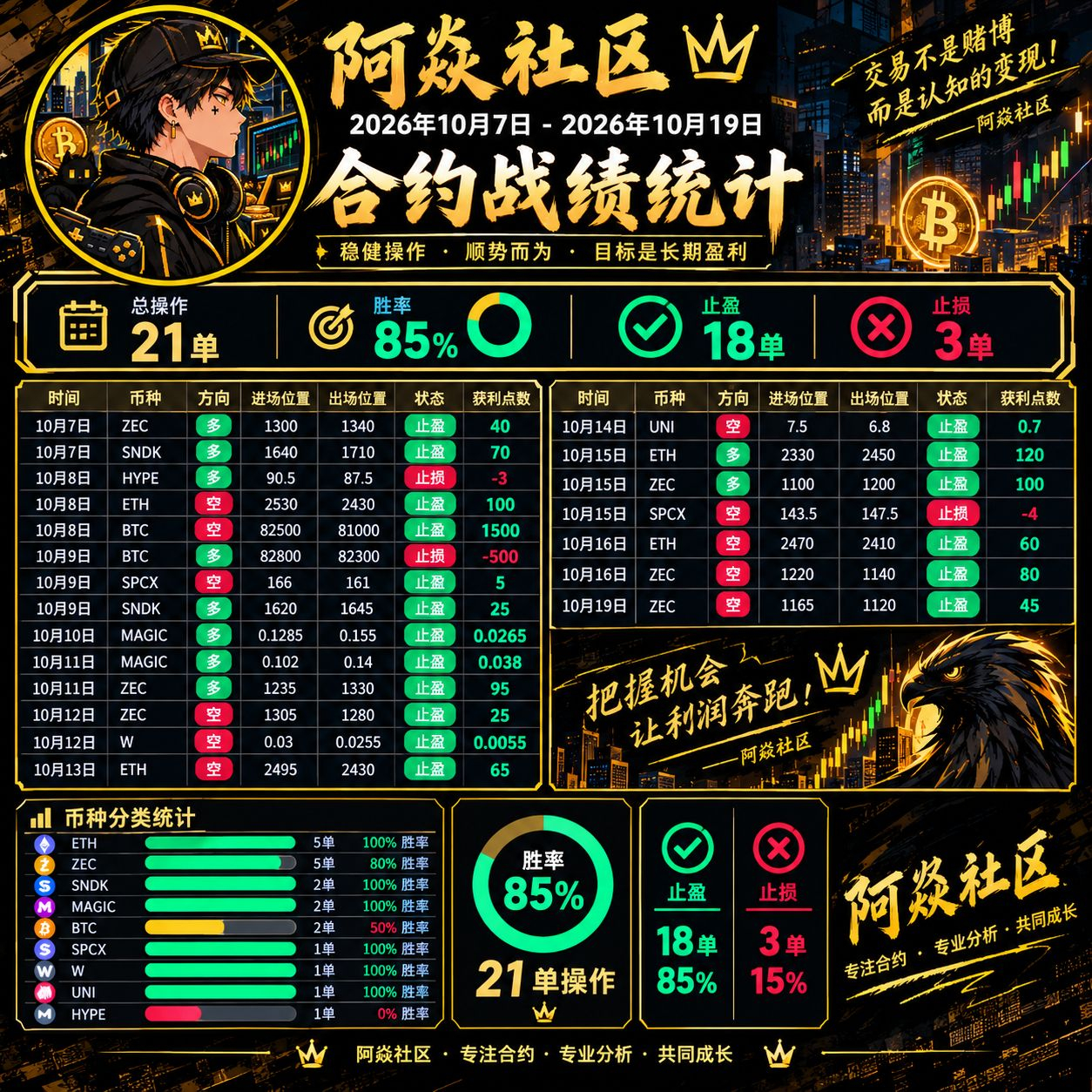
You can contact Ah Yan directly now!
Anyone interested in copy trading or analysis can reach out to me. I’ll reply as soon as I see your message!!
A lot of fans still can’t find the chat room.
Scan the Binance QR code below in the Binance app, or search for my ID directly: 1137277946 to get in touch!
$RIVER $XAU $SIREN
#美国议员推动立法永久禁止CBDC #SolanaAI代理经济影响
10
8
27
2k
PINNED
·
--
Keeping up with Mig's strategic pace is the key to safeguarding principal and stabilizing returns in investment!
With Mig's market-validated practical system, say goodbye to emotional trading, and let each decision be backed by data and grounded in logic.
Have you ever regretted missing out on the early dividends of Bitcoin and Ethereum? Have you experienced the sleepless nights of chasing highs and being trapped, unsure of how to proceed? Don't let regrets linger—come to Mig Village, where Mig will share specific entry and exit strategies and trading signals in real-time!
1
2
22
1.4k
·
--
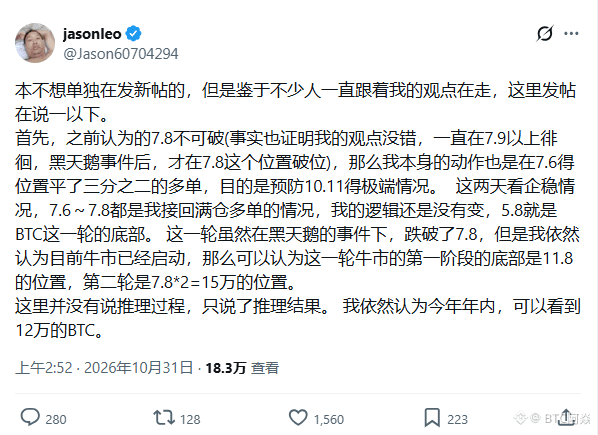
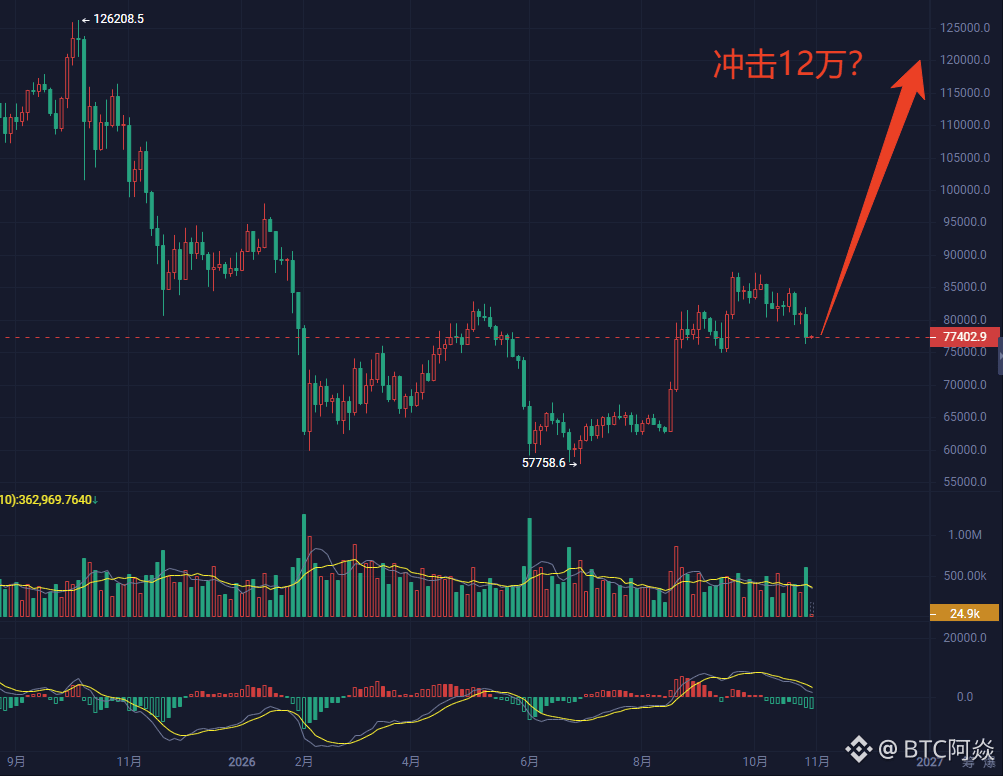
Tomorrow is already November, with two months left
The big players are still bullish that $BTC can reach 120,000 by year-end
Do you guys think there's still a chance?
#币安披露黑客事件进展63亿美元损失已弥补八成 #何一表示提现预计将在未来42小时内恢复 #CZ称币安赔付到位最重要是保护用户
Tomorrow is already November, with two months left
The big players are still bullish that $BTC can reach 120,000 by year-end
Do you guys think there's still a chance?
#币安披露黑客事件进展63亿美元损失已弥补八成 #何一表示提现预计将在未来42小时内恢复 #CZ称币安赔付到位最重要是保护用户
The big players are still bullish that $BTC can reach 120,000 by year-end
Do you guys think there's still a chance?
#币安披露黑客事件进展63亿美元损失已弥补八成 #何一表示提现预计将在未来42小时内恢复 #CZ称币安赔付到位最重要是保护用户
2
249
·
--
Has Crypto Already Peaked? Trader Makes Stunning Prediction: Bitcoin Could Bottom Before U.S. Stocks!
Guys, the market’s drop has everyone on edge, but trader Ansem just shared a highly counterintuitive take: this crypto market may have already peaked, but Bitcoin could also bottom before U.S. stocks!
What’s the logic? This rally was driven entirely by the AI narrative and U.S. stocks. If U.S. stocks are only just beginning a major correction, and Bitcoin’s recent rebound is just a “dead-cat bounce,” then another sell-off could be coming. But Ansem also said that if things really tumble, crypto could fall far enough to bottom before the stock market.
Don’t rush to guess the bottom. Focus on how U.S. stocks and key price levels react. If the rebound comes on low volume, definitely don’t chase it.
Guys, whether it’s money laundering by hackers or macro-driven rate hikes, the core issue right now is “valuation compression.” Retail investors shouldn’t blindly hold losing positions or believe claims of an “imminent V-shaped recovery.” Watch more, trade less, and wait until the right-side signals fully emerge.
#币安披露黑客事件进展63亿美元损失已弥补八成 #何一表示提现预计将在未来42小时内恢复 #CZ称币安赔付到位最重要是保护用户 $BTC $ETH $ZEC

516
·
--
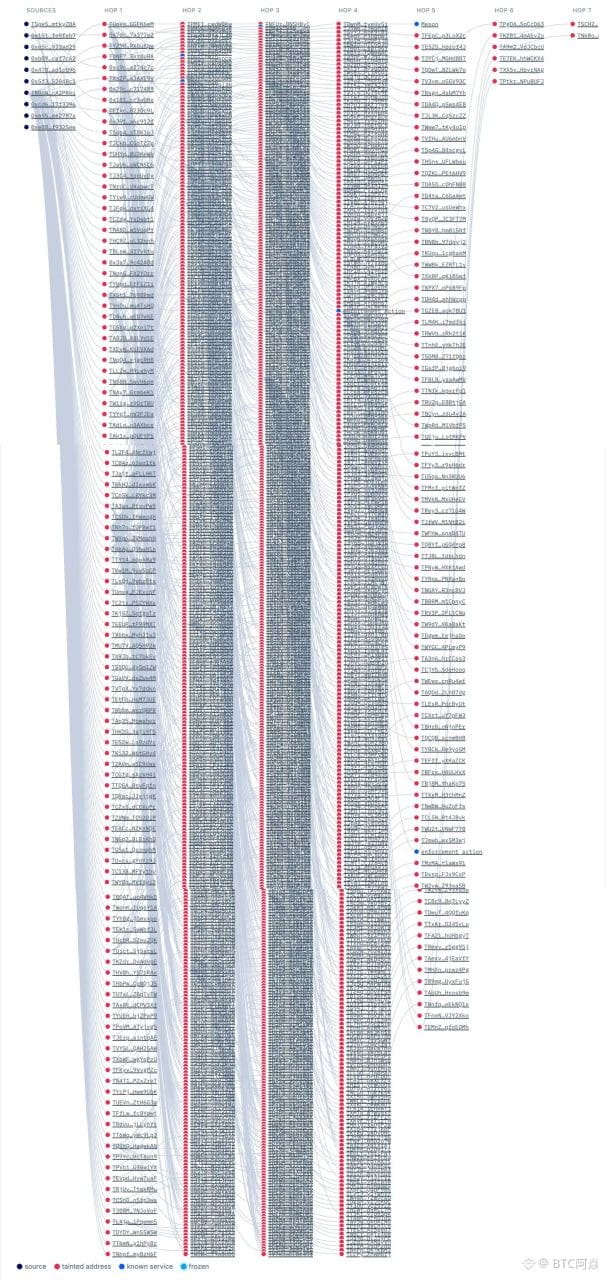
Hackers are laundering money like crazy! 12 million $TRX has been split up and transferred—the panic is nowhere near over!
Guys, more bad news. The Binance hacker hasn’t stopped at all—they’re laundering money like crazy!
According to monitoring data, the hacker has just transferred 12 million TRX (about $38.78 million). And they’ve stepped up their tactics, repeatedly splitting the funds through automated transfers, sending them back to old addresses, then distributing them to new ones. It’s clearly an attempt to destroy traces of the crime and make tracking harder. This kind of automated money-laundering pattern is extremely rare, which suggests the other side is a seasoned pro.
If these funds really get cleaned through a mixer, the chances of recovering them are basically zero. Yesterday, $1.5 billion was liquidated, and today the hacker pulls this stunt—there’s no way the panic will subside anytime soon. Add to that the lingering expectations of a Fed rate hike in December, and bears are definitely in control in the short term.
#币安披露黑客事件进展63亿美元损失已弥补八成 #TRM称柬埔寨赌场收10.7亿美元加密资产 #Iole拟出售全部151.21枚比特币 $BTC $ETH
5
1
19.1k
·
--
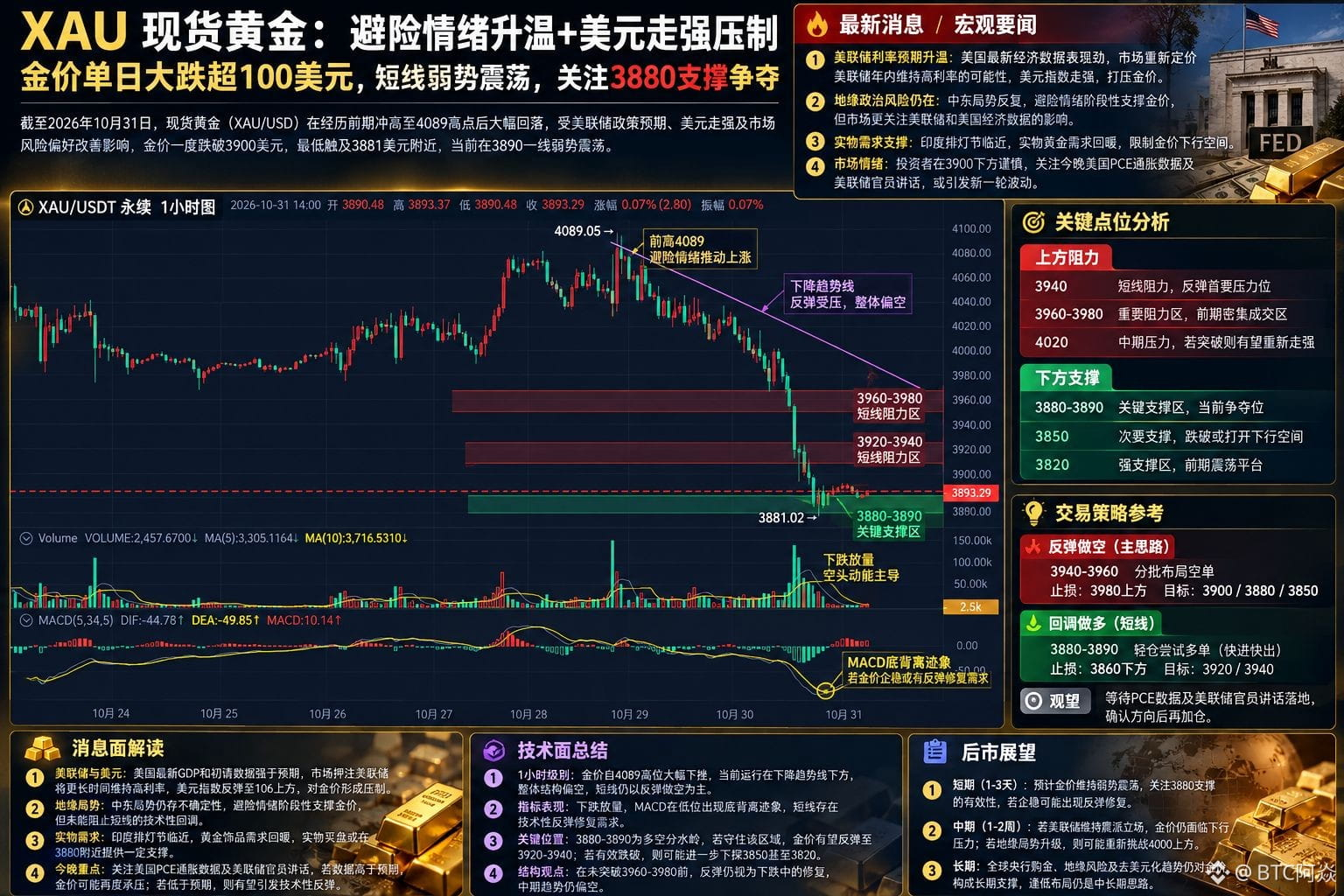
Bloodbath! $XAU 4000 bargain hunters wiped out—the 3880 line in the sand is here!
The truth behind the plunge: Middle East tensions have pushed oil prices to $103, and rising inflation has driven the odds of a December Fed rate hike up to 75%; the tech-stock crash has triggered a cross-asset liquidity crisis, forcing gold to be sold off to meet margin calls, while safe-haven funds have flowed into US Treasuries instead of gold.
Will it keep falling? 3880–3890 has been key support since October 2025. If it holds, an oversold rebound could help prices recover; a decisive break below it would open the way down to 3800. Shorting at this point offers a terrible risk-reward ratio—don't stubbornly bet against support.
Long positions opened at 4000 are now 100 points underwater: don't just sit tight! If prices rebound to 3930–3960, trim positions in stages to reduce risk. If a retest of 3880–3890 holds, consider cautiously buying back in to lower your average cost through rolling trades. If your position is too large, cut it first to protect yourself and keep only a small position to play a rebound.
If 3880 breaks on heavy volume, 3800 is the next stop. Where is your position? I can provide a one-on-one analysis and the latest ideas for getting out of your trapped position!
#币安披露黑客事件进展63亿美元损失已弥补八成 #TRM称柬埔寨赌场收10.7亿美元加密资产 #Iole拟出售全部151.21枚比特币 $BTC $XAG
385
·
--
Tech stocks in a bloodbath! Semiconductor earnings explode, but shares get hammered—the December rate-hike sword is hanging overhead!
Guys, global markets this week have been a “meat grinder.” The whole story in a few words: tech stocks got slaughtered!
On the macro front, the Fed held rates steady, but the odds of a December rate hike shot straight up to 75%, spooking tech stocks into a nosedive. The Nasdaq fell for three straight weeks. Meta plunged 28% in a single day after its earnings report fell short of expectations, while Apple became a safe haven and reclaimed the top spot.
What’s the craziest part? Semiconductor earnings were through the roof, but their stocks got absolutely crushed! SK Hynix’s profits surged 632%, and SanDisk’s jumped 378%—yet both stocks fell. That shows the market has changed its tune: it used to buy into your grand visions of AI; now it only cares about your ability to turn it into real revenue.
The giants are burning through cash like crazy, and investors are starting to get nervous.
Meanwhile, gold and silver took a beating, but the US-Iran standoff in the Middle East continues, and crude oil has risen for five straight weeks.
Guys, the key takeaway right now is simple: the good news is already priced in, and investors are extremely risk-averse. Even strong earnings can’t prop stocks up, which suggests institutions are using earnings reports to unload their shares. With a December rate hike hanging over the market, don’t try to buy the dip in tech stocks or altcoins at this critical moment.
#TRM称柬埔寨赌场收10.7亿美元加密资产 #Iole拟出售全部151.21枚比特币 #疑似朝鲜攻击占加密黑客损失近89% $BTC $XAU $SNDK

666
·
--
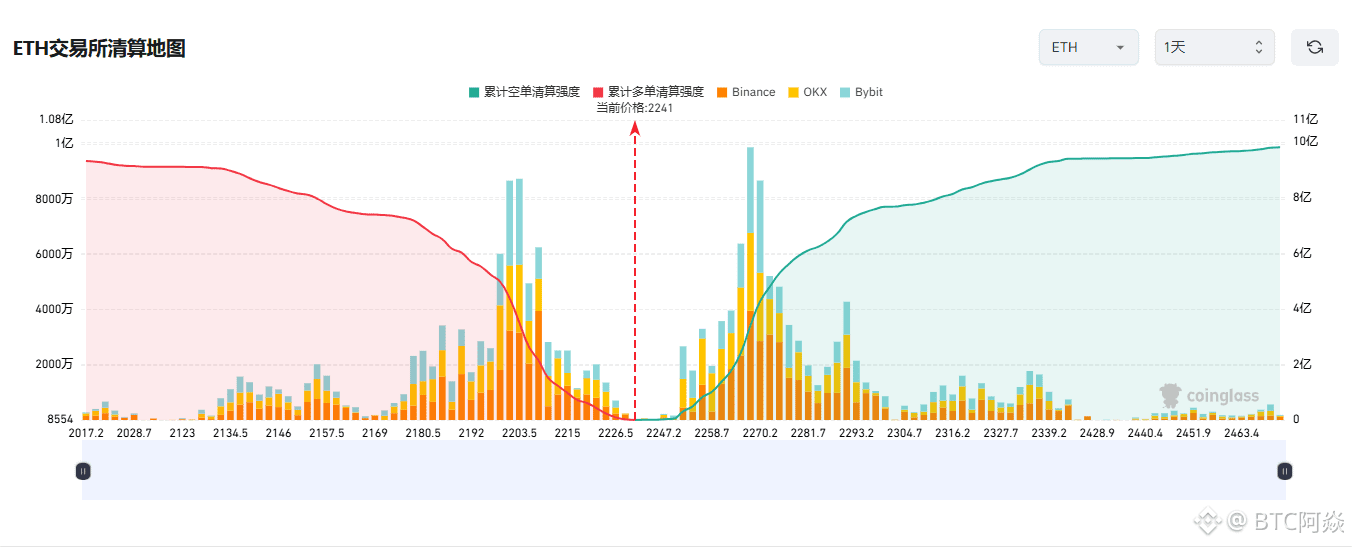
Even the whales who bought the dip at 2264 are trapped! $ETH is grinding sideways—short the rebound!
ETH is trading sideways around 2241. It looks calm, but undercurrents are running strong.
The 2260–2300 zone above is dense resistance. Although the MACD shows a bullish divergence, trading volume continues to shrink, and the bulls simply lack the strength to break through. On-chain whales added 9375 coins at an average price of 2264 and are now underwater. ETFs have seen consecutive net outflows, institutional buying is weak, and the overall structure remains bearish.
Trading plan: Short around 2260; take a small long position around 2200. Overall bias: favor shorting at higher levels, with small longs at lower levels. Don’t chase rallies.
If even the whales are trapped, what makes you think there’ll be a V-shaped reversal?
#疑似朝鲜攻击占加密黑客损失近89% #OpenAI下调融资目标100亿美元 #ASIC尚未收到预测市场申请 $BTC $ZEC
433
·
--
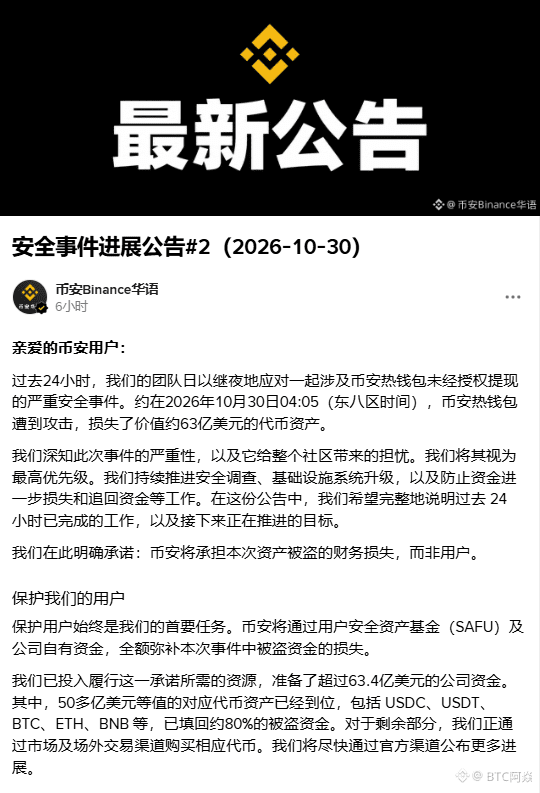
$6.3 billion stolen, but it turns bullish? The hacker created a golden buying opportunity, and whale 686 is aggressively buying the dip $BNB !
Binance's hot wallet was robbed of $6.3 billion. BNB wicked down to 677, but then reversed in a V-shape and broke above 700.
The core logic behind the rally: official SAFU and company funds fully backstop the losses. Tether/Circle urgently froze about $3 billion, directly quashing “bank-run panic.” Seven whales on-chain collectively built positions worth over $12 million during the sharp drop, at a weighted average price of 700. The largest long position has a cost basis of 686, and long positions are 3.72 times the size of short positions. The daily candlestick left an extremely long lower wick, and 700 confirms institutional buying support.
Trading idea: Go long around 690–680, in line with whales’ dip-buying cost zone, with protection below the previous low of 677.
Binance will fully reopen withdrawals between October 31 and November 1. As long as there are no large-scale net outflows on-chain, 800 is the next stop.
#疑似朝鲜攻击占加密黑客损失近89% #OpenAI下调融资目标100亿美元 #ASIC尚未收到预测市场申请 $BTC $ETH
524
·
--
I’ve lasted this long in crypto not by guessing tops and bottoms, but by following a set of no-frills rules.
I’ve paid my tuition: During a sharp market sell-off, I saw a coin that had fallen less than others and assumed it was holding up well. I bought in, and three days later it broke support on heavy volume. I sold at my stop-loss, but it kept falling. I accepted the lesson: discipline is more reliable than gut instinct.
When a coin falls less during a sharp sell-off, I add it to my watchlist and wait. Sometimes it’s holding up simply because its turn to catch down hasn’t come yet. $ETH
For short-term trades, I watch the 5-day moving average; for medium-term trades, the 20-day. If the price holds above it, I stick to my plan. If it breaks below and weakens, I reduce my position. I don’t fight the trend.
I look at price and volume together. I watch when prices rise on heavy volume, and don’t panic when they pull back on lighter volume. If prices fall on heavy volume and break support, I don’t stubbornly hold on. $BTC
If nothing happens for a few days after I buy, I revisit my reasons for buying. If the price action is far from what I expected, I don’t fool myself with “let’s wait a little longer.” I set my stop-loss in advance and follow through when it’s hit.
A big drop doesn’t mean a rebound is coming. If I want to trade an oversold coin, I wait for it to stabilize before getting in. I don’t try to catch a falling knife.
I don’t focus on the small coins that have crashed the hardest. Cheap doesn’t mean opportunity; liquidity depends on trading activity and interest.
I don’t guess bottoms; I follow the trend. When prices rise, I wait for a pullback. When they fall, I keep my hands off. Buying because something is cheap and watching it keep falling still hurts.
I review both wins and losses. I distinguish between getting the call right and simply getting lucky with the market. One winning trade doesn’t mean I should get carried away.
If there’s no opportunity, I stay out of the market. I don’t have to trade every day. Closing the app when I’m itching to trade is a move too.
My view: There’s nothing magical about this approach. The key is to make fewer mistakes and protect your capital. I don’t expect to get every trade right; I just want to lose less when I’m wrong. The market punishes stubbornness; rules keep itchy fingers in check. @Miger168 $LSK
I’ve lasted this long in crypto not by guessing tops and bottoms, but by following a set of no-frills rules.
I’ve paid my tuition: During a sharp market sell-off, I saw a coin that had fallen less than others and assumed it was holding up well. I bought in, and three days later it broke support on heavy volume. I sold at my stop-loss, but it kept falling. I accepted the lesson: discipline is more reliable than gut instinct.
When a coin falls less during a sharp sell-off, I add it to my watchlist and wait. Sometimes it’s holding up simply because its turn to catch down hasn’t come yet. $ETH
For short-term trades, I watch the 5-day moving average; for medium-term trades, the 20-day. If the price holds above it, I stick to my plan. If it breaks below and weakens, I reduce my position. I don’t fight the trend.
I look at price and volume together. I watch when prices rise on heavy volume, and don’t panic when they pull back on lighter volume. If prices fall on heavy volume and break support, I don’t stubbornly hold on. $BTC
If nothing happens for a few days after I buy, I revisit my reasons for buying. If the price action is far from what I expected, I don’t fool myself with “let’s wait a little longer.” I set my stop-loss in advance and follow through when it’s hit.
A big drop doesn’t mean a rebound is coming. If I want to trade an oversold coin, I wait for it to stabilize before getting in. I don’t try to catch a falling knife.
I don’t focus on the small coins that have crashed the hardest. Cheap doesn’t mean opportunity; liquidity depends on trading activity and interest.
I don’t guess bottoms; I follow the trend. When prices rise, I wait for a pullback. When they fall, I keep my hands off. Buying because something is cheap and watching it keep falling still hurts.
I review both wins and losses. I distinguish between getting the call right and simply getting lucky with the market. One winning trade doesn’t mean I should get carried away.
If there’s no opportunity, I stay out of the market. I don’t have to trade every day. Closing the app when I’m itching to trade is a move too.
My view: There’s nothing magical about this approach. The key is to make fewer mistakes and protect your capital. I don’t expect to get every trade right; I just want to lose less when I’m wrong. The market punishes stubbornness; rules keep itchy fingers in check. @BTC阿焱 $LSK
358
Log in to explore more content
Join global crypto users on Binance Square
⚡️ Get latest and useful information about crypto.
💬 Trusted by the world’s largest crypto exchange.
👍 Discover real insights from verified creators.
Email / Phone number
Trending Topics
BinanceProcesses$4.65BWithdrawals
318 views
17 Discussing
Binance Processes $4.65 Billion in Withdrawals After Reopening, Net Outflow of $3.64 Billion Equals 2.1% of Its $171 Billion in Assets
Binance News
·10 Likes
·3k views
WithdrawalsBack: 15 networks live
2,912 views
74 Discussing
BinanceUpdatesProofofReservesAddresses
64,878 views
1,094 Discussing