

MABOnChain
51 Posts

MABOnChain
Report
Block User
Global crypto & Web3 news - NFA
32 Following
3 Followers
4 Liked
Posts
All
Quotes
·
--
Seconds. Not days.
The Solana Foundation just shipped Solana DvP, an open source delivery-versus-payment program that settles a tokenized asset and its payment in a single atomic transaction. Both legs clear together or neither does. Settlement risk goes from a window you price to a problem the code deletes.
JPMorgan helped shape the settlement requirements. Let's keep it honest: the bank supplied expertise, not a commercial commitment. This is not JPM moving settlement onto Solana tomorrow.
But dismissing it as advisory theater misses the real signal. Banks have spent years saying they want atomic on chain settlement before they'll touch tokenized securities at scale. Now the audited standard exists, MIT licensed, free, sitting on a public chain.
The race for Wall Street's backend will not be won on TPS charts. It will be won on boring plumbing like this, the stuff that lets a bank's compliance team say yes.
Watch which asset manager fires the first live institutional ticket on it. Follow for the tokenization build-out, it is accelerating. $SOL $ETH
Seconds. Not days.
The Solana Foundation just shipped Solana DvP, an open source delivery-versus-payment program that settles a tokenized asset and its payment in a single atomic transaction. Both legs clear together or neither does. Settlement risk goes from a window you price to a problem the code deletes.
JPMorgan helped shape the settlement requirements. Let's keep it honest: the bank supplied expertise, not a commercial commitment. This is not JPM moving settlement onto Solana tomorrow.
But dismissing it as advisory theater misses the real signal. Banks have spent years saying they want atomic on chain settlement before they'll touch tokenized securities at scale. Now the audited standard exists, MIT licensed, free, sitting on a public chain.
The race for Wall Street's backend will not be won on TPS charts. It will be won on boring plumbing like this, the stuff that lets a bank's compliance team say yes.
Watch which asset manager fires the first live institutional ticket on it. Follow for the tokenization build-out, it is accelerating. $SOL $ETH
The Solana Foundation just shipped Solana DvP, an open source delivery-versus-payment program that settles a tokenized asset and its payment in a single atomic transaction. Both legs clear together or neither does. Settlement risk goes from a window you price to a problem the code deletes.
JPMorgan helped shape the settlement requirements. Let's keep it honest: the bank supplied expertise, not a commercial commitment. This is not JPM moving settlement onto Solana tomorrow.
But dismissing it as advisory theater misses the real signal. Banks have spent years saying they want atomic on chain settlement before they'll touch tokenized securities at scale. Now the audited standard exists, MIT licensed, free, sitting on a public chain.
The race for Wall Street's backend will not be won on TPS charts. It will be won on boring plumbing like this, the stuff that lets a bank's compliance team say yes.
Watch which asset manager fires the first live institutional ticket on it. Follow for the tokenization build-out, it is accelerating. $SOL $ETH

47
·
--
Two Ethereum layer-2s have shut down in a single week. Pudgy Penguins' Abstract is the latest, joining another casualty from days ago. OP dropped 10% today, leading the CoinDesk 100 lower as the market reprices what consolidation actually costs.
Remember the pitch? A thousand chains, all connected. The reality so far: bridging friction, thin liquidity, and token incentives that evaporate the moment the airdrop farming ends. Most of these chains were running on subsidies and vibes, and subsidies have a half-life.
This is also how network industries always mature. Railroads, airlines, mobile carriers. The early map looks like chaos, then it funnels into a handful of winners. The surprise was never that L2s would shut down. It's that the market spent three years pricing the long tail like it had staying power.
So here's the honest question, no fence-sitting: by the end of 2027, how many general-purpose Ethereum L2s are still standing? My count is three to five, and I'd bet most people still name too many.
$ETH $OP $ARB
Two Ethereum layer-2s have shut down in a single week. Pudgy Penguins' Abstract is the latest, joining another casualty from days ago. OP dropped 10% today, leading the CoinDesk 100 lower as the market reprices what consolidation actually costs.
Remember the pitch? A thousand chains, all connected. The reality so far: bridging friction, thin liquidity, and token incentives that evaporate the moment the airdrop farming ends. Most of these chains were running on subsidies and vibes, and subsidies have a half-life.
This is also how network industries always mature. Railroads, airlines, mobile carriers. The early map looks like chaos, then it funnels into a handful of winners. The surprise was never that L2s would shut down. It's that the market spent three years pricing the long tail like it had staying power.
So here's the honest question, no fence-sitting: by the end of 2027, how many general-purpose Ethereum L2s are still standing? My count is three to five, and I'd bet most people still name too many.
$ETH $OP $ARB
Remember the pitch? A thousand chains, all connected. The reality so far: bridging friction, thin liquidity, and token incentives that evaporate the moment the airdrop farming ends. Most of these chains were running on subsidies and vibes, and subsidies have a half-life.
This is also how network industries always mature. Railroads, airlines, mobile carriers. The early map looks like chaos, then it funnels into a handful of winners. The surprise was never that L2s would shut down. It's that the market spent three years pricing the long tail like it had staying power.
So here's the honest question, no fence-sitting: by the end of 2027, how many general-purpose Ethereum L2s are still standing? My count is three to five, and I'd bet most people still name too many.
$ETH $OP $ARB

369
·
--
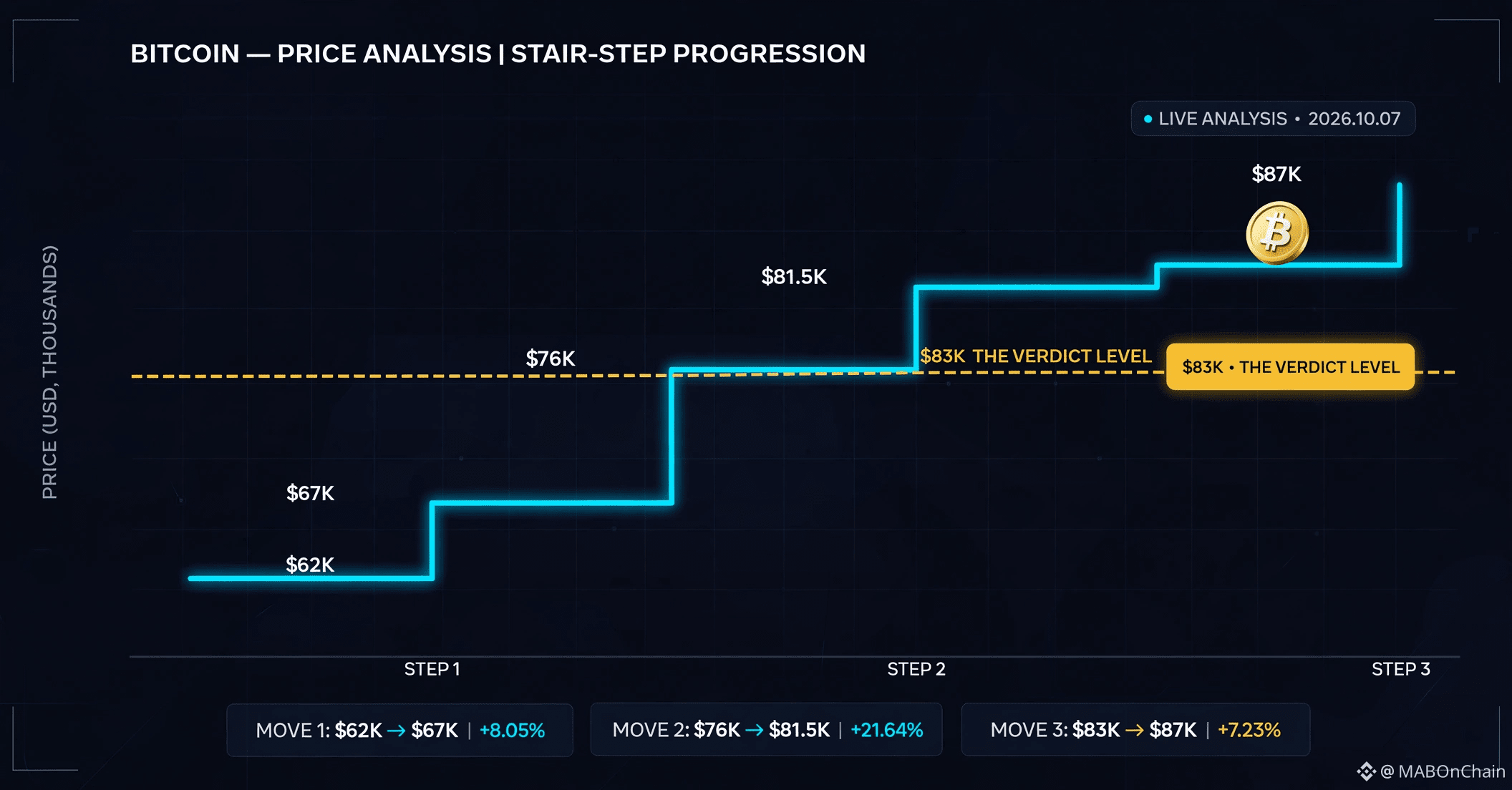
$83K. That's the verdict level now.
Three steps since July: $62K-$67K, then $76K-$81.5K, now $83K-$87K. Each range flat for weeks, each breakout sharp and fast. Today's drop to $84K on the oil scare is just the current tread wobbling. $547M in liquidations looks dramatic, but it's noise on a range that never broke.
Here is the line that actually matters. Hold $83K and sellers failed to force price back into the old range, the staircase survives, and another step up stays on the table. Lose it cleanly and the September breakout failed, with $80K next in line.
Ranges are opinions. $83K is the verdict.
$BTC $ETH
$83K. That's the verdict level now.
Three steps since July: $62K-$67K, then $76K-$81.5K, now $83K-$87K. Each range flat for weeks, each breakout sharp and fast. Today's drop to $84K on the oil scare is just the current tread wobbling. $547M in liquidations looks dramatic, but it's noise on a range that never broke.
Here is the line that actually matters. Hold $83K and sellers failed to force price back into the old range, the staircase survives, and another step up stays on the table. Lose it cleanly and the September breakout failed, with $80K next in line.
Ranges are opinions. $83K is the verdict.
$BTC $ETH
Three steps since July: $62K-$67K, then $76K-$81.5K, now $83K-$87K. Each range flat for weeks, each breakout sharp and fast. Today's drop to $84K on the oil scare is just the current tread wobbling. $547M in liquidations looks dramatic, but it's noise on a range that never broke.
Here is the line that actually matters. Hold $83K and sellers failed to force price back into the old range, the staircase survives, and another step up stays on the table. Lose it cleanly and the September breakout failed, with $80K next in line.
Ranges are opinions. $83K is the verdict.
$BTC $ETH
37
·
--
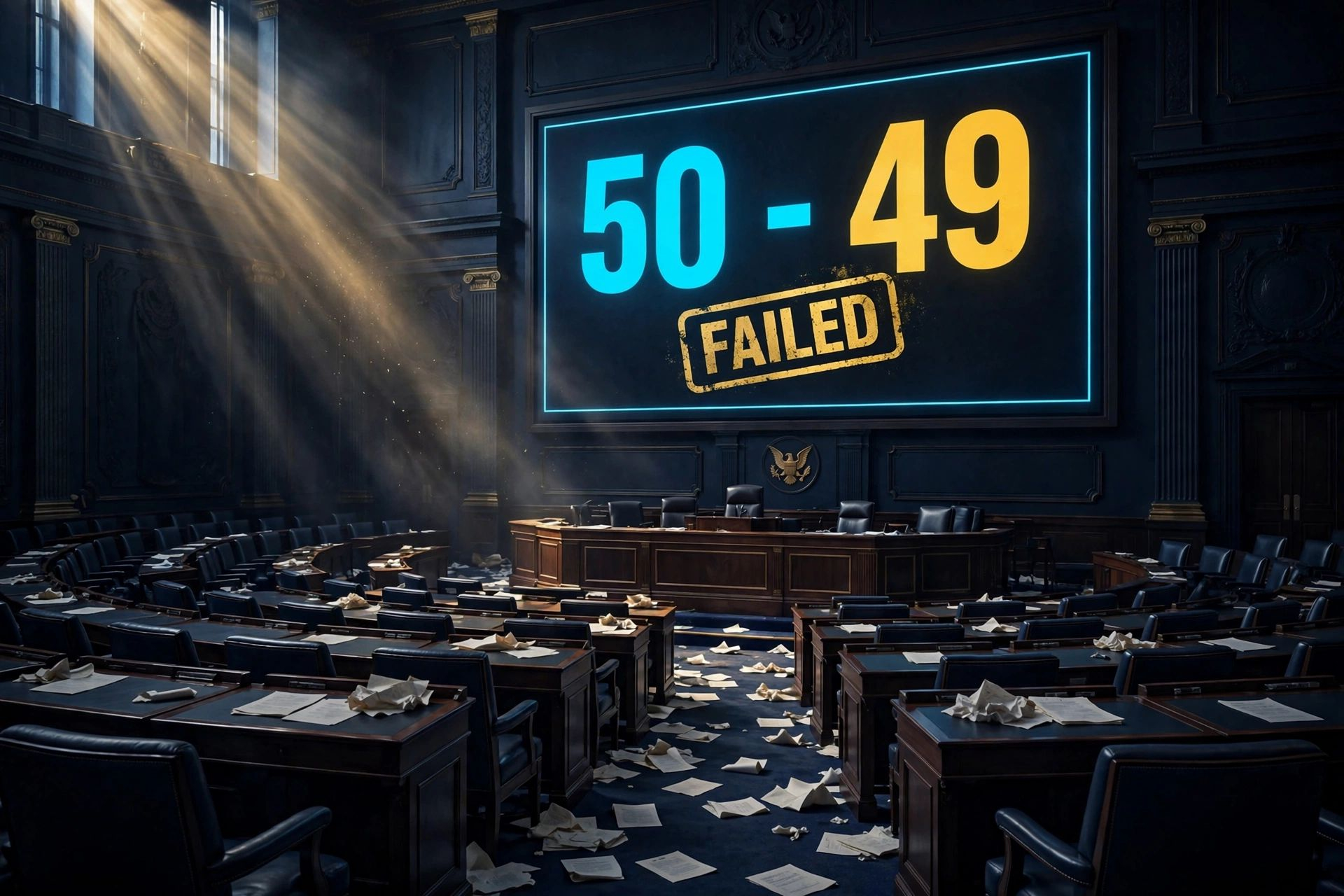
126. That's how many Democratic-requested changes were folded into the final CLARITY Act text. Memecoin coverage, affiliate-trading guardrails, tribal-gaming rules, a Treasury circuit breaker for stablecoin yield.
Then they voted no anyway. 50 to 49, well short of the 60 needed to open debate.
The sticking point was never market structure. It was ethics language around elected officials' crypto holdings, and Warren's line about the bill turbocharging Trump's crypto interests (over $1.4B disclosed in 2025) killed it.
Here's what that means for the market: Congress is out of the rule-writing business for crypto, at least this cycle. The actual framework is now whatever the SEC and CFTC draft on their own. Atkins already rolled out an innovation exemption letting venues trade tokenized US stocks on-chain.
Decentralized tech governed by agency staff, not statute. That's the hand we're dealt. $BTC $ETH
126. That's how many Democratic-requested changes were folded into the final CLARITY Act text. Memecoin coverage, affiliate-trading guardrails, tribal-gaming rules, a Treasury circuit breaker for stablecoin yield.
Then they voted no anyway. 50 to 49, well short of the 60 needed to open debate.
The sticking point was never market structure. It was ethics language around elected officials' crypto holdings, and Warren's line about the bill turbocharging Trump's crypto interests (over $1.4B disclosed in 2025) killed it.
Here's what that means for the market: Congress is out of the rule-writing business for crypto, at least this cycle. The actual framework is now whatever the SEC and CFTC draft on their own. Atkins already rolled out an innovation exemption letting venues trade tokenized US stocks on-chain.
Decentralized tech governed by agency staff, not statute. That's the hand we're dealt. $BTC $ETH
Then they voted no anyway. 50 to 49, well short of the 60 needed to open debate.
The sticking point was never market structure. It was ethics language around elected officials' crypto holdings, and Warren's line about the bill turbocharging Trump's crypto interests (over $1.4B disclosed in 2025) killed it.
Here's what that means for the market: Congress is out of the rule-writing business for crypto, at least this cycle. The actual framework is now whatever the SEC and CFTC draft on their own. Atkins already rolled out an innovation exemption letting venues trade tokenized US stocks on-chain.
Decentralized tech governed by agency staff, not statute. That's the hand we're dealt. $BTC $ETH
26
·
--
Nearly six years. That is how long the threat over American self-custody wallets sat on a desk in Washington.
FinCEN just killed it. The December 2020 proposal that would have forced banks and exchanges to report every self-custody transaction over $10,000, and keep records on anything above $3,000, is officially withdrawn. The 2023 mixer surveillance rule went with it. The agency said it will take no further action on either.
The honest read: this is a genuine win for self-custody in the US. Moving your coins to your own wallet stays a private act, no counterparty KYC layered on top of it. But it is not a free pass. Exchange AML duties are untouched, the Travel Rule still stands, and the EU is tightening in the opposite direction with its 2027 rules.
$BTC $ETH $BNB
Nearly six years. That is how long the threat over American self-custody wallets sat on a desk in Washington.
FinCEN just killed it. The December 2020 proposal that would have forced banks and exchanges to report every self-custody transaction over $10,000, and keep records on anything above $3,000, is officially withdrawn. The 2023 mixer surveillance rule went with it. The agency said it will take no further action on either.
The honest read: this is a genuine win for self-custody in the US. Moving your coins to your own wallet stays a private act, no counterparty KYC layered on top of it. But it is not a free pass. Exchange AML duties are untouched, the Travel Rule still stands, and the EU is tightening in the opposite direction with its 2027 rules.
$BTC $ETH $BNB
FinCEN just killed it. The December 2020 proposal that would have forced banks and exchanges to report every self-custody transaction over $10,000, and keep records on anything above $3,000, is officially withdrawn. The 2023 mixer surveillance rule went with it. The agency said it will take no further action on either.
The honest read: this is a genuine win for self-custody in the US. Moving your coins to your own wallet stays a private act, no counterparty KYC layered on top of it. But it is not a free pass. Exchange AML duties are untouched, the Travel Rule still stands, and the EU is tightening in the opposite direction with its 2027 rules.
$BTC $ETH $BNB

24
·
--
00 million in BTC and BNB just moved out of U.S. government wallets. Arkham flagged it this morning. No sale confirmed, no auction announced. Just wallets waking up.
That is the whole story and also the whole problem. Seized coins are the market's ghost inventory. They trade at zero until the day they don't, and nobody knows the day.
$100M is small against a day of real volume. But every time these wallets move, the tape goes quiet for a minute, because the question has no answer. Auction, custodian transfer, or pre-sale positioning.
Custody without a plan is a headline waiting to happen.
$BTC $BNB
00 million in BTC and BNB just moved out of U.S. government wallets. Arkham flagged it this morning. No sale confirmed, no auction announced. Just wallets waking up.
That is the whole story and also the whole problem. Seized coins are the market's ghost inventory. They trade at zero until the day they don't, and nobody knows the day.
$100M is small against a day of real volume. But every time these wallets move, the tape goes quiet for a minute, because the question has no answer. Auction, custodian transfer, or pre-sale positioning.
Custody without a plan is a headline waiting to happen.
$BTC $BNB
That is the whole story and also the whole problem. Seized coins are the market's ghost inventory. They trade at zero until the day they don't, and nobody knows the day.
$100M is small against a day of real volume. But every time these wallets move, the tape goes quiet for a minute, because the question has no answer. Auction, custodian transfer, or pre-sale positioning.
Custody without a plan is a headline waiting to happen.
$BTC $BNB

44
·
--
Wall Street just did the math out loud.
Citi lifted its 12-month Bitcoin target from $82,000 to $113,000. Ethereum went from $2,240 to $3,028. That is a 38% upgrade on $BTC printed while BTC trades near $85k, a full third below its October 2025 high of $126,080.
This is not a crypto fund chasing momentum. It is a money-center bank putting a six-figure twelve-month number in a client note. The spread between that target and today's price is the whole institutional thesis compressed into one figure: the demand side of this market is still being priced in.
$BTC $ETH #Bitcoin
Wall Street just did the math out loud.
Citi lifted its 12-month Bitcoin target from $82,000 to $113,000. Ethereum went from $2,240 to $3,028. That is a 38% upgrade on $BTC printed while BTC trades near $85k, a full third below its October 2025 high of $126,080.
This is not a crypto fund chasing momentum. It is a money-center bank putting a six-figure twelve-month number in a client note. The spread between that target and today's price is the whole institutional thesis compressed into one figure: the demand side of this market is still being priced in.
$BTC $ETH #Bitcoin
Citi lifted its 12-month Bitcoin target from $82,000 to $113,000. Ethereum went from $2,240 to $3,028. That is a 38% upgrade on $BTC printed while BTC trades near $85k, a full third below its October 2025 high of $126,080.
This is not a crypto fund chasing momentum. It is a money-center bank putting a six-figure twelve-month number in a client note. The spread between that target and today's price is the whole institutional thesis compressed into one figure: the demand side of this market is still being priced in.
$BTC $ETH #Bitcoin

50
·
--
One guy. $349,700 of his own money. A 5% haircut on every swap.
That's what it cost ZachXBT to walk inside the network that washed over $1 billion in stolen crypto for North Korea's Lazarus Group. Days after the Bybit hack, he posed as a client, traded stablecoins with an operator called Jimmy Green, and got advance word of fund movements before they hit the chain.
The intel was real. It mapped a $12M cluster of Bybit-linked funds. Tether froze $442K in USDT off it.
Here's the part worth sitting with. The most effective financial-crimes unit in crypto is a pseudonymous investigator with a laptop. The industry sells itself on transparency, but transparency cuts both ways. The chain keeps receipts, and the receipts are how Lazarus's laundromat got mapped.
$ETH $BTC $USDT
One guy. $349,700 of his own money. A 5% haircut on every swap.
That's what it cost ZachXBT to walk inside the network that washed over $1 billion in stolen crypto for North Korea's Lazarus Group. Days after the Bybit hack, he posed as a client, traded stablecoins with an operator called Jimmy Green, and got advance word of fund movements before they hit the chain.
The intel was real. It mapped a $12M cluster of Bybit-linked funds. Tether froze $442K in USDT off it.
Here's the part worth sitting with. The most effective financial-crimes unit in crypto is a pseudonymous investigator with a laptop. The industry sells itself on transparency, but transparency cuts both ways. The chain keeps receipts, and the receipts are how Lazarus's laundromat got mapped.
$ETH $BTC $USDT
That's what it cost ZachXBT to walk inside the network that washed over $1 billion in stolen crypto for North Korea's Lazarus Group. Days after the Bybit hack, he posed as a client, traded stablecoins with an operator called Jimmy Green, and got advance word of fund movements before they hit the chain.
The intel was real. It mapped a $12M cluster of Bybit-linked funds. Tether froze $442K in USDT off it.
Here's the part worth sitting with. The most effective financial-crimes unit in crypto is a pseudonymous investigator with a laptop. The industry sells itself on transparency, but transparency cuts both ways. The chain keeps receipts, and the receipts are how Lazarus's laundromat got mapped.
$ETH $BTC $USDT

69
·
--
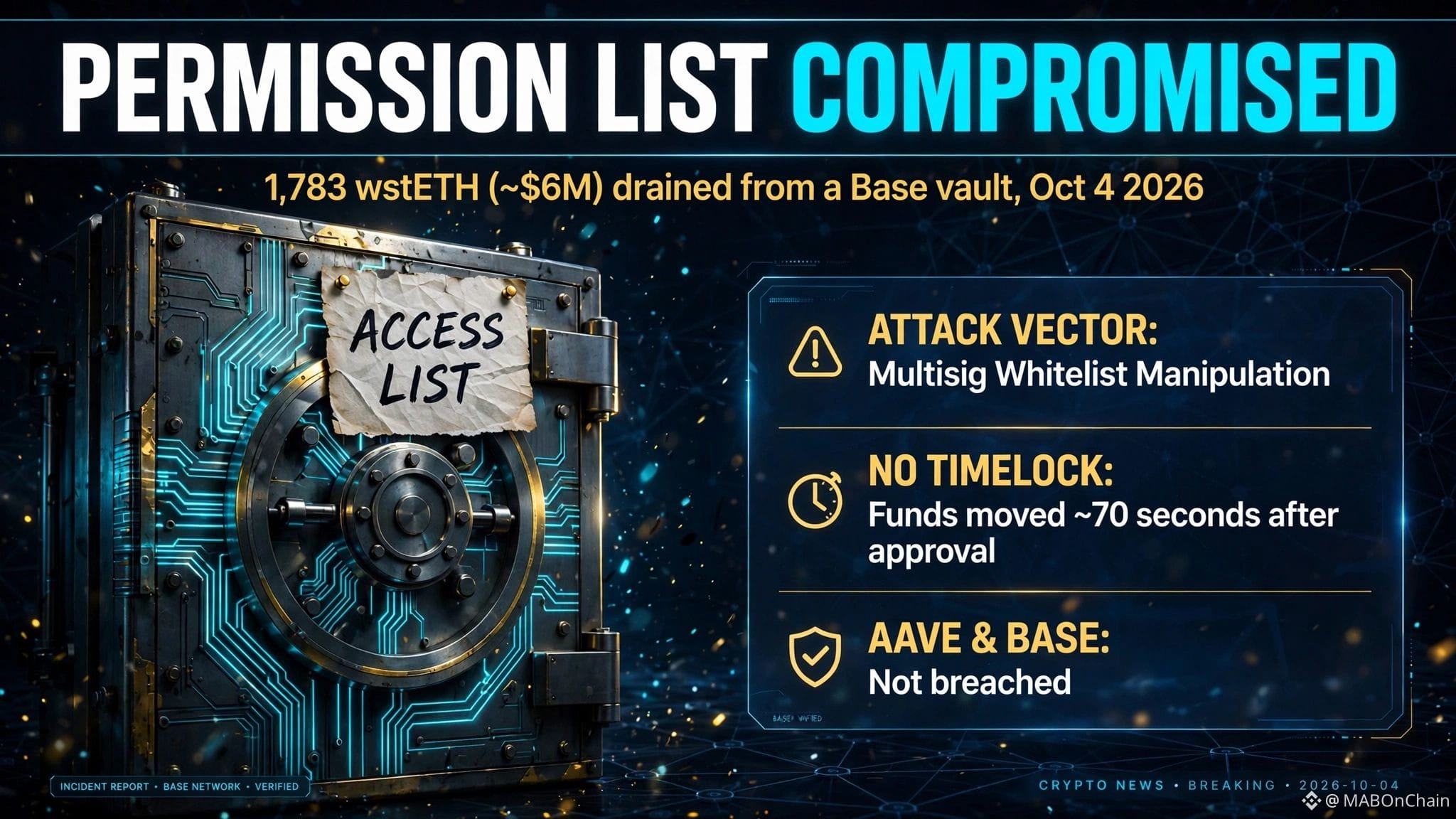
1,783 wstETH. Roughly $6 million. Drained from a Base vault on October 4, in broad daylight, on-chain.
The part nobody is talking about is how normal it all looked. A new contract got added to the vaults whitelist. The multisig did its job: three of seven signers approved the change. Then the attackers contract borrowed aBaswstETH and left. Six clean outflows. The system worked exactly as built.
That is the uncomfortable part. Nothing failed. The access list was changed through the front door, the two changes about a minute apart, and the money started moving roughly 70 seconds later. No timelock between approval and execution, so nobody had a window to notice or stop it.
Aave was not breached. Base was not breached. The vaults own permission system was the vulnerability.
Everyone audits smart contract logic. Almost nobody audits the two questions that keep draining vaults: who is allowed to change the access list, and how fast can they do it.
A multisig with instant execution is not deep security. It is a fast approval pipeline. Timelocks are the boring infrastructure nobody brags about shipping, and they are the thing that would have stopped this.
$ETH #DeFi
1,783 wstETH. Roughly $6 million. Drained from a Base vault on October 4, in broad daylight, on-chain.
The part nobody is talking about is how normal it all looked. A new contract got added to the vaults whitelist. The multisig did its job: three of seven signers approved the change. Then the attackers contract borrowed aBaswstETH and left. Six clean outflows. The system worked exactly as built.
That is the uncomfortable part. Nothing failed. The access list was changed through the front door, the two changes about a minute apart, and the money started moving roughly 70 seconds later. No timelock between approval and execution, so nobody had a window to notice or stop it.
Aave was not breached. Base was not breached. The vaults own permission system was the vulnerability.
Everyone audits smart contract logic. Almost nobody audits the two questions that keep draining vaults: who is allowed to change the access list, and how fast can they do it.
A multisig with instant execution is not deep security. It is a fast approval pipeline. Timelocks are the boring infrastructure nobody brags about shipping, and they are the thing that would have stopped this.
$ETH #DeFi
The part nobody is talking about is how normal it all looked. A new contract got added to the vaults whitelist. The multisig did its job: three of seven signers approved the change. Then the attackers contract borrowed aBaswstETH and left. Six clean outflows. The system worked exactly as built.
That is the uncomfortable part. Nothing failed. The access list was changed through the front door, the two changes about a minute apart, and the money started moving roughly 70 seconds later. No timelock between approval and execution, so nobody had a window to notice or stop it.
Aave was not breached. Base was not breached. The vaults own permission system was the vulnerability.
Everyone audits smart contract logic. Almost nobody audits the two questions that keep draining vaults: who is allowed to change the access list, and how fast can they do it.
A multisig with instant execution is not deep security. It is a fast approval pipeline. Timelocks are the boring infrastructure nobody brags about shipping, and they are the thing that would have stopped this.
$ETH #DeFi
98
·
--
Two pokes above $86K in one day.
$BTC touched $86,450 twice on Tuesday, both rallies riding the same fuel out of Washington. The CFTC pushed its proposed crypto regulations forward, and the SEC followed with a 760-page custody proposal that would let registered advisers and funds hold crypto keys directly.
Read the fine print. "Self-custody" here means the adviser's hands on the keys, not yours. Institutional clarity, not your sovereignty.
That is the tell on who this market is for now. The CLARITY Act stalled in the Senate on September 15, so the agencies are writing the rulebook themselves. And $1.72T of market cap is bidding on their paperwork instead of fighting it.
Three years ago every SEC headline was a threat. Today the price chases the comment period. Sixty days of comments decide who gets to custody what for the next decade.
$BTC $ETH
Two pokes above $86K in one day.
$BTC touched $86,450 twice on Tuesday, both rallies riding the same fuel out of Washington. The CFTC pushed its proposed crypto regulations forward, and the SEC followed with a 760-page custody proposal that would let registered advisers and funds hold crypto keys directly.
Read the fine print. "Self-custody" here means the adviser's hands on the keys, not yours. Institutional clarity, not your sovereignty.
That is the tell on who this market is for now. The CLARITY Act stalled in the Senate on September 15, so the agencies are writing the rulebook themselves. And $1.72T of market cap is bidding on their paperwork instead of fighting it.
Three years ago every SEC headline was a threat. Today the price chases the comment period. Sixty days of comments decide who gets to custody what for the next decade.
$BTC $ETH
$BTC touched $86,450 twice on Tuesday, both rallies riding the same fuel out of Washington. The CFTC pushed its proposed crypto regulations forward, and the SEC followed with a 760-page custody proposal that would let registered advisers and funds hold crypto keys directly.
Read the fine print. "Self-custody" here means the adviser's hands on the keys, not yours. Institutional clarity, not your sovereignty.
That is the tell on who this market is for now. The CLARITY Act stalled in the Senate on September 15, so the agencies are writing the rulebook themselves. And $1.72T of market cap is bidding on their paperwork instead of fighting it.
Three years ago every SEC headline was a threat. Today the price chases the comment period. Sixty days of comments decide who gets to custody what for the next decade.
$BTC $ETH

125
·
--
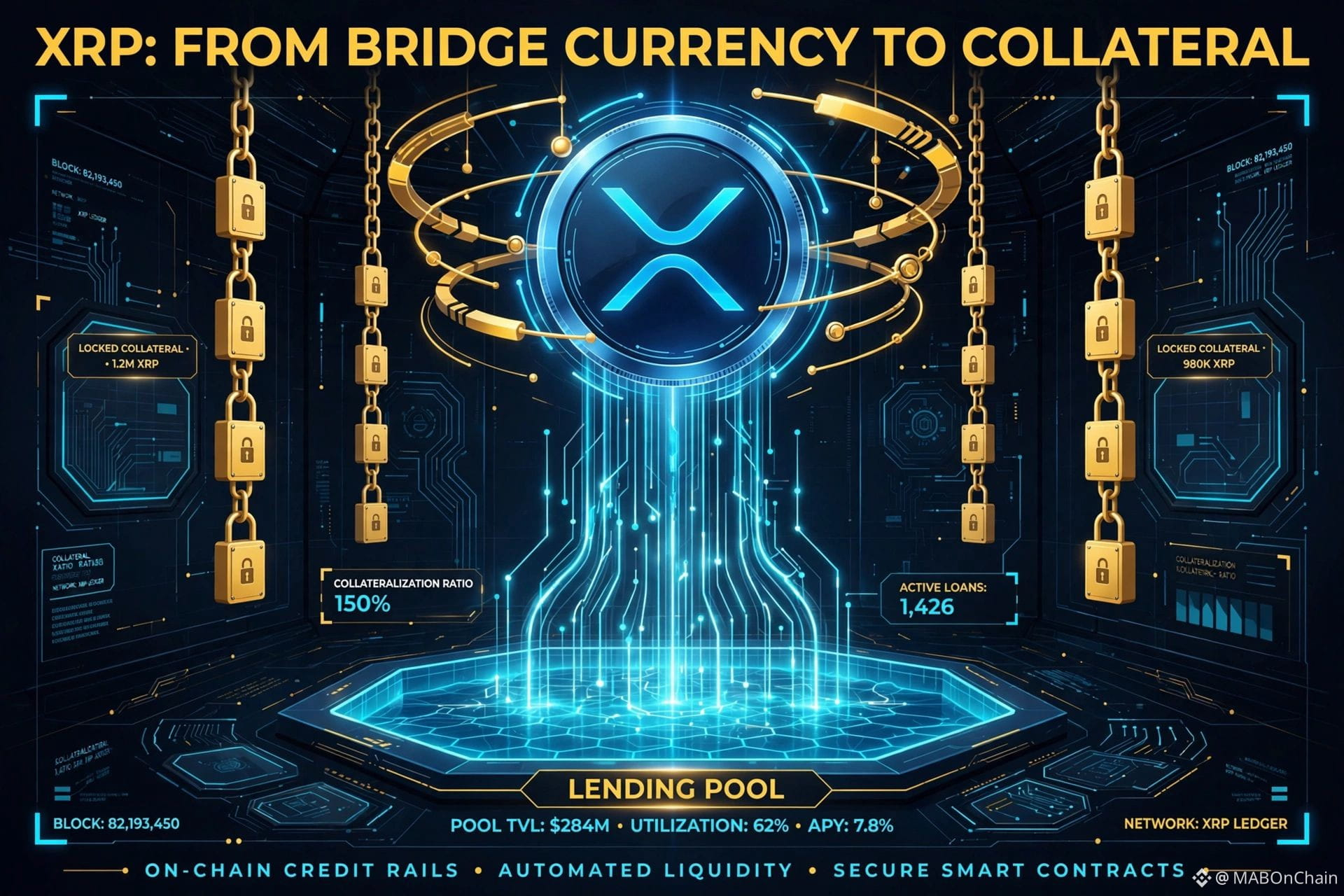
XRP spent a decade as a bridge currency. Velocity. In and out in seconds.
Monica Long just gave it a second job at XRP Seoul: XRP locked into lending pools as collateral to fund payment customers' short-term credit needs. Pilot running now, activation targeted for 2027. RippleX is wiring native lending into the XRPL base protocol (XLS-65 vaults, XLS-66 lending amendments), and the RLUSD / Clearpool / Cicada stack pushes into the $10B+ tokenized private-credit market.
This is the shift I am watching. Bridge currency means circulation. Collateral means lockup. The more payment volume moves through credit rails, the more XRP sits parked backing it.
So which ends up the bigger driver for XRP from here: payments throughput, or the supply that gets immobilized? $XRP $BTC
Curious where you land. Follow for more.
XRP spent a decade as a bridge currency. Velocity. In and out in seconds.
Monica Long just gave it a second job at XRP Seoul: XRP locked into lending pools as collateral to fund payment customers' short-term credit needs. Pilot running now, activation targeted for 2027. RippleX is wiring native lending into the XRPL base protocol (XLS-65 vaults, XLS-66 lending amendments), and the RLUSD / Clearpool / Cicada stack pushes into the $10B+ tokenized private-credit market.
This is the shift I am watching. Bridge currency means circulation. Collateral means lockup. The more payment volume moves through credit rails, the more XRP sits parked backing it.
So which ends up the bigger driver for XRP from here: payments throughput, or the supply that gets immobilized? $XRP $BTC
Curious where you land. Follow for more.
Monica Long just gave it a second job at XRP Seoul: XRP locked into lending pools as collateral to fund payment customers' short-term credit needs. Pilot running now, activation targeted for 2027. RippleX is wiring native lending into the XRPL base protocol (XLS-65 vaults, XLS-66 lending amendments), and the RLUSD / Clearpool / Cicada stack pushes into the $10B+ tokenized private-credit market.
This is the shift I am watching. Bridge currency means circulation. Collateral means lockup. The more payment volume moves through credit rails, the more XRP sits parked backing it.
So which ends up the bigger driver for XRP from here: payments throughput, or the supply that gets immobilized? $XRP $BTC
Curious where you land. Follow for more.
60
·
--
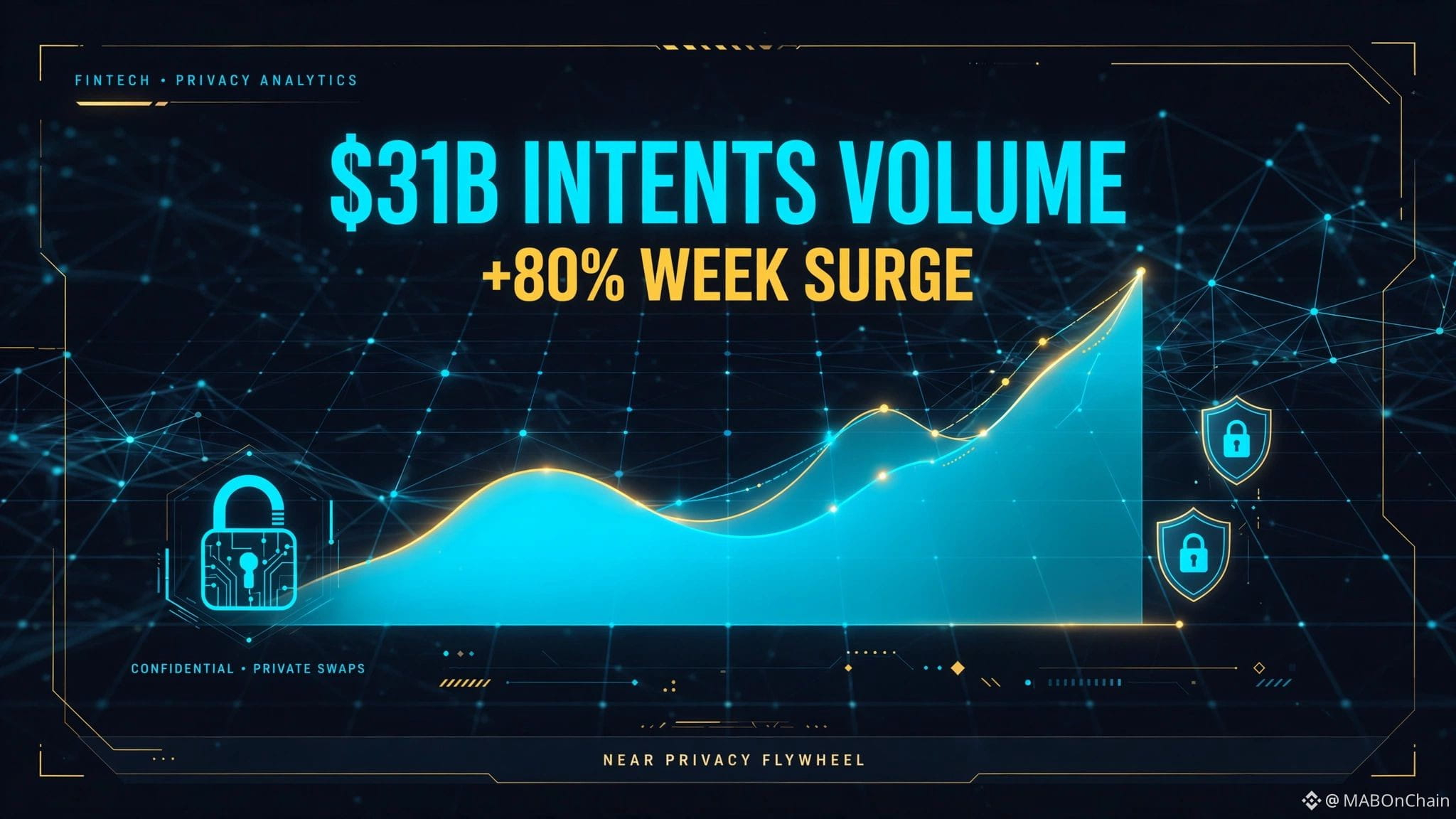
30 billion dollars of cross-chain swaps, and most feeds are looking elsewhere. NEAR Intents just crossed $31B in cumulative volume, weekly flow held above $800M for days, and the token ripped roughly 80% in a week.
The driver nobody quotes enough is privacy. About $1.9B of that volume ran through confidential intents. A single Zcash wallet, ZODL, routed $3.8M across 458 swaps, including one $613K ZEC transaction. Quiet money likes quiet rails.
Honest caveat though. The volume figures check out. The pitch that all fees get used to buy back NEAR and offset issuance does not, real capture is closer to 14-26% of fees. The thesis does not need the exaggeration. Usage is real, and confidential trading is becoming a structural edge rather than a marketing line.
September already taught this pattern. Uniswap fees nearly doubled on Robinhood Chain activity. NEAR surged on agent payment volume. Zcash re-entered the top 10 on institutional privacy demand. This quarter's bid is for tokens that people actually pay to use.
Watching whether confidential-intents share keeps growing from here. If it does, privacy stops being a niche and starts being infrastructure.
$NEAR $ZEC
30 billion dollars of cross-chain swaps, and most feeds are looking elsewhere. NEAR Intents just crossed $31B in cumulative volume, weekly flow held above $800M for days, and the token ripped roughly 80% in a week.
The driver nobody quotes enough is privacy. About $1.9B of that volume ran through confidential intents. A single Zcash wallet, ZODL, routed $3.8M across 458 swaps, including one $613K ZEC transaction. Quiet money likes quiet rails.
Honest caveat though. The volume figures check out. The pitch that all fees get used to buy back NEAR and offset issuance does not, real capture is closer to 14-26% of fees. The thesis does not need the exaggeration. Usage is real, and confidential trading is becoming a structural edge rather than a marketing line.
September already taught this pattern. Uniswap fees nearly doubled on Robinhood Chain activity. NEAR surged on agent payment volume. Zcash re-entered the top 10 on institutional privacy demand. This quarter's bid is for tokens that people actually pay to use.
Watching whether confidential-intents share keeps growing from here. If it does, privacy stops being a niche and starts being infrastructure.
$NEAR $ZEC
The driver nobody quotes enough is privacy. About $1.9B of that volume ran through confidential intents. A single Zcash wallet, ZODL, routed $3.8M across 458 swaps, including one $613K ZEC transaction. Quiet money likes quiet rails.
Honest caveat though. The volume figures check out. The pitch that all fees get used to buy back NEAR and offset issuance does not, real capture is closer to 14-26% of fees. The thesis does not need the exaggeration. Usage is real, and confidential trading is becoming a structural edge rather than a marketing line.
September already taught this pattern. Uniswap fees nearly doubled on Robinhood Chain activity. NEAR surged on agent payment volume. Zcash re-entered the top 10 on institutional privacy demand. This quarter's bid is for tokens that people actually pay to use.
Watching whether confidential-intents share keeps growing from here. If it does, privacy stops being a niche and starts being infrastructure.
$NEAR $ZEC
209
·
--
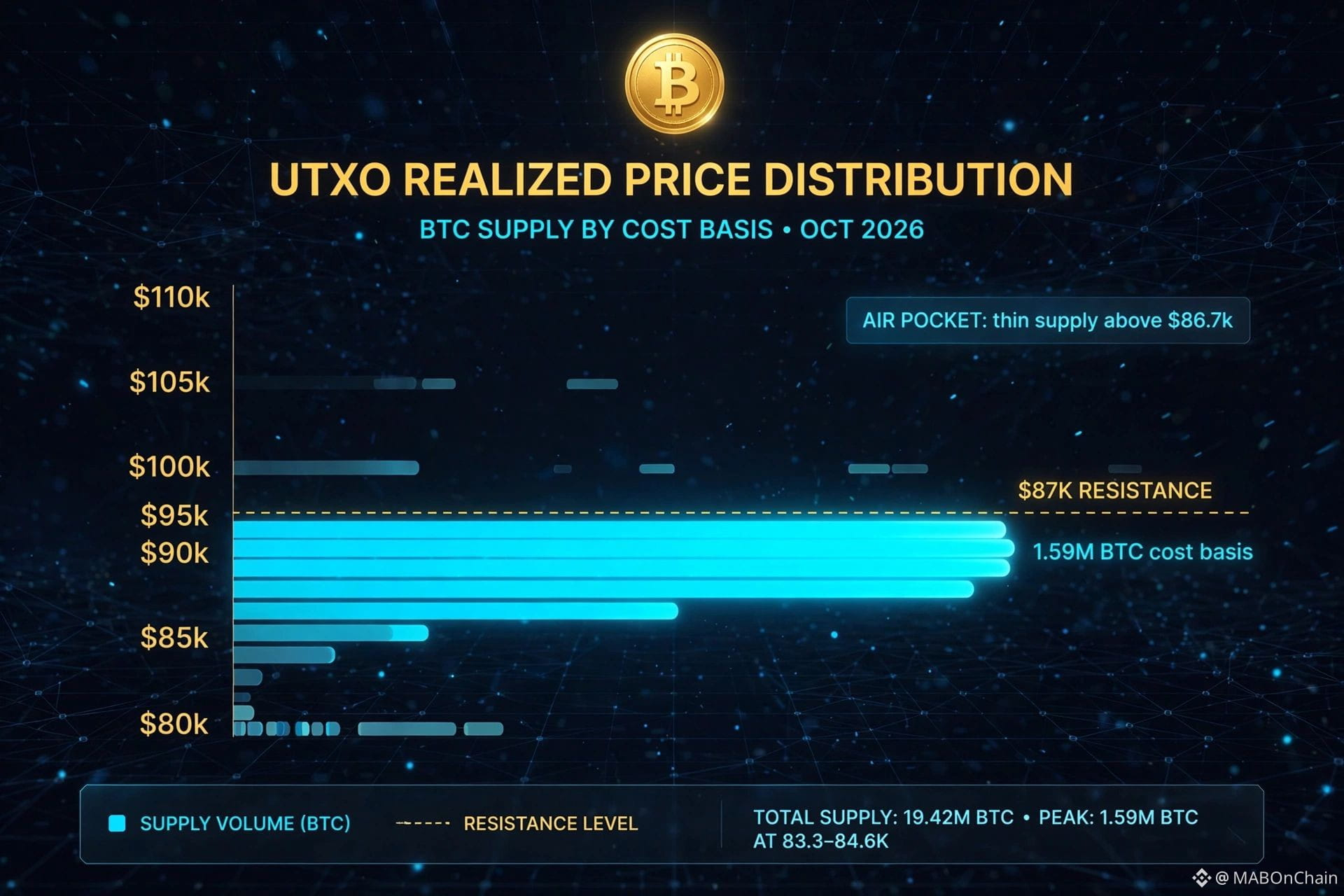
1.59 million BTC.
That's the floor sitting between $83,300 and $84,600, per Glassnode's URPD data that Ali Martinez flagged today. Every dip since late September has landed on that band and bounced. When price holds above 1.59 million coins' cost basis, most holders are in profit and in no rush to sell.
Above $86,700 the picture flips. There is almost no dense supply concentration until around $105k. The coins just aren't there. Underwater sellers from the ATH flush have mostly capitulated, and what remains up there is thin.
Daan Crypto Trades put the structure in market terms: $85k gets tested almost daily, reacting as support and resistance in turn, marginally lower highs stacking at $87k, liquidity pooling at $83k. He says he's expecting a squeeze.
I'm with him. This isn't indecision, it's coiling. A market resting on 1.59M BTC of real cost basis with an air pocket overhead doesn't need much conviction to move. A clean break of $86,700 on real spot volume has very little overhead supply to chew through before six figures is back in conversation. Conditional, not guaranteed, but the chain doesn't lie about where the coins sit.
$BTC
1.59 million BTC.
That's the floor sitting between $83,300 and $84,600, per Glassnode's URPD data that Ali Martinez flagged today. Every dip since late September has landed on that band and bounced. When price holds above 1.59 million coins' cost basis, most holders are in profit and in no rush to sell.
Above $86,700 the picture flips. There is almost no dense supply concentration until around $105k. The coins just aren't there. Underwater sellers from the ATH flush have mostly capitulated, and what remains up there is thin.
Daan Crypto Trades put the structure in market terms: $85k gets tested almost daily, reacting as support and resistance in turn, marginally lower highs stacking at $87k, liquidity pooling at $83k. He says he's expecting a squeeze.
I'm with him. This isn't indecision, it's coiling. A market resting on 1.59M BTC of real cost basis with an air pocket overhead doesn't need much conviction to move. A clean break of $86,700 on real spot volume has very little overhead supply to chew through before six figures is back in conversation. Conditional, not guaranteed, but the chain doesn't lie about where the coins sit.
$BTC
That's the floor sitting between $83,300 and $84,600, per Glassnode's URPD data that Ali Martinez flagged today. Every dip since late September has landed on that band and bounced. When price holds above 1.59 million coins' cost basis, most holders are in profit and in no rush to sell.
Above $86,700 the picture flips. There is almost no dense supply concentration until around $105k. The coins just aren't there. Underwater sellers from the ATH flush have mostly capitulated, and what remains up there is thin.
Daan Crypto Trades put the structure in market terms: $85k gets tested almost daily, reacting as support and resistance in turn, marginally lower highs stacking at $87k, liquidity pooling at $83k. He says he's expecting a squeeze.
I'm with him. This isn't indecision, it's coiling. A market resting on 1.59M BTC of real cost basis with an air pocket overhead doesn't need much conviction to move. A clean break of $86,700 on real spot volume has very little overhead supply to chew through before six figures is back in conversation. Conditional, not guaranteed, but the chain doesn't lie about where the coins sit.
$BTC
16
·
--
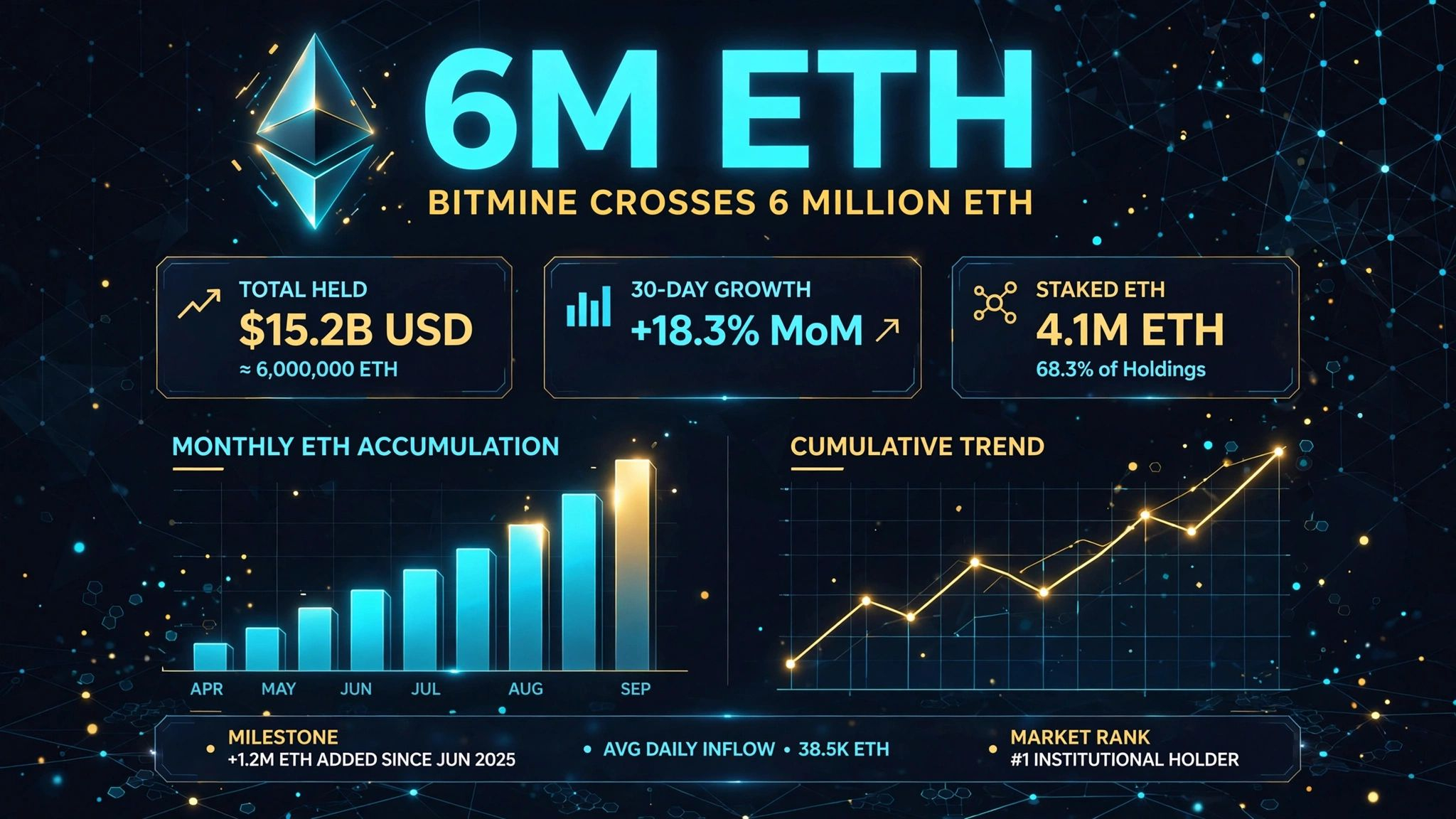
Six million ETH.
Bitmine just crossed it. 6,016,414 ETH, and 7.4 billion in total crypto, cash and marketable securities on the balance sheet.
This trade is barely a year old and one company already holds about 5% of the entire ETH supply. Everyone argues whether these treasury firms are the next Strategy or the next SPAC bust, but the arithmetic underneath keeps compounding. ETH supply is capped around 120.7 million, and a single buyer keeps vacuuming it up at every price.
The market already knows the playbook. Strategy ran it on BTC. Bitmine is running it on ETH, bigger and faster.
The interesting question now is not whether they keep buying. It is what ETH looks like when 5% of it sits in one corporate wallet.
$ETH $BTC
Six million ETH.
Bitmine just crossed it. 6,016,414 ETH, and 7.4 billion in total crypto, cash and marketable securities on the balance sheet.
This trade is barely a year old and one company already holds about 5% of the entire ETH supply. Everyone argues whether these treasury firms are the next Strategy or the next SPAC bust, but the arithmetic underneath keeps compounding. ETH supply is capped around 120.7 million, and a single buyer keeps vacuuming it up at every price.
The market already knows the playbook. Strategy ran it on BTC. Bitmine is running it on ETH, bigger and faster.
The interesting question now is not whether they keep buying. It is what ETH looks like when 5% of it sits in one corporate wallet.
$ETH $BTC
Bitmine just crossed it. 6,016,414 ETH, and 7.4 billion in total crypto, cash and marketable securities on the balance sheet.
This trade is barely a year old and one company already holds about 5% of the entire ETH supply. Everyone argues whether these treasury firms are the next Strategy or the next SPAC bust, but the arithmetic underneath keeps compounding. ETH supply is capped around 120.7 million, and a single buyer keeps vacuuming it up at every price.
The market already knows the playbook. Strategy ran it on BTC. Bitmine is running it on ETH, bigger and faster.
The interesting question now is not whether they keep buying. It is what ETH looks like when 5% of it sits in one corporate wallet.
$ETH $BTC
11
·
--
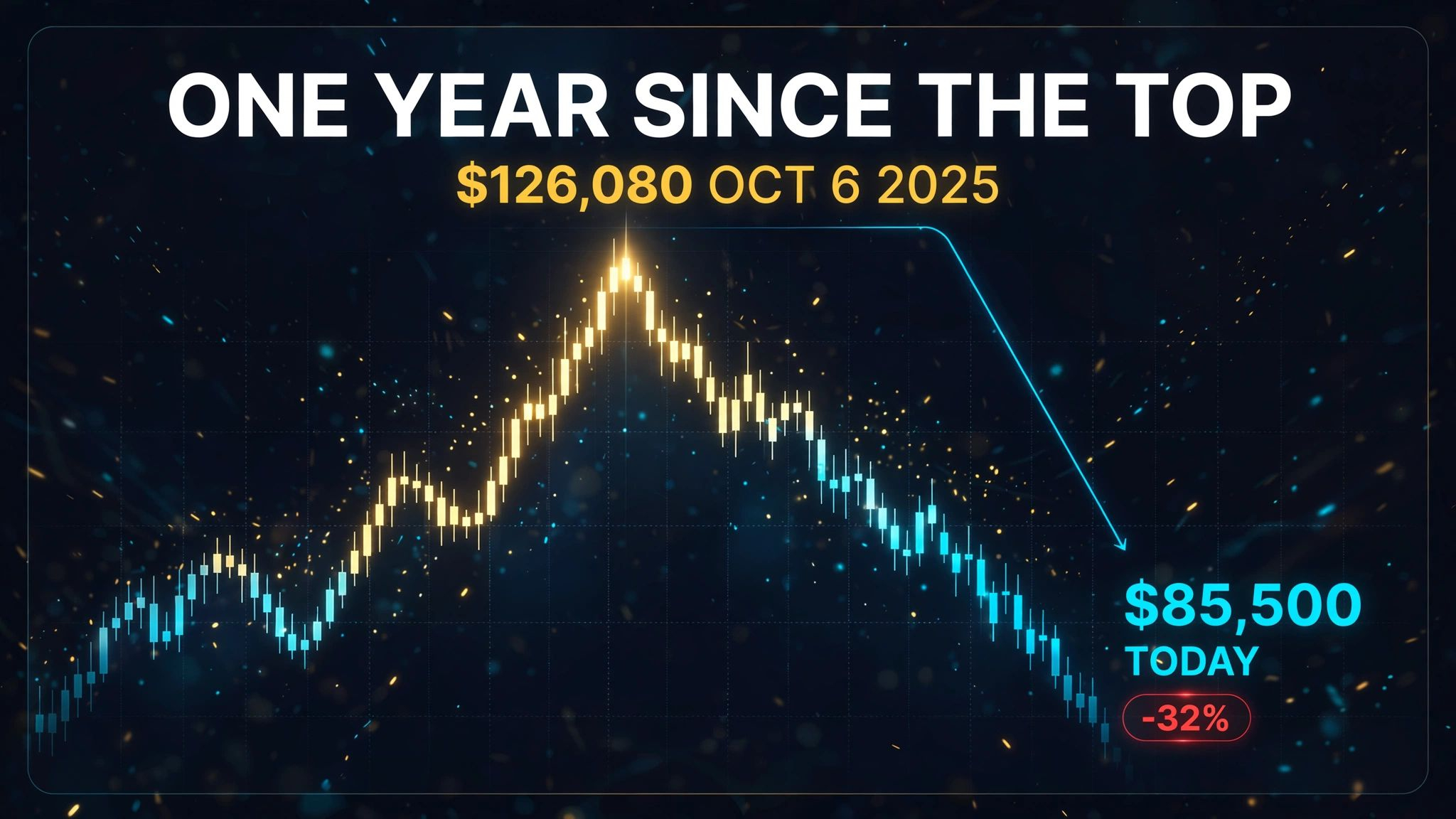
One year ago today, Bitcoin made its all-time high. $126,080.
Right now it trades around $85,500. Thirty-two percent lower.
The anniversary tape was not kind either. Spot BTC ETFs shed roughly $90M on Monday, and cumulative ETF inflows have slipped about 6% from their peak. ETH ETFs logged a fifth straight day of outflows.
And yet. Look back sixty days and BTC is up 32.6%. Ninety days, up 38%. Prices well off the top, but recovering hard for two months straight.
Distribution is slow and grinding. This does not look like distribution. It looks like a forced deleveraging event, followed by real spot demand quietly rebuilding the bid.
Tops get anniversaries. Recoveries just need time. Follow for the daily read.
$BTC $ETH
One year ago today, Bitcoin made its all-time high. $126,080.
Right now it trades around $85,500. Thirty-two percent lower.
The anniversary tape was not kind either. Spot BTC ETFs shed roughly $90M on Monday, and cumulative ETF inflows have slipped about 6% from their peak. ETH ETFs logged a fifth straight day of outflows.
And yet. Look back sixty days and BTC is up 32.6%. Ninety days, up 38%. Prices well off the top, but recovering hard for two months straight.
Distribution is slow and grinding. This does not look like distribution. It looks like a forced deleveraging event, followed by real spot demand quietly rebuilding the bid.
Tops get anniversaries. Recoveries just need time. Follow for the daily read.
$BTC $ETH
Right now it trades around $85,500. Thirty-two percent lower.
The anniversary tape was not kind either. Spot BTC ETFs shed roughly $90M on Monday, and cumulative ETF inflows have slipped about 6% from their peak. ETH ETFs logged a fifth straight day of outflows.
And yet. Look back sixty days and BTC is up 32.6%. Ninety days, up 38%. Prices well off the top, but recovering hard for two months straight.
Distribution is slow and grinding. This does not look like distribution. It looks like a forced deleveraging event, followed by real spot demand quietly rebuilding the bid.
Tops get anniversaries. Recoveries just need time. Follow for the daily read.
$BTC $ETH
1
26
·
--
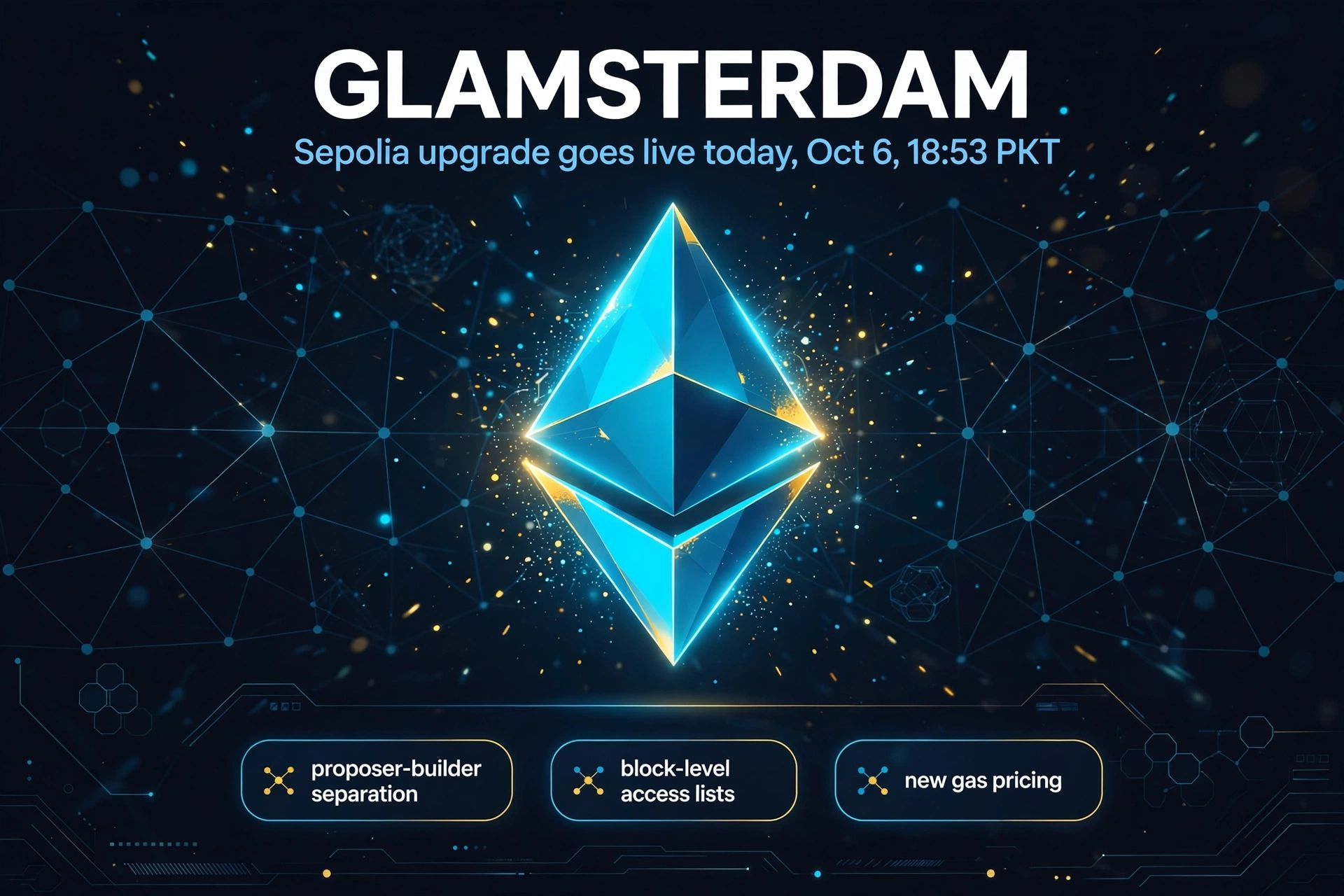
In under three hours, Ethereum forks a testnet and almost nobody is watching. Glamsterdam activates on Sepolia at 18:53 PKT. Epoch 353,024.
The important piece is enshrined proposer-builder separation. The handoff between specialized block builders and validators gets written into the protocol instead of running through outside middleware. Alongside it: block-level access lists, so clients can read state from disk and validate parts of a block in parallel, and a gas pricing overhaul that charges closer to what data access actually costs.
The number that matters came from the private rehearsal on Sept 17. Block gas limit pushed toward 200 million. No lost finality. That is Ethereum proving it can fit much more activity into each block before mainnet ever feels it.
Hoodi is penciled in for Oct 27. Mainnet has no date yet. And looking past this one, Vitalik said Sunday that Hegotá in 2027 could be the last routine fork before development shifts toward STARKs and quantum-safe cryptography.
L1 capacity is quietly the story of this cycle. Watching it.
$ETH #Glamsterdam
In under three hours, Ethereum forks a testnet and almost nobody is watching. Glamsterdam activates on Sepolia at 18:53 PKT. Epoch 353,024.
The important piece is enshrined proposer-builder separation. The handoff between specialized block builders and validators gets written into the protocol instead of running through outside middleware. Alongside it: block-level access lists, so clients can read state from disk and validate parts of a block in parallel, and a gas pricing overhaul that charges closer to what data access actually costs.
The number that matters came from the private rehearsal on Sept 17. Block gas limit pushed toward 200 million. No lost finality. That is Ethereum proving it can fit much more activity into each block before mainnet ever feels it.
Hoodi is penciled in for Oct 27. Mainnet has no date yet. And looking past this one, Vitalik said Sunday that Hegotá in 2027 could be the last routine fork before development shifts toward STARKs and quantum-safe cryptography.
L1 capacity is quietly the story of this cycle. Watching it.
$ETH #Glamsterdam
The important piece is enshrined proposer-builder separation. The handoff between specialized block builders and validators gets written into the protocol instead of running through outside middleware. Alongside it: block-level access lists, so clients can read state from disk and validate parts of a block in parallel, and a gas pricing overhaul that charges closer to what data access actually costs.
The number that matters came from the private rehearsal on Sept 17. Block gas limit pushed toward 200 million. No lost finality. That is Ethereum proving it can fit much more activity into each block before mainnet ever feels it.
Hoodi is penciled in for Oct 27. Mainnet has no date yet. And looking past this one, Vitalik said Sunday that Hegotá in 2027 could be the last routine fork before development shifts toward STARKs and quantum-safe cryptography.
L1 capacity is quietly the story of this cycle. Watching it.
$ETH #Glamsterdam
5
·
--
September had every excuse to dump Bitcoin. A Fed hike, the first since 2023. $100 oil with the Strait of Hormuz closed. The CLARITY Act dying in the Senate. The 30-year yield at its highest since 2004.
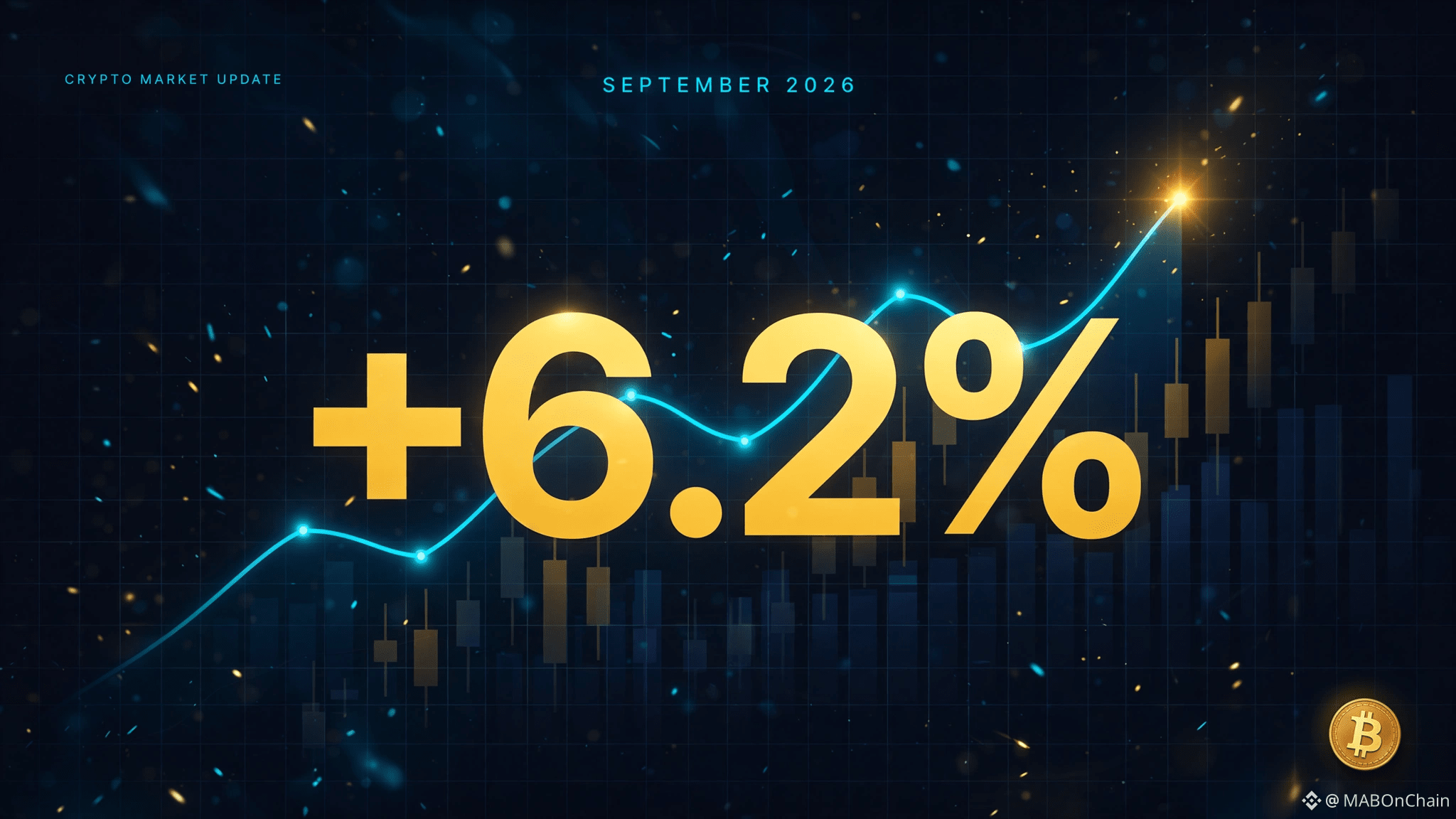
Bitcoin closed the month up 6.2%.
That is the fourth green September in a row and the best third quarter since 2017, per 21Shares. Seasonality said September averages a 2.4% loss. The tape said otherwise. What led matters more than the number: Uniswap fees nearly doubling on real Robinhood Chain usage, NEAR up around 180% on agent payment volume, Zcash forcing its way into the top 10 on institutional privacy demand. This market keeps paying for real usage while narratives argue among themselves.
The Q4 question comes down to three things: the $81,000 support level holding, the 30-year yield stabilizing, and ETF demand persisting after September's inflows faded at month-end. Clean list. Watching that $81k line first.
$BTC $ETH $ZEC
Follow for the daily read.
September had every excuse to dump Bitcoin. A Fed hike, the first since 2023. $100 oil with the Strait of Hormuz closed. The CLARITY Act dying in the Senate. The 30-year yield at its highest since 2004.
Bitcoin closed the month up 6.2%.
That is the fourth green September in a row and the best third quarter since 2017, per 21Shares. Seasonality said September averages a 2.4% loss. The tape said otherwise. What led matters more than the number: Uniswap fees nearly doubling on real Robinhood Chain usage, NEAR up around 180% on agent payment volume, Zcash forcing its way into the top 10 on institutional privacy demand. This market keeps paying for real usage while narratives argue among themselves.
The Q4 question comes down to three things: the $81,000 support level holding, the 30-year yield stabilizing, and ETF demand persisting after September's inflows faded at month-end. Clean list. Watching that $81k line first.
$BTC $ETH $ZEC
Follow for the daily read.
Bitcoin closed the month up 6.2%.
That is the fourth green September in a row and the best third quarter since 2017, per 21Shares. Seasonality said September averages a 2.4% loss. The tape said otherwise. What led matters more than the number: Uniswap fees nearly doubling on real Robinhood Chain usage, NEAR up around 180% on agent payment volume, Zcash forcing its way into the top 10 on institutional privacy demand. This market keeps paying for real usage while narratives argue among themselves.
The Q4 question comes down to three things: the $81,000 support level holding, the 30-year yield stabilizing, and ETF demand persisting after September's inflows faded at month-end. Clean list. Watching that $81k line first.
$BTC $ETH $ZEC
Follow for the daily read.
240
Log in to explore more content
Join global crypto users on Binance Square
⚡️ Get latest and useful information about crypto.
💬 Trusted by the world’s largest crypto exchange.
👍 Discover real insights from verified creators.
Email / Phone number
Trending Topics
FedMinutesFocusOnOctoberPause
251,286 views
1,608 Discussing
🚨 HIGH ALERT ‼️ PLEASE DON’T TRADE BLINDLY FOR THE NEXT HOUR 🚨
Guys, we have FOMC Minutes coming in less than 1 hour.
And after the kind of volatility we already saw today, I really don’t want anyone opening random high-leverage positions just before this release.
The biggest reaction I’m watching will be in Gold (XAU), Silver (XAG), BTC and ETH. Then coins like SOL and other highly leveraged mid/low-cap alts can exaggerate whatever move BTC makes.
Gold and Silver are especially sensitive tonight because the market is already reacting to the US dollar + Treasury yields, and both metals have been under heavy pressure ahead of the Fed minutes.
Briefly speaking
📉Hawkish Fed Minutes → Dollar/yields can push higher → pressure on BTC, crypto, Gold & silver
📈Dovish Fed Minutes → Dollar/yields can cool → BTC, Gold, Silver and risk assets can bounce hard.
And please remember the first candle can be a trap. We can get a pump, immediate dump, liquidations on both sides, and then the real direction.
So for now, protect your positions, reduce unnecessary leverage and don’t FOMO into the first move.
Tonight I’m watching $XAU , $XAG and $BTC first. These will tell us very quickly how the market is reading the Fed.
I will Update you guys on time
Follow @Panda Traders and Turn on Your notifications right now
#FedMinutesFocusOnOctoberPause
Panda Traders
·20 Likes
·4.6k views
IMFGrantsWaiverForElSalvadorBitcoinBreach
2 views
6 Discussing
BinanceLaunchesBinanceIntelligence
1.2M views
6,769 Discussing