
Logan7shi
81 Posts

Logan7shi
Not financial advice | BTC | SOL | Binance Alpha | Farmer
Open Trade

BTC Holder
Occasional Trader
5.5 Years
7 Following
47 Followers
146 Liked
Posts
Portfolio
All
Quotes
Videos
JUST IN: 🇺🇸 Eric Trump says the Trump family has made more than $1 billion from crypto, FT reports.

ODDO BHF, the 175 year-old French banking giant, has officially launched its first euro-backed stablecoin, exclusively on @0xPolygon
EUROD is issued in compliance with the European MiCA, with listing on Bit2me.
For onchain efficiency, institutions choose #Polygon
EUROD is issued in compliance with the European MiCA, with listing on Bit2me.
For onchain efficiency, institutions choose #Polygon
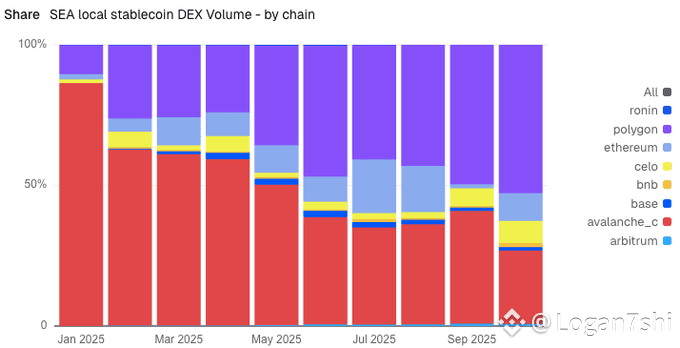
@0xPolygon leads in crypto adoption in South East Asia and Latin America because normal people need fast, inexpensive and easy for payments.
South East Asia:
🌏Leading in number of txs (43%)
🌏Leading in tx addresses (40K)
🌏Leading in DEX volume ($13.7M in Sep)
South East Asia:
🌏Leading in number of txs (43%)
🌏Leading in tx addresses (40K)
🌏Leading in DEX volume ($13.7M in Sep)
As a crypto investor, I've endured many bear markets and FUD storms. I'm observing the latest wave against #Binance with amusement and caution. Rumors of scams, manipulated charts, and mass outflows echo the 2018 and 2022 playbooks—coordinated noise to shake out weak hands while smart money accumulates.
I've used Binance since its early days. They've compensated users after hacks, onboarded over 800k new users in days despite drama, and shown $1.25B in 24-hour inflows. #CZ built this from nothing, turning $BNB into a 10,000x play for early holders. No exchange is perfect, but calling it a collapse is hysteria.
If you're panicking and withdrawing, verify the data first. I'm staying put, buying the dip on alts, and remembering: #FUD is temporary, adoption is forever. Builders win.
I've used Binance since its early days. They've compensated users after hacks, onboarded over 800k new users in days despite drama, and shown $1.25B in 24-hour inflows. #CZ built this from nothing, turning $BNB into a 10,000x play for early holders. No exchange is perfect, but calling it a collapse is hysteria.
If you're panicking and withdrawing, verify the data first. I'm staying put, buying the dip on alts, and remembering: #FUD is temporary, adoption is forever. Builders win.
Game changer alert! 🚀 Stripe enabling stablecoin subscriptions on @0xPolygon is massive for:
Global reach without banking barriers
Reduced payment processing costs
Unified fiat + crypto payment management
The subscription economy just got a major upgrade! 💰$POL
Global reach without banking barriers
Reduced payment processing costs
Unified fiat + crypto payment management
The subscription economy just got a major upgrade! 💰$POL
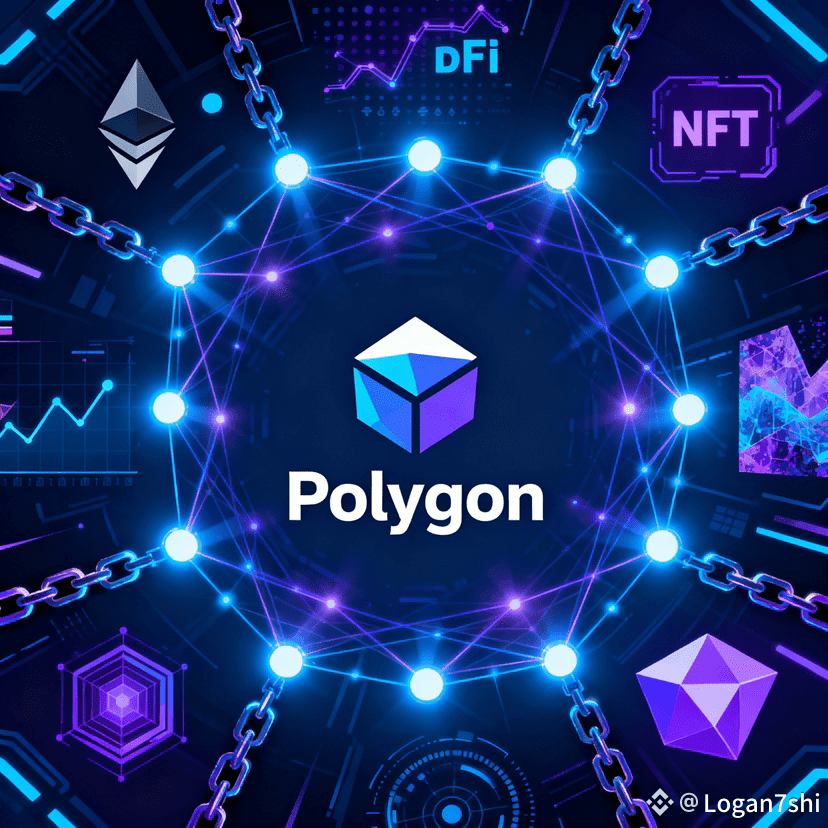
@0xPolygon is not just about $POL price or hype. It is working on useful things that people need, such as supporting digital money called stablecoins, making payments easier, and helping new financial apps grow.
This helps everyone use blockchain technology for real things in everyday life. Making access to crypto easy for everyone across the earth.
This helps everyone use blockchain technology for real things in everyday life. Making access to crypto easy for everyone across the earth.
Maybe I should have sold instead of taking a screenshot. 😭

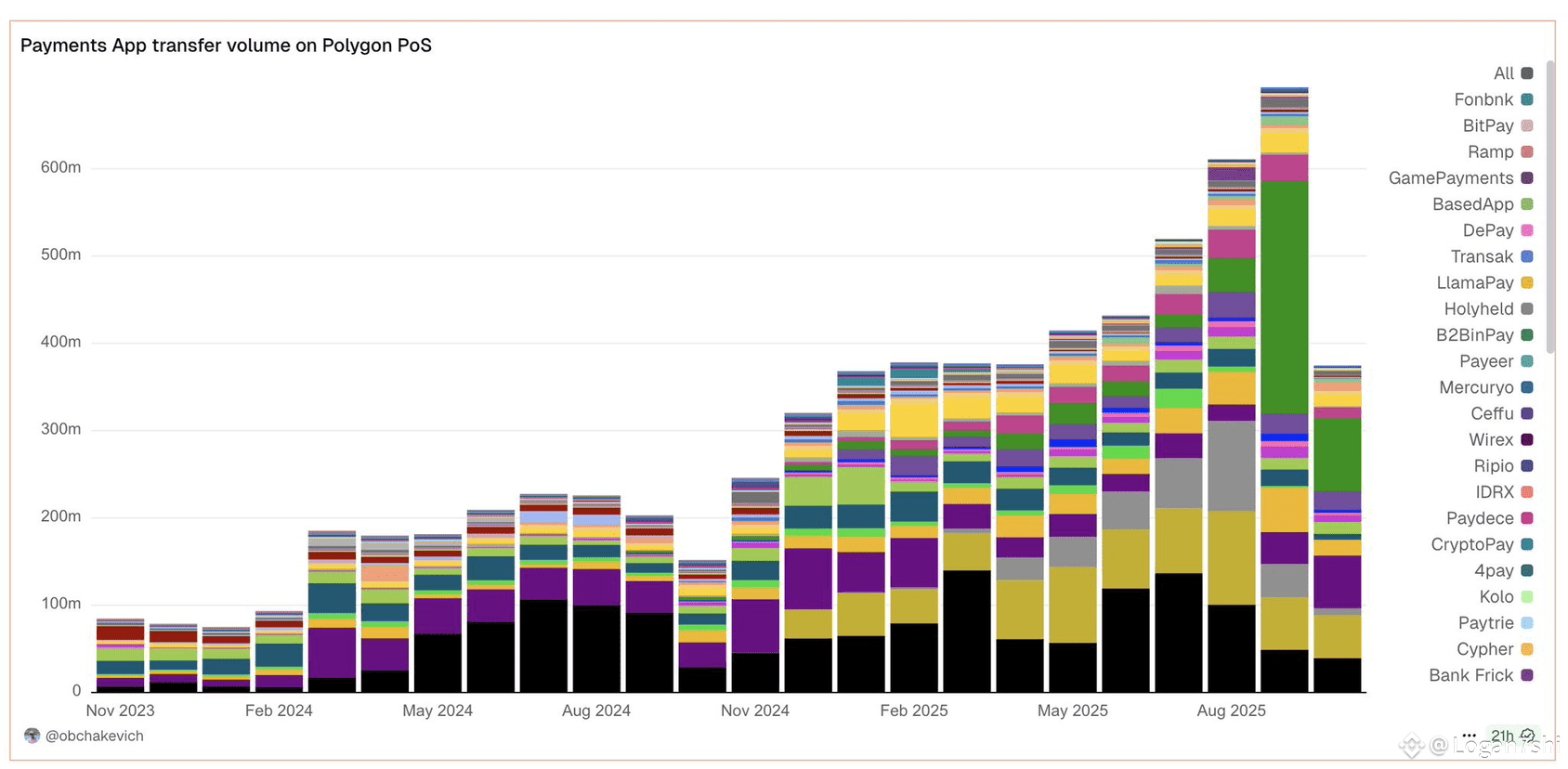
@0xPolygon payments update
— @CoinflowLabs raises $25M in series A funding from @PanteraCapital. Coinflow generates over $30M monthly on Polygon and is one of the fastest-growing projects on this chain.
— Collateral deposits volume by @raincards reached $32M on Polygon in September, with a 357% increase since June.
— @Paxos hit $265M in transfer volume on Polygon in September, taking on 38% of the app's payment volume.
— @KoloHub has been generating a payment volume of over $1M for three months now on Polygon. In the first half of October, the volume generated was $1.2M.
— In September, the following projects became available for tracking: @raincards, @stripe, @monerium, @KoloHub, @payy_link, and @4payFinance.
— @CoinflowLabs raises $25M in series A funding from @PanteraCapital. Coinflow generates over $30M monthly on Polygon and is one of the fastest-growing projects on this chain.
— Collateral deposits volume by @raincards reached $32M on Polygon in September, with a 357% increase since June.
— @Paxos hit $265M in transfer volume on Polygon in September, taking on 38% of the app's payment volume.
— @KoloHub has been generating a payment volume of over $1M for three months now on Polygon. In the first half of October, the volume generated was $1.2M.
— In September, the following projects became available for tracking: @raincards, @stripe, @monerium, @KoloHub, @payy_link, and @4payFinance.
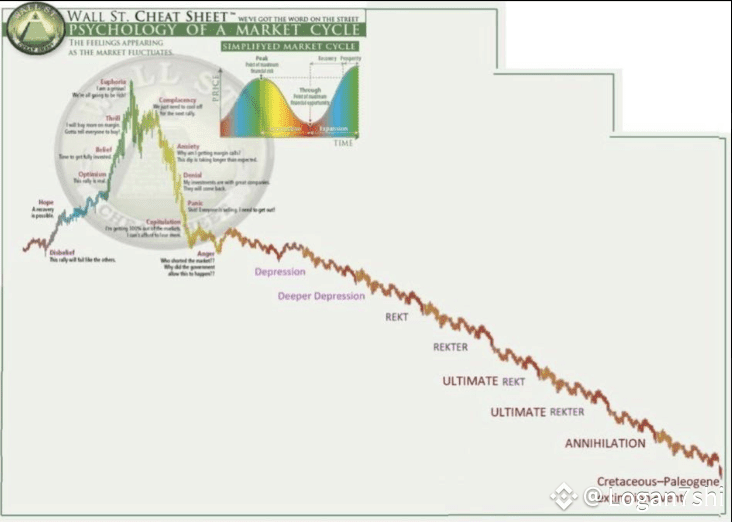
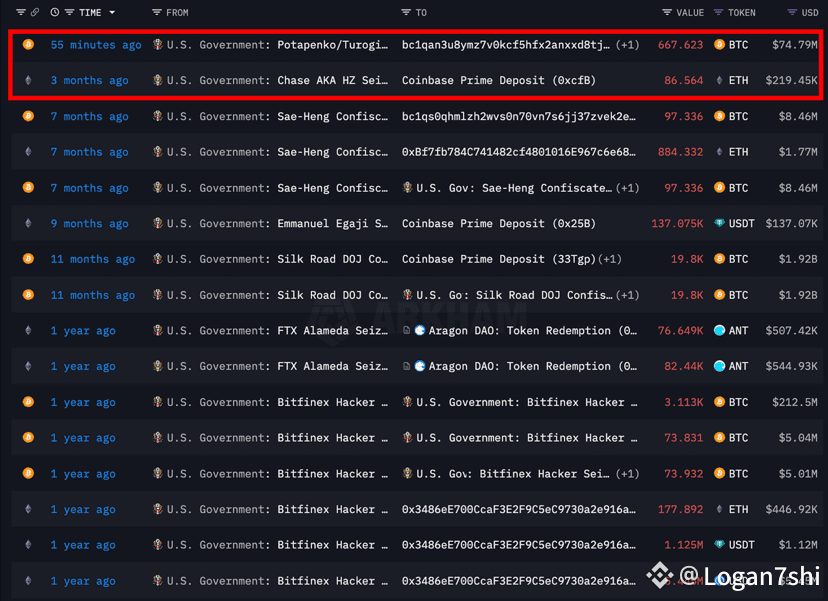

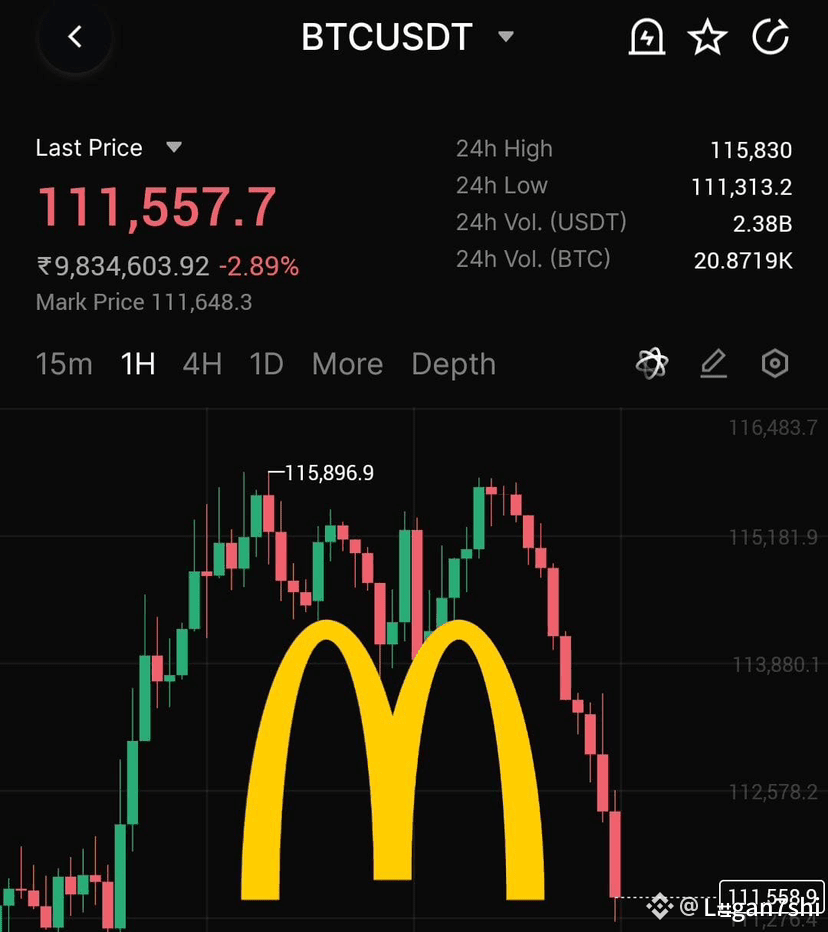
While everyone’s busy chasing #moonshots and fresh pump coins, the smart money is quietly sitting through the storm.
Markets are volatile, but real crypto believers know it’s not about quick wins — it’s about who’s still standing after the shakeout. 🔥
If you’re jumping ship every time the price dips, maybe crypto just isn’t for you.
Who’s ready to #hold and prove they’re here for the long game?
Markets are volatile, but real crypto believers know it’s not about quick wins — it’s about who’s still standing after the shakeout. 🔥
If you’re jumping ship every time the price dips, maybe crypto just isn’t for you.
Who’s ready to #hold and prove they’re here for the long game?

#Binance Alpha Airdrop Update: ENZO
👉 Claim Time: 7:00 UTC
👉 Eligibility(Phases Claim): 245 points required, points for 225 FCFS with 10 tokens per user
👉 Premarket: 4.2 per token
👉 Total Available for Claim (Quota): 100000 slots
👉 Token Contract Address:
0xfeb339236d25d3e415f280189bc7c2fbab6ae9ef
👉 Airdrop Share: 1% of the total token supply
👉 Claim Time: 7:00 UTC
👉 Eligibility(Phases Claim): 245 points required, points for 225 FCFS with 10 tokens per user
👉 Premarket: 4.2 per token
👉 Total Available for Claim (Quota): 100000 slots
👉 Token Contract Address:
0xfeb339236d25d3e415f280189bc7c2fbab6ae9ef
👉 Airdrop Share: 1% of the total token supply
Enough of this selling stop it 😭

Educational Thread: @0xPolygon AggLayer - The Cross-Chain Revolution
🧵 #Polygon AggLayer is about to change everything you know about blockchain interoperability
While most L2s operate in isolation, $POL AggLayer creates a unified network where chains can communicate seamlessly. Think of it as the internet protocol for blockchains.
Here's why this matters:
Current Problem:50+ L2s exist but can't talk to each otherUsers need different wallets for different chainsLiquidity is fragmented across ecosystemsDevelopers must deploy on multiple chains
AggLayer Solution:Trustless cross-chain communicationUnified liquidity across all connected chainsSingle wallet experienceShared security model
Technical Deep Dive:
AggLayer uses ZK proofs to create a unified state root that all connected chains can reference. This means:
✅ Instant cross-chain transactions
✅ Shared security without bridges
✅ Native interoperability
✅ Reduced complexity for users
Real-World Impact:
Imagine sending USDC from Polygon PoS to Arbitrum to Base - all in one transaction, with one wallet, with shared security. No bridges, no wrapped tokens, no waiting periods.
This isn't just technical - it's user experience revolution.
Market Implications:
Unlocks $100B+ in fragmented liquidity
Reduces DeFi complexity by 80%
Enables true cross-chain applications
Positions Polygon as the interoperability backbone
What This Means for Developers:
Instead of building on isolated chains, you can build applications that span multiple networks natively. Your dApp can leverage liquidity from every connected chain simultaneously.
The Bigger Picture:
AggLayer isn't just another protocol - it's the infrastructure for the multi-chain future. While others build walls, Polygon builds bridges.
This is how we get to 1 billion users in crypto.
Bottom Line: AggLayer transforms blockchain from isolated islands into a connected continent. The question isn't whether this will happen - it's whether you'll be ready when it does.
🧵 #Polygon AggLayer is about to change everything you know about blockchain interoperability
While most L2s operate in isolation, $POL AggLayer creates a unified network where chains can communicate seamlessly. Think of it as the internet protocol for blockchains.
Here's why this matters:
Current Problem:50+ L2s exist but can't talk to each otherUsers need different wallets for different chainsLiquidity is fragmented across ecosystemsDevelopers must deploy on multiple chains
AggLayer Solution:Trustless cross-chain communicationUnified liquidity across all connected chainsSingle wallet experienceShared security model
Technical Deep Dive:
AggLayer uses ZK proofs to create a unified state root that all connected chains can reference. This means:
✅ Instant cross-chain transactions
✅ Shared security without bridges
✅ Native interoperability
✅ Reduced complexity for users
Real-World Impact:
Imagine sending USDC from Polygon PoS to Arbitrum to Base - all in one transaction, with one wallet, with shared security. No bridges, no wrapped tokens, no waiting periods.
This isn't just technical - it's user experience revolution.
Market Implications:
Unlocks $100B+ in fragmented liquidity
Reduces DeFi complexity by 80%
Enables true cross-chain applications
Positions Polygon as the interoperability backbone
What This Means for Developers:
Instead of building on isolated chains, you can build applications that span multiple networks natively. Your dApp can leverage liquidity from every connected chain simultaneously.
The Bigger Picture:
AggLayer isn't just another protocol - it's the infrastructure for the multi-chain future. While others build walls, Polygon builds bridges.
This is how we get to 1 billion users in crypto.
Bottom Line: AggLayer transforms blockchain from isolated islands into a connected continent. The question isn't whether this will happen - it's whether you'll be ready when it does.
Educational Content: @0xPolygon zkEVM vs The Competition
#Polygon zkEVM: The EVM-Compatible ZK Rollup That Actually Works
The Problem with Most ZK Rollups:
They claim EVM compatibility but require significant changes to existing code. Developers can't just copy-paste their Ethereum contracts.
Polygon zkEVM's Solution:
True EVM equivalence. Your existing Ethereum contracts work without modification. Your existing tools work. Your existing knowledge applies.
Why This Matters for Developers:
✅ Zero Learning Curve: Use existing Ethereum skills
✅ Full Tool Compatibility: Remix, Hardhat, Foundry all work
✅ Seamless Migration: Deploy existing contracts as-is
✅ Future-Proof: Built for the long term
Real-World Impact:
Faster Development: No need to learn new paradigms
Lower Costs: 90%+ reduction in transaction fees
Better UX: Familiar interfaces for users
Reduced Risk: Proven Ethereum security model
The Competitive Advantage:
While others build new ecosystems, Polygon zkEVM extends the existing Ethereum ecosystem. This isn't about replacing Ethereum - it's about scaling it.
Bottom Line:
Polygon zkEVM proves that you can have both innovation and compatibility. The future of blockchain isn't about choosing between security and scalability - it's about having both.
#Polygon zkEVM: The EVM-Compatible ZK Rollup That Actually Works
The Problem with Most ZK Rollups:
They claim EVM compatibility but require significant changes to existing code. Developers can't just copy-paste their Ethereum contracts.
Polygon zkEVM's Solution:
True EVM equivalence. Your existing Ethereum contracts work without modification. Your existing tools work. Your existing knowledge applies.
Why This Matters for Developers:
✅ Zero Learning Curve: Use existing Ethereum skills
✅ Full Tool Compatibility: Remix, Hardhat, Foundry all work
✅ Seamless Migration: Deploy existing contracts as-is
✅ Future-Proof: Built for the long term
Real-World Impact:
Faster Development: No need to learn new paradigms
Lower Costs: 90%+ reduction in transaction fees
Better UX: Familiar interfaces for users
Reduced Risk: Proven Ethereum security model
The Competitive Advantage:
While others build new ecosystems, Polygon zkEVM extends the existing Ethereum ecosystem. This isn't about replacing Ethereum - it's about scaling it.
Bottom Line:
Polygon zkEVM proves that you can have both innovation and compatibility. The future of blockchain isn't about choosing between security and scalability - it's about having both.

Log in to explore more content