Binance Square
玲峰资本
546 Posts

玲峰资本

公众号:web3高子。94爆仓出局,1011爆仓出局。2026年年底恐慌指数10以下梭哈比特币。比特币最低位区间3-6万美金左右。2025年10月大牛市无法想象已经结束。未来趋势属于AI,we3最大趋势是perp,专注AI与Web3赛道行业观察。分享个人周期情绪推演思路,所有内容仅为个人复盘交流,不构成投资建议
Open Trade

BNB Holder
BNB Holder
Occasional Trader
8.2 Years
60 Following
2.0K+ Followers
2.9K+ Liked
Posts
Portfolio
·
--
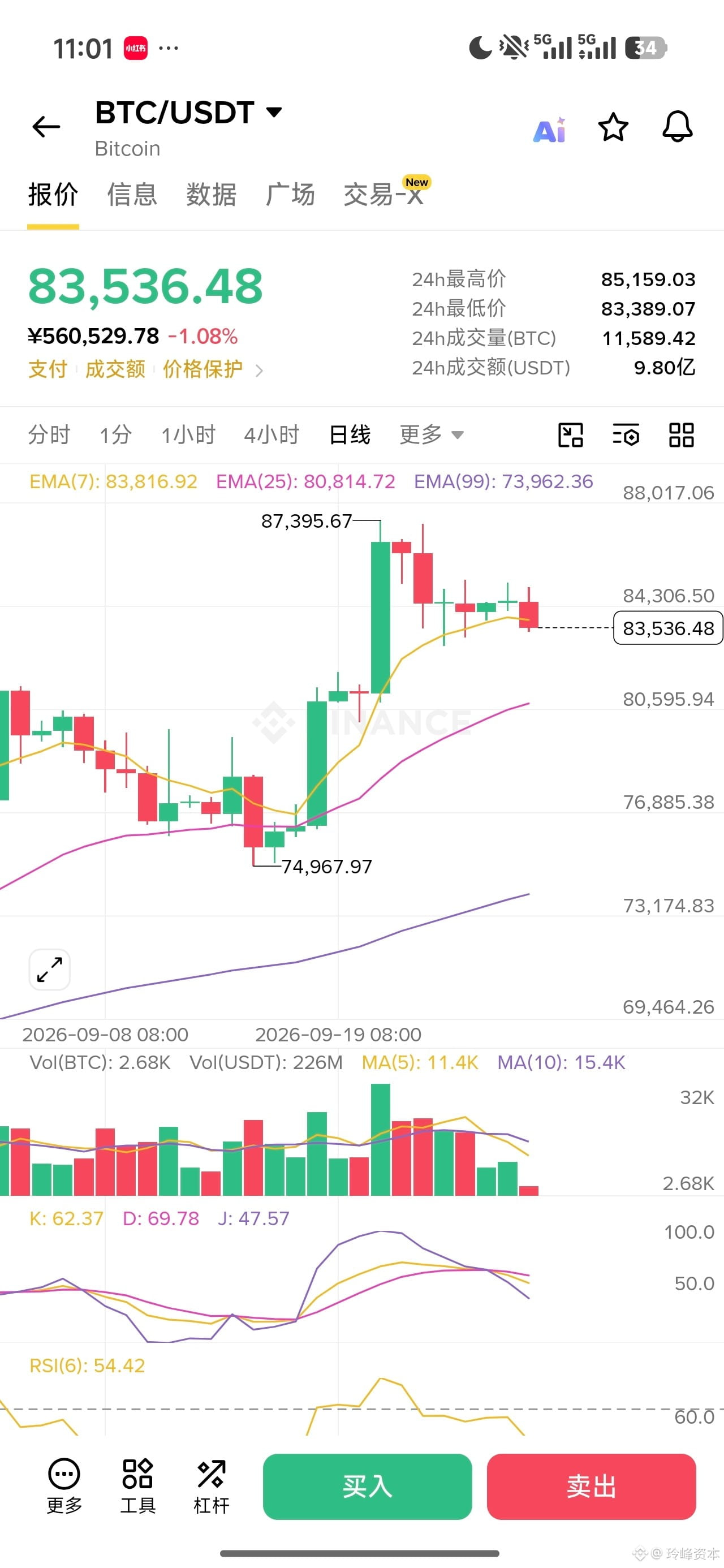
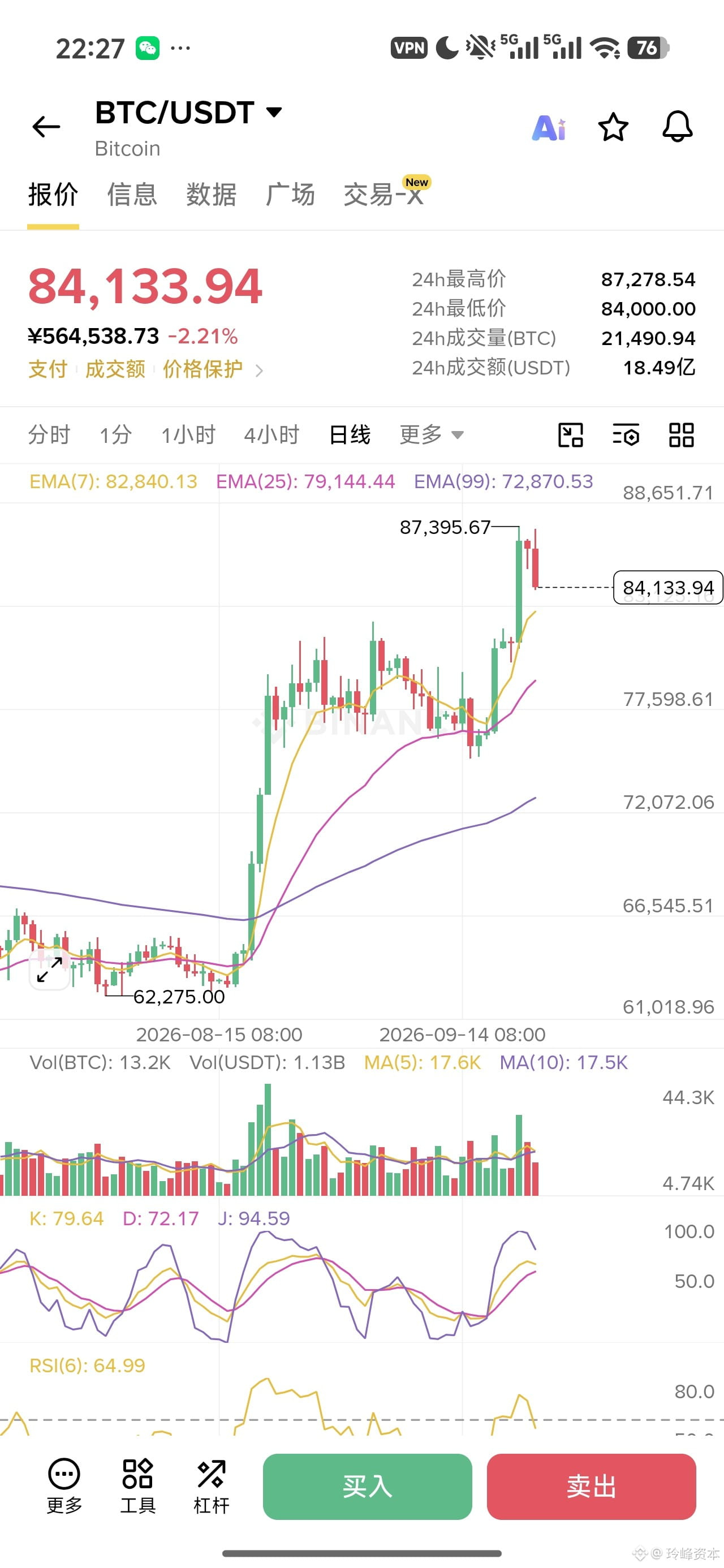
Bear City’s terrifying sell-off force is beyond imagination, yet Bitcoin’s four-year halving cycle has never deviated. The halving was completed on April 20, 2024. The historical pattern is clear: the cycle’s major top appears on the 18th month after the halving, followed by a deep decline that reaches the cycle bottom over the next 12 months. The timing is precisely projected: October 2025 is the 18th cycle node after the halving, and Bitcoin’s peak for this round is $126,200. Then a deep pullback throughout the year sets in. The lowest bottom for this cycle is locked in on October 6, 2026. This historic bottom is bound to go through long-term consolidation and grinding lower; the optimal opportunity for positioning is by late 2026 and early 2027. Bitcoin’s ultimate bottom range for this cycle is $30,000 to $60,000. Revisiting the last bull-bear transition: Bitcoin’s maximum drawdown was 77%. It fell from the high of $69,000 on November 6, 2021 to $15,500 on November 1, 2022. It then moved sideways below $20,000 for three months. This time, after a 77% retracement from the $126,200 high, the theoretical bottom is $29,000, while $30,000 is the extreme defensive level—an extreme market could briefly break below it. With this cycle’s bottom at $30,000 to $60,000, it is inevitable to break through the previous high of $69,000. When the price falls back to the $30,000–$60,000 range, decisively go all-in. Three entry conditions: after October 2026, the price is in the $30,000–$60,000 range, and the fear index is around 10. If all are met, the probability of profit is 99%. Hold until 2029, then sell in batches between $150,000 and $250,000. By the end of 2026, negative news floods the market—talk of Bitcoin going to zero and a computing power crisis spreads everywhere online. The market shifts from cold and lackluster to a full-blown bearish bubble bursting. Just like the current moment where no one predicts a super bull market, and just like the last cycle when it broke below the $20,000 bottom in 2017 and sank to $15,500, when the whole internet was in extreme panic and no one believed in a $100,000 or $150,000 scenario. Yet the cycle’s iron law is delivered as scheduled. This time it holds above $100,000 and reaches as high as $126,200. The eightfold rally fits the cycle rhythm and does not reach the $150,000 target. Therefore, late 2026 is the best “all-in” window for a four-year Bitcoin bottom-buy in this cycle.
The severity of the situation in Bear City is beyond imagination, but Bitcoin’s four-year halving cycle never changes. This round of halving took effect on April 20, 2024. According to historical patterns, the cycle’s highest peak occurs in the 18th month after the halving, followed by a sustained 12-month plunge that reaches the annual low. In terms of the corresponding time points, October 2025 is precisely the 18th month after the halving, and Bitcoin’s peak in this round reaches $126,200. Then it begins a full year of deep decline, with the ultimate bottom precisely on October 6, 2026. Since historical market bottoms must remain range-bound for a long time to form a base, both late 2026 and early 2027 are excellent windows to position for Bitcoin. The price range of this round’s bottom is locked at $30,000 to $60,000. In the previous cycle, Bitcoin’s maximum drawdown was about 77%: in November 2021 it crashed from $69,000 to $15,500 in November 2022. It then traded sideways below $20,000 for nearly three months. With this round’s high at $126,200, a 77% retracement implies a bottom of about $29,000; $30,000 is the solid support floor for this cycle. Briefly breaking through in extreme conditions is normal. This round’s major bottom zone is stably set at $30,000 to $60,000, and it will inevitably break below the previous bull cycle’s $69,000 peak. When the coin price falls back into the $30,000 to $60,000 range, that is the certain all-in opportunity. To enter, you only need to meet three conditions: after October 2026, the price is in the $30,000 to $60,000 range, and the fear index drops to around 10. When all three conditions trigger at the same time, the probability of profit after entering is close to 99%. Hold patiently until 2029, and then sell in batches when the price is in the $150,000 to $250,000 range. By late 2026, the market will be flooded with massive negative-news noise. The “Bitcoin is dead” narrative and “hashrate attack” claims will go viral across the entire internet. The market will no longer be something nobody pays attention to—it will be a unanimous global bearish consensus as the bubble bursts. Just like how most people today can’t predict a super bull market, or how in the previous cycle when it fell to $15,500 and broke below the 2017 $20,000 high, the entire internet experienced extreme panic—everyone questioned whether Bitcoin could ever stand above $100,000 and $150,000. But cycle calculations were already set: the market must surge to new highs. This round successfully held above $100,000 and peaked at $126,200. Although it didn’t reach the $150,000 target, the overall eightfold gain fully matches the cycle rhythm.
The brutal sell-off strength of this round of the super bear market far exceeds what all market participants can imagine. Yet Bitcoin’s four-year halving cycle has always remained constant without deviation. On April 20, 2024, this round of halving officially took effect. By reviewing historical price patterns, the 18th month after the halving will form the absolute peak of this cycle. Then, a sustained 12-month deep-downtrend will begin, continuing until the major bottom of this cycle is firmly established. Based on precise time-cycle calculation, October 2025 is the 18th cycle month after the halving, when Bitcoin successfully set a new stage high of $126,200. Immediately afterward, a full-year deep pullback and adjustment will start. The precise time point for the cycle’s lowest level is locked in at October 6, 2026. Combined with the behavior of all past cycles, historical market bottoms will typically enter a long period of sideways consolidation. Therefore, from late 2026 to early 2027 is an excellent low-level accumulation window. Referencing the complete retracement data from the previous bull market, Bitcoin’s maximum drawdown was about 77%: the bull-market peak on November 6, 2021 was $69,000, followed by a decline to the cycle bottom on November 1, 2022 at $15,500, after which it continued to trade sideways below $20,000 for more than three months. With this round’s stage high at $126,200, after a 77% retracement, the corresponding bottom price is about $29,000. Around $30,000 is the core strong support of this cycle, and in extreme market conditions there is a possibility of a brief breakdown. The ultimate bottom range for this round of Bitcoin is fixed at $30,000 to $60,000. The coin price will inevitably break below the previous bull market high of $69,000. Once the market pulls back into the low range of $30,000 to $60,000, it is unquestionably the best “all-in” entry point. Rigorously follow the three ironclad entry rules: after October 2026, when the coin price falls back into the $30,000 to $60,000 range, and when the market fear index drops to around 10, if all three conditions are met simultaneously, the probability of entering at a profitable time is nearly 99%. Hold patiently until 2029, and then take profits in batches in the high $150,000 to $250,000 range. By the end of 2026, the entire market will be filled with endless bearish noise. The “Bitcoin is dead” narrative and the “hashrate attack crisis” theory will flare up and spread again. The market will shift from being ignored by no one to the entire internet collectively turning bearish, and the bubble will finally be completely burst.
The brutality of this epic bear market has completely surpassed the entire market’s ability to comprehend. Yet Bitcoin’s core operating cycle—its four-year halving rhythm—remains consistently stable. The latest halving officially took effect on April 20, 2024. From historical cycle patterns, we can see that the 18th month after a halving will give birth to that cycle’s highest peak; then a 12-month period of deep liquidation begins, continuing until it successfully reaches the cycle’s lowest point. Based on precise time projections, October 2025 is the 18th cycle month following this halving, when Bitcoin will smoothly set a new phase high of $126,200. After that, the market enters a full year of deep pullback. The ultimate cycle bottom for this round is time-locked to October 6, 2026. Looking back at cryptocurrency history, every cycle’s bottom goes through a long period of sideways consolidation and grinding. Therefore, from late 2026 to early 2027 will be the best low-level positioning window of the entire year. Compared with the pullback from the previous complete bull cycle, Bitcoin’s maximum drawdown is about 77%: from the bull-market high of $69,000 on November 6, 2021, down to a bottom of $15,500 on November 1, 2022. Then it consolidated for three months below $20,000. With this round’s phase high at $126,200, applying the standard 77% retracement suggests a bottom price of about $29,000. The $30,000 level will form a strong support base for this cycle; even in extremely bearish scenarios, it may only briefly break through. This round’s Bitcoin “certainty” bottom range is locked at $30,000 to $60,000. The price will definitely break below the previous cycle’s bull-market high of $69,000. Once the market drops back into the $30,000–$60,000 range, it will be a certainty-level full-send entry opportunity. Rigorously follow the three hard entry conditions: after October 2026, the coin price is within the $30,000–$60,000 range, and the fear index dips to around 10. If all three conditions are met, the probability of entering with profitable returns approaches 99%. Hold the position long-term until 2029, and realize partial take-profit in stages in the high $150,000–$250,000 range. By late 2026, the market will be flooded with massive bearish news. Narratives that Bitcoin will go to zero and discussions about hashrate risks will sweep across the entire network again. Market sentiment will evolve from a state of desolation where nobody pays attention into a full-blown, network-wide bearish mood, with the bubble finally bursting completely.
The brutal market downturn of the “Super Bear Market” surpasses everyone’s expectations, and yet Bitcoin’s fixed four-year halving cycle remains unchanged forever. This block-halving event took place on April 20, 2024. Historical data patterns suggest that the highest point of this cycle will be formed in the 18th month after the halving, followed immediately by a deep twelve-month downtrend, until the bottom of the current cycle is identified. With precise timing calculations, October 2025 is exactly the 18th cycle month after the halving, when Bitcoin successfully reached a stage peak of $126,200. Then it begins a year-long deep retracement. The time for the ultimate cycle low is precisely locked to October 6, 2026. Looking back at previous cycles, every historical bottom has been accompanied by long-term sideways consolidation. Therefore, the best window for low-level positioning is from late 2026 to early 2027. Referring to the complete retracement data from the last bull market, Bitcoin’s maximum drawdown has remained around 77%. On November 6, 2021, Bitcoin’s bull-market high was $69,000, then it fell all the way to a low of $15,500 on November 1, 2022, and continued to trade sideways under $20,000 for three months. Using the 77% retracement from this cycle’s $126,200 peak, the estimated bottom price is about $29,000. The $30,000 range is the strongest and most reliable support floor for this cycle. In extreme market conditions, a brief break below is highly likely. This cycle’s Bitcoin bottom range is set at $30,000 to $60,000, and the price will inevitably pierce through the previous cycle’s all-time bull-market high of $69,000. Once the coin price falls into the $30,000 to $60,000 low range, that is the best value “all-in” entry opportunity. Rigorously follow the three key entry conditions: after October 2026, the coin price retraces to $30,000 to $60,000, and the market fear index drops to around 10. When all three are met simultaneously, the probability of entering profit reaches 99%. Hold patiently for the long term, staying through 2029, and wait to take profits in batches once the coin price reaches the $150,000 to $250,000 range. By the end of 2026, the entire market will be filled with massive negative news noise—prophecies of Bitcoin’s death and narratives about hash-rate attacks will spread again. Market sentiment will completely flip from cold and stagnant to the entire internet going bearish and the bubble bursting.
The ultimate selling pressure of a super bear market is something that most people find impossible to predict, but the four-year Bitcoin halving cycle pattern runs steadily without ever changing. The latest halving was set in stone on April 20, 2024. After many years of validation, the cycle rhythm remains unchanged: the full-cycle top is reached in the 18th month after the halving, followed by 12 months of a continued downtrend as the market grinds lower to find the bottom, ultimately landing on this cycle’s lowest point. The timing aligns precisely: in October 2025, the market successfully marked the 18th cycle high after the halving—Bitcoin’s peak for this cycle was $126,200. Immediately after that, there is a full year of deep pullback, with the final bottom time locked in for October 6, 2026. Looking back at Bitcoin’s year-by-year market performance in the crypto world, every bear-market bottom goes through a long period of sideways consolidation and grinding. Therefore, the most reliable accumulation phase for the bottom is at the end of 2026 and the beginning of 2027. Replaying the data from the last bull-bear cycle, Bitcoin’s maximum drawdown was about 77%: after the bull-market peak at $69,000 in June 2021, it plunged to a low of $15,500 in 2022, and stayed in a prolonged consolidation-building phase for more than three months below $20,000. Using the same proportional retracement from this cycle’s peak of $126,200, the theoretical low would be around $29,000, and $30,000 is the key defense bottom line for this cycle. In extreme market conditions, there may be brief breakdowns, but the bottom range for this cycle is expected to stabilize at $30,000 to $60,000. At that time, it will definitely break through the previous cycle’s historical high of $69,000. Once the coin price enters that range, it is the time to confidently go all-in without hesitation. Entries should follow three major resonance conditions: the time window after October 2026, the $30,000–$60,000 price range, and the fear index around 10—when all conditions are met, the win rate for entering is as high as 99%. Hold long-term without moving, and wait for the bull market to surge in 2029. Complete all distribution in the $150,000 to $250,000 range. In late 2026, the entire network’s bearish news will be flooding all at once: the narrative of a Bitcoin crash, and doubts about computational power security will spread across the board. The market shifts from being ignored by almost nobody to everyone viewing it as bearish—leading to the bursting of a bubble of pessimism. Most investors also can’t predict the coming super bull market; the sentiment completely replicates the last cycle’s extreme bottom at $15,500. Back then, when Bitcoin broke below the $20,000 mark from 2017, the entire network was in extreme despair, with most believing Bitcoin would never break through $100,000 and $150,000. But the cycle logic never deviates: this cycle successfully held above the $100,000 level and reached a maximum of $126,200, delivering a complete eight-times move. Although it didn’t reach the $150,000 target, it fully matches the cycle trajectory. The plan remains steadfast: wait for the ultimate all-in opportunity at the end of 2026.
The extreme sell-off intensity of the super bear market is beyond what most people can imagine. But the four-year halving-cycle规律 of Bitcoin always runs stably, never deviating. The latest halving was completed on April 20, 2024, with a clear fixed cycle rhythm: eighteen months after the halving, the cycle reaches a new peak; then, over the following twelve months, prices continue drifting downward to form a base until the annual low is locked in. The timing is precise—October 2025 marks the eighteenth-cycle node after the halving, and Bitcoin surged to the highest point of this cycle at $126,200. Then comes a full year of a deep pullback, with the ultimate bottom confirmed on October 6, 2026. Historical cycle patterns in the crypto market show that all cycle bottoms require a long period of sideways consolidation to digest sell pressure; therefore, the most reliable time to set up positions is at the end of 2026 and the beginning of 2027. Looking back at the data from the previous bull-bear transition: Bitcoin’s maximum drawdown was about 77%. The bull market top fell from around $69,000 on November 6, 2021; it then bottomed at about $15,500 in November 2022, after which it consolidated and formed a base below $20,000 for a full three months. Based on this cycle’s $126,200 peak and a 77% retracement, the theoretical low would be about $29,000; $30,000 is the strong defensive floor for this cycle. In an extreme negative environment, there is a possibility of prices dipping slightly below $30,000. This cycle’s Bitcoin bottom range is set at $30,000 to $60,000, which will necessarily break through the previous cycle’s historical bull-market high of $69,000. Once the coin price enters this range, it is 100% a certain “all-in” opportunity. The three major convergence conditions must all be met—after October 2026, when the price is between $30,000 and $60,000, and the fear index is around 10. When all three align simultaneously, the long-term win rate is 99%. Hold through 2029, waiting for the market to surge into the $150,000 to $250,000 range, and take profits in batches. By the end of 2026, negative noise will be everywhere: the “Bitcoin will go to zero and die” narrative and the “all-network hashrate attack crisis” theory will keep intensifying. The market won’t just be ignored—rather, the entire network will be uniformly bearish, concluding that the bubble has been completely over. Now, the market is also beyond anyone’s imagination of what comes next: a super bull run. Repeating the extreme fear of the previous $15,500 bottom—when it broke below the 2017 two-hundred-thousand-level—everyone worried that Bitcoin would never surpass 100,000 or 150,000. But the cycle calculation had already predicted the trajectory. This time, Bitcoin successfully broke the $100,000 threshold and hit a peak of $126,200, completing an eightfold increase. Although it didn’t reach the $150,000 target, the cycle logic is fully valid. End of 2026 is the best “all-in” positioning node.
An extreme and brutal super bear market—its downside intensity cannot be predicted in advance. The only thing that remains constant is the underlying cycle logic of Bitcoin’s four-year halving. The date of the fourth halving is fixed for April 20, 2024. The market’s iron law has never failed: after completing the halving, the 18th month brings the full-cycle top, followed by 12 consecutive months of deep sell-off, until the final bottom of this cycle is reached. The timing is perfectly matched—October 2025 is exactly the 18th month after the halving, when Bitcoin sets a new historical high of $126,200. Then a year-long downtrend begins. The ultimate bottom lands precisely on October 6, 2026. Looking across past years of crypto market performance, every cycle’s bear-market bottom undergoes a long period of sideways consolidation. Therefore, from late 2026 through early 2027 is the optimal window to place bottom-buy orders. Referencing the previous complete bull-bear cycle, Bitcoin’s maximum drawdown was about 77%: it peaked at $69,000 on November 6, 2021, then crashed to an extreme bottom of $15,500 in November 2022. It remained in consolidation below $20,000 for more than three months. Using the same proportional retracement from this cycle’s $126,200 high, the theoretical bottom computes to about $29,000. $30,000 is the key support threshold for this cycle. In extreme market conditions, price may temporarily break below $30,000, but the ultimate bottom range for this cycle is expected to stabilize between $30,000 and $60,000. At that time, it will certainly dip below the previous cycle’s bull-market peak of $69,000. As long as the coin price falls into the $30,000–$60,000 range, this is unquestionably the “all-in” opportunity. Entry must satisfy three major criteria at the same time: the time window after October 2026, the $30,000–$60,000 price range, and a fear index around 10. Once all conditions are met, the probability of profitability reaches 99%. Hold long-term without moving, and wait for the bull market explosion in 2029, completing all distribution in the $150,000–$250,000 range. By the end of 2026, negative news will be unleashed across the entire network in a concentrated burst—doomsday talk that Bitcoin will “collapse and die,” risks that computing power is attacked, and other narratives will flood everywhere. The market shifts from being ignored by no one to being fully consumed by bearish sentiment—the bubble bursts. Most people today also cannot predict the coming super bull market, and the fear and panic are completely consistent with the previous cycle’s $15,500 bottom: at that time, once price broke below the $20,000 high set in 2017, extreme fear spread across the whole network, with people questioning whether Bitcoin could ever break through $100,000 or $150,000. But cycle forecasting has never been wrong. In this cycle, as expected, Bitcoin stands above $100,000, reaching the peak of $126,200—delivering an 8x gain. Although it did not reach the $150,000 target expectation, it still perfectly matches the cycle trajectory. Remain firmly committed to waiting for the ultimate “all-in” bottom-buy opportunity at the end of 2026.
The severity of the “super bear market” is far beyond the general public’s expectations, but Bitcoin’s four-year halving-cycle pattern has never changed. This round’s halving officially took effect on April 20, 2024. Historical cycles confirm the trend: the eighteenth month after the halving will mark the peak of this bull market; then a full twelve months of deep pullback will begin, continuing until it reaches this cycle’s ultimate bottom. Based on time projections, October 2025 is exactly the eighteenth month after the halving, when Bitcoin would set a new phase high of $126,200. After that, a year-long deep correction starts, with this cycle’s low precisely locked in on October 6, 2026. Looking across past performance, every cycle’s bottom has been followed by a long period of sideways consolidation and grinding. Therefore, from late 2026 to early 2027 will be a rare opportunity to set up positions. Compared with the retracement pattern of the prior bull market, Bitcoin’s maximum drawdown is about 77%. On November 6, 2021, the high of $69,000 fell to $15,500 on November 1, 2022, followed by three months of sideways trading just below the $20,000 level. Applying a 77% retracement from this round’s high of $126,200 suggests a bottom price of about $29,000. The $30,000 level will become the strongest support in this cycle, and in extreme conditions there may be brief breakdowns. The ultimate bottom range for this cycle is locked at $30,000–$60,000, and the price will inevitably break below the previous cycle’s $69,000 bull-market high. Once the market drops into the $30,000–$60,000 range, it becomes an extremely high-certainty opportunity to go all-in. Strictly adhere to three entry criteria: after October 2026, the coin price is in the $30,000–$60,000 range, and the fear index drops to around 10. When all three conditions are met simultaneously, the probability of success is nearly 99%. Hold patiently through 2029, and scale out in batches within the $150,000–$250,000 range. At the end of 2026, the market will be swept up by all kinds of negative news again. Narratives like “Bitcoin will go to zero” and “a hash-rate crisis” will resurface across the entire internet, shifting sentiment from nobody paying attention to widespread bearishness and bubble collapse. Just as most people today can’t predict the arrival of a super bull market, and just as in the previous cycle when it fell to $15,500 and the whole internet was gripped by extreme panic—when no one believed Bitcoin could break through the $100,000 and $150,000 thresholds—cycle规律 will ultimately play out as scheduled. This time, the market successfully holds above the $100,000 level and reaches the new high of $126,200. This round’s maximum upside was eightfold. Although it didn’t reach the $150,000 target, it fully matches the four-year cycle rhythm. Now we wait for the extreme “buy-the-dip” opportunity at the end of 2026.
A truly brutal bear market—its downside potential and panic atmosphere completely exceed market expectations. Yet Bitcoin’s four-year halving cycle always keeps a fixed rhythm, never going off track. The new halving took effect on April 20, 2024. Industry iron rules deliver steady output: eighteen months after the halving, it sets a cycle high; then, for the next twelve months, it continues a long, gradual downtrend and base-building, finally bottoming out at the lowest point of this cycle. The timing is precise: October 2025 is the eighteenth-cycle node after the halving, and Bitcoin’s all-time high for this round is locked at $126,200. Immediately after that, there is a full year of deep sell-off. The ultimate bottom time is fixed at October 6, 2026. Historical Bitcoin market behavior across years shows that every bear market bottom requires a long period of sideways consolidation to grind down. Therefore, late 2026 and early 2027 are the ideal windows to stage bargain buys. Looking back at the 2021–2022 bull-to-bear transition: Bitcoin’s maximum drawdown was 77%—from a bull-market peak of $69,000 down to a major bottom at $15,500. It then traded sideways below $20,000 for more than three months. Based on a 77% retracement from the $126,200 high in this round, the theoretical low is about $29,000. The three-cents thousand range is the core defensive bottom. In extreme conditions, there is a possibility of dipping slightly below $30,000. But the Bitcoin bottom range for this cycle should hold steady between $30,000 and $60,000. At that time, it will surely break through the previous cycle’s $69,000 historical bull-market high. Once the price falls into this range, it becomes a 100% certain “all-in” opportunity. Only when all three major convergence conditions are met should you enter: after October 2026, Bitcoin price between $30,000 and $60,000, and a fear index around 10. When all three are achieved, the probability of profit is 99%. Hold firmly until 2029, waiting for the rally to push into the $150,000 to $250,000 range, then exit in batches. By the end of 2026, market negative news will fully explode—talk of Bitcoin’s “death bubble” and the “network-wide hash-rate attack crisis” narrative will continue to spread. The market won’t just be cold and ignored; it will also be unanimously judged across the entire network as Bitcoin having completely entered a bear phase. Today, no one dares to predict the next super bull market either—this is exactly the same extreme fear as the $15,500 bottom of the last cycle. Back then, breaking below the $20,000 highs of 2017 made everyone worry that Bitcoin could never break through $100,000 or even $150,000. But cycle calculations have never been wrong. This time, it successfully broke through the $100,000 level and reached the peak of $126,200, delivering an eightfold gain. Although it didn’t reach the $150,000 target, the cycle logic is fully intact. Late 2026 is the best “all-in” bottom-buying node.
The sell-off intensity of the ultimate bear market exceeds everyone’s understanding, yet Bitcoin’s four-year halving core cycle has never changed. The block halving was completed on April 20, 2024. The historical iron law is fixed: the cycle’s major top appears in the 18th month after the halving, followed by 12 consecutive months of declines reaching the cycle’s major bottom. The time projection is precisely aligned: October 2025 is the 18th-cycle node after the halving, and this round’s peak for Bitcoin is set at $126,200. Immediately afterward, there is a full year of deep sell-off. This cycle’s absolute low is locked in on October 6, 2026. Since every historical market bottom undergoes prolonged range-bound consolidation before forming, the end of 2026 and the beginning of 2027 are an excellent deployment period. This cycle’s Bitcoin bottom range is locked at $30,000 to $60,000. Compared with the previous full drawdown, Bitcoin’s maximum pullback is about 77%. On November 6, 2021, Bitcoin fell sharply from a high of $69,000 to $15,500 on November 1, 2022. Below $20,000, it traded sideways in a three-month consolidation to harden the bottom. A 77% retracement from the $126,200 peak of this cycle implies a bottom price of about $29,000. $30,000 is the extreme support level, and even an extremely bearish scenario may briefly break through it. This cycle’s bottom range of $30,000 to $60,000 will inevitably break below the previous bull market’s $69,000 high. As long as the coin price enters the $30,000–$60,000 range, it is the four-year “all-in” opportunity. Follow strictly the three entry conditions: after October 2026; price at $30,000 to $60,000; and the fear index around 10. When all three are met at the same time, the entry win rate is close to 99%. Hold through the cycle into 2029, and take profits across the entire $150,000 to $250,000 range. By the end of 2026, negative sentiment in the market will have fully spread—talk of Bitcoin’s death and doubts about mining power attacks will be rampant across the whole network. The market shifts from being ignored by almost no one to the entire internet being bearish as the bubble of “all-out shorts” bursts. Just as today’s investors cannot predict the great bull market, similarly to the last cycle when it broke below the $20,000 threshold in 2017 and bottomed at the extreme low of $15,500, the entire market fell into deep panic and intensely doubted whether Bitcoin could ever break through $100,000 or $150,000. Yet the cycle projection had already determined the uptrend. This round successfully holds above $100,000 and surges to $126,200, achieving an eightfold gain, only missing the $150,000 target. In summary, the end of 2026 is the most certain “bottoming” all-in opportunity for this Bitcoin cycle.
The drop intensity in an epic bear market is impossible to predict. Bitcoin’s four-year halving-cycle operating logic remains constant and unchanged. The halving took effect on April 20, 2024. Industry-wide consensus on the cycle pattern is this: the 18th month after the halving marks the cycle’s major top; afterward, for the next 12 months, a sustained decline continues as the market searches for the bottom. The time projection is precise and without error. In October 2025, it set a new interim high of $126,200. On October 6, 2026, it ended a one-year deep adjustment and reached the ultimate low point. Looking across prior bull-bear transitions, the bottom of each cycle inevitably undergoes a long period of sideways consolidation and grinding for a base. The best time to position is at the end of 2026 and the beginning of 2027. Revisiting the last bear cycle: in June 2021, a peak of $69,000 crashed by 77% to $15,500 in January 2022, followed by three months of range-bound consolidation at the lows. Applying a 77% drawdown to this round’s $126,200 peak suggests a bottom price around $29,000. $30,000 is the key support; in extreme conditions, there may be only a brief break below it. This round’s bottom range is locked in at $30,000 to $60,000, and it will certainly break below the previous cycle’s bull-market peak of $69,000. If the coin price falls into that range, the sell-off bottom is 100% certain. Entry must satisfy three major resonance conditions: after October 2026 (timing), a price in the $30,000–$60,000 range, and the fear index near 10. With all conditions met, the win rate for entry is 99%. Hold patiently until 2029, and take profits in the $150,000 to $250,000 range. By the end of 2026, the market will be filled with all kinds of negative noise—talk of a Bitcoin crash and computation-power risk spreading across the internet. The market will shift from cold and sluggish to an extreme state of bearishness. Most people today also cannot imagine the subsequent super bull market. It will replicate the extreme panic at the last cycle’s bottom of $15,500. Back then, the entire internet was deeply confused and no one believed Bitcoin could break through $100,000 and $150,000. But cycle rules will not fail. This round successfully surged to $126,200, delivering an eightfold gain. Not reaching the $150,000 expectation is normal volatility—simply be firm and wait for the year-end bottom-buying opportunity.
The severity of this epic bear market is difficult to predict. The Bitcoin four-year halving cycle has been verified over ten years and has never failed. The halving took effect on April 20, 2024. Under the fixed-cycle operating logic: the cycle’s highest point appears in the 18th month after the halving, followed by a sustained 12-month decline as it searches for the bottom. With precise time projections, the top will be reached in October 2025 at $126,200. On October 6, 2026, the full year’s deep selloff will be completed, arriving at the ultimate bottom. Historical data shows that every bear market’s ultimate bottom is followed by a long period of consolidation; the optimal timing for setup is at the end of 2026 and the beginning of 2027. Looking back at the bear market after the 2021 bull market peaked: after the $69,000 high, the price crashed 77% to $15,500, then traded in a range for three months at the lows. If we apply a 77% drop to this cycle’s $126,200 high, the theoretical bottom is $29,000. The core defensive support is $30,000; in extreme conditions, there is a possibility of a slight breakdown. This cycle’s bottom range is locked at $30,000 to $60,000, and it will inevitably break the previous bull market high of $69,000. When the price falls into this range, it is the high-probability moment to go all-in. Entry must meet three resonance criteria: after October 2026 (time), the $30,000–$60,000 price range, and a fear index around 10; with all conditions met, the probability of long-term profitable trading is 99%. Hold through to 2029, taking profits and exiting in the $150,000–$250,000 range. By the end of 2026, bearish sentiment across the entire network will continue to intensify—doomsday narratives about a Bitcoin crash and widespread doubts about hash rate security will spread heavily. The market will shift from depressed and quiet to extremely bearish. At present, most people also cannot imagine a future super bull market—replicating the panic emotions at the previous cycle’s $15,500 bottom. Back then, the entire network didn’t believe Bitcoin could break through $100,000 and $150,000. But the cycle pattern won’t be wrong. This cycle successfully surged to $126,200, delivering an eightfold gain. Falling short of the $150,000 target is normal cycle fluctuation. Stay firm and wait for the year-end bottom-buying opportunity.
The downward force of an extreme bear market is difficult to gauge—except that Bitcoin’s four-year halving cycle has never failed. The latest halving was completed on April 20, 2024. The industry’s immutable rule remains unchanged: the 18th month after the halving will see the cycle’s major top, followed by 12 consecutive months of slow, bearish drift building the base. Based on time projections, in October 2025 this cycle’s peak will arrive at $126,200, then a full year of deep correction begins, with the ultimate bottom landing on October 6, 2026. Market history confirms that each major bottom is followed by a long consolidation phase; the optimal entry window is from late 2026 to early 2027. Looking back at the previous complete bull-bear cycle: Bitcoin plunged 77% from the June 2021 peak of $69,000 to $15,500 in January 2022. It spent more than three months stabilizing and building the base around below $20,000. With the same proportional retracement from this round’s $126,200 peak, the theoretical bottom is $29,000. The $30,000 range is the core hard floor, though extreme conditions could cause a slight breakdown. In this cycle, the bottom range is fixed at $30,000 to $60,000. The price is certain to pierce through the prior bull market peak of $69,000. As long as the coin price falls into the $30,000–$60,000 zone, it is a certainty “bottom-buy” entry. To enter, you must meet three non-negotiable hard conditions: the time must be after October 2026, the price must be $30,000–$60,000, and the fear index must be around 10. When all three align, the entry win rate can reach 99%. Hold long-term until 2029, and exit all positions within the $150,000 to $250,000 range. By the end of 2026, negative news will pile up across the network—Bitcoin crash theories and computing power risk theories will keep intensifying—while market sentiment will be at its most pessimistic. No one dares to go long. Right now, nobody can imagine the next big bull market, just like during the previous bottom at $15,500: the whole market was fearful and worried, and no one believed it could break $100,000 or $150,000. But cycle rules don’t lie. This round will rise as expected to $126,200 and completes an eightfold gain. Even though it didn’t touch the $150,000 target, it still fits the cycle expectation. Stay firmly waiting for the best bottom-buy opportunity at the end of 2026 during extreme panic.
The Super-Bear Market Is Beyond ImaginationThe real super-bear market: the magnitude of the decline and the level of panic are far beyond what most people can imagine. However, the Bitcoin halving cycle—once every four years—never changes. This round of halving took place on April 20, 2024, following the century-old unchanging rule: the eighteenth month after the halving marks the all-cycle peak, after which a continuous twelve-month plunge begins, lasting until it reaches the absolute bottom of this cycle. With precise timing, October 2025 is exactly the eighteenth cycle month after the halving, and Bitcoin’s ultimate cycle high is set at $126,200. Immediately afterward, there is a full year of deep retracement, and the final bottom time is locked to October 6, 2026. All historical major bottoms do not reverse all at once; there must be a prolonged period of bottom consolidation. Therefore, late 2026 and early 2027 are Bitcoin’s safest and most accurate window for positioning. The potential downside in this round can be estimated by the data from the previous bull-bear cycle: Bitcoin’s historically largest drawdown can reach about 77%. From the bull market peak of $69,000 on November 6, 2021, it crashes all the way down to $15,500 on November 1, 2022, and then trades sideways below $20,000 for a long time—about three months. Based on the $126,200 peak of this round and a 77% retracement, the theoretical bottom price is around $29,000. In other words, $30,000 is the strong policy-and-market bottom for this cycle. Under extreme bearish conditions, there is a possibility of a brief breakdown below $30,000. This round’s ultimate Bitcoin bottom range is locked to $30,000–$60,000. By then, the price will inevitably break through the previous cycle’s $69,000 bull-market historical high. Once Bitcoin falls into the $30,000–$60,000 range, that is a certain “all-in” opportunity. Entry must strictly follow three conditions: time is after October 2026, the coin price is within $30,000–$60,000, and the market panic index drops to around 10. When all three are met simultaneously, the probability of long-term profitability is close to 99%. After entering, hold patiently as a long-term position until 2029, and fully exit and take profit across the $150,000–$250,000 range. At the end of 2026, the market will be flooded with massive negative-news noise again—Bitcoin’s “death” narrative and theories about an all-network hashrate attack will spread widely. The market condition won’t be that nobody is paying attention; it will be that the entire network is consistently bearish and has concluded that the Bitcoin bubble has completely burst. This is exactly the same mindset that people today cannot imagine—a future super bull market. It also replicates the extreme panic of the previous cycle’s $15,500 major bottom: back then, the price broke below the $20,000 all-time historical high from 2017; everyone was extremely fearful, doubting that Bitcoin could ever rise again to $100,000 or $150,000. But cycle calculations had already predicted the trajectory. Ultimately, this round successfully broke through $100,000 and peaked at $126,200. Although it did not reach the $150,000 target, the overall eightfold gain fully matches cycle expectations. Therefore, late 2026 is the best “all-in” bottom-picking node for Bitcoin.

The Super-Bear Market Is Beyond Imagination

The real super-bear market: the magnitude of the decline and the level of panic are far beyond what most people can imagine. However, the Bitcoin halving cycle—once every four years—never changes. This round of halving took place on April 20, 2024, following the century-old unchanging rule: the eighteenth month after the halving marks the all-cycle peak, after which a continuous twelve-month plunge begins, lasting until it reaches the absolute bottom of this cycle. With precise timing, October 2025 is exactly the eighteenth cycle month after the halving, and Bitcoin’s ultimate cycle high is set at $126,200. Immediately afterward, there is a full year of deep retracement, and the final bottom time is locked to October 6, 2026. All historical major bottoms do not reverse all at once; there must be a prolonged period of bottom consolidation. Therefore, late 2026 and early 2027 are Bitcoin’s safest and most accurate window for positioning. The potential downside in this round can be estimated by the data from the previous bull-bear cycle: Bitcoin’s historically largest drawdown can reach about 77%. From the bull market peak of $69,000 on November 6, 2021, it crashes all the way down to $15,500 on November 1, 2022, and then trades sideways below $20,000 for a long time—about three months. Based on the $126,200 peak of this round and a 77% retracement, the theoretical bottom price is around $29,000. In other words, $30,000 is the strong policy-and-market bottom for this cycle. Under extreme bearish conditions, there is a possibility of a brief breakdown below $30,000. This round’s ultimate Bitcoin bottom range is locked to $30,000–$60,000. By then, the price will inevitably break through the previous cycle’s $69,000 bull-market historical high. Once Bitcoin falls into the $30,000–$60,000 range, that is a certain “all-in” opportunity. Entry must strictly follow three conditions: time is after October 2026, the coin price is within $30,000–$60,000, and the market panic index drops to around 10. When all three are met simultaneously, the probability of long-term profitability is close to 99%. After entering, hold patiently as a long-term position until 2029, and fully exit and take profit across the $150,000–$250,000 range. At the end of 2026, the market will be flooded with massive negative-news noise again—Bitcoin’s “death” narrative and theories about an all-network hashrate attack will spread widely. The market condition won’t be that nobody is paying attention; it will be that the entire network is consistently bearish and has concluded that the Bitcoin bubble has completely burst. This is exactly the same mindset that people today cannot imagine—a future super bull market. It also replicates the extreme panic of the previous cycle’s $15,500 major bottom: back then, the price broke below the $20,000 all-time historical high from 2017; everyone was extremely fearful, doubting that Bitcoin could ever rise again to $100,000 or $150,000. But cycle calculations had already predicted the trajectory. Ultimately, this round successfully broke through $100,000 and peaked at $126,200. Although it did not reach the $150,000 target, the overall eightfold gain fully matches cycle expectations. Therefore, late 2026 is the best “all-in” bottom-picking node for Bitcoin.
The severity of the so-called “super bear market” exceeds everyone’s imagination, but Bitcoin’s four-year halving cycle remains constant and unchanged. This halving took effect on April 20, 2024. Historical patterns show that the highest point in the cycle is formed on the 18th month after the halving, followed by a deep, prolonged downtrend lasting about twelve months, until it reaches the cycle’s lowest point. Based on the timing, October 2025 is exactly the 18th cycle month after this halving, when Bitcoin hit a new phase high of $126,200. Immediately after that comes a one-year deep pullback, with the final low locking in on October 6, 2026. Since historical market bottoms almost always go through extended sideways consolidation, the period from late 2026 to early 2027 is an ideal window for positioning. Referring to the pullback pattern of the previous bull cycle, Bitcoin’s maximum drawdown was about 77%: the high of $69,000 on November 6, 2021 fell to $15,500 on November 1, 2022, followed by three months of range-bound consolidation below $20,000. In this cycle, a 77% drawdown from the $126,200 peak implies a bottom price of around $29,000. Therefore, $30,000 is the strong support level for this cycle’s bottom; in extreme conditions, it may briefly break below it. This cycle’s Bitcoin bottom range is locked in at $30,000 to $60,000, and it will inevitably break below the previous bull cycle’s $69,000 high. Once the price falls back into the $30,000 to $60,000 range, that’s an excellent all-in opportunity. Follow the three entry conditions strictly: after October 2026, the price is within $30,000 to $60,000, and the fear index drops to around 10—when all three align, the probability of entering for profitable returns is close to 99%. Hold patiently until 2029, and wait to take profit in batches when Bitcoin reaches the $150,000 to $250,000 range. By the end of 2026, the market will be filled with all kinds of negative-noise chatter—Bitcoin’s “death” narrative and the “hashrate attack” theory will resurface and spread again. The market will shift from being ignored by almost no one to a full-blown, network-wide bearish bubble bursting. Just as most people today can’t predict a super bull market, and just as in the previous cycle when it fell to $15,500—when the entire market was in extreme panic and people questioned whether Bitcoin could break $100,000 or $150,000—cycle规律 ultimately plays out. This time, Bitcoin successfully stood firm at $100,000 and went on to touch $126,200. This cycle’s peak gain was eightfold; although it didn’t reach the $150,000 target, that also fully matches the rhythm of the cycle. We’ll wait for the ultimate bottom-fishing opportunity at the end of 2026.
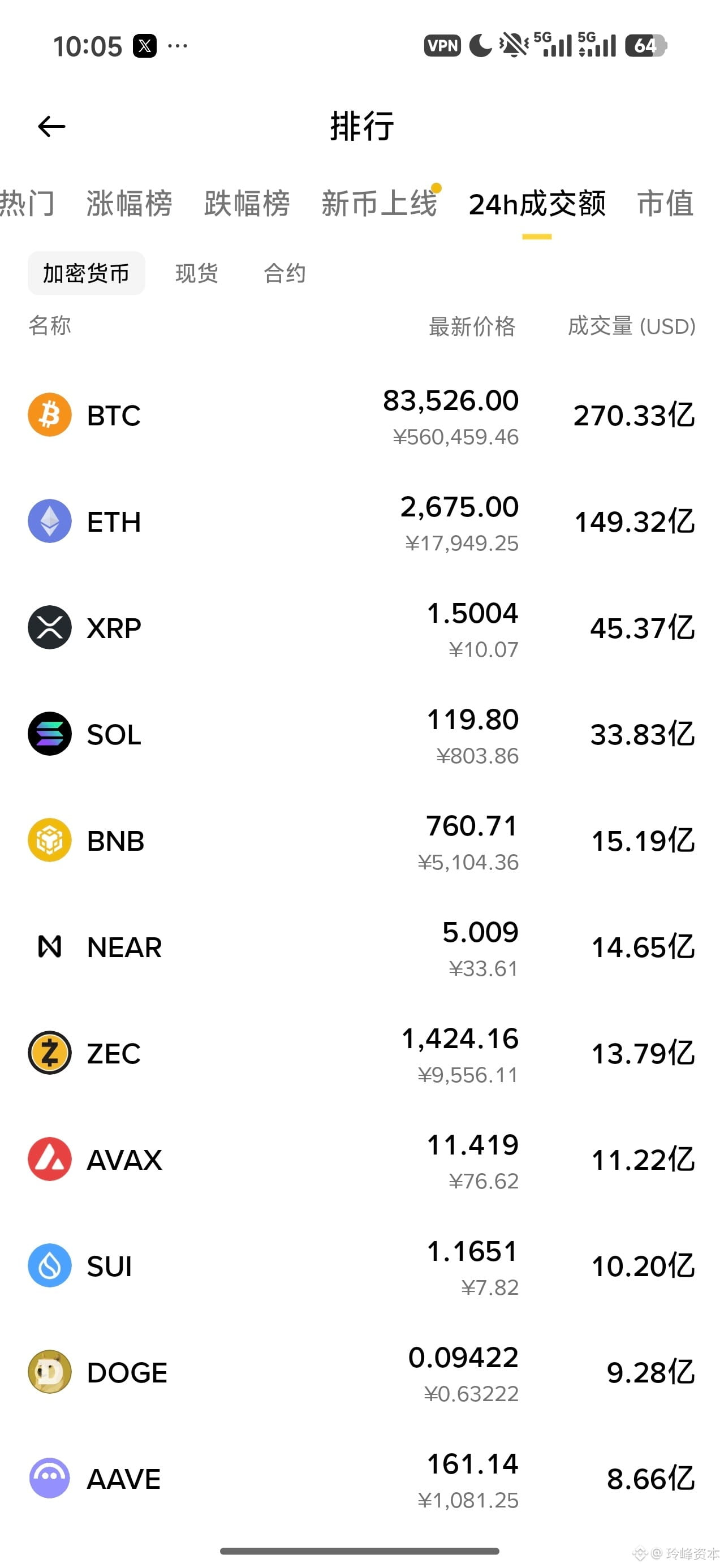
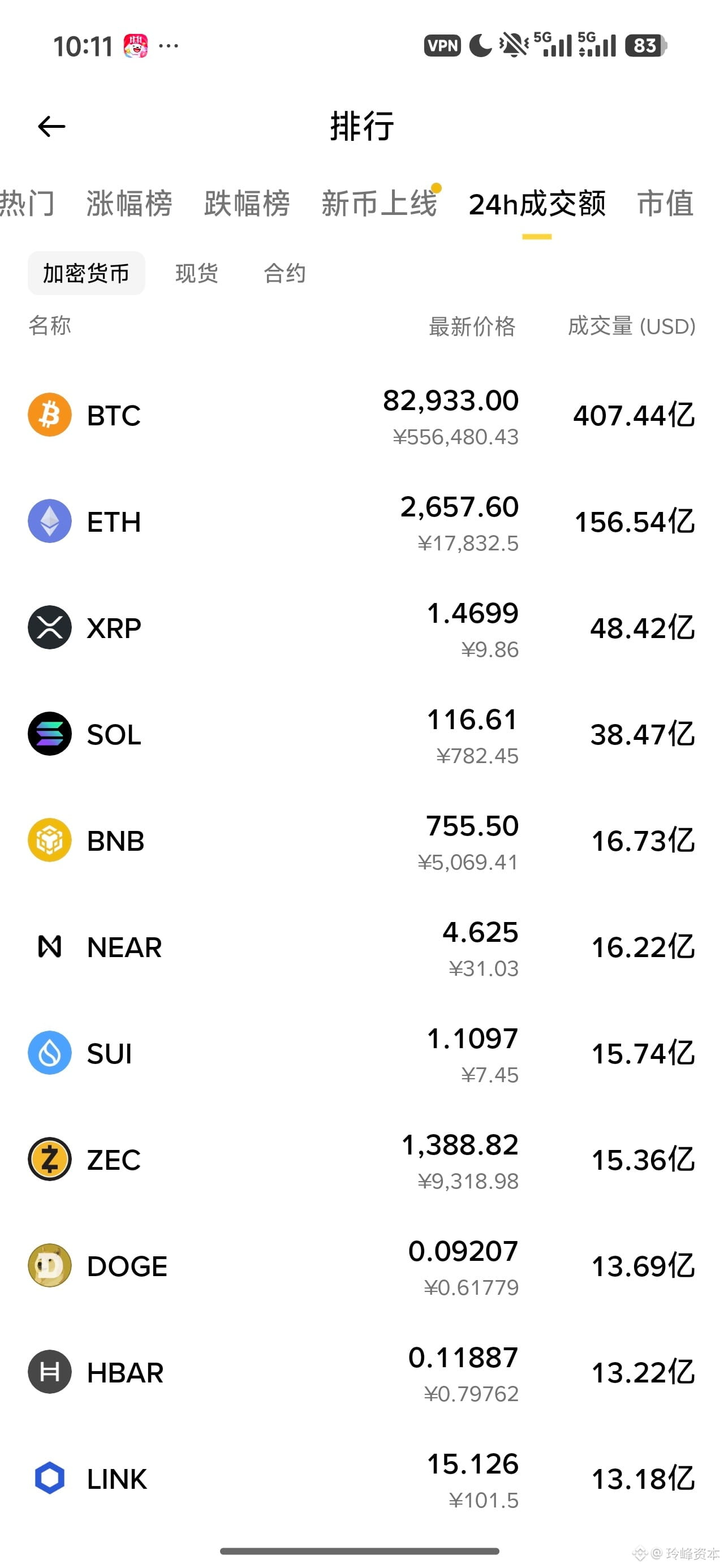
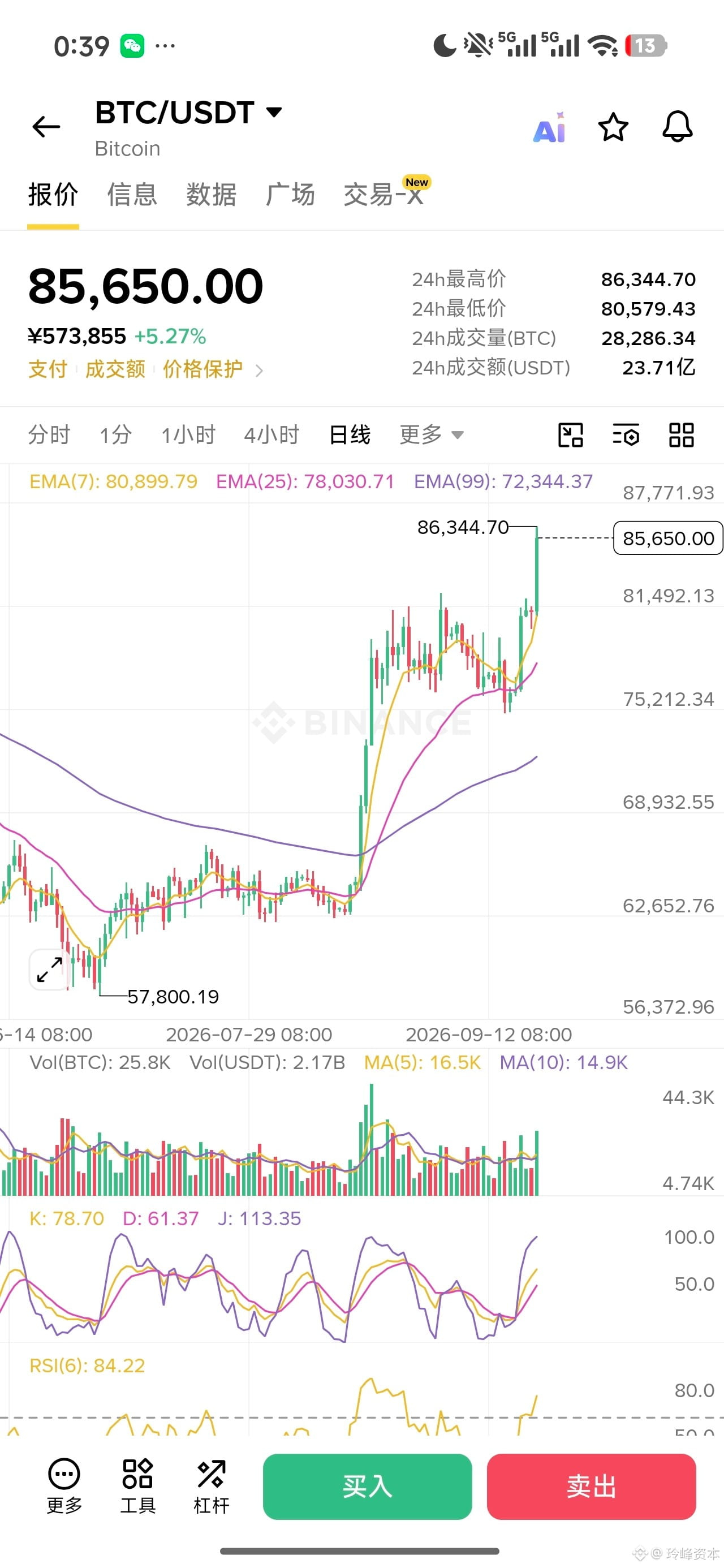
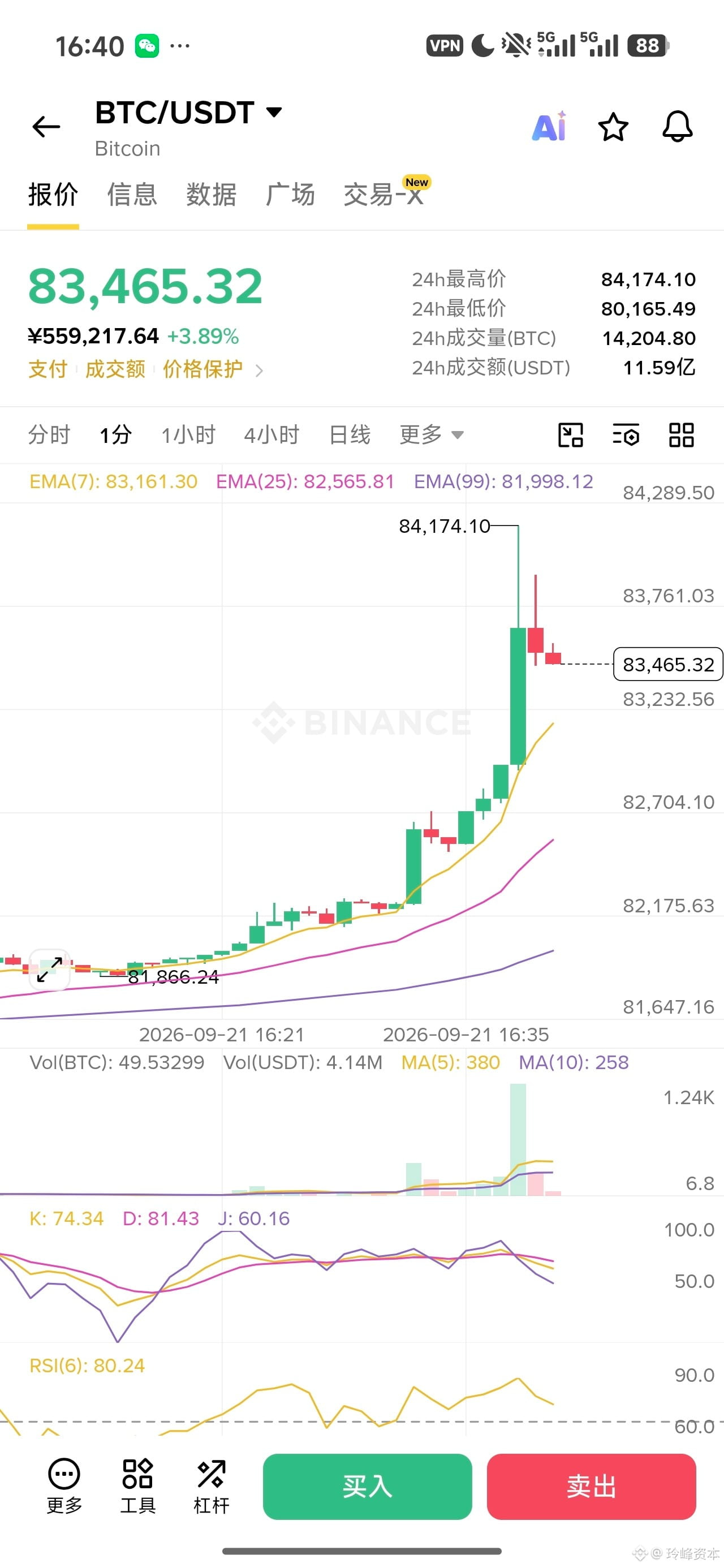
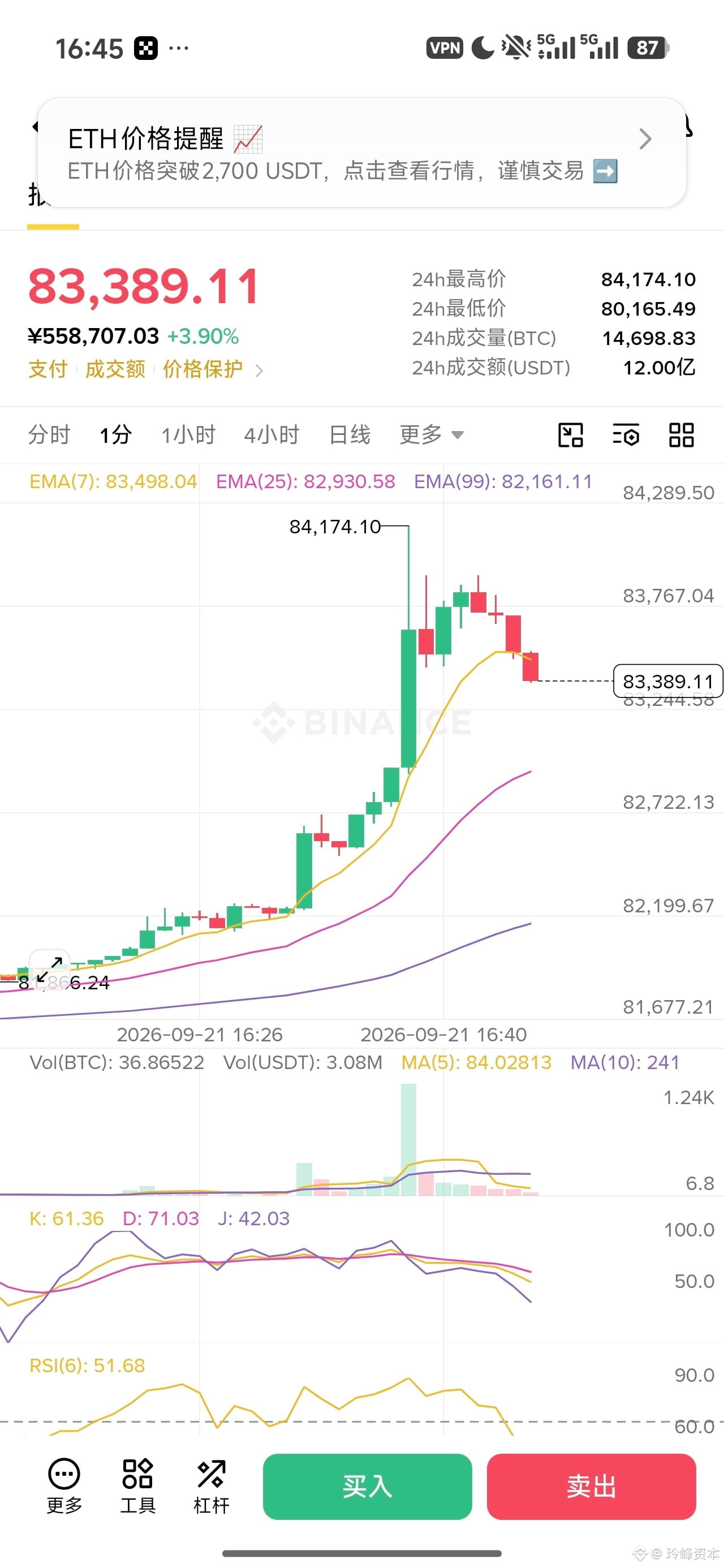
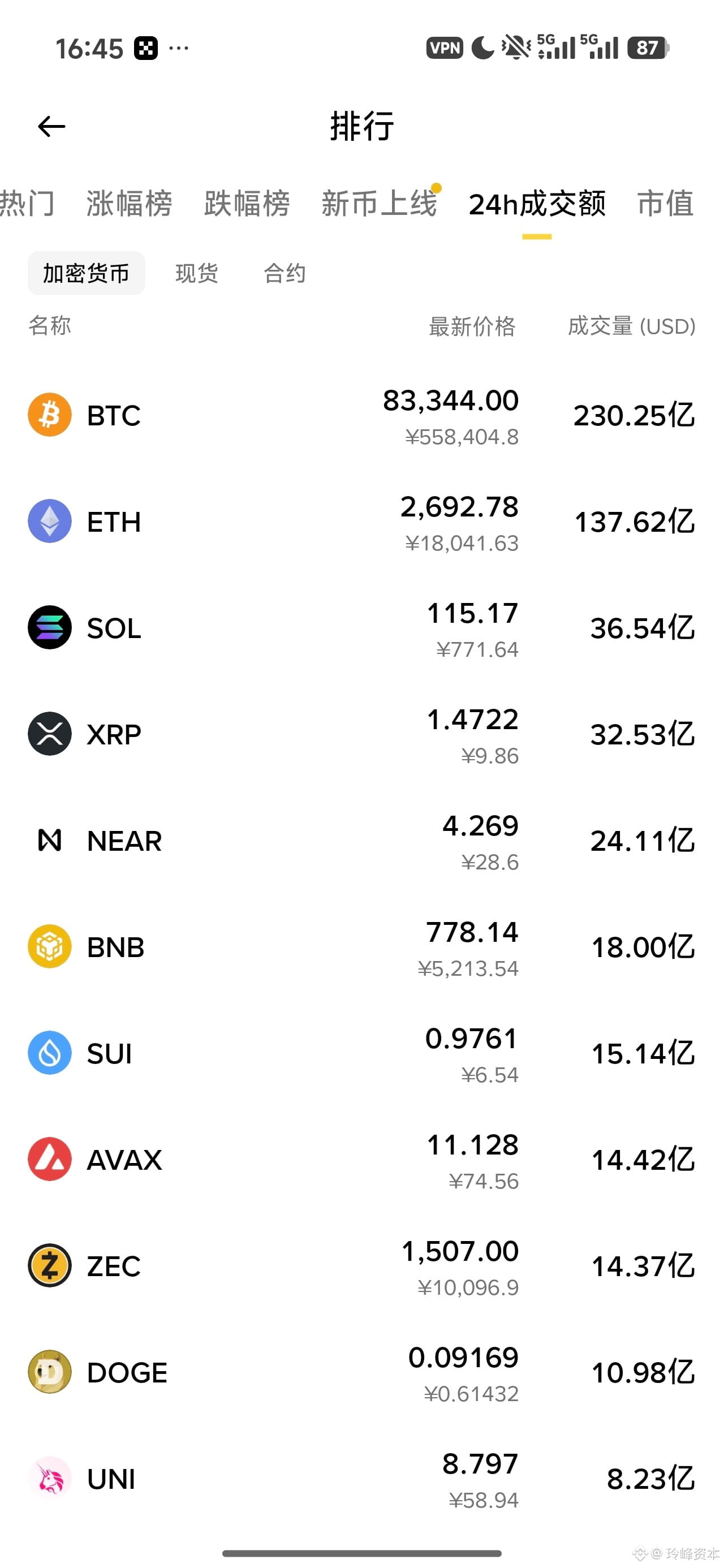
Big Bear City is unimaginable. Wait patiently. There will be a day soon. Just like when Bitcoin crashed 20%. Unfortunately, Bitcoin can’t crash 50% in a day. Even 30% is extremely difficult. But a 20% drop in a day is completely normal. And right now, when Bitcoin hits a daily limit-down of 10%, that already counts as a major crash. Very soon, Bitcoin will experience a 20% drop in a day. A 20% crash is normal—but it may not be the bottom. Still, the bottom generally comes with a 20% crash, so let’s wait and see. When Bitcoin drops 20% in a day, other cryptocurrencies will definitely crash and double down in the downward direction. At that time, everyone in the market will be afraid. That’s when we should decisively accumulate positions. Which chips are high-quality targets? First choice: Bitcoin. Bitcoin is yyds. Bitcoin is the ultimate form of digital currency. Does Bitcoin still have investment value? Of course it does. Bitcoin’s volatility may decrease, but it can drive the bull and bear cycles of digital currencies. Bitcoin’s four-year halving cycle brings the bull-bear cycle, which also causes similar cycles for other digital currencies. But the final fate of 99% of tokens is to go to zero. Because they can drop 90%, then drop another 90%—and going to zero is no different. Bitcoin can outperform 99% of tokens. Very few cryptocurrencies can outperform Bitcoin. In a big market cycle, only a handful of high-quality projects can outperform Bitcoin’s upside. In the last bull market, even Ethereum didn’t outperform Bitcoin. This time, the tokens that can outperform Bitcoin will be even fewer. Only a small number of underlying assets can outperform Bitcoin. And from bnb onward—regarding the leading platform tokens—each cycle’s final outcome is that the top few platform coins can all outperform Bitcoin.
The severity of this round of the “Great Bear Market” is hard to predict. Just keep a calm mindset and wait patiently—Bitcoin will soon see a signature single-day crash of 20%. Unfortunately, Bitcoin has already completely said goodbye to the extreme scenario of a 50% single-day crash, and even a one-off 30% pullback is extremely rare. But a 20% daily drop will become a regular pattern in the bear market. Now the market’s volatility threshold has fallen; a 10% single-day drop in Bitcoin is already considered a major selloff. Not for long—Bitcoin will likely experience a deep single-day crash of 20%. This kind of行情 is very common in bear markets. A rapid 20% plunge in a single day cannot directly confirm the bottom, but in every round of ultimate major bottoms, this kind of rapid “shake-out” selloff is unavoidable. We’ll wait for the market to play out. Once Bitcoin begins a single-day 20% drop, all digital currencies across the entire market will face doubled-down declines. Panic peaks, retail investors’ confidence collapses completely—this is precisely the excellent window for us to go against the trend and heavily accumulate positions. Among all investment targets, Bitcoin has the highest priority. Bitcoin is the true top-tier darling of the crypto world—an irreplaceable final form of digital currency. Bitcoin still offers very high long-term investment value, even if its volatility is no longer as wild; it continues to dominate the entire crypto bull–bear cycle. The Bitcoin four-year halving cycle remains constant, creating repeated rounds of bull and bear cycles, and all altcoins move in sync with the cycle. The harsh reality of the market is that 99% of tokens ultimately go to zero—after multiple rounds of super crashes, their value is wiped out. Bitcoin’s stability is far ahead; it can easily outperform 99% of tokens, which ordinary altcoins simply cannot match. Over the complete long cycle, only a very small number of premium projects can outperform Bitcoin’s upside. In the previous bull market, Ethereum’s gains lagged behind Bitcoin. In this round, the assets that can surpass Bitcoin will be even rarer. Historical market patterns prove that only a handful of top-tier assets can generate excess returns. Since the rise of BNB, in each bull market, the leading platform coins consistently end up delivering returns that beat Bitcoin.
The Bear Market in Daxiong City is unimaginable. Wait patiently. There will be a day soon. When Bitcoin drops 20% in a single day—unfortunately, it can’t drop 50% in a day. Even 30% is very, very difficult. But a daily drop of 20% is quite normal. And for Bitcoin right now, a daily 10% limit-down already counts as a big crash. Very soon, Bitcoin will see a day with a 20% drop. A 20% crash is normal. But it may not necessarily be the bottom. The bottom usually is accompanied by a 20% crash—let’s wait and see. When Bitcoin drops 20% in a day, other digital currencies will definitely double in their crash. At that time, everyone in the market will be afraid. We should then aggressively accumulate positions. Which coins are high-quality assets? First choice: Bitcoin. Bitcoin is the real yyds. Bitcoin is the ultimate form of digital currency. Does Bitcoin still have investment value? Of course it does. Bitcoin’s volatility may decrease, but Bitcoin can drive the bull-and-bear cycles of digital currencies. Bitcoin’s four-year halving cycle brings about bull-and-bear cycles, which means other digital currencies will also follow similar cycles. But the final fate of 99% of tokens is to go to zero. Because they can crash 90%, then crash 90% again—there’s no difference from going to zero. Bitcoin can outperform 99% of tokens. Very few digital currencies can outperform Bitcoin. In a major cycle, only a handful of high-quality projects can outperform Bitcoin’s upside. In the last bull market, even Ethereum failed to outperform Bitcoin. This time, there will be even fewer tokens that can outperform Bitcoin. Only a few can. From BNB—no, since then—those leading platform tokens, in every cycle, can ultimately outperform Bitcoin.
An unimaginable super bearish market is approaching. Stay patient and wait quietly—soon Bitcoin will experience a single-day crash of 20%. Unfortunately, Bitcoin no longer has extreme single-day drops of 50%; even a single-day decline of 30% is exceptionally rare. However, a 20% single-day pullback will occur frequently. Today’s market tolerance is extremely low: a 10% single-day drop in Bitcoin already counts as a major selloff. Before long, Bitcoin will surely produce a deep single-day drop of 20%. This kind of adjustment is standard bear-market behavior. A rapid 20% plunge in one day does not mean the market’s ultimate bottom, but in each cycle’s major bottom, this rapid liquidation is what completes emotional clearing. We just need to wait patiently for the realization. Once Bitcoin begins a 20% single-day crash, the declines of all alternative cryptocurrencies will double in magnitude—panic spreads across the entire network, and retail investors become completely desperate. This is the golden moment for us to counter the trend and accumulate aggressively, with heavy positioning. High-quality coins are best to start with Bitcoin: Bitcoin is the core foundation of the crypto world and the true ultimate form of digital currency. Bitcoin’s long-term investment value absolutely exists. It’s just that the volatility range has decreased compared with the past, yet Bitcoin still dominates the entire market’s bull-and-bear cycles. The four-year Bitcoin halving rule creates a fixed pattern of bull-and-bear rotation, and all coins rise and fall in rhythm with this cycle. The harsh truth of the market: 99% of all tokens eventually go to zero. After multiple rounds of extremely massive selloffs, their value is completely wiped out without exception. Bitcoin steadily compounds in the long run and can easily outperform 99% of market tokens. Most digital currencies can’t match it. In a full long-cycle, only a very small number of top-tier projects can outperform Bitcoin. In the previous bull market, Ethereum’s upside lagged behind Bitcoin. In this cycle, the targets that can surpass Bitcoin will be even scarcer. Looking across every bull-and-bear cycle in history, only a few leading assets have been able to deliver outsized returns. Starting with BNB’s strong bull run, in each bull market, the leading platform coins ultimately generate returns that reliably beat Bitcoin.
Log in to explore more content
Join global crypto users on Binance Square
⚡️ Get latest and useful information about crypto.
💬 Trusted by the world’s largest crypto exchange.
👍 Discover real insights from verified creators.
Email / Phone number
Sitemap
Cookie Preferences
Platform T&Cs