
周东野
528 Posts

周东野
Report
Block User
I'm Dongye from Rian,Dedicated to making life more interesting.
热爱自己热爱的东西,分析、家庭、分享、新闻、加密、公益。
声明:所有推文皆为个人观点,不构成任何投资建议。
投资有风险,入市需谨慎。合作私聊
Open Trade
High-Frequency Trader
5.3 Years
21 Following
7.4K+ Followers
1.2K+ Liked
Posts
Portfolio
All
Quotes
Videos
Live
·
--
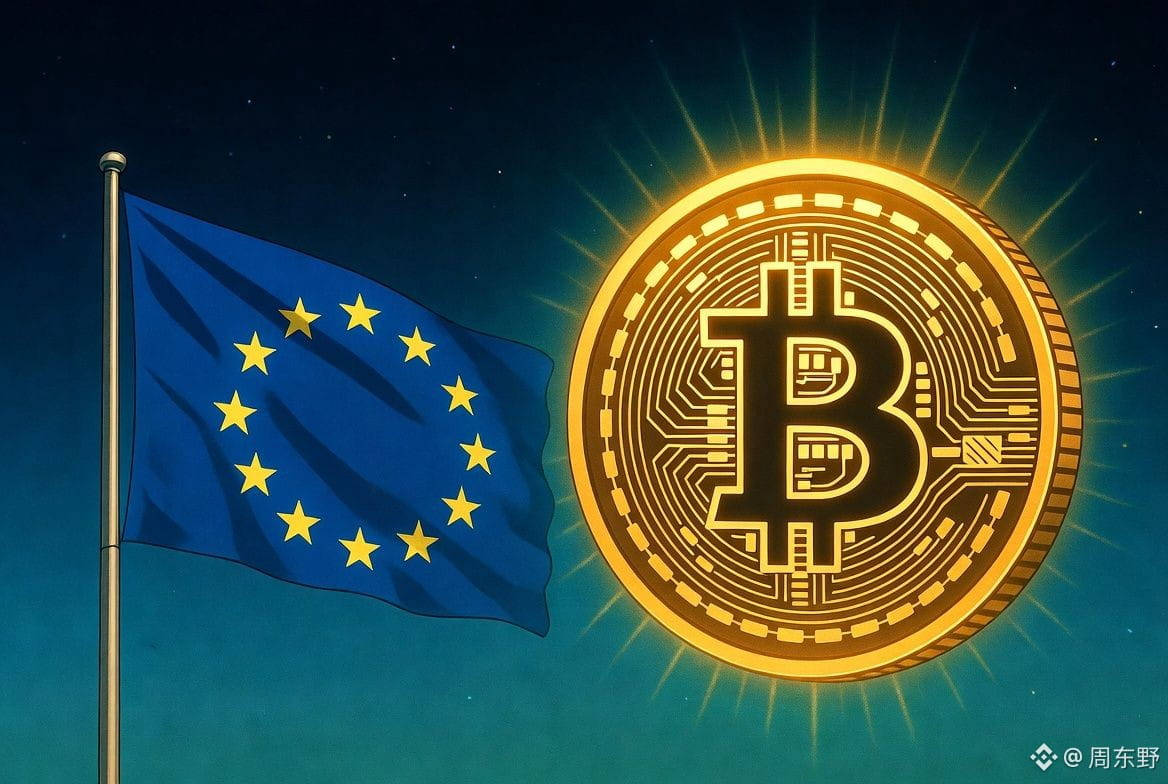
The EU’s anti–money laundering (AML) oversight draws such an exact “line in the sand” for the crypto industry. The Central Contact Point (CCP) framework is directly extended to crypto asset service providers (CASPs).
In simple terms, if you want to solicit users or provide services in an EU member state, then regardless of whether your servers are tucked away on an offshore island and your compliance team is all operating remotely overseas, you must establish a real, tangible local point of contact within that country’s borders.
In the past, many cross-border exchanges have been best at playing hide-and-seek—making their legal entities into extremely complex stacked structures. Once a regulator, or even law enforcement in a given country, needs to obtain the transaction trail of suspect funds or issue a freeze order, they often find that no legal responsible party can be located locally. The official letters either go nowhere or get kicked around between different overseas shell companies.
Once the CCP framework is implemented, this kind of compliance-arbitrage space is basically shut down. EU regulators effectively require exchanges to point the muzzle of their operation right at their own foreheads: they must designate a “fall guy” or “responsible party” who can be summoned at any time locally and will bear legal consequences.
If a platform becomes involved in money laundering or funds connected to fraud are being parked, and regulators can’t obtain data or need urgent intervention, they no longer need to file cross-border judicial assistance requests. They can simply come directly to this local point of contact for people and data. If you don’t cooperate, the platform can be taken down on the spot, or even a local penalty mechanism can be triggered.
This also means that asset-light mid- and small-sized exchanges that rely on a few offshore licenses and take a “grey route” to penetrate the EU market will see their compliance costs rise exponentially.
Because each member state will require you to attach a figurehead and an entity, the costs of fulfilling legal obligations later, compliance audit costs, and the possibility of being subject to joint regulatory liability at any time will directly squeeze these platforms’ profit margins.
The impact on the entire industry is actually quite certain: the compliance “game” has completely evolved into a wall-building contest based on the size of funds and legal resources. Large, top-tier licensed exchanges can use this opportunity to further take control of pricing power in Europe, while market makers and liquidity channels operating in the grey zone will be forced to shift toward decentralized on-chain privacy protocols—or even deeper underground networks. The second- and third-tier CEXs that survive in the gaps will only be able to scale back their business or be acquired.$BTC
#欧盟扩中央联络点框架至加密服务商
The EU’s anti–money laundering (AML) oversight draws such an exact “line in the sand” for the crypto industry. The Central Contact Point (CCP) framework is directly extended to crypto asset service providers (CASPs).
In simple terms, if you want to solicit users or provide services in an EU member state, then regardless of whether your servers are tucked away on an offshore island and your compliance team is all operating remotely overseas, you must establish a real, tangible local point of contact within that country’s borders.
In the past, many cross-border exchanges have been best at playing hide-and-seek—making their legal entities into extremely complex stacked structures. Once a regulator, or even law enforcement in a given country, needs to obtain the transaction trail of suspect funds or issue a freeze order, they often find that no legal responsible party can be located locally. The official letters either go nowhere or get kicked around between different overseas shell companies.
Once the CCP framework is implemented, this kind of compliance-arbitrage space is basically shut down. EU regulators effectively require exchanges to point the muzzle of their operation right at their own foreheads: they must designate a “fall guy” or “responsible party” who can be summoned at any time locally and will bear legal consequences.
If a platform becomes involved in money laundering or funds connected to fraud are being parked, and regulators can’t obtain data or need urgent intervention, they no longer need to file cross-border judicial assistance requests. They can simply come directly to this local point of contact for people and data. If you don’t cooperate, the platform can be taken down on the spot, or even a local penalty mechanism can be triggered.
This also means that asset-light mid- and small-sized exchanges that rely on a few offshore licenses and take a “grey route” to penetrate the EU market will see their compliance costs rise exponentially.
Because each member state will require you to attach a figurehead and an entity, the costs of fulfilling legal obligations later, compliance audit costs, and the possibility of being subject to joint regulatory liability at any time will directly squeeze these platforms’ profit margins.
The impact on the entire industry is actually quite certain: the compliance “game” has completely evolved into a wall-building contest based on the size of funds and legal resources. Large, top-tier licensed exchanges can use this opportunity to further take control of pricing power in Europe, while market makers and liquidity channels operating in the grey zone will be forced to shift toward decentralized on-chain privacy protocols—or even deeper underground networks. The second- and third-tier CEXs that survive in the gaps will only be able to scale back their business or be acquired.$BTC
#欧盟扩中央联络点框架至加密服务商
In simple terms, if you want to solicit users or provide services in an EU member state, then regardless of whether your servers are tucked away on an offshore island and your compliance team is all operating remotely overseas, you must establish a real, tangible local point of contact within that country’s borders.
In the past, many cross-border exchanges have been best at playing hide-and-seek—making their legal entities into extremely complex stacked structures. Once a regulator, or even law enforcement in a given country, needs to obtain the transaction trail of suspect funds or issue a freeze order, they often find that no legal responsible party can be located locally. The official letters either go nowhere or get kicked around between different overseas shell companies.
Once the CCP framework is implemented, this kind of compliance-arbitrage space is basically shut down. EU regulators effectively require exchanges to point the muzzle of their operation right at their own foreheads: they must designate a “fall guy” or “responsible party” who can be summoned at any time locally and will bear legal consequences.
If a platform becomes involved in money laundering or funds connected to fraud are being parked, and regulators can’t obtain data or need urgent intervention, they no longer need to file cross-border judicial assistance requests. They can simply come directly to this local point of contact for people and data. If you don’t cooperate, the platform can be taken down on the spot, or even a local penalty mechanism can be triggered.
This also means that asset-light mid- and small-sized exchanges that rely on a few offshore licenses and take a “grey route” to penetrate the EU market will see their compliance costs rise exponentially.
Because each member state will require you to attach a figurehead and an entity, the costs of fulfilling legal obligations later, compliance audit costs, and the possibility of being subject to joint regulatory liability at any time will directly squeeze these platforms’ profit margins.
The impact on the entire industry is actually quite certain: the compliance “game” has completely evolved into a wall-building contest based on the size of funds and legal resources. Large, top-tier licensed exchanges can use this opportunity to further take control of pricing power in Europe, while market makers and liquidity channels operating in the grey zone will be forced to shift toward decentralized on-chain privacy protocols—or even deeper underground networks. The second- and third-tier CEXs that survive in the gaps will only be able to scale back their business or be acquired.$BTC
#欧盟扩中央联络点框架至加密服务商
1.1k
·
--
Verified
The latest U.S. August employment data came in a full three times higher than market expectations, tearing a hole right through the macro outlook that had been gradually easing.
The probability of further rate hikes shot up to 58% on the spot. The Nasdaq and the S&P were the first to buckle under the pressure—fears that liquidity would tighten triggered a new wave of selling in the U.S. stock market.
But if you shift your focus back to the crypto market, the picture is completely different.
$BTC Bitcoin is still firmly holding the $79,000 level. The trading action shows an extremely rare level of resilience. This in turn confirms a key fact: when mainstream capital faces fluctuations in rate expectations, it no longer simply treats crypto assets as a risk satellite of U.S. stocks. The overall positioning and liquidity structure are far more solid than many people assume.
Even more worth paying attention are the unusual moves within specific sub-sectors. Over the past week, $ZEC carved out an independent uptrend that ignored the broader macro backdrop, surging 45% within a single week. For this long-established privacy coin to break through amid rate-hike fears is absolutely not a coincidence or mere retail speculation—it truly reflects deeper liquidity preferences.
When regulatory pressure from the macro environment and rate-hike expectations both intensify, demand for absolute privacy and on-chain anonymous settlement will be amplified by necessity. Every extra point of cost along the compliant route increases the risk-off premium of native privacy networks by a fraction. This anti-fragility to traditional macro liquidity is the underlying logic that allows decentralized privacy assets to be aggressively pulled higher even while the broader market is in turmoil.
#比特币突破79000美元 #zec
The latest U.S. August employment data came in a full three times higher than market expectations, tearing a hole right through the macro outlook that had been gradually easing.
The probability of further rate hikes shot up to 58% on the spot. The Nasdaq and the S&P were the first to buckle under the pressure—fears that liquidity would tighten triggered a new wave of selling in the U.S. stock market.
But if you shift your focus back to the crypto market, the picture is completely different.
$BTC Bitcoin is still firmly holding the $79,000 level. The trading action shows an extremely rare level of resilience. This in turn confirms a key fact: when mainstream capital faces fluctuations in rate expectations, it no longer simply treats crypto assets as a risk satellite of U.S. stocks. The overall positioning and liquidity structure are far more solid than many people assume.
Even more worth paying attention are the unusual moves within specific sub-sectors. Over the past week, $ZEC carved out an independent uptrend that ignored the broader macro backdrop, surging 45% within a single week. For this long-established privacy coin to break through amid rate-hike fears is absolutely not a coincidence or mere retail speculation—it truly reflects deeper liquidity preferences.
When regulatory pressure from the macro environment and rate-hike expectations both intensify, demand for absolute privacy and on-chain anonymous settlement will be amplified by necessity. Every extra point of cost along the compliant route increases the risk-off premium of native privacy networks by a fraction. This anti-fragility to traditional macro liquidity is the underlying logic that allows decentralized privacy assets to be aggressively pulled higher even while the broader market is in turmoil.
#比特币突破79000美元 #zec
The probability of further rate hikes shot up to 58% on the spot. The Nasdaq and the S&P were the first to buckle under the pressure—fears that liquidity would tighten triggered a new wave of selling in the U.S. stock market.
But if you shift your focus back to the crypto market, the picture is completely different.
$BTC Bitcoin is still firmly holding the $79,000 level. The trading action shows an extremely rare level of resilience. This in turn confirms a key fact: when mainstream capital faces fluctuations in rate expectations, it no longer simply treats crypto assets as a risk satellite of U.S. stocks. The overall positioning and liquidity structure are far more solid than many people assume.
Even more worth paying attention are the unusual moves within specific sub-sectors. Over the past week, $ZEC carved out an independent uptrend that ignored the broader macro backdrop, surging 45% within a single week. For this long-established privacy coin to break through amid rate-hike fears is absolutely not a coincidence or mere retail speculation—it truly reflects deeper liquidity preferences.
When regulatory pressure from the macro environment and rate-hike expectations both intensify, demand for absolute privacy and on-chain anonymous settlement will be amplified by necessity. Every extra point of cost along the compliant route increases the risk-off premium of native privacy networks by a fraction. This anti-fragility to traditional macro liquidity is the underlying logic that allows decentralized privacy assets to be aggressively pulled higher even while the broader market is in turmoil.
#比特币突破79000美元 #zec
2
4.5k
·
--
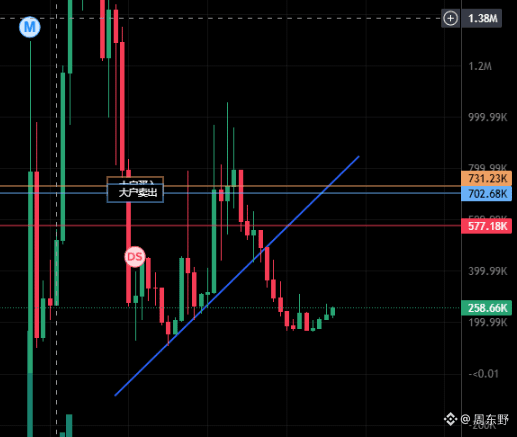
Trading is just like this—if your angle fails, then when everyone trades, you must keep a calm mindset. Remember: don’t get carried away.
Trading is just like this—if your angle fails, then when everyone trades, you must keep a calm mindset. Remember: don’t get carried away.
周东野
·
--
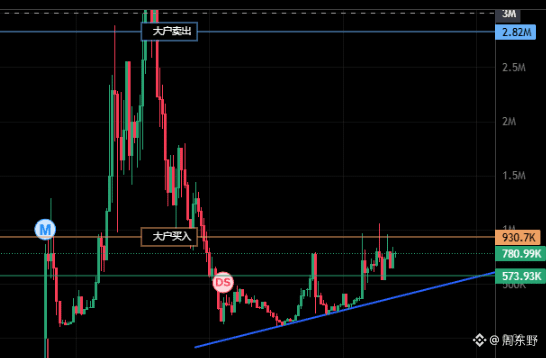
The angle looks pretty good; let's see if you can translate it for me by 8X
388
·
--
The angle looks pretty good; let's see if you can translate it for me by 8X
The angle looks pretty good; let's see if you can translate it for me by 8X
1
1
397
·
--
Verified
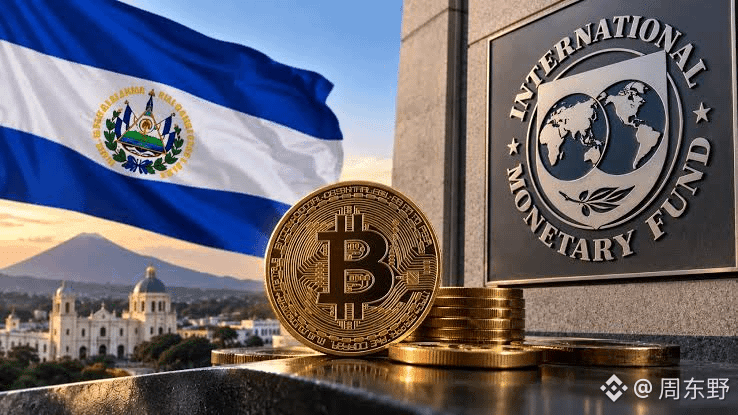
The IMF has just finished auditing El Salvador’s books and confirmed one detail: since the review in June last year, not a cent of public money has been spent on the newly added bitcoin in the treasury; it has all come from private donations.
This directly responds to earlier market skepticism. When El Salvador announced in November last year that its holdings had increased by 1090 coins $BTC , the market generally believed Bukele was once again tapping the treasury to buy the dip, and some even feared this would anger the IMF and trigger a default line in the sand on the $1.4 billion aid agreement. Now, the audit results have successfully kept public finances out of the risk zone.
From the perspective of macro strategy, Bukele’s government had already made an institutional compromise when it signed the agreement with the IMF in December 2024: changing the requirement that merchants must accept bitcoin to a voluntary arrangement, keeping taxes pegged to the U.S. dollar, and removing bitcoin’s hard impact on the fiat system. It then transferred operation of the official Chivo wallet to private capital, with the government retreating to a minority shareholder role and retaining only custodial responsibility for assets.
This combination of measures is essentially a precise de-risking operation.
For the private operator, it gained traffic and fee channels; for users, there is still government-backed custody; for the state budget, the government no longer bears the underlying costs of maintenance and settlement, while both preserving the IMF’s liquidity lifeline and retaining the narrative of a “national-level BTC strategic reserve.”
At present, El Salvador’s National Bitcoin Office holds about 7764 BTC on its books, with assets exceeding $600 million.
Bukele’s earlier high-profile slogan of “buying 1 BTC every day” has, under debt pressure, ultimately narrowed into a political posture sustained by private donations and privatized operations.
When sovereign states try crypto, it is hard to succeed by forcing payment reform through administrative orders. The real solution is to hand high-risk settlement and liquidity back to the market, while the government returns to the roles of regulation and custody. This national experiment has ultimately shifted from an all-or-nothing gamble fueled by enthusiasm to a realistic compromise in institutions and a balance in commerce.
#imf称萨尔瓦多购币未用公共资金
The IMF has just finished auditing El Salvador’s books and confirmed one detail: since the review in June last year, not a cent of public money has been spent on the newly added bitcoin in the treasury; it has all come from private donations.
This directly responds to earlier market skepticism. When El Salvador announced in November last year that its holdings had increased by 1090 coins $BTC , the market generally believed Bukele was once again tapping the treasury to buy the dip, and some even feared this would anger the IMF and trigger a default line in the sand on the $1.4 billion aid agreement. Now, the audit results have successfully kept public finances out of the risk zone.
From the perspective of macro strategy, Bukele’s government had already made an institutional compromise when it signed the agreement with the IMF in December 2024: changing the requirement that merchants must accept bitcoin to a voluntary arrangement, keeping taxes pegged to the U.S. dollar, and removing bitcoin’s hard impact on the fiat system. It then transferred operation of the official Chivo wallet to private capital, with the government retreating to a minority shareholder role and retaining only custodial responsibility for assets.
This combination of measures is essentially a precise de-risking operation.
For the private operator, it gained traffic and fee channels; for users, there is still government-backed custody; for the state budget, the government no longer bears the underlying costs of maintenance and settlement, while both preserving the IMF’s liquidity lifeline and retaining the narrative of a “national-level BTC strategic reserve.”
At present, El Salvador’s National Bitcoin Office holds about 7764 BTC on its books, with assets exceeding $600 million.
Bukele’s earlier high-profile slogan of “buying 1 BTC every day” has, under debt pressure, ultimately narrowed into a political posture sustained by private donations and privatized operations.
When sovereign states try crypto, it is hard to succeed by forcing payment reform through administrative orders. The real solution is to hand high-risk settlement and liquidity back to the market, while the government returns to the roles of regulation and custody. This national experiment has ultimately shifted from an all-or-nothing gamble fueled by enthusiasm to a realistic compromise in institutions and a balance in commerce.
#imf称萨尔瓦多购币未用公共资金
This directly responds to earlier market skepticism. When El Salvador announced in November last year that its holdings had increased by 1090 coins $BTC , the market generally believed Bukele was once again tapping the treasury to buy the dip, and some even feared this would anger the IMF and trigger a default line in the sand on the $1.4 billion aid agreement. Now, the audit results have successfully kept public finances out of the risk zone.
From the perspective of macro strategy, Bukele’s government had already made an institutional compromise when it signed the agreement with the IMF in December 2024: changing the requirement that merchants must accept bitcoin to a voluntary arrangement, keeping taxes pegged to the U.S. dollar, and removing bitcoin’s hard impact on the fiat system. It then transferred operation of the official Chivo wallet to private capital, with the government retreating to a minority shareholder role and retaining only custodial responsibility for assets.
This combination of measures is essentially a precise de-risking operation.
For the private operator, it gained traffic and fee channels; for users, there is still government-backed custody; for the state budget, the government no longer bears the underlying costs of maintenance and settlement, while both preserving the IMF’s liquidity lifeline and retaining the narrative of a “national-level BTC strategic reserve.”
At present, El Salvador’s National Bitcoin Office holds about 7764 BTC on its books, with assets exceeding $600 million.
Bukele’s earlier high-profile slogan of “buying 1 BTC every day” has, under debt pressure, ultimately narrowed into a political posture sustained by private donations and privatized operations.
When sovereign states try crypto, it is hard to succeed by forcing payment reform through administrative orders. The real solution is to hand high-risk settlement and liquidity back to the market, while the government returns to the roles of regulation and custody. This national experiment has ultimately shifted from an all-or-nothing gamble fueled by enthusiasm to a realistic compromise in institutions and a balance in commerce.
#imf称萨尔瓦多购币未用公共资金
1
2
2.9k
·
--
Verified
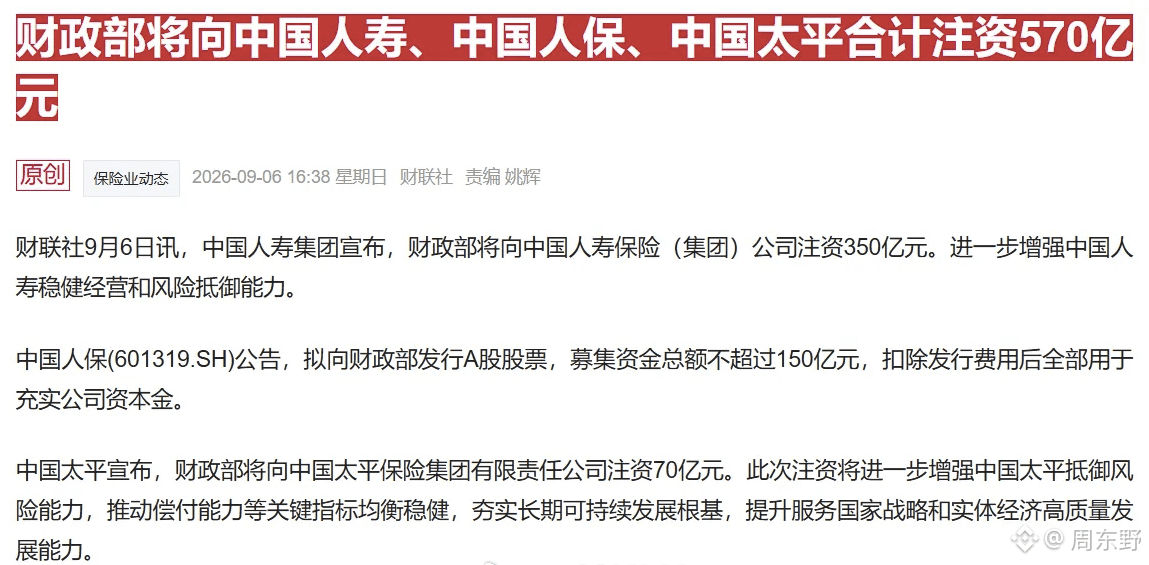
This round of capital injection into the national team is much more urgent than many people expected. This is by no means just a simple liquidity supplement, but a highly realistic defensive battle to protect the balance sheets of the entire system. Don’t wait until it rains to think about repairing the roof; while the weather is still clear, first reinforce the beams and pillars. The capital increase announcements from this batch of financial institutions are, in plain terms, a very clear act of preparing for the worst.
$54 billion is being poured directly into state-owned banks and leading insurers, with the Ministry of Finance and the Tobacco General Company investing real money. Agricultural Bank of China is set to raise 160 billion yuan, ICBC 100 billion yuan, and China Life, Taiping, and PICC are all on the list. This shows that the current pressure has gone beyond a simple contraction in bank lending and has directly pushed insurance funds toward the edge of solvency.
In a low-interest-rate environment, relying on retained profits to replenish capital can no longer keep up with the pace of depletion. Banks are facing narrowing net interest margins and must replenish core Tier 1 capital to support risk assets; insurers, meanwhile, are under extremely heavy pressure from spread-loss risks. The solvency of small and medium-sized insurers is tight, and if leading insurers do not fill their capital base now, they will have no room to maneuver in the secondary market or in real-economy investments.
The Ministry of Finance is stepping in directly to subscribe to A-share private placements, adding ammunition to banks as the main force and adding weight to insurers as stabilizers. By thickening the safety cushion, they will later dare to lend more boldly and make long-term investments to support the transformation of the real economy.
Looking at the stock market, don’t expect an immediate, major bull market in the short term. When the referees begin to massively replenish capital from the top down, it means everyone must be prepared for a prolonged low-interest-rate environment and asset scarcity. But this is indeed a clear long-term support signal. In the long run, the market’s foundation will be more stable, and for those who insist on long-term value investing, it instead brings a higher degree of certainty and confidence.
#中国向银行保险业注资450亿美元 #中国八大金融机构注资3600亿元
This round of capital injection into the national team is much more urgent than many people expected. This is by no means just a simple liquidity supplement, but a highly realistic defensive battle to protect the balance sheets of the entire system. Don’t wait until it rains to think about repairing the roof; while the weather is still clear, first reinforce the beams and pillars. The capital increase announcements from this batch of financial institutions are, in plain terms, a very clear act of preparing for the worst.
$54 billion is being poured directly into state-owned banks and leading insurers, with the Ministry of Finance and the Tobacco General Company investing real money. Agricultural Bank of China is set to raise 160 billion yuan, ICBC 100 billion yuan, and China Life, Taiping, and PICC are all on the list. This shows that the current pressure has gone beyond a simple contraction in bank lending and has directly pushed insurance funds toward the edge of solvency.
In a low-interest-rate environment, relying on retained profits to replenish capital can no longer keep up with the pace of depletion. Banks are facing narrowing net interest margins and must replenish core Tier 1 capital to support risk assets; insurers, meanwhile, are under extremely heavy pressure from spread-loss risks. The solvency of small and medium-sized insurers is tight, and if leading insurers do not fill their capital base now, they will have no room to maneuver in the secondary market or in real-economy investments.
The Ministry of Finance is stepping in directly to subscribe to A-share private placements, adding ammunition to banks as the main force and adding weight to insurers as stabilizers. By thickening the safety cushion, they will later dare to lend more boldly and make long-term investments to support the transformation of the real economy.
Looking at the stock market, don’t expect an immediate, major bull market in the short term. When the referees begin to massively replenish capital from the top down, it means everyone must be prepared for a prolonged low-interest-rate environment and asset scarcity. But this is indeed a clear long-term support signal. In the long run, the market’s foundation will be more stable, and for those who insist on long-term value investing, it instead brings a higher degree of certainty and confidence.
#中国向银行保险业注资450亿美元 #中国八大金融机构注资3600亿元
$54 billion is being poured directly into state-owned banks and leading insurers, with the Ministry of Finance and the Tobacco General Company investing real money. Agricultural Bank of China is set to raise 160 billion yuan, ICBC 100 billion yuan, and China Life, Taiping, and PICC are all on the list. This shows that the current pressure has gone beyond a simple contraction in bank lending and has directly pushed insurance funds toward the edge of solvency.
In a low-interest-rate environment, relying on retained profits to replenish capital can no longer keep up with the pace of depletion. Banks are facing narrowing net interest margins and must replenish core Tier 1 capital to support risk assets; insurers, meanwhile, are under extremely heavy pressure from spread-loss risks. The solvency of small and medium-sized insurers is tight, and if leading insurers do not fill their capital base now, they will have no room to maneuver in the secondary market or in real-economy investments.
The Ministry of Finance is stepping in directly to subscribe to A-share private placements, adding ammunition to banks as the main force and adding weight to insurers as stabilizers. By thickening the safety cushion, they will later dare to lend more boldly and make long-term investments to support the transformation of the real economy.
Looking at the stock market, don’t expect an immediate, major bull market in the short term. When the referees begin to massively replenish capital from the top down, it means everyone must be prepared for a prolonged low-interest-rate environment and asset scarcity. But this is indeed a clear long-term support signal. In the long run, the market’s foundation will be more stable, and for those who insist on long-term value investing, it instead brings a higher degree of certainty and confidence.
#中国向银行保险业注资450亿美元 #中国八大金融机构注资3600亿元
9
2
19
14.3k
·
--
Partly True
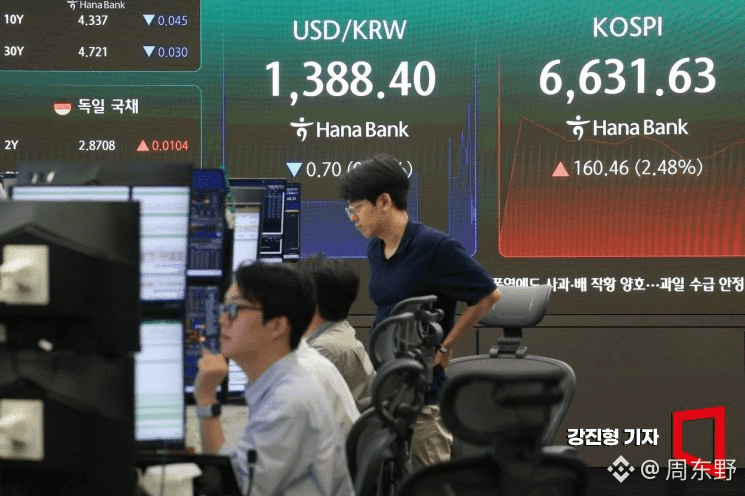
The afterglow of U.S. tech stocks is still driving the Asia session. SK Hynix and Kioxia are surging hard on the lingering semiconductor rally, but behind the market frenzy, the real pricing power is not in chip orders at all, but in the smoke drifting out of the Strait of Hormuz.
Oil prices have been pushed directly above $92.
Iran’s move to “draw exclusion zones” in the strait is basically putting a noose around the global supply chain. On one side is asset inflation driven by semiconductor computing demand; on the other is the inflationary cost created by geopolitical conflict. The market is now trying to hedge a logical fracture with extreme volatility.
More troublesome is the undercurrent in capital flows. Whether the Fed hits the brakes in September depends entirely on this Friday’s CPI data. If the data comes in hotter than expected, a September rate hike will be priced in, and liquidity in global risk assets will be drained again. If the data is softer, rate-cut expectations will rise, and the aftershock of a dollar selloff will instantly flow back into the yen.
Looking at the yen’s current price action, carry-trade unwinding has pushed the exchange rate to around 156. Barclays has already said that GPIF adjusting its bond allocation and the Bank of Japan staying hawkish are catalysts for USD/JPY to break below 150. The barrier to further yen appreciation is being pushed endlessly higher. Anyone blindly buying the yen now is effectively stepping into a blade squeezed by both the Fed and geopolitics.
Europe is not doing much better. Far-right parties won 44% of the vote in a local German election, and the fiscal split brought on by a political shift to the right will feed directly into German bond yields.
The logic right now is extremely simple: don’t be fooled by the opening gains in Asia-Pacific stocks. When the U.S. and Iran directly use drones and tanker attacks against each other, and the Trump administration abandons signing a nuclear deal and shifts straight to strike capability, the long-term risk premium in energy prices has already been forcibly baked into asset pricing.
This is not simply a continuation of a tech-stock bull market; it is a liquidity game woven together by energy inflation and policy mismatch at central banks. The market is using semiconductor beta to mask its fear of geopolitical black swans, but when CPI data and oil prices hit at the same time, the only things that can really save you are highly liquid hard assets and hedging tools.$BTC
#三星sk海力士领涨韩股走高 #美国空袭伊朗油轮德黑兰限制霍尔木兹海峡
The afterglow of U.S. tech stocks is still driving the Asia session. SK Hynix and Kioxia are surging hard on the lingering semiconductor rally, but behind the market frenzy, the real pricing power is not in chip orders at all, but in the smoke drifting out of the Strait of Hormuz.
Oil prices have been pushed directly above $92.
Iran’s move to “draw exclusion zones” in the strait is basically putting a noose around the global supply chain. On one side is asset inflation driven by semiconductor computing demand; on the other is the inflationary cost created by geopolitical conflict. The market is now trying to hedge a logical fracture with extreme volatility.
More troublesome is the undercurrent in capital flows. Whether the Fed hits the brakes in September depends entirely on this Friday’s CPI data. If the data comes in hotter than expected, a September rate hike will be priced in, and liquidity in global risk assets will be drained again. If the data is softer, rate-cut expectations will rise, and the aftershock of a dollar selloff will instantly flow back into the yen.
Looking at the yen’s current price action, carry-trade unwinding has pushed the exchange rate to around 156. Barclays has already said that GPIF adjusting its bond allocation and the Bank of Japan staying hawkish are catalysts for USD/JPY to break below 150. The barrier to further yen appreciation is being pushed endlessly higher. Anyone blindly buying the yen now is effectively stepping into a blade squeezed by both the Fed and geopolitics.
Europe is not doing much better. Far-right parties won 44% of the vote in a local German election, and the fiscal split brought on by a political shift to the right will feed directly into German bond yields.
The logic right now is extremely simple: don’t be fooled by the opening gains in Asia-Pacific stocks. When the U.S. and Iran directly use drones and tanker attacks against each other, and the Trump administration abandons signing a nuclear deal and shifts straight to strike capability, the long-term risk premium in energy prices has already been forcibly baked into asset pricing.
This is not simply a continuation of a tech-stock bull market; it is a liquidity game woven together by energy inflation and policy mismatch at central banks. The market is using semiconductor beta to mask its fear of geopolitical black swans, but when CPI data and oil prices hit at the same time, the only things that can really save you are highly liquid hard assets and hedging tools.$BTC
#三星sk海力士领涨韩股走高 #美国空袭伊朗油轮德黑兰限制霍尔木兹海峡
Oil prices have been pushed directly above $92.
Iran’s move to “draw exclusion zones” in the strait is basically putting a noose around the global supply chain. On one side is asset inflation driven by semiconductor computing demand; on the other is the inflationary cost created by geopolitical conflict. The market is now trying to hedge a logical fracture with extreme volatility.
More troublesome is the undercurrent in capital flows. Whether the Fed hits the brakes in September depends entirely on this Friday’s CPI data. If the data comes in hotter than expected, a September rate hike will be priced in, and liquidity in global risk assets will be drained again. If the data is softer, rate-cut expectations will rise, and the aftershock of a dollar selloff will instantly flow back into the yen.
Looking at the yen’s current price action, carry-trade unwinding has pushed the exchange rate to around 156. Barclays has already said that GPIF adjusting its bond allocation and the Bank of Japan staying hawkish are catalysts for USD/JPY to break below 150. The barrier to further yen appreciation is being pushed endlessly higher. Anyone blindly buying the yen now is effectively stepping into a blade squeezed by both the Fed and geopolitics.
Europe is not doing much better. Far-right parties won 44% of the vote in a local German election, and the fiscal split brought on by a political shift to the right will feed directly into German bond yields.
The logic right now is extremely simple: don’t be fooled by the opening gains in Asia-Pacific stocks. When the U.S. and Iran directly use drones and tanker attacks against each other, and the Trump administration abandons signing a nuclear deal and shifts straight to strike capability, the long-term risk premium in energy prices has already been forcibly baked into asset pricing.
This is not simply a continuation of a tech-stock bull market; it is a liquidity game woven together by energy inflation and policy mismatch at central banks. The market is using semiconductor beta to mask its fear of geopolitical black swans, but when CPI data and oil prices hit at the same time, the only things that can really save you are highly liquid hard assets and hedging tools.$BTC
#三星sk海力士领涨韩股走高 #美国空袭伊朗油轮德黑兰限制霍尔木兹海峡
370
·
--
The latest blockade data released by the U.S. Central Command is quite interesting.
As of September 6, they have forcibly intercepted and ordered 92 merchant ships to change course in the maritime blockade operation targeting Iran, directly disabled 3 ships, and forcibly boarded and inspected 2. In the same period, the Air Force even deployed F-35A stealth fighters over the relevant waters for routine patrols, and firmly stated that this blockade will continue for a long time.
This is by no means a routine patrol; in essence, it is a highly destructive on-chain transactional liquidation and liquidity cutoff.
For shipowners and traders running this route, as long as your cargo, settlement, or ultimate beneficiary involves Iran, you are effectively in a state of public unsecured exposure at sea.
Being ordered to change course means the performance cycle is extended indefinitely, and the resulting demurrage, crew wages, and cargo spoilage risks all have to be borne by private capital.
And the 3 ships that were directly disabled are sending a signal to all shipping players: in key waters controlled by the U.S. military, the cost of friction from violations has risen directly from fines to complete asset destruction.
Even more noteworthy is the routine involvement of the F-35A.
Having fifth-generation fighters patrolling above merchant ships is, bluntly put, using high-precision absolute air superiority to clear away any possibility of resistance for boarding, seizure, and electronic reconnaissance on the surface. This directly squeezes the survival space of small fleets and covert transshipment chains that had previously operated in gray areas to the limit.
But this extremely tough physical blockade cannot possibly have no side effects.
The most direct result is severe volatility in global geopolitical safe-haven funds and shipping insurance rates. When merchant ships normally transiting the waters all have to bear the performance uncertainty of being indiscriminately boarded and inspected, the high performance premium will ultimately be passed on to bulk commodity prices at the end of the chain.
In the final analysis, the U.S. military is using absolute physical force to reshape the underlying settlement rules of the Middle Eastern waters, but trying to completely seal off a mature underground trade network with fifth-generation fighters and maritime interceptions. The marginal monitoring costs it ultimately pays, along with the geopolitical liquidity backlash it triggers, are probably far more far-reaching than the few numbers released in the Command's official figures suggest.$BTC
#美军称对伊海上封锁已使92艘商船改变航向
The latest blockade data released by the U.S. Central Command is quite interesting.
As of September 6, they have forcibly intercepted and ordered 92 merchant ships to change course in the maritime blockade operation targeting Iran, directly disabled 3 ships, and forcibly boarded and inspected 2. In the same period, the Air Force even deployed F-35A stealth fighters over the relevant waters for routine patrols, and firmly stated that this blockade will continue for a long time.
This is by no means a routine patrol; in essence, it is a highly destructive on-chain transactional liquidation and liquidity cutoff.
For shipowners and traders running this route, as long as your cargo, settlement, or ultimate beneficiary involves Iran, you are effectively in a state of public unsecured exposure at sea.
Being ordered to change course means the performance cycle is extended indefinitely, and the resulting demurrage, crew wages, and cargo spoilage risks all have to be borne by private capital.
And the 3 ships that were directly disabled are sending a signal to all shipping players: in key waters controlled by the U.S. military, the cost of friction from violations has risen directly from fines to complete asset destruction.
Even more noteworthy is the routine involvement of the F-35A.
Having fifth-generation fighters patrolling above merchant ships is, bluntly put, using high-precision absolute air superiority to clear away any possibility of resistance for boarding, seizure, and electronic reconnaissance on the surface. This directly squeezes the survival space of small fleets and covert transshipment chains that had previously operated in gray areas to the limit.
But this extremely tough physical blockade cannot possibly have no side effects.
The most direct result is severe volatility in global geopolitical safe-haven funds and shipping insurance rates. When merchant ships normally transiting the waters all have to bear the performance uncertainty of being indiscriminately boarded and inspected, the high performance premium will ultimately be passed on to bulk commodity prices at the end of the chain.
In the final analysis, the U.S. military is using absolute physical force to reshape the underlying settlement rules of the Middle Eastern waters, but trying to completely seal off a mature underground trade network with fifth-generation fighters and maritime interceptions. The marginal monitoring costs it ultimately pays, along with the geopolitical liquidity backlash it triggers, are probably far more far-reaching than the few numbers released in the Command's official figures suggest.$BTC
#美军称对伊海上封锁已使92艘商船改变航向
As of September 6, they have forcibly intercepted and ordered 92 merchant ships to change course in the maritime blockade operation targeting Iran, directly disabled 3 ships, and forcibly boarded and inspected 2. In the same period, the Air Force even deployed F-35A stealth fighters over the relevant waters for routine patrols, and firmly stated that this blockade will continue for a long time.
This is by no means a routine patrol; in essence, it is a highly destructive on-chain transactional liquidation and liquidity cutoff.
For shipowners and traders running this route, as long as your cargo, settlement, or ultimate beneficiary involves Iran, you are effectively in a state of public unsecured exposure at sea.
Being ordered to change course means the performance cycle is extended indefinitely, and the resulting demurrage, crew wages, and cargo spoilage risks all have to be borne by private capital.
And the 3 ships that were directly disabled are sending a signal to all shipping players: in key waters controlled by the U.S. military, the cost of friction from violations has risen directly from fines to complete asset destruction.
Even more noteworthy is the routine involvement of the F-35A.
Having fifth-generation fighters patrolling above merchant ships is, bluntly put, using high-precision absolute air superiority to clear away any possibility of resistance for boarding, seizure, and electronic reconnaissance on the surface. This directly squeezes the survival space of small fleets and covert transshipment chains that had previously operated in gray areas to the limit.
But this extremely tough physical blockade cannot possibly have no side effects.
The most direct result is severe volatility in global geopolitical safe-haven funds and shipping insurance rates. When merchant ships normally transiting the waters all have to bear the performance uncertainty of being indiscriminately boarded and inspected, the high performance premium will ultimately be passed on to bulk commodity prices at the end of the chain.
In the final analysis, the U.S. military is using absolute physical force to reshape the underlying settlement rules of the Middle Eastern waters, but trying to completely seal off a mature underground trade network with fifth-generation fighters and maritime interceptions. The marginal monitoring costs it ultimately pays, along with the geopolitical liquidity backlash it triggers, are probably far more far-reaching than the few numbers released in the Command's official figures suggest.$BTC
#美军称对伊海上封锁已使92艘商船改变航向



Binance News
·
--
U.S. Central Command Says 92 Merchant Ships Diverted in Iran Maritime Blockade Operation
U.S. Central Command said that as of September 6, U.S. forces had ordered 92 merchant ships to change course in their maritime blockade operation against Iran, rendered three ships unable to operate, and boarded two vessels for inspection. Jiemian News reported that the U.S. Air Force also flew an F-35A stealth fighter on patrol over regional waters, and said the U.S. military will continue the operation.
145
·
--
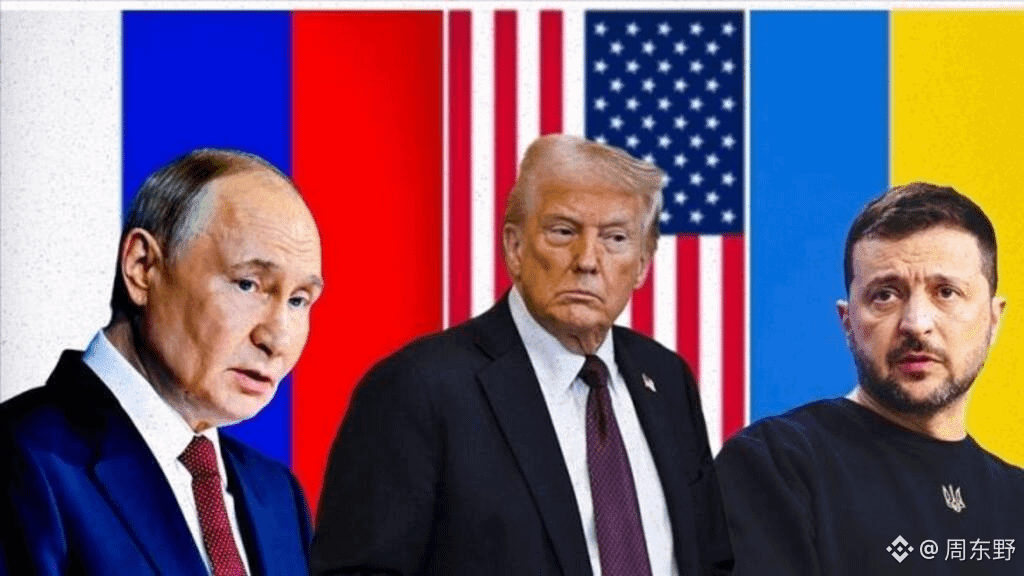
This three-hour late-night closed-door discussion in Moscow laid bare the cruelest and most real “bargaining logic” in great-power rivalry.
On the surface, it looked like Trump’s envoy Witkoff and his son-in-law Kushner were shuttling between capitals in a diplomatic effort to broker a three-day “mutual ceasefire between Kyiv and Moscow.” But this is by no means a glimmer of peace; it is a classic political performance and test of retreating in order to advance.
Putin chose this moment to do the U.S. envoy a favor by announcing a pause in airstrikes on Kyiv. The cost was minimal, yet it precisely seized the initiative. The Russian army’s advance on the front line is hard power, and it is also Russia’s biggest confidence booster at the negotiating table. The so-called “three-day halt to airstrikes on Kyiv” was, in essence, a tactical move that can be restarted at any time, in exchange for trust dividends from the U.S. in political mediation. At the same time, it poured cold water on Ukraine’s hopes of a broader ceasefire, once again sending a signal to the outside world: the pace is still controlled by Moscow, and any broad plan detached from battlefield reality is empty talk.
Ukraine’s response highlights its extreme passivity. Zelensky simultaneously announced a suspension of strikes on Moscow, seemingly to secure a more equal space for interaction, but this equality itself is a passive follow-up driven by U.S. pressure. Facing the U.S. representatives set to arrive in Kyiv on the 6th, Ukraine must rely on this posture to maintain Washington’s attention and political support.
The real core of the U.S. shuttle diplomacy is that Trump’s team is eager to secure tangible political leverage before the upcoming trip to Kyiv. What Kushner and Witkoff want is not an inch of Donbas, but something they can present to American public opinion as a “mediation achievement.” The confirmation by Russia and the U.S. that direct contact between the presidents will be maintained means that for a long time to come, the level at which the war’s trajectory is decided has further tilted toward Moscow and Washington, while Kyiv’s room for tactical choice is being squeezed narrower and narrower.
This kind of short ceasefire can easily collapse at any moment. For observers truly focused on geopolitical developments, who puts what on the negotiating table in these three days is far more consequential than the temporary calm on the battlefield. $BTC
#俄乌同时宣布停火3天
This three-hour late-night closed-door discussion in Moscow laid bare the cruelest and most real “bargaining logic” in great-power rivalry.
On the surface, it looked like Trump’s envoy Witkoff and his son-in-law Kushner were shuttling between capitals in a diplomatic effort to broker a three-day “mutual ceasefire between Kyiv and Moscow.” But this is by no means a glimmer of peace; it is a classic political performance and test of retreating in order to advance.
Putin chose this moment to do the U.S. envoy a favor by announcing a pause in airstrikes on Kyiv. The cost was minimal, yet it precisely seized the initiative. The Russian army’s advance on the front line is hard power, and it is also Russia’s biggest confidence booster at the negotiating table. The so-called “three-day halt to airstrikes on Kyiv” was, in essence, a tactical move that can be restarted at any time, in exchange for trust dividends from the U.S. in political mediation. At the same time, it poured cold water on Ukraine’s hopes of a broader ceasefire, once again sending a signal to the outside world: the pace is still controlled by Moscow, and any broad plan detached from battlefield reality is empty talk.
Ukraine’s response highlights its extreme passivity. Zelensky simultaneously announced a suspension of strikes on Moscow, seemingly to secure a more equal space for interaction, but this equality itself is a passive follow-up driven by U.S. pressure. Facing the U.S. representatives set to arrive in Kyiv on the 6th, Ukraine must rely on this posture to maintain Washington’s attention and political support.
The real core of the U.S. shuttle diplomacy is that Trump’s team is eager to secure tangible political leverage before the upcoming trip to Kyiv. What Kushner and Witkoff want is not an inch of Donbas, but something they can present to American public opinion as a “mediation achievement.” The confirmation by Russia and the U.S. that direct contact between the presidents will be maintained means that for a long time to come, the level at which the war’s trajectory is decided has further tilted toward Moscow and Washington, while Kyiv’s room for tactical choice is being squeezed narrower and narrower.
This kind of short ceasefire can easily collapse at any moment. For observers truly focused on geopolitical developments, who puts what on the negotiating table in these three days is far more consequential than the temporary calm on the battlefield. $BTC
#俄乌同时宣布停火3天
On the surface, it looked like Trump’s envoy Witkoff and his son-in-law Kushner were shuttling between capitals in a diplomatic effort to broker a three-day “mutual ceasefire between Kyiv and Moscow.” But this is by no means a glimmer of peace; it is a classic political performance and test of retreating in order to advance.
Putin chose this moment to do the U.S. envoy a favor by announcing a pause in airstrikes on Kyiv. The cost was minimal, yet it precisely seized the initiative. The Russian army’s advance on the front line is hard power, and it is also Russia’s biggest confidence booster at the negotiating table. The so-called “three-day halt to airstrikes on Kyiv” was, in essence, a tactical move that can be restarted at any time, in exchange for trust dividends from the U.S. in political mediation. At the same time, it poured cold water on Ukraine’s hopes of a broader ceasefire, once again sending a signal to the outside world: the pace is still controlled by Moscow, and any broad plan detached from battlefield reality is empty talk.
Ukraine’s response highlights its extreme passivity. Zelensky simultaneously announced a suspension of strikes on Moscow, seemingly to secure a more equal space for interaction, but this equality itself is a passive follow-up driven by U.S. pressure. Facing the U.S. representatives set to arrive in Kyiv on the 6th, Ukraine must rely on this posture to maintain Washington’s attention and political support.
The real core of the U.S. shuttle diplomacy is that Trump’s team is eager to secure tangible political leverage before the upcoming trip to Kyiv. What Kushner and Witkoff want is not an inch of Donbas, but something they can present to American public opinion as a “mediation achievement.” The confirmation by Russia and the U.S. that direct contact between the presidents will be maintained means that for a long time to come, the level at which the war’s trajectory is decided has further tilted toward Moscow and Washington, while Kyiv’s room for tactical choice is being squeezed narrower and narrower.
This kind of short ceasefire can easily collapse at any moment. For observers truly focused on geopolitical developments, who puts what on the negotiating table in these three days is far more consequential than the temporary calm on the battlefield. $BTC
#俄乌同时宣布停火3天
1
3
4.1k

·
--
YZZ
YZZ

YZZ竹竹
·
--
Bullish#幣安BSC鏈 The latest traffic code everyone’s talking about! The hottest focus is all here:
👑 【#交易量之王 】Invesqo QQQ($QQQB )
Data power: Market cap 41.9M ⚡ 24h trading volume surged to 122M!
Highlights: The fiercest of the entire field, no question! With the double buff of “U.S. stock mapping + on-chain pre-market hype,” both retail and big players are rushing in!
🐱 【#中文圈頂流 】$哈基米
Data power: Market cap 68.3M 🐾 Trading volume 42.7M (holders up to 65,000+)
Highlights: The name itself has the strongest viral power! Who wouldn’t smile at such a cute cat meme? Post this and you instantly come with traffic.
🐂 【#應景玄學幣 】$牛来
Data power: Market cap 98.5M 🚀 Volume 24M
Highlights: This name itself is the strongest lucky charm! It directly maxes out the good omen of “the bull market is here,” and the comments section will definitely have people instantly jumping in to ride the joke.
These three are packed with hype — which one are you planning to jump on?
👑 【#交易量之王 】Invesqo QQQ($QQQB )
Data power: Market cap 41.9M ⚡ 24h trading volume surged to 122M!
Highlights: The fiercest of the entire field, no question! With the double buff of “U.S. stock mapping + on-chain pre-market hype,” both retail and big players are rushing in!
🐱 【#中文圈頂流 】$哈基米
Data power: Market cap 68.3M 🐾 Trading volume 42.7M (holders up to 65,000+)
Highlights: The name itself has the strongest viral power! Who wouldn’t smile at such a cute cat meme? Post this and you instantly come with traffic.
🐂 【#應景玄學幣 】$牛来
Data power: Market cap 98.5M 🚀 Volume 24M
Highlights: This name itself is the strongest lucky charm! It directly maxes out the good omen of “the bull market is here,” and the comments section will definitely have people instantly jumping in to ride the joke.
These three are packed with hype — which one are you planning to jump on?

87


·
--
🎙️ Let me ask, with the market rising like this, has everyone made money?
End
02 h 07 m 50 s
9.2k
24
23
·
--
I am currently offering free analysis of cryptocurrencies (please don’t ask about coins with less than half a year of history,
because there isn’t enough data to support it). If you want it, you can leave a comment,
and if there are comments, I will select 1-2 each day to provide analysis results,
haha, let’s verify things together, learn together, and use it as a reference~
I am currently offering free analysis of cryptocurrencies (please don’t ask about coins with less than half a year of history,
because there isn’t enough data to support it). If you want it, you can leave a comment,
and if there are comments, I will select 1-2 each day to provide analysis results,
haha, let’s verify things together, learn together, and use it as a reference~
because there isn’t enough data to support it). If you want it, you can leave a comment,
and if there are comments, I will select 1-2 each day to provide analysis results,
haha, let’s verify things together, learn together, and use it as a reference~

互相学习进步发财
From 周东野
23
4
106
478
·
--
The anticipation of Federal Reserve rate cuts only marks the beginning of this asset frenzy; what truly pushes both Bitcoin and gold to break to new highs is the underlying, hard-to-reverse fiat-currency credit crisis.
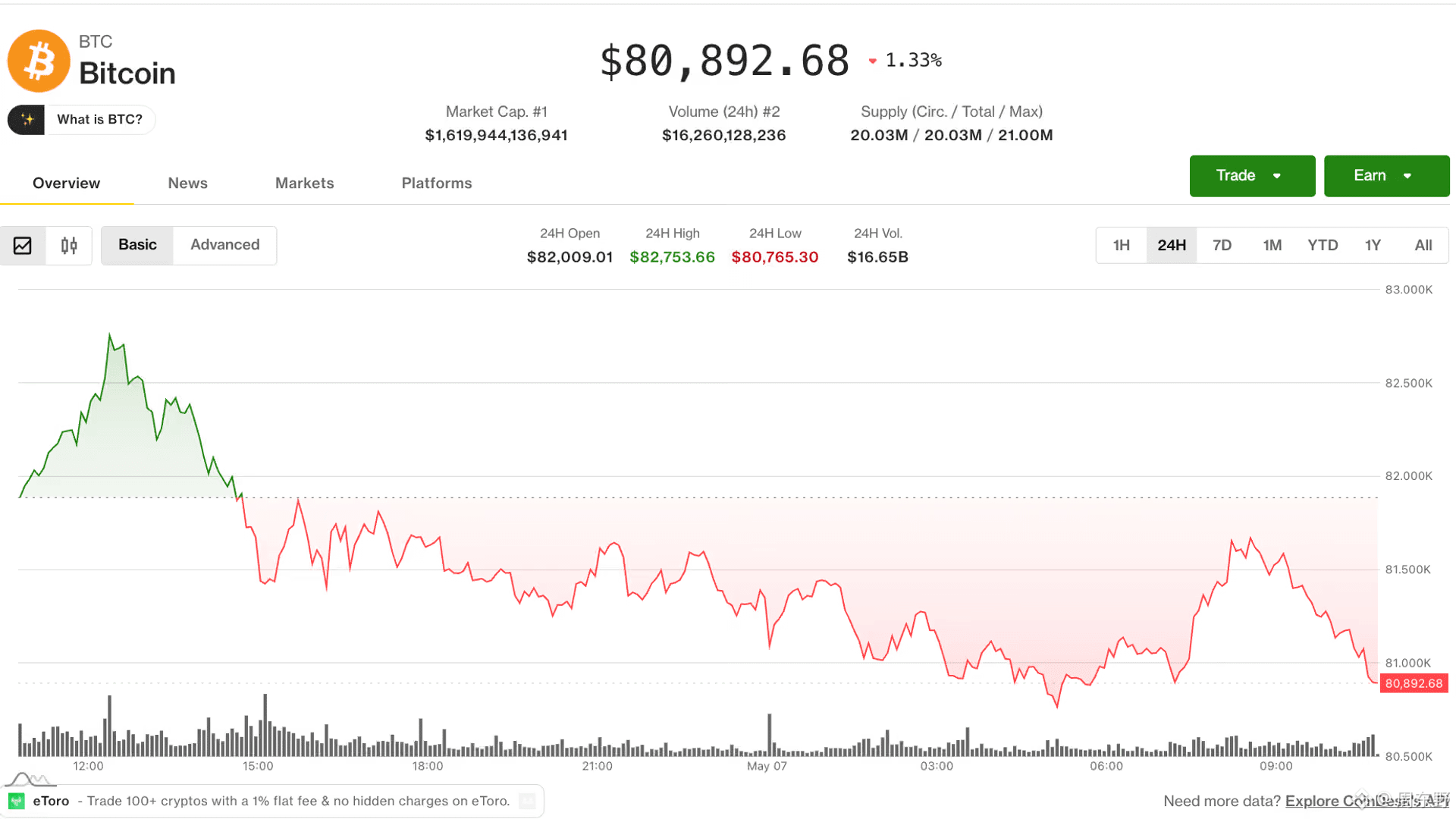
Bitcoin $BTC surged to $82,200, gold futures rose above $4,530 per ounce, and U.S. stocks tied to crypto-related concepts collectively skyrocketed. On the surface, it looks like signals from Fed officials releasing rate-cut expectations lowered funding costs, directly whetting the market’s appetite for high-risk assets.
But explaining the current rally purely as a “rebound in risk appetite” doesn’t fully fit. If it were just rate-cut expectations, a non-yielding safe-haven asset like gold would not show such a strong synchronized uptrend with high-risk crypto assets.
The deeper logic lies in the bottomless pit of U.S. Treasury debt size and the fiscal deficit. To keep long-term interest rates stable, the Treasury has had to conduct massive bond buybacks; and once Fed policy loosens, the market’s worries about the long-term purchasing power of the dollar being diluted are instantly amplified.
Part of the liquid capital in the market is competing for the liquidity premium brought by falling rates, while another portion of long-term capital is preparing in advance to unwind in response to structural high yields in Treasuries and fiat depreciation.
In the past, when dealing with this kind of macro structural risk, institutions had only one real option: gold. Now, however, decentralized Bitcoin—with a hard supply cap—is increasingly being written directly into institutional large-asset allocation ledgers as a hedge against fiat-currency crises.
As long as structural deficits and the impulse to issue debt in major economies cannot be stopped, the resonance between this “digital gold” and “physical gold” won’t be a brief speculation cycle—it will be an inevitable outcome of the fiat-credit overextension period.
Do you find this revised logic—“credit crisis as the main thread, explaining the contradictions between long and short horizons”—reads smoothly? Or do you want it to lean more toward a purely “liquidity rotation” perspective?
#比特币以太坊触及数月高点
The anticipation of Federal Reserve rate cuts only marks the beginning of this asset frenzy; what truly pushes both Bitcoin and gold to break to new highs is the underlying, hard-to-reverse fiat-currency credit crisis.
Bitcoin $BTC surged to $82,200, gold futures rose above $4,530 per ounce, and U.S. stocks tied to crypto-related concepts collectively skyrocketed. On the surface, it looks like signals from Fed officials releasing rate-cut expectations lowered funding costs, directly whetting the market’s appetite for high-risk assets.
But explaining the current rally purely as a “rebound in risk appetite” doesn’t fully fit. If it were just rate-cut expectations, a non-yielding safe-haven asset like gold would not show such a strong synchronized uptrend with high-risk crypto assets.
The deeper logic lies in the bottomless pit of U.S. Treasury debt size and the fiscal deficit. To keep long-term interest rates stable, the Treasury has had to conduct massive bond buybacks; and once Fed policy loosens, the market’s worries about the long-term purchasing power of the dollar being diluted are instantly amplified.
Part of the liquid capital in the market is competing for the liquidity premium brought by falling rates, while another portion of long-term capital is preparing in advance to unwind in response to structural high yields in Treasuries and fiat depreciation.
In the past, when dealing with this kind of macro structural risk, institutions had only one real option: gold. Now, however, decentralized Bitcoin—with a hard supply cap—is increasingly being written directly into institutional large-asset allocation ledgers as a hedge against fiat-currency crises.
As long as structural deficits and the impulse to issue debt in major economies cannot be stopped, the resonance between this “digital gold” and “physical gold” won’t be a brief speculation cycle—it will be an inevitable outcome of the fiat-credit overextension period.
Do you find this revised logic—“credit crisis as the main thread, explaining the contradictions between long and short horizons”—reads smoothly? Or do you want it to lean more toward a purely “liquidity rotation” perspective?
#比特币以太坊触及数月高点
Bitcoin $BTC surged to $82,200, gold futures rose above $4,530 per ounce, and U.S. stocks tied to crypto-related concepts collectively skyrocketed. On the surface, it looks like signals from Fed officials releasing rate-cut expectations lowered funding costs, directly whetting the market’s appetite for high-risk assets.
But explaining the current rally purely as a “rebound in risk appetite” doesn’t fully fit. If it were just rate-cut expectations, a non-yielding safe-haven asset like gold would not show such a strong synchronized uptrend with high-risk crypto assets.
The deeper logic lies in the bottomless pit of U.S. Treasury debt size and the fiscal deficit. To keep long-term interest rates stable, the Treasury has had to conduct massive bond buybacks; and once Fed policy loosens, the market’s worries about the long-term purchasing power of the dollar being diluted are instantly amplified.
Part of the liquid capital in the market is competing for the liquidity premium brought by falling rates, while another portion of long-term capital is preparing in advance to unwind in response to structural high yields in Treasuries and fiat depreciation.
In the past, when dealing with this kind of macro structural risk, institutions had only one real option: gold. Now, however, decentralized Bitcoin—with a hard supply cap—is increasingly being written directly into institutional large-asset allocation ledgers as a hedge against fiat-currency crises.
As long as structural deficits and the impulse to issue debt in major economies cannot be stopped, the resonance between this “digital gold” and “physical gold” won’t be a brief speculation cycle—it will be an inevitable outcome of the fiat-credit overextension period.
Do you find this revised logic—“credit crisis as the main thread, explaining the contradictions between long and short horizons”—reads smoothly? Or do you want it to lean more toward a purely “liquidity rotation” perspective?
#比特币以太坊触及数月高点
314
Log in to explore more content
Join global crypto users on Binance Square
⚡️ Get latest and useful information about crypto.
💬 Trusted by the world’s largest crypto exchange.
👍 Discover real insights from verified creators.
Email / Phone number
Trending Topics
AppleDebutsFoldablePhone
34,043 views
728 Discussing
Apple just dropped the foldable iPhone — and the market is paying attention. This isn't just another product cycle; it's a new product category, a new CEO on stage, and a $1,999 price tag that pushes $AAPL further into ultra-premium territory. Foldables are the narrative, and Apple is now the headline.
#appledebutsfoldablephone #EUExtendsCentralContactPointToCASPs #US10YTreasuryYieldHitsHighestSinceNov2023 #BrentCrudeTops$100 #USTreasuryToBuyBackUpTo$6BLongDatedDebt
KimHotbae
·2 Likes
·2.8k views
TSMCAugustRevenueUp53.3%YoY
5,162 views
188 Discussing
IranSaysReadyToEscalateWarWithUS
8,638 views
214 Discussing