

Lance_52
224 Posts

Lance_52
Report
Block User
Technical accountant 🧮| Criptomonedas💲| Web3 💻| Earn APR & APY 🌱| Perspectiva Conservadora 💡| @Lance_52 👦🏻
Frequent Trader
1.9 Years
84 Following
101 Followers
187 Liked
Posts
All
Quotes
Videos
PINNED
·
--
↑ How to Earn (Staking) on Binances↑💵
I hope this is very helpful to all new users.
😁👍
$USDT $USDC $XUSD 😉
↑ How to Earn (Staking) on Binances↑💵
I hope this is very helpful to all new users.
😁👍
$USDT $USDC $XUSD 😉
I hope this is very helpful to all new users.
😁👍
$USDT $USDC $XUSD 😉
1
1
3
390
PINNED
·
--
↑How to Refund your Coins from Earn (Stakin)↑💵
For those who don't know how to recover their coins and the earned interest in Earn, here is this video.🤩💰
$USDT $BTC $BNB 😉
↑How to Refund your Coins from Earn (Stakin)↑💵
For those who don't know how to recover their coins and the earned interest in Earn, here is this video.🤩💰
$USDT $BTC $BNB 😉
For those who don't know how to recover their coins and the earned interest in Earn, here is this video.🤩💰
$USDT $BTC $BNB 😉
7
2
4
442
·
--
Article
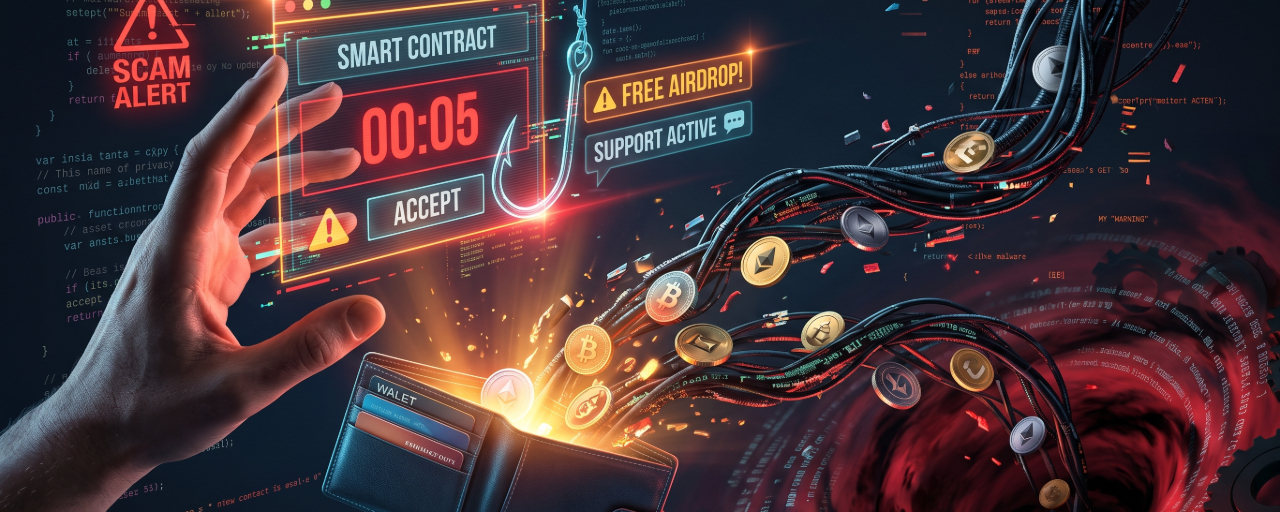
Why Do Experienced People End Up Getting Scammed?How does someone become a victim of a crypto scam?
In the Web3 ecosystem, cybercriminals almost never hack the blockchain or break your wallet’s encryption; instead, they hack your mind.
Scammers follow this psychological sequence:
The Bait (Fake Airdrop / Fake Support DM): They contact you on social media, promising guaranteed returns, an exclusive airdrop, or pretending to be technical support for wallets or exchanges.
False Urgency: They pressure you to act quickly with phrases like “last 5 minutes to claim” or “your account requires immediate verification.” By making you fear missing out (FOMO) or losing access, they cloud or override your judgment.
Why Do Experienced People End Up Getting Scammed?
How does someone become a victim of a crypto scam?
In the Web3 ecosystem, cybercriminals almost never hack the blockchain or break your wallet’s encryption; instead, they hack your mind.
Scammers follow this psychological sequence:
The Bait (Fake Airdrop / Fake Support DM): They contact you on social media, promising guaranteed returns, an exclusive airdrop, or pretending to be technical support for wallets or exchanges.
False Urgency: They pressure you to act quickly with phrases like “last 5 minutes to claim” or “your account requires immediate verification.” By making you fear missing out (FOMO) or losing access, they cloud or override your judgment.
In the Web3 ecosystem, cybercriminals almost never hack the blockchain or break your wallet’s encryption; instead, they hack your mind.
Scammers follow this psychological sequence:
The Bait (Fake Airdrop / Fake Support DM): They contact you on social media, promising guaranteed returns, an exclusive airdrop, or pretending to be technical support for wallets or exchanges.
False Urgency: They pressure you to act quickly with phrases like “last 5 minutes to claim” or “your account requires immediate verification.” By making you fear missing out (FOMO) or losing access, they cloud or override your judgment.
1
2
982
·
--
No matter how often people are warned, they tend to ignore basic security measures in the crypto and Web3 space.
Just because a promotion is “rewarding” you for making a post on Square doesn’t mean it’s official or approved by Binance.
Even if the campaign says you don’t need to link anything, it eventually requires you to hold at least 1,111 of its tokens in your wallet 💥, which means you have to interact with a pool on PancakeSwap. At the very least, people should know what they’re getting into instead of just jumping in blindly.
🤖 Be cautious with the CASH token
No matter how often people are warned, they tend to ignore basic security measures in the crypto and Web3 space.
Just because a promotion is “rewarding” you for making a post on Square doesn’t mean it’s official or approved by Binance.
Even if the campaign says you don’t need to link anything, it eventually requires you to hold at least 1,111 of its tokens in your wallet 💥, which means you have to interact with a pool on PancakeSwap. At the very least, people should know what they’re getting into instead of just jumping in blindly.
🤖 Be cautious with the CASH token
Just because a promotion is “rewarding” you for making a post on Square doesn’t mean it’s official or approved by Binance.
Even if the campaign says you don’t need to link anything, it eventually requires you to hold at least 1,111 of its tokens in your wallet 💥, which means you have to interact with a pool on PancakeSwap. At the very least, people should know what they’re getting into instead of just jumping in blindly.
🤖 Be cautious with the CASH token
55
·
--
No matter how often people are told, some still ignore basic security measures in the crypto and Web3 space.
Just because a promotion is “rewarding” you for making a post on Square doesn’t mean it’s official or approved by Binance.
Even if the campaign says you don’t need to connect anything, it ultimately requires you to hold at least 1,111 of its tokens in your wallet ❗️❗️ and to do that, you have to interact with a pool on PancakeSwap.
At the very least, they should know what they’re getting into instead of just jumping in blindly.
No matter how often people are told, some still ignore basic security measures in the crypto and Web3 space.
Just because a promotion is “rewarding” you for making a post on Square doesn’t mean it’s official or approved by Binance.
Even if the campaign says you don’t need to connect anything, it ultimately requires you to hold at least 1,111 of its tokens in your wallet ❗️❗️ and to do that, you have to interact with a pool on PancakeSwap.
At the very least, they should know what they’re getting into instead of just jumping in blindly.
Just because a promotion is “rewarding” you for making a post on Square doesn’t mean it’s official or approved by Binance.
Even if the campaign says you don’t need to connect anything, it ultimately requires you to hold at least 1,111 of its tokens in your wallet ❗️❗️ and to do that, you have to interact with a pool on PancakeSwap.
At the very least, they should know what they’re getting into instead of just jumping in blindly.
Quoted content has been removed
68
·
--
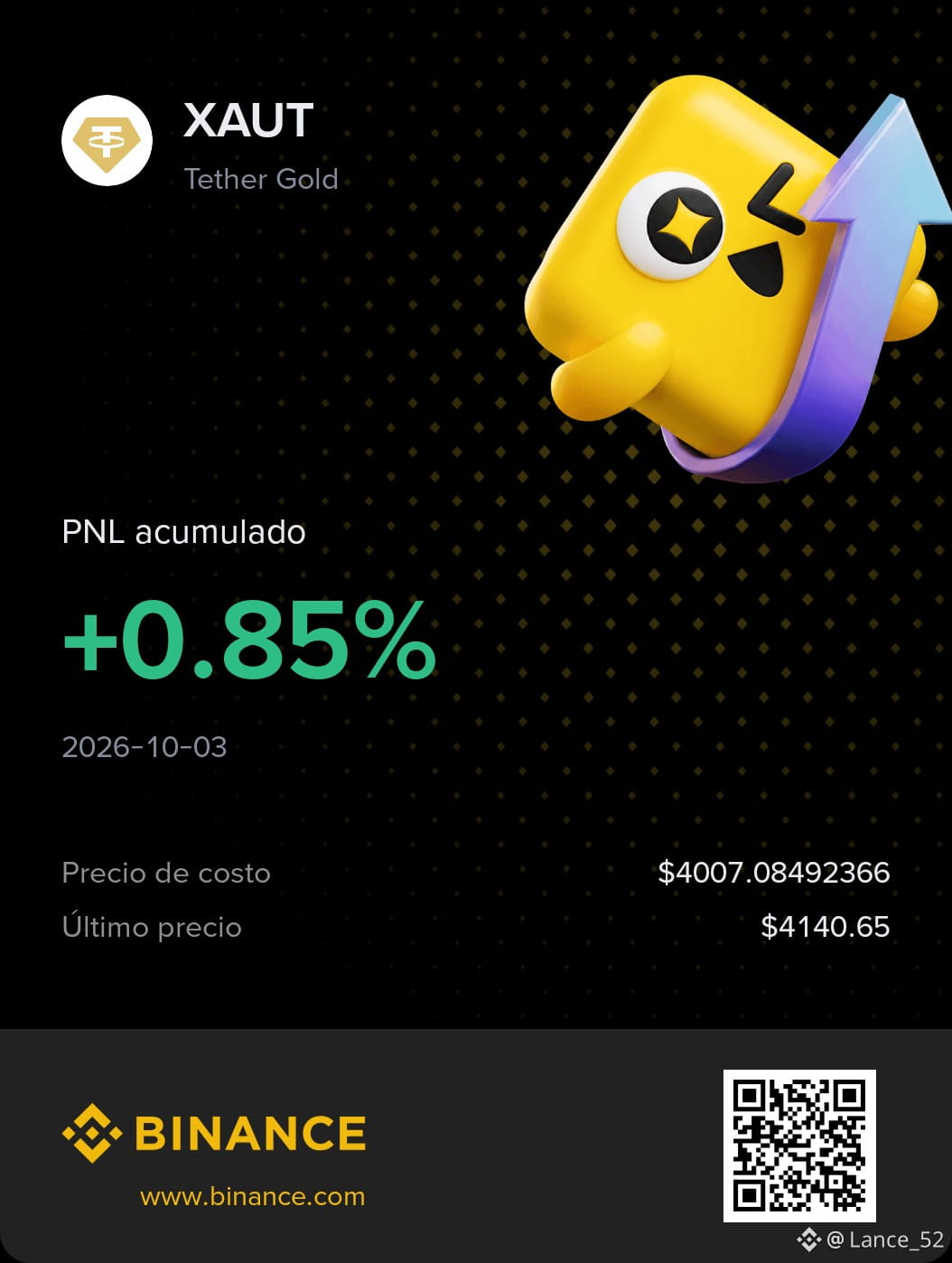
💻 Earning +0.85% with $XAUT
Making a purchase at the right time is just as important as knowing how long to keep it. 💲
We’re still going strong with $XAUT 📊😎
{spot}(XAUTUSDT)
Do you already have a part of your capital in $XAUT ?
💻 Earning +0.85% with $XAUT
Making a purchase at the right time is just as important as knowing how long to keep it. 💲
We’re still going strong with $XAUT 📊😎
Do you already have a part of your capital in $XAUT ?
Making a purchase at the right time is just as important as knowing how long to keep it. 💲
We’re still going strong with $XAUT 📊😎
Do you already have a part of your capital in $XAUT ?
1
437
·
--
Which of these coins would you invest $100 in?
$BTC $ETH $BNB
{spot}(XRPUSDT)
Are you a Bitcoin Maximus, Ether lover, BNB holder, or XRP fanatic?
Which group do you identify with? | 😉
Which of these coins would you invest $100 in?
$BTC $ETH $BNB
Are you a Bitcoin Maximus, Ether lover, BNB holder, or XRP fanatic?
Which group do you identify with? | 😉
$BTC $ETH $BNB
Are you a Bitcoin Maximus, Ether lover, BNB holder, or XRP fanatic?
Which group do you identify with? | 😉
Bitcoin
Ethereum
BNB
XRP, ADA, Otras? (Comenta)
5 day(s) left
139
·
--
⚠️⭕¡𝐁𝐒𝐂𝐀𝐒𝐇/𝐂𝐀𝐒𝐇 and remember it in $BNCB !
I was reviewing this promotion and found some interesting details:
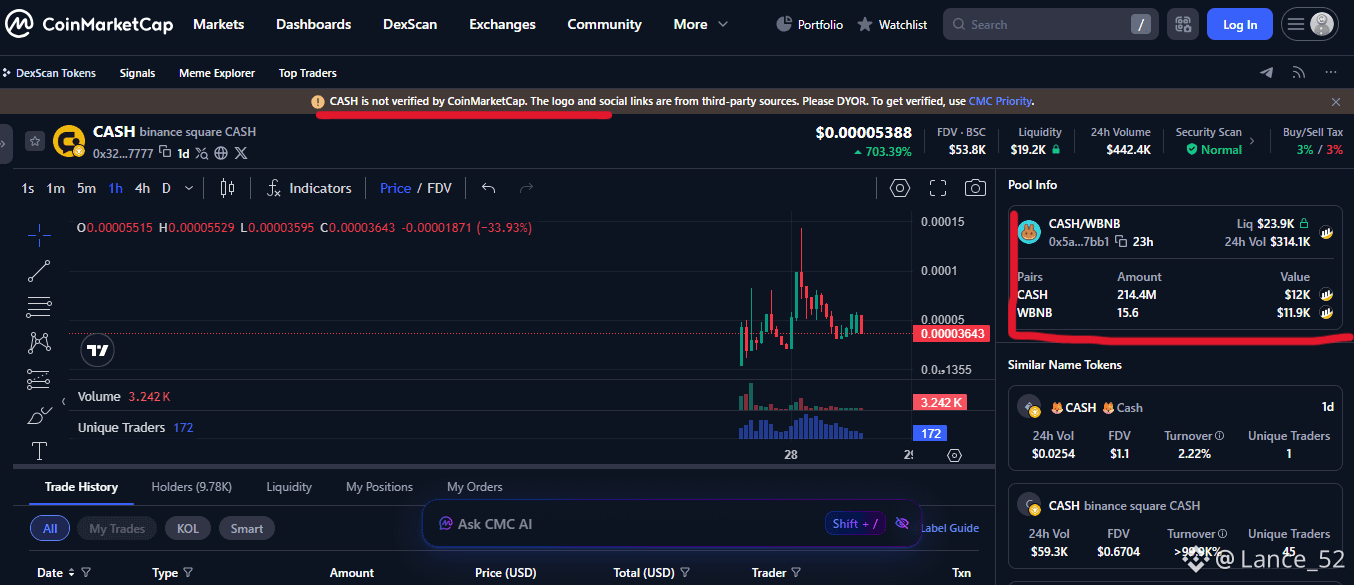
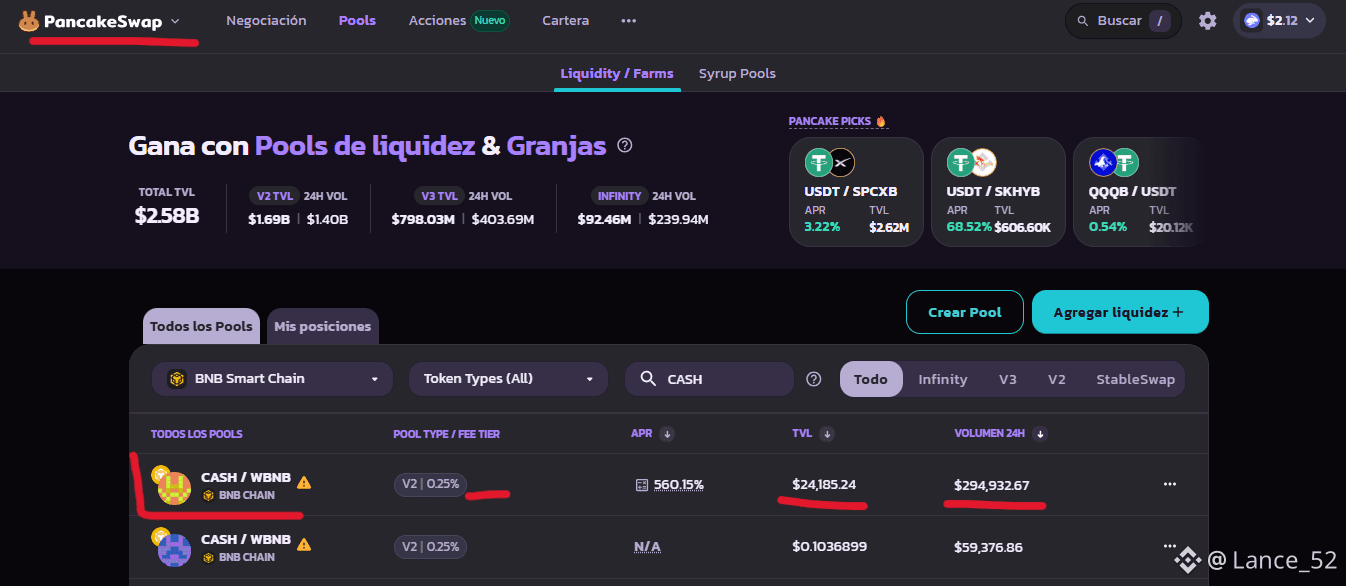
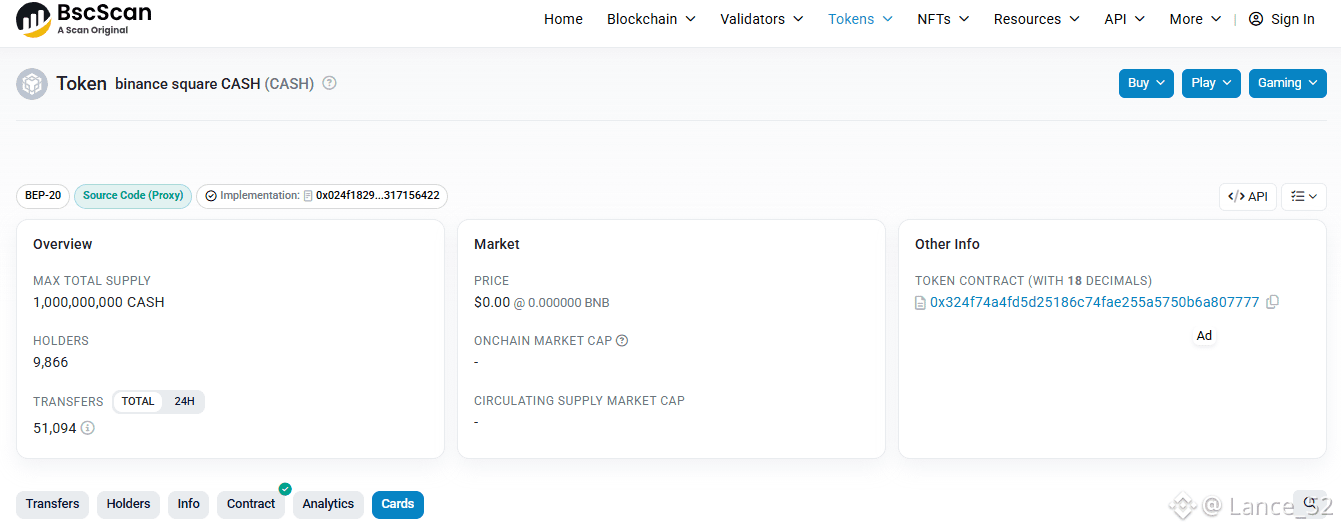
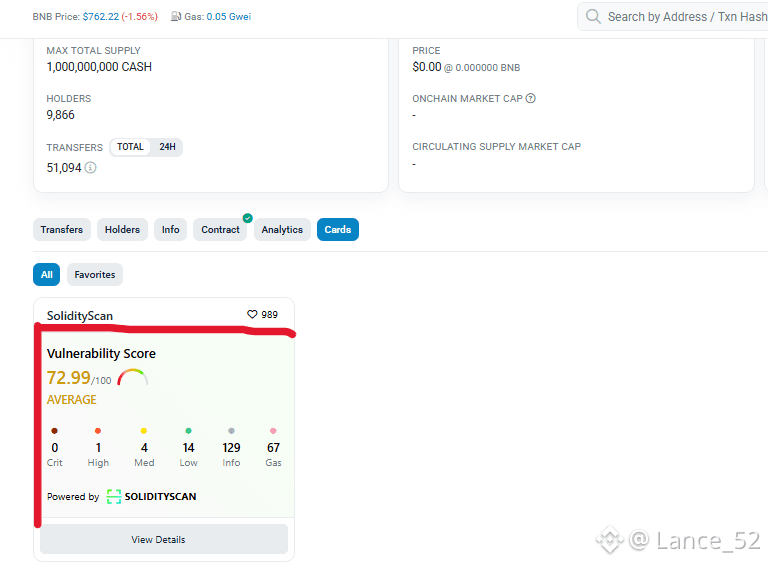
🔹 CASH does exist and has a Pool on PancakeSwap. (With Warning)
🔹 The token applies a 3% tax on buys and 3% on sells.
🔹 BSCASH is not Binance; the project itself states that it is not officially affiliated.
🔹 BNCB is an official asset on Binance, but that doesn’t mean the platform supports this promotion.
🔹 I didn’t find concrete evidence that it’s a scam. (At least for now)
🔹 I did find third-party ads (advertising) that ask you to connect a wallet, even though the promotion says it’s not necessary to do so. (That’s where the potential bigger risk may be)
📍⭕This campaign is not official and is not associated with Binance Creator Pad; the minimum holding of at least 1,111 Cash tokens can only be done through Web3 wallets, and it is currently not a verified token by any platform.
𝐏𝐞𝐫𝐬𝐨𝐧𝐚𝐥 𝐂𝐨𝐧𝐜𝐥𝐮𝐬𝐢𝐨𝐧: I didn’t find enough evidence to call this promotion a scam (yet), but the public information reveals that 𝐍𝐎 it is an official Binance promotion. 🔎🙋🏻♂️
For now, I’d rather not participate. Do your own research DYOR before trading or accepting any unofficial campaign, Aidrop, or similar.
What do you think? Has anyone already received the reward at $BNCB and can show the transaction?
𝐈𝐧𝐟𝐨𝐫𝐦𝐚𝐭𝐢𝐨𝐧 𝐛𝐚𝐬𝐞𝐝 𝐨𝐧 𝐩𝐮𝐛𝐥𝐢𝐜 𝐝𝐚𝐭𝐚. 𝐍𝐨 𝐜𝐨𝐧𝐭𝐫𝐢𝐛𝐮𝐭𝐢𝐨𝐧 𝐟𝐢𝐧𝐚𝐧𝐜𝐢𝐚𝐥.
$BNB
⚠️⭕¡𝐁𝐒𝐂𝐀𝐒𝐇/𝐂𝐀𝐒𝐇 and remember it in $BNCB !
I was reviewing this promotion and found some interesting details:
🔹 CASH does exist and has a Pool on PancakeSwap. (With Warning)
🔹 The token applies a 3% tax on buys and 3% on sells.
🔹 BSCASH is not Binance; the project itself states that it is not officially affiliated.
🔹 BNCB is an official asset on Binance, but that doesn’t mean the platform supports this promotion.
🔹 I didn’t find concrete evidence that it’s a scam. (At least for now)
🔹 I did find third-party ads (advertising) that ask you to connect a wallet, even though the promotion says it’s not necessary to do so. (That’s where the potential bigger risk may be)
📍⭕This campaign is not official and is not associated with Binance Creator Pad; the minimum holding of at least 1,111 Cash tokens can only be done through Web3 wallets, and it is currently not a verified token by any platform.
𝐏𝐞𝐫𝐬𝐨𝐧𝐚𝐥 𝐂𝐨𝐧𝐜𝐥𝐮𝐬𝐢𝐨𝐧: I didn’t find enough evidence to call this promotion a scam (yet), but the public information reveals that 𝐍𝐎 it is an official Binance promotion. 🔎🙋🏻♂️
For now, I’d rather not participate. Do your own research DYOR before trading or accepting any unofficial campaign, Aidrop, or similar.
What do you think? Has anyone already received the reward at $BNCB and can show the transaction?
𝐈𝐧𝐟𝐨𝐫𝐦𝐚𝐭𝐢𝐨𝐧 𝐛𝐚𝐬𝐞𝐝 𝐨𝐧 𝐩𝐮𝐛𝐥𝐢𝐜 𝐝𝐚𝐭𝐚. 𝐍𝐨 𝐜𝐨𝐧𝐭𝐫𝐢𝐛𝐮𝐭𝐢𝐨𝐧 𝐟𝐢𝐧𝐚𝐧𝐜𝐢𝐚𝐥.
$BNB
I was reviewing this promotion and found some interesting details:
🔹 CASH does exist and has a Pool on PancakeSwap. (With Warning)
🔹 The token applies a 3% tax on buys and 3% on sells.
🔹 BSCASH is not Binance; the project itself states that it is not officially affiliated.
🔹 BNCB is an official asset on Binance, but that doesn’t mean the platform supports this promotion.
🔹 I didn’t find concrete evidence that it’s a scam. (At least for now)
🔹 I did find third-party ads (advertising) that ask you to connect a wallet, even though the promotion says it’s not necessary to do so. (That’s where the potential bigger risk may be)
📍⭕This campaign is not official and is not associated with Binance Creator Pad; the minimum holding of at least 1,111 Cash tokens can only be done through Web3 wallets, and it is currently not a verified token by any platform.
𝐏𝐞𝐫𝐬𝐨𝐧𝐚𝐥 𝐂𝐨𝐧𝐜𝐥𝐮𝐬𝐢𝐨𝐧: I didn’t find enough evidence to call this promotion a scam (yet), but the public information reveals that 𝐍𝐎 it is an official Binance promotion. 🔎🙋🏻♂️
For now, I’d rather not participate. Do your own research DYOR before trading or accepting any unofficial campaign, Aidrop, or similar.
What do you think? Has anyone already received the reward at $BNCB and can show the transaction?
𝐈𝐧𝐟𝐨𝐫𝐦𝐚𝐭𝐢𝐨𝐧 𝐛𝐚𝐬𝐞𝐝 𝐨𝐧 𝐩𝐮𝐛𝐥𝐢𝐜 𝐝𝐚𝐭𝐚. 𝐍𝐨 𝐜𝐨𝐧𝐭𝐫𝐢𝐛𝐮𝐭𝐢𝐨𝐧 𝐟𝐢𝐧𝐚𝐧𝐜𝐢𝐚𝐥.
$BNB
1
298
·
--
Security every day is becoming more important. 🔢📝
Security every day is becoming more important. 🔢📝

Alexander Guevara
·
--
CICPC recovers $791.252 in USDT and SOL stolen from a victim in Venezuela
A cryptocurrency exchange returned 772.440 USDT and 182 SOL—about $791.252—to a Venezuelan victim after the Scientific, Criminal and Criminalistics Investigation Corps (CICPC) formally requested the seizure of those funds. The operation was described on September 23 by the ChangeNOW platform in its blog, and it also involved the Venezuelan exchange house CRIXTO and the forensic analysis firm AQ Forensics.
The case began with a robbery of an individual in Venezuela. The funds were then moved through several networks and services, the usual path when someone tries to erase the trail of money that, on the blockchain, is recorded forever.
The case began with a robbery of an individual in Venezuela. The funds were then moved through several networks and services, the usual path when someone tries to erase the trail of money that, on the blockchain, is recorded forever.

1
67
·
--
💡Let's Grow Together on Binance📊
-Follow me so you don't miss any of my posts. 🔎
-Yes, if you have questions about the platform, you can ask without any problem. 🙋🏻♂️
$BTC $ETH $BNB
[Mi Último Artículo de Binance Square](https://app.binance.com/uni-qr/cart/370526794334845?l=es-LA&r=IUPS7FH8&uc=web_square_share_link&uco=U4T_EVrwDOLkcRLjE_QCjw&us=copylink)
💡Let's Grow Together on Binance📊
-Follow me so you don't miss any of my posts. 🔎
-Yes, if you have questions about the platform, you can ask without any problem. 🙋🏻♂️
$BTC $ETH $BNB
Mi Último Artículo de Binance Square
-Follow me so you don't miss any of my posts. 🔎
-Yes, if you have questions about the platform, you can ask without any problem. 🙋🏻♂️
$BTC $ETH $BNB
Mi Último Artículo de Binance Square
1
318
·
--
🤔
$BTC $ETH $BNB
{spot}(SOLUSDT)
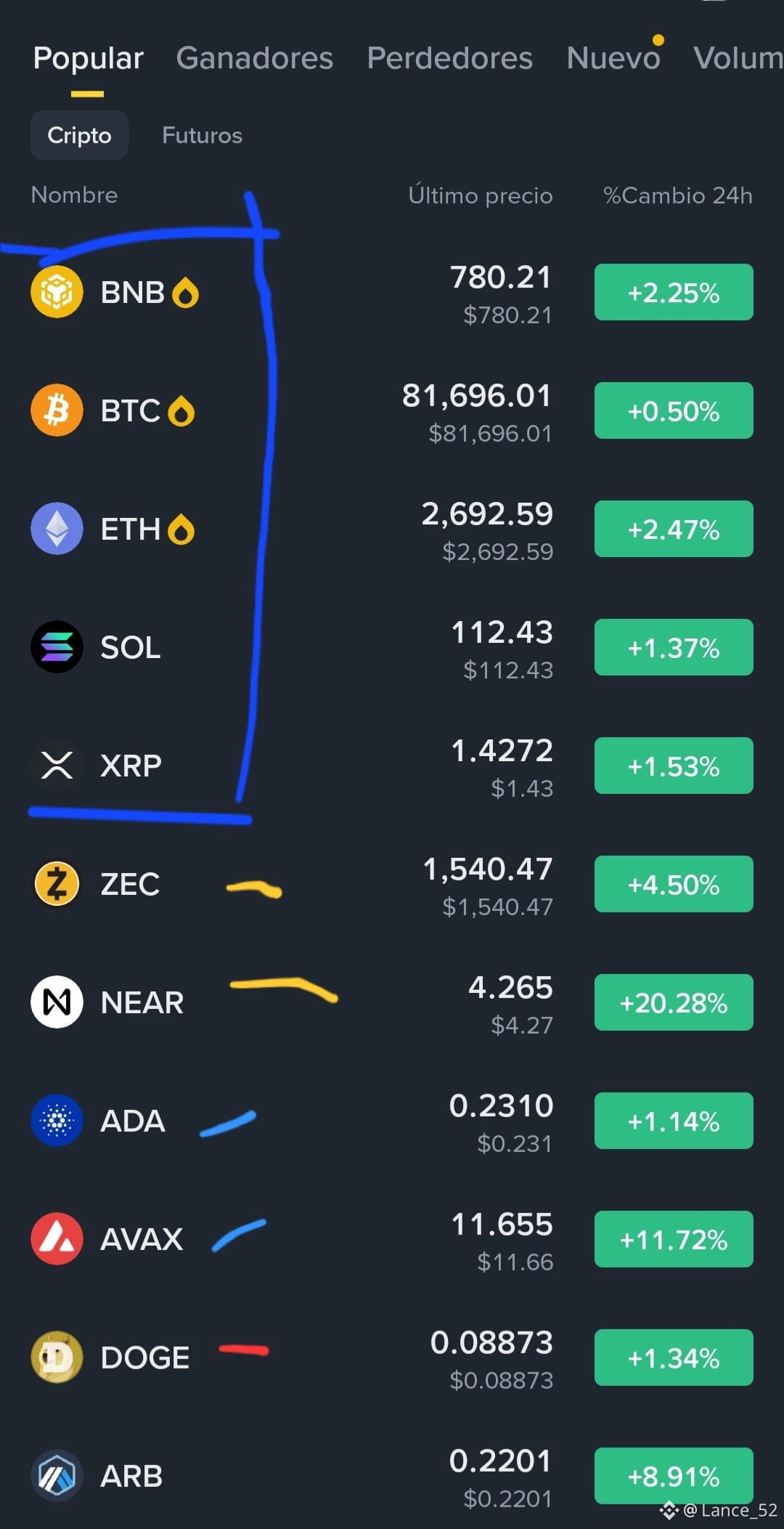
Consolidated coins, despite everything, are gradually recovering, with strong dips, but in the end, they tend to return to their upward growth path. 📊 💭
🤔
$BTC $ETH $BNB
Consolidated coins, despite everything, are gradually recovering, with strong dips, but in the end, they tend to return to their upward growth path. 📊 💭
$BTC $ETH $BNB
Consolidated coins, despite everything, are gradually recovering, with strong dips, but in the end, they tend to return to their upward growth path. 📊 💭
193
·
--
⏳The brand is behind my mistake 🔎
$XAUT $ETH $BTC
⏳The brand is behind my mistake 🔎
$XAUT $ETH $BTC
$XAUT $ETH $BTC
1
98
·
--
Spinzk
·
--
i’ve said this many times, trading a token is like dating a girl.
- you can’t truly hold if you don’t know her parents (foundation)
- you can’t truly hold if you don’t know what she does (narrative)
but most of you are just trying to fuck her by staring at her body (chart)
and when you can’t get in, you stay outside talking shit about her
- you can’t truly hold if you don’t know her parents (foundation)
- you can’t truly hold if you don’t know what she does (narrative)
but most of you are just trying to fuck her by staring at her body (chart)
and when you can’t get in, you stay outside talking shit about her
3
·
--
One more night. 🙏🏻🤓
{spot}(XAUTUSDT)
Tomorrow we'll see what movements happen according to whether they manage to increase or decrease interest rates. 💻💭
One more night. 🙏🏻🤓
Tomorrow we'll see what movements happen according to whether they manage to increase or decrease interest rates. 💻💭
Tomorrow we'll see what movements happen according to whether they manage to increase or decrease interest rates. 💻💭

1
163
·
--
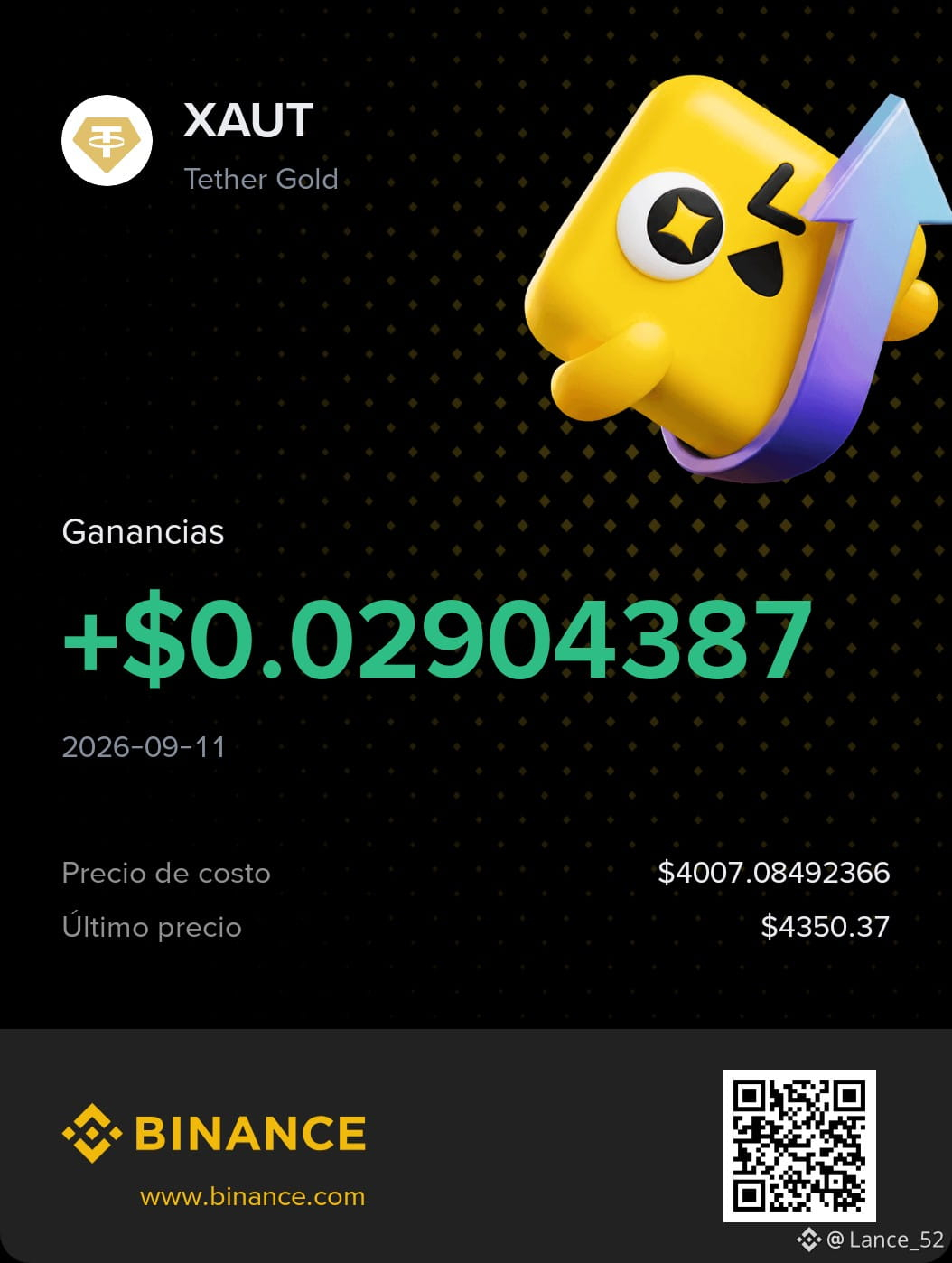
🌱 $XAUT Step by step, that’s how you can grow. Patience costs, but with time you start to see results. 🤓
For some, this is misery or a waste of time, but for a few, it’s proof that it is possible to grow with the bare minimum a person can have. ☕️ 😉
Be consistent and take action now! 🌱📊💻
{spot}(XAUTUSDT)
🌱 $XAUT Step by step, that’s how you can grow. Patience costs, but with time you start to see results. 🤓
For some, this is misery or a waste of time, but for a few, it’s proof that it is possible to grow with the bare minimum a person can have. ☕️ 😉
Be consistent and take action now! 🌱📊💻
For some, this is misery or a waste of time, but for a few, it’s proof that it is possible to grow with the bare minimum a person can have. ☕️ 😉
Be consistent and take action now! 🌱📊💻
14
5
3.9k
·
--
💸 What is better for you: Trading or Holding?
In the crypto world, there are two main ways to participate. 💻
Which one fits you best? 🤔
🚀 𝐓𝐫𝐚𝐝𝐢𝐧𝐠 (𝐒𝐡𝐨𝐫𝐭-𝐭𝐞𝐫𝐦 𝐰𝐢𝐭𝐡 𝐩𝐫𝐢𝐜𝐞 𝐦𝐨𝐯𝐞𝐦𝐞𝐧𝐭): You buy a cryptocurrency today and sell it in a few hours or days to profit from the price increase. It requires a lot of study, strategy, and emotional control. It’s stressful, but fast. 💥
☕ 𝐇𝐨𝐥𝐝𝐢𝐧𝐠 (𝐋𝐨𝐧𝐠-𝐭𝐞𝐫𝐦 𝐰𝐢𝐭𝐡 𝐬𝐮𝐬𝐭𝐚𝐢𝐧𝐞𝐝 𝐠𝐫𝐨𝐰𝐭𝐡): You buy a solid project—like BTC or ETH—and keep it for months or years because you trust its future value. It requires patience and discipline. It’s calmer and less risky for beginners. 💰
Neither is better than the other—everything depends on your time and your risk tolerance. 👀
👇 Vote below and share your opinion in the comments:
💎Are you more of a Holder or a Trader? 📈
Follow me so you don’t miss more content like this! 😉👍
💸 What is better for you: Trading or Holding?
In the crypto world, there are two main ways to participate. 💻
Which one fits you best? 🤔
🚀 𝐓𝐫𝐚𝐝𝐢𝐧𝐠 (𝐒𝐡𝐨𝐫𝐭-𝐭𝐞𝐫𝐦 𝐰𝐢𝐭𝐡 𝐩𝐫𝐢𝐜𝐞 𝐦𝐨𝐯𝐞𝐦𝐞𝐧𝐭): You buy a cryptocurrency today and sell it in a few hours or days to profit from the price increase. It requires a lot of study, strategy, and emotional control. It’s stressful, but fast. 💥
☕ 𝐇𝐨𝐥𝐝𝐢𝐧𝐠 (𝐋𝐨𝐧𝐠-𝐭𝐞𝐫𝐦 𝐰𝐢𝐭𝐡 𝐬𝐮𝐬𝐭𝐚𝐢𝐧𝐞𝐝 𝐠𝐫𝐨𝐰𝐭𝐡): You buy a solid project—like BTC or ETH—and keep it for months or years because you trust its future value. It requires patience and discipline. It’s calmer and less risky for beginners. 💰
Neither is better than the other—everything depends on your time and your risk tolerance. 👀
👇 Vote below and share your opinion in the comments:
💎Are you more of a Holder or a Trader? 📈
Follow me so you don’t miss more content like this! 😉👍
In the crypto world, there are two main ways to participate. 💻
Which one fits you best? 🤔
🚀 𝐓𝐫𝐚𝐝𝐢𝐧𝐠 (𝐒𝐡𝐨𝐫𝐭-𝐭𝐞𝐫𝐦 𝐰𝐢𝐭𝐡 𝐩𝐫𝐢𝐜𝐞 𝐦𝐨𝐯𝐞𝐦𝐞𝐧𝐭): You buy a cryptocurrency today and sell it in a few hours or days to profit from the price increase. It requires a lot of study, strategy, and emotional control. It’s stressful, but fast. 💥
☕ 𝐇𝐨𝐥𝐝𝐢𝐧𝐠 (𝐋𝐨𝐧𝐠-𝐭𝐞𝐫𝐦 𝐰𝐢𝐭𝐡 𝐬𝐮𝐬𝐭𝐚𝐢𝐧𝐞𝐝 𝐠𝐫𝐨𝐰𝐭𝐡): You buy a solid project—like BTC or ETH—and keep it for months or years because you trust its future value. It requires patience and discipline. It’s calmer and less risky for beginners. 💰
Neither is better than the other—everything depends on your time and your risk tolerance. 👀
👇 Vote below and share your opinion in the comments:
💎Are you more of a Holder or a Trader? 📈
Follow me so you don’t miss more content like this! 😉👍
Trading
62%
Holding
38%
13 votes • Voting closed
3
376
·
--
🛑 The error that makes your crypto disappear!
The most common mistake beginners make is sending cryptocurrencies using the wrong network. 😳
Think of blockchain networks like subway lines: yes, if you're sending Bitcoin, you must use the Bitcoin network $BTC o if you're sending a Binance token $BNB you must use BNB Smart Chain (BEP20). 🚂
If you send funds from one network to another that isn't compatible; for example, sending directly from Bitcoin to an Ethereum network; your coins will be lost in digital space forever. 💻💥😭
⚠️ Golden rule: Before clicking send, triple-check that the source network and the destination network are exactly the same.
By the way, there are ways to send cryptocurrencies between different networks; but that is a slightly more advanced topic. 🤖
For now, with this information, you've learned the basics of what you need to do before sending your cryptocurrencies through any network. 💻👀
👇 Have you ever been afraid of choosing the wrong network?
Leave me your comment below.
Your interaction and support help me stay more active by sharing content like this!$ 😉👍
{spot}(BTCUSDT)
{spot}(BNBUSDT)
{spot}(ETHUSDT)
🛑 The error that makes your crypto disappear!
The most common mistake beginners make is sending cryptocurrencies using the wrong network. 😳
Think of blockchain networks like subway lines: yes, if you're sending Bitcoin, you must use the Bitcoin network $BTC o if you're sending a Binance token $BNB you must use BNB Smart Chain (BEP20). 🚂
If you send funds from one network to another that isn't compatible; for example, sending directly from Bitcoin to an Ethereum network; your coins will be lost in digital space forever. 💻💥😭
⚠️ Golden rule: Before clicking send, triple-check that the source network and the destination network are exactly the same.
By the way, there are ways to send cryptocurrencies between different networks; but that is a slightly more advanced topic. 🤖
For now, with this information, you've learned the basics of what you need to do before sending your cryptocurrencies through any network. 💻👀
👇 Have you ever been afraid of choosing the wrong network?
Leave me your comment below.
Your interaction and support help me stay more active by sharing content like this!$ 😉👍
The most common mistake beginners make is sending cryptocurrencies using the wrong network. 😳
Think of blockchain networks like subway lines: yes, if you're sending Bitcoin, you must use the Bitcoin network $BTC o if you're sending a Binance token $BNB you must use BNB Smart Chain (BEP20). 🚂
If you send funds from one network to another that isn't compatible; for example, sending directly from Bitcoin to an Ethereum network; your coins will be lost in digital space forever. 💻💥😭
⚠️ Golden rule: Before clicking send, triple-check that the source network and the destination network are exactly the same.
By the way, there are ways to send cryptocurrencies between different networks; but that is a slightly more advanced topic. 🤖
For now, with this information, you've learned the basics of what you need to do before sending your cryptocurrencies through any network. 💻👀
👇 Have you ever been afraid of choosing the wrong network?
Leave me your comment below.
Your interaction and support help me stay more active by sharing content like this!$ 😉👍
175
·
--
🌐 What are the Web3 reasons?
Have you heard the term Web3 and still don’t understand it? Well, here’s the simplest explanation in the world:
☕🙄𝐖𝐞𝐛 𝟏.𝟎 (𝐓𝐡𝐞 𝐩𝐚𝐬𝐬𝐚𝐠𝐞): You could only read web pages (like reading a digital newspaper).
😀💻𝐖𝐞𝐛 𝟐.𝟎 (𝐓𝐡𝐞 𝐩𝐫𝐞𝐬𝐞𝐧𝐭): You can read, write, and interact with multimedia content. (social networks like Instagram or TikTok, but your data belongs to big companies).
😎🤖𝐖𝐞𝐛 𝟑.𝟎 (𝐓𝐡𝐞 𝐟𝐮𝐭𝐮𝐫𝐞): You can do all of the above and, in addition: OWN.
In Web3, thanks to blockchain, you are the absolute owner of your money, your data, and your digital assets (like NFTs) without depending on a bank or a corporation. 💰
👆Follow me for more content and support this post with a Like or a Comment.👇
{spot}(BNBUSDT)
{spot}(ETHUSDT)
{spot}(POLUSDT)
🌐 What are the Web3 reasons?
Have you heard the term Web3 and still don’t understand it? Well, here’s the simplest explanation in the world:
☕🙄𝐖𝐞𝐛 𝟏.𝟎 (𝐓𝐡𝐞 𝐩𝐚𝐬𝐬𝐚𝐠𝐞): You could only read web pages (like reading a digital newspaper).
😀💻𝐖𝐞𝐛 𝟐.𝟎 (𝐓𝐡𝐞 𝐩𝐫𝐞𝐬𝐞𝐧𝐭): You can read, write, and interact with multimedia content. (social networks like Instagram or TikTok, but your data belongs to big companies).
😎🤖𝐖𝐞𝐛 𝟑.𝟎 (𝐓𝐡𝐞 𝐟𝐮𝐭𝐮𝐫𝐞): You can do all of the above and, in addition: OWN.
In Web3, thanks to blockchain, you are the absolute owner of your money, your data, and your digital assets (like NFTs) without depending on a bank or a corporation. 💰
👆Follow me for more content and support this post with a Like or a Comment.👇
Have you heard the term Web3 and still don’t understand it? Well, here’s the simplest explanation in the world:
☕🙄𝐖𝐞𝐛 𝟏.𝟎 (𝐓𝐡𝐞 𝐩𝐚𝐬𝐬𝐚𝐠𝐞): You could only read web pages (like reading a digital newspaper).
😀💻𝐖𝐞𝐛 𝟐.𝟎 (𝐓𝐡𝐞 𝐩𝐫𝐞𝐬𝐞𝐧𝐭): You can read, write, and interact with multimedia content. (social networks like Instagram or TikTok, but your data belongs to big companies).
😎🤖𝐖𝐞𝐛 𝟑.𝟎 (𝐓𝐡𝐞 𝐟𝐮𝐭𝐮𝐫𝐞): You can do all of the above and, in addition: OWN.
In Web3, thanks to blockchain, you are the absolute owner of your money, your data, and your digital assets (like NFTs) without depending on a bank or a corporation. 💰
👆Follow me for more content and support this post with a Like or a Comment.👇

3
1.3k
·
--
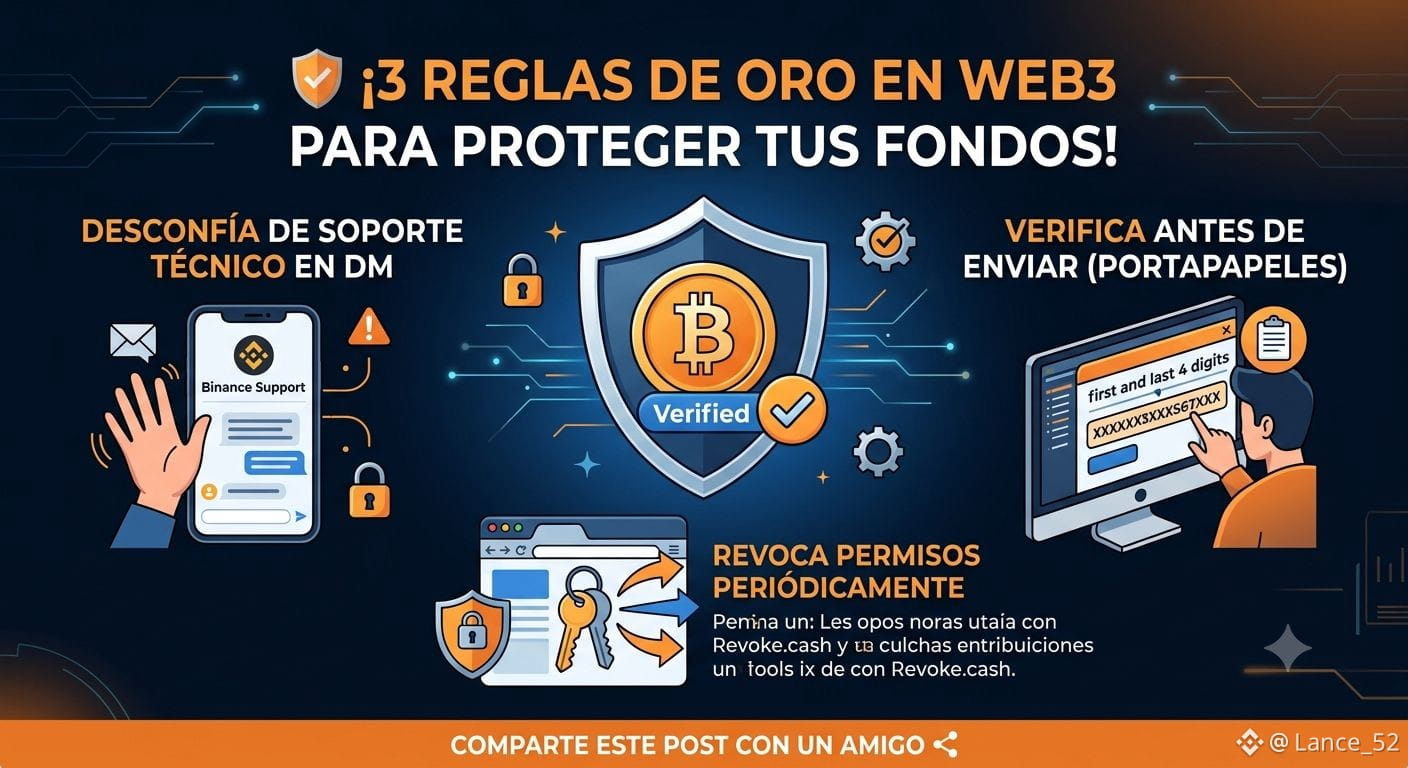
🛡️ Don’t let them steal your money: 3 gold rules to protect your Web3 profits!
As the market heats up, scammers become more creative. No matter how much you’ve earned, if you don’t know how to protect it, you’re at risk. Here are three rules you should apply TODAY:
𝘿𝙞𝙨𝙘𝙤𝙫𝙚𝙧 the “Techniques for protecting your money” in DMs: No one from Binance, or any wallet, will message you privately first to ask for your seed phrases or to link your account.
𝙒𝙞𝙩𝙝𝙙𝙧𝙖𝙡 𝙥𝙚𝙧 𝙥𝙚𝙧𝙢𝙞𝙨𝙨𝙞𝙤𝙣𝙨: If you interact with lots of Web3 DApps, use tools like Revoke.cash periodically to clean up access to your funds.
𝐓𝐡𝐞 𝐩𝐚𝐲𝐬 𝐛𝐞𝐟𝐨𝐫𝐞 𝐲𝐨𝐮 𝐬𝐞𝐧𝐝: There’s malware that changes the crypto address you copy. Always verify the first and last 4 digits before hitting send.
𝖫𝖺 𝗌𝖾𝗀𝗎𝗋𝗂𝖽𝖺𝖽 𝖾𝗌 𝗍𝗁𝖾 𝗆𝗈𝖘𝗍 𝗂𝗆𝗉𝗈𝗋𝗍𝖺𝗇𝗍. 𝖢𝗈𝗆𝗉𝖺𝗋𝖾 𝖾𝗌𝖳𝖾 𝗉𝗈𝗌𝗍 𝖂𝗂𝗍𝗁 𝖺𝗇𝗒𝗈𝗇𝖾’𝘀 𝗌𝖾𝖽 𝖿𝗈𝗿 𝖺 𝗉𝗼𝗌𝘁 𝖺𝗯𝗼𝘂𝘁 𝖺 𝖽𝖾𝖛𝖎𝖈𝖾 𝖽𝖾 𝖺𝖾𝗋 𝖺𝖽𝖽𝖗𝖾𝖘𝖘. 🔄
{spot}(BTCUSDT)
{spot}(BNBUSDT)
{spot}(ETHUSDT)
🛡️ Don’t let them steal your money: 3 gold rules to protect your Web3 profits!
As the market heats up, scammers become more creative. No matter how much you’ve earned, if you don’t know how to protect it, you’re at risk. Here are three rules you should apply TODAY:
𝘿𝙞𝙨𝙘𝙤𝙫𝙚𝙧 the “Techniques for protecting your money” in DMs: No one from Binance, or any wallet, will message you privately first to ask for your seed phrases or to link your account.
𝙒𝙞𝙩𝙝𝙙𝙧𝙖𝙡 𝙥𝙚𝙧 𝙥𝙚𝙧𝙢𝙞𝙨𝙨𝙞𝙤𝙣𝙨: If you interact with lots of Web3 DApps, use tools like Revoke.cash periodically to clean up access to your funds.
𝐓𝐡𝐞 𝐩𝐚𝐲𝐬 𝐛𝐞𝐟𝐨𝐫𝐞 𝐲𝐨𝐮 𝐬𝐞𝐧𝐝: There’s malware that changes the crypto address you copy. Always verify the first and last 4 digits before hitting send.
𝖫𝖺 𝗌𝖾𝗀𝗎𝗋𝗂𝖽𝖺𝖽 𝖾𝗌 𝗍𝗁𝖾 𝗆𝗈𝖘𝗍 𝗂𝗆𝗉𝗈𝗋𝗍𝖺𝗇𝗍. 𝖢𝗈𝗆𝗉𝖺𝗋𝖾 𝖾𝗌𝖳𝖾 𝗉𝗈𝗌𝗍 𝖂𝗂𝗍𝗁 𝖺𝗇𝗒𝗈𝗇𝖾’𝘀 𝗌𝖾𝖽 𝖿𝗈𝗿 𝖺 𝗉𝗼𝗌𝘁 𝖺𝗯𝗼𝘂𝘁 𝖺 𝖽𝖾𝖛𝖎𝖈𝖾 𝖽𝖾 𝖺𝖾𝗋 𝖺𝖽𝖽𝖗𝖾𝖘𝖘. 🔄
As the market heats up, scammers become more creative. No matter how much you’ve earned, if you don’t know how to protect it, you’re at risk. Here are three rules you should apply TODAY:
𝘿𝙞𝙨𝙘𝙤𝙫𝙚𝙧 the “Techniques for protecting your money” in DMs: No one from Binance, or any wallet, will message you privately first to ask for your seed phrases or to link your account.
𝙒𝙞𝙩𝙝𝙙𝙧𝙖𝙡 𝙥𝙚𝙧 𝙥𝙚𝙧𝙢𝙞𝙨𝙨𝙞𝙤𝙣𝙨: If you interact with lots of Web3 DApps, use tools like Revoke.cash periodically to clean up access to your funds.
𝐓𝐡𝐞 𝐩𝐚𝐲𝐬 𝐛𝐞𝐟𝐨𝐫𝐞 𝐲𝐨𝐮 𝐬𝐞𝐧𝐝: There’s malware that changes the crypto address you copy. Always verify the first and last 4 digits before hitting send.
𝖫𝖺 𝗌𝖾𝗀𝗎𝗋𝗂𝖽𝖺𝖽 𝖾𝗌 𝗍𝗁𝖾 𝗆𝗈𝖘𝗍 𝗂𝗆𝗉𝗈𝗋𝗍𝖺𝗇𝗍. 𝖢𝗈𝗆𝗉𝖺𝗋𝖾 𝖾𝗌𝖳𝖾 𝗉𝗈𝗌𝗍 𝖂𝗂𝗍𝗁 𝖺𝗇𝗒𝗈𝗇𝖾’𝘀 𝗌𝖾𝖽 𝖿𝗈𝗿 𝖺 𝗉𝗼𝗌𝘁 𝖺𝗯𝗼𝘂𝘁 𝖺 𝖽𝖾𝖛𝖎𝖈𝖾 𝖽𝖾 𝖺𝖾𝗋 𝖺𝖽𝖽𝖗𝖾𝖘𝖘. 🔄
108
·
--
⚔️ Crypto Battle: Who will rule the cycle?
The market is maturing and promises are no longer enough. If you had to put 50% of your portfolio into a single network for the next 12 months, which one would you choose—and why? 🤔
Ethereum ($ETH ): The undisputed king of liquidity and institutional-grade security.
Solana ($SOL ): Brutal speed, low fees, and the home of retail culture—or meme coins.
BNB Chain ($BNB ): Massive support, constant burns, and real utility in the Binance ecosystem.
Each one has its narrative. Solana has the hype, but Ethereum has the ETFs. On the other hand, BNB is still the backbone of DeFi for millions.💵
Drop your vote and your argument below. I read and reply to everyone! 👇
⚔️ Crypto Battle: Who will rule the cycle?
The market is maturing and promises are no longer enough. If you had to put 50% of your portfolio into a single network for the next 12 months, which one would you choose—and why? 🤔
Ethereum ($ETH ): The undisputed king of liquidity and institutional-grade security.
Solana ($SOL ): Brutal speed, low fees, and the home of retail culture—or meme coins.
BNB Chain ($BNB ): Massive support, constant burns, and real utility in the Binance ecosystem.
Each one has its narrative. Solana has the hype, but Ethereum has the ETFs. On the other hand, BNB is still the backbone of DeFi for millions.💵
Drop your vote and your argument below. I read and reply to everyone! 👇
The market is maturing and promises are no longer enough. If you had to put 50% of your portfolio into a single network for the next 12 months, which one would you choose—and why? 🤔
Ethereum ($ETH ): The undisputed king of liquidity and institutional-grade security.
Solana ($SOL ): Brutal speed, low fees, and the home of retail culture—or meme coins.
BNB Chain ($BNB ): Massive support, constant burns, and real utility in the Binance ecosystem.
Each one has its narrative. Solana has the hype, but Ethereum has the ETFs. On the other hand, BNB is still the backbone of DeFi for millions.💵
Drop your vote and your argument below. I read and reply to everyone! 👇
ETH
29%
SOL
47%
BNB
24%
17 votes • Voting closed
487
Log in to explore more content
Join global crypto users on Binance Square
⚡️ Get latest and useful information about crypto.
💬 Trusted by the world’s largest crypto exchange.
👍 Discover real insights from verified creators.
Email / Phone number
Trending Topics
FedMinutesFocusOnOctoberPause
24,616 views
470 Discussing
#fedminutesfocusonoctoberpause
🚨 OCTOBER FED HIKE ODDS COLLAPSE TO 21.6%… Is $BTC About to React? 👀
The Fed is about to give markets another major clue.
Investors are waiting for today’s FOMC minutes — and the biggest question is whether October brings another rate hike… or a pause.
Right now, the odds of a 25-basis-point October hike have fallen to just 21.6%.
That’s a huge shift in expectations.
But here’s what makes this interesting… 👀
The Fed raised rates to 3.75%–4.00% in September, but recent weakness in jobs data and softer inflation have made another immediate hike look less certain.
And for crypto, this matters.
A Fed pause could reduce pressure on financial conditions and potentially improve risk appetite.
That could become a tailwind for BTC
But there’s a catch…
Bitcoin is already under pressure as the dollar and Treasury yields move higher.
So tonight’s minutes could become a volatility trigger.
Dovish Fed → liquidity hopes → bullish .
BTC narrative?
Hawkish Fed → higher-rate fears → more pressure on risk assets?
The real question:
Is October becoming the pause Bitcoin bulls have been waiting for… or could the Fed surprise the market again? 👀
Watch BTC + Fed expectations + Treasury yields closely.
#FederalReserve #Fed #Crypto #InterestRates
$ETH
$SOL
Shae Cassler Sw9r
·16 Likes
·33.5k views
BinanceLaunchesBinanceIntelligence
939,383 views
5,742 Discussing
EvernorthDelaysNasdaqDebutToOct12
0 views
5 Discussing