
韭菜自我科普
120 Posts

韭菜自我科普
Report
Block User
10年 web3行业,没有赚到一点钱。
韭菜自居,
以小白视角分享行业解读,交易日志。
知识卡片通

BNB Holder
Frequent Trader
2.4 Years
5 Following
7 Followers
16 Liked
Posts
All
Quotes
·
--
This market is really testing my patience.
I’m still waiting for further confirmation.
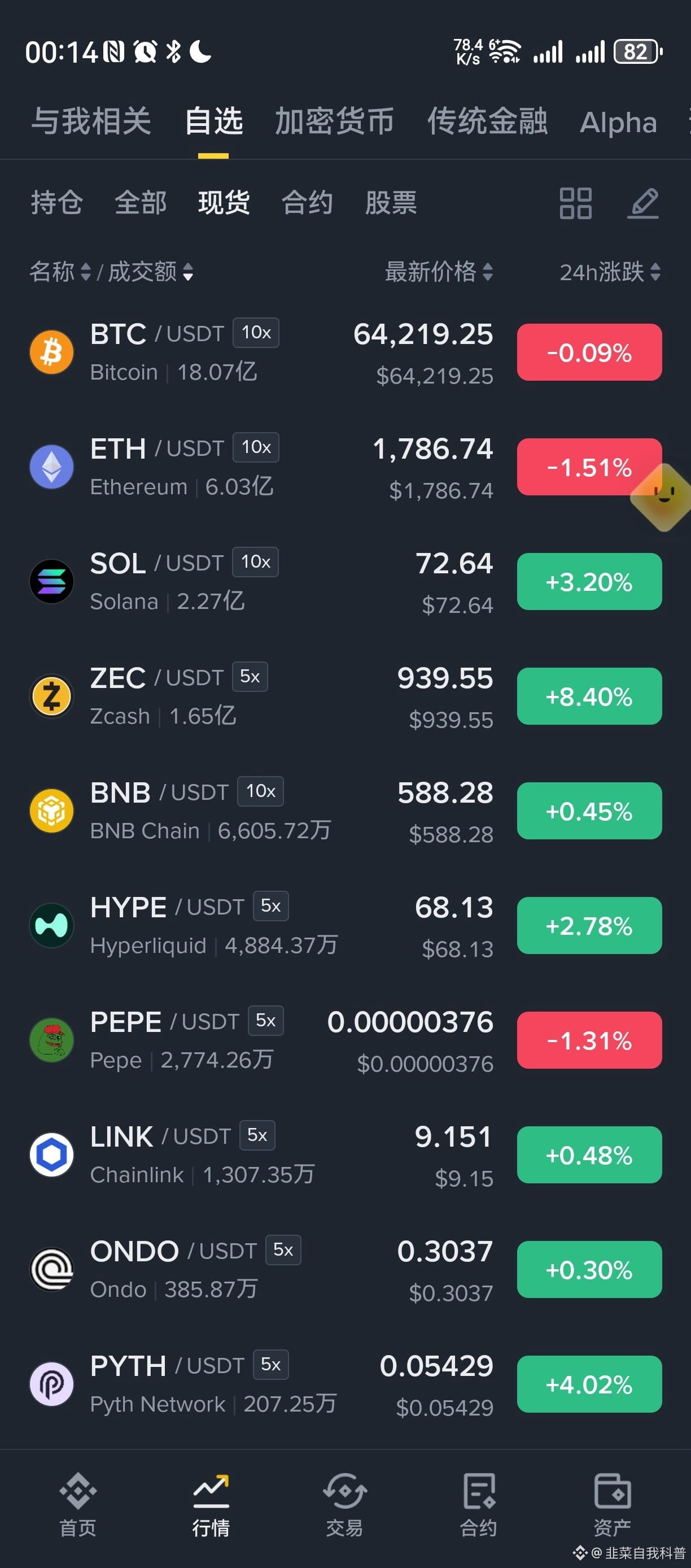
I can see my watchlist moving—lots of assets like BTC, LINK, ZEC, HYPE, and BNB are rising.
But I still don’t dare to jump in.
In this volatile market,
with cash king,
it’s probably wise to keep enough bullets in reserve: $USDC .
Would you buy the dip right now? Share your thoughts 🤔
1
877
·
--
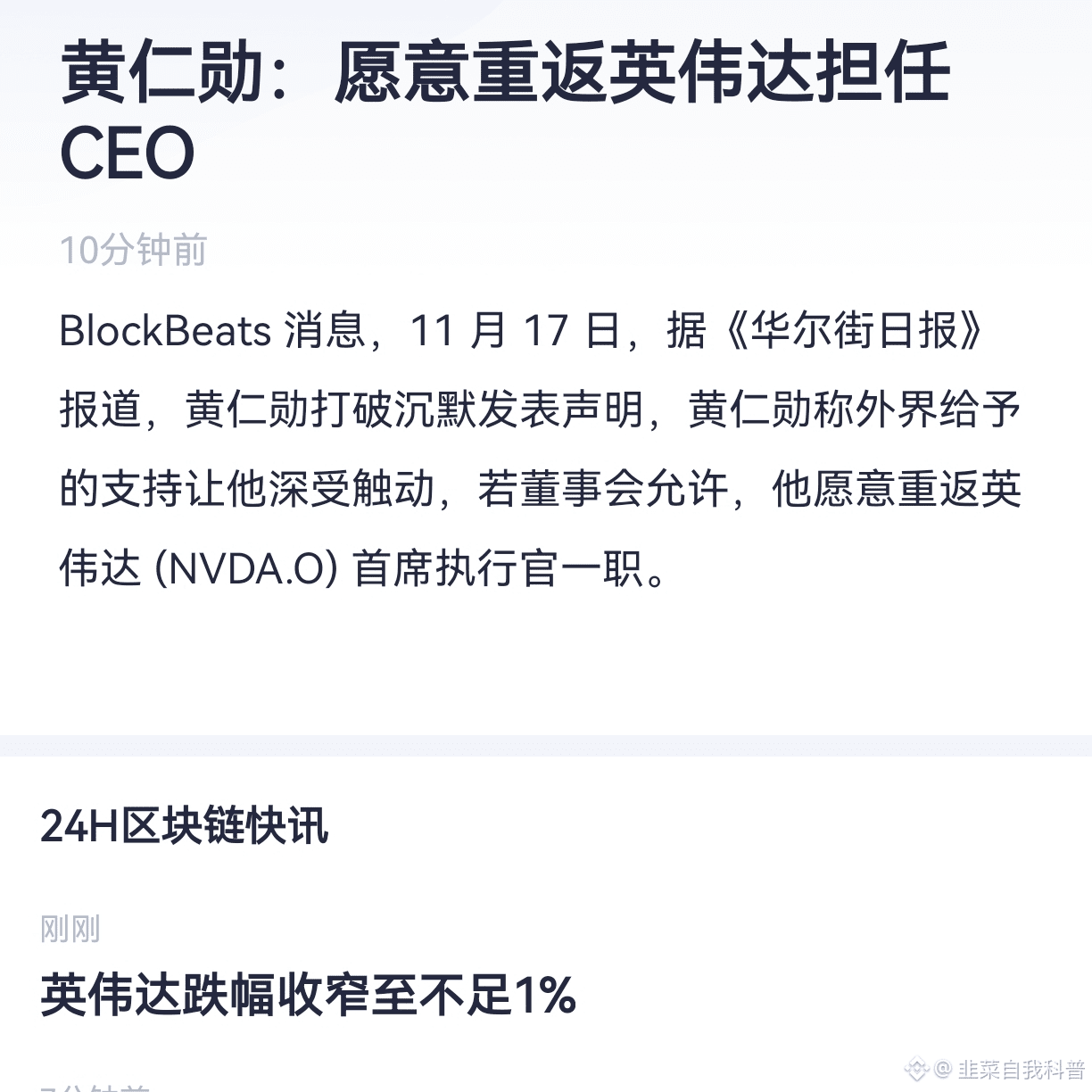
Jensen Huang himself is willing to return to Nvidia $NVDA
This is good news,
along with the employees’ recognition of him.
I think if the U.S. Democratic Party investigates the matter thoroughly and determines its nature as soon as possible,
perhaps the board of directors will also want to give him a chance.
It all depends on how serious the matter is and how it is characterized.
#黄仁勋能否复任CEO?英伟达董事会:暂不考虑
441
·
--
btc#英伟达财报夜!预期营收超千亿,AI股或迎大变盘
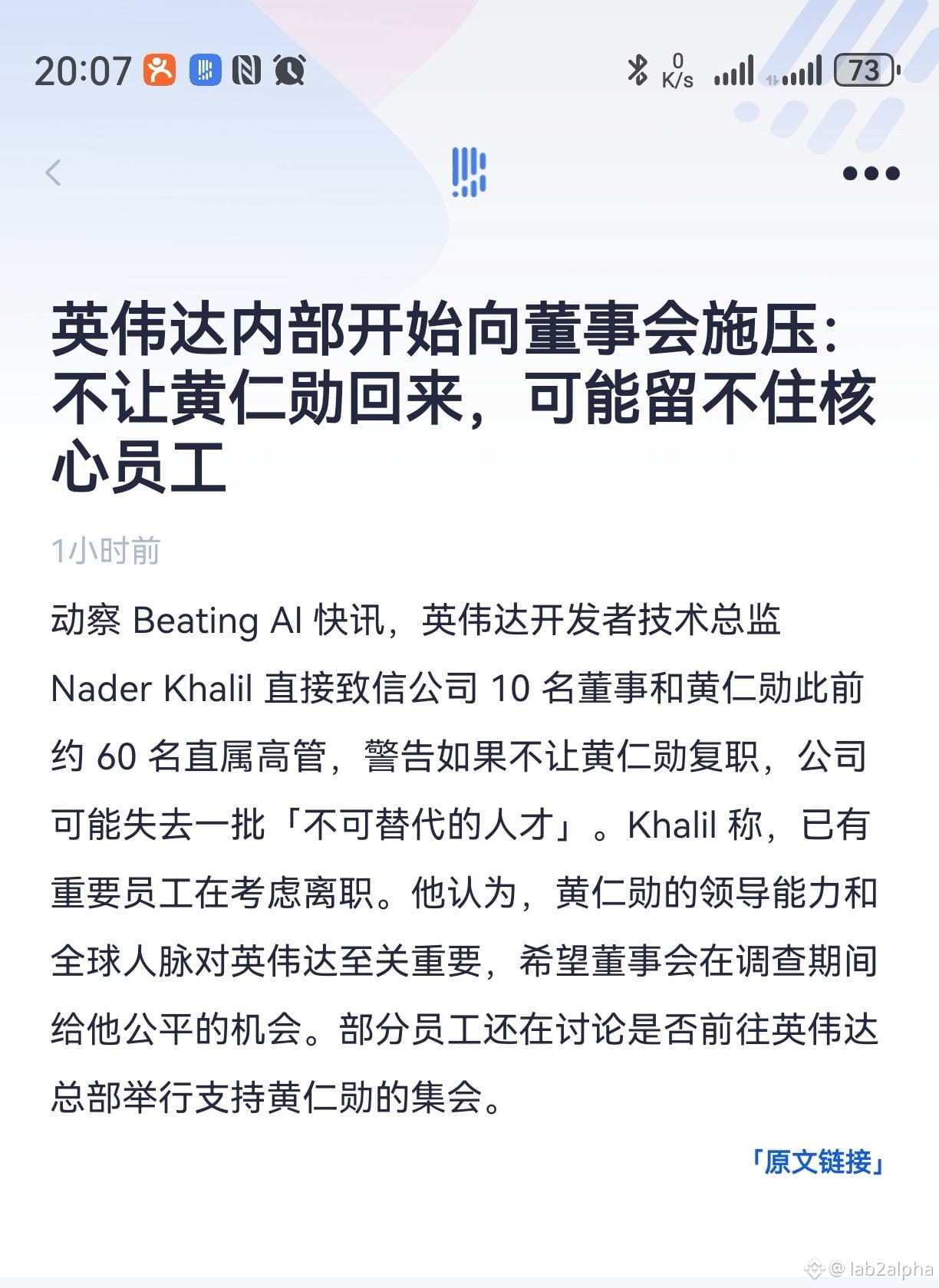
What employees value is that this founder and CEO can lead them to earn
their first pot of gold in life
Whoever blocks my path, I'll cut their throat
$NVDA
btc#英伟达财报夜!预期营收超千亿,AI股或迎大变盘
What employees value is that this founder and CEO can lead them to earn
their first pot of gold in life
Whoever blocks my path, I'll cut their throat
$NVDA
What employees value is that this founder and CEO can lead them to earn
their first pot of gold in life
Whoever blocks my path, I'll cut their throat
$NVDA
144
·
--
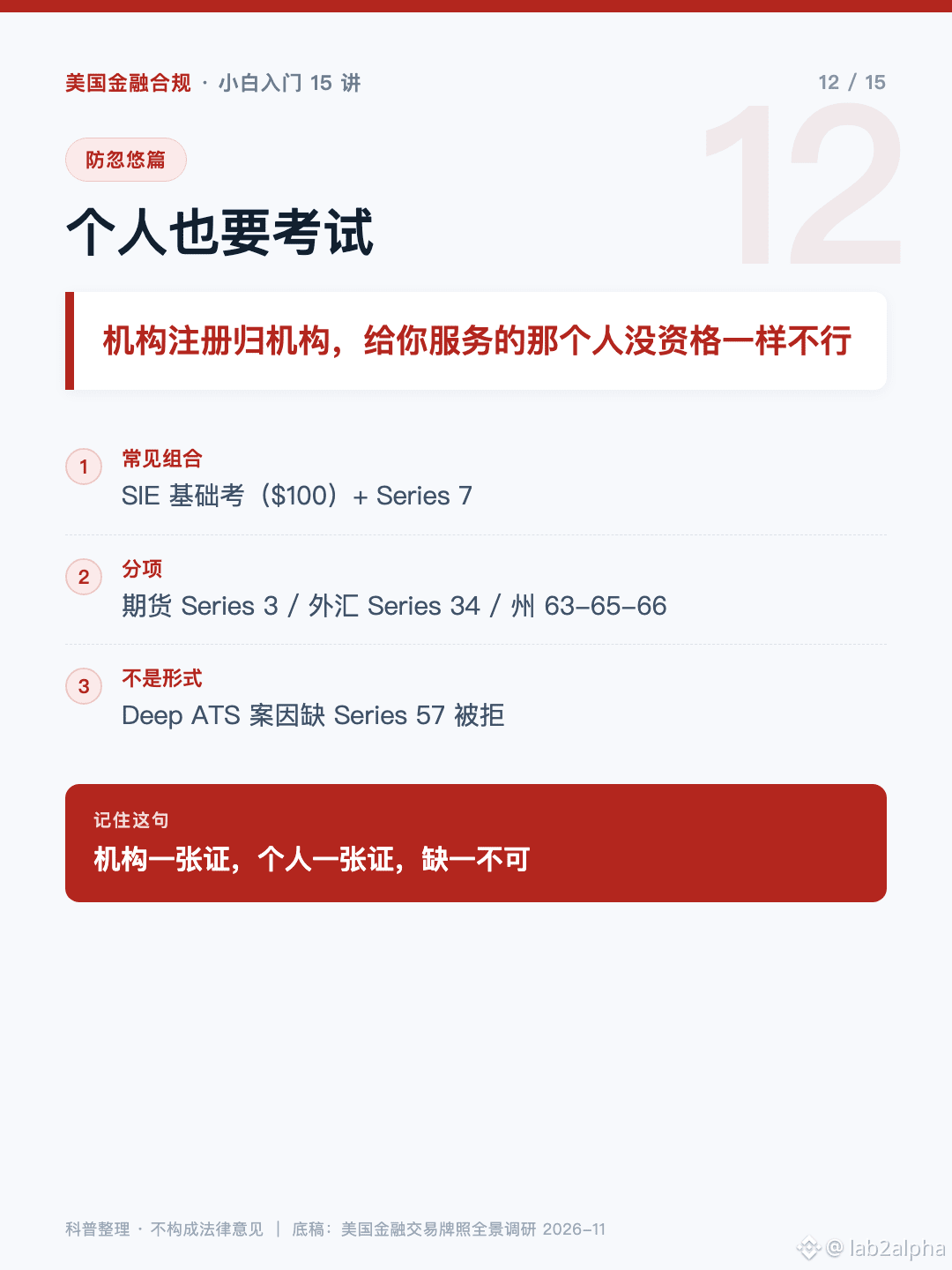
06|Institutions need licenses, and individuals must also pass exams
A company may be qualified, but if the person serving you isn’t, they still can’t work in the role.
For example, a transport company may have an operating license, but its drivers still need their own driving licenses. The company’s license doesn’t automatically cover every employee.
Institutional registration belongs to the institution; individual professional qualifications belong to the individual. These are two separate, parallel registration systems.
Individuals must first pass a basic exam, then take the relevant subject-specific exam for their line of business—futures, forex, and investment advisory each have their own.
Passing the exams still isn’t enough to practice. Individuals must register in the system and be sponsored by a registered company.
So, when assessing an institution, don’t just check the company’s license—also make sure the person you’re dealing with is qualified.
⚠️ I used to focus only on whether an institution was licensed. Later, I realized that without the required individual qualification, you can’t work in the role.
These are just my study notes, not investment advice. Do your own research; if you lose money, it’s your own.
$BTC
{spot}(BTCUSDT)
#美国金融合规小白入门
06|Institutions need licenses, and individuals must also pass exams
A company may be qualified, but if the person serving you isn’t, they still can’t work in the role.
For example, a transport company may have an operating license, but its drivers still need their own driving licenses. The company’s license doesn’t automatically cover every employee.
Institutional registration belongs to the institution; individual professional qualifications belong to the individual. These are two separate, parallel registration systems.
Individuals must first pass a basic exam, then take the relevant subject-specific exam for their line of business—futures, forex, and investment advisory each have their own.
Passing the exams still isn’t enough to practice. Individuals must register in the system and be sponsored by a registered company.
So, when assessing an institution, don’t just check the company’s license—also make sure the person you’re dealing with is qualified.
⚠️ I used to focus only on whether an institution was licensed. Later, I realized that without the required individual qualification, you can’t work in the role.
These are just my study notes, not investment advice. Do your own research; if you lose money, it’s your own.
$BTC
#美国金融合规小白入门
112
·
--
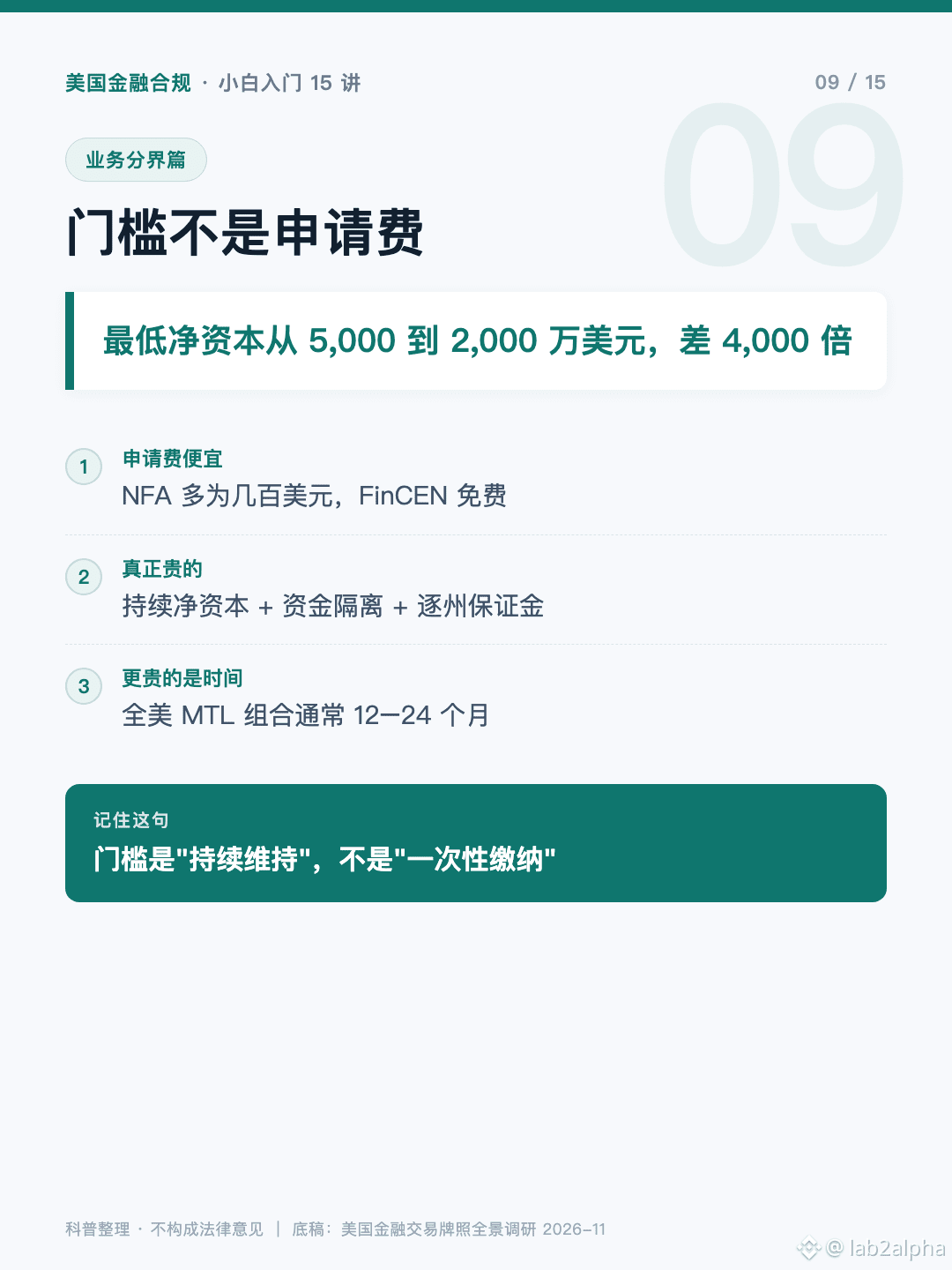
05 | The real barrier is ongoing capital, not the application fee
The real barrier to getting licensed isn’t the application fee. It’s the net capital that has to stay on your books and can’t be put to other use.
For example, the real barrier to renting a car is the deposit; the rental fee is the smaller expense. The application fee is just the cost of filling out the paperwork. The deposit is the big one.
Application fees are usually very low, and some registrations are even free.
What’s expensive is maintaining net capital over the long term, segregating customer funds, and meeting state-by-state surety bond requirements—and requirements can vary by several orders of magnitude depending on the business.
Time is a cost too: applying in multiple states often takes a long time.
So, when you see “the application fee is only a few hundred dollars,” don’t assume the barrier is low. First ask how much money you’ll have to keep tied up.
⚠️ I used to think the application fee was the entire cost. Later, I realized that capital requirements must be “maintained continuously”—they aren’t a one-time payment.
These are just my study notes, not investment advice. Do your own research. If you lose money, it’s your money.
$BTC
{spot}(BTCUSDT)
#美国金融合规小白入门
05 | The real barrier is ongoing capital, not the application fee
The real barrier to getting licensed isn’t the application fee. It’s the net capital that has to stay on your books and can’t be put to other use.
For example, the real barrier to renting a car is the deposit; the rental fee is the smaller expense. The application fee is just the cost of filling out the paperwork. The deposit is the big one.
Application fees are usually very low, and some registrations are even free.
What’s expensive is maintaining net capital over the long term, segregating customer funds, and meeting state-by-state surety bond requirements—and requirements can vary by several orders of magnitude depending on the business.
Time is a cost too: applying in multiple states often takes a long time.
So, when you see “the application fee is only a few hundred dollars,” don’t assume the barrier is low. First ask how much money you’ll have to keep tied up.
⚠️ I used to think the application fee was the entire cost. Later, I realized that capital requirements must be “maintained continuously”—they aren’t a one-time payment.
These are just my study notes, not investment advice. Do your own research. If you lose money, it’s your money.
$BTC
#美国金融合规小白入门
韭菜自我科普
·
--
04 | The line between trading with your own money and acting for clients
You generally don’t need to register to trade with your own money. The moment you do it for someone else, the rules change.
For example: cooking at home for yourself is nobody’s concern. But once you open your doors to cook for others and accept their ingredients and money, the rules are immediately different.
Trading solely with your own funds generally doesn’t require registration.
But placing orders for clients, handling client funds, continuously quoting both sides of the market, charging commissions, or giving advice for compensation—any one of these activities can trigger a registration requirement.
Even if an exemption applies, anti-fraud and anti-manipulation rules still apply; not needing a license doesn’t mean you’re unregulated.
So, when assessing a platform, first look at whose money it handles and who it acts for—not just what it’s called.
⚠️ I used to think “not registered = not regulated,” but later realized that being exempt and being unregulated are two different things.
These are just my study notes, not investment advice. Do your own research; if you lose money, it’s your money.
$BTC
#美国金融合规小白入门
58
·
--
03|State licenses follow the customer
Where a company is registered doesn’t matter; what matters is which state its customers are in.
For example: if you run a food-delivery business, where you open your restaurant isn’t the key issue. What matters is which city you deliver to—you have to follow that city’s rules.
Money transmitter licenses (MTLs) are issued separately by each state. There’s almost no such thing as “one license valid nationwide.”
Licenses can’t be transferred across states, entities, or products—even different companies under the same brand face different regulators.
Applying state by state takes a long time, making it a real barrier in terms of both time and money.
So, when evaluating a company, first ask who it serves, then ask what licenses it needs—not where it’s registered.
⚠️ I used to think a license was a company attribute. Later, I realized it’s more like “business × customer location.”
The above is just my study notes, not investment advice. Do your own research—if you lose money, it’s your money.
#美国金融合规小白入门
$BTC
{spot}(BTCUSDT)
03|State licenses follow the customer
Where a company is registered doesn’t matter; what matters is which state its customers are in.
For example: if you run a food-delivery business, where you open your restaurant isn’t the key issue. What matters is which city you deliver to—you have to follow that city’s rules.
Money transmitter licenses (MTLs) are issued separately by each state. There’s almost no such thing as “one license valid nationwide.”
Licenses can’t be transferred across states, entities, or products—even different companies under the same brand face different regulators.
Applying state by state takes a long time, making it a real barrier in terms of both time and money.
So, when evaluating a company, first ask who it serves, then ask what licenses it needs—not where it’s registered.
⚠️ I used to think a license was a company attribute. Later, I realized it’s more like “business × customer location.”
The above is just my study notes, not investment advice. Do your own research—if you lose money, it’s your money.
#美国金融合规小白入门
$BTC

1
68
·
--
#美国金融合规小白入门
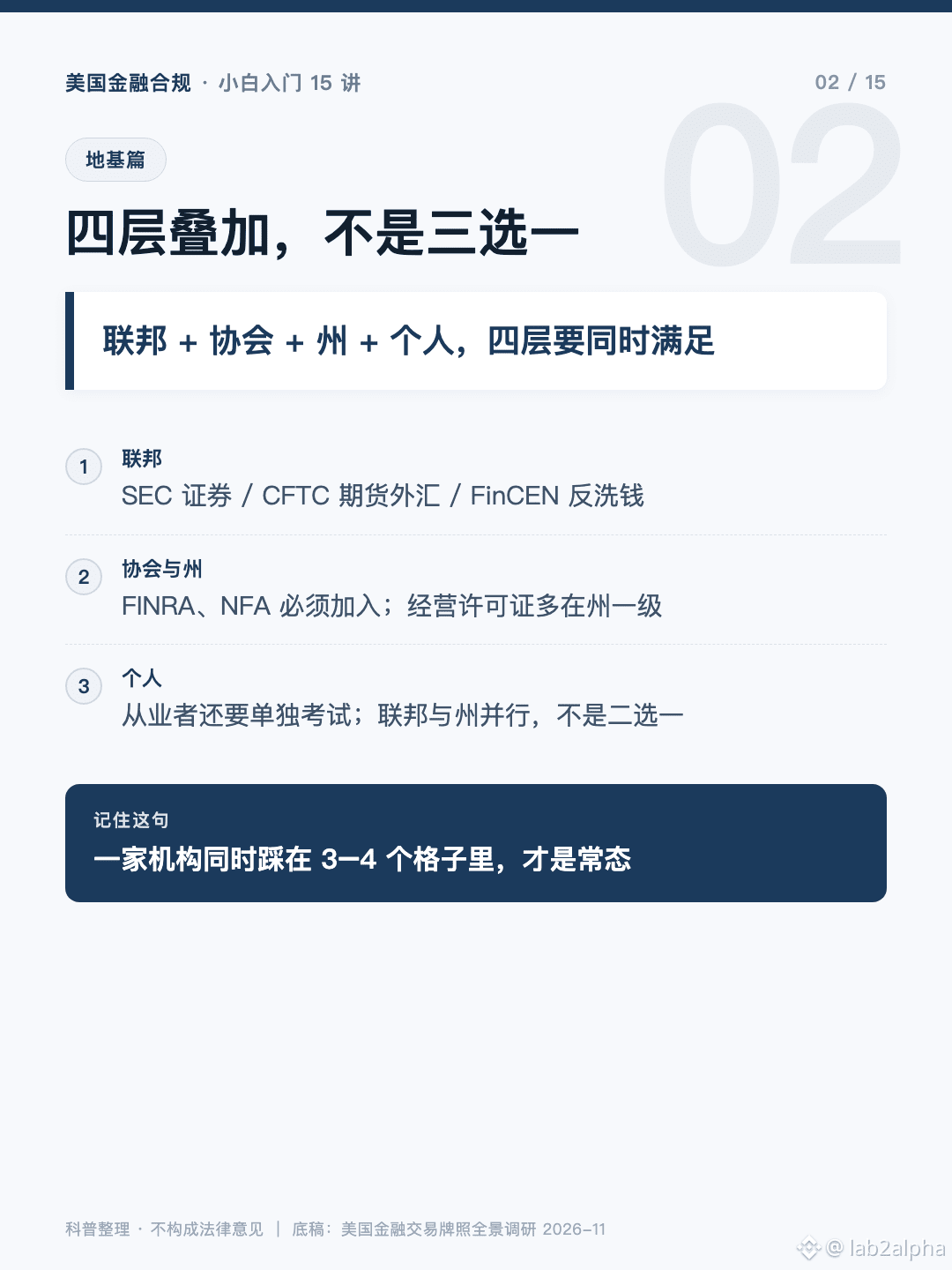
02 | Four layers of regulation
“Regulated in the U.S.” could mean just one of the four layers—or all of them. There’s a big difference.
Think of it this way: to run a cross-state trucking company, you need federal credentials, membership in an industry association, separate registration in every state, and a valid driver’s license. Miss even one layer, and you can’t hit the road.
At the federal level: the SEC oversees securities, the CFTC oversees futures and foreign exchange, FinCEN handles anti-money laundering, and the OCC oversees banks.
FINRA and the NFA aren’t government agencies, but membership is legally required;
state licenses are what we mean in Chinese by “business license.”
Federal and state requirements apply in parallel. Being registered with the SEC doesn’t mean you can operate nationwide.
So when you hear “regulated,” ask first: which layer, and does it cover the state I care about?
⚠️ I used to think federal registration was enough to clear every hurdle. Later I realized that state requirements are often overlooked.
These are just my study notes, not investment advice. Do your own research; if you lose money, it’s your own.
$BTC
{spot}(BTCUSDT)
#美国金融合规小白入门
02 | Four layers of regulation
“Regulated in the U.S.” could mean just one of the four layers—or all of them. There’s a big difference.
Think of it this way: to run a cross-state trucking company, you need federal credentials, membership in an industry association, separate registration in every state, and a valid driver’s license. Miss even one layer, and you can’t hit the road.
At the federal level: the SEC oversees securities, the CFTC oversees futures and foreign exchange, FinCEN handles anti-money laundering, and the OCC oversees banks.
FINRA and the NFA aren’t government agencies, but membership is legally required;
state licenses are what we mean in Chinese by “business license.”
Federal and state requirements apply in parallel. Being registered with the SEC doesn’t mean you can operate nationwide.
So when you hear “regulated,” ask first: which layer, and does it cover the state I care about?
⚠️ I used to think federal registration was enough to clear every hurdle. Later I realized that state requirements are often overlooked.
These are just my study notes, not investment advice. Do your own research; if you lose money, it’s your own.
$BTC
韭菜自我科普
·
--
01 | #美国金融合规小白入门
Asking a U.S. financial company, “Are you licensed?” is basically like asking nothing.
For example, opening a restaurant requires a business license, a food permit, and a fire inspection—issued by three different authorities. U.S. financial “credentials” are even more fragmented, divided up by activity.
The Chinese phrase “licensed” could mean registration (with the SEC/CFTC), membership (in FINRA/NFA), a state license, or an exemption filing—four different things.
The SEC, CFTC, FinCEN, and OCC each oversee different parts of the picture.
Holding several types of credentials is normal; it doesn’t mean a company has an “exceptionally strong endorsement.”
So don’t ask, “Do you have a license?” Ask four things: Who issued it? What activities does it cover? Who can you serve? Which states does it cover?
⚠️ I used to think a license was valid nationwide. Later I learned that it depends on the specific activity.
These are just my study notes, not investment advice. Do your own research; if you lose money, it’s your money.
$BTC
4
·
--
01 | #美国金融合规小白入门
Asking a U.S. financial company, “Are you licensed?” is basically like asking nothing.
For example, opening a restaurant requires a business license, a food permit, and a fire inspection—issued by three different authorities. U.S. financial “credentials” are even more fragmented, divided up by activity.
The Chinese phrase “licensed” could mean registration (with the SEC/CFTC), membership (in FINRA/NFA), a state license, or an exemption filing—four different things.
The SEC, CFTC, FinCEN, and OCC each oversee different parts of the picture.
Holding several types of credentials is normal; it doesn’t mean a company has an “exceptionally strong endorsement.”
So don’t ask, “Do you have a license?” Ask four things: Who issued it? What activities does it cover? Who can you serve? Which states does it cover?
⚠️ I used to think a license was valid nationwide. Later I learned that it depends on the specific activity.
These are just my study notes, not investment advice. Do your own research; if you lose money, it’s your money.
$BTC

1
84
·
--
Bearish
#本周财报与宏观事件密集,市场再迎波动考验
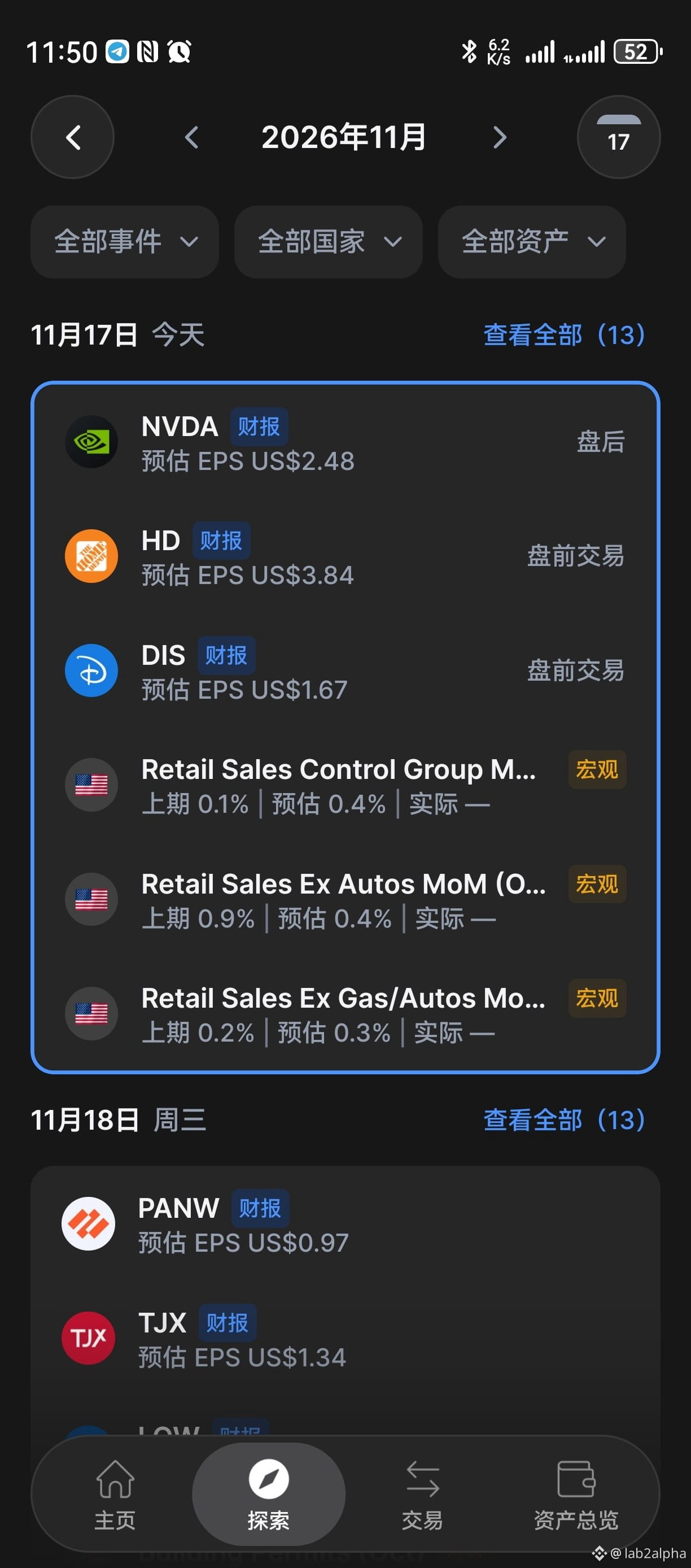
Today is the moment of Nvidia's $NVDA earnings report,
Will there be an unexpected surprise,
I always have a bad feeling,
I'm going to cry
$BTC
#本周财报与宏观事件密集,市场再迎波动考验
Today is the moment of Nvidia's $NVDA earnings report,
Will there be an unexpected surprise,
I always have a bad feeling,
I'm going to cry
$BTC
Today is the moment of Nvidia's $NVDA earnings report,
Will there be an unexpected surprise,
I always have a bad feeling,
I'm going to cry
$BTC
148
·
--
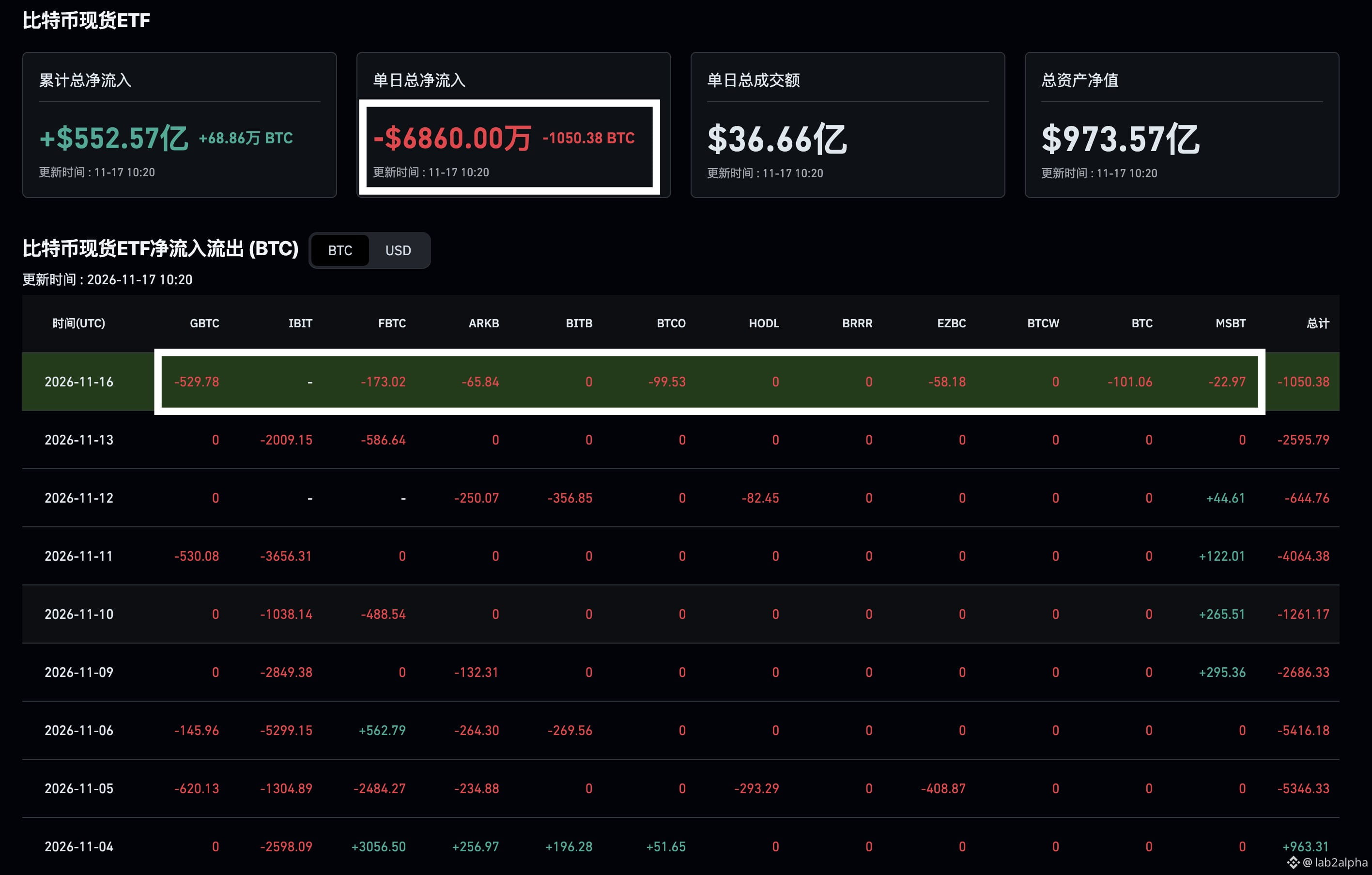
Bitcoin spot ETFs continue to see sustained outflows,
which shows that the market still hasn't started moving in a positive direction,
so the odds of BTC moving lower are getting higher.
Repeated volatility is normal in the early stages of a bull market, and there are plenty of opportunities to buy the dip.
We still need to keep a close eye on the assets,
so what should we buy when the time comes?
Which assets do you favor? Feel free to share your thoughts in the comments, and let's discuss them together.
{spot}(BTCUSDT)
Bitcoin spot ETFs continue to see sustained outflows,
which shows that the market still hasn't started moving in a positive direction,
so the odds of BTC moving lower are getting higher.
Repeated volatility is normal in the early stages of a bull market, and there are plenty of opportunities to buy the dip.
We still need to keep a close eye on the assets,
so what should we buy when the time comes?
Which assets do you favor? Feel free to share your thoughts in the comments, and let's discuss them together.
142
·
--
Bullish
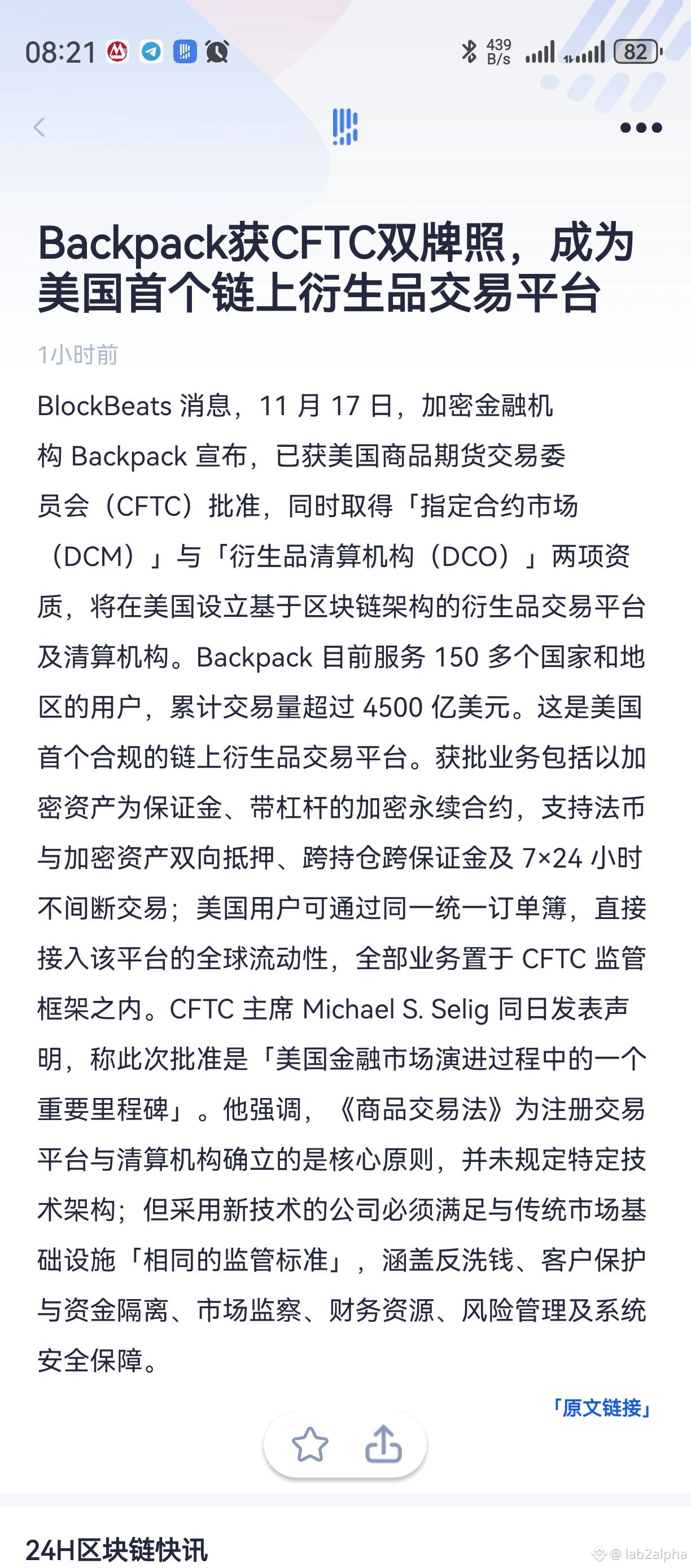
An asset I’ve been keeping a close eye on: the Backpack platform continues to get positive news. Favorable developments around U.S. compliance have sent the price of BP straight up 40%.
Is now a good time to get in?
Is this an opportunity or a trap?
Do more research on $BP on Solana.
An asset I’ve been keeping a close eye on: the Backpack platform continues to get positive news. Favorable developments around U.S. compliance have sent the price of BP straight up 40%.
Is now a good time to get in?
Is this an opportunity or a trap?
Do more research on $BP on Solana.
Is now a good time to get in?
Is this an opportunity or a trap?
Do more research on $BP on Solana.
113
·
--
#本周财报与宏观事件密集,市场再迎波动考验
$NVDAB Nvidia's earnings report is coming soon,
I've seen a lot of news about it,
both positive and negative.
I'm somewhat pessimistic.
The AI market is in a downturn right now;
that's a certainty.
The founder and CEO's departure is meant to cool the market down,
so things can make a fresh start.
But it may take some time to digest this—anywhere from a few days to a few months.
No news lately doesn't necessarily mean good news#
3.1k
·
--
After being removed from MSCI, MicroStrategy will face a major test at the end of the month.
Now, to improve its prospects, it will
primarily repurchase $228 million worth of STRC
and add 485 bitcoins to its holdings.
The main goal is obvious:
to steady its footing and make a symbolic purchase of some BTC—after all, it can’t move the needle anyway.
{spot}(BTCUSDT)
After being removed from MSCI, MicroStrategy will face a major test at the end of the month.
Now, to improve its prospects, it will
primarily repurchase $228 million worth of STRC
and add 485 bitcoins to its holdings.
The main goal is obvious:
to steady its footing and make a symbolic purchase of some BTC—after all, it can’t move the needle anyway.
Now, to improve its prospects, it will
primarily repurchase $228 million worth of STRC
and add 485 bitcoins to its holdings.
The main goal is obvious:
to steady its footing and make a symbolic purchase of some BTC—after all, it can’t move the needle anyway.


Binance News
·
--
Strategy Repurchases $228 Million Worth of STRC and Adds 485 Bitcoin to Its Holdings
According to Odaily, Strategy added 485 bitcoin to its holdings last week and repurchased $228 million worth of STRC.
129
·
--
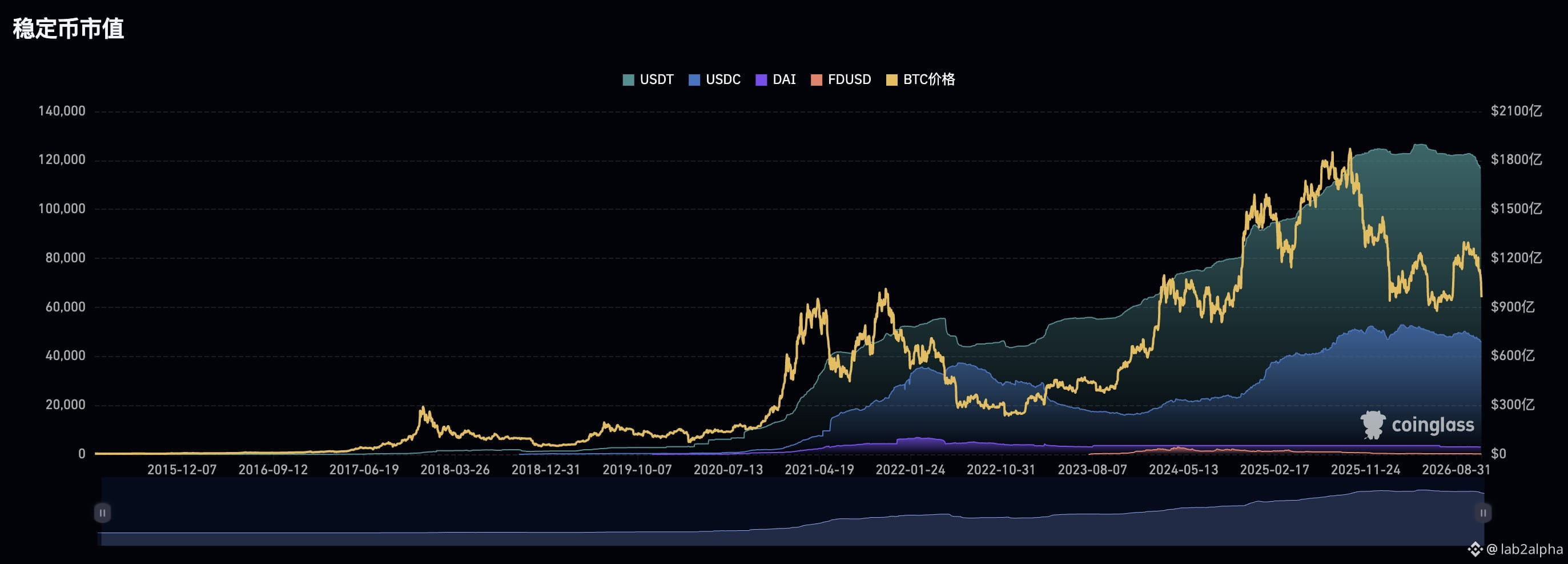
Stablecoin market cap fell as the BTC price dropped.
That's wrong.
It should be said:
Stablecoin market cap is declining. In particular, investors in the US camp, represented by USDC,
withdrew their money from the crypto market,
liquidity tightened,
and the price of Bitcoin accelerated its decline.
{future}(BTCUSDT)
#稳定币交易数据
Stablecoin market cap fell as the BTC price dropped.
That's wrong.
It should be said:
Stablecoin market cap is declining. In particular, investors in the US camp, represented by USDC,
withdrew their money from the crypto market,
liquidity tightened,
and the price of Bitcoin accelerated its decline.
#稳定币交易数据
That's wrong.
It should be said:
Stablecoin market cap is declining. In particular, investors in the US camp, represented by USDC,
withdrew their money from the crypto market,
liquidity tightened,
and the price of Bitcoin accelerated its decline.
#稳定币交易数据
59
·
--
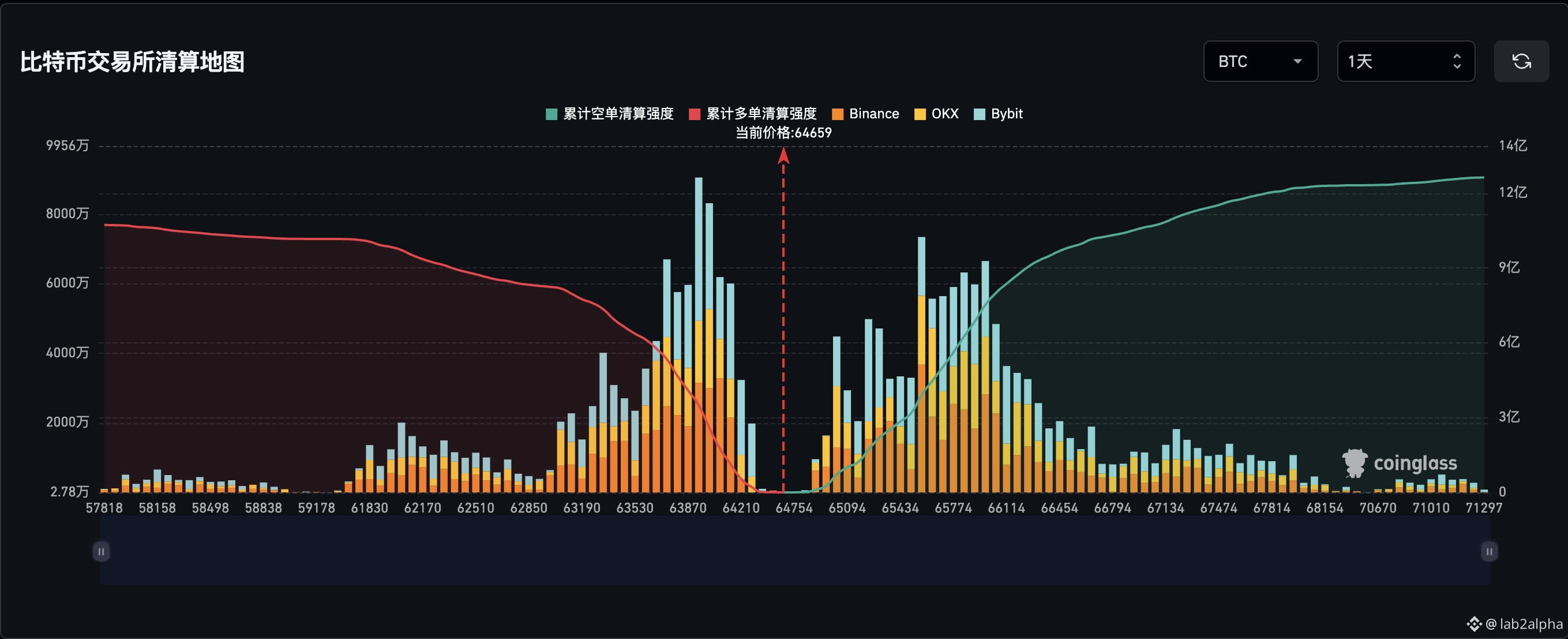
Liquidation charts are building up again.
When I checked yesterday, there wasn’t much left to liquidate,
but a lot has built up again today. Gamblers will be gamblers.
A drop to 63K could liquidate 800 million,
while a rise to 66K could liquidate 1 billion.
But I feel like 👇 is a bit more likely than 👆.
What do you think?
When I checked yesterday, there wasn’t much left to liquidate,
but a lot has built up again today. Gamblers will be gamblers.
A drop to 63K could liquidate 800 million,
while a rise to 66K could liquidate 1 billion.
But I feel like 👇 is a bit more likely than 👆.
What do you think?
124
·
--
$BTC
{spot}(BTCUSDT)
#加密美股齐跌,下轮反弹的驱动力在哪?
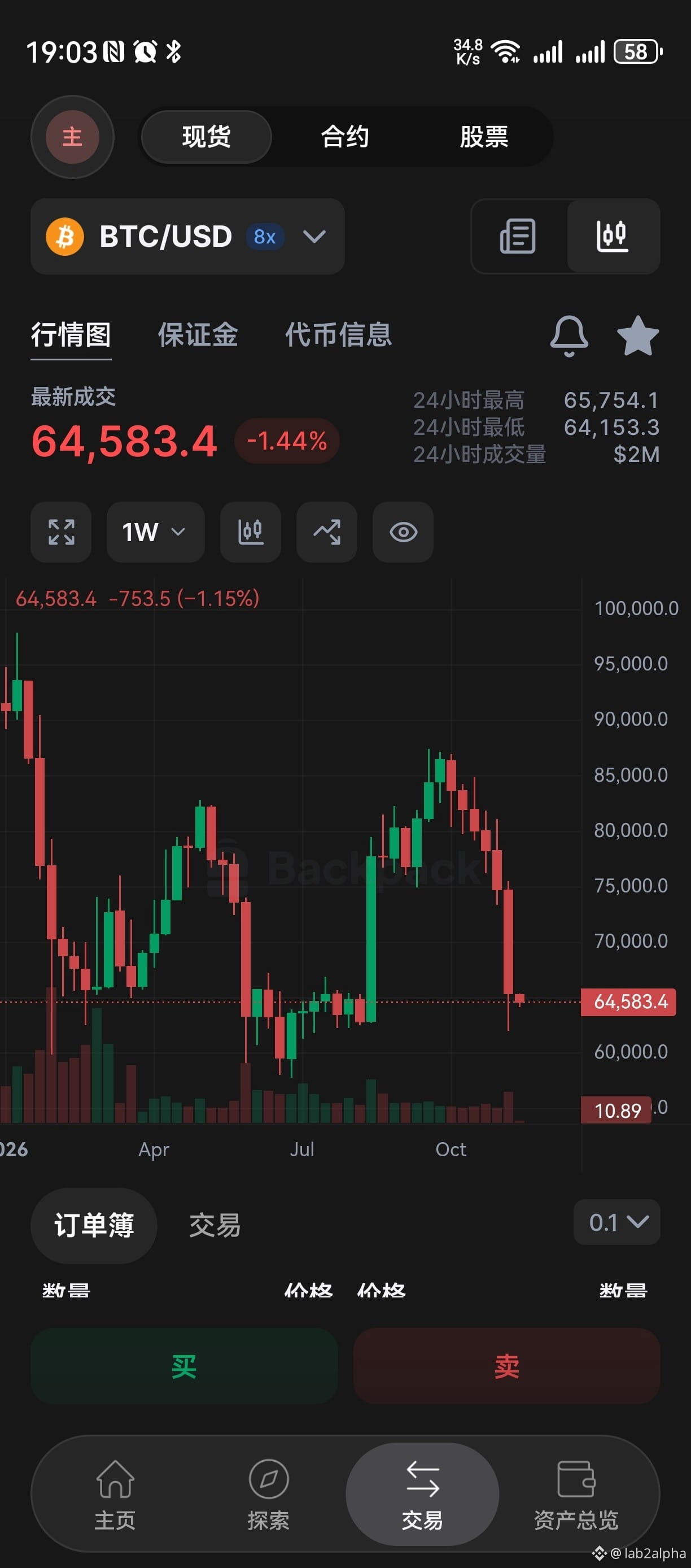
Sorry, I've already had six consecutive drops. Do you still want to speed up another one?
Execute now$
$BTC
#加密美股齐跌,下轮反弹的驱动力在哪?
Sorry, I've already had six consecutive drops. Do you still want to speed up another one?
Execute now$
#加密美股齐跌,下轮反弹的驱动力在哪?
Sorry, I've already had six consecutive drops. Do you still want to speed up another one?
Execute now$
89
·
--
No one should laugh at anyone, right?
You say centralized systems aren't safe, so let's put the funds on-chain.
Now look, decentralized systems aren't safe either.
Where should the funds go?
Can anyone tell me!!!
There’s no way out—where do we go from here...
{spot}(BTCUSDT)
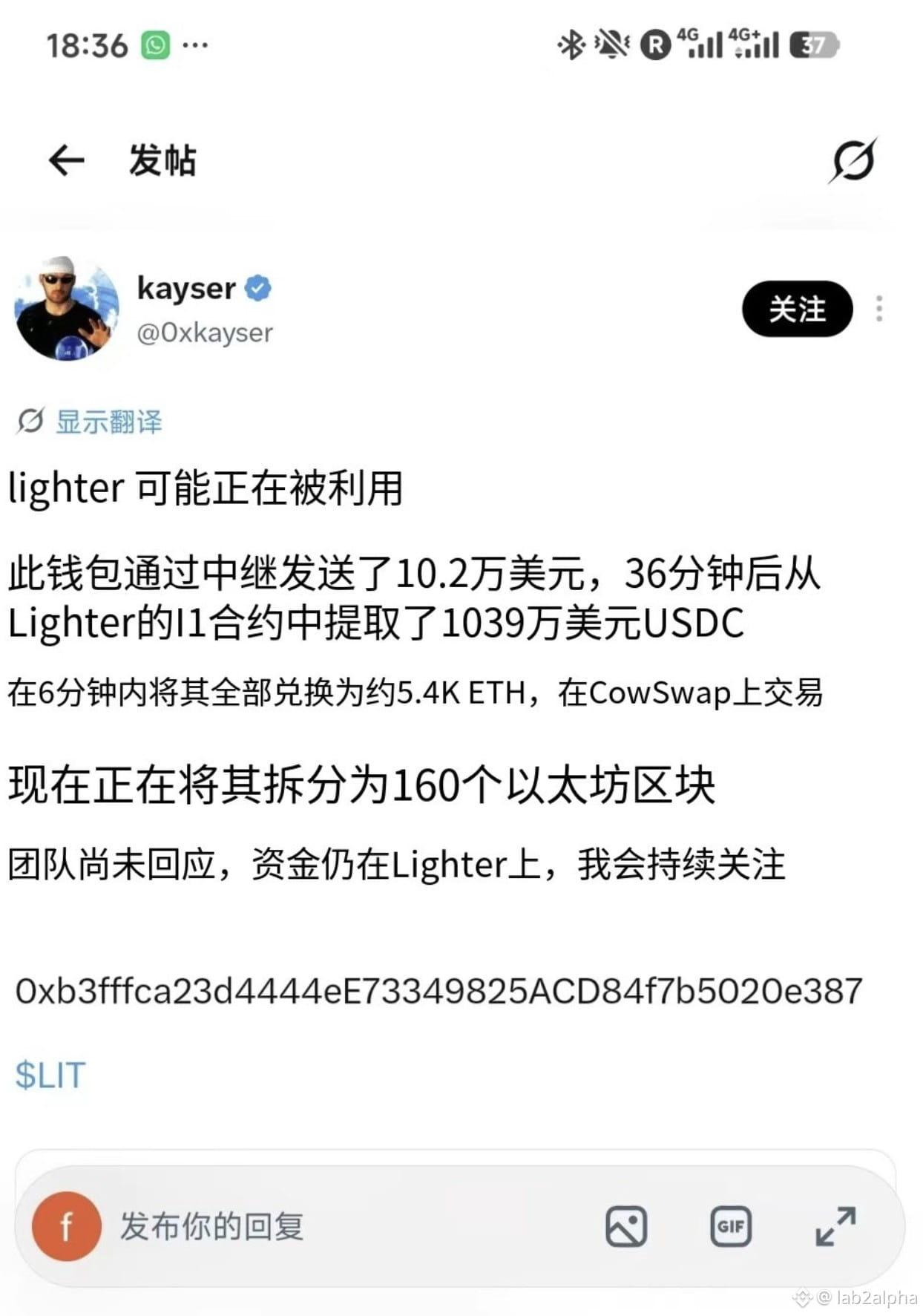
No one should laugh at anyone, right?
You say centralized systems aren't safe, so let's put the funds on-chain.
Now look, decentralized systems aren't safe either.
Where should the funds go?
Can anyone tell me!!!
There’s no way out—where do we go from here...
You say centralized systems aren't safe, so let's put the funds on-chain.
Now look, decentralized systems aren't safe either.
Where should the funds go?
Can anyone tell me!!!
There’s no way out—where do we go from here...
2
1
431
·
--
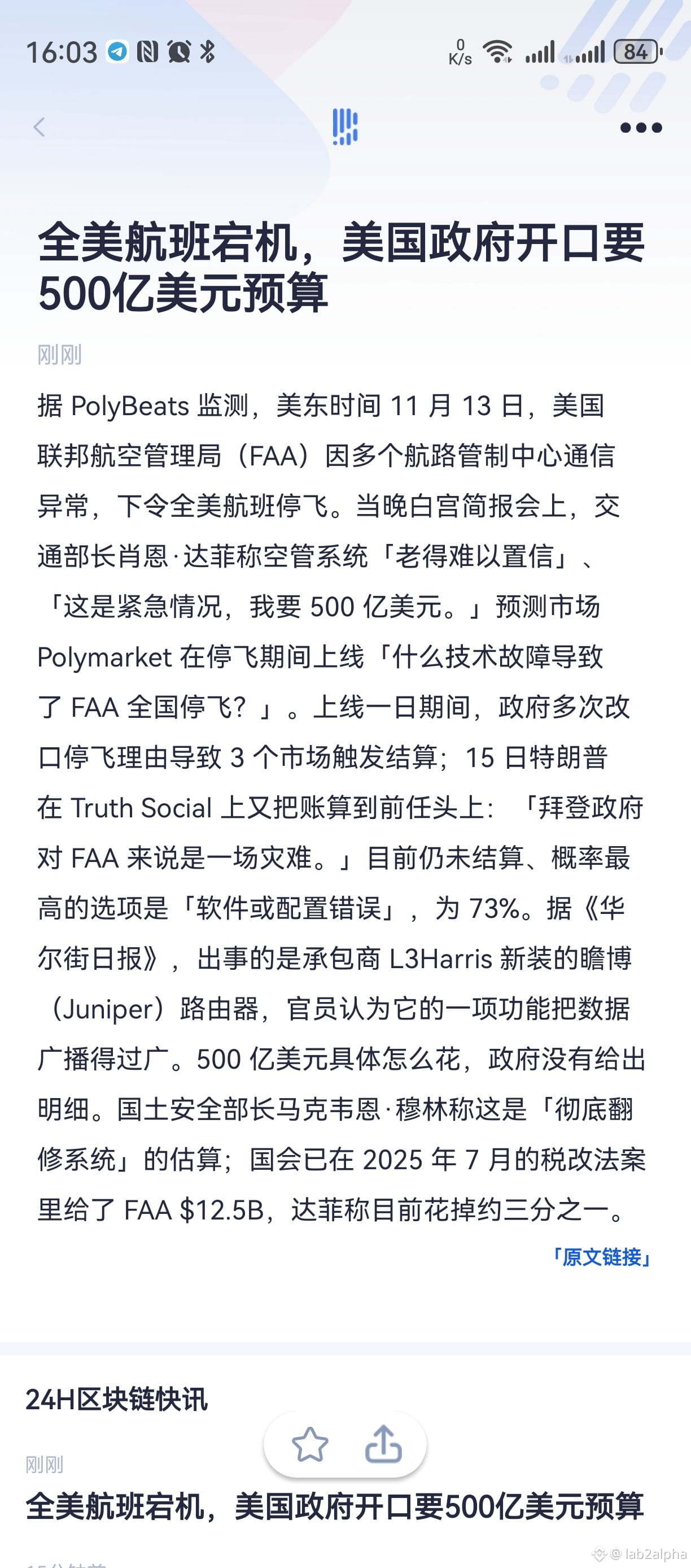
This kind of thing happens all the time in the most developed countries.
What causes it?
Even the world’s superpower has frequent flight cancellations.
If this happened here, people would’ve torn them to shreds by now...
This kind of thing happens all the time in the most developed countries.
What causes it?
Even the world’s superpower has frequent flight cancellations.
If this happened here, people would’ve torn them to shreds by now...
What causes it?
Even the world’s superpower has frequent flight cancellations.
If this happened here, people would’ve torn them to shreds by now...
3
654
·
--
Crypto Watch (for reference):
1. 10Y TIPS real yield
2.86% (11-12, +23bp for the week), briefly reaching 2.91% (highest daily reading since 2017-01)
2. Total stablecoin supply, Coinbase Premium
30-day change: −$14.2 billion (largest drop since 2022-06); Premium negative for 30 consecutive days; USDT down $6.6 billion over 60 days; spot BTC demand down 284,000 BTC over 30 days
3. Spot BTC ETF net flows
Year-to-date cumulative flows shifted from +$1.01 billion on 10-29 to approximately −$1.56 billion on 11-13 (−$1.98 billion by another measure); November: −$1.88 billion / two weeks: −$2.35 billion; first annual net outflow since the ETFs launched in 2024
4. Liquidations, funding rates, OI
11-13: $1.3–1.64 billion in total crypto liquidations, 88.7% of them longs; BTC fell below the 200-week moving average, around 68,000
5. Cross-border dollar debt costs
Hartnett: “wrecking ball”—a strong dollar + gold breaking above 4,000 = liquidity retreat; emerging-market bond funds saw $1.5 billion in outflows in one week
Crypto community: What lies ahead for Bitcoin (BTC)?
#本周财报与宏观事件密集,市场再迎波动考验
#加息预期仍强,FOMC纪要会否再添鹰派信号?
{spot}(BTCUSDT)
#加密美股齐跌,下轮反弹的驱动力在哪?
Crypto Watch (for reference):
1. 10Y TIPS real yield
2.86% (11-12, +23bp for the week), briefly reaching 2.91% (highest daily reading since 2017-01)
2. Total stablecoin supply, Coinbase Premium
30-day change: −$14.2 billion (largest drop since 2022-06); Premium negative for 30 consecutive days; USDT down $6.6 billion over 60 days; spot BTC demand down 284,000 BTC over 30 days
3. Spot BTC ETF net flows
Year-to-date cumulative flows shifted from +$1.01 billion on 10-29 to approximately −$1.56 billion on 11-13 (−$1.98 billion by another measure); November: −$1.88 billion / two weeks: −$2.35 billion; first annual net outflow since the ETFs launched in 2024
4. Liquidations, funding rates, OI
11-13: $1.3–1.64 billion in total crypto liquidations, 88.7% of them longs; BTC fell below the 200-week moving average, around 68,000
5. Cross-border dollar debt costs
Hartnett: “wrecking ball”—a strong dollar + gold breaking above 4,000 = liquidity retreat; emerging-market bond funds saw $1.5 billion in outflows in one week
Crypto community: What lies ahead for Bitcoin (BTC)?
#本周财报与宏观事件密集,市场再迎波动考验
#加息预期仍强,FOMC纪要会否再添鹰派信号?
#加密美股齐跌,下轮反弹的驱动力在哪?
37
·
--
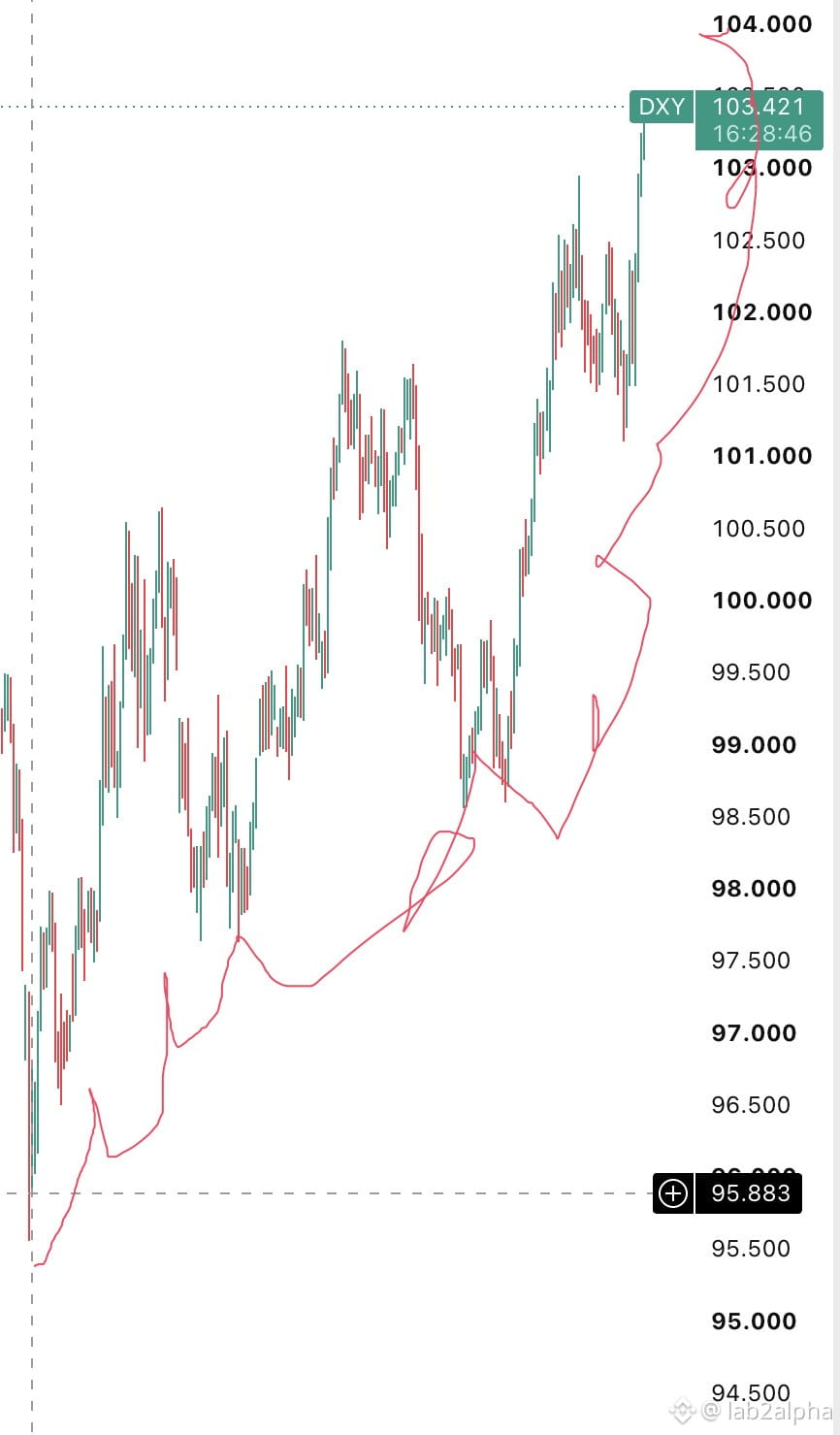
Could a teacher explain this to me?
Why has the U.S. Dollar Index (DXY) performed so spectacularly in 2026?
Why has it just kept going up without looking back?
When will Bitcoin be able to do this?
$BTC $QQQ DXY (why isn't there a DXY?)
{spot}(NVDABUSDT)
Could a teacher explain this to me?
Why has the U.S. Dollar Index (DXY) performed so spectacularly in 2026?
Why has it just kept going up without looking back?
When will Bitcoin be able to do this?
$BTC $QQQ DXY (why isn't there a DXY?)
Why has the U.S. Dollar Index (DXY) performed so spectacularly in 2026?
Why has it just kept going up without looking back?
When will Bitcoin be able to do this?
$BTC $QQQ DXY (why isn't there a DXY?)
207
Log in to explore more content
Join global crypto users on Binance Square
⚡️ Get latest and useful information about crypto.
💬 Trusted by the world’s largest crypto exchange.
👍 Discover real insights from verified creators.
Email / Phone number
Trending Topics
NvidiaEarningsTonight:AIStocks’NextMove?
103,060 views
1,192 Discussing
Nvidia Earnings Day: Interim CEO's First Appearance — Can the AI Story Hold?
Binance News
·18 Likes
·8k views
A Packed Week of Earnings and Data Tests Markets
138,804 views
644 Discussing
AnthropicIPOTestsInvestorAppetiteForAI
307,389 views
2,817 Discussing