

Клим Самгин
5.3k Posts

Клим Самгин
Report
Block User
Я Позитивен. Я формирую себя по пути чистому и светлому в соответствии с Законами Космоса Великого.
Open Trade
High-Frequency Trader
5.7 Years
191 Following
217 Followers
2.0K+ Liked
Posts
Portfolio
All
Quotes
·
--
Verified

Article
$GTC - why Gitcoin surged and what’s behind the moveGreetings, dear friends!
$GTC surged rapidly at the beginning of October. On the Binance chart, the price rose to 0.18377 USDT, then pulled back to 0.1412 USDT. At the time of analysis, the daily increase was about 26%.
The main impulse came on October 1. Over the previous day, the price increased from about 0.094 to 0.142 USDT, while trading volumes also rose.
$GTC - why Gitcoin surged and what’s behind the move
Greetings, dear friends!
$GTC surged rapidly at the beginning of October. On the Binance chart, the price rose to 0.18377 USDT, then pulled back to 0.1412 USDT. At the time of analysis, the daily increase was about 26%.
The main impulse came on October 1. Over the previous day, the price increased from about 0.094 to 0.142 USDT, while trading volumes also rose.
$GTC surged rapidly at the beginning of October. On the Binance chart, the price rose to 0.18377 USDT, then pulled back to 0.1412 USDT. At the time of analysis, the daily increase was about 26%.
The main impulse came on October 1. Over the previous day, the price increased from about 0.094 to 0.142 USDT, while trading volumes also rose.
577
·
--

Article
$NMR - about the company, news, and a brief analysis of the chartsGreetings, dear friends!
Numerai - a platform that brings together machine learning and quantitative investing. The company runs a tournament in which participants create models to predict financial data. Numerai evaluates the results of these models.
Staked predictions are combined into the Stake-Weighted Meta Model that Numerai uses in its hedge fund.
$NMR - about the company, news, and a brief analysis of the charts
Greetings, dear friends!
Numerai - a platform that brings together machine learning and quantitative investing. The company runs a tournament in which participants create models to predict financial data. Numerai evaluates the results of these models.
Staked predictions are combined into the Stake-Weighted Meta Model that Numerai uses in its hedge fund.
Numerai - a platform that brings together machine learning and quantitative investing. The company runs a tournament in which participants create models to predict financial data. Numerai evaluates the results of these models.
Staked predictions are combined into the Stake-Weighted Meta Model that Numerai uses in its hedge fund.
109
·
--

Article
$BTC: ETFs are being bought, futures are cautious. What the market showsGreetings to you, dear friends!
I would be pleased with any support from your side—like, subscribe... write that it is poorly written and incorrectly analyzed, if you think so..
Any interaction with the post will be useful for promoting the post.
Right now $BTC is trading at about 84,000 USDT. After a strong rise, the price pulled back to 82,500 and then returned to 84,000.
$BTC: ETFs are being bought, futures are cautious. What the market shows
Greetings to you, dear friends!
I would be pleased with any support from your side—like, subscribe... write that it is poorly written and incorrectly analyzed, if you think so..
Any interaction with the post will be useful for promoting the post.
Right now $BTC is trading at about 84,000 USDT. After a strong rise, the price pulled back to 82,500 and then returned to 84,000.
I would be pleased with any support from your side—like, subscribe... write that it is poorly written and incorrectly analyzed, if you think so..
Any interaction with the post will be useful for promoting the post.
Right now $BTC is trading at about 84,000 USDT. After a strong rise, the price pulled back to 82,500 and then returned to 84,000.
536
·
--
Verified
Article
HBAR: What has changed around Hedera and why the chart accelerated sharplyGreetings, dear friends!
If you find the news useful, please support it with any interaction with the post. I’ll be glad to welcome new subscribers. For my readers, there are always fresh news in the Markets tab.
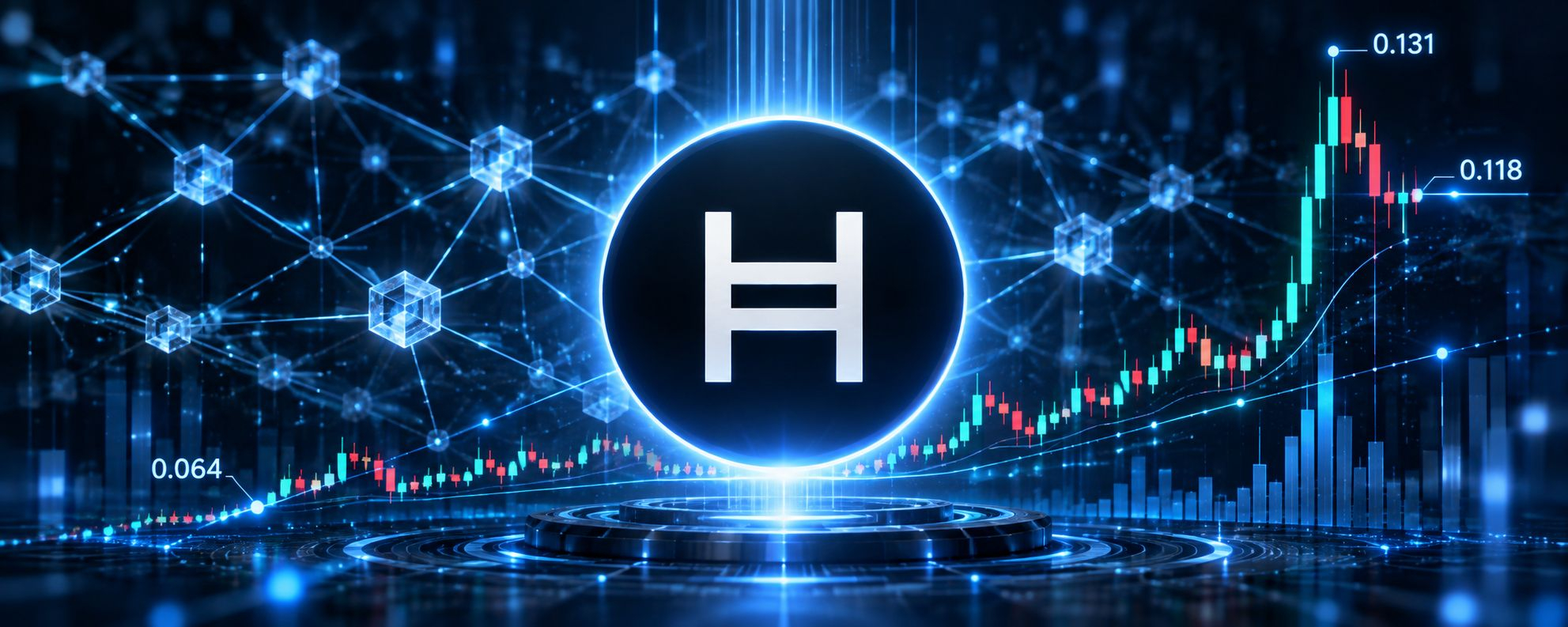
Over the past few days, it has accelerated sharply. On the daily chart, the price rose from 0.06423 USDT to 0.13099 USDT, after which it pulled back to 0.1173 USDT.
HBAR: What has changed around Hedera and why the chart accelerated sharply
Greetings, dear friends!
If you find the news useful, please support it with any interaction with the post. I’ll be glad to welcome new subscribers. For my readers, there are always fresh news in the Markets tab.
Over the past few days, it has accelerated sharply. On the daily chart, the price rose from 0.06423 USDT to 0.13099 USDT, after which it pulled back to 0.1173 USDT.
If you find the news useful, please support it with any interaction with the post. I’ll be glad to welcome new subscribers. For my readers, there are always fresh news in the Markets tab.
Over the past few days, it has accelerated sharply. On the daily chart, the price rose from 0.06423 USDT to 0.13099 USDT, after which it pulled back to 0.1173 USDT.
4
2k
·
--
Verified

Article
QNT: what has changed around Quant over the course of a few daysGreetings, dear friends!
In just a few days $QNT it moved from the 60–70 USDT range to 374.50 USDT, after which it pulled back to 238 USDT. On the daily chart, the current candle shows about +46%. Trading volume reached 5.91 million QNT, or approximately 1.49 billion USDT.
During the same period, several major news items appeared around Quant at once.
QNT: what has changed around Quant over the course of a few days
Greetings, dear friends!
In just a few days $QNT it moved from the 60–70 USDT range to 374.50 USDT, after which it pulled back to 238 USDT. On the daily chart, the current candle shows about +46%. Trading volume reached 5.91 million QNT, or approximately 1.49 billion USDT.
During the same period, several major news items appeared around Quant at once.
In just a few days $QNT it moved from the 60–70 USDT range to 374.50 USDT, after which it pulled back to 238 USDT. On the daily chart, the current candle shows about +46%. Trading volume reached 5.91 million QNT, or approximately 1.49 billion USDT.
During the same period, several major news items appeared around Quant at once.
1
705
·
--

Article
Bitcoin received $2.4B in inflows via ETFs, but the market did not continue to riseGreetings to you, dear friends!
$BTC After the rally to 87,395 USDT, it returned to the 83,000 area. I checked the daily, 4-hour, and 15-minute charts, volumes, OBV, and Binance buy/sell data.
Here, the most important thing for me is not the price drop itself, but the discrepancy between different sources of demand. U.S. spot Bitcoin ETFs received about $2.4B in net inflows over the week, but after that, the price failed to continue rising.
Bitcoin received $2.4B in inflows via ETFs, but the market did not continue to rise
Greetings to you, dear friends!
$BTC After the rally to 87,395 USDT, it returned to the 83,000 area. I checked the daily, 4-hour, and 15-minute charts, volumes, OBV, and Binance buy/sell data.
Here, the most important thing for me is not the price drop itself, but the discrepancy between different sources of demand. U.S. spot Bitcoin ETFs received about $2.4B in net inflows over the week, but after that, the price failed to continue rising.
$BTC After the rally to 87,395 USDT, it returned to the 83,000 area. I checked the daily, 4-hour, and 15-minute charts, volumes, OBV, and Binance buy/sell data.
Here, the most important thing for me is not the price drop itself, but the discrepancy between different sources of demand. U.S. spot Bitcoin ETFs received about $2.4B in net inflows over the week, but after that, the price failed to continue rising.
139
·
--
Verified

Article
ONDO: from $0.08 to $2.14 and back again. Can the coin return to its previous all-time high?
?Greetings, dear friends!
Today we’ll cover $ONDO : the project’s story, the price path from the first trades to its all-time high, and the current sharp surge.
Ondo Finance appeared in 2021 as a DeFi protocol. Initially, the project worked with fixed-income instruments and risk-isolated vaults. Later, the direction expanded significantly. #ONDO moved on to tokenizing traditional financial assets and creating infrastructure for their trading on the blockchain.
ONDO: from $0.08 to $2.14 and back again. Can the coin return to its previous all-time high? ?
Greetings, dear friends!
Today we’ll cover $ONDO : the project’s story, the price path from the first trades to its all-time high, and the current sharp surge.
Ondo Finance appeared in 2021 as a DeFi protocol. Initially, the project worked with fixed-income instruments and risk-isolated vaults. Later, the direction expanded significantly. #ONDO moved on to tokenizing traditional financial assets and creating infrastructure for their trading on the blockchain.
Today we’ll cover $ONDO : the project’s story, the price path from the first trades to its all-time high, and the current sharp surge.
Ondo Finance appeared in 2021 as a DeFi protocol. Initially, the project worked with fixed-income instruments and risk-isolated vaults. Later, the direction expanded significantly. #ONDO moved on to tokenizing traditional financial assets and creating infrastructure for their trading on the blockchain.
3
202
·
--
Article
BTCUSDT: what’s behind the sharp rally and where the price is nowGreetings, dear friends!
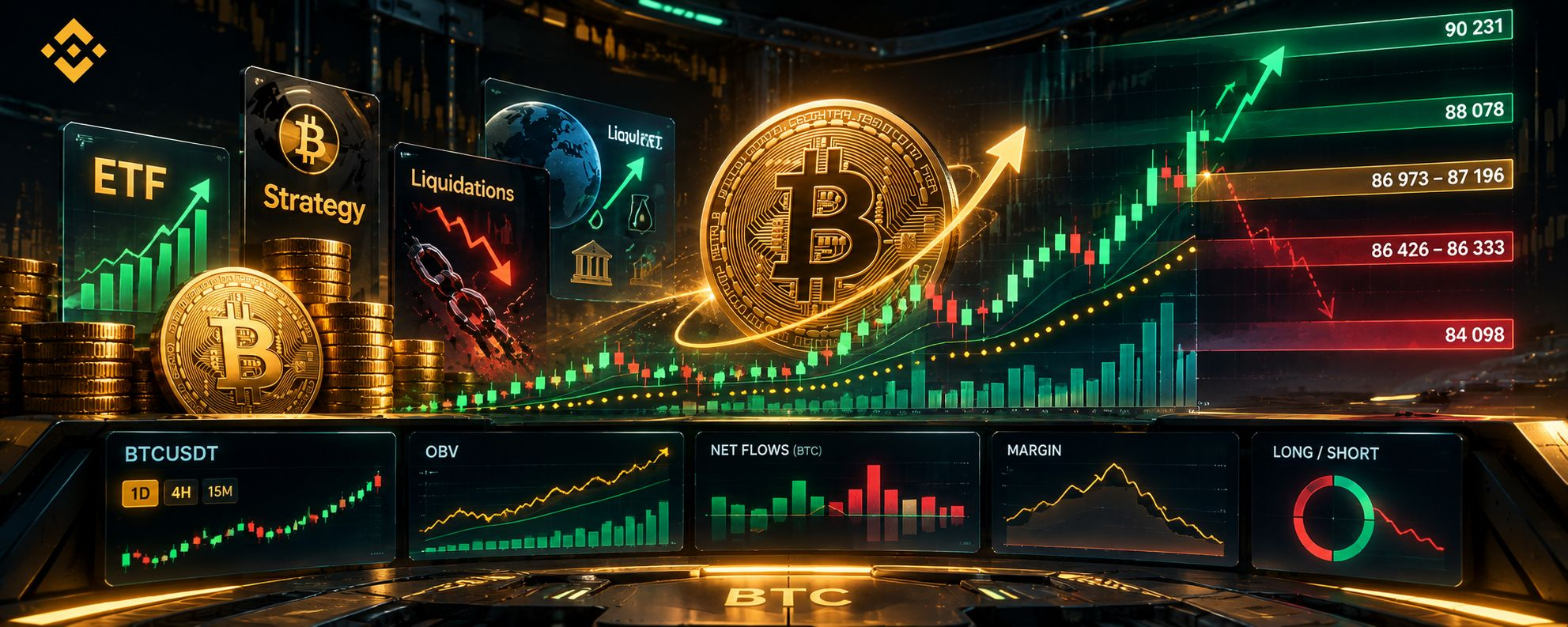
Today I’m looking at #BTCUSDT across several timeframes at once. After such a move, it’s important not just to see the price rising, but to understand how it looks on the daily, 4H, and 15M charts—where the nearest levels are and what’s happening with volume, flows, and positioning.
BTCUSDT: what’s behind the sharp rally and where the price is now
Greetings, dear friends!
Today I’m looking at #BTCUSDT across several timeframes at once. After such a move, it’s important not just to see the price rising, but to understand how it looks on the daily, 4H, and 15M charts—where the nearest levels are and what’s happening with volume, flows, and positioning.
Today I’m looking at #BTCUSDT across several timeframes at once. After such a move, it’s important not just to see the price rising, but to understand how it looks on the daily, 4H, and 15M charts—where the nearest levels are and what’s happening with volume, flows, and positioning.
917
·
--
Article
ZECUSDT: what the structure shows after the impulseGreetings, dear friends!
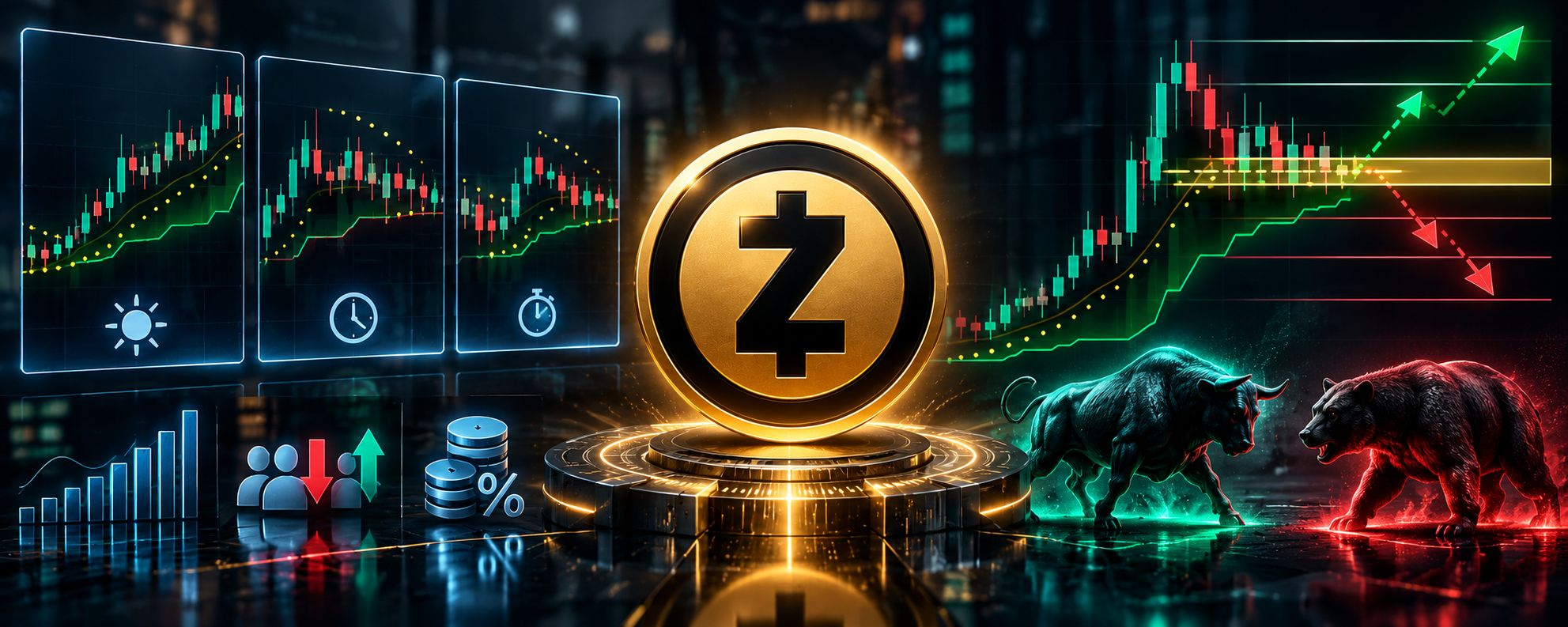
Today I'm analyzing #ZECUSDT on three timeframes at once to understand what happens to the price after a strong impulse. For me, it's important here not just to list indicator values, but to show how I read their position relative to the price.
I'll start with the daily chart. The price is above AVL 1 484,55. So right now I'm using AVL as the nearest reference point to assess the price position: as long as the market stays above this line, the price maintains its position above AVL. If the price goes below and consolidates under it, that will be a sign to me that the current structure is weakening.
ZECUSDT: what the structure shows after the impulse
Greetings, dear friends!
Today I'm analyzing #ZECUSDT on three timeframes at once to understand what happens to the price after a strong impulse. For me, it's important here not just to list indicator values, but to show how I read their position relative to the price.
I'll start with the daily chart. The price is above AVL 1 484,55. So right now I'm using AVL as the nearest reference point to assess the price position: as long as the market stays above this line, the price maintains its position above AVL. If the price goes below and consolidates under it, that will be a sign to me that the current structure is weakening.
Today I'm analyzing #ZECUSDT on three timeframes at once to understand what happens to the price after a strong impulse. For me, it's important here not just to list indicator values, but to show how I read their position relative to the price.
I'll start with the daily chart. The price is above AVL 1 484,55. So right now I'm using AVL as the nearest reference point to assess the price position: as long as the market stays above this line, the price maintains its position above AVL. If the price goes below and consolidates under it, that will be a sign to me that the current structure is weakening.
2
1.4k
·
--
Partly True
Article
$BTC: after a surge to 85,300, the price rolled back from the local highGreetings, dear friends!
Today the chart by $BTC has noticeably changed compared to the previous analysis. At the time the data was captured, BTCUSDT was around 84,188 USDT, with a 24-hour change of approximately +4.77%. During the move, the price reached 85,299.87 USDT, after which a pullback began.
$BTC: after a surge to 85,300, the price rolled back from the local high
Greetings, dear friends!
Today the chart by $BTC has noticeably changed compared to the previous analysis. At the time the data was captured, BTCUSDT was around 84,188 USDT, with a 24-hour change of approximately +4.77%. During the move, the price reached 85,299.87 USDT, after which a pullback began.
Today the chart by $BTC has noticeably changed compared to the previous analysis. At the time the data was captured, BTCUSDT was around 84,188 USDT, with a 24-hour change of approximately +4.77%. During the move, the price reached 85,299.87 USDT, after which a pullback began.
526
·
--

Article
$CELR: an abnormal impulse and a skew in the futures marketGreetings, dear friends!
Today I want to draw your attention to $CELR , because here the interesting part is not only the growth itself, but also how it looks from the inside.
At the time of the analysis, the price is around 0.00363 USDT. Over the day, the increase is about 42%, but within the move $CELR , it managed to rise to 0.005230. After that, the price has already pulled back by about 30%.
$CELR: an abnormal impulse and a skew in the futures market
Greetings, dear friends!
Today I want to draw your attention to $CELR , because here the interesting part is not only the growth itself, but also how it looks from the inside.
At the time of the analysis, the price is around 0.00363 USDT. Over the day, the increase is about 42%, but within the move $CELR , it managed to rise to 0.005230. After that, the price has already pulled back by about 30%.
Today I want to draw your attention to $CELR , because here the interesting part is not only the growth itself, but also how it looks from the inside.
At the time of the analysis, the price is around 0.00363 USDT. Over the day, the increase is about 42%, but within the move $CELR , it managed to rise to 0.005230. After that, the price has already pulled back by about 30%.
2
439
·
--
Verified

Article
$ONE: sharp rise amid Harmony's plans to migrate to EthereumHello, dear friends!
I looked at the movement $ONE not only through price, but also through futures market data. The result was a very unusual picture: roughly from 0.00058 to 0.005195, i.e. almost 9 times, after which the price pulled back to 0.0038–0.0039.
Meanwhile, the main news around Harmony is not related to launching a new product on the existing network.
$ONE: sharp rise amid Harmony's plans to migrate to Ethereum
Hello, dear friends!
I looked at the movement $ONE not only through price, but also through futures market data. The result was a very unusual picture: roughly from 0.00058 to 0.005195, i.e. almost 9 times, after which the price pulled back to 0.0038–0.0039.
Meanwhile, the main news around Harmony is not related to launching a new product on the existing network.
I looked at the movement $ONE not only through price, but also through futures market data. The result was a very unusual picture: roughly from 0.00058 to 0.005195, i.e. almost 9 times, after which the price pulled back to 0.0038–0.0039.
Meanwhile, the main news around Harmony is not related to launching a new product on the existing network.
4
1.8k
·
--
Verified
Article
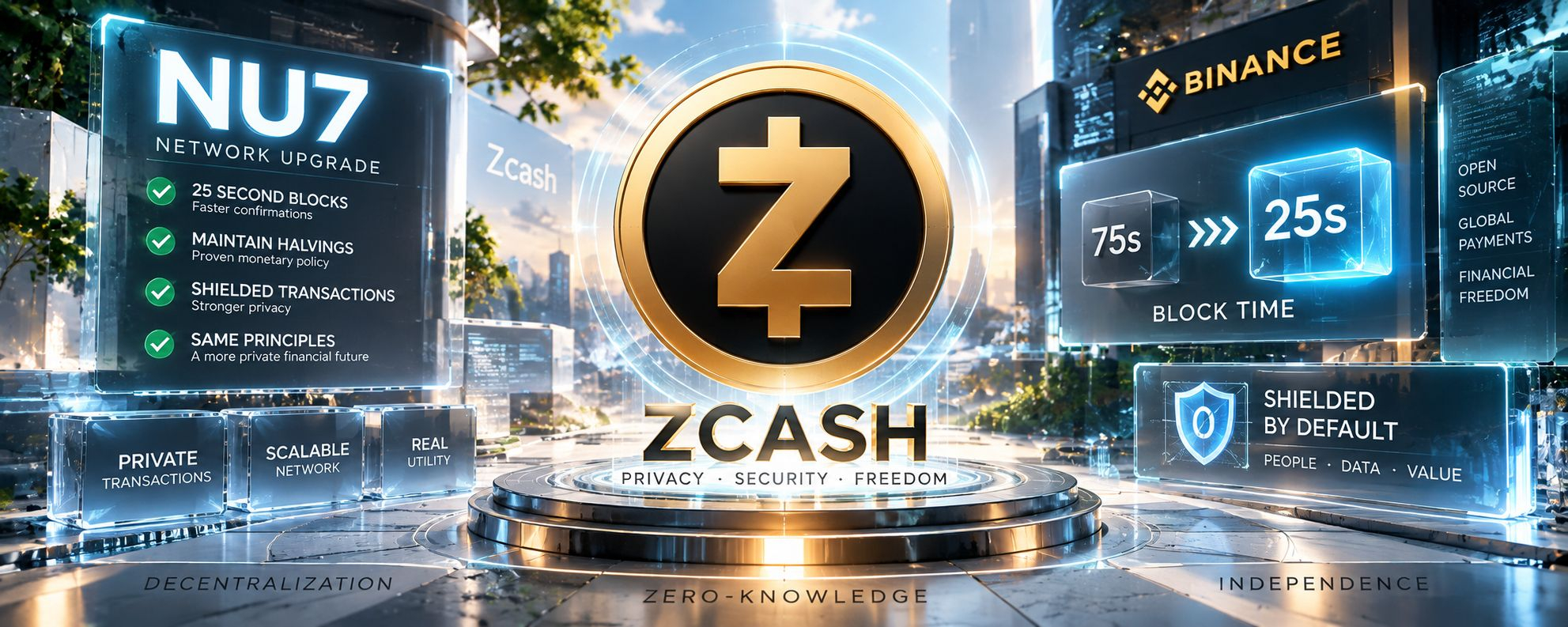
$ZEC: NU7 and the next test at $1 537$ZEC : NU7 and the next test at $1 537
Greetings, dear friends!
The Zcash community supported changes for NU7. In a ZEC-weighted vote, about 2.4 million ZEC participated in decision-making regarding the update. 99.9% supported reducing the target block time from 75 to 25 seconds, and 98.9% voted to keep the current halving schedule.
$ZEC: NU7 and the next test at $1 537
$ZEC : NU7 and the next test at $1 537
Greetings, dear friends!
The Zcash community supported changes for NU7. In a ZEC-weighted vote, about 2.4 million ZEC participated in decision-making regarding the update. 99.9% supported reducing the target block time from 75 to 25 seconds, and 98.9% voted to keep the current halving schedule.
Greetings, dear friends!
The Zcash community supported changes for NU7. In a ZEC-weighted vote, about 2.4 million ZEC participated in decision-making regarding the update. 99.9% supported reducing the target block time from 75 to 25 seconds, and 98.9% voted to keep the current halving schedule.
1
2.6k
Log in to explore more content
Join global crypto users on Binance Square
⚡️ Get latest and useful information about crypto.
💬 Trusted by the world’s largest crypto exchange.
👍 Discover real insights from verified creators.
Email / Phone number
Trending Topics
BitcoinRejectedAt$87K
0 views
20 Discussing
$BTC Update 🚨 🐼 Skip THIS Warning at Your Own Risk ⚠️
BTC is knocking on 87K like it already owns the place 😂Bulls are awake… but BTC usually likes to shake a few people out before the real move.
Overall, BTC is breaking out and the higher-timeframe picture is still bullish. The 4H and daily structure are strong, price is holding above the major averages, and momentum is still supporting the move.
83K was honestly a beautiful buy location. That was the area where risk/reward made sense. Anyone who bought there is already sitting enjoying profit
Now come to main
BTC is sitting right under the previous high around 87K. So I would not be surprised if we first see a little downside liquidity grab, flush some late longs, and then BTC decides whether it wants the real breakout.
For today’s scalp, This is my Plan 👇
BTC SHORT scalp Entry: 86,550–86,900
TP1: 85,650
TP2: 84,850
TP3: 84,050
SL: 87,800
I only like this if we get a proper rejection near the highs. No blind shorting.
For the bigger picture, I’m still bullish as long as the 82.5K–83K area keeps holding. If BTC gets a clean breakout and starts accepting above 87.4K, then this whole short idea is invalid and the next bullish leg becomes much more interesting.
SO BASICALLY OCTOBER HISTORICAL IS BULLISH MONTH FOR BITCOIN.
ALWAYS DYOR
Panda Traders
·29 Likes
·12.5k views
FedOctoberRateHikeOddsFallTo17%
3,095 views
103 Discussing
NvidiaHitsRecordHighUp2.4%
415 views
69 Discussing