
AH啊豪
5.2k Posts

AH啊豪
 Square Verified+
项目早期撸毛人|撸到A8退圈|链上勤耕耘,空投看天命。
High-Frequency Trader
5.7 Years
605 Following
51.8K+ Followers
28.7K+ Liked
Posts
All
Quotes
Live
PINNED
The primary market MeMe sector is already bursting with stars!
Now even Binance events are moving toward the wallet direction. This trend has already emerged, and MeMe projects listed on Alpha are even taking off like a rocket! If you still haven’t linked a wallet referral code, hurry up and do it now!
Limited-time personal event: To complete the season assessment, anyone who binds the Ah Hao wallet referral code will receive 2U as a reward, and the reward ratio is also the highest allowed on the platform, with automatic return!
After binding, send a screenshot in the group and receive it directly!
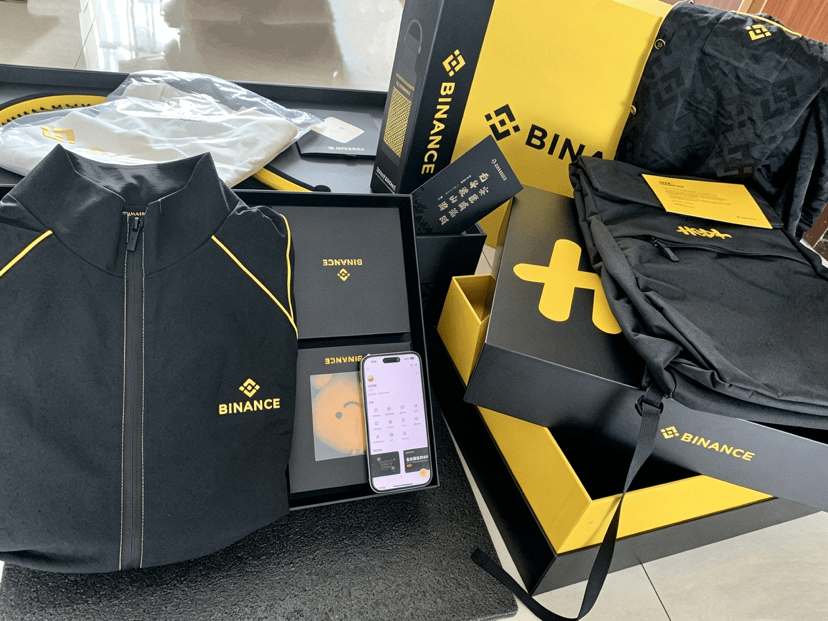
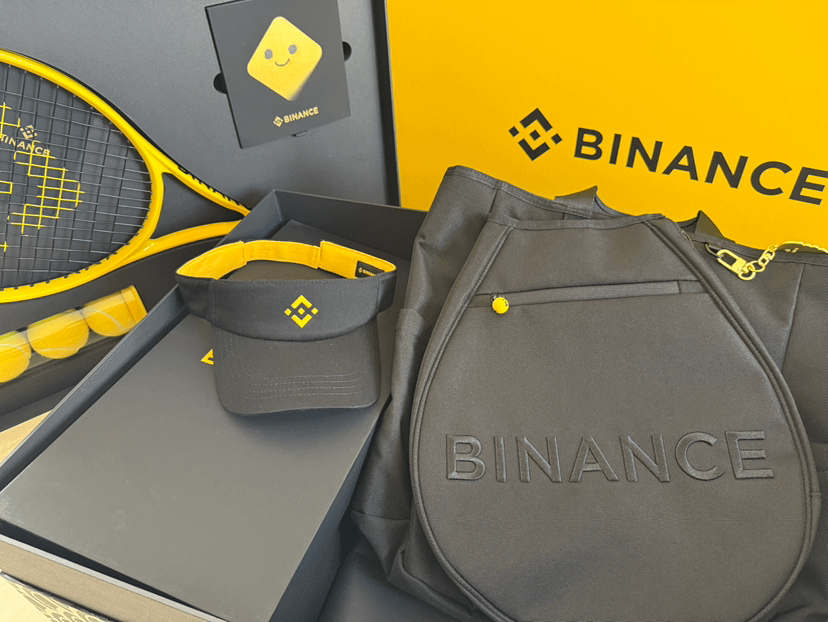
In addition, the 500th person will receive Binance insulated cup merch,
The 550th person will receive a Binance pendant,
The 588th person will receive a Binance T-shirt (M size, EU size),
The 650th person will receive Binance slippers!
If your trading volume is large or you are a team leader, you can choose more merch!
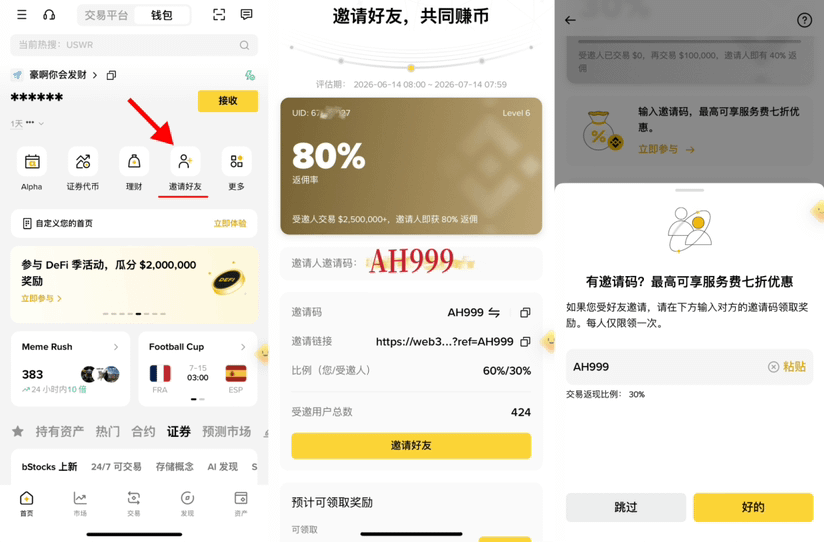
Binding steps:
Enter the Binance Wallet → Home → Select Invite Friends → Enter AH999 → Bind and then send a screenshot to the group → Receive 2U or merch!
#BinanceWallet
Now even Binance events are moving toward the wallet direction. This trend has already emerged, and MeMe projects listed on Alpha are even taking off like a rocket! If you still haven’t linked a wallet referral code, hurry up and do it now!
Limited-time personal event: To complete the season assessment, anyone who binds the Ah Hao wallet referral code will receive 2U as a reward, and the reward ratio is also the highest allowed on the platform, with automatic return!
After binding, send a screenshot in the group and receive it directly!
In addition, the 500th person will receive Binance insulated cup merch,
The 550th person will receive a Binance pendant,
The 588th person will receive a Binance T-shirt (M size, EU size),
The 650th person will receive Binance slippers!
If your trading volume is large or you are a team leader, you can choose more merch!
Binding steps:
Enter the Binance Wallet → Home → Select Invite Friends → Enter AH999 → Bind and then send a screenshot to the group → Receive 2U or merch!
#BinanceWallet
Partly True
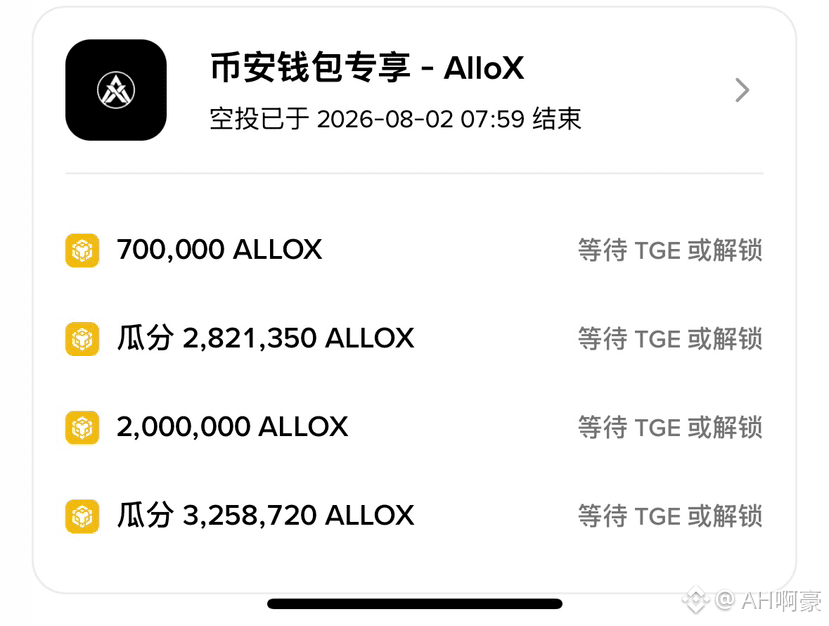
Complain about AlloX! It’s so disgusting!
After finishing the wallet quests, I kept doing community quests. Originally, I created combinations every day to get those so-called diamonds. According to their ratio, one diamond equals five bucks. I stuck with it for a while, and only then did I realize this is basically a hard, hard-to-swallow biscuit. Other people just casually go for thousands of diamonds—do you think the project team is here to do charity? Sure, doing tasks has losses, but if you go by the U ratio, you can still make money. And in the end, as long as it lets you get your losses back, that’s already pretty good!
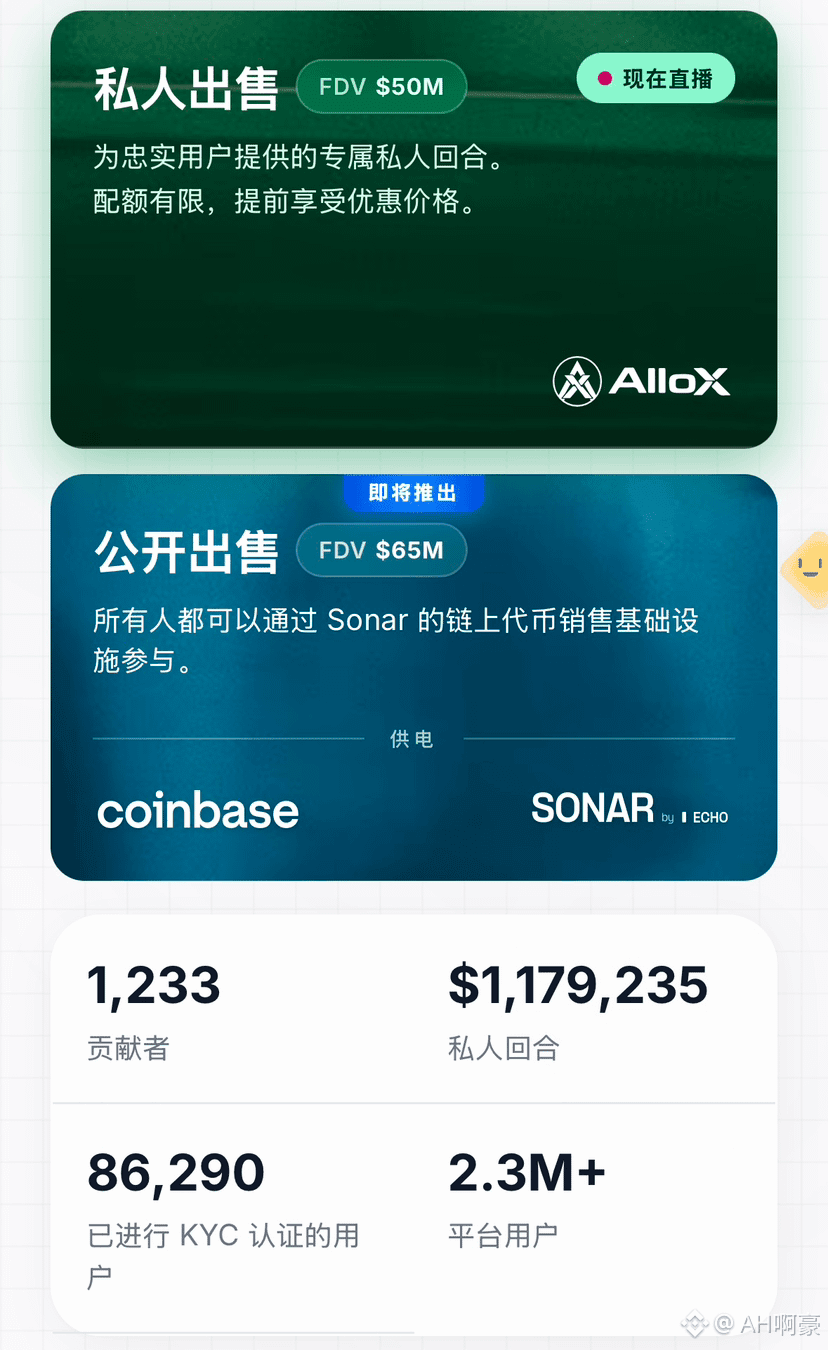
Then there was the private placement a few days ago. I started by putting in a few hundred bucks at a price of 0.05. I kept waiting for it to end to see what the public offering price would be. But after it ended and so many days passed, I found out that everyone could buy in. That’s basically selling dishes for them, right?
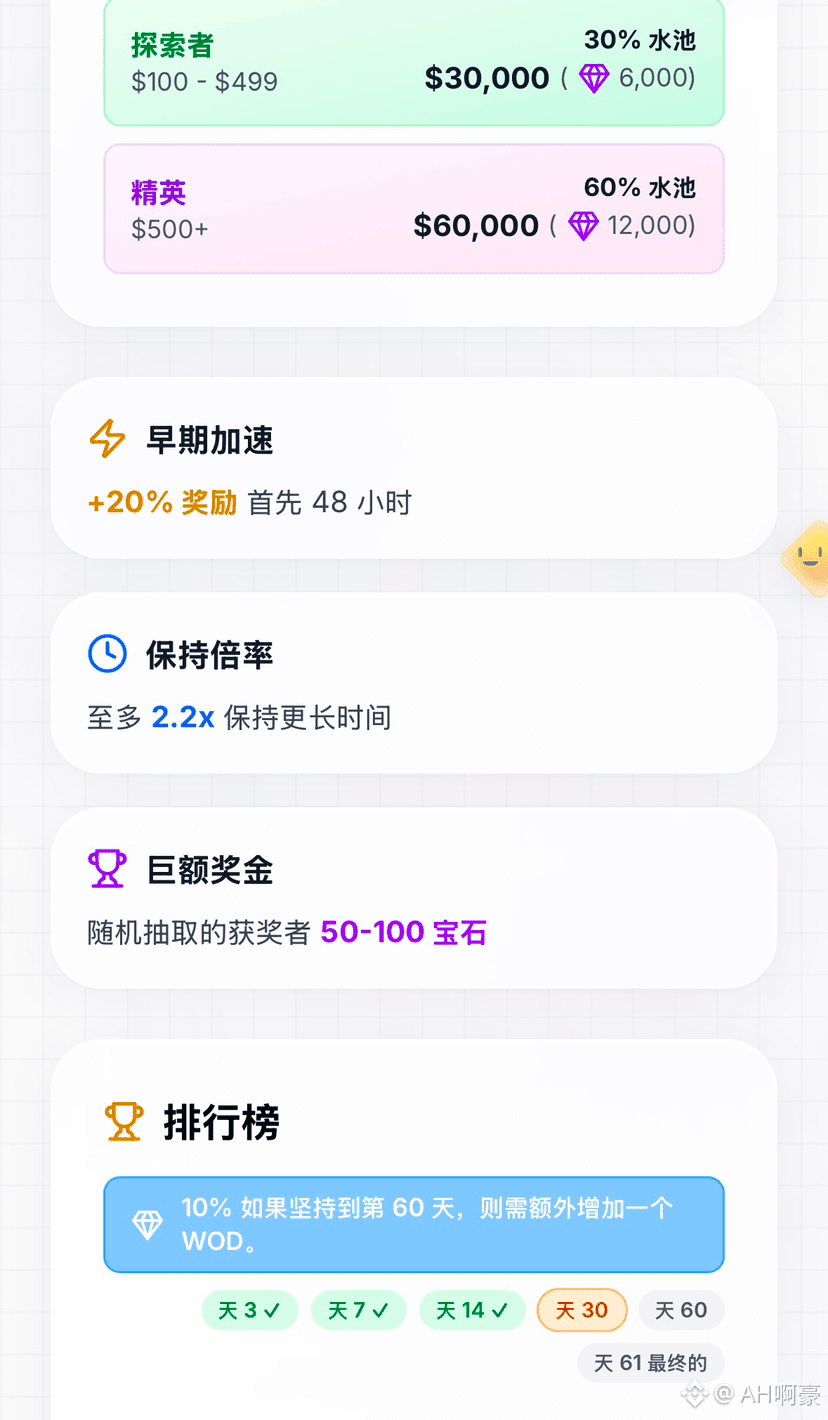
Let’s talk about another event where people pledged Wod. I’m also a sucker. I went in early in the morning and even made the “early bird” tier. As of today, the Wod I pledged has already shrunk by a third. What’s even funnier is that originally, pledging for 30 days would end the event—but today I checked and they extended it again, pushing it to 60 days. Are they trying to have us take the Wod all the way to zero? This is definitely here to help $WOD get their bags out!!
Originally they said Q3 launch—this year, and then we’ll have a lucky and prosperous one! It’s been a very, very long time since I saw a project that’s at least decent.
#美国初请失业金人数升至20.6万
After finishing the wallet quests, I kept doing community quests. Originally, I created combinations every day to get those so-called diamonds. According to their ratio, one diamond equals five bucks. I stuck with it for a while, and only then did I realize this is basically a hard, hard-to-swallow biscuit. Other people just casually go for thousands of diamonds—do you think the project team is here to do charity? Sure, doing tasks has losses, but if you go by the U ratio, you can still make money. And in the end, as long as it lets you get your losses back, that’s already pretty good!
Then there was the private placement a few days ago. I started by putting in a few hundred bucks at a price of 0.05. I kept waiting for it to end to see what the public offering price would be. But after it ended and so many days passed, I found out that everyone could buy in. That’s basically selling dishes for them, right?
Let’s talk about another event where people pledged Wod. I’m also a sucker. I went in early in the morning and even made the “early bird” tier. As of today, the Wod I pledged has already shrunk by a third. What’s even funnier is that originally, pledging for 30 days would end the event—but today I checked and they extended it again, pushing it to 60 days. Are they trying to have us take the Wod all the way to zero? This is definitely here to help $WOD get their bags out!!
Originally they said Q3 launch—this year, and then we’ll have a lucky and prosperous one! It’s been a very, very long time since I saw a project that’s at least decent.
#美国初请失业金人数升至20.6万
This wave of little bulls is very likely on the eve of a breakout. Last year, Ethereum also surged to above 2500, then consolidated for two months and directly broke into an uptrend. This time, it should be waiting for the U.S. midterm elections in November, and then releasing favorable signals to kick off a bull market!
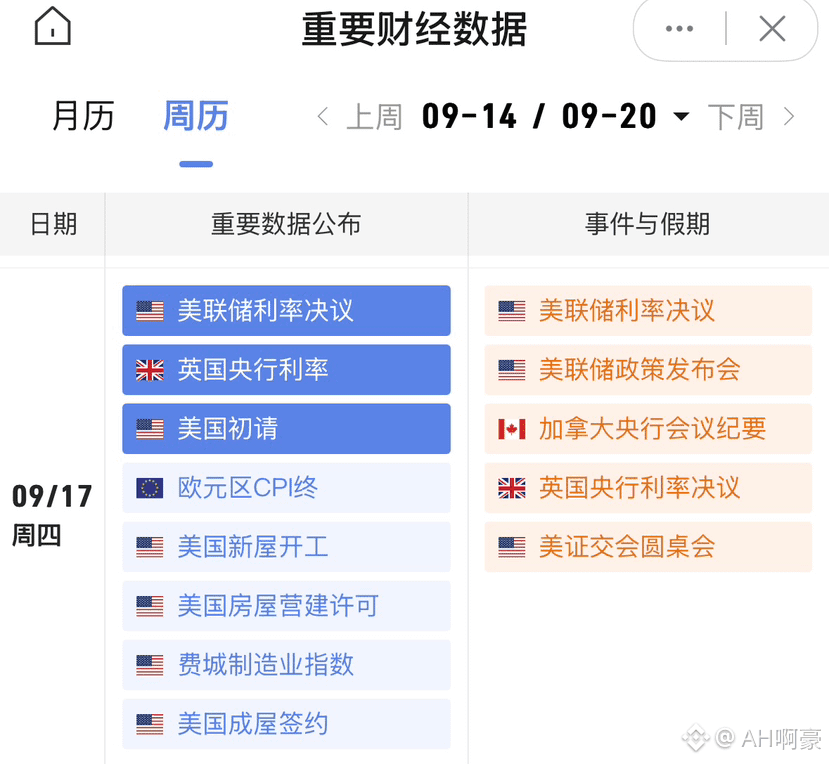
Now I’ve opened several long positions, and my average entry is between 2200 and 2300. In two days and the day after, there will be a big market move: the U.S. initial jobless claims and non-farm payroll data will be released. In the short term, that looks bearish. If the Fed doesn’t release anything on the 17th, basically it will either be a drop or a fakeout. And it has already issued several hawkish signals. However, if it issues too many, I think it will very likely pull up in the opposite direction!
I hope I can get to buy into longs—let me get on board!
These are all my personal views.
Please don’t interfere with your own opinions!
#美国加密关联股指8月涨8.81%
#比特币守稳78000美元上方
$ETH
Now I’ve opened several long positions, and my average entry is between 2200 and 2300. In two days and the day after, there will be a big market move: the U.S. initial jobless claims and non-farm payroll data will be released. In the short term, that looks bearish. If the Fed doesn’t release anything on the 17th, basically it will either be a drop or a fakeout. And it has already issued several hawkish signals. However, if it issues too many, I think it will very likely pull up in the opposite direction!
I hope I can get to buy into longs—let me get on board!
These are all my personal views.
Please don’t interfere with your own opinions!
#美国加密关联股指8月涨8.81%
#比特币守稳78000美元上方
$ETH
Partly True
Yesterday was Chinese Qixi Festival. Without a girlfriend to accompany me, I went out for late-night snacks with a few brothers, and we ended up talking about Dusk’s mainnet data. Different people’s interpretations can lead to two completely different conclusions.
The optimistic camp claims that the active addresses remain stable at around 19,000, while the daily transaction volume reaches the hundreds of thousands of dollars. After the bidirectional bridge went live, on-chain activity once surged by nearly 47%. After the mainnet launch, the coin price rose by 60% within the first week, with the weekly increase landing in the 85–90% range.
Those who take a more pessimistic view point out that in more than 70% of blocks, the number of transactions is fewer than two, and empty blocks occur frequently. Daily average transaction counts barely break 1,000, and the number of active addresses per day across the whole network is even less than 80.
It’s hard to directly determine which set of claims is true or false. Most likely, both sides aren’t lying—only the statistical scope and reference standards differ.
The figure of 19,000 active addresses is indeed plausible, and it’s also possible that the daily active addresses are fewer than 80. The former counts accumulated active addresses over a period, while the latter filters for unique active accounts within a single day. The two sets of numbers don’t represent the same metric. But there’s one objective fact that can’t be avoided: compared with mainstream public chains, Dusk’s current on-chain activity still shows a noticeable gap. The overall depth of the DEX liquidity pools is relatively thin, so the platform can only attract liquidity by offering relatively high annualized rewards.
I’m not saying that Dusk’s future development will necessarily stall. The mainnet has only been live for a little over half a year. For a brand-new public chain, it’s normal for activity to be low at the beginning. The only thing is that the fan community shouldn’t selectively release only good-news data, and skeptics shouldn’t dismiss the project outright based only on negative numbers.
Personally, I’ll focus on tracking three things going forward. First, when the assets corresponding to NPEX will truly be implemented and run on-chain. Second, after the Boreas upgrade is completed, how the network’s real stability performs. Third, whether the OpenDusk plan can genuinely energize the entire community. As for all kinds of other public opinion and commentary, most of it is just noise.
#dusk $DUSK @Dusk
The optimistic camp claims that the active addresses remain stable at around 19,000, while the daily transaction volume reaches the hundreds of thousands of dollars. After the bidirectional bridge went live, on-chain activity once surged by nearly 47%. After the mainnet launch, the coin price rose by 60% within the first week, with the weekly increase landing in the 85–90% range.
Those who take a more pessimistic view point out that in more than 70% of blocks, the number of transactions is fewer than two, and empty blocks occur frequently. Daily average transaction counts barely break 1,000, and the number of active addresses per day across the whole network is even less than 80.
It’s hard to directly determine which set of claims is true or false. Most likely, both sides aren’t lying—only the statistical scope and reference standards differ.
The figure of 19,000 active addresses is indeed plausible, and it’s also possible that the daily active addresses are fewer than 80. The former counts accumulated active addresses over a period, while the latter filters for unique active accounts within a single day. The two sets of numbers don’t represent the same metric. But there’s one objective fact that can’t be avoided: compared with mainstream public chains, Dusk’s current on-chain activity still shows a noticeable gap. The overall depth of the DEX liquidity pools is relatively thin, so the platform can only attract liquidity by offering relatively high annualized rewards.
I’m not saying that Dusk’s future development will necessarily stall. The mainnet has only been live for a little over half a year. For a brand-new public chain, it’s normal for activity to be low at the beginning. The only thing is that the fan community shouldn’t selectively release only good-news data, and skeptics shouldn’t dismiss the project outright based only on negative numbers.
Personally, I’ll focus on tracking three things going forward. First, when the assets corresponding to NPEX will truly be implemented and run on-chain. Second, after the Boreas upgrade is completed, how the network’s real stability performs. Third, whether the OpenDusk plan can genuinely energize the entire community. As for all kinds of other public opinion and commentary, most of it is just noise.
#dusk $DUSK @Dusk
Verified
TermMax has really been gaining a lot of attention lately. On one side there’s the 25 TGE; on the other, there are the Booster campaign and the Creator Center event. And on March 25, the Token Terminal daily active address rankings had it placed second among DeFi lending protocols, only behind Aave. Its TVL broke through $100 million, spanning 8 chains. It even became a Canton Network validator.
Gradually, I’m getting dizzy from all this hype…
But after reading all these announcements, there are a few questions I still can’t quite figure out.
First is the definition of TVL. Data differs significantly across channels—some say $64 million, some say $71 million, and some even claim it’s over $100 million. If even the most basic figure for locked value can’t be clarified, then where does the credibility of an “ecosystem thriving” narrative come from? I also urgently want the accurate numbers.
Second is TMX’s value capture. Total supply is 1 billion tokens, and initial circulating supply at TGE is about 20%. But is TMX’s core function governance, or can it directly capture protocol revenues? If it’s only a governance token, then what supports its value? And when it launches on the 25th, will it get overwhelmed by a big sell-off?
Third is the actual distribution of liquidity. Although it’s deployed across 8 chains, will the capital be concentrated only on Ethereum? Multi-chain deployment and multi-chain activity are two different things. Personally, I’m still more inclined toward the BSC chain—after all, the “noble chain” isn’t something everyone can afford to use!
I don’t deny TermMax’s direction or the practicality of the project itself. Fixed interest rates fill a real gap in DeFi, and the logic of combining it with RWA is also coherent. V2 is also truly addressing the liquidity fragmentation problem from V1. These are all tangible achievements of @TermMax . But no matter how attractive the early “promises” are, if a big dump happens right after launch, it will disappoint the community co-builders. So I hope the project team also has the bigger picture—so that in this bull market, we can see another project token that’s even better!#termmax
Gradually, I’m getting dizzy from all this hype…
But after reading all these announcements, there are a few questions I still can’t quite figure out.
First is the definition of TVL. Data differs significantly across channels—some say $64 million, some say $71 million, and some even claim it’s over $100 million. If even the most basic figure for locked value can’t be clarified, then where does the credibility of an “ecosystem thriving” narrative come from? I also urgently want the accurate numbers.
Second is TMX’s value capture. Total supply is 1 billion tokens, and initial circulating supply at TGE is about 20%. But is TMX’s core function governance, or can it directly capture protocol revenues? If it’s only a governance token, then what supports its value? And when it launches on the 25th, will it get overwhelmed by a big sell-off?
Third is the actual distribution of liquidity. Although it’s deployed across 8 chains, will the capital be concentrated only on Ethereum? Multi-chain deployment and multi-chain activity are two different things. Personally, I’m still more inclined toward the BSC chain—after all, the “noble chain” isn’t something everyone can afford to use!
I don’t deny TermMax’s direction or the practicality of the project itself. Fixed interest rates fill a real gap in DeFi, and the logic of combining it with RWA is also coherent. V2 is also truly addressing the liquidity fragmentation problem from V1. These are all tangible achievements of @TermMax . But no matter how attractive the early “promises” are, if a big dump happens right after launch, it will disappoint the community co-builders. So I hope the project team also has the bigger picture—so that in this bull market, we can see another project token that’s even better!#termmax
Verified
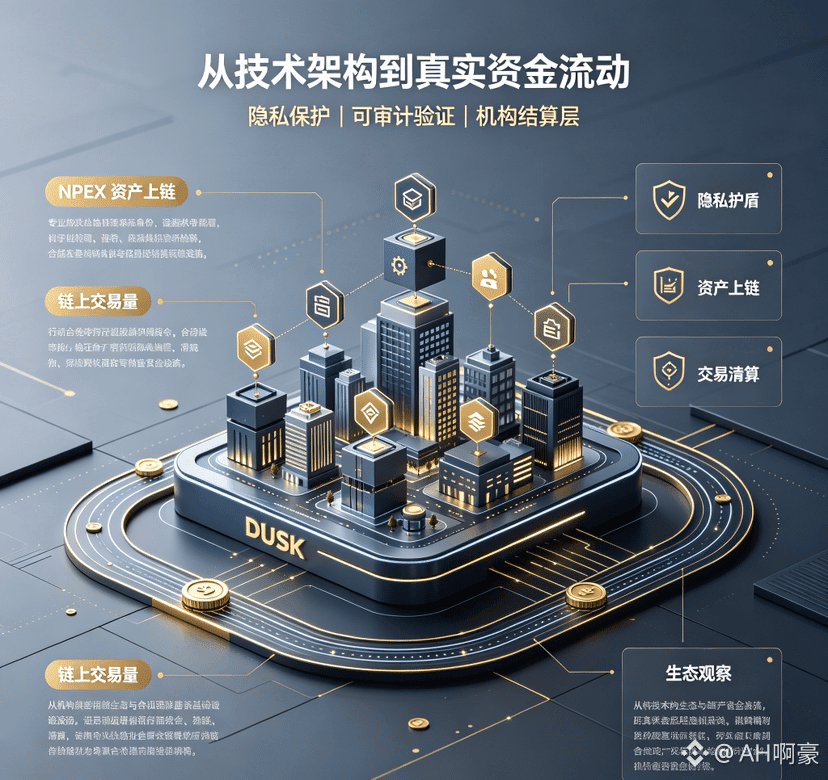
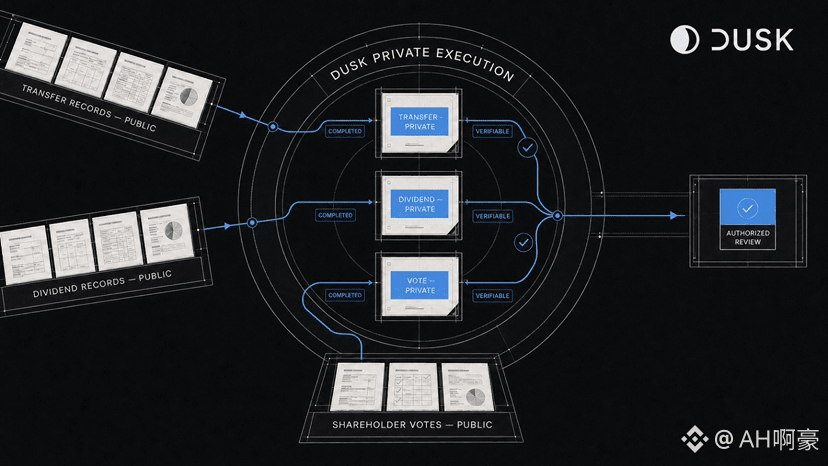
The RWA track is lively right now, but only a few institutions truly dare to use it. The reason is actually not hard to guess: you have to both protect commercially sensitive data and satisfy regulators in different countries. Put these two requirements together, and most projects get stuck.
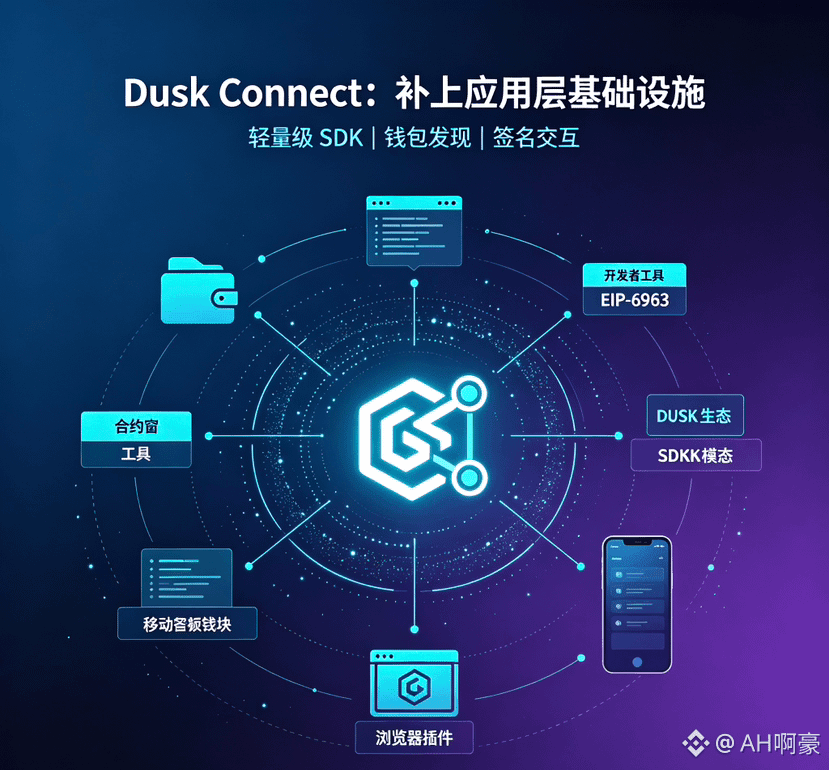
Dusk took a different path. Since its establishment in 2018, it has written zero-knowledge proofs and selective disclosure directly into its protocol. After the mainnet goes live on January 7, 2026, the top layer will be an EVM-compatible application layer—Solidity developers can directly deploy applications—while the bottom layer will be a settlement layer based on zero-knowledge proofs. This modular design allows institutions to benefit from on-chain efficiency without sacrificing privacy or compliance.@Dusk
More importantly, it’s seeing real-world partner deployment. Its collaboration with the regulated Dutch exchange NPEX has moved into a practical phase: tokenized securities worth more than €300 million are already being put on-chain. NPEX comes with EU licenses and infrastructure such as an MTF broker and ECSP, effectively helping Dusk bypass the long administrative approval cycle. Together with the MiCA-compliant euro stablecoin EURQ issued by Quantoz, the entire financial infrastructure is taking shape.
That said, having more partners doesn’t necessarily mean the ecosystem will succeed. The real test is how much actual trading volume can be generated on-chain—whether institutions are truly using this technology, or just staying in the pilot stage. I will continue to track NPEX assets’ real on-chain progress and changes in on-chain trading volume. The direction being right doesn’t automatically mean it will work.
#dusk $DUSK
Dusk took a different path. Since its establishment in 2018, it has written zero-knowledge proofs and selective disclosure directly into its protocol. After the mainnet goes live on January 7, 2026, the top layer will be an EVM-compatible application layer—Solidity developers can directly deploy applications—while the bottom layer will be a settlement layer based on zero-knowledge proofs. This modular design allows institutions to benefit from on-chain efficiency without sacrificing privacy or compliance.@Dusk
More importantly, it’s seeing real-world partner deployment. Its collaboration with the regulated Dutch exchange NPEX has moved into a practical phase: tokenized securities worth more than €300 million are already being put on-chain. NPEX comes with EU licenses and infrastructure such as an MTF broker and ECSP, effectively helping Dusk bypass the long administrative approval cycle. Together with the MiCA-compliant euro stablecoin EURQ issued by Quantoz, the entire financial infrastructure is taking shape.
That said, having more partners doesn’t necessarily mean the ecosystem will succeed. The real test is how much actual trading volume can be generated on-chain—whether institutions are truly using this technology, or just staying in the pilot stage. I will continue to track NPEX assets’ real on-chain progress and changes in on-chain trading volume. The direction being right doesn’t automatically mean it will work.
#dusk $DUSK
Verified
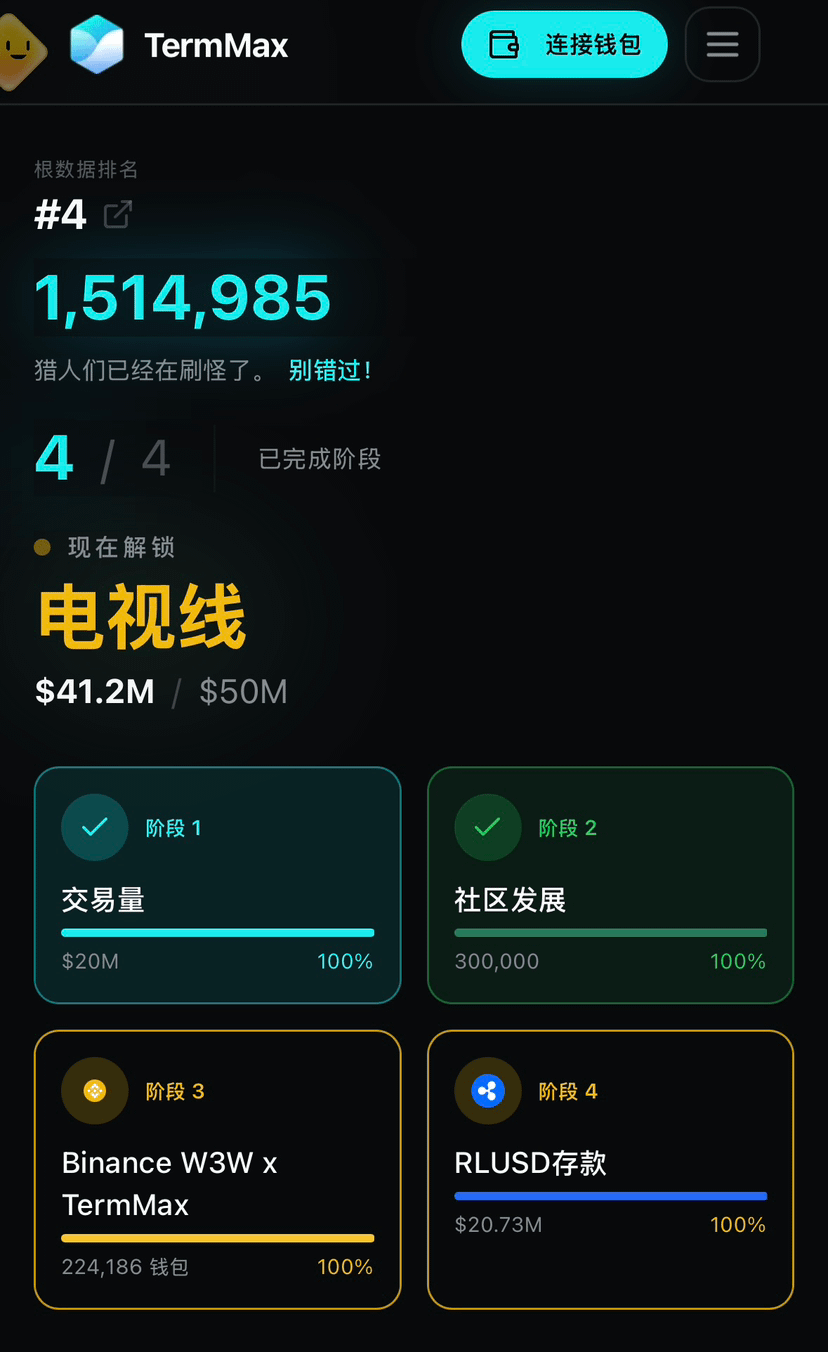
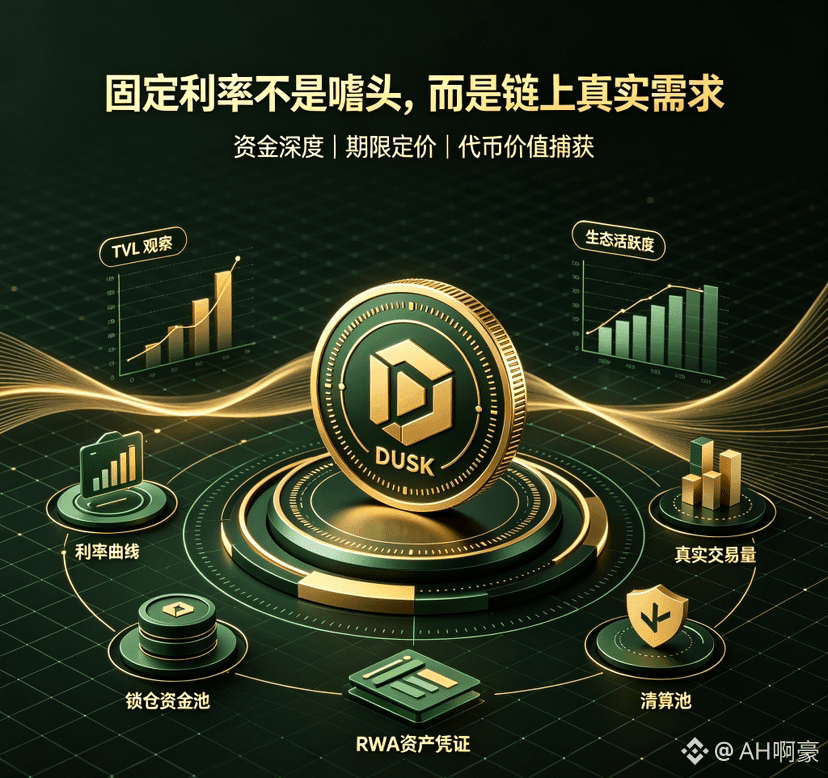
After more than a year of showing up to check in on-chain, the project is finally getting results! Some people say the coin value is over one yuan, others say it’s over a dime—but that’s not what I’m focused on. I just want to give and receive something in return. Don’t just let me get reverse-scammed (rekt)!
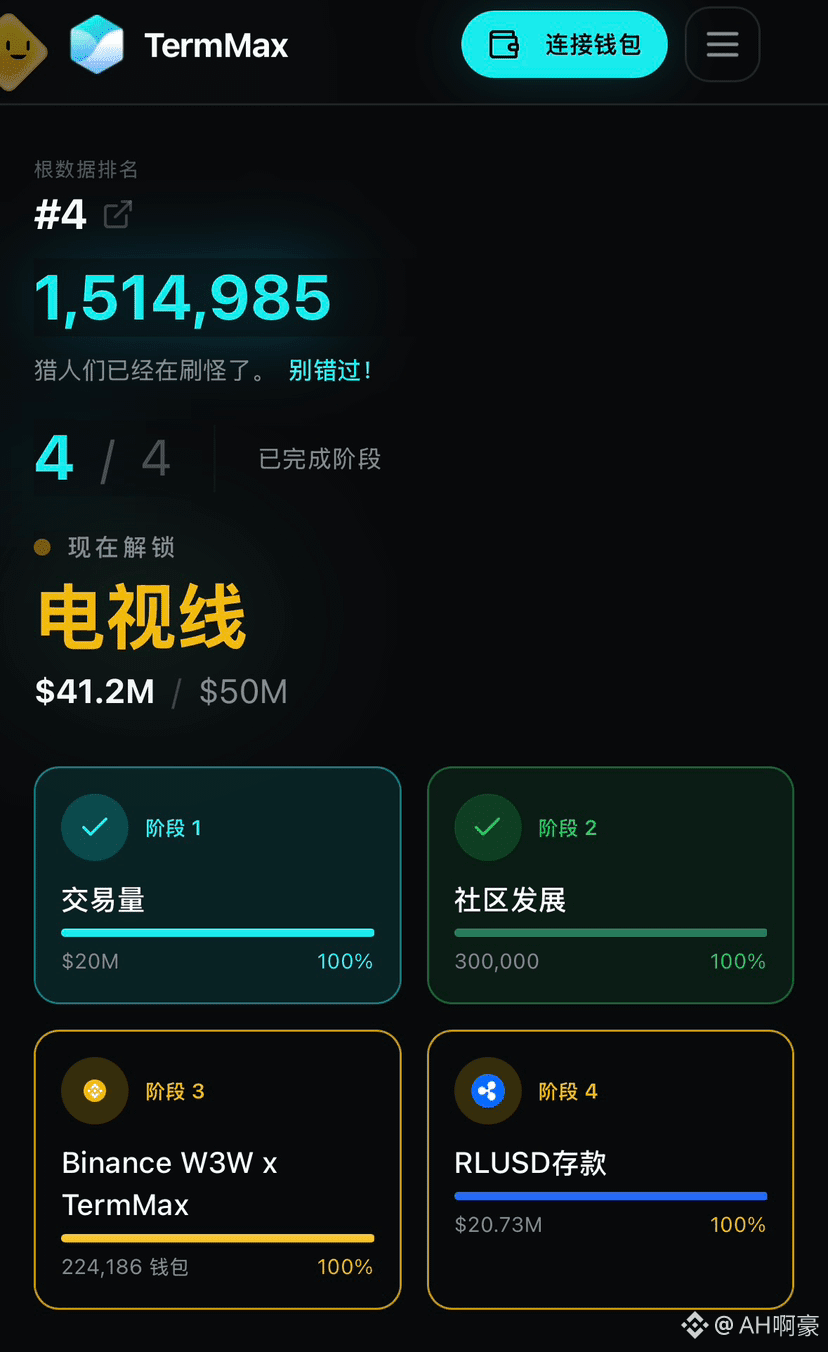
Mainly, TermMax’s recent hype has really been high. On August 25, TMX’s TGE, Binance’s Booster campaign directly gave 2 million TMX tokens as rewards. The data also looks great: TVL is over $90 million, registered wallets exceed 1.5 million, and daily active addresses at one point ranked second among DeFi lending protocols, only behind Aave. I also saw in the community that people interacted and operated over a thousand accounts—so if the team doesn’t keep doing things, they might end up reverse-scammer-ing the community!
I read through @TermMax of this information, and I still have a few questions I can’t quite figure out.
First is the TVL definition. DefiLlama shows over $34 million, the official says over $90 million, and there are also claims of over $100 million. Such a huge gap means the accounting methods are fundamentally different—are they only counting funds locked in fixed-rate markets, or are they also including the Aave/Morpho yield layers stacked inside the Vault? If it’s the latter, then there’s a risk of duplicate counting in that TVL.
Second is actual value capture for the token. The total TMX supply is 1 billion, mainly used for governance and staking rewards. But TermMax’s core business is fixed-rate lending, so how exactly are TMX and fee revenue connected? If TMX is only a governance token, what supports its value in the first place? Until this is figured out, I’m not confident about how the token will perform after the TGE.
Third is real adoption on the institutional side. TermMax has indeed launched an institutional version of TSI, and it also cooperates with professional market makers like Keyrock. But institutions want depth, liquidity, and compliance. Does TermMax’s current accumulation in these areas provide enough confidence for large funds to put their money in?
I’m not denying TermMax’s direction. Fixed-rate lending being a blank spot in DeFi is true, and the direction is right. But going from “the direction is correct” to “it can succeed” is separated by countless execution details. TMX’s performance after the TGE will be a major milestone. If it can hold the token price, then with the hype behind it, it can definitely gain a foothold in DeFi—so we can’t let today’s hype make us blindly follow and be overconfident. The key is to see the team’s mindset and strategy in the coming days! #termmax
Mainly, TermMax’s recent hype has really been high. On August 25, TMX’s TGE, Binance’s Booster campaign directly gave 2 million TMX tokens as rewards. The data also looks great: TVL is over $90 million, registered wallets exceed 1.5 million, and daily active addresses at one point ranked second among DeFi lending protocols, only behind Aave. I also saw in the community that people interacted and operated over a thousand accounts—so if the team doesn’t keep doing things, they might end up reverse-scammer-ing the community!
I read through @TermMax of this information, and I still have a few questions I can’t quite figure out.
First is the TVL definition. DefiLlama shows over $34 million, the official says over $90 million, and there are also claims of over $100 million. Such a huge gap means the accounting methods are fundamentally different—are they only counting funds locked in fixed-rate markets, or are they also including the Aave/Morpho yield layers stacked inside the Vault? If it’s the latter, then there’s a risk of duplicate counting in that TVL.
Second is actual value capture for the token. The total TMX supply is 1 billion, mainly used for governance and staking rewards. But TermMax’s core business is fixed-rate lending, so how exactly are TMX and fee revenue connected? If TMX is only a governance token, what supports its value in the first place? Until this is figured out, I’m not confident about how the token will perform after the TGE.
Third is real adoption on the institutional side. TermMax has indeed launched an institutional version of TSI, and it also cooperates with professional market makers like Keyrock. But institutions want depth, liquidity, and compliance. Does TermMax’s current accumulation in these areas provide enough confidence for large funds to put their money in?
I’m not denying TermMax’s direction. Fixed-rate lending being a blank spot in DeFi is true, and the direction is right. But going from “the direction is correct” to “it can succeed” is separated by countless execution details. TMX’s performance after the TGE will be a major milestone. If it can hold the token price, then with the hype behind it, it can definitely gain a foothold in DeFi—so we can’t let today’s hype make us blindly follow and be overconfident. The key is to see the team’s mindset and strategy in the coming days! #termmax
In recent months, the heat around the RWA (real-world assets) sector has continued to rise. I reviewed projects across the industry and found that truly few of them can balance both compliance and privacy in both directions. Most projects on the market have clear shortcomings: either they have well-developed compliance frameworks but all on-chain data is completely public, offering no privacy at all; or they push privacy encryption to the limit but fail to meet regulatory requirements, making deployment extremely difficult.
@Dusk has carved out a differentiated middle-path approach, and that is its core competitive advantage. In January 2026, the mainnet will be officially launched. DuskEVM will be deployed and go live in parallel. At the same time, it has reached a deep partnership with the regulated Dutch exchange NPEX, with plans to drive the on-chain migration of tokenized securities totaling over €300 million. NPEX holds the full set of EU compliance licenses, covering the entire lifecycle—trading, brokerage, custody, and settlement. The end-to-end asset on-chain process follows the standard route of the traditional financial system, resulting in a very solid compliance foundation.
I also noticed that Dusk’s ecosystem partners are accelerating their aggregation recently, and the ecosystem layout is becoming increasingly complete. The project has reached a strategic cooperation with the well-known European distributed ledger trading platform 21X. Leveraging deep technical integration with DuskEVM, institutional users do not need to adapt to a completely new underlying logic; through familiar traditional trading interfaces, they can directly use Dusk’s privacy trading and compliant financial services. Meanwhile, the ecosystem also connects MiCA-compliant digital euro EURQ issued by Quantoz. Combined with Chainlink oracles to complete real-time off-chain data integration, an entire set of RWA ecosystem infrastructure is taking shape—from compliance-stablecoins at the data layer to licensed trading platforms.
That said, I have always held the view that no matter how many cooperation resources there are or how frequent the ecosystem announcements become, they cannot represent actual project execution. The biggest problem right now is still the real application scenarios. Going forward, the key will come down to two points: first, whether on-chain can consistently generate real and effective trading volume; second, whether traditional financial institutions can truly operationally use this technology—not merely keep it at the level of strategic partnerships.
From my personal perspective in observing the sector, Dusk’s compliance-plus-privacy RWA narrative looks very promising. The infrastructure and partnership resources have already been laid out. Next, I won’t blindly look at every cooperation-related positive headline; I will keep tracking the progress of real-world asset on-chain migration and the actual on-chain data. Only data that lands is the sole standard for validating a project’s value.
#dusk $DUSK
@Dusk has carved out a differentiated middle-path approach, and that is its core competitive advantage. In January 2026, the mainnet will be officially launched. DuskEVM will be deployed and go live in parallel. At the same time, it has reached a deep partnership with the regulated Dutch exchange NPEX, with plans to drive the on-chain migration of tokenized securities totaling over €300 million. NPEX holds the full set of EU compliance licenses, covering the entire lifecycle—trading, brokerage, custody, and settlement. The end-to-end asset on-chain process follows the standard route of the traditional financial system, resulting in a very solid compliance foundation.
I also noticed that Dusk’s ecosystem partners are accelerating their aggregation recently, and the ecosystem layout is becoming increasingly complete. The project has reached a strategic cooperation with the well-known European distributed ledger trading platform 21X. Leveraging deep technical integration with DuskEVM, institutional users do not need to adapt to a completely new underlying logic; through familiar traditional trading interfaces, they can directly use Dusk’s privacy trading and compliant financial services. Meanwhile, the ecosystem also connects MiCA-compliant digital euro EURQ issued by Quantoz. Combined with Chainlink oracles to complete real-time off-chain data integration, an entire set of RWA ecosystem infrastructure is taking shape—from compliance-stablecoins at the data layer to licensed trading platforms.
That said, I have always held the view that no matter how many cooperation resources there are or how frequent the ecosystem announcements become, they cannot represent actual project execution. The biggest problem right now is still the real application scenarios. Going forward, the key will come down to two points: first, whether on-chain can consistently generate real and effective trading volume; second, whether traditional financial institutions can truly operationally use this technology—not merely keep it at the level of strategic partnerships.
From my personal perspective in observing the sector, Dusk’s compliance-plus-privacy RWA narrative looks very promising. The infrastructure and partnership resources have already been laid out. Next, I won’t blindly look at every cooperation-related positive headline; I will keep tracking the progress of real-world asset on-chain migration and the actual on-chain data. Only data that lands is the sole standard for validating a project’s value.
#dusk $DUSK
Verified
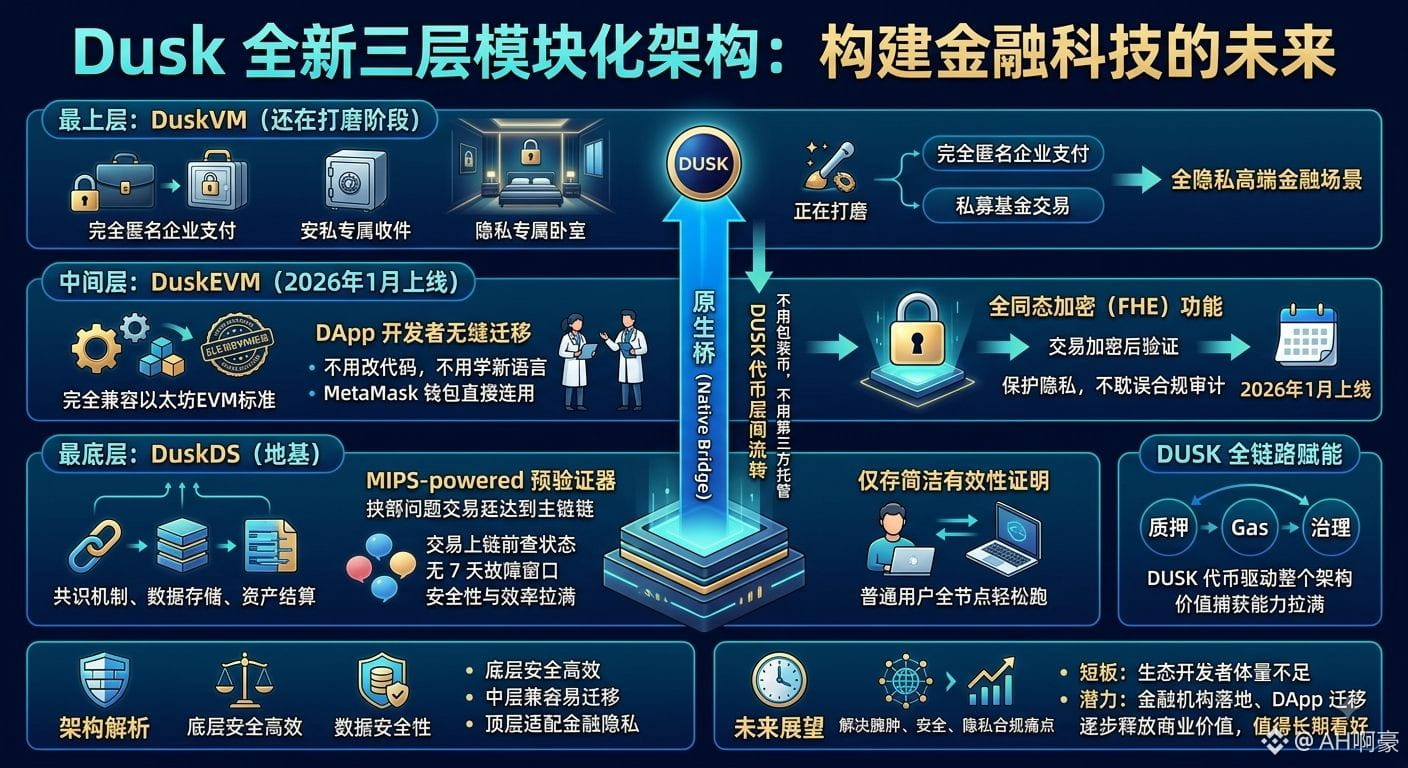
While reviewing Dusk’s architecture documentation, I noticed it recently upgraded to a three-layer modular design. Compared with the old “everything-in-one-pot” architecture, this setup is much clearer.
The bottom layer is called DuskDS. Think of it as the foundation: it handles the consensus mechanism, data storage, and asset settlement. There’s a particularly interesting design here—MIPS-powered pre-verifiers that check the transaction status before it’s even put on-chain. So there’s no 7-day failure window like Optimism, with both security and efficiency pushed to the limit. Also, DuskDS stores only succinct, effective proofs, so ordinary users don’t need high-end computers to run full nodes.
The middle layer is DuskEVM, scheduled to go live in January 2026. It fully complies with the Ethereum EVM standard. If you have a DApp on Ethereum that you want to migrate, developers don’t have to change code or learn a new language—just connect with MetaMask and it works. More importantly, it adds fully homomorphic encryption. After encrypting the transaction data, you can verify it without decrypting—protecting privacy while still not interfering with compliance audits.
The top layer is called DuskVM and is still being refined. Going forward, it will be a privacy-dedicated “private room,” specifically for fully anonymous enterprise payments and private fund transactions. The three layers are connected via native bridges. When DUSK tokens move between layers, you don’t need to wrap tokens, and you don’t have to rely on third-party custodians. The entire architecture is driven by DUSK. Staking, Gas, and governance are all tied together like one rope, locking the three layers firmly in place. @Dusk
The technical foundation really is solid. But no matter how beautiful the three-layer architecture looks, in the end it still depends on whether developers are willing to come and whether institutions dare to use it.
Personally, I think: Dusk’s new three-layer modular architecture addresses common pain points in public chains—bulky design, weak security, and the inability to balance privacy with compliance. The design is forward-looking with its step-by-step progression: security and efficiency at the base, easier migration in the middle, and tailored adaptation for high-end financial privacy scenarios at the top. Meanwhile, the mechanism enabled by native tokens across the full chain maximizes the token’s value-capture ability. A high-quality technical architecture is the core underpinning for a project’s long-term growth. The only shortcoming at this stage is that the ecosystem’s developer base isn’t large enough. As financial institutions roll out and DApps migrate one after another, this top-tier technical architecture will gradually unlock real commercial value. Its potential is definitely worth a long-term positive outlook. #dusk $DUSK
The bottom layer is called DuskDS. Think of it as the foundation: it handles the consensus mechanism, data storage, and asset settlement. There’s a particularly interesting design here—MIPS-powered pre-verifiers that check the transaction status before it’s even put on-chain. So there’s no 7-day failure window like Optimism, with both security and efficiency pushed to the limit. Also, DuskDS stores only succinct, effective proofs, so ordinary users don’t need high-end computers to run full nodes.
The middle layer is DuskEVM, scheduled to go live in January 2026. It fully complies with the Ethereum EVM standard. If you have a DApp on Ethereum that you want to migrate, developers don’t have to change code or learn a new language—just connect with MetaMask and it works. More importantly, it adds fully homomorphic encryption. After encrypting the transaction data, you can verify it without decrypting—protecting privacy while still not interfering with compliance audits.
The top layer is called DuskVM and is still being refined. Going forward, it will be a privacy-dedicated “private room,” specifically for fully anonymous enterprise payments and private fund transactions. The three layers are connected via native bridges. When DUSK tokens move between layers, you don’t need to wrap tokens, and you don’t have to rely on third-party custodians. The entire architecture is driven by DUSK. Staking, Gas, and governance are all tied together like one rope, locking the three layers firmly in place. @Dusk
The technical foundation really is solid. But no matter how beautiful the three-layer architecture looks, in the end it still depends on whether developers are willing to come and whether institutions dare to use it.
Personally, I think: Dusk’s new three-layer modular architecture addresses common pain points in public chains—bulky design, weak security, and the inability to balance privacy with compliance. The design is forward-looking with its step-by-step progression: security and efficiency at the base, easier migration in the middle, and tailored adaptation for high-end financial privacy scenarios at the top. Meanwhile, the mechanism enabled by native tokens across the full chain maximizes the token’s value-capture ability. A high-quality technical architecture is the core underpinning for a project’s long-term growth. The only shortcoming at this stage is that the ecosystem’s developer base isn’t large enough. As financial institutions roll out and DApps migrate one after another, this top-tier technical architecture will gradually unlock real commercial value. Its potential is definitely worth a long-term positive outlook. #dusk $DUSK
Partly True
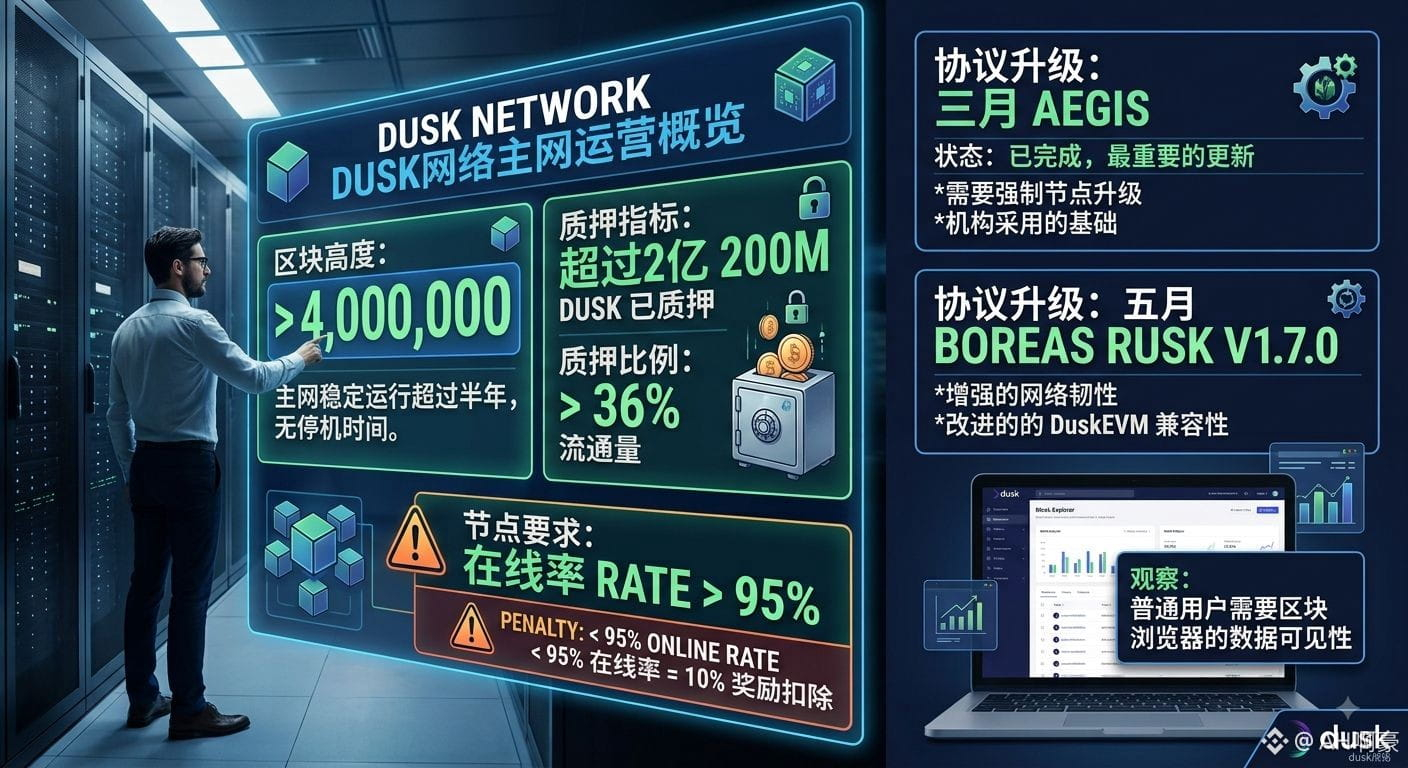
A couple of days ago, I opened the Dusk block explorer and saw that the latest block height had surpassed 4 million. The mainnet has been online for over half a year, and the chain has been running continuously without stopping. Then I checked the staking data; over 200 million Dusk coins are staked on the network, accounting for more than 36% of the circulating supply. This percentage isn't low, meaning a significant portion of holders have chosen to lock them up rather than actively trade them. I know a friend who runs nodes, and he said Dusk's penalty mechanism is quite substantial; if the online rate drops below 95%, 10% of the reward is deducted. This isn't just a scare tactic; it's a real deduction.
Recently, Dusk has undergone two protocol upgrades: Aegis in March and Boreas Rusk v1.7.0 in May. Aegis is officially called the most important update to date, and all nodes are required to upgrade. Boreas focuses on strengthening network resilience and compatibility with DuskEVM. This forced node upgrade approach may seem disruptive in the short term, but in the long term, it's pushing the network towards an institutional-grade architecture. However, I also noticed a problem with @Dusk : the data display on the block explorer isn't intuitive enough. Ordinary users have to scroll through several layers to find key indicators to check network health. This isn't very user-friendly for retail investors. But then again, Dusk isn't designed for retail short-term trading; it targets institutional investors.
I don't have any positions; I'm just observing. A chain that's been running for over half a year, experiencing two forced upgrades without major issues, is itself a positive sign. #dusk $DUSK
Recently, Dusk has undergone two protocol upgrades: Aegis in March and Boreas Rusk v1.7.0 in May. Aegis is officially called the most important update to date, and all nodes are required to upgrade. Boreas focuses on strengthening network resilience and compatibility with DuskEVM. This forced node upgrade approach may seem disruptive in the short term, but in the long term, it's pushing the network towards an institutional-grade architecture. However, I also noticed a problem with @Dusk : the data display on the block explorer isn't intuitive enough. Ordinary users have to scroll through several layers to find key indicators to check network health. This isn't very user-friendly for retail investors. But then again, Dusk isn't designed for retail short-term trading; it targets institutional investors.
I don't have any positions; I'm just observing. A chain that's been running for over half a year, experiencing two forced upgrades without major issues, is itself a positive sign. #dusk $DUSK
Partly True
Let’s boldly guess the tonight’s airdrop score!
How many people are actively online right now?
With so many new coins coming in like this, September’s gold and October’s silver must be coming!
……
Since waiting for the airdrop is getting boring, let’s talk about a Dusk perspective that many people overlook but that I think is especially important: its consensus mechanism.
I went through its whitepaper and found that Dusk uses a consensus protocol called Succinct Attestation. In essence, it’s a committee-based PoS mechanism.
Most people in public chains talk about how high the TPS is, but in financial scenarios, the truly critical things are three other aspects: unclear finality, inconsistent state, and disputes during settlement/clearing.
I think slower speed is something we can still tolerate, but if the books can’t be settled properly—that’s a big problem.
The idea behind SA is very clear. It achieves fast confirmation through a committee-style PoS process, while keeping the whole procedure concise, verifiable, and auditable.
I understand it as dividing validator nodes into professional committees: some are responsible for producing blocks, and some for consensus verification.
Committee members are selected via cryptographic random draws in an anonymous way, which both prevents Sybil attacks and ensures decentralization.
Dusk also requires validators to complete KYC. Many people say this isn’t decentralized enough, but I think this is actually an honest response to the essence of finance.
Traditional finance works well because the chain of responsibility is clear—if something goes wrong, you know who to contact.
Let’s talk a bit more about the @Dusk performance side.
I noticed Dusk’s mainnet upgrade plan for the first quarter of 2026: block time will be cut from 15 seconds to 6 seconds, and throughput will directly triple.
This kind of improvement is quite aggressive for a privacy chain.
And the privacy engine, Hedger, also needs to strengthen its ability to adapt to high-load conditions—while ensuring that privacy protections based on zero-knowledge proofs don’t get compromised, it still has to handle massive traffic.
Personally, I think Dusk’s approach here is very pragmatic: it doesn’t chase trends, it focuses instead on solidifying the underlying consensus.
In the finance vertical track, what ultimately matters is this kind of reliability.
But right now, the price has fallen too much—if it could return to its peak period, that would be perfect.
#dusk $DUSK
How many people are actively online right now?
With so many new coins coming in like this, September’s gold and October’s silver must be coming!
……
Since waiting for the airdrop is getting boring, let’s talk about a Dusk perspective that many people overlook but that I think is especially important: its consensus mechanism.
I went through its whitepaper and found that Dusk uses a consensus protocol called Succinct Attestation. In essence, it’s a committee-based PoS mechanism.
Most people in public chains talk about how high the TPS is, but in financial scenarios, the truly critical things are three other aspects: unclear finality, inconsistent state, and disputes during settlement/clearing.
I think slower speed is something we can still tolerate, but if the books can’t be settled properly—that’s a big problem.
The idea behind SA is very clear. It achieves fast confirmation through a committee-style PoS process, while keeping the whole procedure concise, verifiable, and auditable.
I understand it as dividing validator nodes into professional committees: some are responsible for producing blocks, and some for consensus verification.
Committee members are selected via cryptographic random draws in an anonymous way, which both prevents Sybil attacks and ensures decentralization.
Dusk also requires validators to complete KYC. Many people say this isn’t decentralized enough, but I think this is actually an honest response to the essence of finance.
Traditional finance works well because the chain of responsibility is clear—if something goes wrong, you know who to contact.
Let’s talk a bit more about the @Dusk performance side.
I noticed Dusk’s mainnet upgrade plan for the first quarter of 2026: block time will be cut from 15 seconds to 6 seconds, and throughput will directly triple.
This kind of improvement is quite aggressive for a privacy chain.
And the privacy engine, Hedger, also needs to strengthen its ability to adapt to high-load conditions—while ensuring that privacy protections based on zero-knowledge proofs don’t get compromised, it still has to handle massive traffic.
Personally, I think Dusk’s approach here is very pragmatic: it doesn’t chase trends, it focuses instead on solidifying the underlying consensus.
In the finance vertical track, what ultimately matters is this kind of reliability.
But right now, the price has fallen too much—if it could return to its peak period, that would be perfect.
#dusk $DUSK
今晚空投分数是多少?
12%
200分
27%
220分
32%
240分
29%
34 votes • Voting closed
Verified
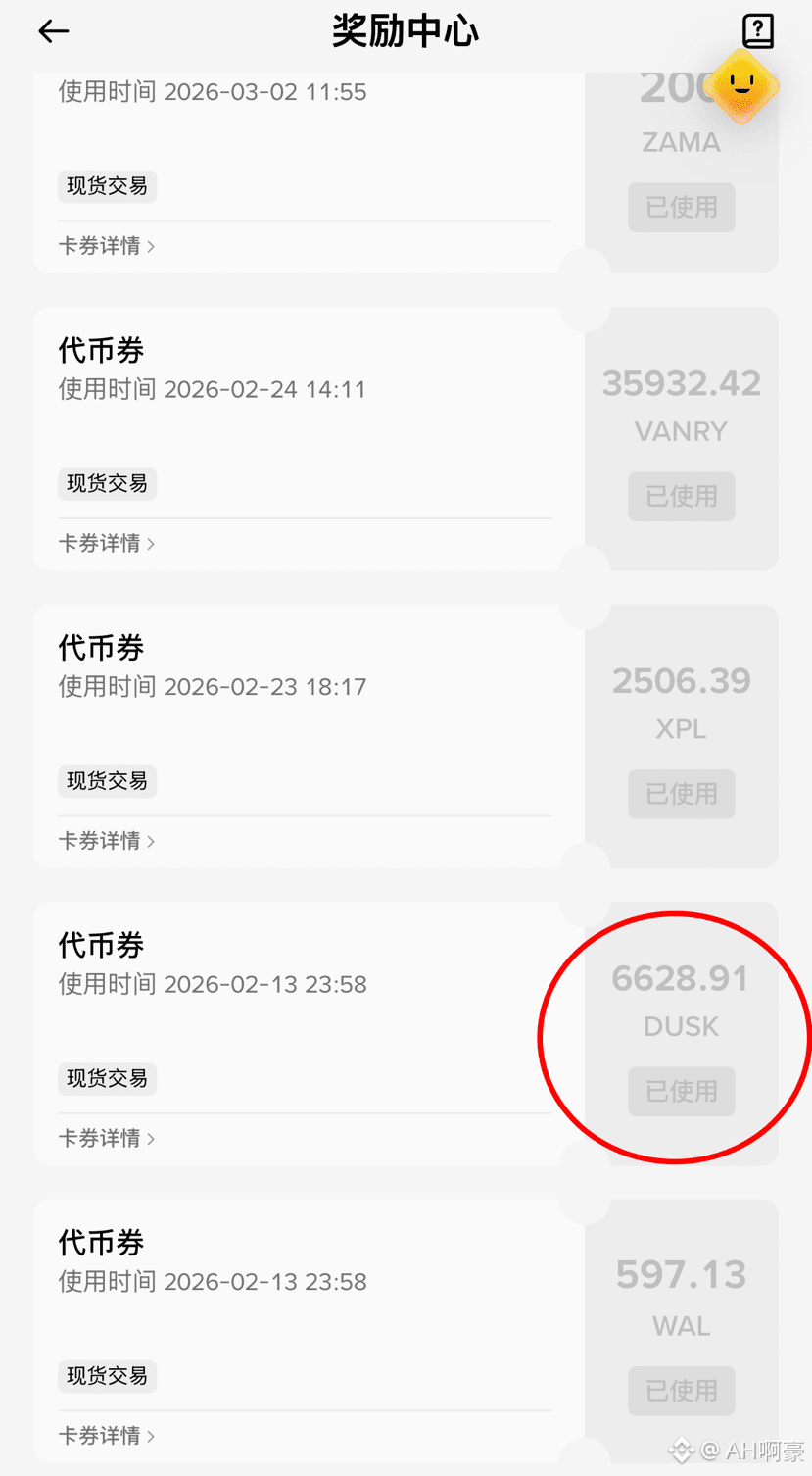
More than 6,000 rewards in the Rewards Center of Dusk
Value of over 2,400… tokens!!
I’ve always remembered this—back then it was the creator center task in Dusk’s first season. You could also say it was the origin of “Ju Mao” (the early spirit), and it’s also the highest reward I’ve ever received since I started participating in the creator center!
After half a year, it’s back again, storming in to reappear on the creator task board. Although the rewards have shrunk a lot, I still have a vivid memory of its whitepaper. The one thing that moved me most is that it uses technology to solve two seemingly contradictory issues: privacy and compliance. It relies on PLONK zero-knowledge proofs—transaction verification doesn’t require publicly revealing balances or counterparty information. At the same time, built-in KYC/AML rules ensure regulators can access the data they’re supposed to.
And technically, @Dusk : with Dusk’s modular design, settlement and execution are separated. DuskDS handles settlement and data availability, DuskEVM is compatible with the Ethereum ecosystem, and developers can deploy privacy contracts using Solidity. There’s also DuskVM, based on WASM, which supports writing contracts in Rust.
The consensus mechanism is called Succinct Attestation—it’s a permissionless PoS focused on efficiency and finality.
Honestly, I think Dusk wants to build a compliant privacy infrastructure for tokenizing real-world assets (RWA). Putting traditional assets like stocks and bonds on-chain protects business secrets while also meeting regulatory requirements. I think this direction is really promising. I hope this time its price can also explode and reach the same peak level as the first-season task. #dusk $DUSK
Value of over 2,400… tokens!!
I’ve always remembered this—back then it was the creator center task in Dusk’s first season. You could also say it was the origin of “Ju Mao” (the early spirit), and it’s also the highest reward I’ve ever received since I started participating in the creator center!
After half a year, it’s back again, storming in to reappear on the creator task board. Although the rewards have shrunk a lot, I still have a vivid memory of its whitepaper. The one thing that moved me most is that it uses technology to solve two seemingly contradictory issues: privacy and compliance. It relies on PLONK zero-knowledge proofs—transaction verification doesn’t require publicly revealing balances or counterparty information. At the same time, built-in KYC/AML rules ensure regulators can access the data they’re supposed to.
And technically, @Dusk : with Dusk’s modular design, settlement and execution are separated. DuskDS handles settlement and data availability, DuskEVM is compatible with the Ethereum ecosystem, and developers can deploy privacy contracts using Solidity. There’s also DuskVM, based on WASM, which supports writing contracts in Rust.
The consensus mechanism is called Succinct Attestation—it’s a permissionless PoS focused on efficiency and finality.
Honestly, I think Dusk wants to build a compliant privacy infrastructure for tokenizing real-world assets (RWA). Putting traditional assets like stocks and bonds on-chain protects business secrets while also meeting regulatory requirements. I think this direction is really promising. I hope this time its price can also explode and reach the same peak level as the first-season task. #dusk $DUSK
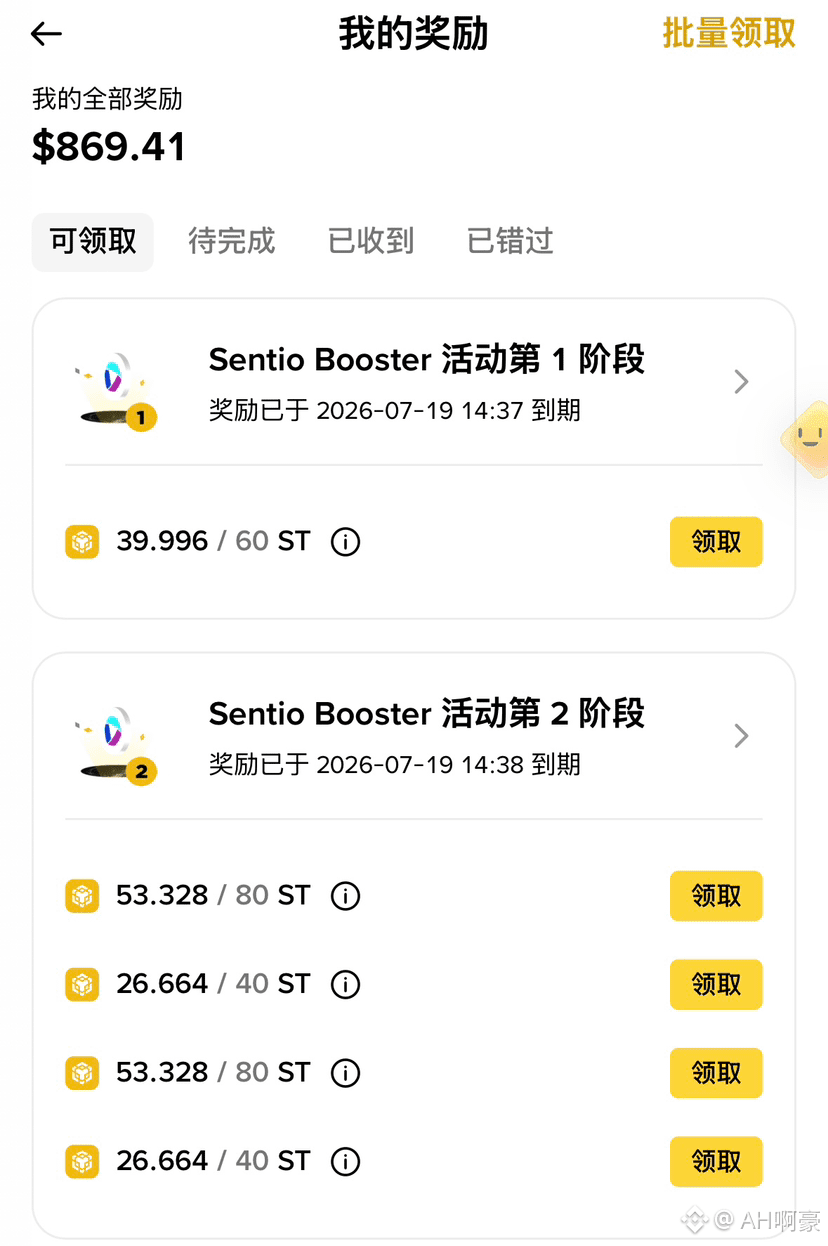
The first Booster mission ST is also coming to an end!
The final episode’s mission rewards are now available to claim!
Now worth 1.3U…
This $ST —I was still constantly trying to buy the dip and lost a few hundred bucks. I feel like the issue is in its name. Who would name something ST?! If you know about trading, you get it, haha!
Now the Booster mission is completely empty—back then, there were rows and rows of them. I miss it!
#美国7月CPI与PPI数据本周出炉
The final episode’s mission rewards are now available to claim!
Now worth 1.3U…
This $ST —I was still constantly trying to buy the dip and lost a few hundred bucks. I feel like the issue is in its name. Who would name something ST?! If you know about trading, you get it, haha!
Now the Booster mission is completely empty—back then, there were rows and rows of them. I miss it!
#美国7月CPI与PPI数据本周出炉
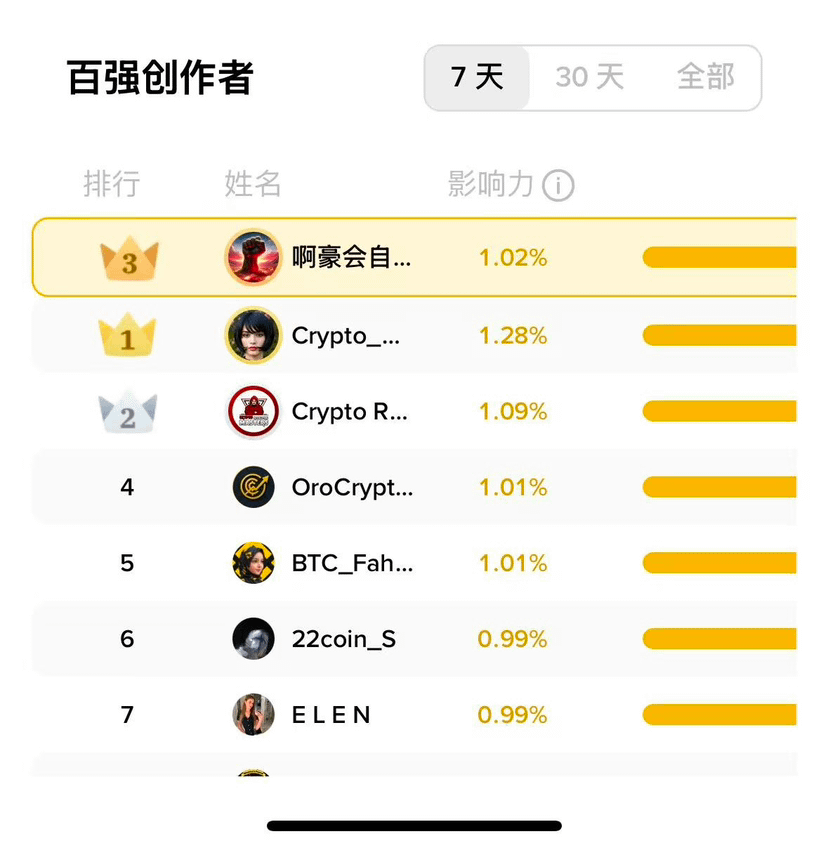
So many people still don’t know how to improve their account weight and increase exposure?
As an “old-timer” who’s been participating in the Creator Center tasks for a year, let me share some practical experience! It’s also amazing that it’s already been more than a year since the Creator Center launched. I’m just as grateful that all my tasks made it onto the leaderboard—and the rewards ended up being more than $10,000.
Let me talk about the experience I summed up over one year:
Binance Square especially favors content of trading type and Alpha type—these two are also frequent top performers! If you’re a new account trying to get started, prioritize these two areas. The more times you post high-quality content, the higher your account weight naturally becomes!
As for its distribution mechanism, I think it’s pretty similar to all other platforms. After you post, it’s first pushed to a small group of people. The key is whether the metrics in the first 30 minutes—likes, comments, and completion/read-through rate—meet the requirements. If you pass, you’ll enter the recommendation pool. Then it’s about engagement rate and real trading data. Once you’re in the recommendation pool, you’ll basically be prioritized for users who previously liked and commented on you!
If your views are very low, send it to Brother Golden Mark for feedback—it can boost traffic a lot!
Most important of all: you still need great content! You can ride on the latest hot topics, but remember—don’t do clickbait title tactics. The content must include your own analysis and judgment. But the opening should be simple and clear, and something that hooks people—that part you probably already know. As for posting time, I think anytime from early 8 AM to 9 PM works; prioritize the morning, because that’s when Square has the most traffic. Our fellow Chinese are just getting up, and our foreign friends are also browsing on their phones while lying in bed.
A few details to keep in mind: Don’t treat every post as something you must modify. If you modify it, it basically triggers throttling. But if a post is throttled, deleting the violating parts can still allow it to run again. If you can publish manually, don’t schedule it. Don’t use AI to write content with overly perfect phrasing—if you can hand-write it, don’t rely on AI. If you’re unsure whether your text violates rules, copy and paste it to your Binance chat friend to check first. Exclamation marks are considered violations—find them and fix them!
Also, never blindly call trades in trading-type posts. You might have mined and made money, but once people follow your calls, you’ll be flooded with complaints—then you get stuck as the bag holder.
You need to analyze clearly your own logic—how you see things, how geopolitical news and the market narrative might affect it—then add your order-placing components and real trading flow. Your traffic will naturally improve.
#创作者学院
If you want good traffic, you still have to be diligent—post more, watch more, and deliver information-gap hot topics to the Square as soon as they happen!
$SNDK
As an “old-timer” who’s been participating in the Creator Center tasks for a year, let me share some practical experience! It’s also amazing that it’s already been more than a year since the Creator Center launched. I’m just as grateful that all my tasks made it onto the leaderboard—and the rewards ended up being more than $10,000.
Let me talk about the experience I summed up over one year:
Binance Square especially favors content of trading type and Alpha type—these two are also frequent top performers! If you’re a new account trying to get started, prioritize these two areas. The more times you post high-quality content, the higher your account weight naturally becomes!
As for its distribution mechanism, I think it’s pretty similar to all other platforms. After you post, it’s first pushed to a small group of people. The key is whether the metrics in the first 30 minutes—likes, comments, and completion/read-through rate—meet the requirements. If you pass, you’ll enter the recommendation pool. Then it’s about engagement rate and real trading data. Once you’re in the recommendation pool, you’ll basically be prioritized for users who previously liked and commented on you!
If your views are very low, send it to Brother Golden Mark for feedback—it can boost traffic a lot!
Most important of all: you still need great content! You can ride on the latest hot topics, but remember—don’t do clickbait title tactics. The content must include your own analysis and judgment. But the opening should be simple and clear, and something that hooks people—that part you probably already know. As for posting time, I think anytime from early 8 AM to 9 PM works; prioritize the morning, because that’s when Square has the most traffic. Our fellow Chinese are just getting up, and our foreign friends are also browsing on their phones while lying in bed.
A few details to keep in mind: Don’t treat every post as something you must modify. If you modify it, it basically triggers throttling. But if a post is throttled, deleting the violating parts can still allow it to run again. If you can publish manually, don’t schedule it. Don’t use AI to write content with overly perfect phrasing—if you can hand-write it, don’t rely on AI. If you’re unsure whether your text violates rules, copy and paste it to your Binance chat friend to check first. Exclamation marks are considered violations—find them and fix them!
Also, never blindly call trades in trading-type posts. You might have mined and made money, but once people follow your calls, you’ll be flooded with complaints—then you get stuck as the bag holder.
You need to analyze clearly your own logic—how you see things, how geopolitical news and the market narrative might affect it—then add your order-placing components and real trading flow. Your traffic will naturally improve.
#创作者学院
If you want good traffic, you still have to be diligent—post more, watch more, and deliver information-gap hot topics to the Square as soon as they happen!
$SNDK
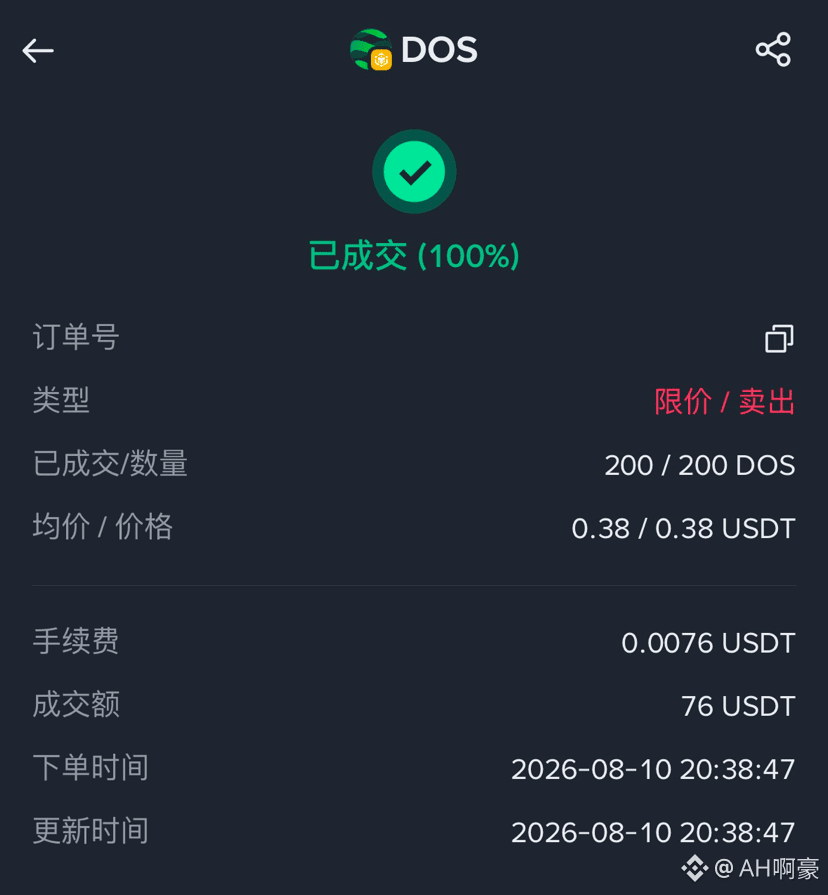
Sold for 76, sold too early for profit—keep what brings wealth!
AH啊豪
·
--
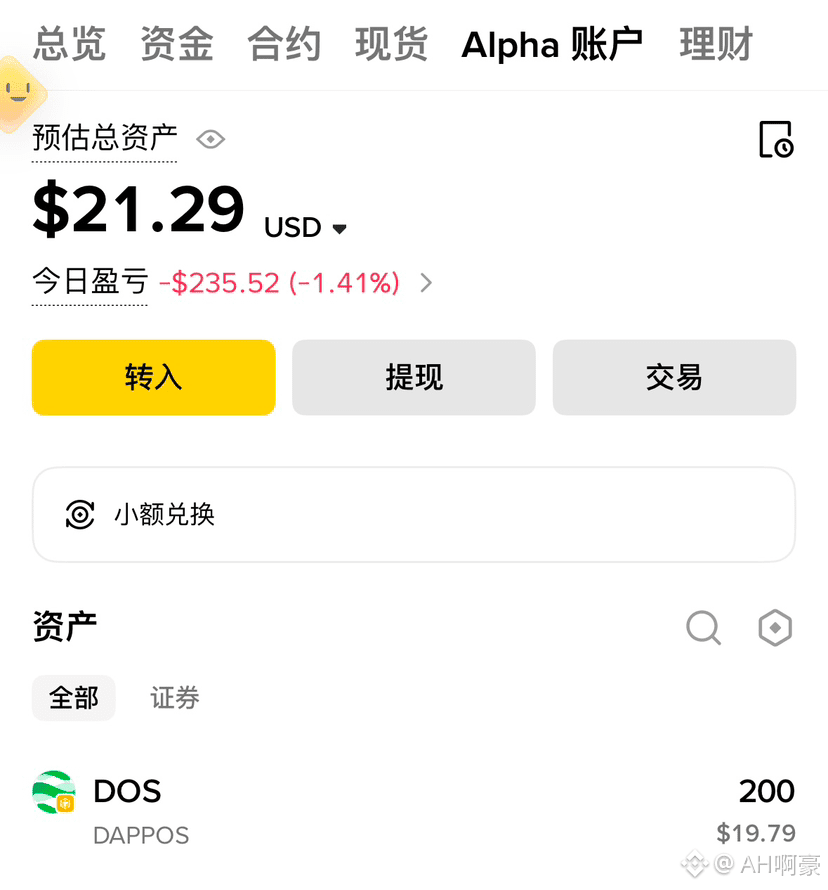
Got screwed by this airdrop!
At the start with 1.4, I directly hung at 0.5 and couldn’t sell it. Why can the one with instant execution sell so much? The price keeps jumping above 0.7, and my 0.5 won’t go through at all...
Now it’s turned into a pile of crap!!!
$DOS
At the start with 1.4, I directly hung at 0.5 and couldn’t sell it. Why can the one with instant execution sell so much? The price keeps jumping above 0.7, and my 0.5 won’t go through at all...
Now it’s turned into a pile of crap!!!
$DOS
Got screwed by this airdrop!
At the start with 1.4, I directly hung at 0.5 and couldn’t sell it. Why can the one with instant execution sell so much? The price keeps jumping above 0.7, and my 0.5 won’t go through at all...
Now it’s turned into a pile of crap!!!
$DOS
At the start with 1.4, I directly hung at 0.5 and couldn’t sell it. Why can the one with instant execution sell so much? The price keeps jumping above 0.7, and my 0.5 won’t go through at all...
Now it’s turned into a pile of crap!!!
$DOS
Partly True
You missed last year's Bitcoin Satoshi Nakamoto Gold Dog—now it’s rebuilding again!
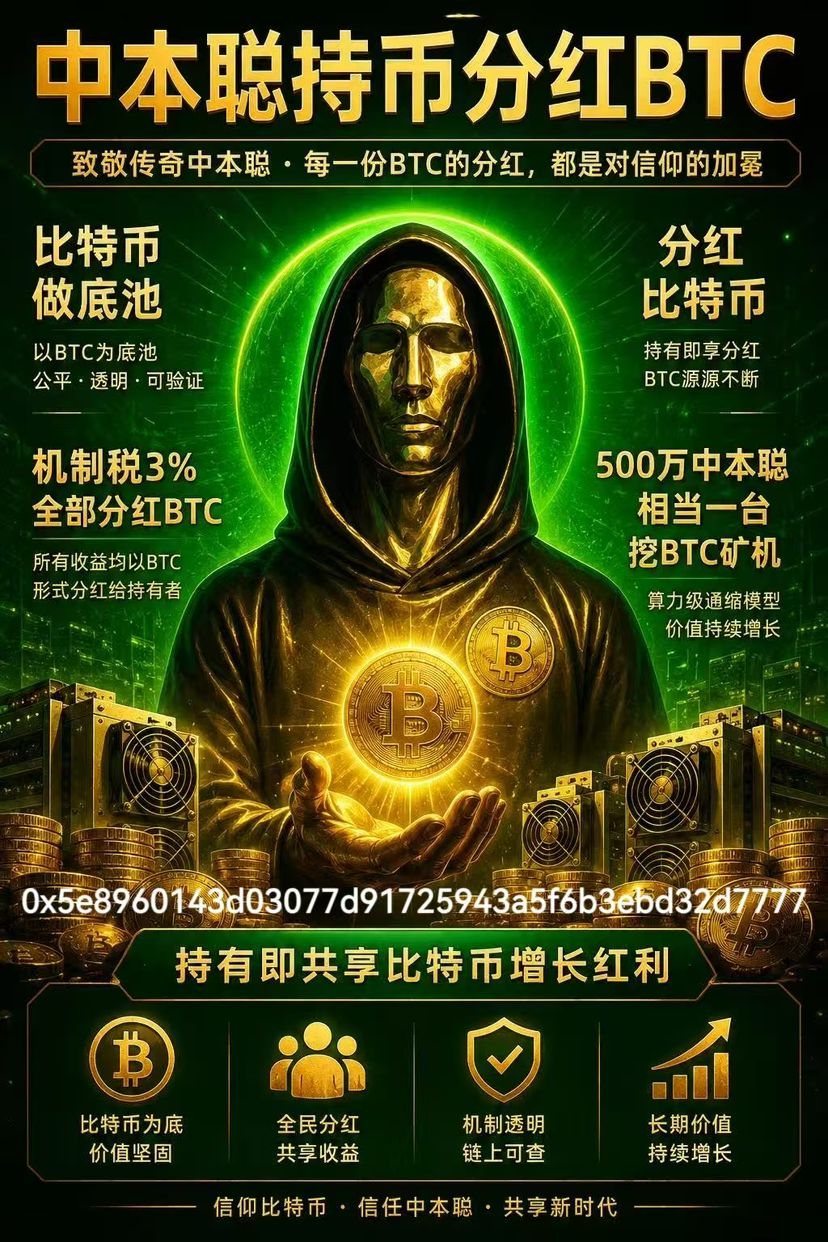
We’re just starting the voyage. A brand-new benefits mechanism:
Anyone holding 5 million or more gets dividends.
And Bitcoin is used as the underlying pool.
Mechanism tax 3—all dividends in BTC.
With 5 million, it’s equivalent to running a BTC mining rig.
#中本聪
Make sure it’s Nakamoto on the BSC chain.
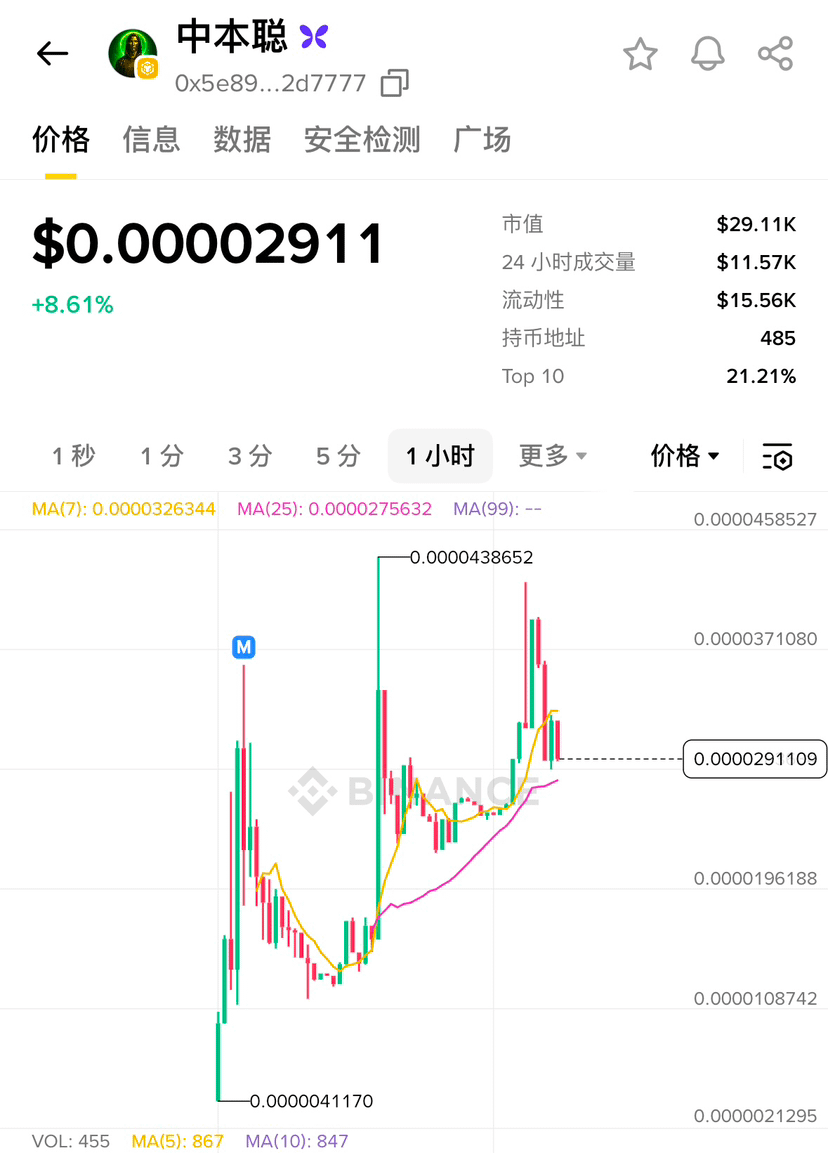
Right now, there are 500 holders—the chips are still at the bottom!
This isn’t telling you to chase orders and take the bag; it’s to let you see that there are a bunch of like-minded people building together!
$Nakamoto
We’re just starting the voyage. A brand-new benefits mechanism:
Anyone holding 5 million or more gets dividends.
And Bitcoin is used as the underlying pool.
Mechanism tax 3—all dividends in BTC.
With 5 million, it’s equivalent to running a BTC mining rig.
#中本聪
Make sure it’s Nakamoto on the BSC chain.
Right now, there are 500 holders—the chips are still at the bottom!
This isn’t telling you to chase orders and take the bag; it’s to let you see that there are a bunch of like-minded people building together!
$Nakamoto
Verified
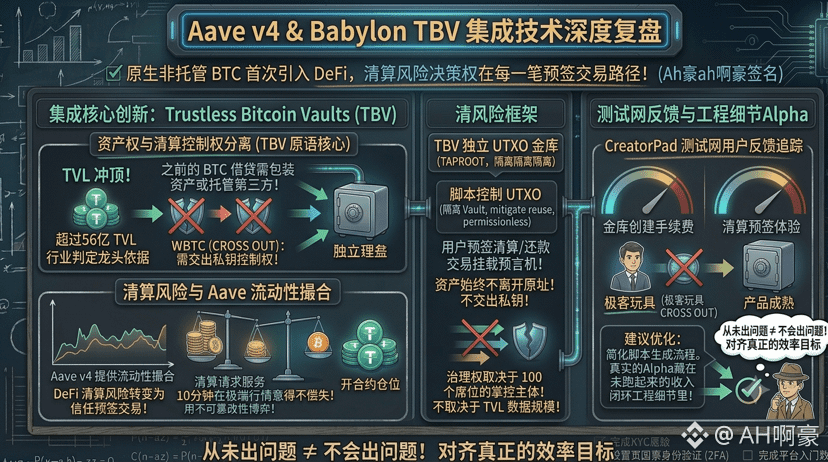
I finished reading the Aave v4 technical whitepaper and Babylon’s latest documentation. The most core innovation in combining the two lies in using Babylon’s Trustless Bitcoin Vaults (TBV) technology to introduce native, non-custodial BTC assets into lending pools of a top-tier DeFi protocol like Aave for the first time. According to the official docs and the technical explanations of the underlying primitives on CreatorPad. Previously, BTC lending either required users to wrap BTC into centralized assets like WBTC, or to custody it with a third-party multisig. In plain terms, you have to hand over control of the private key. Babylon’s TBV works completely differently. Users, by running Babylon’s scripts, create an independent, time-locked UTXO vault on the Bitcoin mainnet. The private key for this vault always stays in the user’s own hands. Users pre-sign a set of Bitcoin transactions for settlement or repayment, and the execution conditions of these transactions are then attached to the oracle state of Aave on the EVM chain.
That leads me to a conclusion.
The reason the @BabylonLabs_io mode is more attractive than WBTC or other approaches is that, for the first time, it technically holds the line on not leaving the original address and not handing over private keys. You’re not really lending your BTC out—you’re cryptographically committing to rent out the immutability and value certainty of your BTC. Aave v4 only provides an efficient liquidity matching venue. This design shifts DeFi settlement risk from trust in platform scripts to trust in the execution path of every single transaction you’ve signed.
Next, I’ll focus only on the user feedback data from Babylon CreatorPad’s public testnet. In particular, the two parts: the UTXO vault creation fees and the pre-signing experience for settlement transactions. Even though the narrative is grand, if you don’t optimize the engineering operation threshold for ordinary users, no matter how hardcore the technology is, it can only become a toy for geeks. I’ve already submitted a feedback form to CreatorPad, recommending that they simplify the script generation flow. The real Alpha is hidden in the engineering details of these not-yet-running revenue loops. #baby $BABY
That leads me to a conclusion.
The reason the @BabylonLabs_io mode is more attractive than WBTC or other approaches is that, for the first time, it technically holds the line on not leaving the original address and not handing over private keys. You’re not really lending your BTC out—you’re cryptographically committing to rent out the immutability and value certainty of your BTC. Aave v4 only provides an efficient liquidity matching venue. This design shifts DeFi settlement risk from trust in platform scripts to trust in the execution path of every single transaction you’ve signed.
Next, I’ll focus only on the user feedback data from Babylon CreatorPad’s public testnet. In particular, the two parts: the UTXO vault creation fees and the pre-signing experience for settlement transactions. Even though the narrative is grand, if you don’t optimize the engineering operation threshold for ordinary users, no matter how hardcore the technology is, it can only become a toy for geeks. I’ve already submitted a feedback form to CreatorPad, recommending that they simplify the script generation flow. The real Alpha is hidden in the engineering details of these not-yet-running revenue loops. #baby $BABY
Log in to explore more content