Binance Square
carryminati007
472 Posts

carryminati007

418 Following
6.8K+ Followers
1.0K+ Liked
Posts
·
--
$TSLAB
$TSLAB
Binance News
·
--
Tencent Technology (Shenzhen) Files Multiple “TENCENT WORKBUDDY” Trademark Applications
Tencent Technology (Shenzhen) Co., Ltd. has applied to register multiple “TENCENT WORKBUDDY” trademarks, with international classes covering areas including advertising and sales as well as education and entertainment, according to 36Kr. The filings are currently listed as “awaiting substantive examination,” based on Tianyancha intellectual property records.

The company was established in February 2000, with Pony Ma as its legal representative and registered capital of $2 million. It is wholly owned by Zhongba Group Co., Ltd., and its business scope includes technology development of computer hardware and software and sales of self-developed software.
$NVDAB
$NVDAB
Binance News
·
--
Cerebras Shares Fall Below IPO Price After First Earnings Report as Hyperliquid Whales Increase Short Bets
Cerebras (CBRS), an AI chip company previously described as a major challenger to Nvidia, fell about 22% after releasing its first quarterly report since going public, with negative guidance outweighing better-than-expected results and pushing the stock below its IPO price.

According to BlockBeats On-chain Detection, monitoring by Hyperinsight shows overall whale positioning has turned bearish, with CBRS quoted at $184 on Hyperliquid, down 7.7% over the past 24 hours.

Large short sellers at the million-dollar scale held about $11.62 million in combined short positions, about 2.39 times the roughly $4.87 million held by long positions.

Two major short positions were opened at elevated levels on or even before the IPO day. One whale address, 0xe0ff, opened a short on May 14 at $284.51 using 3x leverage, with a position size of $6.13 million and an unrealized profit of $3.24 million. Another whale address, 0x9996, opened a short on May 11 at $275.92 using 5x leverage, with a position size of $5.48 million and an unrealized profit of $2.64 million.

Both addresses are reported to hold short positions in CBRS and SPCX, and are described as favoring short setups ahead of or on the day of major stock listings. Following the earnings-related downside move, the two positions together showed about $5.88 million in unrealized profit.

The average entry price for current CBRS short whale positions was about $275, with the market price now more than 30% below that level. The nearest short liquidation level was cited at $200.13, about 7% above the current price.
$MUB $TSLAB $NVDAB
$MUB $TSLAB $NVDAB
Mastering Crypto
·
--
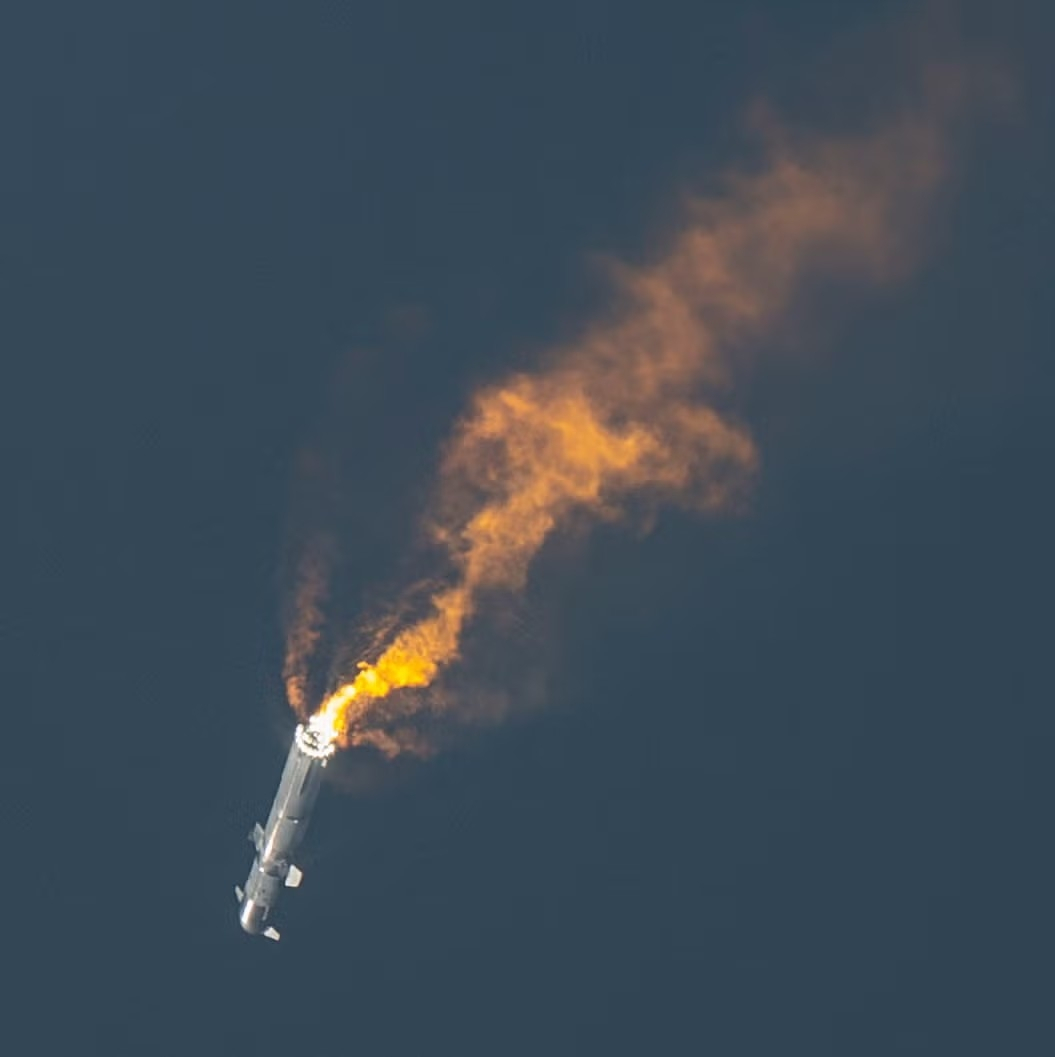
🚨 SpaceX ($SPCXB ) crashed so badly today 💔

$SPCX closed down 16.4% today, wiping out more than $400 billion in market capitalization.

The selloff comes just days after the company launched its first offering of senior unsecured notes, seeking to raise at least $20 billion despite reporting roughly $100.8 billion in cash and cash equivalents.

The bigger picture is even more dramatic

$SPCX is now down 31.3% from its all-time high

More than $927 billion in market value has been erased in just 3 trading days

The stock remains 14.5% above its IPO price

Just a week ago, investors were chasing the stock higher on AI and space hype.

Now the market is asking a different question:

Was the valuation simply too far ahead of reality?

Short 👇


#SpaceXPremarketFalls4.6%
$MUB
$MUB
Global Markets Investor
·
--
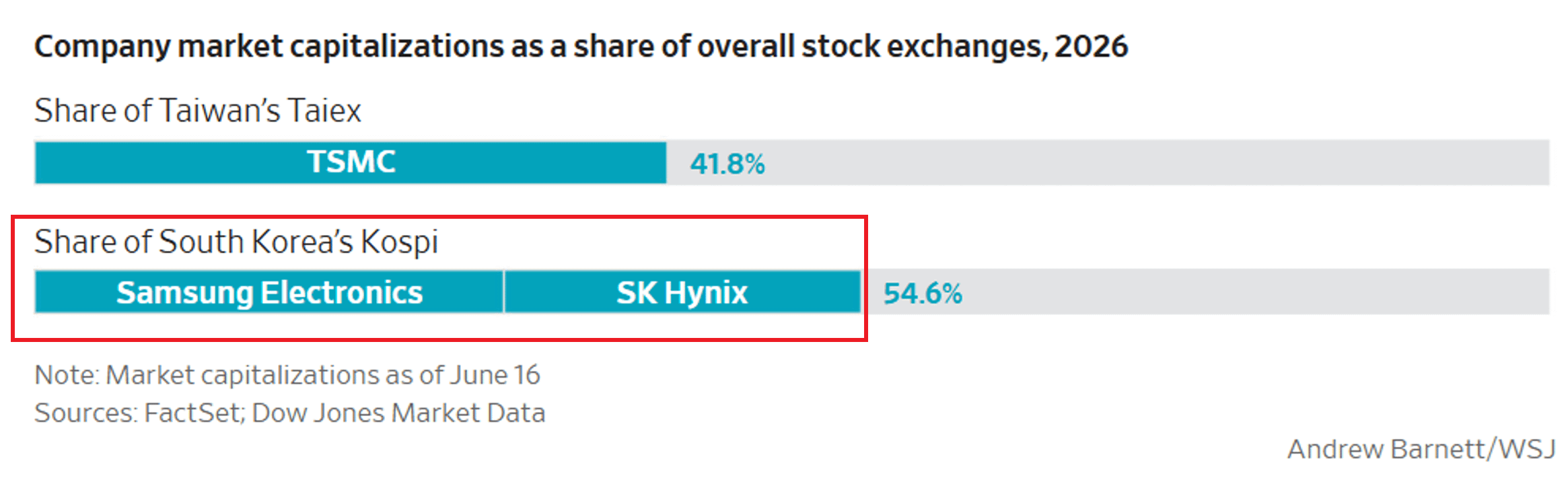
🔴The entire South Korean and Taiwanese stock market rally rests on just 3 companies:

Samsung Electronics and SK Hynix together reflect ~55% of South Korea's Kospi index.

Both companies recently crossed trillion-dollar valuations and dominate the production of memory chips used in AI computations and data storage.

Meanwhile, TSMC alone accounts for ~42% of Taiwan's Taiex index.

TSMC is the world's 7th most valuable company, with a market capitalization of over $2.2 trillion, larger than Tesla or Meta.

TSMC also accounted for more than 90% of revenue in the most advanced chipmaking segment last year, according to Counterpoint Research.

To put this into perspective, the Magnificent 7 collectively account for only ~33% of the S&P 500.

This is INSANE.
$NVDAB $MUB $TSLAB

$NVDAB $MUB $TSLAB
Binance Wallet
·
--
⚽ Portugal vs. Uzbekistan prediction market is now live on Binance Wallet!

Analyze the market, assess the potential outcomes, and trade your views.

🏆 Trade on Binance Wallet for a chance to share a $2M USDT prize pool and earn Prediction Points rewards!

More exciting matches coming your way:
📱 Open in App
💻 Open in Web

$74K is the max pain level. Bitcoin is trading around $63K right now. About $13B worth of optionsAbout $13B worth of options will expire on June 26. Most people are expecting BTC to fall because puts are much higher than calls. But there is one thing many people are ignoring. Max pain is at $74K, not below the current price. This means the pressure is more toward higher prices, not lower prices. Also, around 80% of these options are already likely to expire worthless. The real fight is only in the remaining 20%. And that fight could help push BTC up, not down.

$74K is the max pain level. Bitcoin is trading around $63K right now. About $13B worth of options

About $13B worth of options will expire on June 26.
Most people are expecting BTC to fall because puts are much higher than calls.
But there is one thing many people are ignoring.
Max pain is at $74K, not below the current price.
This means the pressure is more toward higher prices, not lower prices.
Also, around 80% of these options are already likely to expire worthless.
The real fight is only in the remaining 20%.
And that fight could help push BTC up, not down.
Current Structure Only bullish above: 103.30–103.35 If the upper price level is accepted: Target Price: 103.60 103.90 Stop Loss: Below 102.65 $CL {future}(CLUSDT)
Current Structure

Only bullish above:

103.30–103.35

If the upper price level is accepted:

Target Price:

103.60

103.90

Stop Loss:

Below 102.65
$CL
🎙️ The market is down again, is it really going to keep tanking this time?
avatar
End
04 h 26 m 20 s
29.4k
34
41
🎙️ How to place long and short orders for BTC, let's chat about it!
avatar
End
05 h 59 m 59 s
46.5k
55
75
🎙️ Bitcoin is about to face a waterfall drop.
avatar
End
03 h 05 m 05 s
14.8k
48
64
Gold Buy Now 4607 buy more on 4604 🐉TP 4610 🐉TP 4613 🐉TP 4616 🐉TP 4619 🐉TP 4622 🐉TP 4625 🐉TP 4628 ⚡️Sl 4596
Gold Buy Now 4607 buy more on 4604

🐉TP 4610
🐉TP 4613
🐉TP 4616
🐉TP 4619
🐉TP 4622
🐉TP 4625
🐉TP 4628

⚡️Sl 4596
#XAUUSD TP 1 HIT 30+PIPS PROFIT🐉🐉🐉 #XAUUSD TP 2 HIT 60+PIPS PROFIT🐉🐉🐉
#XAUUSD
TP 1 HIT 30+PIPS PROFIT🐉🐉🐉
#XAUUSD
TP 2 HIT 60+PIPS PROFIT🐉🐉🐉
carryminati007
·
--
Gold Sell Now 4685 Sell more on 4690

🐉TP 4682
🐉TP 4679
🐉TP 4676
🐉TP 4673
🐉TP 4670
🐉TP 4667
🐉TP 4664

⚡️Sl 4697

$XAU
$BTC

$BTC
链上磕学家fish
·
--
📰 Crypto Market Hotspot Dispatch

1. Macroeconomic volatility intensifies, risk appetite retreats
Spot gold has significantly retreated during the day, and U.S. stocks have simultaneously experienced a short-term plunge, indicating that the market's sensitivity to risk events has clearly increased. For crypto assets, such cross-market pullbacks often first impact sentiment, then transmit to liquidity and leverage structure. If external assets continue to be under pressure, the rebound pace of BTC and mainstream coins may slow, and short-term trading should pay more attention to position control, volatility amplification, and changes in the rhythm of risk-averse capital inflow.

2. BTC falls below 75,000, short-term pressure
According to market data, BTC has fallen below 75000 USDT, with a 24-hour decline of about 1.73%, showing that the bullish defense line has been temporarily breached. What is more noteworthy in the current market is not a single breakdown, but whether this position can be quickly reclaimed and form effective support. If trading volume continues to expand while buying pressure is insufficient, the market may further turn cautious; if capital flows back, there is hope to re-establish balance in the key range.

3. AI narrative adds catalysts, OpenAI model upgrade
OpenAI has launched a new version of its image model, and the news reinforces expectations of technological iteration in the AI sector. For the crypto market, this is not a direct benefit to any single coin, but it helps enhance attention to AI agents, computing power, data, and application layer projects. If related sectors show synchronized strength recently, it is more likely to come from sentiment and narrative diffusion rather than immediate fundamental realization. If there is a rapid surge in the short term, caution is still needed regarding the pressure of profit-taking after news realization.

4. XRP on-chain large transfer attracts attention
According to disclosed information, Ripple transferred 50 million XRP to an unknown wallet, estimated to be worth about 71.49 million USD. Large transfers usually trigger multiple speculations in the market regarding selling pressure, internal allocation, or custody arrangements, but a single abnormal move cannot directly define the price direction. Subsequent observations should focus on the nature of the receiving address, whether it flows into trading platforms, as well as whether XRP trading volume and volatility expand synchronously.

5. Polymarket lays out Perps, product boundary extension
Polymarket announced it will launch perpetual contract features and open early access registration, indicating that the prediction market platform is attempting to extend to higher frequency and higher leverage trading scenarios. If the product is successfully implemented, platform activity, user retention time, and capital utilization efficiency may improve, but it will also bring higher demands for liquidity, risk control, and compliance, reflecting that on-chain trading products are still accelerating integration and innovation.

#BTC #Bitcoin #XRP #Polymarket #OpenAI #AI Sector #Cryptocurrency #Crypto
The Week That Changed Everything for $ROBO — And Why the Real Story Is Only Just Beginning#ROBO I've been watching crypto markets for a long time. Long enough to know that most "momentum stories" are just price chasing dressed up in narrative clothing. You've seen it a hundred times — a token pumps, a community forms around the pump, articles get written about the pump, and then the pump ends and everyone quietly moves on. What happened with over the past eight days is genuinely different. And I want to walk through exactly why — not just the surface-level excitement, but the structural reasons that separate this from the noise. Because if you only watched the price, you missed the actual story. Let's Start With What Just Happened — The Full Picture On February 27th, 2026, Fabric Protocol's token launched for public trading. The opening price was approximately $0.034. Within 24 hours, volume exploded by nearly 1,000%. Within five days, the token had hit an all-time high of $0.0607 — a 79% gain from the opening print, achieved during a period when the broader crypto market's Fear and Greed Index was sitting at a deeply pessimistic reading of 19. Let that sink in for a moment. A brand new token, in one of the most fear-dominated market environments of 2026, against a backdrop of Bitcoin dominance above 58% and altcoins broadly struggling — posted a near-80% gain in less than a week with daily trading volumes that at their peak exceeded $179 million. For context, that volume figure rivals tokens with market caps ten times larger. But here's what most people focusing on the price chart completely missed: the week wasn't about the price at all. It was about the infrastructure that got built around the token while everyone was watching the candles. The Exchange Expansion Nobody Fully Mapped When people talk about exchange listings, they usually mean one or two. What Fabric Foundation achieved between February 27th and today — March 6th, 2026 — is something that takes most established projects years to accomplish. In a single week, went live on: Binance Alpha (February 27), Coinbase (February 27), KuCoin (February 27), Bybit (February 27), Huobi HTX (February 27), Bitget (February 27), WEEX (February 26), Gate.io, Kraken (March 3), Hupzy, Hotcoin, PancakeSwap Infinity CLMM on BSC — and as of today, OKX Spot has officially listed ROBO, with MEXC adding BSC network support and commencing deposits at 10:00 UTC this morning. That is not a listing strategy. That is a simultaneous, coordinated global distribution event across every major tier of centralized and decentralized trading infrastructure on the planet. Every significant retail market — Asian, European, American, emerging — now has native access to within the same week it was born. The speed of this distribution tells you something critical about how the project was positioned before launch. You don't get this level of coordinated exchange adoption in eight days without extensive preparation, compliance groundwork, and institutional-level relationships built over months prior to the token generation event. The Consolidation Phase: What It Actually Means Let's be honest about where the price sits today. After hitting $0.0607, $ROBO has pulled back and is currently trading around $0.041 — roughly 31% below that peak. Volume has moderated from the $179 million highs to approximately $101 million over the past 24 hours. Some people look at that pullback and feel anxious. I want to offer a different framework for reading it. When a newly launched token posts a near-80% gain in its first week with institutional-grade volume, a consolidation phase isn't a failure signal — it's a structural necessity. Markets cannot sustain parabolic moves indefinitely. What matters is what the price does after the initial excitement fades. Does it find a base above the launch price? Does volume remain healthy even during the pullback? Do new exchange listings keep arriving despite the price giving back some gains? On all three counts, $ROBO is answering positively. The token is currently trading approximately 26% above its all-time low from launch day. Volume remains above $100 million — a figure most tokens dream of on their best days, let alone during a post-surge consolidation. And new listings — OKX today, MEXC BSC today — are continuing to arrive even during the pullback phase. That's not a token running out of steam. That's a token finding its footing. The One Thing Most People Still Haven't Understood About Fabric Foundation Here's where I want to shift from market mechanics to something more fundamental — because I think it's the most important thing to understand if you're thinking about $ROBO beyond this week's noise. Fabric Foundation isn't a crypto project that happens to involve robots. It's a public-good infrastructure organization — structured as a non-profit — that is using blockchain as the coordination layer for a global, open robotics network. That distinction matters enormously, and here's why. Non-profit infrastructure organizations don't optimize for token price. They optimize for protocol longevity, open participation, and genuine usefulness to the ecosystem. The Fabric Foundation explicitly states that its mission is to ensure no single company and no single country controls the future of intelligent machines. The protocol is designed to remain open. The standards are designed to remain accessible. The governance is designed to remain decentralized. In a space filled with for-profit entities whose incentives are fundamentally misaligned with their communities — where team wallets dump on retail, where "governance" is theater, where "decentralization" is a marketing word — a non-profit foundation structure with genuine public-good intent is genuinely rare. And it changes the long-term trust calculus in ways that don't show up in a price chart but matter enormously over a multi-year horizon. This is the kind of structural detail that separates people who understand why a project survives cycles from people who are just trading momentum. What Q2 2026 Will Actually Test Right now, the Fabric Protocol is running its Q1 configuration — establishing the foundational components of robot identity and task settlement on Base. It works. It's live. But it's quiet, because the contribution-based incentive layer hasn't activated yet. Q2 is where that changes. When Fabric's Q2 roadmap milestones go live — real-world data pipelines expanding to new robot platforms, contribution-based rewards tied to verified task execution, on-chain proof that machines are actually doing work and getting paid for it — the story shifts from "what Fabric is building" to "what Fabric has built." That transition, from promise to proof, is the single most important catalyst on the entire timeline. Think about what verified, on-chain robotic work data actually means from a market perspective. It creates a feedback loop that doesn't exist yet. Right now, $ROBO's value is based on the credibility of the team, the coherence of the architecture, the quality of the backers, and the strength of the exchange distribution — all of which are real, but all of which are ultimately forward-looking. Q2 execution converts that forward-looking thesis into backward-looking evidence. And backward-looking evidence, in a market that runs on narrative, is the most powerful fuel there is. The Human Alignment Layer Nobody Talks About One dimension of Fabric Foundation's work that gets almost zero coverage in standard market commentary is the governance dimension — not token governance, but machine governance. Fabric Foundation is actively engaged in research, policy development, and international stakeholder convening around the question of how humanity manages the transition to a world with widespread autonomous machines. This includes funding hard research on physical AI safety, accountability frameworks for autonomous systems, and long-term stewardship models for machine intelligence that operates in the real world. These aren't abstract philosophical concerns. They're the regulatory and social infrastructure questions that will determine whether a robot economy can actually scale globally, or whether it gets fragmented by country-level restrictions, liability disputes, and safety failures. A protocol that is simultaneously building the technical coordination layer and the governance framework for that same layer has a fundamental resilience advantage over protocols that only do one or the other. Technical infrastructure without governance gets regulated out of existence. Governance frameworks without technical infrastructure remain theoretical. Fabric Foundation is building both — deliberately, publicly, and with the backing of researchers and policymakers alongside technologists. That's a different kind of moat than anything you can express in a tokenomics chart. The Honest Assessment I'm not going to tell you is a guaranteed winner. Nothing in crypto is a guaranteed winner, and anyone who tells you otherwise is selling something. What I will tell you is this: the architecture is coherent, the team has demonstrated credibility through their prior work at OpenMind, the backers are sophisticated and long-horizon, the non-profit foundation structure creates mission alignment that for-profit structures can't replicate, the exchange distribution achieved in the first week is exceptional by any historical standard, and the Q2 execution window — which opens in weeks — will either validate or challenge the thesis in ways that today's price cannot yet reflect. Short-term price movements are noise. Eight days of data is not a trend. The consolidation happening right now is not a verdict. What matters is whether, three quarters from now, the Fabric network has robots generating verified on-chain economic activity. If it does, everything else follows. If it doesn't, nothing else matters. That's the only question. And we'll have real data to answer it sooner than most people realize. @FabricFoundation #ROBO

The Week That Changed Everything for $ROBO — And Why the Real Story Is Only Just Beginning

#ROBO
I've been watching crypto markets for a long time. Long enough to know that most "momentum stories" are just price chasing dressed up in narrative clothing. You've seen it a hundred times — a token pumps, a community forms around the pump, articles get written about the pump, and then the pump ends and everyone quietly moves on.
What happened with over the past eight days is genuinely different. And I want to walk through exactly why — not just the surface-level excitement, but the structural reasons that separate this from the noise.
Because if you only watched the price, you missed the actual story.
Let's Start With What Just Happened — The Full Picture
On February 27th, 2026, Fabric Protocol's token launched for public trading. The opening price was approximately $0.034. Within 24 hours, volume exploded by nearly 1,000%. Within five days, the token had hit an all-time high of $0.0607 — a 79% gain from the opening print, achieved during a period when the broader crypto market's Fear and Greed Index was sitting at a deeply pessimistic reading of 19.
Let that sink in for a moment. A brand new token, in one of the most fear-dominated market environments of 2026, against a backdrop of Bitcoin dominance above 58% and altcoins broadly struggling — posted a near-80% gain in less than a week with daily trading volumes that at their peak exceeded $179 million. For context, that volume figure rivals tokens with market caps ten times larger.
But here's what most people focusing on the price chart completely missed: the week wasn't about the price at all. It was about the infrastructure that got built around the token while everyone was watching the candles.
The Exchange Expansion Nobody Fully Mapped
When people talk about exchange listings, they usually mean one or two. What Fabric Foundation achieved between February 27th and today — March 6th, 2026 — is something that takes most established projects years to accomplish.
In a single week, went live on: Binance Alpha (February 27), Coinbase (February 27), KuCoin (February 27), Bybit (February 27), Huobi HTX (February 27), Bitget (February 27), WEEX (February 26), Gate.io, Kraken (March 3), Hupzy, Hotcoin, PancakeSwap Infinity CLMM on BSC — and as of today, OKX Spot has officially listed ROBO, with MEXC adding BSC network support and commencing deposits at 10:00 UTC this morning.
That is not a listing strategy. That is a simultaneous, coordinated global distribution event across every major tier of centralized and decentralized trading infrastructure on the planet. Every significant retail market — Asian, European, American, emerging — now has native access to within the same week it was born.
The speed of this distribution tells you something critical about how the project was positioned before launch. You don't get this level of coordinated exchange adoption in eight days without extensive preparation, compliance groundwork, and institutional-level relationships built over months prior to the token generation event.
The Consolidation Phase: What It Actually Means
Let's be honest about where the price sits today. After hitting $0.0607, $ROBO has pulled back and is currently trading around $0.041 — roughly 31% below that peak. Volume has moderated from the $179 million highs to approximately $101 million over the past 24 hours.
Some people look at that pullback and feel anxious. I want to offer a different framework for reading it.
When a newly launched token posts a near-80% gain in its first week with institutional-grade volume, a consolidation phase isn't a failure signal — it's a structural necessity. Markets cannot sustain parabolic moves indefinitely. What matters is what the price does after the initial excitement fades. Does it find a base above the launch price? Does volume remain healthy even during the pullback? Do new exchange listings keep arriving despite the price giving back some gains?
On all three counts, $ROBO is answering positively. The token is currently trading approximately 26% above its all-time low from launch day. Volume remains above $100 million — a figure most tokens dream of on their best days, let alone during a post-surge consolidation. And new listings — OKX today, MEXC BSC today — are continuing to arrive even during the pullback phase.
That's not a token running out of steam. That's a token finding its footing.
The One Thing Most People Still Haven't Understood About Fabric Foundation
Here's where I want to shift from market mechanics to something more fundamental — because I think it's the most important thing to understand if you're thinking about $ROBO beyond this week's noise.
Fabric Foundation isn't a crypto project that happens to involve robots. It's a public-good infrastructure organization — structured as a non-profit — that is using blockchain as the coordination layer for a global, open robotics network. That distinction matters enormously, and here's why.
Non-profit infrastructure organizations don't optimize for token price. They optimize for protocol longevity, open participation, and genuine usefulness to the ecosystem. The Fabric Foundation explicitly states that its mission is to ensure no single company and no single country controls the future of intelligent machines. The protocol is designed to remain open. The standards are designed to remain accessible. The governance is designed to remain decentralized.
In a space filled with for-profit entities whose incentives are fundamentally misaligned with their communities — where team wallets dump on retail, where "governance" is theater, where "decentralization" is a marketing word — a non-profit foundation structure with genuine public-good intent is genuinely rare. And it changes the long-term trust calculus in ways that don't show up in a price chart but matter enormously over a multi-year horizon.
This is the kind of structural detail that separates people who understand why a project survives cycles from people who are just trading momentum.
What Q2 2026 Will Actually Test
Right now, the Fabric Protocol is running its Q1 configuration — establishing the foundational components of robot identity and task settlement on Base. It works. It's live. But it's quiet, because the contribution-based incentive layer hasn't activated yet.
Q2 is where that changes.
When Fabric's Q2 roadmap milestones go live — real-world data pipelines expanding to new robot platforms, contribution-based rewards tied to verified task execution, on-chain proof that machines are actually doing work and getting paid for it — the story shifts from "what Fabric is building" to "what Fabric has built." That transition, from promise to proof, is the single most important catalyst on the entire timeline.
Think about what verified, on-chain robotic work data actually means from a market perspective. It creates a feedback loop that doesn't exist yet. Right now, $ROBO 's value is based on the credibility of the team, the coherence of the architecture, the quality of the backers, and the strength of the exchange distribution — all of which are real, but all of which are ultimately forward-looking. Q2 execution converts that forward-looking thesis into backward-looking evidence.
And backward-looking evidence, in a market that runs on narrative, is the most powerful fuel there is.
The Human Alignment Layer Nobody Talks About
One dimension of Fabric Foundation's work that gets almost zero coverage in standard market commentary is the governance dimension — not token governance, but machine governance.
Fabric Foundation is actively engaged in research, policy development, and international stakeholder convening around the question of how humanity manages the transition to a world with widespread autonomous machines. This includes funding hard research on physical AI safety, accountability frameworks for autonomous systems, and long-term stewardship models for machine intelligence that operates in the real world.
These aren't abstract philosophical concerns. They're the regulatory and social infrastructure questions that will determine whether a robot economy can actually scale globally, or whether it gets fragmented by country-level restrictions, liability disputes, and safety failures.
A protocol that is simultaneously building the technical coordination layer and the governance framework for that same layer has a fundamental resilience advantage over protocols that only do one or the other. Technical infrastructure without governance gets regulated out of existence. Governance frameworks without technical infrastructure remain theoretical. Fabric Foundation is building both — deliberately, publicly, and with the backing of researchers and policymakers alongside technologists.
That's a different kind of moat than anything you can express in a tokenomics chart.
The Honest Assessment
I'm not going to tell you is a guaranteed winner. Nothing in crypto is a guaranteed winner, and anyone who tells you otherwise is selling something.
What I will tell you is this: the architecture is coherent, the team has demonstrated credibility through their prior work at OpenMind, the backers are sophisticated and long-horizon, the non-profit foundation structure creates mission alignment that for-profit structures can't replicate, the exchange distribution achieved in the first week is exceptional by any historical standard, and the Q2 execution window — which opens in weeks — will either validate or challenge the thesis in ways that today's price cannot yet reflect.
Short-term price movements are noise. Eight days of data is not a trend. The consolidation happening right now is not a verdict.
What matters is whether, three quarters from now, the Fabric network has robots generating verified on-chain economic activity. If it does, everything else follows. If it doesn't, nothing else matters.
That's the only question. And we'll have real data to answer it sooner than most people realize.
@FabricFoundation #ROBO
What I find most compelling about this whole architecture isn't any single feature. It's the sequencing. OpenMind CEO Jan Liphardt framed it clearly: "If AI is the brain and robotics is the body, coordination is the nervous system. Without it, there's no intelligence — just motion." That sequencing — build the OS, build the coordination layer, build the economic rails, then open it to the world — is exactly how durable platform businesses are constructed. Not top-down. Layer by layer, from the foundation up. Fabric Foundation is at the foundation stage right now. The claim portal is open until March 13th. The protocol is live on Base. OM1 is available on GitHub. The first real-world deployments — quadrupeds, humanoids, wheeled robots, drones — are already running the software in field environments. The global crypto market is down nearly 4% over the past week. $ROBO is flat. In a market that punishes hesitation, flat during a broader drawdown is quietly a form of strength. The Android moment for robotics isn't coming. It's already started. The only question is whether you're watching it happen or participating in it. #ROBO $ROBO @FabricFND
What I find most compelling about this whole architecture isn't any single feature. It's the sequencing.
OpenMind CEO Jan Liphardt framed it clearly: "If AI is the brain and robotics is the body, coordination is the nervous system. Without it, there's no intelligence — just motion." That sequencing — build the OS, build the coordination layer, build the economic rails, then open it to the world — is exactly how durable platform businesses are constructed. Not top-down. Layer by layer, from the foundation up.
Fabric Foundation is at the foundation stage right now. The claim portal is open until March 13th. The protocol is live on Base. OM1 is available on GitHub. The first real-world deployments — quadrupeds, humanoids, wheeled robots, drones — are already running the software in field environments.
The global crypto market is down nearly 4% over the past week. $ROBO is flat. In a market that punishes hesitation, flat during a broader drawdown is quietly a form of strength.
The Android moment for robotics isn't coming. It's already started. The only question is whether you're watching it happen or participating in it.

#ROBO $ROBO @Fabric Foundation
Robots Are Getting Wallets. Fabric Foundation Just Made It Real — And $ROBO Is the Currency of ThatI want you to pause for a second and sit with a question that might sound strange at first. What happens when a robot needs to pay for its own electricity? Not a human paying on its behalf. Not a company processing a transaction through some internal billing system. The robot itself — identifying the need, sourcing the service, executing the payment, settling the transaction. Autonomously. On-chain. That's not a hypothetical anymore. That's what Fabric Foundation is building right now. And if you've been sleeping on $ROBO, the timing of this moment deserves your full attention. Here's where things get genuinely interesting from a market structure perspective. Just days ago, $ROBO went live on Binance Alpha, Bybit, KuCoin, Coinbase, and Huobi HTX — essentially all within the same 24-hour window. That kind of simultaneous, multi-exchange listing doesn't happen by accident. It reflects coordinated institutional confidence in a project that has cleared the technical and compliance bar across some of the most demanding platforms in the industry. Bybit didn't just list it — they attached a 7.5 million ROBO rewards pool to the listing to incentivize real participation. KuCoin followed with zero-fee conversion support. These aren't passive listings. These are ecosystems putting skin in the game. Meanwhile, trading volume crossed $157 million in a single 24-hour window — a 150% increase from the prior day. That's not artificial inflation from a single exchange. That's distributed, organic demand discovering price across multiple venues simultaneously. But here's what I think most people are missing beneath the exchange momentum: the actual mechanical innovation underneath $ROBO. Fabric Foundation's whitepaper, published in December 2025, introduced something they call the Adaptive Emission Engine — and it's unlike anything I've seen baked into a token's design before. Instead of fixed emissions schedules that reward holders regardless of network health, this system adjusts $ROBO issuance in real time based on two live signals: actual network utilization relative to robot capacity, and verified service quality scores from the machines operating within the protocol. Think about what that means in practice. When the network is underperforming, emissions increase to attract more operators and hardware. When quality drops below acceptable thresholds, emissions decrease — the system self-disciplines. A built-in circuit breaker caps any per-epoch change at 5%, preventing sudden market shocks. This is a monetary policy engine designed for a machine economy, and it's running on-chain with no human discretion required. Layer on top of that the concept of Proof of Robotic Work — PoRW — and the picture sharpens even further. This is Fabric's consensus-adjacent mechanism that rewards participants not for holding tokens or running validators in the traditional sense, but for verified machine labor. Data contributions. Hardware coordination. Actual physical output from real-world robots deployed in real-world environments. The robots currently integrated into this network include hardware from UBTech, AgiBot, and Fourier — names that carry serious weight in industrial robotics. These aren't prototype machines. They're production-grade systems operating in logistics, manufacturing, and physical automation environments. When these robots complete verified tasks, $ROBO flows. That's usage-driven demand at its most literal. The claim portal that opened on February 27th is also worth noting — not just as a distribution event, but as a signal of who the foundation is rewarding. Eligibility prioritized active contributors within the OpenMind ecosystem, GitHub developers, and participants from partner communities including Kaito and Surf AI. This wasn't a broad airdrop designed to maximize holder count. It was a precision distribution aimed at people who actually built something. That selectivity matters. It tells you what kind of community Fabric Foundation is trying to cultivate — and it's not the kind that dumps on day one. With $84 million in market cap against a fully diluted valuation of $371 million, there's a significant gap that reflects where the market currently prices the distance between what Robo is today and what the protocol becomes at scale. That gap is either a risk or an opportunity, depending entirely on whether you believe the robot economy Fabric is building is real. The backers who put $20 million into OpenMind — Pantera Capital, Coinbase Ventures, Digital Currency Group, Ribbit Capital, among others — clearly made their call already. The exchanges made theirs last week. The only question left is yours. #ROBO @FabricFND @FabricFoundation #ROBO

Robots Are Getting Wallets. Fabric Foundation Just Made It Real — And $ROBO Is the Currency of That

I want you to pause for a second and sit with a question that might sound strange at first.
What happens when a robot needs to pay for its own electricity?
Not a human paying on its behalf. Not a company processing a transaction through some internal billing system. The robot itself — identifying the need, sourcing the service, executing the payment, settling the transaction. Autonomously. On-chain.
That's not a hypothetical anymore. That's what Fabric Foundation is building right now. And if you've been sleeping on $ROBO , the timing of this moment deserves your full attention.
Here's where things get genuinely interesting from a market structure perspective. Just days ago, $ROBO went live on Binance Alpha, Bybit, KuCoin, Coinbase, and Huobi HTX — essentially all within the same 24-hour window. That kind of simultaneous, multi-exchange listing doesn't happen by accident. It reflects coordinated institutional confidence in a project that has cleared the technical and compliance bar across some of the most demanding platforms in the industry.
Bybit didn't just list it — they attached a 7.5 million ROBO rewards pool to the listing to incentivize real participation. KuCoin followed with zero-fee conversion support. These aren't passive listings. These are ecosystems putting skin in the game.
Meanwhile, trading volume crossed $157 million in a single 24-hour window — a 150% increase from the prior day. That's not artificial inflation from a single exchange. That's distributed, organic demand discovering price across multiple venues simultaneously.
But here's what I think most people are missing beneath the exchange momentum: the actual mechanical innovation underneath $ROBO .
Fabric Foundation's whitepaper, published in December 2025, introduced something they call the Adaptive Emission Engine — and it's unlike anything I've seen baked into a token's design before. Instead of fixed emissions schedules that reward holders regardless of network health, this system adjusts $ROBO issuance in real time based on two live signals: actual network utilization relative to robot capacity, and verified service quality scores from the machines operating within the protocol.
Think about what that means in practice. When the network is underperforming, emissions increase to attract more operators and hardware. When quality drops below acceptable thresholds, emissions decrease — the system self-disciplines. A built-in circuit breaker caps any per-epoch change at 5%, preventing sudden market shocks. This is a monetary policy engine designed for a machine economy, and it's running on-chain with no human discretion required.
Layer on top of that the concept of Proof of Robotic Work — PoRW — and the picture sharpens even further. This is Fabric's consensus-adjacent mechanism that rewards participants not for holding tokens or running validators in the traditional sense, but for verified machine labor. Data contributions. Hardware coordination. Actual physical output from real-world robots deployed in real-world environments.
The robots currently integrated into this network include hardware from UBTech, AgiBot, and Fourier — names that carry serious weight in industrial robotics. These aren't prototype machines. They're production-grade systems operating in logistics, manufacturing, and physical automation environments. When these robots complete verified tasks, $ROBO flows. That's usage-driven demand at its most literal.
The claim portal that opened on February 27th is also worth noting — not just as a distribution event, but as a signal of who the foundation is rewarding. Eligibility prioritized active contributors within the OpenMind ecosystem, GitHub developers, and participants from partner communities including Kaito and Surf AI. This wasn't a broad airdrop designed to maximize holder count. It was a precision distribution aimed at people who actually built something.
That selectivity matters. It tells you what kind of community Fabric Foundation is trying to cultivate — and it's not the kind that dumps on day one.
With $84 million in market cap against a fully diluted valuation of $371 million, there's a significant gap that reflects where the market currently prices the distance between what Robo is today and what the protocol becomes at scale. That gap is either a risk or an opportunity, depending entirely on whether you believe the robot economy Fabric is building is real.
The backers who put $20 million into OpenMind — Pantera Capital, Coinbase Ventures, Digital Currency Group, Ribbit Capital, among others — clearly made their call already.
The exchanges made theirs last week.
The only question left is yours.
#ROBO @Fabric Foundation
@FabricFoundation #ROBO
Log in to explore more content
Join global crypto users on Binance Square
⚡️ Get latest and useful information about crypto.
💬 Trusted by the world’s largest crypto exchange.
👍 Discover real insights from verified creators.
Email / Phone number
Sitemap
Cookie Preferences
Platform T&Cs