
Knowledge Seeker
424 Posts

Knowledge Seeker
Report
Block User
Crypto explorer (2022-Present). Decoding the digital finance revolution.
Occasional Trader
4.8 Years
9 Following
700 Followers
937 Liked
Posts
All
Quotes
Videos
·
--

Article
Kaspa: The Ghost in the Machine That Could Redefine Crypto SpeedTired of slow transactions and congested blockchains? Imagine a world where your crypto moves at the speed of thought, without sacrificing security or decentralization. Enter Kaspa – a project quietly building a future where "instant" isn't just a dream, it's a reality.
In the bustling, ever-evolving world of cryptocurrency, the "blockchain trilemma" has long been the elephant in the room: how do you achieve scalability, security, and decentralization all at once? Many projects claim to have the answer, but few are tackling it with the fundamental architectural shift that Kaspa brings to the table.
Beyond the Block: Welcome to the BlockDAG
Forget linear blockchains. Kaspa isn't just a faster chain; it's a fundamentally different beast. At its heart lies the revolutionary BlockDAG (Directed Acyclic Graph) architecture, powered by the GHOSTDAG protocol.
Think of it like this: traditional blockchains are like a single-lane highway, with traffic only flowing one car (block) at a time. If two cars try to merge simultaneously, one gets "orphaned" or discarded. Kaspa, on the other hand, is a multi-lane superhighway where multiple blocks can be created and added to the network in parallel. GHOSTDAG then intelligently weaves these parallel blocks into a coherent, secure order, ensuring no valid transactions are lost.
The result? Mind-boggling speed:
1 Block Per Second (Today): Already processing transactions at a rate unheard of for a PoW network.Target: 10-100 Blocks Per Second: The ambition is to scale to speeds comparable to traditional payment networks, making crypto truly usable for everyday transactions.Near-Instant Confirmation: We're talking confirmations in mere seconds, not minutes or hours.
The Foundations of a Digital Future: Kaspa's Core Strengths
Kaspa isn't just about speed; it's built on a bedrock of sound economic and security principles:
Pure Proof-of-Work (PoW): Like Bitcoin, Kaspa leverages the battle-tested security of PoW, ensuring robust decentralization and resistance to attack. It uses a unique, energy-efficient algorithm called kHeavyHash.A Truly Fair Launch: No pre-mines, no ICOs, no VCs getting preferential treatment. Every KAS coin has been mined, embodying the true spirit of decentralized cryptocurrency.Deflationary Monetary Policy: Inspired by sound money principles, Kaspa's emission schedule is geometrically decreasing. The block reward smoothly halves every year, meaning supply growth continually slows down. This "Chromatic Phase" creates a predictable and ultimately deflationary asset over time.High Circulating Supply: With roughly 26.29 billion KAS out of a max supply of 28.7 billion KAS already in circulation, there's less concern about future token unlocks diluting the market.MEV Resistance by Design: The parallel nature of Kaspa's BlockDAG inherently reduces opportunities for "Miner Extractable Value" (MEV), creating a fairer and more equitable transaction environment.
Beyond the Hype: Tangible Numbers
With a current market capitalization hovering around $2.3 - $2.5 billion USD (as of early June 2025), Kaspa is proving its mettle in a competitive market. Its high circulating supply means its fully diluted valuation is very close to its current market cap, offering transparency and predictability.
Why Kaspa Matters Now (and For the Future)
In a crypto landscape saturated with thousands of projects, Kaspa stands out by tackling the core problem of scalability without compromising the foundational tenets of security and decentralization. Its rapid transaction finality opens doors for:
Real-world Payments: Imagine using crypto at your local coffee shop, instantly.High-Frequency Applications: From gaming to decentralized finance, Kaspa's speed could enable a new generation of applications.A Resilient, Decentralized Network: A true alternative to centralized systems, built on the principles of integrity and open access.
Kaspa isn't just another altcoin; it's a technological leap forward. Keep your eyes on this "ghost in the machine" – it might just be the blueprint for the next generation of digital money.
Kaspa: The Ghost in the Machine That Could Redefine Crypto Speed
Tired of slow transactions and congested blockchains? Imagine a world where your crypto moves at the speed of thought, without sacrificing security or decentralization. Enter Kaspa – a project quietly building a future where "instant" isn't just a dream, it's a reality.
In the bustling, ever-evolving world of cryptocurrency, the "blockchain trilemma" has long been the elephant in the room: how do you achieve scalability, security, and decentralization all at once? Many projects claim to have the answer, but few are tackling it with the fundamental architectural shift that Kaspa brings to the table.
Beyond the Block: Welcome to the BlockDAG
Forget linear blockchains. Kaspa isn't just a faster chain; it's a fundamentally different beast. At its heart lies the revolutionary BlockDAG (Directed Acyclic Graph) architecture, powered by the GHOSTDAG protocol.
Think of it like this: traditional blockchains are like a single-lane highway, with traffic only flowing one car (block) at a time. If two cars try to merge simultaneously, one gets "orphaned" or discarded. Kaspa, on the other hand, is a multi-lane superhighway where multiple blocks can be created and added to the network in parallel. GHOSTDAG then intelligently weaves these parallel blocks into a coherent, secure order, ensuring no valid transactions are lost.
The result? Mind-boggling speed:
1 Block Per Second (Today): Already processing transactions at a rate unheard of for a PoW network.Target: 10-100 Blocks Per Second: The ambition is to scale to speeds comparable to traditional payment networks, making crypto truly usable for everyday transactions.Near-Instant Confirmation: We're talking confirmations in mere seconds, not minutes or hours.
The Foundations of a Digital Future: Kaspa's Core Strengths
Kaspa isn't just about speed; it's built on a bedrock of sound economic and security principles:
Pure Proof-of-Work (PoW): Like Bitcoin, Kaspa leverages the battle-tested security of PoW, ensuring robust decentralization and resistance to attack. It uses a unique, energy-efficient algorithm called kHeavyHash.A Truly Fair Launch: No pre-mines, no ICOs, no VCs getting preferential treatment. Every KAS coin has been mined, embodying the true spirit of decentralized cryptocurrency.Deflationary Monetary Policy: Inspired by sound money principles, Kaspa's emission schedule is geometrically decreasing. The block reward smoothly halves every year, meaning supply growth continually slows down. This "Chromatic Phase" creates a predictable and ultimately deflationary asset over time.High Circulating Supply: With roughly 26.29 billion KAS out of a max supply of 28.7 billion KAS already in circulation, there's less concern about future token unlocks diluting the market.MEV Resistance by Design: The parallel nature of Kaspa's BlockDAG inherently reduces opportunities for "Miner Extractable Value" (MEV), creating a fairer and more equitable transaction environment.
Beyond the Hype: Tangible Numbers
With a current market capitalization hovering around $2.3 - $2.5 billion USD (as of early June 2025), Kaspa is proving its mettle in a competitive market. Its high circulating supply means its fully diluted valuation is very close to its current market cap, offering transparency and predictability.
Why Kaspa Matters Now (and For the Future)
In a crypto landscape saturated with thousands of projects, Kaspa stands out by tackling the core problem of scalability without compromising the foundational tenets of security and decentralization. Its rapid transaction finality opens doors for:
Real-world Payments: Imagine using crypto at your local coffee shop, instantly.High-Frequency Applications: From gaming to decentralized finance, Kaspa's speed could enable a new generation of applications.A Resilient, Decentralized Network: A true alternative to centralized systems, built on the principles of integrity and open access.
Kaspa isn't just another altcoin; it's a technological leap forward. Keep your eyes on this "ghost in the machine" – it might just be the blueprint for the next generation of digital money.
In the bustling, ever-evolving world of cryptocurrency, the "blockchain trilemma" has long been the elephant in the room: how do you achieve scalability, security, and decentralization all at once? Many projects claim to have the answer, but few are tackling it with the fundamental architectural shift that Kaspa brings to the table.
Beyond the Block: Welcome to the BlockDAG
Forget linear blockchains. Kaspa isn't just a faster chain; it's a fundamentally different beast. At its heart lies the revolutionary BlockDAG (Directed Acyclic Graph) architecture, powered by the GHOSTDAG protocol.
Think of it like this: traditional blockchains are like a single-lane highway, with traffic only flowing one car (block) at a time. If two cars try to merge simultaneously, one gets "orphaned" or discarded. Kaspa, on the other hand, is a multi-lane superhighway where multiple blocks can be created and added to the network in parallel. GHOSTDAG then intelligently weaves these parallel blocks into a coherent, secure order, ensuring no valid transactions are lost.
The result? Mind-boggling speed:
1 Block Per Second (Today): Already processing transactions at a rate unheard of for a PoW network.Target: 10-100 Blocks Per Second: The ambition is to scale to speeds comparable to traditional payment networks, making crypto truly usable for everyday transactions.Near-Instant Confirmation: We're talking confirmations in mere seconds, not minutes or hours.
The Foundations of a Digital Future: Kaspa's Core Strengths
Kaspa isn't just about speed; it's built on a bedrock of sound economic and security principles:
Pure Proof-of-Work (PoW): Like Bitcoin, Kaspa leverages the battle-tested security of PoW, ensuring robust decentralization and resistance to attack. It uses a unique, energy-efficient algorithm called kHeavyHash.A Truly Fair Launch: No pre-mines, no ICOs, no VCs getting preferential treatment. Every KAS coin has been mined, embodying the true spirit of decentralized cryptocurrency.Deflationary Monetary Policy: Inspired by sound money principles, Kaspa's emission schedule is geometrically decreasing. The block reward smoothly halves every year, meaning supply growth continually slows down. This "Chromatic Phase" creates a predictable and ultimately deflationary asset over time.High Circulating Supply: With roughly 26.29 billion KAS out of a max supply of 28.7 billion KAS already in circulation, there's less concern about future token unlocks diluting the market.MEV Resistance by Design: The parallel nature of Kaspa's BlockDAG inherently reduces opportunities for "Miner Extractable Value" (MEV), creating a fairer and more equitable transaction environment.
Beyond the Hype: Tangible Numbers
With a current market capitalization hovering around $2.3 - $2.5 billion USD (as of early June 2025), Kaspa is proving its mettle in a competitive market. Its high circulating supply means its fully diluted valuation is very close to its current market cap, offering transparency and predictability.
Why Kaspa Matters Now (and For the Future)
In a crypto landscape saturated with thousands of projects, Kaspa stands out by tackling the core problem of scalability without compromising the foundational tenets of security and decentralization. Its rapid transaction finality opens doors for:
Real-world Payments: Imagine using crypto at your local coffee shop, instantly.High-Frequency Applications: From gaming to decentralized finance, Kaspa's speed could enable a new generation of applications.A Resilient, Decentralized Network: A true alternative to centralized systems, built on the principles of integrity and open access.
Kaspa isn't just another altcoin; it's a technological leap forward. Keep your eyes on this "ghost in the machine" – it might just be the blueprint for the next generation of digital money.
1
102
·
--

Article
Forget the Free-for-All: Welcome to the Era of the "Selective Altseason"The whispers are growing louder in the crypto world: this isn't your grandad's Altseason. The days of simply throwing a dart at a list of altcoins and watching them all moon are largely behind us. We're entering a new, more nuanced phase – the "Selective Altseason."
In the past, the cryptocurrency landscape was a relatively barren one. A handful of established altcoins, often with clear use cases or strong communities, would surge alongside Bitcoin in a synchronized dance of green candles. The sheer scarcity of options meant that capital, once it rotated out of Bitcoin, had fewer places to go, often leading to broad, indiscriminate pumps across the altcoin market.
But times have changed, and dramatically so. As of June 2025, there are literally millions of unique cryptocurrencies created, with tens of thousands actively traded. This explosion in supply, coupled with a maturing market and more discerning investors, has fundamentally altered the dynamics of the "Altseason."
Why This Altseason is Different (and Demands a Smarter Approach):
Vast Supply, Diluted Capital: With an overwhelming number of projects vying for attention, liquidity is spread thinner. No longer can every token expect to see significant gains simply because "it's altseason."Maturity and Specific Narratives: The crypto market has evolved beyond mere speculation. Investors are increasingly looking for projects with tangible utility, strong development teams, robust ecosystems, and clear narratives (e.g., DeFi, GameFi, AI, Real World Assets, Layer 2 solutions).Institutional Influence and ETFs: The growing presence of institutional money and the rise of Bitcoin and Ethereum ETFs mean a significant portion of capital now has regulated, less risky avenues for exposure. This can draw away some of the broad speculative capital that once fueled widespread altcoin pumps.The "Golden Cross" and Bitcoin Dominance: While a decline in Bitcoin dominance often signals an altcoin season, the current environment suggests a more cautious rotation. Analysts are pointing to the need for clear outperformance of altcoins against Bitcoin, often measured by metrics like the Altseason Index, which needs to show a significant majority of altcoins outperforming BTC.Stablecoin Holdings Fueling Selectivity: Some experts suggest that stablecoin holders are now playing a larger role, directly favoring specific altcoins rather than a general BTC-to-alt rotation. This implies a more targeted allocation of funds.
Navigating the Selective Altseason: Your Essential Playbook
This new paradigm demands a more strategic and research-driven approach. Here's how to position yourself for success:
Do Your Own Research (DYOR) - Seriously! This has never been more crucial. Forget the hype and focus on fundamentals:Project Utility: Does the altcoin solve a real problem? What is its core use case?Team and Development: Who is behind the project? Do they have a proven track record? Is development active and transparent?Tokenomics: How is the token distributed? What are the vesting schedules? Is the supply inflationary or deflationary?Community and Adoption: Is there a vibrant and engaged community? Are there signs of real-world adoption?Roadmap and Milestones: Does the project have clear goals and a plan to achieve them?Focus on Strong Narratives and Emerging Trends: Identify sectors within crypto that are gaining significant traction. DeFi, GameFi, AI, Layer 2 scaling solutions, and Real World Assets (RWAs) are examples of areas attracting significant capital and innovation. Look for projects that are leading the charge in these narratives.Diversify, But Intelligently: While broad diversification across hundreds of coins is no longer effective, having a diversified portfolio across a handful of carefully selected, high-conviction altcoins remains a sound strategy. Consider a mix of:
Large-Cap Altcoins: Established projects with strong market presence (e.g., Ethereum, Solana, BNB). These often move first.Mid-Cap Altcoins: Projects with solid fundamentals and growing ecosystems that have significant room for growth.Promising Low-Cap Gems (with caution): These carry higher risk but offer the potential for exponential returns if you identify truly innovative projects early. Thorough due diligence is paramount here.Risk Management is Paramount: The crypto market remains highly volatile.
Invest Only What You Can Afford to Lose: This golden rule is more important than ever.Set Stop-Loss Orders: Protect your capital by automatically selling if a coin drops below a predetermined price.Take Profits Along the Way: Don't get greedy. If a coin sees significant gains, consider selling a portion to lock in profits and de-risk your portfolio.Monitor Key Indicators, But Understand Their Nuances: While Bitcoin dominance and the Altcoin Season Index are still useful, recognize that they might not tell the whole story in a selective altseason. Pay attention to trading volume on specific altcoins and observe which narratives are attracting stablecoin flows.
The Bottom Line:
The days of a rising tide lifting all altcoin boats are largely over. This Altseason demands a sharp eye, extensive research, and a disciplined approach. By focusing on fundamental strength, compelling narratives, and intelligent risk management, you can navigate this selective landscape and potentially uncover the gems that will truly shine. Choose wisely, for your portfolio's future depends on it.
Forget the Free-for-All: Welcome to the Era of the "Selective Altseason"
The whispers are growing louder in the crypto world: this isn't your grandad's Altseason. The days of simply throwing a dart at a list of altcoins and watching them all moon are largely behind us. We're entering a new, more nuanced phase – the "Selective Altseason."
In the past, the cryptocurrency landscape was a relatively barren one. A handful of established altcoins, often with clear use cases or strong communities, would surge alongside Bitcoin in a synchronized dance of green candles. The sheer scarcity of options meant that capital, once it rotated out of Bitcoin, had fewer places to go, often leading to broad, indiscriminate pumps across the altcoin market.
But times have changed, and dramatically so. As of June 2025, there are literally millions of unique cryptocurrencies created, with tens of thousands actively traded. This explosion in supply, coupled with a maturing market and more discerning investors, has fundamentally altered the dynamics of the "Altseason."
Why This Altseason is Different (and Demands a Smarter Approach):
Vast Supply, Diluted Capital: With an overwhelming number of projects vying for attention, liquidity is spread thinner. No longer can every token expect to see significant gains simply because "it's altseason."Maturity and Specific Narratives: The crypto market has evolved beyond mere speculation. Investors are increasingly looking for projects with tangible utility, strong development teams, robust ecosystems, and clear narratives (e.g., DeFi, GameFi, AI, Real World Assets, Layer 2 solutions).Institutional Influence and ETFs: The growing presence of institutional money and the rise of Bitcoin and Ethereum ETFs mean a significant portion of capital now has regulated, less risky avenues for exposure. This can draw away some of the broad speculative capital that once fueled widespread altcoin pumps.The "Golden Cross" and Bitcoin Dominance: While a decline in Bitcoin dominance often signals an altcoin season, the current environment suggests a more cautious rotation. Analysts are pointing to the need for clear outperformance of altcoins against Bitcoin, often measured by metrics like the Altseason Index, which needs to show a significant majority of altcoins outperforming BTC.Stablecoin Holdings Fueling Selectivity: Some experts suggest that stablecoin holders are now playing a larger role, directly favoring specific altcoins rather than a general BTC-to-alt rotation. This implies a more targeted allocation of funds.
Navigating the Selective Altseason: Your Essential Playbook
This new paradigm demands a more strategic and research-driven approach. Here's how to position yourself for success:
Do Your Own Research (DYOR) - Seriously! This has never been more crucial. Forget the hype and focus on fundamentals:Project Utility: Does the altcoin solve a real problem? What is its core use case?Team and Development: Who is behind the project? Do they have a proven track record? Is development active and transparent?Tokenomics: How is the token distributed? What are the vesting schedules? Is the supply inflationary or deflationary?Community and Adoption: Is there a vibrant and engaged community? Are there signs of real-world adoption?Roadmap and Milestones: Does the project have clear goals and a plan to achieve them?Focus on Strong Narratives and Emerging Trends: Identify sectors within crypto that are gaining significant traction. DeFi, GameFi, AI, Layer 2 scaling solutions, and Real World Assets (RWAs) are examples of areas attracting significant capital and innovation. Look for projects that are leading the charge in these narratives.Diversify, But Intelligently: While broad diversification across hundreds of coins is no longer effective, having a diversified portfolio across a handful of carefully selected, high-conviction altcoins remains a sound strategy. Consider a mix of:
Large-Cap Altcoins: Established projects with strong market presence (e.g., Ethereum, Solana, BNB). These often move first.Mid-Cap Altcoins: Projects with solid fundamentals and growing ecosystems that have significant room for growth.Promising Low-Cap Gems (with caution): These carry higher risk but offer the potential for exponential returns if you identify truly innovative projects early. Thorough due diligence is paramount here.Risk Management is Paramount: The crypto market remains highly volatile.
Invest Only What You Can Afford to Lose: This golden rule is more important than ever.Set Stop-Loss Orders: Protect your capital by automatically selling if a coin drops below a predetermined price.Take Profits Along the Way: Don't get greedy. If a coin sees significant gains, consider selling a portion to lock in profits and de-risk your portfolio.Monitor Key Indicators, But Understand Their Nuances: While Bitcoin dominance and the Altcoin Season Index are still useful, recognize that they might not tell the whole story in a selective altseason. Pay attention to trading volume on specific altcoins and observe which narratives are attracting stablecoin flows.
The Bottom Line:
The days of a rising tide lifting all altcoin boats are largely over. This Altseason demands a sharp eye, extensive research, and a disciplined approach. By focusing on fundamental strength, compelling narratives, and intelligent risk management, you can navigate this selective landscape and potentially uncover the gems that will truly shine. Choose wisely, for your portfolio's future depends on it.
In the past, the cryptocurrency landscape was a relatively barren one. A handful of established altcoins, often with clear use cases or strong communities, would surge alongside Bitcoin in a synchronized dance of green candles. The sheer scarcity of options meant that capital, once it rotated out of Bitcoin, had fewer places to go, often leading to broad, indiscriminate pumps across the altcoin market.
But times have changed, and dramatically so. As of June 2025, there are literally millions of unique cryptocurrencies created, with tens of thousands actively traded. This explosion in supply, coupled with a maturing market and more discerning investors, has fundamentally altered the dynamics of the "Altseason."
Why This Altseason is Different (and Demands a Smarter Approach):
Vast Supply, Diluted Capital: With an overwhelming number of projects vying for attention, liquidity is spread thinner. No longer can every token expect to see significant gains simply because "it's altseason."Maturity and Specific Narratives: The crypto market has evolved beyond mere speculation. Investors are increasingly looking for projects with tangible utility, strong development teams, robust ecosystems, and clear narratives (e.g., DeFi, GameFi, AI, Real World Assets, Layer 2 solutions).Institutional Influence and ETFs: The growing presence of institutional money and the rise of Bitcoin and Ethereum ETFs mean a significant portion of capital now has regulated, less risky avenues for exposure. This can draw away some of the broad speculative capital that once fueled widespread altcoin pumps.The "Golden Cross" and Bitcoin Dominance: While a decline in Bitcoin dominance often signals an altcoin season, the current environment suggests a more cautious rotation. Analysts are pointing to the need for clear outperformance of altcoins against Bitcoin, often measured by metrics like the Altseason Index, which needs to show a significant majority of altcoins outperforming BTC.Stablecoin Holdings Fueling Selectivity: Some experts suggest that stablecoin holders are now playing a larger role, directly favoring specific altcoins rather than a general BTC-to-alt rotation. This implies a more targeted allocation of funds.
Navigating the Selective Altseason: Your Essential Playbook
This new paradigm demands a more strategic and research-driven approach. Here's how to position yourself for success:
Do Your Own Research (DYOR) - Seriously! This has never been more crucial. Forget the hype and focus on fundamentals:Project Utility: Does the altcoin solve a real problem? What is its core use case?Team and Development: Who is behind the project? Do they have a proven track record? Is development active and transparent?Tokenomics: How is the token distributed? What are the vesting schedules? Is the supply inflationary or deflationary?Community and Adoption: Is there a vibrant and engaged community? Are there signs of real-world adoption?Roadmap and Milestones: Does the project have clear goals and a plan to achieve them?Focus on Strong Narratives and Emerging Trends: Identify sectors within crypto that are gaining significant traction. DeFi, GameFi, AI, Layer 2 scaling solutions, and Real World Assets (RWAs) are examples of areas attracting significant capital and innovation. Look for projects that are leading the charge in these narratives.Diversify, But Intelligently: While broad diversification across hundreds of coins is no longer effective, having a diversified portfolio across a handful of carefully selected, high-conviction altcoins remains a sound strategy. Consider a mix of:
Large-Cap Altcoins: Established projects with strong market presence (e.g., Ethereum, Solana, BNB). These often move first.Mid-Cap Altcoins: Projects with solid fundamentals and growing ecosystems that have significant room for growth.Promising Low-Cap Gems (with caution): These carry higher risk but offer the potential for exponential returns if you identify truly innovative projects early. Thorough due diligence is paramount here.Risk Management is Paramount: The crypto market remains highly volatile.
Invest Only What You Can Afford to Lose: This golden rule is more important than ever.Set Stop-Loss Orders: Protect your capital by automatically selling if a coin drops below a predetermined price.Take Profits Along the Way: Don't get greedy. If a coin sees significant gains, consider selling a portion to lock in profits and de-risk your portfolio.Monitor Key Indicators, But Understand Their Nuances: While Bitcoin dominance and the Altcoin Season Index are still useful, recognize that they might not tell the whole story in a selective altseason. Pay attention to trading volume on specific altcoins and observe which narratives are attracting stablecoin flows.
The Bottom Line:
The days of a rising tide lifting all altcoin boats are largely over. This Altseason demands a sharp eye, extensive research, and a disciplined approach. By focusing on fundamental strength, compelling narratives, and intelligent risk management, you can navigate this selective landscape and potentially uncover the gems that will truly shine. Choose wisely, for your portfolio's future depends on it.
1
64
·
--

Article
Unlocking Crypto's Secrets: How to Spot a "Good" Coin Beyond the Hype!In the fast-paced world of cryptocurrency, it’s easy to get swept up in daily price swings and viral trends. But smart investors know that true potential lies beneath the surface – in something called "fundamentals" and the crucial concept of "token supply."
Forget the fear of endless new tokens diluting your investment! This article will arm you with the knowledge to identify cryptocurrencies built for long-term value, where the team isn't just printing more tokens every day.
The Million-Dollar Question: "Will They Keep Printing More?"
This is where "supply" comes in, and it's far more critical than you might think. Imagine owning a rare piece of art. Its value is tied to its scarcity. Cryptocurrencies work similarly. An ever-increasing supply can dilute value, while a controlled or diminishing supply can foster scarcity and potential appreciation.
Here’s what to look for when evaluating a crypto's supply:
1. The Holy Grail: Max Supply (The Ultimate Cap!)This is the maximum number of tokens that will EVER exist. Think Bitcoin’s 21 million – once reached, no more can be created. If a project has a clearly defined Max Supply, it signals scarcity and a deflationary or fixed economic model. This is your strongest indicator!2. Understanding What's Out There: Total vs. Circulating SupplyTotal Supply: All tokens ever created, even if they're locked up or held by the project team.Circulating Supply: The tokens actually available and trading in the market right now. This number fluctuates daily.3. The Release Plan: Emission Schedule & Inflation RateFixed/Decreasing Emission: This is what you want to see! A predictable schedule where new tokens are introduced steadily, or even better, where the rate of new tokens decreases over time (like Bitcoin's "halving" events).Burn Mechanisms: Some projects literally destroy tokens by sending them to an unretrievable address. This is a powerful deflationary tool that actively reduces the total supply.Staking Rewards: While staking can issue new tokens, a well-designed system encourages holding and locks up supply, balancing the new issuance.4. Who Holds the Keys? Token DistributionHow were the initial tokens allocated? Look for fair, decentralized distribution. Be wary if a tiny group (founders, early investors) holds a massive chunk without vesting schedules (meaning their tokens are locked up for a period). This prevents sudden market dumps!
Where to Uncover This Vital Information: Your Crypto Detective Kit!
Don't just take a project's word for it! Here's where to find the facts:
The Official Whitepaper/Documentation: This is the project's blueprint. It must detail their tokenomics.Reputable Crypto Data Sites: CoinMarketCap.com, CoinGecko.com, and Messari.io are your go-to sources for supply figures. Messari often provides deeper insights like vesting schedules!Blockchain Explorers: For tech-savvy investors, you can verify on-chain data directly using explorers like Etherscan (for Ethereum tokens).
Beyond Supply: Unmasking "Good Fundamentals"
A healthy supply model is just one piece of the puzzle. A truly valuable crypto has "good fundamentals," meaning it's built on a solid foundation with real utility and a strong team.
1. What's It For? Utility & Use CaseDoes the token solve a real problem? Does it power a valuable service, a thriving ecosystem, or enable innovative technology? Tokens with genuine utility have natural demand.2. The Brains Behind the Blockchain: Project Team & AdvisorsWho are they? What's their experience? Are they publicly identified (doxxed)? A transparent, experienced team with a proven track record is a massive green flag.3. The Tech & The Vision: Innovation & RoadmapIs the underlying technology sound and innovative? Do they have a clear, realistic roadmap with achievable milestones? Check their GitHub for active development!4. The People Power: Community StrengthA vibrant, engaged community on platforms like Twitter, Discord, and Telegram shows strong support and belief in the project's vision.5. Safe & Sound: Security AuditsHave their smart contracts been independently audited for security vulnerabilities? This protects your investment from exploits.6. The Network Effect: Partnerships & EcosystemAre there meaningful partnerships that drive adoption? Is a growing ecosystem of applications and users building around the token?
Red Flags: When to Pump the Brakes!
Be a critical investor. Here are signs to proceed with extreme caution:
Vague or Missing Tokenomics: If they can't clearly explain their supply, run!Unrealistic Promises: "Guaranteed 1000% returns!" – these are almost always scams.Anonymous Team (without a very strong reason): While some projects value privacy, a completely anonymous team, especially for new ventures, can be risky.Excessive Team/Insider Allocation without Vesting: This screams "potential rug pull" or price manipulation.No Clear Use Case: If the token just exists for speculation, it's a house of cards.Stagnant Development: No updates on their code repository means a dying project.
Your Path to Smarter Crypto Investing
Investing in cryptocurrency doesn't have to be a gamble. By diligently researching a project's supply metrics and evaluating its core fundamentals, you can filter out the noise and identify projects with genuine potential. Empower yourself with knowledge, look beyond the hype, and make informed decisions for a more secure crypto journey!
Unlocking Crypto's Secrets: How to Spot a "Good" Coin Beyond the Hype!
In the fast-paced world of cryptocurrency, it’s easy to get swept up in daily price swings and viral trends. But smart investors know that true potential lies beneath the surface – in something called "fundamentals" and the crucial concept of "token supply."
Forget the fear of endless new tokens diluting your investment! This article will arm you with the knowledge to identify cryptocurrencies built for long-term value, where the team isn't just printing more tokens every day.
The Million-Dollar Question: "Will They Keep Printing More?"
This is where "supply" comes in, and it's far more critical than you might think. Imagine owning a rare piece of art. Its value is tied to its scarcity. Cryptocurrencies work similarly. An ever-increasing supply can dilute value, while a controlled or diminishing supply can foster scarcity and potential appreciation.
Here’s what to look for when evaluating a crypto's supply:
1. The Holy Grail: Max Supply (The Ultimate Cap!)This is the maximum number of tokens that will EVER exist. Think Bitcoin’s 21 million – once reached, no more can be created. If a project has a clearly defined Max Supply, it signals scarcity and a deflationary or fixed economic model. This is your strongest indicator!2. Understanding What's Out There: Total vs. Circulating SupplyTotal Supply: All tokens ever created, even if they're locked up or held by the project team.Circulating Supply: The tokens actually available and trading in the market right now. This number fluctuates daily.3. The Release Plan: Emission Schedule & Inflation RateFixed/Decreasing Emission: This is what you want to see! A predictable schedule where new tokens are introduced steadily, or even better, where the rate of new tokens decreases over time (like Bitcoin's "halving" events).Burn Mechanisms: Some projects literally destroy tokens by sending them to an unretrievable address. This is a powerful deflationary tool that actively reduces the total supply.Staking Rewards: While staking can issue new tokens, a well-designed system encourages holding and locks up supply, balancing the new issuance.4. Who Holds the Keys? Token DistributionHow were the initial tokens allocated? Look for fair, decentralized distribution. Be wary if a tiny group (founders, early investors) holds a massive chunk without vesting schedules (meaning their tokens are locked up for a period). This prevents sudden market dumps!
Where to Uncover This Vital Information: Your Crypto Detective Kit!
Don't just take a project's word for it! Here's where to find the facts:
The Official Whitepaper/Documentation: This is the project's blueprint. It must detail their tokenomics.Reputable Crypto Data Sites: CoinMarketCap.com, CoinGecko.com, and Messari.io are your go-to sources for supply figures. Messari often provides deeper insights like vesting schedules!Blockchain Explorers: For tech-savvy investors, you can verify on-chain data directly using explorers like Etherscan (for Ethereum tokens).
Beyond Supply: Unmasking "Good Fundamentals"
A healthy supply model is just one piece of the puzzle. A truly valuable crypto has "good fundamentals," meaning it's built on a solid foundation with real utility and a strong team.
1. What's It For? Utility & Use CaseDoes the token solve a real problem? Does it power a valuable service, a thriving ecosystem, or enable innovative technology? Tokens with genuine utility have natural demand.2. The Brains Behind the Blockchain: Project Team & AdvisorsWho are they? What's their experience? Are they publicly identified (doxxed)? A transparent, experienced team with a proven track record is a massive green flag.3. The Tech & The Vision: Innovation & RoadmapIs the underlying technology sound and innovative? Do they have a clear, realistic roadmap with achievable milestones? Check their GitHub for active development!4. The People Power: Community StrengthA vibrant, engaged community on platforms like Twitter, Discord, and Telegram shows strong support and belief in the project's vision.5. Safe & Sound: Security AuditsHave their smart contracts been independently audited for security vulnerabilities? This protects your investment from exploits.6. The Network Effect: Partnerships & EcosystemAre there meaningful partnerships that drive adoption? Is a growing ecosystem of applications and users building around the token?
Red Flags: When to Pump the Brakes!
Be a critical investor. Here are signs to proceed with extreme caution:
Vague or Missing Tokenomics: If they can't clearly explain their supply, run!Unrealistic Promises: "Guaranteed 1000% returns!" – these are almost always scams.Anonymous Team (without a very strong reason): While some projects value privacy, a completely anonymous team, especially for new ventures, can be risky.Excessive Team/Insider Allocation without Vesting: This screams "potential rug pull" or price manipulation.No Clear Use Case: If the token just exists for speculation, it's a house of cards.Stagnant Development: No updates on their code repository means a dying project.
Your Path to Smarter Crypto Investing
Investing in cryptocurrency doesn't have to be a gamble. By diligently researching a project's supply metrics and evaluating its core fundamentals, you can filter out the noise and identify projects with genuine potential. Empower yourself with knowledge, look beyond the hype, and make informed decisions for a more secure crypto journey!
Forget the fear of endless new tokens diluting your investment! This article will arm you with the knowledge to identify cryptocurrencies built for long-term value, where the team isn't just printing more tokens every day.
The Million-Dollar Question: "Will They Keep Printing More?"
This is where "supply" comes in, and it's far more critical than you might think. Imagine owning a rare piece of art. Its value is tied to its scarcity. Cryptocurrencies work similarly. An ever-increasing supply can dilute value, while a controlled or diminishing supply can foster scarcity and potential appreciation.
Here’s what to look for when evaluating a crypto's supply:
1. The Holy Grail: Max Supply (The Ultimate Cap!)This is the maximum number of tokens that will EVER exist. Think Bitcoin’s 21 million – once reached, no more can be created. If a project has a clearly defined Max Supply, it signals scarcity and a deflationary or fixed economic model. This is your strongest indicator!2. Understanding What's Out There: Total vs. Circulating SupplyTotal Supply: All tokens ever created, even if they're locked up or held by the project team.Circulating Supply: The tokens actually available and trading in the market right now. This number fluctuates daily.3. The Release Plan: Emission Schedule & Inflation RateFixed/Decreasing Emission: This is what you want to see! A predictable schedule where new tokens are introduced steadily, or even better, where the rate of new tokens decreases over time (like Bitcoin's "halving" events).Burn Mechanisms: Some projects literally destroy tokens by sending them to an unretrievable address. This is a powerful deflationary tool that actively reduces the total supply.Staking Rewards: While staking can issue new tokens, a well-designed system encourages holding and locks up supply, balancing the new issuance.4. Who Holds the Keys? Token DistributionHow were the initial tokens allocated? Look for fair, decentralized distribution. Be wary if a tiny group (founders, early investors) holds a massive chunk without vesting schedules (meaning their tokens are locked up for a period). This prevents sudden market dumps!
Where to Uncover This Vital Information: Your Crypto Detective Kit!
Don't just take a project's word for it! Here's where to find the facts:
The Official Whitepaper/Documentation: This is the project's blueprint. It must detail their tokenomics.Reputable Crypto Data Sites: CoinMarketCap.com, CoinGecko.com, and Messari.io are your go-to sources for supply figures. Messari often provides deeper insights like vesting schedules!Blockchain Explorers: For tech-savvy investors, you can verify on-chain data directly using explorers like Etherscan (for Ethereum tokens).
Beyond Supply: Unmasking "Good Fundamentals"
A healthy supply model is just one piece of the puzzle. A truly valuable crypto has "good fundamentals," meaning it's built on a solid foundation with real utility and a strong team.
1. What's It For? Utility & Use CaseDoes the token solve a real problem? Does it power a valuable service, a thriving ecosystem, or enable innovative technology? Tokens with genuine utility have natural demand.2. The Brains Behind the Blockchain: Project Team & AdvisorsWho are they? What's their experience? Are they publicly identified (doxxed)? A transparent, experienced team with a proven track record is a massive green flag.3. The Tech & The Vision: Innovation & RoadmapIs the underlying technology sound and innovative? Do they have a clear, realistic roadmap with achievable milestones? Check their GitHub for active development!4. The People Power: Community StrengthA vibrant, engaged community on platforms like Twitter, Discord, and Telegram shows strong support and belief in the project's vision.5. Safe & Sound: Security AuditsHave their smart contracts been independently audited for security vulnerabilities? This protects your investment from exploits.6. The Network Effect: Partnerships & EcosystemAre there meaningful partnerships that drive adoption? Is a growing ecosystem of applications and users building around the token?
Red Flags: When to Pump the Brakes!
Be a critical investor. Here are signs to proceed with extreme caution:
Vague or Missing Tokenomics: If they can't clearly explain their supply, run!Unrealistic Promises: "Guaranteed 1000% returns!" – these are almost always scams.Anonymous Team (without a very strong reason): While some projects value privacy, a completely anonymous team, especially for new ventures, can be risky.Excessive Team/Insider Allocation without Vesting: This screams "potential rug pull" or price manipulation.No Clear Use Case: If the token just exists for speculation, it's a house of cards.Stagnant Development: No updates on their code repository means a dying project.
Your Path to Smarter Crypto Investing
Investing in cryptocurrency doesn't have to be a gamble. By diligently researching a project's supply metrics and evaluating its core fundamentals, you can filter out the noise and identify projects with genuine potential. Empower yourself with knowledge, look beyond the hype, and make informed decisions for a more secure crypto journey!
1
28
·
--

Article
Cryptocurrency Trading CommunitiesCryptocurrency trading communities are online platforms where traders, investors, and enthusiasts gather to share knowledge, insights, and experiences related to cryptocurrency trading. These communities can be found on various platforms such as Telegram, Discord, and online forums.
Benefits of Joining Cryptocurrency Trading Communities
- Learn from Experienced Traders: Gain insights and knowledge from experienced traders and industry experts.
- Stay Updated with Market Analysis: Receive daily market analysis, technical analysis, and trading signals.
- Network with Like-Minded Individuals: Connect with other traders, investors, and enthusiasts to share ideas and experiences.
- Access Educational Resources: Utilize educational resources, such as tutorials, webinars, and courses, to improve trading skills.
Top Cryptocurrency Trading Communities
- BeInCrypto Trading Community: A community with comprehensive technical analysis, daily trading signals, and expert advice.
- Crypto Signals: A Telegram community offering expert trading signals and market analysis.
- Verified Crypto Traders: A community providing precise spot trading signals and instructional YouTube videos.
- r/CryptoCurrency: A community on Discord with over 92,700 members, offering discussions on various cryptocurrency topics.
- Airdrop Ninja: A community on Telegram providing information on airdrops and other cryptocurrency opportunities.
- Binance Square Communities: Binance Square offers various communities for cryptocurrency traders, including:
- Binance Trading Community: A community for traders to discuss market trends, share insights, and learn from each other.
- Cryptocurrency Trading Group: A group for traders to discuss cryptocurrency trading strategies, share tips, and stay updated with market news.
Popular Platforms for Cryptocurrency Trading Communities
- Telegram: A popular platform for cryptocurrency trading communities, offering groups and channels for discussion and information sharing.
- Discord: A platform used by many cryptocurrency communities for discussion, collaboration, and community building.
- Binance Square: A platform for cryptocurrency traders to connect, share insights, and learn from each other.
- Online Forums: Platforms like Reddit, Bitcointalk, and Cryptocurrency subreddits, where users can discuss various cryptocurrency-related topics.
Tips for Joining Cryptocurrency Trading Communities
- Research the Community: Understand the community's focus, rules, and culture before joining.
- Participate Actively: Engage with the community by asking questions, sharing insights, and participating in discussions.
- Be Cautious: Be aware of potential scams and phishing attempts, and always verify information before making investment decisions.
By joining these communities, you can stay updated with market trends, learn from experienced traders, and connect with like-minded individuals.
Cryptocurrency Trading Communities
Cryptocurrency trading communities are online platforms where traders, investors, and enthusiasts gather to share knowledge, insights, and experiences related to cryptocurrency trading. These communities can be found on various platforms such as Telegram, Discord, and online forums.
Benefits of Joining Cryptocurrency Trading Communities
- Learn from Experienced Traders: Gain insights and knowledge from experienced traders and industry experts.
- Stay Updated with Market Analysis: Receive daily market analysis, technical analysis, and trading signals.
- Network with Like-Minded Individuals: Connect with other traders, investors, and enthusiasts to share ideas and experiences.
- Access Educational Resources: Utilize educational resources, such as tutorials, webinars, and courses, to improve trading skills.
Top Cryptocurrency Trading Communities
- BeInCrypto Trading Community: A community with comprehensive technical analysis, daily trading signals, and expert advice.
- Crypto Signals: A Telegram community offering expert trading signals and market analysis.
- Verified Crypto Traders: A community providing precise spot trading signals and instructional YouTube videos.
- r/CryptoCurrency: A community on Discord with over 92,700 members, offering discussions on various cryptocurrency topics.
- Airdrop Ninja: A community on Telegram providing information on airdrops and other cryptocurrency opportunities.
- Binance Square Communities: Binance Square offers various communities for cryptocurrency traders, including:
- Binance Trading Community: A community for traders to discuss market trends, share insights, and learn from each other.
- Cryptocurrency Trading Group: A group for traders to discuss cryptocurrency trading strategies, share tips, and stay updated with market news.
Popular Platforms for Cryptocurrency Trading Communities
- Telegram: A popular platform for cryptocurrency trading communities, offering groups and channels for discussion and information sharing.
- Discord: A platform used by many cryptocurrency communities for discussion, collaboration, and community building.
- Binance Square: A platform for cryptocurrency traders to connect, share insights, and learn from each other.
- Online Forums: Platforms like Reddit, Bitcointalk, and Cryptocurrency subreddits, where users can discuss various cryptocurrency-related topics.
Tips for Joining Cryptocurrency Trading Communities
- Research the Community: Understand the community's focus, rules, and culture before joining.
- Participate Actively: Engage with the community by asking questions, sharing insights, and participating in discussions.
- Be Cautious: Be aware of potential scams and phishing attempts, and always verify information before making investment decisions.
By joining these communities, you can stay updated with market trends, learn from experienced traders, and connect with like-minded individuals.
Benefits of Joining Cryptocurrency Trading Communities
- Learn from Experienced Traders: Gain insights and knowledge from experienced traders and industry experts.
- Stay Updated with Market Analysis: Receive daily market analysis, technical analysis, and trading signals.
- Network with Like-Minded Individuals: Connect with other traders, investors, and enthusiasts to share ideas and experiences.
- Access Educational Resources: Utilize educational resources, such as tutorials, webinars, and courses, to improve trading skills.
Top Cryptocurrency Trading Communities
- BeInCrypto Trading Community: A community with comprehensive technical analysis, daily trading signals, and expert advice.
- Crypto Signals: A Telegram community offering expert trading signals and market analysis.
- Verified Crypto Traders: A community providing precise spot trading signals and instructional YouTube videos.
- r/CryptoCurrency: A community on Discord with over 92,700 members, offering discussions on various cryptocurrency topics.
- Airdrop Ninja: A community on Telegram providing information on airdrops and other cryptocurrency opportunities.
- Binance Square Communities: Binance Square offers various communities for cryptocurrency traders, including:
- Binance Trading Community: A community for traders to discuss market trends, share insights, and learn from each other.
- Cryptocurrency Trading Group: A group for traders to discuss cryptocurrency trading strategies, share tips, and stay updated with market news.
Popular Platforms for Cryptocurrency Trading Communities
- Telegram: A popular platform for cryptocurrency trading communities, offering groups and channels for discussion and information sharing.
- Discord: A platform used by many cryptocurrency communities for discussion, collaboration, and community building.
- Binance Square: A platform for cryptocurrency traders to connect, share insights, and learn from each other.
- Online Forums: Platforms like Reddit, Bitcointalk, and Cryptocurrency subreddits, where users can discuss various cryptocurrency-related topics.
Tips for Joining Cryptocurrency Trading Communities
- Research the Community: Understand the community's focus, rules, and culture before joining.
- Participate Actively: Engage with the community by asking questions, sharing insights, and participating in discussions.
- Be Cautious: Be aware of potential scams and phishing attempts, and always verify information before making investment decisions.
By joining these communities, you can stay updated with market trends, learn from experienced traders, and connect with like-minded individuals.
1
59
·
--

Article
Cryptocurrency Security - Crypto Security BasicsCryptocurrency security is a critical aspect of the cryptocurrency ecosystem, protecting digital assets from hacking, phishing, and other malicious activities. Here's a comprehensive guide to help you understand the importance of crypto security and how to safeguard your digital assets.
Why Cryptocurrency Security is Important
- Protection of digital assets: Cryptocurrency security prevents theft and loss of digital assets, which can result in significant financial losses.
- Maintaining anonymity: Proper security measures ensure that users' identities are protected, maintaining the anonymity of cryptocurrency transactions.
- Preservation of wealth: Cryptocurrency security protects digital wealth from potential risks and threats, preserving the value of investments.
- Investor confidence: Robust security protocols contribute to the overall growth of the crypto ecosystem, maintaining investor confidence.
Common Security Risks
- Phishing attacks: Scams that trick users into revealing sensitive information, such as login credentials or private keys.
- Exchange hacks: Hackers exploit security vulnerabilities to steal funds from cryptocurrency exchanges.
- Wallet hacks: Crypto wallets, especially hot wallets, are susceptible to hacking attempts.
- Ponzi and pyramid schemes: Fraudulent investment schemes that promise high returns but rely on funds from new investors.
Best Practices for Cryptocurrency Security
- Use strong passwords: Create unique and complex passwords for all cryptocurrency-related accounts.
- Enable two-factor authentication: Add an extra layer of security to accounts with 2FA, making it harder for attackers to access.
- Use a hardware wallet: Consider using a hardware wallet, such as Ledger or Trezor, to store cryptocurrency offline.
- Keep software up-to-date: Regularly update software and operating systems to ensure the latest security patches.
- Be cautious of phishing attempts: Verify the legitimacy of sources before taking any action, and never reveal sensitive information.
Advanced Security Measures
- Multi-signature wallets: Require multiple signatures to authorize transactions, adding an extra layer of security.
- Cold storage: Store cryptocurrency offline, using solutions like safe deposit boxes or secure locations.
- Regularly review accounts: Monitor accounts and transactions to detect suspicious activity.
Top Examples of Crypto Thefts
- Mt. Gox (2014): A significant hack resulting in the loss of around 850,000 Bitcoins.
- Coincheck (2018): A hack that stole NEM tokens worth around $534 million.
- Binance (2019): A security breach that resulted in the withdrawal of 7,000 Bitcoins
Conclusion
Cryptocurrency security is essential for protecting digital assets and maintaining trust in the cryptocurrency ecosystem. By following best practices and staying informed, users can reduce the risk of security breaches and protect their investments. Stay vigilant and prioritize security to ensure a safe and secure cryptocurrency experience.
Cryptocurrency Security - Crypto Security Basics
Cryptocurrency security is a critical aspect of the cryptocurrency ecosystem, protecting digital assets from hacking, phishing, and other malicious activities. Here's a comprehensive guide to help you understand the importance of crypto security and how to safeguard your digital assets.
Why Cryptocurrency Security is Important
- Protection of digital assets: Cryptocurrency security prevents theft and loss of digital assets, which can result in significant financial losses.
- Maintaining anonymity: Proper security measures ensure that users' identities are protected, maintaining the anonymity of cryptocurrency transactions.
- Preservation of wealth: Cryptocurrency security protects digital wealth from potential risks and threats, preserving the value of investments.
- Investor confidence: Robust security protocols contribute to the overall growth of the crypto ecosystem, maintaining investor confidence.
Common Security Risks
- Phishing attacks: Scams that trick users into revealing sensitive information, such as login credentials or private keys.
- Exchange hacks: Hackers exploit security vulnerabilities to steal funds from cryptocurrency exchanges.
- Wallet hacks: Crypto wallets, especially hot wallets, are susceptible to hacking attempts.
- Ponzi and pyramid schemes: Fraudulent investment schemes that promise high returns but rely on funds from new investors.
Best Practices for Cryptocurrency Security
- Use strong passwords: Create unique and complex passwords for all cryptocurrency-related accounts.
- Enable two-factor authentication: Add an extra layer of security to accounts with 2FA, making it harder for attackers to access.
- Use a hardware wallet: Consider using a hardware wallet, such as Ledger or Trezor, to store cryptocurrency offline.
- Keep software up-to-date: Regularly update software and operating systems to ensure the latest security patches.
- Be cautious of phishing attempts: Verify the legitimacy of sources before taking any action, and never reveal sensitive information.
Advanced Security Measures
- Multi-signature wallets: Require multiple signatures to authorize transactions, adding an extra layer of security.
- Cold storage: Store cryptocurrency offline, using solutions like safe deposit boxes or secure locations.
- Regularly review accounts: Monitor accounts and transactions to detect suspicious activity.
Top Examples of Crypto Thefts
- Mt. Gox (2014): A significant hack resulting in the loss of around 850,000 Bitcoins.
- Coincheck (2018): A hack that stole NEM tokens worth around $534 million.
- Binance (2019): A security breach that resulted in the withdrawal of 7,000 Bitcoins
Conclusion
Cryptocurrency security is essential for protecting digital assets and maintaining trust in the cryptocurrency ecosystem. By following best practices and staying informed, users can reduce the risk of security breaches and protect their investments. Stay vigilant and prioritize security to ensure a safe and secure cryptocurrency experience.
Why Cryptocurrency Security is Important
- Protection of digital assets: Cryptocurrency security prevents theft and loss of digital assets, which can result in significant financial losses.
- Maintaining anonymity: Proper security measures ensure that users' identities are protected, maintaining the anonymity of cryptocurrency transactions.
- Preservation of wealth: Cryptocurrency security protects digital wealth from potential risks and threats, preserving the value of investments.
- Investor confidence: Robust security protocols contribute to the overall growth of the crypto ecosystem, maintaining investor confidence.
Common Security Risks
- Phishing attacks: Scams that trick users into revealing sensitive information, such as login credentials or private keys.
- Exchange hacks: Hackers exploit security vulnerabilities to steal funds from cryptocurrency exchanges.
- Wallet hacks: Crypto wallets, especially hot wallets, are susceptible to hacking attempts.
- Ponzi and pyramid schemes: Fraudulent investment schemes that promise high returns but rely on funds from new investors.
Best Practices for Cryptocurrency Security
- Use strong passwords: Create unique and complex passwords for all cryptocurrency-related accounts.
- Enable two-factor authentication: Add an extra layer of security to accounts with 2FA, making it harder for attackers to access.
- Use a hardware wallet: Consider using a hardware wallet, such as Ledger or Trezor, to store cryptocurrency offline.
- Keep software up-to-date: Regularly update software and operating systems to ensure the latest security patches.
- Be cautious of phishing attempts: Verify the legitimacy of sources before taking any action, and never reveal sensitive information.
Advanced Security Measures
- Multi-signature wallets: Require multiple signatures to authorize transactions, adding an extra layer of security.
- Cold storage: Store cryptocurrency offline, using solutions like safe deposit boxes or secure locations.
- Regularly review accounts: Monitor accounts and transactions to detect suspicious activity.
Top Examples of Crypto Thefts
- Mt. Gox (2014): A significant hack resulting in the loss of around 850,000 Bitcoins.
- Coincheck (2018): A hack that stole NEM tokens worth around $534 million.
- Binance (2019): A security breach that resulted in the withdrawal of 7,000 Bitcoins
Conclusion
Cryptocurrency security is essential for protecting digital assets and maintaining trust in the cryptocurrency ecosystem. By following best practices and staying informed, users can reduce the risk of security breaches and protect their investments. Stay vigilant and prioritize security to ensure a safe and secure cryptocurrency experience.
319
·
--
KASUSDT 1-Day Chart In-Depth AnalysisThis analysis is for educational purposes only and should not be considered financial advice.
I. Price Action in Detail:
Overall Trend (April to Mid-May):
The chart clearly depicts a robust and sustained uptrend from early April to mid-May. The price of KASUSDT, starting from around $0.0579, steadily climbed, breaking through multiple resistance levels. This period saw:
Strong Bullish Momentum:
Characterized by consecutive green (bullish) candles, often large in size, indicating strong buying pressure.
Bollinger Band Riding:
During this ascent, the price consistently hugged or even briefly broke above the Upper Bollinger Band (Purple line), which is a classic sign of strong trending behavior. The Middle Bollinger Band (Yellow line) acted as dynamic support, with pullbacks often bouncing off this line before continuing higher.
Volume Confirmation:
The uptrend was accompanied by periods of significantly higher trading volume, with many daily volume bars exceeding their 5-period and 10-period Volume Moving Averages (Vol MAs). This confirms strong participation and conviction from buyers.
Peak and Reversal:
The price reached its peak around $0.13178 in mid-May, after which a reversal or strong pullback began. The red (bearish) candles that followed were often larger than the preceding bullish candles, indicating a shift in momentum.
Recent Price Action (Mid-May to May 28, 2025):
Correction/Pullback:
After the peak, KASUSDT entered a corrective phase. The price broke below the Middle Bollinger Band (Yellow line), which now appears to be acting as resistance. The candles are predominantly red, indicating selling pressure.
Bollinger Band Contraction:
The Bollinger Bands, which were wide during the uptrend, appear to be starting to contract or narrow slightly. This suggests a decrease in volatility and often precedes a period of consolidation or a new directional move.
Current Price Position:
The current price is $0.10628, trading below the Middle Bollinger Band ($0.11059) and moving towards the Lower Bollinger Band (Green line) ($0.09586).
Indecision/Downtrend Pause:
The most recent few candles (e.g., the last 3-4 days) are relatively smaller in body size, and there's a mix of red and green, suggesting that the strong selling pressure might be pausing, or a period of indecision is taking hold. The current candle is a small green one, attempting a bounce.
II. Indicator Analysis in Detail:
Bollinger Bands (BB):
Upper Band (Purple): $0.12531
Middle Band (Yellow): $0.11059 (This is effectively the 20-period SMA)
Lower Band (Green): $0.09586
Detailed Interpretation:
As mentioned, the price is currently below the Middle Band. This confirms that the short-term trend has turned bearish from the perspective of the 20-period SMA. The price is currently between the Middle and Lower Bands. A touch or breach of the Lower Band often signals an oversold condition and a potential for a bounce back towards the Middle Band. The narrowing of the bands suggests volatility is reducing, which can be a precursor to either a strong directional move (a "squeeze and breakout") or continued consolidation.
Volume & Volume Moving Averages (Vol MA):
Vol MA(5): 136,784,898.599
Vol MA(10): 174,053,433.900
Detailed Interpretation:
The trading volume bars during the recent pullback (mid-May onwards) are noticeably smaller than the volume bars observed during the peak of the uptrend. Critically, most of these recent daily volume bars are below both the 5-period and 10-period Volume MAs. This is a significant observation: a price pullback on declining volume generally indicates weak selling pressure. It suggests that the "smart money" is not actively dumping their holdings, and the price decline might be more of a temporary correction rather than a strong reversal of the primary uptrend. It often means less conviction from sellers and a higher likelihood of the original trend resuming once buying interest returns.
MACD (Moving Average Convergence Divergence):
DIF (MACD Line): 0.00263
DEA (Signal Line): 0.00481
MACD Histogram: -0.00198
Detailed Interpretation:
The MACD line (DIF) is currently below the Signal line (DEA), and the histogram is negative. This constitutes a bearish crossover, confirming that momentum has shifted to the downside. However, the histogram bars are relatively small and appear to be flattening or even slightly increasing positively in the very last bar (though still negative overall). This suggests that while bearish momentum is present, it might be losing its strength, or a bottoming process could be underway. A bullish divergence (where price makes a lower low but MACD makes a higher low) would be a strong reversal signal, but it's not clearly visible here yet.
Stochastic RSI (STOCHRSI):
STOCHRSI: 2.41923
MASTOCHRSI (Signal Line): 1.63076
Detailed Interpretation:
Both the Stochastic RSI line and its signal line are in the deeply oversold region (below 20, specifically below 5). This is a very strong indication that KASUSDT is heavily oversold on this 1-day timeframe. While oversold conditions can persist, especially in strong downtrends, this level of oversold often precedes a bounce or a significant reversal. It suggests that sellers are exhausted, and a short-term bottom might be forming.
III. Potential Trade Setup :
Based on this detailed analysis, the chart presents a strong case for a potential bounce or reversal play from current levels, largely driven by the deeply oversold Stochastic RSI and the nature of the price pullback occurring on low volume.
Trade Setup: Long Entry (Bounce Play)
Rationale:
Deeply Oversold STOCHRSI: The most compelling factor, indicating that the asset is due for a relief bounce.
Price Approaching Lower Bollinger Band (Green line): Reinforces the oversold condition.
Low Volume Pullback: Suggests weak selling pressure and a temporary correction rather than a strong trend reversal.
MACD Flattening/Losing Bearish Strength: While bearish, the small histogram bars hint at potential exhaustion of sellers.
Potential Support Zone: The area around $0.100 - $0.104 seems to be a zone where previous buying interest emerged.
Entry Strategy:
Aggressive Entry: Could consider entering at the current price ($0.10628) or slightly lower if it dips to touch the Lower Bollinger Band (Green line) at $0.09586 or a clear horizontal support level (e.g., around $0.100).
Conservative Entry: Wait for clear bullish candlestick confirmation on the 1-day chart (e.g., a strong bullish engulfing candle, a hammer candle with follow-through, or a piercing pattern) that closes above the previous day's high or even slightly above $0.107. Also, look for an increase in daily buying volume (green volume bar exceeding its Vol MAs) on the day of entry or the day before. This confirms renewed buying interest.
Stop Loss Placement:
Place the stop loss below the immediate support level or below the low of the reversal candlestick pattern. A suitable stop loss for an entry around $0.106 could be below the Lower Bollinger Band, for instance, at $0.09400 or $0.09200. This protects against a deeper correction if the current support fails.
Take Profit Targets:
Target 1 (Conservative): The Middle Bollinger Band (Yellow line) at approximately $0.11059. This acts as the first dynamic resistance level. A bounce to this level would be a reasonable initial target.
Target 2 (Moderate): Previous short-term resistance levels, potentially around $0.115 - $0.118.
Target 3 (Ambitious): If momentum picks up significantly and the price breaks above the Middle Bollinger Band with conviction, the Upper Bollinger Band (Purple line) at $0.12531 or the recent high of $0.13178 could be the next targets.
IV. Important Considerations:
Risk Management is Paramount: Always determine your risk tolerance and allocate only a small percentage of your trading capital to any single trade. Use appropriate position sizing based on your stop loss distance.
No Guarantees: Technical analysis indicates probabilities, not certainties. Market conditions can change rapidly.
Timeframe Alignment: This analysis is for the 1-day chart. For tighter entries or exits, you might look at lower timeframes (e.g., 4-hour or 1-hour) once the 1-day signals align.
Further Confirmation: While indicators are aligning for a bounce, a strong bullish candle closing above resistance, or a confirmed break above the Middle Bollinger Band with increasing volume, would add higher conviction.
News/Fundamentals: While this is a technical analysis, always be aware of any upcoming news or fundamental developments related to KASPA (KAS) that could impact its price.
Market Structure: Observe if the price starts forming higher lows and higher highs on lower timeframes as it bounces, indicating a shift in market structure.
In conclusion, the KASUSDT 1-day chart shows a cryptocurrency undergoing a healthy pullback after a strong uptrend. The current setup, marked by deeply oversold conditions, low-volume selling, and price approaching key support (Lower Bollinger Band - Green line), suggests a high probability of a relief bounce. A long trade setup targeting the Middle Bollinger Band (Yellow line) and potentially higher levels, with a strict stop loss, could be considered for educational practice.
KASUSDT 1-Day Chart In-Depth Analysis
This analysis is for educational purposes only and should not be considered financial advice.
I. Price Action in Detail:
Overall Trend (April to Mid-May):
The chart clearly depicts a robust and sustained uptrend from early April to mid-May. The price of KASUSDT, starting from around $0.0579, steadily climbed, breaking through multiple resistance levels. This period saw:
Strong Bullish Momentum:
Characterized by consecutive green (bullish) candles, often large in size, indicating strong buying pressure.
Bollinger Band Riding:
During this ascent, the price consistently hugged or even briefly broke above the Upper Bollinger Band (Purple line), which is a classic sign of strong trending behavior. The Middle Bollinger Band (Yellow line) acted as dynamic support, with pullbacks often bouncing off this line before continuing higher.
Volume Confirmation:
The uptrend was accompanied by periods of significantly higher trading volume, with many daily volume bars exceeding their 5-period and 10-period Volume Moving Averages (Vol MAs). This confirms strong participation and conviction from buyers.
Peak and Reversal:
The price reached its peak around $0.13178 in mid-May, after which a reversal or strong pullback began. The red (bearish) candles that followed were often larger than the preceding bullish candles, indicating a shift in momentum.
Recent Price Action (Mid-May to May 28, 2025):
Correction/Pullback:
After the peak, KASUSDT entered a corrective phase. The price broke below the Middle Bollinger Band (Yellow line), which now appears to be acting as resistance. The candles are predominantly red, indicating selling pressure.
Bollinger Band Contraction:
The Bollinger Bands, which were wide during the uptrend, appear to be starting to contract or narrow slightly. This suggests a decrease in volatility and often precedes a period of consolidation or a new directional move.
Current Price Position:
The current price is $0.10628, trading below the Middle Bollinger Band ($0.11059) and moving towards the Lower Bollinger Band (Green line) ($0.09586).
Indecision/Downtrend Pause:
The most recent few candles (e.g., the last 3-4 days) are relatively smaller in body size, and there's a mix of red and green, suggesting that the strong selling pressure might be pausing, or a period of indecision is taking hold. The current candle is a small green one, attempting a bounce.
II. Indicator Analysis in Detail:
Bollinger Bands (BB):
Upper Band (Purple): $0.12531
Middle Band (Yellow): $0.11059 (This is effectively the 20-period SMA)
Lower Band (Green): $0.09586
Detailed Interpretation:
As mentioned, the price is currently below the Middle Band. This confirms that the short-term trend has turned bearish from the perspective of the 20-period SMA. The price is currently between the Middle and Lower Bands. A touch or breach of the Lower Band often signals an oversold condition and a potential for a bounce back towards the Middle Band. The narrowing of the bands suggests volatility is reducing, which can be a precursor to either a strong directional move (a "squeeze and breakout") or continued consolidation.
Volume & Volume Moving Averages (Vol MA):
Vol MA(5): 136,784,898.599
Vol MA(10): 174,053,433.900
Detailed Interpretation:
The trading volume bars during the recent pullback (mid-May onwards) are noticeably smaller than the volume bars observed during the peak of the uptrend. Critically, most of these recent daily volume bars are below both the 5-period and 10-period Volume MAs. This is a significant observation: a price pullback on declining volume generally indicates weak selling pressure. It suggests that the "smart money" is not actively dumping their holdings, and the price decline might be more of a temporary correction rather than a strong reversal of the primary uptrend. It often means less conviction from sellers and a higher likelihood of the original trend resuming once buying interest returns.
MACD (Moving Average Convergence Divergence):
DIF (MACD Line): 0.00263
DEA (Signal Line): 0.00481
MACD Histogram: -0.00198
Detailed Interpretation:
The MACD line (DIF) is currently below the Signal line (DEA), and the histogram is negative. This constitutes a bearish crossover, confirming that momentum has shifted to the downside. However, the histogram bars are relatively small and appear to be flattening or even slightly increasing positively in the very last bar (though still negative overall). This suggests that while bearish momentum is present, it might be losing its strength, or a bottoming process could be underway. A bullish divergence (where price makes a lower low but MACD makes a higher low) would be a strong reversal signal, but it's not clearly visible here yet.
Stochastic RSI (STOCHRSI):
STOCHRSI: 2.41923
MASTOCHRSI (Signal Line): 1.63076
Detailed Interpretation:
Both the Stochastic RSI line and its signal line are in the deeply oversold region (below 20, specifically below 5). This is a very strong indication that KASUSDT is heavily oversold on this 1-day timeframe. While oversold conditions can persist, especially in strong downtrends, this level of oversold often precedes a bounce or a significant reversal. It suggests that sellers are exhausted, and a short-term bottom might be forming.
III. Potential Trade Setup :
Based on this detailed analysis, the chart presents a strong case for a potential bounce or reversal play from current levels, largely driven by the deeply oversold Stochastic RSI and the nature of the price pullback occurring on low volume.
Trade Setup: Long Entry (Bounce Play)
Rationale:
Deeply Oversold STOCHRSI: The most compelling factor, indicating that the asset is due for a relief bounce.
Price Approaching Lower Bollinger Band (Green line): Reinforces the oversold condition.
Low Volume Pullback: Suggests weak selling pressure and a temporary correction rather than a strong trend reversal.
MACD Flattening/Losing Bearish Strength: While bearish, the small histogram bars hint at potential exhaustion of sellers.
Potential Support Zone: The area around $0.100 - $0.104 seems to be a zone where previous buying interest emerged.
Entry Strategy:
Aggressive Entry: Could consider entering at the current price ($0.10628) or slightly lower if it dips to touch the Lower Bollinger Band (Green line) at $0.09586 or a clear horizontal support level (e.g., around $0.100).
Conservative Entry: Wait for clear bullish candlestick confirmation on the 1-day chart (e.g., a strong bullish engulfing candle, a hammer candle with follow-through, or a piercing pattern) that closes above the previous day's high or even slightly above $0.107. Also, look for an increase in daily buying volume (green volume bar exceeding its Vol MAs) on the day of entry or the day before. This confirms renewed buying interest.
Stop Loss Placement:
Place the stop loss below the immediate support level or below the low of the reversal candlestick pattern. A suitable stop loss for an entry around $0.106 could be below the Lower Bollinger Band, for instance, at $0.09400 or $0.09200. This protects against a deeper correction if the current support fails.
Take Profit Targets:
Target 1 (Conservative): The Middle Bollinger Band (Yellow line) at approximately $0.11059. This acts as the first dynamic resistance level. A bounce to this level would be a reasonable initial target.
Target 2 (Moderate): Previous short-term resistance levels, potentially around $0.115 - $0.118.
Target 3 (Ambitious): If momentum picks up significantly and the price breaks above the Middle Bollinger Band with conviction, the Upper Bollinger Band (Purple line) at $0.12531 or the recent high of $0.13178 could be the next targets.
IV. Important Considerations:
Risk Management is Paramount: Always determine your risk tolerance and allocate only a small percentage of your trading capital to any single trade. Use appropriate position sizing based on your stop loss distance.
No Guarantees: Technical analysis indicates probabilities, not certainties. Market conditions can change rapidly.
Timeframe Alignment: This analysis is for the 1-day chart. For tighter entries or exits, you might look at lower timeframes (e.g., 4-hour or 1-hour) once the 1-day signals align.
Further Confirmation: While indicators are aligning for a bounce, a strong bullish candle closing above resistance, or a confirmed break above the Middle Bollinger Band with increasing volume, would add higher conviction.
News/Fundamentals: While this is a technical analysis, always be aware of any upcoming news or fundamental developments related to KASPA (KAS) that could impact its price.
Market Structure: Observe if the price starts forming higher lows and higher highs on lower timeframes as it bounces, indicating a shift in market structure.
In conclusion, the KASUSDT 1-day chart shows a cryptocurrency undergoing a healthy pullback after a strong uptrend. The current setup, marked by deeply oversold conditions, low-volume selling, and price approaching key support (Lower Bollinger Band - Green line), suggests a high probability of a relief bounce. A long trade setup targeting the Middle Bollinger Band (Yellow line) and potentially higher levels, with a strict stop loss, could be considered for educational practice.
I. Price Action in Detail:
Overall Trend (April to Mid-May):
The chart clearly depicts a robust and sustained uptrend from early April to mid-May. The price of KASUSDT, starting from around $0.0579, steadily climbed, breaking through multiple resistance levels. This period saw:
Strong Bullish Momentum:
Characterized by consecutive green (bullish) candles, often large in size, indicating strong buying pressure.
Bollinger Band Riding:
During this ascent, the price consistently hugged or even briefly broke above the Upper Bollinger Band (Purple line), which is a classic sign of strong trending behavior. The Middle Bollinger Band (Yellow line) acted as dynamic support, with pullbacks often bouncing off this line before continuing higher.
Volume Confirmation:
The uptrend was accompanied by periods of significantly higher trading volume, with many daily volume bars exceeding their 5-period and 10-period Volume Moving Averages (Vol MAs). This confirms strong participation and conviction from buyers.
Peak and Reversal:
The price reached its peak around $0.13178 in mid-May, after which a reversal or strong pullback began. The red (bearish) candles that followed were often larger than the preceding bullish candles, indicating a shift in momentum.
Recent Price Action (Mid-May to May 28, 2025):
Correction/Pullback:
After the peak, KASUSDT entered a corrective phase. The price broke below the Middle Bollinger Band (Yellow line), which now appears to be acting as resistance. The candles are predominantly red, indicating selling pressure.
Bollinger Band Contraction:
The Bollinger Bands, which were wide during the uptrend, appear to be starting to contract or narrow slightly. This suggests a decrease in volatility and often precedes a period of consolidation or a new directional move.
Current Price Position:
The current price is $0.10628, trading below the Middle Bollinger Band ($0.11059) and moving towards the Lower Bollinger Band (Green line) ($0.09586).
Indecision/Downtrend Pause:
The most recent few candles (e.g., the last 3-4 days) are relatively smaller in body size, and there's a mix of red and green, suggesting that the strong selling pressure might be pausing, or a period of indecision is taking hold. The current candle is a small green one, attempting a bounce.
II. Indicator Analysis in Detail:
Bollinger Bands (BB):
Upper Band (Purple): $0.12531
Middle Band (Yellow): $0.11059 (This is effectively the 20-period SMA)
Lower Band (Green): $0.09586
Detailed Interpretation:
As mentioned, the price is currently below the Middle Band. This confirms that the short-term trend has turned bearish from the perspective of the 20-period SMA. The price is currently between the Middle and Lower Bands. A touch or breach of the Lower Band often signals an oversold condition and a potential for a bounce back towards the Middle Band. The narrowing of the bands suggests volatility is reducing, which can be a precursor to either a strong directional move (a "squeeze and breakout") or continued consolidation.
Volume & Volume Moving Averages (Vol MA):
Vol MA(5): 136,784,898.599
Vol MA(10): 174,053,433.900
Detailed Interpretation:
The trading volume bars during the recent pullback (mid-May onwards) are noticeably smaller than the volume bars observed during the peak of the uptrend. Critically, most of these recent daily volume bars are below both the 5-period and 10-period Volume MAs. This is a significant observation: a price pullback on declining volume generally indicates weak selling pressure. It suggests that the "smart money" is not actively dumping their holdings, and the price decline might be more of a temporary correction rather than a strong reversal of the primary uptrend. It often means less conviction from sellers and a higher likelihood of the original trend resuming once buying interest returns.
MACD (Moving Average Convergence Divergence):
DIF (MACD Line): 0.00263
DEA (Signal Line): 0.00481
MACD Histogram: -0.00198
Detailed Interpretation:
The MACD line (DIF) is currently below the Signal line (DEA), and the histogram is negative. This constitutes a bearish crossover, confirming that momentum has shifted to the downside. However, the histogram bars are relatively small and appear to be flattening or even slightly increasing positively in the very last bar (though still negative overall). This suggests that while bearish momentum is present, it might be losing its strength, or a bottoming process could be underway. A bullish divergence (where price makes a lower low but MACD makes a higher low) would be a strong reversal signal, but it's not clearly visible here yet.
Stochastic RSI (STOCHRSI):
STOCHRSI: 2.41923
MASTOCHRSI (Signal Line): 1.63076
Detailed Interpretation:
Both the Stochastic RSI line and its signal line are in the deeply oversold region (below 20, specifically below 5). This is a very strong indication that KASUSDT is heavily oversold on this 1-day timeframe. While oversold conditions can persist, especially in strong downtrends, this level of oversold often precedes a bounce or a significant reversal. It suggests that sellers are exhausted, and a short-term bottom might be forming.
III. Potential Trade Setup :
Based on this detailed analysis, the chart presents a strong case for a potential bounce or reversal play from current levels, largely driven by the deeply oversold Stochastic RSI and the nature of the price pullback occurring on low volume.
Trade Setup: Long Entry (Bounce Play)
Rationale:
Deeply Oversold STOCHRSI: The most compelling factor, indicating that the asset is due for a relief bounce.
Price Approaching Lower Bollinger Band (Green line): Reinforces the oversold condition.
Low Volume Pullback: Suggests weak selling pressure and a temporary correction rather than a strong trend reversal.
MACD Flattening/Losing Bearish Strength: While bearish, the small histogram bars hint at potential exhaustion of sellers.
Potential Support Zone: The area around $0.100 - $0.104 seems to be a zone where previous buying interest emerged.
Entry Strategy:
Aggressive Entry: Could consider entering at the current price ($0.10628) or slightly lower if it dips to touch the Lower Bollinger Band (Green line) at $0.09586 or a clear horizontal support level (e.g., around $0.100).
Conservative Entry: Wait for clear bullish candlestick confirmation on the 1-day chart (e.g., a strong bullish engulfing candle, a hammer candle with follow-through, or a piercing pattern) that closes above the previous day's high or even slightly above $0.107. Also, look for an increase in daily buying volume (green volume bar exceeding its Vol MAs) on the day of entry or the day before. This confirms renewed buying interest.
Stop Loss Placement:
Place the stop loss below the immediate support level or below the low of the reversal candlestick pattern. A suitable stop loss for an entry around $0.106 could be below the Lower Bollinger Band, for instance, at $0.09400 or $0.09200. This protects against a deeper correction if the current support fails.
Take Profit Targets:
Target 1 (Conservative): The Middle Bollinger Band (Yellow line) at approximately $0.11059. This acts as the first dynamic resistance level. A bounce to this level would be a reasonable initial target.
Target 2 (Moderate): Previous short-term resistance levels, potentially around $0.115 - $0.118.
Target 3 (Ambitious): If momentum picks up significantly and the price breaks above the Middle Bollinger Band with conviction, the Upper Bollinger Band (Purple line) at $0.12531 or the recent high of $0.13178 could be the next targets.
IV. Important Considerations:
Risk Management is Paramount: Always determine your risk tolerance and allocate only a small percentage of your trading capital to any single trade. Use appropriate position sizing based on your stop loss distance.
No Guarantees: Technical analysis indicates probabilities, not certainties. Market conditions can change rapidly.
Timeframe Alignment: This analysis is for the 1-day chart. For tighter entries or exits, you might look at lower timeframes (e.g., 4-hour or 1-hour) once the 1-day signals align.
Further Confirmation: While indicators are aligning for a bounce, a strong bullish candle closing above resistance, or a confirmed break above the Middle Bollinger Band with increasing volume, would add higher conviction.
News/Fundamentals: While this is a technical analysis, always be aware of any upcoming news or fundamental developments related to KASPA (KAS) that could impact its price.
Market Structure: Observe if the price starts forming higher lows and higher highs on lower timeframes as it bounces, indicating a shift in market structure.
In conclusion, the KASUSDT 1-day chart shows a cryptocurrency undergoing a healthy pullback after a strong uptrend. The current setup, marked by deeply oversold conditions, low-volume selling, and price approaching key support (Lower Bollinger Band - Green line), suggests a high probability of a relief bounce. A long trade setup targeting the Middle Bollinger Band (Yellow line) and potentially higher levels, with a strict stop loss, could be considered for educational practice.
1.2k
·
--

Article
Cryptocurrency Regulation - "Crypto Regulation Insights"Introduction
Cryptocurrency regulation is a rapidly evolving field that aims to balance innovation with consumer protection and financial stability. As the cryptocurrency market continues to grow, governments and regulatory bodies around the world are developing frameworks to govern the use of cryptocurrencies.
Importance of Regulation
- Consumer protection: Regulation can help protect consumers from scams, fraud, and other malicious activities.
- Financial stability: Regulation can help mitigate the risks associated with cryptocurrencies and prevent them from destabilizing the financial system.
- Anti-money laundering (AML) and know-your-customer (KYC): Regulation can help prevent the use of cryptocurrencies for illicit activities.
Types of Regulation
- Licensing and registration: Cryptocurrency exchanges and other service providers may be required to obtain licenses or register with regulatory bodies.
- AML/KYC requirements: Cryptocurrency service providers may be required to implement AML/KYC procedures to prevent illicit activities.
- Capital gains tax: Cryptocurrencies may be subject to capital gains tax, requiring users to report their gains and losses.
- Securities laws: Cryptocurrencies that are deemed to be securities may be subject to securities laws and regulations.
Regulatory Approaches
- Permissive approach: Some countries have taken a permissive approach to cryptocurrency regulation, allowing for innovation and growth.
- Restrictive approach: Other countries have taken a more restrictive approach, imposing strict regulations or even banning cryptocurrencies altogether.
- Hybrid approach: Some countries have taken a hybrid approach, implementing regulations that balance innovation with consumer protection.
Challenges and Opportunities
- Balancing innovation and regulation: Regulation can stifle innovation if it is too restrictive, but it can also provide clarity and stability for businesses and investors.
- Global coordination: Cryptocurrency regulation is a global issue, and coordination between regulatory bodies is essential to ensure consistency and effectiveness.
- Emerging trends: The rise of decentralized finance (DeFi) and non-fungible tokens (NFTs) presents new challenges and opportunities for regulation.
Best Practices for Regulatory Compliance
- Stay informed: Stay up-to-date with the latest regulatory developments and changes.
- Implement AML/KYC procedures: Implement AML/KYC procedures to prevent illicit activities and ensure compliance with regulatory requirements.
- Obtain necessary licenses: Obtain necessary licenses and registrations to operate a cryptocurrency business.
- Consult with regulatory experts: Consult with regulatory experts to ensure compliance with regulatory requirements.
Conclusion
Cryptocurrency regulation is a complex and evolving field that requires a balanced approach. By understanding the regulatory landscape and staying up-to-date with the latest developments, businesses and individuals can navigate the world of cryptocurrencies with confidence.
Cryptocurrency Regulation - "Crypto Regulation Insights"
Introduction
Cryptocurrency regulation is a rapidly evolving field that aims to balance innovation with consumer protection and financial stability. As the cryptocurrency market continues to grow, governments and regulatory bodies around the world are developing frameworks to govern the use of cryptocurrencies.
Importance of Regulation
- Consumer protection: Regulation can help protect consumers from scams, fraud, and other malicious activities.
- Financial stability: Regulation can help mitigate the risks associated with cryptocurrencies and prevent them from destabilizing the financial system.
- Anti-money laundering (AML) and know-your-customer (KYC): Regulation can help prevent the use of cryptocurrencies for illicit activities.
Types of Regulation
- Licensing and registration: Cryptocurrency exchanges and other service providers may be required to obtain licenses or register with regulatory bodies.
- AML/KYC requirements: Cryptocurrency service providers may be required to implement AML/KYC procedures to prevent illicit activities.
- Capital gains tax: Cryptocurrencies may be subject to capital gains tax, requiring users to report their gains and losses.
- Securities laws: Cryptocurrencies that are deemed to be securities may be subject to securities laws and regulations.
Regulatory Approaches
- Permissive approach: Some countries have taken a permissive approach to cryptocurrency regulation, allowing for innovation and growth.
- Restrictive approach: Other countries have taken a more restrictive approach, imposing strict regulations or even banning cryptocurrencies altogether.
- Hybrid approach: Some countries have taken a hybrid approach, implementing regulations that balance innovation with consumer protection.
Challenges and Opportunities
- Balancing innovation and regulation: Regulation can stifle innovation if it is too restrictive, but it can also provide clarity and stability for businesses and investors.
- Global coordination: Cryptocurrency regulation is a global issue, and coordination between regulatory bodies is essential to ensure consistency and effectiveness.
- Emerging trends: The rise of decentralized finance (DeFi) and non-fungible tokens (NFTs) presents new challenges and opportunities for regulation.
Best Practices for Regulatory Compliance
- Stay informed: Stay up-to-date with the latest regulatory developments and changes.
- Implement AML/KYC procedures: Implement AML/KYC procedures to prevent illicit activities and ensure compliance with regulatory requirements.
- Obtain necessary licenses: Obtain necessary licenses and registrations to operate a cryptocurrency business.
- Consult with regulatory experts: Consult with regulatory experts to ensure compliance with regulatory requirements.
Conclusion
Cryptocurrency regulation is a complex and evolving field that requires a balanced approach. By understanding the regulatory landscape and staying up-to-date with the latest developments, businesses and individuals can navigate the world of cryptocurrencies with confidence.
Cryptocurrency regulation is a rapidly evolving field that aims to balance innovation with consumer protection and financial stability. As the cryptocurrency market continues to grow, governments and regulatory bodies around the world are developing frameworks to govern the use of cryptocurrencies.
Importance of Regulation
- Consumer protection: Regulation can help protect consumers from scams, fraud, and other malicious activities.
- Financial stability: Regulation can help mitigate the risks associated with cryptocurrencies and prevent them from destabilizing the financial system.
- Anti-money laundering (AML) and know-your-customer (KYC): Regulation can help prevent the use of cryptocurrencies for illicit activities.
Types of Regulation
- Licensing and registration: Cryptocurrency exchanges and other service providers may be required to obtain licenses or register with regulatory bodies.
- AML/KYC requirements: Cryptocurrency service providers may be required to implement AML/KYC procedures to prevent illicit activities.
- Capital gains tax: Cryptocurrencies may be subject to capital gains tax, requiring users to report their gains and losses.
- Securities laws: Cryptocurrencies that are deemed to be securities may be subject to securities laws and regulations.
Regulatory Approaches
- Permissive approach: Some countries have taken a permissive approach to cryptocurrency regulation, allowing for innovation and growth.
- Restrictive approach: Other countries have taken a more restrictive approach, imposing strict regulations or even banning cryptocurrencies altogether.
- Hybrid approach: Some countries have taken a hybrid approach, implementing regulations that balance innovation with consumer protection.
Challenges and Opportunities
- Balancing innovation and regulation: Regulation can stifle innovation if it is too restrictive, but it can also provide clarity and stability for businesses and investors.
- Global coordination: Cryptocurrency regulation is a global issue, and coordination between regulatory bodies is essential to ensure consistency and effectiveness.
- Emerging trends: The rise of decentralized finance (DeFi) and non-fungible tokens (NFTs) presents new challenges and opportunities for regulation.
Best Practices for Regulatory Compliance
- Stay informed: Stay up-to-date with the latest regulatory developments and changes.
- Implement AML/KYC procedures: Implement AML/KYC procedures to prevent illicit activities and ensure compliance with regulatory requirements.
- Obtain necessary licenses: Obtain necessary licenses and registrations to operate a cryptocurrency business.
- Consult with regulatory experts: Consult with regulatory experts to ensure compliance with regulatory requirements.
Conclusion
Cryptocurrency regulation is a complex and evolving field that requires a balanced approach. By understanding the regulatory landscape and staying up-to-date with the latest developments, businesses and individuals can navigate the world of cryptocurrencies with confidence.
85
·
--

Article
Non-Fungible Tokens (NFTs) - "NFTs 101"Introduction
Non-Fungible Tokens (NFTs) are unique digital assets that represent ownership of a specific item, such as a piece of art, music, or collectible. NFTs are stored on a blockchain, which ensures their scarcity and authenticity. In this article, we'll explore the world of NFTs, including their benefits, types, and how to create and sell them.
What are NFTs?
- Unique digital assets: NFTs are one-of-a-kind digital assets that cannot be exchanged for another identical asset.
- Represent ownership: NFTs represent ownership of a specific item, such as a piece of art or collectible.
- Stored on a blockchain: NFTs are stored on a blockchain, which ensures their scarcity and authenticity.
Benefits of NFTs
- Ownership and scarcity: NFTs provide a secure and transparent way to represent ownership and scarcity of digital assets.
- Monetization: NFTs can provide a new way for creators to monetize their digital assets.
- Community engagement: NFTs can help build community engagement and interaction around digital assets.
- Authenticity: NFTs can ensure the authenticity of digital assets, reducing the risk of counterfeiting.
Types of NFTs
- Digital art: NFTs can represent digital art, such as images, videos, or 3D models.
- Collectibles: NFTs can represent collectibles, such as rare digital items or limited edition merchandise.
- Music: NFTs can represent music or other audio files.
- Virtual real estate: NFTs can represent ownership of virtual real estate or digital land.
- Gaming items: NFTs can represent in-game items or characters.
How to Create and Sell NFTs
- Choose a platform: Choose a platform that supports NFT creation and sales, such as OpenSea or Rarible.
- Create your NFT: Create your NFT by uploading your digital asset and adding metadata.
- List your NFT for sale: List your NFT for sale on the platform, and set a price.
- Promote your NFT: Promote your NFT on social media and other channels to attract buyers.
Popular NFT Marketplaces
- OpenSea: OpenSea is one of the largest NFT marketplaces, supporting a wide range of digital assets.
- Rarible: Rarible is a popular NFT marketplace that allows creators to mint and sell NFTs.
- SuperRare: SuperRare is a curated NFT marketplace that focuses on digital art.
Challenges and Opportunities
- Regulatory uncertainty: NFTs are still a relatively new concept, and regulatory uncertainty can create challenges for creators and buyers.
- Market volatility: The NFT market can be volatile, with prices fluctuating rapidly.
- Environmental impact: The environmental impact of NFTs is a concern, as the energy consumption of blockchain technology can be significant.
Conclusion
NFTs are a new and exciting way to represent ownership and scarcity of digital assets. With the ability to create and sell unique digital assets, NFTs are opening up new opportunities for creators and collectors alike. Whether you're an artist, collector, or simply interested in the space, NFTs are definitely worth exploring.
Future of NFTs
The future of NFTs is promising, with new platforms and marketplaces emerging to support the creation and sale of unique digital assets. As the space continues to evolve, we can expect to see new opportunities for creators, collectors, and investors. Whether you're looking to buy, sell, or create NFTs, now is an exciting time to be part of this rapidly growing space.
Non-Fungible Tokens (NFTs) - "NFTs 101"
Introduction
Non-Fungible Tokens (NFTs) are unique digital assets that represent ownership of a specific item, such as a piece of art, music, or collectible. NFTs are stored on a blockchain, which ensures their scarcity and authenticity. In this article, we'll explore the world of NFTs, including their benefits, types, and how to create and sell them.
What are NFTs?
- Unique digital assets: NFTs are one-of-a-kind digital assets that cannot be exchanged for another identical asset.
- Represent ownership: NFTs represent ownership of a specific item, such as a piece of art or collectible.
- Stored on a blockchain: NFTs are stored on a blockchain, which ensures their scarcity and authenticity.
Benefits of NFTs
- Ownership and scarcity: NFTs provide a secure and transparent way to represent ownership and scarcity of digital assets.
- Monetization: NFTs can provide a new way for creators to monetize their digital assets.
- Community engagement: NFTs can help build community engagement and interaction around digital assets.
- Authenticity: NFTs can ensure the authenticity of digital assets, reducing the risk of counterfeiting.
Types of NFTs
- Digital art: NFTs can represent digital art, such as images, videos, or 3D models.
- Collectibles: NFTs can represent collectibles, such as rare digital items or limited edition merchandise.
- Music: NFTs can represent music or other audio files.
- Virtual real estate: NFTs can represent ownership of virtual real estate or digital land.
- Gaming items: NFTs can represent in-game items or characters.
How to Create and Sell NFTs
- Choose a platform: Choose a platform that supports NFT creation and sales, such as OpenSea or Rarible.
- Create your NFT: Create your NFT by uploading your digital asset and adding metadata.
- List your NFT for sale: List your NFT for sale on the platform, and set a price.
- Promote your NFT: Promote your NFT on social media and other channels to attract buyers.
Popular NFT Marketplaces
- OpenSea: OpenSea is one of the largest NFT marketplaces, supporting a wide range of digital assets.
- Rarible: Rarible is a popular NFT marketplace that allows creators to mint and sell NFTs.
- SuperRare: SuperRare is a curated NFT marketplace that focuses on digital art.
Challenges and Opportunities
- Regulatory uncertainty: NFTs are still a relatively new concept, and regulatory uncertainty can create challenges for creators and buyers.
- Market volatility: The NFT market can be volatile, with prices fluctuating rapidly.
- Environmental impact: The environmental impact of NFTs is a concern, as the energy consumption of blockchain technology can be significant.
Conclusion
NFTs are a new and exciting way to represent ownership and scarcity of digital assets. With the ability to create and sell unique digital assets, NFTs are opening up new opportunities for creators and collectors alike. Whether you're an artist, collector, or simply interested in the space, NFTs are definitely worth exploring.
Future of NFTs
The future of NFTs is promising, with new platforms and marketplaces emerging to support the creation and sale of unique digital assets. As the space continues to evolve, we can expect to see new opportunities for creators, collectors, and investors. Whether you're looking to buy, sell, or create NFTs, now is an exciting time to be part of this rapidly growing space.
Non-Fungible Tokens (NFTs) are unique digital assets that represent ownership of a specific item, such as a piece of art, music, or collectible. NFTs are stored on a blockchain, which ensures their scarcity and authenticity. In this article, we'll explore the world of NFTs, including their benefits, types, and how to create and sell them.
What are NFTs?
- Unique digital assets: NFTs are one-of-a-kind digital assets that cannot be exchanged for another identical asset.
- Represent ownership: NFTs represent ownership of a specific item, such as a piece of art or collectible.
- Stored on a blockchain: NFTs are stored on a blockchain, which ensures their scarcity and authenticity.
Benefits of NFTs
- Ownership and scarcity: NFTs provide a secure and transparent way to represent ownership and scarcity of digital assets.
- Monetization: NFTs can provide a new way for creators to monetize their digital assets.
- Community engagement: NFTs can help build community engagement and interaction around digital assets.
- Authenticity: NFTs can ensure the authenticity of digital assets, reducing the risk of counterfeiting.
Types of NFTs
- Digital art: NFTs can represent digital art, such as images, videos, or 3D models.
- Collectibles: NFTs can represent collectibles, such as rare digital items or limited edition merchandise.
- Music: NFTs can represent music or other audio files.
- Virtual real estate: NFTs can represent ownership of virtual real estate or digital land.
- Gaming items: NFTs can represent in-game items or characters.
How to Create and Sell NFTs
- Choose a platform: Choose a platform that supports NFT creation and sales, such as OpenSea or Rarible.
- Create your NFT: Create your NFT by uploading your digital asset and adding metadata.
- List your NFT for sale: List your NFT for sale on the platform, and set a price.
- Promote your NFT: Promote your NFT on social media and other channels to attract buyers.
Popular NFT Marketplaces
- OpenSea: OpenSea is one of the largest NFT marketplaces, supporting a wide range of digital assets.
- Rarible: Rarible is a popular NFT marketplace that allows creators to mint and sell NFTs.
- SuperRare: SuperRare is a curated NFT marketplace that focuses on digital art.
Challenges and Opportunities
- Regulatory uncertainty: NFTs are still a relatively new concept, and regulatory uncertainty can create challenges for creators and buyers.
- Market volatility: The NFT market can be volatile, with prices fluctuating rapidly.
- Environmental impact: The environmental impact of NFTs is a concern, as the energy consumption of blockchain technology can be significant.
Conclusion
NFTs are a new and exciting way to represent ownership and scarcity of digital assets. With the ability to create and sell unique digital assets, NFTs are opening up new opportunities for creators and collectors alike. Whether you're an artist, collector, or simply interested in the space, NFTs are definitely worth exploring.
Future of NFTs
The future of NFTs is promising, with new platforms and marketplaces emerging to support the creation and sale of unique digital assets. As the space continues to evolve, we can expect to see new opportunities for creators, collectors, and investors. Whether you're looking to buy, sell, or create NFTs, now is an exciting time to be part of this rapidly growing space.
843
·
--

Article
Decentralized Finance (DeFi) - "DeFi Insights"Introduction
Decentralized Finance (DeFi) is a rapidly growing sector that leverages blockchain technology to create decentralized financial services and applications. DeFi platforms provide a range of financial services, including lending, borrowing, trading, and investing, without the need for traditional financial intermediaries.
Benefits of DeFi
- Decentralization: DeFi platforms operate in a decentralized manner, allowing for greater transparency and security.
- Accessibility: DeFi platforms provide access to financial services for anyone with an internet connection, regardless of their geographical location or financial status.
- Innovation: DeFi platforms enable innovation and experimentation with new financial products and services, which can lead to increased efficiency and reduced costs.
- Autonomy: DeFi platforms allow users to have full control over their assets and financial decisions.
Types of DeFi Applications
- Lending platforms: Lending platforms allow users to lend and borrow cryptocurrencies, often with more favorable interest rates than traditional financial institutions.
- Decentralized exchanges (DEXs): DEXs allow users to trade cryptocurrencies in a decentralized manner, without the need for intermediaries.
- Yield farming: Yield farming involves providing liquidity to DeFi protocols in exchange for rewards, often in the form of additional cryptocurrencies.
- Stablecoins: Stablecoins are cryptocurrencies that are pegged to a stable asset, such as the US dollar, and are often used as a store of value in DeFi applications.
How DeFi Works
- Smart contracts: DeFi platforms use smart contracts to automate financial transactions and services. Smart contracts are self-executing contracts with the terms of the agreement written directly into lines of code.
- Blockchain technology: DeFi platforms operate on blockchain technology, which provides a secure and transparent ledger of transactions.
- Decentralized governance: DeFi platforms often use decentralized governance models, which allow users to participate in decision-making processes and ensure that the platform is operated in a fair and transparent manner.
Risks and Challenges
- Regulatory uncertainty: DeFi platforms operate in a regulatory gray area, which can create uncertainty and risk for users.
- Security risks: DeFi platforms can be vulnerable to security risks, such as smart contract vulnerabilities and hacking attacks.
- Market volatility: DeFi platforms can be impacted by market volatility, which can affect the value of assets and the stability of the platform.
- Liquidity risks: DeFi platforms can be vulnerable to liquidity risks, which can make it difficult for users to withdraw their assets.
Best Practices for DeFi
- Do your own research: Users should do their own research and due diligence before investing in DeFi projects.
- Understand the risks: Users should understand the risks associated with DeFi, including regulatory, security, and market risks.
- Use secure wallets: Users should use secure wallets and take steps to protect their assets, such as using strong passwords and enabling two-factor authentication.
- Diversify your portfolio: Users should diversify their portfolio by investing in a range of DeFi projects and assets.
Conclusion
DeFi has the potential to revolutionize the financial industry by providing greater accessibility, transparency, and innovation. However, it also comes with unique challenges and risks. By understanding the benefits and risks of DeFi, users can navigate this emerging space and capitalize on its opportunities.
Future of DeFi
The future of DeFi is promising, with new projects and applications being developed and launched regularly. As the sector continues to grow and mature, we can expect to see increased adoption and innovation, as well as greater regulatory clarity and oversight. Whether you're a seasoned investor or just starting out, DeFi is definitely worth keeping an eye on.
Decentralized Finance (DeFi) - "DeFi Insights"
Introduction
Decentralized Finance (DeFi) is a rapidly growing sector that leverages blockchain technology to create decentralized financial services and applications. DeFi platforms provide a range of financial services, including lending, borrowing, trading, and investing, without the need for traditional financial intermediaries.
Benefits of DeFi
- Decentralization: DeFi platforms operate in a decentralized manner, allowing for greater transparency and security.
- Accessibility: DeFi platforms provide access to financial services for anyone with an internet connection, regardless of their geographical location or financial status.
- Innovation: DeFi platforms enable innovation and experimentation with new financial products and services, which can lead to increased efficiency and reduced costs.
- Autonomy: DeFi platforms allow users to have full control over their assets and financial decisions.
Types of DeFi Applications
- Lending platforms: Lending platforms allow users to lend and borrow cryptocurrencies, often with more favorable interest rates than traditional financial institutions.
- Decentralized exchanges (DEXs): DEXs allow users to trade cryptocurrencies in a decentralized manner, without the need for intermediaries.
- Yield farming: Yield farming involves providing liquidity to DeFi protocols in exchange for rewards, often in the form of additional cryptocurrencies.
- Stablecoins: Stablecoins are cryptocurrencies that are pegged to a stable asset, such as the US dollar, and are often used as a store of value in DeFi applications.
How DeFi Works
- Smart contracts: DeFi platforms use smart contracts to automate financial transactions and services. Smart contracts are self-executing contracts with the terms of the agreement written directly into lines of code.
- Blockchain technology: DeFi platforms operate on blockchain technology, which provides a secure and transparent ledger of transactions.
- Decentralized governance: DeFi platforms often use decentralized governance models, which allow users to participate in decision-making processes and ensure that the platform is operated in a fair and transparent manner.
Risks and Challenges
- Regulatory uncertainty: DeFi platforms operate in a regulatory gray area, which can create uncertainty and risk for users.
- Security risks: DeFi platforms can be vulnerable to security risks, such as smart contract vulnerabilities and hacking attacks.
- Market volatility: DeFi platforms can be impacted by market volatility, which can affect the value of assets and the stability of the platform.
- Liquidity risks: DeFi platforms can be vulnerable to liquidity risks, which can make it difficult for users to withdraw their assets.
Best Practices for DeFi
- Do your own research: Users should do their own research and due diligence before investing in DeFi projects.
- Understand the risks: Users should understand the risks associated with DeFi, including regulatory, security, and market risks.
- Use secure wallets: Users should use secure wallets and take steps to protect their assets, such as using strong passwords and enabling two-factor authentication.
- Diversify your portfolio: Users should diversify their portfolio by investing in a range of DeFi projects and assets.
Conclusion
DeFi has the potential to revolutionize the financial industry by providing greater accessibility, transparency, and innovation. However, it also comes with unique challenges and risks. By understanding the benefits and risks of DeFi, users can navigate this emerging space and capitalize on its opportunities.
Future of DeFi
The future of DeFi is promising, with new projects and applications being developed and launched regularly. As the sector continues to grow and mature, we can expect to see increased adoption and innovation, as well as greater regulatory clarity and oversight. Whether you're a seasoned investor or just starting out, DeFi is definitely worth keeping an eye on.
Decentralized Finance (DeFi) is a rapidly growing sector that leverages blockchain technology to create decentralized financial services and applications. DeFi platforms provide a range of financial services, including lending, borrowing, trading, and investing, without the need for traditional financial intermediaries.
Benefits of DeFi
- Decentralization: DeFi platforms operate in a decentralized manner, allowing for greater transparency and security.
- Accessibility: DeFi platforms provide access to financial services for anyone with an internet connection, regardless of their geographical location or financial status.
- Innovation: DeFi platforms enable innovation and experimentation with new financial products and services, which can lead to increased efficiency and reduced costs.
- Autonomy: DeFi platforms allow users to have full control over their assets and financial decisions.
Types of DeFi Applications
- Lending platforms: Lending platforms allow users to lend and borrow cryptocurrencies, often with more favorable interest rates than traditional financial institutions.
- Decentralized exchanges (DEXs): DEXs allow users to trade cryptocurrencies in a decentralized manner, without the need for intermediaries.
- Yield farming: Yield farming involves providing liquidity to DeFi protocols in exchange for rewards, often in the form of additional cryptocurrencies.
- Stablecoins: Stablecoins are cryptocurrencies that are pegged to a stable asset, such as the US dollar, and are often used as a store of value in DeFi applications.
How DeFi Works
- Smart contracts: DeFi platforms use smart contracts to automate financial transactions and services. Smart contracts are self-executing contracts with the terms of the agreement written directly into lines of code.
- Blockchain technology: DeFi platforms operate on blockchain technology, which provides a secure and transparent ledger of transactions.
- Decentralized governance: DeFi platforms often use decentralized governance models, which allow users to participate in decision-making processes and ensure that the platform is operated in a fair and transparent manner.
Risks and Challenges
- Regulatory uncertainty: DeFi platforms operate in a regulatory gray area, which can create uncertainty and risk for users.
- Security risks: DeFi platforms can be vulnerable to security risks, such as smart contract vulnerabilities and hacking attacks.
- Market volatility: DeFi platforms can be impacted by market volatility, which can affect the value of assets and the stability of the platform.
- Liquidity risks: DeFi platforms can be vulnerable to liquidity risks, which can make it difficult for users to withdraw their assets.
Best Practices for DeFi
- Do your own research: Users should do their own research and due diligence before investing in DeFi projects.
- Understand the risks: Users should understand the risks associated with DeFi, including regulatory, security, and market risks.
- Use secure wallets: Users should use secure wallets and take steps to protect their assets, such as using strong passwords and enabling two-factor authentication.
- Diversify your portfolio: Users should diversify their portfolio by investing in a range of DeFi projects and assets.
Conclusion
DeFi has the potential to revolutionize the financial industry by providing greater accessibility, transparency, and innovation. However, it also comes with unique challenges and risks. By understanding the benefits and risks of DeFi, users can navigate this emerging space and capitalize on its opportunities.
Future of DeFi
The future of DeFi is promising, with new projects and applications being developed and launched regularly. As the sector continues to grow and mature, we can expect to see increased adoption and innovation, as well as greater regulatory clarity and oversight. Whether you're a seasoned investor or just starting out, DeFi is definitely worth keeping an eye on.
164
·
--

Article
Cryptocurrency Trading Bots - "Crypto Trading Bots"Introduction
Cryptocurrency trading bots are software programs that use algorithms to automate the buying and selling of cryptocurrencies. These bots can be used to execute trades based on predefined rules and strategies, allowing traders to capitalize on market opportunities.
Benefits of Cryptocurrency Trading Bots
- Automation: Trading bots can automate the trading process, allowing traders to execute trades without manual intervention.
- Speed: Trading bots can execute trades quickly, taking advantage of market opportunities that may arise suddenly.
- Emotionless trading: Trading bots can make decisions based on data and algorithms, reducing the impact of emotions on trading decisions.
Types of Cryptocurrency Trading Bots
- Market-making bots: Market-making bots provide liquidity to the market by buying and selling assets at prevailing market prices.
- Arbitrage bots: Arbitrage bots take advantage of price differences between different markets or exchanges.
- Trend-following bots: Trend-following bots use technical indicators to identify trends and make trades based on those trends.
Challenges of Cryptocurrency Trading Bots
- Complexity: Building and maintaining a trading bot can be complex, requiring expertise in programming and trading strategies.
- Risk: Trading bots can be risky, especially if they are not properly tested or if market conditions change suddenly.
- Security: Trading bots can be vulnerable to security risks, such as hacking or data breaches.
Best Practices for Cryptocurrency Trading Bots
- Backtest: Traders should backtest their trading bots to ensure that they are effective and reliable.
- Monitor: Traders should monitor their trading bots regularly to ensure that they are performing as expected.
- Secure: Traders should take steps to secure their trading bots, such as using encryption and secure APIs.
Conclusion
Cryptocurrency trading bots can be a valuable tool for traders who want to automate their trading strategies. By understanding the benefits and challenges of trading bots, traders can use them to capitalize on market opportunities and achieve their trading goals.
Cryptocurrency Trading Bots - "Crypto Trading Bots"
Introduction
Cryptocurrency trading bots are software programs that use algorithms to automate the buying and selling of cryptocurrencies. These bots can be used to execute trades based on predefined rules and strategies, allowing traders to capitalize on market opportunities.
Benefits of Cryptocurrency Trading Bots
- Automation: Trading bots can automate the trading process, allowing traders to execute trades without manual intervention.
- Speed: Trading bots can execute trades quickly, taking advantage of market opportunities that may arise suddenly.
- Emotionless trading: Trading bots can make decisions based on data and algorithms, reducing the impact of emotions on trading decisions.
Types of Cryptocurrency Trading Bots
- Market-making bots: Market-making bots provide liquidity to the market by buying and selling assets at prevailing market prices.
- Arbitrage bots: Arbitrage bots take advantage of price differences between different markets or exchanges.
- Trend-following bots: Trend-following bots use technical indicators to identify trends and make trades based on those trends.
Challenges of Cryptocurrency Trading Bots
- Complexity: Building and maintaining a trading bot can be complex, requiring expertise in programming and trading strategies.
- Risk: Trading bots can be risky, especially if they are not properly tested or if market conditions change suddenly.
- Security: Trading bots can be vulnerable to security risks, such as hacking or data breaches.
Best Practices for Cryptocurrency Trading Bots
- Backtest: Traders should backtest their trading bots to ensure that they are effective and reliable.
- Monitor: Traders should monitor their trading bots regularly to ensure that they are performing as expected.
- Secure: Traders should take steps to secure their trading bots, such as using encryption and secure APIs.
Conclusion
Cryptocurrency trading bots can be a valuable tool for traders who want to automate their trading strategies. By understanding the benefits and challenges of trading bots, traders can use them to capitalize on market opportunities and achieve their trading goals.
Cryptocurrency trading bots are software programs that use algorithms to automate the buying and selling of cryptocurrencies. These bots can be used to execute trades based on predefined rules and strategies, allowing traders to capitalize on market opportunities.
Benefits of Cryptocurrency Trading Bots
- Automation: Trading bots can automate the trading process, allowing traders to execute trades without manual intervention.
- Speed: Trading bots can execute trades quickly, taking advantage of market opportunities that may arise suddenly.
- Emotionless trading: Trading bots can make decisions based on data and algorithms, reducing the impact of emotions on trading decisions.
Types of Cryptocurrency Trading Bots
- Market-making bots: Market-making bots provide liquidity to the market by buying and selling assets at prevailing market prices.
- Arbitrage bots: Arbitrage bots take advantage of price differences between different markets or exchanges.
- Trend-following bots: Trend-following bots use technical indicators to identify trends and make trades based on those trends.
Challenges of Cryptocurrency Trading Bots
- Complexity: Building and maintaining a trading bot can be complex, requiring expertise in programming and trading strategies.
- Risk: Trading bots can be risky, especially if they are not properly tested or if market conditions change suddenly.
- Security: Trading bots can be vulnerable to security risks, such as hacking or data breaches.
Best Practices for Cryptocurrency Trading Bots
- Backtest: Traders should backtest their trading bots to ensure that they are effective and reliable.
- Monitor: Traders should monitor their trading bots regularly to ensure that they are performing as expected.
- Secure: Traders should take steps to secure their trading bots, such as using encryption and secure APIs.
Conclusion
Cryptocurrency trading bots can be a valuable tool for traders who want to automate their trading strategies. By understanding the benefits and challenges of trading bots, traders can use them to capitalize on market opportunities and achieve their trading goals.
210
·
--

Article
Options Trading Strategies - "Options Trading Strategies"Introduction
Options trading strategies involve using options contracts to achieve specific investment goals, such as speculation, hedging, or income generation. Options trading can be complex, but with the right strategies, traders can capitalize on market opportunities.
Types of Options Trading Strategies
- Buying Calls: Buying calls involves purchasing call options to speculate on price increases or to hedge against potential losses.
- Buying Puts: Buying puts involves purchasing put options to speculate on price decreases or to hedge against potential losses.
- Selling Calls: Selling calls involves selling call options to generate income or to speculate on price stability.
- Selling Puts: Selling puts involves selling put options to generate income or to speculate on price stability.
Advanced Options Trading Strategies
- Covered Call: A covered call involves selling call options on an underlying asset that is already owned.
- Protective Put: A protective put involves buying put options on an underlying asset to hedge against potential losses.
- Iron Condor: An iron condor involves selling and buying options with different strike prices to profit from price stability.
- Straddle: A straddle involves buying call and put options with the same strike price to profit from price movements.
Benefits of Options Trading Strategies
- Flexibility: Options trading strategies offer flexibility, allowing traders to speculate on price movements or hedge against potential losses.
- Risk management: Options trading strategies can be used to manage risk, reducing potential losses.
- Income generation: Options trading strategies can be used to generate income, providing a regular stream of returns.
Challenges of Options Trading Strategies
- Complexity: Options trading strategies can be complex, requiring a deep understanding of options pricing models and market dynamics.
- Risk: Options trading strategies involve risk, including the potential loss of the entire premium paid for the option.
- Market volatility: Market volatility can impact options prices, making it challenging to predict price movements.
Best Practices for Options Trading Strategies
- Understand options pricing models: Traders should understand options pricing models, including the Black-Scholes model.
- Monitor market conditions: Traders should monitor market conditions and adjust their strategies accordingly.
- Manage risk: Traders should manage risk by hedging against potential losses.
- Stay disciplined: Traders should stay disciplined and avoid impulsive decisions.
Conclusion
Options trading strategies can be a valuable tool for traders who understand options pricing models and market dynamics. By monitoring market conditions, managing risk, and using options trading strategies, traders can capitalize on opportunities in the markets.
Options Trading Strategies - "Options Trading Strategies"
Introduction
Options trading strategies involve using options contracts to achieve specific investment goals, such as speculation, hedging, or income generation. Options trading can be complex, but with the right strategies, traders can capitalize on market opportunities.
Types of Options Trading Strategies
- Buying Calls: Buying calls involves purchasing call options to speculate on price increases or to hedge against potential losses.
- Buying Puts: Buying puts involves purchasing put options to speculate on price decreases or to hedge against potential losses.
- Selling Calls: Selling calls involves selling call options to generate income or to speculate on price stability.
- Selling Puts: Selling puts involves selling put options to generate income or to speculate on price stability.
Advanced Options Trading Strategies
- Covered Call: A covered call involves selling call options on an underlying asset that is already owned.
- Protective Put: A protective put involves buying put options on an underlying asset to hedge against potential losses.
- Iron Condor: An iron condor involves selling and buying options with different strike prices to profit from price stability.
- Straddle: A straddle involves buying call and put options with the same strike price to profit from price movements.
Benefits of Options Trading Strategies
- Flexibility: Options trading strategies offer flexibility, allowing traders to speculate on price movements or hedge against potential losses.
- Risk management: Options trading strategies can be used to manage risk, reducing potential losses.
- Income generation: Options trading strategies can be used to generate income, providing a regular stream of returns.
Challenges of Options Trading Strategies
- Complexity: Options trading strategies can be complex, requiring a deep understanding of options pricing models and market dynamics.
- Risk: Options trading strategies involve risk, including the potential loss of the entire premium paid for the option.
- Market volatility: Market volatility can impact options prices, making it challenging to predict price movements.
Best Practices for Options Trading Strategies
- Understand options pricing models: Traders should understand options pricing models, including the Black-Scholes model.
- Monitor market conditions: Traders should monitor market conditions and adjust their strategies accordingly.
- Manage risk: Traders should manage risk by hedging against potential losses.
- Stay disciplined: Traders should stay disciplined and avoid impulsive decisions.
Conclusion
Options trading strategies can be a valuable tool for traders who understand options pricing models and market dynamics. By monitoring market conditions, managing risk, and using options trading strategies, traders can capitalize on opportunities in the markets.
Options trading strategies involve using options contracts to achieve specific investment goals, such as speculation, hedging, or income generation. Options trading can be complex, but with the right strategies, traders can capitalize on market opportunities.
Types of Options Trading Strategies
- Buying Calls: Buying calls involves purchasing call options to speculate on price increases or to hedge against potential losses.
- Buying Puts: Buying puts involves purchasing put options to speculate on price decreases or to hedge against potential losses.
- Selling Calls: Selling calls involves selling call options to generate income or to speculate on price stability.
- Selling Puts: Selling puts involves selling put options to generate income or to speculate on price stability.
Advanced Options Trading Strategies
- Covered Call: A covered call involves selling call options on an underlying asset that is already owned.
- Protective Put: A protective put involves buying put options on an underlying asset to hedge against potential losses.
- Iron Condor: An iron condor involves selling and buying options with different strike prices to profit from price stability.
- Straddle: A straddle involves buying call and put options with the same strike price to profit from price movements.
Benefits of Options Trading Strategies
- Flexibility: Options trading strategies offer flexibility, allowing traders to speculate on price movements or hedge against potential losses.
- Risk management: Options trading strategies can be used to manage risk, reducing potential losses.
- Income generation: Options trading strategies can be used to generate income, providing a regular stream of returns.
Challenges of Options Trading Strategies
- Complexity: Options trading strategies can be complex, requiring a deep understanding of options pricing models and market dynamics.
- Risk: Options trading strategies involve risk, including the potential loss of the entire premium paid for the option.
- Market volatility: Market volatility can impact options prices, making it challenging to predict price movements.
Best Practices for Options Trading Strategies
- Understand options pricing models: Traders should understand options pricing models, including the Black-Scholes model.
- Monitor market conditions: Traders should monitor market conditions and adjust their strategies accordingly.
- Manage risk: Traders should manage risk by hedging against potential losses.
- Stay disciplined: Traders should stay disciplined and avoid impulsive decisions.
Conclusion
Options trading strategies can be a valuable tool for traders who understand options pricing models and market dynamics. By monitoring market conditions, managing risk, and using options trading strategies, traders can capitalize on opportunities in the markets.
334
·
--
"Interesting! Do you think this is a good time for others to consider a long position on BTC, or is this a move only suitable for experienced traders?"
"Interesting! Do you think this is a good time for others to consider a long position on BTC, or is this a move only suitable for experienced traders?"


Hamad Sadiq Khan
·
--
The guy holds $390Million long position on
$BTC with entry price of $103,083. and liquidity of $96,000.
He definitely knows something.
$BTC with entry price of $103,083. and liquidity of $96,000.
He definitely knows something.
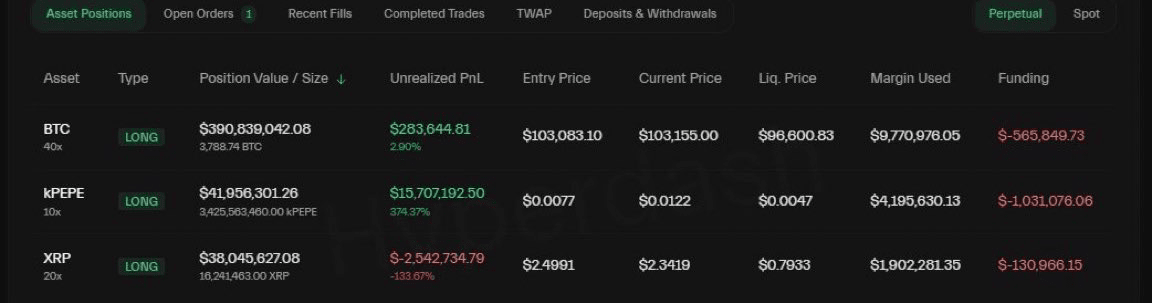
27
·
--

Article
Cryptocurrency Trading Strategies - "Crypto Trading Strategies"Introduction
Cryptocurrency trading strategies are techniques used to profit from the volatility of cryptocurrency markets. With the rise of cryptocurrencies, trading has become a popular way to participate in this market. In this article, we'll explore different types of cryptocurrency trading strategies, technical analysis strategies, fundamental analysis strategies, and risk management techniques.
Types of Cryptocurrency Trading Strategies
- Day Trading: Day trading involves buying and selling cryptocurrencies within a short period, often within a day. This strategy requires quick decision-making and market analysis.
- Swing Trading: Swing trading involves holding positions for a longer period than day trading, often several days or weeks. This strategy requires a good understanding of market trends and technical analysis.
- Position Trading: Position trading involves holding positions for an extended period, often months or years. This strategy requires a deep understanding of fundamental analysis and market trends.
Technical Analysis Strategies
- Trend Following: Trend following involves identifying and following the direction of market trends. Traders use technical indicators such as moving averages and relative strength index (RSI) to identify trends.
- Range Trading: Range trading involves buying and selling cryptocurrencies within a specific price range. Traders use technical indicators such as support and resistance levels to identify trading opportunities.
- Breakout Trading: Breakout trading involves buying or selling cryptocurrencies when they break out of a specific price range. Traders use technical indicators such as Bollinger Bands and momentum indicators to identify breakouts.
Fundamental Analysis Strategies
- Researching Market News: Traders can use market news and events to inform their trading decisions. This includes staying up-to-date with market developments, regulatory changes, and adoption rates.
- Analyzing Market Sentiment: Traders can analyze market sentiment to identify potential trading opportunities. This includes using social media, online forums, and market analytics tools to gauge market sentiment.
Risk Management
- Stop-Loss Orders: Traders can use stop-loss orders to limit potential losses. This involves setting a price level at which to automatically sell a cryptocurrency if it falls below a certain price.
- Position Sizing: Traders can use position sizing to manage risk and maximize potential returns. This involves determining the amount of capital to allocate to each trade based on risk tolerance and market conditions.
Advanced Trading Strategies
- Scalping: Scalping involves making multiple small trades throughout the day to take advantage of small price movements.
- Margin Trading: Margin trading involves using borrowed funds to trade cryptocurrencies. This can amplify potential returns but also increases risk.
- Arbitrage: Arbitrage involves buying and selling cryptocurrencies on different exchanges to take advantage of price differences.
Conclusion
Cryptocurrency trading strategies can be effective in profiting from the volatility of cryptocurrency markets. By understanding different types of strategies, technical analysis, fundamental analysis, and risk management techniques, traders can develop effective trading plans and improve their trading performance. Whether you're a beginner or experienced trader, it's essential to stay informed and adapt to changing market conditions.
Cryptocurrency Trading Strategies - "Crypto Trading Strategies"
Introduction
Cryptocurrency trading strategies are techniques used to profit from the volatility of cryptocurrency markets. With the rise of cryptocurrencies, trading has become a popular way to participate in this market. In this article, we'll explore different types of cryptocurrency trading strategies, technical analysis strategies, fundamental analysis strategies, and risk management techniques.
Types of Cryptocurrency Trading Strategies
- Day Trading: Day trading involves buying and selling cryptocurrencies within a short period, often within a day. This strategy requires quick decision-making and market analysis.
- Swing Trading: Swing trading involves holding positions for a longer period than day trading, often several days or weeks. This strategy requires a good understanding of market trends and technical analysis.
- Position Trading: Position trading involves holding positions for an extended period, often months or years. This strategy requires a deep understanding of fundamental analysis and market trends.
Technical Analysis Strategies
- Trend Following: Trend following involves identifying and following the direction of market trends. Traders use technical indicators such as moving averages and relative strength index (RSI) to identify trends.
- Range Trading: Range trading involves buying and selling cryptocurrencies within a specific price range. Traders use technical indicators such as support and resistance levels to identify trading opportunities.
- Breakout Trading: Breakout trading involves buying or selling cryptocurrencies when they break out of a specific price range. Traders use technical indicators such as Bollinger Bands and momentum indicators to identify breakouts.
Fundamental Analysis Strategies
- Researching Market News: Traders can use market news and events to inform their trading decisions. This includes staying up-to-date with market developments, regulatory changes, and adoption rates.
- Analyzing Market Sentiment: Traders can analyze market sentiment to identify potential trading opportunities. This includes using social media, online forums, and market analytics tools to gauge market sentiment.
Risk Management
- Stop-Loss Orders: Traders can use stop-loss orders to limit potential losses. This involves setting a price level at which to automatically sell a cryptocurrency if it falls below a certain price.
- Position Sizing: Traders can use position sizing to manage risk and maximize potential returns. This involves determining the amount of capital to allocate to each trade based on risk tolerance and market conditions.
Advanced Trading Strategies
- Scalping: Scalping involves making multiple small trades throughout the day to take advantage of small price movements.
- Margin Trading: Margin trading involves using borrowed funds to trade cryptocurrencies. This can amplify potential returns but also increases risk.
- Arbitrage: Arbitrage involves buying and selling cryptocurrencies on different exchanges to take advantage of price differences.
Conclusion
Cryptocurrency trading strategies can be effective in profiting from the volatility of cryptocurrency markets. By understanding different types of strategies, technical analysis, fundamental analysis, and risk management techniques, traders can develop effective trading plans and improve their trading performance. Whether you're a beginner or experienced trader, it's essential to stay informed and adapt to changing market conditions.
Cryptocurrency trading strategies are techniques used to profit from the volatility of cryptocurrency markets. With the rise of cryptocurrencies, trading has become a popular way to participate in this market. In this article, we'll explore different types of cryptocurrency trading strategies, technical analysis strategies, fundamental analysis strategies, and risk management techniques.
Types of Cryptocurrency Trading Strategies
- Day Trading: Day trading involves buying and selling cryptocurrencies within a short period, often within a day. This strategy requires quick decision-making and market analysis.
- Swing Trading: Swing trading involves holding positions for a longer period than day trading, often several days or weeks. This strategy requires a good understanding of market trends and technical analysis.
- Position Trading: Position trading involves holding positions for an extended period, often months or years. This strategy requires a deep understanding of fundamental analysis and market trends.
Technical Analysis Strategies
- Trend Following: Trend following involves identifying and following the direction of market trends. Traders use technical indicators such as moving averages and relative strength index (RSI) to identify trends.
- Range Trading: Range trading involves buying and selling cryptocurrencies within a specific price range. Traders use technical indicators such as support and resistance levels to identify trading opportunities.
- Breakout Trading: Breakout trading involves buying or selling cryptocurrencies when they break out of a specific price range. Traders use technical indicators such as Bollinger Bands and momentum indicators to identify breakouts.
Fundamental Analysis Strategies
- Researching Market News: Traders can use market news and events to inform their trading decisions. This includes staying up-to-date with market developments, regulatory changes, and adoption rates.
- Analyzing Market Sentiment: Traders can analyze market sentiment to identify potential trading opportunities. This includes using social media, online forums, and market analytics tools to gauge market sentiment.
Risk Management
- Stop-Loss Orders: Traders can use stop-loss orders to limit potential losses. This involves setting a price level at which to automatically sell a cryptocurrency if it falls below a certain price.
- Position Sizing: Traders can use position sizing to manage risk and maximize potential returns. This involves determining the amount of capital to allocate to each trade based on risk tolerance and market conditions.
Advanced Trading Strategies
- Scalping: Scalping involves making multiple small trades throughout the day to take advantage of small price movements.
- Margin Trading: Margin trading involves using borrowed funds to trade cryptocurrencies. This can amplify potential returns but also increases risk.
- Arbitrage: Arbitrage involves buying and selling cryptocurrencies on different exchanges to take advantage of price differences.
Conclusion
Cryptocurrency trading strategies can be effective in profiting from the volatility of cryptocurrency markets. By understanding different types of strategies, technical analysis, fundamental analysis, and risk management techniques, traders can develop effective trading plans and improve their trading performance. Whether you're a beginner or experienced trader, it's essential to stay informed and adapt to changing market conditions.
877
·
--

Article
Advanced Trading Psychology - "Advanced Trading Mindset"Introduction
Advanced trading psychology is a critical aspect of trading success, involving the development of a deep understanding of one's own thoughts, emotions, and behaviors. This includes managing emotions, building confidence, and cultivating a growth mindset. In this article, we'll explore the key aspects of advanced trading psychology, strategies for improvement, and benefits of developing a strong trading mindset.
Key Aspects of Advanced Trading Psychology
- Self-awareness: Self-awareness is the ability to recognize and understand one's own thoughts, emotions, and behaviors. Traders need to develop self-awareness to identify areas for improvement and make better trading decisions.
- Emotional regulation: Emotional regulation is the ability to manage one's emotions, including stress, anxiety, and fear. Traders need to learn how to regulate their emotions to avoid impulsive decisions and stay focused on their trading plan.
- Confidence building: Confidence is critical for trading success. Traders need to build confidence in their trading abilities and decisions to take calculated risks and stay committed to their trading plan.
- Growth mindset: A growth mindset is the belief that one's abilities and intelligence can be developed through hard work, dedication, and persistence. Traders need to cultivate a growth mindset to stay open to learning and improvement.
Strategies for Advanced Trading Psychology
- Mindfulness and meditation: Mindfulness and meditation can help traders develop greater self-awareness and emotional regulation. Regular practice can reduce stress and anxiety, improve focus, and enhance decision-making.
- Positive self-talk: Positive self-talk is the practice of using positive affirmations to build confidence and reinforce positive behaviors. Traders can use positive self-talk to stay motivated and focused on their trading goals.
- Journaling: Journaling is the practice of writing down one's thoughts, emotions, and experiences. Traders can use journaling to reflect on their trading performance, identify areas for improvement, and develop greater self-awareness.
- Trading plan: A trading plan is a written document that outlines a trader's goals, risk tolerance, and strategies. Traders can use a trading plan to stay focused, avoid impulsive decisions, and manage risk.
Benefits of Advanced Trading Psychology
- Improved decision-making: Advanced trading psychology can help traders make better decisions, unencumbered by emotions and biases. By developing greater self-awareness and emotional regulation, traders can stay focused on their trading plan and avoid impulsive decisions.
- Increased confidence: Advanced trading psychology can help traders build confidence in their trading abilities and decisions. By developing a growth mindset and using positive self-talk, traders can stay motivated and focused on their trading goals.
- Better risk management: Advanced trading psychology can help traders manage risk more effectively. By developing greater self-awareness and emotional regulation, traders can stay calm under pressure and avoid taking unnecessary risks.
Challenges of Advanced Trading Psychology
- Self-reflection: Advanced trading psychology requires ongoing self-reflection and self-improvement. Traders need to be willing to examine their thoughts, emotions, and behaviors, and make changes as needed.
- Emotional discipline: Traders need to develop emotional discipline to stick to their trading plan and avoid impulsive decisions. This requires a high degree of self-awareness and emotional regulation.
- Patience and persistence: Advanced trading psychology requires patience and persistence. Traders need to be willing to put in the time and effort required to develop greater self-awareness, emotional regulation, and confidence.
Conclusion
Advanced trading psychology is a critical aspect of trading success, involving the development of self-awareness, emotional regulation, and a growth mindset. By understanding key aspects and strategies, traders can cultivate a strong trading mindset and improve their trading performance. With patience, persistence, and dedication, traders can develop the advanced trading psychology skills needed to achieve their trading goals.
Advanced Trading Psychology - "Advanced Trading Mindset"
Introduction
Advanced trading psychology is a critical aspect of trading success, involving the development of a deep understanding of one's own thoughts, emotions, and behaviors. This includes managing emotions, building confidence, and cultivating a growth mindset. In this article, we'll explore the key aspects of advanced trading psychology, strategies for improvement, and benefits of developing a strong trading mindset.
Key Aspects of Advanced Trading Psychology
- Self-awareness: Self-awareness is the ability to recognize and understand one's own thoughts, emotions, and behaviors. Traders need to develop self-awareness to identify areas for improvement and make better trading decisions.
- Emotional regulation: Emotional regulation is the ability to manage one's emotions, including stress, anxiety, and fear. Traders need to learn how to regulate their emotions to avoid impulsive decisions and stay focused on their trading plan.
- Confidence building: Confidence is critical for trading success. Traders need to build confidence in their trading abilities and decisions to take calculated risks and stay committed to their trading plan.
- Growth mindset: A growth mindset is the belief that one's abilities and intelligence can be developed through hard work, dedication, and persistence. Traders need to cultivate a growth mindset to stay open to learning and improvement.
Strategies for Advanced Trading Psychology
- Mindfulness and meditation: Mindfulness and meditation can help traders develop greater self-awareness and emotional regulation. Regular practice can reduce stress and anxiety, improve focus, and enhance decision-making.
- Positive self-talk: Positive self-talk is the practice of using positive affirmations to build confidence and reinforce positive behaviors. Traders can use positive self-talk to stay motivated and focused on their trading goals.
- Journaling: Journaling is the practice of writing down one's thoughts, emotions, and experiences. Traders can use journaling to reflect on their trading performance, identify areas for improvement, and develop greater self-awareness.
- Trading plan: A trading plan is a written document that outlines a trader's goals, risk tolerance, and strategies. Traders can use a trading plan to stay focused, avoid impulsive decisions, and manage risk.
Benefits of Advanced Trading Psychology
- Improved decision-making: Advanced trading psychology can help traders make better decisions, unencumbered by emotions and biases. By developing greater self-awareness and emotional regulation, traders can stay focused on their trading plan and avoid impulsive decisions.
- Increased confidence: Advanced trading psychology can help traders build confidence in their trading abilities and decisions. By developing a growth mindset and using positive self-talk, traders can stay motivated and focused on their trading goals.
- Better risk management: Advanced trading psychology can help traders manage risk more effectively. By developing greater self-awareness and emotional regulation, traders can stay calm under pressure and avoid taking unnecessary risks.
Challenges of Advanced Trading Psychology
- Self-reflection: Advanced trading psychology requires ongoing self-reflection and self-improvement. Traders need to be willing to examine their thoughts, emotions, and behaviors, and make changes as needed.
- Emotional discipline: Traders need to develop emotional discipline to stick to their trading plan and avoid impulsive decisions. This requires a high degree of self-awareness and emotional regulation.
- Patience and persistence: Advanced trading psychology requires patience and persistence. Traders need to be willing to put in the time and effort required to develop greater self-awareness, emotional regulation, and confidence.
Conclusion
Advanced trading psychology is a critical aspect of trading success, involving the development of self-awareness, emotional regulation, and a growth mindset. By understanding key aspects and strategies, traders can cultivate a strong trading mindset and improve their trading performance. With patience, persistence, and dedication, traders can develop the advanced trading psychology skills needed to achieve their trading goals.
Advanced trading psychology is a critical aspect of trading success, involving the development of a deep understanding of one's own thoughts, emotions, and behaviors. This includes managing emotions, building confidence, and cultivating a growth mindset. In this article, we'll explore the key aspects of advanced trading psychology, strategies for improvement, and benefits of developing a strong trading mindset.
Key Aspects of Advanced Trading Psychology
- Self-awareness: Self-awareness is the ability to recognize and understand one's own thoughts, emotions, and behaviors. Traders need to develop self-awareness to identify areas for improvement and make better trading decisions.
- Emotional regulation: Emotional regulation is the ability to manage one's emotions, including stress, anxiety, and fear. Traders need to learn how to regulate their emotions to avoid impulsive decisions and stay focused on their trading plan.
- Confidence building: Confidence is critical for trading success. Traders need to build confidence in their trading abilities and decisions to take calculated risks and stay committed to their trading plan.
- Growth mindset: A growth mindset is the belief that one's abilities and intelligence can be developed through hard work, dedication, and persistence. Traders need to cultivate a growth mindset to stay open to learning and improvement.
Strategies for Advanced Trading Psychology
- Mindfulness and meditation: Mindfulness and meditation can help traders develop greater self-awareness and emotional regulation. Regular practice can reduce stress and anxiety, improve focus, and enhance decision-making.
- Positive self-talk: Positive self-talk is the practice of using positive affirmations to build confidence and reinforce positive behaviors. Traders can use positive self-talk to stay motivated and focused on their trading goals.
- Journaling: Journaling is the practice of writing down one's thoughts, emotions, and experiences. Traders can use journaling to reflect on their trading performance, identify areas for improvement, and develop greater self-awareness.
- Trading plan: A trading plan is a written document that outlines a trader's goals, risk tolerance, and strategies. Traders can use a trading plan to stay focused, avoid impulsive decisions, and manage risk.
Benefits of Advanced Trading Psychology
- Improved decision-making: Advanced trading psychology can help traders make better decisions, unencumbered by emotions and biases. By developing greater self-awareness and emotional regulation, traders can stay focused on their trading plan and avoid impulsive decisions.
- Increased confidence: Advanced trading psychology can help traders build confidence in their trading abilities and decisions. By developing a growth mindset and using positive self-talk, traders can stay motivated and focused on their trading goals.
- Better risk management: Advanced trading psychology can help traders manage risk more effectively. By developing greater self-awareness and emotional regulation, traders can stay calm under pressure and avoid taking unnecessary risks.
Challenges of Advanced Trading Psychology
- Self-reflection: Advanced trading psychology requires ongoing self-reflection and self-improvement. Traders need to be willing to examine their thoughts, emotions, and behaviors, and make changes as needed.
- Emotional discipline: Traders need to develop emotional discipline to stick to their trading plan and avoid impulsive decisions. This requires a high degree of self-awareness and emotional regulation.
- Patience and persistence: Advanced trading psychology requires patience and persistence. Traders need to be willing to put in the time and effort required to develop greater self-awareness, emotional regulation, and confidence.
Conclusion
Advanced trading psychology is a critical aspect of trading success, involving the development of self-awareness, emotional regulation, and a growth mindset. By understanding key aspects and strategies, traders can cultivate a strong trading mindset and improve their trading performance. With patience, persistence, and dedication, traders can develop the advanced trading psychology skills needed to achieve their trading goals.
615
·
--
Article
Trading with Multiple Time Frames - "Multi-Time Frame Trading"Introduction
Trading with multiple time frames is a powerful approach to trading that involves analyzing and trading across different time frames. This approach can help traders gain a more comprehensive view of the market, identify trends and patterns, and make more informed trading decisions.
Benefits of Trading with Multiple Time Frames
- Improved market understanding: Trading with multiple time frames can provide a more complete understanding of market dynamics, including trends, patterns, and potential trading opportunities.
- Better trend identification: Analyzing multiple time frames can help traders identify trends and patterns more accurately, which can inform trading decisions.
- Increased trading opportunities: Trading with multiple time frames can provide more trading opportunities, as traders can identify potential trades on different time frames.
How to Trade with Multiple Time Frames
- Choose relevant time frames: Traders should choose time frames that align with their trading strategy and goals. For example, a day trader may focus on short-term time frames, such as 15-minute,1-hour or 2-hour charts, while a swing trader may focus on longer-term time frames, such as daily or weekly charts.
- Analyze multiple time frames: Traders should analyze multiple time frames to identify trends, patterns, and potential trading opportunities. This can involve looking at charts on different time frames, analyzing technical indicators, and monitoring market news and events.
- Use multiple indicators: Traders can use multiple indicators across different time frames to confirm trading signals. For example, a trader may use a moving average on a longer-term time frame to identify the trend, and a stochastic oscillator on a shorter-term time frame to identify overbought or oversold conditions.
Types of Time Frames
- Short-term time frames: Short-term time frames, such as 5-minute or 15-minute charts, are used for day trading and scalping.
- Medium-term time frames: Medium-term time frames, such as 1-hour or 4-hour charts, are used for swing trading and position trading.
- Long-term time frames: Long-term time frames, such as daily or weekly charts, are used for position trading and investing.
Tips for Trading with Multiple Time Frames
- Start with a clear trading plan: Traders should start with a clear trading plan that outlines their goals, risk tolerance, and trading strategy.
- Use a top-down approach: Traders can use a top-down approach, starting with longer-term time frames and working down to shorter-term time frames.
- Monitor and adjust: Traders should monitor their trades and adjust their strategy as needed.
Challenges of Trading with Multiple Time Frames
- Complexity: Trading with multiple time frames can be complex and require significant analysis.
- Information overload: Analyzing multiple time frames can result in information overload, which can make it difficult to make trading decisions.
- Requires experience: Trading with multiple time frames requires experience and a deep understanding of market dynamics.
Conclusion
Trading with multiple time frames can be a powerful approach to trading, providing a more comprehensive view of the market and helping traders identify trends and patterns. By understanding the benefits and challenges, traders can develop effective strategies for trading with multiple time frames and improve their trading performance.
Trading with Multiple Time Frames - "Multi-Time Frame Trading"
Introduction
Trading with multiple time frames is a powerful approach to trading that involves analyzing and trading across different time frames. This approach can help traders gain a more comprehensive view of the market, identify trends and patterns, and make more informed trading decisions.
Benefits of Trading with Multiple Time Frames
- Improved market understanding: Trading with multiple time frames can provide a more complete understanding of market dynamics, including trends, patterns, and potential trading opportunities.
- Better trend identification: Analyzing multiple time frames can help traders identify trends and patterns more accurately, which can inform trading decisions.
- Increased trading opportunities: Trading with multiple time frames can provide more trading opportunities, as traders can identify potential trades on different time frames.
How to Trade with Multiple Time Frames
- Choose relevant time frames: Traders should choose time frames that align with their trading strategy and goals. For example, a day trader may focus on short-term time frames, such as 15-minute,1-hour or 2-hour charts, while a swing trader may focus on longer-term time frames, such as daily or weekly charts.
- Analyze multiple time frames: Traders should analyze multiple time frames to identify trends, patterns, and potential trading opportunities. This can involve looking at charts on different time frames, analyzing technical indicators, and monitoring market news and events.
- Use multiple indicators: Traders can use multiple indicators across different time frames to confirm trading signals. For example, a trader may use a moving average on a longer-term time frame to identify the trend, and a stochastic oscillator on a shorter-term time frame to identify overbought or oversold conditions.
Types of Time Frames
- Short-term time frames: Short-term time frames, such as 5-minute or 15-minute charts, are used for day trading and scalping.
- Medium-term time frames: Medium-term time frames, such as 1-hour or 4-hour charts, are used for swing trading and position trading.
- Long-term time frames: Long-term time frames, such as daily or weekly charts, are used for position trading and investing.
Tips for Trading with Multiple Time Frames
- Start with a clear trading plan: Traders should start with a clear trading plan that outlines their goals, risk tolerance, and trading strategy.
- Use a top-down approach: Traders can use a top-down approach, starting with longer-term time frames and working down to shorter-term time frames.
- Monitor and adjust: Traders should monitor their trades and adjust their strategy as needed.
Challenges of Trading with Multiple Time Frames
- Complexity: Trading with multiple time frames can be complex and require significant analysis.
- Information overload: Analyzing multiple time frames can result in information overload, which can make it difficult to make trading decisions.
- Requires experience: Trading with multiple time frames requires experience and a deep understanding of market dynamics.
Conclusion
Trading with multiple time frames can be a powerful approach to trading, providing a more comprehensive view of the market and helping traders identify trends and patterns. By understanding the benefits and challenges, traders can develop effective strategies for trading with multiple time frames and improve their trading performance.
Trading with multiple time frames is a powerful approach to trading that involves analyzing and trading across different time frames. This approach can help traders gain a more comprehensive view of the market, identify trends and patterns, and make more informed trading decisions.
Benefits of Trading with Multiple Time Frames
- Improved market understanding: Trading with multiple time frames can provide a more complete understanding of market dynamics, including trends, patterns, and potential trading opportunities.
- Better trend identification: Analyzing multiple time frames can help traders identify trends and patterns more accurately, which can inform trading decisions.
- Increased trading opportunities: Trading with multiple time frames can provide more trading opportunities, as traders can identify potential trades on different time frames.
How to Trade with Multiple Time Frames
- Choose relevant time frames: Traders should choose time frames that align with their trading strategy and goals. For example, a day trader may focus on short-term time frames, such as 15-minute,1-hour or 2-hour charts, while a swing trader may focus on longer-term time frames, such as daily or weekly charts.
- Analyze multiple time frames: Traders should analyze multiple time frames to identify trends, patterns, and potential trading opportunities. This can involve looking at charts on different time frames, analyzing technical indicators, and monitoring market news and events.
- Use multiple indicators: Traders can use multiple indicators across different time frames to confirm trading signals. For example, a trader may use a moving average on a longer-term time frame to identify the trend, and a stochastic oscillator on a shorter-term time frame to identify overbought or oversold conditions.
Types of Time Frames
- Short-term time frames: Short-term time frames, such as 5-minute or 15-minute charts, are used for day trading and scalping.
- Medium-term time frames: Medium-term time frames, such as 1-hour or 4-hour charts, are used for swing trading and position trading.
- Long-term time frames: Long-term time frames, such as daily or weekly charts, are used for position trading and investing.
Tips for Trading with Multiple Time Frames
- Start with a clear trading plan: Traders should start with a clear trading plan that outlines their goals, risk tolerance, and trading strategy.
- Use a top-down approach: Traders can use a top-down approach, starting with longer-term time frames and working down to shorter-term time frames.
- Monitor and adjust: Traders should monitor their trades and adjust their strategy as needed.
Challenges of Trading with Multiple Time Frames
- Complexity: Trading with multiple time frames can be complex and require significant analysis.
- Information overload: Analyzing multiple time frames can result in information overload, which can make it difficult to make trading decisions.
- Requires experience: Trading with multiple time frames requires experience and a deep understanding of market dynamics.
Conclusion
Trading with multiple time frames can be a powerful approach to trading, providing a more comprehensive view of the market and helping traders identify trends and patterns. By understanding the benefits and challenges, traders can develop effective strategies for trading with multiple time frames and improve their trading performance.
1
1
1
1.3k
·
--
Article
Swing Trading Strategies - "Swing Trading Insights"Introduction
Swing trading is a popular trading strategy that involves holding positions for a shorter period than investing, but longer than day trading. Swing traders aim to capture market movements over a few days or weeks, often using technical analysis and chart patterns to identify trading opportunities.
Key Aspects of Swing Trading
- Medium-term focus: Swing traders focus on medium-term price movements, often holding trades for several days or weeks.
- Technical analysis: Swing traders often use technical analysis and chart patterns to identify trading opportunities.
- Risk management: Swing traders need to manage their risk carefully, as market volatility can result in significant losses if not managed properly.
Tips for Swing Trading
- Use technical indicators: Swing traders often use technical indicators such as moving averages, RSI, and Bollinger Bands to identify trading opportunities.
- Monitor market trends: Swing traders need to monitor market trends and adjust their trading strategy accordingly.
- Set clear goals: Swing traders should set clear profit and loss targets and stick to their trading plan.
Benefits of Swing Trading
- Potential for high returns: Swing trading can be profitable if done correctly, as traders can capture significant price movements.
- Flexibility: Swing trading can be applied to various markets and time frames.
- Less stress: Swing trading can be less stressful than day trading, as traders don't need to monitor the market constantly.
Challenges of Swing Trading
- Market volatility: Swing trading involves market volatility, which can result in significant losses if not managed properly.
- Requires patience: Swing trading requires patience, as traders need to hold positions for several days or weeks.
- Overnight risks: Swing traders need to manage overnight risks, as market movements can occur outside of trading hours.
Conclusion
Swing trading can be a profitable trading strategy for traders who can accurately identify and trade market movements. By understanding key aspects, tips, and challenges, traders can navigate the markets with confidence and potentially capture profits.
Swing Trading Strategies - "Swing Trading Insights"
Introduction
Swing trading is a popular trading strategy that involves holding positions for a shorter period than investing, but longer than day trading. Swing traders aim to capture market movements over a few days or weeks, often using technical analysis and chart patterns to identify trading opportunities.
Key Aspects of Swing Trading
- Medium-term focus: Swing traders focus on medium-term price movements, often holding trades for several days or weeks.
- Technical analysis: Swing traders often use technical analysis and chart patterns to identify trading opportunities.
- Risk management: Swing traders need to manage their risk carefully, as market volatility can result in significant losses if not managed properly.
Tips for Swing Trading
- Use technical indicators: Swing traders often use technical indicators such as moving averages, RSI, and Bollinger Bands to identify trading opportunities.
- Monitor market trends: Swing traders need to monitor market trends and adjust their trading strategy accordingly.
- Set clear goals: Swing traders should set clear profit and loss targets and stick to their trading plan.
Benefits of Swing Trading
- Potential for high returns: Swing trading can be profitable if done correctly, as traders can capture significant price movements.
- Flexibility: Swing trading can be applied to various markets and time frames.
- Less stress: Swing trading can be less stressful than day trading, as traders don't need to monitor the market constantly.
Challenges of Swing Trading
- Market volatility: Swing trading involves market volatility, which can result in significant losses if not managed properly.
- Requires patience: Swing trading requires patience, as traders need to hold positions for several days or weeks.
- Overnight risks: Swing traders need to manage overnight risks, as market movements can occur outside of trading hours.
Conclusion
Swing trading can be a profitable trading strategy for traders who can accurately identify and trade market movements. By understanding key aspects, tips, and challenges, traders can navigate the markets with confidence and potentially capture profits.
Swing trading is a popular trading strategy that involves holding positions for a shorter period than investing, but longer than day trading. Swing traders aim to capture market movements over a few days or weeks, often using technical analysis and chart patterns to identify trading opportunities.
Key Aspects of Swing Trading
- Medium-term focus: Swing traders focus on medium-term price movements, often holding trades for several days or weeks.
- Technical analysis: Swing traders often use technical analysis and chart patterns to identify trading opportunities.
- Risk management: Swing traders need to manage their risk carefully, as market volatility can result in significant losses if not managed properly.
Tips for Swing Trading
- Use technical indicators: Swing traders often use technical indicators such as moving averages, RSI, and Bollinger Bands to identify trading opportunities.
- Monitor market trends: Swing traders need to monitor market trends and adjust their trading strategy accordingly.
- Set clear goals: Swing traders should set clear profit and loss targets and stick to their trading plan.
Benefits of Swing Trading
- Potential for high returns: Swing trading can be profitable if done correctly, as traders can capture significant price movements.
- Flexibility: Swing trading can be applied to various markets and time frames.
- Less stress: Swing trading can be less stressful than day trading, as traders don't need to monitor the market constantly.
Challenges of Swing Trading
- Market volatility: Swing trading involves market volatility, which can result in significant losses if not managed properly.
- Requires patience: Swing trading requires patience, as traders need to hold positions for several days or weeks.
- Overnight risks: Swing traders need to manage overnight risks, as market movements can occur outside of trading hours.
Conclusion
Swing trading can be a profitable trading strategy for traders who can accurately identify and trade market movements. By understanding key aspects, tips, and challenges, traders can navigate the markets with confidence and potentially capture profits.
52
·
--

Article
Scalping Strategies - "Scalping Secrets"Introduction
Scalping is a popular trading strategy that involves making multiple small trades in a short period of time. Scalpers aim to take advantage of small price movements in the market, often using technical analysis and chart patterns to identify trading opportunities. Scalping can be applied to various markets, including stocks, forex, and cryptocurrencies.
Key Aspects of Scalping
- Short-term focus: Scalpers focus on short-term price movements, often holding trades for just a few minutes or seconds.
- High-frequency trading: Scalpers make multiple trades in a short period of time, often using automated trading systems or algorithms.
- Risk management: Scalpers need to manage their risk carefully, as small price movements can result in significant losses if not managed properly.
- Market analysis: Scalpers need to analyze the market and identify trading opportunities, often using technical indicators and chart patterns.
Tips for Scalping
- Use technical indicators: Scalpers often use technical indicators such as moving averages, Relative Strength Index (RSI), and Bollinger Bands to identify trading opportunities.
- Monitor market volatility: Scalpers need to monitor market volatility and adjust their trading strategy accordingly.
- Set clear goals: Scalpers should set clear profit and loss targets and stick to their trading plan.
- Stay focused: Scalpers need to stay focused and avoid distractions, as they need to make quick decisions and react to market movements.
Benefits of Scalping
- Potential for high returns: Scalping can be profitable if done correctly, as traders can take advantage of small price movements in the market.
- Flexibility: Scalping can be applied to various markets and time frames.
- Opportunity to trade frequently: Scalping provides traders with the opportunity to trade frequently and take advantage of multiple trading opportunities.
Challenges of Scalping
- High risk: Scalping involves high risk, as small price movements can result in significant losses if not managed properly.
- Requires discipline: Scalping requires discipline and a strong trading plan, as traders need to make quick decisions and stick to their strategy.
- High stress levels: Scalping can be stressful, as traders need to monitor the market constantly and make quick decisions.
Scalping Strategies
- Trend following: Scalpers can follow trends and ride the momentum of the market.
- Range trading: Scalpers can trade within a range, buying and selling at specific price levels.
- Breakout trading: Scalpers can trade breakouts, buying or selling when the price breaks through a specific level.
Conclusion
Scalping can be a profitable trading strategy for traders who can accurately identify and trade small price movements. By understanding key aspects, tips, and strategies, traders can navigate the markets with confidence and potentially capture profits. Scalping requires discipline, focus, and a strong trading plan, but it can be a rewarding strategy for those who master it.
Scalping Strategies - "Scalping Secrets"
Introduction
Scalping is a popular trading strategy that involves making multiple small trades in a short period of time. Scalpers aim to take advantage of small price movements in the market, often using technical analysis and chart patterns to identify trading opportunities. Scalping can be applied to various markets, including stocks, forex, and cryptocurrencies.
Key Aspects of Scalping
- Short-term focus: Scalpers focus on short-term price movements, often holding trades for just a few minutes or seconds.
- High-frequency trading: Scalpers make multiple trades in a short period of time, often using automated trading systems or algorithms.
- Risk management: Scalpers need to manage their risk carefully, as small price movements can result in significant losses if not managed properly.
- Market analysis: Scalpers need to analyze the market and identify trading opportunities, often using technical indicators and chart patterns.
Tips for Scalping
- Use technical indicators: Scalpers often use technical indicators such as moving averages, Relative Strength Index (RSI), and Bollinger Bands to identify trading opportunities.
- Monitor market volatility: Scalpers need to monitor market volatility and adjust their trading strategy accordingly.
- Set clear goals: Scalpers should set clear profit and loss targets and stick to their trading plan.
- Stay focused: Scalpers need to stay focused and avoid distractions, as they need to make quick decisions and react to market movements.
Benefits of Scalping
- Potential for high returns: Scalping can be profitable if done correctly, as traders can take advantage of small price movements in the market.
- Flexibility: Scalping can be applied to various markets and time frames.
- Opportunity to trade frequently: Scalping provides traders with the opportunity to trade frequently and take advantage of multiple trading opportunities.
Challenges of Scalping
- High risk: Scalping involves high risk, as small price movements can result in significant losses if not managed properly.
- Requires discipline: Scalping requires discipline and a strong trading plan, as traders need to make quick decisions and stick to their strategy.
- High stress levels: Scalping can be stressful, as traders need to monitor the market constantly and make quick decisions.
Scalping Strategies
- Trend following: Scalpers can follow trends and ride the momentum of the market.
- Range trading: Scalpers can trade within a range, buying and selling at specific price levels.
- Breakout trading: Scalpers can trade breakouts, buying or selling when the price breaks through a specific level.
Conclusion
Scalping can be a profitable trading strategy for traders who can accurately identify and trade small price movements. By understanding key aspects, tips, and strategies, traders can navigate the markets with confidence and potentially capture profits. Scalping requires discipline, focus, and a strong trading plan, but it can be a rewarding strategy for those who master it.
Scalping is a popular trading strategy that involves making multiple small trades in a short period of time. Scalpers aim to take advantage of small price movements in the market, often using technical analysis and chart patterns to identify trading opportunities. Scalping can be applied to various markets, including stocks, forex, and cryptocurrencies.
Key Aspects of Scalping
- Short-term focus: Scalpers focus on short-term price movements, often holding trades for just a few minutes or seconds.
- High-frequency trading: Scalpers make multiple trades in a short period of time, often using automated trading systems or algorithms.
- Risk management: Scalpers need to manage their risk carefully, as small price movements can result in significant losses if not managed properly.
- Market analysis: Scalpers need to analyze the market and identify trading opportunities, often using technical indicators and chart patterns.
Tips for Scalping
- Use technical indicators: Scalpers often use technical indicators such as moving averages, Relative Strength Index (RSI), and Bollinger Bands to identify trading opportunities.
- Monitor market volatility: Scalpers need to monitor market volatility and adjust their trading strategy accordingly.
- Set clear goals: Scalpers should set clear profit and loss targets and stick to their trading plan.
- Stay focused: Scalpers need to stay focused and avoid distractions, as they need to make quick decisions and react to market movements.
Benefits of Scalping
- Potential for high returns: Scalping can be profitable if done correctly, as traders can take advantage of small price movements in the market.
- Flexibility: Scalping can be applied to various markets and time frames.
- Opportunity to trade frequently: Scalping provides traders with the opportunity to trade frequently and take advantage of multiple trading opportunities.
Challenges of Scalping
- High risk: Scalping involves high risk, as small price movements can result in significant losses if not managed properly.
- Requires discipline: Scalping requires discipline and a strong trading plan, as traders need to make quick decisions and stick to their strategy.
- High stress levels: Scalping can be stressful, as traders need to monitor the market constantly and make quick decisions.
Scalping Strategies
- Trend following: Scalpers can follow trends and ride the momentum of the market.
- Range trading: Scalpers can trade within a range, buying and selling at specific price levels.
- Breakout trading: Scalpers can trade breakouts, buying or selling when the price breaks through a specific level.
Conclusion
Scalping can be a profitable trading strategy for traders who can accurately identify and trade small price movements. By understanding key aspects, tips, and strategies, traders can navigate the markets with confidence and potentially capture profits. Scalping requires discipline, focus, and a strong trading plan, but it can be a rewarding strategy for those who master it.
183
·
--

Article
Breakout Trading Strategies - "Breakout Trading Strategies"Introduction
Breakout trading is a popular trading strategy that involves identifying and trading on breakouts from established support or resistance levels. A breakout occurs when the price moves beyond a established support or resistance level, indicating a potential change in the market trend. Breakouts can occur in various markets, including cryptocurrencies, stocks, and commodities.
Key Concepts in Breakout Trading
- Support and resistance: Identifying support and resistance levels is crucial in breakout trading. Support levels are the prices at which the market tends to bounce back, while resistance levels are the prices at which the market tends to face selling pressure.
- Breakout confirmation: Traders need to confirm breakouts using various indicators and chart patterns. This can include increased volume, momentum indicators, and chart patterns such as flags and triangles.
- Risk management: Managing risk is critical in breakout trading, as false breakouts can occur. Traders need to set stop-loss orders and limit their position sizes to manage potential losses.
Types of Breakouts
- Upside breakout: An upside breakout occurs when the price breaks above a resistance level, indicating a potential uptrend.
- Downside breakout: A downside breakout occurs when the price breaks below a support level, indicating a potential downtrend.
Tips for Breakout Trading
- Use technical indicators: Use technical indicators such as moving averages, Relative Strength Index (RSI), and Bollinger Bands to identify potential breakouts.
- Monitor volume: Monitor volume to confirm breakouts. Increased volume can indicate strong buying or selling pressure.
- Set clear goals: Set clear profit and loss targets. Traders should aim to capture the potential price movement following a breakout.
- Be patient: Breakout trading requires patience. Traders need to wait for confirmation of the breakout before entering a trade.
Benefits of Breakout Trading
- Potential for high returns: Breakout trading can be profitable if done correctly, as traders can capture significant price movements.
- Flexibility: Breakout trading can be applied to various markets and time frames. Traders can use breakout strategies in both trending and non-trending markets.
Challenges of Breakout Trading
- False breakouts: Breakout trading strategies can be vulnerable to false breakouts. Traders need to be cautious when entering trades and set stop-loss orders to manage potential losses.
- Market volatility: Market volatility can make it challenging to identify and trade breakouts. Traders need to be prepared for sudden changes in market conditions.
Breakout Trading Strategies
- Trend following: Trend following involves identifying the direction of the trend and trading in the direction of the breakout.
- Mean reversion: Mean reversion involves identifying overbought or oversold conditions and trading against the breakout.
- Range trading: Range trading involves identifying support and resistance levels and trading within the range.
Conclusion
Breakout trading can be a profitable strategy for traders who can accurately identify and trade breakouts. By understanding key concepts, tips, and strategies, traders can navigate the markets with confidence and potentially capture profits. Breakout trading requires discipline, patience, and a solid understanding of technical analysis. With the right approach, breakout trading can be a valuable addition to any trader's toolkit.
Breakout Trading Strategies - "Breakout Trading Strategies"
Introduction
Breakout trading is a popular trading strategy that involves identifying and trading on breakouts from established support or resistance levels. A breakout occurs when the price moves beyond a established support or resistance level, indicating a potential change in the market trend. Breakouts can occur in various markets, including cryptocurrencies, stocks, and commodities.
Key Concepts in Breakout Trading
- Support and resistance: Identifying support and resistance levels is crucial in breakout trading. Support levels are the prices at which the market tends to bounce back, while resistance levels are the prices at which the market tends to face selling pressure.
- Breakout confirmation: Traders need to confirm breakouts using various indicators and chart patterns. This can include increased volume, momentum indicators, and chart patterns such as flags and triangles.
- Risk management: Managing risk is critical in breakout trading, as false breakouts can occur. Traders need to set stop-loss orders and limit their position sizes to manage potential losses.
Types of Breakouts
- Upside breakout: An upside breakout occurs when the price breaks above a resistance level, indicating a potential uptrend.
- Downside breakout: A downside breakout occurs when the price breaks below a support level, indicating a potential downtrend.
Tips for Breakout Trading
- Use technical indicators: Use technical indicators such as moving averages, Relative Strength Index (RSI), and Bollinger Bands to identify potential breakouts.
- Monitor volume: Monitor volume to confirm breakouts. Increased volume can indicate strong buying or selling pressure.
- Set clear goals: Set clear profit and loss targets. Traders should aim to capture the potential price movement following a breakout.
- Be patient: Breakout trading requires patience. Traders need to wait for confirmation of the breakout before entering a trade.
Benefits of Breakout Trading
- Potential for high returns: Breakout trading can be profitable if done correctly, as traders can capture significant price movements.
- Flexibility: Breakout trading can be applied to various markets and time frames. Traders can use breakout strategies in both trending and non-trending markets.
Challenges of Breakout Trading
- False breakouts: Breakout trading strategies can be vulnerable to false breakouts. Traders need to be cautious when entering trades and set stop-loss orders to manage potential losses.
- Market volatility: Market volatility can make it challenging to identify and trade breakouts. Traders need to be prepared for sudden changes in market conditions.
Breakout Trading Strategies
- Trend following: Trend following involves identifying the direction of the trend and trading in the direction of the breakout.
- Mean reversion: Mean reversion involves identifying overbought or oversold conditions and trading against the breakout.
- Range trading: Range trading involves identifying support and resistance levels and trading within the range.
Conclusion
Breakout trading can be a profitable strategy for traders who can accurately identify and trade breakouts. By understanding key concepts, tips, and strategies, traders can navigate the markets with confidence and potentially capture profits. Breakout trading requires discipline, patience, and a solid understanding of technical analysis. With the right approach, breakout trading can be a valuable addition to any trader's toolkit.
Breakout trading is a popular trading strategy that involves identifying and trading on breakouts from established support or resistance levels. A breakout occurs when the price moves beyond a established support or resistance level, indicating a potential change in the market trend. Breakouts can occur in various markets, including cryptocurrencies, stocks, and commodities.
Key Concepts in Breakout Trading
- Support and resistance: Identifying support and resistance levels is crucial in breakout trading. Support levels are the prices at which the market tends to bounce back, while resistance levels are the prices at which the market tends to face selling pressure.
- Breakout confirmation: Traders need to confirm breakouts using various indicators and chart patterns. This can include increased volume, momentum indicators, and chart patterns such as flags and triangles.
- Risk management: Managing risk is critical in breakout trading, as false breakouts can occur. Traders need to set stop-loss orders and limit their position sizes to manage potential losses.
Types of Breakouts
- Upside breakout: An upside breakout occurs when the price breaks above a resistance level, indicating a potential uptrend.
- Downside breakout: A downside breakout occurs when the price breaks below a support level, indicating a potential downtrend.
Tips for Breakout Trading
- Use technical indicators: Use technical indicators such as moving averages, Relative Strength Index (RSI), and Bollinger Bands to identify potential breakouts.
- Monitor volume: Monitor volume to confirm breakouts. Increased volume can indicate strong buying or selling pressure.
- Set clear goals: Set clear profit and loss targets. Traders should aim to capture the potential price movement following a breakout.
- Be patient: Breakout trading requires patience. Traders need to wait for confirmation of the breakout before entering a trade.
Benefits of Breakout Trading
- Potential for high returns: Breakout trading can be profitable if done correctly, as traders can capture significant price movements.
- Flexibility: Breakout trading can be applied to various markets and time frames. Traders can use breakout strategies in both trending and non-trending markets.
Challenges of Breakout Trading
- False breakouts: Breakout trading strategies can be vulnerable to false breakouts. Traders need to be cautious when entering trades and set stop-loss orders to manage potential losses.
- Market volatility: Market volatility can make it challenging to identify and trade breakouts. Traders need to be prepared for sudden changes in market conditions.
Breakout Trading Strategies
- Trend following: Trend following involves identifying the direction of the trend and trading in the direction of the breakout.
- Mean reversion: Mean reversion involves identifying overbought or oversold conditions and trading against the breakout.
- Range trading: Range trading involves identifying support and resistance levels and trading within the range.
Conclusion
Breakout trading can be a profitable strategy for traders who can accurately identify and trade breakouts. By understanding key concepts, tips, and strategies, traders can navigate the markets with confidence and potentially capture profits. Breakout trading requires discipline, patience, and a solid understanding of technical analysis. With the right approach, breakout trading can be a valuable addition to any trader's toolkit.
3.9k
·
--
Article
Range Trading Strategies - "Range Trading Insights"Introduction
Range trading is a popular trading strategy that involves buying and selling assets within a specific price range. This strategy can be applied to various markets, including cryptocurrencies, stocks, and commodities. Range traders aim to profit from the fluctuations in price within a defined range, rather than trying to predict the direction of the market.
Key Concepts in Range Trading
- Support and resistance: Identifying support and resistance levels is crucial in range trading. Support levels are the prices at which the market tends to bounce back, while resistance levels are the prices at which the market tends to face selling pressure.
- Range identification: Traders need to identify the price range in which the asset is trading. This can be done by analyzing historical price data and identifying the upper and lower bounds of the range.
- Entry and exit points: Determining optimal entry and exit points within the range is critical. Traders typically buy at the support level and sell at the resistance level.
Tips for Range Trading
- Use technical indicators: Use technical indicators such as Relative Strength Index (RSI) and Bollinger Bands to identify overbought and oversold conditions within the range.
- Set clear goals: Set clear profit and loss targets. Traders should aim to buy low and sell high within the range.
- Monitor and adjust: Monitor trades and adjust as needed. Range traders need to be prepared to adjust their strategy if the market breaks out of the range.
- Risk management: Risk management is critical in range trading. Traders should set stop-loss orders to limit potential losses.
Benefits of Range Trading
- Predictable price movements: Range trading can be profitable in markets with predictable price movements. Traders can take advantage of the repetitive nature of price movements within a range.
- Flexibility: Range trading can be applied to various markets and time frames. Traders can use range trading strategies in both trending and non-trending markets.
Challenges of Range Trading
- False breakouts: Range trading strategies can be vulnerable to false breakouts. Traders need to be cautious when the price approaches the boundaries of the range.
- Market volatility: Market volatility can make it challenging to identify and trade within a range. Traders need to be prepared for sudden changes in market conditions.
Range Trading Strategies
- Buy low, sell high: This is a basic range trading strategy that involves buying at the support level and selling at the resistance level.
- Mean reversion: This strategy involves identifying overbought and oversold conditions within the range and taking positions that are likely to revert to the mean.
- Range breakout: This strategy involves identifying potential breakouts from the range and taking positions accordingly.
Conclusion
Range trading can be a profitable strategy for traders who can accurately identify and trade within a specific price range. By understanding key concepts, tips, and strategies, traders can navigate the markets with confidence and potentially capture profits. Range trading requires discipline, patience, and a solid understanding of technical analysis. With the right approach, range trading can be a valuable addition to any trader's toolkit.
Range Trading Strategies - "Range Trading Insights"
Introduction
Range trading is a popular trading strategy that involves buying and selling assets within a specific price range. This strategy can be applied to various markets, including cryptocurrencies, stocks, and commodities. Range traders aim to profit from the fluctuations in price within a defined range, rather than trying to predict the direction of the market.
Key Concepts in Range Trading
- Support and resistance: Identifying support and resistance levels is crucial in range trading. Support levels are the prices at which the market tends to bounce back, while resistance levels are the prices at which the market tends to face selling pressure.
- Range identification: Traders need to identify the price range in which the asset is trading. This can be done by analyzing historical price data and identifying the upper and lower bounds of the range.
- Entry and exit points: Determining optimal entry and exit points within the range is critical. Traders typically buy at the support level and sell at the resistance level.
Tips for Range Trading
- Use technical indicators: Use technical indicators such as Relative Strength Index (RSI) and Bollinger Bands to identify overbought and oversold conditions within the range.
- Set clear goals: Set clear profit and loss targets. Traders should aim to buy low and sell high within the range.
- Monitor and adjust: Monitor trades and adjust as needed. Range traders need to be prepared to adjust their strategy if the market breaks out of the range.
- Risk management: Risk management is critical in range trading. Traders should set stop-loss orders to limit potential losses.
Benefits of Range Trading
- Predictable price movements: Range trading can be profitable in markets with predictable price movements. Traders can take advantage of the repetitive nature of price movements within a range.
- Flexibility: Range trading can be applied to various markets and time frames. Traders can use range trading strategies in both trending and non-trending markets.
Challenges of Range Trading
- False breakouts: Range trading strategies can be vulnerable to false breakouts. Traders need to be cautious when the price approaches the boundaries of the range.
- Market volatility: Market volatility can make it challenging to identify and trade within a range. Traders need to be prepared for sudden changes in market conditions.
Range Trading Strategies
- Buy low, sell high: This is a basic range trading strategy that involves buying at the support level and selling at the resistance level.
- Mean reversion: This strategy involves identifying overbought and oversold conditions within the range and taking positions that are likely to revert to the mean.
- Range breakout: This strategy involves identifying potential breakouts from the range and taking positions accordingly.
Conclusion
Range trading can be a profitable strategy for traders who can accurately identify and trade within a specific price range. By understanding key concepts, tips, and strategies, traders can navigate the markets with confidence and potentially capture profits. Range trading requires discipline, patience, and a solid understanding of technical analysis. With the right approach, range trading can be a valuable addition to any trader's toolkit.
Range trading is a popular trading strategy that involves buying and selling assets within a specific price range. This strategy can be applied to various markets, including cryptocurrencies, stocks, and commodities. Range traders aim to profit from the fluctuations in price within a defined range, rather than trying to predict the direction of the market.
Key Concepts in Range Trading
- Support and resistance: Identifying support and resistance levels is crucial in range trading. Support levels are the prices at which the market tends to bounce back, while resistance levels are the prices at which the market tends to face selling pressure.
- Range identification: Traders need to identify the price range in which the asset is trading. This can be done by analyzing historical price data and identifying the upper and lower bounds of the range.
- Entry and exit points: Determining optimal entry and exit points within the range is critical. Traders typically buy at the support level and sell at the resistance level.
Tips for Range Trading
- Use technical indicators: Use technical indicators such as Relative Strength Index (RSI) and Bollinger Bands to identify overbought and oversold conditions within the range.
- Set clear goals: Set clear profit and loss targets. Traders should aim to buy low and sell high within the range.
- Monitor and adjust: Monitor trades and adjust as needed. Range traders need to be prepared to adjust their strategy if the market breaks out of the range.
- Risk management: Risk management is critical in range trading. Traders should set stop-loss orders to limit potential losses.
Benefits of Range Trading
- Predictable price movements: Range trading can be profitable in markets with predictable price movements. Traders can take advantage of the repetitive nature of price movements within a range.
- Flexibility: Range trading can be applied to various markets and time frames. Traders can use range trading strategies in both trending and non-trending markets.
Challenges of Range Trading
- False breakouts: Range trading strategies can be vulnerable to false breakouts. Traders need to be cautious when the price approaches the boundaries of the range.
- Market volatility: Market volatility can make it challenging to identify and trade within a range. Traders need to be prepared for sudden changes in market conditions.
Range Trading Strategies
- Buy low, sell high: This is a basic range trading strategy that involves buying at the support level and selling at the resistance level.
- Mean reversion: This strategy involves identifying overbought and oversold conditions within the range and taking positions that are likely to revert to the mean.
- Range breakout: This strategy involves identifying potential breakouts from the range and taking positions accordingly.
Conclusion
Range trading can be a profitable strategy for traders who can accurately identify and trade within a specific price range. By understanding key concepts, tips, and strategies, traders can navigate the markets with confidence and potentially capture profits. Range trading requires discipline, patience, and a solid understanding of technical analysis. With the right approach, range trading can be a valuable addition to any trader's toolkit.
1.2k
·
--

Article
Trend Following Strategies - "Trend Following 101"Introduction
Trend following is a popular trading strategy that involves identifying and following the direction of market trends. This strategy can be applied to various markets, including cryptocurrencies, stocks, and commodities. Trend followers aim to ride the momentum of the market, capturing profits as prices move in the direction of the trend.
Key Concepts in Trend Following
- Trend identification: The first step in trend following is identifying the direction and strength of market trends. This can be done using technical indicators such as moving averages, relative strength index (RSI), and Bollinger Bands.
- Entry and exit points: Trend followers need to determine optimal entry and exit points based on trend analysis. This can be done using various techniques such as breakout trading, pullback trading, and trend line analysis.
- Risk management: Risk management is critical in trend following. Traders need to set stop-loss orders and limit position sizes to manage potential losses.
Types of Trends
- Uptrend: An uptrend is a series of higher highs and higher lows, indicating a rising market.
- Downtrend: A downtrend is a series of lower highs and lower lows, indicating a falling market.
- Sideways trend: A sideways trend, also known as a range-bound market, occurs when prices move within a narrow range.
Tips for Trend Following
- Use technical indicators: Use technical indicators such as moving averages and RSI to identify trends.
- Stay disciplined: Stay disciplined and avoid impulsive decisions based on emotions.
- Monitor and adjust: Monitor trades and adjust as needed to stay aligned with the trend.
- Manage risk: Manage risk by setting stop-loss orders and limiting position sizes.
Benefits of Trend Following
- Potential for high returns: Trend following can be profitable if done correctly, as traders can capture significant price movements.
- Flexibility: Trend following can be applied to various markets and time frames.
Challenges of Trend Following
- False signals: Trend following strategies can generate false signals, leading to losses.
- Market volatility: Market volatility can make it challenging to identify and follow trends.
Conclusion
Trend following can be a profitable strategy for traders who can accurately identify and follow market trends. By understanding key concepts, types of trends, and tips for trend following, traders can navigate the markets with confidence and potentially capture significant profits.
Trend Following Strategies - "Trend Following 101"
Introduction
Trend following is a popular trading strategy that involves identifying and following the direction of market trends. This strategy can be applied to various markets, including cryptocurrencies, stocks, and commodities. Trend followers aim to ride the momentum of the market, capturing profits as prices move in the direction of the trend.
Key Concepts in Trend Following
- Trend identification: The first step in trend following is identifying the direction and strength of market trends. This can be done using technical indicators such as moving averages, relative strength index (RSI), and Bollinger Bands.
- Entry and exit points: Trend followers need to determine optimal entry and exit points based on trend analysis. This can be done using various techniques such as breakout trading, pullback trading, and trend line analysis.
- Risk management: Risk management is critical in trend following. Traders need to set stop-loss orders and limit position sizes to manage potential losses.
Types of Trends
- Uptrend: An uptrend is a series of higher highs and higher lows, indicating a rising market.
- Downtrend: A downtrend is a series of lower highs and lower lows, indicating a falling market.
- Sideways trend: A sideways trend, also known as a range-bound market, occurs when prices move within a narrow range.
Tips for Trend Following
- Use technical indicators: Use technical indicators such as moving averages and RSI to identify trends.
- Stay disciplined: Stay disciplined and avoid impulsive decisions based on emotions.
- Monitor and adjust: Monitor trades and adjust as needed to stay aligned with the trend.
- Manage risk: Manage risk by setting stop-loss orders and limiting position sizes.
Benefits of Trend Following
- Potential for high returns: Trend following can be profitable if done correctly, as traders can capture significant price movements.
- Flexibility: Trend following can be applied to various markets and time frames.
Challenges of Trend Following
- False signals: Trend following strategies can generate false signals, leading to losses.
- Market volatility: Market volatility can make it challenging to identify and follow trends.
Conclusion
Trend following can be a profitable strategy for traders who can accurately identify and follow market trends. By understanding key concepts, types of trends, and tips for trend following, traders can navigate the markets with confidence and potentially capture significant profits.
Trend following is a popular trading strategy that involves identifying and following the direction of market trends. This strategy can be applied to various markets, including cryptocurrencies, stocks, and commodities. Trend followers aim to ride the momentum of the market, capturing profits as prices move in the direction of the trend.
Key Concepts in Trend Following
- Trend identification: The first step in trend following is identifying the direction and strength of market trends. This can be done using technical indicators such as moving averages, relative strength index (RSI), and Bollinger Bands.
- Entry and exit points: Trend followers need to determine optimal entry and exit points based on trend analysis. This can be done using various techniques such as breakout trading, pullback trading, and trend line analysis.
- Risk management: Risk management is critical in trend following. Traders need to set stop-loss orders and limit position sizes to manage potential losses.
Types of Trends
- Uptrend: An uptrend is a series of higher highs and higher lows, indicating a rising market.
- Downtrend: A downtrend is a series of lower highs and lower lows, indicating a falling market.
- Sideways trend: A sideways trend, also known as a range-bound market, occurs when prices move within a narrow range.
Tips for Trend Following
- Use technical indicators: Use technical indicators such as moving averages and RSI to identify trends.
- Stay disciplined: Stay disciplined and avoid impulsive decisions based on emotions.
- Monitor and adjust: Monitor trades and adjust as needed to stay aligned with the trend.
- Manage risk: Manage risk by setting stop-loss orders and limiting position sizes.
Benefits of Trend Following
- Potential for high returns: Trend following can be profitable if done correctly, as traders can capture significant price movements.
- Flexibility: Trend following can be applied to various markets and time frames.
Challenges of Trend Following
- False signals: Trend following strategies can generate false signals, leading to losses.
- Market volatility: Market volatility can make it challenging to identify and follow trends.
Conclusion
Trend following can be a profitable strategy for traders who can accurately identify and follow market trends. By understanding key concepts, types of trends, and tips for trend following, traders can navigate the markets with confidence and potentially capture significant profits.
429
Log in to explore more content
Join global crypto users on Binance Square
⚡️ Get latest and useful information about crypto.
💬 Trusted by the world’s largest crypto exchange.
👍 Discover real insights from verified creators.
Email / Phone number
Trending Topics
USBankCompletesCrossBorderPaymentPilotOnStellar
7,827 views
265 Discussing
#usbankcompletescrossborderpaymentpilotonstellar BIG MOVE IN DIGITAL PAYMENTS! 🌍💸
U.S. Bank has completed a cross-border payment pilot on the Stellar network, highlighting how blockchain technology could transform international payments.
⚡ Faster settlement
🌎 Global reach
💰 Potentially lower costs
🔗 Blockchain-powered infrastructure
This is another strong signal that traditional financial institutions are exploring public blockchain networks for real-world payment use cases.#USBankCompletesCrossBorderPaymentPilotOnStellar $MXL.US
$BTC
$ARB
Crypto_With_Kinza
·0 Likes
·1k views
NvidiaInTalksToInvestUpTo$10BInAnthropicIPO
403 views
24 Discussing
EtherRalliesAsBearishBetsLiquidate
19,060 views
478 Discussing