
Crypto Journey1
22.2k Posts

Crypto Journey1
Report
Block User
🚀 Passionate Crypto Enthusiast | Blockchain Advocate 🌐
📰 Delivering the Latest Crypto News & Insights 💡
🔍 Exploring the Depths of Decentralized Finance
Open Trade
Occasional Trader
4.4 Years
49 Following
68.3K+ Followers
90.7K+ Liked
Posts
Portfolio
All
Quotes
Videos
Live
Article
THE INSTITUTIONAL IGNITION - $112 BREAKOUT WITH ETF TAILWINDS AND WHALE ACCUMULATION$SOL is trading at $112.28, up 6.18% in 24 hours. This is the highest level since January 2026. Market cap sits at $65.94 billion. The structure is Bullish. Liquidity is deep at 87/100. But the real story is the convergence of institutional capital, a massive network upgrade, and whale accumulation.
THE ETF WAVE IS REAL AND ACCELERATING
Bitwise's Solana staking ETF (BSOL) just crossed $85 million in daily trading volume, with the token itself rising 11% in a single session. BSOL is the first Solana ETF to surpass $1 billion in assets under management, achieving that milestone in just 10 months. Spot Solana ETFs have seen $1.7 billion in inflows and $13 billion in trading volume since September 2025.
Morgan Stanley listed its Solana Trust (MSOL) on NYSE Arca with a 0.14% management fee, bringing the total number of listed spot Solana ETFs to nine. Goldman Sachs and Charles Schwab are increasing Solana exposure, with Schwab planning to offer spot Solana trading on its platform.
This is not retail speculation. This is institutional infrastructure being built at scale.
THE ALPENGLOW UPGRADE IS 10 DAYS AWAY
The Alpenglow consensus upgrade is scheduled for mainnet activation in October 2026. This is the most radical technical overhaul in Solana's history, cutting finality from 12.8 seconds to roughly 150 milliseconds. That is an 85x improvement in transaction settlement speed.
Firedancer's Jump Crypto team will terminate support for Frankendancer when Alpenglow goes live on mainnet. Validators have approximately four weeks from the end of September to migrate to either full Firedancer or Agave. This is a hard deadline that forces the entire validator network to upgrade simultaneously.
The implications are massive. Sub-second finality positions Solana as the only Layer 1 capable of supporting institutional-grade trading, real-time payments, and high-frequency DeFi applications at scale.
WHALES ARE ACCUMULATING WHILE RETAIL IS HESITANT
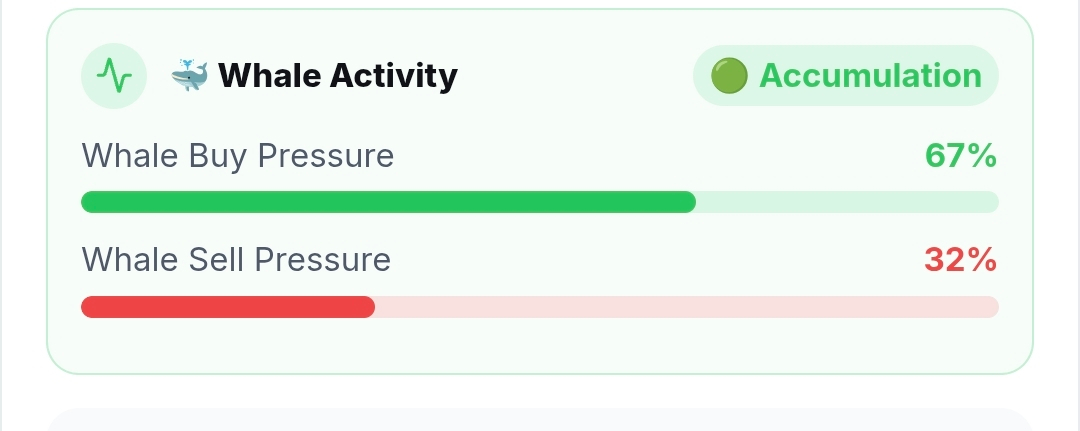
Whale buy pressure sits at 67%. Whale sell pressure sits at 32%. Exchange outflows are elevated, with large transaction alerts active. The Whale Activity screen reads Accumulation. Approximately 2.6 million SOL left centralized exchanges in a single week, dropping total exchange supply by nearly 5%.
Solana generates 9.5 million new wallet addresses per day. That is not a network in decline. That is a network experiencing exponential adoption.
THE DERIVATIVES PICTURE IS MODERATELY CROWDED
Open interest surged 2.7%. The Long/Short ratio is 1.22x, meaning the trade is moderately crowded on the long side. Funding rate is locked at +1.0000%, the maximum positive level. Longs are paying shorts a premium to keep positions open. The Stop-Loss Hunt Detector is flagged as DETECTED with 51% probability, targeting sell-side liquidity. The AI Insight states: "SOL is trading at $112.28 with strong bullish momentum (+6.2% 24h). Suggesting whale accumulation phase. Exchange outflows confirm long-term holder behavior. Short squeeze probability at 40%."
This is the same pattern seen across the market. Crowded. Not yet dangerous. The +1.0000% funding rate is a warning, not a death sentence.
THE TECHNICAL SETUP
Solana has cleared the $110 level for the first time since February 2026. The breakout is confirmed on strong volume. The next resistance zones are $115, then $120. The critical support is $105, with the stronger floor at $100.
If SOL holds above $110 on a daily close, the path to $120 and then $135 opens up. If it loses $105, the next major support is $100, and a break below that would invalidate the bullish structure.
THE TRADE
Long entry: $108 - $112
Stop-loss: $100
Targets: $120 -> $135 -> $150
The institutional bid from ETFs, the Alpenglow upgrade in October, and the whale accumulation data all point in the same direction. But the +1.0000% funding rate means the derivatives trade is crowded. Do not chase the pump. Wait for a pullback to $108-$110 with declining volume to enter. The real entry comes when the crowd gets flushed, not when they are piling in.
THE VERDICT
Solana has the strongest institutional infrastructure story in the market. Bitwise's ETF crossed $1 billion. Morgan Stanley listed MSOL. Charles Schwab is adding spot trading. The Alpenglow upgrade is 10 days away. Whales are accumulating. The network is generating 9.5 million new wallets per day.
But the derivatives trade is crowded. Funding is at the maximum positive level. The stop-loss hunt is active. This is a hold, not a chase. Watch for a reclaim of $115 with volume to confirm the next leg. If $105 breaks, wait for the flush to $100 before considering an entry.
THE INSTITUTIONAL IGNITION - $112 BREAKOUT WITH ETF TAILWINDS AND WHALE ACCUMULATION
$SOL is trading at $112.28, up 6.18% in 24 hours. This is the highest level since January 2026. Market cap sits at $65.94 billion. The structure is Bullish. Liquidity is deep at 87/100. But the real story is the convergence of institutional capital, a massive network upgrade, and whale accumulation.
THE ETF WAVE IS REAL AND ACCELERATING
Bitwise's Solana staking ETF (BSOL) just crossed $85 million in daily trading volume, with the token itself rising 11% in a single session. BSOL is the first Solana ETF to surpass $1 billion in assets under management, achieving that milestone in just 10 months. Spot Solana ETFs have seen $1.7 billion in inflows and $13 billion in trading volume since September 2025.
Morgan Stanley listed its Solana Trust (MSOL) on NYSE Arca with a 0.14% management fee, bringing the total number of listed spot Solana ETFs to nine. Goldman Sachs and Charles Schwab are increasing Solana exposure, with Schwab planning to offer spot Solana trading on its platform.
This is not retail speculation. This is institutional infrastructure being built at scale.
THE ALPENGLOW UPGRADE IS 10 DAYS AWAY
The Alpenglow consensus upgrade is scheduled for mainnet activation in October 2026. This is the most radical technical overhaul in Solana's history, cutting finality from 12.8 seconds to roughly 150 milliseconds. That is an 85x improvement in transaction settlement speed.
Firedancer's Jump Crypto team will terminate support for Frankendancer when Alpenglow goes live on mainnet. Validators have approximately four weeks from the end of September to migrate to either full Firedancer or Agave. This is a hard deadline that forces the entire validator network to upgrade simultaneously.
The implications are massive. Sub-second finality positions Solana as the only Layer 1 capable of supporting institutional-grade trading, real-time payments, and high-frequency DeFi applications at scale.
WHALES ARE ACCUMULATING WHILE RETAIL IS HESITANT
Whale buy pressure sits at 67%. Whale sell pressure sits at 32%. Exchange outflows are elevated, with large transaction alerts active. The Whale Activity screen reads Accumulation. Approximately 2.6 million SOL left centralized exchanges in a single week, dropping total exchange supply by nearly 5%.
Solana generates 9.5 million new wallet addresses per day. That is not a network in decline. That is a network experiencing exponential adoption.
THE DERIVATIVES PICTURE IS MODERATELY CROWDED
Open interest surged 2.7%. The Long/Short ratio is 1.22x, meaning the trade is moderately crowded on the long side. Funding rate is locked at +1.0000%, the maximum positive level. Longs are paying shorts a premium to keep positions open. The Stop-Loss Hunt Detector is flagged as DETECTED with 51% probability, targeting sell-side liquidity. The AI Insight states: "SOL is trading at $112.28 with strong bullish momentum (+6.2% 24h). Suggesting whale accumulation phase. Exchange outflows confirm long-term holder behavior. Short squeeze probability at 40%."
This is the same pattern seen across the market. Crowded. Not yet dangerous. The +1.0000% funding rate is a warning, not a death sentence.
THE TECHNICAL SETUP
Solana has cleared the $110 level for the first time since February 2026. The breakout is confirmed on strong volume. The next resistance zones are $115, then $120. The critical support is $105, with the stronger floor at $100.
If SOL holds above $110 on a daily close, the path to $120 and then $135 opens up. If it loses $105, the next major support is $100, and a break below that would invalidate the bullish structure.
THE TRADE
Long entry: $108 - $112
Stop-loss: $100
Targets: $120 -> $135 -> $150
The institutional bid from ETFs, the Alpenglow upgrade in October, and the whale accumulation data all point in the same direction. But the +1.0000% funding rate means the derivatives trade is crowded. Do not chase the pump. Wait for a pullback to $108-$110 with declining volume to enter. The real entry comes when the crowd gets flushed, not when they are piling in.
THE VERDICT
Solana has the strongest institutional infrastructure story in the market. Bitwise's ETF crossed $1 billion. Morgan Stanley listed MSOL. Charles Schwab is adding spot trading. The Alpenglow upgrade is 10 days away. Whales are accumulating. The network is generating 9.5 million new wallets per day.
But the derivatives trade is crowded. Funding is at the maximum positive level. The stop-loss hunt is active. This is a hold, not a chase. Watch for a reclaim of $115 with volume to confirm the next leg. If $105 breaks, wait for the flush to $100 before considering an entry.
THE ETF WAVE IS REAL AND ACCELERATING
Bitwise's Solana staking ETF (BSOL) just crossed $85 million in daily trading volume, with the token itself rising 11% in a single session. BSOL is the first Solana ETF to surpass $1 billion in assets under management, achieving that milestone in just 10 months. Spot Solana ETFs have seen $1.7 billion in inflows and $13 billion in trading volume since September 2025.
Morgan Stanley listed its Solana Trust (MSOL) on NYSE Arca with a 0.14% management fee, bringing the total number of listed spot Solana ETFs to nine. Goldman Sachs and Charles Schwab are increasing Solana exposure, with Schwab planning to offer spot Solana trading on its platform.
This is not retail speculation. This is institutional infrastructure being built at scale.
THE ALPENGLOW UPGRADE IS 10 DAYS AWAY
The Alpenglow consensus upgrade is scheduled for mainnet activation in October 2026. This is the most radical technical overhaul in Solana's history, cutting finality from 12.8 seconds to roughly 150 milliseconds. That is an 85x improvement in transaction settlement speed.
Firedancer's Jump Crypto team will terminate support for Frankendancer when Alpenglow goes live on mainnet. Validators have approximately four weeks from the end of September to migrate to either full Firedancer or Agave. This is a hard deadline that forces the entire validator network to upgrade simultaneously.
The implications are massive. Sub-second finality positions Solana as the only Layer 1 capable of supporting institutional-grade trading, real-time payments, and high-frequency DeFi applications at scale.
WHALES ARE ACCUMULATING WHILE RETAIL IS HESITANT
Whale buy pressure sits at 67%. Whale sell pressure sits at 32%. Exchange outflows are elevated, with large transaction alerts active. The Whale Activity screen reads Accumulation. Approximately 2.6 million SOL left centralized exchanges in a single week, dropping total exchange supply by nearly 5%.
Solana generates 9.5 million new wallet addresses per day. That is not a network in decline. That is a network experiencing exponential adoption.
THE DERIVATIVES PICTURE IS MODERATELY CROWDED
Open interest surged 2.7%. The Long/Short ratio is 1.22x, meaning the trade is moderately crowded on the long side. Funding rate is locked at +1.0000%, the maximum positive level. Longs are paying shorts a premium to keep positions open. The Stop-Loss Hunt Detector is flagged as DETECTED with 51% probability, targeting sell-side liquidity. The AI Insight states: "SOL is trading at $112.28 with strong bullish momentum (+6.2% 24h). Suggesting whale accumulation phase. Exchange outflows confirm long-term holder behavior. Short squeeze probability at 40%."
This is the same pattern seen across the market. Crowded. Not yet dangerous. The +1.0000% funding rate is a warning, not a death sentence.
THE TECHNICAL SETUP
Solana has cleared the $110 level for the first time since February 2026. The breakout is confirmed on strong volume. The next resistance zones are $115, then $120. The critical support is $105, with the stronger floor at $100.
If SOL holds above $110 on a daily close, the path to $120 and then $135 opens up. If it loses $105, the next major support is $100, and a break below that would invalidate the bullish structure.
THE TRADE
Long entry: $108 - $112
Stop-loss: $100
Targets: $120 -> $135 -> $150
The institutional bid from ETFs, the Alpenglow upgrade in October, and the whale accumulation data all point in the same direction. But the +1.0000% funding rate means the derivatives trade is crowded. Do not chase the pump. Wait for a pullback to $108-$110 with declining volume to enter. The real entry comes when the crowd gets flushed, not when they are piling in.
THE VERDICT
Solana has the strongest institutional infrastructure story in the market. Bitwise's ETF crossed $1 billion. Morgan Stanley listed MSOL. Charles Schwab is adding spot trading. The Alpenglow upgrade is 10 days away. Whales are accumulating. The network is generating 9.5 million new wallets per day.
But the derivatives trade is crowded. Funding is at the maximum positive level. The stop-loss hunt is active. This is a hold, not a chase. Watch for a reclaim of $115 with volume to confirm the next leg. If $105 breaks, wait for the flush to $100 before considering an entry.
3
419
Article
THE BILLION-DOLLAR UNLOCK IS 16 DAYS AWAY AND THE WHALES ARE STILL LOADING$ENA is trading at $0.1923, up 14.63% in 24 hours. The AI screen reads Bullish. Market structure is Bullish. Volume is 34% of market cap. Liquidity is deep at 91/100. But the real story is not the price action today. It is what happens on October 5.
THE FUNDAMENTAL BOMBSHELL: 1.41 BILLION ENA UNLOCKS IN ONE DAY
Ethena is ending its monthly investor unlock schedule and consolidating all remaining investor tokens into a single event on October 5, 2026. That is approximately 1.41 billion ENA, worth $212 million at current prices, representing 14.3% of the circulating supply. The monthly vesting that would have continued until March 2028 stops 17 months early. Everything comes at once.
The buyback program will not be active on that date. The governance-approved repurchase mechanism that directs a share of protocol revenue to ENA buys does not apply during the unlock window, removing a key price support mechanism during the most concentrated supply event in the token's history.
THE BULL CASE: 95% OF REVENUE TO BUYBACKS
On August 27, the Ethena Foundation proposed directing 95% of net protocol revenue into programmatic ENA buybacks once USDe supply crosses $7.5 billion. The proposal triggered a 27% price surge in two days. At the $20 billion supply level, the buyback ratio increases to 20%.
Ethena generates $310 million in annualized fees. The revenue currently reaching the protocol is $5.3 million. That is the number that matters. The buyback only becomes meaningful when USDe supply crosses the threshold.
The Foundation also bought out the seed investors who had been selling locked tokens for nine months. The monthly selling pressure that dragged ENA from $1.40 in late 2024 to $0.09 in August 2026 is gone. All remaining investor tokens now unlock in one event.
USDe supply currently sits at approximately $4.0 billion, down 55% from the $10 billion peak. The $7.5 billion buyback threshold requires the protocol to demonstrate sustained growth before the buyback activates. Institutional partnerships with FalconX ($1 billion lending facility), Janus Henderson, and Coinbase could accelerate that growth.
THE WHALE ACTIVITY: 100% BUY PRESSURE
Whale buy pressure is at 100%. Whale sell pressure is at 0%. Exchange outflows are elevated. Large transaction alerts are active. The Whale Activity screen reads Accumulation. The Stop-Loss Hunt Detector is flagged as DETECTED with 92% probability, targeting sell-side liquidity. Wick expansion, volume spike, liquidation cluster, and breakout failure all triggered simultaneously. This is the classic manipulation pattern. The market makers sweep the liquidity, liquidate the breakout traders, and then the whales accumulate at a discount.
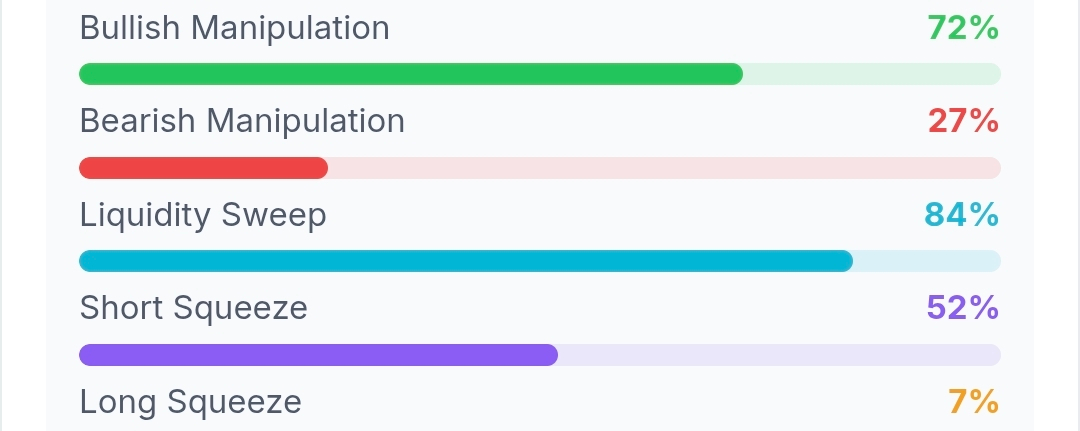
The Market Maker Probability Model gives Bullish Manipulation a 72% probability. Liquidity Sweep is at 84%. Short Squeeze is at 52%. The AI Insight states: "ENA swept liquidity above a major resistance level and quickly failed the breakout. Volume is 34% of market cap while exchange outflows remain elevated. This pattern suggests a possible stop-loss hunt followed by accumulation. Bullish probability: 72%."
THE DERIVATIVES PICTURE: CROWDED BUT NOT YET DANGEROUS
Open interest surged 13.7%. The Long/Short ratio is 1.46x, meaning the trade is moderately crowded on the long side. Funding rate is locked at +1.0000%, the maximum positive level. Longs are paying shorts a premium to keep positions open. This is the same setup as UNI, DOT, and every other token the AI has flagged. Crowded. Not yet dangerous.
THE TRADE
Long entry: $0.185 - $0.195
Stop-loss: $0.170
Targets: $0.215 -> $0.235 -> $0.265
If ENA reclaims $0.200 with volume, the next leg toward $0.215 and $0.235 opens up. If it loses $0.170 on a daily close, the bullish structure is invalidated and the flush to $0.150 becomes the base case.
THE VERDICT
ENA has the strongest fundamental catalyst in the market: a 95% revenue-to-buyback proposal, a foundation that bought out the sellers, and a whale cohort with 100% buy pressure. But the October 5 unlock is a live grenade. 1.41 billion tokens hitting the market in one day with the buyback mechanism disabled is the single largest supply event on the calendar. The price is running on manipulation and accumulation, not organic demand. The October 5 date is the real test. Hold $0.17, and the buyback narrative survives. Lose it, and the unlock becomes a bloodbath.
THE BILLION-DOLLAR UNLOCK IS 16 DAYS AWAY AND THE WHALES ARE STILL LOADING
$ENA is trading at $0.1923, up 14.63% in 24 hours. The AI screen reads Bullish. Market structure is Bullish. Volume is 34% of market cap. Liquidity is deep at 91/100. But the real story is not the price action today. It is what happens on October 5.
THE FUNDAMENTAL BOMBSHELL: 1.41 BILLION ENA UNLOCKS IN ONE DAY
Ethena is ending its monthly investor unlock schedule and consolidating all remaining investor tokens into a single event on October 5, 2026. That is approximately 1.41 billion ENA, worth $212 million at current prices, representing 14.3% of the circulating supply. The monthly vesting that would have continued until March 2028 stops 17 months early. Everything comes at once.
The buyback program will not be active on that date. The governance-approved repurchase mechanism that directs a share of protocol revenue to ENA buys does not apply during the unlock window, removing a key price support mechanism during the most concentrated supply event in the token's history.
THE BULL CASE: 95% OF REVENUE TO BUYBACKS
On August 27, the Ethena Foundation proposed directing 95% of net protocol revenue into programmatic ENA buybacks once USDe supply crosses $7.5 billion. The proposal triggered a 27% price surge in two days. At the $20 billion supply level, the buyback ratio increases to 20%.
Ethena generates $310 million in annualized fees. The revenue currently reaching the protocol is $5.3 million. That is the number that matters. The buyback only becomes meaningful when USDe supply crosses the threshold.
The Foundation also bought out the seed investors who had been selling locked tokens for nine months. The monthly selling pressure that dragged ENA from $1.40 in late 2024 to $0.09 in August 2026 is gone. All remaining investor tokens now unlock in one event.
USDe supply currently sits at approximately $4.0 billion, down 55% from the $10 billion peak. The $7.5 billion buyback threshold requires the protocol to demonstrate sustained growth before the buyback activates. Institutional partnerships with FalconX ($1 billion lending facility), Janus Henderson, and Coinbase could accelerate that growth.
THE WHALE ACTIVITY: 100% BUY PRESSURE
Whale buy pressure is at 100%. Whale sell pressure is at 0%. Exchange outflows are elevated. Large transaction alerts are active. The Whale Activity screen reads Accumulation. The Stop-Loss Hunt Detector is flagged as DETECTED with 92% probability, targeting sell-side liquidity. Wick expansion, volume spike, liquidation cluster, and breakout failure all triggered simultaneously. This is the classic manipulation pattern. The market makers sweep the liquidity, liquidate the breakout traders, and then the whales accumulate at a discount.
The Market Maker Probability Model gives Bullish Manipulation a 72% probability. Liquidity Sweep is at 84%. Short Squeeze is at 52%. The AI Insight states: "ENA swept liquidity above a major resistance level and quickly failed the breakout. Volume is 34% of market cap while exchange outflows remain elevated. This pattern suggests a possible stop-loss hunt followed by accumulation. Bullish probability: 72%."
THE DERIVATIVES PICTURE: CROWDED BUT NOT YET DANGEROUS
Open interest surged 13.7%. The Long/Short ratio is 1.46x, meaning the trade is moderately crowded on the long side. Funding rate is locked at +1.0000%, the maximum positive level. Longs are paying shorts a premium to keep positions open. This is the same setup as UNI, DOT, and every other token the AI has flagged. Crowded. Not yet dangerous.
THE TRADE
Long entry: $0.185 - $0.195
Stop-loss: $0.170
Targets: $0.215 -> $0.235 -> $0.265
If ENA reclaims $0.200 with volume, the next leg toward $0.215 and $0.235 opens up. If it loses $0.170 on a daily close, the bullish structure is invalidated and the flush to $0.150 becomes the base case.
THE VERDICT
ENA has the strongest fundamental catalyst in the market: a 95% revenue-to-buyback proposal, a foundation that bought out the sellers, and a whale cohort with 100% buy pressure. But the October 5 unlock is a live grenade. 1.41 billion tokens hitting the market in one day with the buyback mechanism disabled is the single largest supply event on the calendar. The price is running on manipulation and accumulation, not organic demand. The October 5 date is the real test. Hold $0.17, and the buyback narrative survives. Lose it, and the unlock becomes a bloodbath.
THE FUNDAMENTAL BOMBSHELL: 1.41 BILLION ENA UNLOCKS IN ONE DAY
Ethena is ending its monthly investor unlock schedule and consolidating all remaining investor tokens into a single event on October 5, 2026. That is approximately 1.41 billion ENA, worth $212 million at current prices, representing 14.3% of the circulating supply. The monthly vesting that would have continued until March 2028 stops 17 months early. Everything comes at once.
The buyback program will not be active on that date. The governance-approved repurchase mechanism that directs a share of protocol revenue to ENA buys does not apply during the unlock window, removing a key price support mechanism during the most concentrated supply event in the token's history.
THE BULL CASE: 95% OF REVENUE TO BUYBACKS
On August 27, the Ethena Foundation proposed directing 95% of net protocol revenue into programmatic ENA buybacks once USDe supply crosses $7.5 billion. The proposal triggered a 27% price surge in two days. At the $20 billion supply level, the buyback ratio increases to 20%.
Ethena generates $310 million in annualized fees. The revenue currently reaching the protocol is $5.3 million. That is the number that matters. The buyback only becomes meaningful when USDe supply crosses the threshold.
The Foundation also bought out the seed investors who had been selling locked tokens for nine months. The monthly selling pressure that dragged ENA from $1.40 in late 2024 to $0.09 in August 2026 is gone. All remaining investor tokens now unlock in one event.
USDe supply currently sits at approximately $4.0 billion, down 55% from the $10 billion peak. The $7.5 billion buyback threshold requires the protocol to demonstrate sustained growth before the buyback activates. Institutional partnerships with FalconX ($1 billion lending facility), Janus Henderson, and Coinbase could accelerate that growth.
THE WHALE ACTIVITY: 100% BUY PRESSURE
Whale buy pressure is at 100%. Whale sell pressure is at 0%. Exchange outflows are elevated. Large transaction alerts are active. The Whale Activity screen reads Accumulation. The Stop-Loss Hunt Detector is flagged as DETECTED with 92% probability, targeting sell-side liquidity. Wick expansion, volume spike, liquidation cluster, and breakout failure all triggered simultaneously. This is the classic manipulation pattern. The market makers sweep the liquidity, liquidate the breakout traders, and then the whales accumulate at a discount.
The Market Maker Probability Model gives Bullish Manipulation a 72% probability. Liquidity Sweep is at 84%. Short Squeeze is at 52%. The AI Insight states: "ENA swept liquidity above a major resistance level and quickly failed the breakout. Volume is 34% of market cap while exchange outflows remain elevated. This pattern suggests a possible stop-loss hunt followed by accumulation. Bullish probability: 72%."
THE DERIVATIVES PICTURE: CROWDED BUT NOT YET DANGEROUS
Open interest surged 13.7%. The Long/Short ratio is 1.46x, meaning the trade is moderately crowded on the long side. Funding rate is locked at +1.0000%, the maximum positive level. Longs are paying shorts a premium to keep positions open. This is the same setup as UNI, DOT, and every other token the AI has flagged. Crowded. Not yet dangerous.
THE TRADE
Long entry: $0.185 - $0.195
Stop-loss: $0.170
Targets: $0.215 -> $0.235 -> $0.265
If ENA reclaims $0.200 with volume, the next leg toward $0.215 and $0.235 opens up. If it loses $0.170 on a daily close, the bullish structure is invalidated and the flush to $0.150 becomes the base case.
THE VERDICT
ENA has the strongest fundamental catalyst in the market: a 95% revenue-to-buyback proposal, a foundation that bought out the sellers, and a whale cohort with 100% buy pressure. But the October 5 unlock is a live grenade. 1.41 billion tokens hitting the market in one day with the buyback mechanism disabled is the single largest supply event on the calendar. The price is running on manipulation and accumulation, not organic demand. The October 5 date is the real test. Hold $0.17, and the buyback narrative survives. Lose it, and the unlock becomes a bloodbath.
1
497
Article
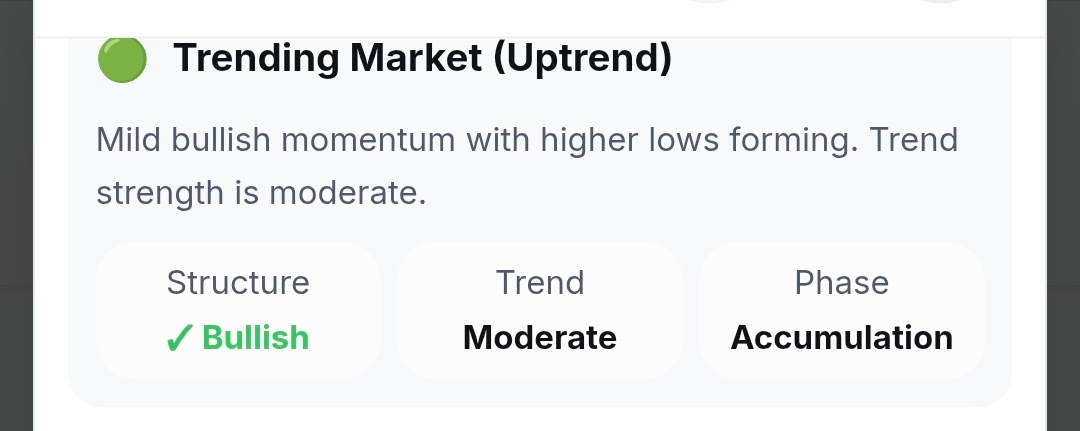
THE GPU LENDING KING IS COILING - WHALES ARE LOADING, BUT THE CHART IS TRAPPED$CHIP is trading at $0.04412, down 11.78% in 24 hours. The AI screen reads Neutral. Structure is Bullish. Trend is Moderate. Phase is Accumulation. But the price is stuck in a range between $0.043257 support and $0.046486 resistance. The breakout is unconfirmed. The setup is not active. This is a waiting game.
THE FUNDAMENTALS ARE EXPLODING WHILE THE PRICE SLEEPS
USD.AI is not a meme. It is the infrastructure layer for GPU-backed lending. The protocol tokenizes GPUs as collateral and issues non-recourse loans to AI infrastructure operators. The loan is secured by the hardware and the customer contracts, not the borrower's balance sheet.
The numbers are staggering. TVL reached $398 million in Q2 2026, with $202 million deployed. Annualized recurring revenue (ARR) exploded from $1.1 million in 2025 to $14.3 million year-to-date in 2026. Q2 2026 annualized DAO ARR hit $30 million. The borrower pipeline sits at $13.0 billion across 394 leads. The largest single loan in the book grew from $620,000 in July 2025 to $98.1 million in June 2026. That is a 158x increase in under a year.
sUSDai, the yield-bearing stablecoin, is paying a 6.98% net yield. Cumulative yield paid to sUSDai holders crossed $15 million. The protocol ranks number two on Arbitrum by 30-day revenue, with $1.19 million in fees over 30 days.
THE INSTITUTIONAL WALLET IS OPEN
Bullish, the NYSE-listed crypto exchange, committed $100 million in stablecoin debt financing to USD.AI in August 2026. Bullish is minting $100 million of sUSDai and deploying that capital into GPU-backed loans. This is not a pilot. This is production lending at scale.
K3 Capital followed with $40 million in revolving debt financing in September 2026. The facility is denominated in sUSDai with a three-year term and monthly repayments. This is short-term credit backed by sUSDai collateral, designed to support new financing products that require flexible capital.
Wilmington Trust, a subsidiary of M&T Bank, joined as escrow agent. Funds now move into escrow before GPU deployment, and borrowers pay yield on escrowed capital from day one. Depositors start earning earlier without taking on deployment risk.
THE TOKENOMICS ARE AGGRESSIVELY DEFLATIONARY
Permian Labs, the developer of USD.AI, bought back 338.8 million CHIP tokens in May 2026, representing 3.39% of total supply. Cumulative buybacks reached 3.7% of total supply. The dev team is using protocol revenue to remove tokens from circulation. That is a direct transfer of value to holders.
CHIP launched on April 21, 2026, and was listed on Binance, Coinbase, Upbit, Robinhood, Hyperliquid, and Bybit within the first week. Peak 24-hour volume hit $1.3 billion. Anchorage Digital, the first federally chartered crypto bank, went live with institutional custody for CHIP.
THE ANALYST UPGRADE THAT NOBODY IS TALKING ABOUT
On September 16, Blockworks researcher Nick Carpinito upgraded CHIP from Underweight to Neutral, while maintaining a positive view on sUSDai. The yield-bearing stablecoin currently offers a 6.98% net yield. Carpinito stated he will maintain the neutral stance on CHIP until there is progress on fee routing or the April 2027 unlock cliff. That is a critical insight. The analyst is not bearish. He is waiting for the next catalyst.
THE TECHNICAL SETUP
The 24-hour range is tight. Price is trading between $0.043257 support and $0.046486 resistance. The breakout is unconfirmed. Two requirements have not yet been met for the setup to activate. The AI summary says: "CHIP is in a neutral zone within a Trending Market (Uptrend). Price trades between support at $0.043257 and resistance at $0.046486. Trend direction lacks conviction. No high-confidence trade setup is currently present. Patience and confirmation are advised."
The momentum score is 67 out of 100. Volume is weak. Volatility is elevated. The market tags are Neutral Consolidation and Accumulation Zone. This is a coil. The question is which way it breaks.
THE UNLOCK CLIFF IS 19 MONTHS AWAY
The CoinList token sale in March 2026 was priced at $0.03 with a fully diluted valuation of $300 million. Tokens were expected to be 100% unlocked at TGE. The next major unlock cliff is April 2027. That gives the protocol 19 months to prove the model before supply expands. The buybacks have already removed 3.7% of supply. If revenue continues to scale, the buyback pressure could offset unlock dilution.
THE VERDICT
USD.AI has the strongest institutional backing in the GPU lending sector. Bullish deployed $100 million. K3 Capital added $40 million. Wilmington Trust is the escrow agent. ARR is at $30 million annualized. The dev team is buying back tokens with protocol revenue. The analyst upgrade from Blockworks signals that the smart money is positioning for the next phase.
But the chart is trapped. The $0.043257 support is the line. Hold it, and the accumulation phase continues with a target of $0.046486 and then $0.05132. Lose it on a daily close, and the flush to $0.03950 becomes the base case. The breakout is unconfirmed. The setup is not active. Do not force the trade.
Wait for the volume. Wait for the confirmation. The fundamentals are building the floor. The chart will tell you when to buy.
THE GPU LENDING KING IS COILING - WHALES ARE LOADING, BUT THE CHART IS TRAPPED
$CHIP is trading at $0.04412, down 11.78% in 24 hours. The AI screen reads Neutral. Structure is Bullish. Trend is Moderate. Phase is Accumulation. But the price is stuck in a range between $0.043257 support and $0.046486 resistance. The breakout is unconfirmed. The setup is not active. This is a waiting game.
THE FUNDAMENTALS ARE EXPLODING WHILE THE PRICE SLEEPS
USD.AI is not a meme. It is the infrastructure layer for GPU-backed lending. The protocol tokenizes GPUs as collateral and issues non-recourse loans to AI infrastructure operators. The loan is secured by the hardware and the customer contracts, not the borrower's balance sheet.
The numbers are staggering. TVL reached $398 million in Q2 2026, with $202 million deployed. Annualized recurring revenue (ARR) exploded from $1.1 million in 2025 to $14.3 million year-to-date in 2026. Q2 2026 annualized DAO ARR hit $30 million. The borrower pipeline sits at $13.0 billion across 394 leads. The largest single loan in the book grew from $620,000 in July 2025 to $98.1 million in June 2026. That is a 158x increase in under a year.
sUSDai, the yield-bearing stablecoin, is paying a 6.98% net yield. Cumulative yield paid to sUSDai holders crossed $15 million. The protocol ranks number two on Arbitrum by 30-day revenue, with $1.19 million in fees over 30 days.
THE INSTITUTIONAL WALLET IS OPEN
Bullish, the NYSE-listed crypto exchange, committed $100 million in stablecoin debt financing to USD.AI in August 2026. Bullish is minting $100 million of sUSDai and deploying that capital into GPU-backed loans. This is not a pilot. This is production lending at scale.
K3 Capital followed with $40 million in revolving debt financing in September 2026. The facility is denominated in sUSDai with a three-year term and monthly repayments. This is short-term credit backed by sUSDai collateral, designed to support new financing products that require flexible capital.
Wilmington Trust, a subsidiary of M&T Bank, joined as escrow agent. Funds now move into escrow before GPU deployment, and borrowers pay yield on escrowed capital from day one. Depositors start earning earlier without taking on deployment risk.
THE TOKENOMICS ARE AGGRESSIVELY DEFLATIONARY
Permian Labs, the developer of USD.AI, bought back 338.8 million CHIP tokens in May 2026, representing 3.39% of total supply. Cumulative buybacks reached 3.7% of total supply. The dev team is using protocol revenue to remove tokens from circulation. That is a direct transfer of value to holders.
CHIP launched on April 21, 2026, and was listed on Binance, Coinbase, Upbit, Robinhood, Hyperliquid, and Bybit within the first week. Peak 24-hour volume hit $1.3 billion. Anchorage Digital, the first federally chartered crypto bank, went live with institutional custody for CHIP.
THE ANALYST UPGRADE THAT NOBODY IS TALKING ABOUT
On September 16, Blockworks researcher Nick Carpinito upgraded CHIP from Underweight to Neutral, while maintaining a positive view on sUSDai. The yield-bearing stablecoin currently offers a 6.98% net yield. Carpinito stated he will maintain the neutral stance on CHIP until there is progress on fee routing or the April 2027 unlock cliff. That is a critical insight. The analyst is not bearish. He is waiting for the next catalyst.
THE TECHNICAL SETUP
The 24-hour range is tight. Price is trading between $0.043257 support and $0.046486 resistance. The breakout is unconfirmed. Two requirements have not yet been met for the setup to activate. The AI summary says: "CHIP is in a neutral zone within a Trending Market (Uptrend). Price trades between support at $0.043257 and resistance at $0.046486. Trend direction lacks conviction. No high-confidence trade setup is currently present. Patience and confirmation are advised."
The momentum score is 67 out of 100. Volume is weak. Volatility is elevated. The market tags are Neutral Consolidation and Accumulation Zone. This is a coil. The question is which way it breaks.
THE UNLOCK CLIFF IS 19 MONTHS AWAY
The CoinList token sale in March 2026 was priced at $0.03 with a fully diluted valuation of $300 million. Tokens were expected to be 100% unlocked at TGE. The next major unlock cliff is April 2027. That gives the protocol 19 months to prove the model before supply expands. The buybacks have already removed 3.7% of supply. If revenue continues to scale, the buyback pressure could offset unlock dilution.
THE VERDICT
USD.AI has the strongest institutional backing in the GPU lending sector. Bullish deployed $100 million. K3 Capital added $40 million. Wilmington Trust is the escrow agent. ARR is at $30 million annualized. The dev team is buying back tokens with protocol revenue. The analyst upgrade from Blockworks signals that the smart money is positioning for the next phase.
But the chart is trapped. The $0.043257 support is the line. Hold it, and the accumulation phase continues with a target of $0.046486 and then $0.05132. Lose it on a daily close, and the flush to $0.03950 becomes the base case. The breakout is unconfirmed. The setup is not active. Do not force the trade.
Wait for the volume. Wait for the confirmation. The fundamentals are building the floor. The chart will tell you when to buy.
THE FUNDAMENTALS ARE EXPLODING WHILE THE PRICE SLEEPS
USD.AI is not a meme. It is the infrastructure layer for GPU-backed lending. The protocol tokenizes GPUs as collateral and issues non-recourse loans to AI infrastructure operators. The loan is secured by the hardware and the customer contracts, not the borrower's balance sheet.
The numbers are staggering. TVL reached $398 million in Q2 2026, with $202 million deployed. Annualized recurring revenue (ARR) exploded from $1.1 million in 2025 to $14.3 million year-to-date in 2026. Q2 2026 annualized DAO ARR hit $30 million. The borrower pipeline sits at $13.0 billion across 394 leads. The largest single loan in the book grew from $620,000 in July 2025 to $98.1 million in June 2026. That is a 158x increase in under a year.
sUSDai, the yield-bearing stablecoin, is paying a 6.98% net yield. Cumulative yield paid to sUSDai holders crossed $15 million. The protocol ranks number two on Arbitrum by 30-day revenue, with $1.19 million in fees over 30 days.
THE INSTITUTIONAL WALLET IS OPEN
Bullish, the NYSE-listed crypto exchange, committed $100 million in stablecoin debt financing to USD.AI in August 2026. Bullish is minting $100 million of sUSDai and deploying that capital into GPU-backed loans. This is not a pilot. This is production lending at scale.
K3 Capital followed with $40 million in revolving debt financing in September 2026. The facility is denominated in sUSDai with a three-year term and monthly repayments. This is short-term credit backed by sUSDai collateral, designed to support new financing products that require flexible capital.
Wilmington Trust, a subsidiary of M&T Bank, joined as escrow agent. Funds now move into escrow before GPU deployment, and borrowers pay yield on escrowed capital from day one. Depositors start earning earlier without taking on deployment risk.
THE TOKENOMICS ARE AGGRESSIVELY DEFLATIONARY
Permian Labs, the developer of USD.AI, bought back 338.8 million CHIP tokens in May 2026, representing 3.39% of total supply. Cumulative buybacks reached 3.7% of total supply. The dev team is using protocol revenue to remove tokens from circulation. That is a direct transfer of value to holders.
CHIP launched on April 21, 2026, and was listed on Binance, Coinbase, Upbit, Robinhood, Hyperliquid, and Bybit within the first week. Peak 24-hour volume hit $1.3 billion. Anchorage Digital, the first federally chartered crypto bank, went live with institutional custody for CHIP.
THE ANALYST UPGRADE THAT NOBODY IS TALKING ABOUT
On September 16, Blockworks researcher Nick Carpinito upgraded CHIP from Underweight to Neutral, while maintaining a positive view on sUSDai. The yield-bearing stablecoin currently offers a 6.98% net yield. Carpinito stated he will maintain the neutral stance on CHIP until there is progress on fee routing or the April 2027 unlock cliff. That is a critical insight. The analyst is not bearish. He is waiting for the next catalyst.
THE TECHNICAL SETUP
The 24-hour range is tight. Price is trading between $0.043257 support and $0.046486 resistance. The breakout is unconfirmed. Two requirements have not yet been met for the setup to activate. The AI summary says: "CHIP is in a neutral zone within a Trending Market (Uptrend). Price trades between support at $0.043257 and resistance at $0.046486. Trend direction lacks conviction. No high-confidence trade setup is currently present. Patience and confirmation are advised."
The momentum score is 67 out of 100. Volume is weak. Volatility is elevated. The market tags are Neutral Consolidation and Accumulation Zone. This is a coil. The question is which way it breaks.
THE UNLOCK CLIFF IS 19 MONTHS AWAY
The CoinList token sale in March 2026 was priced at $0.03 with a fully diluted valuation of $300 million. Tokens were expected to be 100% unlocked at TGE. The next major unlock cliff is April 2027. That gives the protocol 19 months to prove the model before supply expands. The buybacks have already removed 3.7% of supply. If revenue continues to scale, the buyback pressure could offset unlock dilution.
THE VERDICT
USD.AI has the strongest institutional backing in the GPU lending sector. Bullish deployed $100 million. K3 Capital added $40 million. Wilmington Trust is the escrow agent. ARR is at $30 million annualized. The dev team is buying back tokens with protocol revenue. The analyst upgrade from Blockworks signals that the smart money is positioning for the next phase.
But the chart is trapped. The $0.043257 support is the line. Hold it, and the accumulation phase continues with a target of $0.046486 and then $0.05132. Lose it on a daily close, and the flush to $0.03950 becomes the base case. The breakout is unconfirmed. The setup is not active. Do not force the trade.
Wait for the volume. Wait for the confirmation. The fundamentals are building the floor. The chart will tell you when to buy.
213
Article
FOUR SIGNALS. TWO LONGS. TWO SHORTS. THE AI CONFIDENCE TELLS THE REAL STORY. $BTC THE ONLY TRADE WITH A REAL EDGEBitcoin is at $81,018, down 0.17%. The signal is LONG on the 4H timeframe with 64% AI confidence. This is the highest conviction trade on the screen. Trend is strong. Risk is moderate.
The technical picture shows a corrective phase. Price needs to reclaim $77,700 to confirm momentum. A breakout above $80,000 opens the door to $84,000 and then $86,000. The stop-loss sits at $76,271. If it breaks below $74,000 on a daily close, the next major support is $66,300.
This is a structural hold. The AI gives it the strongest probability for a reason.
DOT/USDT: THE SHORT SQUEEZE THAT IS RUNNING ON FUMES
DOT is at $1.1, down 3.42%. The signal is LONG on the 4H timeframe but AI confidence is only 48%. That is a coin flip. Trend is moderate. Risk is moderate.
The recent 13% surge cleared the 200 SMA at $1.09, which is a bullish technical event. But momentum is stalling. Open interest dropped 7.79% while price ripped 13%. That is a short squeeze, not organic demand. Whales are long at 72%, but the easy money has been made.
The stop-loss is $1.0525. The target is $1.3873. The $1.05 support is the line. Hold it, and $1.25 is in play. Lose it, and the squeeze thesis dies.
CROSS/USDT: THE 10% CONFIDENCE TRAP
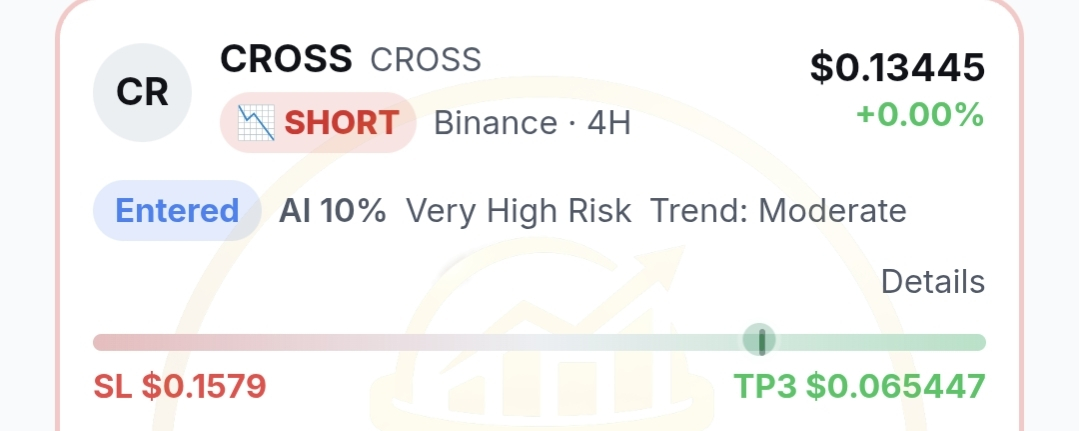
CROSS is at $0.13445, flat on the day. The signal is SHORT on the 4H timeframe with an AI confidence of only 10%. Risk is very high. Trend is moderate.
This token just pumped 35% on perpetual momentum. The market cap is only $49.3 million. That is micro-cap territory with paper-thin liquidity. Shorting a parabolic move on a micro-cap with thin liquidity is how accounts get liquidated. The AI model is screaming stay away.
If you trade this, size down to a fraction of a normal position. But the data says this is a no-trade zone.
PVT/USDT: THE $743K GRAVEYARD
PVT is at $0.00012264, flat on the day. The signal is SHORT on the 4H timeframe with an AI confidence of 10%. Risk is very high. Trend is moderate.
The market cap is $743,000. The volume is $216,000. The token is down 91.3% from its all-time high. This is a micro-cap with no liquidity, no narrative, and no catalyst. The 30-day gain of 76% was a dead-cat bounce from the abyss.
Shorting a token that is already down 91% from its peak is picking up pennies in front of a steamroller. The downside is limited, but the upside risk on thin liquidity is catastrophic.
THE FINAL WORD
BTC at 64% is the only trade with a genuine edge. DOT at 48% is a coin flip. CROSS at 10% and PVT at 10% are no-trade zones. The model is not saying they will not work. It is saying the probability is too low to justify the risk.
FOUR SIGNALS. TWO LONGS. TWO SHORTS. THE AI CONFIDENCE TELLS THE REAL STORY.
$BTC THE ONLY TRADE WITH A REAL EDGEBitcoin is at $81,018, down 0.17%. The signal is LONG on the 4H timeframe with 64% AI confidence. This is the highest conviction trade on the screen. Trend is strong. Risk is moderate.
The technical picture shows a corrective phase. Price needs to reclaim $77,700 to confirm momentum. A breakout above $80,000 opens the door to $84,000 and then $86,000. The stop-loss sits at $76,271. If it breaks below $74,000 on a daily close, the next major support is $66,300.
This is a structural hold. The AI gives it the strongest probability for a reason.
DOT/USDT: THE SHORT SQUEEZE THAT IS RUNNING ON FUMES
DOT is at $1.1, down 3.42%. The signal is LONG on the 4H timeframe but AI confidence is only 48%. That is a coin flip. Trend is moderate. Risk is moderate.
The recent 13% surge cleared the 200 SMA at $1.09, which is a bullish technical event. But momentum is stalling. Open interest dropped 7.79% while price ripped 13%. That is a short squeeze, not organic demand. Whales are long at 72%, but the easy money has been made.
The stop-loss is $1.0525. The target is $1.3873. The $1.05 support is the line. Hold it, and $1.25 is in play. Lose it, and the squeeze thesis dies.
CROSS/USDT: THE 10% CONFIDENCE TRAP
CROSS is at $0.13445, flat on the day. The signal is SHORT on the 4H timeframe with an AI confidence of only 10%. Risk is very high. Trend is moderate.
This token just pumped 35% on perpetual momentum. The market cap is only $49.3 million. That is micro-cap territory with paper-thin liquidity. Shorting a parabolic move on a micro-cap with thin liquidity is how accounts get liquidated. The AI model is screaming stay away.
If you trade this, size down to a fraction of a normal position. But the data says this is a no-trade zone.
PVT/USDT: THE $743K GRAVEYARD
PVT is at $0.00012264, flat on the day. The signal is SHORT on the 4H timeframe with an AI confidence of 10%. Risk is very high. Trend is moderate.
The market cap is $743,000. The volume is $216,000. The token is down 91.3% from its all-time high. This is a micro-cap with no liquidity, no narrative, and no catalyst. The 30-day gain of 76% was a dead-cat bounce from the abyss.
Shorting a token that is already down 91% from its peak is picking up pennies in front of a steamroller. The downside is limited, but the upside risk on thin liquidity is catastrophic.
THE FINAL WORD
BTC at 64% is the only trade with a genuine edge. DOT at 48% is a coin flip. CROSS at 10% and PVT at 10% are no-trade zones. The model is not saying they will not work. It is saying the probability is too low to justify the risk.
The technical picture shows a corrective phase. Price needs to reclaim $77,700 to confirm momentum. A breakout above $80,000 opens the door to $84,000 and then $86,000. The stop-loss sits at $76,271. If it breaks below $74,000 on a daily close, the next major support is $66,300.
This is a structural hold. The AI gives it the strongest probability for a reason.
DOT/USDT: THE SHORT SQUEEZE THAT IS RUNNING ON FUMES
DOT is at $1.1, down 3.42%. The signal is LONG on the 4H timeframe but AI confidence is only 48%. That is a coin flip. Trend is moderate. Risk is moderate.
The recent 13% surge cleared the 200 SMA at $1.09, which is a bullish technical event. But momentum is stalling. Open interest dropped 7.79% while price ripped 13%. That is a short squeeze, not organic demand. Whales are long at 72%, but the easy money has been made.
The stop-loss is $1.0525. The target is $1.3873. The $1.05 support is the line. Hold it, and $1.25 is in play. Lose it, and the squeeze thesis dies.
CROSS/USDT: THE 10% CONFIDENCE TRAP
CROSS is at $0.13445, flat on the day. The signal is SHORT on the 4H timeframe with an AI confidence of only 10%. Risk is very high. Trend is moderate.
This token just pumped 35% on perpetual momentum. The market cap is only $49.3 million. That is micro-cap territory with paper-thin liquidity. Shorting a parabolic move on a micro-cap with thin liquidity is how accounts get liquidated. The AI model is screaming stay away.
If you trade this, size down to a fraction of a normal position. But the data says this is a no-trade zone.
PVT/USDT: THE $743K GRAVEYARD
PVT is at $0.00012264, flat on the day. The signal is SHORT on the 4H timeframe with an AI confidence of 10%. Risk is very high. Trend is moderate.
The market cap is $743,000. The volume is $216,000. The token is down 91.3% from its all-time high. This is a micro-cap with no liquidity, no narrative, and no catalyst. The 30-day gain of 76% was a dead-cat bounce from the abyss.
Shorting a token that is already down 91% from its peak is picking up pennies in front of a steamroller. The downside is limited, but the upside risk on thin liquidity is catastrophic.
THE FINAL WORD
BTC at 64% is the only trade with a genuine edge. DOT at 48% is a coin flip. CROSS at 10% and PVT at 10% are no-trade zones. The model is not saying they will not work. It is saying the probability is too low to justify the risk.
515
Article
THE INSTITUTIONAL FLOOR IS BEING POURED — AND THE CHART IS COILING FOR A BREAKOUTTHE INSTITUTIONAL FLOOR IS BEING POURED — AND THE CHART IS COILING FOR A BREAKOUT
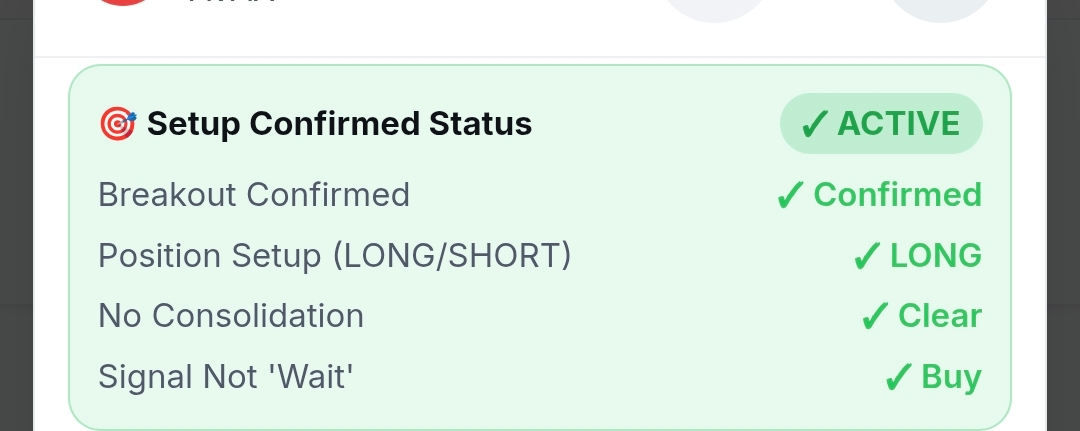
Avalanche is trading at **$7.97**, up 4.2% in 24 hours, holding above the critical $7.68 support. The setup screen shows a confirmed breakout, a LONG position, and a risk-reward of 1:1.5. But this isn't a momentum chase — this is a structural accumulation phase backed by real institutional capital.
---
THE FUNDAMENTAL FLOOR IS SOLIDIFYING
Three massive developments landed this week that change the long-term thesis.
Paxos integration went live on September 17. The regulated financial infrastructure platform now supports AVAX and Avalanche-native USDC for institutions and payment providers. Paxos serves 650+ institutions and 470 million end users. This is not an announcement of future work — the infrastructure is deployed and live.
ICE spent a full year testing Avalanche's tokenization technology. Ava Labs president John Wu revealed on September 18 that the parent company of the New York Stock Exchange ran a 12-month evaluation of Avalanche's subnet architecture for tokenized securities. No formal mandate has been signed, but the disclosure validates the technology at the highest level of traditional finance.
Janus Henderson is now an Avalanche validator. The asset manager with $300 million in on-chain assets under Tranched has joined the network as a validator, deepening institutional participation in network security.
---
THE STAKING ETF WAVE IS REAL
Bitwise, VanEck, and Grayscale launched spot AVAX ETFs with 70% of holdings staked, generating 5.4% annualized yield. Grayscale's GAVA stakes 81% of its AVAX. On September 16, these ETFs saw $1.57 million in daily net inflows — a reversal from the subdued activity seen recently. This is passive institutional demand that didn't exist a month ago.
---
THE TOKENOMICS REFORM IS THE SLEEPER CATALYST
On September 16, the Avalanche Foundation unveiled a new AVAX tokenomics framework at Summit 2026, covering value accumulation, issuance mechanisms, and validator incentives. Specific parameters and implementation timelines were not disclosed, but the framework signals a structural shift in how AVAX captures value. This is a forward-looking catalyst that the market is beginning to price in.
---
THE TECHNICALS: A BULLISH STRUCTURE WITH A VOLUME PROBLEM
Price sits above the 20 EMA at $7.4283** and the **200 EMA at $7.3147 — both now acting as dynamic support. The four-hour RSI reads 57.09, above neutral with room to run.
A bullish divergence appeared between September 13 and 16, signaling weakening selling pressure.
Resistance: $7.80 → $8.10 → $8.30 → $8.513 (setup screen). A break above $7.80 opens the door to retests of $8.10 and $8.30.
**Support:** $7.678 (moderate) → $7.4283 (20 EMA) → $7.3147 (200 EMA) → $6.50–$7.00 (critical zone).
The one caveat: volume is only moderate. Trading volume dropped 5.87% to $371.90 million, while open interest rose 5.91% to $288.28 million. Traders are adding positions without much price action — a sharp move in either direction could trigger volatility.
---
THE TRADE
Long entry: $7.96865 – $8.07382
Stop-loss: $7.44766
**Targets:** $8.8816 (TP1) → $9.23686 (TP2)
The setup is confirmed with a clear structure. The $7.68 support is the line in the sand. If AVAX holds above it and reclaims **$7.80** with volume, the path to $8.51** and beyond opens up. If it loses **$7.31 (200 EMA) on a daily close, the bullish structure is invalidated and the next major support is the $6.50–$7.00 zone.
---
THE VERDICT
Avalanche is quietly building the most institutionalized Layer-1 stack in the market. Paxos is live. ICE spent a year testing the tech. Janus Henderson is validating. The staking ETFs are pulling in fresh capital. The tokenomics reform is a forward catalyst.
This is not a hype trade. This is a structural accumulation phase with a confirmed breakout setup. Hold the support, and the breakout follows.
THE INSTITUTIONAL FLOOR IS BEING POURED — AND THE CHART IS COILING FOR A BREAKOUT
THE INSTITUTIONAL FLOOR IS BEING POURED — AND THE CHART IS COILING FOR A BREAKOUT
Avalanche is trading at **$7.97**, up 4.2% in 24 hours, holding above the critical $7.68 support. The setup screen shows a confirmed breakout, a LONG position, and a risk-reward of 1:1.5. But this isn't a momentum chase — this is a structural accumulation phase backed by real institutional capital.
---
THE FUNDAMENTAL FLOOR IS SOLIDIFYING
Three massive developments landed this week that change the long-term thesis.
Paxos integration went live on September 17. The regulated financial infrastructure platform now supports AVAX and Avalanche-native USDC for institutions and payment providers. Paxos serves 650+ institutions and 470 million end users. This is not an announcement of future work — the infrastructure is deployed and live.
ICE spent a full year testing Avalanche's tokenization technology. Ava Labs president John Wu revealed on September 18 that the parent company of the New York Stock Exchange ran a 12-month evaluation of Avalanche's subnet architecture for tokenized securities. No formal mandate has been signed, but the disclosure validates the technology at the highest level of traditional finance.
Janus Henderson is now an Avalanche validator. The asset manager with $300 million in on-chain assets under Tranched has joined the network as a validator, deepening institutional participation in network security.
---
THE STAKING ETF WAVE IS REAL
Bitwise, VanEck, and Grayscale launched spot AVAX ETFs with 70% of holdings staked, generating 5.4% annualized yield. Grayscale's GAVA stakes 81% of its AVAX. On September 16, these ETFs saw $1.57 million in daily net inflows — a reversal from the subdued activity seen recently. This is passive institutional demand that didn't exist a month ago.
---
THE TOKENOMICS REFORM IS THE SLEEPER CATALYST
On September 16, the Avalanche Foundation unveiled a new AVAX tokenomics framework at Summit 2026, covering value accumulation, issuance mechanisms, and validator incentives. Specific parameters and implementation timelines were not disclosed, but the framework signals a structural shift in how AVAX captures value. This is a forward-looking catalyst that the market is beginning to price in.
---
THE TECHNICALS: A BULLISH STRUCTURE WITH A VOLUME PROBLEM
Price sits above the 20 EMA at $7.4283** and the **200 EMA at $7.3147 — both now acting as dynamic support. The four-hour RSI reads 57.09, above neutral with room to run.
A bullish divergence appeared between September 13 and 16, signaling weakening selling pressure.
Resistance: $7.80 → $8.10 → $8.30 → $8.513 (setup screen). A break above $7.80 opens the door to retests of $8.10 and $8.30.
**Support:** $7.678 (moderate) → $7.4283 (20 EMA) → $7.3147 (200 EMA) → $6.50–$7.00 (critical zone).
The one caveat: volume is only moderate. Trading volume dropped 5.87% to $371.90 million, while open interest rose 5.91% to $288.28 million. Traders are adding positions without much price action — a sharp move in either direction could trigger volatility.
---
THE TRADE
Long entry: $7.96865 – $8.07382
Stop-loss: $7.44766
**Targets:** $8.8816 (TP1) → $9.23686 (TP2)
The setup is confirmed with a clear structure. The $7.68 support is the line in the sand. If AVAX holds above it and reclaims **$7.80** with volume, the path to $8.51** and beyond opens up. If it loses **$7.31 (200 EMA) on a daily close, the bullish structure is invalidated and the next major support is the $6.50–$7.00 zone.
---
THE VERDICT
Avalanche is quietly building the most institutionalized Layer-1 stack in the market. Paxos is live. ICE spent a year testing the tech. Janus Henderson is validating. The staking ETFs are pulling in fresh capital. The tokenomics reform is a forward catalyst.
This is not a hype trade. This is a structural accumulation phase with a confirmed breakout setup. Hold the support, and the breakout follows.
Avalanche is trading at **$7.97**, up 4.2% in 24 hours, holding above the critical $7.68 support. The setup screen shows a confirmed breakout, a LONG position, and a risk-reward of 1:1.5. But this isn't a momentum chase — this is a structural accumulation phase backed by real institutional capital.
---
THE FUNDAMENTAL FLOOR IS SOLIDIFYING
Three massive developments landed this week that change the long-term thesis.
Paxos integration went live on September 17. The regulated financial infrastructure platform now supports AVAX and Avalanche-native USDC for institutions and payment providers. Paxos serves 650+ institutions and 470 million end users. This is not an announcement of future work — the infrastructure is deployed and live.
ICE spent a full year testing Avalanche's tokenization technology. Ava Labs president John Wu revealed on September 18 that the parent company of the New York Stock Exchange ran a 12-month evaluation of Avalanche's subnet architecture for tokenized securities. No formal mandate has been signed, but the disclosure validates the technology at the highest level of traditional finance.
Janus Henderson is now an Avalanche validator. The asset manager with $300 million in on-chain assets under Tranched has joined the network as a validator, deepening institutional participation in network security.
---
THE STAKING ETF WAVE IS REAL
Bitwise, VanEck, and Grayscale launched spot AVAX ETFs with 70% of holdings staked, generating 5.4% annualized yield. Grayscale's GAVA stakes 81% of its AVAX. On September 16, these ETFs saw $1.57 million in daily net inflows — a reversal from the subdued activity seen recently. This is passive institutional demand that didn't exist a month ago.
---
THE TOKENOMICS REFORM IS THE SLEEPER CATALYST
On September 16, the Avalanche Foundation unveiled a new AVAX tokenomics framework at Summit 2026, covering value accumulation, issuance mechanisms, and validator incentives. Specific parameters and implementation timelines were not disclosed, but the framework signals a structural shift in how AVAX captures value. This is a forward-looking catalyst that the market is beginning to price in.
---
THE TECHNICALS: A BULLISH STRUCTURE WITH A VOLUME PROBLEM
Price sits above the 20 EMA at $7.4283** and the **200 EMA at $7.3147 — both now acting as dynamic support. The four-hour RSI reads 57.09, above neutral with room to run.
A bullish divergence appeared between September 13 and 16, signaling weakening selling pressure.
Resistance: $7.80 → $8.10 → $8.30 → $8.513 (setup screen). A break above $7.80 opens the door to retests of $8.10 and $8.30.
**Support:** $7.678 (moderate) → $7.4283 (20 EMA) → $7.3147 (200 EMA) → $6.50–$7.00 (critical zone).
The one caveat: volume is only moderate. Trading volume dropped 5.87% to $371.90 million, while open interest rose 5.91% to $288.28 million. Traders are adding positions without much price action — a sharp move in either direction could trigger volatility.
---
THE TRADE
Long entry: $7.96865 – $8.07382
Stop-loss: $7.44766
**Targets:** $8.8816 (TP1) → $9.23686 (TP2)
The setup is confirmed with a clear structure. The $7.68 support is the line in the sand. If AVAX holds above it and reclaims **$7.80** with volume, the path to $8.51** and beyond opens up. If it loses **$7.31 (200 EMA) on a daily close, the bullish structure is invalidated and the next major support is the $6.50–$7.00 zone.
---
THE VERDICT
Avalanche is quietly building the most institutionalized Layer-1 stack in the market. Paxos is live. ICE spent a year testing the tech. Janus Henderson is validating. The staking ETFs are pulling in fresh capital. The tokenomics reform is a forward catalyst.
This is not a hype trade. This is a structural accumulation phase with a confirmed breakout setup. Hold the support, and the breakout follows.
736
Article
THE PRIVACY TRADE IS NOT DEAD — IT'S JUST BREATHINGTHE PRIVACY TRADE IS NOT DEAD — IT'S JUST BREATHING
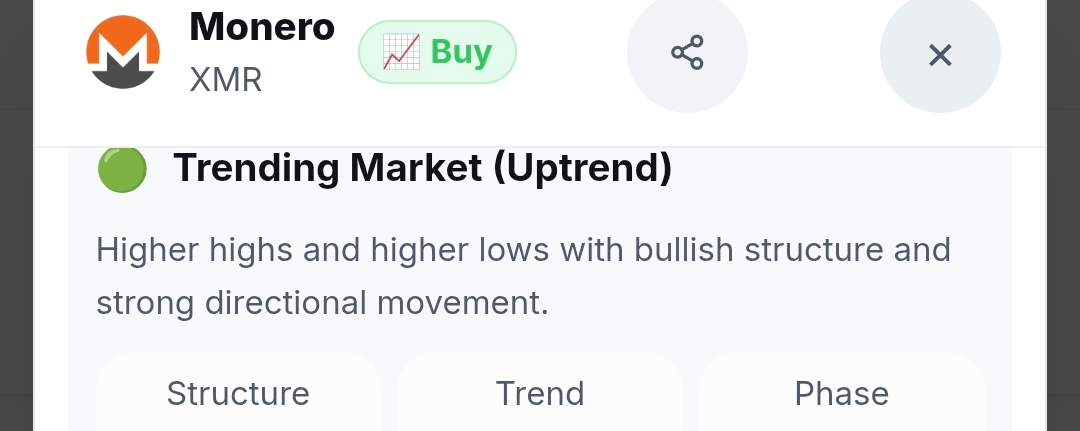
Monero is trading at **$533.63**, up roughly 3.5% in 24 hours, recovering from a sharp 12% correction from the $560 high earlier this week. The privacy coin narrative is intact, but the market is in a Choppy phase with Neutral structure and Redistribution characteristics. This is a battle zone, not a breakout.
---
THE FUNDAMENTAL CASE IS STRONGER THAN EVER
Privacy coins surged 213% collectively in 2026, making them the strongest-performing sector in Glassnode's latest crypto index. Monero is one of the few assets exceeding its October 2025 price, demonstrating relative strength that became visible during the late 2025 volatility.
THORChain has confirmed Monero trading will start soon on mainnet, following Zcash as a fast follow. This is a real infrastructure catalyst — deeper liquidity and cross-chain access for XMR.
The FCMP++ upgrade is expanding the anonymity set to 1.8 million traceable outputs, strengthening Monero's core privacy proposition.
---
TECHNICALS: THE LINES THAT MATTER
The $490–$500 zone is the critical support platform. It is not a random level — it is the base from which the September breakout originated. If this zone holds on a closing basis, the path back to $560** remains open, with the **$520 triangle resistance as the first hurdle to reclaim.
Support: $504 (moderate) → $490–$500 (critical platform) → $480.77 (dominant range low, invalidation)
Resistance: $541.47 (swing high) → $541.92–$541.98 (Fibonacci resistance zone) → $556.78 (dominant range high) → $576
The daily trend remains technically down, with a swing high at $541.47 still holding as resistance. Until that level breaks, this is a rally within the Dominant Range — not a confirmed trend reversal.
---
WHY THE PULLBACK HAPPENED
The correction was not driven by any Monero-specific protocol, listing, or security event. It was a momentum unwind. The breakout above $520 triggered systematic stop-loss buying above resistance, compressing demand into a short window. When that flow stopped, there was no accumulated spot bid underneath to defend higher prices. Price reverted to the last zone of real volume — $490 to $500.
The macro backdrop that fueled the initial rally — CPI-driven repricing across crypto — has cooled. Ethereum's 8% CPI pop faded, and laggard altcoins like XMR, which benefited from rotation buying, were the first to give back gains when BTC and ETH stalled.
---
THE REGULATORY CLOUD
The EU's AML regulation, effective July 2027, will prohibit regulated service providers from offering accounts for anonymized assets, explicitly naming Monero and Zcash. That is over a year away, and XMR's European trading access has already been significantly reduced through earlier delistings. This limits the incremental negative impact.
---
THE TRADE
The setup screen shows a LONG position with a risk-reward of 1:1.5. Entry zone is $531.58–$538.60, stop-loss at $488.88**, with targets at **$604.41 and $628.58. However, the breakout is not yet confirmed — one requirement remains unmet.
If price holds above $504** and reclaims **$541.47 with volume, the next leg toward $604–$628 opens up. If $490** breaks on a daily close, the bullish structure is invalidated and the next downside target is **$440–$450.
---
THE VERDICT
Monero has a real fundamental story: privacy demand is accelerating, THORChain integration is coming, and the FCMP++ upgrade strengthens the core protocol. But this is a wait-for-confirmation setup, not a chase. The $504 support is the line. Hold it, and the privacy trade breathes. Lose it, and the redistribution phase deepens.
Trade the breakout. Not the hope.
THE PRIVACY TRADE IS NOT DEAD — IT'S JUST BREATHING
THE PRIVACY TRADE IS NOT DEAD — IT'S JUST BREATHING
Monero is trading at **$533.63**, up roughly 3.5% in 24 hours, recovering from a sharp 12% correction from the $560 high earlier this week. The privacy coin narrative is intact, but the market is in a Choppy phase with Neutral structure and Redistribution characteristics. This is a battle zone, not a breakout.
---
THE FUNDAMENTAL CASE IS STRONGER THAN EVER
Privacy coins surged 213% collectively in 2026, making them the strongest-performing sector in Glassnode's latest crypto index. Monero is one of the few assets exceeding its October 2025 price, demonstrating relative strength that became visible during the late 2025 volatility.
THORChain has confirmed Monero trading will start soon on mainnet, following Zcash as a fast follow. This is a real infrastructure catalyst — deeper liquidity and cross-chain access for XMR.
The FCMP++ upgrade is expanding the anonymity set to 1.8 million traceable outputs, strengthening Monero's core privacy proposition.
---
TECHNICALS: THE LINES THAT MATTER
The $490–$500 zone is the critical support platform. It is not a random level — it is the base from which the September breakout originated. If this zone holds on a closing basis, the path back to $560** remains open, with the **$520 triangle resistance as the first hurdle to reclaim.
Support: $504 (moderate) → $490–$500 (critical platform) → $480.77 (dominant range low, invalidation)
Resistance: $541.47 (swing high) → $541.92–$541.98 (Fibonacci resistance zone) → $556.78 (dominant range high) → $576
The daily trend remains technically down, with a swing high at $541.47 still holding as resistance. Until that level breaks, this is a rally within the Dominant Range — not a confirmed trend reversal.
---
WHY THE PULLBACK HAPPENED
The correction was not driven by any Monero-specific protocol, listing, or security event. It was a momentum unwind. The breakout above $520 triggered systematic stop-loss buying above resistance, compressing demand into a short window. When that flow stopped, there was no accumulated spot bid underneath to defend higher prices. Price reverted to the last zone of real volume — $490 to $500.
The macro backdrop that fueled the initial rally — CPI-driven repricing across crypto — has cooled. Ethereum's 8% CPI pop faded, and laggard altcoins like XMR, which benefited from rotation buying, were the first to give back gains when BTC and ETH stalled.
---
THE REGULATORY CLOUD
The EU's AML regulation, effective July 2027, will prohibit regulated service providers from offering accounts for anonymized assets, explicitly naming Monero and Zcash. That is over a year away, and XMR's European trading access has already been significantly reduced through earlier delistings. This limits the incremental negative impact.
---
THE TRADE
The setup screen shows a LONG position with a risk-reward of 1:1.5. Entry zone is $531.58–$538.60, stop-loss at $488.88**, with targets at **$604.41 and $628.58. However, the breakout is not yet confirmed — one requirement remains unmet.
If price holds above $504** and reclaims **$541.47 with volume, the next leg toward $604–$628 opens up. If $490** breaks on a daily close, the bullish structure is invalidated and the next downside target is **$440–$450.
---
THE VERDICT
Monero has a real fundamental story: privacy demand is accelerating, THORChain integration is coming, and the FCMP++ upgrade strengthens the core protocol. But this is a wait-for-confirmation setup, not a chase. The $504 support is the line. Hold it, and the privacy trade breathes. Lose it, and the redistribution phase deepens.
Trade the breakout. Not the hope.
Monero is trading at **$533.63**, up roughly 3.5% in 24 hours, recovering from a sharp 12% correction from the $560 high earlier this week. The privacy coin narrative is intact, but the market is in a Choppy phase with Neutral structure and Redistribution characteristics. This is a battle zone, not a breakout.
---
THE FUNDAMENTAL CASE IS STRONGER THAN EVER
Privacy coins surged 213% collectively in 2026, making them the strongest-performing sector in Glassnode's latest crypto index. Monero is one of the few assets exceeding its October 2025 price, demonstrating relative strength that became visible during the late 2025 volatility.
THORChain has confirmed Monero trading will start soon on mainnet, following Zcash as a fast follow. This is a real infrastructure catalyst — deeper liquidity and cross-chain access for XMR.
The FCMP++ upgrade is expanding the anonymity set to 1.8 million traceable outputs, strengthening Monero's core privacy proposition.
---
TECHNICALS: THE LINES THAT MATTER
The $490–$500 zone is the critical support platform. It is not a random level — it is the base from which the September breakout originated. If this zone holds on a closing basis, the path back to $560** remains open, with the **$520 triangle resistance as the first hurdle to reclaim.
Support: $504 (moderate) → $490–$500 (critical platform) → $480.77 (dominant range low, invalidation)
Resistance: $541.47 (swing high) → $541.92–$541.98 (Fibonacci resistance zone) → $556.78 (dominant range high) → $576
The daily trend remains technically down, with a swing high at $541.47 still holding as resistance. Until that level breaks, this is a rally within the Dominant Range — not a confirmed trend reversal.
---
WHY THE PULLBACK HAPPENED
The correction was not driven by any Monero-specific protocol, listing, or security event. It was a momentum unwind. The breakout above $520 triggered systematic stop-loss buying above resistance, compressing demand into a short window. When that flow stopped, there was no accumulated spot bid underneath to defend higher prices. Price reverted to the last zone of real volume — $490 to $500.
The macro backdrop that fueled the initial rally — CPI-driven repricing across crypto — has cooled. Ethereum's 8% CPI pop faded, and laggard altcoins like XMR, which benefited from rotation buying, were the first to give back gains when BTC and ETH stalled.
---
THE REGULATORY CLOUD
The EU's AML regulation, effective July 2027, will prohibit regulated service providers from offering accounts for anonymized assets, explicitly naming Monero and Zcash. That is over a year away, and XMR's European trading access has already been significantly reduced through earlier delistings. This limits the incremental negative impact.
---
THE TRADE
The setup screen shows a LONG position with a risk-reward of 1:1.5. Entry zone is $531.58–$538.60, stop-loss at $488.88**, with targets at **$604.41 and $628.58. However, the breakout is not yet confirmed — one requirement remains unmet.
If price holds above $504** and reclaims **$541.47 with volume, the next leg toward $604–$628 opens up. If $490** breaks on a daily close, the bullish structure is invalidated and the next downside target is **$440–$450.
---
THE VERDICT
Monero has a real fundamental story: privacy demand is accelerating, THORChain integration is coming, and the FCMP++ upgrade strengthens the core protocol. But this is a wait-for-confirmation setup, not a chase. The $504 support is the line. Hold it, and the privacy trade breathes. Lose it, and the redistribution phase deepens.
Trade the breakout. Not the hope.
496
$BNB
{future}(BNBUSDT)
— BULLISH BREAKOUT, PULLBACK BUY ZONE!
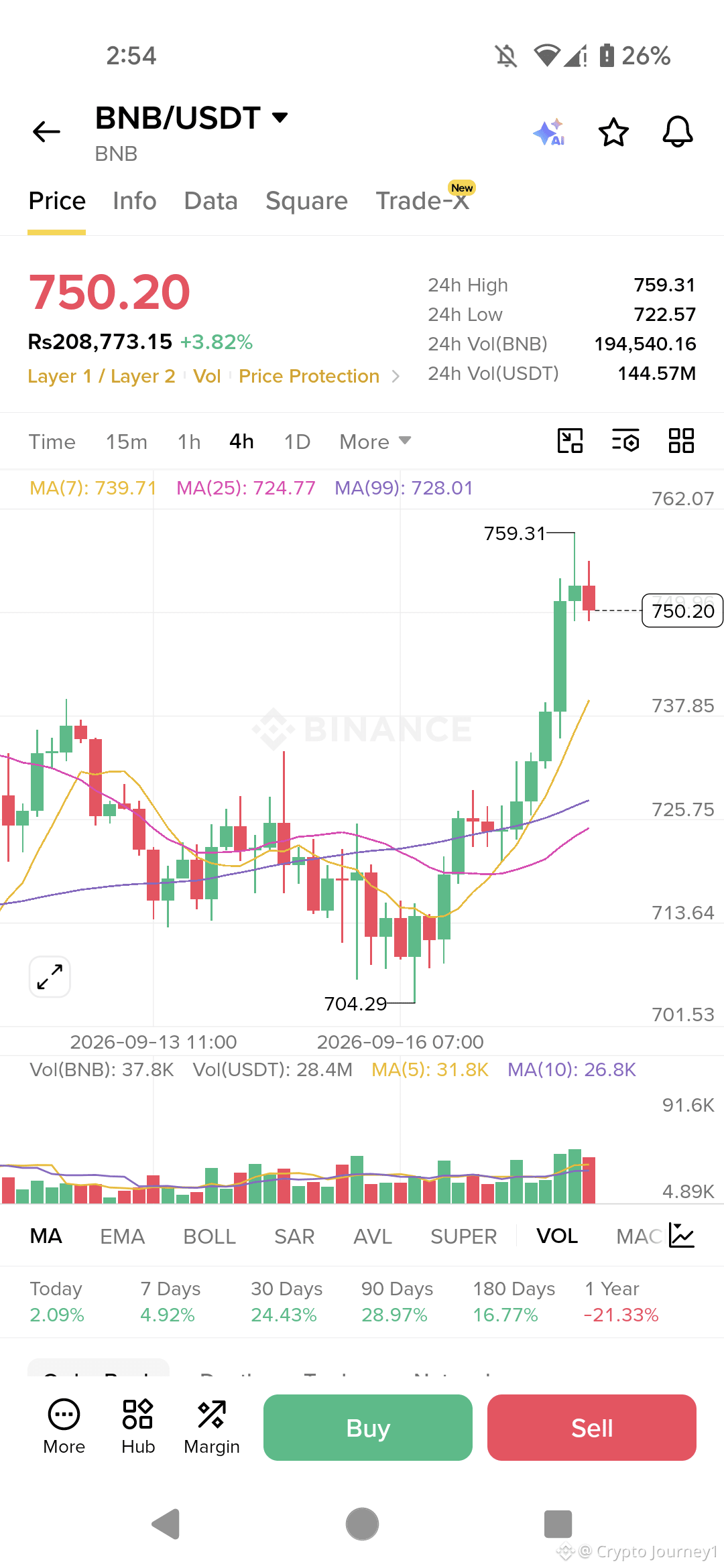
BNB is up 3.82% at $750.20. Price is holding above all major moving averages — MA7 at $739.71, MA25 at $724.77, and MA99 at $728.01. The 4H chart shows a strong rally from $704 to $759, and the current pullback looks like a healthy retest.
Key Levels:
· Immediate Resistance: $759.31 (24h high)
· Next Resistance: $780 / $800
· Immediate Support: $739.71 (MA7)
· Strong Support: $724.77 (MA25)
· Critical Support: $704.29 (recent low)
Plan:
· LONG: Entry at $745 – $752. Targets: $780, $820, $880, $950, $1050. Stop-loss: $720.
· SHORT: Only if price breaks below $739 with volume. Targets: $725, $710, $690, $650. Stop-loss: $760.
Final Word: Trend is bullish. A clean break above $759 with volume could send BNB to $800 and beyond. If it rejects, expect a pullback to $725. Don't chase — wait for confirmation.
Personal analysis only — not financial advice. Always DYOR.
$BNB
— BULLISH BREAKOUT, PULLBACK BUY ZONE!
BNB is up 3.82% at $750.20. Price is holding above all major moving averages — MA7 at $739.71, MA25 at $724.77, and MA99 at $728.01. The 4H chart shows a strong rally from $704 to $759, and the current pullback looks like a healthy retest.
Key Levels:
· Immediate Resistance: $759.31 (24h high)
· Next Resistance: $780 / $800
· Immediate Support: $739.71 (MA7)
· Strong Support: $724.77 (MA25)
· Critical Support: $704.29 (recent low)
Plan:
· LONG: Entry at $745 – $752. Targets: $780, $820, $880, $950, $1050. Stop-loss: $720.
· SHORT: Only if price breaks below $739 with volume. Targets: $725, $710, $690, $650. Stop-loss: $760.
Final Word: Trend is bullish. A clean break above $759 with volume could send BNB to $800 and beyond. If it rejects, expect a pullback to $725. Don't chase — wait for confirmation.
Personal analysis only — not financial advice. Always DYOR.
— BULLISH BREAKOUT, PULLBACK BUY ZONE!
BNB is up 3.82% at $750.20. Price is holding above all major moving averages — MA7 at $739.71, MA25 at $724.77, and MA99 at $728.01. The 4H chart shows a strong rally from $704 to $759, and the current pullback looks like a healthy retest.
Key Levels:
· Immediate Resistance: $759.31 (24h high)
· Next Resistance: $780 / $800
· Immediate Support: $739.71 (MA7)
· Strong Support: $724.77 (MA25)
· Critical Support: $704.29 (recent low)
Plan:
· LONG: Entry at $745 – $752. Targets: $780, $820, $880, $950, $1050. Stop-loss: $720.
· SHORT: Only if price breaks below $739 with volume. Targets: $725, $710, $690, $650. Stop-loss: $760.
Final Word: Trend is bullish. A clean break above $759 with volume could send BNB to $800 and beyond. If it rejects, expect a pullback to $725. Don't chase — wait for confirmation.
Personal analysis only — not financial advice. Always DYOR.
1
1
1
523
$ARK pumped to 0.214 then dumped hard. Now at 0.1503, down 21.8%. Price is below MA7, showing weakness. Volume fading. Looks like more downside.
SHORT: Entry 0.150 – 0.155. SL 0.170. TP1 0.143, TP2 0.130, TP3 0.122, TP4 0.110.
If it reclaims 0.170 with volume, flip long. Long targets: 0.200, 0.214, 0.250.
Don't chase. Wait for confirmation. Manage risk.
$ARK pumped to 0.214 then dumped hard. Now at 0.1503, down 21.8%. Price is below MA7, showing weakness. Volume fading. Looks like more downside.
SHORT: Entry 0.150 – 0.155. SL 0.170. TP1 0.143, TP2 0.130, TP3 0.122, TP4 0.110.
If it reclaims 0.170 with volume, flip long. Long targets: 0.200, 0.214, 0.250.
Don't chase. Wait for confirmation. Manage risk.
SHORT: Entry 0.150 – 0.155. SL 0.170. TP1 0.143, TP2 0.130, TP3 0.122, TP4 0.110.
If it reclaims 0.170 with volume, flip long. Long targets: 0.200, 0.214, 0.250.
Don't chase. Wait for confirmation. Manage risk.
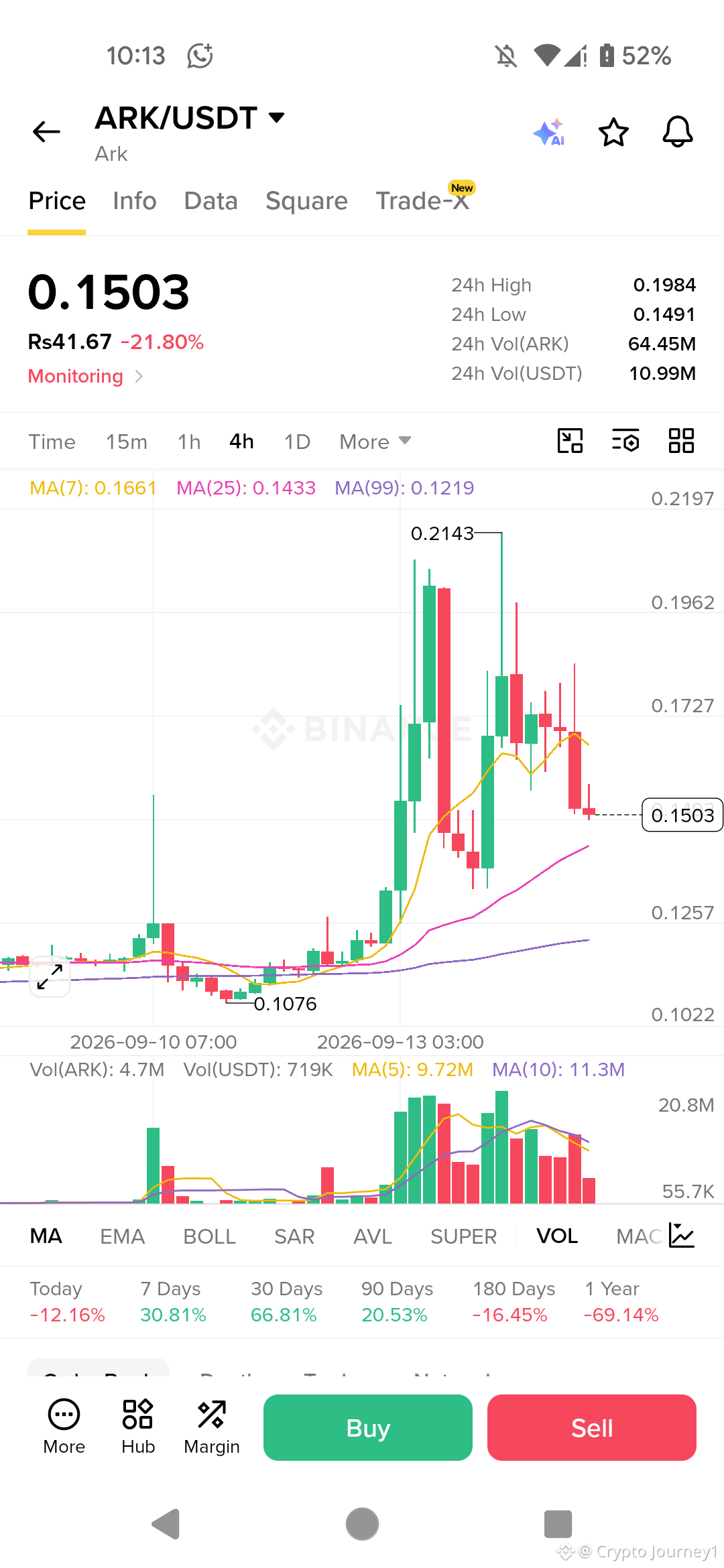
1
321
$CVC — Pumped & Dumped! Short Setup!
CVC spiked to 0.05094, now rejected hard at 0.03211 (-23.4%). Price below MA7, bearish.
SHORT:
Entry: 0.032 – 0.034
SL: 0.040
TP1: 0.025
TP2: 0.020
TP3: 0.015
TP4: 0.010
If breaks above 0.040 with volume, flip long.
LONG targets: 0.060 – 0.080 – 0.100 – 0.150
Don't chase. Wait for confirmation.
$CVC — Pumped & Dumped! Short Setup!
CVC spiked to 0.05094, now rejected hard at 0.03211 (-23.4%). Price below MA7, bearish.
SHORT:
Entry: 0.032 – 0.034
SL: 0.040
TP1: 0.025
TP2: 0.020
TP3: 0.015
TP4: 0.010
If breaks above 0.040 with volume, flip long.
LONG targets: 0.060 – 0.080 – 0.100 – 0.150
Don't chase. Wait for confirmation.
CVC spiked to 0.05094, now rejected hard at 0.03211 (-23.4%). Price below MA7, bearish.
SHORT:
Entry: 0.032 – 0.034
SL: 0.040
TP1: 0.025
TP2: 0.020
TP3: 0.015
TP4: 0.010
If breaks above 0.040 with volume, flip long.
LONG targets: 0.060 – 0.080 – 0.100 – 0.150
Don't chase. Wait for confirmation.
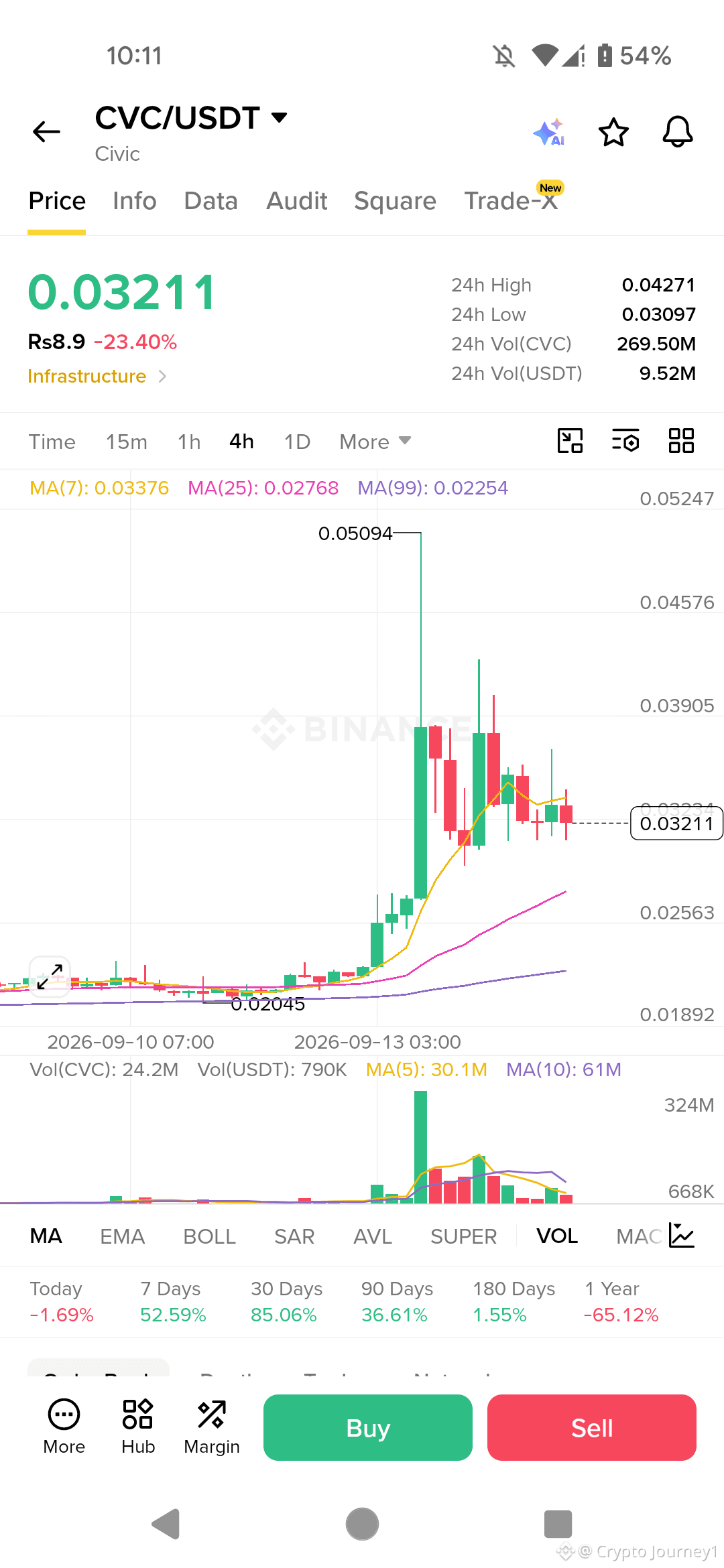
1
1
588
$FIL — Pumped to 1.03, now pulling back to 0.99. Bullish trend still intact. Buy the dip.
LONG:
Entry: 0.96 – 0.98
SL: 0.90
TP1: 1.10
TP2: 1.25
TP3: 1.50
TP4: 2.00
If breaks below 0.90, flip short.
SHORT targets: 0.85 – 0.80 – 0.75
Wait for confirmation. Don't chase.
⚠️ Personal analysis only — not financial advice. Always DYOR.
$FIL — Pumped to 1.03, now pulling back to 0.99. Bullish trend still intact. Buy the dip.
LONG:
Entry: 0.96 – 0.98
SL: 0.90
TP1: 1.10
TP2: 1.25
TP3: 1.50
TP4: 2.00
If breaks below 0.90, flip short.
SHORT targets: 0.85 – 0.80 – 0.75
Wait for confirmation. Don't chase.
⚠️ Personal analysis only — not financial advice. Always DYOR.
LONG:
Entry: 0.96 – 0.98
SL: 0.90
TP1: 1.10
TP2: 1.25
TP3: 1.50
TP4: 2.00
If breaks below 0.90, flip short.
SHORT targets: 0.85 – 0.80 – 0.75
Wait for confirmation. Don't chase.
⚠️ Personal analysis only — not financial advice. Always DYOR.
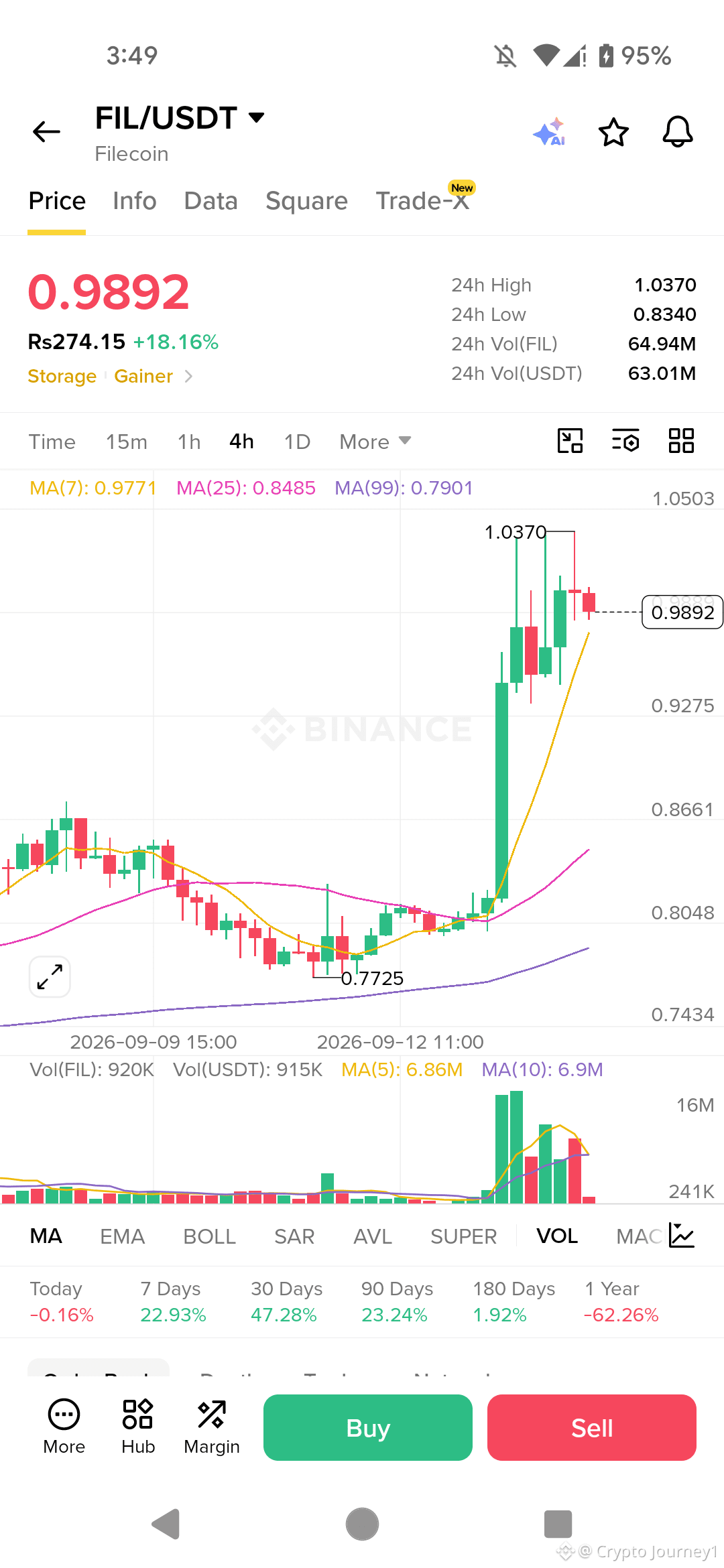
1
598
Article
THE SECURITY TOKEN THAT'S FAILING ITS OWN SECURITY TEST$GPS Security just got hammered. Down 13.51% today to $0.00967. Hit a high of $0.01291, then collapsed. The chart is a textbook distribution pattern — whales selling into retail FOMO.
---
THE FUNDAMENTALS (REAL BUT NOT ENOUGH)
GoPlus is the Web3 security layer. OKX Wallet integrated it. Claw Wallet integrated it. Owlto integrated it. DeepScan got an AI upgrade in August. Real product. Real revenue. Real users.
But here is the problem. None of that matters when the supply is expanding.
---
THE TOKEN UNLOCK IS 4 DAYS AWAY
On September 16, 109.25 million GPS tokens will unlock. Worth approximately $1.26 million. That is 2.5% of current market cap hitting the market in one shot. Historical data shows past GPS unlock windows averaged a 13.6% drop in the first week.
The pattern is simple. Unlock comes. Price dumps. Repeat.
---
THE TEAM SOLD THE TOP
On August 18, GPS surged 50%+ on whale accumulation. But while retail was buying, wallets allegedly connected to the project team were distributing and selling. OKX Ventures transferred 48.61 million GPS to Binance — worth $750K — right after a key unlock.
That is not confidence. That is exit liquidity.
---
THE TECHNICALS (BEARISH STRUCTURE CONFIRMED)
Price is trading below MA7 at $0.01045, MA25 at $0.01127, and MA99 at $0.01040. All three moving averages are above price. That is a clean bearish alignment.
Resistance: $0.01045 (MA7) → $0.01127 (MA25) → $0.01291 (local top)
**Support:** $0.00937 (24h low) → $0.00920 → $0.00850 (pre-pump base)
Volume is thin at $2.02M USDT. One whale can move this token 10% in either direction. The 24h high of $0.01134 was rejected hard — the sellers are in control.
---
THE TRADE
Short entry: $0.00970 – $0.00990
Stop-loss: $0.01050
**Targets:** $0.00920 → $0.00880 → $0.00850
If GPS reclaims $0.01050 with volume, short invalid. If it holds below $0.00950, the next leg down targets $0.00920, then the pre-pump base at $0.00850.
---
THE VERDICT
GoPlus has a real product. The security layer is legit. The integrations are real. But this token has a structural supply problem. Unlocks keep coming. The team keeps selling. And the chart keeps making lower highs.
The September 16 unlock is the catalyst. The market knows it's coming. The smart money is already positioned short.
THE SECURITY TOKEN THAT'S FAILING ITS OWN SECURITY TEST
$GPS Security just got hammered. Down 13.51% today to $0.00967. Hit a high of $0.01291, then collapsed. The chart is a textbook distribution pattern — whales selling into retail FOMO.
---
THE FUNDAMENTALS (REAL BUT NOT ENOUGH)
GoPlus is the Web3 security layer. OKX Wallet integrated it. Claw Wallet integrated it. Owlto integrated it. DeepScan got an AI upgrade in August. Real product. Real revenue. Real users.
But here is the problem. None of that matters when the supply is expanding.
---
THE TOKEN UNLOCK IS 4 DAYS AWAY
On September 16, 109.25 million GPS tokens will unlock. Worth approximately $1.26 million. That is 2.5% of current market cap hitting the market in one shot. Historical data shows past GPS unlock windows averaged a 13.6% drop in the first week.
The pattern is simple. Unlock comes. Price dumps. Repeat.
---
THE TEAM SOLD THE TOP
On August 18, GPS surged 50%+ on whale accumulation. But while retail was buying, wallets allegedly connected to the project team were distributing and selling. OKX Ventures transferred 48.61 million GPS to Binance — worth $750K — right after a key unlock.
That is not confidence. That is exit liquidity.
---
THE TECHNICALS (BEARISH STRUCTURE CONFIRMED)
Price is trading below MA7 at $0.01045, MA25 at $0.01127, and MA99 at $0.01040. All three moving averages are above price. That is a clean bearish alignment.
Resistance: $0.01045 (MA7) → $0.01127 (MA25) → $0.01291 (local top)
**Support:** $0.00937 (24h low) → $0.00920 → $0.00850 (pre-pump base)
Volume is thin at $2.02M USDT. One whale can move this token 10% in either direction. The 24h high of $0.01134 was rejected hard — the sellers are in control.
---
THE TRADE
Short entry: $0.00970 – $0.00990
Stop-loss: $0.01050
**Targets:** $0.00920 → $0.00880 → $0.00850
If GPS reclaims $0.01050 with volume, short invalid. If it holds below $0.00950, the next leg down targets $0.00920, then the pre-pump base at $0.00850.
---
THE VERDICT
GoPlus has a real product. The security layer is legit. The integrations are real. But this token has a structural supply problem. Unlocks keep coming. The team keeps selling. And the chart keeps making lower highs.
The September 16 unlock is the catalyst. The market knows it's coming. The smart money is already positioned short.
---
THE FUNDAMENTALS (REAL BUT NOT ENOUGH)
GoPlus is the Web3 security layer. OKX Wallet integrated it. Claw Wallet integrated it. Owlto integrated it. DeepScan got an AI upgrade in August. Real product. Real revenue. Real users.
But here is the problem. None of that matters when the supply is expanding.
---
THE TOKEN UNLOCK IS 4 DAYS AWAY
On September 16, 109.25 million GPS tokens will unlock. Worth approximately $1.26 million. That is 2.5% of current market cap hitting the market in one shot. Historical data shows past GPS unlock windows averaged a 13.6% drop in the first week.
The pattern is simple. Unlock comes. Price dumps. Repeat.
---
THE TEAM SOLD THE TOP
On August 18, GPS surged 50%+ on whale accumulation. But while retail was buying, wallets allegedly connected to the project team were distributing and selling. OKX Ventures transferred 48.61 million GPS to Binance — worth $750K — right after a key unlock.
That is not confidence. That is exit liquidity.
---
THE TECHNICALS (BEARISH STRUCTURE CONFIRMED)
Price is trading below MA7 at $0.01045, MA25 at $0.01127, and MA99 at $0.01040. All three moving averages are above price. That is a clean bearish alignment.
Resistance: $0.01045 (MA7) → $0.01127 (MA25) → $0.01291 (local top)
**Support:** $0.00937 (24h low) → $0.00920 → $0.00850 (pre-pump base)
Volume is thin at $2.02M USDT. One whale can move this token 10% in either direction. The 24h high of $0.01134 was rejected hard — the sellers are in control.
---
THE TRADE
Short entry: $0.00970 – $0.00990
Stop-loss: $0.01050
**Targets:** $0.00920 → $0.00880 → $0.00850
If GPS reclaims $0.01050 with volume, short invalid. If it holds below $0.00950, the next leg down targets $0.00920, then the pre-pump base at $0.00850.
---
THE VERDICT
GoPlus has a real product. The security layer is legit. The integrations are real. But this token has a structural supply problem. Unlocks keep coming. The team keeps selling. And the chart keeps making lower highs.
The September 16 unlock is the catalyst. The market knows it's coming. The smart money is already positioned short.
796
Log in to explore more content
Join global crypto users on Binance Square
⚡️ Get latest and useful information about crypto.
💬 Trusted by the world’s largest crypto exchange.
👍 Discover real insights from verified creators.
Email / Phone number
Trending Topics
BOJRaisesRatesTo31YearHigh
76,129 views
1,216 Discussing
#bojraisesratesto31yearhigh ¿The BOJ at 31-year highs and Bitcoin rising? The institutional maturity of $BTC in a single chart 🇯🇵📈⚡
The Bank of Japan raised its rate to 1.25% (a historic high in more than three decades), and what many expected as a carry-trade collapse instead showed the cleanest strength in the crypto market.
🧠 3 key takeaways from the technical desk:
1️⃣ Macro Decoupling: The yen didn’t strengthen as traditional analysts had projected, and BTC responded with a strong rebound, showing that Spot demand remains intact.
2️⃣ Beating tech giants: With a market cap of over $1.63 trillion, Bitcoin is once again ahead of Tesla ($1.438B), reaffirming its role as a reserve asset and global liquidity refuge.
3️⃣ Structure in 4H and 1D: Absorption at support levels confirms that macro pullbacks are institutional accumulation windows, not capitulation.
$While retail panics over interest-rate headlines, professional management continues to track real liquidity. 💎🛡️
💬 Community debate: Do you think this decoupling confirms the start of the final leg of the bull cycle toward new all-time highs, or will global liquidity still test the supports? Share your analysis below! 👇🔥
#bojraisesratesto31yearhigh #MacroEconomy #Trading #BinanceSquare
Jacktraders
·1 Likes
·6.1k views
BuffettStepsDownAsBerkshireChairman
34,384 views
574 Discussing
XRPExchangeReservesHitSevenYearLow
39,593 views
535 Discussing