
Jessica Rendon
56 Posts

Jessica Rendon
Report
Block User
Open Trade
High-Frequency Trader
8.7 Years
8 Following
197 Followers
262 Liked
Posts
Portfolio
All
Quotes
What is SAR and how can it help you improve your entries?
SAR stands for Stop And Reverse.
It is an indicator that places dots above or below the candles to show you the possible change in direction of the price.
Visual, quick, and useful. But be careful: it is not a crystal ball.
How is it read?
🔸 If the dots are below the candle: bullish trend.
🔸 If the dots are above the candle: bearish trend.
It’s like a visual traffic light that helps you see if the market remains strong or if it starts to breathe or change.
How do I use it?
✅ First, I look at 8H and 1D to see the general trend.
✅ Then I switch to 4H and 2H to check if the SAR confirms that direction.
✅ Finally, I use 1H to fine-tune the entry, but only if all the previous steps are coherent.
This way I avoid entering just when the market is about to pull back.
⚠️ Don't make this mistake:
Do not use SAR alone, without context.
It works much better when you combine it with supports, resistances, or with the price structure.
$USDC $FLOKI
{spot}(FLOKIUSDT)
What is SAR and how can it help you improve your entries?
SAR stands for Stop And Reverse.
It is an indicator that places dots above or below the candles to show you the possible change in direction of the price.
Visual, quick, and useful. But be careful: it is not a crystal ball.
How is it read?
🔸 If the dots are below the candle: bullish trend.
🔸 If the dots are above the candle: bearish trend.
It’s like a visual traffic light that helps you see if the market remains strong or if it starts to breathe or change.
How do I use it?
✅ First, I look at 8H and 1D to see the general trend.
✅ Then I switch to 4H and 2H to check if the SAR confirms that direction.
✅ Finally, I use 1H to fine-tune the entry, but only if all the previous steps are coherent.
This way I avoid entering just when the market is about to pull back.
⚠️ Don't make this mistake:
Do not use SAR alone, without context.
It works much better when you combine it with supports, resistances, or with the price structure.
$USDC $FLOKI
2
105
Are you just starting in trading?
You need to understand this: timeframes change everything.
When you look at a chart, you are not seeing the real market...
you are seeing a version of it, according to the timeframe you choose.
⏱️ 1H → Each candle shows one hour.
⏱️ 2H → Each candle summarizes two hours.
⏱️ 4H, 8H, 1D… the same.
Why does this matter?
Because an entry that looks clear on 1H
can be going against the larger trend on 4H or D1.
And if you only look at one timeframe… you fall into false signals.
👉🏽 Practical tip if you are starting:
🔍 Use multiple timeframes.
For example:
✨ I look at 8H and daily (1D) to see the main trend
✨ And I use 2H or 1H to refine my entries
This ensures I do not enter right into a market breath when everything in the larger timeframe is going up or down.
💬 Are you already using multiple timeframes in your analysis?
$BTC $HUMA
1
2
178
Start by understanding what each word means in crypto, spot, futures, stop, take profit, resistances, supports, and strategies, and invest only what you can afford to lose.
Start by understanding what each word means in crypto, spot, futures, stop, take profit, resistances, supports, and strategies, and invest only what you can afford to lose.

Johanna Arteaga
·
--
I want to learn, but I don't know how
1
15
Investing in new tokens? 🎲
Yes, they can generate quick profits…
but also equally quick losses.
They have no history, no clear floor, and not much stability.
👉 If you decide to enter, let it be with a very small percentage.
One that you can afford to lose.
Sometimes it's just out of curiosity or for fun, and that's okay…
but don't put at risk what you have worked hard to build.
In crypto, patience also pays off.
Comment 🎯 if you also prefer to study before betting.
{future}(NAORISUSDT)
Investing in new tokens? 🎲
Yes, they can generate quick profits…
but also equally quick losses.
They have no history, no clear floor, and not much stability.
👉 If you decide to enter, let it be with a very small percentage.
One that you can afford to lose.
Sometimes it's just out of curiosity or for fun, and that's okay…
but don't put at risk what you have worked hard to build.
In crypto, patience also pays off.
Comment 🎯 if you also prefer to study before betting.
1
152
Did you lose on your first investment? Welcome. You are not alone.
What they don't tell you is that investing without ever losing doesn't exist.
Especially when you are starting without a strategy, without emotional control, and following recommendations from others without fully understanding.
👉 Losing at the beginning doesn't make you bad.
👉 Ignoring the loss and continuing the same way does.
What matters is how you respond afterwards:
📌 Do you write down what you did?
📌 Do you take the time to understand why?
📌 Do you educate yourself instead of just putting in more money?
In crypto, it's not the one who risks the most that wins.
It's the one who learns the most every time they fall.
$BTC $USDT
1
122
If you're starting in crypto, it's normal to lose. Even if we don't like it.
And no, it's not because it's 'time' to lose. It's because:
🔹 You're learning to manage risk.
🔹 You still haven't mastered your impulses.
🔹 You enter without a plan, exit with anxiety.
🔹 You make decisions without understanding the context.
It's not your fault; it's part of the process if you don't train beforehand.
What's important is not to avoid losing 100% of the time.
The key is to lose less, learn quickly, and correct better.
💡 If you lost, stop. Ask yourself:
→ What did I need to know?
→ What was the emotion that made me enter or exit?
That already puts you 10 steps ahead of the average.
Follow me so we can learn together!
$HUMA $ESPORTS
1
1
3
745
What is a divergence in the RSI and how do you see it?
Imagine that the price is rising... but the RSI is no longer following. The price hits a new high, but the RSI does not. That is a bearish divergence and is often a signal that the momentum is weakening, that the price "is rising but not with strength anymore" and a drop might be coming soon.
Now the reverse: the price is falling and falling, but the RSI starts to rise. The market is declining, but the RSI says: "not with as much strength anymore." That is a bullish divergence and can anticipate a rise.
How do you see it?
1. Open your chart (it can be on 4H, D1, or wherever you trade).
2. Add the RSI indicator (use the default value of 14).
3. Draw two lines:
One on the price (connecting the last two lows or highs).
And another on the RSI (at the same points).
4. If the lines go in opposite directions, that is a divergence.
Example to make it easy:
The price makes two peaks: one at 20 thousand and another at 21 thousand.
But the RSI at those peaks goes from 70 to 65.
Is the price rising? Yes.
Is the RSI rising? No.
Then that is a bearish divergence.
Of course, here’s a simple explanation, as if we were chatting:
💡 What can happen when there is a divergence?
It’s not magic, but often it is a signal that the price is about to turn or that the momentum is running out. It serves to stay alert, not to jump into trading without a plan.
If you are starting, look at it as a warning:
👉 "Watch out, what you see is not all that there is."
$ESPORTS
{future}(ESPORTSUSDT)
What is a divergence in the RSI and how do you see it?
Imagine that the price is rising... but the RSI is no longer following. The price hits a new high, but the RSI does not. That is a bearish divergence and is often a signal that the momentum is weakening, that the price "is rising but not with strength anymore" and a drop might be coming soon.
Now the reverse: the price is falling and falling, but the RSI starts to rise. The market is declining, but the RSI says: "not with as much strength anymore." That is a bullish divergence and can anticipate a rise.
How do you see it?
1. Open your chart (it can be on 4H, D1, or wherever you trade).
2. Add the RSI indicator (use the default value of 14).
3. Draw two lines:
One on the price (connecting the last two lows or highs).
And another on the RSI (at the same points).
4. If the lines go in opposite directions, that is a divergence.
Example to make it easy:
The price makes two peaks: one at 20 thousand and another at 21 thousand.
But the RSI at those peaks goes from 70 to 65.
Is the price rising? Yes.
Is the RSI rising? No.
Then that is a bearish divergence.
Of course, here’s a simple explanation, as if we were chatting:
💡 What can happen when there is a divergence?
It’s not magic, but often it is a signal that the price is about to turn or that the momentum is running out. It serves to stay alert, not to jump into trading without a plan.
If you are starting, look at it as a warning:
👉 "Watch out, what you see is not all that there is."
$ESPORTS
3
579
Why do you see sales clearer than purchases?
This happens to more traders than you think.
When you short, you expect the price to fall, and that usually happens faster and with more strength due to the fear that moves the market.
🔍 But if you find it difficult to find the ideal point when buying, you might be entering too early or without confirming the structure.
👉 Practical tip:
$BNB
Before buying, wait for the price to break a previous resistance and turn it into support. That validates that there is real strength, not just a technical bounce.
💡 Mini strategy for practicing purchases
1. Wait for confirmation, not just a low price:
Use previous supports + a bullish engulfing candle or hammer.
You can add RSI below 30 moving upwards.
2. Look at the structure:
Is it making higher lows?
Is the volume increasing when the price goes up and decreasing when the price goes down? That's a good sign for purchases.
3. Train in demo with only purchases:
Have practice sessions where you only look for long entries, without trading shorts, so you train your eye without bias.
💡 Remember: the price can be cheap and still drop further. What matters is not whether it is low, but whether it is rising with strength.
Comment 📉 if this has ever happened to you.
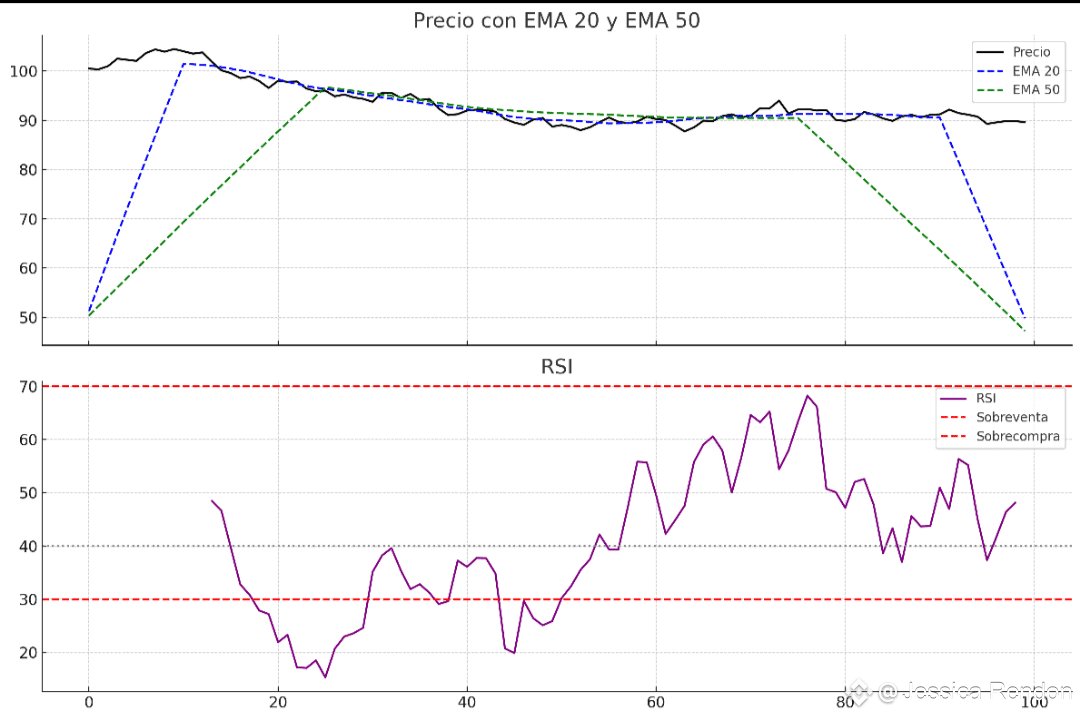
#trading #crypto #spot #futures #technicalAnalysis
136
💡Simple strategy: gain clarity with your crypto investment
Before investing a single peso in crypto, ask yourself this question:
👉 Do I want to make quick profits or build long-term?
🎯 If your answer is:
A) "Make quick profits" → You need time, training, and nerves of steel (trading).
B) "Build long-term" → Choose 2-3 solid projects and use DCA strategy (periodic calm investment).
❌ Mixing both usually leads to chaos: you buy high, sell out of fear, or lose sight of your goals.
✅ Choose your style and be consistent. That is the true strategy.
$HUMA $WCT
2
168
Differences between SPOT and FUTURES
📍Trading in SPOT
It's like going to the market and buying an apple.
You pay for it and take it home instantly.
👉 In crypto, this means you buy an asset (like BTC or ETH) and you have it directly in your account. It's yours.
🔹 You buy it at the current price (the “spot” price).
🔹 There is no leverage.
🔹 It's ideal for long-term investment or for starting out without complicating things.
📍Trading in FUTURES
It's like making a bet on how much that apple will cost in the future, without having it in hand.
👉 In crypto, you don't buy the asset, but rather make a contract to profit if its price goes up or down.
🔹 You can use leverage (put in little money and control much).
🔹 It's riskier and faster.
🔹 It's more for active trading and experienced individuals.
💡Simple example:
In spot, you buy 100 USDT of Bitcoin and hold it.
In futures, you bet that the price will go up or down and you can win (or lose) without having bought the BTC.
$WCT
{spot}(HUMAUSDT)
Differences between SPOT and FUTURES
📍Trading in SPOT
It's like going to the market and buying an apple.
You pay for it and take it home instantly.
👉 In crypto, this means you buy an asset (like BTC or ETH) and you have it directly in your account. It's yours.
🔹 You buy it at the current price (the “spot” price).
🔹 There is no leverage.
🔹 It's ideal for long-term investment or for starting out without complicating things.
📍Trading in FUTURES
It's like making a bet on how much that apple will cost in the future, without having it in hand.
👉 In crypto, you don't buy the asset, but rather make a contract to profit if its price goes up or down.
🔹 You can use leverage (put in little money and control much).
🔹 It's riskier and faster.
🔹 It's more for active trading and experienced individuals.
💡Simple example:
In spot, you buy 100 USDT of Bitcoin and hold it.
In futures, you bet that the price will go up or down and you can win (or lose) without having bought the BTC.
$WCT
106
When I started in crypto, I felt dumb. Literally.
I didn't understand what a “token” was, confused “spot” with “futures,” and felt embarrassed to ask.
I felt out of place.
Until one day I told myself:
“I don’t have to know everything to start. I just need to take one step at a time.”
And that’s when everything changed.
🤝 I started reading only what was useful to me.
💸 I invested what I could afford to lose.
📌 I focused on understanding 1 thing a day.
You don’t need to become an expert today.
You just need to stop comparing yourself and allow yourself to learn at your own pace.
If you have also felt lost… you are on the right track.
Because when there is humility, there is growth.
$HUMA
172
🔁 How You Emotionally Sabotage Yourself in the Future (Even If You Already Know the Strategy)
Sometimes it’s not that you don’t know how to set a stop loss.
Nor that you don’t understand what leverage, cross margin, or isolated margin is.
Sometimes the real danger is that you betray yourself.
Because you know you said: “I’ll close at -10%, max,”
but when the price drops, you wait.
You tell yourself: “Surely it will bounce back.”
And it doesn’t bounce back.
You told yourself it was a trade with a plan, but you entered on impulse.
You told yourself you would follow your strategy, but you traded from fear.
From anger. From the desire to recover what you lost yesterday.
And that’s what hurts the most:
Not losing because you didn’t know…
But losing because you couldn’t hold yourself together.
For not knowing how to breathe when the trade goes against you.
For not recognizing that you are not emotionally well to trade.
For letting yourself be carried away by anxiety, euphoria, pride.
The market doesn’t forgive that.
And you don’t easily forgive yourself either.
But I’ll tell you something: this can also be trained.
The emotional part can also be learned.
Just as you learned to use stop loss or to read candlesticks,
you can also learn to maintain your internal state.
Because trading is not just about knowing charts.
It’s about knowing yourself.
👁️🗨️ If this has ever happened to you, you are not alone.
I have also sabotaged myself while trading.
But what’s important is not that it never happens to you.
It’s that you learn to look at yourself without judgment and continue fine-tuning your emotional strategy.
Comment if you ever knew what you had to do… but didn’t do it.
$WCT $HUMA $USDT
53
⚠️ Everything I wish I had known before entering Futures(If you are starting, this can save you money, anxiety… and a liquidation)
When I saw that in Futures I could win even if the market went down, I thought: “This is for me.”
But what I didn't know was that… without understanding how it really works, I could lose EVERYTHING in seconds.
Here I share, from my experience, what I learned late (and I wish someone had told me earlier):
🧨 1. You are not buying the crypto, you are opening a contract.
In spot you buy Bitcoin, and that's it, you have it.
⚠️ Everything I wish I had known before entering Futures
(If you are starting, this can save you money, anxiety… and a liquidation)
When I saw that in Futures I could win even if the market went down, I thought: “This is for me.”
But what I didn't know was that… without understanding how it really works, I could lose EVERYTHING in seconds.
Here I share, from my experience, what I learned late (and I wish someone had told me earlier):
🧨 1. You are not buying the crypto, you are opening a contract.
In spot you buy Bitcoin, and that's it, you have it.
2
413
What is the best timeframe to analyze a trend?
Good question. Because many people look at the 5-minute chart and say: "It's an uptrend!"
But that's like looking at the weather through the window and saying that winter is over 🌧️
🟢 If you are going to do short-term trading, smaller timeframes (5min, 15min) show you micro movements.
🟠 But to see the real trend of the market, focus on 4H, 1D, or even 1S (daily or weekly).
👉 Tip: start from large to small. Look at the big picture, then adjust your strategy in smaller timeframes.
Which timeframe do you operate in the most? Comment ⏱️
$USDT
#Write2Earn
1
1
2
360
·
--
Bullish
📌 How do I withdraw my money from Binance?
Withdrawing from Binance is not difficult, but there are several ways and it's key that you choose wisely:
🔹 You can withdraw to your bank (with Binance P2P or Fiat Transfers).
🔹 You can send crypto to another external wallet (use the correct network).
🔹 Or you can transfer to another Binance user with just their email or ID.
Be careful with the networks!
BNB Chain, Ethereum, Arbitrum, etc. Each has different fees and speeds.
👉 Always confirm that the network you choose is compatible with the destination wallet.
Did you already know this? Comment if you learned something new.
$WCT $NXPC
3
492
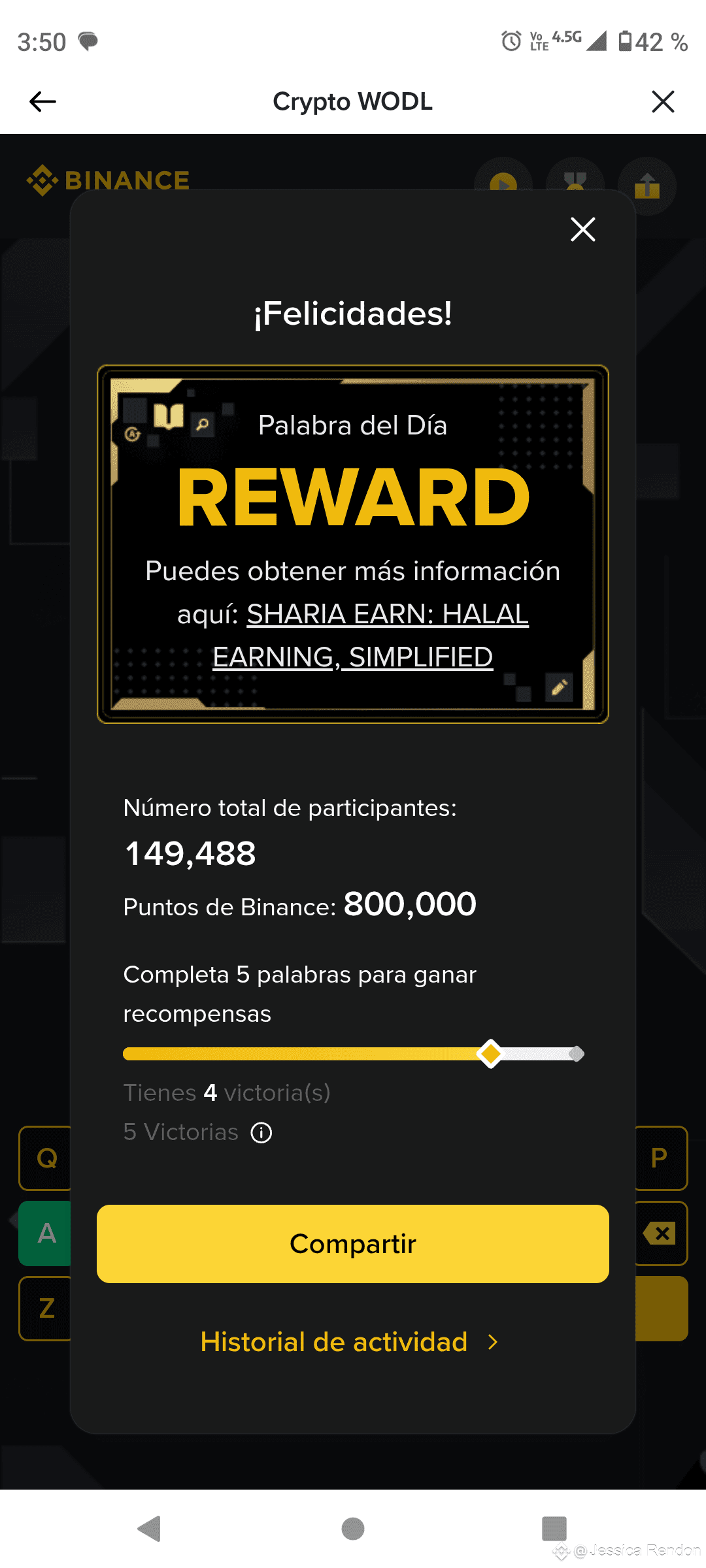
Playing to discover the word is very fun. At the end of the week, you receive reward points that you can redeem for cryptos.
Go to the rewards area - WOTD and play.
$NXPC $WCT
Playing to discover the word is very fun. At the end of the week, you receive reward points that you can redeem for cryptos.
Go to the rewards area - WOTD and play.
$NXPC $WCT
Go to the rewards area - WOTD and play.
$NXPC $WCT
15
Log in to explore more content
Join global crypto users on Binance Square
⚡️ Get latest and useful information about crypto.
💬 Trusted by the world’s largest crypto exchange.
👍 Discover real insights from verified creators.
Email / Phone number
Trending Topics
CryptoSelloffTriggersMultipleWhaleLiquidations
187,588 views
1,819 Discussing
Crypto Liquidations Top $2B in 24 Hours as 329,000 Traders Are Wiped Out
Binance News
·40 Likes
·56.1k views
USSpotXRPETFsSeeLargestWeeklyOutflowIn8Months
164,332 views
1,574 Discussing
WillFOMCMinutesReinforceRateHikeExpectations?
49,258 views
756 Discussing