

链上阿乐
1.7k Posts

链上阿乐
Report
Block User
币安聊天室:1095546459 推特:@AwenEthzvi
Frequent Trader
1.5 Years
22 Following
1.1K+ Followers
960 Liked
Posts
All
Quotes
Videos
·
--
Just saw an important one—Liquid Network was hacked.
The attacker exploited a verification flaw to generate fake L-BTC out of thin air that had no real BTC backing, exchanging it for roughly 4,000 bitcoins, worth about $320 million. So far, 3,400 BTC have been returned, and 598.5 BTC are still being processed. The official team has urgently released a patched version. The network will be restored in three stages: first recover blocks, then re-execute valid transactions, and only after confirming that funds have been returned will they restart the pegged operations.
The key point here is that L-BTC and BTC are completely different. L-BTC is a sidechain asset that’s multi-sig custody-controlled by the Blockstream consortium. The fact that the attacker could fabricate fake L-BTC to steal real BTC indicates serious problems in the custodians’ verification and risk-control logic. The good news is that the BTC mainnet wasn’t inflated, so underlying security hasn’t been affected.
But the market sentiment impact is very real. The security shortcomings of cross-chain bridges and sidechains are once again in the spotlight, and capital will re-evaluate the risks of such projects. In the short term, hot money will likely move toward places with higher certainty; BTC’s mainnet and compliant ETFs will be favored more. For BTC’s price itself, this isn’t a trend-changing bearish factor, but it will intensify short-term volatility.
Next, we need to see two things: how the remaining 598.5 BTC will be handled, and whether the patch can completely block similar vulnerabilities. Until the incident is fully resolved
Just saw an important one—Liquid Network was hacked.
The attacker exploited a verification flaw to generate fake L-BTC out of thin air that had no real BTC backing, exchanging it for roughly 4,000 bitcoins, worth about $320 million. So far, 3,400 BTC have been returned, and 598.5 BTC are still being processed. The official team has urgently released a patched version. The network will be restored in three stages: first recover blocks, then re-execute valid transactions, and only after confirming that funds have been returned will they restart the pegged operations.
The key point here is that L-BTC and BTC are completely different. L-BTC is a sidechain asset that’s multi-sig custody-controlled by the Blockstream consortium. The fact that the attacker could fabricate fake L-BTC to steal real BTC indicates serious problems in the custodians’ verification and risk-control logic. The good news is that the BTC mainnet wasn’t inflated, so underlying security hasn’t been affected.
But the market sentiment impact is very real. The security shortcomings of cross-chain bridges and sidechains are once again in the spotlight, and capital will re-evaluate the risks of such projects. In the short term, hot money will likely move toward places with higher certainty; BTC’s mainnet and compliant ETFs will be favored more. For BTC’s price itself, this isn’t a trend-changing bearish factor, but it will intensify short-term volatility.
Next, we need to see two things: how the remaining 598.5 BTC will be handled, and whether the patch can completely block similar vulnerabilities. Until the incident is fully resolved
The attacker exploited a verification flaw to generate fake L-BTC out of thin air that had no real BTC backing, exchanging it for roughly 4,000 bitcoins, worth about $320 million. So far, 3,400 BTC have been returned, and 598.5 BTC are still being processed. The official team has urgently released a patched version. The network will be restored in three stages: first recover blocks, then re-execute valid transactions, and only after confirming that funds have been returned will they restart the pegged operations.
The key point here is that L-BTC and BTC are completely different. L-BTC is a sidechain asset that’s multi-sig custody-controlled by the Blockstream consortium. The fact that the attacker could fabricate fake L-BTC to steal real BTC indicates serious problems in the custodians’ verification and risk-control logic. The good news is that the BTC mainnet wasn’t inflated, so underlying security hasn’t been affected.
But the market sentiment impact is very real. The security shortcomings of cross-chain bridges and sidechains are once again in the spotlight, and capital will re-evaluate the risks of such projects. In the short term, hot money will likely move toward places with higher certainty; BTC’s mainnet and compliant ETFs will be favored more. For BTC’s price itself, this isn’t a trend-changing bearish factor, but it will intensify short-term volatility.
Next, we need to see two things: how the remaining 598.5 BTC will be handled, and whether the patch can completely block similar vulnerabilities. Until the incident is fully resolved
1
212
·
--
Bullish
$TRUMP Along a steady decline, is there really still a way out?
This coin is completely tied to the political heat surrounding Trump. It has no real business—it's purely emotion-driven speculation. Now that the midterm elections are approaching, the risk is actually expanding further
Next comes the U.S. midterm elections in November. Market price action will be repeatedly tugged by political news—campaign calls, diplomatic conflicts, tensions between the U.S. and Iran/Iraq, and trade frictions. Just one headline can send the coin’s price surging or crashing
Most of the project’s supply is held by related parties. Large holders have already cashed out at high levels and exited. Retail investors, on the other hand, are heavily trapped. Continuous sell pressure has been present for the long term
Democratic lawmakers are continuously pressuring the SEC, demanding an investigation into whether this token counts as an illegal security. Under the pressure of political games, regulatory risk hangs over everyone’s heads. Once a case is filed, it will directly deal a severe blow to the coin’s price
$TRUMP Along a steady decline, is there really still a way out?
This coin is completely tied to the political heat surrounding Trump. It has no real business—it's purely emotion-driven speculation. Now that the midterm elections are approaching, the risk is actually expanding further
Next comes the U.S. midterm elections in November. Market price action will be repeatedly tugged by political news—campaign calls, diplomatic conflicts, tensions between the U.S. and Iran/Iraq, and trade frictions. Just one headline can send the coin’s price surging or crashing
Most of the project’s supply is held by related parties. Large holders have already cashed out at high levels and exited. Retail investors, on the other hand, are heavily trapped. Continuous sell pressure has been present for the long term
Democratic lawmakers are continuously pressuring the SEC, demanding an investigation into whether this token counts as an illegal security. Under the pressure of political games, regulatory risk hangs over everyone’s heads. Once a case is filed, it will directly deal a severe blow to the coin’s price
This coin is completely tied to the political heat surrounding Trump. It has no real business—it's purely emotion-driven speculation. Now that the midterm elections are approaching, the risk is actually expanding further
Next comes the U.S. midterm elections in November. Market price action will be repeatedly tugged by political news—campaign calls, diplomatic conflicts, tensions between the U.S. and Iran/Iraq, and trade frictions. Just one headline can send the coin’s price surging or crashing
Most of the project’s supply is held by related parties. Large holders have already cashed out at high levels and exited. Retail investors, on the other hand, are heavily trapped. Continuous sell pressure has been present for the long term
Democratic lawmakers are continuously pressuring the SEC, demanding an investigation into whether this token counts as an illegal security. Under the pressure of political games, regulatory risk hangs over everyone’s heads. Once a case is filed, it will directly deal a severe blow to the coin’s price
没救了
64%
币价大涨
36%
152 votes • Voting closed
5
1.6k
·
--
Bullish
Verified
$FIL 供缩紧叠加 AI storage narrative both gain momentum🚀🚀🚀
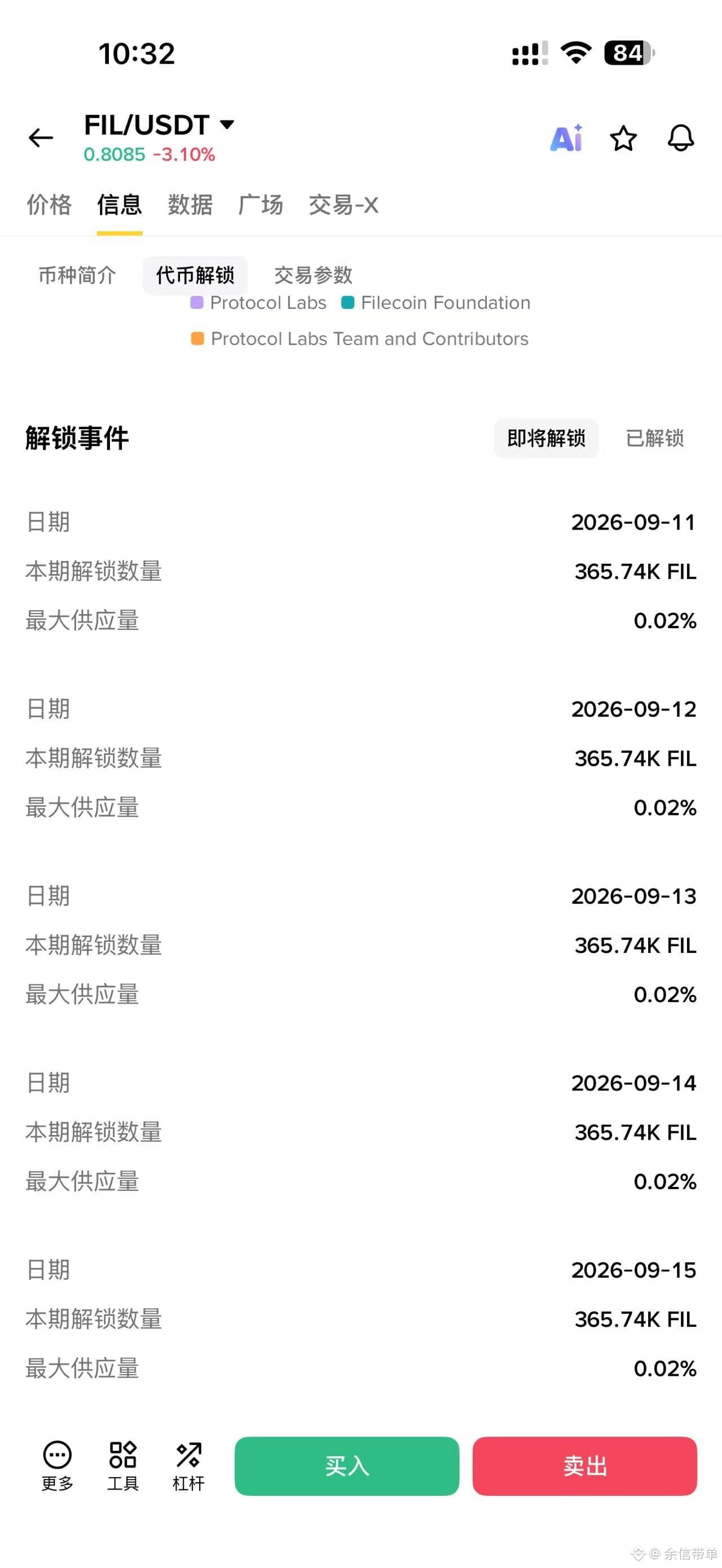
On October 15, the cliff expiration unlocks—token release volume drops directly by 75%. Selling pressure will ease dramatically. This is the hardest bullish catalyst of this round, and the market has already priced in this expectation in advance.
The official is pushing On‑Chain Cloud, upgrading pure storage into a compute-capable decentralized cloud service. It aligns with the AI and DePIN sectors. AI training requires vast amounts of low-cost, verifiable data storage, and FIL has just caught the wave. The story is back to life.
Large on-chain holders keep accumulating; tokens are moved out from exchanges. Trading volume is clearly increasing. Price holds above multiple moving averages. The near-term resistance level is around 0.86. After a breakout, the upside room above will be fully opened.
In the comments—how much upside do you think you’re going to see?
#ZCSH资产规模突破5亿美元 #美国10年期美债收益率创2023年11月新高
$FIL 供缩紧叠加 AI storage narrative both gain momentum🚀🚀🚀
On October 15, the cliff expiration unlocks—token release volume drops directly by 75%. Selling pressure will ease dramatically. This is the hardest bullish catalyst of this round, and the market has already priced in this expectation in advance.
The official is pushing On‑Chain Cloud, upgrading pure storage into a compute-capable decentralized cloud service. It aligns with the AI and DePIN sectors. AI training requires vast amounts of low-cost, verifiable data storage, and FIL has just caught the wave. The story is back to life.
Large on-chain holders keep accumulating; tokens are moved out from exchanges. Trading volume is clearly increasing. Price holds above multiple moving averages. The near-term resistance level is around 0.86. After a breakout, the upside room above will be fully opened.
In the comments—how much upside do you think you’re going to see?
#ZCSH资产规模突破5亿美元 #美国10年期美债收益率创2023年11月新高
On October 15, the cliff expiration unlocks—token release volume drops directly by 75%. Selling pressure will ease dramatically. This is the hardest bullish catalyst of this round, and the market has already priced in this expectation in advance.
The official is pushing On‑Chain Cloud, upgrading pure storage into a compute-capable decentralized cloud service. It aligns with the AI and DePIN sectors. AI training requires vast amounts of low-cost, verifiable data storage, and FIL has just caught the wave. The story is back to life.
Large on-chain holders keep accumulating; tokens are moved out from exchanges. Trading volume is clearly increasing. Price holds above multiple moving averages. The near-term resistance level is around 0.86. After a breakout, the upside room above will be fully opened.
In the comments—how much upside do you think you’re going to see?
#ZCSH资产规模突破5亿美元 #美国10年期美债收益率创2023年11月新高
4
2.3k
·
--
Future people are filled with confidence in $BTC and $XAU .
{future}(XAUUSDT)
Here’s something surprisingly interesting:
The U.S. federal government’s debt has already reached as much as 40 trillion,
this is only the explicit debt;
if you include future obligations such as Social Security and Medicare (implicit debt),
then it exceeds 136 trillion.
An enormous amount of debt!
What about the assets on the federal government’s balance sheet?
About 6.1 trillion.
And most of it is held in the Department of Defense—assets related to military equipment and facilities.
That’s the U.S. government balance sheet.
As for private-sector assets (businesses + households), there are plenty.
Net assets are 183 trillion.
Among these, the variable most closely watched by the market on the federal government’s asset side is gold reserves:
—On the books, only 11 billion,
but at today’s market price of 4,700 per ounce,
it could reach 1.2 trillion.
That’s “gold revaluation,”
which is one of the core logics people discuss.
Someone once boldly proposed that:
Using its hegemony, the U.S. forces the gold price up by 20 times.
8,100 tons of gold would then be worth 2.5 trillion.
In that case,
the U.S. balance sheet would look much better,
and the value of U.S. debt would fall in a more tangible way.
For a country, and for each individual,
$XAU
gold is the future—
it’s a question of who can hold on to it.
Future people are filled with confidence in $BTC and $XAU .
Here’s something surprisingly interesting:
The U.S. federal government’s debt has already reached as much as 40 trillion,
this is only the explicit debt;
if you include future obligations such as Social Security and Medicare (implicit debt),
then it exceeds 136 trillion.
An enormous amount of debt!
What about the assets on the federal government’s balance sheet?
About 6.1 trillion.
And most of it is held in the Department of Defense—assets related to military equipment and facilities.
That’s the U.S. government balance sheet.
As for private-sector assets (businesses + households), there are plenty.
Net assets are 183 trillion.
Among these, the variable most closely watched by the market on the federal government’s asset side is gold reserves:
—On the books, only 11 billion,
but at today’s market price of 4,700 per ounce,
it could reach 1.2 trillion.
That’s “gold revaluation,”
which is one of the core logics people discuss.
Someone once boldly proposed that:
Using its hegemony, the U.S. forces the gold price up by 20 times.
8,100 tons of gold would then be worth 2.5 trillion.
In that case,
the U.S. balance sheet would look much better,
and the value of U.S. debt would fall in a more tangible way.
For a country, and for each individual,
$XAU
gold is the future—
it’s a question of who can hold on to it.
Here’s something surprisingly interesting:
The U.S. federal government’s debt has already reached as much as 40 trillion,
this is only the explicit debt;
if you include future obligations such as Social Security and Medicare (implicit debt),
then it exceeds 136 trillion.
An enormous amount of debt!
What about the assets on the federal government’s balance sheet?
About 6.1 trillion.
And most of it is held in the Department of Defense—assets related to military equipment and facilities.
That’s the U.S. government balance sheet.
As for private-sector assets (businesses + households), there are plenty.
Net assets are 183 trillion.
Among these, the variable most closely watched by the market on the federal government’s asset side is gold reserves:
—On the books, only 11 billion,
but at today’s market price of 4,700 per ounce,
it could reach 1.2 trillion.
That’s “gold revaluation,”
which is one of the core logics people discuss.
Someone once boldly proposed that:
Using its hegemony, the U.S. forces the gold price up by 20 times.
8,100 tons of gold would then be worth 2.5 trillion.
In that case,
the U.S. balance sheet would look much better,
and the value of U.S. debt would fall in a more tangible way.
For a country, and for each individual,
$XAU
gold is the future—
it’s a question of who can hold on to it.
181
·
--
$AAOI
{future}(AAOIUSDT)
These past few days, it’s started bouncing around again.
At yesterday’s close, it was at $111.55, up about 5.7% on the day, after hitting a high around $116.9 intraday. Its market cap is roughly $9.5 billion. So far this year, it’s already gained more than 200%, and the one-year gain is close to 370%—but don’t get too excited yet. From the May peak near $233, it has pulled back by about half, and in the past month it’s also fallen by nearly 20%. A typical “AI optical module, high-volatility pick.”
The company makes fiber-optic network and data-center optical modules, and is benefiting from the AI compute infrastructure boom. Demand for 800G and 1.6T products is intense. Q2 revenue surged 86%, and it also secured a large customer’s 1.6T order. Production capacity is also ramping up fast. Analysts’ average target price is still around $163, and bullish investors believe there’s room to push higher next.
However, the risks aren’t small either: it’s still unprofitable, recently it raised another $600 million, bringing dilution pressure, with high customer concentration and a very sentiment-driven stock. Right now, it’s in the state of “the earnings story tastes good, but in the short term it’s being weighed down by macro factors and dilution sentiment.” If you’re considering getting in, pay attention to the timing—don’t chase it higher; watch it again on a pullback.
$AAOI
These past few days, it’s started bouncing around again.
At yesterday’s close, it was at $111.55, up about 5.7% on the day, after hitting a high around $116.9 intraday. Its market cap is roughly $9.5 billion. So far this year, it’s already gained more than 200%, and the one-year gain is close to 370%—but don’t get too excited yet. From the May peak near $233, it has pulled back by about half, and in the past month it’s also fallen by nearly 20%. A typical “AI optical module, high-volatility pick.”
The company makes fiber-optic network and data-center optical modules, and is benefiting from the AI compute infrastructure boom. Demand for 800G and 1.6T products is intense. Q2 revenue surged 86%, and it also secured a large customer’s 1.6T order. Production capacity is also ramping up fast. Analysts’ average target price is still around $163, and bullish investors believe there’s room to push higher next.
However, the risks aren’t small either: it’s still unprofitable, recently it raised another $600 million, bringing dilution pressure, with high customer concentration and a very sentiment-driven stock. Right now, it’s in the state of “the earnings story tastes good, but in the short term it’s being weighed down by macro factors and dilution sentiment.” If you’re considering getting in, pay attention to the timing—don’t chase it higher; watch it again on a pullback.
These past few days, it’s started bouncing around again.
At yesterday’s close, it was at $111.55, up about 5.7% on the day, after hitting a high around $116.9 intraday. Its market cap is roughly $9.5 billion. So far this year, it’s already gained more than 200%, and the one-year gain is close to 370%—but don’t get too excited yet. From the May peak near $233, it has pulled back by about half, and in the past month it’s also fallen by nearly 20%. A typical “AI optical module, high-volatility pick.”
The company makes fiber-optic network and data-center optical modules, and is benefiting from the AI compute infrastructure boom. Demand for 800G and 1.6T products is intense. Q2 revenue surged 86%, and it also secured a large customer’s 1.6T order. Production capacity is also ramping up fast. Analysts’ average target price is still around $163, and bullish investors believe there’s room to push higher next.
However, the risks aren’t small either: it’s still unprofitable, recently it raised another $600 million, bringing dilution pressure, with high customer concentration and a very sentiment-driven stock. Right now, it’s in the state of “the earnings story tastes good, but in the short term it’s being weighed down by macro factors and dilution sentiment.” If you’re considering getting in, pay attention to the timing—don’t chase it higher; watch it again on a pullback.
217
·
--
Bullish
$VVV The target remains unchanged, still 30 USD
As mentioned in the previous articles, VVV is the leader in the privacy AI sector. As the privacy sector grows increasingly popular, VVV has also benefited from plenty of dividends.
On top of that, with the rotation of counterfeit capital, the bull market is gradually reviving. It’s only a matter of time before benchmark tokens like VVV get pumped higher. I’m firmly bullish—30🔪 is just a short-term target.
More divine pills in Yu Xin’s chatroom are waiting for you to unlock. If you’re interested, hop on fast!
$VVV The target remains unchanged, still 30 USD
As mentioned in the previous articles, VVV is the leader in the privacy AI sector. As the privacy sector grows increasingly popular, VVV has also benefited from plenty of dividends.
On top of that, with the rotation of counterfeit capital, the bull market is gradually reviving. It’s only a matter of time before benchmark tokens like VVV get pumped higher. I’m firmly bullish—30🔪 is just a short-term target.
More divine pills in Yu Xin’s chatroom are waiting for you to unlock. If you’re interested, hop on fast!
As mentioned in the previous articles, VVV is the leader in the privacy AI sector. As the privacy sector grows increasingly popular, VVV has also benefited from plenty of dividends.
On top of that, with the rotation of counterfeit capital, the bull market is gradually reviving. It’s only a matter of time before benchmark tokens like VVV get pumped higher. I’m firmly bullish—30🔪 is just a short-term target.
More divine pills in Yu Xin’s chatroom are waiting for you to unlock. If you’re interested, hop on fast!
130
·
--
Bullish
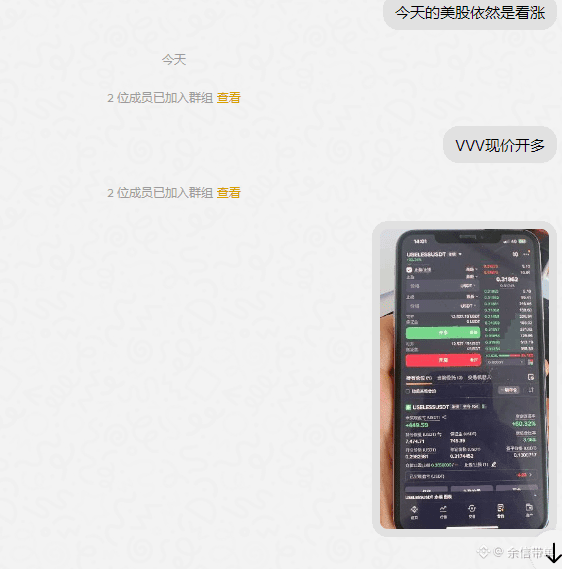
$VVV 25刀追的VVV也已经起飞 ! ! !
As a privacy AI sector leader, VVV has achieved annualized platform revenue exceeding $100 million. It features an income-repurchase-and-burn mechanism: for every $100 in API revenue, it allocates $5 to buy back and burn tokens in the secondary market, continuously reducing circulating supply and creating a deflationary expectation—this is the most core underlying logic behind this round of market momentum.
On-chain data shows that whale funds are continuously moving in for deployment. Contract trading volume has increased significantly, and the launch of derivatives further boosts capital participation.
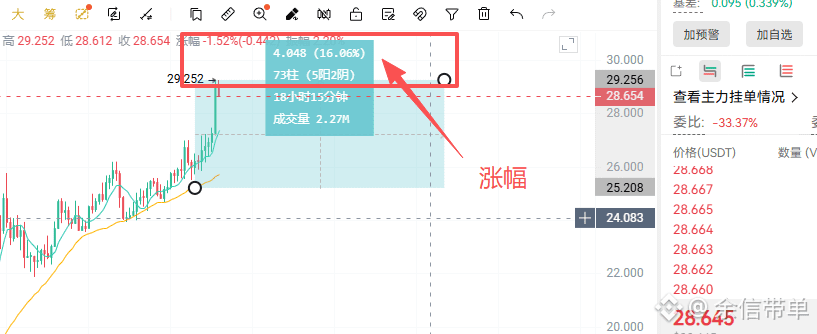
From a technical standpoint, the price has held above both short- and long-term moving averages. Pullbacks are met with strong follow-through, and every time it retraces to key support levels, there is capital stepping in. The bullish trend structure remains intact.
Privacy AI is a differentiated direction within the current AI sector. It focuses on no logs and no censorship during inference, aligning with the market’s growing demand for privacy compute. Platform traffic continues to rise, and the fundamentals have ongoing catalysts.
Recently, altcoin capital has been rotating. The leading tokens in each segment have already started to recover. There is still upside potential above AAVE—hold firmly. If you want to get more market updates and insights, the chat room is waiting for you
$VVV 25刀追的VVV也已经起飞 ! ! !
As a privacy AI sector leader, VVV has achieved annualized platform revenue exceeding $100 million. It features an income-repurchase-and-burn mechanism: for every $100 in API revenue, it allocates $5 to buy back and burn tokens in the secondary market, continuously reducing circulating supply and creating a deflationary expectation—this is the most core underlying logic behind this round of market momentum.
On-chain data shows that whale funds are continuously moving in for deployment. Contract trading volume has increased significantly, and the launch of derivatives further boosts capital participation.
From a technical standpoint, the price has held above both short- and long-term moving averages. Pullbacks are met with strong follow-through, and every time it retraces to key support levels, there is capital stepping in. The bullish trend structure remains intact.
Privacy AI is a differentiated direction within the current AI sector. It focuses on no logs and no censorship during inference, aligning with the market’s growing demand for privacy compute. Platform traffic continues to rise, and the fundamentals have ongoing catalysts.
Recently, altcoin capital has been rotating. The leading tokens in each segment have already started to recover. There is still upside potential above AAVE—hold firmly. If you want to get more market updates and insights, the chat room is waiting for you
As a privacy AI sector leader, VVV has achieved annualized platform revenue exceeding $100 million. It features an income-repurchase-and-burn mechanism: for every $100 in API revenue, it allocates $5 to buy back and burn tokens in the secondary market, continuously reducing circulating supply and creating a deflationary expectation—this is the most core underlying logic behind this round of market momentum.
On-chain data shows that whale funds are continuously moving in for deployment. Contract trading volume has increased significantly, and the launch of derivatives further boosts capital participation.
From a technical standpoint, the price has held above both short- and long-term moving averages. Pullbacks are met with strong follow-through, and every time it retraces to key support levels, there is capital stepping in. The bullish trend structure remains intact.
Privacy AI is a differentiated direction within the current AI sector. It focuses on no logs and no censorship during inference, aligning with the market’s growing demand for privacy compute. Platform traffic continues to rise, and the fundamentals have ongoing catalysts.
Recently, altcoin capital has been rotating. The leading tokens in each segment have already started to recover. There is still upside potential above AAVE—hold firmly. If you want to get more market updates and insights, the chat room is waiting for you
310
·
--
Bullish
$FIL Beneficial news has been coming one after another recently, and the logic is actually very easy to understand.
Now that AI is booming, large language models need to store massive amounts of data. FIL is decentralized storage; within its ecosystem, the volume of AI-related data storage continues to rise. What started as pure mining has gradually turned into on-chain cloud storage with real demand—this sector logic has been fully revitalized.
The supply side is an even bigger highlight. The period of large-scale unlocks for the core team is about to end. The FIL released (allocated) each year will directly decrease by 75%. The number of newly issued coins hitting the market will drop sharply, and selling pressure will fall significantly, bringing supply and demand to a turning point.
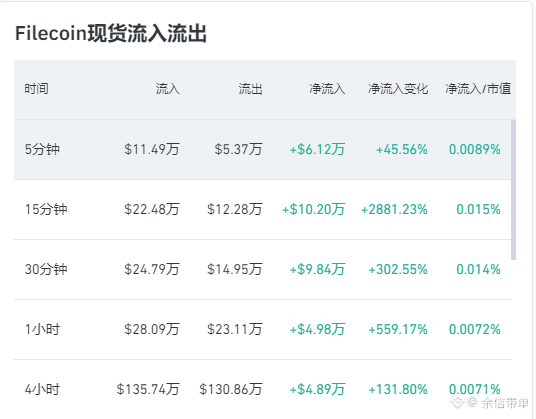
Market funds are also quietly moving in. Trading volume has clearly expanded compared with before, and the bottom trading range has already stabilized.
FIL has been falling for a long time before this; its valuation is relatively low within the sector.
The rotation cycle in the main theme—DePIN + AI storage—is still ongoing. Once capital flows back into this track, the rebound potential of FIL is worth期待.
In the comments, how high do you think this bull cycle can go?
$FIL Beneficial news has been coming one after another recently, and the logic is actually very easy to understand.
Now that AI is booming, large language models need to store massive amounts of data. FIL is decentralized storage; within its ecosystem, the volume of AI-related data storage continues to rise. What started as pure mining has gradually turned into on-chain cloud storage with real demand—this sector logic has been fully revitalized.
The supply side is an even bigger highlight. The period of large-scale unlocks for the core team is about to end. The FIL released (allocated) each year will directly decrease by 75%. The number of newly issued coins hitting the market will drop sharply, and selling pressure will fall significantly, bringing supply and demand to a turning point.
Market funds are also quietly moving in. Trading volume has clearly expanded compared with before, and the bottom trading range has already stabilized.
FIL has been falling for a long time before this; its valuation is relatively low within the sector.
The rotation cycle in the main theme—DePIN + AI storage—is still ongoing. Once capital flows back into this track, the rebound potential of FIL is worth期待.
In the comments, how high do you think this bull cycle can go?
Now that AI is booming, large language models need to store massive amounts of data. FIL is decentralized storage; within its ecosystem, the volume of AI-related data storage continues to rise. What started as pure mining has gradually turned into on-chain cloud storage with real demand—this sector logic has been fully revitalized.
The supply side is an even bigger highlight. The period of large-scale unlocks for the core team is about to end. The FIL released (allocated) each year will directly decrease by 75%. The number of newly issued coins hitting the market will drop sharply, and selling pressure will fall significantly, bringing supply and demand to a turning point.
Market funds are also quietly moving in. Trading volume has clearly expanded compared with before, and the bottom trading range has already stabilized.
FIL has been falling for a long time before this; its valuation is relatively low within the sector.
The rotation cycle in the main theme—DePIN + AI storage—is still ongoing. Once capital flows back into this track, the rebound potential of FIL is worth期待.
In the comments, how high do you think this bull cycle can go?
1
2
2.2k
·
--
Bullish
Verified
$SPCX Financial report beats expectations! A dual-track growth logic is now fully working📈
Many people are panicked by short-term volatility, but this SPCX financial report directly confirms true growth. Looking at the long term, the bullish logic is firmly established!🔥
The biggest highlights of the entire report: revenue, profit, and user data all far exceed expectations, and the operating fundamentals are clearly showing a visible rebound.
Total quarterly revenue surged 92% year over year. Adjusted EBITDA jumped 191% year over year. Profitability improved significantly. Meanwhile, net losses continue to narrow, completely escaping the dilemma of inefficient cash burn, and the profit model keeps optimizing.
The core cash cow “Star Chain” is delivering steady momentum: the user base has doubled year over year, operating profit is climbing steadily, and on top of that, long-term government orders in the hundreds-of-billions scale strengthen the cash-flow foundation tremendously. It provides solid support for the company’s long-term development—guaranteed✅
A new AI growth curve has fully exploded! Revenue from AI compute services surged 247% year over year. Large cloud contract wins continue to land. The earlier capital expenditures were all front-loaded for capacity build-out. Going forward, they will gradually convert into real revenue, and the growth potential is fully unlocked.
Overly anxious market sentiment toward capital expenditures has caused a pullback—this becomes a window for high-quality positioning.
With “Star Chain” steadily generating cash flow plus high-speed AI growth, the two tracks resonate together. The moat is scarce, growth potential is maximized. The subsequent market recovery is worth focusing on📈
$SPCX Financial report beats expectations! A dual-track growth logic is now fully working📈
Many people are panicked by short-term volatility, but this SPCX financial report directly confirms true growth. Looking at the long term, the bullish logic is firmly established!🔥
The biggest highlights of the entire report: revenue, profit, and user data all far exceed expectations, and the operating fundamentals are clearly showing a visible rebound.
Total quarterly revenue surged 92% year over year. Adjusted EBITDA jumped 191% year over year. Profitability improved significantly. Meanwhile, net losses continue to narrow, completely escaping the dilemma of inefficient cash burn, and the profit model keeps optimizing.
The core cash cow “Star Chain” is delivering steady momentum: the user base has doubled year over year, operating profit is climbing steadily, and on top of that, long-term government orders in the hundreds-of-billions scale strengthen the cash-flow foundation tremendously. It provides solid support for the company’s long-term development—guaranteed✅
A new AI growth curve has fully exploded! Revenue from AI compute services surged 247% year over year. Large cloud contract wins continue to land. The earlier capital expenditures were all front-loaded for capacity build-out. Going forward, they will gradually convert into real revenue, and the growth potential is fully unlocked.
Overly anxious market sentiment toward capital expenditures has caused a pullback—this becomes a window for high-quality positioning.
With “Star Chain” steadily generating cash flow plus high-speed AI growth, the two tracks resonate together. The moat is scarce, growth potential is maximized. The subsequent market recovery is worth focusing on📈
Many people are panicked by short-term volatility, but this SPCX financial report directly confirms true growth. Looking at the long term, the bullish logic is firmly established!🔥
The biggest highlights of the entire report: revenue, profit, and user data all far exceed expectations, and the operating fundamentals are clearly showing a visible rebound.
Total quarterly revenue surged 92% year over year. Adjusted EBITDA jumped 191% year over year. Profitability improved significantly. Meanwhile, net losses continue to narrow, completely escaping the dilemma of inefficient cash burn, and the profit model keeps optimizing.
The core cash cow “Star Chain” is delivering steady momentum: the user base has doubled year over year, operating profit is climbing steadily, and on top of that, long-term government orders in the hundreds-of-billions scale strengthen the cash-flow foundation tremendously. It provides solid support for the company’s long-term development—guaranteed✅
A new AI growth curve has fully exploded! Revenue from AI compute services surged 247% year over year. Large cloud contract wins continue to land. The earlier capital expenditures were all front-loaded for capacity build-out. Going forward, they will gradually convert into real revenue, and the growth potential is fully unlocked.
Overly anxious market sentiment toward capital expenditures has caused a pullback—this becomes a window for high-quality positioning.
With “Star Chain” steadily generating cash flow plus high-speed AI growth, the two tracks resonate together. The moat is scarce, growth potential is maximized. The subsequent market recovery is worth focusing on📈
202
·
--
Bullish
$SNDK A fan asked: Will the price at this level still go up?
First of all, AI is booming right now, and major internet and cloud computing companies are rapidly expanding their servers. Storage chips are an absolute necessity, and market demand continues to surge.
At the moment, storage chip production capacity cannot keep up with demand. Large manufacturers control supply, and chip prices have been steadily rising. As a leading storage enterprise, SanDisk directly captures industry upside. Its orders are especially robust, and revenue and profits should continue to grow steadily.
The company itself is strong: it has long-term, heavily secured orders from major customers, so performance is very stable, with no major risk of a sudden blow-up. It also benefits from new technology, leaving a lot of room for future growth.
At the 1750 level, support is very strong, and downside potential is limited. Currently, institutions generally look favorably on the future trend, and the target price is far above the current price.
Trading advice: Go long at the current price. For a long-term target, you could see around 2200.
$SNDK A fan asked: Will the price at this level still go up?
First of all, AI is booming right now, and major internet and cloud computing companies are rapidly expanding their servers. Storage chips are an absolute necessity, and market demand continues to surge.
At the moment, storage chip production capacity cannot keep up with demand. Large manufacturers control supply, and chip prices have been steadily rising. As a leading storage enterprise, SanDisk directly captures industry upside. Its orders are especially robust, and revenue and profits should continue to grow steadily.
The company itself is strong: it has long-term, heavily secured orders from major customers, so performance is very stable, with no major risk of a sudden blow-up. It also benefits from new technology, leaving a lot of room for future growth.
At the 1750 level, support is very strong, and downside potential is limited. Currently, institutions generally look favorably on the future trend, and the target price is far above the current price.
Trading advice: Go long at the current price. For a long-term target, you could see around 2200.
First of all, AI is booming right now, and major internet and cloud computing companies are rapidly expanding their servers. Storage chips are an absolute necessity, and market demand continues to surge.
At the moment, storage chip production capacity cannot keep up with demand. Large manufacturers control supply, and chip prices have been steadily rising. As a leading storage enterprise, SanDisk directly captures industry upside. Its orders are especially robust, and revenue and profits should continue to grow steadily.
The company itself is strong: it has long-term, heavily secured orders from major customers, so performance is very stable, with no major risk of a sudden blow-up. It also benefits from new technology, leaving a lot of room for future growth.
At the 1750 level, support is very strong, and downside potential is limited. Currently, institutions generally look favorably on the future trend, and the target price is far above the current price.
Trading advice: Go long at the current price. For a long-term target, you could see around 2200.
184
·
--
$SOPH A fan asked Yu Xin, “Will this coin have a waterfall-like crash and plunge?”
I don’t think so.
First, coins that experience a sudden surge or a sudden plunge are usually manipulated by market makers in the futures pool, whereas SOPH is a spot asset with stable long-term positioning.
Second, today’s rise is simply capital rotating through the market. ZK ecosystem is next in line, so it’s seeing a big increase.
Third, this is now at the historical bottom area; it’s currently a healthy pullback.
So I believe this coin is unlikely to crash in a waterfall manner.
$SOPH A fan asked Yu Xin, “Will this coin have a waterfall-like crash and plunge?”
I don’t think so.
First, coins that experience a sudden surge or a sudden plunge are usually manipulated by market makers in the futures pool, whereas SOPH is a spot asset with stable long-term positioning.
Second, today’s rise is simply capital rotating through the market. ZK ecosystem is next in line, so it’s seeing a big increase.
Third, this is now at the historical bottom area; it’s currently a healthy pullback.
So I believe this coin is unlikely to crash in a waterfall manner.
I don’t think so.
First, coins that experience a sudden surge or a sudden plunge are usually manipulated by market makers in the futures pool, whereas SOPH is a spot asset with stable long-term positioning.
Second, today’s rise is simply capital rotating through the market. ZK ecosystem is next in line, so it’s seeing a big increase.
Third, this is now at the historical bottom area; it’s currently a healthy pullback.
So I believe this coin is unlikely to crash in a waterfall manner.
1.1k
Log in to explore more content
Join global crypto users on Binance Square
⚡️ Get latest and useful information about crypto.
💬 Trusted by the world’s largest crypto exchange.
👍 Discover real insights from verified creators.
Email / Phone number
Trending Topics
BitcoinSpotETFsNetInflow$191M
0 views
5 Discussing
Rough 24 hours for leveraged longs: $617M in total crypto liquidations hit the market, with $546M coming from long positions alone versus just $71M in shorts. That imbalance tells you exactly who got caught off guard by today's pullback — traders positioned for more upside got squeezed hard. $BTC futures alone accounted for $191M of that. Lesson in position sizing, or a sign the dip is nearly done? $BTC $ETH
R3TRO
·0 Likes
·55 views
CFTCUpdatesGuidanceOnTokenizedAssets
1,987 views
143 Discussing
BitgetSays$352MAffectedInHack
318 views
11 Discussing