

Internet Computer
2.4k Posts

Internet Computer
 Square Verified+
Report
Block User
互联网计算机由数学上安全的网络协议创建,是一个面向应用程序和 AI Agents 的防篡改前沿云平台,它将独立运行的计算节点组合在一起,由总部位于瑞士的 DFINITY 基金会开发维护。
6 Following
3.9K+ Followers
25.1K+ Liked
Posts
All
Videos

Article
Your project team isn’t short on money—it’s short on someone who knows how to communicateMost teams spend millions on tokenomics, then leave the whole marketing operation to a part-time community manager and Google Translate.
I’ve observed quite a few crypto project teams. It’s pretty surreal.
They can raise money, get listed on an exchange, and write a white paper that reads like a sci-fi novel. Then comes the marketing, handed off to a part-time community manager: on Monday, he posts a tweet that reads like Google Translate got drunk; on Wednesday, he puts together an AMA clip where the subtitles and lip movements tell two different stories; and on Friday, the community content is last week’s post with a different color scheme.
You ask if they should hire an outside agency. He says they tried, but the quote was 30,000 a month. They can’t afford it.
Your project team isn’t short on money—it’s short on someone who knows how to communicate
Most teams spend millions on tokenomics, then leave the whole marketing operation to a part-time community manager and Google Translate.
I’ve observed quite a few crypto project teams. It’s pretty surreal.
They can raise money, get listed on an exchange, and write a white paper that reads like a sci-fi novel. Then comes the marketing, handed off to a part-time community manager: on Monday, he posts a tweet that reads like Google Translate got drunk; on Wednesday, he puts together an AMA clip where the subtitles and lip movements tell two different stories; and on Friday, the community content is last week’s post with a different color scheme.
You ask if they should hire an outside agency. He says they tried, but the quote was 30,000 a month. They can’t afford it.
I’ve observed quite a few crypto project teams. It’s pretty surreal.
They can raise money, get listed on an exchange, and write a white paper that reads like a sci-fi novel. Then comes the marketing, handed off to a part-time community manager: on Monday, he posts a tweet that reads like Google Translate got drunk; on Wednesday, he puts together an AMA clip where the subtitles and lip movements tell two different stories; and on Friday, the community content is last week’s post with a different color scheme.
You ask if they should hire an outside agency. He says they tried, but the quote was 30,000 a month. They can’t afford it.
1
221
ICP was attacked twice in less than a week, but remained operational throughout.
ICP was attacked twice in less than a week, but remained operational throughout.
2
663
Binance App store visit video @BinanceSquareCN
Binance App store visit video @币安广场
703
Verified
OGY is proud to support HCC
🏒 OGY is proud to support the HC La Chaux-de-Fonds ice hockey club!
🔥 As a sponsor, it was fantastic to be there cheering on the team and to witness HCC’s victory!
We wish the players and the entire team all the best for the season ahead. We’ll be cheering you on all the way!
ORIGYN was at the European Parliament in Brussels, taking part in discussions on “Strengthening Europe’s Power in the Digital World.”
Tom Fraczak joined discussions about the infrastructure for Digital Product Passports and shared his insights on how the EU can support European technology and AI companies.
🇪🇺 We’re part of this high-level conversation!
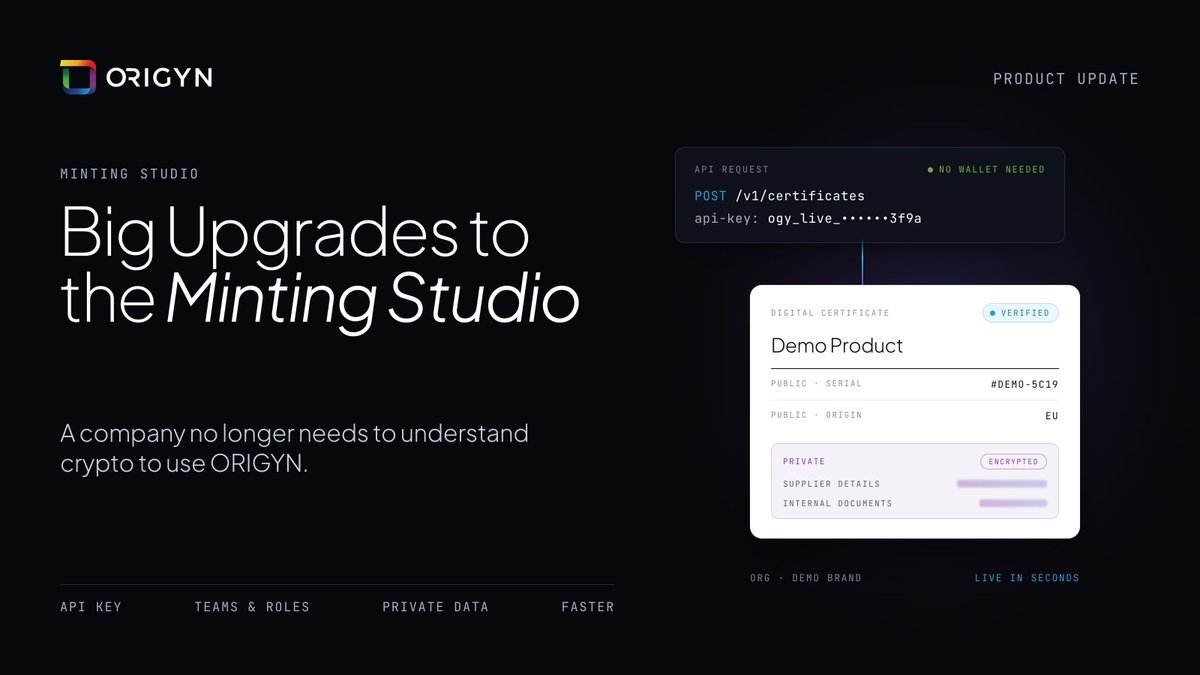
Blockchain certification shouldn’t require a crypto wallet—and now it doesn’t!
This quarter, ORIGYN Minting Studio received its biggest upgrade yet, making it easier for all kinds of businesses to certify products on-chain:
🔌 No wallet required
Connect your existing systems to the platform with a simple API key. Create certificates directly from the tools you use every day, while ORIGYN handles all the blockchain complexity in the background.
👥 Built for teams
Bring your entire company together under one organization account. Admins can invite colleagues and assign each member a role.
🔒 Private certificates
Certificates and Digital Product Passports can now include encrypted information, such as internal documents or supplier details, visible only to the people you specify. Everything else remains public and verifiable.
⚡ More efficient
New certificates can be created in seconds.
That means you don’t need any cryptocurrency knowledge to use ORIGYN. Simply connect your systems and start issuing certificates with OGY.
Read more about these upgrades in our “2026 Q3 End-of-Quarter Update.”
OGY is proud to support HCC
🏒 OGY is proud to support the HC La Chaux-de-Fonds ice hockey club!
🔥 As a sponsor, it was fantastic to be there cheering on the team and to witness HCC’s victory!
We wish the players and the entire team all the best for the season ahead. We’ll be cheering you on all the way!
ORIGYN was at the European Parliament in Brussels, taking part in discussions on “Strengthening Europe’s Power in the Digital World.”
Tom Fraczak joined discussions about the infrastructure for Digital Product Passports and shared his insights on how the EU can support European technology and AI companies.
🇪🇺 We’re part of this high-level conversation!
Blockchain certification shouldn’t require a crypto wallet—and now it doesn’t!
This quarter, ORIGYN Minting Studio received its biggest upgrade yet, making it easier for all kinds of businesses to certify products on-chain:
🔌 No wallet required
Connect your existing systems to the platform with a simple API key. Create certificates directly from the tools you use every day, while ORIGYN handles all the blockchain complexity in the background.
👥 Built for teams
Bring your entire company together under one organization account. Admins can invite colleagues and assign each member a role.
🔒 Private certificates
Certificates and Digital Product Passports can now include encrypted information, such as internal documents or supplier details, visible only to the people you specify. Everything else remains public and verifiable.
⚡ More efficient
New certificates can be created in seconds.
That means you don’t need any cryptocurrency knowledge to use ORIGYN. Simply connect your systems and start issuing certificates with OGY.
Read more about these upgrades in our “2026 Q3 End-of-Quarter Update.”
🏒 OGY is proud to support the HC La Chaux-de-Fonds ice hockey club!
🔥 As a sponsor, it was fantastic to be there cheering on the team and to witness HCC’s victory!
We wish the players and the entire team all the best for the season ahead. We’ll be cheering you on all the way!
ORIGYN was at the European Parliament in Brussels, taking part in discussions on “Strengthening Europe’s Power in the Digital World.”
Tom Fraczak joined discussions about the infrastructure for Digital Product Passports and shared his insights on how the EU can support European technology and AI companies.
🇪🇺 We’re part of this high-level conversation!
Blockchain certification shouldn’t require a crypto wallet—and now it doesn’t!
This quarter, ORIGYN Minting Studio received its biggest upgrade yet, making it easier for all kinds of businesses to certify products on-chain:
🔌 No wallet required
Connect your existing systems to the platform with a simple API key. Create certificates directly from the tools you use every day, while ORIGYN handles all the blockchain complexity in the background.
👥 Built for teams
Bring your entire company together under one organization account. Admins can invite colleagues and assign each member a role.
🔒 Private certificates
Certificates and Digital Product Passports can now include encrypted information, such as internal documents or supplier details, visible only to the people you specify. Everything else remains public and verifiable.
⚡ More efficient
New certificates can be created in seconds.
That means you don’t need any cryptocurrency knowledge to use ORIGYN. Simply connect your systems and start issuing certificates with OGY.
Read more about these upgrades in our “2026 Q3 End-of-Quarter Update.”


1
562
Does ICP need to have its own .com domain?
Does ICP need to have its own .com domain?
4
997
Verified
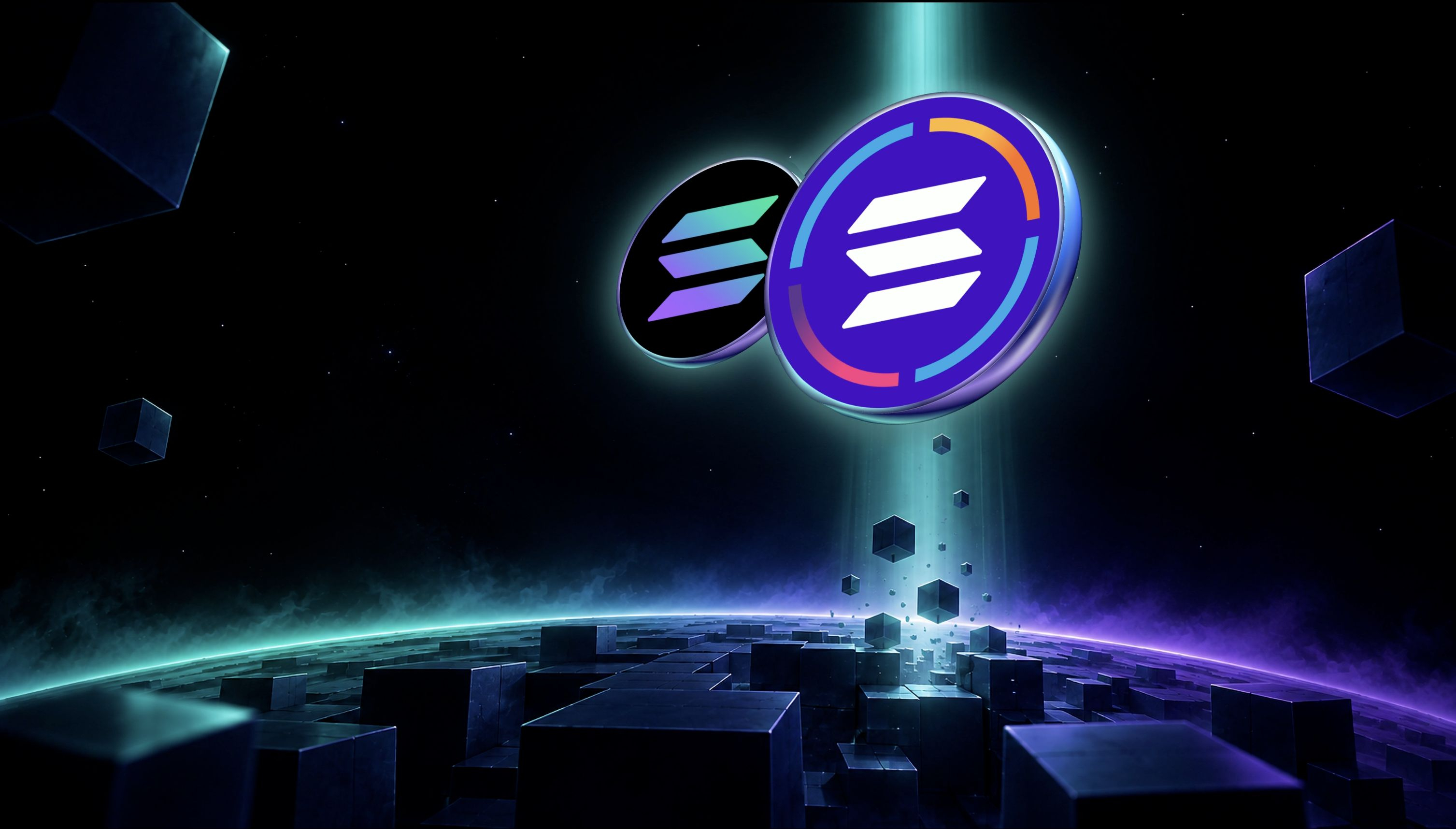
Internet Computer now supports Solana.
ICP applications can interact directly with Solana to read and write data.
Additionally, thanks to ckSOL, which is backed 1:1 by SOL, DeFi applications such as Liquidium, MULTI/DEX, and ICPSwap can integrate SOL natively—just like they integrate BTC, ETH, and ICP.
No cross-chain bridge required.
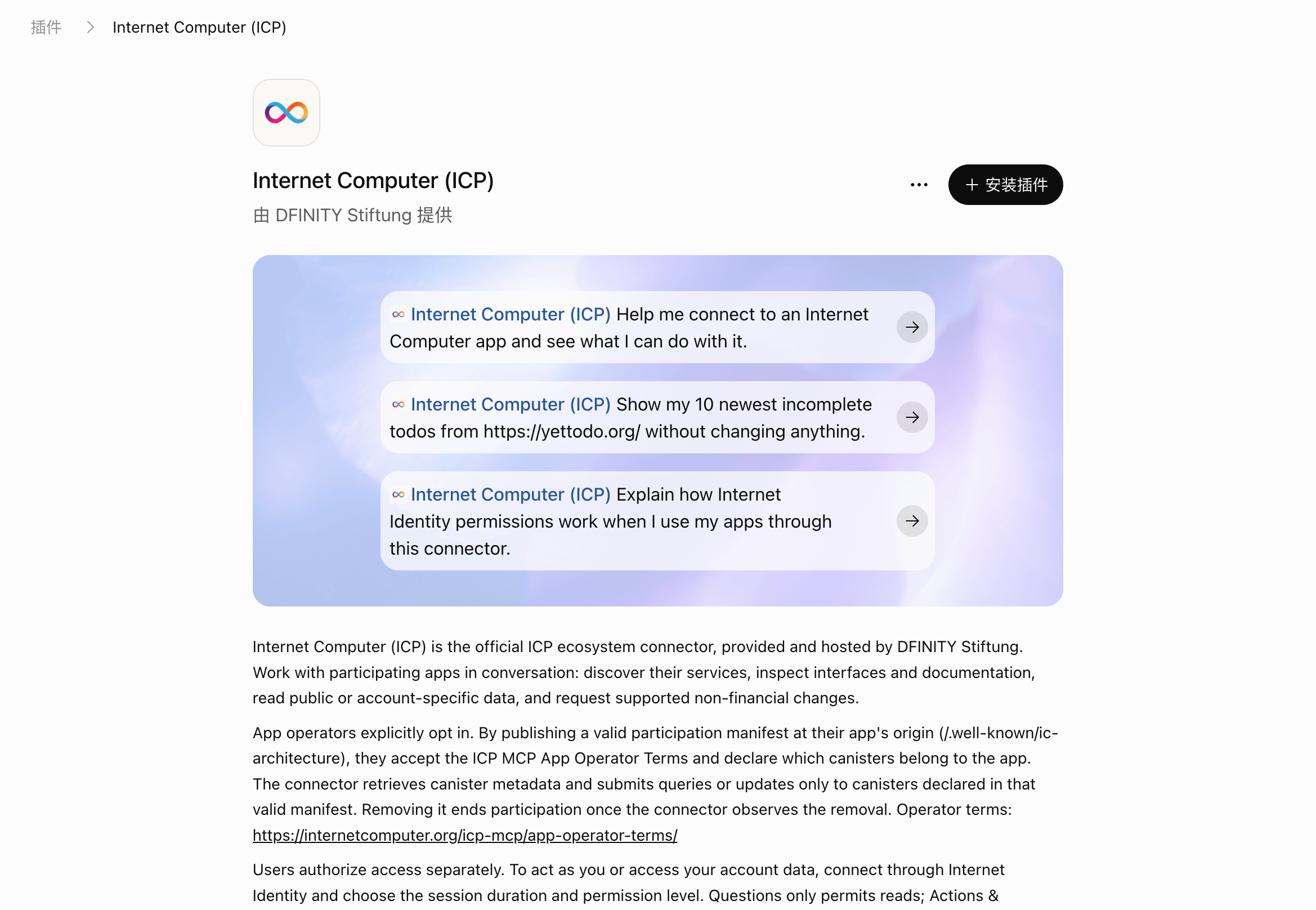
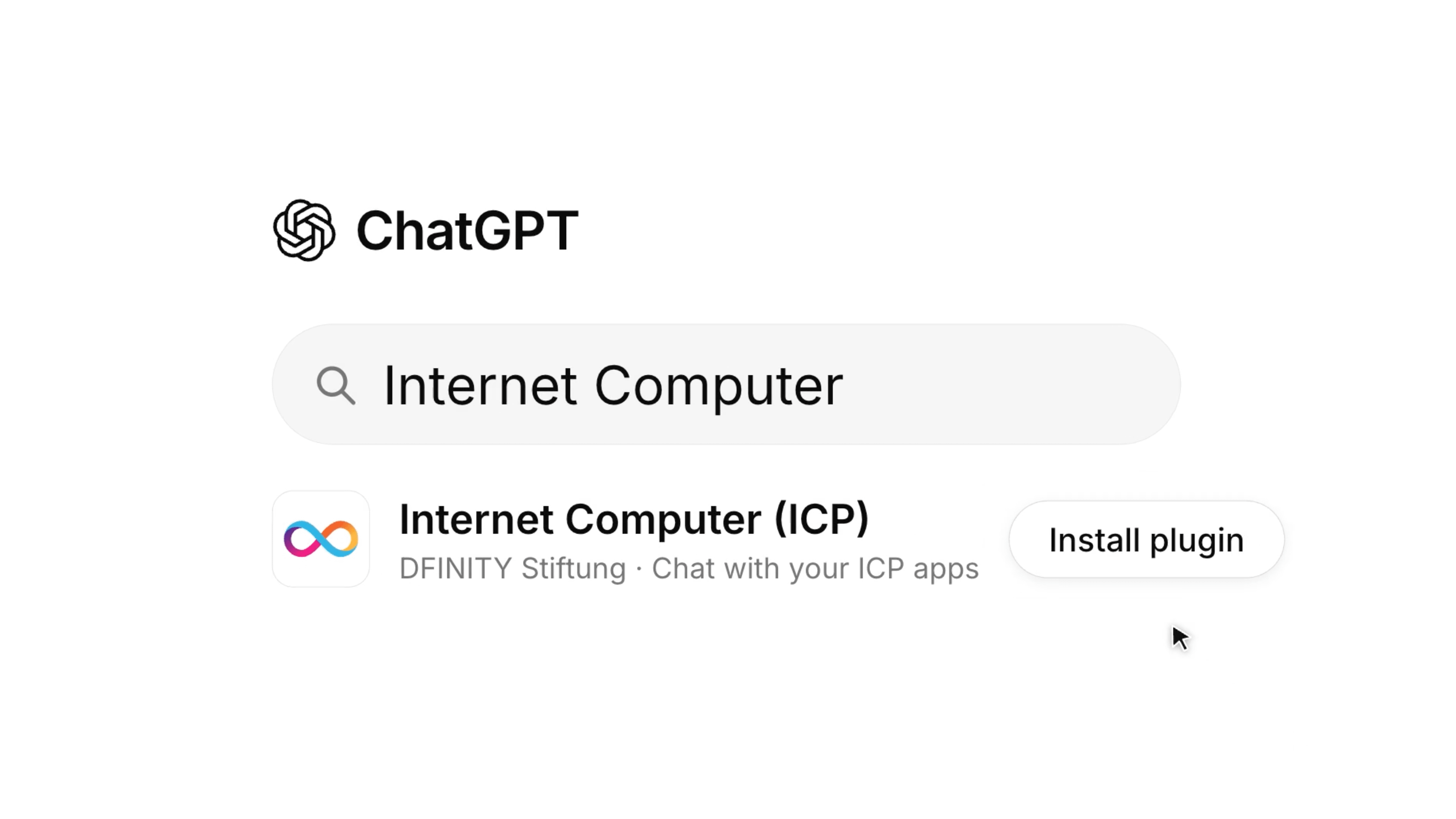
Interact with your ICP (Internet Computer) applications directly in ChatGPT.
The “Internet Computer” plugin is now available in the OpenAI ChatGPT plugin store.
The plugin connects ChatGPT to a range of applications on Internet Computer, allowing you to read their data in a conversation and even work with multiple applications at once.
Try asking:
“Would it be too hectic to plan a family vacation at the end of the month?”
“Find a day in August when Alex and I are both available, and schedule a one-on-one meeting.”
“Organize my to-do list and tell me what I should do next.”
Search for “Internet Computer” in the ChatGPT plugin store to find it.
Install the plugin:
https://chatgpt.com/plugins/plugin_asdk_app_6acc9f589e548191a4ffa5a30842ac2d
Internet Computer now supports Solana.
ICP applications can interact directly with Solana to read and write data.
Additionally, thanks to ckSOL, which is backed 1:1 by SOL, DeFi applications such as Liquidium, MULTI/DEX, and ICPSwap can integrate SOL natively—just like they integrate BTC, ETH, and ICP.
No cross-chain bridge required.
Interact with your ICP (Internet Computer) applications directly in ChatGPT.
The “Internet Computer” plugin is now available in the OpenAI ChatGPT plugin store.
The plugin connects ChatGPT to a range of applications on Internet Computer, allowing you to read their data in a conversation and even work with multiple applications at once.
Try asking:
“Would it be too hectic to plan a family vacation at the end of the month?”
“Find a day in August when Alex and I are both available, and schedule a one-on-one meeting.”
“Organize my to-do list and tell me what I should do next.”
Search for “Internet Computer” in the ChatGPT plugin store to find it.
Install the plugin:
https://chatgpt.com/plugins/plugin_asdk_app_6acc9f589e548191a4ffa5a30842ac2d
ICP applications can interact directly with Solana to read and write data.
Additionally, thanks to ckSOL, which is backed 1:1 by SOL, DeFi applications such as Liquidium, MULTI/DEX, and ICPSwap can integrate SOL natively—just like they integrate BTC, ETH, and ICP.
No cross-chain bridge required.
Interact with your ICP (Internet Computer) applications directly in ChatGPT.
The “Internet Computer” plugin is now available in the OpenAI ChatGPT plugin store.
The plugin connects ChatGPT to a range of applications on Internet Computer, allowing you to read their data in a conversation and even work with multiple applications at once.
Try asking:
“Would it be too hectic to plan a family vacation at the end of the month?”
“Find a day in August when Alex and I are both available, and schedule a one-on-one meeting.”
“Organize my to-do list and tell me what I should do next.”
Search for “Internet Computer” in the ChatGPT plugin store to find it.
Install the plugin:
https://chatgpt.com/plugins/plugin_asdk_app_6acc9f589e548191a4ffa5a30842ac2d
4
1.1k
The ICP ecosystem has made remarkable progress, and I’m excited about the future.
The ICP ecosystem has made remarkable progress, and I’m excited about the future.
1
1
5
1.2k
Big news: Why .ICP domains can change the way you use the internet
Big news: Why .ICP domains can change the way you use the internet
3
2
6
1.2k
Binance Square: Finally, a place where people who speak plainly don't get drowned out #币安广场征文活动 #币安广场 加密创作者 排行榜挑战 @BinanceSquareCN @binancezh
Binance Square: Finally, a place where people who speak plainly don't get drowned out #币安广场征文活动 #币安广场 加密创作者 排行榜挑战 @币安广场 @币安Binance华语
4
741

Article
What have you bought your parents with the money you made trading crypto?I know—the thing crypto folks hate most is someone showing up with a story to get your U.
So let me make this clear upfront: this isn’t telling you to add to your position, and I’m not asking you for money. You can read it just for the thought, then close it and walk away without spending a cent.
I’ve been in this space for eight years. I’ve seen coins double in a day, and I’ve seen them go to zero overnight.
We all have one thing in common: hundreds of group chats on our phones, still watching the charts at three in the morning, always saying, “Just wait a little longer and I’ll break even.” We’re great at crunching numbers—position sizes, profits and losses, odds, and when someone else will take the bag.
What have you bought your parents with the money you made trading crypto?
I know—the thing crypto folks hate most is someone showing up with a story to get your U.
So let me make this clear upfront: this isn’t telling you to add to your position, and I’m not asking you for money. You can read it just for the thought, then close it and walk away without spending a cent.
I’ve been in this space for eight years. I’ve seen coins double in a day, and I’ve seen them go to zero overnight.
We all have one thing in common: hundreds of group chats on our phones, still watching the charts at three in the morning, always saying, “Just wait a little longer and I’ll break even.” We’re great at crunching numbers—position sizes, profits and losses, odds, and when someone else will take the bag.
So let me make this clear upfront: this isn’t telling you to add to your position, and I’m not asking you for money. You can read it just for the thought, then close it and walk away without spending a cent.
I’ve been in this space for eight years. I’ve seen coins double in a day, and I’ve seen them go to zero overnight.
We all have one thing in common: hundreds of group chats on our phones, still watching the charts at three in the morning, always saying, “Just wait a little longer and I’ll break even.” We’re great at crunching numbers—position sizes, profits and losses, odds, and when someone else will take the bag.
1
4
919
Stop comparing ICP to projects like SOL or NEAR. ICP represents computing power, not just a token ledger. ICP is the gold of the new era.
Stop comparing ICP to projects like SOL or NEAR. ICP represents computing power, not just a token ledger. ICP is the gold of the new era.
4
3
1.1k
Verified

Article
ICP “Cloud Engines” launch roadmapICP “Cloud Engines” launch roadmap:
DFINITY is about to begin issuing vouchers containing enough Cycles (computing power/resource tokens) to create and keep a Cloud Engine running for over a month. The following phases will then unlock in sequence:
1. Agentic infrastructure ⚡️ Use tools like Claude Code, Codex, and Caffeine to rapidly build secure, autonomous, production-grade on-chain applications.
2. Open SaaS beta launch ⚡️ Install AIware apps as easily as mobile apps to run all kinds of business operations.
ICP “Cloud Engines” launch roadmap
ICP “Cloud Engines” launch roadmap:
DFINITY is about to begin issuing vouchers containing enough Cycles (computing power/resource tokens) to create and keep a Cloud Engine running for over a month. The following phases will then unlock in sequence:
1. Agentic infrastructure ⚡️ Use tools like Claude Code, Codex, and Caffeine to rapidly build secure, autonomous, production-grade on-chain applications.
2. Open SaaS beta launch ⚡️ Install AIware apps as easily as mobile apps to run all kinds of business operations.
DFINITY is about to begin issuing vouchers containing enough Cycles (computing power/resource tokens) to create and keep a Cloud Engine running for over a month. The following phases will then unlock in sequence:
1. Agentic infrastructure ⚡️ Use tools like Claude Code, Codex, and Caffeine to rapidly build secure, autonomous, production-grade on-chain applications.
2. Open SaaS beta launch ⚡️ Install AIware apps as easily as mobile apps to run all kinds of business operations.
2
1
4
1.7k
What the DFINITY–United Nations Development Programme (UNDP) agreement covers
What the DFINITY–United Nations Development Programme (UNDP) agreement covers
2
937
Verified
A few major recent tailwinds for ICP
Here are a few recent ICP catalysts I’m particularly bullish on:
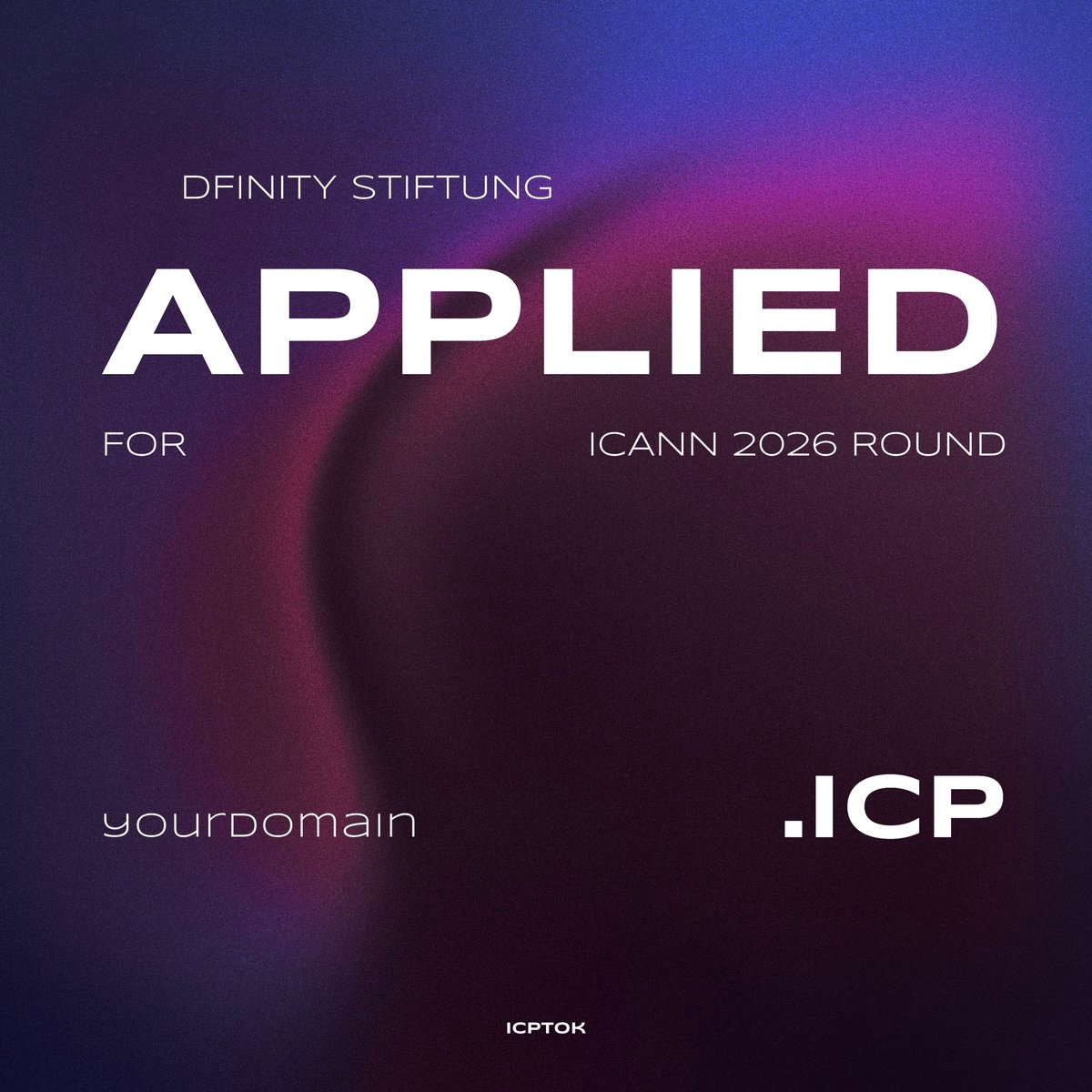
1. Its .icp generic top-level domain (gTLD) application has passed ICANN’s initial review. This is an attempt to bridge the traditional internet and on-chain computing. It’s still at an early stage, and full implementation may take several more years.
2. Record on-chain revenue: Monthly on-chain protocol revenue surpassed approximately $360,000 in October 2026, a new high. Weekly revenue has also come close to $97,000. Most of this revenue comes from developers converting ICP into and burning “cycles” to pay for computing and storage. Revenue needs to keep growing to meaningfully support the valuation.
3. A sovereign cloud technology stack for the AI era is already being used by governments and NGOs (including projects associated with Pakistan and the UNDP). Williams says this will be one of the most important turning points since the mainnet launched, targeting the trillion-dollar cloud market.
Progress on .icp domains will significantly increase ICP’s utility and visibility. These developments are positive for both short-term sentiment and long-term fundamentals.
Businesses have .com. Organizations have .org.
Our application for .icp domains has passed ICANN’s initial review and is now public as part of the 2026 round of applications for new generic top-level domains (gTLDs).
The Internet Computer is an extension of the internet. Once approved, sovereign software and AIware (artificial intelligence software) will have a top-level domain of their own.
May .icp come into being.
A few major recent tailwinds for ICP
Here are a few recent ICP catalysts I’m particularly bullish on:
1. Its .icp generic top-level domain (gTLD) application has passed ICANN’s initial review. This is an attempt to bridge the traditional internet and on-chain computing. It’s still at an early stage, and full implementation may take several more years.
2. Record on-chain revenue: Monthly on-chain protocol revenue surpassed approximately $360,000 in October 2026, a new high. Weekly revenue has also come close to $97,000. Most of this revenue comes from developers converting ICP into and burning “cycles” to pay for computing and storage. Revenue needs to keep growing to meaningfully support the valuation.
3. A sovereign cloud technology stack for the AI era is already being used by governments and NGOs (including projects associated with Pakistan and the UNDP). Williams says this will be one of the most important turning points since the mainnet launched, targeting the trillion-dollar cloud market.
Progress on .icp domains will significantly increase ICP’s utility and visibility. These developments are positive for both short-term sentiment and long-term fundamentals.
Businesses have .com. Organizations have .org.
Our application for .icp domains has passed ICANN’s initial review and is now public as part of the 2026 round of applications for new generic top-level domains (gTLDs).
The Internet Computer is an extension of the internet. Once approved, sovereign software and AIware (artificial intelligence software) will have a top-level domain of their own.
May .icp come into being.
Here are a few recent ICP catalysts I’m particularly bullish on:
1. Its .icp generic top-level domain (gTLD) application has passed ICANN’s initial review. This is an attempt to bridge the traditional internet and on-chain computing. It’s still at an early stage, and full implementation may take several more years.
2. Record on-chain revenue: Monthly on-chain protocol revenue surpassed approximately $360,000 in October 2026, a new high. Weekly revenue has also come close to $97,000. Most of this revenue comes from developers converting ICP into and burning “cycles” to pay for computing and storage. Revenue needs to keep growing to meaningfully support the valuation.
3. A sovereign cloud technology stack for the AI era is already being used by governments and NGOs (including projects associated with Pakistan and the UNDP). Williams says this will be one of the most important turning points since the mainnet launched, targeting the trillion-dollar cloud market.
Progress on .icp domains will significantly increase ICP’s utility and visibility. These developments are positive for both short-term sentiment and long-term fundamentals.
Businesses have .com. Organizations have .org.
Our application for .icp domains has passed ICANN’s initial review and is now public as part of the 2026 round of applications for new generic top-level domains (gTLDs).
The Internet Computer is an extension of the internet. Once approved, sovereign software and AIware (artificial intelligence software) will have a top-level domain of their own.
May .icp come into being.
2
6
1.8k
Findings of the United Nations Development Programme
Findings of the United Nations Development Programme
2
1.1k

Article
Last Week the Shorts Got Carried Out; This Week It’s the Longs: The Market Is Fair—it Takes TurnsThe People’s Poet · Crypto Weekly
National Day Holiday · Crypto Doesn’t Take a Holiday
During the National Day holiday, China’s A-share market was closed, Hong Kong stocks took it easy, but crypto never took a day off.
Last week I wrote that this industry had lived a whole lifetime in seven days. This week, it got through two quarters in four.
Last week’s scene was pretty respectable: Bitcoin climbed all the way to around 87,000, hitting its highest level since January. The entire market sat up again after its market cap climbed back above $3 trillion, and the market sentiment index returned to “Greed.” The reason for the rise was pretty interesting, too: it wasn’t driven by buyers piling in, but by shorts being forced to buy back. Of all the positions liquidated across the market over those two days, Ethereum shorts made up more than 90%; on one chain, shorts accounted for nearly 98%. In other words, it wasn’t that the bulls had such unshakable faith—the shorts were just too crowded, packed so tight they had to queue up to get carried out.
Last Week the Shorts Got Carried Out; This Week It’s the Longs: The Market Is Fair—it Takes Turns
The People’s Poet · Crypto Weekly
National Day Holiday · Crypto Doesn’t Take a Holiday
During the National Day holiday, China’s A-share market was closed, Hong Kong stocks took it easy, but crypto never took a day off.
Last week I wrote that this industry had lived a whole lifetime in seven days. This week, it got through two quarters in four.
Last week’s scene was pretty respectable: Bitcoin climbed all the way to around 87,000, hitting its highest level since January. The entire market sat up again after its market cap climbed back above $3 trillion, and the market sentiment index returned to “Greed.” The reason for the rise was pretty interesting, too: it wasn’t driven by buyers piling in, but by shorts being forced to buy back. Of all the positions liquidated across the market over those two days, Ethereum shorts made up more than 90%; on one chain, shorts accounted for nearly 98%. In other words, it wasn’t that the bulls had such unshakable faith—the shorts were just too crowded, packed so tight they had to queue up to get carried out.
National Day Holiday · Crypto Doesn’t Take a Holiday
During the National Day holiday, China’s A-share market was closed, Hong Kong stocks took it easy, but crypto never took a day off.
Last week I wrote that this industry had lived a whole lifetime in seven days. This week, it got through two quarters in four.
Last week’s scene was pretty respectable: Bitcoin climbed all the way to around 87,000, hitting its highest level since January. The entire market sat up again after its market cap climbed back above $3 trillion, and the market sentiment index returned to “Greed.” The reason for the rise was pretty interesting, too: it wasn’t driven by buyers piling in, but by shorts being forced to buy back. Of all the positions liquidated across the market over those two days, Ethereum shorts made up more than 90%; on one chain, shorts accounted for nearly 98%. In other words, it wasn’t that the bulls had such unshakable faith—the shorts were just too crowded, packed so tight they had to queue up to get carried out.
2
1.1k
Article
End-of-Q3 2026 Update ReportThe third quarter of 2026 was relatively quiet in terms of activity, but new ideas continued to emerge. ORIGYN made major upgrades to Minting Studio, enhanced support for Digital Product Passports, expanded the DAO treasury, and gave the community its first look at new features developed for AI agents. Here’s a detailed recap of all the developments.
Just two weeks left to migrate legacy OGY
If you still hold legacy OGY tokens, now is the time to act. The deadline to migrate them to the new SNS ledger is October 15, 2026—just two weeks away.
End-of-Q3 2026 Update Report
The third quarter of 2026 was relatively quiet in terms of activity, but new ideas continued to emerge. ORIGYN made major upgrades to Minting Studio, enhanced support for Digital Product Passports, expanded the DAO treasury, and gave the community its first look at new features developed for AI agents. Here’s a detailed recap of all the developments.
Just two weeks left to migrate legacy OGY
If you still hold legacy OGY tokens, now is the time to act. The deadline to migrate them to the new SNS ledger is October 15, 2026—just two weeks away.
Just two weeks left to migrate legacy OGY
If you still hold legacy OGY tokens, now is the time to act. The deadline to migrate them to the new SNS ledger is October 15, 2026—just two weeks away.
3
1.5k

Article
Liquidium vs. Nexo: Bitcoin-Backed Loans Compared (2026)Liquidium offers Bitcoin-backed stablecoin loans through lending pools, with variable interest rates and a simple, account-free borrowing process.
Nexo offers reusable crypto credit lines, with the option to receive funds in a bank account or stablecoins. Its advertised minimum rate depends on eligibility, collateral levels, and token tier.
Both offer flexible repayments. Before choosing, compare all fees, collateral requirements, and custody arrangements.
Both Liquidium and Nexo let you borrow against Bitcoin without selling it upfront. The right choice depends on how you want to receive funds, manage your collateral, and secure a suitable borrowing rate.
Liquidium vs. Nexo: Bitcoin-Backed Loans Compared (2026)
Liquidium offers Bitcoin-backed stablecoin loans through lending pools, with variable interest rates and a simple, account-free borrowing process.
Nexo offers reusable crypto credit lines, with the option to receive funds in a bank account or stablecoins. Its advertised minimum rate depends on eligibility, collateral levels, and token tier.
Both offer flexible repayments. Before choosing, compare all fees, collateral requirements, and custody arrangements.
Both Liquidium and Nexo let you borrow against Bitcoin without selling it upfront. The right choice depends on how you want to receive funds, manage your collateral, and secure a suitable borrowing rate.
Nexo offers reusable crypto credit lines, with the option to receive funds in a bank account or stablecoins. Its advertised minimum rate depends on eligibility, collateral levels, and token tier.
Both offer flexible repayments. Before choosing, compare all fees, collateral requirements, and custody arrangements.
Both Liquidium and Nexo let you borrow against Bitcoin without selling it upfront. The right choice depends on how you want to receive funds, manage your collateral, and secure a suitable borrowing rate.
3
1.2k
Log in to explore more content
Join global crypto users on Binance Square
⚡️ Get latest and useful information about crypto.
💬 Trusted by the world’s largest crypto exchange.
👍 Discover real insights from verified creators.
Email / Phone number