
黑白资本
4.6k Posts

黑白资本
Report
Block User
每日市场消息.资金流.政策解读实时更新|无返佣|无推广|谢谢关注我|祝粉丝发财
Open Trade
High-Frequency Trader
4.9 Years
61 Following
1.1K+ Followers
6.0K+ Liked
Posts
Portfolio
All
Quotes
·
--
Bitwise filed an S-1 yesterday to list a spot $ZEC ETF on the Texas Stock Exchange—but the entire exchange trades just $450 million a day.
The filing is refreshingly direct: the ticker will be ZEC, Coinbase will handle custody, and the fee hasn’t been set yet.
It’s the second time this year a privacy coin has knocked on the door of the U.S. stock market.
When I first saw the news, I didn’t look at the fee. I went straight to check the exchange’s trading volume.
The Texas Stock Exchange only opened up all 13,000 tickers on July 31 this year. In its first five days, it did $2.26 billion in volume.
That works out to $450 million a day.
The NYSE and Nasdaq do that kind of volume in a matter of minutes.
The ETF side is even narrower. The exchange didn’t get its first ETF listing until mid-September. Five were listed in six days, all small products worth a few hundred million dollars.
So, when it comes to the Texas exchange, “getting an ETF listed” really means opening another door.
It doesn’t mean opening the floodgates.
How much water flows through that door depends on ZEC’s own pool of liquidity.
ZEC currently trades a little over $700 million in spot volume a day, with $1.78 billion in open interest on futures.
Its market cap is $15.1 billion, with 16.97 million coins in circulation and a cap of 21 million.
The market reacted quickly to the news. ZEC closed at 904.64 on the 16th.
It closed at 968.54 on the 17th, up seven points in a day.
Today it’s at 936.6, having already given back half the gains.
That partial retracement is more telling than the seven-point jump: it suggests buyers acted when they heard the news, not after running the numbers.
To really run the numbers, you have to look at three things.
First, the pipeline. Filing an S-1 doesn’t mean it’s effective, and effectiveness doesn’t mean anyone will buy. In September, the SEC changed the rules so spot commodity ETPs can use a generic listing route, bypassing the 19(b) process, which could previously take up to 240 days. That saves time, not money.
Second, market-making. For an ETF to hold its price on the secondary market, authorized participants need to be able to create and redeem shares at any time, and borrow coins whenever they need them. ZEC’s daily spot volume isn’t enough for a major market maker to turn around in.
Third, access. Coinbase has solved the custody hurdle, but no one has solved the sales hurdle. At many brokerages and advisory platforms, privacy coins face a separate review. Whether clients can buy them, or whether they can be included in model portfolios, has nothing to do with where they’re listed.
What if none of these three things works?
Then “the ETF will bring in buyers” is still just a line in the script.
There’s also some background noise: there have been 126 applications for crypto ETPs this year alone. Bloomberg’s Seyffart says most of them will be liquidated within 18 months.
The small ETFs that survived the last cycle did so not because of their listing day, but because people kept subscribing to them for the six months afterward.
At the end of the day, what’s risen over the past two days is the price of expectations, not the price of capital.
The date it becomes effective isn’t what I care about. I care whether ZEC’s spot-market depth changes on that day.
If depth doesn’t change, the ETF is just a business card.
The story still works above 900. If it can’t hold there, the pullback should be treated as a purely sentiment-driven move.
One more thing worth noting: BlackRock, Citadel Securities, and Charles Schwab are behind the Texas exchange. It isn’t short on money. What it lacks is time—its own IPO business isn’t expected to launch until 2027.
Bitwise filed an S-1 yesterday to list a spot $ZEC ETF on the Texas Stock Exchange—but the entire exchange trades just $450 million a day.
The filing is refreshingly direct: the ticker will be ZEC, Coinbase will handle custody, and the fee hasn’t been set yet.
It’s the second time this year a privacy coin has knocked on the door of the U.S. stock market.
When I first saw the news, I didn’t look at the fee. I went straight to check the exchange’s trading volume.
The Texas Stock Exchange only opened up all 13,000 tickers on July 31 this year. In its first five days, it did $2.26 billion in volume.
That works out to $450 million a day.
The NYSE and Nasdaq do that kind of volume in a matter of minutes.
The ETF side is even narrower. The exchange didn’t get its first ETF listing until mid-September. Five were listed in six days, all small products worth a few hundred million dollars.
So, when it comes to the Texas exchange, “getting an ETF listed” really means opening another door.
It doesn’t mean opening the floodgates.
How much water flows through that door depends on ZEC’s own pool of liquidity.
ZEC currently trades a little over $700 million in spot volume a day, with $1.78 billion in open interest on futures.
Its market cap is $15.1 billion, with 16.97 million coins in circulation and a cap of 21 million.
The market reacted quickly to the news. ZEC closed at 904.64 on the 16th.
It closed at 968.54 on the 17th, up seven points in a day.
Today it’s at 936.6, having already given back half the gains.
That partial retracement is more telling than the seven-point jump: it suggests buyers acted when they heard the news, not after running the numbers.
To really run the numbers, you have to look at three things.
First, the pipeline. Filing an S-1 doesn’t mean it’s effective, and effectiveness doesn’t mean anyone will buy. In September, the SEC changed the rules so spot commodity ETPs can use a generic listing route, bypassing the 19(b) process, which could previously take up to 240 days. That saves time, not money.
Second, market-making. For an ETF to hold its price on the secondary market, authorized participants need to be able to create and redeem shares at any time, and borrow coins whenever they need them. ZEC’s daily spot volume isn’t enough for a major market maker to turn around in.
Third, access. Coinbase has solved the custody hurdle, but no one has solved the sales hurdle. At many brokerages and advisory platforms, privacy coins face a separate review. Whether clients can buy them, or whether they can be included in model portfolios, has nothing to do with where they’re listed.
What if none of these three things works?
Then “the ETF will bring in buyers” is still just a line in the script.
There’s also some background noise: there have been 126 applications for crypto ETPs this year alone. Bloomberg’s Seyffart says most of them will be liquidated within 18 months.
The small ETFs that survived the last cycle did so not because of their listing day, but because people kept subscribing to them for the six months afterward.
At the end of the day, what’s risen over the past two days is the price of expectations, not the price of capital.
The date it becomes effective isn’t what I care about. I care whether ZEC’s spot-market depth changes on that day.
If depth doesn’t change, the ETF is just a business card.
The story still works above 900. If it can’t hold there, the pullback should be treated as a purely sentiment-driven move.
One more thing worth noting: BlackRock, Citadel Securities, and Charles Schwab are behind the Texas exchange. It isn’t short on money. What it lacks is time—its own IPO business isn’t expected to launch until 2027.
The filing is refreshingly direct: the ticker will be ZEC, Coinbase will handle custody, and the fee hasn’t been set yet.
It’s the second time this year a privacy coin has knocked on the door of the U.S. stock market.
When I first saw the news, I didn’t look at the fee. I went straight to check the exchange’s trading volume.
The Texas Stock Exchange only opened up all 13,000 tickers on July 31 this year. In its first five days, it did $2.26 billion in volume.
That works out to $450 million a day.
The NYSE and Nasdaq do that kind of volume in a matter of minutes.
The ETF side is even narrower. The exchange didn’t get its first ETF listing until mid-September. Five were listed in six days, all small products worth a few hundred million dollars.
So, when it comes to the Texas exchange, “getting an ETF listed” really means opening another door.
It doesn’t mean opening the floodgates.
How much water flows through that door depends on ZEC’s own pool of liquidity.
ZEC currently trades a little over $700 million in spot volume a day, with $1.78 billion in open interest on futures.
Its market cap is $15.1 billion, with 16.97 million coins in circulation and a cap of 21 million.
The market reacted quickly to the news. ZEC closed at 904.64 on the 16th.
It closed at 968.54 on the 17th, up seven points in a day.
Today it’s at 936.6, having already given back half the gains.
That partial retracement is more telling than the seven-point jump: it suggests buyers acted when they heard the news, not after running the numbers.
To really run the numbers, you have to look at three things.
First, the pipeline. Filing an S-1 doesn’t mean it’s effective, and effectiveness doesn’t mean anyone will buy. In September, the SEC changed the rules so spot commodity ETPs can use a generic listing route, bypassing the 19(b) process, which could previously take up to 240 days. That saves time, not money.
Second, market-making. For an ETF to hold its price on the secondary market, authorized participants need to be able to create and redeem shares at any time, and borrow coins whenever they need them. ZEC’s daily spot volume isn’t enough for a major market maker to turn around in.
Third, access. Coinbase has solved the custody hurdle, but no one has solved the sales hurdle. At many brokerages and advisory platforms, privacy coins face a separate review. Whether clients can buy them, or whether they can be included in model portfolios, has nothing to do with where they’re listed.
What if none of these three things works?
Then “the ETF will bring in buyers” is still just a line in the script.
There’s also some background noise: there have been 126 applications for crypto ETPs this year alone. Bloomberg’s Seyffart says most of them will be liquidated within 18 months.
The small ETFs that survived the last cycle did so not because of their listing day, but because people kept subscribing to them for the six months afterward.
At the end of the day, what’s risen over the past two days is the price of expectations, not the price of capital.
The date it becomes effective isn’t what I care about. I care whether ZEC’s spot-market depth changes on that day.
If depth doesn’t change, the ETF is just a business card.
The story still works above 900. If it can’t hold there, the pullback should be treated as a purely sentiment-driven move.
One more thing worth noting: BlackRock, Citadel Securities, and Charles Schwab are behind the Texas exchange. It isn’t short on money. What it lacks is time—its own IPO business isn’t expected to launch until 2027.
1
21
·
--
136.8 million was moved out, but only $4.5 million actually went through the bridge.
According to Arkham, over three hours yesterday morning, 74,880 ETH were split into eight transfers from two hacker wallets and sent to seven new addresses.
You have to count it transaction by transaction.
I didn’t believe that number at first either. The first batch was 34,279 ETH: two transfers of 12,000 plus a small remainder. After 8 a.m., another wallet emptied 40,600 ETH, bringing the total to exactly 74,880.
By 2 p.m., only 2,463 ETH had actually gone through THORChain ($RUNE settlement) and been swapped for Bitcoin—about $4.5 million, or 3.3%.
The remaining 72,416 ETH are still sitting in seven addresses, six of them untouched. Of the 96 deposits, 52 were returned—a 43% refund rate.
Put simply, they’re not dumping coins on the market. They’re using tiny batches of 40 or 50 ETH to slowly work their way through the channel. Laundering more than 70,000 ETH will take weeks.
Only a break below 1,780 would invalidate this “grind it out over weeks” thesis. As long as it holds above that, it’s still just on-chain shuffling.
136.8 million was moved out, but only $4.5 million actually went through the bridge.
According to Arkham, over three hours yesterday morning, 74,880 ETH were split into eight transfers from two hacker wallets and sent to seven new addresses.
You have to count it transaction by transaction.
I didn’t believe that number at first either. The first batch was 34,279 ETH: two transfers of 12,000 plus a small remainder. After 8 a.m., another wallet emptied 40,600 ETH, bringing the total to exactly 74,880.
By 2 p.m., only 2,463 ETH had actually gone through THORChain ($RUNE settlement) and been swapped for Bitcoin—about $4.5 million, or 3.3%.
The remaining 72,416 ETH are still sitting in seven addresses, six of them untouched. Of the 96 deposits, 52 were returned—a 43% refund rate.
Put simply, they’re not dumping coins on the market. They’re using tiny batches of 40 or 50 ETH to slowly work their way through the channel. Laundering more than 70,000 ETH will take weeks.
Only a break below 1,780 would invalidate this “grind it out over weeks” thesis. As long as it holds above that, it’s still just on-chain shuffling.
According to Arkham, over three hours yesterday morning, 74,880 ETH were split into eight transfers from two hacker wallets and sent to seven new addresses.
You have to count it transaction by transaction.
I didn’t believe that number at first either. The first batch was 34,279 ETH: two transfers of 12,000 plus a small remainder. After 8 a.m., another wallet emptied 40,600 ETH, bringing the total to exactly 74,880.
By 2 p.m., only 2,463 ETH had actually gone through THORChain ($RUNE settlement) and been swapped for Bitcoin—about $4.5 million, or 3.3%.
The remaining 72,416 ETH are still sitting in seven addresses, six of them untouched. Of the 96 deposits, 52 were returned—a 43% refund rate.
Put simply, they’re not dumping coins on the market. They’re using tiny batches of 40 or 50 ETH to slowly work their way through the channel. Laundering more than 70,000 ETH will take weeks.
Only a break below 1,780 would invalidate this “grind it out over weeks” thesis. As long as it holds above that, it’s still just on-chain shuffling.

1
241
·
--
The bank drew a box around AI: a maximum of 5 million per transaction.
On November 18, CNBC reported that JPMorgan and Hyundai Card completed their first test. Hyundai Card’s AI submitted a foreign exchange application on its own and maintained euros in a Kinexys account.
First, the numbers: Kinexys has processed a cumulative 4 trillion since launch.
That averages 7 billion a day.
The agent’s limit is 1/1,400 of the daily transaction volume.
In July, Hyundai Card tested USDT transfers.
From transfer to arrival: 7 minutes.
What surprised me most at first: the framework was already in place, but they hadn’t dared to set a commercialization timeline.
Drawing the boundaries before discussing autonomy—that was the right order.
If the first half of 2027 slips, autonomous payments will remain a story on paper.
$USDT
#BlackAndWhiteAccounting
The bank drew a box around AI: a maximum of 5 million per transaction.
On November 18, CNBC reported that JPMorgan and Hyundai Card completed their first test. Hyundai Card’s AI submitted a foreign exchange application on its own and maintained euros in a Kinexys account.
First, the numbers: Kinexys has processed a cumulative 4 trillion since launch.
That averages 7 billion a day.
The agent’s limit is 1/1,400 of the daily transaction volume.
In July, Hyundai Card tested USDT transfers.
From transfer to arrival: 7 minutes.
What surprised me most at first: the framework was already in place, but they hadn’t dared to set a commercialization timeline.
Drawing the boundaries before discussing autonomy—that was the right order.
If the first half of 2027 slips, autonomous payments will remain a story on paper.
$USDT
#BlackAndWhiteAccounting
On November 18, CNBC reported that JPMorgan and Hyundai Card completed their first test. Hyundai Card’s AI submitted a foreign exchange application on its own and maintained euros in a Kinexys account.
First, the numbers: Kinexys has processed a cumulative 4 trillion since launch.
That averages 7 billion a day.
The agent’s limit is 1/1,400 of the daily transaction volume.
In July, Hyundai Card tested USDT transfers.
From transfer to arrival: 7 minutes.
What surprised me most at first: the framework was already in place, but they hadn’t dared to set a commercialization timeline.
Drawing the boundaries before discussing autonomy—that was the right order.
If the first half of 2027 slips, autonomous payments will remain a story on paper.
$USDT
#BlackAndWhiteAccounting

1
106
·
--
346 million tokens in the treasury, not a single one sold. The books have already taken a 60% hit—I didn’t believe the number at first glance either.
On November 17, Nasdaq-listed treasury company Evernorth ($XRP ) filed its first quarterly report.
Average purchase price: $2.44. Original cost: $847 million.
A total of $505 million in write-downs, recognized in two rounds over two years.
Because it is affiliated with Ripple, it can’t use the new fair-value accounting rules. Impairment losses recognize declines, but not gains.
If XRP rises again, can its book value recover too? No—not unless it actually sells.
Recalculating at today’s price of $0.9585, the book value would have to shrink by another $10 million.
A net loss of $33 million, offset by non-cash gains.
That’s the killer. The entire balance sheet is bet on one coin, and the rules only work one way.
I won’t revisit its valuation logic until XRP gets back above $1.05.
#BlackAndWhiteAccounting
346 million tokens in the treasury, not a single one sold. The books have already taken a 60% hit—I didn’t believe the number at first glance either.
On November 17, Nasdaq-listed treasury company Evernorth ($XRP ) filed its first quarterly report.
Average purchase price: $2.44. Original cost: $847 million.
A total of $505 million in write-downs, recognized in two rounds over two years.
Because it is affiliated with Ripple, it can’t use the new fair-value accounting rules. Impairment losses recognize declines, but not gains.
If XRP rises again, can its book value recover too? No—not unless it actually sells.
Recalculating at today’s price of $0.9585, the book value would have to shrink by another $10 million.
A net loss of $33 million, offset by non-cash gains.
That’s the killer. The entire balance sheet is bet on one coin, and the rules only work one way.
I won’t revisit its valuation logic until XRP gets back above $1.05.
#BlackAndWhiteAccounting
On November 17, Nasdaq-listed treasury company Evernorth ($XRP ) filed its first quarterly report.
Average purchase price: $2.44. Original cost: $847 million.
A total of $505 million in write-downs, recognized in two rounds over two years.
Because it is affiliated with Ripple, it can’t use the new fair-value accounting rules. Impairment losses recognize declines, but not gains.
If XRP rises again, can its book value recover too? No—not unless it actually sells.
Recalculating at today’s price of $0.9585, the book value would have to shrink by another $10 million.
A net loss of $33 million, offset by non-cash gains.
That’s the killer. The entire balance sheet is bet on one coin, and the rules only work one way.
I won’t revisit its valuation logic until XRP gets back above $1.05.
#BlackAndWhiteAccounting

1
118
·
--
Partly True
They want him back, but the board hasn’t even held a meeting. Even 180,000 signatures won’t make a difference.
On November 16, three people familiar with the matter told Reuters that his return wasn’t on the agenda; the focus was on the independent investigation.
The stock closed down 4%, at $156—the lowest since July 2025.
Put another way, $800 billion in market value vanished in five days, or $160 billion a day.
Musk and Sweeney have both been named, and the White House has weighed in, too.
Bottom line: signatures aren’t a vote. That much is clear to me.
$NVDA contracts are now at 158, just a little above the closing price. After-hours trading is betting on the earnings report.
Results come out after the bell tonight. Even strong numbers won’t answer the question of who takes over.
Only above 163 can we call this chapter closed.
#TheBottomLine
They want him back, but the board hasn’t even held a meeting. Even 180,000 signatures won’t make a difference.
On November 16, three people familiar with the matter told Reuters that his return wasn’t on the agenda; the focus was on the independent investigation.
The stock closed down 4%, at $156—the lowest since July 2025.
Put another way, $800 billion in market value vanished in five days, or $160 billion a day.
Musk and Sweeney have both been named, and the White House has weighed in, too.
Bottom line: signatures aren’t a vote. That much is clear to me.
$NVDA contracts are now at 158, just a little above the closing price. After-hours trading is betting on the earnings report.
Results come out after the bell tonight. Even strong numbers won’t answer the question of who takes over.
Only above 163 can we call this chapter closed.
#TheBottomLine
On November 16, three people familiar with the matter told Reuters that his return wasn’t on the agenda; the focus was on the independent investigation.
The stock closed down 4%, at $156—the lowest since July 2025.
Put another way, $800 billion in market value vanished in five days, or $160 billion a day.
Musk and Sweeney have both been named, and the White House has weighed in, too.
Bottom line: signatures aren’t a vote. That much is clear to me.
$NVDA contracts are now at 158, just a little above the closing price. After-hours trading is betting on the earnings report.
Results come out after the bell tonight. Even strong numbers won’t answer the question of who takes over.
Only above 163 can we call this chapter closed.
#TheBottomLine

1
2
988
·
--
One unit costs 1.67 million—and what you’re buying is a machine that doesn’t generate electricity.
Domestic demand is set to exceed 6,000 units in 2026, averaging 1.67 million per unit.
CCTV Finance, Nov. 17: Yuchai’s 2 MW generator orders are booked through October 2027.
Crankshafts are even tighter: inventories are down to zero, and orders are booked through 2028.
Customs data: from January to September this year, 4,547 units in this power range were exported, versus 3,339 for all of last year.
That money goes into the financial statements of whole-unit manufacturers. I did the math: not a cent of it goes to AI coins.
What it’s selling isn’t electricity—it’s the promise of “no power outages.”
$WLD is currently at 0.2619, with a low of 0.2591 today. If it falls back below 0.26, I won’t buy this narrative.
A full production schedule doesn’t mean profits.
#BlackAndWhiteAccounting
One unit costs 1.67 million—and what you’re buying is a machine that doesn’t generate electricity.
Domestic demand is set to exceed 6,000 units in 2026, averaging 1.67 million per unit.
CCTV Finance, Nov. 17: Yuchai’s 2 MW generator orders are booked through October 2027.
Crankshafts are even tighter: inventories are down to zero, and orders are booked through 2028.
Customs data: from January to September this year, 4,547 units in this power range were exported, versus 3,339 for all of last year.
That money goes into the financial statements of whole-unit manufacturers. I did the math: not a cent of it goes to AI coins.
What it’s selling isn’t electricity—it’s the promise of “no power outages.”
$WLD is currently at 0.2619, with a low of 0.2591 today. If it falls back below 0.26, I won’t buy this narrative.
A full production schedule doesn’t mean profits.
#BlackAndWhiteAccounting
Domestic demand is set to exceed 6,000 units in 2026, averaging 1.67 million per unit.
CCTV Finance, Nov. 17: Yuchai’s 2 MW generator orders are booked through October 2027.
Crankshafts are even tighter: inventories are down to zero, and orders are booked through 2028.
Customs data: from January to September this year, 4,547 units in this power range were exported, versus 3,339 for all of last year.
That money goes into the financial statements of whole-unit manufacturers. I did the math: not a cent of it goes to AI coins.
What it’s selling isn’t electricity—it’s the promise of “no power outages.”
$WLD is currently at 0.2619, with a low of 0.2591 today. If it falls back below 0.26, I won’t buy this narrative.
A full production schedule doesn’t mean profits.
#BlackAndWhiteAccounting

1
201
·
--
Annualized: -0.1%—Japan’s first negative reading in a year.
On November 16, the Cabinet Office released its preliminary estimate: forecast +0.3%, previous quarter +1.4%.
Breaking it down: private consumption -0.3%, down for a second consecutive quarter; external demand subtracted 0.6 percentage points; business investment +1.6%.
The Bank of Japan isn’t looking at GDP, but the GDP deflator: 2.4%, still a long way from its 2% target.
So the December 17–18 meeting is being priced for a 25-basis-point hike, bringing the rate to 1.5%.
That’s not how the math works.
A negative sign can’t outweigh 2.4% inflation. This is what I’m watching.
$ETH 1817: down 14.9% in seven days; Bitcoin is down 14.0%. A similar drop—this is a liquidity-driven market. Watch 1,800.
#BlackAndWhiteAccounting
Annualized: -0.1%—Japan’s first negative reading in a year.
On November 16, the Cabinet Office released its preliminary estimate: forecast +0.3%, previous quarter +1.4%.
Breaking it down: private consumption -0.3%, down for a second consecutive quarter; external demand subtracted 0.6 percentage points; business investment +1.6%.
The Bank of Japan isn’t looking at GDP, but the GDP deflator: 2.4%, still a long way from its 2% target.
So the December 17–18 meeting is being priced for a 25-basis-point hike, bringing the rate to 1.5%.
That’s not how the math works.
A negative sign can’t outweigh 2.4% inflation. This is what I’m watching.
$ETH 1817: down 14.9% in seven days; Bitcoin is down 14.0%. A similar drop—this is a liquidity-driven market. Watch 1,800.
#BlackAndWhiteAccounting
On November 16, the Cabinet Office released its preliminary estimate: forecast +0.3%, previous quarter +1.4%.
Breaking it down: private consumption -0.3%, down for a second consecutive quarter; external demand subtracted 0.6 percentage points; business investment +1.6%.
The Bank of Japan isn’t looking at GDP, but the GDP deflator: 2.4%, still a long way from its 2% target.
So the December 17–18 meeting is being priced for a 25-basis-point hike, bringing the rate to 1.5%.
That’s not how the math works.
A negative sign can’t outweigh 2.4% inflation. This is what I’m watching.
$ETH 1817: down 14.9% in seven days; Bitcoin is down 14.0%. A similar drop—this is a liquidity-driven market. Watch 1,800.
#BlackAndWhiteAccounting

2
193
·
--
On the same day, AI short films made money overseas while an AI coin fell.
On November 15, a Harry Potter fan-made spin-off by a vocational school student surpassed 30 million views overseas. Each episode cost 500 to 1,600 yuan to make; platform incentives offered up to 120,000 yuan in cash for a single video.
Let’s do the math: at 1,000 yuan per episode, 30 million views works out to 0.33 yuan per 10,000 views. The cost of making content has already hit rock bottom.
But $TAO fell more than 6% today, trading at 193, with $32.2 million in volume across 190,000 trades. The average trade was $170—not even one coin.
Break down those 190,000 trades, and they’re all tiny orders.
Tiny orders can’t sustain scarcity.
The math leads to a somewhat grim conclusion: AI is making content dirt cheap, which shows that inference is getting cheaper too. The high price of computing power depends on scarcity, not on a hit product.
Keep an eye on the 177 level. Today’s low broke below it, invalidating the whole rebound thesis.
#BlackAndWhiteAccounting
On the same day, AI short films made money overseas while an AI coin fell.
On November 15, a Harry Potter fan-made spin-off by a vocational school student surpassed 30 million views overseas. Each episode cost 500 to 1,600 yuan to make; platform incentives offered up to 120,000 yuan in cash for a single video.
Let’s do the math: at 1,000 yuan per episode, 30 million views works out to 0.33 yuan per 10,000 views. The cost of making content has already hit rock bottom.
But $TAO fell more than 6% today, trading at 193, with $32.2 million in volume across 190,000 trades. The average trade was $170—not even one coin.
Break down those 190,000 trades, and they’re all tiny orders.
Tiny orders can’t sustain scarcity.
The math leads to a somewhat grim conclusion: AI is making content dirt cheap, which shows that inference is getting cheaper too. The high price of computing power depends on scarcity, not on a hit product.
Keep an eye on the 177 level. Today’s low broke below it, invalidating the whole rebound thesis.
#BlackAndWhiteAccounting
On November 15, a Harry Potter fan-made spin-off by a vocational school student surpassed 30 million views overseas. Each episode cost 500 to 1,600 yuan to make; platform incentives offered up to 120,000 yuan in cash for a single video.
Let’s do the math: at 1,000 yuan per episode, 30 million views works out to 0.33 yuan per 10,000 views. The cost of making content has already hit rock bottom.
But $TAO fell more than 6% today, trading at 193, with $32.2 million in volume across 190,000 trades. The average trade was $170—not even one coin.
Break down those 190,000 trades, and they’re all tiny orders.
Tiny orders can’t sustain scarcity.
The math leads to a somewhat grim conclusion: AI is making content dirt cheap, which shows that inference is getting cheaper too. The high price of computing power depends on scarcity, not on a hit product.
Keep an eye on the 177 level. Today’s low broke below it, invalidating the whole rebound thesis.
#BlackAndWhiteAccounting

1
112
·
--
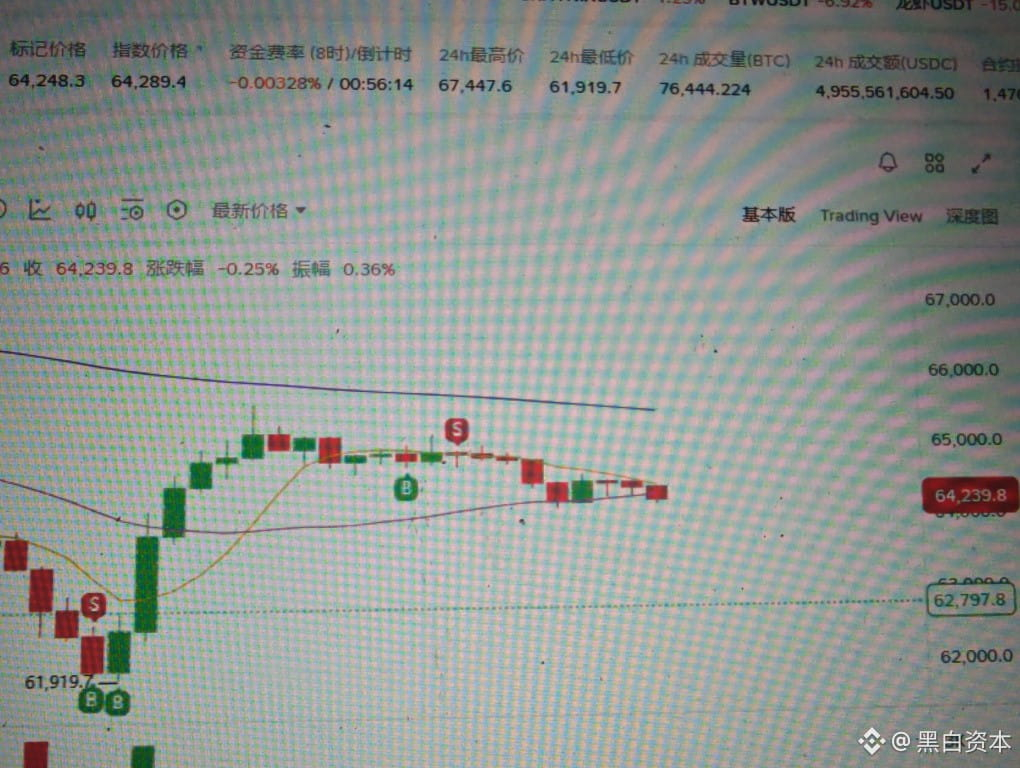
30D trade $BTC 68.6K USDT
$BTC This doesn't cause heartburn when you take it.
$BTC This doesn't cause heartburn when you take it.

1
85
·
--
$3.2 million worth of tokens created a $16 million hole.
On November 14, 48.36 million KAVA was withdrawn from Kava Lend, bridged to BNB Chain, and dumped for BNB on PancakeSwap. It was worth $3.2 million at the time.
An hour later, $KAVA fell 40%, hitting a low of 0.037—a new all-time low.
Today it’s at 0.0263, down 61.4% in 24 hours. Its market cap fell from $44 million to $28 million: a one-times dump caused a five-times hit.
Kava says there was no unlimited minting, and the problem was confined to the lending app. I believe half of that: no extra coins were minted, but the coins in the pool really were withdrawn.
That address still holds 47.6 million tokens, about as many as have already been dumped.
Three South Korean exchanges listed the coin, then suspended deposits and withdrawals for security reasons.
You can’t get out even if you want to.
Watch 0.025—the all-time low. There’s no price reference below it.
#BlackAndWhiteAccounting
$3.2 million worth of tokens created a $16 million hole.
On November 14, 48.36 million KAVA was withdrawn from Kava Lend, bridged to BNB Chain, and dumped for BNB on PancakeSwap. It was worth $3.2 million at the time.
An hour later, $KAVA fell 40%, hitting a low of 0.037—a new all-time low.
Today it’s at 0.0263, down 61.4% in 24 hours. Its market cap fell from $44 million to $28 million: a one-times dump caused a five-times hit.
Kava says there was no unlimited minting, and the problem was confined to the lending app. I believe half of that: no extra coins were minted, but the coins in the pool really were withdrawn.
That address still holds 47.6 million tokens, about as many as have already been dumped.
Three South Korean exchanges listed the coin, then suspended deposits and withdrawals for security reasons.
You can’t get out even if you want to.
Watch 0.025—the all-time low. There’s no price reference below it.
#BlackAndWhiteAccounting
On November 14, 48.36 million KAVA was withdrawn from Kava Lend, bridged to BNB Chain, and dumped for BNB on PancakeSwap. It was worth $3.2 million at the time.
An hour later, $KAVA fell 40%, hitting a low of 0.037—a new all-time low.
Today it’s at 0.0263, down 61.4% in 24 hours. Its market cap fell from $44 million to $28 million: a one-times dump caused a five-times hit.
Kava says there was no unlimited minting, and the problem was confined to the lending app. I believe half of that: no extra coins were minted, but the coins in the pool really were withdrawn.
That address still holds 47.6 million tokens, about as many as have already been dumped.
Three South Korean exchanges listed the coin, then suspended deposits and withdrawals for security reasons.
You can’t get out even if you want to.
Watch 0.025—the all-time low. There’s no price reference below it.
#BlackAndWhiteAccounting

2
1
5.3k
·
--
30D trade $BTC 68.6K USDT
$BTC This needle is way too tempting—I'll buy some and give it a try 😍
$BTC This needle is way too tempting—I'll buy some and give it a try 😍

2
968
Log in to explore more content
Join global crypto users on Binance Square
⚡️ Get latest and useful information about crypto.
💬 Trusted by the world’s largest crypto exchange.
👍 Discover real insights from verified creators.
Email / Phone number
Trending Topics
NvidiaBeatsEstimatesWith$130BQ4Outlook
17,261 views
224 Discussing
Nvidia Beats With $115.8 Billion in Revenue, Guides to $130 Billion and Adds $150 Billion Buyback
Binance News
·68 Likes
·47.1k views
AnthropicIPOPriceCouldExceed$80
22,019 views
194 Discussing
RussiaCentralBankAddsAlfaBankToCryptoExchangeRegister
0 views
18 Discussing