

HamlinWeb3
11 Posts

HamlinWeb3
Report
Block User
加密动态 #CRYPTO #BTC #ETH #WLFI #News
1 Following
67 Followers
17 Liked
Posts
·
--
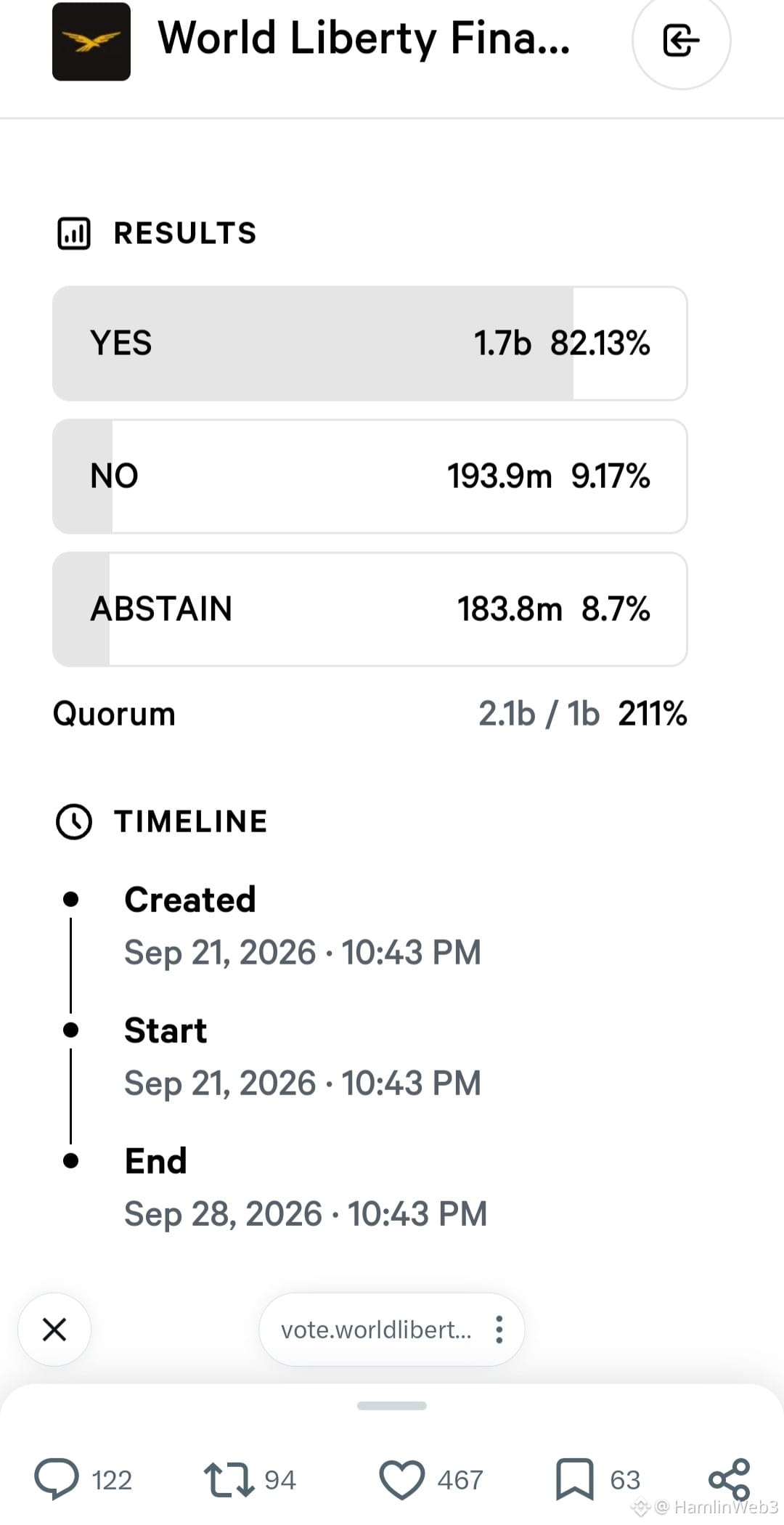
Latest News 🦅: The WLFI governance voting has just ended!
Total votes cast reached 2.1 billion, far exceeding the statutory quorum threshold of 1 billion votes, with a participation rate of 211%.
I. Votes in favor: 1.7 billion (82.13%)
II. Votes against: 193.9 million (9.17%)
III. Abstentions: 183.8 million (8.70%)
The proposal was initiated at 10:43 PM on September 21 and concluded at 10:43 PM on September 28.
Latest News 🦅: The WLFI governance voting has just ended!
Total votes cast reached 2.1 billion, far exceeding the statutory quorum threshold of 1 billion votes, with a participation rate of 211%.
I. Votes in favor: 1.7 billion (82.13%)
II. Votes against: 193.9 million (9.17%)
III. Abstentions: 183.8 million (8.70%)
The proposal was initiated at 10:43 PM on September 21 and concluded at 10:43 PM on September 28.
Total votes cast reached 2.1 billion, far exceeding the statutory quorum threshold of 1 billion votes, with a participation rate of 211%.
I. Votes in favor: 1.7 billion (82.13%)
II. Votes against: 193.9 million (9.17%)
III. Abstentions: 183.8 million (8.70%)
The proposal was initiated at 10:43 PM on September 21 and concluded at 10:43 PM on September 28.
305
·
--
Article
Crypto&WLFI News | Key Developments in the Crypto Space This Week and Next (Episode 2)This week, institutional funds first flowed back, and then the macro environment kept prices pinned down. Bitcoin moved from about 80,000 to around 87,400, but it failed to break through twice, and over the weekend it settled around 84,000. SOL rose from about $108 to near $122. Spot crypto ETFs totaled roughly $3 billion from Monday through Thursday. In terms of regulation, Congress continues to be in recess; on the 25th, the SEC’s Division of Corporation Finance updated its FAQ regarding token classification, staking credentials, repurchase arrangements, and investment contracts. On the 24th, the Federal Reserve released a GENIUS draft, and the CFTC updated its operational manual for licensed entities. World Liberty governance—its locked staking and governance participation—is in motion and has already surpassed the required quorum. TOKEN2049’s main event will be held on October 7–8; next week is the pre-conference week.
Crypto&WLFI News | Key Developments in the Crypto Space This Week and Next (Episode 2)
This week, institutional funds first flowed back, and then the macro environment kept prices pinned down. Bitcoin moved from about 80,000 to around 87,400, but it failed to break through twice, and over the weekend it settled around 84,000. SOL rose from about $108 to near $122. Spot crypto ETFs totaled roughly $3 billion from Monday through Thursday. In terms of regulation, Congress continues to be in recess; on the 25th, the SEC’s Division of Corporation Finance updated its FAQ regarding token classification, staking credentials, repurchase arrangements, and investment contracts. On the 24th, the Federal Reserve released a GENIUS draft, and the CFTC updated its operational manual for licensed entities. World Liberty governance—its locked staking and governance participation—is in motion and has already surpassed the required quorum. TOKEN2049’s main event will be held on October 7–8; next week is the pre-conference week.
688
·
--
Partly True
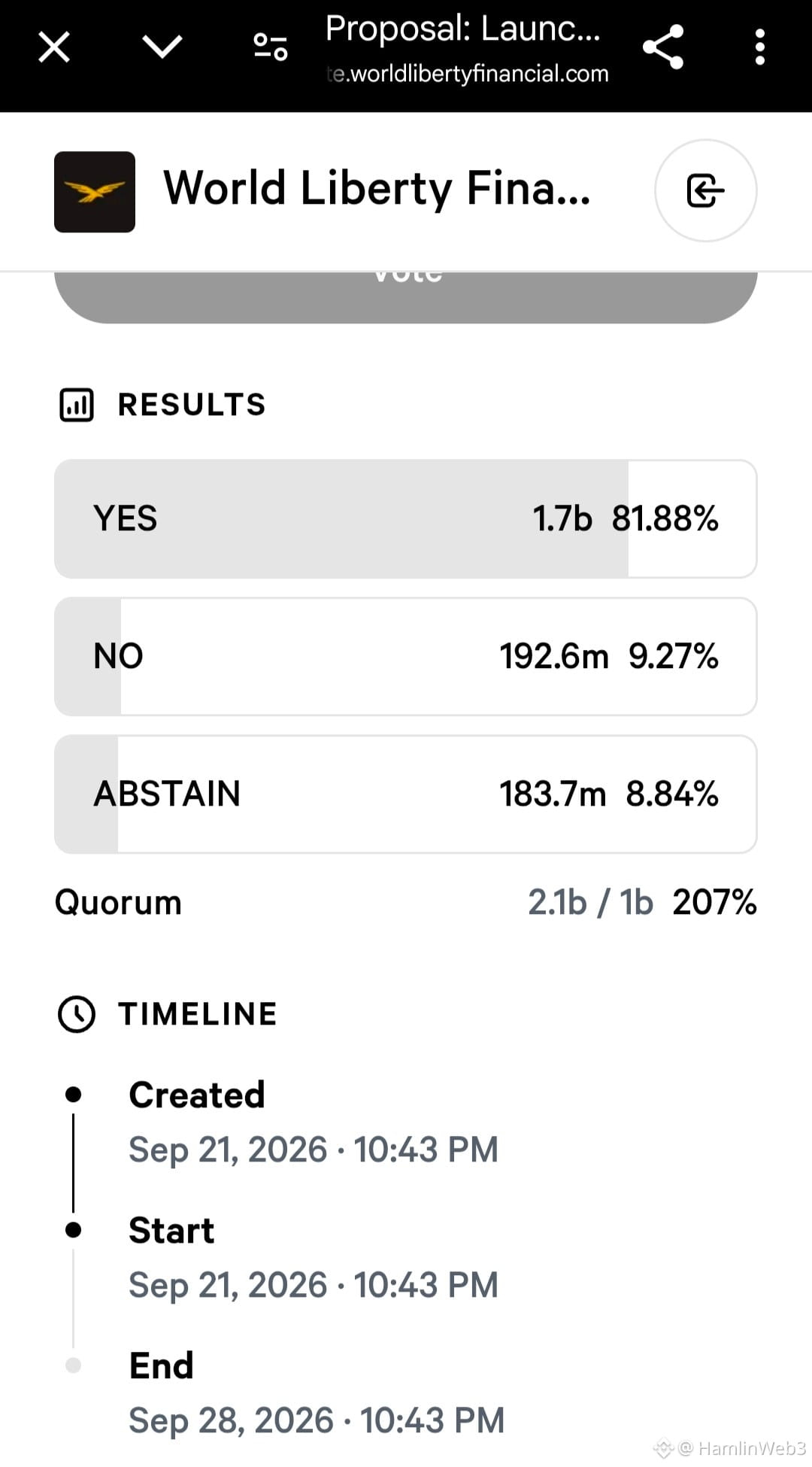
Latest 🦅: WLFI governance voting is open for only 3 days:
Total participation votes reach 2.1 billion, significantly exceeding the legal threshold of 1 billion votes, with a participation rate of 207%.
I. Votes in favor: 1.7 billion (81.88%)
II. Votes against: 192.6 million (9.27%)
III. Abstentions: 183.7 million (8.84%)
The proposal was initiated at 10:43 PM on September 21 and will end at 10:43 PM on September 28.
$WLFI
Latest 🦅: WLFI governance voting is open for only 3 days:
Total participation votes reach 2.1 billion, significantly exceeding the legal threshold of 1 billion votes, with a participation rate of 207%.
I. Votes in favor: 1.7 billion (81.88%)
II. Votes against: 192.6 million (9.27%)
III. Abstentions: 183.7 million (8.84%)
The proposal was initiated at 10:43 PM on September 21 and will end at 10:43 PM on September 28.
$WLFI
Total participation votes reach 2.1 billion, significantly exceeding the legal threshold of 1 billion votes, with a participation rate of 207%.
I. Votes in favor: 1.7 billion (81.88%)
II. Votes against: 192.6 million (9.27%)
III. Abstentions: 183.7 million (8.84%)
The proposal was initiated at 10:43 PM on September 21 and will end at 10:43 PM on September 28.
$WLFI
543
·
--
I sincerely hope the WLFI ecosystem can gain a solid foothold.
Core team members should focus their efforts on pushing forward on the front lines, rather than spreading their energy across large-scale promotion of other businesses.
USD 1 needs to be grounded in real-world, institution-driven application scenarios—not just newly added trading pairs on crypto exchanges and WLFI air drops.
AIFI must launch revenue-generating business segments as soon as possible, bringing shareholders and ecosystem token holders with promising hope……$WLFI
I sincerely hope the WLFI ecosystem can gain a solid foothold.
Core team members should focus their efforts on pushing forward on the front lines, rather than spreading their energy across large-scale promotion of other businesses.
USD 1 needs to be grounded in real-world, institution-driven application scenarios—not just newly added trading pairs on crypto exchanges and WLFI air drops.
AIFI must launch revenue-generating business segments as soon as possible, bringing shareholders and ecosystem token holders with promising hope……$WLFI
Core team members should focus their efforts on pushing forward on the front lines, rather than spreading their energy across large-scale promotion of other businesses.
USD 1 needs to be grounded in real-world, institution-driven application scenarios—not just newly added trading pairs on crypto exchanges and WLFI air drops.
AIFI must launch revenue-generating business segments as soon as possible, bringing shareholders and ecosystem token holders with promising hope……$WLFI
395
·
--
WIN-WIN: Washington 🇺🇸 × Beijing 🇨🇳
Latest🔥: On September 20, He Lifeng met in New York with Besant and Greer for about 8 hours.
The U.S. side said it was “very successful,” focusing on trade and artificial intelligence. Washington proposed establishing an AI safety notification mechanism; both sides agreed to hold further AI talks.
The Trade Commission is now in operation and is drawing up the first list of goods eligible for tariff reductions. Discussions also covered the trade truce set to expire in November and the supply of rare earths.
Xi Jinping will arrive on the 23rd; Trump will greet him at the airport. Talks at the White House and a state banquet are scheduled for the 24th. This will be their second leader meeting this year—after they met in Beijing in May.
No major breakthroughs yet—mainly to lay the groundwork for the summit.
$BTC $ETH
WIN-WIN: Washington 🇺🇸 × Beijing 🇨🇳
Latest🔥: On September 20, He Lifeng met in New York with Besant and Greer for about 8 hours.
The U.S. side said it was “very successful,” focusing on trade and artificial intelligence. Washington proposed establishing an AI safety notification mechanism; both sides agreed to hold further AI talks.
The Trade Commission is now in operation and is drawing up the first list of goods eligible for tariff reductions. Discussions also covered the trade truce set to expire in November and the supply of rare earths.
Xi Jinping will arrive on the 23rd; Trump will greet him at the airport. Talks at the White House and a state banquet are scheduled for the 24th. This will be their second leader meeting this year—after they met in Beijing in May.
No major breakthroughs yet—mainly to lay the groundwork for the summit.
$BTC $ETH
Latest🔥: On September 20, He Lifeng met in New York with Besant and Greer for about 8 hours.
The U.S. side said it was “very successful,” focusing on trade and artificial intelligence. Washington proposed establishing an AI safety notification mechanism; both sides agreed to hold further AI talks.
The Trade Commission is now in operation and is drawing up the first list of goods eligible for tariff reductions. Discussions also covered the trade truce set to expire in November and the supply of rare earths.
Xi Jinping will arrive on the 23rd; Trump will greet him at the airport. Talks at the White House and a state banquet are scheduled for the 24th. This will be their second leader meeting this year—after they met in Beijing in May.
No major breakthroughs yet—mainly to lay the groundwork for the summit.
$BTC $ETH
·
--
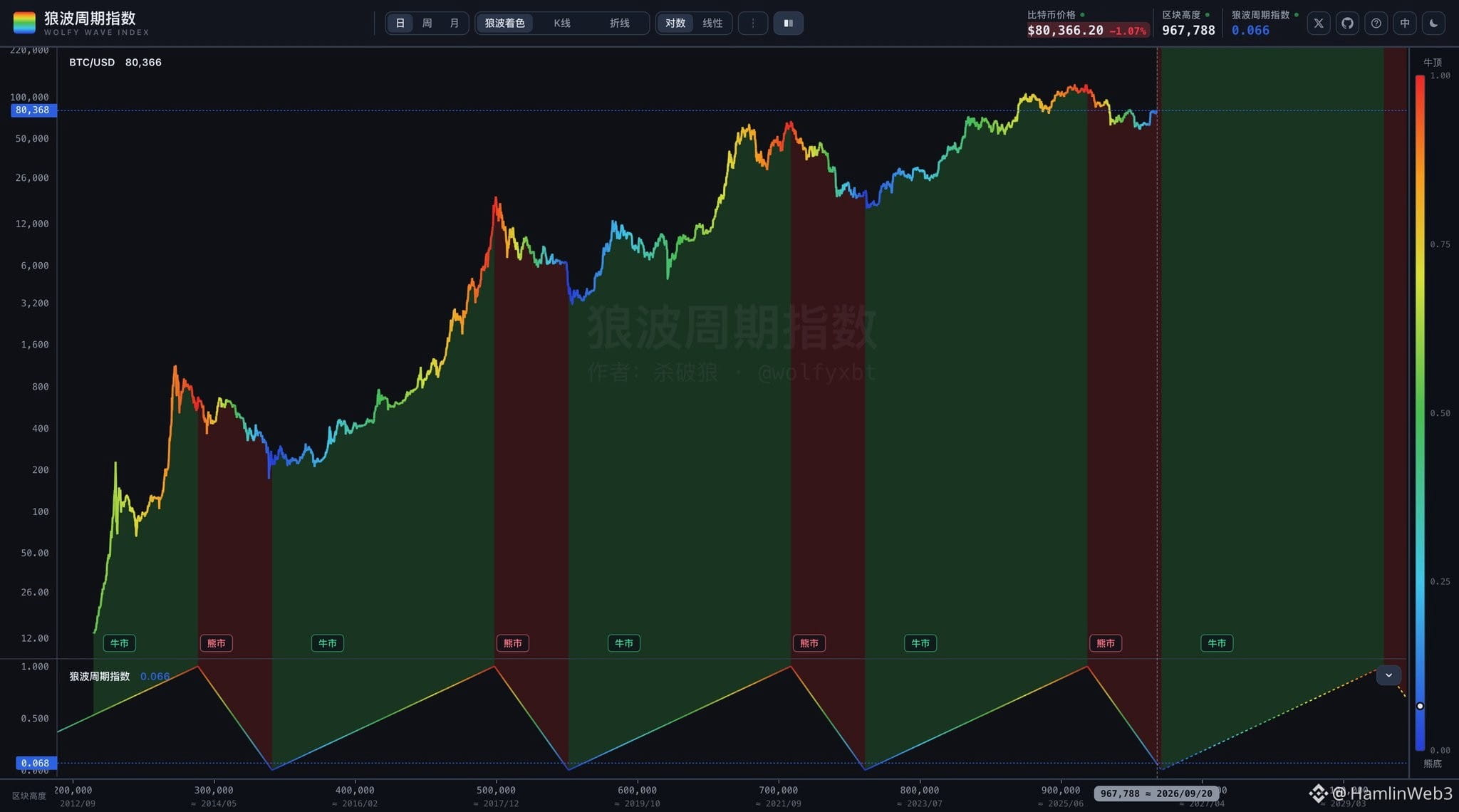
Is this chart accurate? There’s still a final width of 1 millimeter between the purple and green boundary. In past historical data, the trend has always been panic selling—can it happen this time?
$BTC $ETH
Is this chart accurate? There’s still a final width of 1 millimeter between the purple and green boundary. In past historical data, the trend has always been panic selling—can it happen this time?
$BTC $ETH
$BTC $ETH
232
·
--
Verified
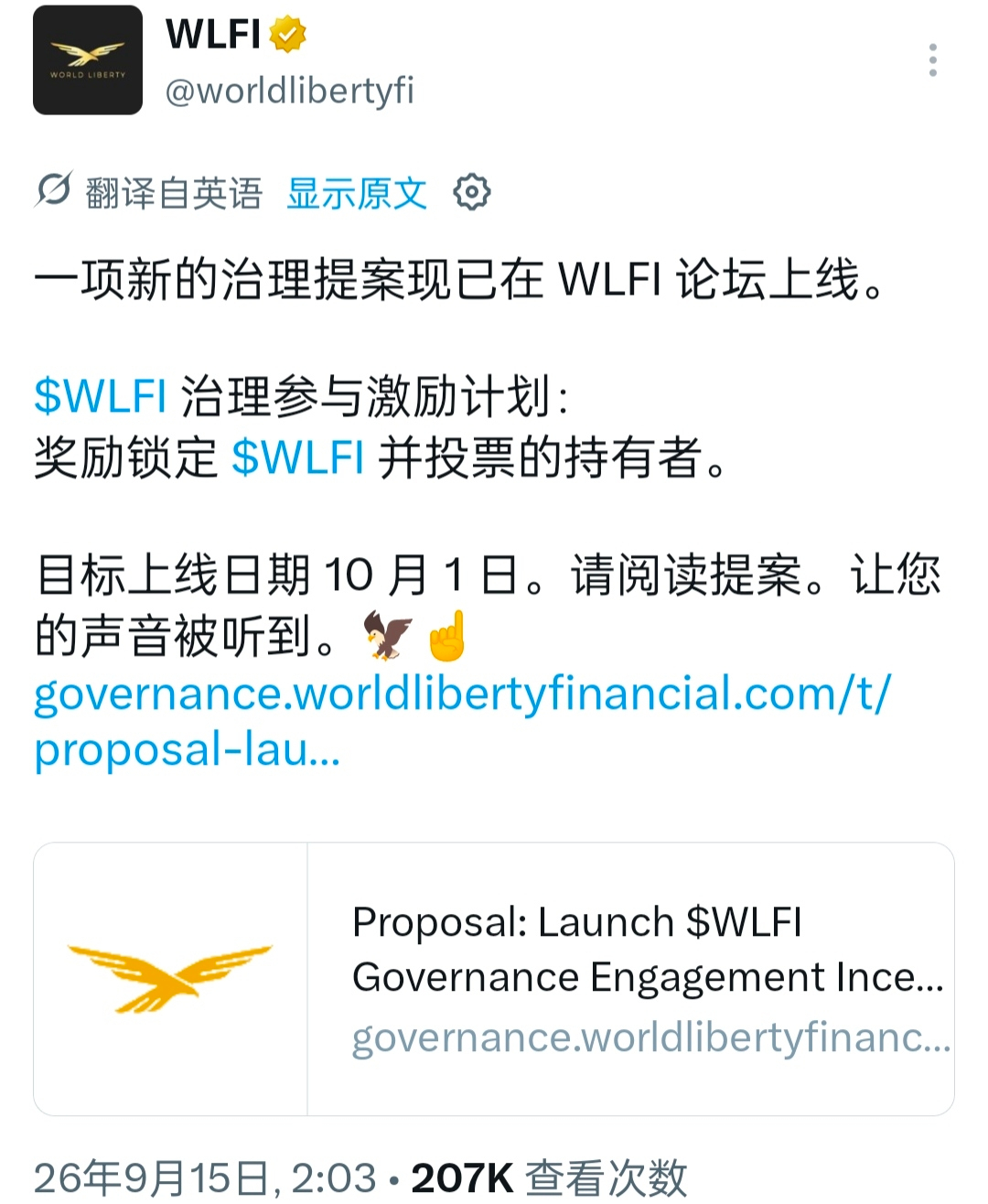
$WLFI started making me feel like it's credible.
They plan to launch governance and lockups around October 1: any tokens that are not locked will be sent to on-chain protocols, with at least 180 days locked, and you must personally vote once every 90 days to share in the rewards pool. Delegated voting does not count.
You can’t just sit back and collect money. After the lockup period ends, you can roll it over again and claim rewards. This pool isn’t just some random airdrop.
It’s funded by ecosystem fee injections—funding flows like World Liberty Markets, Dolomite, and the like—and they also said they’ll top it up every two weeks. If there are fewer early lockups, those who locked first get a larger share; if there are more people locking, liquidity will be pulled from the market first. Either way, both sides can support the price.
This protocol also has a 5% cap on voting power, so whales can’t just steamroll everyone. Whether you lock or not, your original voting power remains. Lockups are only used to unlock additional rewards.
What I like most is the cadence: they’ve promised at least one governance proposal every quarter. If you want rewards, you have to show up to vote. That also means the team can’t go silent for an entire quarter.
Lockup, voting, and driving progress—these three things are now tied together. It’s still a governance token, but it finally has a real use case: lock it up, and actually go vote. Liquidity is tightened first, and the community has to show up every quarter.
We’ll see how it plays out—this issue of how $WLFI’s value capture has always been criticized by the community. We’ll wait and see what happens when it goes live around October 1.
$WLFI #USD1+WLFI空投倒计时
$WLFI started making me feel like it's credible.
They plan to launch governance and lockups around October 1: any tokens that are not locked will be sent to on-chain protocols, with at least 180 days locked, and you must personally vote once every 90 days to share in the rewards pool. Delegated voting does not count.
You can’t just sit back and collect money. After the lockup period ends, you can roll it over again and claim rewards. This pool isn’t just some random airdrop.
It’s funded by ecosystem fee injections—funding flows like World Liberty Markets, Dolomite, and the like—and they also said they’ll top it up every two weeks. If there are fewer early lockups, those who locked first get a larger share; if there are more people locking, liquidity will be pulled from the market first. Either way, both sides can support the price.
This protocol also has a 5% cap on voting power, so whales can’t just steamroll everyone. Whether you lock or not, your original voting power remains. Lockups are only used to unlock additional rewards.
What I like most is the cadence: they’ve promised at least one governance proposal every quarter. If you want rewards, you have to show up to vote. That also means the team can’t go silent for an entire quarter.
Lockup, voting, and driving progress—these three things are now tied together. It’s still a governance token, but it finally has a real use case: lock it up, and actually go vote. Liquidity is tightened first, and the community has to show up every quarter.
We’ll see how it plays out—this issue of how $WLFI ’s value capture has always been criticized by the community. We’ll wait and see what happens when it goes live around October 1.
$WLFI #USD1+WLFI空投倒计时
They plan to launch governance and lockups around October 1: any tokens that are not locked will be sent to on-chain protocols, with at least 180 days locked, and you must personally vote once every 90 days to share in the rewards pool. Delegated voting does not count.
You can’t just sit back and collect money. After the lockup period ends, you can roll it over again and claim rewards. This pool isn’t just some random airdrop.
It’s funded by ecosystem fee injections—funding flows like World Liberty Markets, Dolomite, and the like—and they also said they’ll top it up every two weeks. If there are fewer early lockups, those who locked first get a larger share; if there are more people locking, liquidity will be pulled from the market first. Either way, both sides can support the price.
This protocol also has a 5% cap on voting power, so whales can’t just steamroll everyone. Whether you lock or not, your original voting power remains. Lockups are only used to unlock additional rewards.
What I like most is the cadence: they’ve promised at least one governance proposal every quarter. If you want rewards, you have to show up to vote. That also means the team can’t go silent for an entire quarter.
Lockup, voting, and driving progress—these three things are now tied together. It’s still a governance token, but it finally has a real use case: lock it up, and actually go vote. Liquidity is tightened first, and the community has to show up every quarter.
We’ll see how it plays out—this issue of how $WLFI ’s value capture has always been criticized by the community. We’ll wait and see what happens when it goes live around October 1.
$WLFI #USD1+WLFI空投倒计时
2
1
2.2k
·
--
The U.S. 🇺🇸 and Greenland 🇬🇱
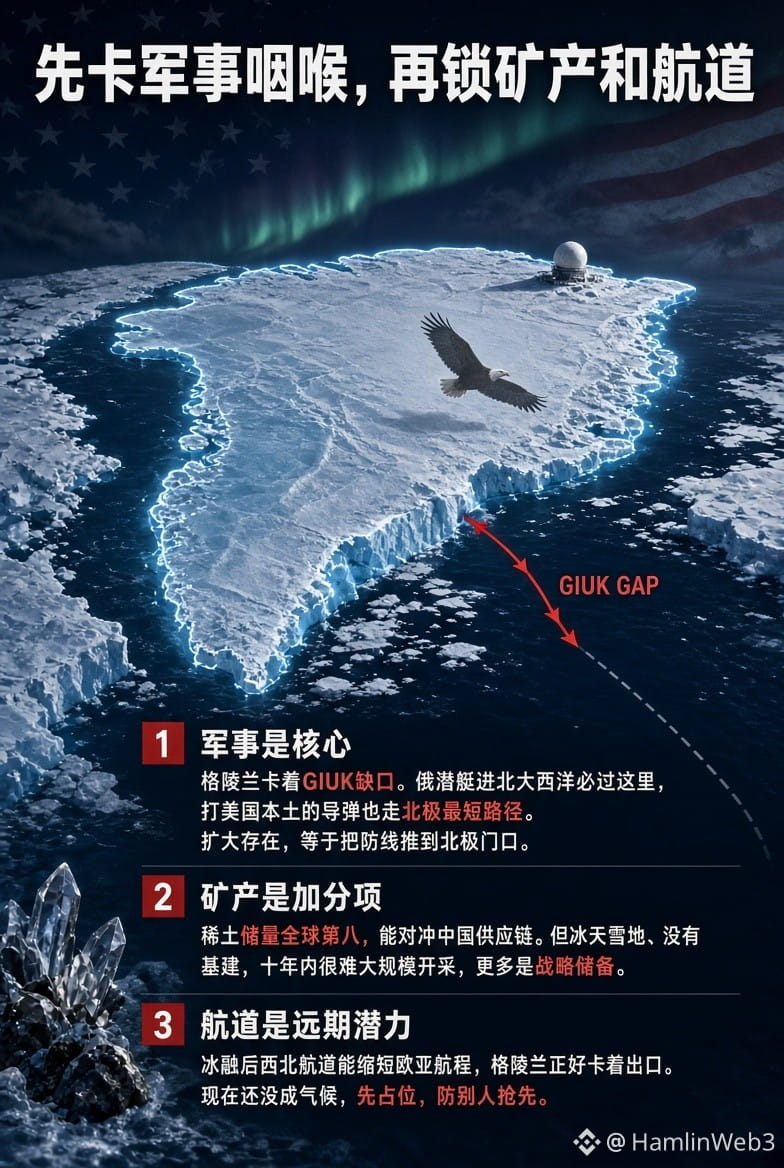
One sentence: block the military throat first, then secure resources and shipping routes.
1. Military position is the core. Greenland sits on the GIUK gap; Russian submarines entering the North Atlantic must pass through here, and missiles aimed at the U.S. mainland also take the shortest routes through the Arctic. Existing bases are essentially early-warning and anti-missile nodes. Expanding presence effectively pushes the defensive line right up to the Arctic doorstep.
2. Resources are a bonus. Greenland holds the world’s eighth-largest reserves of rare earths, which can help hedge against China’s supply chain. But in the freezing conditions, with little infrastructure, it’s difficult to scale up large-scale extraction within the next decade—more of a strategic stockpile than immediate production.
3. The Arctic shipping route is potential for the long term. As the ice melts, the Northwest Passage can shorten Europe-Asia voyage times, and Greenland happens to control the exit. It’s not yet a reality at scale—so the goal is to secure positions now and prevent others from moving first.
#格陵兰岛 $BTC $ETH $SOL
The U.S. 🇺🇸 and Greenland 🇬🇱
One sentence: block the military throat first, then secure resources and shipping routes.
1. Military position is the core. Greenland sits on the GIUK gap; Russian submarines entering the North Atlantic must pass through here, and missiles aimed at the U.S. mainland also take the shortest routes through the Arctic. Existing bases are essentially early-warning and anti-missile nodes. Expanding presence effectively pushes the defensive line right up to the Arctic doorstep.
2. Resources are a bonus. Greenland holds the world’s eighth-largest reserves of rare earths, which can help hedge against China’s supply chain. But in the freezing conditions, with little infrastructure, it’s difficult to scale up large-scale extraction within the next decade—more of a strategic stockpile than immediate production.
3. The Arctic shipping route is potential for the long term. As the ice melts, the Northwest Passage can shorten Europe-Asia voyage times, and Greenland happens to control the exit. It’s not yet a reality at scale—so the goal is to secure positions now and prevent others from moving first.
#格陵兰岛 $BTC $ETH $SOL
One sentence: block the military throat first, then secure resources and shipping routes.
1. Military position is the core. Greenland sits on the GIUK gap; Russian submarines entering the North Atlantic must pass through here, and missiles aimed at the U.S. mainland also take the shortest routes through the Arctic. Existing bases are essentially early-warning and anti-missile nodes. Expanding presence effectively pushes the defensive line right up to the Arctic doorstep.
2. Resources are a bonus. Greenland holds the world’s eighth-largest reserves of rare earths, which can help hedge against China’s supply chain. But in the freezing conditions, with little infrastructure, it’s difficult to scale up large-scale extraction within the next decade—more of a strategic stockpile than immediate production.
3. The Arctic shipping route is potential for the long term. As the ice melts, the Northwest Passage can shorten Europe-Asia voyage times, and Greenland happens to control the exit. It’s not yet a reality at scale—so the goal is to secure positions now and prevent others from moving first.
#格陵兰岛 $BTC $ETH $SOL
449
·
--
Article
Crypto & WLFI News | Summary of Key Developments in the Crypto Sector This Week and Next (Issue 1)This week I took two punches first, then climbed back up myself. On the 15th, the Clarity procedural vote didn’t pass; on the 16th, the Fed raised rates by 25 basis points. Bitcoin first crashed to around 76,000, then regained above 80,000 over the weekend. High-beta names like SOL and HYPE recovered even more aggressively. This week, World Liberty’s official account updated again: the governance lockup proposal was posted on the forum, Aster listed on WLFI/USD1, and they also shared a September USD1 trading map.
1. Market overview
At the start of the week, it hovered around 77,000. On the 15th and 16th, it moved down along with the bill and the policy meeting, with a low of roughly 76,000. On the 17th and 18th it rebounded, and by the weekend it returned to 80,000–81,000. After Labor Day, it largely regained the positions it had lost.
Crypto & WLFI News | Summary of Key Developments in the Crypto Sector This Week and Next (Issue 1)
This week I took two punches first, then climbed back up myself. On the 15th, the Clarity procedural vote didn’t pass; on the 16th, the Fed raised rates by 25 basis points. Bitcoin first crashed to around 76,000, then regained above 80,000 over the weekend. High-beta names like SOL and HYPE recovered even more aggressively. This week, World Liberty’s official account updated again: the governance lockup proposal was posted on the forum, Aster listed on WLFI/USD1, and they also shared a September USD1 trading map.
1. Market overview
At the start of the week, it hovered around 77,000. On the 15th and 16th, it moved down along with the bill and the policy meeting, with a low of roughly 76,000. On the 17th and 18th it rebounded, and by the weekend it returned to 80,000–81,000. After Labor Day, it largely regained the positions it had lost.
1. Market overview
At the start of the week, it hovered around 77,000. On the 15th and 16th, it moved down along with the bill and the policy meeting, with a low of roughly 76,000. On the 17th and 18th it rebounded, and by the weekend it returned to 80,000–81,000. After Labor Day, it largely regained the positions it had lost.
420
Log in to explore more content
Join global crypto users on Binance Square
⚡️ Get latest and useful information about crypto.
💬 Trusted by the world’s largest crypto exchange.
👍 Discover real insights from verified creators.
Email / Phone number
Trending Topics
UKFCAWinsCourtOrderToRecover851400Pounds
20,908 views
673 Discussing
🚨 CRYPTO REGULATION JUST ENTERED A NEW PHASE: THEY’RE NOT ONLY WRITING RULES — THEY’RE TAKING MONEY BACK.
The UK’s FCA has secured another court-backed asset recovery, reinforcing a broader enforcement push against unauthorized financial and crypto-related activity.
And look at what’s happening simultaneously:
🇬🇧 FCA → enforcement + asset recovery
🇺🇸 SEC → clearer rules for functional crypto assets
🇺🇸 Fed → formal stablecoin supervision under the GENIUS Act
That combination matters.
Regulators are no longer debating whether crypto belongs inside the financial system.
They’re increasingly deciding who gets access, what rules they follow, and what happens when those rules are broken.
The next crypto cycle may not be “regulation vs innovation.”
It may be regulated crypto vs everyone who can’t meet the standard. 👀
$COIN $CRCL $BTC
#ukfcawinscourtordertorecover851400pounds #ChainlinkLaunchesCCIP2WithEnterpriseVerification #GoldFallsTo$4144 #QNTFallsOver40%FromMorningHigh #USDTAdds845900HoldersInPast7Days
KimHotbae
·3 Likes
·4.2k views
ChainlinkLaunchesCCIP2WithEnterpriseVerification
35,517 views
870 Discussing
GoldFallsTo$4144
12,596 views
148 Discussing