
GhadiD
47 Posts

GhadiD
Report
Block User
Open Trade
Occasional Trader
2 Years
4 Following
15 Followers
72 Liked
Posts
Portfolio
All
Quotes
·
--
The biggest IPO in history just happened. The last time this happened, Bitcoin hit its low 19 days later.
Anthropic listed yesterday at $83 a share. It opened at $111.50, up 34%, then closed at $97.17, up 17%. The IPO raised about $81B, beating SpaceX's roughly $75B in June. Meanwhile $BTC fell to about $61,300 this morning, its lowest since July.
Here's the pattern, in 3 parts.
1. The drain before the listing
In the 24 days before Anthropic's debut, Bitcoin fell 22.7%. Before SpaceX's IPO in June, it fell 17% over the same stretch (Coinspeaker).
Traders sell their riskiest bets to make room for a giant listing. A $81B IPO needs cash from somewhere, and crypto is the easiest thing to sell.
2. What happened after SpaceX
Bitcoin didn't bounce right away. It kept sliding and bottomed at $57,800 on July 1, 19 days after the listing and 9% below listing day.
Then it was back to the listing-day price by day 23, and about 24% higher by day 75.
3. Why this time could be different
Wall Street isn't celebrating. The S&P 500, Nasdaq and Dow all fell about 2% yesterday. Rates are higher too: the 10-year yield touched 5.11%, and Fed minutes showed some officials open to hikes bigger than a quarter point.
In June, money left crypto for one stock. Now it's leaving almost everything.
The bigger lesson
Mega IPOs pull money out of crypto first. History says some of it can come back. But history only rhymes when the Fed isn't fighting you.
Repeat or no repeat: will BTC follow the SpaceX pattern, or keep falling?
#Bitcoin #Anthropic #IPO
Not financial advice.
361
·
--
There's a war in the Gulf, and gold just hit a 14-month low. Silver is down 62% from its peak.
The "safe havens" are falling with crypto. Here's the scoreboard, and why.
1. The scoreboard since the 2026 highs
• Gold: about $5,595 in January, now near $3,777. Down about 33%.
• Silver: about $121.65 in January, now near $45.65. Down about 62%.
• $BTC: about $126K in Oct 2025, now near $64K. Down about 49%.
Gold fell about 1.9% and silver about 3.4% today alone (Kitco). Tokenized gold like $PAXG follows the same price.
2. It's a rates trade, not a fear trade
Markets see a 95.7% chance of a Fed rate HIKE on Dec 8-9. The 10-year US yield is near 5%. The dollar is at a 19-month high.
Gold, silver and Bitcoin have one thing in common: they pay no interest. When a US bond pays 5% with no risk, holding a metal or a coin that pays nothing gets expensive. That's why even a war couldn't save gold.
3. Who is still buying
Central banks bought a net 675 tonnes of gold from January to September, up 6% from last year (World Gold Council). Goldman still sees gold at $4,150 by end of 2026, above today's price.
Speculators are leaving. Patient buyers are not. That's the difference between a crash and a transfer.
The bigger lesson
"Digital gold" was supposed to mean Bitcoin rises when trust falls. This year it's acting like gold in a different way: both fall when money gets expensive. The real safe haven right now is cash that pays 5%.
Which bounces first when the Fed finally pauses: gold, silver or Bitcoin?
$BTC $PAXG #Gold #Silver #Bitcoin
Not financial advice.
There's a war in the Gulf, and gold just hit a 14-month low. Silver is down 62% from its peak.
The "safe havens" are falling with crypto. Here's the scoreboard, and why.
1. The scoreboard since the 2026 highs
• Gold: about $5,595 in January, now near $3,777. Down about 33%.
• Silver: about $121.65 in January, now near $45.65. Down about 62%.
• $BTC : about $126K in Oct 2025, now near $64K. Down about 49%.
Gold fell about 1.9% and silver about 3.4% today alone (Kitco). Tokenized gold like $PAXG follows the same price.
2. It's a rates trade, not a fear trade
Markets see a 95.7% chance of a Fed rate HIKE on Dec 8-9. The 10-year US yield is near 5%. The dollar is at a 19-month high.
Gold, silver and Bitcoin have one thing in common: they pay no interest. When a US bond pays 5% with no risk, holding a metal or a coin that pays nothing gets expensive. That's why even a war couldn't save gold.
3. Who is still buying
Central banks bought a net 675 tonnes of gold from January to September, up 6% from last year (World Gold Council). Goldman still sees gold at $4,150 by end of 2026, above today's price.
Speculators are leaving. Patient buyers are not. That's the difference between a crash and a transfer.
The bigger lesson
"Digital gold" was supposed to mean Bitcoin rises when trust falls. This year it's acting like gold in a different way: both fall when money gets expensive. The real safe haven right now is cash that pays 5%.
Which bounces first when the Fed finally pauses: gold, silver or Bitcoin?
$BTC $PAXG #Gold #Silver #Bitcoin
Not financial advice.
379
·
--
Wall Street is about to put $90 billion into one AI stock. $BTC is sitting near $64K, and that's not a coincidence.
Today three things collide, and crypto is caught in the middle.
1. The biggest IPO ever is closing today
Anthropic's IPO books close at 4pm ET. Bloomberg reports it's priced at the top of its range or higher, raising over $90B at a value near $1.4 trillion.
Big funds need cash to get allocations, and some traders think part of that cash came from selling risk assets like crypto. Money that buys AI shares this week isn't buying Bitcoin.
2. Nvidia reports tonight with a new CEO
It's Nvidia's first earnings since Jensen Huang left, with interim CEO Colette Kress on the call. The stock is about 40% below its October high.
Crypto has traded like a tech stock all month. A bad night for Nvidia could hit BTC too. A good one could finally give it some relief.
3. Money is the most expensive in 20 years
The US 10-year yield is at 5.15%. Markets see a 93.5% chance the Fed RAISES rates in December (CME FedWatch). Fed official Musalem just talked about "several" more hikes before spring 2027.
When safe bonds pay over 5%, holding coins that pay nothing gets harder to justify.
The result: BTC is down 13% in a week, $ETH is near $1,820, and Fear & Greed sits at 13, deep in Extreme Fear.
The bigger lesson: crypto isn't moving on crypto news right now. It's moving on the price of money and the AI trade. Watch tonight's Nvidia call like it's a Bitcoin event, because this month it is.
Is BTC still "digital gold", or just another tech trade?
$BTC #ETH #Bitcoin #Nvidia #CryptoMarket
Not financial advice.
1
485
·
--
He built Nvidia for 33 years. It took 4 days to lose it.
On Nov 8, Jensen Huang admitted to staff he "was unfaithful" to his wife. On Nov 11, The New York Times reported a second relationship, this time with another Nvidia executive. That same night, the board accepted his resignation as CEO, president and director.
CFO Colette Kress is now interim CEO. $NVDA fell as much as 14% during Thursday's session.
Last time I wrote: Bitcoin doesn't have this problem. Now we can see what that problem costs.
1. The founder risk became real
Nvidia is worth over $4 trillion, and it still lost its leader in under a week over his private life.
Bitcoin's founder left in 2011 and never came back. No CEO, no board, no resignation letter. The network has kept producing blocks for 15 years without him. That isn't a slogan. It's a design choice, and this week shows why it matters.
2. But be honest: most of crypto is NOT Bitcoin
Many tokens depend on a founder, a foundation or a small team. If their leader faces a scandal, the token can react exactly like $NVDA did, or worse.
Before you hold any coin, ask yourself: what happens to this project if its founder disappears tomorrow?
3. Crypto is still trading with the AI story
On the same day Nvidia lost its CEO, $BTC was down about 3.6% near $72K, while the Nasdaq was roughly flat. The AI trade and crypto share the same nervous investors. When the biggest AI name shakes, risk appetite everywhere shrinks.
The bigger lesson
Companies run on people. Protocols run on rules. One can lose its leader in 4 days. The other was built so it never needed one.
Which coins in your portfolio would survive losing their founder?
$BTC $ETH #Nvidia #JensenHuang #Bitcoin
Not financial advice.
1
257
·
--
The world's most valuable chip company is now being investigated over one man. Bitcoin doesn't have that problem.
On Nov 8, Nvidia's board opened an independent investigation after reports that CEO Jensen Huang was the target of a foreign intelligence effort. The board says it has "no reason to believe" any secrets were compromised. Markets sold first anyway. $NVDA fell about 4.3% on Monday.
Here's why this matters for crypto, in 3 parts.
1. Key-person risk just got a price tag
Nvidia is a trillion-dollar company, and its stock still drops on headlines about one person. That's the hidden risk of anything built around a founder.
Bitcoin has no CEO to investigate, no board, and no one to pressure. You can argue about BTC's price all day. You can't put its founder under investigation.
2. Crypto followed the bad news, not the good
On Monday the Nasdaq closed more than 2% higher. Nvidia fell, but the rest of the market rallied.
Crypto didn't join the rally. $BTC slipped about 1% near $74,800 and $ETH fell around 4-5%.
That's the pattern to watch: crypto trades like a tech stock on bad days and like an outsider on good days. It takes the losses without the gains.
3. The AI trade and crypto are now tied together
Many Bitcoin miners now also run AI data centers, renting out their power and machines to AI customers. When the AI trade shakes, their stocks shake too.
And on the same day, miner MARA disclosed it sold 13,597 BTC at an average of about $81,039, roughly $1.1B. Even miners are turning coins into cash.
The bigger lesson
Most traders watch charts. The bigger moves this year started outside crypto: chip stocks, AI spending and now a CEO investigation. If you only watch crypto, you see the move after it's already happened.
Do you think crypto can ever separate from tech stocks, or is it stuck with them now?
$BTC $ETH #Nvidia #AI #CryptoMarket
Not financial advice.
1
384
·
--
Five governments wrote stablecoin rules in one week, and they all agree on one thing
While everyone watched the Binance hack, five governments quietly rewrote the rules for the money you trade with.
All in the same week of October:
🇺🇸 US (Oct 21): the OCC finalized its GENIUS Act rules for stablecoin issuers, covering reserves, redemption and custody. They take effect Jan 18, 2027.
🇨🇦 Canada (Oct 24): proposed rules require 100% reserves, redemption within 3 business days, fees capped at 1%, and no interest paid just for holding.
🇰🇷 South Korea (Oct 23): the Bank of Korea plans to amend its foreign-exchange law so stablecoins count as payment instruments.
🇹🇭 Thailand (Oct 19): opened consultation on baht stablecoins. Reserves must sit in bank deposits and can't earn interest.
🇭🇰 Hong Kong (Oct 23): HSBC's HKD stablecoin went live on the PayMe app, reported at 3.3M+ users.
The pattern nobody's saying out loud: governments have stopped trying to kill stablecoins. They're domesticating them. And look at the shared rule: holders don't get yield.
Why? Because a stablecoin that pays interest competes directly with bank deposits. Regulators are letting stablecoins be money, but not savings accounts.
What that means for us:
• Expect more local-currency stablecoins (KRW, THB, HKD, CAD), not just USD.
• "Earn" products built on stablecoins will keep getting squeezed in regulated markets.
• Issuers with a license win. Offshore issuers face more walls.
Is your country building its own stablecoin rules yet? Tell me where you're reading from.
$USDT $USDC #Stablecoins #CryptoRegulation Not financial advice.
104
·
--
Binance got hacked. So why did $AAVE drop more than $BNB?
In the first 24 hours after the news:
• $BNB: down 8%
• $BTC: down 4.9%
• $AAVE: down 11.3%
• $UNI: down 10.7%
Aave and Uniswap weren't breached. They still fell harder than the token of the exchange that was. That's not logic. That's memory.
The FTX reflex. Since 2022, the words "withdrawals paused" trigger one instinct: get out of everything, ask questions later. Traders don't sell what's broken. They sell what they can sell fastest, and what feels most exposed.
The second-order fear. Aave temporarily froze USDT and USDC as collateral for new loans as a precaution. Sensible risk control, but to a scared crowd "freeze" reads like "problem", so DeFi got repriced on a headline.
The gauge. The Fear & Greed Index dropped to 30, its first visit to "fear" since August. Sentiment tends to overshoot in both directions, which is why extreme readings are worth noting but not worth trading on alone.
The lesson I keep relearning: in a panic, price shows you what people are afraid of, not what actually happened. The gap between the two is where the real analysis is.
For the record: Binance's Nov 2 proof of reserves showed major assets like BTC, ETH and USDT backed 1:1. The fear was louder than the facts.
Did you sell anything last week you'd now rather have kept?
$BNB $AAVE $UNI #CryptoPsychology #FearAndGreed
Not financial advice.
119
·
--
Bitcoin’s worst October since 2014 wasn’t oje thing, it was three
18,270 BTC left a Binance hot wallet in 11 transactions on Thursday. That's more
Bitcoin than Tesla owns.
But the hack isn't the whole reason $BTC just had its worst October since 2014.
Three hits landed in the same 48 hours:
1. The hack. About $6.3B in crypto was taken from Binance hot wallets, reported as the largest crypto theft on record. Blockchain firm TRM Labs links it "with high confidence" to North Korea's TraderTraitor group, the same unit the FBI blamed for
Bybit's $1.5B loss in 2025.
2. The Al trade cracked. Intel fell nearly 30% at Friday's open on a weak Q4 outlook.
The Nasdaq was down as much as 3.4% on the day. When tech bleeds, funds sell whatever is liquid, and BTC trades 24/7.
3. Even gold broke. Gold slipped under $3,900, a one-year low. When the "safe" asset is sold too, it's usually a cash grab, not a crypto-specific verdict.
Result: BTC down roughly 8% for October, trading near $78K, about 38% below its ~$126K peak from Oct 2025, with around $1.6B in liquidations after the hack.
What I'm watching instead of the price:
• The 19 hacker addresses (17 held exactly 1,000 BTC each as of Friday). If those coins start moving toward mixers or OTC desks, that's supply.
• Binance says it has replenished about 95% of the affected assets and set aside
$6.34B of its own funds. The full proof-of-reserves report is expected Tuesday, Nov 3.
• Withdrawals reopened today in phases, starting with BTC. Other networks follow after security checks.
Price is the last thing to move and the first thing people talk about. The causes were visible 48 hours earlier.
Which of the three hit your portfolio hardest?
$BTC $BNB #Bitcoin #BinanceHack
Not financial advice.
{spot}(BTCUSDT)
Bitcoin’s worst October since 2014 wasn’t oje thing, it was three
18,270 BTC left a Binance hot wallet in 11 transactions on Thursday. That's more
Bitcoin than Tesla owns.
But the hack isn't the whole reason $BTC just had its worst October since 2014.
Three hits landed in the same 48 hours:
1. The hack. About $6.3B in crypto was taken from Binance hot wallets, reported as the largest crypto theft on record. Blockchain firm TRM Labs links it "with high confidence" to North Korea's TraderTraitor group, the same unit the FBI blamed for
Bybit's $1.5B loss in 2025.
2. The Al trade cracked. Intel fell nearly 30% at Friday's open on a weak Q4 outlook.
The Nasdaq was down as much as 3.4% on the day. When tech bleeds, funds sell whatever is liquid, and BTC trades 24/7.
3. Even gold broke. Gold slipped under $3,900, a one-year low. When the "safe" asset is sold too, it's usually a cash grab, not a crypto-specific verdict.
Result: BTC down roughly 8% for October, trading near $78K, about 38% below its ~$126K peak from Oct 2025, with around $1.6B in liquidations after the hack.
What I'm watching instead of the price:
• The 19 hacker addresses (17 held exactly 1,000 BTC each as of Friday). If those coins start moving toward mixers or OTC desks, that's supply.
• Binance says it has replenished about 95% of the affected assets and set aside
$6.34B of its own funds. The full proof-of-reserves report is expected Tuesday, Nov 3.
• Withdrawals reopened today in phases, starting with BTC. Other networks follow after security checks.
Price is the last thing to move and the first thing people talk about. The causes were visible 48 hours earlier.
Which of the three hit your portfolio hardest?
$BTC $BNB #Bitcoin #BinanceHack
Not financial advice.
76
·
--
Bullish


BullishBanter
·
--
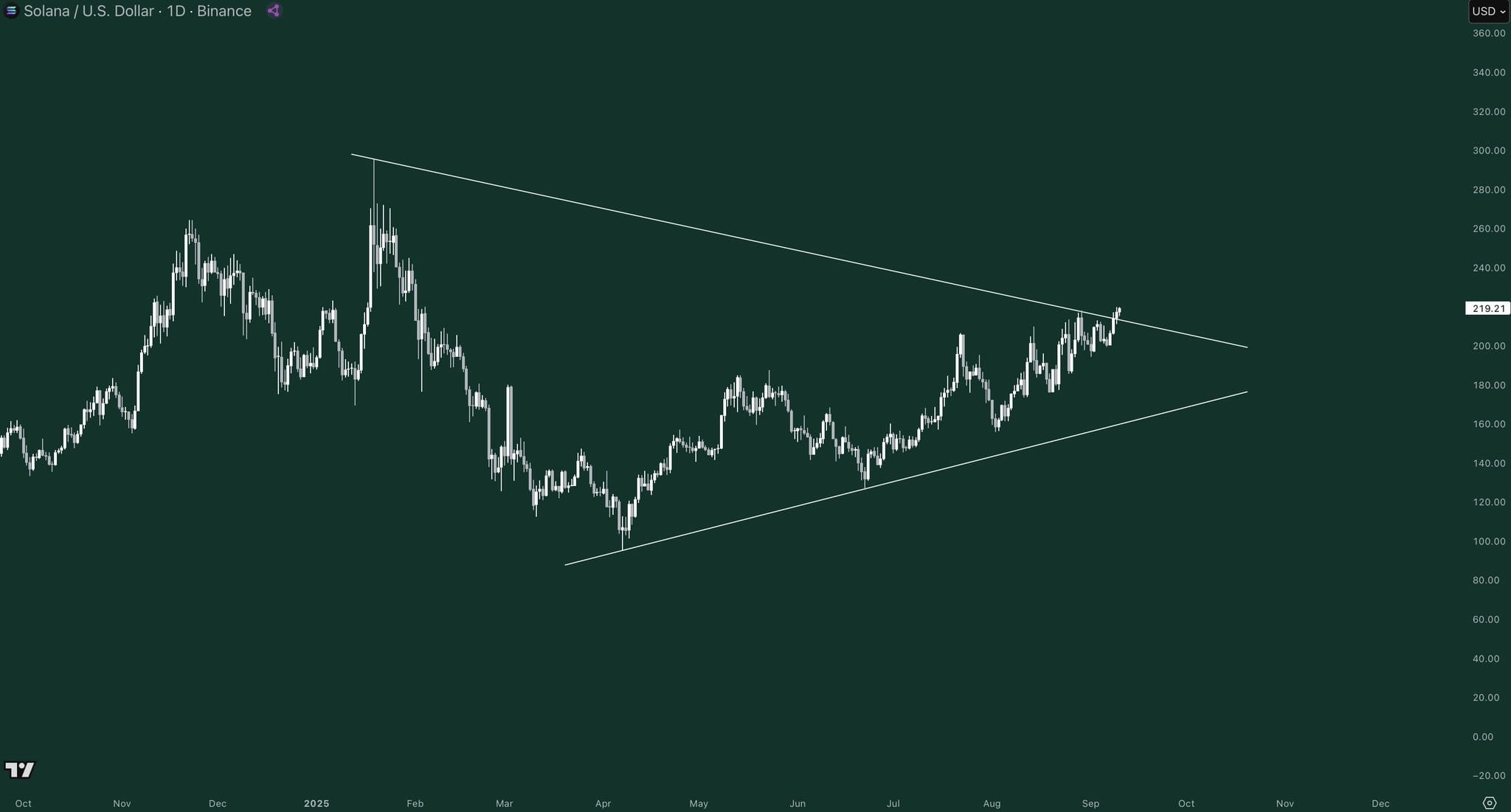
$SOL is on its way to one of the most OUTRAGEOUS runs we have EVER seen.
There is nothing ANYONE can do to stop it.
Do you understand?
$SOL
There is nothing ANYONE can do to stop it.
Do you understand?
$SOL
1
3
·
--
Ethereum’s Big Run 🚀
Ethereum has been on fire lately — exploding in price over the past few days and reminding us why patience pays in crypto.
Back in March, $ETH dipped to a much lower price, and for those who spotted the opportunity and bought in, that moment turned out to be pure gold. 📈
The lesson? Every dip carries potential. In crypto, downturns often plant the seeds for the next big rally. 🌱
Where do you think ETH is headed next? $ETH
{spot}(ETHUSDT)
#Ethereum #ETH #CryptoTrading #BinanceSquare #BuyTheDip
Ethereum’s Big Run 🚀
Ethereum has been on fire lately — exploding in price over the past few days and reminding us why patience pays in crypto.
Back in March, $ETH dipped to a much lower price, and for those who spotted the opportunity and bought in, that moment turned out to be pure gold. 📈
The lesson? Every dip carries potential. In crypto, downturns often plant the seeds for the next big rally. 🌱
Where do you think ETH is headed next? $ETH
#Ethereum #ETH #CryptoTrading #BinanceSquare #BuyTheDip
2
74
·
--
Ethereum’s Rollercoaster Ride!
In the last 24 hours, Ethereum $ETH experienced a sharp dip — shaking out weak hands — before bouncing back with strength today. 📉➡️📈
This recovery highlights ETH’s resilience and how quick sentiment can shift in crypto markets. With support levels holding firm and buyers stepping in, the bulls may not be done just yet. 🐂
Are you buying the dip or waiting on the sidelines?
{spot}(ETHUSDT)
Drop your thoughts below! 👇
Ethereum’s Rollercoaster Ride!
In the last 24 hours, Ethereum $ETH experienced a sharp dip — shaking out weak hands — before bouncing back with strength today. 📉➡️📈
This recovery highlights ETH’s resilience and how quick sentiment can shift in crypto markets. With support levels holding firm and buyers stepping in, the bulls may not be done just yet. 🐂
Are you buying the dip or waiting on the sidelines?
Drop your thoughts below! 👇
1
68
·
--
Solana $SOL is showing strong momentum today with a notable price surge — outperforming many major altcoins. 🟢
With growing developer activity, expanding DeFi projects, and increasing user interest, Solana continues to prove its resilience and scalability in the Web3 space.
Is this the beginning of a larger move? 📈
Let us know your thoughts below! 👇
{spot}(SOLUSDT)
#Solana #CryptoNews #BinanceSquare #Altcoins #Web3
Solana $SOL is showing strong momentum today with a notable price surge — outperforming many major altcoins. 🟢
With growing developer activity, expanding DeFi projects, and increasing user interest, Solana continues to prove its resilience and scalability in the Web3 space.
Is this the beginning of a larger move? 📈
Let us know your thoughts below! 👇
#Solana #CryptoNews #BinanceSquare #Altcoins #Web3
With growing developer activity, expanding DeFi projects, and increasing user interest, Solana continues to prove its resilience and scalability in the Web3 space.
Is this the beginning of a larger move? 📈
Let us know your thoughts below! 👇
#Solana #CryptoNews #BinanceSquare #Altcoins #Web3
1
86
·
--
30 Days of Crypto Knowledge:
Day 30: Staying Updated in Crypto
Follow reliable sources: Binance Academy, CoinGecko, Crypto Twitter, project Discords, and podcasts. In crypto, education never ends.
$BTC
{spot}(BTCUSDT)
$ETH
{spot}(ETHUSDT)
30 Days of Crypto Knowledge:
Day 30: Staying Updated in Crypto
Follow reliable sources: Binance Academy, CoinGecko, Crypto Twitter, project Discords, and podcasts. In crypto, education never ends.
$BTC
$ETH
Day 30: Staying Updated in Crypto
Follow reliable sources: Binance Academy, CoinGecko, Crypto Twitter, project Discords, and podcasts. In crypto, education never ends.
$BTC
$ETH
1
35
·
--
30 Days of Crypto Knowledge:
Day 29: How to Build a Crypto Portfolio
Diversify across market caps, sectors (DeFi, NFTs, Layer 1s), and risk levels. Rebalance regularly and never invest more than you can afford to lose.
$BTC
{spot}(BTCUSDT)
$ETH
{spot}(ETHUSDT)
30 Days of Crypto Knowledge:
Day 29: How to Build a Crypto Portfolio
Diversify across market caps, sectors (DeFi, NFTs, Layer 1s), and risk levels. Rebalance regularly and never invest more than you can afford to lose.
$BTC
$ETH
Day 29: How to Build a Crypto Portfolio
Diversify across market caps, sectors (DeFi, NFTs, Layer 1s), and risk levels. Rebalance regularly and never invest more than you can afford to lose.
$BTC
$ETH
2
52
·
--
30 Days of Crypto Knowledge:
Day 28: Real-World Use Cases
Crypto is used for remittances, micropayments, supply chain tracking, digital ID, gaming assets, and more. Adoption is especially strong in regions with unstable currencies.
$BTC
{spot}(BTCUSDT)
$ETH
{spot}(ETHUSDT)
30 Days of Crypto Knowledge:
Day 28: Real-World Use Cases
Crypto is used for remittances, micropayments, supply chain tracking, digital ID, gaming assets, and more. Adoption is especially strong in regions with unstable currencies.
$BTC
$ETH
Day 28: Real-World Use Cases
Crypto is used for remittances, micropayments, supply chain tracking, digital ID, gaming assets, and more. Adoption is especially strong in regions with unstable currencies.
$BTC
$ETH
1
140
·
--
30 Days of Crypto Knowledge:
Day 27: Crypto and the Environment
Proof-of-work blockchains consume energy. Projects like Ethereum's shift to PoS and green energy mining aim to reduce environmental impact. Sustainability is an industry focus.
$BTC
{spot}(BTCUSDT)
$ETH
{spot}(ETHUSDT)
30 Days of Crypto Knowledge:
Day 27: Crypto and the Environment
Proof-of-work blockchains consume energy. Projects like Ethereum's shift to PoS and green energy mining aim to reduce environmental impact. Sustainability is an industry focus.
$BTC
$ETH
Day 27: Crypto and the Environment
Proof-of-work blockchains consume energy. Projects like Ethereum's shift to PoS and green energy mining aim to reduce environmental impact. Sustainability is an industry focus.
$BTC
$ETH
1
12
·
--
30 Days of Crypto Knowledge:
Day 26: The Future of Cryptocurrency
Crypto is evolving beyond finance into identity, gaming, and the metaverse. With growing adoption, it's likely to become integrated into everyday apps and global infrastructure.
$BTC
{spot}(BTCUSDT)
$ETH
{spot}(ETHUSDT)
30 Days of Crypto Knowledge:
Day 26: The Future of Cryptocurrency
Crypto is evolving beyond finance into identity, gaming, and the metaverse. With growing adoption, it's likely to become integrated into everyday apps and global infrastructure.
$BTC
$ETH
Day 26: The Future of Cryptocurrency
Crypto is evolving beyond finance into identity, gaming, and the metaverse. With growing adoption, it's likely to become integrated into everyday apps and global infrastructure.
$BTC
$ETH
3
58
·
--
30 Days of Crypto Knowledge:
Day 25: Crypto Regulation Around the World
Crypto regulation varies widely. Some countries embrace it (e.g. UAE, Switzerland), while others restrict or ban it (e.g. China). Regulatory clarity is growing with increasing adoption.
30 Days of Crypto Knowledge:
Day 25: Crypto Regulation Around the World
Crypto regulation varies widely. Some countries embrace it (e.g. UAE, Switzerland), while others restrict or ban it (e.g. China). Regulatory clarity is growing with increasing adoption.
Day 25: Crypto Regulation Around the World
Crypto regulation varies widely. Some countries embrace it (e.g. UAE, Switzerland), while others restrict or ban it (e.g. China). Regulatory clarity is growing with increasing adoption.
4
44
·
--
30 Days of Crypto Knowledge:
Day 24: Tokenomics Explained
Tokenomics includes the design and distribution of a token: supply, utility, burn mechanisms, vesting schedules, and incentives. Strong tokenomics support long-term value.
$BTC
{spot}(BTCUSDT)
$ETH
{spot}(ETHUSDT)
30 Days of Crypto Knowledge:
Day 24: Tokenomics Explained
Tokenomics includes the design and distribution of a token: supply, utility, burn mechanisms, vesting schedules, and incentives. Strong tokenomics support long-term value.
$BTC
$ETH
Day 24: Tokenomics Explained
Tokenomics includes the design and distribution of a token: supply, utility, burn mechanisms, vesting schedules, and incentives. Strong tokenomics support long-term value.
$BTC
$ETH
2
94
·
--
30 Days of Crypto Knowledge:
Day 23: What Are Airdrops?
Airdrops are free token distributions to wallet holders, often used to promote new projects or reward loyalty. Beware of fake airdrops asking for wallet access.
$BTC
{spot}(BTCUSDT)
$ETH
{spot}(ETHUSDT)
30 Days of Crypto Knowledge:
Day 23: What Are Airdrops?
Airdrops are free token distributions to wallet holders, often used to promote new projects or reward loyalty. Beware of fake airdrops asking for wallet access.
$BTC
$ETH
Day 23: What Are Airdrops?
Airdrops are free token distributions to wallet holders, often used to promote new projects or reward loyalty. Beware of fake airdrops asking for wallet access.
$BTC
$ETH
2
78
Log in to explore more content
Join global crypto users on Binance Square
⚡️ Get latest and useful information about crypto.
💬 Trusted by the world’s largest crypto exchange.
👍 Discover real insights from verified creators.
Email / Phone number
Trending Topics
BTCReboundsAbove$60KAmidWhaleDipBuying
5,597 views
59 Discussing
Abraxas Capital, Other Whales Buy the BTC Dip as Bitcoin Briefly Reclaims $60,000
Binance News
·16 Likes
·16.8k views
CaliforniaNvidiaProbeExaminesPotentialCriminalViolations
0 views
0 Discussing
BlackRockLaunchesHKDollarDigitalLiquidityFund
0 views
0 Discussing