
富贵说币
723 Posts

富贵说币
Report
Block User
每天解读 BTC、ETH 行情与链上数据,只写自己看懂的东西。不喊单,只讲逻辑。内容仅供参考,不构成投资建议。
Open Trade
Frequent Trader
8.4 Months
6 Following
5 Followers
5 Liked
Posts
Portfolio
·
--
Article
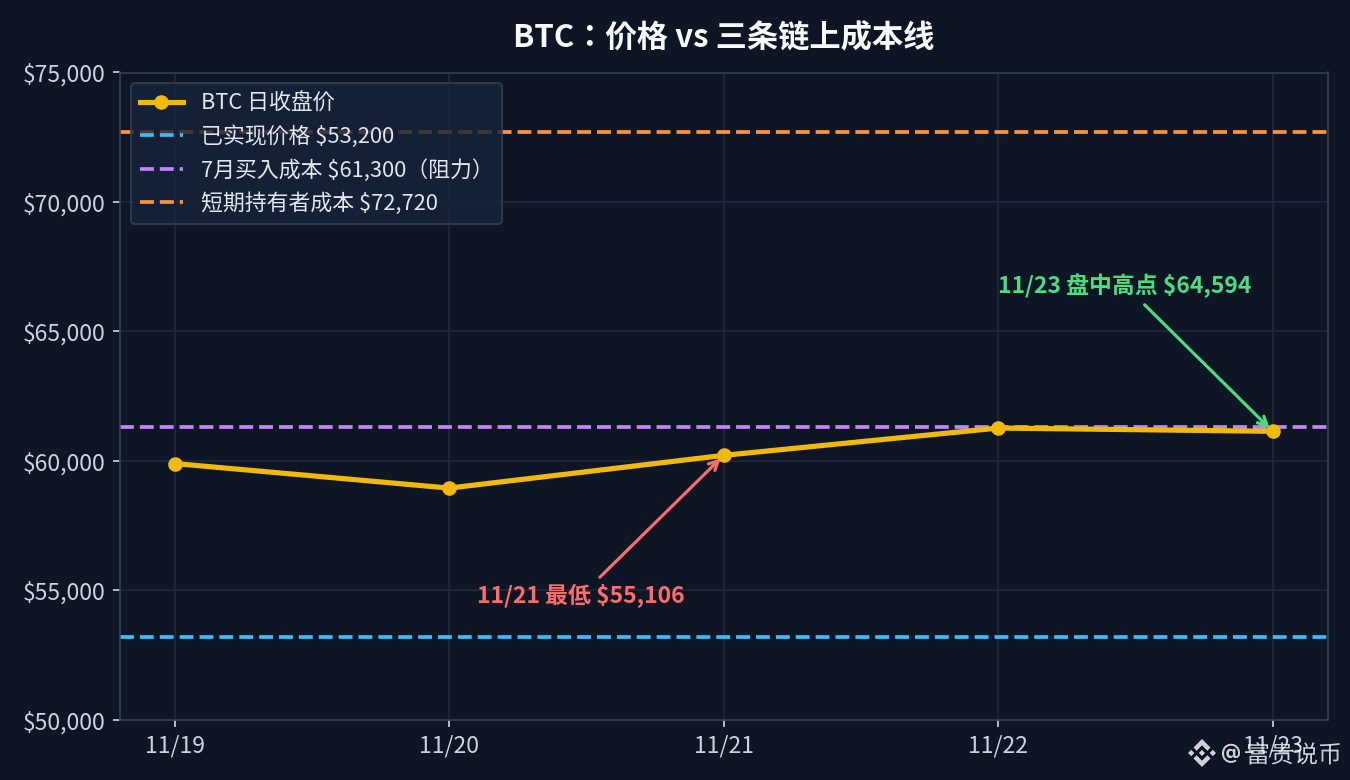
One concept explained: Realized Price—what does it mean if BTC falls below $53,200?If $BTC falls below $53,200, holders across the network will collectively be in a loss. This isn’t a line drawn by some technical indicator—it’s calculated from the actual purchase cost of every coin on-chain.
📖 What is the “Realized Price”?
Realized Price = the total cost of buying all BTC across the network ÷ the total circulating supply. Simply put, it’s the average cost basis of all market participants. According to Bitfinex’s latest report, the current Realized Price is $53,200.
The difference between it and the current price is crucial: the current price is the price of the most recent trade, while the Realized Price reflects what everyone actually paid. If the current price is above it, the market as a whole is in profit; if it falls below, holders are losing money on average, and selling pressure and panic can reinforce each other.
One concept explained: Realized Price—what does it mean if BTC falls below $53,200?
If $BTC falls below $53,200, holders across the network will collectively be in a loss. This isn’t a line drawn by some technical indicator—it’s calculated from the actual purchase cost of every coin on-chain.
📖 What is the “Realized Price”?
Realized Price = the total cost of buying all BTC across the network ÷ the total circulating supply. Simply put, it’s the average cost basis of all market participants. According to Bitfinex’s latest report, the current Realized Price is $53,200.
The difference between it and the current price is crucial: the current price is the price of the most recent trade, while the Realized Price reflects what everyone actually paid. If the current price is above it, the market as a whole is in profit; if it falls below, holders are losing money on average, and selling pressure and panic can reinforce each other.
338
·
--
The second day of the rebound, and funds are starting to look for new stories
The top gainers look different today: Midnight $NIGHT surged over 12%, making it one of the strongest major coins today; Telcoin jumped over 15%, and PUMP followed with a gain of nearly 11%. By comparison, $BTC held above $61,000 and rose about 4% over 24 hours, while ETH returned to around $1,720—but many smaller coins have already outperformed them.
What does this tell us? Now that the broader market has stabilized, short-term funds are rotating into higher-beta assets. The fastest gainers are often coins that fell the most earlier and have relatively small circulating supplies. Venice’s gain of over 30% in a week follows the same logic.
One reminder: rotation-driven rallies can come and go quickly. Before chasing a rally, check trading volume and support levels—don’t jump in just because a coin is near the top of the gainers list.
Which smaller coins are you watching lately? Let’s chat in the comments.
#加密货币 #山寨币 #Midnight
This content is for reference only and does not constitute investment advice.
10
·
--
Hong Kong’s crypto regulation takes another step forward: On November 20, the Virtual Asset Service Providers (Amendment) Bill 2026 was officially gazetted, with its first reading in the Legislative Council scheduled for December 2. The bill fills in four pieces beyond exchanges—dealing, advisory, asset management, and custody. Relevant firms will need to obtain a license from or register with the Securities and Futures Commission (SFC), and pass fit-and-proper-person assessments.
Two points are worth noting. First, advisory licenses may cover investment advice generated by AI, raising the bar for publishing research reports and giving buy or sell recommendations. Second, custody is now a distinct category, governing how client assets and private keys are stored and protected. Banks looking to offer virtual asset services will also need to register with the SFC first.
This is part of the same trend as the SFC adding Hyperliquid to its list of suspicious platforms on November 18: the door to compliance is narrowing, while room for noncompliance is shrinking. For ordinary users, licensing is not bad news—it means there’s someone to turn to if things go wrong, and someone to investigate if a platform disappears. That’s what it takes for long-term capital to feel confident coming in.
$BTC is now around $60,900, and $ETH is around $1,720. The market is still grinding along near the bottom in extreme fear (11). Regulatory certainty often arrives before price movements do.
Do you think Hong Kong’s licensing approach will become a template for other Asian markets to follow?
#香港 #加密监管 #VirtualAssets
The above does not constitute investment advice.
·
--
On the second day of the rebound, the market started to diverge.
The AI sector gained 1.75% in 24 hours, leading the broader market: Pieverse rose 9.73%, Kite gained 6.96%, and Venice Token climbed 5.40%. Layer 2 also held up well, with Mantle up 4.11%. In DeFi, Bedrock Token jumped 16.23% in a day, while Pump.fun gained 8.78%.
But don't let pockets of excitement distract you: $BTC is still hovering around $61,000, down 22% so far in November. $ETH has moved back above $1,720 but remains below resistance at $1,758. The market is waiting for direction ahead of the release of U.S. October PCE data on November 25.
The Fear and Greed Index has stayed at 11 for eight consecutive days, signaling extreme fear. On the second day of the rebound, capital first favored more volatile sectors like AI and Layer 2, but this looks more like rotation after an oversold sell-off than a trend reversal.
Do you think the AI sector can keep leading this rally, or is this just a one-day wonder?
#加密货币 #AI #Ethereum
This article is for sharing market information only and does not constitute investment advice.
29
·
--
During the sharp drop, some panicked while others quietly bought the dip.
On-chain data shows that as $BTC fell below $60,000, Abraxas Capital withdrew a total of 17,597 bitcoins from Binance and Kraken, worth approximately $1.04 billion, at an average cost of about $59,206.
The move came when market fear was at its peak: $BTC briefly fell to $55,130 over the weekend, a two-year low, while the Fear & Greed Index remained in the extreme fear zone at 10–11 for eight consecutive days. Now $BTC has rebounded to $61,271, up more than 1.8% in 24 hours. $ETH has also climbed back to $1,724, up about 2.3%.
Institutional buying amid panic doesn’t mean the bottom is in, but it does at least show that someone is willing to buy at these prices. Retail investors chase rallies and sell off in downturns; institutions build positions in stages. The difference often isn’t the news, but discipline.
Do you think this $1 billion dip-buying move is an institution putting its money where its mouth is, or another attempt to catch a falling knife? Would you buy around $60,000?
#比特币 #BTC #Ethereum
This content is for educational and discussion purposes only and does not constitute investment advice.
48
·
--
3 mistakes beginners are most likely to make when extremely fearful:
1️⃣ When prices fall, you want to buy the dip; when they rise, you’re afraid of missing out. $BTC 11 saw a cumulative decline of 22% in November, rebounding from a two-year low of $55,640 to around $61,190. But the $61,000 level has been a battleground. Before a bottom is confirmed, every attempt to “buy the dip” could mean catching a falling knife.
2️⃣ Going all in at once. The Fear and Greed Index is only at 11, with extreme fear persisting for several days. In this kind of market, going all in means handing control over to the market. Invest in batches, keep cash on hand, and set stop-losses. Staying in the game matters more than making a quick profit.
3️⃣ Looking only at price and ignoring your position. $ETH 24 hours rose 1.8% to $1,721, but November is still down considerably. More than $500 billion has been wiped from the total altcoin market cap in a month. If weaker coins rebound, reduce your positions first—don’t keep adding as they fall.
Remember: in a bear market, protecting your principal is a win. There will always be opportunities, but once you’ve fired all your bullets, they’re gone.
Are you staying on the sidelines with no positions, or building your position gradually? Let’s discuss in the comments 👇
#比特币 #加密货币 #投资心态 #BeginnerTutorial
The above content is for educational and discussion purposes only and does not constitute investment advice.
57
·
--
After bouncing over the weekend from a two-year low of $55,122, $BTC briefly surged to $61,565. It was last quoted at $61,313, up about 2% in 24 hours. But the rebound has been repeatedly blocked near $61,000 and has failed to hold above that level.
The key levels are clear: resistance at $61,000 and $65,317, with the 200-week moving average at $69,578; support at $57,800 and $55,122, with a break below potentially sending the price down to $54,000. The daily RSI is around 21, deep in oversold territory. Oversold conditions can lead to a rebound, but they don’t necessarily mean the bottom is in.
Fundamentals remain weak: spot ETFs saw net outflows of about $3.47 billion in November, and the Fear & Greed Index is at 11, indicating extreme fear. Prediction markets put the odds of another test of $57,500 this month at 53%. This week, keep an eye on the U.S. stock market opening on Monday and the core PCE data on November 25.
Would you wait for a pullback to $57,800 before considering a position, or do you think a break above $61,000 would open the way for further gains?
#比特币 #BTC #Cryptocurrency
This content is for informational purposes only and does not constitute investment advice.
65
·
--
The divergence over the weekend was striking: Bitcoin is still struggling around $60,000, down more than 12% for the week, while smaller coins have started putting on their own shows.
$ZEC fell nearly 12% this week, briefly dropping below $700 to its lowest level since August 21. This pullback in privacy coins has been even sharper than the broader market's. On the other hand, $PI rebounded 11.1% from its all-time low of $0.0473, returning to around $0.0526. Venice Token (VVV) surged 20% in a single day, climbing to $25, while Monero also rose about 3%.
The total market cap is around $2.03 trillion, and Bitcoin dominance remains at 58.5%, suggesting that capital has yet to truly flow back into smaller coins—the current rebound is more a rotation after being oversold than a broad-based rally.
In this market, which would you lean toward: chasing smaller coins or sticking with major ones?
#加密货币 #山寨币 #ZEC #Market Watch
The above content is for informational purposes only and does not constitute investment advice.
·
--
📉 $SOL has had a rough week: It briefly fell more than 10% in 24 hours, hitting a low near $65. It’s now down about 40% year to date, while trading volume in early November plunged roughly 80% from its October peak.
But behind the scenes, the fundamentals are telling a different story: Solana core developer Anza unveiled its 2027 roadmap at Breakpoint 2026. Computing capacity is set to double from around 250 million to 500 million CU per second, the per-transaction account limit will rise from 64 to 96, and vector processing will be introduced to let AI models run entirely on-chain. For market structure, Rotor will replace Turbine, and the Constellation ordering rules will be introduced. Earlier, Alpenglow had already cut finality time from 12.8 seconds to 150 milliseconds.
When price and narrative diverge, that’s often when opinions are most divided. Is the market’s cold shoulder temporary, or will the roadmap fail to deliver?
In the short term, $65 is a key support level. Holding above it could open the door to a move above $70; if it breaks, there’s room to fall further. If $BTC can hold at $60,000, that could also serve as a bellwether for the altcoin market as a whole.
What do you think? Is this SOL sell-off an unjustified dip creating a value opportunity, or is the downtrend not over yet?
#Solana #SOL #Cryptocurrency
This article does not constitute investment advice.
6
·
--
$XRP fell to around $0.85, down 25.4% for November alone—the worst November performance on record—and about 75% below its July peak. Yet development on-chain is quietly moving forward: three XRP Ledger amendments are progressing toward activation. SingleAssetVault has secured 73.53% validator support (25/34), just short of the 80% activation threshold, while an amendment related to the lending protocol has also reached 70.59%.
Meanwhile, Ripple announced a partnership with Mastercard, Gemini, and WebBank to settle traditional card transactions on the XRP Ledger using the RLUSD stablecoin—this isn’t just a promise; it’s a payment use case that’s already live.
But here’s the reality check: active XRPL users have fallen from 250,000 to around 92,000, a drop of about 60%. $XRP remains under pressure in the short term below the $1 mark, and analysts say it needs to reclaim $0.99 to reverse the bearish outlook. $SOL is also struggling around $70, at one point dropping to $65.03 intraday.
Prices are falling while the ecosystem is being built. What do you make of this divergence? Is it an opportunity to get in early, or a sign that the fundamentals don’t support the valuation?
#XRP #Ripple #山寨币 #Crypto market
This content does not constitute investment advice.
9
·
--
‼️ Trending searches: “Will the A-share market stop falling and stabilize next week?” (No. 7 on the trending list)
If you’re affected by the stock market, add $BTC to your watchlist first. Sentiment in the plaza can shift quickly, so make your own independent judgments.
#BTC
‼️ Trending searches: “Will the A-share market stop falling and stabilize next week?” (No. 7 on the trending list)
If you’re affected by the stock market, add $BTC to your watchlist first. Sentiment in the plaza can shift quickly, so make your own independent judgments.
#BTC
If you’re affected by the stock market, add $BTC to your watchlist first. Sentiment in the plaza can shift quickly, so make your own independent judgments.
#BTC
3
·
--
Key takeaway: MoldyRoost exploits an iPhone vulnerability to steal wallet data.
A somewhat bearish shift is putting some pressure on sentiment today; the longer-term outlook remains to be seen. Whether more media outlets confirm it will be key to determining whether it's true or false.
$SOL .
#SOL
Key takeaway: MoldyRoost exploits an iPhone vulnerability to steal wallet data.
A somewhat bearish shift is putting some pressure on sentiment today; the longer-term outlook remains to be seen. Whether more media outlets confirm it will be key to determining whether it's true or false.
$SOL .
#SOL
A somewhat bearish shift is putting some pressure on sentiment today; the longer-term outlook remains to be seen. Whether more media outlets confirm it will be key to determining whether it's true or false.
$SOL .
#SOL
2
·
--
Helius CEO mert: The crypto direction of on-chain markets and finance “remains underexplored and underdeveloped” ($SOL +2.92%)
The more sensational the headline, the more I want to take a sip of water first.
Helius CEO mert: The crypto direction of on-chain markets and finance “remains underexplored and underdeveloped” ($SOL +2.92%)
The more sensational the headline, the more I want to take a sip of water first.
The more sensational the headline, the more I want to take a sip of water first.
·
--
“Don’t let AI detection tools for papers falsely flag original work” is trending.
The trending topics change every day, and my ability to make connections gets stronger every day—only my bank balance hasn’t kept up.
$WLD 24h +1.68%, is anyone around you talking about this?
“Don’t let AI detection tools for papers falsely flag original work” is trending.
The trending topics change every day, and my ability to make connections gets stronger every day—only my bank balance hasn’t kept up.
$WLD 24h +1.68%, is anyone around you talking about this?
The trending topics change every day, and my ability to make connections gets stronger every day—only my bank balance hasn’t kept up.
$WLD 24h +1.68%, is anyone around you talking about this?
1
·
--
$BTC 59354.47(+5.38%)|Trending topic: Global stock markets are falling—will China’s A-share market be different next week?
This hot topic is just a pretext; don’t treat it as a signal.
#BTC
$BTC 59354.47(+5.38%)|Trending topic: Global stock markets are falling—will China’s A-share market be different next week?
This hot topic is just a pretext; don’t treat it as a signal.
#BTC
This hot topic is just a pretext; don’t treat it as a signal.
#BTC
30
·
--
Funds are starting to accumulate.
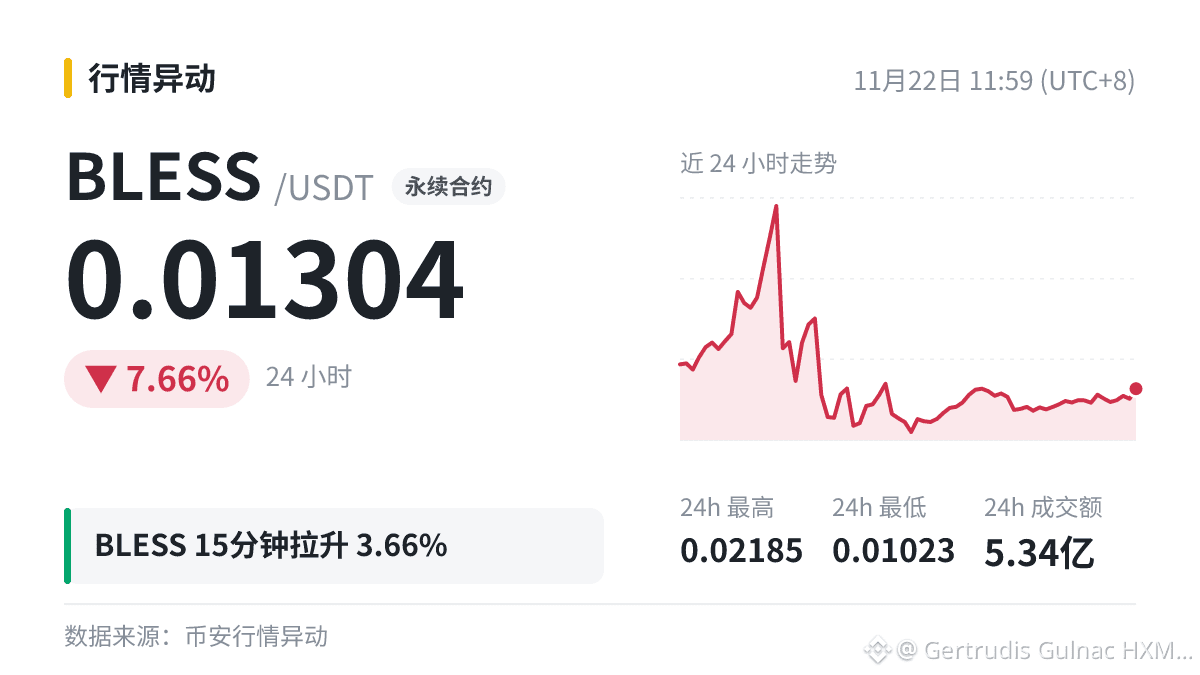
⬆️ $BLESS surged +3.66% in 15 minutes, current price 0.01304 (24h -7.66%).
Don't place an order when sentiment is at its peak. Have you gotten in?
Funds are starting to accumulate.
⬆️ $BLESS surged +3.66% in 15 minutes, current price 0.01304 (24h -7.66%).
Don't place an order when sentiment is at its peak. Have you gotten in?
⬆️ $BLESS surged +3.66% in 15 minutes, current price 0.01304 (24h -7.66%).
Don't place an order when sentiment is at its peak. Have you gotten in?
29
·
--
To be honest, I was killing time just now and came across “Chengdu ITTF Mixed Team World Cup Entry List” on the trending topics. My first reaction was actually to open my market app and check $CHZ (football): 24h -2.2%.
The occupational hazard of being in crypto is probably that you can relate any hot topic to the market. But there’s still money flow between buzz and price, so I usually just treat it as a clue.
How much longer can the buzz last?
#CHZ
The occupational hazard of being in crypto is probably that you can relate any hot topic to the market. But there’s still money flow between buzz and price, so I usually just treat it as a clue.
How much longer can the buzz last?
#CHZ
48
·
--
👀 Garrett Jin allegedly used $270 million in stablecoins to buy the dip, saying the time has come
Honestly, my first reaction when I saw this was to check the market: $BTC 60317.09, 1h -0.47%.
Sentiment is clearly heating up 🔥 But the more things heat up, the more important it is to stay calm—don’t chase when emotions are running hottest!
Which do you trust more: the news or the charts?
Honestly, my first reaction when I saw this was to check the market: $BTC 60317.09, 1h -0.47%.
Sentiment is clearly heating up 🔥 But the more things heat up, the more important it is to stay calm—don’t chase when emotions are running hottest!
Which do you trust more: the news or the charts?
4
Log in to explore more content
Join global crypto users on Binance Square
⚡️ Get latest and useful information about crypto.
💬 Trusted by the world’s largest crypto exchange.
👍 Discover real insights from verified creators.
Email / Phone number
Trending Topics
NVIDIAReinstatesJensenHuangasCEO
98,698 views
901 Discussing
TradFi News | Nvidia Board Unanimously Reinstates Jensen Huang as CEO; Shares Jump 30% Premarket
Binance News
·39 Likes
·41k views
WillMarketsStageAThanksgivingReliefRally?
206,266 views
1,896 Discussing
WillOctCorePCEShiftFedHikeExpectations?
73,270 views
809 Discussing