

山与白鲸
130 Posts

山与白鲸
Report
Block User
Nothing I tweet is financial advice. DYOR.

30日間での利益別の上位トレーダー
High-Frequency Trader
6.1 Years
26 Following
755 Followers
6.7K+ Liked
1 Badges
Posts
All
Quotes
·
--
The target for Hype Short-Term 57 has arrived. I didn’t buy much to begin with, so I still plan to keep stocking up on dips. Usually I either trade non-trending shares or just $Hype. Simplicity is the ultimate principle—keep buying dips on Hype. The money I earn from庄 tickets will all be used to buy Hype.
The target for Hype Short-Term 57 has arrived. I didn’t buy much to begin with, so I still plan to keep stocking up on dips. Usually I either trade non-trending shares or just $Hype. Simplicity is the ultimate principle—keep buying dips on Hype. The money I earn from庄 tickets will all be used to buy Hype.
山与白鲸
·
--
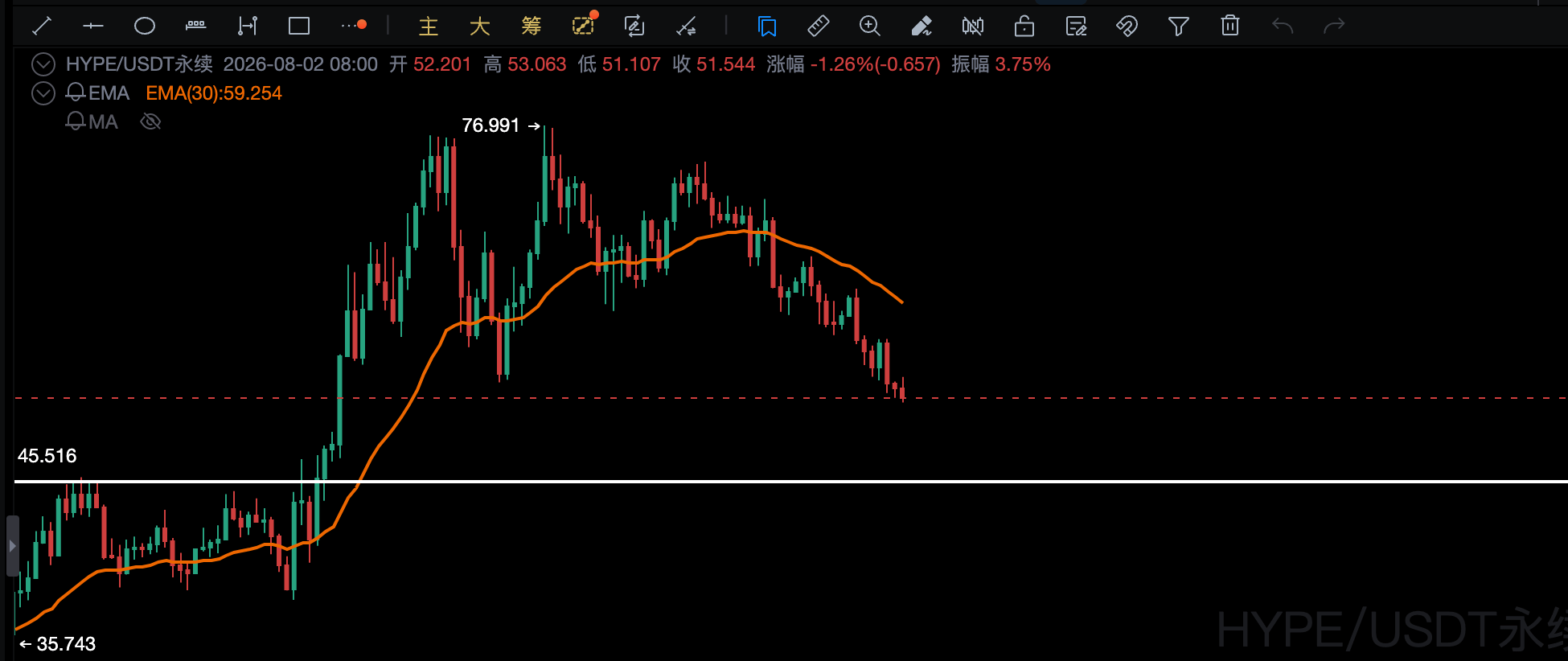
HYPE I think in the short term 51-53 is about the same. I’ve been buying gradually, though the portion of funds isn’t high since my psychological price is between 40-45. At least here I can trade some swings; the short-term target is around 56-57.
3
231
·
--
What data needs to be monitored when trading order tickets?
1. Large transfers on-chain
2. Uncover insider addresses
3. Monitor anomalies in index trading volume
4. Monitor changes in basis
5. Monitor anomalies in contract trading volume
6. Monitor the long/short ratio
7. Monitor changes in the 15-minute funding rate (related to #4)
8. Monitor turning points in open interest
9. Monitor anomalies in the market board (recommended: 1 minute)
10. Monitor the top gainers list
Let me summarize these first. In my next post, I’ll find a time to write in detail the logic changes and how they work together.
What data needs to be monitored when trading order tickets?
1. Large transfers on-chain
2. Uncover insider addresses
3. Monitor anomalies in index trading volume
4. Monitor changes in basis
5. Monitor anomalies in contract trading volume
6. Monitor the long/short ratio
7. Monitor changes in the 15-minute funding rate (related to #4)
8. Monitor turning points in open interest
9. Monitor anomalies in the market board (recommended: 1 minute)
10. Monitor the top gainers list
Let me summarize these first. In my next post, I’ll find a time to write in detail the logic changes and how they work together.
1. Large transfers on-chain
2. Uncover insider addresses
3. Monitor anomalies in index trading volume
4. Monitor changes in basis
5. Monitor anomalies in contract trading volume
6. Monitor the long/short ratio
7. Monitor changes in the 15-minute funding rate (related to #4)
8. Monitor turning points in open interest
9. Monitor anomalies in the market board (recommended: 1 minute)
10. Monitor the top gainers list
Let me summarize these first. In my next post, I’ll find a time to write in detail the logic changes and how they work together.
1
99
·
--
HYPE I think in the short term 51-53 is about the same. I’ve been buying gradually, though the portion of funds isn’t high since my psychological price is between 40-45. At least here I can trade some swings; the short-term target is around 56-57.
HYPE I think in the short term 51-53 is about the same. I’ve been buying gradually, though the portion of funds isn’t high since my psychological price is between 40-45. At least here I can trade some swings; the short-term target is around 56-57.
山与白鲸
·
--
Is my chance to buy HYPE finally coming?
1
1
180
·
--
The worse the liquidity, the more you should trade small-cap coins—just shows how valuable this saying is. Giggle, Koma, etc. all erupted from small-cap.
The worse the liquidity, the more you should trade small-cap coins—just shows how valuable this saying is. Giggle, Koma, etc. all erupted from small-cap.
山与白鲸
·
--
Sometime ago, I shared a viewpoint: when liquidity is worse, you should play small-cap coins; when liquidity is better, you should play large-cap coins.
Why? Some people might find the logic a bit hard to grasp, so let me explain it in more detail.
1. Whether it’s a coin or a stock, when it rises, you need turnover—meaning you need money to take the other side, to push the price up. But if liquidity is very poor, the amount of capital available to absorb trades is limited, not enough to keep pushing the price higher. In this stage, even if large-cap stocks/coins have big positive catalysts, they won’t necessarily produce a major move.
2. When liquidity is good, institutions, big players, and others will tend to choose large-cap issues. The reason is simple: good liquidity means it’s easier for capital to enter and exit. Only large-cap issues can absorb large amounts of capital. So when liquidity is very good, small-cap coins won’t get played much.
Why? Some people might find the logic a bit hard to grasp, so let me explain it in more detail.
1. Whether it’s a coin or a stock, when it rises, you need turnover—meaning you need money to take the other side, to push the price up. But if liquidity is very poor, the amount of capital available to absorb trades is limited, not enough to keep pushing the price higher. In this stage, even if large-cap stocks/coins have big positive catalysts, they won’t necessarily produce a major move.
2. When liquidity is good, institutions, big players, and others will tend to choose large-cap issues. The reason is simple: good liquidity means it’s easier for capital to enter and exit. Only large-cap issues can absorb large amounts of capital. So when liquidity is very good, small-cap coins won’t get played much.
291
·
--
What data needs to be monitored when trading settlement tickets?
1. On-chain large transfers
2. Investigate insider addresses
3. Monitor abnormal index trading volume
4. Monitor changes in basis
5. Monitor abnormal contract trading volume
6. Monitor long/short ratio
7. Monitor changes in the 15-minute funding rate (related to 4)
8. Monitor turning points in open interest
9. Monitor market anomalies (recommended: 1-minute)
10. Monitor the top gainers list
Let me summarize these first—I'll write in more detail in the next post about the logic changes and how they work together.
What data needs to be monitored when trading settlement tickets?
1. On-chain large transfers
2. Investigate insider addresses
3. Monitor abnormal index trading volume
4. Monitor changes in basis
5. Monitor abnormal contract trading volume
6. Monitor long/short ratio
7. Monitor changes in the 15-minute funding rate (related to 4)
8. Monitor turning points in open interest
9. Monitor market anomalies (recommended: 1-minute)
10. Monitor the top gainers list
Let me summarize these first—I'll write in more detail in the next post about the logic changes and how they work together.
1. On-chain large transfers
2. Investigate insider addresses
3. Monitor abnormal index trading volume
4. Monitor changes in basis
5. Monitor abnormal contract trading volume
6. Monitor long/short ratio
7. Monitor changes in the 15-minute funding rate (related to 4)
8. Monitor turning points in open interest
9. Monitor market anomalies (recommended: 1-minute)
10. Monitor the top gainers list
Let me summarize these first—I'll write in more detail in the next post about the logic changes and how they work together.
140
·
--
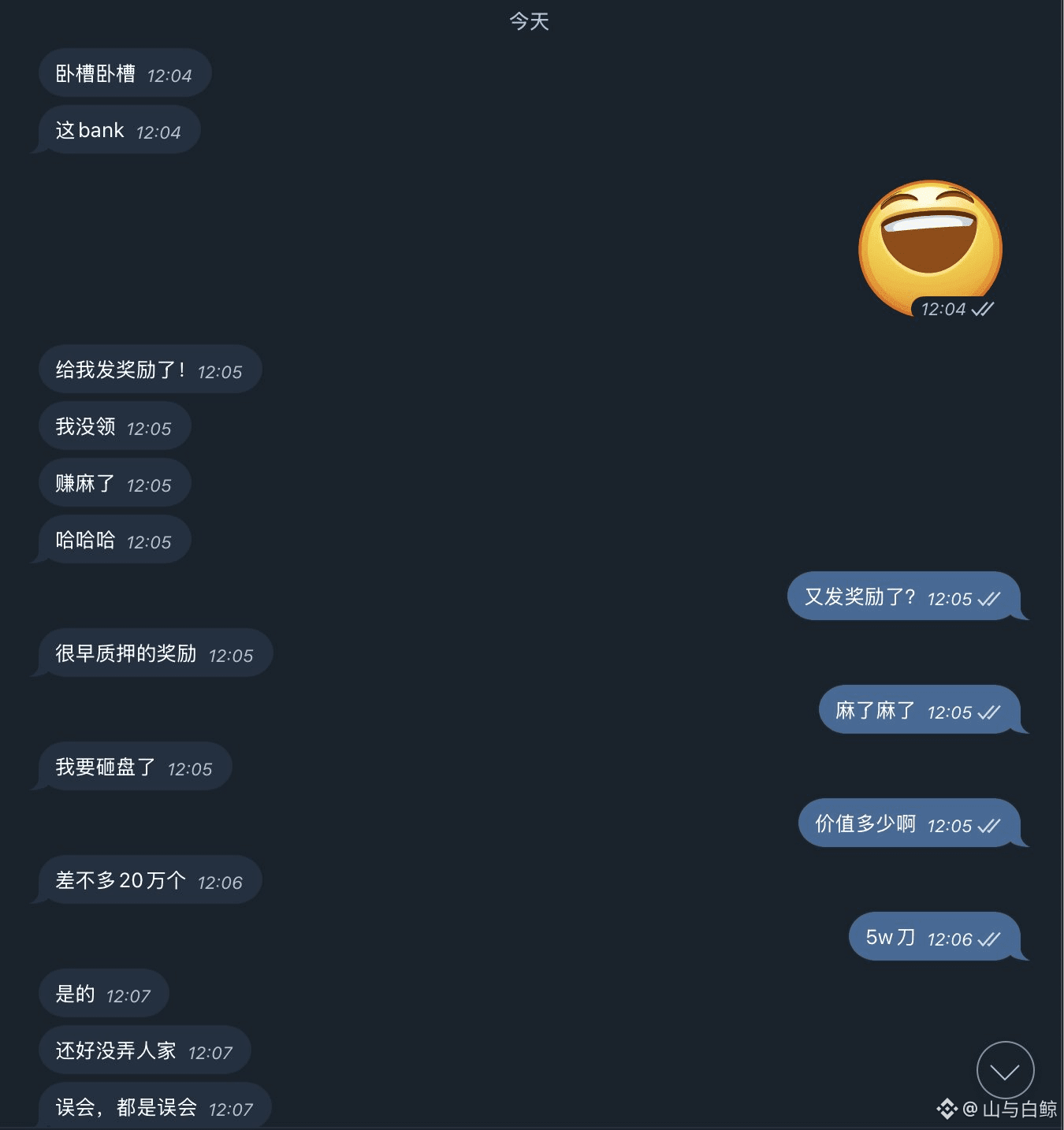
The most outrageous alpha is often not trading.
A friend of mine had staking rewards from the bank that he never claimed.
Today he went to claim them and found out:
200,000 $BANK tokens, worth about $50,000.
Who can you reason with about this?
The most outrageous alpha is often not trading.
A friend of mine had staking rewards from the bank that he never claimed.
Today he went to claim them and found out:
200,000 $BANK tokens, worth about $50,000.
Who can you reason with about this?
A friend of mine had staking rewards from the bank that he never claimed.
Today he went to claim them and found out:
200,000 $BANK tokens, worth about $50,000.
Who can you reason with about this?
1
262
·
--
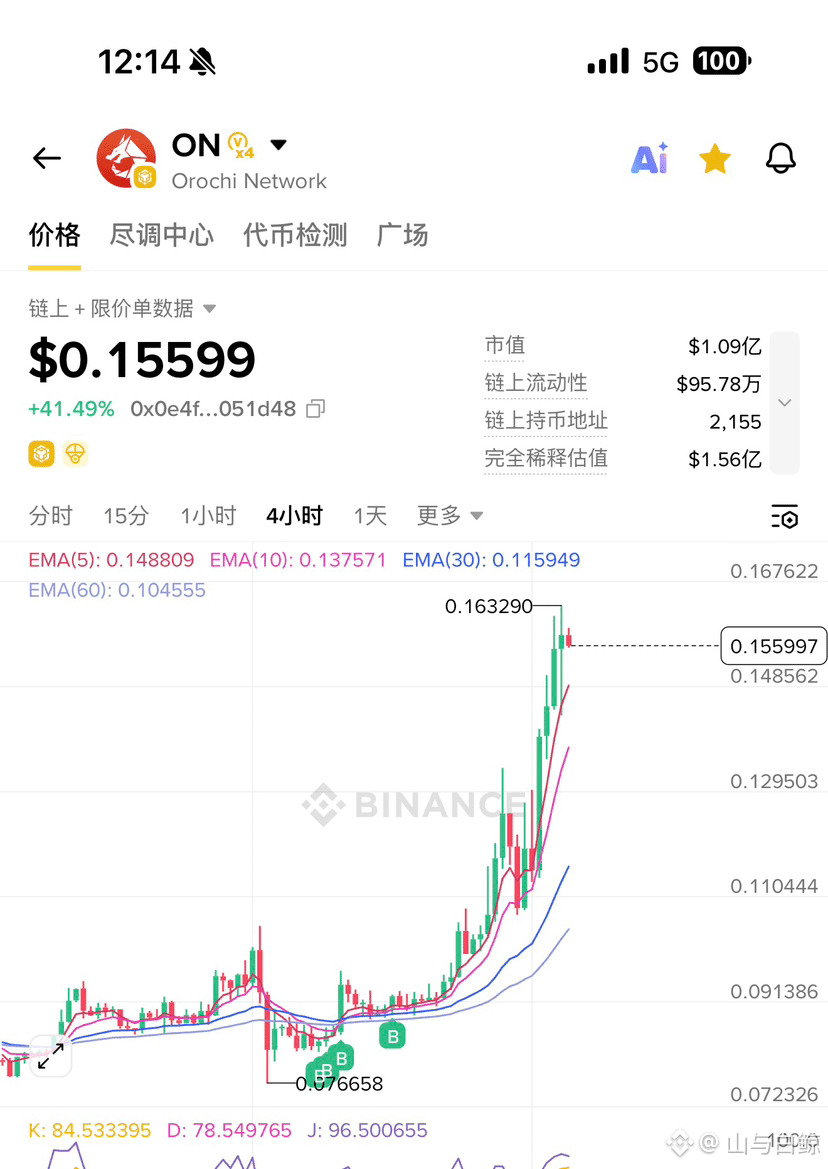
Bought $ON, now I’m about to earn enough to feel full
Bought $ON, now I’m about to earn enough to feel full
1
300
·
--
Do you feel like this year’s SpaceX is exactly like PetroChina, which went public in 2007—peaking at the time of listing, then gradually sliding downward for more than a decade. The most widely circulated joke back then was: “Tell me, how much sorrow can you have? It’s like holding a full position in PetroChina.”
Do you feel like this year’s SpaceX is exactly like PetroChina, which went public in 2007—peaking at the time of listing, then gradually sliding downward for more than a decade. The most widely circulated joke back then was: “Tell me, how much sorrow can you have? It’s like holding a full position in PetroChina.”
1
373
·
--
1/Why do Russian farms put VR glasses on cows?
Because Russian cows are prone to winter depression, which leads to lower milk production.
2/How to test whether your kidney qi is sufficient?
First hold your breath, then keep typing 6 in the comment section—if you can produce more than three lines, it means your kidney qi is relatively sufficient.
1/Why do Russian farms put VR glasses on cows?
Because Russian cows are prone to winter depression, which leads to lower milk production.
2/How to test whether your kidney qi is sufficient?
First hold your breath, then keep typing 6 in the comment section—if you can produce more than three lines, it means your kidney qi is relatively sufficient.
Because Russian cows are prone to winter depression, which leads to lower milk production.
2/How to test whether your kidney qi is sufficient?
First hold your breath, then keep typing 6 in the comment section—if you can produce more than three lines, it means your kidney qi is relatively sufficient.
1
10
·
--
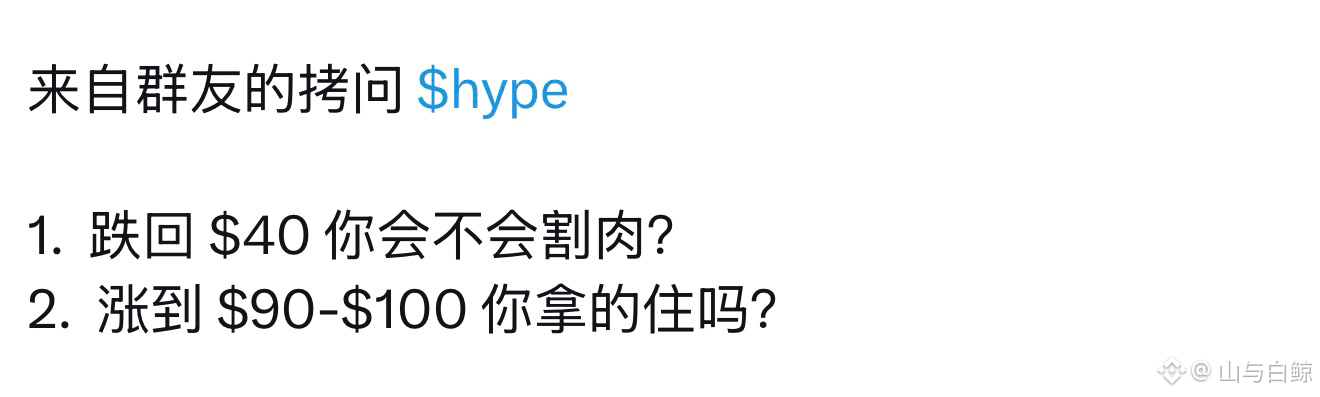
$HYPE drops back to 40—I’ll definitely buy aggressively
Even if it rises to 100, I’ll still hold it, because my target price is more than 100
When winning, overcome fear
When losing, overcome greed
$HYPE drops back to 40—I’ll definitely buy aggressively
Even if it rises to 100, I’ll still hold it, because my target price is more than 100
When winning, overcome fear
When losing, overcome greed
Even if it rises to 100, I’ll still hold it, because my target price is more than 100
When winning, overcome fear
When losing, overcome greed
982
·
--
Recently, fraudulent "Zhuang" tickets have been going around. If you can’t get your hands on them, it’s also not a bad idea to play around with the investment mini-game in Binance Wallet.
In this bear market, there are a few types of people who make money in Crypto 👇
1. Those who have always been bullish on $HYPE
2. Those who were the earliest to profit from arbitrage on prediction platforms
3. Those who have always studied "Zhuang" tickets
4. Those who lower their expectations and invest in wealth management
5. On-chain top-tier "P" up-and-comers
6. Those focused on doing FA in Crypto
Anything else that should be added?
Recently, fraudulent "Zhuang" tickets have been going around. If you can’t get your hands on them, it’s also not a bad idea to play around with the investment mini-game in Binance Wallet.
In this bear market, there are a few types of people who make money in Crypto 👇
1. Those who have always been bullish on $HYPE
2. Those who were the earliest to profit from arbitrage on prediction platforms
3. Those who have always studied "Zhuang" tickets
4. Those who lower their expectations and invest in wealth management
5. On-chain top-tier "P" up-and-comers
6. Those focused on doing FA in Crypto
Anything else that should be added?
In this bear market, there are a few types of people who make money in Crypto 👇
1. Those who have always been bullish on $HYPE
2. Those who were the earliest to profit from arbitrage on prediction platforms
3. Those who have always studied "Zhuang" tickets
4. Those who lower their expectations and invest in wealth management
5. On-chain top-tier "P" up-and-comers
6. Those focused on doing FA in Crypto
Anything else that should be added?
391
·
--
Business expansion: We are looking for quantitative strategies with stable profitability capabilities or excellent quantitative teams
1/ We provide ample liquidity support and a comprehensive compliance framework
2/ We need to focus on high-frequency, mean-reversion, CTA, or high-alpha trend strategies. Requirements: sound risk control mechanisms, and the ability to provide a real and credible live trading track record.
Business expansion: We are looking for quantitative strategies with stable profitability capabilities or excellent quantitative teams
1/ We provide ample liquidity support and a comprehensive compliance framework
2/ We need to focus on high-frequency, mean-reversion, CTA, or high-alpha trend strategies. Requirements: sound risk control mechanisms, and the ability to provide a real and credible live trading track record.
1/ We provide ample liquidity support and a comprehensive compliance framework
2/ We need to focus on high-frequency, mean-reversion, CTA, or high-alpha trend strategies. Requirements: sound risk control mechanisms, and the ability to provide a real and credible live trading track record.
88
·
--
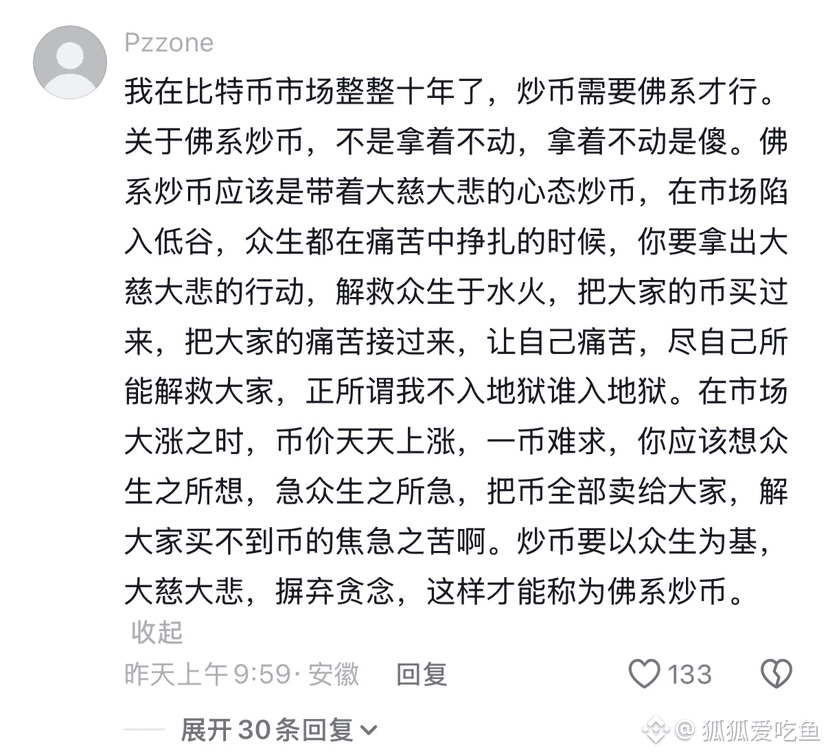
As stated in the “Shurangama Sutra” (Da Fo Ding Shou Leng Yan Jing): “May I offer my body and mind to the myriad dust-lands; thus is called repaying the Buddha’s kindness.”
As stated in the “Shurangama Sutra” (Da Fo Ding Shou Leng Yan Jing): “May I offer my body and mind to the myriad dust-lands; thus is called repaying the Buddha’s kindness.”
199
·
--
1/Why do Russian farms put VR glasses on cows?
Because Russian cows are prone to winter depression, which leads to lower milk production.
2/How to test whether your kidney qi is sufficient?
Hold your breath, then keep tapping 6 in the comments. If you can produce three lines or more, that means your kidney qi is relatively sufficient.
1/Why do Russian farms put VR glasses on cows?
Because Russian cows are prone to winter depression, which leads to lower milk production.
2/How to test whether your kidney qi is sufficient?
Hold your breath, then keep tapping 6 in the comments. If you can produce three lines or more, that means your kidney qi is relatively sufficient.
Because Russian cows are prone to winter depression, which leads to lower milk production.
2/How to test whether your kidney qi is sufficient?
Hold your breath, then keep tapping 6 in the comments. If you can produce three lines or more, that means your kidney qi is relatively sufficient.
21
·
--
When PoKa was at its hottest that year, there was a ten-thousand-member chat group. Tonight I opened the group and saw this message. In Web3, no matter how sexy the story is, in the end it all turns into a mess. Only a very small number of projects can stand the test of time. If you miss the train, you have no cost—but if you get on the wrong one, the cost will be very high.
When PoKa was at its hottest that year, there was a ten-thousand-member chat group. Tonight I opened the group and saw this message. In Web3, no matter how sexy the story is, in the end it all turns into a mess. Only a very small number of projects can stand the test of time. If you miss the train, you have no cost—but if you get on the wrong one, the cost will be very high.

3
2.8k
·
--
Verified
AI is getting more advanced, theoretically every DeFi project is at risk of being hacked, whether it's a code bug or a business logic flaw. This will increasingly test the professionalism of Web3 teams. #ZEC
AI is getting more advanced, theoretically every DeFi project is at risk of being hacked, whether it's a code bug or a business logic flaw. This will increasingly test the professionalism of Web3 teams. #ZEC

1
667
·
--
If Binance could make switching between master and sub-accounts as easy as switching Twitter accounts, I bet it would be a game changer for a lot of users. One master account can create 5 sub-accounts, and I believe many users would have a habit of categorizing their accounts for different purposes, like futures accounts/spot accounts/short-term or long-term accounts/US stock accounts.
If Binance could make switching between master and sub-accounts as easy as switching Twitter accounts, I bet it would be a game changer for a lot of users. One master account can create 5 sub-accounts, and I believe many users would have a habit of categorizing their accounts for different purposes, like futures accounts/spot accounts/short-term or long-term accounts/US stock accounts.
1
212
·
--
In the future, every golden dog on the Sol chain will be reminded
When you want to P, just P a little
You won't miss the top-notch narrative
On the BSC chain, we have robots
Every golden dog will get on board
It just depends on how many times you can multiply
In the future, every golden dog on the Sol chain will be reminded
When you want to P, just P a little
You won't miss the top-notch narrative
On the BSC chain, we have robots
Every golden dog will get on board
It just depends on how many times you can multiply
When you want to P, just P a little
You won't miss the top-notch narrative
On the BSC chain, we have robots
Every golden dog will get on board
It just depends on how many times you can multiply

2
6
1k

·
--
The market above is really cold
Today the robot just brought me back 275u
How is that enough for me to spend?
The market above is really cold
Today the robot just brought me back 275u
How is that enough for me to spend?
Today the robot just brought me back 275u
How is that enough for me to spend?

138
Log in to explore more content
Join global crypto users on Binance Square
⚡️ Get latest and useful information about crypto.
💬 Trusted by the world’s largest crypto exchange.
👍 Discover real insights from verified creators.
Email / Phone number
Trending Topics
G7PlansToReleaseUpTo100MBarrelsOilDiesel
11 views
18 Discussing
$BTC/USDT: NEUTRAL / RANGE-BOUND (No Trade Zone)
Bias: NEUTRAL (2 Bullish vs. 2 Bearish signals)
Status: Stand aside. Market is stuck in a 4.2% neutral range. Waiting for a high-probability breakout setup.
Trade Execution Plan
Scenario 1: Bullish Breakout (LONG)
Trigger: 1-hour candle close above 87,249.60
Targets:
88,106.78
88,678.24
89,535.42
Stop Loss: 86,106.69
Scenario 2: Bearish Breakdown (SHORT)
Trigger: 1-hour candle close below 83,690.41
Targets:
82,833.23
82,261.77
81,404.59
Stop Loss: 84,833.32
Technical Breakdown
Bullish Alignment (Higher Timeframes): Both the 1D and 4H charts display a healthy bullish alignment (Price > EMA 50 > EMA 200), confirming the broader macro trend remains upward.
Bearish Alignment (Lower Timeframes): Short-term momentum favors sellers. The 15m ADX (27.0) indicates active selling pressure (DI− 21.6 vs. DI+ 17.7), and the 1H RSI sits at 43.6 (bearish territory below 45).
Execution Strategy Decision
If the 1-hour candle closes above 87,249.60, standard breakout rules suggest taking the LONG trigger immediately, as a confirmed close above range resistance validates buyers reclaiming short-term momentum.
However, if higher-timeframe EMA extension is a concern, aggressive traders can take an initial position on the breakout close, while conservative traders can wait for a retest/pullback toward the breakout level or intermediate EMAs before entering.
$BTC
$ZEC
$QNT
#G7PlansToReleaseUpTo100MBarrelsOilDiesel #ICBASuesOCCOverCryptoBankCharters
김수현 6
·0 Likes
·131 views
ICBASuesOCCOverCryptoBankCharters
11 views
14 Discussing
USStocksCloseHigherOnWeakJobsData
56 views
11 Discussing