

Devraj Sigdel
507 Posts

Devraj Sigdel
Report
Block User
Full-Time Futures Trader | Technical Analysis & Smart Money Concepts | Binance Square Verified
Open Trade
Occasional Trader
3.5 Years
423 Following
33 Followers
30 Liked
Posts
Portfolio
All
Quotes
Live
The Next Crypto Narrative Could Be RWA
Real World Assets (RWA) are becoming one of the most discussed sectors in crypto.
Why?
👉 Tokenization of traditional assets
👉 Growing institutional interest
👉 Expanding use cases in DeFi
👉 Improved blockchain infrastructure
Whether RWA becomes the dominant trend remains to be seen but it's a sector worth following closely.
👇 Are RWAs the next major crypto trend, or do you think another narrative will lead the market?
#RWA #crypto #defi #blockchain #BinanceSquare
The Next Crypto Narrative Could Be RWA
Real World Assets (RWA) are becoming one of the most discussed sectors in crypto.
Why?
👉 Tokenization of traditional assets
👉 Growing institutional interest
👉 Expanding use cases in DeFi
👉 Improved blockchain infrastructure
Whether RWA becomes the dominant trend remains to be seen but it's a sector worth following closely.
👇 Are RWAs the next major crypto trend, or do you think another narrative will lead the market?
#RWA #crypto #defi #blockchain #BinanceSquare
Real World Assets (RWA) are becoming one of the most discussed sectors in crypto.
Why?
👉 Tokenization of traditional assets
👉 Growing institutional interest
👉 Expanding use cases in DeFi
👉 Improved blockchain infrastructure
Whether RWA becomes the dominant trend remains to be seen but it's a sector worth following closely.
👇 Are RWAs the next major crypto trend, or do you think another narrative will lead the market?
#RWA #crypto #defi #blockchain #BinanceSquare
89
1. Is Bitcoin Preparing for Its Next Big Move?
📈 Bitcoin continues to dominate the crypto conversation.
Whenever BTC gains momentum, the rest of the market usually pays close attention. Whether you're bullish or cautious, this is a good time to focus on:
👉 Key support and resistance levels
👉 Trading volume and market sentiment
👉 ETF and institutional activity
👉 Bitcoin dominance
🤔Remember: patience often outperforms emotional trading.
🫵 Question: Do you think BTC reaches a new all-time high before the end of 2026?
👍 Like if you're bullish.
#bitcoin #BTC #crypto #BinanceSquare #trading
1. Is Bitcoin Preparing for Its Next Big Move?
📈 Bitcoin continues to dominate the crypto conversation.
Whenever BTC gains momentum, the rest of the market usually pays close attention. Whether you're bullish or cautious, this is a good time to focus on:
👉 Key support and resistance levels
👉 Trading volume and market sentiment
👉 ETF and institutional activity
👉 Bitcoin dominance
🤔Remember: patience often outperforms emotional trading.
🫵 Question: Do you think BTC reaches a new all-time high before the end of 2026?
👍 Like if you're bullish.
#bitcoin #BTC #crypto #BinanceSquare #trading
📈 Bitcoin continues to dominate the crypto conversation.
Whenever BTC gains momentum, the rest of the market usually pays close attention. Whether you're bullish or cautious, this is a good time to focus on:
👉 Key support and resistance levels
👉 Trading volume and market sentiment
👉 ETF and institutional activity
👉 Bitcoin dominance
🤔Remember: patience often outperforms emotional trading.
🫵 Question: Do you think BTC reaches a new all-time high before the end of 2026?
👍 Like if you're bullish.
#bitcoin #BTC #crypto #BinanceSquare #trading
97
#openledger $OPEN
Exploring the future of blockchain interoperability with @OpenLedger!
The vision behind OpenLedger is creating a smarter and more connected decentralized ecosystem where AI, data ownership and blockchain innovation merge together. As Web3 adoption grows, projects focusing on transparency, scalable infrastructure and community driven development could play a major role in the next crypto cycle.
The integration of decentralized AI and data liquidity is becoming one of the most discussed narratives in the crypto market right now. Keeping an eye on ecosystems like OpenLedger may provide valuable long term insights for traders and investors interested in emerging blockchain technology.
#openledger $OPEN
Exploring the future of blockchain interoperability with @OpenLedger!
The vision behind OpenLedger is creating a smarter and more connected decentralized ecosystem where AI, data ownership and blockchain innovation merge together. As Web3 adoption grows, projects focusing on transparency, scalable infrastructure and community driven development could play a major role in the next crypto cycle.
The integration of decentralized AI and data liquidity is becoming one of the most discussed narratives in the crypto market right now. Keeping an eye on ecosystems like OpenLedger may provide valuable long term insights for traders and investors interested in emerging blockchain technology.
Exploring the future of blockchain interoperability with @OpenLedger!
The vision behind OpenLedger is creating a smarter and more connected decentralized ecosystem where AI, data ownership and blockchain innovation merge together. As Web3 adoption grows, projects focusing on transparency, scalable infrastructure and community driven development could play a major role in the next crypto cycle.
The integration of decentralized AI and data liquidity is becoming one of the most discussed narratives in the crypto market right now. Keeping an eye on ecosystems like OpenLedger may provide valuable long term insights for traders and investors interested in emerging blockchain technology.
82
#Friends Collect your Gifts from my end. 🎁🧧🎁🧧🎁🧧🎁🧧🎁🧧💴💵💶💴💵💶
#Friends Collect your Gifts from my end. 🎁🧧🎁🧧🎁🧧🎁🧧🎁🧧💴💵💶💴💵💶

1
19
The Hidden Indicators Professional Traders Watch Before Bitcoin Explodes💶💵💴🎁🧧Most retail traders only watch Bitcoin’s price chart. Professional traders watch liquidity, derivatives positioning, macro flows, stablecoin movement and on chain behavior long before BTC makes its explosive move.
Bitcoin’s next major breakout will not happen randomly. Smart money is already tracking hidden indicators that historically appear before every major BTC rally.
1. Stablecoin Inflows The First Signal Smart Money Watches
One of the strongest bullish indicators in crypto is stablecoin liquidity growth.
Why?
Stablecoins represent “dry powder” waiting to enter the market. When USDT and USDC market capitalization rises while Bitcoin consolidates, it often means institutions and whales are preparing for larger positioning.
Current market behavior shows:
➡️Stablecoin reserves on exchanges are increasing
➡️Binance spot liquidity remains strong
➡️Large OTC desks are seeing rising institutional demand
Historically, Bitcoin rallies become stronger when stablecoin inflows rise before price expansion. This indicates capital is entering the ecosystem rather than leaving it.
Professional traders understand:
Liquidity enters first. Price moves later.
2. Bond Yields & Federal Reserve Policy
Bitcoin is now heavily influenced by macroeconomics.
Professional traders monitor:
➡️U.S. 10 Year Treasury Yield
➡️Federal Reserve interest rate outlook
➡️Inflation data (CPI/PCE)
➡️Global liquidity conditions
When bond yields decline:
➡️Risk appetite improves
➡️Dollar strength weakens
➡️Capital rotates into growth assets like BTC
When yields rise aggressively:
➡️Liquidity tightens
➡️Institutions reduce exposure to volatile assets
➡️Bitcoin momentum slows
This is why Bitcoin sometimes drops even when crypto news appears bullish.
The market is no longer trading only narratives.
It is trading liquidity conditions.
3. Bitcoin ETF Flows Institutional Money Matters
Spot Bitcoin ETFs completely changed market structure.
Professional traders now monitor daily ETF inflows more closely than social media sentiment.
Why?
Because ETF accumulation reflects real institutional demand.
Important observations:
➡️Consistent ETF inflows during corrections are bullish
➡️Large outflows signal temporary risk reduction
➡️Long term institutional holding reduces circulating BTC supply
This creates supply pressure during bullish cycles.
Professional traders know:
Retail creates volatility.
Institutions create long term trends.
4. Open Interest & Funding Rates
Derivatives markets reveal trader positioning before major moves happen.
Professional traders monitor:
➡️Open Interest (OI)
➡️Funding rates
➡️Liquidation clusters
➡️Long/short imbalance
Current behavior suggests:
➡️Excessive leverage has reduced after recent volatility
➡️Funding rates normalized
➡️Market positioning looks healthier for continuation
This matters because Bitcoin usually performs best after weak leveraged traders are flushed out.
Healthy rallies are built on spot demand not excessive leverage.
5. On Chain Wallet Behavior
Whale wallets and long term holders often signal market direction before retail traders react.
Key bullish signs:
➡️Exchange BTC reserves declining
➡️Long term holders not selling aggressively
➡️Whale accumulation during fear
➡️Miner selling pressure stabilizing
When whales continue accumulating during corrections, it often signals confidence in higher long term valuations.
This is one of the strongest hidden indicators professional traders follow quietly.
BTC/USDT Professional Trade Plan
Market Structure
Bitcoin remains in a broader bullish macro structure despite short term volatility. Current price action suggests BTC is consolidating before the next major directional move.
Professional Trading Strategy
➡️Zone buying remains safer than emotional breakout chasing
➡️Patience is critical during consolidation phases
➡️Risk management matters more than leverage
Suggested BTC/USDT Spot Trade Plan
Accumulation Zone:
Buy gradually near strong support zones during fear based pullbacks
Profit Taking Strategy:
➡️Partial profit booking near major resistance levels
➡️Keep a long-term core holding untouched
Risk Management:
➡️Avoid overleveraging
➡️Use staggered entries instead of all-in positions
➡️Protect capital first
Futures Traders Strategy
➡️Prefer trading after liquidity sweeps
➡️Avoid chasing green candles
➡️Wait for confirmation volume before entering breakout trades
Professional traders focus on probability not emotions.
Final Market Outlook
Bitcoin’s long term structure still remains strong because:
➡️Institutional adoption continues expanding
➡️ETF infrastructure is growing
➡️Stablecoin liquidity remains elevated
➡️Global digital asset adoption keeps accelerating
Short term volatility will continue because macroeconomic uncertainty still exists. However, professional traders understand that strong markets are built during periods of fear, consolidation and patience.
The biggest profits in Bitcoin historically came to traders who:
➡️Stayed patient
➡️Managed risk correctly
➡️Avoided emotional trading
➡️Focused on liquidity and macro signals
The crypto market rewards discipline more than prediction.
For now, Bitcoin is behaving more like an institutional macro asset than a speculative experiment and that is structurally bullish for the long term future of BTC.
🧧🧧🧧🧧🧧🧧🧧🧧🧧🎁🎁🎁🎁🎁🎁🎁🎁🎁🔐🔐🔐🔐🔐🔐🫄💴💴💴💵💵💵💵💵💶💶💶💶🕉️🕉️🕉️🇳🇵🇳🇵🇳🇵🇳🇵
#bitcoin #CryptoMarketMoves #ReserveRights #Binance #CryptoIndicators $BTC $BNB $ETH
The Hidden Indicators Professional Traders Watch Before Bitcoin Explodes💶💵💴🎁🧧
Most retail traders only watch Bitcoin’s price chart. Professional traders watch liquidity, derivatives positioning, macro flows, stablecoin movement and on chain behavior long before BTC makes its explosive move.
Bitcoin’s next major breakout will not happen randomly. Smart money is already tracking hidden indicators that historically appear before every major BTC rally.
1. Stablecoin Inflows The First Signal Smart Money Watches
One of the strongest bullish indicators in crypto is stablecoin liquidity growth.
Why?
Stablecoins represent “dry powder” waiting to enter the market. When USDT and USDC market capitalization rises while Bitcoin consolidates, it often means institutions and whales are preparing for larger positioning.
Current market behavior shows:
➡️Stablecoin reserves on exchanges are increasing
➡️Binance spot liquidity remains strong
➡️Large OTC desks are seeing rising institutional demand
Historically, Bitcoin rallies become stronger when stablecoin inflows rise before price expansion. This indicates capital is entering the ecosystem rather than leaving it.
Professional traders understand:
Liquidity enters first. Price moves later.
2. Bond Yields & Federal Reserve Policy
Bitcoin is now heavily influenced by macroeconomics.
Professional traders monitor:
➡️U.S. 10 Year Treasury Yield
➡️Federal Reserve interest rate outlook
➡️Inflation data (CPI/PCE)
➡️Global liquidity conditions
When bond yields decline:
➡️Risk appetite improves
➡️Dollar strength weakens
➡️Capital rotates into growth assets like BTC
When yields rise aggressively:
➡️Liquidity tightens
➡️Institutions reduce exposure to volatile assets
➡️Bitcoin momentum slows
This is why Bitcoin sometimes drops even when crypto news appears bullish.
The market is no longer trading only narratives.
It is trading liquidity conditions.
3. Bitcoin ETF Flows Institutional Money Matters
Spot Bitcoin ETFs completely changed market structure.
Professional traders now monitor daily ETF inflows more closely than social media sentiment.
Why?
Because ETF accumulation reflects real institutional demand.
Important observations:
➡️Consistent ETF inflows during corrections are bullish
➡️Large outflows signal temporary risk reduction
➡️Long term institutional holding reduces circulating BTC supply
This creates supply pressure during bullish cycles.
Professional traders know:
Retail creates volatility.
Institutions create long term trends.
4. Open Interest & Funding Rates
Derivatives markets reveal trader positioning before major moves happen.
Professional traders monitor:
➡️Open Interest (OI)
➡️Funding rates
➡️Liquidation clusters
➡️Long/short imbalance
Current behavior suggests:
➡️Excessive leverage has reduced after recent volatility
➡️Funding rates normalized
➡️Market positioning looks healthier for continuation
This matters because Bitcoin usually performs best after weak leveraged traders are flushed out.
Healthy rallies are built on spot demand not excessive leverage.
5. On Chain Wallet Behavior
Whale wallets and long term holders often signal market direction before retail traders react.
Key bullish signs:
➡️Exchange BTC reserves declining
➡️Long term holders not selling aggressively
➡️Whale accumulation during fear
➡️Miner selling pressure stabilizing
When whales continue accumulating during corrections, it often signals confidence in higher long term valuations.
This is one of the strongest hidden indicators professional traders follow quietly.
BTC/USDT Professional Trade Plan
Market Structure
Bitcoin remains in a broader bullish macro structure despite short term volatility. Current price action suggests BTC is consolidating before the next major directional move.
Professional Trading Strategy
➡️Zone buying remains safer than emotional breakout chasing
➡️Patience is critical during consolidation phases
➡️Risk management matters more than leverage
Suggested BTC/USDT Spot Trade Plan
Accumulation Zone:
Buy gradually near strong support zones during fear based pullbacks
Profit Taking Strategy:
➡️Partial profit booking near major resistance levels
➡️Keep a long-term core holding untouched
Risk Management:
➡️Avoid overleveraging
➡️Use staggered entries instead of all-in positions
➡️Protect capital first
Futures Traders Strategy
➡️Prefer trading after liquidity sweeps
➡️Avoid chasing green candles
➡️Wait for confirmation volume before entering breakout trades
Professional traders focus on probability not emotions.
Final Market Outlook
Bitcoin’s long term structure still remains strong because:
➡️Institutional adoption continues expanding
➡️ETF infrastructure is growing
➡️Stablecoin liquidity remains elevated
➡️Global digital asset adoption keeps accelerating
Short term volatility will continue because macroeconomic uncertainty still exists. However, professional traders understand that strong markets are built during periods of fear, consolidation and patience.
The biggest profits in Bitcoin historically came to traders who:
➡️Stayed patient
➡️Managed risk correctly
➡️Avoided emotional trading
➡️Focused on liquidity and macro signals
The crypto market rewards discipline more than prediction.
For now, Bitcoin is behaving more like an institutional macro asset than a speculative experiment and that is structurally bullish for the long term future of BTC.
🧧🧧🧧🧧🧧🧧🧧🧧🧧🎁🎁🎁🎁🎁🎁🎁🎁🎁🔐🔐🔐🔐🔐🔐🫄💴💴💴💵💵💵💵💵💶💶💶💶🕉️🕉️🕉️🇳🇵🇳🇵🇳🇵🇳🇵
#bitcoin #CryptoMarketMoves #ReserveRights #Binance #CryptoIndicators $BTC $BNB $ETH
Bitcoin’s next major breakout will not happen randomly. Smart money is already tracking hidden indicators that historically appear before every major BTC rally.
1. Stablecoin Inflows The First Signal Smart Money Watches
One of the strongest bullish indicators in crypto is stablecoin liquidity growth.
Why?
Stablecoins represent “dry powder” waiting to enter the market. When USDT and USDC market capitalization rises while Bitcoin consolidates, it often means institutions and whales are preparing for larger positioning.
Current market behavior shows:
➡️Stablecoin reserves on exchanges are increasing
➡️Binance spot liquidity remains strong
➡️Large OTC desks are seeing rising institutional demand
Historically, Bitcoin rallies become stronger when stablecoin inflows rise before price expansion. This indicates capital is entering the ecosystem rather than leaving it.
Professional traders understand:
Liquidity enters first. Price moves later.
2. Bond Yields & Federal Reserve Policy
Bitcoin is now heavily influenced by macroeconomics.
Professional traders monitor:
➡️U.S. 10 Year Treasury Yield
➡️Federal Reserve interest rate outlook
➡️Inflation data (CPI/PCE)
➡️Global liquidity conditions
When bond yields decline:
➡️Risk appetite improves
➡️Dollar strength weakens
➡️Capital rotates into growth assets like BTC
When yields rise aggressively:
➡️Liquidity tightens
➡️Institutions reduce exposure to volatile assets
➡️Bitcoin momentum slows
This is why Bitcoin sometimes drops even when crypto news appears bullish.
The market is no longer trading only narratives.
It is trading liquidity conditions.
3. Bitcoin ETF Flows Institutional Money Matters
Spot Bitcoin ETFs completely changed market structure.
Professional traders now monitor daily ETF inflows more closely than social media sentiment.
Why?
Because ETF accumulation reflects real institutional demand.
Important observations:
➡️Consistent ETF inflows during corrections are bullish
➡️Large outflows signal temporary risk reduction
➡️Long term institutional holding reduces circulating BTC supply
This creates supply pressure during bullish cycles.
Professional traders know:
Retail creates volatility.
Institutions create long term trends.
4. Open Interest & Funding Rates
Derivatives markets reveal trader positioning before major moves happen.
Professional traders monitor:
➡️Open Interest (OI)
➡️Funding rates
➡️Liquidation clusters
➡️Long/short imbalance
Current behavior suggests:
➡️Excessive leverage has reduced after recent volatility
➡️Funding rates normalized
➡️Market positioning looks healthier for continuation
This matters because Bitcoin usually performs best after weak leveraged traders are flushed out.
Healthy rallies are built on spot demand not excessive leverage.
5. On Chain Wallet Behavior
Whale wallets and long term holders often signal market direction before retail traders react.
Key bullish signs:
➡️Exchange BTC reserves declining
➡️Long term holders not selling aggressively
➡️Whale accumulation during fear
➡️Miner selling pressure stabilizing
When whales continue accumulating during corrections, it often signals confidence in higher long term valuations.
This is one of the strongest hidden indicators professional traders follow quietly.
BTC/USDT Professional Trade Plan
Market Structure
Bitcoin remains in a broader bullish macro structure despite short term volatility. Current price action suggests BTC is consolidating before the next major directional move.
Professional Trading Strategy
➡️Zone buying remains safer than emotional breakout chasing
➡️Patience is critical during consolidation phases
➡️Risk management matters more than leverage
Suggested BTC/USDT Spot Trade Plan
Accumulation Zone:
Buy gradually near strong support zones during fear based pullbacks
Profit Taking Strategy:
➡️Partial profit booking near major resistance levels
➡️Keep a long-term core holding untouched
Risk Management:
➡️Avoid overleveraging
➡️Use staggered entries instead of all-in positions
➡️Protect capital first
Futures Traders Strategy
➡️Prefer trading after liquidity sweeps
➡️Avoid chasing green candles
➡️Wait for confirmation volume before entering breakout trades
Professional traders focus on probability not emotions.
Final Market Outlook
Bitcoin’s long term structure still remains strong because:
➡️Institutional adoption continues expanding
➡️ETF infrastructure is growing
➡️Stablecoin liquidity remains elevated
➡️Global digital asset adoption keeps accelerating
Short term volatility will continue because macroeconomic uncertainty still exists. However, professional traders understand that strong markets are built during periods of fear, consolidation and patience.
The biggest profits in Bitcoin historically came to traders who:
➡️Stayed patient
➡️Managed risk correctly
➡️Avoided emotional trading
➡️Focused on liquidity and macro signals
The crypto market rewards discipline more than prediction.
For now, Bitcoin is behaving more like an institutional macro asset than a speculative experiment and that is structurally bullish for the long term future of BTC.
🧧🧧🧧🧧🧧🧧🧧🧧🧧🎁🎁🎁🎁🎁🎁🎁🎁🎁🔐🔐🔐🔐🔐🔐🫄💴💴💴💵💵💵💵💵💶💶💶💶🕉️🕉️🕉️🇳🇵🇳🇵🇳🇵🇳🇵
#bitcoin #CryptoMarketMoves #ReserveRights #Binance #CryptoIndicators $BTC $BNB $ETH

➡️Like➡️Follow➡️Shar
From Devraj Sigdel
1
36
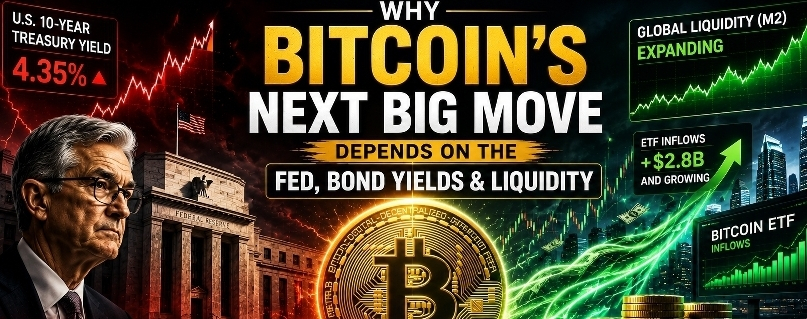
Article
Why Bitcoin’s Next Big Move Depends on the Fed, Bond Yields & LiquidityBitcoin is no longer trading as an isolated asset. In 2026, BTC has become deeply connected to global macroeconomics especially Federal Reserve policy, U.S. Treasury bond yields and worldwide liquidity conditions. The next major Bitcoin breakout or correction will likely be determined less by crypto narratives and more by how capital flows through the global financial system.
1. The Fed Controls Global Risk Appetite
The Federal Reserve remains the single most important macro driver for Bitcoin. When the Fed keeps interest rates high, investors can earn attractive “risk free” returns from U.S. Treasury bonds. That reduces demand for non yielding assets like Bitcoin. However, when the Fed signals future rate cuts or softer monetary policy, liquidity expands and capital quickly rotates back into high beta assets such as BTC and altcoins.
Historically:
➡️Hawkish Fed = Stronger USD + Higher Yields + Crypto Pressure
➡️Dovish Fed = More Liquidity + Risk-On Sentiment + BTC Strength
Recent market behavior confirms this relationship. Even when the Fed paused rate hikes, Bitcoin reacted more to Jerome Powell’s tone and forward guidance than to the actual rate decision itself.
2. Bond Yields Are the Hidden Bitcoin Indicator
The U.S. 10 year Treasury yield has become one of the most important indicators for crypto traders.
Why?
Because institutional investors compare Bitcoin against government bond returns:
➡️If Treasuries yield 4% to 5% safely, large funds reduce exposure to volatile assets.
➡️If yields decline, capital searches for higher growth opportunities like Bitcoin.
Current market structure shows:
➡️Rising yields = tighter financial conditions
➡️Falling yields = expanding liquidity conditions
This is why Bitcoin often struggles during periods of rising bond yields even if crypto specific news remains bullish. Analysts increasingly view Treasury yields as a direct “liquidity thermometer” for BTC.
3. Liquidity Is Still the Core Driver
The strongest Bitcoin rallies in history happened during liquidity expansion cycles:
➡️2020 QE stimulus
➡️Near zero interest rates
➡️Massive fiscal spending
➡️Explosive money supply growth
Today, the market is closely monitoring:
➡️Global M2 money supply
➡️Stablecoin market cap growth
➡️ETF inflows
➡️Bank credit expansion
➡️Treasury General Account liquidity
Several analysts note that Bitcoin increasingly behaves like a “global liquidity sponge.” When liquidity enters markets, BTC absorbs capital aggressively. When liquidity tightens, volatility rises and corrections accelerate.
An important signal in 2026 is that stablecoin capitalization continues rising even during BTC corrections. This suggests sidelined capital remains inside the crypto ecosystem rather than exiting entirely a structurally bullish sign for future recovery phases.
4. Institutional Bitcoin Changes Market Behavior
Bitcoin’s market structure has evolved dramatically because of:
➡️Spot Bitcoin ETFs
➡️Corporate treasury accumulation
➡️Institutional custody
➡️Sovereign and hedge fund exposure
Institutional capital reacts primarily to macroeconomic conditions not emotions.
That means:
➡️CPI inflation data
➡️Fed speeches
➡️Treasury auctions
➡️Employment numbers
➡️Dollar strength
now influence Bitcoin more than retail sentiment alone.
ETF inflows remain one of the strongest bullish indicators. Even during recent market corrections, institutional buyers continued accumulating BTC on weakness, signaling long term confidence rather than panic.
5. So Where Is Bitcoin Going Next?
Bullish Scenario
Bitcoin could enter another major expansion phase if:
➡️The Fed shifts dovish
➡️Treasury yields decline
➡️Liquidity injections increase
➡️ETF inflows accelerate
➡️Global M2 expands
Under this scenario, BTC may regain strong momentum as institutional capital rotates back into digital assets.
Bearish Scenario
Bitcoin could remain range bound or face deeper corrections if:
➡️Inflation remains sticky
➡️The Fed keeps “higher for longer”
➡️Bond yields continue climbing
➡️Liquidity conditions tighten globally
This would increase opportunity cost pressure against Bitcoin and reduce speculative capital inflows.
Final Professional Market View
The biggest mistake crypto traders make is focusing only on charts while ignoring macro liquidity.
Bitcoin in 2026 trades as a macro sensitive institutional asset:
➡️Fed policy drives sentiment
➡️Bond yields control capital allocation
➡️Liquidity determines trend strength
Short term volatility will continue, but long term market structure remains significantly stronger than previous cycles because institutional participation, ETF infrastructure and stablecoin liquidity continue expanding globally. Smart traders are now watching the bond market and central bank liquidity as closely as they watch BTC charts.
The next Bitcoin supertrend will likely begin the moment global liquidity decisively turns risk on again.
#bitcoin #CryptoMarketMoves #FederalReserve #Liquidations #BTCanalysis $BTC $ETH $BNB
Why Bitcoin’s Next Big Move Depends on the Fed, Bond Yields & Liquidity
Bitcoin is no longer trading as an isolated asset. In 2026, BTC has become deeply connected to global macroeconomics especially Federal Reserve policy, U.S. Treasury bond yields and worldwide liquidity conditions. The next major Bitcoin breakout or correction will likely be determined less by crypto narratives and more by how capital flows through the global financial system.
1. The Fed Controls Global Risk Appetite
The Federal Reserve remains the single most important macro driver for Bitcoin. When the Fed keeps interest rates high, investors can earn attractive “risk free” returns from U.S. Treasury bonds. That reduces demand for non yielding assets like Bitcoin. However, when the Fed signals future rate cuts or softer monetary policy, liquidity expands and capital quickly rotates back into high beta assets such as BTC and altcoins.
Historically:
➡️Hawkish Fed = Stronger USD + Higher Yields + Crypto Pressure
➡️Dovish Fed = More Liquidity + Risk-On Sentiment + BTC Strength
Recent market behavior confirms this relationship. Even when the Fed paused rate hikes, Bitcoin reacted more to Jerome Powell’s tone and forward guidance than to the actual rate decision itself.
2. Bond Yields Are the Hidden Bitcoin Indicator
The U.S. 10 year Treasury yield has become one of the most important indicators for crypto traders.
Why?
Because institutional investors compare Bitcoin against government bond returns:
➡️If Treasuries yield 4% to 5% safely, large funds reduce exposure to volatile assets.
➡️If yields decline, capital searches for higher growth opportunities like Bitcoin.
Current market structure shows:
➡️Rising yields = tighter financial conditions
➡️Falling yields = expanding liquidity conditions
This is why Bitcoin often struggles during periods of rising bond yields even if crypto specific news remains bullish. Analysts increasingly view Treasury yields as a direct “liquidity thermometer” for BTC.
3. Liquidity Is Still the Core Driver
The strongest Bitcoin rallies in history happened during liquidity expansion cycles:
➡️2020 QE stimulus
➡️Near zero interest rates
➡️Massive fiscal spending
➡️Explosive money supply growth
Today, the market is closely monitoring:
➡️Global M2 money supply
➡️Stablecoin market cap growth
➡️ETF inflows
➡️Bank credit expansion
➡️Treasury General Account liquidity
Several analysts note that Bitcoin increasingly behaves like a “global liquidity sponge.” When liquidity enters markets, BTC absorbs capital aggressively. When liquidity tightens, volatility rises and corrections accelerate.
An important signal in 2026 is that stablecoin capitalization continues rising even during BTC corrections. This suggests sidelined capital remains inside the crypto ecosystem rather than exiting entirely a structurally bullish sign for future recovery phases.
4. Institutional Bitcoin Changes Market Behavior
Bitcoin’s market structure has evolved dramatically because of:
➡️Spot Bitcoin ETFs
➡️Corporate treasury accumulation
➡️Institutional custody
➡️Sovereign and hedge fund exposure
Institutional capital reacts primarily to macroeconomic conditions not emotions.
That means:
➡️CPI inflation data
➡️Fed speeches
➡️Treasury auctions
➡️Employment numbers
➡️Dollar strength
now influence Bitcoin more than retail sentiment alone.
ETF inflows remain one of the strongest bullish indicators. Even during recent market corrections, institutional buyers continued accumulating BTC on weakness, signaling long term confidence rather than panic.
5. So Where Is Bitcoin Going Next?
Bullish Scenario
Bitcoin could enter another major expansion phase if:
➡️The Fed shifts dovish
➡️Treasury yields decline
➡️Liquidity injections increase
➡️ETF inflows accelerate
➡️Global M2 expands
Under this scenario, BTC may regain strong momentum as institutional capital rotates back into digital assets.
Bearish Scenario
Bitcoin could remain range bound or face deeper corrections if:
➡️Inflation remains sticky
➡️The Fed keeps “higher for longer”
➡️Bond yields continue climbing
➡️Liquidity conditions tighten globally
This would increase opportunity cost pressure against Bitcoin and reduce speculative capital inflows.
Final Professional Market View
The biggest mistake crypto traders make is focusing only on charts while ignoring macro liquidity.
Bitcoin in 2026 trades as a macro sensitive institutional asset:
➡️Fed policy drives sentiment
➡️Bond yields control capital allocation
➡️Liquidity determines trend strength
Short term volatility will continue, but long term market structure remains significantly stronger than previous cycles because institutional participation, ETF infrastructure and stablecoin liquidity continue expanding globally. Smart traders are now watching the bond market and central bank liquidity as closely as they watch BTC charts.
The next Bitcoin supertrend will likely begin the moment global liquidity decisively turns risk on again.
#bitcoin #CryptoMarketMoves #FederalReserve #Liquidations #BTCanalysis $BTC $ETH $BNB
1. The Fed Controls Global Risk Appetite
The Federal Reserve remains the single most important macro driver for Bitcoin. When the Fed keeps interest rates high, investors can earn attractive “risk free” returns from U.S. Treasury bonds. That reduces demand for non yielding assets like Bitcoin. However, when the Fed signals future rate cuts or softer monetary policy, liquidity expands and capital quickly rotates back into high beta assets such as BTC and altcoins.
Historically:
➡️Hawkish Fed = Stronger USD + Higher Yields + Crypto Pressure
➡️Dovish Fed = More Liquidity + Risk-On Sentiment + BTC Strength
Recent market behavior confirms this relationship. Even when the Fed paused rate hikes, Bitcoin reacted more to Jerome Powell’s tone and forward guidance than to the actual rate decision itself.
2. Bond Yields Are the Hidden Bitcoin Indicator
The U.S. 10 year Treasury yield has become one of the most important indicators for crypto traders.
Why?
Because institutional investors compare Bitcoin against government bond returns:
➡️If Treasuries yield 4% to 5% safely, large funds reduce exposure to volatile assets.
➡️If yields decline, capital searches for higher growth opportunities like Bitcoin.
Current market structure shows:
➡️Rising yields = tighter financial conditions
➡️Falling yields = expanding liquidity conditions
This is why Bitcoin often struggles during periods of rising bond yields even if crypto specific news remains bullish. Analysts increasingly view Treasury yields as a direct “liquidity thermometer” for BTC.
3. Liquidity Is Still the Core Driver
The strongest Bitcoin rallies in history happened during liquidity expansion cycles:
➡️2020 QE stimulus
➡️Near zero interest rates
➡️Massive fiscal spending
➡️Explosive money supply growth
Today, the market is closely monitoring:
➡️Global M2 money supply
➡️Stablecoin market cap growth
➡️ETF inflows
➡️Bank credit expansion
➡️Treasury General Account liquidity
Several analysts note that Bitcoin increasingly behaves like a “global liquidity sponge.” When liquidity enters markets, BTC absorbs capital aggressively. When liquidity tightens, volatility rises and corrections accelerate.
An important signal in 2026 is that stablecoin capitalization continues rising even during BTC corrections. This suggests sidelined capital remains inside the crypto ecosystem rather than exiting entirely a structurally bullish sign for future recovery phases.
4. Institutional Bitcoin Changes Market Behavior
Bitcoin’s market structure has evolved dramatically because of:
➡️Spot Bitcoin ETFs
➡️Corporate treasury accumulation
➡️Institutional custody
➡️Sovereign and hedge fund exposure
Institutional capital reacts primarily to macroeconomic conditions not emotions.
That means:
➡️CPI inflation data
➡️Fed speeches
➡️Treasury auctions
➡️Employment numbers
➡️Dollar strength
now influence Bitcoin more than retail sentiment alone.
ETF inflows remain one of the strongest bullish indicators. Even during recent market corrections, institutional buyers continued accumulating BTC on weakness, signaling long term confidence rather than panic.
5. So Where Is Bitcoin Going Next?
Bullish Scenario
Bitcoin could enter another major expansion phase if:
➡️The Fed shifts dovish
➡️Treasury yields decline
➡️Liquidity injections increase
➡️ETF inflows accelerate
➡️Global M2 expands
Under this scenario, BTC may regain strong momentum as institutional capital rotates back into digital assets.
Bearish Scenario
Bitcoin could remain range bound or face deeper corrections if:
➡️Inflation remains sticky
➡️The Fed keeps “higher for longer”
➡️Bond yields continue climbing
➡️Liquidity conditions tighten globally
This would increase opportunity cost pressure against Bitcoin and reduce speculative capital inflows.
Final Professional Market View
The biggest mistake crypto traders make is focusing only on charts while ignoring macro liquidity.
Bitcoin in 2026 trades as a macro sensitive institutional asset:
➡️Fed policy drives sentiment
➡️Bond yields control capital allocation
➡️Liquidity determines trend strength
Short term volatility will continue, but long term market structure remains significantly stronger than previous cycles because institutional participation, ETF infrastructure and stablecoin liquidity continue expanding globally. Smart traders are now watching the bond market and central bank liquidity as closely as they watch BTC charts.
The next Bitcoin supertrend will likely begin the moment global liquidity decisively turns risk on again.
#bitcoin #CryptoMarketMoves #FederalReserve #Liquidations #BTCanalysis $BTC $ETH $BNB
229
DoubleLine CEO Rules Out Fed Rate Cut What This Means for Bitcoin, Altcoins, and Global LiquidityThe latest comments from Jeffrey Gundlach, often called the “Bond King,” are creating fresh debate across both traditional finance and crypto markets. Gundlach recently signaled that the Federal Reserve System is unlikely to cut interest rates anytime soon due to persistent inflation risks and unstable macroeconomic conditions.
For crypto traders, this matters far more than many realize.
Because in 2026, Bitcoin is no longer trading purely on retail hype it is now heavily connected to liquidity, institutional positioning, bond yields, and monetary policy expectations.
Why the Market Expected Rate Cuts
Over the past several months, markets had priced in the possibility that the Fed would begin easing monetary policy as inflation cooled and economic growth slowed.
Lower interest rates usually create:
Higher market liquidity
More risk appetite
Stronger flows into speculative assets
Weakness in the US dollar
Bullish momentum for crypto and tech stocks
Historically, crypto performs best when liquidity expands.
That is why many traders positioned aggressively for:
Bitcoin continuation above major resistance
Altseason acceleration
Strong meme coin rotations
Increased leverage across derivatives markets
But Gundlach’s comments disrupted that narrative.
Why DoubleLine CEO’s View Matters
Jeffrey Gundlach is closely followed because the bond market often predicts macroeconomic direction earlier than equities.
Bond investors focus heavily on:
Inflation expectations
Treasury yields
Credit conditions
Recession probabilities
Central bank policy shifts
If major bond market participants believe the Fed will stay hawkish longer, it changes institutional risk calculations across all markets including crypto.
This is especially important because institutional Bitcoin adoption has grown significantly since the launch of spot Bitcoin ETFs.
Crypto is now partially trading like a macro asset.
The Core Problem: Inflation Is Still Sticky
Despite some improvement in headline inflation data, several structural pressures remain:
Elevated energy costs
Wage inflation
Geopolitical instability
Expanding government debt
Persistent service sector inflation
If inflation remains above the Fed’s target, aggressive rate cuts become politically and economically difficult.
That creates a “higher for longer” environment.
And historically, higher interest rates reduce speculative capital flows into high-risk assets.
How Bitcoin Reacts to Higher Rates
Bitcoin’s relationship with rates has evolved.
In earlier cycles, BTC moved mostly on halving narratives and retail speculation.
Today, institutional capital plays a major role.
Higher interest rates generally create:
Stronger Treasury yields
Capital rotation into safer assets
Reduced leverage appetite
Lower liquidity for speculative markets
This does not automatically mean Bitcoin becomes bearish long term.
But it does increase short term volatility and reduces the speed of bullish expansion.
What Smart Money Is Watching Right Now
Professional traders are not focused only on headlines.
They are watching:
US Treasury yields
DXY strength
ETF inflows
Stablecoin liquidity growth
Open interest in futures markets
Federal Reserve speeches
Labor market data
CPI and PCE inflation reports
If liquidity conditions tighten further, altcoins may experience larger drawdowns than Bitcoin.
Historically:
BTC survives macro pressure better
ETH follows with relative strength
Lower cap altcoins suffer the most during liquidity contraction
That is why many institutions continue accumulating Bitcoin while remaining selective on altcoins.
The Hidden Bullish Scenario
Ironically, a delayed rate cut cycle could still become bullish later.
Why?
Because if economic conditions weaken sharply while rates stay elevated:
Financial stress may increase
Debt markets could tighten
Growth could slow aggressively
Eventually, the Fed may be forced into larger liquidity injections later.
And when central banks pivot aggressively after prolonged tightening, risk assets often explode upward.
This is why many long term investors continue accumulating BTC during uncertainty rather than chasing euphoric rallies.
Key Levels Traders Are Monitoring
Current institutional focus areas include:
Bitcoin ETF inflows/outflows
Liquidity around major support zones
Market reaction to US macro data
Correlation with Nasdaq and bond yields
A sustained move in yields higher could temporarily pressure crypto markets.
But if Bitcoin maintains strength despite macro pressure, it may signal continued institutional accumulation underneath the surface.
That is often how major bull market expansions begin.
Final Thoughts
Jeffrey Gundlach’s warning is not just another macro headline.
It is a reminder that crypto markets are now deeply connected to global liquidity cycles.
Retail traders often focus on short term price candles.
Professional traders focus on:
Monetary policy
Liquidity flows
Institutional positioning
Risk sentiment
Bond market signals
The next major crypto move may not begin with a meme coin rally.
It may begin inside the bond market.
And that is exactly why smart money is paying attention to the Fed more than ever before.
#BerkshireHeavilyIncreasesAlphabetStake #SpaceXEyesJune12NasdaqListing #JapaneseSecuritiesFirmsCryptoInvestmentTrusts #VitalikMovesETHviaPrivacyPools #DuneCuts25%AmidAIEfficiencyPush
$BTC $ETH $BNB
[https://app.binance.com/uni-qr/NgPVrhh8?utm_medium=web_share_copy](https://app.binance.com/uni-qr/NgPVrhh8?utm_medium=web_share_copy)
[This is my small contribution to the subscriber who knows me and who reads my article 🙏🕺💯♥️🤳🌏🌃🧧🎁🪙📥🔐🔜🇳🇵🇳🇵🇳🇵](https://app.binance.com/uni-qr/ngpvrhh8?utm_medium=web_share_copy)
DoubleLine CEO Rules Out Fed Rate Cut What This Means for Bitcoin, Altcoins, and Global Liquidity
The latest comments from Jeffrey Gundlach, often called the “Bond King,” are creating fresh debate across both traditional finance and crypto markets. Gundlach recently signaled that the Federal Reserve System is unlikely to cut interest rates anytime soon due to persistent inflation risks and unstable macroeconomic conditions.
For crypto traders, this matters far more than many realize.
Because in 2026, Bitcoin is no longer trading purely on retail hype it is now heavily connected to liquidity, institutional positioning, bond yields, and monetary policy expectations.
Why the Market Expected Rate Cuts
Over the past several months, markets had priced in the possibility that the Fed would begin easing monetary policy as inflation cooled and economic growth slowed.
Lower interest rates usually create:
Higher market liquidity
More risk appetite
Stronger flows into speculative assets
Weakness in the US dollar
Bullish momentum for crypto and tech stocks
Historically, crypto performs best when liquidity expands.
That is why many traders positioned aggressively for:
Bitcoin continuation above major resistance
Altseason acceleration
Strong meme coin rotations
Increased leverage across derivatives markets
But Gundlach’s comments disrupted that narrative.
Why DoubleLine CEO’s View Matters
Jeffrey Gundlach is closely followed because the bond market often predicts macroeconomic direction earlier than equities.
Bond investors focus heavily on:
Inflation expectations
Treasury yields
Credit conditions
Recession probabilities
Central bank policy shifts
If major bond market participants believe the Fed will stay hawkish longer, it changes institutional risk calculations across all markets including crypto.
This is especially important because institutional Bitcoin adoption has grown significantly since the launch of spot Bitcoin ETFs.
Crypto is now partially trading like a macro asset.
The Core Problem: Inflation Is Still Sticky
Despite some improvement in headline inflation data, several structural pressures remain:
Elevated energy costs
Wage inflation
Geopolitical instability
Expanding government debt
Persistent service sector inflation
If inflation remains above the Fed’s target, aggressive rate cuts become politically and economically difficult.
That creates a “higher for longer” environment.
And historically, higher interest rates reduce speculative capital flows into high-risk assets.
How Bitcoin Reacts to Higher Rates
Bitcoin’s relationship with rates has evolved.
In earlier cycles, BTC moved mostly on halving narratives and retail speculation.
Today, institutional capital plays a major role.
Higher interest rates generally create:
Stronger Treasury yields
Capital rotation into safer assets
Reduced leverage appetite
Lower liquidity for speculative markets
This does not automatically mean Bitcoin becomes bearish long term.
But it does increase short term volatility and reduces the speed of bullish expansion.
What Smart Money Is Watching Right Now
Professional traders are not focused only on headlines.
They are watching:
US Treasury yields
DXY strength
ETF inflows
Stablecoin liquidity growth
Open interest in futures markets
Federal Reserve speeches
Labor market data
CPI and PCE inflation reports
If liquidity conditions tighten further, altcoins may experience larger drawdowns than Bitcoin.
Historically:
BTC survives macro pressure better
ETH follows with relative strength
Lower cap altcoins suffer the most during liquidity contraction
That is why many institutions continue accumulating Bitcoin while remaining selective on altcoins.
The Hidden Bullish Scenario
Ironically, a delayed rate cut cycle could still become bullish later.
Why?
Because if economic conditions weaken sharply while rates stay elevated:
Financial stress may increase
Debt markets could tighten
Growth could slow aggressively
Eventually, the Fed may be forced into larger liquidity injections later.
And when central banks pivot aggressively after prolonged tightening, risk assets often explode upward.
This is why many long term investors continue accumulating BTC during uncertainty rather than chasing euphoric rallies.
Key Levels Traders Are Monitoring
Current institutional focus areas include:
Bitcoin ETF inflows/outflows
Liquidity around major support zones
Market reaction to US macro data
Correlation with Nasdaq and bond yields
A sustained move in yields higher could temporarily pressure crypto markets.
But if Bitcoin maintains strength despite macro pressure, it may signal continued institutional accumulation underneath the surface.
That is often how major bull market expansions begin.
Final Thoughts
Jeffrey Gundlach’s warning is not just another macro headline.
It is a reminder that crypto markets are now deeply connected to global liquidity cycles.
Retail traders often focus on short term price candles.
Professional traders focus on:
Monetary policy
Liquidity flows
Institutional positioning
Risk sentiment
Bond market signals
The next major crypto move may not begin with a meme coin rally.
It may begin inside the bond market.
And that is exactly why smart money is paying attention to the Fed more than ever before.
#BerkshireHeavilyIncreasesAlphabetStake #SpaceXEyesJune12NasdaqListing #JapaneseSecuritiesFirmsCryptoInvestmentTrusts #VitalikMovesETHviaPrivacyPools #DuneCuts25%AmidAIEfficiencyPush
$BTC $ETH $BNB
https://app.binance.com/uni-qr/NgPVrhh8?utm_medium=web_share_copy
This is my small contribution to the subscriber who knows me and who reads my article 🙏🕺💯♥️🤳🌏🌃🧧🎁🪙📥🔐🔜🇳🇵🇳🇵🇳🇵
For crypto traders, this matters far more than many realize.
Because in 2026, Bitcoin is no longer trading purely on retail hype it is now heavily connected to liquidity, institutional positioning, bond yields, and monetary policy expectations.
Why the Market Expected Rate Cuts
Over the past several months, markets had priced in the possibility that the Fed would begin easing monetary policy as inflation cooled and economic growth slowed.
Lower interest rates usually create:
Higher market liquidity
More risk appetite
Stronger flows into speculative assets
Weakness in the US dollar
Bullish momentum for crypto and tech stocks
Historically, crypto performs best when liquidity expands.
That is why many traders positioned aggressively for:
Bitcoin continuation above major resistance
Altseason acceleration
Strong meme coin rotations
Increased leverage across derivatives markets
But Gundlach’s comments disrupted that narrative.
Why DoubleLine CEO’s View Matters
Jeffrey Gundlach is closely followed because the bond market often predicts macroeconomic direction earlier than equities.
Bond investors focus heavily on:
Inflation expectations
Treasury yields
Credit conditions
Recession probabilities
Central bank policy shifts
If major bond market participants believe the Fed will stay hawkish longer, it changes institutional risk calculations across all markets including crypto.
This is especially important because institutional Bitcoin adoption has grown significantly since the launch of spot Bitcoin ETFs.
Crypto is now partially trading like a macro asset.
The Core Problem: Inflation Is Still Sticky
Despite some improvement in headline inflation data, several structural pressures remain:
Elevated energy costs
Wage inflation
Geopolitical instability
Expanding government debt
Persistent service sector inflation
If inflation remains above the Fed’s target, aggressive rate cuts become politically and economically difficult.
That creates a “higher for longer” environment.
And historically, higher interest rates reduce speculative capital flows into high-risk assets.
How Bitcoin Reacts to Higher Rates
Bitcoin’s relationship with rates has evolved.
In earlier cycles, BTC moved mostly on halving narratives and retail speculation.
Today, institutional capital plays a major role.
Higher interest rates generally create:
Stronger Treasury yields
Capital rotation into safer assets
Reduced leverage appetite
Lower liquidity for speculative markets
This does not automatically mean Bitcoin becomes bearish long term.
But it does increase short term volatility and reduces the speed of bullish expansion.
What Smart Money Is Watching Right Now
Professional traders are not focused only on headlines.
They are watching:
US Treasury yields
DXY strength
ETF inflows
Stablecoin liquidity growth
Open interest in futures markets
Federal Reserve speeches
Labor market data
CPI and PCE inflation reports
If liquidity conditions tighten further, altcoins may experience larger drawdowns than Bitcoin.
Historically:
BTC survives macro pressure better
ETH follows with relative strength
Lower cap altcoins suffer the most during liquidity contraction
That is why many institutions continue accumulating Bitcoin while remaining selective on altcoins.
The Hidden Bullish Scenario
Ironically, a delayed rate cut cycle could still become bullish later.
Why?
Because if economic conditions weaken sharply while rates stay elevated:
Financial stress may increase
Debt markets could tighten
Growth could slow aggressively
Eventually, the Fed may be forced into larger liquidity injections later.
And when central banks pivot aggressively after prolonged tightening, risk assets often explode upward.
This is why many long term investors continue accumulating BTC during uncertainty rather than chasing euphoric rallies.
Key Levels Traders Are Monitoring
Current institutional focus areas include:
Bitcoin ETF inflows/outflows
Liquidity around major support zones
Market reaction to US macro data
Correlation with Nasdaq and bond yields
A sustained move in yields higher could temporarily pressure crypto markets.
But if Bitcoin maintains strength despite macro pressure, it may signal continued institutional accumulation underneath the surface.
That is often how major bull market expansions begin.
Final Thoughts
Jeffrey Gundlach’s warning is not just another macro headline.
It is a reminder that crypto markets are now deeply connected to global liquidity cycles.
Retail traders often focus on short term price candles.
Professional traders focus on:
Monetary policy
Liquidity flows
Institutional positioning
Risk sentiment
Bond market signals
The next major crypto move may not begin with a meme coin rally.
It may begin inside the bond market.
And that is exactly why smart money is paying attention to the Fed more than ever before.
#BerkshireHeavilyIncreasesAlphabetStake #SpaceXEyesJune12NasdaqListing #JapaneseSecuritiesFirmsCryptoInvestmentTrusts #VitalikMovesETHviaPrivacyPools #DuneCuts25%AmidAIEfficiencyPush
$BTC $ETH $BNB
https://app.binance.com/uni-qr/NgPVrhh8?utm_medium=web_share_copy
This is my small contribution to the subscriber who knows me and who reads my article 🙏🕺💯♥️🤳🌏🌃🧧🎁🪙📥🔐🔜🇳🇵🇳🇵🇳🇵
23

Article
🇯🇵 #JapaneseSecuritiesFirmsCryptoInvestmentTrustsJapan’s Securities Giants Enter Crypto Investment Trust Era The Institutional Turning Point for Global Crypto Liquidity
The Japanese financial sector is entering a structural transformation phase that the global crypto market cannot ignore. Leading securities firms and asset managers are actively preparing regulated crypto investment trusts and ETF style products, marking a historic shift from cautious observation to structured capital deployment into digital assets.
From a professional trader’s lens, this is not speculation this is capital infrastructure being built before liquidity enters the market.
Macro Overview: Why Japan Matters Right Now
Japan is one of the world’s most conservative yet structurally important financial systems. When Japanese institutions move, they move slowly but with scale.
Recent developments show:
Six major Japanese asset managers are actively developing crypto investment trusts
Institutions include: Nomura, Mitsubishi UFJ, Daiwa, SBI, Asset Management One, Amova
Combined asset exposure potential: trillions of USD equivalent capital base
Regulatory shift underway under Japan’s Financial Services Agency (FSA)
Source driven insight: These firms are preparing products that mirror mutual funds and ETFs but will directly hold Bitcoin and Ethereum once regulatory approval finalizes.
MEXC +1
Institutional Shift: From “Crypto is Risk” towards “Crypto is Allocatable Asset”
Historically, Japan treated crypto as a payment instrument under strict regulation, limiting institutional participation.
Now the framework is evolving:
Crypto may be reclassified under Financial Instruments and Exchange Act
Crypto ETFs and investment trusts expected post-regulatory approval cycle
Tax reform discussions moving toward ~20% capital gains alignment with equities
Institutional custody infrastructure being expanded by regulated brokers
RWA Times +1
This is the critical trigger.
Why it matters: Once crypto is legally categorized as a financial product, pension funds, banks and securities brokers can allocate systematically.
Market Structure Impact (Trader Perspective)
This is how institutional liquidity enters markets:
Phase 1: Regulatory Preparation (NOW)
Asset managers design trust structures
Custody + compliance frameworks built
Broker integration planning begins
Phase 2: Product Launch (2026 or 2027 expected window)
Crypto investment trusts go live
ETF style Bitcoin & Ethereum exposure products launch
Retail access expands through brokerage accounts
Phase 3: Capital Inflow Expansion
Pension funds + insurance portfolios begin allocation
Passive inflows increase BTC/ETH demand
Volatility reduces, trend strength increases
Historical pattern comparison:
US Spot ETF approval → BTC liquidity expansion
Japan trusts → likely slower but more stable capital inflow
Why This Is NOT Already Priced In
Despite global ETF narratives, Japan remains underweighted in crypto exposure due to:
Historical tax burden (up to 55% classification)
Regulatory conservatism after early exchange failures
Lack of institutional-grade crypto products
This creates a structural gap:
Institutional demand exists
Product access is not fully live yet
That mismatch is where future liquidity expansion comes from.
Key Institutional Signal (Important)
Recent reports show major brokerages like SBI and Rakuten Securities preparing in-house crypto trust products, while multiple financial groups are positioning for entry once rules finalize.
KuCoin
This is a clear signal: Distribution channels are being prepared BEFORE approval
Smart money behavior pattern:
Infrastructure first → Regulation next → Capital inflow last
Trading Implications (Professional View)
For crypto market participants:
Bullish structural effects:
Long term BTC and ETH demand base expands
Reduced retail driven volatility over time
Strong institutional support zone formation
Short term reality:
Market will still be driven by macro liquidity (US Fed, USD index)
Japan impact is medium term, not immediate spike catalyst
Final Insight: The Real Narrative
This is not just “Japan entering crypto.”
This is:
Traditional securities infrastructure preparing to absorb digital assets into regulated capital markets.
And when securities firms enter, they don’t speculate they allocate.
Conclusion
Japan’s securities and asset management industry is building one of the most important missing pillars in global crypto adoption:
Regulated investment trust and ETF grade crypto exposure
For traders and investors, the key takeaway is simple:
Short term = volatility driven by macro liquidity
Mid term = regulatory catalysts
Long term = institutional capital expansion phase
#JapaneseSecuritiesFirmsCryptoInvestmentTrusts #BerkshireHeavilyIncreasesAlphabetStake #THORChainHackCauses$10.7MLoss #VitalikMovesETHviaPrivacyPools #TrumpDisclosesTradesIncludingMARAStock $BTC $ETH $BNB
🇯🇵 #JapaneseSecuritiesFirmsCryptoInvestmentTrusts
Japan’s Securities Giants Enter Crypto Investment Trust Era The Institutional Turning Point for Global Crypto Liquidity
The Japanese financial sector is entering a structural transformation phase that the global crypto market cannot ignore. Leading securities firms and asset managers are actively preparing regulated crypto investment trusts and ETF style products, marking a historic shift from cautious observation to structured capital deployment into digital assets.
From a professional trader’s lens, this is not speculation this is capital infrastructure being built before liquidity enters the market.
Macro Overview: Why Japan Matters Right Now
Japan is one of the world’s most conservative yet structurally important financial systems. When Japanese institutions move, they move slowly but with scale.
Recent developments show:
Six major Japanese asset managers are actively developing crypto investment trusts
Institutions include: Nomura, Mitsubishi UFJ, Daiwa, SBI, Asset Management One, Amova
Combined asset exposure potential: trillions of USD equivalent capital base
Regulatory shift underway under Japan’s Financial Services Agency (FSA)
Source driven insight: These firms are preparing products that mirror mutual funds and ETFs but will directly hold Bitcoin and Ethereum once regulatory approval finalizes.
MEXC +1
Institutional Shift: From “Crypto is Risk” towards “Crypto is Allocatable Asset”
Historically, Japan treated crypto as a payment instrument under strict regulation, limiting institutional participation.
Now the framework is evolving:
Crypto may be reclassified under Financial Instruments and Exchange Act
Crypto ETFs and investment trusts expected post-regulatory approval cycle
Tax reform discussions moving toward ~20% capital gains alignment with equities
Institutional custody infrastructure being expanded by regulated brokers
RWA Times +1
This is the critical trigger.
Why it matters: Once crypto is legally categorized as a financial product, pension funds, banks and securities brokers can allocate systematically.
Market Structure Impact (Trader Perspective)
This is how institutional liquidity enters markets:
Phase 1: Regulatory Preparation (NOW)
Asset managers design trust structures
Custody + compliance frameworks built
Broker integration planning begins
Phase 2: Product Launch (2026 or 2027 expected window)
Crypto investment trusts go live
ETF style Bitcoin & Ethereum exposure products launch
Retail access expands through brokerage accounts
Phase 3: Capital Inflow Expansion
Pension funds + insurance portfolios begin allocation
Passive inflows increase BTC/ETH demand
Volatility reduces, trend strength increases
Historical pattern comparison:
US Spot ETF approval → BTC liquidity expansion
Japan trusts → likely slower but more stable capital inflow
Why This Is NOT Already Priced In
Despite global ETF narratives, Japan remains underweighted in crypto exposure due to:
Historical tax burden (up to 55% classification)
Regulatory conservatism after early exchange failures
Lack of institutional-grade crypto products
This creates a structural gap:
Institutional demand exists
Product access is not fully live yet
That mismatch is where future liquidity expansion comes from.
Key Institutional Signal (Important)
Recent reports show major brokerages like SBI and Rakuten Securities preparing in-house crypto trust products, while multiple financial groups are positioning for entry once rules finalize.
KuCoin
This is a clear signal: Distribution channels are being prepared BEFORE approval
Smart money behavior pattern:
Infrastructure first → Regulation next → Capital inflow last
Trading Implications (Professional View)
For crypto market participants:
Bullish structural effects:
Long term BTC and ETH demand base expands
Reduced retail driven volatility over time
Strong institutional support zone formation
Short term reality:
Market will still be driven by macro liquidity (US Fed, USD index)
Japan impact is medium term, not immediate spike catalyst
Final Insight: The Real Narrative
This is not just “Japan entering crypto.”
This is:
Traditional securities infrastructure preparing to absorb digital assets into regulated capital markets.
And when securities firms enter, they don’t speculate they allocate.
Conclusion
Japan’s securities and asset management industry is building one of the most important missing pillars in global crypto adoption:
Regulated investment trust and ETF grade crypto exposure
For traders and investors, the key takeaway is simple:
Short term = volatility driven by macro liquidity
Mid term = regulatory catalysts
Long term = institutional capital expansion phase
#JapaneseSecuritiesFirmsCryptoInvestmentTrusts #BerkshireHeavilyIncreasesAlphabetStake #THORChainHackCauses$10.7MLoss #VitalikMovesETHviaPrivacyPools #TrumpDisclosesTradesIncludingMARAStock $BTC $ETH $BNB
The Japanese financial sector is entering a structural transformation phase that the global crypto market cannot ignore. Leading securities firms and asset managers are actively preparing regulated crypto investment trusts and ETF style products, marking a historic shift from cautious observation to structured capital deployment into digital assets.
From a professional trader’s lens, this is not speculation this is capital infrastructure being built before liquidity enters the market.
Macro Overview: Why Japan Matters Right Now
Japan is one of the world’s most conservative yet structurally important financial systems. When Japanese institutions move, they move slowly but with scale.
Recent developments show:
Six major Japanese asset managers are actively developing crypto investment trusts
Institutions include: Nomura, Mitsubishi UFJ, Daiwa, SBI, Asset Management One, Amova
Combined asset exposure potential: trillions of USD equivalent capital base
Regulatory shift underway under Japan’s Financial Services Agency (FSA)
Source driven insight: These firms are preparing products that mirror mutual funds and ETFs but will directly hold Bitcoin and Ethereum once regulatory approval finalizes.
MEXC +1
Institutional Shift: From “Crypto is Risk” towards “Crypto is Allocatable Asset”
Historically, Japan treated crypto as a payment instrument under strict regulation, limiting institutional participation.
Now the framework is evolving:
Crypto may be reclassified under Financial Instruments and Exchange Act
Crypto ETFs and investment trusts expected post-regulatory approval cycle
Tax reform discussions moving toward ~20% capital gains alignment with equities
Institutional custody infrastructure being expanded by regulated brokers
RWA Times +1
This is the critical trigger.
Why it matters: Once crypto is legally categorized as a financial product, pension funds, banks and securities brokers can allocate systematically.
Market Structure Impact (Trader Perspective)
This is how institutional liquidity enters markets:
Phase 1: Regulatory Preparation (NOW)
Asset managers design trust structures
Custody + compliance frameworks built
Broker integration planning begins
Phase 2: Product Launch (2026 or 2027 expected window)
Crypto investment trusts go live
ETF style Bitcoin & Ethereum exposure products launch
Retail access expands through brokerage accounts
Phase 3: Capital Inflow Expansion
Pension funds + insurance portfolios begin allocation
Passive inflows increase BTC/ETH demand
Volatility reduces, trend strength increases
Historical pattern comparison:
US Spot ETF approval → BTC liquidity expansion
Japan trusts → likely slower but more stable capital inflow
Why This Is NOT Already Priced In
Despite global ETF narratives, Japan remains underweighted in crypto exposure due to:
Historical tax burden (up to 55% classification)
Regulatory conservatism after early exchange failures
Lack of institutional-grade crypto products
This creates a structural gap:
Institutional demand exists
Product access is not fully live yet
That mismatch is where future liquidity expansion comes from.
Key Institutional Signal (Important)
Recent reports show major brokerages like SBI and Rakuten Securities preparing in-house crypto trust products, while multiple financial groups are positioning for entry once rules finalize.
KuCoin
This is a clear signal: Distribution channels are being prepared BEFORE approval
Smart money behavior pattern:
Infrastructure first → Regulation next → Capital inflow last
Trading Implications (Professional View)
For crypto market participants:
Bullish structural effects:
Long term BTC and ETH demand base expands
Reduced retail driven volatility over time
Strong institutional support zone formation
Short term reality:
Market will still be driven by macro liquidity (US Fed, USD index)
Japan impact is medium term, not immediate spike catalyst
Final Insight: The Real Narrative
This is not just “Japan entering crypto.”
This is:
Traditional securities infrastructure preparing to absorb digital assets into regulated capital markets.
And when securities firms enter, they don’t speculate they allocate.
Conclusion
Japan’s securities and asset management industry is building one of the most important missing pillars in global crypto adoption:
Regulated investment trust and ETF grade crypto exposure
For traders and investors, the key takeaway is simple:
Short term = volatility driven by macro liquidity
Mid term = regulatory catalysts
Long term = institutional capital expansion phase
#JapaneseSecuritiesFirmsCryptoInvestmentTrusts #BerkshireHeavilyIncreasesAlphabetStake #THORChainHackCauses$10.7MLoss #VitalikMovesETHviaPrivacyPools #TrumpDisclosesTradesIncludingMARAStock $BTC $ETH $BNB
133
🇺🇸 The CLARITY Act just cleared the Senate Banking Committee with a bipartisan 15-9 vote a major step toward US crypto regulation clarity.
Smart money isn’t watching hype anymore. They’re watching policy, liquidity and institutional positioning.
If regulatory uncertainty drops, institutional adoption could accelerate faster than most retail traders expect.
#BerkshireHeavilyIncreasesAlphabetStake #JapaneseSecuritiesFirmsCryptoInvestmentTrusts #TrumpDisclosesTradesIncludingMARAStock #VitalikMovesETHviaPrivacyPools #DuneCuts25%AmidAIEfficiencyPush $BTC $ETH $BNB
🇺🇸 The CLARITY Act just cleared the Senate Banking Committee with a bipartisan 15-9 vote a major step toward US crypto regulation clarity.
Smart money isn’t watching hype anymore. They’re watching policy, liquidity and institutional positioning.
If regulatory uncertainty drops, institutional adoption could accelerate faster than most retail traders expect.
#BerkshireHeavilyIncreasesAlphabetStake #JapaneseSecuritiesFirmsCryptoInvestmentTrusts #TrumpDisclosesTradesIncludingMARAStock #VitalikMovesETHviaPrivacyPools #DuneCuts25%AmidAIEfficiencyPush $BTC $ETH $BNB
Smart money isn’t watching hype anymore. They’re watching policy, liquidity and institutional positioning.
If regulatory uncertainty drops, institutional adoption could accelerate faster than most retail traders expect.
#BerkshireHeavilyIncreasesAlphabetStake #JapaneseSecuritiesFirmsCryptoInvestmentTrusts #TrumpDisclosesTradesIncludingMARAStock #VitalikMovesETHviaPrivacyPools #DuneCuts25%AmidAIEfficiencyPush $BTC $ETH $BNB
2
1
87
#redpacketgiveawaycampaign but I won't found it
#redpacketgiveawaycampaign but I won't found it
1
505
#100USDTFREE All will have their own separate thinking and perception to get and show up for the acknowledgement. #football #FIT21 $BNB $BTC
#100USDTFREE All will have their own separate thinking and perception to get and show up for the acknowledgement. #football #FIT21 $BNB $BTC
68
#100USDTFREE yes football game is not only the game but it is also the best option for team spirit through which every player get succeed for the better knowledge of skills with the team applying it's motivation and dedication to know what you get for it. #FOOTBALLUSDT #Follow_Like_Comment
#100USDTFREE yes football game is not only the game but it is also the best option for team spirit through which every player get succeed for the better knowledge of skills with the team applying it's motivation and dedication to know what you get for it. #FOOTBALLUSDT #Follow_Like_Comment
41

Article
Why Smart Money Is Accumulating Bitcoin While Retail Traders Still Wait For Altseason.For the past few months, many retail traders have been expecting one thing a massive altseason.
The logic looked simple.
Bitcoin ETFs were approved, institutions entered crypto, governments started discussing regulation more openly and the market sentiment slowly turned bullish again. Retail traders expected liquidity to immediately flow into altcoins just like previous cycles.
But the market is behaving differently this time.
While many traders continue waiting for explosive altcoin rallies, smart money appears to be positioning itself more carefully around Bitcoin, stablecoin liquidity and long term infrastructure narratives.
Understanding this difference is important because modern crypto markets are no longer driven only by hype. Institutional participation has changed the structure of the market itself.
Bitcoin Is No Longer Just A Retail Asset
In previous cycles, Bitcoin was mainly dominated by retail traders, crypto native investors and speculative capital.
Today, Bitcoin is increasingly treated as a macro financial asset.
Large institutions now view Bitcoin as:
a hedge against monetary instability
a long term digital store of value
an alternative reserve asset
a liquidity vehicle for crypto exposure
This changes market behavior significantly.
Institutions do not trade emotionally like retail traders. They focus on:
liquidity
regulation
risk management
long term capital preservation
macroeconomic conditions
This is one major reason why Bitcoin continues attracting strong capital even while many altcoins remain weak.
ETF Flows Changed The Market Structure
One of the biggest changes in this cycle is the arrival of institutional ETF participation.
Spot Bitcoin ETFs created a regulated path for traditional financial capital to enter the crypto market without directly managing wallets or on chain assets.
This matters more than many traders realize.
Institutional investors often cannot buy low cap speculative altcoins because of compliance rules, risk limitations, or internal investment policies.
Bitcoin becomes the primary gateway.
As a result:
Bitcoin receives the majority of institutional attention
liquidity concentrates around BTC first
altcoin capital rotation becomes slower and more selective
This explains why Bitcoin dominance has remained relatively strong even during bullish market periods.
Retail Traders Are Still Trading Emotionally
Many retail traders continue approaching the market with expectations built from older crypto cycles.
They expect:
instant altseason
fast 10x gains
meme coin explosions everywhere
nonstop bullish momentum
But institutional markets move differently.
Smart money usually accumulates during uncertainty, not during peak excitement.
While retail traders chase short term narratives, institutions focus on:
market structure
liquidity conditions
stablecoin flows
interest rates
macroeconomic risks
long term positioning
This creates a psychological gap between professional investors and emotional traders.
The market often rewards patience more than excitement.
Stablecoins Are Quietly Becoming The Foundation Of Crypto Liquidity
One of the most underestimated developments in crypto right now is the growth of stablecoins.
Many traders only focus on Bitcoin price movement while ignoring the infrastructure developing underneath the market.
Stablecoins are now being used for:
global payments
trading liquidity
DeFi collateral
institutional settlement
tokenized finance systems
This is important because stablecoin growth often reflects expanding market participation and deeper liquidity.
Smart money closely watches stablecoin supply because it helps measure how much capital may potentially enter crypto markets.
In many ways, stablecoins are becoming the financial rails of the digital asset economy.
Why Altseason Is Delayed
This does not mean altseason will never happen.
It simply means the environment has changed.
In previous cycles, liquidity spread aggressively across almost every project regardless of quality.
Today, the market is becoming more selective.
Capital now prefers:
projects with real utility
strong ecosystems
sustainable tokenomics
active developer activity
regulatory survivability
This is why some altcoins outperform strongly while many others remain stagnant.
The market is slowly maturing.
Not every coin will survive this cycle.
AI, RWA, And Infrastructure Narratives Are Leading Attention
Another important shift is narrative quality.
The strongest institutional narratives currently include:
Artificial Intelligence (AI)
Real World Assets (RWA)
tokenization
blockchain infrastructure
decentralized computing
payment systems
These sectors attract attention because they connect crypto with real economic applications.
Speculative hype still exists, but professional capital increasingly prefers sectors that can generate long-term adoption.
This is another reason why broad altseason behavior remains weaker than previous cycles.
Macro Economy Now Controls Crypto More Than Ever
Crypto no longer trades independently from global markets.
Today, Bitcoin reacts heavily to:
Federal Reserve policy
inflation data
bond yields
recession fears
geopolitical uncertainty
global liquidity conditions
This is extremely important.
Many retail traders only watch crypto charts while institutions monitor the entire macroeconomic environment.
Professional investors understand that liquidity drives markets.
When liquidity expands, risk assets including crypto usually benefit.
When liquidity tightens, volatility increases across both traditional and crypto markets.
Smart Money Understands Risk Before Reward
One major difference between retail traders and professional investors is risk management.
Retail traders often focus only on profits.
Smart money focuses first on survival.
Professional investors understand:
protecting capital matters
emotional trading destroys consistency
patience creates better entries
market cycles take time to develop
This disciplined approach is why institutions rarely chase emotional headlines.
They position strategically while volatility creates fear and confusion.
Final Thoughts
This crypto cycle is different from previous ones because institutional participation has changed the structure of the market.
Bitcoin is increasingly behaving like a global macro asset while stablecoins, ETFs, and infrastructure development quietly reshape the digital economy behind the scenes.
Retail traders continue waiting for instant altseason because many are still psychologically attached to previous cycles.
But smart money appears focused on something much larger:
liquidity
infrastructure
regulation
long term adoption
sustainable market growth
The market may still deliver strong altcoin opportunities in the future, but this cycle is becoming more selective, more mature, and more influenced by institutional behavior than ever before.
In modern crypto markets, patience, discipline and macro understanding may outperform emotional trading and hype chasing.
$BTC #CryptoMarket #BinanceSquare #Stablecoins #Web3 #InstitutionalAdoption $ETH $BNB
Why Smart Money Is Accumulating Bitcoin While Retail Traders Still Wait For Altseason.
For the past few months, many retail traders have been expecting one thing a massive altseason.
The logic looked simple.
Bitcoin ETFs were approved, institutions entered crypto, governments started discussing regulation more openly and the market sentiment slowly turned bullish again. Retail traders expected liquidity to immediately flow into altcoins just like previous cycles.
But the market is behaving differently this time.
While many traders continue waiting for explosive altcoin rallies, smart money appears to be positioning itself more carefully around Bitcoin, stablecoin liquidity and long term infrastructure narratives.
Understanding this difference is important because modern crypto markets are no longer driven only by hype. Institutional participation has changed the structure of the market itself.
Bitcoin Is No Longer Just A Retail Asset
In previous cycles, Bitcoin was mainly dominated by retail traders, crypto native investors and speculative capital.
Today, Bitcoin is increasingly treated as a macro financial asset.
Large institutions now view Bitcoin as:
a hedge against monetary instability
a long term digital store of value
an alternative reserve asset
a liquidity vehicle for crypto exposure
This changes market behavior significantly.
Institutions do not trade emotionally like retail traders. They focus on:
liquidity
regulation
risk management
long term capital preservation
macroeconomic conditions
This is one major reason why Bitcoin continues attracting strong capital even while many altcoins remain weak.
ETF Flows Changed The Market Structure
One of the biggest changes in this cycle is the arrival of institutional ETF participation.
Spot Bitcoin ETFs created a regulated path for traditional financial capital to enter the crypto market without directly managing wallets or on chain assets.
This matters more than many traders realize.
Institutional investors often cannot buy low cap speculative altcoins because of compliance rules, risk limitations, or internal investment policies.
Bitcoin becomes the primary gateway.
As a result:
Bitcoin receives the majority of institutional attention
liquidity concentrates around BTC first
altcoin capital rotation becomes slower and more selective
This explains why Bitcoin dominance has remained relatively strong even during bullish market periods.
Retail Traders Are Still Trading Emotionally
Many retail traders continue approaching the market with expectations built from older crypto cycles.
They expect:
instant altseason
fast 10x gains
meme coin explosions everywhere
nonstop bullish momentum
But institutional markets move differently.
Smart money usually accumulates during uncertainty, not during peak excitement.
While retail traders chase short term narratives, institutions focus on:
market structure
liquidity conditions
stablecoin flows
interest rates
macroeconomic risks
long term positioning
This creates a psychological gap between professional investors and emotional traders.
The market often rewards patience more than excitement.
Stablecoins Are Quietly Becoming The Foundation Of Crypto Liquidity
One of the most underestimated developments in crypto right now is the growth of stablecoins.
Many traders only focus on Bitcoin price movement while ignoring the infrastructure developing underneath the market.
Stablecoins are now being used for:
global payments
trading liquidity
DeFi collateral
institutional settlement
tokenized finance systems
This is important because stablecoin growth often reflects expanding market participation and deeper liquidity.
Smart money closely watches stablecoin supply because it helps measure how much capital may potentially enter crypto markets.
In many ways, stablecoins are becoming the financial rails of the digital asset economy.
Why Altseason Is Delayed
This does not mean altseason will never happen.
It simply means the environment has changed.
In previous cycles, liquidity spread aggressively across almost every project regardless of quality.
Today, the market is becoming more selective.
Capital now prefers:
projects with real utility
strong ecosystems
sustainable tokenomics
active developer activity
regulatory survivability
This is why some altcoins outperform strongly while many others remain stagnant.
The market is slowly maturing.
Not every coin will survive this cycle.
AI, RWA, And Infrastructure Narratives Are Leading Attention
Another important shift is narrative quality.
The strongest institutional narratives currently include:
Artificial Intelligence (AI)
Real World Assets (RWA)
tokenization
blockchain infrastructure
decentralized computing
payment systems
These sectors attract attention because they connect crypto with real economic applications.
Speculative hype still exists, but professional capital increasingly prefers sectors that can generate long-term adoption.
This is another reason why broad altseason behavior remains weaker than previous cycles.
Macro Economy Now Controls Crypto More Than Ever
Crypto no longer trades independently from global markets.
Today, Bitcoin reacts heavily to:
Federal Reserve policy
inflation data
bond yields
recession fears
geopolitical uncertainty
global liquidity conditions
This is extremely important.
Many retail traders only watch crypto charts while institutions monitor the entire macroeconomic environment.
Professional investors understand that liquidity drives markets.
When liquidity expands, risk assets including crypto usually benefit.
When liquidity tightens, volatility increases across both traditional and crypto markets.
Smart Money Understands Risk Before Reward
One major difference between retail traders and professional investors is risk management.
Retail traders often focus only on profits.
Smart money focuses first on survival.
Professional investors understand:
protecting capital matters
emotional trading destroys consistency
patience creates better entries
market cycles take time to develop
This disciplined approach is why institutions rarely chase emotional headlines.
They position strategically while volatility creates fear and confusion.
Final Thoughts
This crypto cycle is different from previous ones because institutional participation has changed the structure of the market.
Bitcoin is increasingly behaving like a global macro asset while stablecoins, ETFs, and infrastructure development quietly reshape the digital economy behind the scenes.
Retail traders continue waiting for instant altseason because many are still psychologically attached to previous cycles.
But smart money appears focused on something much larger:
liquidity
infrastructure
regulation
long term adoption
sustainable market growth
The market may still deliver strong altcoin opportunities in the future, but this cycle is becoming more selective, more mature, and more influenced by institutional behavior than ever before.
In modern crypto markets, patience, discipline and macro understanding may outperform emotional trading and hype chasing.
$BTC #CryptoMarket #BinanceSquare #Stablecoins #Web3 #InstitutionalAdoption $ETH $BNB
The logic looked simple.
Bitcoin ETFs were approved, institutions entered crypto, governments started discussing regulation more openly and the market sentiment slowly turned bullish again. Retail traders expected liquidity to immediately flow into altcoins just like previous cycles.
But the market is behaving differently this time.
While many traders continue waiting for explosive altcoin rallies, smart money appears to be positioning itself more carefully around Bitcoin, stablecoin liquidity and long term infrastructure narratives.
Understanding this difference is important because modern crypto markets are no longer driven only by hype. Institutional participation has changed the structure of the market itself.
Bitcoin Is No Longer Just A Retail Asset
In previous cycles, Bitcoin was mainly dominated by retail traders, crypto native investors and speculative capital.
Today, Bitcoin is increasingly treated as a macro financial asset.
Large institutions now view Bitcoin as:
a hedge against monetary instability
a long term digital store of value
an alternative reserve asset
a liquidity vehicle for crypto exposure
This changes market behavior significantly.
Institutions do not trade emotionally like retail traders. They focus on:
liquidity
regulation
risk management
long term capital preservation
macroeconomic conditions
This is one major reason why Bitcoin continues attracting strong capital even while many altcoins remain weak.
ETF Flows Changed The Market Structure
One of the biggest changes in this cycle is the arrival of institutional ETF participation.
Spot Bitcoin ETFs created a regulated path for traditional financial capital to enter the crypto market without directly managing wallets or on chain assets.
This matters more than many traders realize.
Institutional investors often cannot buy low cap speculative altcoins because of compliance rules, risk limitations, or internal investment policies.
Bitcoin becomes the primary gateway.
As a result:
Bitcoin receives the majority of institutional attention
liquidity concentrates around BTC first
altcoin capital rotation becomes slower and more selective
This explains why Bitcoin dominance has remained relatively strong even during bullish market periods.
Retail Traders Are Still Trading Emotionally
Many retail traders continue approaching the market with expectations built from older crypto cycles.
They expect:
instant altseason
fast 10x gains
meme coin explosions everywhere
nonstop bullish momentum
But institutional markets move differently.
Smart money usually accumulates during uncertainty, not during peak excitement.
While retail traders chase short term narratives, institutions focus on:
market structure
liquidity conditions
stablecoin flows
interest rates
macroeconomic risks
long term positioning
This creates a psychological gap between professional investors and emotional traders.
The market often rewards patience more than excitement.
Stablecoins Are Quietly Becoming The Foundation Of Crypto Liquidity
One of the most underestimated developments in crypto right now is the growth of stablecoins.
Many traders only focus on Bitcoin price movement while ignoring the infrastructure developing underneath the market.
Stablecoins are now being used for:
global payments
trading liquidity
DeFi collateral
institutional settlement
tokenized finance systems
This is important because stablecoin growth often reflects expanding market participation and deeper liquidity.
Smart money closely watches stablecoin supply because it helps measure how much capital may potentially enter crypto markets.
In many ways, stablecoins are becoming the financial rails of the digital asset economy.
Why Altseason Is Delayed
This does not mean altseason will never happen.
It simply means the environment has changed.
In previous cycles, liquidity spread aggressively across almost every project regardless of quality.
Today, the market is becoming more selective.
Capital now prefers:
projects with real utility
strong ecosystems
sustainable tokenomics
active developer activity
regulatory survivability
This is why some altcoins outperform strongly while many others remain stagnant.
The market is slowly maturing.
Not every coin will survive this cycle.
AI, RWA, And Infrastructure Narratives Are Leading Attention
Another important shift is narrative quality.
The strongest institutional narratives currently include:
Artificial Intelligence (AI)
Real World Assets (RWA)
tokenization
blockchain infrastructure
decentralized computing
payment systems
These sectors attract attention because they connect crypto with real economic applications.
Speculative hype still exists, but professional capital increasingly prefers sectors that can generate long-term adoption.
This is another reason why broad altseason behavior remains weaker than previous cycles.
Macro Economy Now Controls Crypto More Than Ever
Crypto no longer trades independently from global markets.
Today, Bitcoin reacts heavily to:
Federal Reserve policy
inflation data
bond yields
recession fears
geopolitical uncertainty
global liquidity conditions
This is extremely important.
Many retail traders only watch crypto charts while institutions monitor the entire macroeconomic environment.
Professional investors understand that liquidity drives markets.
When liquidity expands, risk assets including crypto usually benefit.
When liquidity tightens, volatility increases across both traditional and crypto markets.
Smart Money Understands Risk Before Reward
One major difference between retail traders and professional investors is risk management.
Retail traders often focus only on profits.
Smart money focuses first on survival.
Professional investors understand:
protecting capital matters
emotional trading destroys consistency
patience creates better entries
market cycles take time to develop
This disciplined approach is why institutions rarely chase emotional headlines.
They position strategically while volatility creates fear and confusion.
Final Thoughts
This crypto cycle is different from previous ones because institutional participation has changed the structure of the market.
Bitcoin is increasingly behaving like a global macro asset while stablecoins, ETFs, and infrastructure development quietly reshape the digital economy behind the scenes.
Retail traders continue waiting for instant altseason because many are still psychologically attached to previous cycles.
But smart money appears focused on something much larger:
liquidity
infrastructure
regulation
long term adoption
sustainable market growth
The market may still deliver strong altcoin opportunities in the future, but this cycle is becoming more selective, more mature, and more influenced by institutional behavior than ever before.
In modern crypto markets, patience, discipline and macro understanding may outperform emotional trading and hype chasing.
$BTC #CryptoMarket #BinanceSquare #Stablecoins #Web3 #InstitutionalAdoption $ETH $BNB
91
🎙️ Loving the ultra-low price dip, the market windfall is here!
End
04 h 14 m 19 s
5.8k
27
28
#BinanceSquareFamily Look currently $BTC is on #BullishRise trend else otherwise you want to put stop loss than below 76.5k will be appropriate and take profit at the level of 82.5k to 84.5k.
#SouthKoreaNPSIncreasesStrategyStake $BTC
#Market_Update #MarketSentimentToday
$BITCOIN
#BinanceSquareFamily Look currently $BTC is on #BullishRise trend else otherwise you want to put stop loss than below 76.5k will be appropriate and take profit at the level of 82.5k to 84.5k.
#SouthKoreaNPSIncreasesStrategyStake $BTC
#Market_Update #MarketSentimentToday
$BITCOIN
#SouthKoreaNPSIncreasesStrategyStake $BTC
#Market_Update #MarketSentimentToday
$BITCOIN
46
·
--
Bullish
US markets opened relatively strong today, especially tech and AI sectors, but Bitcoin is still struggling near the 79K to 80K zone instead of showing a full breakout.
This tells an important story: Wall Street confidence is improving but crypto liquidity still remains cautious.
Right now traders are closely watching:
• ETF inflows/outflows
• Treasury yields
• Nasdaq momentum
• Federal Reserve expectations
• BTC dominance
If US market strength continues and BTC reclaims 82K to 84K resistance with volume, the market could enter another bullish momentum phase quickly. But if macro pressure increases again, Bitcoin may revisit 77K to 76K support zones before recovery. Personally, this market still feels cautiously bullish instead of fully bearish. Smart money is watching liquidity and macro signals not social media hype.
#SouthKoreaNPSIncreasesStrategyStake
#NakamotoQ1Revenue500PercentGrowth
#StriveQ1Results15009BTCHoldings
#StriveQ1Results15009BTCHoldings
#TrumpDisclosesTradesIncludingMARAStock
$BTC $BNB $ETH
US markets opened relatively strong today, especially tech and AI sectors, but Bitcoin is still struggling near the 79K to 80K zone instead of showing a full breakout.
This tells an important story: Wall Street confidence is improving but crypto liquidity still remains cautious.
Right now traders are closely watching:
• ETF inflows/outflows
• Treasury yields
• Nasdaq momentum
• Federal Reserve expectations
• BTC dominance
If US market strength continues and BTC reclaims 82K to 84K resistance with volume, the market could enter another bullish momentum phase quickly. But if macro pressure increases again, Bitcoin may revisit 77K to 76K support zones before recovery. Personally, this market still feels cautiously bullish instead of fully bearish. Smart money is watching liquidity and macro signals not social media hype.
#SouthKoreaNPSIncreasesStrategyStake
#NakamotoQ1Revenue500PercentGrowth
#StriveQ1Results15009BTCHoldings
#StriveQ1Results15009BTCHoldings
#TrumpDisclosesTradesIncludingMARAStock
$BTC $BNB $ETH
This tells an important story: Wall Street confidence is improving but crypto liquidity still remains cautious.
Right now traders are closely watching:
• ETF inflows/outflows
• Treasury yields
• Nasdaq momentum
• Federal Reserve expectations
• BTC dominance
If US market strength continues and BTC reclaims 82K to 84K resistance with volume, the market could enter another bullish momentum phase quickly. But if macro pressure increases again, Bitcoin may revisit 77K to 76K support zones before recovery. Personally, this market still feels cautiously bullish instead of fully bearish. Smart money is watching liquidity and macro signals not social media hype.
#SouthKoreaNPSIncreasesStrategyStake
#NakamotoQ1Revenue500PercentGrowth
#StriveQ1Results15009BTCHoldings
#StriveQ1Results15009BTCHoldings
#TrumpDisclosesTradesIncludingMARAStock
$BTC $BNB $ETH
64
Log in to explore more content
Join global crypto users on Binance Square
⚡️ Get latest and useful information about crypto.
💬 Trusted by the world’s largest crypto exchange.
👍 Discover real insights from verified creators.
Email / Phone number