
亚王孤独交易者
45 Posts

亚王孤独交易者
亚王一个币圈孤独交易者,一个有趣的灵魂,深度链接(微)信db3797
Open Trade
Frequent Trader
5.3 Years
44 Following
234 Followers
139 Liked
Posts
Portfolio
All
Quotes
Videos
BlockBeats news, October 30, regarding Powell's hawkish speech last night, "Given the internal divisions within the central bank and limited visibility, a rate cut in December is not a foregone conclusion." Wall Street fund managers have all made interpretations on this:
Brandywine Global portfolio manager Jack McIntyre: "In a situation where one eye must be kept open, the Federal Reserve recognizes that the slowdown in the labor market is a more concerning issue than sticky inflation. Given that labor statistics are lagging indicators and monetary policy has a lag, this stance is reasonable. Therefore, for October, the Federal Reserve would rather choose to cut rates further just in case. But what’s harder to understand is the strange range of divergence. Milan's call for a larger rate cut can be seen as overly dovish and disregarded. However, Schmid's opposition to a rate cut, combined with Powell's comments at the press conference—he expressed a desire to maintain some distance between the Federal Reserve's view on potential future rate cuts and the market's expectations for December—should not be underestimated. This divergence means that complacency in the financial markets will weaken, volatility will increase, and bidirectional capital flows will become more frequent."
LPL Financial chief economist Jeffrey Roach: "The downside risks within the employment market are likely to ensure that the Federal Reserve continues to cut rates in December and throughout next year."
Carson Group chief market strategist Ryan Detrick: "The Federal Reserve did not go off on a tangent by cutting rates by 25 basis points as was generally expected, while also keeping the door open for another rate cut in December. Chairman Powell acknowledged the potential issues regarding inflation, but the weakness in the labor market overshadowed these concerns, leading to this rate cut and possible future actions."
Oxford Economics U.S. deputy chief economist Michael Pearce: "The decision to cut rates by 25 basis points in October was unsurprising, but an unexpectedly hawkish dissent from a regional Fed president highlights that future actions are becoming more controversial. We expect the Federal Reserve to slow down the pace of rate cuts from here. Our view is based on the judgment that labor market conditions will stabilize, but it is difficult to assert this in the absence of official data."
Brandywine Global portfolio manager Jack McIntyre: "In a situation where one eye must be kept open, the Federal Reserve recognizes that the slowdown in the labor market is a more concerning issue than sticky inflation. Given that labor statistics are lagging indicators and monetary policy has a lag, this stance is reasonable. Therefore, for October, the Federal Reserve would rather choose to cut rates further just in case. But what’s harder to understand is the strange range of divergence. Milan's call for a larger rate cut can be seen as overly dovish and disregarded. However, Schmid's opposition to a rate cut, combined with Powell's comments at the press conference—he expressed a desire to maintain some distance between the Federal Reserve's view on potential future rate cuts and the market's expectations for December—should not be underestimated. This divergence means that complacency in the financial markets will weaken, volatility will increase, and bidirectional capital flows will become more frequent."
LPL Financial chief economist Jeffrey Roach: "The downside risks within the employment market are likely to ensure that the Federal Reserve continues to cut rates in December and throughout next year."
Carson Group chief market strategist Ryan Detrick: "The Federal Reserve did not go off on a tangent by cutting rates by 25 basis points as was generally expected, while also keeping the door open for another rate cut in December. Chairman Powell acknowledged the potential issues regarding inflation, but the weakness in the labor market overshadowed these concerns, leading to this rate cut and possible future actions."
Oxford Economics U.S. deputy chief economist Michael Pearce: "The decision to cut rates by 25 basis points in October was unsurprising, but an unexpectedly hawkish dissent from a regional Fed president highlights that future actions are becoming more controversial. We expect the Federal Reserve to slow down the pace of rate cuts from here. Our view is based on the judgment that labor market conditions will stabilize, but it is difficult to assert this in the absence of official data."
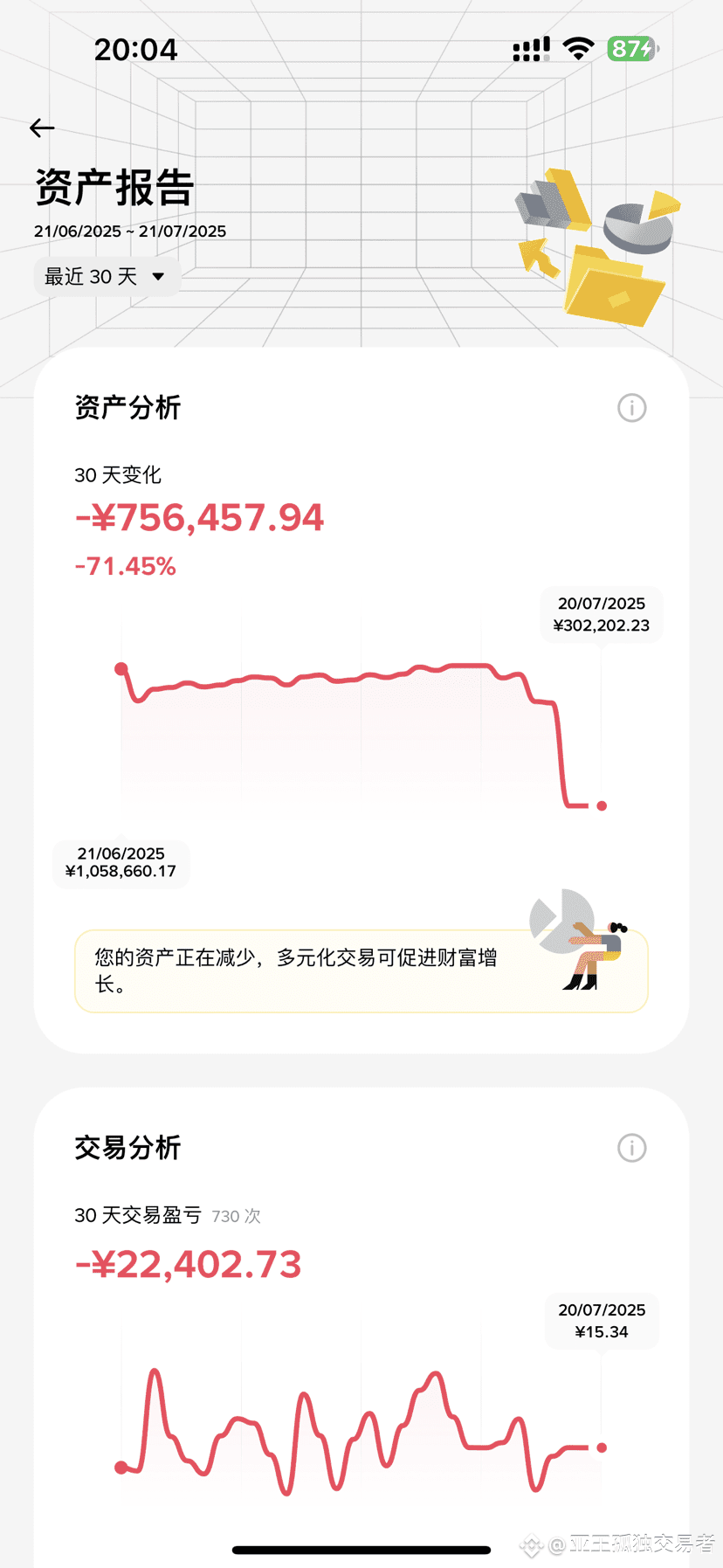
To be honest, brothers
When I first entered the crypto world, I only wanted to make 10 million and then quit.
Now it's different, I just want to break even.
When I first entered the crypto world, I only wanted to make 10 million and then quit.
Now it's different, I just want to break even.
#BinanceTurns8 Join us at the #BinanceTurns8 celebration and share up to $888,888 in BNB! https://www.marketwebb.red/activity/binance-turns-8?ref=GRO_19600_MEW5X
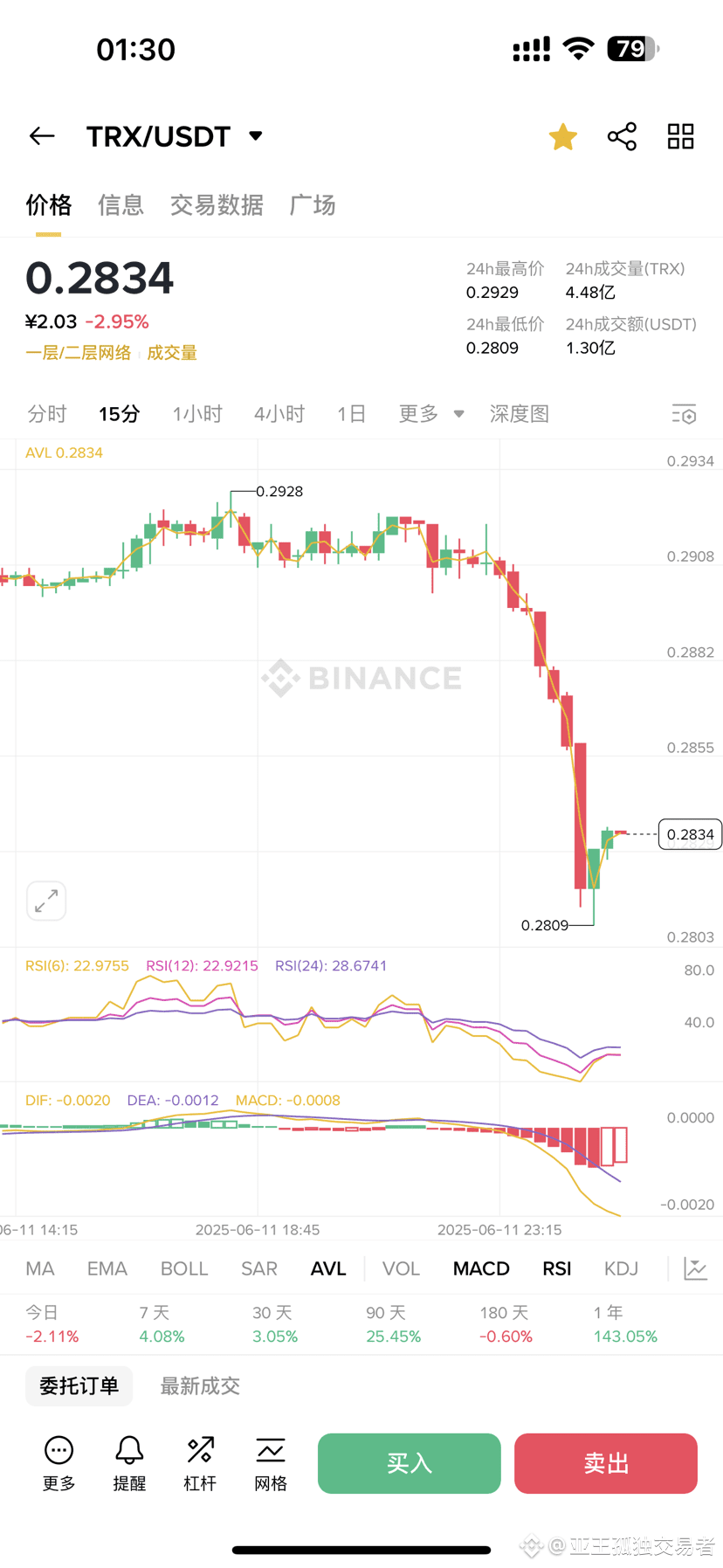
$TRX This week's limited offer:
TRUMP token will soon launch on TRON
USD1 trading pair officially lands on TRON
Binance Alpha has integrated TRON
Next week will be even hotter!
TRUMP token will soon launch on TRON
USD1 trading pair officially lands on TRON
Binance Alpha has integrated TRON
Next week will be even hotter!

The only difference between people is execution ability,
Those who have execution ability have everything, while those who lack execution ability have nothing.#马斯克计划成立美国党 $BTC
Those who have execution ability have everything, while those who lack execution ability have nothing.#马斯克计划成立美国党 $BTC

🌟 Mainstream Ecological Chain Coins Long-term Holding Diversified Allocation Plan
Assuming you are prepared to invest 100%, you can refer to the following distribution:
Coin Suggestion Allocation Ratio Logic
ETH 30% Ethereum is the core public chain asset in the crypto field, with the largest ecosystem and a long-term value pillar for the future.
SOL 15% A representative of high-performance public chains, with a strong developer ecosystem and high trading activity.
BNB 10% The leading exchange public chain, backed by the Binance ecosystem, with strong stability.
AVAX 10% Modular and multi-subnet expansion concept, with great growth potential.
OP / ARB (choose one or average 5% each) 10% Ethereum Layer 2 track, with a long-term demand for rising transaction fees in the future.
ATOM 10% Cross-chain ecological bridge, an important hub in the Cosmos system.
TIA (Celestia) 10% Strong narrative of modular blockchain DA, potential dark horse.
DOT 5% Leader in cross-chain parallel chains, worth a small amount of speculative allocation in the long term.
#长期持有策略 $ETH $BNB $SOL
Assuming you are prepared to invest 100%, you can refer to the following distribution:
Coin Suggestion Allocation Ratio Logic
ETH 30% Ethereum is the core public chain asset in the crypto field, with the largest ecosystem and a long-term value pillar for the future.
SOL 15% A representative of high-performance public chains, with a strong developer ecosystem and high trading activity.
BNB 10% The leading exchange public chain, backed by the Binance ecosystem, with strong stability.
AVAX 10% Modular and multi-subnet expansion concept, with great growth potential.
OP / ARB (choose one or average 5% each) 10% Ethereum Layer 2 track, with a long-term demand for rising transaction fees in the future.
ATOM 10% Cross-chain ecological bridge, an important hub in the Cosmos system.
TIA (Celestia) 10% Strong narrative of modular blockchain DA, potential dark horse.
DOT 5% Leader in cross-chain parallel chains, worth a small amount of speculative allocation in the long term.
#长期持有策略 $ETH $BNB $SOL



Log in to explore more content