
大叔的要饭之路
226 Posts

大叔的要饭之路
Report
Block User
105 Following
18 Followers
28 Liked
Posts
·
--
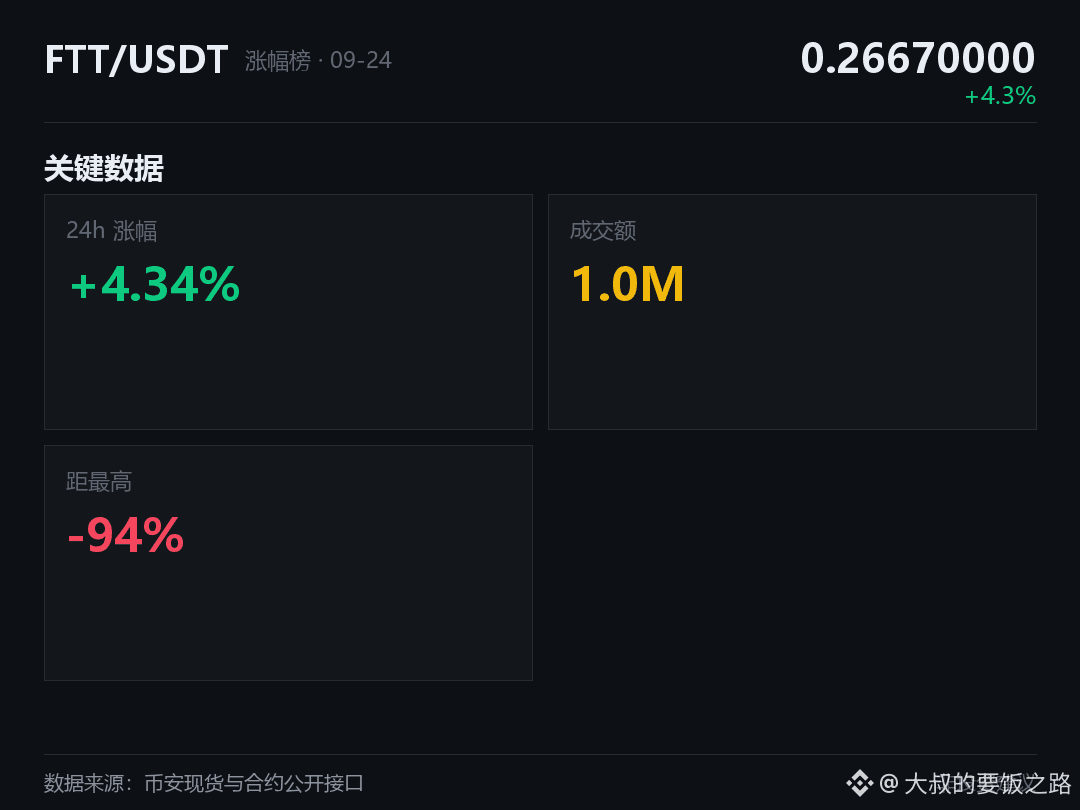
$FTT rose 4.3%, 94% away from its all-time high.
Every time I look at this coin’s history, I find it complicated—and it’s also pretty surprising. Has anyone been following it consistently? I’d love to hear what you think.
Not investment advice
{future}(FTTUSDT)
$FTT rose 4.3%, 94% away from its all-time high.
Every time I look at this coin’s history, I find it complicated—and it’s also pretty surprising. Has anyone been following it consistently? I’d love to hear what you think.
Not investment advice
Every time I look at this coin’s history, I find it complicated—and it’s also pretty surprising. Has anyone been following it consistently? I’d love to hear what you think.
Not investment advice
1
·
--
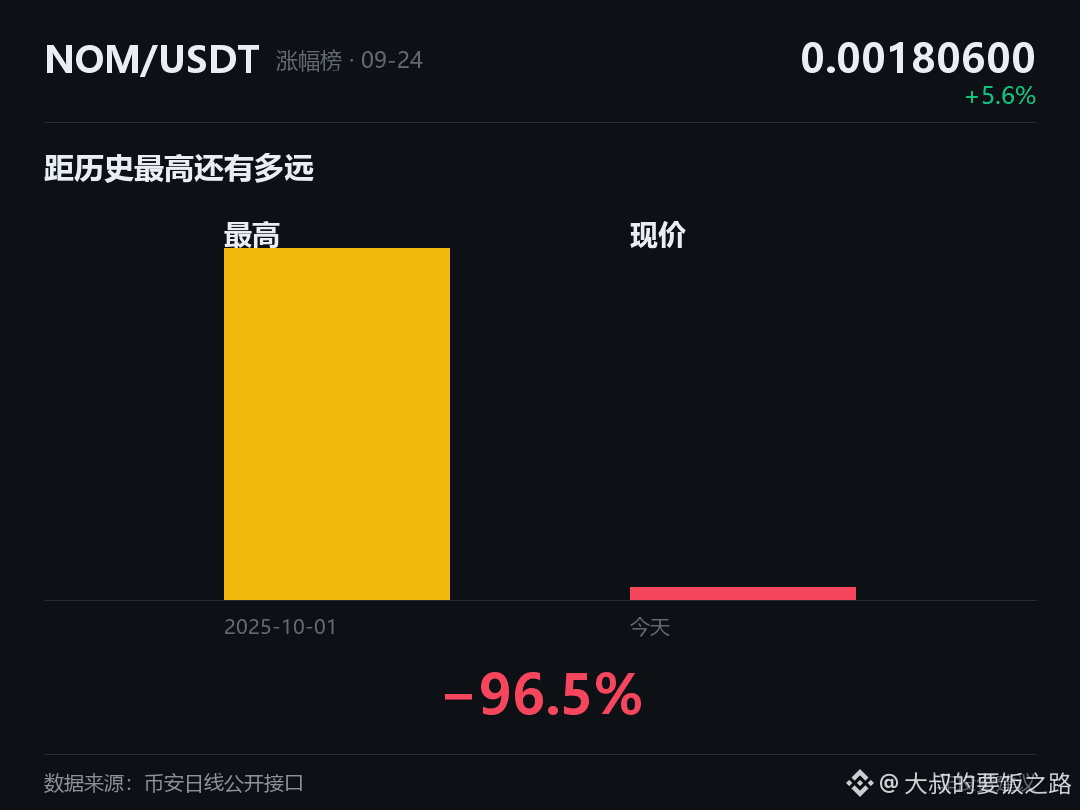
$NOM is still 97% away from the all-time high.
I stared at this number for a moment — a 5.6% rise and it’s still at that level; it’s quite striking. Has anyone done statistics on the rebound after a deep drop?
Not investment advice
{future}(NOMUSDT)
$NOM is still 97% away from the all-time high.
I stared at this number for a moment — a 5.6% rise and it’s still at that level; it’s quite striking. Has anyone done statistics on the rebound after a deep drop?
Not investment advice
I stared at this number for a moment — a 5.6% rise and it’s still at that level; it’s quite striking. Has anyone done statistics on the rebound after a deep drop?
Not investment advice
24
·
--
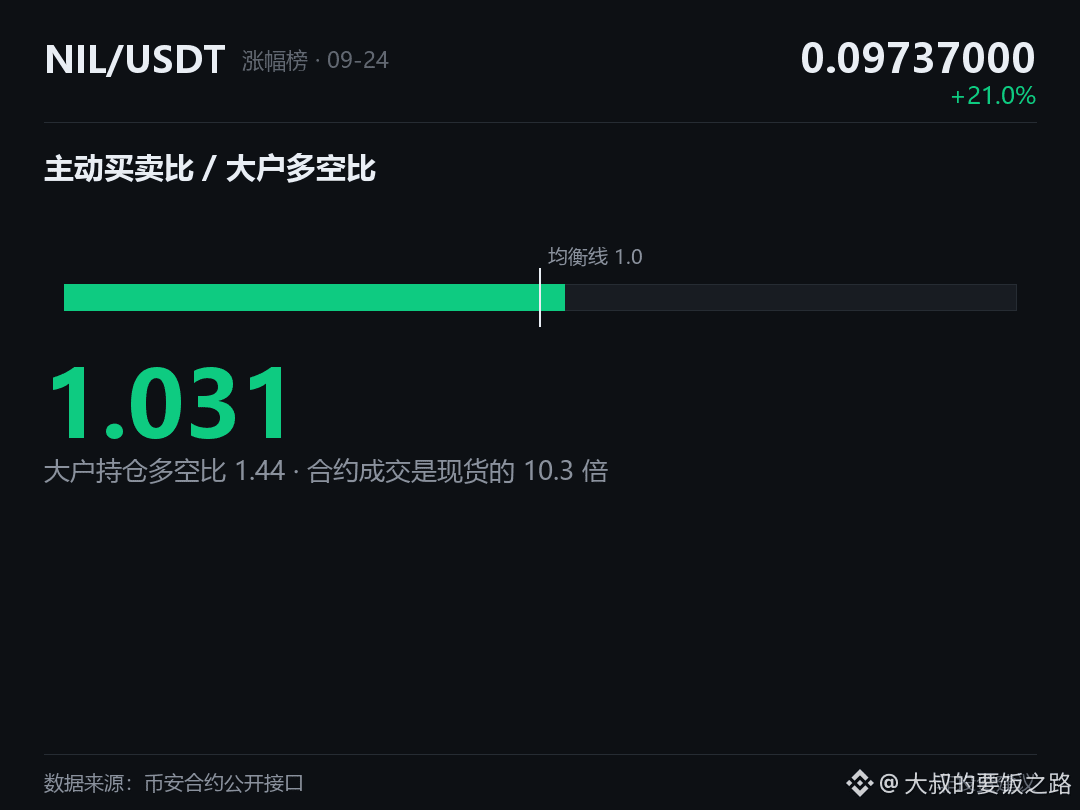
$NIL rose 21%, and it is now number one on the list. But when I look at it, it still has 90% away from the all-time high. This contrast feels a bit unexpected.
Has anyone been following this the whole time? I’d like to ask for your thoughts on how to look at it.
Not investment advice
{future}(NILUSDT)
$NIL rose 21%, and it is now number one on the list. But when I look at it, it still has 90% away from the all-time high. This contrast feels a bit unexpected.
Has anyone been following this the whole time? I’d like to ask for your thoughts on how to look at it.
Not investment advice
Has anyone been following this the whole time? I’d like to ask for your thoughts on how to look at it.
Not investment advice
22
·
--
Article
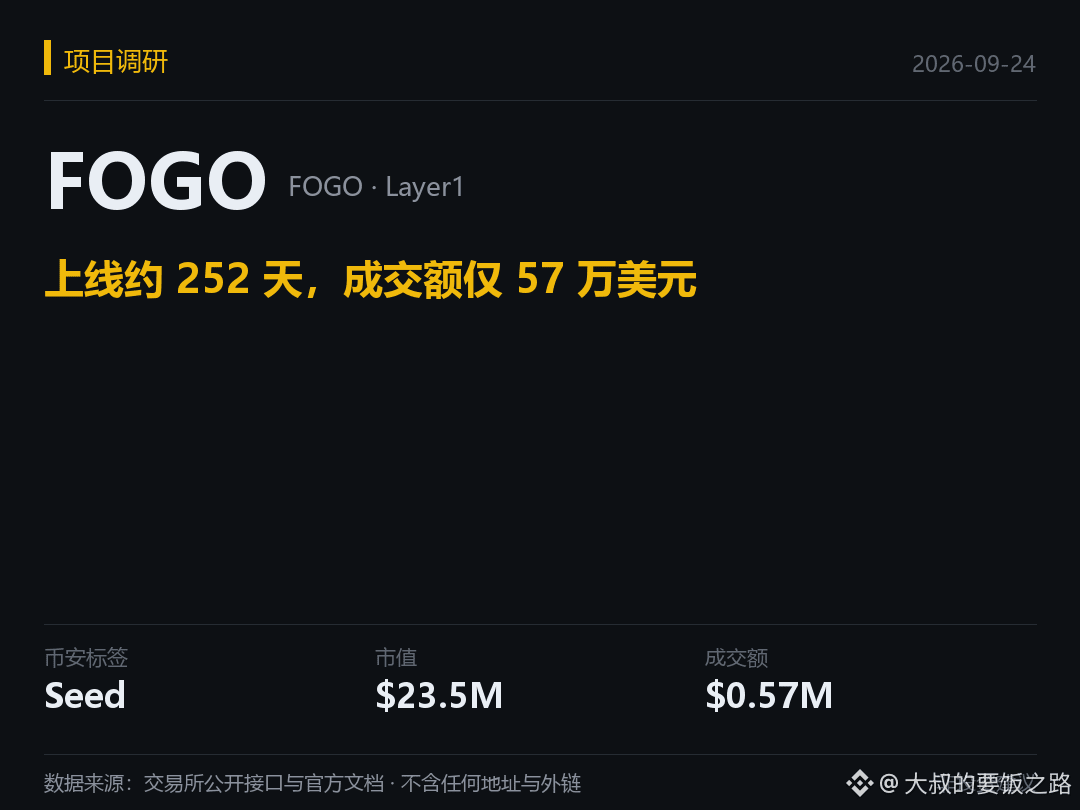
FOGO: 400 million tokens transferred out; mainnet shut down for 46 hours$FOGO First, I want to tell you something that my first draft missed— and it’s the most important thing about this target.
## 400 million tokens were transferred out; the mainnet was shut down
On August 28, 2026, 46 hours after, the Fogo Foundation first disclosed: 400 million FOGO tokens were transferred out by “malicious actors.” Note one detail: in the first disclosure, the official statement still said the chain was unaffected.
On August 29, about 1 hour before an exchange’s official disclosure, it suspended deposits and withdrawals. About 15 hours later, the mainnet went down. The gist of the official statement was: over the past hour, as a precaution, the mainnet was temporarily shut down due to detection of unauthorized activity, to prevent further movement of affected assets.
FOGO: 400 million tokens transferred out; mainnet shut down for 46 hours
$FOGO First, I want to tell you something that my first draft missed— and it’s the most important thing about this target.
## 400 million tokens were transferred out; the mainnet was shut down
On August 28, 2026, 46 hours after, the Fogo Foundation first disclosed: 400 million FOGO tokens were transferred out by “malicious actors.” Note one detail: in the first disclosure, the official statement still said the chain was unaffected.
On August 29, about 1 hour before an exchange’s official disclosure, it suspended deposits and withdrawals. About 15 hours later, the mainnet went down. The gist of the official statement was: over the past hour, as a precaution, the mainnet was temporarily shut down due to detection of unauthorized activity, to prevent further movement of affected assets.
## 400 million tokens were transferred out; the mainnet was shut down
On August 28, 2026, 46 hours after, the Fogo Foundation first disclosed: 400 million FOGO tokens were transferred out by “malicious actors.” Note one detail: in the first disclosure, the official statement still said the chain was unaffected.
On August 29, about 1 hour before an exchange’s official disclosure, it suspended deposits and withdrawals. About 15 hours later, the mainnet went down. The gist of the official statement was: over the past hour, as a precaution, the mainnet was temporarily shut down due to detection of unauthorized activity, to prevent further movement of affected assets.
32
·
--
Article
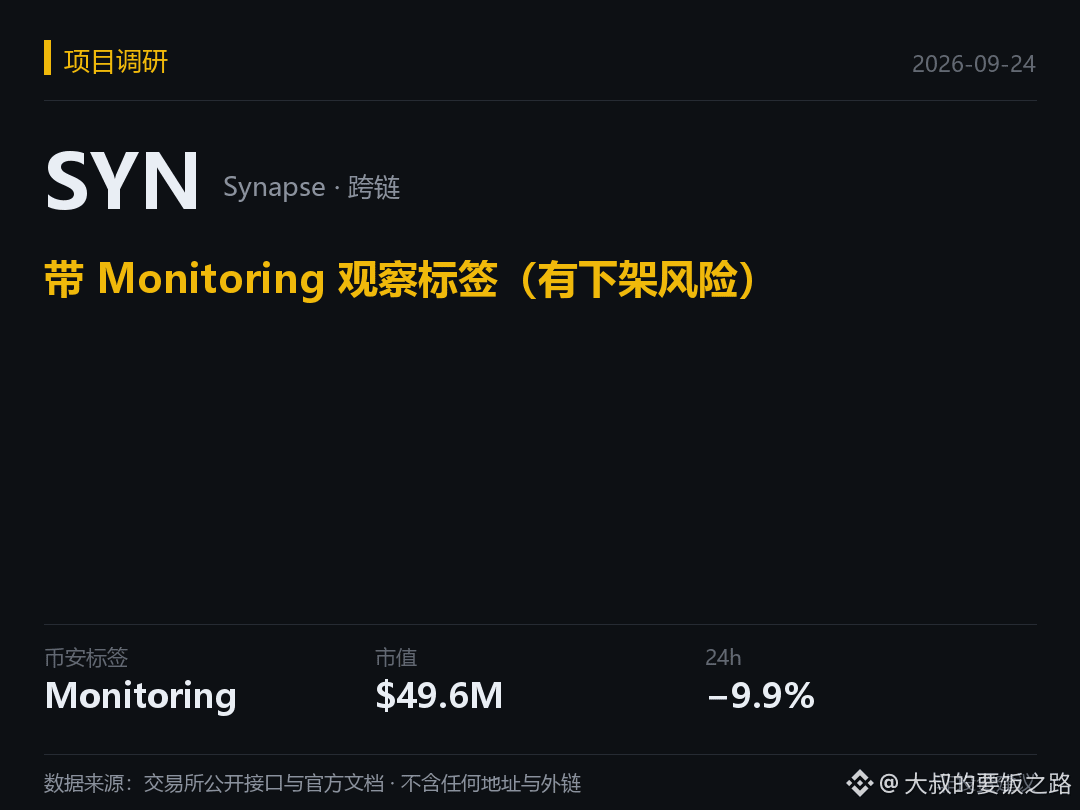
SYN’s team has already given up the bridge business, quarterly revenue of $3,170$SYN The core of this piece is a set of comparison figures—I think it’s more direct than any analysis.
## Quarterly revenue: 3170
Synapse is a cross-chain bridge. And in the second quarter of 2026, its total revenue was about $3,170, with gross profit of about $3,140. For comparison: in the second quarter of 2024, gross profit was about $965,000.
At the time, its market cap was about $91 million. You have to pause and take in the scale of the gap: a project with a market cap of nearly a hundred million dollars, whose entire quarterly revenue is just a few thousand dollars.
## The team has publicly given up on its main business
SYN’s team has already given up the bridge business, quarterly revenue of $3,170
$SYN The core of this piece is a set of comparison figures—I think it’s more direct than any analysis.
## Quarterly revenue: 3170
Synapse is a cross-chain bridge. And in the second quarter of 2026, its total revenue was about $3,170, with gross profit of about $3,140. For comparison: in the second quarter of 2024, gross profit was about $965,000.
At the time, its market cap was about $91 million. You have to pause and take in the scale of the gap: a project with a market cap of nearly a hundred million dollars, whose entire quarterly revenue is just a few thousand dollars.
## The team has publicly given up on its main business
## Quarterly revenue: 3170
Synapse is a cross-chain bridge. And in the second quarter of 2026, its total revenue was about $3,170, with gross profit of about $3,140. For comparison: in the second quarter of 2024, gross profit was about $965,000.
At the time, its market cap was about $91 million. You have to pause and take in the scale of the gap: a project with a market cap of nearly a hundred million dollars, whose entire quarterly revenue is just a few thousand dollars.
## The team has publicly given up on its main business
54
·
--
Article
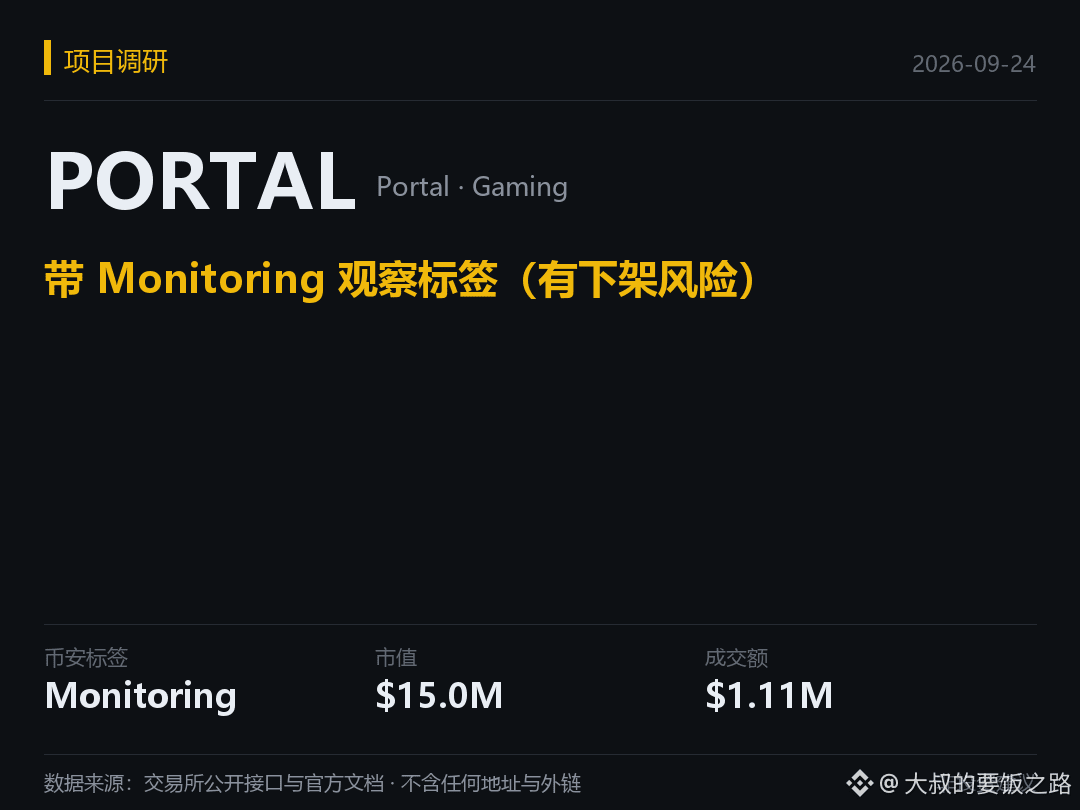
PORTAL changed its track and its CEO, but the watchlist label is still there$PORTAL This asset has two facts that both hold true and point in opposite directions: its token has fallen 99.47% from its peak, but it didn’t die—it swapped out the entire team and the entire track.
## First, let’s talk about the label: it’s been on there for over a year
May 7, 2025, Binance issued an announcement adding PORTAL to the watchlist. There were six tokens in the same batch: ALPHA, HIFI, LEVER, MOVE, PORTAL, and REI.
The wording of the announcement was like this: the volatility and risk of tokens with a watchlist label are significantly higher than other listed tokens. The platform will regularly review: "Please remember that tokens with a watchlist label carry the risk of no longer meeting our listing standards and being removed from the platform."
PORTAL changed its track and its CEO, but the watchlist label is still there
$PORTAL This asset has two facts that both hold true and point in opposite directions: its token has fallen 99.47% from its peak, but it didn’t die—it swapped out the entire team and the entire track.
## First, let’s talk about the label: it’s been on there for over a year
May 7, 2025, Binance issued an announcement adding PORTAL to the watchlist. There were six tokens in the same batch: ALPHA, HIFI, LEVER, MOVE, PORTAL, and REI.
The wording of the announcement was like this: the volatility and risk of tokens with a watchlist label are significantly higher than other listed tokens. The platform will regularly review: "Please remember that tokens with a watchlist label carry the risk of no longer meeting our listing standards and being removed from the platform."
## First, let’s talk about the label: it’s been on there for over a year
May 7, 2025, Binance issued an announcement adding PORTAL to the watchlist. There were six tokens in the same batch: ALPHA, HIFI, LEVER, MOVE, PORTAL, and REI.
The wording of the announcement was like this: the volatility and risk of tokens with a watchlist label are significantly higher than other listed tokens. The platform will regularly review: "Please remember that tokens with a watchlist label carry the risk of no longer meeting our listing standards and being removed from the platform."
17
·
--
Article
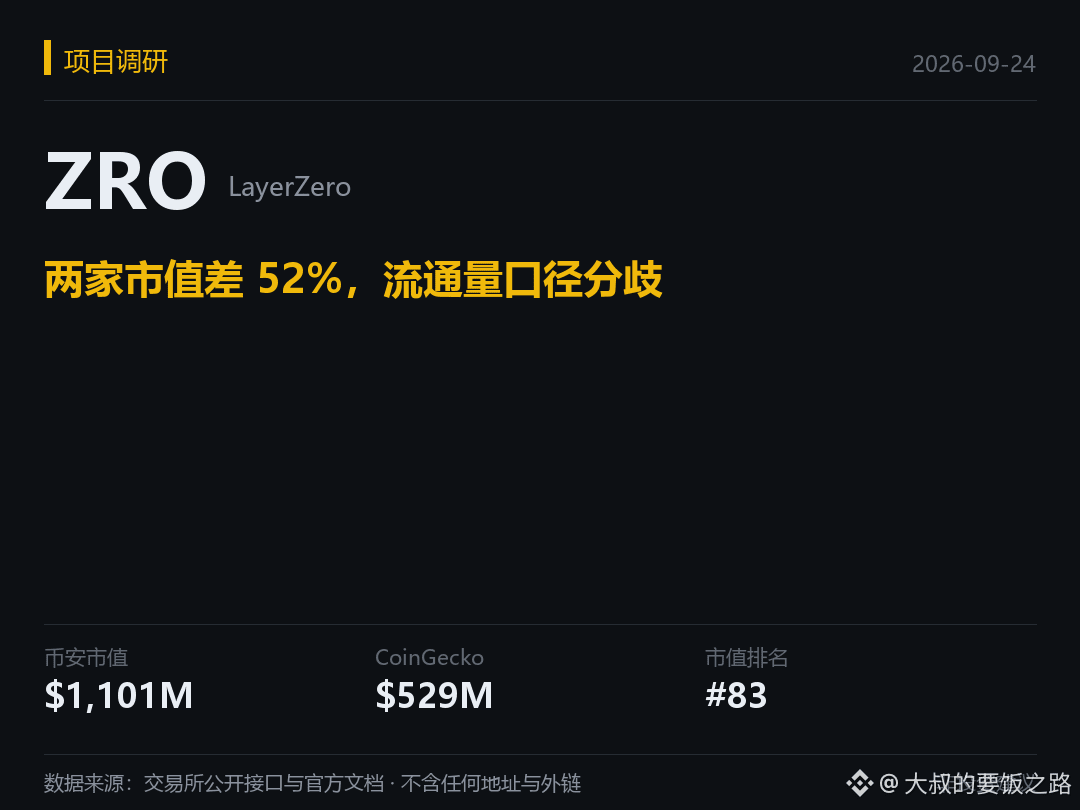
ZRO’s fee switch was voted on three times, but none took effect due to insufficient turnoutRegarding $ZRO, I’d like to address a commonly misunderstood point first, because it concerns how the governance mechanism works.
## Fee switch: not rejected—insufficient turnout
According to publicly reported information, the fee-switch mechanism of ZRO has gone through three referendums, and in all three cases the approval rate exceeded 96%. However, the voter turnout in the three votes was 10.96%, 13.01%, and 3.71% respectively—each below the 20% threshold—so none of them took effect.
So the accurate wording is “it failed to take effect due to not meeting the voter turnout threshold,” not “it was rejected by the community.” These two statements make a big difference in governance discussions—one is the community saying no, the other is the community not showing up to vote.
ZRO’s fee switch was voted on three times, but none took effect due to insufficient turnout
Regarding $ZRO , I’d like to address a commonly misunderstood point first, because it concerns how the governance mechanism works.
## Fee switch: not rejected—insufficient turnout
According to publicly reported information, the fee-switch mechanism of ZRO has gone through three referendums, and in all three cases the approval rate exceeded 96%. However, the voter turnout in the three votes was 10.96%, 13.01%, and 3.71% respectively—each below the 20% threshold—so none of them took effect.
So the accurate wording is “it failed to take effect due to not meeting the voter turnout threshold,” not “it was rejected by the community.” These two statements make a big difference in governance discussions—one is the community saying no, the other is the community not showing up to vote.
## Fee switch: not rejected—insufficient turnout
According to publicly reported information, the fee-switch mechanism of ZRO has gone through three referendums, and in all three cases the approval rate exceeded 96%. However, the voter turnout in the three votes was 10.96%, 13.01%, and 3.71% respectively—each below the 20% threshold—so none of them took effect.
So the accurate wording is “it failed to take effect due to not meeting the voter turnout threshold,” not “it was rejected by the community.” These two statements make a big difference in governance discussions—one is the community saying no, the other is the community not showing up to vote.
50
·
--
Article
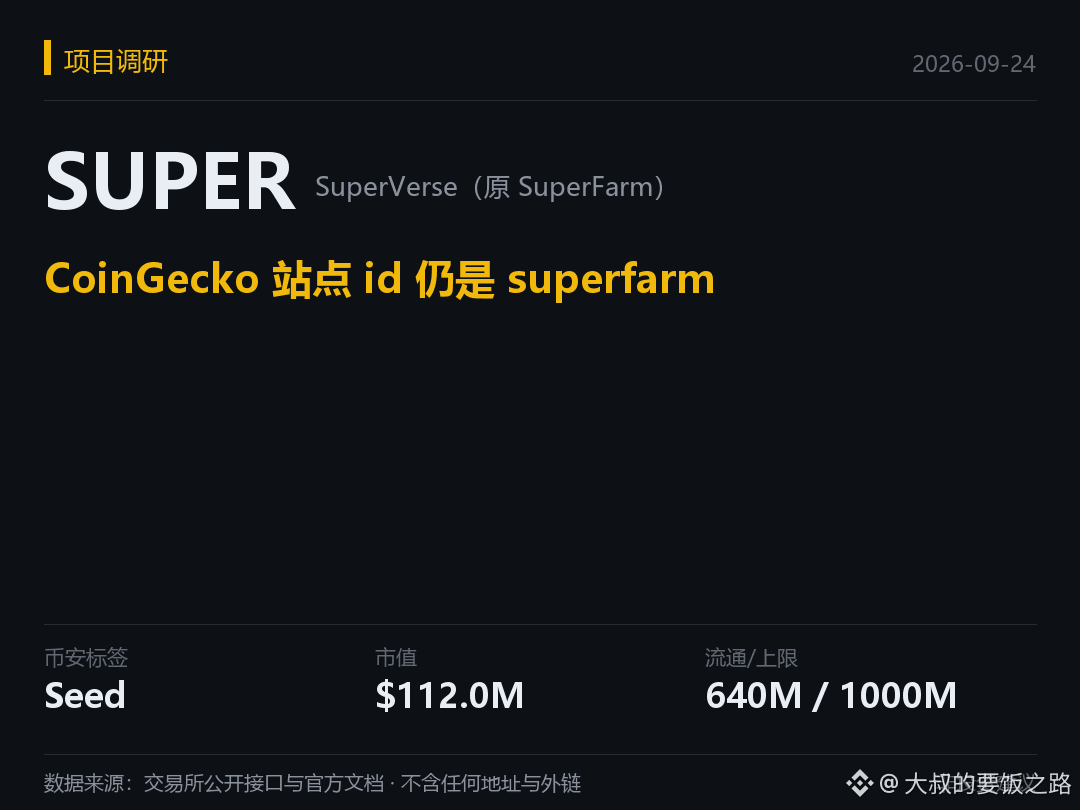
SUPER’s most valuable asset right now is a DEX called the Blackhole$SUPER The project’s history is a story of constantly switching tracks. And the most valuable asset it has today has little to do with the story it originally told.
## What it relies on now
According to publicly reported information, the core value of SUPER at present lies in a ve(3,3) decentralized exchange on Avalanche called Blackhole (the “Blackhole”). The official data they report themselves shows a total locked value of $260 million in the first month, and $5 billion in trading volume. In addition, 10% of protocol fees will be programmatically used to buy back SUPER.
I want to clearly label these two figures: they are reported by the project itself—there is no third-party verification. And regarding the 10% buyback: the communiqué does not specify whether the tokens acquired through the buyback are burned or held—so I won’t write “buyback and burn.”
SUPER’s most valuable asset right now is a DEX called the Blackhole
$SUPER The project’s history is a story of constantly switching tracks. And the most valuable asset it has today has little to do with the story it originally told.
## What it relies on now
According to publicly reported information, the core value of SUPER at present lies in a ve(3,3) decentralized exchange on Avalanche called Blackhole (the “Blackhole”). The official data they report themselves shows a total locked value of $260 million in the first month, and $5 billion in trading volume. In addition, 10% of protocol fees will be programmatically used to buy back SUPER.
I want to clearly label these two figures: they are reported by the project itself—there is no third-party verification. And regarding the 10% buyback: the communiqué does not specify whether the tokens acquired through the buyback are burned or held—so I won’t write “buyback and burn.”
## What it relies on now
According to publicly reported information, the core value of SUPER at present lies in a ve(3,3) decentralized exchange on Avalanche called Blackhole (the “Blackhole”). The official data they report themselves shows a total locked value of $260 million in the first month, and $5 billion in trading volume. In addition, 10% of protocol fees will be programmatically used to buy back SUPER.
I want to clearly label these two figures: they are reported by the project itself—there is no third-party verification. And regarding the 10% buyback: the communiqué does not specify whether the tokens acquired through the buyback are burned or held—so I won’t write “buyback and burn.”
66
·
--
Article
PROM’s on-chain circulating supply is higher than the data explorer by 750,000 units, and the team has never announced the burn$PROM For this asset, I want to start from a discovery I calculated myself by actually working it out.
## Mystery of the Supply: On-chain is higher than the data explorer
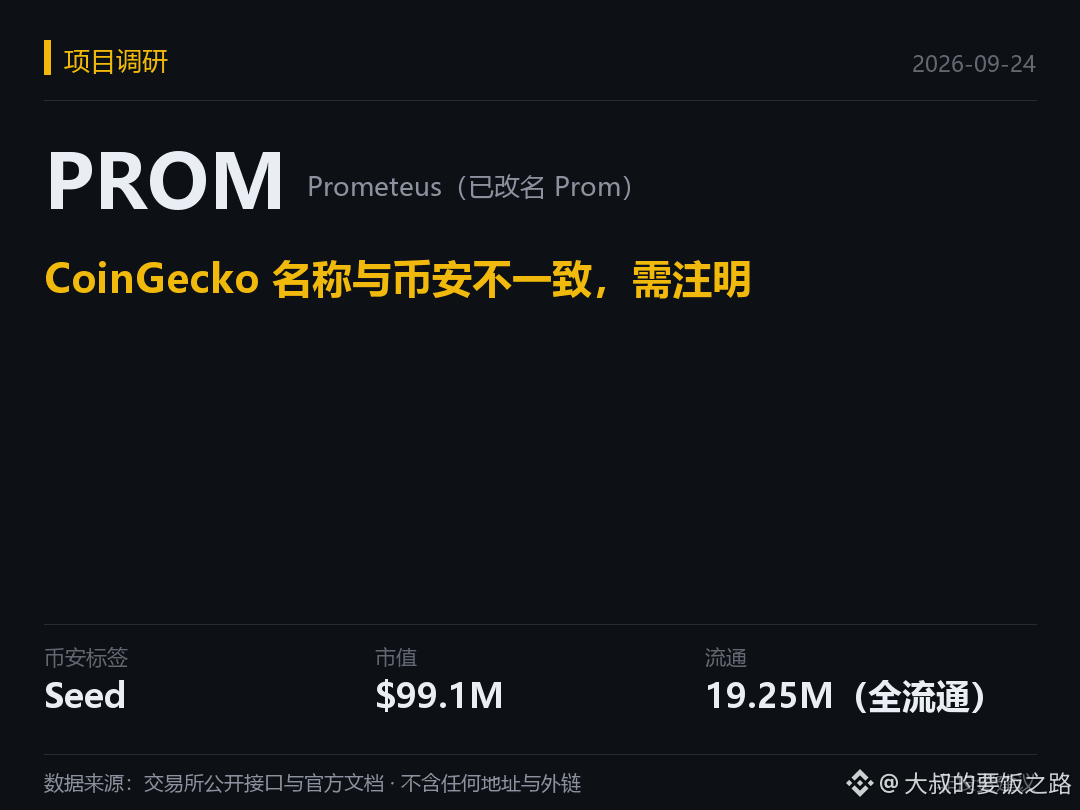
750,000 units. I directly read the on-chain contract; totalSupply() returns 20,000,000 units, precise to the ones place. And the data explorer reports the total supply as 19,250,000 units. There’s a difference of 750,000 units in the middle. I found the source of the discrepancy: a burn address holds exactly 750,000 units, accounting for 3.75%.
20,000,000 minus 750,000 equals 19,250,000 exactly, which perfectly matches the data explorer. Going further down: 18,250,000 units is the circulating supply after deducting another 1,000,000 units — and this number has two independent sources corroborating it (the data explorer and the exchange assets interface). But there’s one key gap here: for this 750,000-unit burn, the time, the reason, and the transaction hash — I couldn’t find any publicly available information for all of it.
PROM’s on-chain circulating supply is higher than the data explorer by 750,000 units, and the team has never announced the burn
$PROM For this asset, I want to start from a discovery I calculated myself by actually working it out.
## Mystery of the Supply: On-chain is higher than the data explorer
750,000 units. I directly read the on-chain contract; totalSupply() returns 20,000,000 units, precise to the ones place. And the data explorer reports the total supply as 19,250,000 units. There’s a difference of 750,000 units in the middle. I found the source of the discrepancy: a burn address holds exactly 750,000 units, accounting for 3.75%.
20,000,000 minus 750,000 equals 19,250,000 exactly, which perfectly matches the data explorer. Going further down: 18,250,000 units is the circulating supply after deducting another 1,000,000 units — and this number has two independent sources corroborating it (the data explorer and the exchange assets interface). But there’s one key gap here: for this 750,000-unit burn, the time, the reason, and the transaction hash — I couldn’t find any publicly available information for all of it.
## Mystery of the Supply: On-chain is higher than the data explorer
750,000 units. I directly read the on-chain contract; totalSupply() returns 20,000,000 units, precise to the ones place. And the data explorer reports the total supply as 19,250,000 units. There’s a difference of 750,000 units in the middle. I found the source of the discrepancy: a burn address holds exactly 750,000 units, accounting for 3.75%.
20,000,000 minus 750,000 equals 19,250,000 exactly, which perfectly matches the data explorer. Going further down: 18,250,000 units is the circulating supply after deducting another 1,000,000 units — and this number has two independent sources corroborating it (the data explorer and the exchange assets interface). But there’s one key gap here: for this 750,000-unit burn, the time, the reason, and the transaction hash — I couldn’t find any publicly available information for all of it.
36
·
--
Article
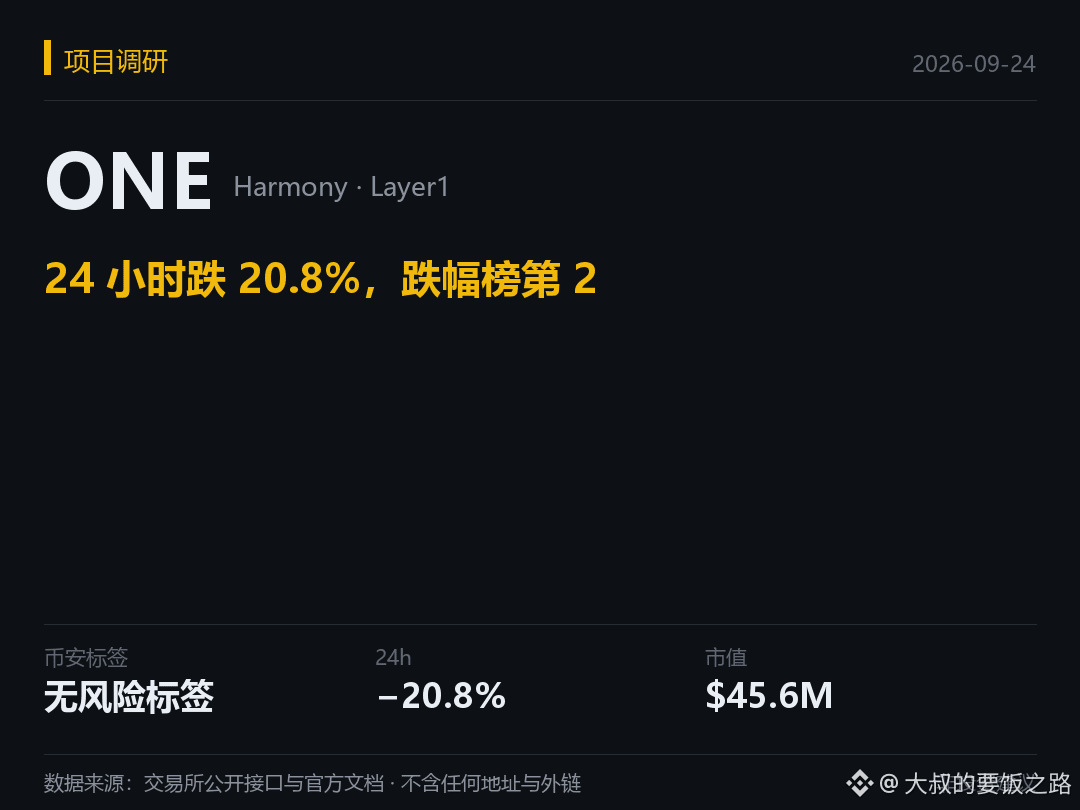
The reason ONE fell 20%: the project team proposed shutting down the entire mainnet to make AI videosThis finding about $ONE was the most unexpected in my research this time, and also the one I think is most worth writing separately among the 11 articles. According to publicly reported information, on September 6, 2026, Harmony released two proposals to completely shut down the mainnet that launched in 2019, migrate the native token ONE to Ethereum, and pivot to the AI video “mashup-editing economy” business.
The closure reason provided by the team is: «The threat posed by national-level attackers and AI agents.» This is not an isolated incident. Before this, there was a sequence of events—I traced backward along the timeline and found that before the shutdown proposal, there were three more incidents, all with explicit dates:
The reason ONE fell 20%: the project team proposed shutting down the entire mainnet to make AI videos
This finding about $ONE was the most unexpected in my research this time, and also the one I think is most worth writing separately among the 11 articles. According to publicly reported information, on September 6, 2026, Harmony released two proposals to completely shut down the mainnet that launched in 2019, migrate the native token ONE to Ethereum, and pivot to the AI video “mashup-editing economy” business.
The closure reason provided by the team is: «The threat posed by national-level attackers and AI agents.» This is not an isolated incident. Before this, there was a sequence of events—I traced backward along the timeline and found that before the shutdown proposal, there were three more incidents, all with explicit dates:
The closure reason provided by the team is: «The threat posed by national-level attackers and AI agents.» This is not an isolated incident. Before this, there was a sequence of events—I traced backward along the timeline and found that before the shutdown proposal, there were three more incidents, all with explicit dates:
1
270
·
--
Article
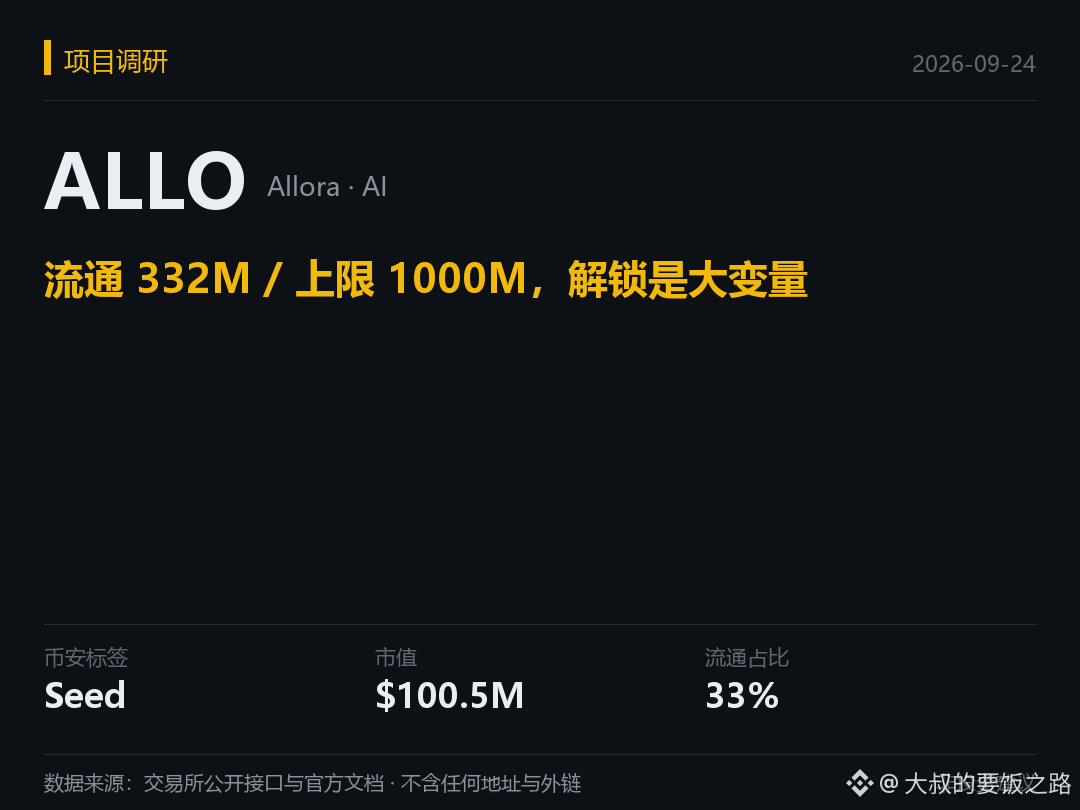
ALLO’s November unlock amount is 15 times the total staked amount across the network at the timeAfter checking these 11 items, $ALLO is the only one I can find clear evidence of a 2026 product iteration. But it also has a number that, in my view, must be placed first. Here’s the number: In November 2026, 161,680,000 ALLO internal shares will be unlocked. At that time, the total amount staked across the entire network was about 10,550,000 ALLO — the unlocked amount is about 15 times the staked amount. This is not an abstract risk warning; it’s a magnitude relationship that can be felt.
## First correct a widely circulated price error
Many sources write ALLO “historical low 0.4283 USD”. This is wrong. That number comes from an exchange educational article dated November 12, 2025 — it was correct on the day it was written, because it was the low point during the 1:00 a.m. hour, only about 14 hours after the historical all-time high. But after that it was widely reposted, and it became “historical low.”
ALLO’s November unlock amount is 15 times the total staked amount across the network at the time
After checking these 11 items, $ALLO is the only one I can find clear evidence of a 2026 product iteration. But it also has a number that, in my view, must be placed first. Here’s the number: In November 2026, 161,680,000 ALLO internal shares will be unlocked. At that time, the total amount staked across the entire network was about 10,550,000 ALLO — the unlocked amount is about 15 times the staked amount. This is not an abstract risk warning; it’s a magnitude relationship that can be felt.
## First correct a widely circulated price error
Many sources write ALLO “historical low 0.4283 USD”. This is wrong. That number comes from an exchange educational article dated November 12, 2025 — it was correct on the day it was written, because it was the low point during the 1:00 a.m. hour, only about 14 hours after the historical all-time high. But after that it was widely reposted, and it became “historical low.”
## First correct a widely circulated price error
Many sources write ALLO “historical low 0.4283 USD”. This is wrong. That number comes from an exchange educational article dated November 12, 2025 — it was correct on the day it was written, because it was the low point during the 1:00 a.m. hour, only about 14 hours after the historical all-time high. But after that it was widely reposted, and it became “historical low.”
93
·
--
Article
RAY’s team has remained anonymous for eight years, while the protocol itself holds about one-third of the circulating supply$RAY This is what I want to start with two things, both of which are more important than price. First: Raydium’s three co-founders are pseudonyms—AlphaRay, XRay, and GammaRay. The project has been running for eight years, and they have never publicly revealed their real names. I want to point this out deliberately: this isn’t due to my inability to find information, but the team’s active choice. So any content that claims “Raydium’s founders are named X” should be treated with skepticism regarding its source.
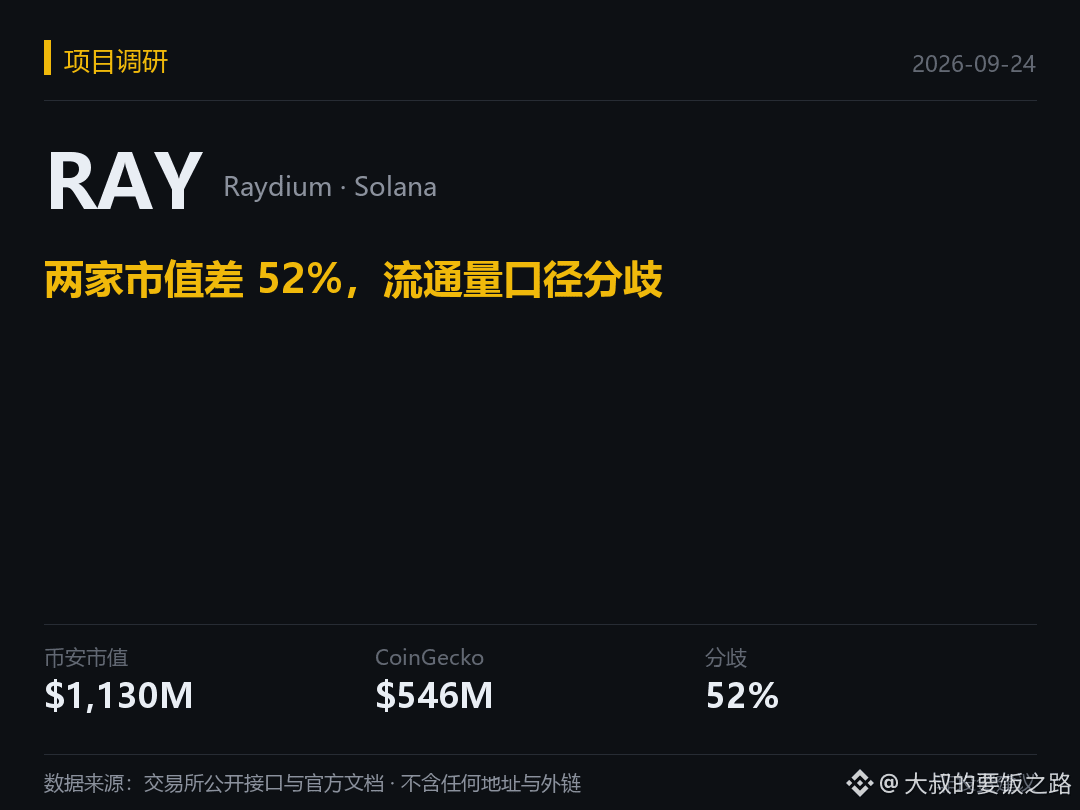
Second: 12% of the trading fees are used to buy back RAY, but the RAY obtained from the buybacks is held by the protocol rather than being burned. And as of August 31, 2026, the cumulative buyback amount has already exceeded 30% of the circulating supply—meaning roughly one-third of the circulating float is controlled by the protocol itself. How that will be handled in the future depends on governance decisions. Put these two together, and it’s why I think this asset’s most important thing to watch is its structural risk.
RAY’s team has remained anonymous for eight years, while the protocol itself holds about one-third of the circulating supply
$RAY This is what I want to start with two things, both of which are more important than price. First: Raydium’s three co-founders are pseudonyms—AlphaRay, XRay, and GammaRay. The project has been running for eight years, and they have never publicly revealed their real names. I want to point this out deliberately: this isn’t due to my inability to find information, but the team’s active choice. So any content that claims “Raydium’s founders are named X” should be treated with skepticism regarding its source.
Second: 12% of the trading fees are used to buy back RAY, but the RAY obtained from the buybacks is held by the protocol rather than being burned. And as of August 31, 2026, the cumulative buyback amount has already exceeded 30% of the circulating supply—meaning roughly one-third of the circulating float is controlled by the protocol itself. How that will be handled in the future depends on governance decisions. Put these two together, and it’s why I think this asset’s most important thing to watch is its structural risk.
Second: 12% of the trading fees are used to buy back RAY, but the RAY obtained from the buybacks is held by the protocol rather than being burned. And as of August 31, 2026, the cumulative buyback amount has already exceeded 30% of the circulating supply—meaning roughly one-third of the circulating float is controlled by the protocol itself. How that will be handled in the future depends on governance decisions. Put these two together, and it’s why I think this asset’s most important thing to watch is its structural risk.
44
·
--
Article
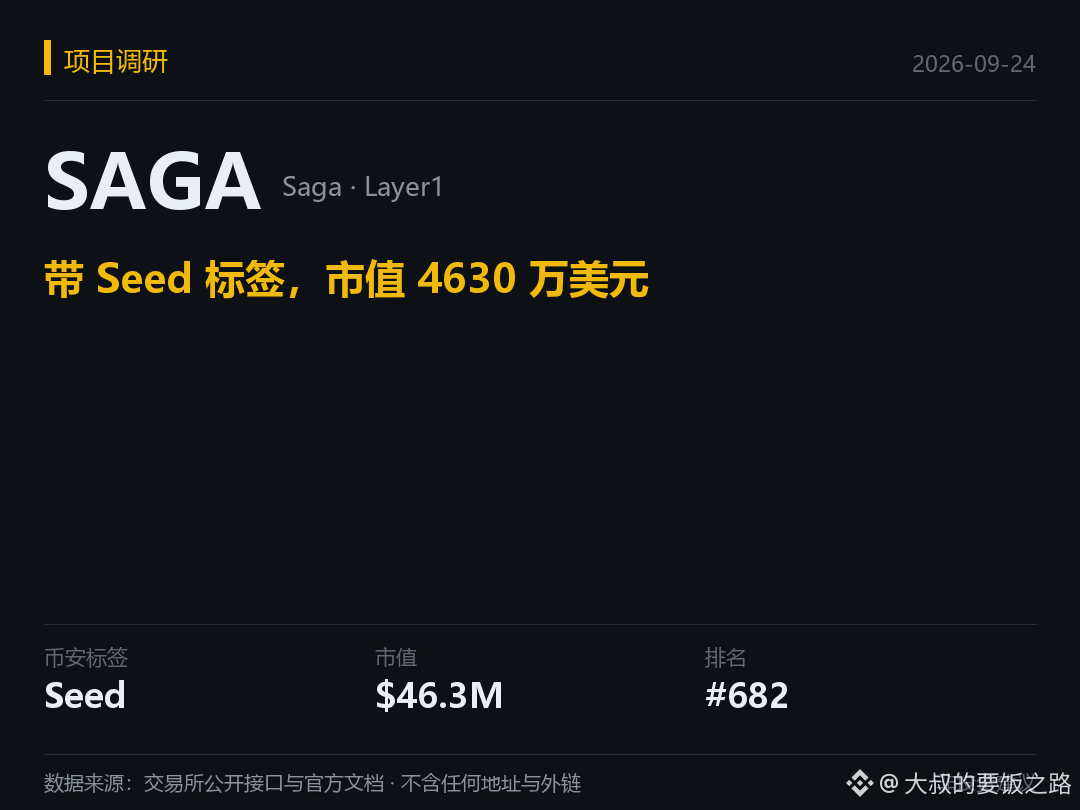
SAGA Official sold its crypto business; three of the first five trading pairs have already been closedLet me start with one thing I think is most important to know: the project party of $SAGA has already sold off its crypto business. On May 28, 2026, the official Saga blog published an article titled (Saga Sells Crypto Arm as Success in AI Business Grows, Launches Saga AI Labs).
Transfer of operational management rights of the Chain Network to Alapin Holdings. Chinese media only followed up with reports on July 2, 2026—so if you see claims like “announced for sale in July,” that’s the media repost date, not the official date. According to public reports, CEO’s own words about why it was done are more convincing than any third-party speculation.
SAGA Official sold its crypto business; three of the first five trading pairs have already been closed
Let me start with one thing I think is most important to know: the project party of $SAGA has already sold off its crypto business. On May 28, 2026, the official Saga blog published an article titled (Saga Sells Crypto Arm as Success in AI Business Grows, Launches Saga AI Labs).
Transfer of operational management rights of the Chain Network to Alapin Holdings. Chinese media only followed up with reports on July 2, 2026—so if you see claims like “announced for sale in July,” that’s the media repost date, not the official date. According to public reports, CEO’s own words about why it was done are more convincing than any third-party speculation.
Transfer of operational management rights of the Chain Network to Alapin Holdings. Chinese media only followed up with reports on July 2, 2026—so if you see claims like “announced for sale in July,” that’s the media repost date, not the official date. According to public reports, CEO’s own words about why it was done are more convincing than any third-party speculation.
68
·
--
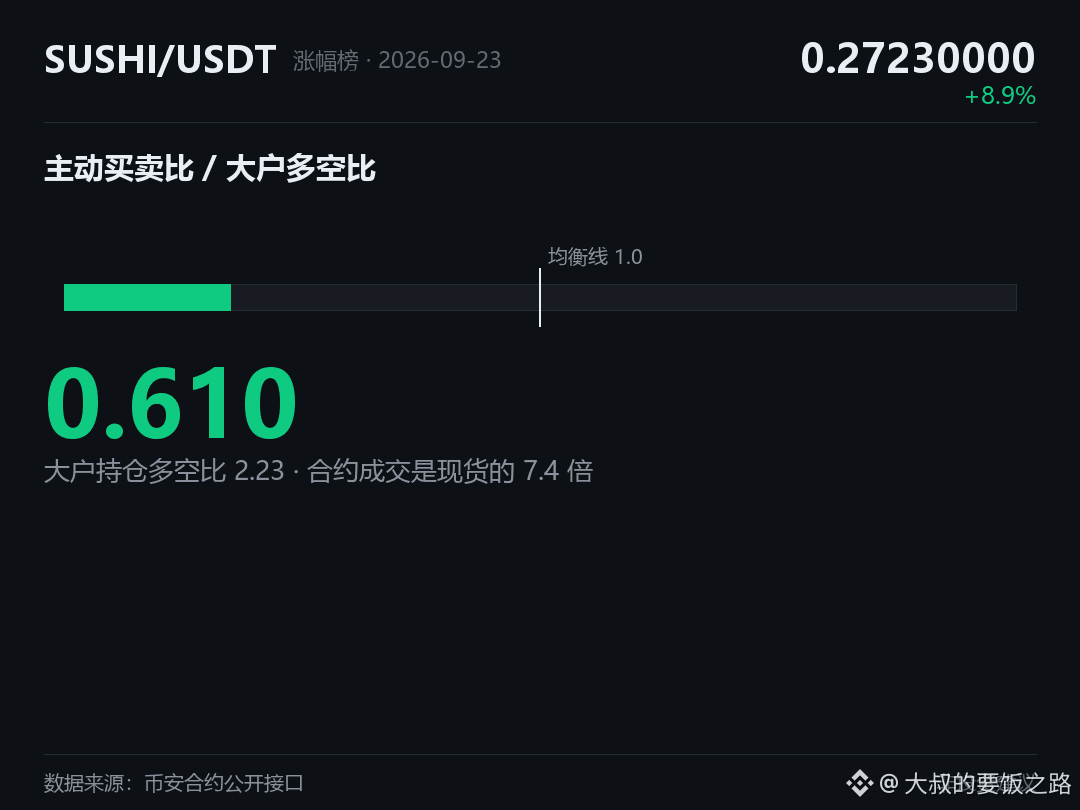
I stared at this number $SUSHI for a bit: 0.610. There are a bit more sell orders, so it’s not a huge deviation, but I usually would record it—and I also find it a little strange. Do you all look at this indicator?
Not investment advice
#Volume-Price Divergence
{future}(SUSHIUSDT)
I stared at this number $SUSHI for a bit: 0.610. There are a bit more sell orders, so it’s not a huge deviation, but I usually would record it—and I also find it a little strange. Do you all look at this indicator?
Not investment advice
#Volume-Price Divergence
Not investment advice
#Volume-Price Divergence
82
·
--
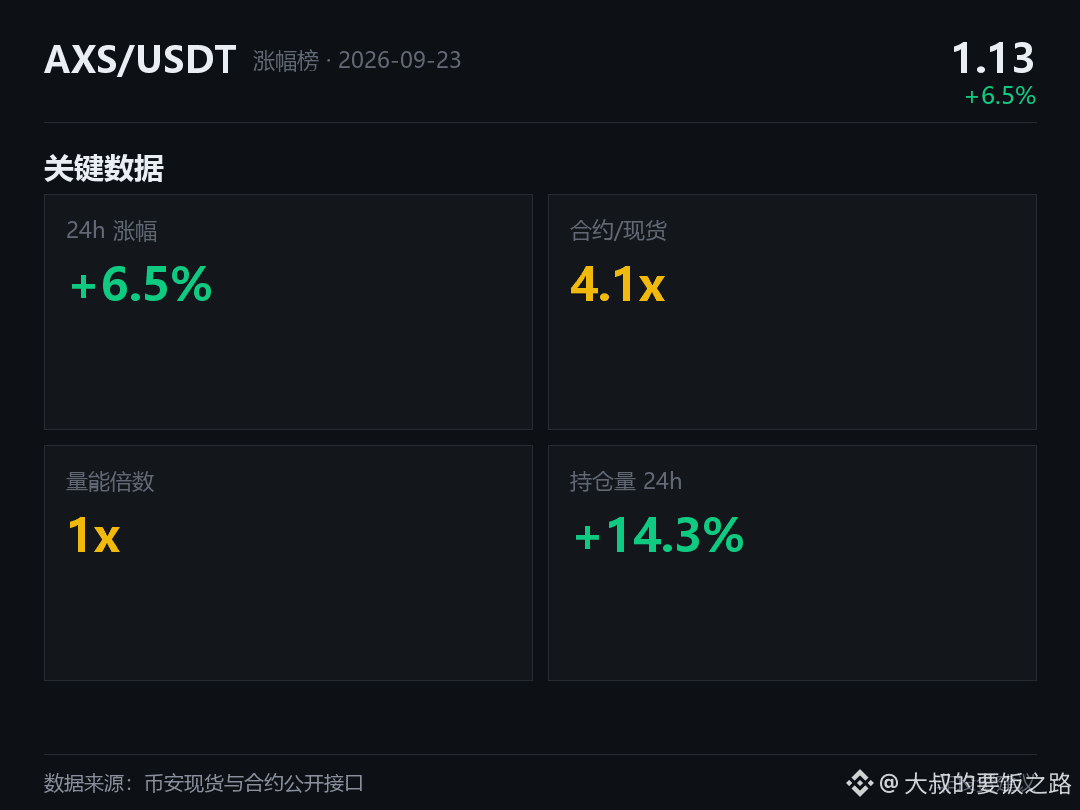
I took a look at the $AXS per-share volume: 128 USD. This volume suggests that the participation from the main force is limited—I’m a bit curious. Has anyone used this metric to screen/filter tickers? I’d like to ask.
Not investment advice
#retail-trader board
{future}(AXSUSDT)
I took a look at the $AXS per-share volume: 128 USD. This volume suggests that the participation from the main force is limited—I’m a bit curious. Has anyone used this metric to screen/filter tickers? I’d like to ask.
Not investment advice
#retail-trader board
Not investment advice
#retail-trader board
67
·
--
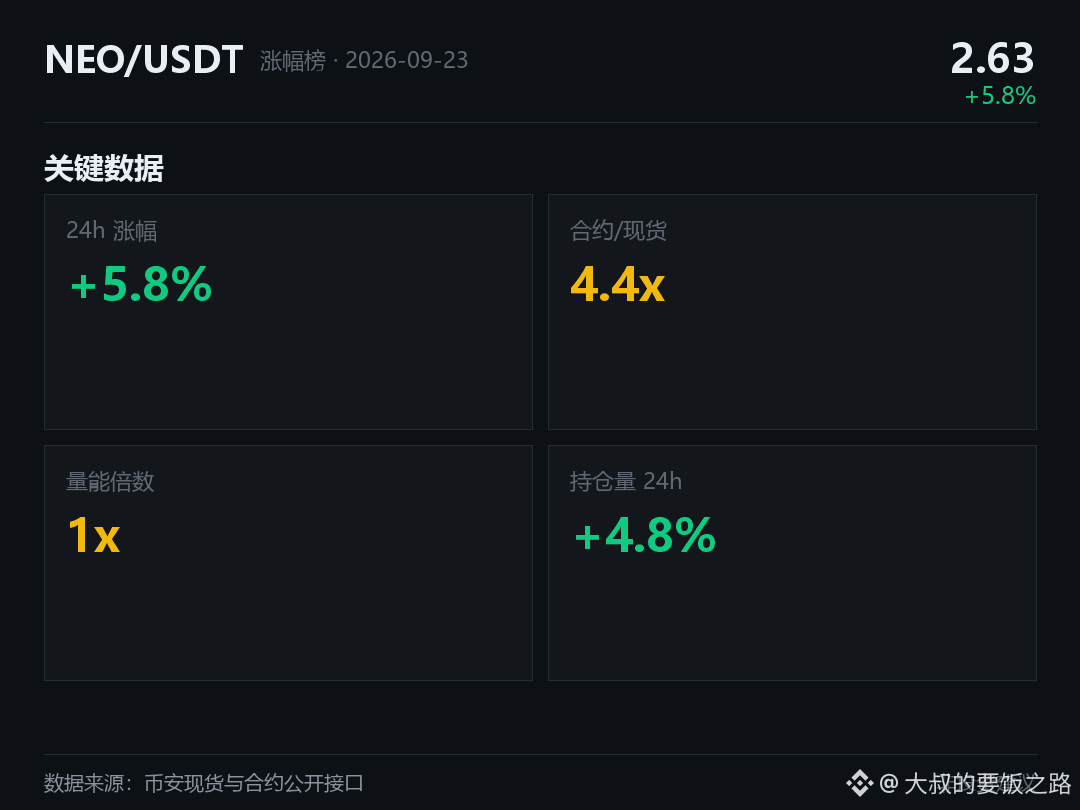
$NEO Average成交 107 USD per trade. Not particularly fragmented, but still a retail-heavy structure. With the +5.8% rise, I think it’s worth noting—and a bit surprising too. What do you think?
Not investment advice
#RetailOrderBook
{future}(NEOUSDT)
$NEO Average成交 107 USD per trade. Not particularly fragmented, but still a retail-heavy structure. With the +5.8% rise, I think it’s worth noting—and a bit surprising too. What do you think?
Not investment advice
#RetailOrderBook
Not investment advice
#RetailOrderBook
11
·
--
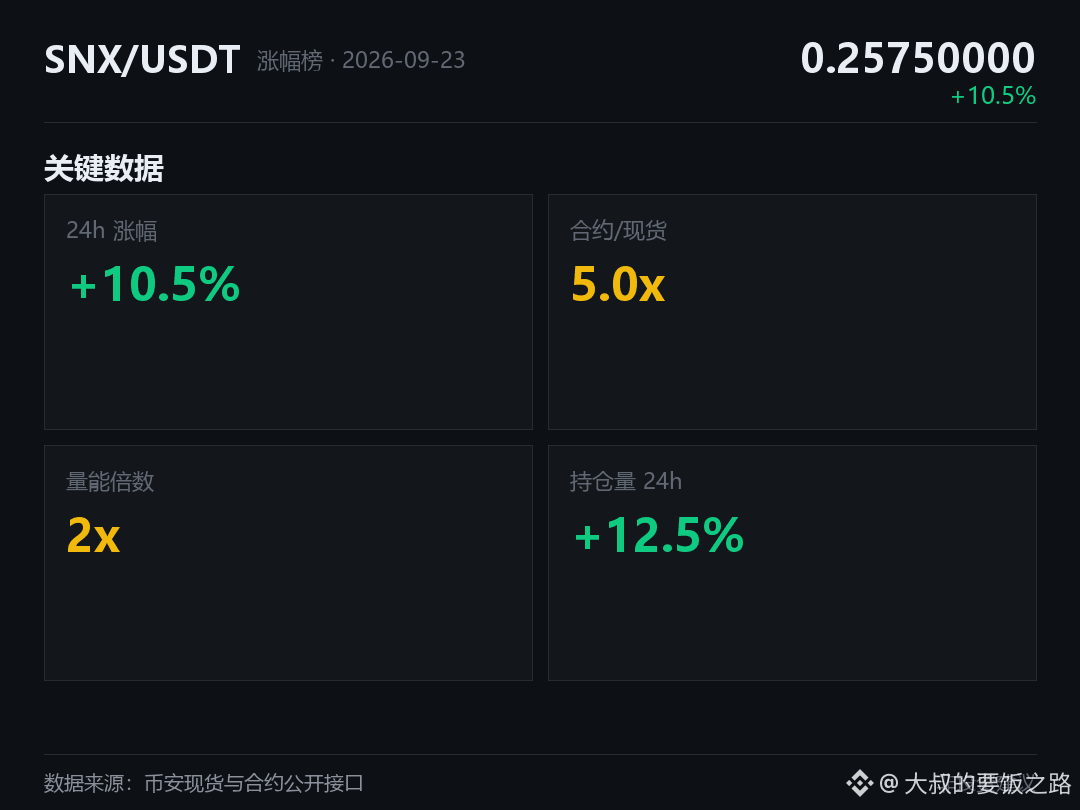
$SNX There are a few things I think really help explain the situation: the average trade size per transaction is only 86 dollars, and the day’s volume is built up entirely from small orders. I’m really curious how everyone reads this. I’d like to ask for your advice.
Not investment advice
#retail-trader order flow
{future}(SNXUSDT)
$SNX There are a few things I think really help explain the situation: the average trade size per transaction is only 86 dollars, and the day’s volume is built up entirely from small orders. I’m really curious how everyone reads this. I’d like to ask for your advice.
Not investment advice
#retail-trader order flow
Not investment advice
#retail-trader order flow
48
·
--
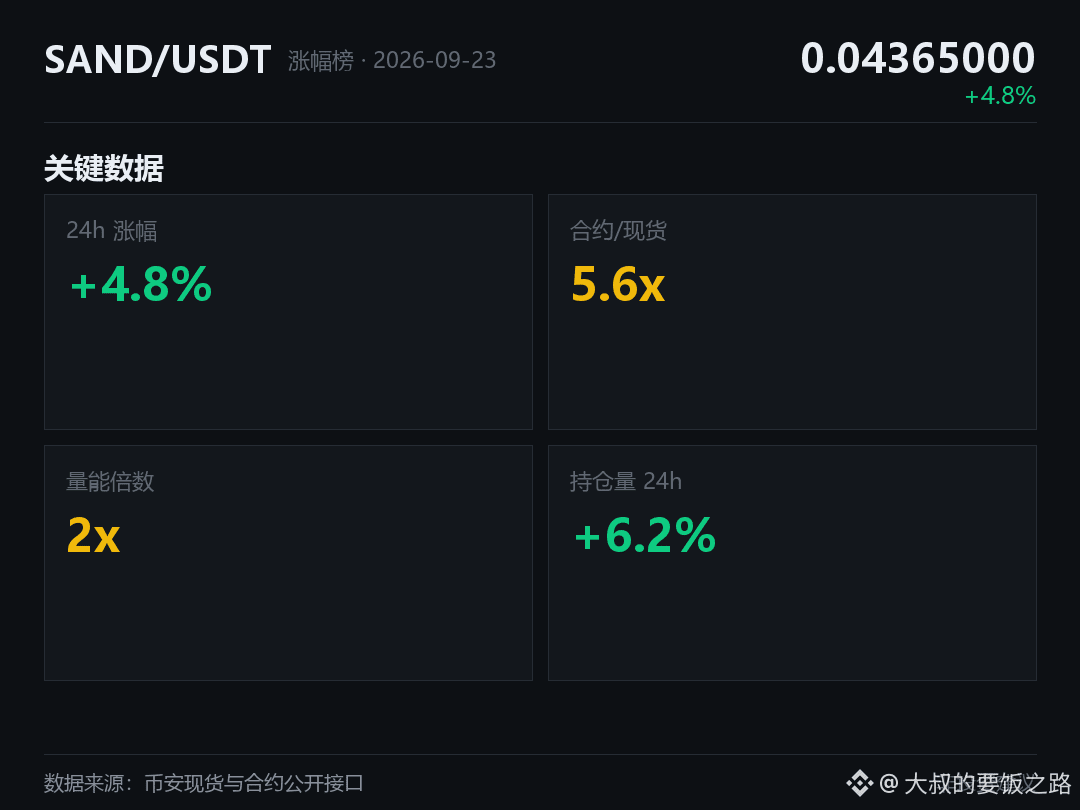
I did the math on the average single trade for $SAND : it’s only $71. This suggests that most of the participants are small retail traders, and I found that a bit surprising. What do you think about a setup like this?
Not investment advice
#retail-trader-market
{future}(SANDUSDT)
I did the math on the average single trade for $SAND : it’s only $71. This suggests that most of the participants are small retail traders, and I found that a bit surprising. What do you think about a setup like this?
Not investment advice
#retail-trader-market
Not investment advice
#retail-trader-market
35
·
--
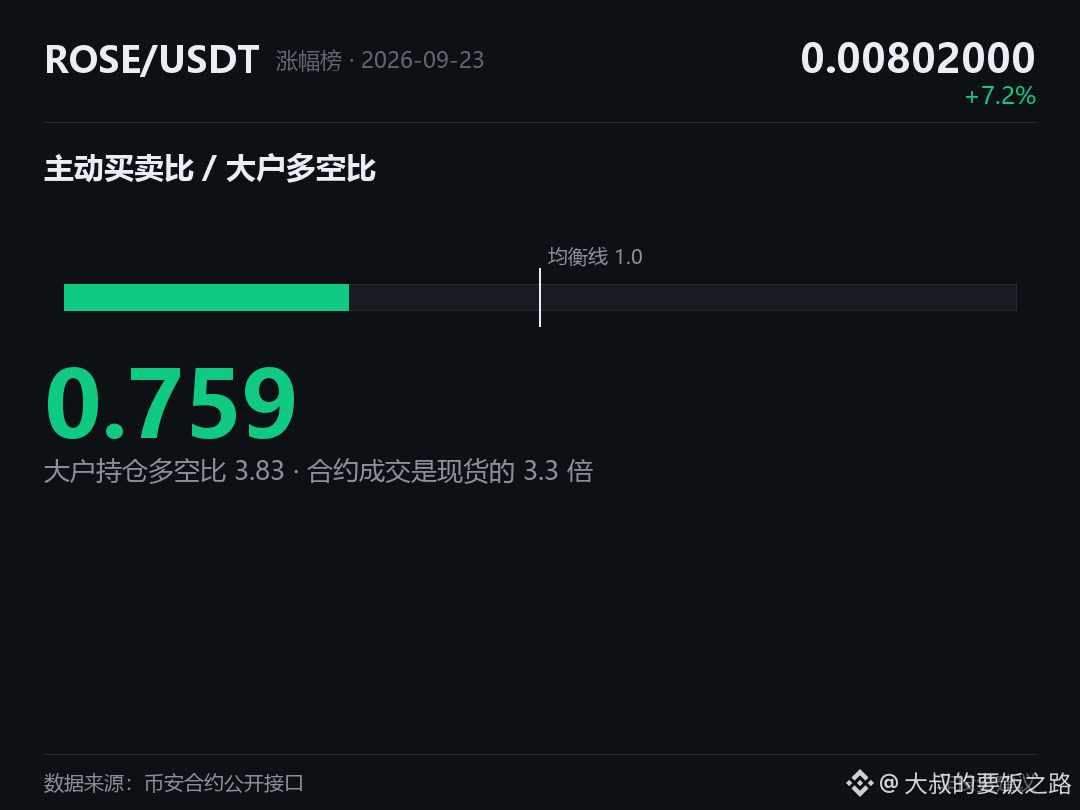
I checked the big-holder long-short ratio of $ROSE , which is 3.83. The longs are slightly in the lead, but it’s not one-sided. I’d like to ask everyone—does this range count as normal? I’m a bit unsure.
Not investment advice
#Big-holder positions
{future}(ROSEUSDT)
I checked the big-holder long-short ratio of $ROSE , which is 3.83. The longs are slightly in the lead, but it’s not one-sided. I’d like to ask everyone—does this range count as normal? I’m a bit unsure.
Not investment advice
#Big-holder positions
Not investment advice
#Big-holder positions
27
·
--
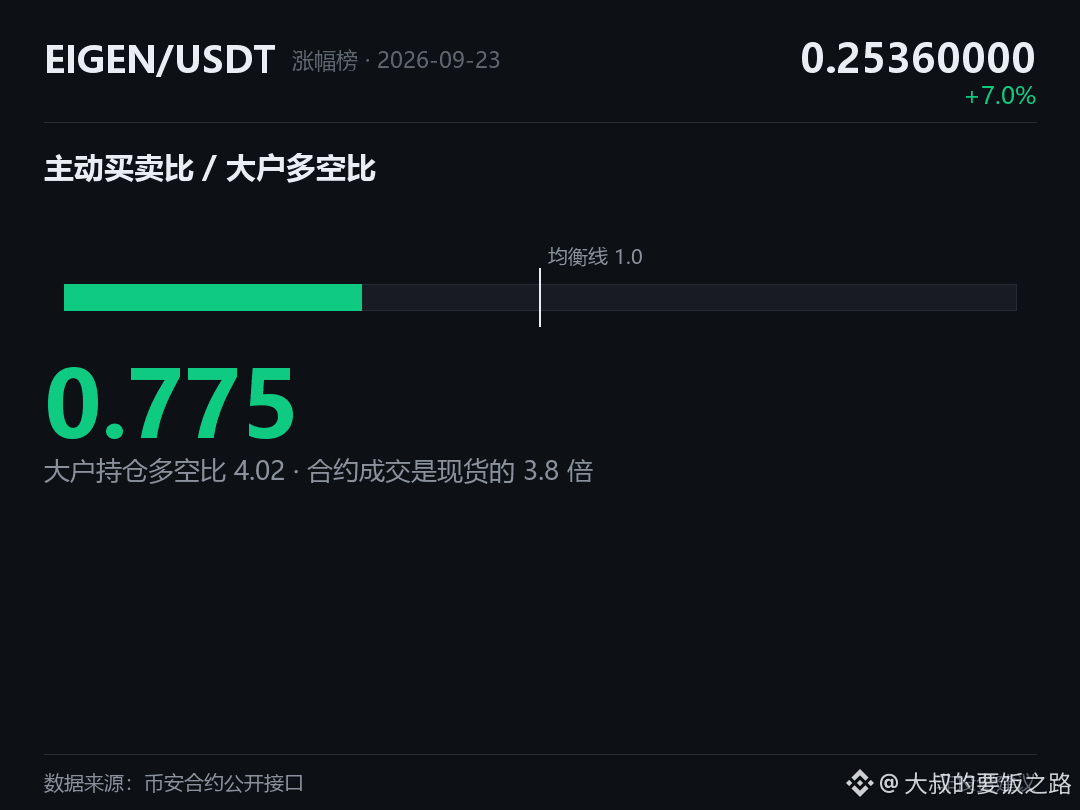
$EIGEN big-holder positioning long/short ratio 4.02; longs are dominant but not extreme. With the +7.0% rise, I think it’s still reasonable, but I’m also a bit curious. Does anyone else feel this number is too high?
Not investment advice
#Big holder positioning
{future}(EIGENUSDT)
$EIGEN big-holder positioning long/short ratio 4.02; longs are dominant but not extreme. With the +7.0% rise, I think it’s still reasonable, but I’m also a bit curious. Does anyone else feel this number is too high?
Not investment advice
#Big holder positioning
Not investment advice
#Big holder positioning
22
Log in to explore more content
Join global crypto users on Binance Square
⚡️ Get latest and useful information about crypto.
💬 Trusted by the world’s largest crypto exchange.
👍 Discover real insights from verified creators.
Email / Phone number
Trending Topics
AIStocksWhatNext
886,516 views
6,635 Discussing
Share & Win Traffic Reward in our Trending Hashtag Campaign
✨Topic: What Other Investment Opportunities Remain as AI Stocks Keep Rising?
👉How to Join:
Publish a short post or article with hashtag #AIStocksWhatNext
Share whether you’re bullish or bearish, and post your AI stock holdings or trade — using the trade widget may improve your eligibility.
You can also strengthen your post by sharing data or charts, and avoiding AI-generated images.
✍️Create content based on the below angles:
- Nvidia says chip sales will double next year, and top AI companies keep hitting record revenue, the compute spend behind it is just as staggering. Is AI demand really taking off? And how long can it last? AI stocks are up across the board. Is this a real breakout, or just a short-term bounce?
- Industry leaders are calling to slow down AI development, while Trump plans to build an “AI Force”, claiming AI could account for 25% of U.S. GDP in the future. Whose side are you on? Will state-level backing be a long-term win for AI stocks?
- Are you buying AI stocks? Share your AI-related trade/holdings with our trade sharing widget.
⏰Campaign Period:
- 2026-09-22 7:00 - 2026-09-24 4:00 UTC
🎁Reward:
- Qualified posts that comply with the above guidelines and contain more than 100 words will be reviewed and may receive a random traffic boost of 500 to 3,000 views. You will receive a notification from your feed secretary if your post is selected.
- Get a chance to have your article featured on Binance Square Official
Need ideas for your post? Visit the topic page #AIStocksWhatNext or the Square Guide on How to Post for Better Reach.
Binance Square Official
·586 Likes
·1.7M views
BitcoinRejectedAt$87,300Twice
0 views
0 Discussing
BCHJumps28%OnCMEFuturesListing
11,309 views
522 Discussing