Binance Square
大弟壹号
144 Posts

大弟壹号

⭐ 币安首批神盾严选商家 ⭐ 已加入平台严选商家保障计划(冻结包赔) ⭐ 已签署平台严选冻结赔付协议
Open Trade
Occasional Trader
4.3 Years
25 Following
262 Followers
131 Liked
Posts
Portfolio
PINNED
·
--
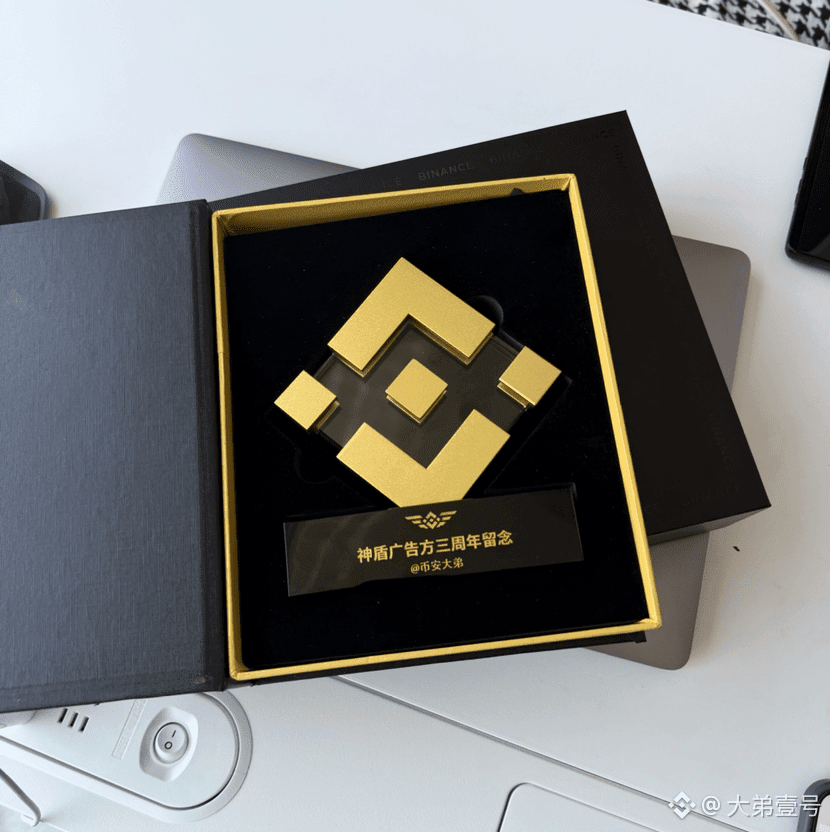
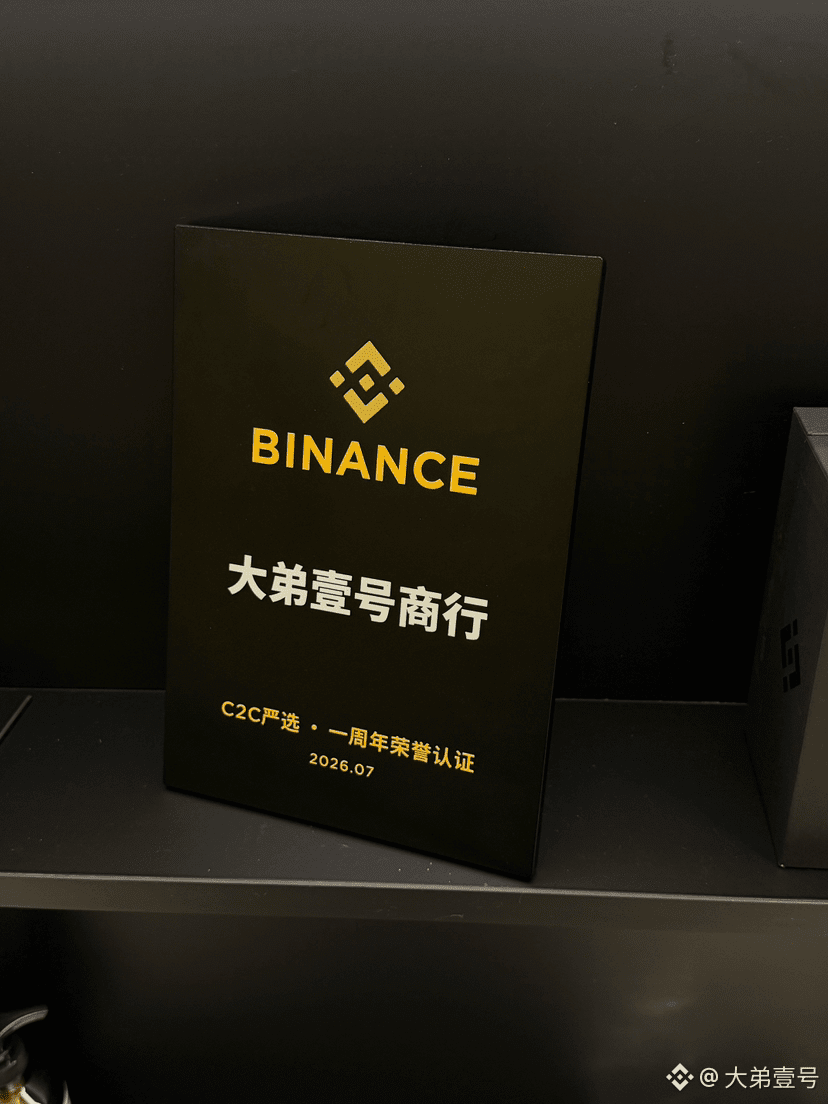
Binance C2C Selected One-Year Anniversary🎉 Officially certified as one of the first Shielded Selection merchants🎉 Five years ago, I joined Binance C2C—from being an ordinary merchant at the beginning, to becoming part of the Shielded system, and then to being among the first merchants in the Selected area. Along the way, I’ve witnessed the platform’s rules being continuously refined and the ecosystem growing steadily. I feel truly honored to participate in, and witness, Binance C2C’s journey toward maturity ❤️ For me, this medal is not only a recognition, but also a responsibility. Because behind every transaction is the trust users place in us. Over the past five years, I’ve remained committed to handling every order diligently—building a reputation through time, and safeguarding trust through actions. Thank you, Binance C2C, for this recognition. And thank you to every friend who has supported and trusted me along the way. Five years together, with the original intention unchanged. Going forward, I will continue to stay professional, deliver every service with care, and cherish every bit of trust 🙏 #神盾严选 #安全出金 @Binance C2C Chinese
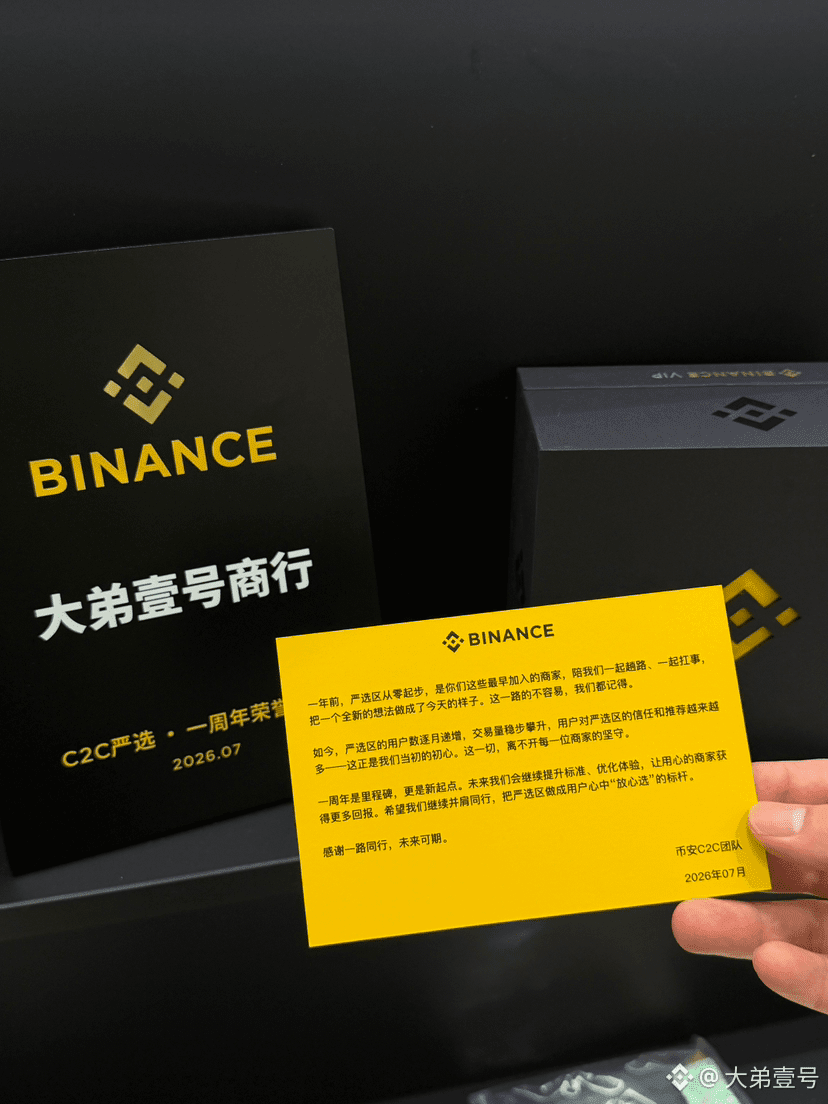
Binance C2C Selected One-Year Anniversary🎉
Officially certified as one of the first Shielded Selection merchants🎉

Five years ago, I joined Binance C2C—from being an ordinary merchant at the beginning, to becoming part of the Shielded system, and then to being among the first merchants in the Selected area. Along the way, I’ve witnessed the platform’s rules being continuously refined and the ecosystem growing steadily. I feel truly honored to participate in, and witness, Binance C2C’s journey toward maturity ❤️

For me, this medal is not only a recognition, but also a responsibility. Because behind every transaction is the trust users place in us. Over the past five years, I’ve remained committed to handling every order diligently—building a reputation through time, and safeguarding trust through actions.

Thank you, Binance C2C, for this recognition. And thank you to every friend who has supported and trusted me along the way. Five years together, with the original intention unchanged. Going forward, I will continue to stay professional, deliver every service with care, and cherish every bit of trust 🙏

#神盾严选 #安全出金 @Binance C2C Chinese
PINNED
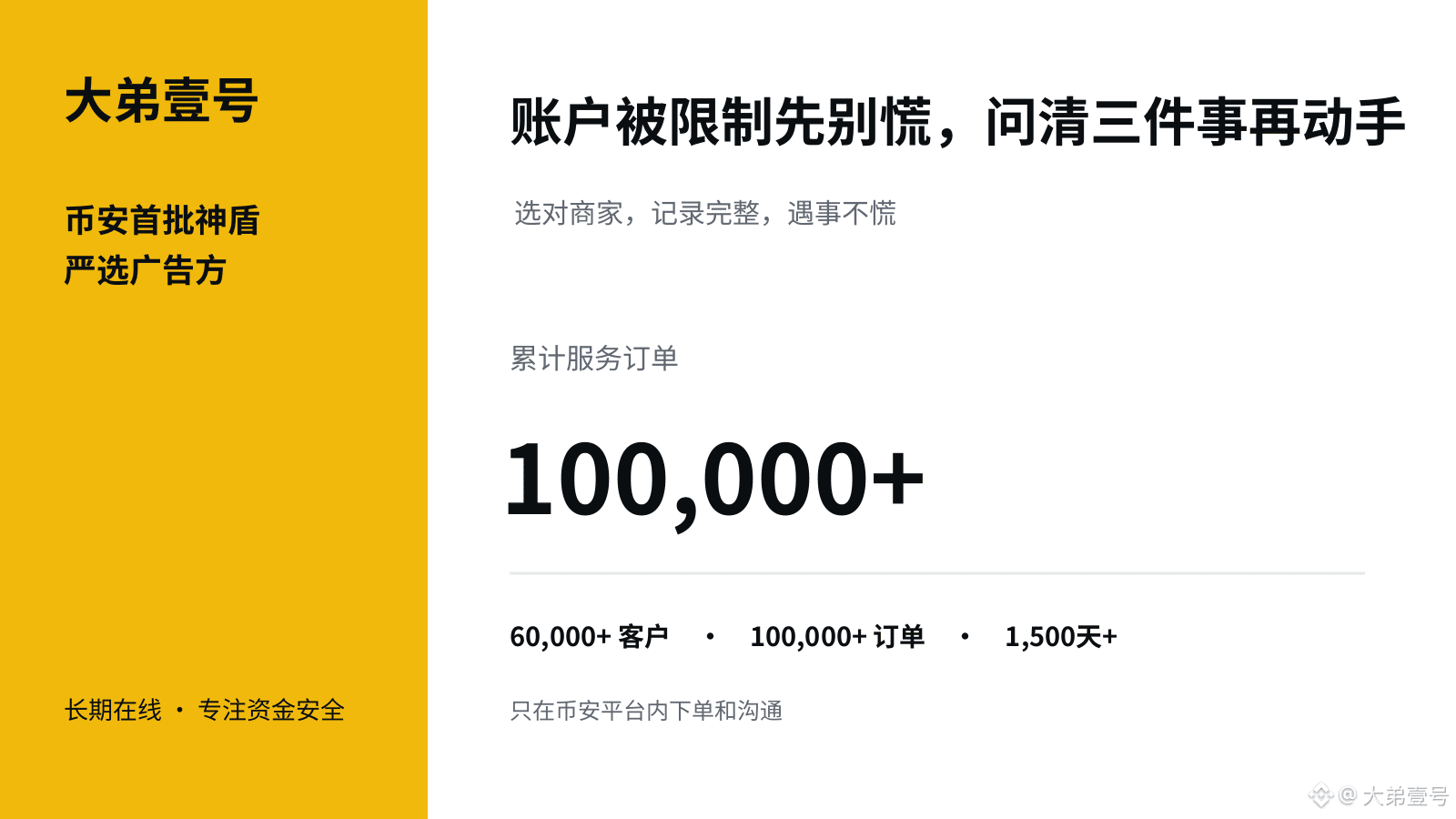
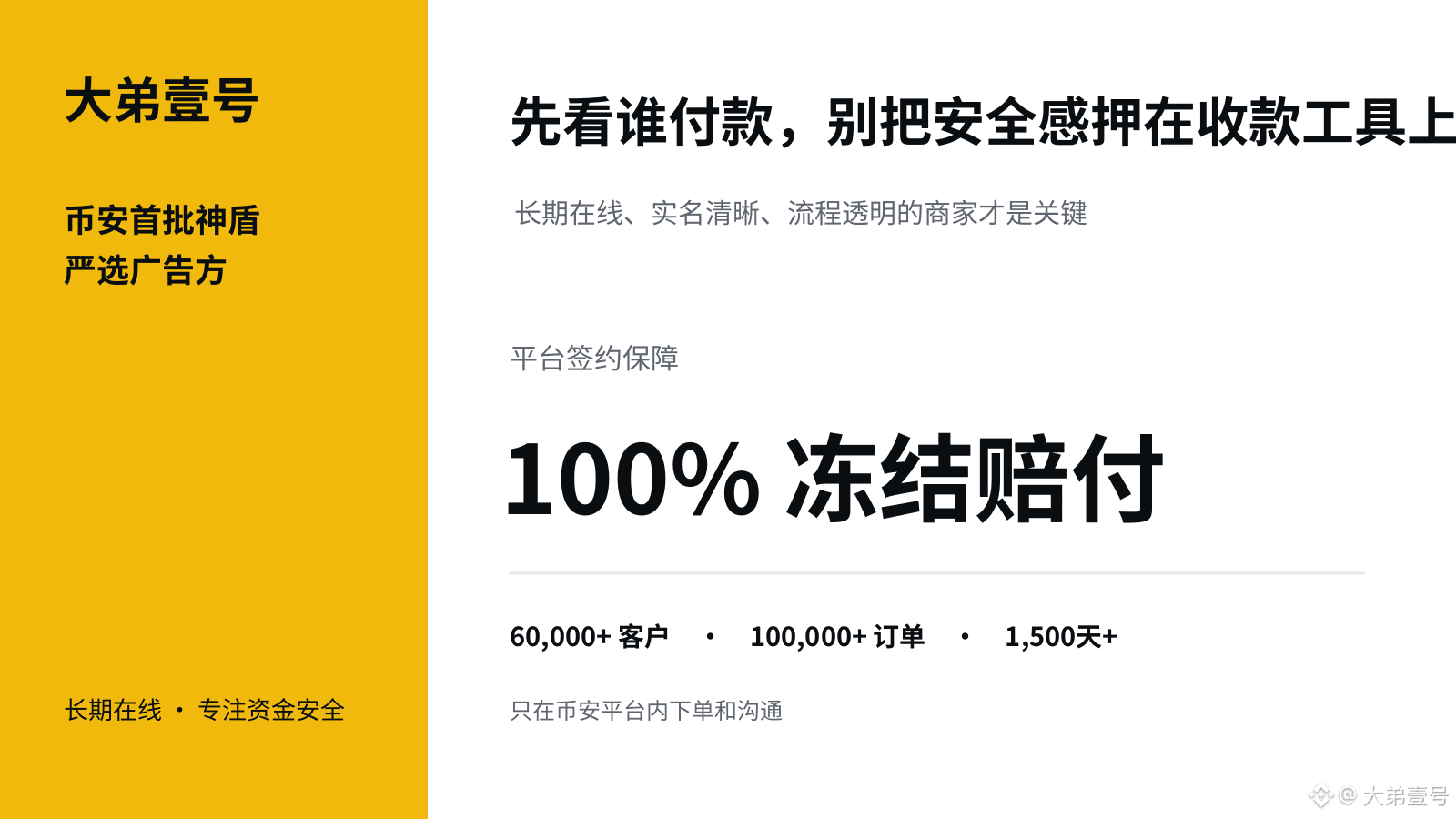
Big Brother No.1 Professional Digital Currency Trading Merchant Veteran Shield Selection Ad Partner🔥 * Online Service Days 1300+ * Number of Service Clients 60,000+ * Total Trading Orders 100,000+ Binance Big Brother Online, Focused on Fund Security Only Accepts On-Chain USDT and Trades Only on Binance Exchange, Deep Partnership with Binance Platform Ad Partner with Trillions in Transaction Volume! Zero Online Freeze, Zero Judicial Holders, Honest Operation, Long-Term Online, Binance Platform Signed Freeze Compensation Agreement! Payment Accounts Use Separation of Receipt and Payment + Fund Accumulation + Investment Fund Payment, Commitment to Full Compensation in Case of Judicial Issues Due to Personal Payouts! If You Value Fund Security and Reject Any Risks Then Prioritize Following Big Brother No.1 Time Is the Best Testimony of Trust!
Big Brother No.1 Professional Digital Currency Trading Merchant
Veteran Shield Selection Ad Partner🔥

* Online Service Days 1300+
* Number of Service Clients 60,000+
* Total Trading Orders 100,000+

Binance Big Brother Online, Focused on Fund Security
Only Accepts On-Chain USDT and Trades Only on Binance Exchange, Deep Partnership with Binance Platform Ad Partner with Trillions in Transaction Volume!
Zero Online Freeze, Zero Judicial Holders, Honest Operation, Long-Term Online, Binance Platform Signed Freeze Compensation Agreement!
Payment Accounts Use Separation of Receipt and Payment + Fund Accumulation + Investment Fund Payment, Commitment to Full Compensation in Case of Judicial Issues Due to Personal Payouts!

If You Value Fund Security and Reject Any Risks
Then Prioritize Following Big Brother No.1
Time Is the Best Testimony of Trust!

For OTC withdrawals, the first step is always to look at the person—not the tool. Many people haven’t figured out who they’re dealing with yet, but they start obsessing over whether to use a bank card or WeChat/Alipay. That’s basically flipping the risk-control order completely. WeChat, Alipay, and bank cards each have their own risk-control rules, but what they’re watching is the counterparty and the flow of funds. Switching to a different channel doesn’t change who the payer is, and it doesn’t change whether this money is clean. The payment platforms and banks share the same set of suspicious-transaction profiles; it’s not two parallel worlds. Whatever payment method you use, the risk-control system doesn’t care—it only cares where the money comes from, where it goes, and who is in the middle. People who put their sense of security on a particular collection method will eventually realize that tools won’t screen people for you. Whether a merchant is worth touching, I never judge by payment method. I check the homepage first: how long they’ve been online, whether it’s continuous, whether recent trades are stable or whether they’re intermittently posting orders—if it’s inconsistent, I skip them immediately. Identity-verified payments and platform guarantees must be clearly and explicitly written in the ad; if they only pop up with such requirements when it’s time to transfer, don’t touch them. Those few cents difference in price don’t even count as a rounding error compared to fund safety. Pick the right person, and a bank card can also deliver safely and steadily; pick the wrong person, and no tool can help you dodge risk control. For withdrawals, go to Big Brother No. 1. Binance’s first batch of Shield-Verified partner advertisers—focused on fund safety—and has already signed a platform-verified freeze/100% compensation agreement. Please go to the homepage and follow; when needed, just contact me directly. $USDT $BTC
For OTC withdrawals, the first step is always to look at the person—not the tool. Many people haven’t figured out who they’re dealing with yet, but they start obsessing over whether to use a bank card or WeChat/Alipay. That’s basically flipping the risk-control order completely. WeChat, Alipay, and bank cards each have their own risk-control rules, but what they’re watching is the counterparty and the flow of funds. Switching to a different channel doesn’t change who the payer is, and it doesn’t change whether this money is clean. The payment platforms and banks share the same set of suspicious-transaction profiles; it’s not two parallel worlds. Whatever payment method you use, the risk-control system doesn’t care—it only cares where the money comes from, where it goes, and who is in the middle. People who put their sense of security on a particular collection method will eventually realize that tools won’t screen people for you. Whether a merchant is worth touching, I never judge by payment method. I check the homepage first: how long they’ve been online, whether it’s continuous, whether recent trades are stable or whether they’re intermittently posting orders—if it’s inconsistent, I skip them immediately. Identity-verified payments and platform guarantees must be clearly and explicitly written in the ad; if they only pop up with such requirements when it’s time to transfer, don’t touch them. Those few cents difference in price don’t even count as a rounding error compared to fund safety. Pick the right person, and a bank card can also deliver safely and steadily; pick the wrong person, and no tool can help you dodge risk control.

For withdrawals, go to Big Brother No. 1. Binance’s first batch of Shield-Verified partner advertisers—focused on fund safety—and has already signed a platform-verified freeze/100% compensation agreement. Please go to the homepage and follow; when needed, just contact me directly.

$USDT $BTC
The 8.36% swing in a single day makes many people feel that the direction has become clear, but I think this magnitude is exactly when the market is most irrational. People who chase the price fear missing out, while those sitting in cash fear it will keep running higher. But an over-$8$-point move for BTC in one day doesn’t mean the trend has reversed—it’s mostly a concentrated emotional release. In this kind of market, those with heavy positions think about adding, while those with no position think about bottom-fishing; both are being led around by a single K-line. What you should really do is reduce your position size to a level where you can sleep at night, and don’t draw conclusions about long-term logic based on the up-and-down of one day. High volatility doesn’t necessarily mean more opportunity. After an 8% green candle, there are often even more dramatic price wicks. It’s better to wait until the emotional tide subsides before talking about direction than to rush in now. $BTC
The 8.36% swing in a single day makes many people feel that the direction has become clear, but I think this magnitude is exactly when the market is most irrational. People who chase the price fear missing out, while those sitting in cash fear it will keep running higher. But an over-$8$-point move for BTC in one day doesn’t mean the trend has reversed—it’s mostly a concentrated emotional release. In this kind of market, those with heavy positions think about adding, while those with no position think about bottom-fishing; both are being led around by a single K-line. What you should really do is reduce your position size to a level where you can sleep at night, and don’t draw conclusions about long-term logic based on the up-and-down of one day. High volatility doesn’t necessarily mean more opportunity. After an 8% green candle, there are often even more dramatic price wicks. It’s better to wait until the emotional tide subsides before talking about direction than to rush in now.

$BTC
DOGE moved just 0.4% in 24 hours— for a coin that basically lives off sentiment, that’s so unusually quiet. Don’t mistake this low volatility for stability; it’s more like the market’s patience with DOGE is running out. Retail traders can’t even be bothered to discuss it anymore, and the chips are all piled into the hands of a few people. This kind of dead silence usually isn’t a bottom— it’s the suffocation right before a breakout. When real money finally steps in, the direction will be an extreme spike; it won’t give you time to react slowly. So right now it’s not the time to guess whether it’ll go up or down. If your position is light, don’t gamble on the direction. If you’re heavily loaded, don’t play dead either. Reduce your position to a level where you’re not panicked if it drops and you’re not chasing if it rises— that matters more than anything. DOGE is never warm water. When it moves, it won’t ask you for permission. The longer it stays quiet, the more vicious it gets. $DOGE $BTC
DOGE moved just 0.4% in 24 hours— for a coin that basically lives off sentiment, that’s so unusually quiet. Don’t mistake this low volatility for stability; it’s more like the market’s patience with DOGE is running out. Retail traders can’t even be bothered to discuss it anymore, and the chips are all piled into the hands of a few people. This kind of dead silence usually isn’t a bottom— it’s the suffocation right before a breakout. When real money finally steps in, the direction will be an extreme spike; it won’t give you time to react slowly. So right now it’s not the time to guess whether it’ll go up or down. If your position is light, don’t gamble on the direction. If you’re heavily loaded, don’t play dead either. Reduce your position to a level where you’re not panicked if it drops and you’re not chasing if it rises— that matters more than anything. DOGE is never warm water. When it moves, it won’t ask you for permission. The longer it stays quiet, the more vicious it gets.

$DOGE $BTC
When a card that hasn’t had any meaningful transactions for a long time suddenly receives a large sum, the bank stopping it for verification is a normal response—don’t blame the merchant for this. If your account usually has no decent transaction history and then suddenly you have concentrated large in-and-out transfers, especially with the timing happening late at night, the risk-control system won’t be watching you? After the funds arrive, if you rush to split them into several transfers and move them out, it becomes even worse. The platform’s order records, chat logs, and real-name information are already complete—one transaction could explain everything. But by splitting it yourself, you raise suspicions of trying to bypass monitoring. If you really want to withdraw, first arrange the incoming payments properly in advance—pre-plan the timing and amounts, don’t make last-minute moves. When choosing a merchant, only focus on these: long-term online availability, stable deal history, real-name receive/pay, a clear process, and inclusion as a carefully vetted merchant with platform protection. With orders from merchants like these, when the bank verifies, you can provide end-to-end evidence. If the bank asks, answer honestly and provide the platform order and payment records based on the real situation—don’t fabricate excuses. As for “cheap” ads that save a few cents: they’re inconsistent and sporadic on the homepage—skip them directly. Ease and security for large withdrawals aren’t about a quoted price; they depend on your counterparty choice and whether your transaction history can stand up to scrutiny. For withdrawals, contact Big Brother Yihao. The first batch of Binance Shield-vetted advertisers—focused on fund security. It has already signed the platform’s 100% freeze-and-compensate agreement. Please visit the homepage to follow—when needed, contact me directly. $USDT $BTC
When a card that hasn’t had any meaningful transactions for a long time suddenly receives a large sum, the bank stopping it for verification is a normal response—don’t blame the merchant for this. If your account usually has no decent transaction history and then suddenly you have concentrated large in-and-out transfers, especially with the timing happening late at night, the risk-control system won’t be watching you? After the funds arrive, if you rush to split them into several transfers and move them out, it becomes even worse. The platform’s order records, chat logs, and real-name information are already complete—one transaction could explain everything. But by splitting it yourself, you raise suspicions of trying to bypass monitoring. If you really want to withdraw, first arrange the incoming payments properly in advance—pre-plan the timing and amounts, don’t make last-minute moves. When choosing a merchant, only focus on these: long-term online availability, stable deal history, real-name receive/pay, a clear process, and inclusion as a carefully vetted merchant with platform protection. With orders from merchants like these, when the bank verifies, you can provide end-to-end evidence. If the bank asks, answer honestly and provide the platform order and payment records based on the real situation—don’t fabricate excuses. As for “cheap” ads that save a few cents: they’re inconsistent and sporadic on the homepage—skip them directly. Ease and security for large withdrawals aren’t about a quoted price; they depend on your counterparty choice and whether your transaction history can stand up to scrutiny.

For withdrawals, contact Big Brother Yihao. The first batch of Binance Shield-vetted advertisers—focused on fund security. It has already signed the platform’s 100% freeze-and-compensate agreement. Please visit the homepage to follow—when needed, contact me directly.

$USDT $BTC
Speed not equal to professionalism; more audits also not equal to safety. What’s truly valuable is a clear process. When many people choose a merchant, they either: pick someone who clears without asking anything, thinking the faster the better; or, on the other hand, they blindly believe that the more questions asked, the more responsible the party must be, and whatever materials are requested are handed over. Both of these ways have set them up to get burned. A merchant that verifies nothing is essentially not concerned about who the payer is at all. Once a freeze and a complaint happen, you won’t even be able to find a person. A merchant that demands with no boundaries will, right on the spot, ask for your ID video, six months of bank statements, and your contacts of friends and family. That’s not responsibility—it’s shifting all their risk-control costs onto you. I judge whether a merchant is truly professional without looking at how fast the review is or how many materials are collected. I only check whether their verification requirements are clearly stated in their ads: what information is needed, what it’s used for, how it should be submitted, and how the platform keeps an audit trail. These must be laid out in black and white before you place an order, and they must allow you to go step by step through the process within the platform. Don’t touch those who introduce new requirements line by line only when it’s time to transfer funds, or those who make you hand over all your privacy. Even if their quote is lower, don’t go near them. For truly reliable merchants, verification has boundaries, the workflow is explained clearly, and whether it’s fast or slow is stated in the ad—so you don’t have to guess, and you don’t have to gamble. For withdrawals, look for Big Brother Yihao. The first batch of Binance’s Shield-certified and selected advertisers—focused on capital safety. They have already signed a 100% payout agreement for selected freeze cases. Go to the homepage, follow me there. When you need it, contact me directly. $USDT $BTC
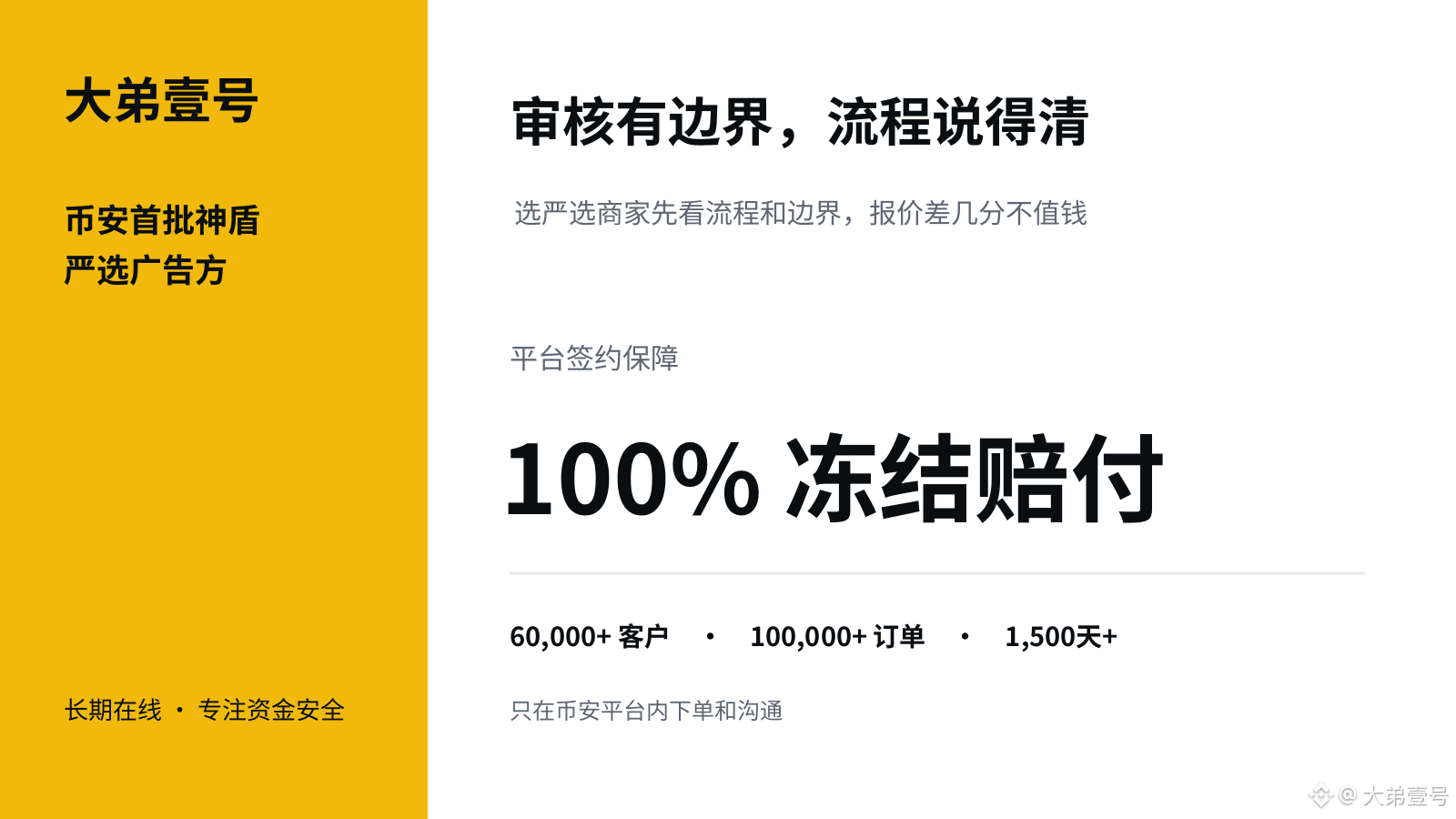
Speed not equal to professionalism; more audits also not equal to safety. What’s truly valuable is a clear process. When many people choose a merchant, they either: pick someone who clears without asking anything, thinking the faster the better; or, on the other hand, they blindly believe that the more questions asked, the more responsible the party must be, and whatever materials are requested are handed over. Both of these ways have set them up to get burned. A merchant that verifies nothing is essentially not concerned about who the payer is at all. Once a freeze and a complaint happen, you won’t even be able to find a person. A merchant that demands with no boundaries will, right on the spot, ask for your ID video, six months of bank statements, and your contacts of friends and family. That’s not responsibility—it’s shifting all their risk-control costs onto you.

I judge whether a merchant is truly professional without looking at how fast the review is or how many materials are collected. I only check whether their verification requirements are clearly stated in their ads: what information is needed, what it’s used for, how it should be submitted, and how the platform keeps an audit trail. These must be laid out in black and white before you place an order, and they must allow you to go step by step through the process within the platform. Don’t touch those who introduce new requirements line by line only when it’s time to transfer funds, or those who make you hand over all your privacy. Even if their quote is lower, don’t go near them.

For truly reliable merchants, verification has boundaries, the workflow is explained clearly, and whether it’s fast or slow is stated in the ad—so you don’t have to guess, and you don’t have to gamble.

For withdrawals, look for Big Brother Yihao. The first batch of Binance’s Shield-certified and selected advertisers—focused on capital safety. They have already signed a 100% payout agreement for selected freeze cases. Go to the homepage, follow me there. When you need it, contact me directly.

$USDT $BTC
When withdrawing, the moment a merchant needs materials, someone starts cursing—thinking that asking more is just being difficult, and asking less is worrying about safety. Both of these thoughts only stay on the surface. Merchants with zero verification don’t dare to be used, and merchants who demand without limits are just as unprofessional. The key difference isn’t how many materials are collected, but whether the review has boundaries and whether the process is explained clearly. I choose merchants by first checking whether their ads clearly spell out the verification requirements: what information is needed, what it’s used for, how to submit it, and how long it will be kept. These must be stated plainly and explicitly inside the platform. If the requirements are only supplemented line by line right when you’re about to transfer, or if they ask you to send your ID card, bank statements, and videos all at once, just skip them. Real professionalism isn’t about being fast or asking a lot—it’s about a clear process where every step is explained. The review should have boundaries, and it must be clearly stated; otherwise, “quick” is a risk, and “more” is simply collecting more information. To select and choose merchants carefully, I follow this standard: long-term online presence, stable transaction history, real-name deposits and withdrawals, platform-backed protection, and verification rules stated clearly in the ad. Only merchants like this are worth entrusting your withdrawals to. For withdrawals, look for Big Brother One. Binance’s first batch of Shield Strictly-Selected partners—focused on fund safety, and has already signed a Strictly-Selected 100% compensation and freeze agreement with the platform. Go to the homepage and follow, and when you need it, contact me directly. $USDT $BTC
When withdrawing, the moment a merchant needs materials, someone starts cursing—thinking that asking more is just being difficult, and asking less is worrying about safety. Both of these thoughts only stay on the surface. Merchants with zero verification don’t dare to be used, and merchants who demand without limits are just as unprofessional. The key difference isn’t how many materials are collected, but whether the review has boundaries and whether the process is explained clearly. I choose merchants by first checking whether their ads clearly spell out the verification requirements: what information is needed, what it’s used for, how to submit it, and how long it will be kept. These must be stated plainly and explicitly inside the platform. If the requirements are only supplemented line by line right when you’re about to transfer, or if they ask you to send your ID card, bank statements, and videos all at once, just skip them. Real professionalism isn’t about being fast or asking a lot—it’s about a clear process where every step is explained. The review should have boundaries, and it must be clearly stated; otherwise, “quick” is a risk, and “more” is simply collecting more information. To select and choose merchants carefully, I follow this standard: long-term online presence, stable transaction history, real-name deposits and withdrawals, platform-backed protection, and verification rules stated clearly in the ad. Only merchants like this are worth entrusting your withdrawals to.

For withdrawals, look for Big Brother One. Binance’s first batch of Shield Strictly-Selected partners—focused on fund safety, and has already signed a Strictly-Selected 100% compensation and freeze agreement with the platform. Go to the homepage and follow, and when you need it, contact me directly.

$USDT $BTC
Many people run into a problem the moment they withdraw: if the receiving bank card gets restricted, they immediately switch to using WeChat or Alipay, thinking that changing tools will help them bypass risk controls. That idea is backwards from the start. WeChat and Alipay’s backend risk controls are not any looser than bank cards. Large transfers into unfamiliar accounts still trigger restrictions— the only difference is that the warning may come two days later. The tool itself won’t filter people for you. Banks, WeChat, and Alipay each have their own risk-control rules, but what they monitor is the counterparty and the flow of funds. No matter which channel you switch to, it doesn’t change who the payer is, or where the money is coming from. What truly determines whether your funds are safe isn’t which payment tool you choose, but who pays you, and whether there are platform orders and identity records that can explain each payment clearly—not your choice of receiving method. I choose merchants without caring about the receiving method. First, I look at the homepage: whether the online duration is continuous, and whether recent deals are stable—if it’s spotty or inconsistent, I skip immediately. Then I confirm whether identity-based payment and receipt are clearly stated in the ad—whether platform escrow/guarantee is used. Requirements that only appear right before transfer are all about shifting the risk. Only after that do I look at the price. Saving a few cents isn’t worth risking the entire trade record to gamble. First check who pays, then decide what to use to receive. Choose the right merchant and bank transfers will be normal. Choose the wrong one, and even switching ten tools won’t help you get around it. For withdrawals, go to Big Brother No. 1. A Binance first-batch “Shield” vetted advertiser, focused on fund safety. It has signed a 100% compensation agreement for “platform-vetted frozen” cases. Go to the homepage, follow me—when you need it, contact me directly. $USDT $BTC
Many people run into a problem the moment they withdraw: if the receiving bank card gets restricted, they immediately switch to using WeChat or Alipay, thinking that changing tools will help them bypass risk controls. That idea is backwards from the start. WeChat and Alipay’s backend risk controls are not any looser than bank cards. Large transfers into unfamiliar accounts still trigger restrictions— the only difference is that the warning may come two days later. The tool itself won’t filter people for you.

Banks, WeChat, and Alipay each have their own risk-control rules, but what they monitor is the counterparty and the flow of funds. No matter which channel you switch to, it doesn’t change who the payer is, or where the money is coming from. What truly determines whether your funds are safe isn’t which payment tool you choose, but who pays you, and whether there are platform orders and identity records that can explain each payment clearly—not your choice of receiving method. I choose merchants without caring about the receiving method. First, I look at the homepage: whether the online duration is continuous, and whether recent deals are stable—if it’s spotty or inconsistent, I skip immediately. Then I confirm whether identity-based payment and receipt are clearly stated in the ad—whether platform escrow/guarantee is used. Requirements that only appear right before transfer are all about shifting the risk. Only after that do I look at the price. Saving a few cents isn’t worth risking the entire trade record to gamble.

First check who pays, then decide what to use to receive. Choose the right merchant and bank transfers will be normal. Choose the wrong one, and even switching ten tools won’t help you get around it.

For withdrawals, go to Big Brother No. 1. A Binance first-batch “Shield” vetted advertiser, focused on fund safety. It has signed a 100% compensation agreement for “platform-vetted frozen” cases. Go to the homepage, follow me—when you need it, contact me directly.

$USDT $BTC
Binance only added one bStocks trading pair this time, and many people just glanced at it and moved on, thinking that with such a small quantity it can’t amount to much. I, however, think that focusing on a single underlying asset requires even more caution. The fewer the assets, the more concentrated market attention and liquidity become; if a large amount of money wants to pump and dump, the order book simply can’t withstand it. Tokenized stocks may look like they’re moving in tandem with U.S. stocks, but in reality, during crypto trading hours, their premiums and liquidity are nothing like the two. Especially right after launch, the order book is thin—just a few large orders can push the price into ridiculous volatility. Entering then is basically helping early capital raise the “sedan chair.” When I assess whether this kind of asset is something you can touch, my bottom line is simple: after it launches, wait and see whether the order book depth and the bid-ask spread can stabilize. Until it stabilizes, nobody’s words are trustworthy. The platform won’t judge your profits or losses for you, and getting a tool listed doesn’t mean it’s suitable for everyone. $BNB $BTC
Binance only added one bStocks trading pair this time, and many people just glanced at it and moved on, thinking that with such a small quantity it can’t amount to much. I, however, think that focusing on a single underlying asset requires even more caution. The fewer the assets, the more concentrated market attention and liquidity become; if a large amount of money wants to pump and dump, the order book simply can’t withstand it. Tokenized stocks may look like they’re moving in tandem with U.S. stocks, but in reality, during crypto trading hours, their premiums and liquidity are nothing like the two. Especially right after launch, the order book is thin—just a few large orders can push the price into ridiculous volatility. Entering then is basically helping early capital raise the “sedan chair.” When I assess whether this kind of asset is something you can touch, my bottom line is simple: after it launches, wait and see whether the order book depth and the bid-ask spread can stabilize. Until it stabilizes, nobody’s words are trustworthy. The platform won’t judge your profits or losses for you, and getting a tool listed doesn’t mean it’s suitable for everyone.

$BNB $BTC
BNB’s half-point move up or down—don’t even talk about trends; you can’t measure the market sentiment’s temperature either. People holding BNB always want to read something from this kind of volatility, but what they “read” is just their own added drama. The pricing logic of platform coins has long been decoupled from short-term sentiment. If BNB isn’t moving now, it’s not that there’s no action—it’s that nobody is willing to write a story for it. This is completely different from those air coins that can jump dozens of points in a single day. If you’re in cash, don’t get itchy just because you see green; this small increase can’t even cover the trading fees. If you’re heavily positioned, there’s even less to worry about—if the fundamentals haven’t changed, just hold. A half-point move up or down has nothing to do with you. What you really should watch is whether anything new is coming out in the BNB ecosystem—not that little “mosquito leg” on the chart. Making decisions every day based on this kind of fluctuation? Better go to sleep. The market won’t run away in the few minutes you’re staring at it. $BNB $BTC
BNB’s half-point move up or down—don’t even talk about trends; you can’t measure the market sentiment’s temperature either. People holding BNB always want to read something from this kind of volatility, but what they “read” is just their own added drama. The pricing logic of platform coins has long been decoupled from short-term sentiment. If BNB isn’t moving now, it’s not that there’s no action—it’s that nobody is willing to write a story for it. This is completely different from those air coins that can jump dozens of points in a single day. If you’re in cash, don’t get itchy just because you see green; this small increase can’t even cover the trading fees. If you’re heavily positioned, there’s even less to worry about—if the fundamentals haven’t changed, just hold. A half-point move up or down has nothing to do with you. What you really should watch is whether anything new is coming out in the BNB ecosystem—not that little “mosquito leg” on the chart. Making decisions every day based on this kind of fluctuation? Better go to sleep. The market won’t run away in the few minutes you’re staring at it.

$BNB $BTC
The one step you should never skimp on before buying US: read the ad’s verification requirements from start to finish. Many people first look at the price—if it’s a few points cheaper, they think they got a bargain. They click in, pay, and only after that does the merchant say they require a video holding an ID card, plus proof of account statements for the past three months. At that point, the money has already been deducted. Whether you cooperate or not, you can’t get it back. Low-price ads always come with more detailed checks. The reason is that the quotation is pushed to that level, so the merchant must break the funding risk down into every step of real-name verification and source confirmation. Otherwise, if assets get frozen or complaints arise, they’ll lose harder the more orders there are. This isn’t about intentionally blocking you—the rules are written in the ad, and you simply didn’t read them. Thorough verification doesn’t necessarily mean they’re deliberately making things difficult. Cheap and convenient have rarely ever gone hand in hand. I choose merchants based on only two things: First, in the ad, are the requirements clearly stated before the deal—real-name receiving and paying, video verification, and funds/source documentation? Second, does the merchant’s profile show continuous online time? Is recent deal activity stable? Have they joined the platform’s protection/escrow? If you can accept it, keep going. If you can’t, switch merchants immediately. There are plenty of curated, vetted merchants. Don’t push the merchant only midway through the transaction. Other than roasting yourself, it does nothing. Check the requirements before ordering, and filter out anything you can’t accept—this saves you a hundred times more hassle than arguing later. For withdrawals, choose Big Brother No. 1. Binance’s first batch of Shielded Curated Ad sellers—focused on fund safety. They have already signed the platform’s curated “100% freeze and compensation” agreement. Go to the homepage, follow me, and when needed, contact me directly. $USDT $BTC
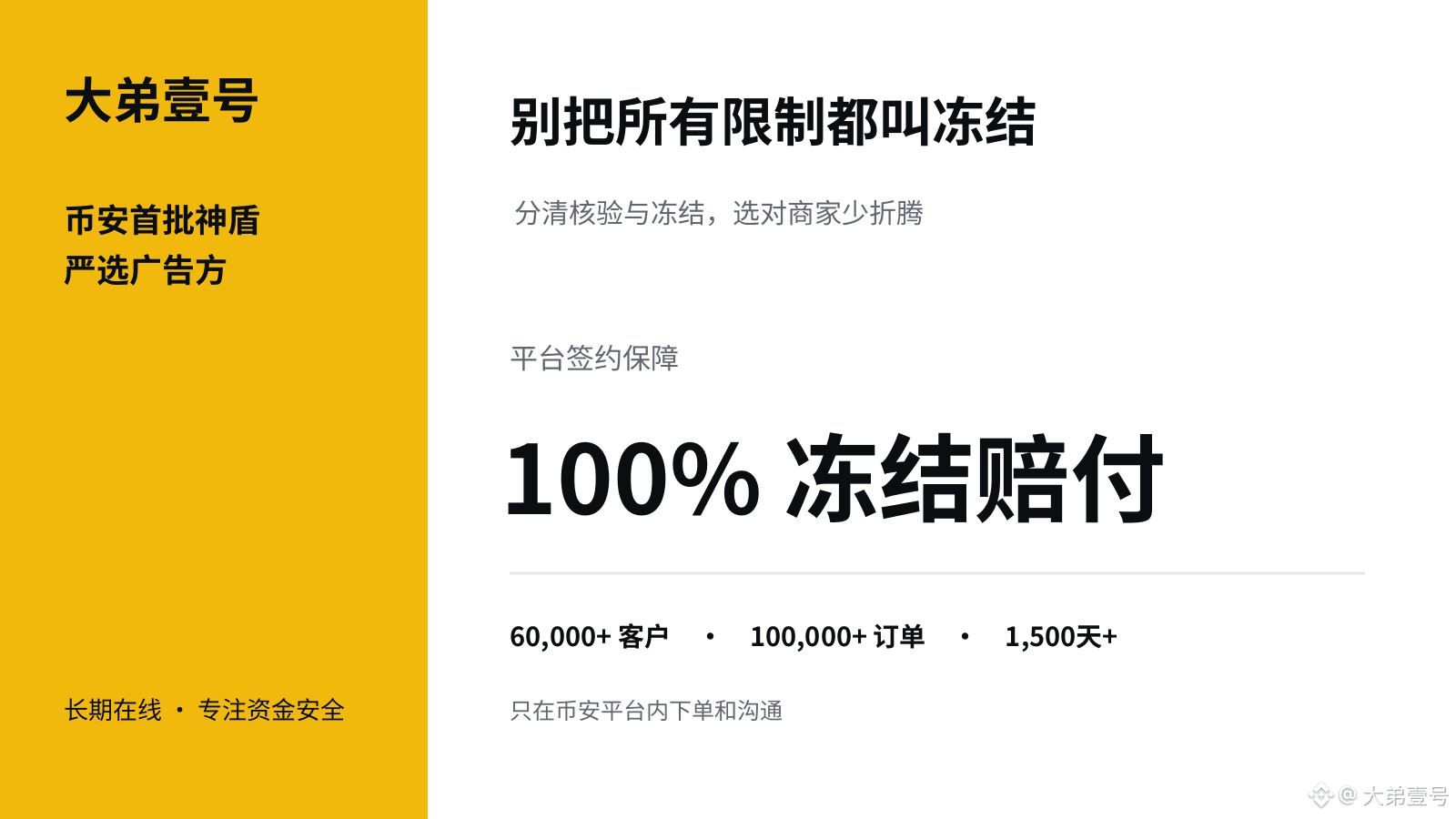
The one step you should never skimp on before buying US: read the ad’s verification requirements from start to finish. Many people first look at the price—if it’s a few points cheaper, they think they got a bargain. They click in, pay, and only after that does the merchant say they require a video holding an ID card, plus proof of account statements for the past three months. At that point, the money has already been deducted. Whether you cooperate or not, you can’t get it back.

Low-price ads always come with more detailed checks. The reason is that the quotation is pushed to that level, so the merchant must break the funding risk down into every step of real-name verification and source confirmation. Otherwise, if assets get frozen or complaints arise, they’ll lose harder the more orders there are. This isn’t about intentionally blocking you—the rules are written in the ad, and you simply didn’t read them.

Thorough verification doesn’t necessarily mean they’re deliberately making things difficult. Cheap and convenient have rarely ever gone hand in hand. I choose merchants based on only two things:

First, in the ad, are the requirements clearly stated before the deal—real-name receiving and paying, video verification, and funds/source documentation?

Second, does the merchant’s profile show continuous online time? Is recent deal activity stable? Have they joined the platform’s protection/escrow?

If you can accept it, keep going. If you can’t, switch merchants immediately. There are plenty of curated, vetted merchants. Don’t push the merchant only midway through the transaction. Other than roasting yourself, it does nothing.

Check the requirements before ordering, and filter out anything you can’t accept—this saves you a hundred times more hassle than arguing later.

For withdrawals, choose Big Brother No. 1. Binance’s first batch of Shielded Curated Ad sellers—focused on fund safety. They have already signed the platform’s curated “100% freeze and compensation” agreement. Go to the homepage, follow me, and when needed, contact me directly.

$USDT $BTC
When Account 1 gets restricted, many people’s first reaction is to search for similar cases—see how many days it took for others to be resolved, what materials they submitted, and then copy it directly, or switch to another card, change their receiving method, and continue. But restrictions are never the same template. A bank’s temporary review is different from a judicial freeze. Reasons for risk control, the duration of the restriction, which department you need to contact, and what materials you must submit can all be different. What people say online about “getting unblocked in three days” may have nothing to do with your situation. Fiddling around can also turn a simple verification into a complicated review. What you should really look at first is the counterparty: whether the person paying you is reliable determines whether you can produce complete supporting documents. When choosing a merchant, you should lock down the hard requirements: long-term online presence, stable transaction history, identity-verified deposits and withdrawals, and clearly written procedures within the platform in black and white—and also include platform protection. With such merchants, if anything goes wrong, your order details, chat records, and transfer proofs are all there. Then you can take these to the bank or authorized authorities and handle things step by step based on your own circumstances. So don’t mess up the order: don’t rush to copy someone else’s resolution experience. First, check who is paying you, whether the process is clear, and whether your information is complete—this works far better than hunting for random workarounds. For withdrawals, contact Big Brother One. Binance’s first batch of Shield-approved selected advertisers, focused on fund safety, has already signed a 100% compensation agreement for platform-selected freezes. Come to the homepage and follow, and if you need help, contact me directly. $USDT $BTC
When Account 1 gets restricted, many people’s first reaction is to search for similar cases—see how many days it took for others to be resolved, what materials they submitted, and then copy it directly, or switch to another card, change their receiving method, and continue. But restrictions are never the same template. A bank’s temporary review is different from a judicial freeze. Reasons for risk control, the duration of the restriction, which department you need to contact, and what materials you must submit can all be different. What people say online about “getting unblocked in three days” may have nothing to do with your situation. Fiddling around can also turn a simple verification into a complicated review. What you should really look at first is the counterparty: whether the person paying you is reliable determines whether you can produce complete supporting documents. When choosing a merchant, you should lock down the hard requirements: long-term online presence, stable transaction history, identity-verified deposits and withdrawals, and clearly written procedures within the platform in black and white—and also include platform protection. With such merchants, if anything goes wrong, your order details, chat records, and transfer proofs are all there. Then you can take these to the bank or authorized authorities and handle things step by step based on your own circumstances. So don’t mess up the order: don’t rush to copy someone else’s resolution experience. First, check who is paying you, whether the process is clear, and whether your information is complete—this works far better than hunting for random workarounds.

For withdrawals, contact Big Brother One. Binance’s first batch of Shield-approved selected advertisers, focused on fund safety, has already signed a 100% compensation agreement for platform-selected freezes. Come to the homepage and follow, and if you need help, contact me directly.

$USDT $BTC
DOGE drops more than one point in a day—a move so small it wouldn’t even make a splash in its historical volatility. Yet people holding DOGE have already started cursing each other: one side yelling “buy the dip,” the other “go to zero.” This kind of disagreement suggests the positions haven’t really been cleaned out. A genuine selloff won’t give you enough time to react at a level like this. Now “buying the dip” is catching a thrown knife. DOGE’s volatility has never been calculated by percentage—once the direction is chosen, the unrealized losses will, within a few hours, consume all the patience you had over the past few weeks. Don’t let traders who are in cash get lured in by this dip, and don’t scare yourselves if you’re heavily invested. If the level hasn’t broken, just hold—but don’t add to your position. What the market lacks right now isn’t opportunities; it’s discipline to wait until the direction becomes clear. $DOGE $BTC
DOGE drops more than one point in a day—a move so small it wouldn’t even make a splash in its historical volatility. Yet people holding DOGE have already started cursing each other: one side yelling “buy the dip,” the other “go to zero.” This kind of disagreement suggests the positions haven’t really been cleaned out. A genuine selloff won’t give you enough time to react at a level like this. Now “buying the dip” is catching a thrown knife. DOGE’s volatility has never been calculated by percentage—once the direction is chosen, the unrealized losses will, within a few hours, consume all the patience you had over the past few weeks. Don’t let traders who are in cash get lured in by this dip, and don’t scare yourselves if you’re heavily invested. If the level hasn’t broken, just hold—but don’t add to your position. What the market lacks right now isn’t opportunities; it’s discipline to wait until the direction becomes clear.

$DOGE $BTC
When people withdraw funds, they often focus first on the quote. They pick an ad with a few cents or a few points lower on the price. Only after they reach the section for entering the payout information do they casually fill in a salary card or a card used for paying a mortgage—thinking that once the money arrives, it’s fine to transfer it out. But once accounts like salary, mortgage, and social security are required by the bank to verify the source of funds, the consequences can range from minor to severe: in the light case, non-counter transactions may be paused; in the worse case, automatic deductions for the month may be affected. You won’t just have to run to the bank to补 materials—you may also face a chain reaction such as credit card overdue payments or an interruption in social security. This has nothing to do with whether the merchant itself is trustworthy. It’s because you mix your everyday essential accounts with your transaction funds. A single routine inquiry can bring normal life to a standstill. Before placing an order, you should arrange the payout account in advance. Use a card that is completely separate from your day-to-day expenses to physically separate transaction funds from survival funds. Choosing a merchant should not mean only watching the difference of a few points in the quote. You should also check whether their online time has been continuously stable over the long term, whether recent deals have been steady, and whether the real-name pay-and-receive process is clearly stated in black and white within the platform and backed by platform protection. Only such carefully selected merchants can keep your transaction evidence complete; if something goes wrong, you’ll have records you can use to explain. Don’t save those few points and leave all the trouble for yourself. First separate your accounts, then choose a long-term, stable carefully selected merchant—both actions should be completed before placing the order. Regret it after the money card has been verified by the bank is already too late. Withdraw through Big Brother One. Binance’s first batch of Shield carefully selected ad partners, focused on fund safety. The platform carefully selected 100% compensation freeze agreement has been signed. Please come to the homepage and follow—when you need it, contact me directly. $USDT $BTC
When people withdraw funds, they often focus first on the quote. They pick an ad with a few cents or a few points lower on the price. Only after they reach the section for entering the payout information do they casually fill in a salary card or a card used for paying a mortgage—thinking that once the money arrives, it’s fine to transfer it out. But once accounts like salary, mortgage, and social security are required by the bank to verify the source of funds, the consequences can range from minor to severe: in the light case, non-counter transactions may be paused; in the worse case, automatic deductions for the month may be affected. You won’t just have to run to the bank to补 materials—you may also face a chain reaction such as credit card overdue payments or an interruption in social security. This has nothing to do with whether the merchant itself is trustworthy. It’s because you mix your everyday essential accounts with your transaction funds. A single routine inquiry can bring normal life to a standstill. Before placing an order, you should arrange the payout account in advance. Use a card that is completely separate from your day-to-day expenses to physically separate transaction funds from survival funds. Choosing a merchant should not mean only watching the difference of a few points in the quote. You should also check whether their online time has been continuously stable over the long term, whether recent deals have been steady, and whether the real-name pay-and-receive process is clearly stated in black and white within the platform and backed by platform protection. Only such carefully selected merchants can keep your transaction evidence complete; if something goes wrong, you’ll have records you can use to explain. Don’t save those few points and leave all the trouble for yourself.

First separate your accounts, then choose a long-term, stable carefully selected merchant—both actions should be completed before placing the order. Regret it after the money card has been verified by the bank is already too late.

Withdraw through Big Brother One. Binance’s first batch of Shield carefully selected ad partners, focused on fund safety. The platform carefully selected 100% compensation freeze agreement has been signed. Please come to the homepage and follow—when you need it, contact me directly.

$USDT $BTC
Log in to explore more content
Join global crypto users on Binance Square
⚡️ Get latest and useful information about crypto.
💬 Trusted by the world’s largest crypto exchange.
👍 Discover real insights from verified creators.
Email / Phone number
Sitemap
Cookie Preferences
Platform T&Cs