Why Autonomous Agents Need Their Own Financial Rails
Why Autonomous Agents Need Their Own Financial Rails And Why Kite Is Building Them The next phase of the internet will not be dominated by humans clicking buttons. It will be dominated by autonomous agents software entities that research, negotiate, execute, and settle on our behalf. Most of Web3 was built for humans. Wallets require private keys we hold. Transactions require our explicit approval. Governance assumes a human is watching. That architecture breaks the moment agents become the primary economic actors. This is the gap Kite is designed to close. The Core Problem: Agents Are Economically Homeless Current blockchains treat agents as second-class citizens. An AI agent that wants to: * Pay for real-time data feeds * Book compute or API access * Execute a trade when a condition is met * Settle with another agent …still has to route everything through a human-controlled wallet or a rigid smart contract that cannot adapt. The result is either constant human intervention (defeating the purpose of autonomy) or dangerous over-permissioning (giving an agent unrestricted control of funds). Neither scales. Kite approaches this from first principles with three tightly integrated layers: 1. Kite Chain — an EVM-compatible Layer-1 optimized for agent workloads: high throughput, sub-second finality, native stablecoin settlement, and dedicated payment lanes that prevent congestion from human traffic. 2. Kite Agent Passport — a hierarchical identity and programmable wallet system. Users define the rules (budget, allowed counterparties, time limits, spending thresholds). The agent receives a scoped session identity that can only act within those cryptographic boundaries. 3. Proof of Attributed Intelligence (PoAI) — a mechanism that tracks and rewards actual contributions across data, models, and agent actions, creating an incentive layer for the agent economy itself. This is not “AI + blockchain” marketing. It is infrastructure specifically engineered for machine-speed commerce. Technical Use Case: Agent-to-Agent Settlement with Bounded Authority Consider a concrete flow that is already being demonstrated: A user’s travel agent (running on Claude or similar) needs to book lodging in Japan. It discovers local merchant agents on a platform like ZUKKU. The user’s Kite Agent Passport has been pre-authorized with: * A total trip budget * An auto-approve threshold (e.g., under $200) * Allowed merchant categories The agent negotiates price and availability with the inn’s agent via email or structured messaging. When terms are acceptable, payment settles agent-to-agent in stablecoins through Kite’s rails without the human needing to approve every micro-transaction, yet without ever giving the agent unbounded control of funds. The same pattern applies to: * Paying for inference or data on a per-request basis * Automated DeFi position management (e.g., health-factor-triggered repayment) * Cross-service agent workflows where multiple specialized agents coordinate and settle among themselves The key technical innovation is the separation of root authority (the human), agent identity, and ephemeral session keys. This hierarchical model is what makes programmable governance actually enforceable at machine speed. Trader Perspective: What Changes When Agents Can Transact Reliably As someone who has spent years in markets, the practical implications are significant. Today, even sophisticated trading systems still hit friction at the payment and permission layer. Want an agent to: * Dynamically pay for premium order-flow or alternative data? * Automatically rebalance or hedge when volatility spikes? * Coordinate with other agents for liquidity or arbitrage opportunities? You either babysit the wallet or accept material operational risk. Kite’s model allows a trader (or a trading firm) to spin up specialized agents with precise mandates and hard spending ceilings. Capital remains under cryptographic control while the agents operate continuously. This is closer to how institutional systems already think about risk limits and desk-level authority but enforced on-chain and interoperable across services. In an agent-native market structure, the edge may increasingly come from the quality of the agents you deploy and the reliability of the rails they settle on, not just from proprietary signals. Future Vision: The Agent Economy as Native Infrastructure If agents become the primary users of the internet, then the financial layer must become agent-native rather than human-adapted. That means: * Identity that agents can prove without exposing human keys * Payments that settle in milliseconds at sub-cent cost * Governance that is compositional and enforceable across services * Attribution so that value created by data providers, model builders, and agent operators can be measured and rewarded Kite is positioning itself as the settlement and trust layer for that future analogous to how Ethereum became the programmable settlement layer for DeFi, but purpose-built for a world where the majority of economic activity is machine-initiated. The partnerships and standards work (x402, integrations with existing commerce platforms, membership in agent-focused foundations) suggest they understand this is not a single-chain game. Interoperability and open standards will matter as much as raw performance. Why This Is Necessary Value-Add to Web3 Web3 has spent years solving human coordination problems: trustless ownership, programmable money, decentralized governance. Those remain important. But they are incomplete for the next wave. Without agent-native identity, payments, and bounded authority, the AI agent narrative risks becoming another cycle of demos and vaporware. Agents will remain toys or tightly supervised tools rather than independent economic actors. Kite’s contribution is not another general-purpose L1 or another AI token. It is specialized financial infrastructure for a new class of economic participant. That specialization is what makes it additive rather than competitive with existing chains. The projects that matter in the long run are usually the ones that remove a fundamental constraint. Right now, the constraint is that autonomous software cannot reliably hold, spend, and be held accountable for value. Solving that is not optional if the agent economy is going to be real. The question is no longer whether agents will transact. It is whether the rails they use will be purpose-built or jury-rigged. Kite is making a clear bet on the former. What do you think is the bigger bottleneck for agentic commerce right now identity, payments, or the lack of shared standards? #KiteBBW $KITE @KITE AI 中文
Congratulations on your win If u are feeling generous
binance uid
37520600
Very grateful 💚💚🫶🏽
DavidY2026
·
--
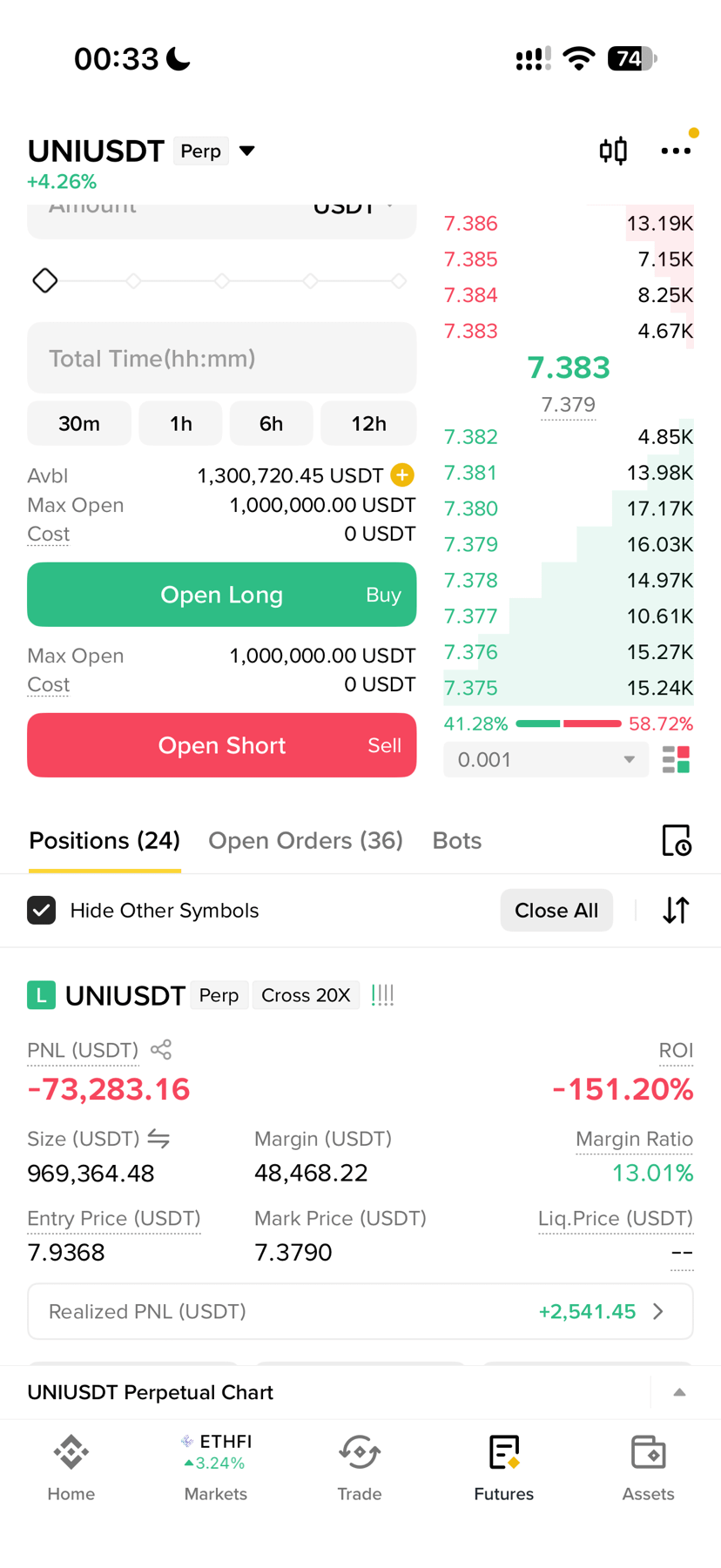
Personally, I feel $UNI is still undervalued. I have seen the Uniswap team making a lot of moves and really pushing forward lately. If Hyperliquid is the on-chain infrastructure for derivatives and the future of RWA finance, then Uni is the future's biggest on-chain spot trading venue, so I am still bullish on it. Of course, this is not financial advice.
Congratulations on ur futture win If u are feeling generous binance uid 37520600 Very grateful 💚💚🫶🏽 100 usd to support my trading I will provide weekly proof my activities
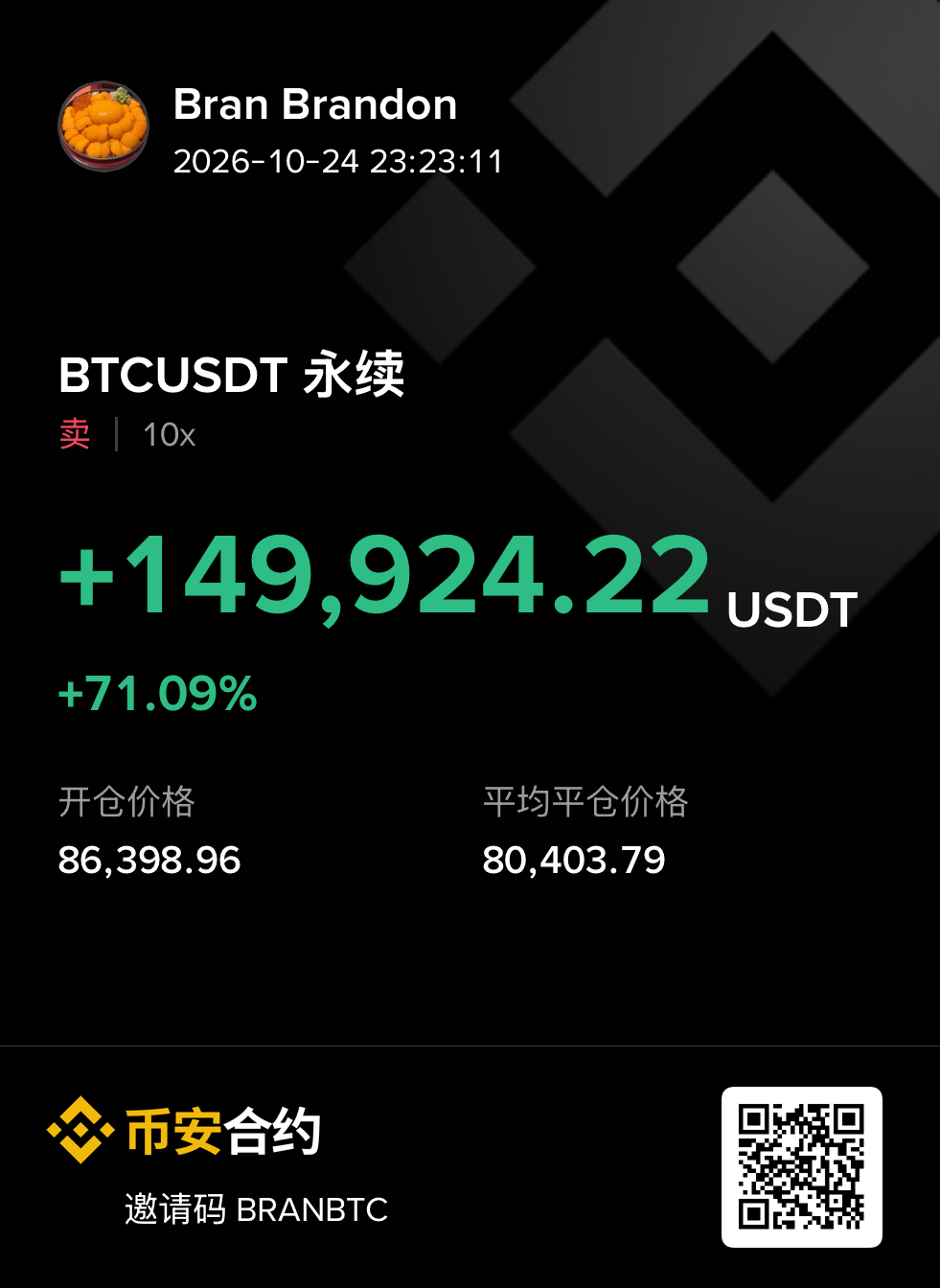
赚了亿点点
·
--
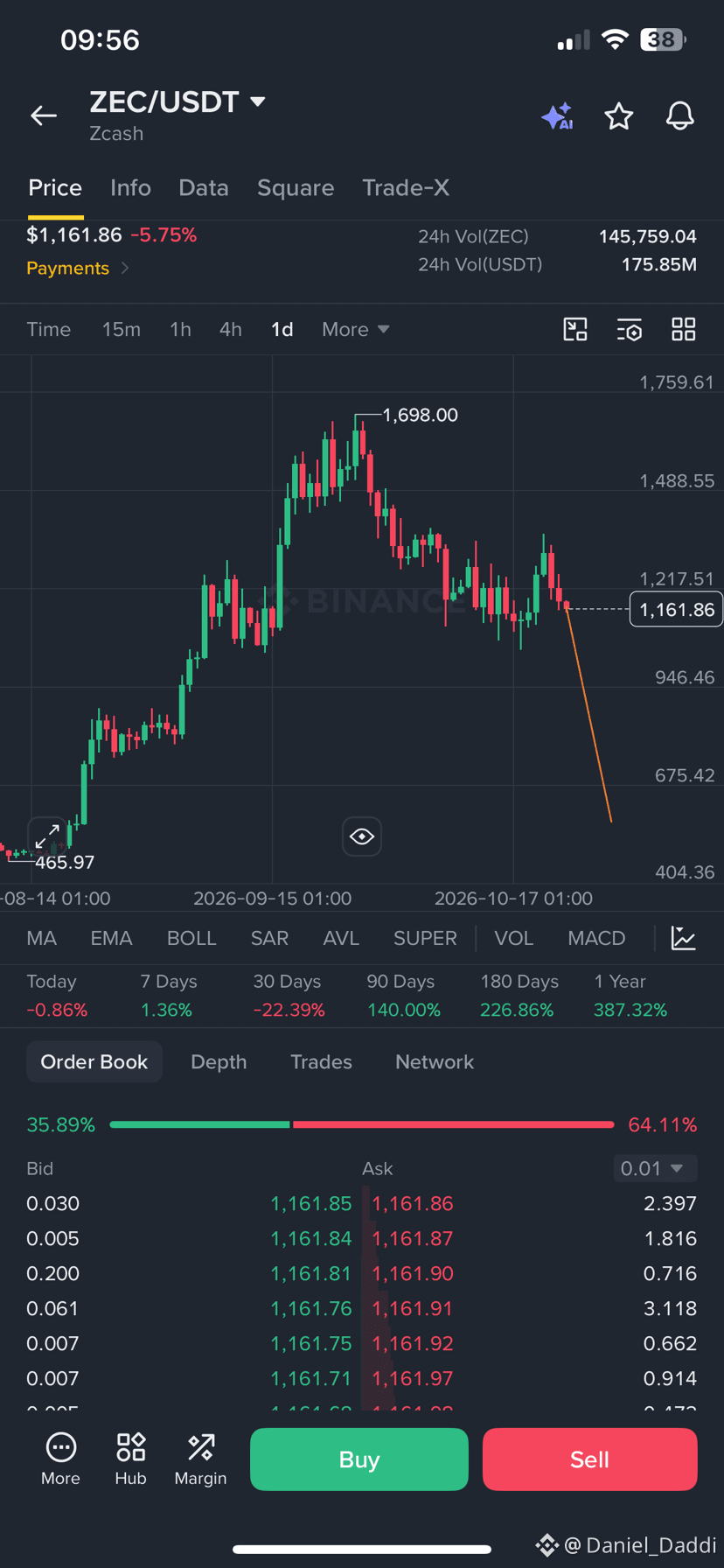
You're just a market-maker-controlled altcoin. Why are you pretending to be mainstream?! Never admit defeat! $ZEC

Congratulations on ur win If u are feeling generous binance uid 37520600 Very grateful 💚💚🫶🏽 100 usd to support my trading I will provide weekly proof my activities
Bran Brandon
·
--
Well, looks like I’ll have to get through another stretch without any orders. No orders and I’m bored; when there are orders, I get stressed.
If u are feeling generous binance uid 37520600 Very grateful 💚💚🫶🏽 1 bnb to support my trading I will provide weekly proof my activities
幸运鹅
·
--
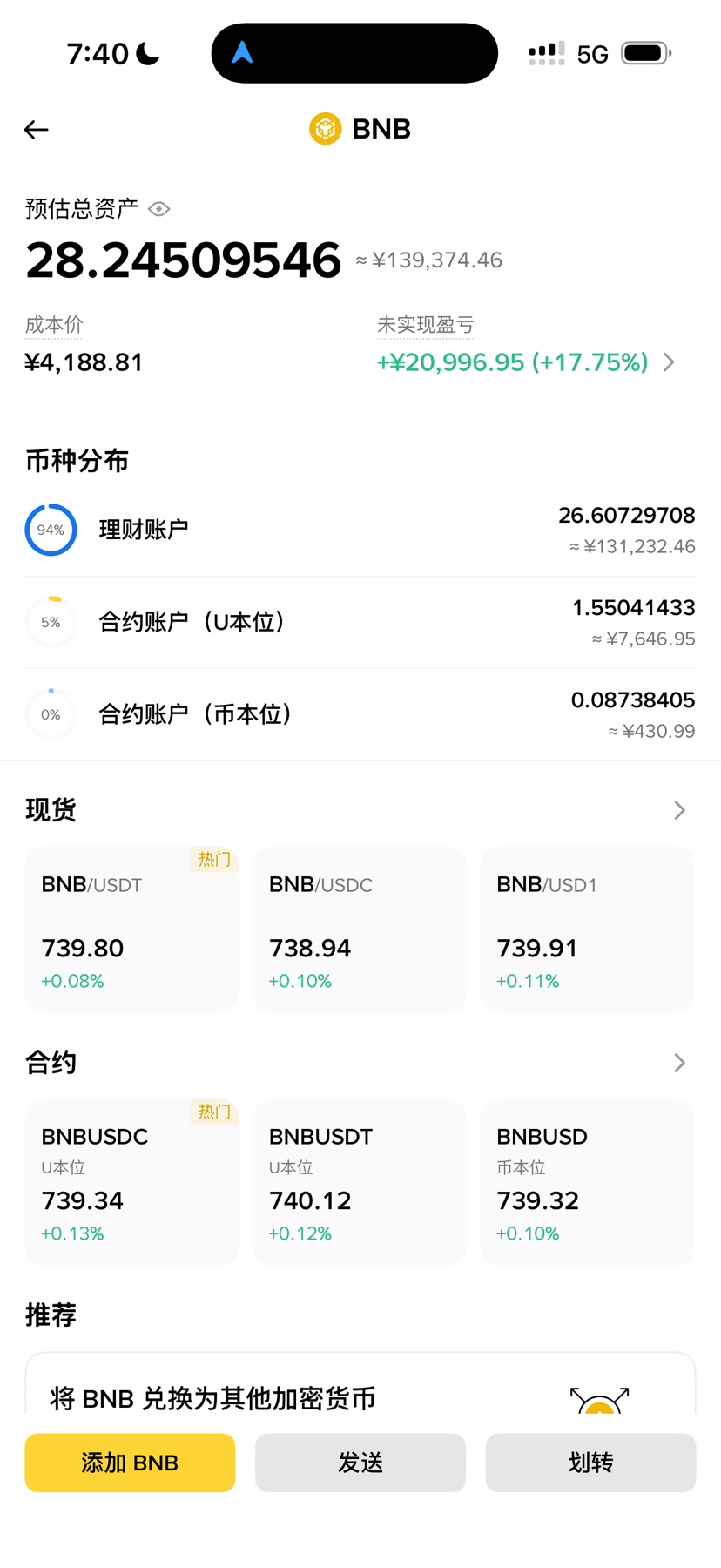
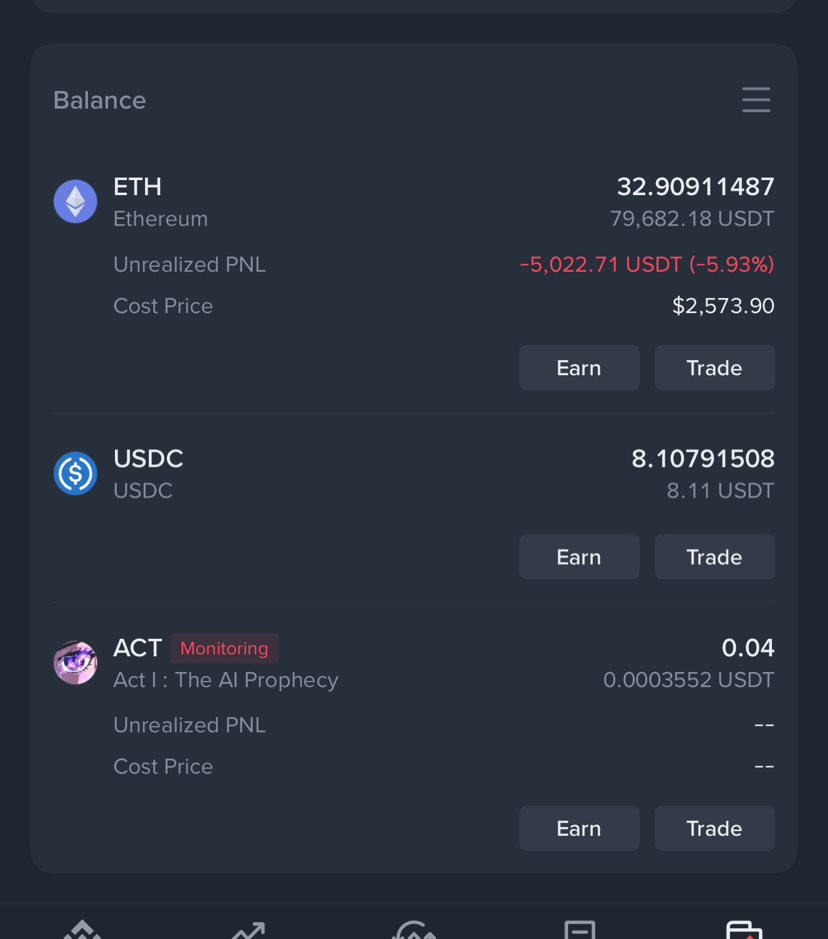
These 28 BNB were basically given away for free by the exchange, averaging a few a day... I don't even know what to do with them. There used to be airdrops for holding them, but now it seems like there's nothing anymore.

Congratulations on ur future wins If u are feeling generous binance uid 37520600 Very grateful 💚💚🫶🏽 100 usd to support my trading I will provide weekly proof my activities
赚了亿点点
·
--
Sure enough, it goes up every time I post. Go long whenever I post and you're guaranteed to make money! $ZEC
Congratulations on your win If u are feeling generous
binance uid
37520600
Very grateful 💚💚🫶🏽
100 usd to aid my trading journey
Luke Alpha
·
--
If you plan to invest in BTC and ETH for the long term, you must weather difficult periods and learn to accept market ups and downs as naturally as the changing of day and night.
Stay humble in good times and keep your composure in bad times. Don't get overly excited or discouraged by success or failure. Instead, do your best to get things done, and keep going as long as you can.
At this point, there’s no need to panic about BTC and ETH. You should build up your positions and continue buying spot at low prices.

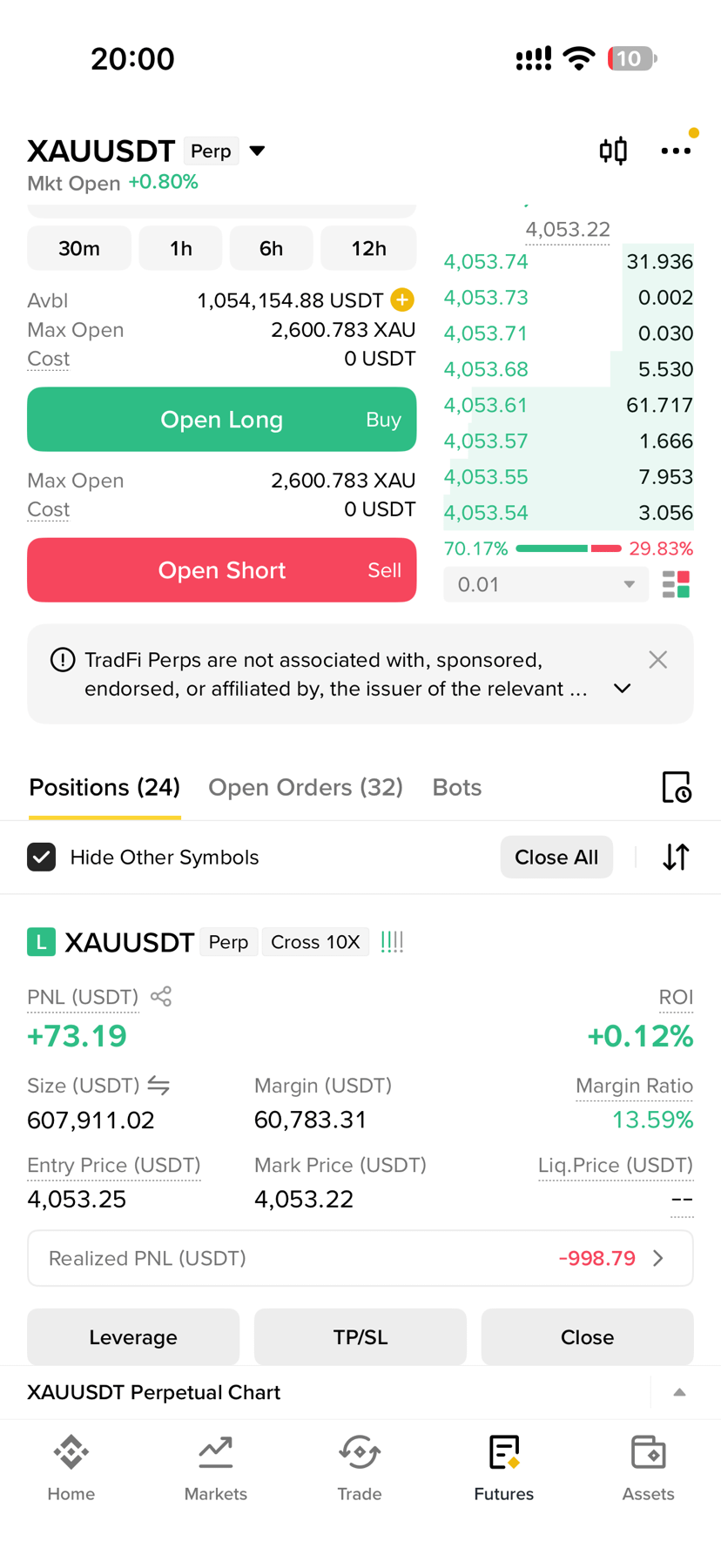
Why didn’t my position reduction at 1050 get filled? I lowered my limit price for reducing the position, and was so mad at myself that I spent a few days reflecting. I haven’t posted on the Square for several days. This time, I’m going to win back everything that belongs to me.$ZEC
Are sellers this blunt these days? I was just trying to buy some USDT!! They just kept showing off their wealth, bragging about how much they’d made on some small exchange and how perfectly they timed their trades. Has this happened to you?
I live with Friedreich ataxia, a progressive hereditary neurological condition that has steadily reduced my mobility, balance, coordination, and energy levels. Over time this made it increasingly difficult to keep regular jobs, as I could no longer reliably manage commuting, standing for long periods, or tasks that require stable fine motor control. I eventually lost previous employment opportunities because of these physical limitations. The same challenges forced me to withdraw from my studies at the 300 level at FUT Minna when my mobility and overall health declined to the point where continuing was no longer practical. Since then I have focused on building trading skills that I can practice independently from home. With the knowledge and experience I have developed, I am seeking 200usdt as starting capital to put those skills to work and begin generating income in a way that fits my physical situation. I am committed to using any support responsibly.