
每日更新
2.3k Posts

每日更新
Report
Block User
全网热点每日更新
Open Trade
Frequent Trader
8.9 Years
18 Following
143 Followers
177 Liked
Posts
Portfolio
·
--
What often makes people miss out isn’t that they didn’t buy a certain coin, but that you didn’t understand that the capital is being priced in a different way. What I care about most this cycle isn’t who’s pumping the hardest, but that capital is starting to reward assets that have real income and can endure through emotions. The narrative may rotate, but cash flow and users don’t lie. By the time the market reacts, the odds usually have already changed. What’s worth doing now is shifting your focus from the “next hot topic” to “who is quietly getting stronger when nobody’s talking about it.” #Crypto $ETH
$UNI
$UNI
2
110
·
--
Pay more attention to this @AscendLaunch
This event has so much prize money. Guys with ideas should take a look
I think this project is really awesome. You can still apply for the whitelist now. The method to apply for the whitelist is to keep participating by writing articles
Getting the whitelist is so hard to get. I really want one🥹
$BTC
100
·
--
The real torment isn’t the pullback, but watching someone else’s position move first while you still haven’t figured out the logic. Lately, the feeling has become increasingly strong: in this cycle, liquidity is no longer distributed evenly across every sector—it’s being concentrated on a small number of narratives, repeatedly being written and rewritten. No matter how deeply you research, if you misstep the main battlefield for your funds, you can only stand there helpless. So I’m focusing on two things now: where the money is gathering, and which sector can absorb the second wave of sentiment. What truly creates the gap is often not who gets in earlier, but who dares to take a heavy position when there’s disagreement, and who is willing to reduce exposure when there’s consensus. In this rotation, have you positioned yourself correctly? $BTC #Crypto
$UNI
$UNI
159
·
--
True signals often aren’t in the candlestick chart, but in whether you’re willing to admit that you can’t hold. When people do retrospectives, they always say, “The logic is right—it was just washed out.” The problem isn’t the logic; it’s the position size that makes you lose sleep. Once your position exceeds your psychological tolerance, any needle can force you to hand over your chips. My judgment framework is simple: first ask how much this loss is before I can still live normally, then ask how long I can hold without repeatedly checking the market. What gets you through volatility is never conviction—it’s a comfortable position size. $BTC #Crypto
$UNI
$UNI
113
·
--
In a bull market, the most dangerous sentence is: “Wait for the pullback, then I’ll buy.”
The problem is that truly strong assets rarely give you a comfortable entry. That deep pullback you’re waiting for often shows up after sentiment has already turned—not during the advance. At that point, the pullback isn’t a boarding opportunity; it’s a signal to get off.
I care more about a framework: the “quality” of a pullback matters more than the “magnitude.” Low volume and a quick reclaim, with the mainstream narrative still intact—that’s a shakeout. High volume, weak rebounds, and the topic starting to splinter—that’s when real hand-switching and distribution are happening. Same “down” move, completely different meaning.
Retail traders watch the price; smart money watches the structure.
So don’t keep asking, “Can it still be chased?” First ask yourself: Is the trend still intact? Has the narrative been disproven? These two answers determine your next profit range more than any entry price ever will. $BTC
$UNI
171
·
--
Most people stare at the candlestick chart to find an entry point, but ignore what truly determines profit and loss: how long you’re prepared to hold. With different time horizons, the same price level can be either a golden opportunity or a meat grinder. For short-term trades, look at sentiment; for medium-term trades, look at the narrative; for long-term trades, look at adoption. If you haven’t figured out which time horizon you’re standing in, any pullback can rattle you out. First define your holding logic, then talk about entries and exits—this is the foundation of a trading system. #Crypto $BTC
$UNI
$UNI
123
·
--
Fundamentals are undervalued
One of the top runners for the next Robinhood season.
The rules aren’t set by me.
$BTC
Fundamentals are undervalued
One of the top runners for the next Robinhood season.
The rules aren’t set by me.
$BTC
One of the top runners for the next Robinhood season.
The rules aren’t set by me.
$BTC
102
·
--
NetNet will conquer every different narrative.
Next up to conquer is the AI trading agent.
Al Dunlap will keep delivering until it trades a billion.
$NET WORLD ORDER https://t.co/JZ8llX92yl
NetNet will conquer every different narrative.
Next up to conquer is the AI trading agent.
Al Dunlap will keep delivering until it trades a billion.
$NET WORLD ORDER https://t.co/JZ8llX92yl
Next up to conquer is the AI trading agent.
Al Dunlap will keep delivering until it trades a billion.
$NET WORLD ORDER https://t.co/JZ8llX92yl

79
·
--
In a bull market, what’s easiest to overlook isn’t the coin you missed that went up—it’s that your position structure is quietly morphing. The part that performs best keeps growing as it compounds, but what you think is compounding is actually risk concentrating. What truly widens the return gap is often not choosing coins, but rebalancing. Periodically force yourself to trim a bit of the strong positions and add back the neglected sectors—sounds counterintuitive, but it keeps you with ammunition before rotation arrives. By the time everyone starts chasing the same narrative, the odds have already changed. Is the position you hold today the result of deliberate allocation, or are you simply being pushed along by the market? $BTC
$UNI
$UNI
173
·
--
What often really widens the gap between people isn’t whether they buy or not, but the cycle you use to evaluate this trade. On the daily chart, people get pushed around by volatility; on the weekly chart, people look at the structure. The same K-line, two different time frames—fate turns out completely differently. My judgment is: in this upcoming market cycle, most people’s losses won’t come from choosing the wrong asset, but from not being able to hold, chasing too high, or cutting too low. First make sure which stretch of money you’re actually going to profit from—then talk about position sizing and entries/exits. The window won’t keep waiting for you. Does the time frame you’re trading right now truly match your understanding? #Crypto $BTC
$UNI
$UNI
184
·
--
When the market is choppy and volatile, most people stare at the candlestick chart for direction, yet overlook an earlier-changing signal: the cost of narrative switching is declining. In the last bull market, it often took weeks for a sector to heat up from cold to hot; now, the pace at which capital and attention shift is clearly much faster, squeezing the window left for latecomers.
This also means the coin-picking logic is changing. It’s not about finding the “best project,” but about finding the “next corner that’s about to be repriced.” When a certain direction hasn’t been widely discussed yet, but on-chain activity and developer actions have already quietly started, the odds are often more worth researching than chasing a leadership token that has already run.
By the time everyone finally understands it, the price has usually already priced it in for you. What are you watching right now—just the excitement, or the change itself? $BTC #Crypto
$UNI
180
·
--
Wait, did Blast make a move before the Abstract announcement?💀
$BLAST
Wait, did Blast make a move before the Abstract announcement?💀
$BLAST
$BLAST
34
·
--
The truly dangerous thing isn’t a sharp drop—it’s when, during a sideways market, you start to feel, “There’s no opportunity anymore.”
Most people’s losses don’t end in chasing highs—they end in boredom. When the market cools off, your attention drifts, your position sizing starts getting reckless, and in the end you fire your bullets into a bunch of assets whose logic you can’t even clearly explain.
A sideways period is actually a filter. Who holds the structure while volume is shrinking? Who still has funds willing to step in even at the emotional low point? Those people are the seeds for the next leg of the market. When things are lively, everyone’s there; when it’s quiet, the order book is more honest.
Don’t rush to look for excitement. First, see who is still taken seriously when nobody is talking about it. By the time everyone understands, the odds are usually already different. $BTC #Crypto
$UNI
445
·
--
Many people stare at the candlestick charts for answers. In fact, the real signals are often hidden in “who is exiting and who is taking over.”
When the market is hottest, shares usually move from patient capital flows to emotional capital flows; when it’s coldest, someone may use time to create space instead.
I’m not too concerned about whether it goes up or down on a given day—I care more about whether a sector’s narrative has new entrants, whether there is genuine participation, and whether a self-reinforcing cycle has formed.
By the time everyone understands it, the odds have usually already changed. What you’re observing now: price, or the capital structure?$BTC #Crypto
$UNI
133
·
--
In a bull market, the most easily overlooked thing isn’t what to buy, but where you’re prepared to be when you do “nothing.”
The real gap in returns often comes from the most boring waiting period between two market rallies. Most people lose not because they missed opportunities, but because they grabbed too many.
My framework is simple: I only act on the three categories of signals that I can understand. The rest of the time, I leave the position empty. An empty position is still a position. The window won’t always stay gentle—when emotions reprice, the odds change.
In your trading system, is there a rule for “not trading”?$BTC #Crypto
$UNI
265
·
--
It’s been about 25 days since I’ve been in the trenches. I have to admit, this is the first time I’ve lost excitement and hope—and I’ll never feel the same again.
I’m tired of crypto.
$BTC
It’s been about 25 days since I’ve been in the trenches. I have to admit, this is the first time I’ve lost excitement and hope—and I’ll never feel the same again.
I’m tired of crypto.
$BTC
I’m tired of crypto.
$BTC
157
·
--
What makes me feel good is the effort I put into a goal. But in reality, I never really got anything. I mean, I don't know why. But this is the first time I've lost interest in cryptocurrency.
$BTC
What makes me feel good is the effort I put into a goal. But in reality, I never really got anything. I mean, I don't know why. But this is the first time I've lost interest in cryptocurrency.
$BTC
$BTC
218
·
--
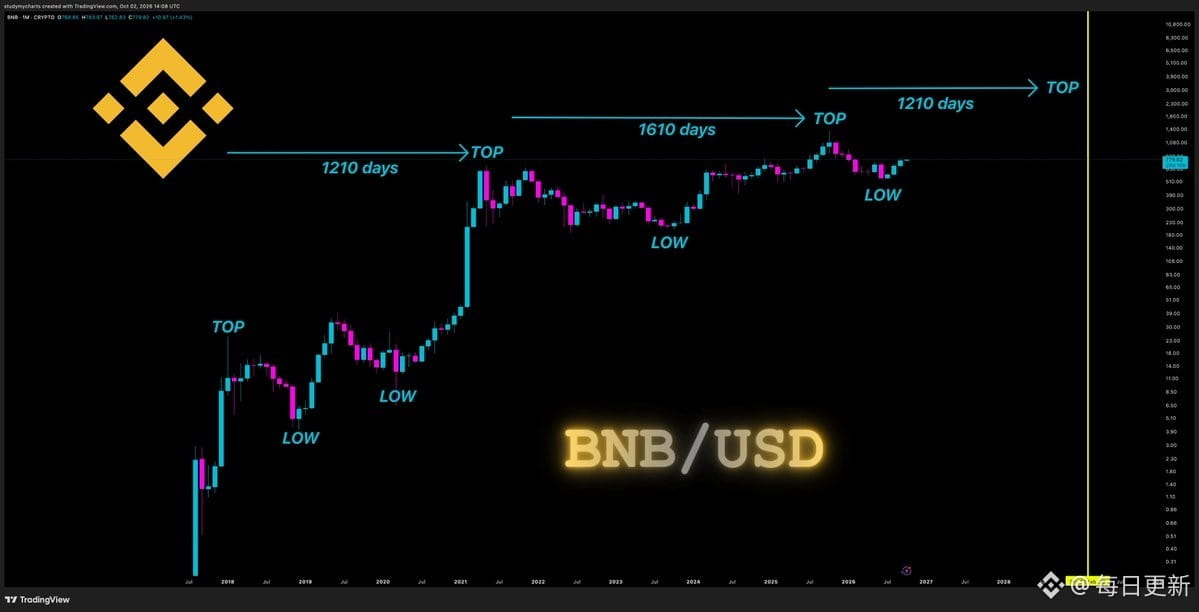
$BNB This cycle is easy up to $5000 https://t.co/pvY1YD5uNv
$BNB This cycle is easy up to $5000 https://t.co/pvY1YD5uNv
34
·
--
Curious about Robinhood: <t-0/>
Who is the developer of 0xedbf91223639800bcd5756815caf908df3b890be?
After 8 years on-chain, I rarely see such smooth delivery.
$ETH
Curious about Robinhood: <t-0/>
Who is the developer of 0xedbf91223639800bcd5756815caf908df3b890be?
After 8 years on-chain, I rarely see such smooth delivery.
$ETH
Who is the developer of 0xedbf91223639800bcd5756815caf908df3b890be?
After 8 years on-chain, I rarely see such smooth delivery.
$ETH
146
·
--
In our next issue of “The Things Heard in the Trenches”:
“I swear, if you buy directly instead of typing, you might really be able to make some money.”
$BTC
In our next issue of “The Things Heard in the Trenches”:
“I swear, if you buy directly instead of typing, you might really be able to make some money.”
$BTC
“I swear, if you buy directly instead of typing, you might really be able to make some money.”
$BTC
130
Log in to explore more content
Join global crypto users on Binance Square
⚡️ Get latest and useful information about crypto.
💬 Trusted by the world’s largest crypto exchange.
👍 Discover real insights from verified creators.
Email / Phone number
Trending Topics
Bitcoin'sReboundFadesBelow$60K
3,341 views
87 Discussing
#Bitcoin'sReboundFadesBelow$60K
$60K Is Not a Floor. Bitcoin Traders, Don't Get Trapped.
$BTC bounced to $64K, then the air came out. $60K is a coin flip, not a floor.
$BTC wicked down to ~$55.3K over the weekend, ripped back toward $64.5K, then sold off again. Now it's chopping around $60K, with a daily close near $60.6K and an intraday low at $59.4K.
That's not a reversal. It's a market catching its breath.
What I'm watching:
Sentiment: Split between fear and dip-buyers. Green candles are short, and nobody is defending them.
Exchange flows: Large $BTC withdrawals from exchanges below $60K point to long-term accumulation or custody. Useful context, but it's slow money. It doesn't stop short-term sellers from hitting every pop.
Resistance: Overhead supply is real. Price keeps stalling near ~$61.5K on the daily, while the $64.5K wick was rejected hard.
Higher targets: Above that, equilibrium sits around $70–72K, with the weekly trend line near ~$79.8K.
Support: $55–59K (weekly demand plus the $55.3K sweep low). A weekly close below this zone makes the structure uglier.
Relief bounce vs. confirmed reversal:
Bounce: Price rises into resistance while volume fades.
Reversal: A strong daily/weekly close above the $64.5K rejection high, expanding volume, and a clean hold on the retest.
We have none of that yet.
Until then, $60K is a magnet, and magnets whipsaw leveraged traders in both directions. Catching the bottom with high leverage here just pays the market to stop you out.
💡 Square Insight: No confirmation, no Futures FOMO. Use limit orders at levels you planned in advance, and split Spot buys (DCA) across the range so one wick doesn't decide your whole position.
❓ Are you accumulating Spot in the $55–60K zone, or waiting for a weekly close above $64.5K first?
NFA / DYOR.
#bitcoin $BTC
TuilaNamKy
·0 Likes
·96 views
NVIDIAReinstatesJensenHuangasCEO
217,881 views
1,467 Discussing
WillMarketsStageAThanksgivingReliefRally?
304,980 views
2,288 Discussing