

cryptos talker
45 Posts
 LIVE
cryptos talker
Report
Block User
8 Following
67 Followers
27 Liked
Posts
Portfolio
All
Quotes
Live
·
--
Bullish
🚀 IREN/USDT — BULLISH LONG SETUP 📈
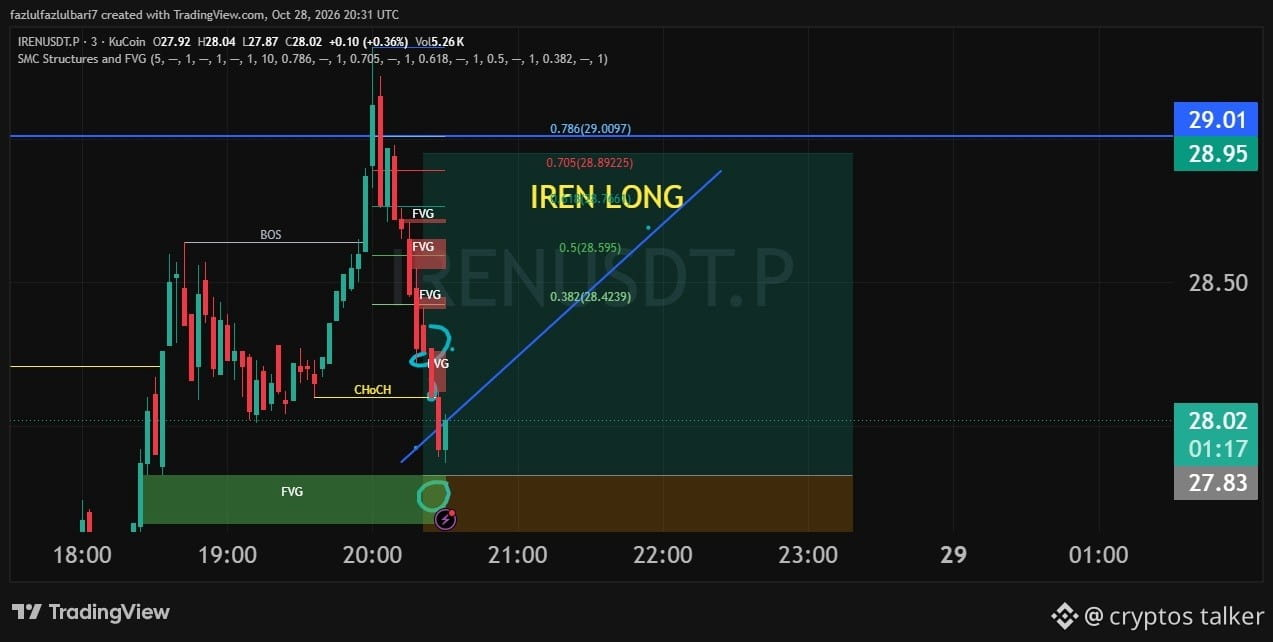
IREN is showing a potential bullish reversal opportunity on the 3-minute chart! 🔥
After a sharp pullback, price is approaching a key demand zone around 27.83–28.00, where buyers could step in and push the price higher.
🎯 Potential Targets:
TP1: 28.42
TP2: 28.60
TP3: 28.89
TP4: 29.01
🛡️ Key Support: 27.83
📈 Bullish Bias: A strong bounce from the demand zone could trigger an upside move.
⚠️ Important: Wait for bullish confirmation before entering. If price breaks below the support zone, the setup may be invalidated.
Will IREN pump toward $29.00? 👀🚀
#IREN #IRENUSDT #CryptoTrading #TechnicalAnalysis #TradingSignals #Altcoins
$IREN
{future}(IRENUSDT)
🚀 IREN/USDT — BULLISH LONG SETUP 📈
IREN is showing a potential bullish reversal opportunity on the 3-minute chart! 🔥
After a sharp pullback, price is approaching a key demand zone around 27.83–28.00, where buyers could step in and push the price higher.
🎯 Potential Targets:
TP1: 28.42
TP2: 28.60
TP3: 28.89
TP4: 29.01
🛡️ Key Support: 27.83
📈 Bullish Bias: A strong bounce from the demand zone could trigger an upside move.
⚠️ Important: Wait for bullish confirmation before entering. If price breaks below the support zone, the setup may be invalidated.
Will IREN pump toward $29.00? 👀🚀
#IREN #IRENUSDT #CryptoTrading #TechnicalAnalysis #TradingSignals #Altcoins
$IREN
83
·
--
Bearish
📉 BTC SHORT SETUP — MORE DOWNSIDE EXPECTED! 🐻
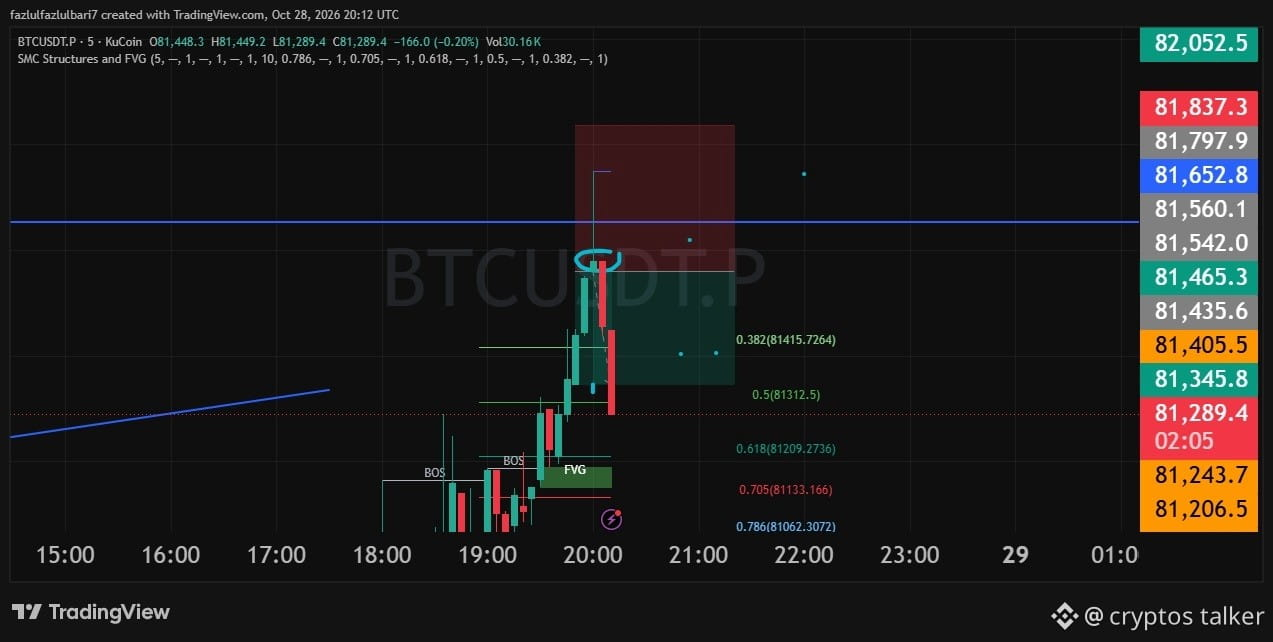
BTC faced strong rejection near the $81,465–$81,540 resistance zone, followed by a sharp bearish candle. More downside could be coming if sellers maintain control.
🎯 Short Targets:
TP1: $81,210
TP2: $81,130
TP3: $81,060
🛑 Invalidation: Above $81,560–$81,650
⚠️ Watch for a weak retest before entering. A break below $81,200 could strengthen bearish momentum.
#BTC #Bitcoin #CryptoTrading #TechnicalAnalysis #BTCUSDT $BTC
143
·
--
Bullish
btc📊 BTC/USDT Technical Analysis | Binance
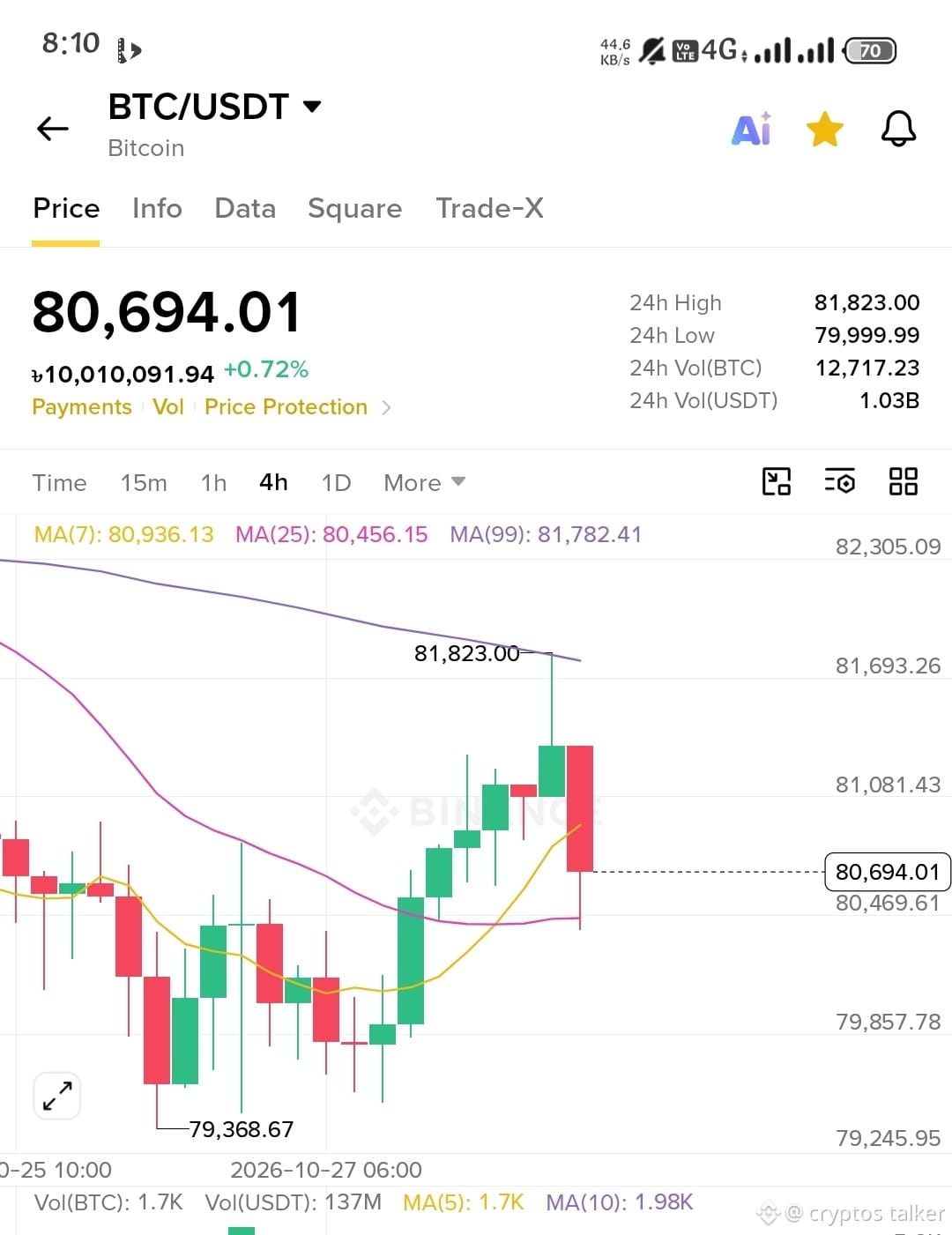
Bitcoin is approaching a key resistance zone. Traders should watch for a confirmed breakout or rejection before entering a position.
🔹 Resistance Levels:
• R1: $81,400–$81,600
• R2: $81,960–$82,000
• R3: $83,100
🔹 Support Levels:
• S1: $80,150–$80,570
• S2: $79,200–$79,850
• S3: $78,100–$78,800
🟢 Bullish Scenario: A confirmed breakout above $81,960 could open the door toward $82,400 and $83,100.
🔴 Bearish Scenario: A breakdown below $80,150 could lead to further downside toward $79,500.
⚠️ Trading Strategy: Wait for confirmation, manage your risk, and avoid emotional entries. These levels are potential scenarios, not guaranteed predictions.
💬 What's your BTC prediction? $83K or $79K first?
#BTC #Bitcoin #Binance #CryptoAnalysis #BTCUSDT #TechnicalAnalysis #CryptoTrading
$BTC $
111
BTC/USDT Technical Analysis 📊
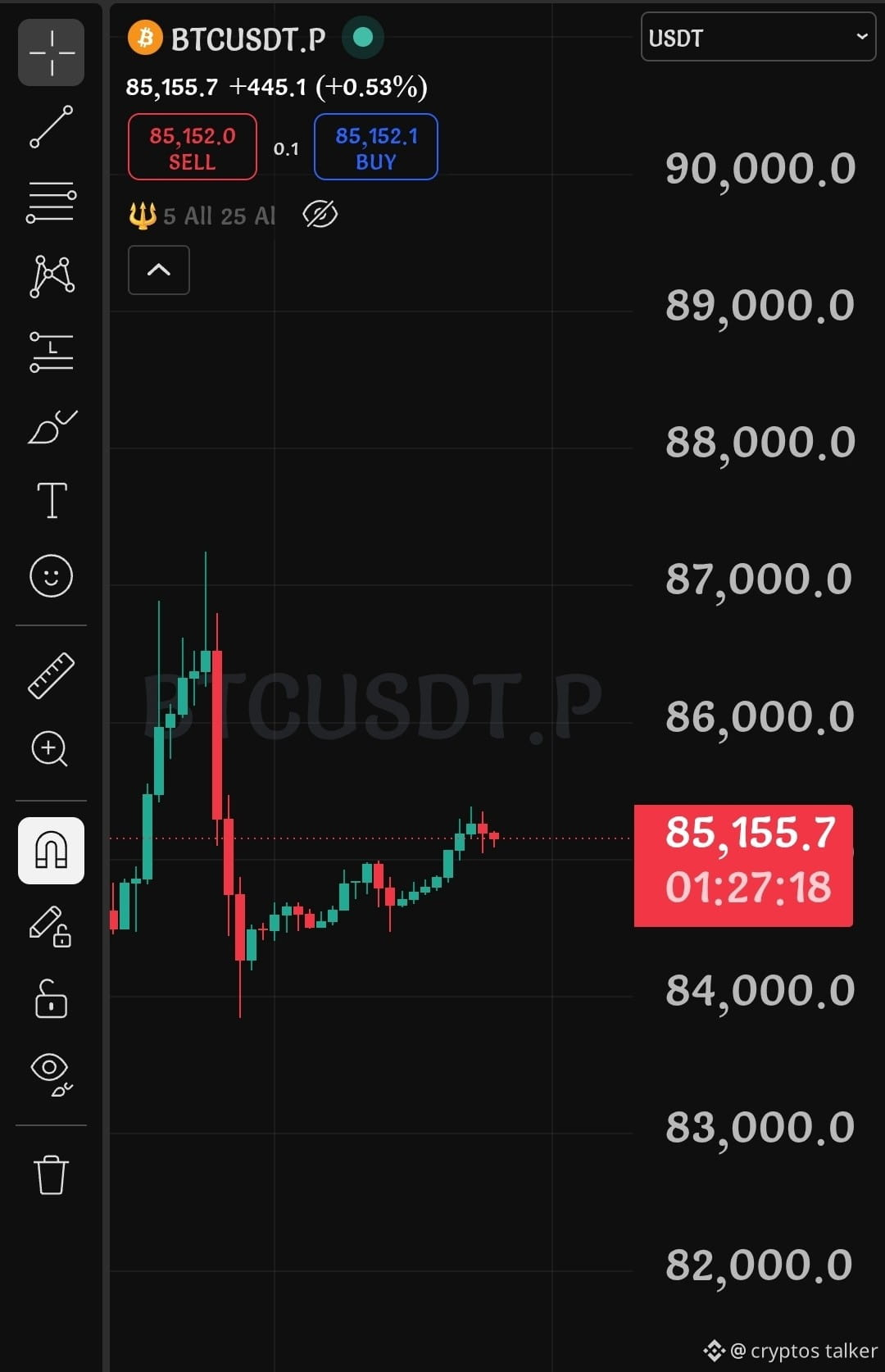
Current Price: ~$85,155
🟢 LONG Trade Setup
Entry: $85,000 – $85,200
TP1: $85,500
TP2: $86,000
TP3: $86,500
Stop Loss: $84,650
Key Levels
Resistance: $85,400–$85,600
Next Resistance: $86,000 / $86,500
Support: $84,700–$84,800
Major Support: $84,200–$84,400
Analysis: BTC is showing a short-term bullish recovery with higher lows after bouncing from the $84K area. A clean breakout and retest above $85,500 could trigger further upside toward $86K–$86.5K.
⚠️ Invalidation: If BTC breaks and closes below $84,650, the bullish setup becomes invalid and downside toward $84,200–$83,800 becomes possible.
Bias: 🟢 Slightly Bullish
Use proper risk management; this is a technical setup, not financial advice.
$BTC
{future}(BTCUSDT)
BTC/USDT Technical Analysis 📊
Current Price: ~$85,155
🟢 LONG Trade Setup
Entry: $85,000 – $85,200
TP1: $85,500
TP2: $86,000
TP3: $86,500
Stop Loss: $84,650
Key Levels
Resistance: $85,400–$85,600
Next Resistance: $86,000 / $86,500
Support: $84,700–$84,800
Major Support: $84,200–$84,400
Analysis: BTC is showing a short-term bullish recovery with higher lows after bouncing from the $84K area. A clean breakout and retest above $85,500 could trigger further upside toward $86K–$86.5K.
⚠️ Invalidation: If BTC breaks and closes below $84,650, the bullish setup becomes invalid and downside toward $84,200–$83,800 becomes possible.
Bias: 🟢 Slightly Bullish
Use proper risk management; this is a technical setup, not financial advice.
$BTC
78
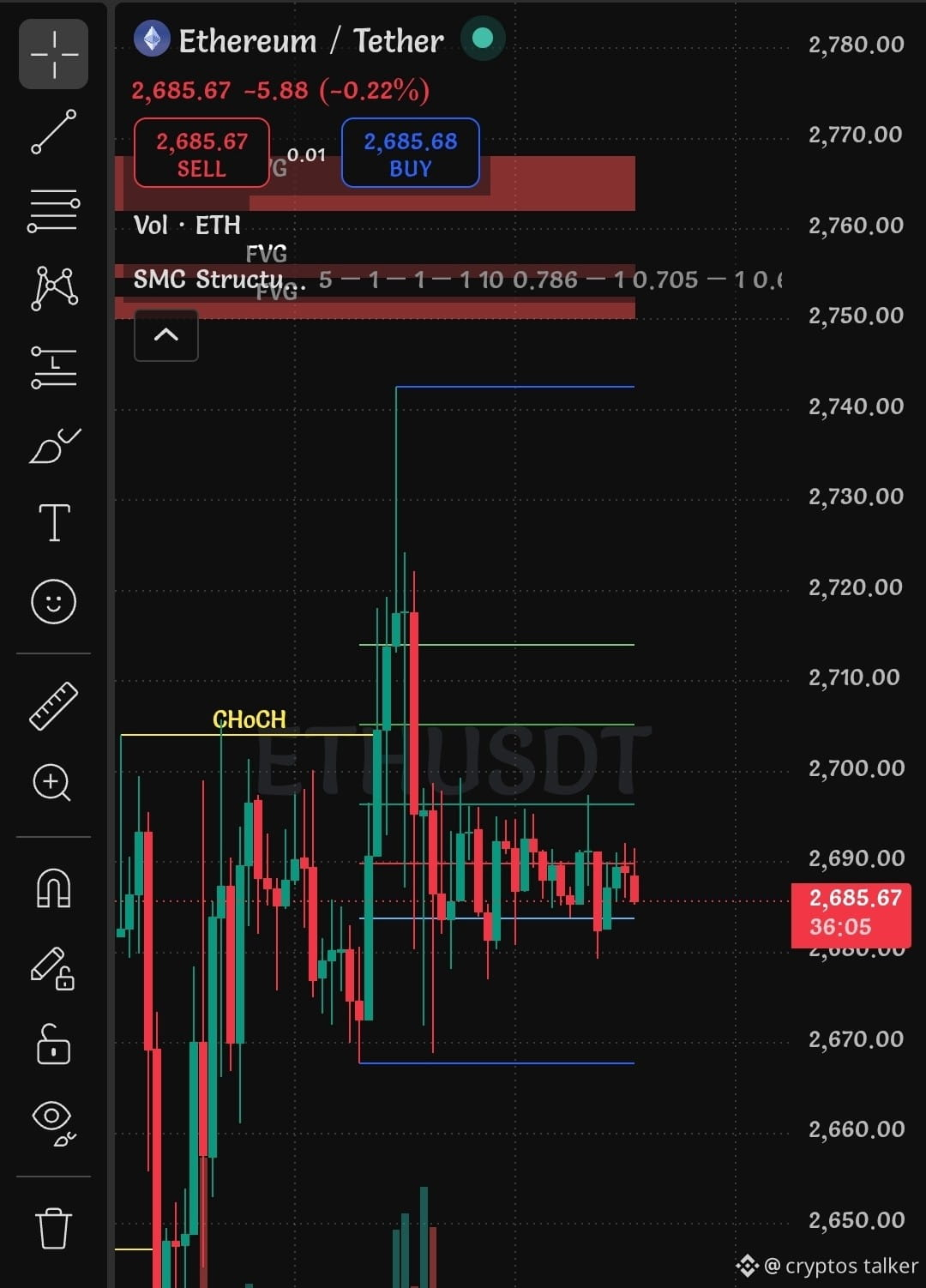
🔵 ETH/USDT — Technical Analysis
Current Price: ~$2,690
Ethereum is currently trading near the $2,700 psychological resistance. ETH has been showing relatively strong recovery momentum, but bulls still need to break the immediate resistance zone to confirm further upside.
Key Resistance Levels:
$2,705
$2,775
$2,825
$3,000–$3,050
Key Support Levels:
$2,650
$2,600
$2,560
$2,450
Technical Outlook:
If ETH successfully breaks and holds above $2,705–$2,775, bullish momentum could accelerate. The next important targets would be $2,825, followed by the psychological $3,000 level.
However, rejection around $2,700–$2,775 could bring ETH back toward $2,650–$2,600. A decisive break below $2,560 would weaken the current bullish structure.
Prediction:
My short-term prediction is bullish above $2,650. If ETH confirms a breakout above $2,775, I would watch the $2,825–$3,050 zone next.
Trade Idea:
🟢 Long above $2,775
🎯 TP1: $2,825
🎯 TP2: $2,900
🎯 TP3: $3,000
🛑 SL: Below $2,680
This is technical analysis, not financial advice.
{future}(ETHUSDT)
🔵 ETH/USDT — Technical Analysis
Current Price: ~$2,690
Ethereum is currently trading near the $2,700 psychological resistance. ETH has been showing relatively strong recovery momentum, but bulls still need to break the immediate resistance zone to confirm further upside.
Key Resistance Levels:
$2,705
$2,775
$2,825
$3,000–$3,050
Key Support Levels:
$2,650
$2,600
$2,560
$2,450
Technical Outlook:
If ETH successfully breaks and holds above $2,705–$2,775, bullish momentum could accelerate. The next important targets would be $2,825, followed by the psychological $3,000 level.
However, rejection around $2,700–$2,775 could bring ETH back toward $2,650–$2,600. A decisive break below $2,560 would weaken the current bullish structure.
Prediction:
My short-term prediction is bullish above $2,650. If ETH confirms a breakout above $2,775, I would watch the $2,825–$3,050 zone next.
Trade Idea:
🟢 Long above $2,775
🎯 TP1: $2,825
🎯 TP2: $2,900
🎯 TP3: $3,000
🛑 SL: Below $2,680
This is technical analysis, not financial advice.
57
📊 BTC/USDT Technical Analysis
Bitcoin is currently showing strong bullish momentum after reclaiming the $77K area.
🔹 Resistance: $78.5K – $80K
🔹 Next Target: $81.5K – $82K
🔹 Support: $77K – $76.5K
🔹 Major Support: $75.5K – $74.7K
If BTC breaks and holds above $80K, we could see further upside toward the $82K zone.
However, rejection around $78.5K–$80K could trigger a pullback toward $77K–$76.5K. A strong breakdown below $76.5K would weaken the current bullish structure.
📌 Key Point: Wait for breakout confirmation or a support retest instead of chasing the move.
⚠️ This is technical analysis, not financial advice. Always manage your risk.
77

Article
Crypto market insightThe cryptocurrency market is currently moving through an interesting phase that many experienced traders often recognize as a transition period. Rather than witnessing explosive price action across the board, the market appears to be building a foundation for its next significant move. These quieter periods are often overlooked by newcomers, yet they are frequently the moments when the most important structural shifts begin to develop beneath the surface.
Bitcoin continues to act as the primary driver of the overall crypto market. As the largest and most influential digital asset, its movements tend to dictate the direction of the broader ecosystem. Recently, Bitcoin has been trading within a relatively tight range, fluctuating between key support and resistance levels. While this may appear uneventful at first glance, such consolidation phases often serve an important purpose. They allow the market to absorb previous gains, remove excessive leverage, and establish stronger support zones that can sustain future growth.
Periods of consolidation can sometimes create frustration for traders who are constantly searching for rapid price movements. However, seasoned market participants understand that these phases are a natural and necessary part of any healthy market cycle. When prices move too quickly without pauses, the risk of sharp corrections increases significantly. By contrast, gradual and controlled price movements often result in stronger long-term trends.
Ethereum, the second-largest cryptocurrency by market capitalization, continues to demonstrate resilience as well. Beyond its price action, Ethereum’s importance lies in its role as the backbone of decentralized applications, decentralized finance (DeFi), and the rapidly expanding ecosystem of blockchain-based services. Developers continue to build innovative solutions on the Ethereum network, and institutional interest in the platform remains strong. As adoption grows, Ethereum’s influence over the broader altcoin market becomes even more apparent.
Many analysts observe that Ethereum often acts as a bridge between Bitcoin and the rest of the altcoin market. In many market cycles, capital first flows into Bitcoin as investors seek relative safety and liquidity. Once Bitcoin stabilizes or begins trending upward, attention gradually shifts toward Ethereum. Eventually, this momentum spreads into smaller altcoins, creating the well-known “altcoin season” that many traders anticipate.
Beyond the major cryptocurrencies, several emerging sectors within the crypto space are beginning to attract increasing attention. Artificial intelligence tokens, decentralized infrastructure projects, and real-world asset tokenization platforms are slowly gaining traction among investors. While not every project will succeed, these narratives often help shape the direction of capital flows during different phases of the market cycle.
Another important factor influencing the current market environment is psychology. Market sentiment plays a powerful role in determining short-term price movements. Fear and uncertainty often dominate during consolidation phases, leading some traders to exit positions prematurely. At the same time, more patient investors use these periods to gradually accumulate assets at favorable prices.
Historically, bull markets rarely move in straight lines. Instead, they progress through a series of expansions, corrections, and consolidations. Each stage serves a different function within the broader cycle. Corrections help remove excessive speculation, while consolidations allow stronger market participants to build positions before the next upward movement begins.
Liquidity is another key element that shapes market behavior. Over the past few years, institutional participation in the cryptocurrency market has grown steadily. Large financial institutions, hedge funds, and asset managers are increasingly exploring digital assets as part of their broader investment strategies. As liquidity enters the market, it tends to spread across multiple sectors rather than concentrating solely on one asset.
This diversification of capital can lead to shifting narratives within the market. At different times, specific sectors capture the attention of traders and investors. For example, decentralized finance dominated headlines during one phase, while NFTs and gaming tokens became prominent in another. More recently, artificial intelligence and blockchain infrastructure projects have begun attracting renewed interest.
Despite these changing narratives, one consistent principle remains true: patience is often one of the most valuable strategies in crypto markets. Many traders lose potential profits not because they make incorrect predictions, but because they exit positions too early due to short-term volatility. Successful investors often focus on long-term trends rather than reacting to every minor price movement.
Risk management is equally important. The cryptocurrency market is known for its volatility, and price swings can occur quickly. Maintaining balanced position sizes, avoiding excessive leverage, and diversifying investments across multiple assets are all strategies that help reduce risk during uncertain periods.
From a broader perspective, the current market structure appears to be forming a gradual accumulation phase. Large investors often accumulate assets quietly during these periods when public interest remains relatively low. Once market sentiment shifts and momentum begins to build, prices can move rapidly as new participants enter the market.
Technological development also continues to strengthen the foundation of the crypto ecosystem. Advances in scalability solutions, cross-chain interoperability, and decentralized infrastructure are improving the usability and efficiency of blockchain networks. These improvements make the technology more accessible to businesses, developers, and everyday users.
Looking ahead, the future of the cryptocurrency market will likely be shaped by several key factors. Regulatory clarity, technological innovation, institutional adoption, and macroeconomic conditions all play important roles in determining how the market evolves over time. While short-term volatility is inevitable, the long-term trajectory of the industry continues to be driven by increasing adoption and expanding use cases.
For now, the most important approach for market participants may be observation and preparation. Opportunities in crypto rarely appear when conditions feel comfortable. Instead, they often emerge during periods of uncertainty when sentiment is mixed and the direction of the market is not yet clear.
Those who remain patient, disciplined, and informed during these phases are often the ones best positioned to benefit when the next major trend begins to unfold. The cryptocurrency market has repeatedly demo$BTC nstrated that preparation during quiet periods can lead to significant opportunities once momentum returns.
In the end, the current market environment should not necessarily be viewed as stagnant or uneventful. Rather, it may represent a transitional stage where the groundwork for future growth is gradually being established. As the ecosystem continues to mature and innovation accelerates, the crypto market may once again surprise participants with its ability to evolve and expand in unexpected ways.$ETH
Crypto market insight
The cryptocurrency market is currently moving through an interesting phase that many experienced traders often recognize as a transition period. Rather than witnessing explosive price action across the board, the market appears to be building a foundation for its next significant move. These quieter periods are often overlooked by newcomers, yet they are frequently the moments when the most important structural shifts begin to develop beneath the surface.
Bitcoin continues to act as the primary driver of the overall crypto market. As the largest and most influential digital asset, its movements tend to dictate the direction of the broader ecosystem. Recently, Bitcoin has been trading within a relatively tight range, fluctuating between key support and resistance levels. While this may appear uneventful at first glance, such consolidation phases often serve an important purpose. They allow the market to absorb previous gains, remove excessive leverage, and establish stronger support zones that can sustain future growth.
Periods of consolidation can sometimes create frustration for traders who are constantly searching for rapid price movements. However, seasoned market participants understand that these phases are a natural and necessary part of any healthy market cycle. When prices move too quickly without pauses, the risk of sharp corrections increases significantly. By contrast, gradual and controlled price movements often result in stronger long-term trends.
Ethereum, the second-largest cryptocurrency by market capitalization, continues to demonstrate resilience as well. Beyond its price action, Ethereum’s importance lies in its role as the backbone of decentralized applications, decentralized finance (DeFi), and the rapidly expanding ecosystem of blockchain-based services. Developers continue to build innovative solutions on the Ethereum network, and institutional interest in the platform remains strong. As adoption grows, Ethereum’s influence over the broader altcoin market becomes even more apparent.
Many analysts observe that Ethereum often acts as a bridge between Bitcoin and the rest of the altcoin market. In many market cycles, capital first flows into Bitcoin as investors seek relative safety and liquidity. Once Bitcoin stabilizes or begins trending upward, attention gradually shifts toward Ethereum. Eventually, this momentum spreads into smaller altcoins, creating the well-known “altcoin season” that many traders anticipate.
Beyond the major cryptocurrencies, several emerging sectors within the crypto space are beginning to attract increasing attention. Artificial intelligence tokens, decentralized infrastructure projects, and real-world asset tokenization platforms are slowly gaining traction among investors. While not every project will succeed, these narratives often help shape the direction of capital flows during different phases of the market cycle.
Another important factor influencing the current market environment is psychology. Market sentiment plays a powerful role in determining short-term price movements. Fear and uncertainty often dominate during consolidation phases, leading some traders to exit positions prematurely. At the same time, more patient investors use these periods to gradually accumulate assets at favorable prices.
Historically, bull markets rarely move in straight lines. Instead, they progress through a series of expansions, corrections, and consolidations. Each stage serves a different function within the broader cycle. Corrections help remove excessive speculation, while consolidations allow stronger market participants to build positions before the next upward movement begins.
Liquidity is another key element that shapes market behavior. Over the past few years, institutional participation in the cryptocurrency market has grown steadily. Large financial institutions, hedge funds, and asset managers are increasingly exploring digital assets as part of their broader investment strategies. As liquidity enters the market, it tends to spread across multiple sectors rather than concentrating solely on one asset.
This diversification of capital can lead to shifting narratives within the market. At different times, specific sectors capture the attention of traders and investors. For example, decentralized finance dominated headlines during one phase, while NFTs and gaming tokens became prominent in another. More recently, artificial intelligence and blockchain infrastructure projects have begun attracting renewed interest.
Despite these changing narratives, one consistent principle remains true: patience is often one of the most valuable strategies in crypto markets. Many traders lose potential profits not because they make incorrect predictions, but because they exit positions too early due to short-term volatility. Successful investors often focus on long-term trends rather than reacting to every minor price movement.
Risk management is equally important. The cryptocurrency market is known for its volatility, and price swings can occur quickly. Maintaining balanced position sizes, avoiding excessive leverage, and diversifying investments across multiple assets are all strategies that help reduce risk during uncertain periods.
From a broader perspective, the current market structure appears to be forming a gradual accumulation phase. Large investors often accumulate assets quietly during these periods when public interest remains relatively low. Once market sentiment shifts and momentum begins to build, prices can move rapidly as new participants enter the market.
Technological development also continues to strengthen the foundation of the crypto ecosystem. Advances in scalability solutions, cross-chain interoperability, and decentralized infrastructure are improving the usability and efficiency of blockchain networks. These improvements make the technology more accessible to businesses, developers, and everyday users.
Looking ahead, the future of the cryptocurrency market will likely be shaped by several key factors. Regulatory clarity, technological innovation, institutional adoption, and macroeconomic conditions all play important roles in determining how the market evolves over time. While short-term volatility is inevitable, the long-term trajectory of the industry continues to be driven by increasing adoption and expanding use cases.
For now, the most important approach for market participants may be observation and preparation. Opportunities in crypto rarely appear when conditions feel comfortable. Instead, they often emerge during periods of uncertainty when sentiment is mixed and the direction of the market is not yet clear.
Those who remain patient, disciplined, and informed during these phases are often the ones best positioned to benefit when the next major trend begins to unfold. The cryptocurrency market has repeatedly demo$BTC nstrated that preparation during quiet periods can lead to significant opportunities once momentum returns.
In the end, the current market environment should not necessarily be viewed as stagnant or uneventful. Rather, it may represent a transitional stage where the groundwork for future growth is gradually being established. As the ecosystem continues to mature and innovation accelerates, the crypto market may once again surprise participants with its ability to evolve and expand in unexpected ways.$ETH
1
48
Log in to explore more content
Join global crypto users on Binance Square
⚡️ Get latest and useful information about crypto.
💬 Trusted by the world’s largest crypto exchange.
👍 Discover real insights from verified creators.
Email / Phone number
Trending Topics
FedWatch
16.2M views
38,815 Discussing
🚨 BREAKING: THE US ECONOMY JUST BEAT ON EVERYTHING. THAT IS THE WORST NEWS FOR YOUR PORTFOLIO.
GDP Q3: 3.4% vs 3.2% expected. Previous: 2.2%
Jobless claims: 194K vs 199K expected. Previous: 194K
PCE inflation: 3.6%, as expected. Previous: 3.4%
Strong growth. Almost no layoffs. Inflation going UP, not down. The Fed has zero reason to stop, and a December hike is priced near 80%.
In this market, good news for the economy is bad news for stocks and crypto. PCE in line is not a relief, it is 0.2 points higher than last month.
Rate cut hopes are dead. Stay alert.
12 years in these markets. This is what I do.
Follow me and turn notifications on.
#FedWatch
#EarningsSeason
#Nasdaq100FuturesFall0.9%
$BTC
$SOL
$SUI
MARKET STRUCTURE GUIDE
·4 Likes
·1.2k views
EarningsSeason
6.3M views
31,536 Discussing
USMidtermElections
12,591 views
334 Discussing