
Hassan v277
731 Posts

Hassan v277
Report
Block User
Hlw Assalamualaikum I am posting daily fresh News follow me for daily News
Open Trade
Frequent Trader
3.8 Years
1 Following
238 Followers
1.0K+ Liked
Posts
Portfolio
All
Quotes
Videos
·
--
Binance users withdraw $3.6bn after largest-ever crypto hack
Binance customers withdrew $3.6bn (£2.7bn) of assets from the world's biggest cryptocurrency exchange as it reopened on Sunday following what is believed to be the largest hack in history.
The firm suspended all transactions in the wake of the incident, which impacted $6.3bn worth of digital assets.
Major organisations, including the US Federal Bureau of Investigation (FBI), have accused North Korea of being responsible for the cyber-attack.
The company said it has covered around 95% of the assets stolen in the breach but the remaining amount may take longer to source. Binance has repeatedly said it would cover all of the losses linked to the attack.
Binance said on X: "Between 06:00 and 15:30 [GMT] on November 1, we processed $4.649 billion in withdrawals and $1.01 billion in deposits, resulting in a net outflow of approximately $3.64 billion."
There was an "initial spike" in withdrawals, which later declined and "are stabilising as expected", it added.
Sunday's net withdrawals account for just over 2% of the $171bn of assets under its management, said Binance.
The firm said last week that it has reserved more than $6.3bn in funds, to deal with the fallout of the attack.

64
·
--
Crypto firm Binance covers 90% of losses after $6.3bn hack
Binance, the world's largest cryptocurrency exchange, says it has covered 90% of the $6.3bn (£4.7bn) assets stolen in a hack on Thursday.
The remaining 10% may take longer to source in the required amounts, the company added.
Binance has consistently pledged to cover 100% of the losses from what is suspected to be crypto's biggest hack on record and said it has set aside more than $6.34bn in company funds to do so.
"Binance will absorb the financial impact of these stolen funds, not our users," the company said in a statement on Saturday.
It said it had replenished the assets using various funds and its own corporate treasury.
All holdings of the cryptocurrencies bitcoin, ethereum and Tether are covered, along with seven other widely-traded crypto assets, the company said.
From Bitcoin to Binance: Crypto terms and what they mean
The company said its next goal is resuming withdrawal services for users, saying it remained on track to reopen withdrawals on Sunday 1 November and would provide a further update once details were confirmed.
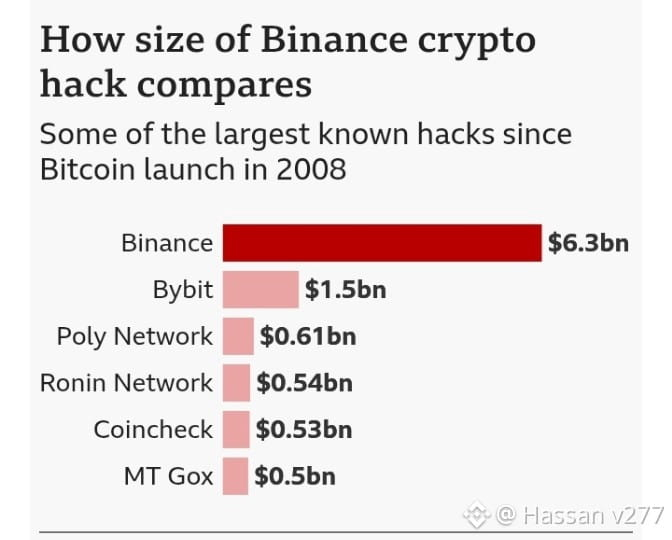
The hack is believed to be the largest in history, eclipsing the record of a $1.5bn heist on the Bybit exchange in 2025.
#CZSaysCompensationIsinPlaceUsersAreProtected #YiHe:ProofOfReserves:10TokensAt100%Backing

135
·
--
🚨 BREAKING:
🇺🇸 The Fed rate decision drops today at 2:00 PM ET!
Rate cut to 3.50%–3.75% → bullish
Hold at 3.75%–4.00% → neutral
Hike to 4.00%–4.25% → bearish
This is the biggest market catalyst of the week
One Fed decision. Billions at stake 👀
🚨 BREAKING:
🇺🇸 The Fed rate decision drops today at 2:00 PM ET!
Rate cut to 3.50%–3.75% → bullish
Hold at 3.75%–4.00% → neutral
Hike to 4.00%–4.25% → bearish
This is the biggest market catalyst of the week
One Fed decision. Billions at stake 👀
🇺🇸 The Fed rate decision drops today at 2:00 PM ET!
Rate cut to 3.50%–3.75% → bullish
Hold at 3.75%–4.00% → neutral
Hike to 4.00%–4.25% → bearish
This is the biggest market catalyst of the week
One Fed decision. Billions at stake 👀

53
·
--
Moonwell Achieves $20M in Fees Earned, A Milestone for Lenders
In a noteworthy announcement, lenders on Moonwell have collectively earned $20 million in fees, marking a significant milestone for the platform. This achievement spans across major networks including Base, Optimism, and Ethereum, showcasing the growing adoption of Moonwell within the DeFi ecosystem. This milestone signals increased activity and confidence among users, which could lead to further growth in the platform’s user base and overall ecosystem.
The Story So Far
The news about Moonwell’s achievement comes at a time when the broader crypto market is showing mixed signals. Despite the fluctuations in major assets, Moonwell’s milestone represents a solid foundation for growth in decentralized finance. The $20 million in fees not only reflects the platform’s success but also highlights the potential for lenders on Moonwell to benefit from an expanding market. As more users engage with the platform, the implications for both liquidity and user trust could be significant.

54
·
--
FOMC Decision Tomorrow: Will Bitcoin and Ethereum Price Rally
Bitcoin and Ethereum price action weakened on October 27, 2026, with total crypto market capitalization at $2.67 trillion.
FOMC Decision Tomorrow: Will Bitcoin and Ethereum Price Rally
Bitcoin and Ethereum price action weakened on October 27, 2026, with total crypto market capitalization at $2.67 trillion.
Bitcoin and Ethereum price action weakened on October 27, 2026, with total crypto market capitalization at $2.67 trillion.

117
·
--
Bitcoin Price Struggles at $80K, but MEXC CEO Sees Bullish Signals
Volatile Start to the Week
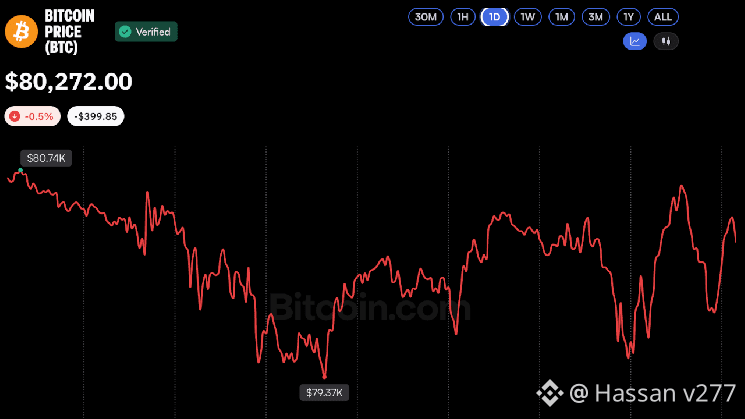
Bitcoin’s price reclaimed $80,000 twice on Monday as the cryptocurrency appeared poised to continue a downward trend that began at the start of the month. The decline has largely extinguished hopes of an “Uptober” rally, which many analysts predicted would deliver the cryptocurrency’s largest monthly gains of the year.
According to market data, before reclaiming $80,000, bitcoin had progressively fallen from above $80,800 to $79,260, its lowest point since Sept. 18. Shortly after midnight, however, the cryptocurrency rebounded to nearly $80,500 about six hours later.
Although the cryptocurrency briefly found support above $80,250, a sharp sell-off sent its price tumbling toward $79,300 before a relief rally pushed it back above $80,500. At 1:30 p.m. ET, bitcoin’s price sat at $80,272, down 0.5% for the day. The near-flat price action left its market capitalization stuck at $1.61 trillion, representing a month-to-date loss of more than 4%.
143
·
--
Bitcoin falls below $83,000 as dollar strength keeps markets on edge
Bitcoin and gold hold steady as a firm dollar and rising bond yields weigh on sentiment, while IREN secures a multiyear cloud services deal with Anthropic.
Bitcoin, ether slides to session lows in weak afternoon trading
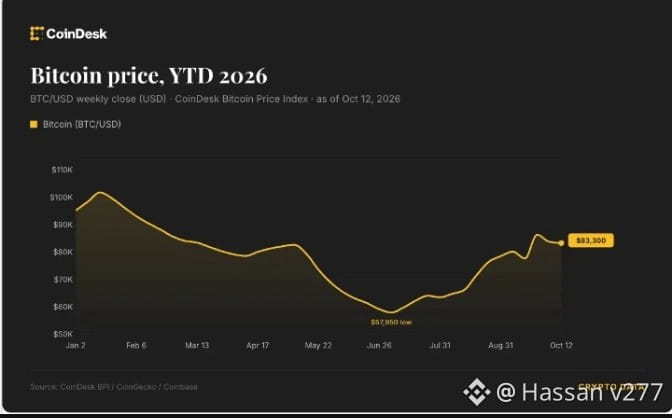
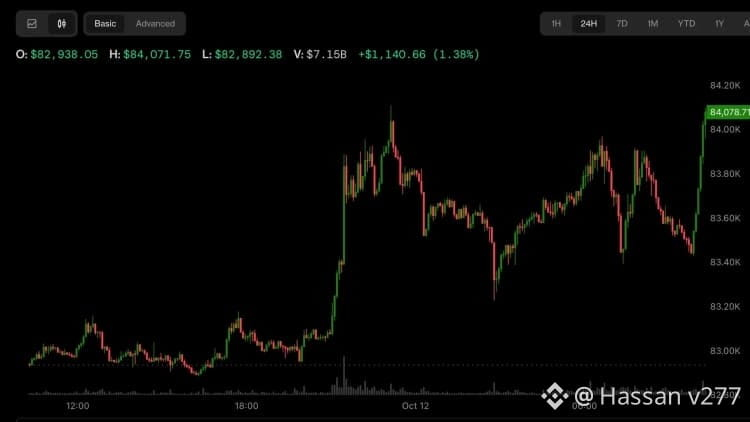
Bitcoin BTC$82,303.13 has slipped further during the U.S. trading session, hitting a session low of near $82,300 in a weak afternoon trading for risk assets.
Ether ETH$2,508.15 has now given back all its overnight gains, holding above $2,500 level by a thread.
The two largest cryptocurrencies lost 1.6% and 1.3%, respectively, over the past 24 hours. Other crypto majors including XRP, Solana (SOL) and Hyperliquid’s HYPE were also down 3%-4% during the same period.
Securitize slides 10% as crypto stocks lose ground in holiday trading
A mid-day check on the U.S. stock market shows most crypto-related stocks nursing losses, with tokenization firm Securitize (SECZ) leading the selling.
The firm’s shares fell more than 10% by midday, giving up most of the recent bounce fueled influential investment research firm Citrini's report featuring the company as one of the biggest beneficiary of Wall Street bringing equities onto blockchain rails.
Elsewhere, digital custodian BitGo BTGO$7.0800 and institutional-focused exchange Bullish BLSH$31.62 both slipped about 3%. USDC issuer Circle CRCL$82.67, bitcoin holder Strategy MSTR$151.22 and ether treasury Bitmine BMNR$23.65 nursed modest declines. Coinbase COIN$177.95 held up with a 0.5% gain.
The weakness came as broader U.S. stocks struggled for direction. The S&P 500 was flat, while the tech-heavy Nasdaq 100 fell 0.5%.
Trading is taking place against a holiday backdrop, with the U.S. bond market and Canadian stock exchanges closed for the day. U.S. stock markets remain open.
1
220
·
--
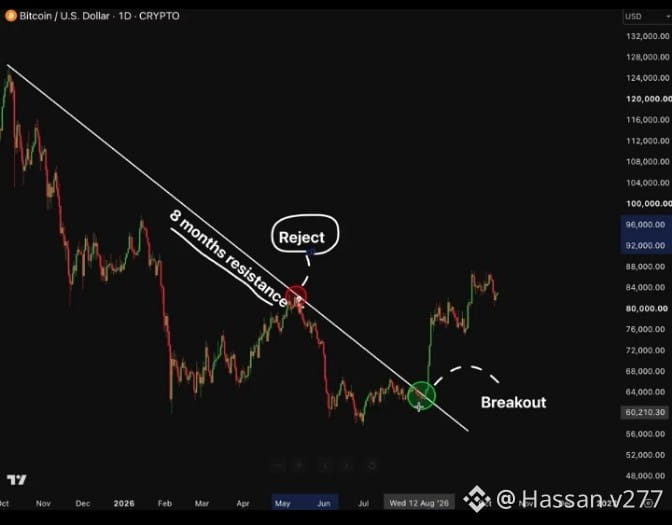
$BTC spent 8 months under a descending resistance
Rejected once - then broke out clean
That breakout launched the rally to $87K
This chart was the signal most people missed
$BTC spent 8 months under a descending resistance
Rejected once - then broke out clean
That breakout launched the rally to $87K
This chart was the signal most people missed
Rejected once - then broke out clean
That breakout launched the rally to $87K
This chart was the signal most people missed
1
106
·
--
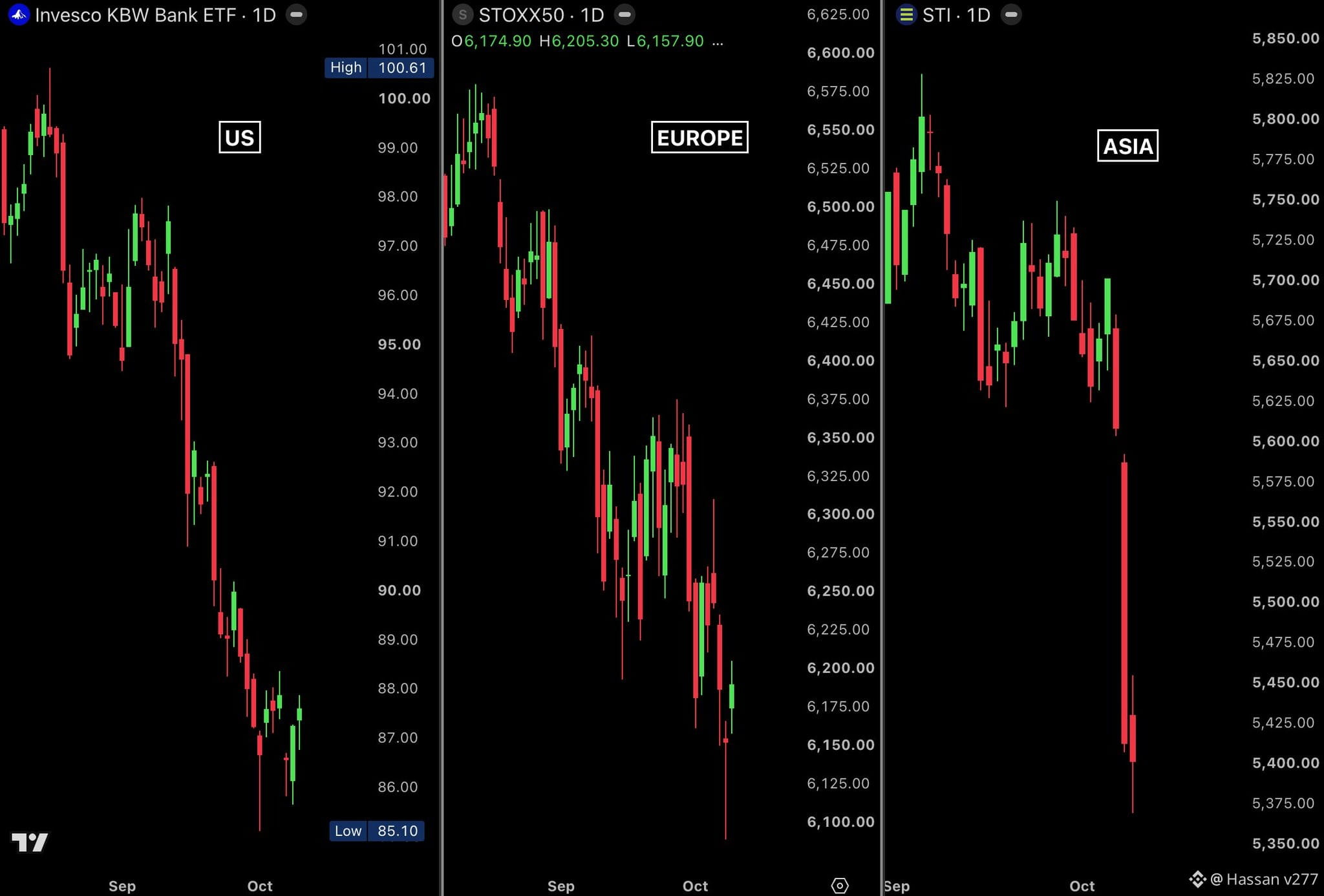
🚨Global banking sector is in trouble.
Bank stocks are crashing in the US, Europe and Asia all together as bond yields hit multi decade highs.
In the US, the KBW bank index, which tracks the biggest US banks, is down 12% in the last 2 months.
Goldman Sachs is down -22%
Bank of America -17%
Wells Fargo -9%
JPMorgan -9%
Citigroup -10%
In Europe, the Euro Stoxx Banks index is down 6% in the last month
On Oct 7 alone, the STOXX Europe Banks index fell 3.5%, with Deutsche Bank, UniCredit and Société Générale each down more than 4%
In Asia:
DBS, OCBC and UOB fell up to 9% this week.
Banks hold huge amounts of government bonds, and when yields rise the value of those bonds falls.
US banks held $326.7B in unrealized bond losses at the end of Q2, per FDIC
The 10 year yield has since risen above 5%, and is now above 5.2%, so those losses are likely even bigger now.
Investors fear a repeat of Silicon Valley Bank in 2023, when it was forced to sell bonds at a loss as depositors pulled their money out.
72
·
--
Crypto ETF Outflows Pass $1 Billion in October: Is Wall Street Dumping Bitcoin and Ethereum?
Bitcoin and Ethereum ETFs just bled over $1 billion in October. Here is who is selling, who is still buying, and what it means for your coins.
The money that pushed Bitcoin to its all-time high is now heading for the exits. US spot Bitcoin and Ethereum ETFs recorded $986.3 million in combined net outflows through Thursday, according to Farside Investors, and Friday's numbers pushed the October total over the $1 billion mark. Zoom out to every crypto ETF on the board and the picture gets uglier: $1.29 billion left $Bitcoin, $Ethereum, $Solana, $Zcash and $Hyperliquid funds in a single week.
Why Are Bitcoin ETFs Seeing Outflows Right Now?
Bitcoin ETFs lost $678.9 million between Monday and Friday, a sharp reversal from the $241.1 million they attracted the week before. Wednesday alone saw $484.9 million walk out the door, the biggest single-day outflow since June 25, followed by another $244.1 million on Thursday.
The selling was not evenly spread. Fidelity's FBTC shed $380.3 million and ARK 21Shares' ARKB lost $207.2 million, together accounting for the lion's share of the damage. BlackRock's IBIT, the world's largest Bitcoin fund, finished the week almost flat at a $1.1 million inflow, after a $207.7 million Wednesday withdrawal wiped out two strong days of buying.
$BTC

134
·
--
Crypto Fear and Greed Index Drops to 55, Entering Neutral Zone! Here’s All the Data
The CoinMarketCap Fear and Greed Index, which measures investor sentiment in the cryptocurrency market, fell by 6 points from the previous day to 55. This move the index out of the greed zone and into neutral territory.
According to data published by CoinMarketCap, the index was at 61 the previous day. The recent decline indicates a weakening of investor risk appetite in the cryptocurrency market and a shift towards a more balanced overall market sentiment.
The Fear and Greed Index is designed to assess cryptocurrency investors’ expectations of the market using various indicators. An index value close to zero represents excessive fear, while a value close to 100 represents excessive optimism.
The index being at 55 indicates that there is no significant trend of fear or excessive optimism in the market. However, the 6-point daily drop points to a notable shift in investor sentiment.
CoinMarketCap considers the price movements of the 10 largest cryptocurrencies by market capitalization in its index calculation. Market volatility is also among the key components used in the calculation.
In addition, indicators in derivative markets, particularly the put/call ratio used in the options market, are taken into account to assess investors’ risk perception.
Other components of the index include the stablecoin supply ratio (SSR) and search data from the CoinMarketCap platform.
Recent data reveals that the greed trend seen in the cryptocurrency market in previous days has weakened. However, the index’s retreat to neutral territory does not, by itself, mean the beginning of a new period of price decline or rise.

62
·
--
Wall Street's tokenization boom could have bigger winners than bitcoin and ether, Citrini says
Wall Street's move into blockchain technology could open a vast new market for crypto, but investors betting on tokenization may find better opportunities than bitcoin $BTC$81,679.10 and ether $ETH$2,460.49, according to the well-followed research firm Citrini Research.
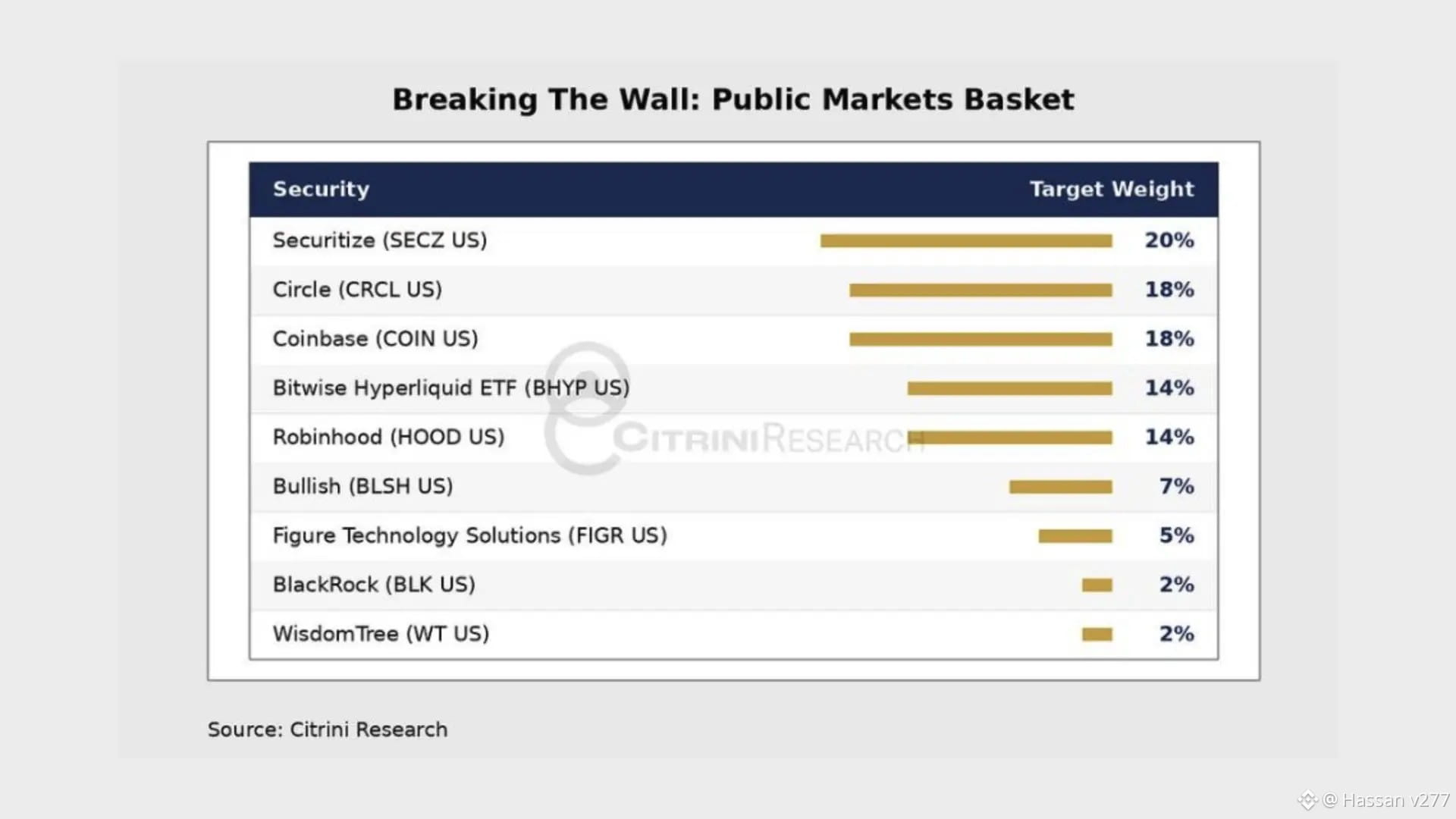
In a 79-page report titled Breaking the Wall, published Thursday, the research firm argued that bringing stocks, bonds and other financial assets onto blockchains could create new businesses in trading, lending and payments.
Stock picks for playing tokenization
To identify opportunities, Citrini proposed two investment baskets, one focused on publicly traded stocks and another on crypto tokens.
The report was particularly interested in businesses that stand to earn fees as more of Wall Street moves onchain.
It highlighted tokenization firm Securitize (SECZ), which maintains the legal link between blockchain tokens and the securities they represent.
Crypto exchange Coinbase COIN$174.87 and digital brokerage Robinhood HOOD$107.87 offer exposure through their trading platforms and blockchain infrastructure, while stablecoin issuer Circle CRCL$80.71 could benefit from greater demand for its USDC stablecoin to settle transactions, the report said.
Citrini also mentioned Figure Technology Solutions (FIGR) for tokenized lending, SoFi SOFI$15.55 for stablecoin payments, and institutionally focused digital asset exchange operator Bullish BLSH$31.49, CoinDesk’s parent company, which is acquiring share registrar Equiniti.

1
153
·
--
🚨 REMINDER:
🇺🇸 U.S. jobless claims data drops at 8:30 am ET today.
Below 190k → bullish
Around 200k → neutral
Above 210k → bearish
Markets could react fast
🚨 REMINDER:
🇺🇸 U.S. jobless claims data drops at 8:30 am ET today.
Below 190k → bullish
Around 200k → neutral
Above 210k → bearish
Markets could react fast
🇺🇸 U.S. jobless claims data drops at 8:30 am ET today.
Below 190k → bullish
Around 200k → neutral
Above 210k → bearish
Markets could react fast

86
·
--
Partly True
🚨 BREAKING:
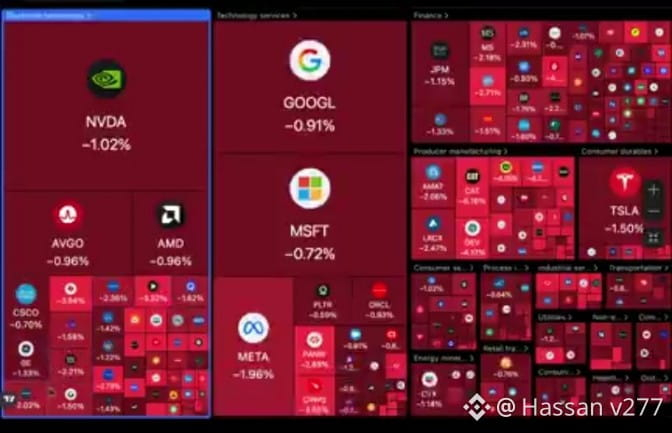
🇺🇸 $350 billion wiped from U.S. stocks right after the market opened
Selling pressure hit fast
Not a good start for markets
🚨 BREAKING:
🇺🇸 $350 billion wiped from U.S. stocks right after the market opened
Selling pressure hit fast
Not a good start for markets
🇺🇸 $350 billion wiped from U.S. stocks right after the market opened
Selling pressure hit fast
Not a good start for markets
1
646
·
--
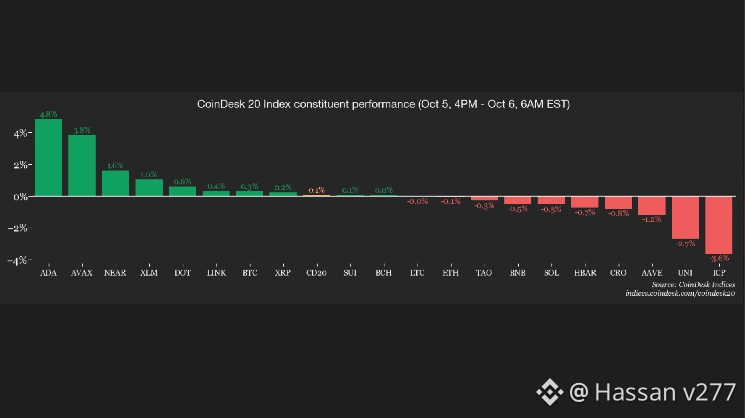
Smaller altcoins shine as bitcoin stills trades around $85,000
Smaller coins are stealing the spotlight again as bitcoin $BTC$86,051.26, ether $ETH$2,715.12 and other major cryptocurrencies are still trading in a choppy range, while
Leading the gains is $BTW, the native token of Bitway, a bitcoin-compatible layer-1 blockchain with proof-of-stake consensus and decentralized finance (DeFi) infrastructure. The token has jumped 25% in the past 24 hours and is up 170% over the past 30 days.
$BTW has also been drawing attention on social media, following the end of Binance Wallet's "Booster Season 5" campaign on Oct. 2. The campaign offered rewards for deposits and may have boosted retail engagement.
The rally also appears to be part of a broader shift toward smaller altcoins. Filecoin's FIL and LayerZero's ZRO have gained 12% and 10%, respectively, in 24 hours, and both are up 50% or more over four weeks. Midnight's NIGHT token has added 8% over the same 24 hours.
At the other end, SKY, VVV and DASH are the three worst performers among the 100 largest tokens by market value.
As for bitcoin, it remains stuck in its range. The leading cryptocurrency is trading at $85,900 as of this writing, after putting in lows near $85,000 earlier in the day.
"A break below $84K would signal a victory for the bears, and a break below the recent local lows at $83K would confirm this with even greater certainty. In this scenario, the leading cryptocurrency could fall to $80K fairly quickly," said Alex Kuptsikevich, chief market
62
·
--
Crypto's campaign arm, Fairshake, sets lists of U.S. House favorites it'll spend on
The crypto industry's leading political action committee, Fairshake, released another list of candidates it's supporting for the November elections, backing 13 Democrats and 19 Republicans — all incumbents — in their U.S. House of Representatives races.
The candidates tend to be safe bets to return to Congress, potentially further reinforcing the existing support for crypto policies in Congress. Atop all those names, six of them are getting a million dollars each in support from Fairshake and its affiliates, according to a spokesman for the super PAC.
Fairshake has always been and always will be an issue-focused organization," said Spokesman Geoff Vetter in a statement. "We back pro-crypto candidates who support American innovation in both parties."
The top recipients on the Republican side are three well-known names in crypto circles, including French Hill, the chairman of the House Financial Services Committee who led the charge for crypto legislation in the House; Bill Huizenga, a senior member of that committee, and Bryan Steil, another member who also leads the subcommittee on digital assets.
For Democrats, the higher support level is going to Steven Horsford, a Nevada lawmaker who helped get a bipartisan crypto tax bill through the House tax committee he serves on, and Derek Tran of California, Fairshake said. Both of them have an "A" rating on digital assets issues from Stand With Crypto, as does the third recipient, Janelle Bynum.
Bynum is an Oregon Democrat incumbent who had beaten Republican Lori Chavez-DeRemer for her seat two years ago. Chavez-DeRemer, who was backed by Fairshake in the prior election, went on to run President Donald Trump's Department of Labor, though she resigned earlier this year under multiple misconduct allegations. Bynum voted for crypto bills during her first term and appeared at the Digital Chamber's DC Blockchain Summit earlier this year.

83
·
--
Bitcoin Just Flashed a Second, Stronger Golden Cross: Here's What That Means
In brief
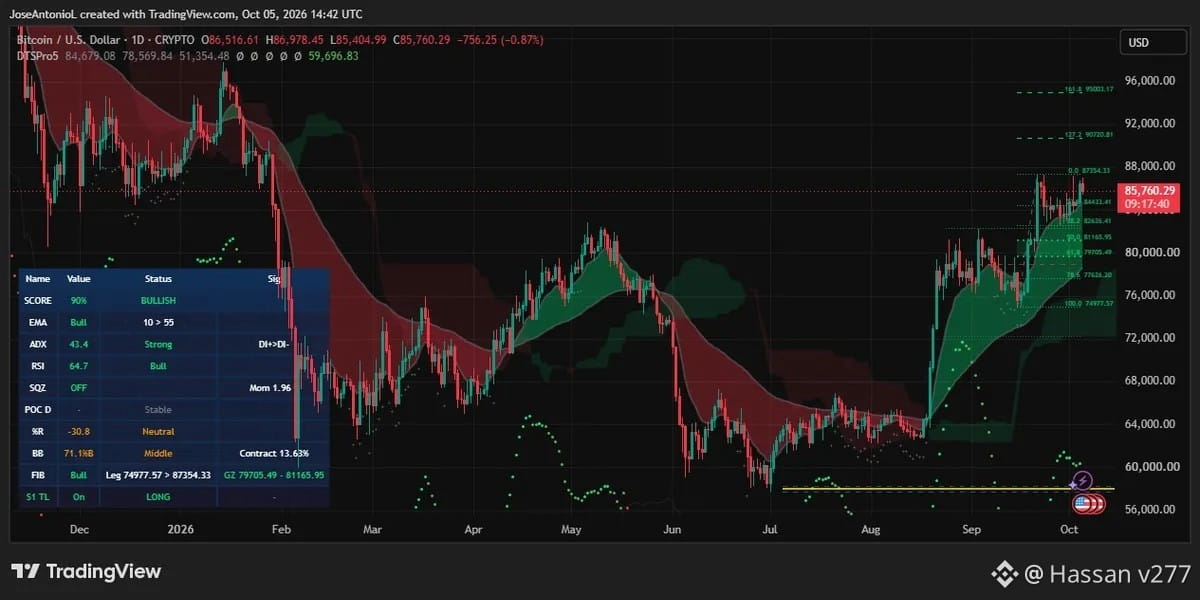
Bitcoin traded around $86,000 on Monday, roughly $1,200 below the $87,354 swing high that has capped the rally.
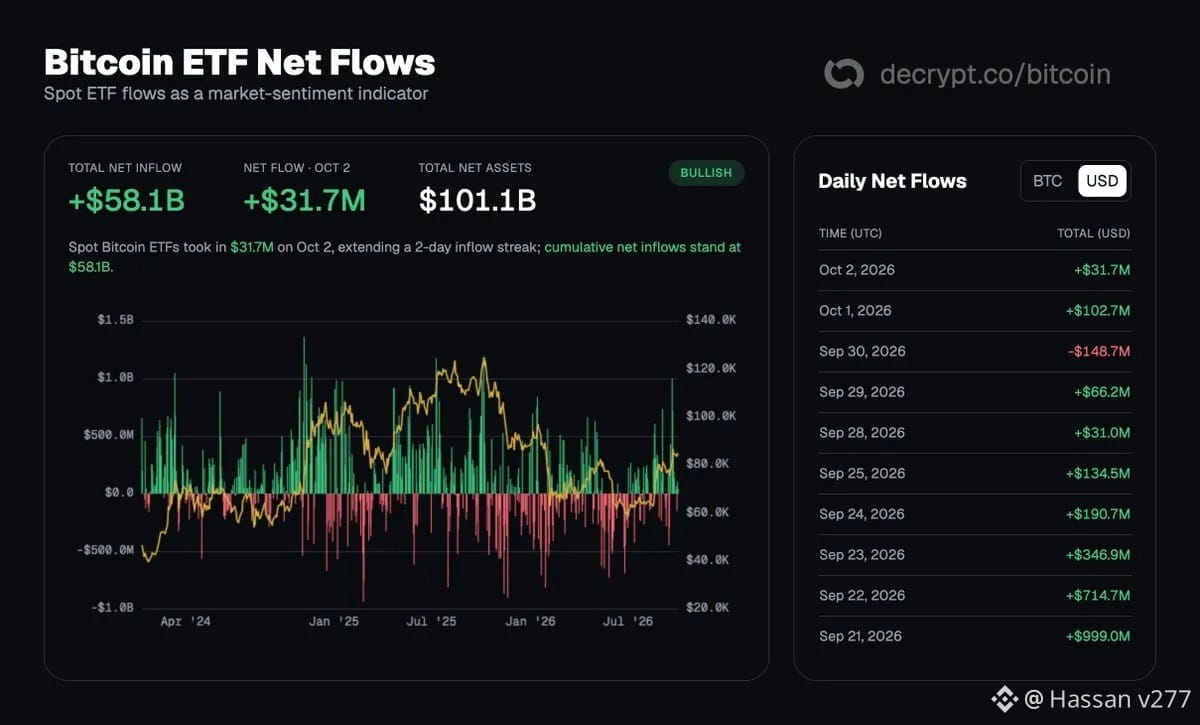
Macroeconomic winds have turned in Bitcoin's favor, with potential future catalysts around the corner.
The daily chart has painted a decidedly bullish picture, with Bitcoin entering a second, stronger "golden cross."
Bitcoin is starting the week on the front foot. It still can't clear the ceiling, but investors have reason to be optimistic.
The top crypto asset traded around $86,100 on Monday morning, up 1.14% in 24 hours, with a market capitalization of $1.73 trillion. The entire crypto market is worth $2.94 trillion, up 1.36% on the day, and the Fear & Greed Index sits at 68, still in "greed" territory and stabilizing sentiment after a dip from “extreme greed” readings last month.
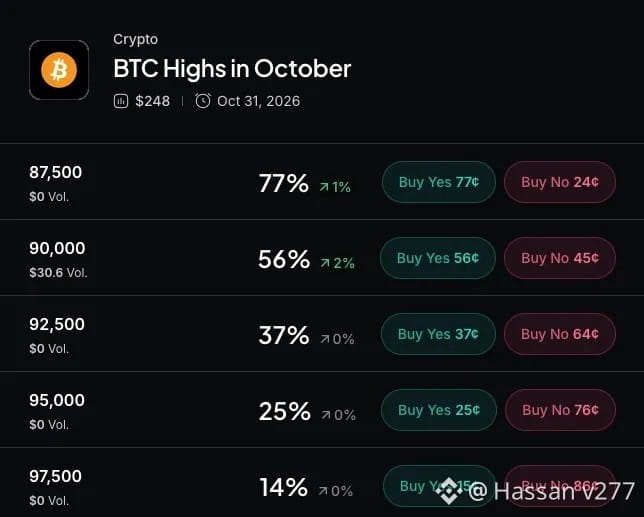
Myriad: How high will Bitcoin go? Click to make your prediction.
The spark was Friday's jobs report, and it was ugly—for the economy, that is. U.S. employers added only 29,000 positions in September, according to the Bureau of Labor Statistics, roughly a third of what economists expected. The unemployment rate ticked up to 4.2%.
Revisions made it worse. July was revised from a gain of 21,000 to a loss of 10,000 jobs, and August was cut from 162,000 to 133,000. Annual wage growth cooled to 3.0%.
Bad news for workers, good news for risk assets. That's the weird math of this cycle.
Bitcoin price data. Image: Tradingview
The Federal Reserve raised rates a quarter point to 3.75%-4.00% on September 16 in a unanimous vote. A week before Friday's report, bond traders gave an October hike a 64% chance. After it, those odds fell to roughly 16%-22%, depending on the snapshot.

107
·
--
BNB price prediction: Can the 37th burn fuel an October rally?
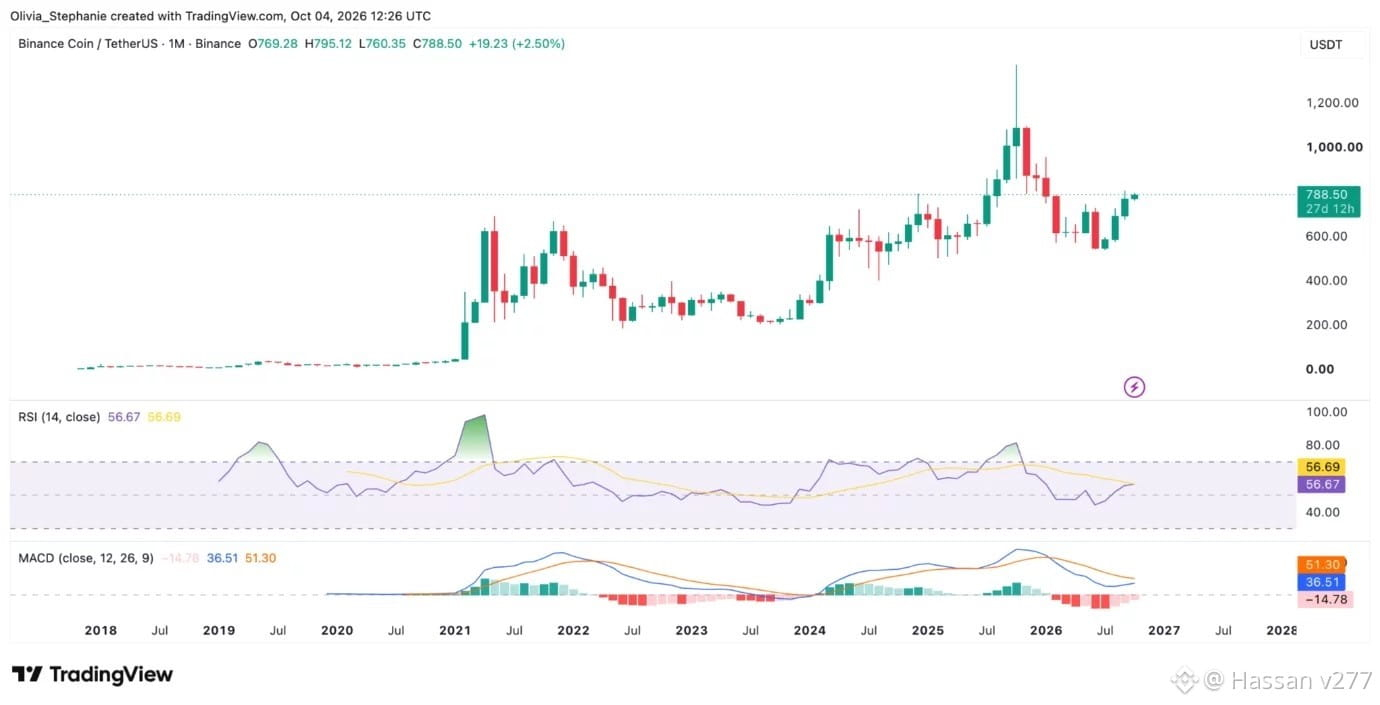
$BNB price has entered October near $788 after gaining roughly 11% in September, with the 37th quarterly token burn and an 800–807 breakout now shaping the month’s price setup.
CoinGecko data show $BNB price trading around $788 on Oct. 4, up roughly 2.5% over 24 hours and 1.2% during the past seven days. Its market capitalization stands close to $105 billion, supported by a circulating supply of roughly 130 million $BNB.
September extended a recovery that had already gathered strength during August. Historical price data put $BNB’s September opening near $691 and its month-end price around $768, an increase of roughly 11%. August had produced another advance of close to 18%.
The market has since moved through several different technical phases. By Sept. 17, $BNB was trading near $721, with support clustered around 709–710 and resistance near 729–740. Price subsequently pushed toward $800 before retreating again. $BNB price holds $710 support as momentum weakens
Current monthly indicators remain mixed. RSI sits around 56.66, almost level with its moving average of 56.69. A reading above 50 points to moderately positive momentum, though the indicator remains well below the 70 overbought threshold.
MACD has not confirmed the same strength. The MACD line is near 36.50, below the signal line around 51.29, while the histogram remains negative at approximately -14.80. Shrinking negative histogram bars suggest bearish momentum is easing, but the monthly chart has not yet produced a confirmed bullish crossover.
$BNB price chart, source: TradingView
For October, the technical picture becomes stronger if $BNB price can convert 800–807 from resistance into support.

81
·
--
Verified
More Orange Than Ever': Michael Saylor Hints at Massive New Bitcoin Buy
Strategy (formerly MicroStrategy) founder and chairman Michael Saylor published data on the company's Bitcoin strategy with the concise comment: "More orange than ever."
Michael Saylor's "More orange than ever" post on X, Source: Michael Saylor via X.com
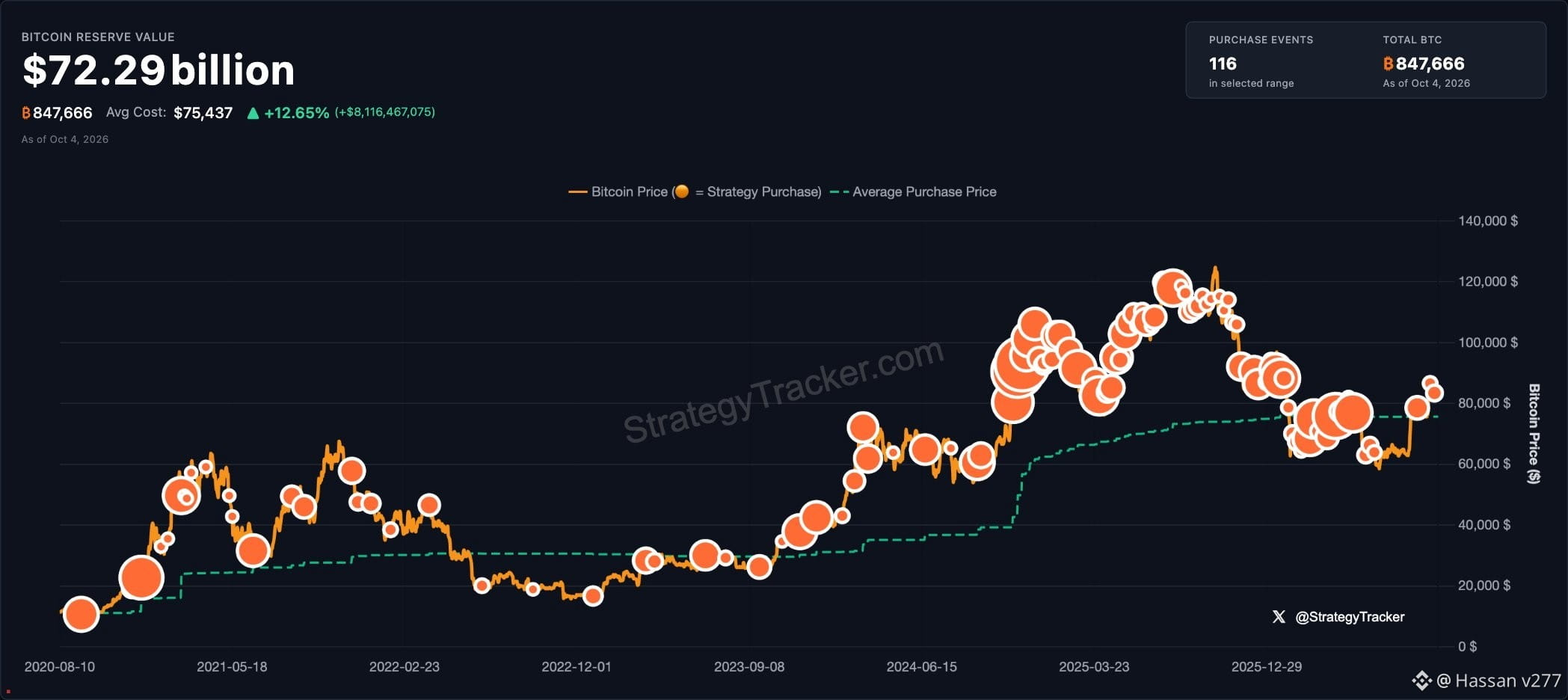
Saylor's wording directly refers to a recent chart from the StrategyTracker platform dated October 4, 2026, where the density of orange purchase markers reached an all-time high. Posts of this kind have traditionally preceded official filings with the U.S. Securities and Exchange Commission (SEC) on the completion of another round of large purchases.
What makes up the largest corporate Bitcoin portfolio in history
According to BitcoinTreasuriesNET analytics dashboard, Strategy has accumulated 847,666 $BTC to date, or about 4.04% of Bitcoin's total supply. With total historical spending of $63.95 billion, the portfolio's average purchase price is $75,442.45 per coin.
At current market prices, the reserves are valued at $72.20 billion, putting the company's unrealized net profit above $8.25 billion. Since the start of the year, the portfolio has grown by 26.05% (+175,169 $BTC), with purchases made in late September at prices close to the portfolio's average.
Strategy's Bitcoin accumulation chart showing 847,666 $BTC holdings as of October 4, 2026, Source: StrategyTracker
Saylor's claim that the balance is "more orange than ever" is also reflected in the stock market's valuation. The company's shares currently trade at a 14% premium to the value of its net crypto reserves, with an mNAV multiple of 1.14x. Each diluted share represents 0.001972 $BTC.
Wall Street accepts this premium because of the company's distinctive debt model, the Digital Credit Stack. Strategy raises liquidity by issuing specialized bonds (tickers STRC, STRD, STRF, and STRK) totaling $12.68 billion, with fixed yields ranging from 9.00% to 13.63% annually.
247
Log in to explore more content
Join global crypto users on Binance Square
⚡️ Get latest and useful information about crypto.
💬 Trusted by the world’s largest crypto exchange.
👍 Discover real insights from verified creators.
Email / Phone number